budget

Catholic Relief Services to receive 5 million in food aid for Sudan, Ethiopia #Catholic The U.S. Department of Agriculture (USDA) will provide up to 5 million through Catholic Relief Services (CRS) for emergency food and nutrition assistance in Sudan and Ethiopia amid widespread hunger.“More than 110,000 metric tons of U.S.-grown agricultural commodities” will be delivered to the two East African countries under an agreement in principle between CRS and the USDA, according to a July 14 USDA announcement.“American farmers feed, fuel, and clothe the world, and under President Trump’s leadership, we’re utilizing that bounty to serve those in need while ensuring that the benefits of U.S. food aid flow back to America’s hardworking farmers, ranchers, and producers that make this assistance possible,” Michelle Bekkering, USDA’s deputy undersecretary for trade and foreign agricultural affairs, said in a statement. “We’re also enforcing strict accountability so that aid goes to those who actually need it, safeguarding hard-earned taxpayer dollars, and delivering aid that builds self-reliance instead of long-term dependence.” “Authorized under Title II of the Food for Peace Act,” the announcement said, “the agreement leverages Catholic Relief Services’ operational footprints in East Africa, including the Sudan Emergency Project and the Joint Emergency Operation in Ethiopia.”CRS has faced a sharp drop in federal support after the Trump administration collapsed global‑health and humanitarian functions of the U.S. Agency for International Development into the State Department in 2025. USAID earlier supplied roughly half of the agency’s .5 billion budget.CRS President and CEO Sean Callahan said in a July 14 press release that the agreement came “at a critical moment for struggling families in Sudan and Ethiopia.”“For decades, our partnership with USDA has connected the generosity and productivity of American farmers with some of the world’s most vulnerable communities,” Callahan said. “We are committed to ensuring these resources are managed responsibly and translated into meaningful support for families working to overcome crisis.”“We are hopeful fellow trusted organizations carrying out lifesaving work across the world are supported in their efforts to meet these critical needs for extremely vulnerable families and communities,” he said.Callahan told EWTN News that CRS tracks the delivery of food commodities “to the last mile and employs robust monitoring, verification, and financial oversight to help ensure assistance reaches the people it is intended to serve.”“We continually assess security conditions, adjust operations as needed, and work closely with local partners to help ensure assistance reaches the people it is intended to serve,” he said.Maura O’Brien, a former USAID official who led its Sudan and South Sudan office and serves as coordinator for the Michael B. Kim Institute for Ethical Inquiry and Leadership at Haverford College, said CRS has been a trusted partner but USAID’s absence will be felt.“Not having any U.S. presence in the field makes any assistance more vulnerable to fraud, waste, and abuse — especially in a conflict environment. Oversight and coordination are essential to effectively delivering desperately needed relief to communities in East Africa," O’Brien said.USDA did not immediately reply to a request for comment.

Catholic Relief Services to receive $235 million in food aid for Sudan, Ethiopia #Catholic The U.S. Department of Agriculture (USDA) will provide up to $235 million through Catholic Relief Services (CRS) for emergency food and nutrition assistance in Sudan and Ethiopia amid widespread hunger.“More than 110,000 metric tons of U.S.-grown agricultural commodities” will be delivered to the two East African countries under an agreement in principle between CRS and the USDA, according to a July 14 USDA announcement.“American farmers feed, fuel, and clothe the world, and under President Trump’s leadership, we’re utilizing that bounty to serve those in need while ensuring that the benefits of U.S. food aid flow back to America’s hardworking farmers, ranchers, and producers that make this assistance possible,” Michelle Bekkering, USDA’s deputy undersecretary for trade and foreign agricultural affairs, said in a statement. “We’re also enforcing strict accountability so that aid goes to those who actually need it, safeguarding hard-earned taxpayer dollars, and delivering aid that builds self-reliance instead of long-term dependence.” “Authorized under Title II of the Food for Peace Act,” the announcement said, “the agreement leverages Catholic Relief Services’ operational footprints in East Africa, including the Sudan Emergency Project and the Joint Emergency Operation in Ethiopia.”CRS has faced a sharp drop in federal support after the Trump administration collapsed global‑health and humanitarian functions of the U.S. Agency for International Development into the State Department in 2025. USAID earlier supplied roughly half of the agency’s $1.5 billion budget.CRS President and CEO Sean Callahan said in a July 14 press release that the agreement came “at a critical moment for struggling families in Sudan and Ethiopia.”“For decades, our partnership with USDA has connected the generosity and productivity of American farmers with some of the world’s most vulnerable communities,” Callahan said. “We are committed to ensuring these resources are managed responsibly and translated into meaningful support for families working to overcome crisis.”“We are hopeful fellow trusted organizations carrying out lifesaving work across the world are supported in their efforts to meet these critical needs for extremely vulnerable families and communities,” he said.Callahan told EWTN News that CRS tracks the delivery of food commodities “to the last mile and employs robust monitoring, verification, and financial oversight to help ensure assistance reaches the people it is intended to serve.”“We continually assess security conditions, adjust operations as needed, and work closely with local partners to help ensure assistance reaches the people it is intended to serve,” he said.Maura O’Brien, a former USAID official who led its Sudan and South Sudan office and serves as coordinator for the Michael B. Kim Institute for Ethical Inquiry and Leadership at Haverford College, said CRS has been a trusted partner but USAID’s absence will be felt.“Not having any U.S. presence in the field makes any assistance more vulnerable to fraud, waste, and abuse — especially in a conflict environment. Oversight and coordination are essential to effectively delivering desperately needed relief to communities in East Africa," O’Brien said.USDA did not immediately reply to a request for comment.

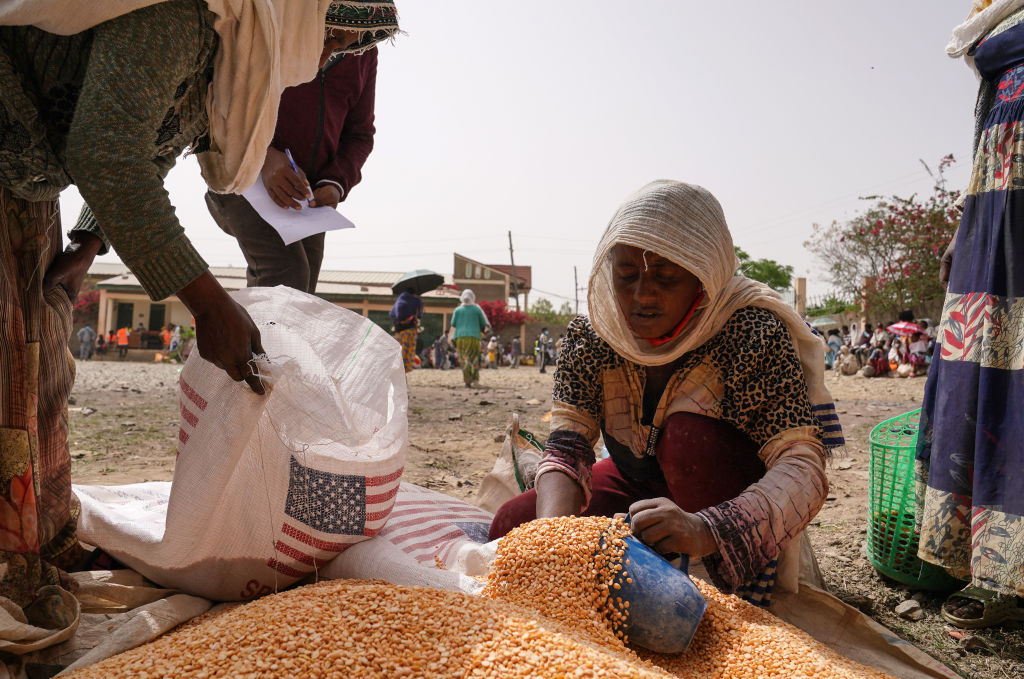
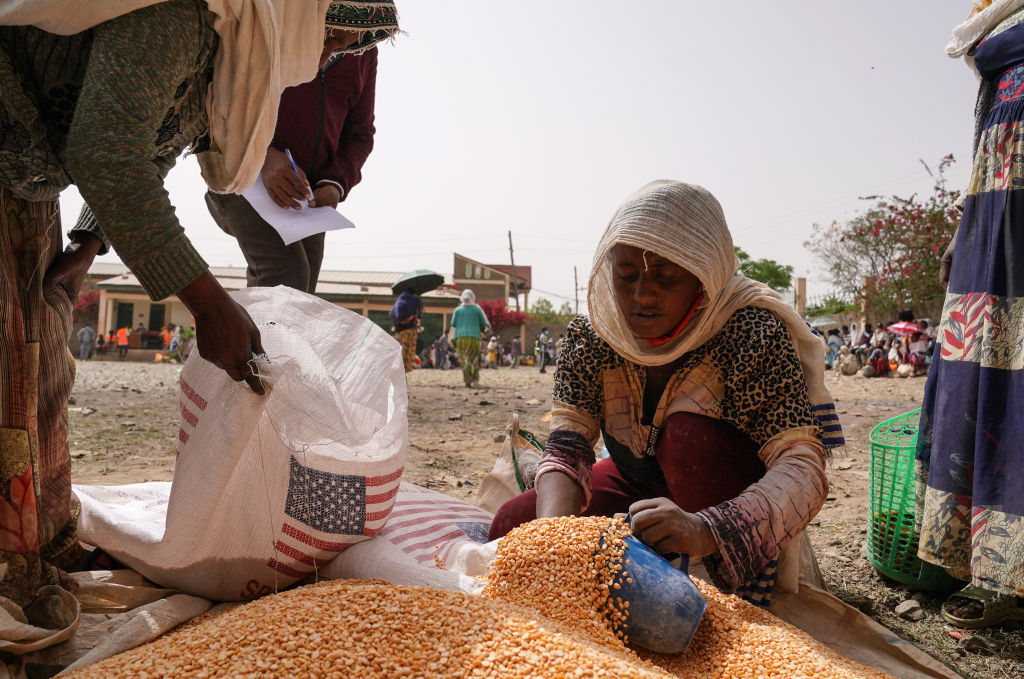
“More than 110,000 metric tons of U.S.-grown agricultural commodities” will be delivered under an agreement in principle between Catholic Relief Services and the U.S. Department of Agriculture.
Read More
Funding cuts force Catholic charity to scale back Rohingya aid in Bangladesh #Catholic Caritas Bangladesh has been forced to scale back its relief work for Rohingya refugees in the city of Coxʼs Bazar as funding from foreign donors declines, its emergency response director said.“Our biggest challenge now is funding,” said Liton Luis Gomes, project director of Caritas Bangladeshʼs Emergency Response Program.“We only received 60% of the funds we planned for this fiscal year; we didnʼt get the remaining 40%,” Gomes told EWTN News by phone. “Thatʼs why we had to reduce the quantity while maintaining the quality of our services.”The cuts have fallen hardest on shelter and hygiene work. “If we used to be able to repair 500 houses, now it has decreased by 50%. If someone asks for a hygiene kit like soap, we canʼt give it urgently,” Gomes said.A shrinking budgetThe decline in donor support has been steep. Caritas Bangladesh reported receiving about 916 million taka ($7.4 million) for its Rohingya response in 2017–18. Support fell to about 468 million taka ($3.8 million) in 2020 and about 417 million taka ($3.4 million) in 2024. It rose to about 531 million taka ($4.3 million) in 2025 before falling again to about 427 million taka ($3.5 million) so far in 2026, the agency said.Even so, Gomes said, the charity is maintaining the services that do not require money. “We are doing things like training volunteers for the crisis period, raising awareness about disaster relief,” he said.Caritas Bangladesh has worked in the camps since the 2017 exodus, providing shelter, water and sanitation, child protection, and education. Between 2017 and 2024, its shelter and settlement program reached an average of 38,335 households a year, the charity said, through transitional shelter assistance, repairs, tarpaulin distribution, and monsoon support. It runs 12 learning centers and two youth and adolescent centers in the camps, teaching children under the Myanmar curriculum.Lives in the campsThe charityʼs work is felt in individual lives. Mohammad Arshad, 23, who lives in Camp 19, has volunteered in the shelter program of Caritas Bangladeshʼs Emergency Response Program since 2018. He had studied up to class nine in Myanmar and helped his father run a grocery shop before the family was forced to flee. With no stable income and eight people to support, including his aging parents, his wife, his young son, and two younger siblings, he had lain awake wondering how he would provide.“The job was more than just a source of income; it gave me a sense of purpose. I learned how to organize workers, coordinate with engineers, and develop technical skills,” Arshad told EWTN News.“This opportunity had not only helped me; it supports my family but also [has] given me hope for a better future. As I watched my son sleep peacefully at night, [I] whispered silent thanks, to Caritas Bangladesh, to the people who had trusted me, to the strength that kept me going,” Arshad added.Momtaz Begum, a vulnerable woman who received income-generating support through Caritas, described a similar turnaround. “My husbandʼs addiction left us in debt, and after he abandoned us, I struggled to provide for my family by raising poultry and growing vegetables. The COVID-19 pandemic made things worse, leaving us without food or income. When our home was destroyed in the rain, I moved to my fatherʼs house, where I faced mistreatment from relatives,” she told EWTN News.On Jan. 18, 2022, Begum received 25,000 taka (about $200) from Caritas Bangladesh to start an income-generating activity. She used the money to expand her cloth business. “Earlier, I had to share profits with a shopkeeper, but now I buy cloth independently and keep all the profit. This has increased my daily earnings to 400-500 taka [about $3 to $4], allowing me to save … money,” Begum told EWTN News.A stateless peopleRohingya refugees have fled Myanmar for Bangladesh since the 1970s. In the 1990s, more than 250,000 sheltered in Coxʼs Bazar, though all but 20,000 were repatriated after a campaign that began in the early 2000s. The influx resumed in 2015, and by 2017 an estimated 300,000 Rohingya were in Bangladesh. About 537,000 more fled across the border to Coxʼs Bazar in August 2017 as violence intensified in Myanmarʼs Rakhine state, prompting the United Nations to call the situation “a textbook example of ethnic cleansing.” By December 2023, 971,904 Rohingya were living in 33 camps in the Coxʼs Bazar district. Pope Francis met a group of Rohingya refugees during his apostolic visit to Bangladesh in 2017.Looking ahead, Caritas Bangladesh said it aims to build stronger links between the refugees it assists and local businesses, and to deepen cooperation with government and aid agencies, even within a tighter budget.

Funding cuts force Catholic charity to scale back Rohingya aid in Bangladesh #Catholic Caritas Bangladesh has been forced to scale back its relief work for Rohingya refugees in the city of Coxʼs Bazar as funding from foreign donors declines, its emergency response director said.“Our biggest challenge now is funding,” said Liton Luis Gomes, project director of Caritas Bangladeshʼs Emergency Response Program.“We only received 60% of the funds we planned for this fiscal year; we didnʼt get the remaining 40%,” Gomes told EWTN News by phone. “Thatʼs why we had to reduce the quantity while maintaining the quality of our services.”The cuts have fallen hardest on shelter and hygiene work. “If we used to be able to repair 500 houses, now it has decreased by 50%. If someone asks for a hygiene kit like soap, we canʼt give it urgently,” Gomes said.A shrinking budgetThe decline in donor support has been steep. Caritas Bangladesh reported receiving about 916 million taka ($7.4 million) for its Rohingya response in 2017–18. Support fell to about 468 million taka ($3.8 million) in 2020 and about 417 million taka ($3.4 million) in 2024. It rose to about 531 million taka ($4.3 million) in 2025 before falling again to about 427 million taka ($3.5 million) so far in 2026, the agency said.Even so, Gomes said, the charity is maintaining the services that do not require money. “We are doing things like training volunteers for the crisis period, raising awareness about disaster relief,” he said.Caritas Bangladesh has worked in the camps since the 2017 exodus, providing shelter, water and sanitation, child protection, and education. Between 2017 and 2024, its shelter and settlement program reached an average of 38,335 households a year, the charity said, through transitional shelter assistance, repairs, tarpaulin distribution, and monsoon support. It runs 12 learning centers and two youth and adolescent centers in the camps, teaching children under the Myanmar curriculum.Lives in the campsThe charityʼs work is felt in individual lives. Mohammad Arshad, 23, who lives in Camp 19, has volunteered in the shelter program of Caritas Bangladeshʼs Emergency Response Program since 2018. He had studied up to class nine in Myanmar and helped his father run a grocery shop before the family was forced to flee. With no stable income and eight people to support, including his aging parents, his wife, his young son, and two younger siblings, he had lain awake wondering how he would provide.“The job was more than just a source of income; it gave me a sense of purpose. I learned how to organize workers, coordinate with engineers, and develop technical skills,” Arshad told EWTN News.“This opportunity had not only helped me; it supports my family but also [has] given me hope for a better future. As I watched my son sleep peacefully at night, [I] whispered silent thanks, to Caritas Bangladesh, to the people who had trusted me, to the strength that kept me going,” Arshad added.Momtaz Begum, a vulnerable woman who received income-generating support through Caritas, described a similar turnaround. “My husbandʼs addiction left us in debt, and after he abandoned us, I struggled to provide for my family by raising poultry and growing vegetables. The COVID-19 pandemic made things worse, leaving us without food or income. When our home was destroyed in the rain, I moved to my fatherʼs house, where I faced mistreatment from relatives,” she told EWTN News.On Jan. 18, 2022, Begum received 25,000 taka (about $200) from Caritas Bangladesh to start an income-generating activity. She used the money to expand her cloth business. “Earlier, I had to share profits with a shopkeeper, but now I buy cloth independently and keep all the profit. This has increased my daily earnings to 400-500 taka [about $3 to $4], allowing me to save … money,” Begum told EWTN News.A stateless peopleRohingya refugees have fled Myanmar for Bangladesh since the 1970s. In the 1990s, more than 250,000 sheltered in Coxʼs Bazar, though all but 20,000 were repatriated after a campaign that began in the early 2000s. The influx resumed in 2015, and by 2017 an estimated 300,000 Rohingya were in Bangladesh. About 537,000 more fled across the border to Coxʼs Bazar in August 2017 as violence intensified in Myanmarʼs Rakhine state, prompting the United Nations to call the situation “a textbook example of ethnic cleansing.” By December 2023, 971,904 Rohingya were living in 33 camps in the Coxʼs Bazar district. Pope Francis met a group of Rohingya refugees during his apostolic visit to Bangladesh in 2017.Looking ahead, Caritas Bangladesh said it aims to build stronger links between the refugees it assists and local businesses, and to deepen cooperation with government and aid agencies, even within a tighter budget.

As foreign donations dwindle, the Catholic Church’s relief agency in Bangladesh is repairing fewer shelters and rationing hygiene supplies for Rohingya refugees who depend on it.

Read More