Cash

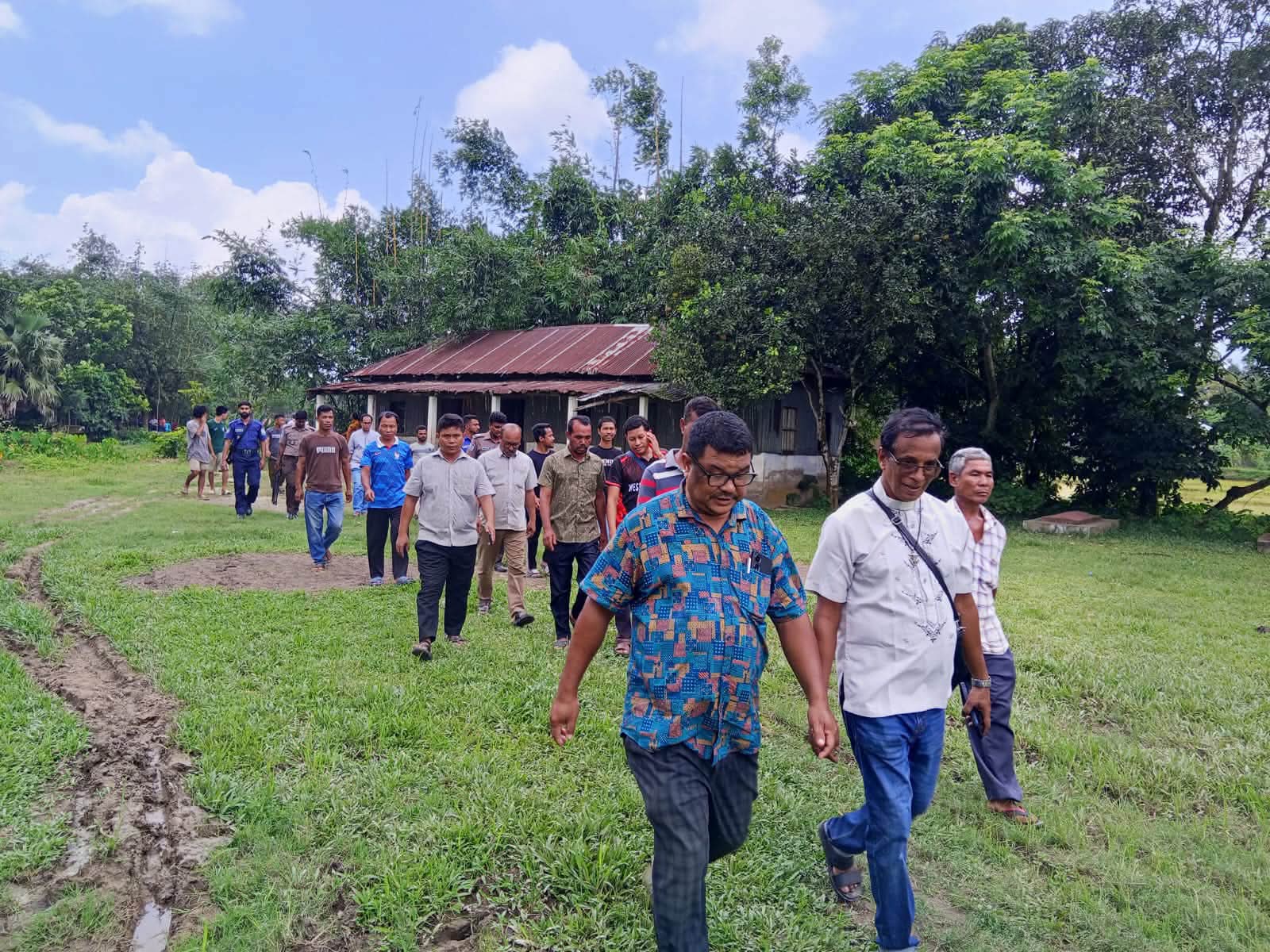
Catholic leaders urge protection for Christian village attacked in Bangladesh #Catholic The Catholic Church and Indigenous Christian leaders in Bangladesh have called on the authorities to protect families terrified by an attack on a Christian village and to bring those responsible to justice.On Aug. 12, houses in the village of Gazarikura, a community in the Diocese of Mymensingh in the north of the Muslim-majority country, were attacked, looted, and vandalized. Local Indigenous Garo people said the stolen property included cash, cows, goats, and other valuables.The Indigenous families said the attack and looting were carried out by people from a neighboring Muslim village after the body of a Muslim man was found in their village.Father Simon Hacha, vicar general of the Diocese of Mymensingh, visited the village together with other priests, sisters, Garo Indigenous leaders, and local leaders.“We never want unrest; we are for peace,” Hacha, who is himself a Garo, told EWTN News.“We pray for the soul of the deceased person around whom this problem has arisen and we offer our condolences to his family,” he said.He urged police not to harass those who are not guilty and to identify the culprits and take appropriate action.“I hope that the administration will provide security to the Garo Indigenous of this village and that the villagers will maintain good relations with each other so that peace can prevail in the future,” Hacha added.Losses and arrestsVillage leaders told EWTN News that six houses in Gazarikura were vandalized and that the furniture of one house was burned. The attackers took away seven cows, 10 goats, a motorcycle, cash, and expensive furniture. The incident spread panic among local residents.Father Lawrence Ribeiro, the parish priest of Mariamnagar, told EWTN News by telephone during a visit to the village on Aug. 14 that 11 houses had been looted and that televisions, refrigerators, cows, and goats had been taken away. The families do not have enough food, he said. “So, we brought food, soap, and other items for these families.”Ribeiro said the families had been calculated to have suffered losses of about 4 million taka (about ,000). “We are preparing to file a case of looting for this,” he said.The body of a rice trader, Billal Hossain, 40, was recovered by police. Nineteen people, including men and women from the Garo community, were arrested on suspicion of involvement in the case. Police later released 14 of them.According to police sources, Hossain, a resident of the Jarultala area of the upazila, or subdistrict, went missing on Aug. 4. On the afternoon of Aug. 12, local farmers working in a field smelled a foul odor near a canal, searched the surroundings, and found the body buried in the ground. Police went to the spot and recovered it after being informed.An organization of Garo Indigenous students said in a statement: "We want to say very clearly that the responsibility for the crime of an individual can never be imposed on an entire ethnic group, community, or population.”“If someone is involved in any crime, his involvement will be determined through an impartial and fair investigation. If the crime is proven, he will be tried according to the prevailing law. But suspecting, harassing, or victimizing another innocent person on the basis of an individualʼs identity, ethnic identity, or community identity is against justice,” the student organization said.S.M. Noor Mohammad, officer in charge of the Jhenaigati police station, said the atmosphere in the village is now calm and that police have been deployed.“The police are investigating the incident and are continuing their efforts to identify the criminals involved in the incident,” Mohammad said.On Aug. 9, Indigenous people had rallied for their rights and to protest atrocities against them on the occasion of the International Day of the Worldʼs Indigenous Peoples.

Catholic leaders urge protection for Christian village attacked in Bangladesh #Catholic The Catholic Church and Indigenous Christian leaders in Bangladesh have called on the authorities to protect families terrified by an attack on a Christian village and to bring those responsible to justice.On Aug. 12, houses in the village of Gazarikura, a community in the Diocese of Mymensingh in the north of the Muslim-majority country, were attacked, looted, and vandalized. Local Indigenous Garo people said the stolen property included cash, cows, goats, and other valuables.The Indigenous families said the attack and looting were carried out by people from a neighboring Muslim village after the body of a Muslim man was found in their village.Father Simon Hacha, vicar general of the Diocese of Mymensingh, visited the village together with other priests, sisters, Garo Indigenous leaders, and local leaders.“We never want unrest; we are for peace,” Hacha, who is himself a Garo, told EWTN News.“We pray for the soul of the deceased person around whom this problem has arisen and we offer our condolences to his family,” he said.He urged police not to harass those who are not guilty and to identify the culprits and take appropriate action.“I hope that the administration will provide security to the Garo Indigenous of this village and that the villagers will maintain good relations with each other so that peace can prevail in the future,” Hacha added.Losses and arrestsVillage leaders told EWTN News that six houses in Gazarikura were vandalized and that the furniture of one house was burned. The attackers took away seven cows, 10 goats, a motorcycle, cash, and expensive furniture. The incident spread panic among local residents.Father Lawrence Ribeiro, the parish priest of Mariamnagar, told EWTN News by telephone during a visit to the village on Aug. 14 that 11 houses had been looted and that televisions, refrigerators, cows, and goats had been taken away. The families do not have enough food, he said. “So, we brought food, soap, and other items for these families.”Ribeiro said the families had been calculated to have suffered losses of about 4 million taka (about $32,000). “We are preparing to file a case of looting for this,” he said.The body of a rice trader, Billal Hossain, 40, was recovered by police. Nineteen people, including men and women from the Garo community, were arrested on suspicion of involvement in the case. Police later released 14 of them.According to police sources, Hossain, a resident of the Jarultala area of the upazila, or subdistrict, went missing on Aug. 4. On the afternoon of Aug. 12, local farmers working in a field smelled a foul odor near a canal, searched the surroundings, and found the body buried in the ground. Police went to the spot and recovered it after being informed.An organization of Garo Indigenous students said in a statement: "We want to say very clearly that the responsibility for the crime of an individual can never be imposed on an entire ethnic group, community, or population.”“If someone is involved in any crime, his involvement will be determined through an impartial and fair investigation. If the crime is proven, he will be tried according to the prevailing law. But suspecting, harassing, or victimizing another innocent person on the basis of an individualʼs identity, ethnic identity, or community identity is against justice,” the student organization said.S.M. Noor Mohammad, officer in charge of the Jhenaigati police station, said the atmosphere in the village is now calm and that police have been deployed.“The police are investigating the incident and are continuing their efforts to identify the criminals involved in the incident,” Mohammad said.On Aug. 9, Indigenous people had rallied for their rights and to protest atrocities against them on the occasion of the International Day of the Worldʼs Indigenous Peoples.

Several homes were looted and vandalized in a mainly Catholic village after the body of a Muslim man was found nearby, and 19 Indigenous villagers were arrested.
Read More
Parishioners in western New York ask Vatican to let them save 160-year-old church #Catholic “[We] will not receive an extension or any second chances.” That’s the urgent message Catholics in western New York are telling the local faithful in their bid to preserve a Civil War-era parish in the small town of Auburn. The Diocese of Rochester is moving to permanently close and potentially sell Holy Family Church due to structural issues that officials say make it unsafe to use as a parish. 
 
 Interior details of Holy Family Catholic Church in Auburn, New York. | Credit: Photo courtesy of H.O.P.E.
 
 The diocese shut down the church in June 2024, but parishioners of the parish in Auburn — located about 40 minutes outside of Syracuse — are petitioning the Vatican to keep the church an active holy site rather than allow it to be sold off to potential developers. On its website, Holy Family Organization to Preserve and Endure says the Vatican has requested that the group “demonstrate funding for the purchase, repair, and maintenance of the church.”The organizers say they are working to raise pledges to support the parish but there is a “narrow time window” and numbers “must be provided to the Vatican by mid-late summer 2026.”“If H.O.P.E. fails to demonstrate sufficient evidence to the Vatican by mid-late summer, then Holy Family Church could be sold to a secular buyer and could be destroyed,” the group said.Parish’s roots stretch back to early 1800sThe Auburn-based Roblee Historic Preservation said in a “statement of significance” report that Auburn was the site of the first Catholic Mass in the Western New York region in the early 1800s. The Roblee report was drafted in order to assist the city’s historic review board in potentially awarding a landmark designation to the parish. The New York Historic Preservation Office had previously said the property was eligible for listing on both the state and national historic registers.
 
 Holy Family Church hosts the wedding of Joseph Paul Staehr Sr. and Jean Marie Hayes Staehr on Nov. 29, 1958. | Credit: Photo courtesy of Richard Staehr
 
 The Church of the Holy Family was initially dedicated in 1830 in a chapel previously used by local Methodists. The current building was built in 1861 by local Dutch-born master builder John Vanderbosch.The report described the parish as the “mother church” of Auburn and “an iconic part of its downtown skyline.” On its website, the Catholic preservation group says it hopes to retain the parish for “Catholic religious activity,” including rosary groups and private prayer groups, “occasional worship,” sacred music concerts, sacred art displays, and architecture tours.Karen Odrzywolski, the president of the parish preservation group, said the church is also meant to preserve the memory and legacy of Bishop Patrick Byrne, an apostolic delegate to Korea who was martyred in 1950 during a four-month-long forced march while in the captivity of communist forces in North Korea. Born in Washington, D.C., Byrne spent his formative years in Auburn, living just a few blocks from the parish. His family attended Mass there and he attended the parochial school; he was confirmed at the parish in 1900. 
 
 A record from Holy Family Church shows the Sept. 2, 1900, date of Bishop Patrick Byrne’s confirmation. | Credit: Courtesy of H.O.P.E.
 
 Odrzywolski told EWTN News the preservation group formed in July 2024, a month after the parish was officially shuttered by the diocese. “We initially put together a preservation plan, which we shared with our pastor and with the Diocese of Rochester,” she said. “We’ve also shared it with the Vatican.” “We’ve also worked on educating the community as to the significance of the church,” she said. “We’ve had events in honor of Bishop Byrne and of his family, and on the 75th anniversary of his martyrdom we had a prayer vigil.”In addition to the link with Byrne, Odrzywolski said the parish was also once host to another famous Catholic bishop, now-Venerable Archbishop Fulton Sheen. The prelate, at the time the bishop of the Diocese of Rochester, officiated the funeral Mass of Father William Davie at the parish in 1968. The Vatican has requested that the group demonstration its ability to fund the church’s upkeep, she said. “We’re very appreciative of this opportunity. We’re hopeful if we can demonstrate the funding they’ll allow us to proceed with preserving the church.”Thus far, Odrzywolski said, the group isn’t accepting cash donations; instead, it is collecting pledges “so we can demonstrate our ability to fund the maintenance, repair, and preservation of the church.” “We’ve received over 300 pledges,” she continued. “We’re extremely grateful to every single person who has pledged. Many people have pledged as much as they possibly can. Many who pledge in general may be of limited or fixed income.”Odrzywolski said the needed repairs are limited to the exterior facade. The interior, she said, has been well maintained over more than a century and a half. The Vatican, meanwhile, is expecting the group’s proof of viability by August. “We’re trying our best to aim for an Aug. 1 deadline in order to allow enough time to prepare the documents in a timely manner,” she said.“The truth is, we need the entire community to come together,” she said. “The closure of the church impacts the entire community, and we need individuals, families, and businesses to come together.” “It’s about the future of Auburn,” she continued. “but it’s also about honoring Bishop Byrne, and ultimately honoring God.”

Parishioners in western New York ask Vatican to let them save 160-year-old church #Catholic “[We] will not receive an extension or any second chances.” That’s the urgent message Catholics in western New York are telling the local faithful in their bid to preserve a Civil War-era parish in the small town of Auburn. The Diocese of Rochester is moving to permanently close and potentially sell Holy Family Church due to structural issues that officials say make it unsafe to use as a parish. Interior details of Holy Family Catholic Church in Auburn, New York. | Credit: Photo courtesy of H.O.P.E. The diocese shut down the church in June 2024, but parishioners of the parish in Auburn — located about 40 minutes outside of Syracuse — are petitioning the Vatican to keep the church an active holy site rather than allow it to be sold off to potential developers. On its website, Holy Family Organization to Preserve and Endure says the Vatican has requested that the group “demonstrate funding for the purchase, repair, and maintenance of the church.”The organizers say they are working to raise pledges to support the parish but there is a “narrow time window” and numbers “must be provided to the Vatican by mid-late summer 2026.”“If H.O.P.E. fails to demonstrate sufficient evidence to the Vatican by mid-late summer, then Holy Family Church could be sold to a secular buyer and could be destroyed,” the group said.Parish’s roots stretch back to early 1800sThe Auburn-based Roblee Historic Preservation said in a “statement of significance” report that Auburn was the site of the first Catholic Mass in the Western New York region in the early 1800s. The Roblee report was drafted in order to assist the city’s historic review board in potentially awarding a landmark designation to the parish. The New York Historic Preservation Office had previously said the property was eligible for listing on both the state and national historic registers. Holy Family Church hosts the wedding of Joseph Paul Staehr Sr. and Jean Marie Hayes Staehr on Nov. 29, 1958. | Credit: Photo courtesy of Richard Staehr The Church of the Holy Family was initially dedicated in 1830 in a chapel previously used by local Methodists. The current building was built in 1861 by local Dutch-born master builder John Vanderbosch.The report described the parish as the “mother church” of Auburn and “an iconic part of its downtown skyline.” On its website, the Catholic preservation group says it hopes to retain the parish for “Catholic religious activity,” including rosary groups and private prayer groups, “occasional worship,” sacred music concerts, sacred art displays, and architecture tours.Karen Odrzywolski, the president of the parish preservation group, said the church is also meant to preserve the memory and legacy of Bishop Patrick Byrne, an apostolic delegate to Korea who was martyred in 1950 during a four-month-long forced march while in the captivity of communist forces in North Korea. Born in Washington, D.C., Byrne spent his formative years in Auburn, living just a few blocks from the parish. His family attended Mass there and he attended the parochial school; he was confirmed at the parish in 1900. A record from Holy Family Church shows the Sept. 2, 1900, date of Bishop Patrick Byrne’s confirmation. | Credit: Courtesy of H.O.P.E. Odrzywolski told EWTN News the preservation group formed in July 2024, a month after the parish was officially shuttered by the diocese. “We initially put together a preservation plan, which we shared with our pastor and with the Diocese of Rochester,” she said. “We’ve also shared it with the Vatican.” “We’ve also worked on educating the community as to the significance of the church,” she said. “We’ve had events in honor of Bishop Byrne and of his family, and on the 75th anniversary of his martyrdom we had a prayer vigil.”In addition to the link with Byrne, Odrzywolski said the parish was also once host to another famous Catholic bishop, now-Venerable Archbishop Fulton Sheen. The prelate, at the time the bishop of the Diocese of Rochester, officiated the funeral Mass of Father William Davie at the parish in 1968. The Vatican has requested that the group demonstration its ability to fund the church’s upkeep, she said. “We’re very appreciative of this opportunity. We’re hopeful if we can demonstrate the funding they’ll allow us to proceed with preserving the church.”Thus far, Odrzywolski said, the group isn’t accepting cash donations; instead, it is collecting pledges “so we can demonstrate our ability to fund the maintenance, repair, and preservation of the church.” “We’ve received over 300 pledges,” she continued. “We’re extremely grateful to every single person who has pledged. Many people have pledged as much as they possibly can. Many who pledge in general may be of limited or fixed income.”Odrzywolski said the needed repairs are limited to the exterior facade. The interior, she said, has been well maintained over more than a century and a half. The Vatican, meanwhile, is expecting the group’s proof of viability by August. “We’re trying our best to aim for an Aug. 1 deadline in order to allow enough time to prepare the documents in a timely manner,” she said.“The truth is, we need the entire community to come together,” she said. “The closure of the church impacts the entire community, and we need individuals, families, and businesses to come together.” “It’s about the future of Auburn,” she continued. “but it’s also about honoring Bishop Byrne, and ultimately honoring God.”

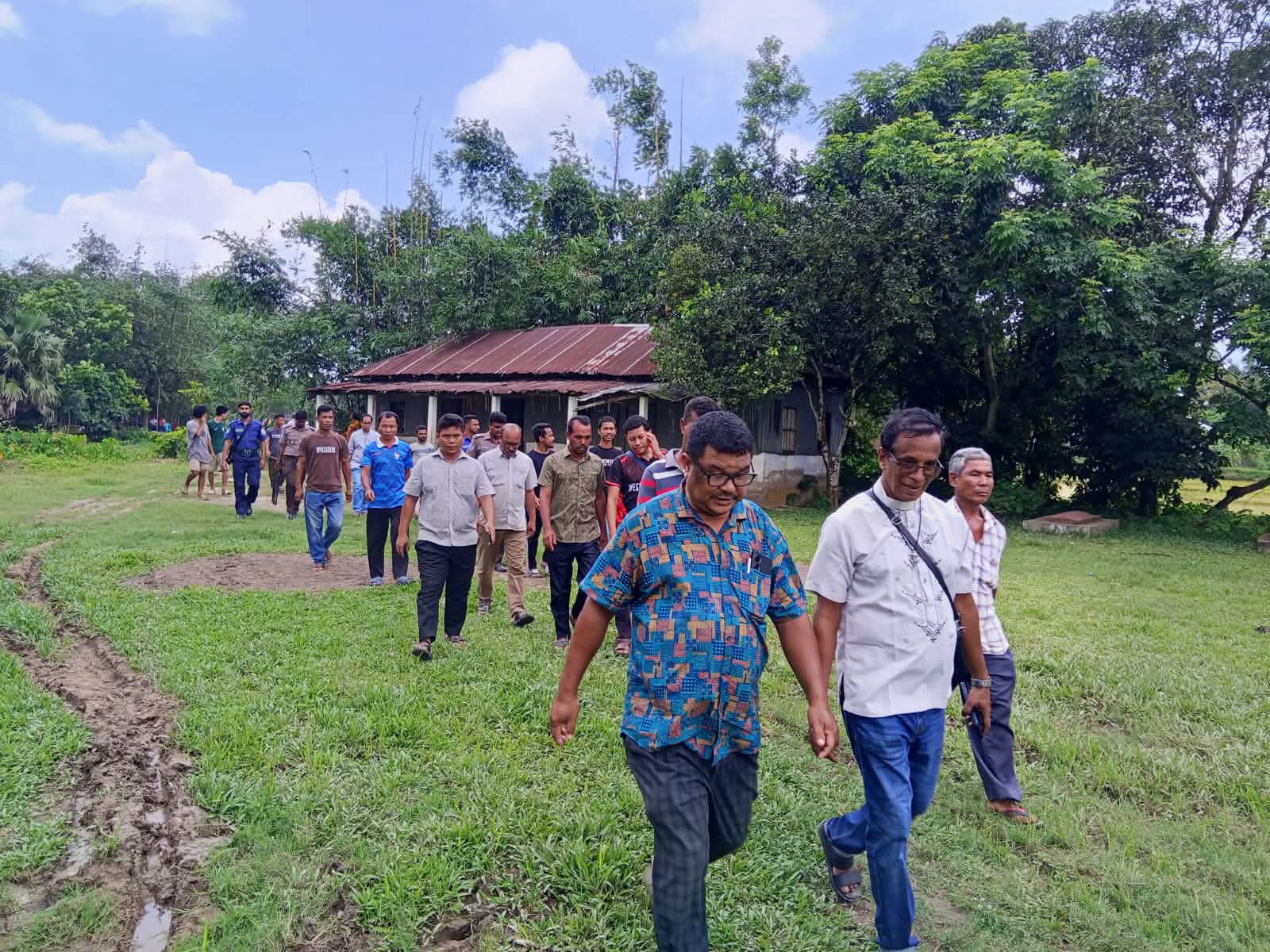
Holy Family Church in Auburn, New York, is facing a possible sale to developers if local Catholics cannot provide a financial plan to the Holy See.

Read More