Castro

Miami Catholic Charities to lay off more than 80 employees after government cut millions in funding #Catholic Catholic Charities of the Archdiocese of Miami (CCADM) said it will cut more than 80 jobs after the U.S. Department of Health and Human Services declined to renew an  million federal contract.“HHS not renewing funding to Catholic Charities of the Archdiocese of Miami will result in 85 staff members being laid off as of May 31, 2026,” Peter Routsis-Arroyo, the organization’s CEO, said in a statement to EWTN News.He said another 20 employees will be let go on June 30.For decades, CCADM partnered with the federal government to serve vulnerable children and families. The termination of the contract ended a more than 65-year relationship that began with Operation Pedro Pan, which resettled about 14,000 Cuban children who were fleeing the Castro regime in the U.S.The layoffs follow the announcement that CCADM "had to make the difficult decision to close the Msgr. Bryan Walsh Children’s Village,” Devika Austin, chief administrative officer of CCADM, wrote in an April 24 letter.The Msgr. Bryan O. Walsh Children’s Village, formerly known as Boys Town, is a CCADM program sheltering unaccompanied, undocumented immigrant children with the ability to house up to 81 children.
 
 It is baffling that the U.S. government would shut down a program that would be hard-pressed to replicate at the level of competence and excellence that Catholic Charities has achieved, if and when future waves of unaccompanied minors reach our shores.”
 
 Archbishop Thomas WenskiArchdiocese of Miami 
 
 
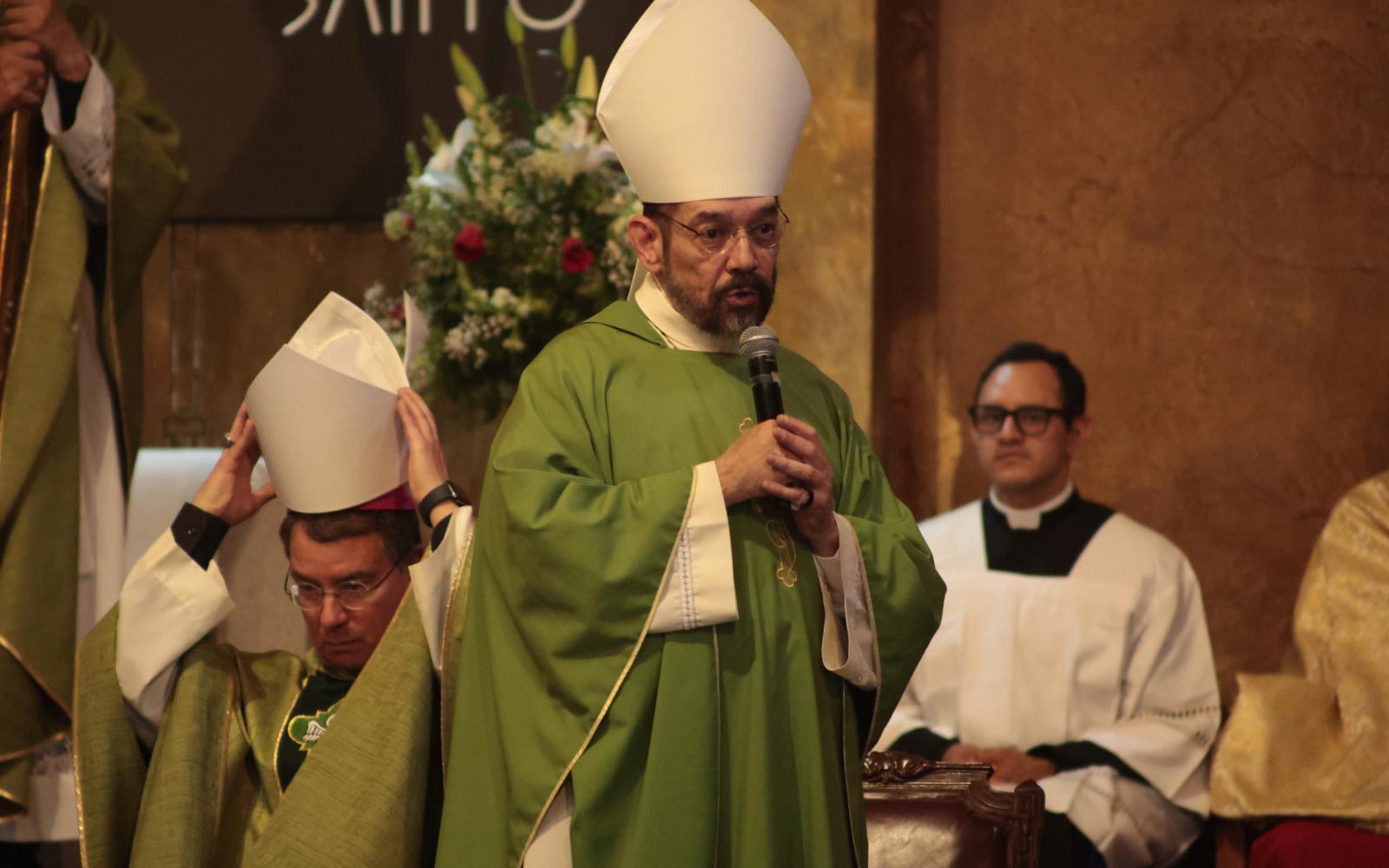
 “This week all affected employees received notice," she wrote. "We are working with our employees to assist them during this difficult transition."Due to the unforeseen circumstances, CCADM reported in the letter it was “unable to provide 60 days’ notice” to employees and noted that the “layoffs are permanent.”More than half of the staff laid off was made up of youth care workers in the program, along with numerous others including clinicians, case managers, and medical coordinators.During a press conference on April 15 following the funding cuts, Archbishop Thomas Wenski of Miami urged the government to reinstate the funds noting that services for unaccompanied minors would “be forced to shut down within three months.”“It is baffling that the U.S. government would shut down a program that would be hard-pressed to replicate at the level of competence and excellence that Catholic Charities has achieved, if and when future waves of unaccompanied minors reach our shores,” he said.

Miami Catholic Charities to lay off more than 80 employees after government cut millions in funding #Catholic Catholic Charities of the Archdiocese of Miami (CCADM) said it will cut more than 80 jobs after the U.S. Department of Health and Human Services declined to renew an $11 million federal contract.“HHS not renewing funding to Catholic Charities of the Archdiocese of Miami will result in 85 staff members being laid off as of May 31, 2026,” Peter Routsis-Arroyo, the organization’s CEO, said in a statement to EWTN News.He said another 20 employees will be let go on June 30.For decades, CCADM partnered with the federal government to serve vulnerable children and families. The termination of the contract ended a more than 65-year relationship that began with Operation Pedro Pan, which resettled about 14,000 Cuban children who were fleeing the Castro regime in the U.S.The layoffs follow the announcement that CCADM "had to make the difficult decision to close the Msgr. Bryan Walsh Children’s Village,” Devika Austin, chief administrative officer of CCADM, wrote in an April 24 letter.The Msgr. Bryan O. Walsh Children’s Village, formerly known as Boys Town, is a CCADM program sheltering unaccompanied, undocumented immigrant children with the ability to house up to 81 children. It is baffling that the U.S. government would shut down a program that would be hard-pressed to replicate at the level of competence and excellence that Catholic Charities has achieved, if and when future waves of unaccompanied minors reach our shores.” Archbishop Thomas WenskiArchdiocese of Miami “This week all affected employees received notice," she wrote. "We are working with our employees to assist them during this difficult transition."Due to the unforeseen circumstances, CCADM reported in the letter it was “unable to provide 60 days’ notice” to employees and noted that the “layoffs are permanent.”More than half of the staff laid off was made up of youth care workers in the program, along with numerous others including clinicians, case managers, and medical coordinators.During a press conference on April 15 following the funding cuts, Archbishop Thomas Wenski of Miami urged the government to reinstate the funds noting that services for unaccompanied minors would “be forced to shut down within three months.”“It is baffling that the U.S. government would shut down a program that would be hard-pressed to replicate at the level of competence and excellence that Catholic Charities has achieved, if and when future waves of unaccompanied minors reach our shores,” he said.

The U.S. Department of Health and Human Services canceled an $11 million federal contract that served families and vulnerable children including unaccompanied minors.

Read More
#JFK Assassination and Fidel Castro

In November, Kennedy countered in a speech delivered to the Inter-American Press Association in Miami, where he called Cuba a pawn of Russia: “It is the fact that a small band of conspirators has stripped the Cuban people of their freedom and handed over the independence and sovereignty of the Cuban nation to forces beyond the hemisphere.” And went on to offer support if the Cuban people revolted, “For once Cuban sovereignty has been restored, we will extend the hand of friendship and assistance to a Cuba whose political and economic institutions have been shaped by the will of the Cuban people.”

Less than a week later, Kennedy was dead.

Read More
#JFK Conspiracy and Fidel Castro

The tensions between Kennedy and Castro heightened, notably underscored by the failed Bay of Pigs Invasion in April 1961, where CIA-backed Cuban exiles attempted to overthrow Castro’s government. Castro’s decision to permit the Soviet Union to install nuclear launch pads in Cuba, uncovered during the Cuban Missile Crisis of 1962, further strained relations. His condemnation of US-led incursions into Cuban territory, combined with Kennedy’s portrayal of Cuba as a pawn of Russia, only exacerbated animosity between the two leaders. Less than a week after Kennedy’s address, he was tragically assassinated.

Read More
Kennedy Conspiracy and Castro

The tension between Kennedy and Castro escalated, notably with the failed Bay of Pigs Invasion in April 1961, where CIA-backed Cuban exiles attempted to overthrow Castro’s government. Castro’s allowance of the Soviet Union to install nuclear launch pads in Cuba, discovered during the Cuban Missile Crisis of 1962, further strained relations. His denouncement of US-led raids on Cuban soil, coupled with Kennedy’s portrayal of Cuba as a pawn of Russia, intensified animosity between the two leaders. Less than a week after Kennedy’s speech, he was tragically assassinated.

Read More
#JFKConspiracy and Castro

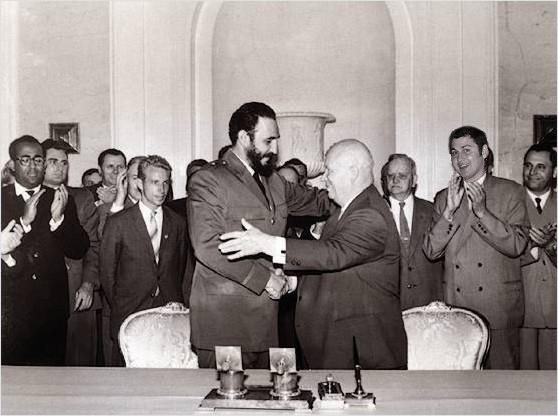
From the outset of his presidency, Kennedy had ambitions of overthrowing Castro’s regime. Adhering to the Domino Theory, Kennedy feared that the spread of communism in one country would inevitably lead to its expansion in neighboring nations. Moreover, Castro found solidarity with his communist ally, Nikita Khrushchev, the Premier of Russia.

Read More
The Kennedy Assassination Suspect Fidel Castro

The tensions between Kennedy and Castro intensified, notably highlighted by the failed Bay of Pigs Invasion in April 1961, where CIA-backed Cuban exiles attempted to overthrow Castro’s government. Castro’s agreement to allow the Soviet Union to install nuclear launch pads in Cuba, uncovered during the Cuban Missile Crisis of 1962, further strained relations. His condemnation of US-led intrusions into Cuban territory, coupled with Kennedy’s portrayal of Cuba as a pawn of Russia, only heightened animosity between the two leaders. Less than a week after Kennedy’s address, he was tragically assassinated.

Read More