![Falling cross that killed priest a punishment from God? A priest reflects #Catholic The death of Father Patricio Alfredo Sánchez Molinari on Saturday, Oct. 17, which occurred when a cross fell on him while he was celebrating Mass in Guayaquil, Ecuador, has left Catholics in shock.In response to comments on social media questioning whether the incident was a punishment from God, Father Juan Carlos Vásconez, a priest and rector of St. Josemaría Escrivá Church in Guayaquil, pointed to a passage from the Gospel to explain why it should not be interpreted in that way.In comments to EWTN News Español, the Spanish-language sister service of EWTN News, Vásconez spoke about the collapse of the tower of Siloam, which resulted in the deaths of 18 people (cf. Luke 13:4-5). He explained that Jesus made it clear that the victims were no more sinful than the other inhabitants of Jerusalem. Rather than assigning them blame, the Lord called everyone to repentance.“In the face of death, there is a message of equality. Life is fragile, and we will all go through that moment,” he said.The priest recalled that Sánchez was very well loved in Guayaquil and noted his piety. In February, he had led a retreat that was attended by other priests.A cross falls during MassFor Vásconez, the circumstances surrounding the Redemptorist priest’s death also invite reflection on the Christian faith.“The Mass is the sacrifice of Christ on Calvary, and it is the greatest thing we Christians have here on earth,” he noted.Vásconez shared in the grief caused by Sánchez’s passing, affirming that even in the midst of a tragedy, the faithful can find strength in God. He also asked for prayers for the Redemptorists and for the community of Our Lady of Perpetual Help Parish, which has lost its parish priest.“I would say that this will serve as a seed, inspiring [more men] to also want to dedicate themselves,” he added, referring to the possibility that the priest’s witness might encourage new vocations.Reviewing safety in churchesVásconez also called for an inspection of objects installed within churches to prevent accidents. He emphasized the need to ensure that crosses and religious images are securely fastened and that items attached to walls and ceilings are also checked.He mentioned that he recently learned of another incident in which a piece of marble detached from a wall. Consequently, he explained that at the church where he serves, they will inspect the ceiling lights to ensure they are securely anchored.“These are safety matters which incidents like this serve as a reminder to pay attention to such things,” he noted.The priest asked for prayers for the parishioners of Our Lady of Perpetual Help and for the Redemptorist family following the death of Sánchez.This story was first published by EWTN News Español, the Spanish-language sister service of EWTN News. It has been translated and adapted by EWTN News English.](https://unitedyam.com/wp-content/uploads/2026/10/falling-cross-that-killed-priest-a-punishment-from-god-a-priest-reflects-catholic-the-death-of-father-patricio-alfredo-sanchez-molinari-on-saturday-oct-17-which-occurred-when-a-cross-fell-on-him-scaled.jpg "Falling cross that killed priest a punishment from God? A priest reflects #Catholic The death of Father Patricio Alfredo Sánchez Molinari on Saturday, Oct. 17, which occurred when a cross fell on him while he was celebrating Mass in Guayaquil, Ecuador, has left Catholics in shock.In response to comments on social media questioning whether the incident was a punishment from God, Father Juan Carlos Vásconez, a priest and rector of St. Josemaría Escrivá Church in Guayaquil, pointed to a passage from the Gospel to explain why it should not be interpreted in that way.In comments to EWTN News Español, the Spanish-language sister service of EWTN News, Vásconez spoke about the collapse of the tower of Siloam, which resulted in the deaths of 18 people (cf. Luke 13:4-5). He explained that Jesus made it clear that the victims were no more sinful than the other inhabitants of Jerusalem. Rather than assigning them blame, the Lord called everyone to repentance.“In the face of death, there is a message of equality. Life is fragile, and we will all go through that moment,” he said.The priest recalled that Sánchez was very well loved in Guayaquil and noted his piety. In February, he had led a retreat that was attended by other priests.A cross falls during MassFor Vásconez, the circumstances surrounding the Redemptorist priest’s death also invite reflection on the Christian faith.“The Mass is the sacrifice of Christ on Calvary, and it is the greatest thing we Christians have here on earth,” he noted.Vásconez shared in the grief caused by Sánchez’s passing, affirming that even in the midst of a tragedy, the faithful can find strength in God. He also asked for prayers for the Redemptorists and for the community of Our Lady of Perpetual Help Parish, which has lost its parish priest.“I would say that this will serve as a seed, inspiring [more men] to also want to dedicate themselves,” he added, referring to the possibility that the priest’s witness might encourage new vocations.Reviewing safety in churchesVásconez also called for an inspection of objects installed within churches to prevent accidents. He emphasized the need to ensure that crosses and religious images are securely fastened and that items attached to walls and ceilings are also checked.He mentioned that he recently learned of another incident in which a piece of marble detached from a wall. Consequently, he explained that at the church where he serves, they will inspect the ceiling lights to ensure they are securely anchored.“These are safety matters which incidents like this serve as a reminder to pay attention to such things,” he noted.The priest asked for prayers for the parishioners of Our Lady of Perpetual Help and for the Redemptorist family following the death of Sánchez.This story was first published by EWTN News Español, the Spanish-language sister service of EWTN News. It has been translated and adapted by EWTN News English.")

Father Juan Vásconez said the death of Father Patricio Sánchez resulting from a large cross falling in him should not be interpreted as a punishment but as a call to repent, as we will all die.
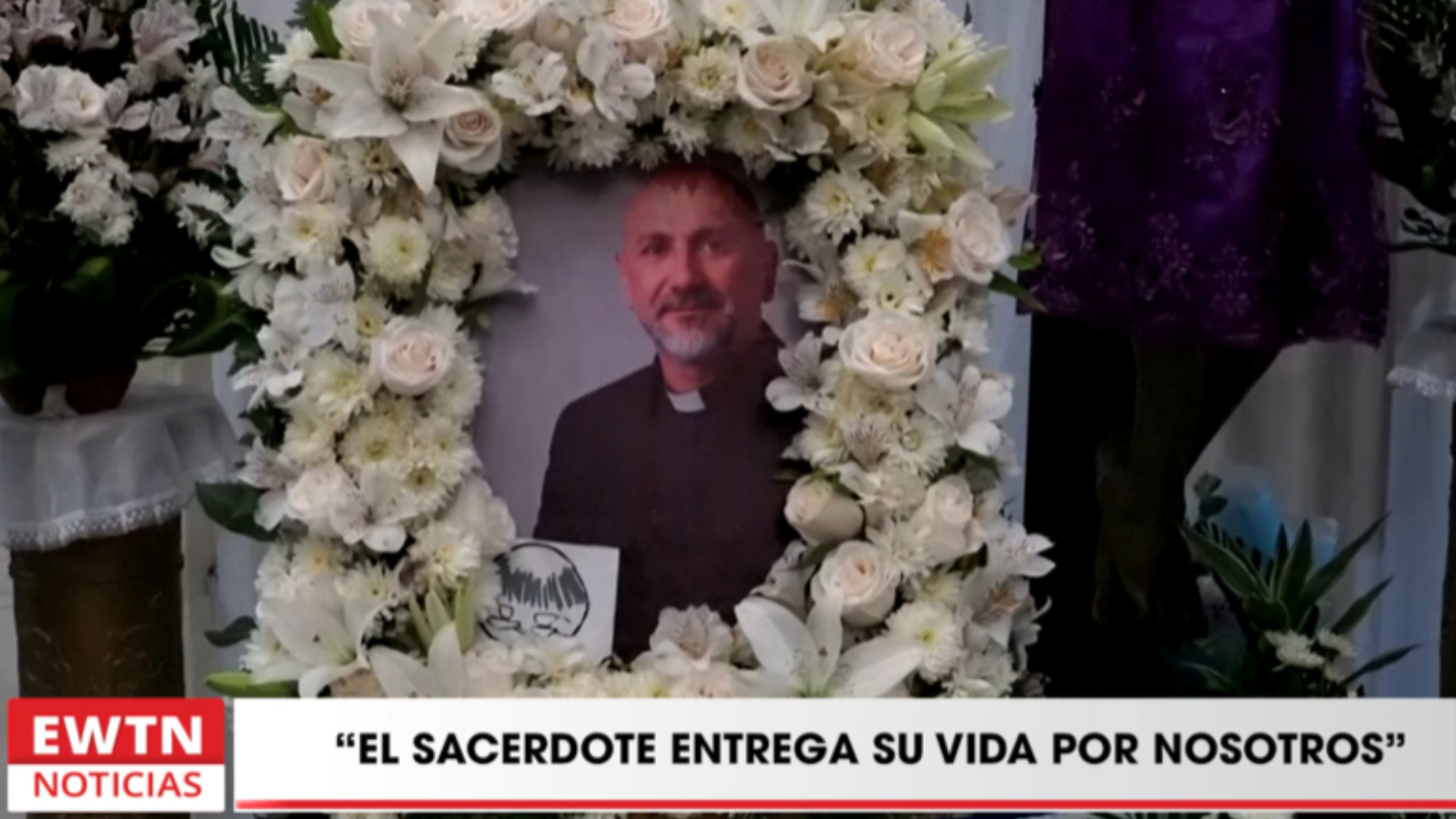
Father Juan Vásconez said the death of Father Patricio Sánchez resulting from a large cross falling in him should not be interpreted as a punishment but as a call to repent, as we will all die.