Day: October 22, 2026

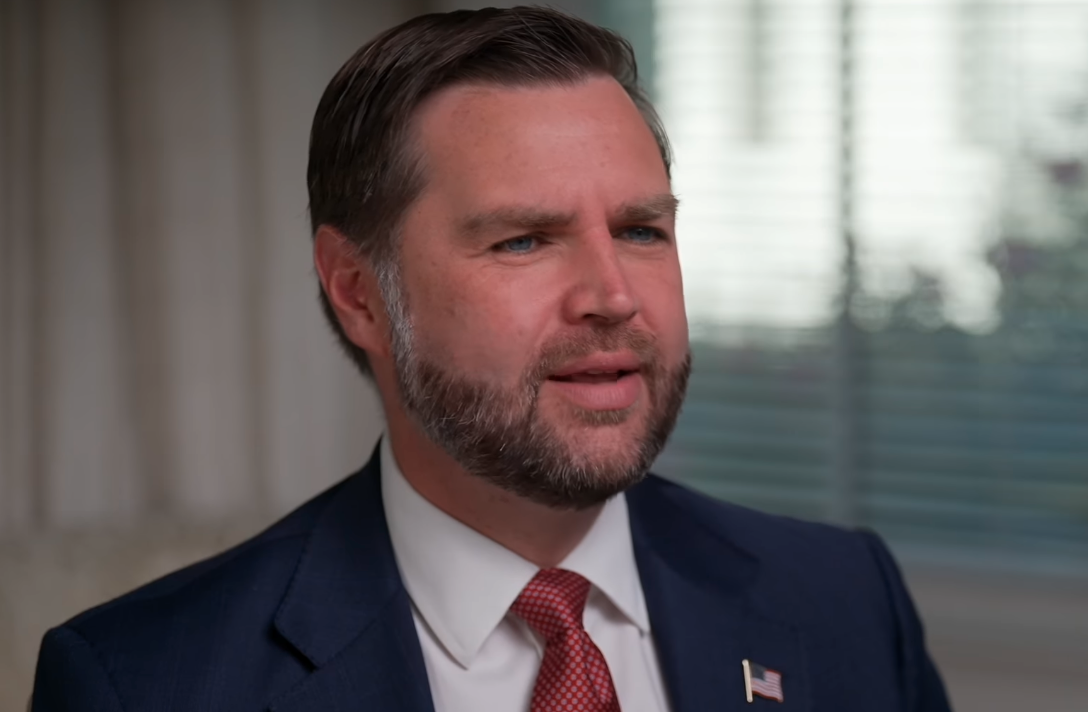
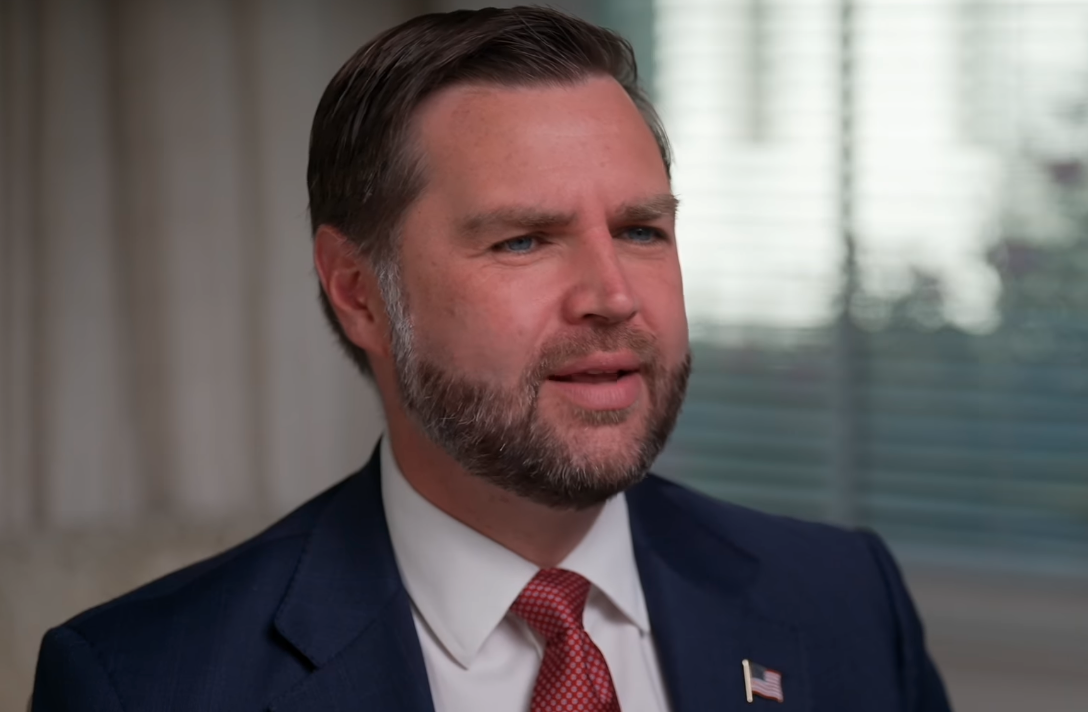
Vice President Vance to EWTN: ‘We are God’s ambassadors on Earth’ #Catholic Vice President JD Vance on Oct. 22 told Raymond Arroyo on EWTN News’ “The World Over with Raymond Arroyo” that God calls Christians to be “humble in the face [of] uncertainty” and that Christians walking in faith often “take two steps toward Jesus and one step back” before arriving at Christ. Vance spoke with Arroyo in a wide-ranging interview that included politics, immigration, economics, and faith. The vice president has been especially forthcoming about his own faith journey, one which began in Appalachian Protestant churches and eventually led him to the Catholic Church. He attended Christian churches while growing up but was drawn to what in June he described as the “beautiful ancient Church” of Catholicism. Speaking with Arroyo, Vance described a religious experience in which he was driving on mountain roads back from his grandmother’s funeral and nearly drove off the road. “And just like right at that point where Iʼm like, all right, Iʼm about to go over the side of the mountain, the car just comes to a completely restful stop,” he said. “Like God put his hand on that car and made it stop.”The experience “gnawed at me,” Vance said, describing the event as “a door opening.” “[W]e are ultimately Godʼs ambassadors here on Earth,” he said, describing what he said is the “powerful” witness of Christians “doing good things.” Arroyo and Vance discussed several other topics in the interview, including the ongoing civil unrest and rioting in France. “I donʼt think you can talk about whatʼs happening in France without acknowledging the role of migration,” Vance said. “Because in the neighborhoods where you see the most significant violence, the most significant outburst, the burning of these beautiful historical buildings — you often have neighborhoods with extremely high immigrant populations.”Western societies “want to be welcoming to people,” the vice president said. But “when we allow someone into our country, are they culturally compatible? Are they willing to assimilate into Western values and Western society?”Asked about Church leadership on immigration issues, Vance — who has publicly disagreed with the U.S. bishops on some aspects of the immigration debate — said he would “never accuse the Church of being naive.” The Church “will say two things that I fundamentally believe in and agree with, but I think 90% of people agree with, which is: One, you must be welcoming towards a stranger. On the other hand, nations are allowed to control their borders.” As Vance sees it, the Church leadership in the U.S. has “missed an opportunity” to strike a balance on immigration in an age of high migration. He noted that the airplane is “less than 100 years old” and that rapid large-scale immigration is “a very new phenomenon.” “I do think the Church has to figure out what should the immigration policy of an advanced economy be in a world of mass transit,” he said. He noted that Christians are called “to be fundamentally hopeful [of] the future.” He disputed arguments that France is on the verge of “civilizational death,” describing it instead as “civilizational risk.” “[I] think that if France returns to its Christian roots, it can be welcoming to the stranger. It can also protect its borders and in a way that preserves its civilization,” he said.

Vice President Vance to EWTN: ‘We are God’s ambassadors on Earth’ #Catholic Vice President JD Vance on Oct. 22 told Raymond Arroyo on EWTN News’ “The World Over with Raymond Arroyo” that God calls Christians to be “humble in the face [of] uncertainty” and that Christians walking in faith often “take two steps toward Jesus and one step back” before arriving at Christ. Vance spoke with Arroyo in a wide-ranging interview that included politics, immigration, economics, and faith. The vice president has been especially forthcoming about his own faith journey, one which began in Appalachian Protestant churches and eventually led him to the Catholic Church. He attended Christian churches while growing up but was drawn to what in June he described as the “beautiful ancient Church” of Catholicism. Speaking with Arroyo, Vance described a religious experience in which he was driving on mountain roads back from his grandmother’s funeral and nearly drove off the road. “And just like right at that point where Iʼm like, all right, Iʼm about to go over the side of the mountain, the car just comes to a completely restful stop,” he said. “Like God put his hand on that car and made it stop.”The experience “gnawed at me,” Vance said, describing the event as “a door opening.” “[W]e are ultimately Godʼs ambassadors here on Earth,” he said, describing what he said is the “powerful” witness of Christians “doing good things.” Arroyo and Vance discussed several other topics in the interview, including the ongoing civil unrest and rioting in France. “I donʼt think you can talk about whatʼs happening in France without acknowledging the role of migration,” Vance said. “Because in the neighborhoods where you see the most significant violence, the most significant outburst, the burning of these beautiful historical buildings — you often have neighborhoods with extremely high immigrant populations.”Western societies “want to be welcoming to people,” the vice president said. But “when we allow someone into our country, are they culturally compatible? Are they willing to assimilate into Western values and Western society?”Asked about Church leadership on immigration issues, Vance — who has publicly disagreed with the U.S. bishops on some aspects of the immigration debate — said he would “never accuse the Church of being naive.” The Church “will say two things that I fundamentally believe in and agree with, but I think 90% of people agree with, which is: One, you must be welcoming towards a stranger. On the other hand, nations are allowed to control their borders.” As Vance sees it, the Church leadership in the U.S. has “missed an opportunity” to strike a balance on immigration in an age of high migration. He noted that the airplane is “less than 100 years old” and that rapid large-scale immigration is “a very new phenomenon.” “I do think the Church has to figure out what should the immigration policy of an advanced economy be in a world of mass transit,” he said. He noted that Christians are called “to be fundamentally hopeful [of] the future.” He disputed arguments that France is on the verge of “civilizational death,” describing it instead as “civilizational risk.” “[I] think that if France returns to its Christian roots, it can be welcoming to the stranger. It can also protect its borders and in a way that preserves its civilization,” he said.

JD Vance spoke with EWTN News anchor Raymond Arroyo in a wide-ranging interview that included politics, immigration, economics, and faith.
Read More

Gospel and Word of the Day – 23 October 2026 – A reading from the Letter of St. Paul to the Ephesians 4:1-6 Brothers and sisters: I, a prisoner for the Lord, urge you to live in a manner worthy of the call you have received, with all humility and gentleness, with patience, bearing with one another through love, striving to preserve the unity of the spirit through the bond of peace;   one Body and one Spirit, as you were also called to the one hope of your call; one Lord, one faith, one baptism; one God and Father of all, who is over all and through all and in all.From the Gospel according to Luke 12:54-59 Jesus said to the crowds, “When you see a cloud rising in the west you say immediately that it is going to rain–and so it does; and when you notice that the wind is blowing from the south you say that it is going to be hot–and so it is. You hypocrites! You know how to interpret the appearance of the earth and the sky; why do you not know how to interpret the present time? “Why do you not judge for yourselves what is right? If you are to go with your opponent before a magistrate, make an effort to settle the matter on the way; otherwise your opponent will turn you over to the judge, and the judge hand you over to the constable, and the constable throw you into prison. I say to you, you will not be released until you have paid the last penny.”Knowing the signs of the times. Times change, and it is in the nature of Christian wisdom to recognize these changes, to recognize the different times and to recognize the signs of the times. To understand what one thing means and what another means. And to do this without fear, with freedom. This is a task we usually don’t do. Instead, we conform, we become tranquillized with “they told me; I heard; people say; I read…”, and we remain comfortable. Instead, we should ask ourselves: “What is the truth? What is the message that the Lord wants to give me with that sign of the times?”. First and foremost, silence is necessary: to be quiet, to watch and observe. And afterwards to think within ourselves. For example: why are there so many wars now? Why did this thing happen? And to pray: silence, reflection and prayer. Only then can we understand the signs of the times and what Jesus wants to tell us. Times change and we Christians must continually change. We must change, steadfast in the faith in Jesus Christ, steadfast in the truth of the Gospel, but our approach must constantly move according to the signs of the times. (Pope Francis, Homily at Santa Marta, 23 October 2015)  

A reading from the Letter of St. Paul to the Ephesians
4:1-6

Brothers and sisters:
I, a prisoner for the Lord,
urge you to live in a manner worthy of the call you have received,
with all humility and gentleness, with patience,
bearing with one another through love,
striving to preserve the unity of the spirit
through the bond of peace;  
one Body and one Spirit,
as you were also called to the one hope of your call;
one Lord, one faith, one baptism;
one God and Father of all,
who is over all and through all and in all.

From the Gospel according to Luke
12:54-59

Jesus said to the crowds,
“When you see a cloud rising in the west
you say immediately that it is going to rain–and so it does;
and when you notice that the wind is blowing from the south
you say that it is going to be hot–and so it is.
You hypocrites!
You know how to interpret the appearance of the earth and the sky;
why do you not know how to interpret the present time?

“Why do you not judge for yourselves what is right?
If you are to go with your opponent before a magistrate,
make an effort to settle the matter on the way;
otherwise your opponent will turn you over to the judge,
and the judge hand you over to the constable,
and the constable throw you into prison.
I say to you, you will not be released
until you have paid the last penny.”

Knowing the signs of the times. Times change, and it is in the nature of Christian wisdom to recognize these changes, to recognize the different times and to recognize the signs of the times. To understand what one thing means and what another means. And to do this without fear, with freedom. This is a task we usually don’t do. Instead, we conform, we become tranquillized with “they told me; I heard; people say; I read…”, and we remain comfortable. Instead, we should ask ourselves: “What is the truth? What is the message that the Lord wants to give me with that sign of the times?”. First and foremost, silence is necessary: to be quiet, to watch and observe. And afterwards to think within ourselves. For example: why are there so many wars now? Why did this thing happen? And to pray: silence, reflection and prayer. Only then can we understand the signs of the times and what Jesus wants to tell us. Times change and we Christians must continually change. We must change, steadfast in the faith in Jesus Christ, steadfast in the truth of the Gospel, but our approach must constantly move according to the signs of the times. (Pope Francis, Homily at Santa Marta, 23 October 2015)


Read More
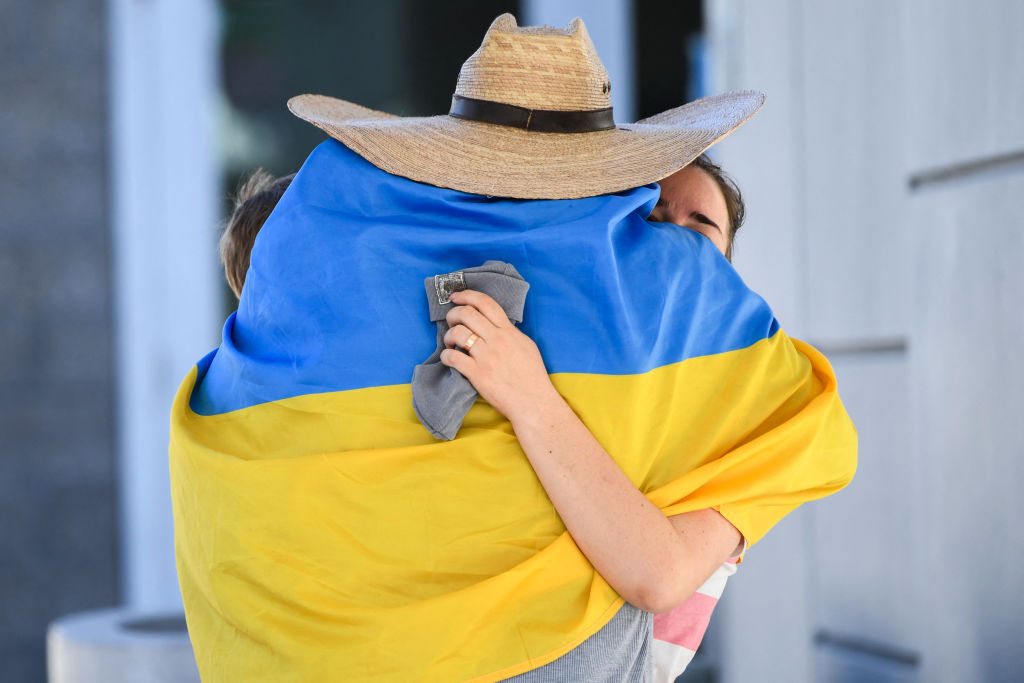
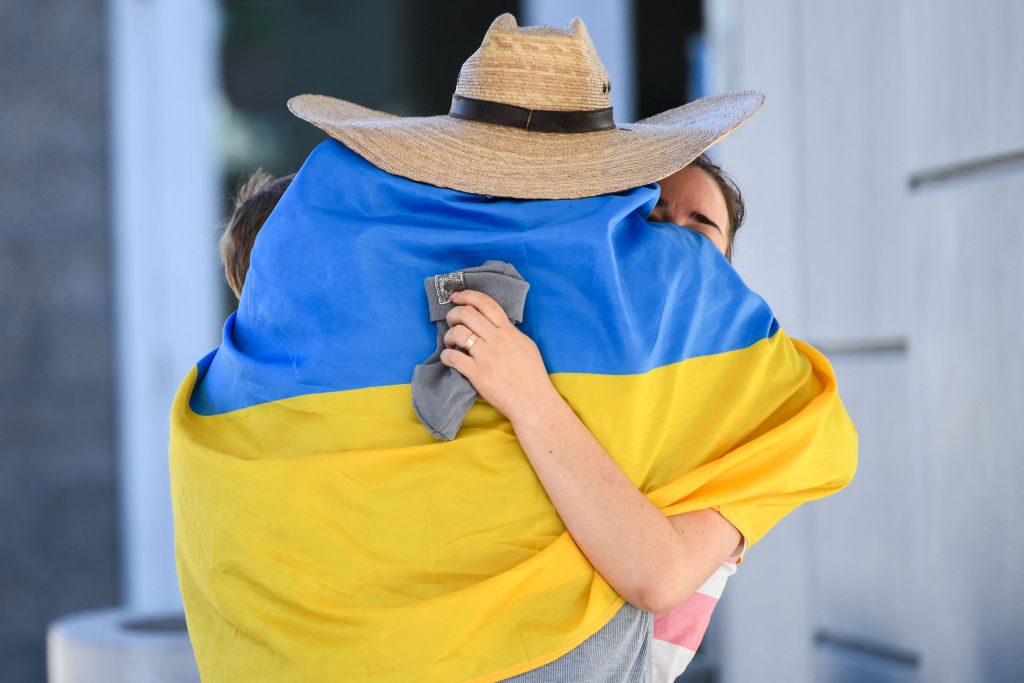
U.S. bishops urge continued immigration protections for Ukrainians, Salvadorans – #Catholic – Catholic bishops warned that uncertainty over immigration protections for Ukrainians and Salvadorans could result in deportations and family disruption if temporary protected status (TPS) lapses.On Oct. 19, the U.S. Citizenship and Immigration Services (USCIS) posted an alert saying Ukrainian TPS beneficiaries would continue to retain protections, including employment authorization, pending an announcement “made at the appropriate time.” The agency posted a similar announcement about El Salvador TPS as a Sept. 9 expiration deadline passed.TPS is an immigration status granted to eligible foreign nationals from designated countries that are deemed unsafe to return to due to ongoing conflict, environmental disasters, or other extraordinary conditions.U.S. bishops said with more than 170,000 Salvadorans and about 100,000 Ukrainians estimated to hold TPS, the administration should “carefully consider conditions in countries of origin and the threats to human life that could come with forcibly repatriating people.” The bishops urged the government to provide meaningful notice about the future of the designations so that families, employers, and communities can plan accordingly, a U.S. Conference of Catholic Bishops (USCCB) statement said.The Department of Homeland Security (DHS), which determines whether to extend or end TPS, said in a statement to EWTN News on Oct. 22 that Ukrainians and Salvadorans with TPS will “retain protection” under the program until the agency announces a final decision on the future of the designations.El Salvador first received TPS in 2001 after devastating earthquakes, and the designation has been repeatedly renewed since then. The U.S. first granted TPS to Ukrainians in April 2022, after Russiaʼs full-scale invasion starting Feb. 24, 2022, made conditions unsafe for many Ukrainians to return home. The United Nations has verified more than 13,000 civilian deaths in Ukraine, while warning the actual toll is likely much higher.Archbishop Borys Gudziak of the Ukrainian Catholic Archeparchy of Philadelphia, chair-elect of the U.S. Conference of Catholic Bishops’ Committee on International Justice and Peace, said many Ukrainians relying on TPS in the United States have no home to go back to, according to the USCCB update.“In recent months, DHS terminated TPS designations for various countries, often while existing conditions in those countries make return of large numbers of people unsafe or impractical,” according to a USCCB statement on Sept. 24.The Trump administration has moved to end TPS for people from more than a dozen countries since 2025, and Lebanon TPS is set to end Nov. 27. TPS for Haiti ended July 27.Pathway to legal statusU.S. bishops have continued to support legislative efforts “to provide a pathway to permanent legal status for longtime residents of the United States.” Bishops have supported legislation such as H.R. 1589 that would provide a pathway to permanent residency for certain “dreamers” (those brought to the U.S. illegally as children by family) and other immigrants with temporary protections while expanding access to green cards for some TPS and Deferred Enforced Departure recipients.The bill, sponsored by Rep. Sylvia Garcia, D-Texas, “would create a long-term solution for those in this situation who have contributed positively to the fabric of American life and have established equities in the country, such as having U.S.-citizen spouses and children, owning businesses, and more,” the USCCB statement said.Another bill (H.R. 10740) introduced in the U.S. House on Oct. 5 would extend temporary protected status for eligible Ukrainians by redesignating protections until July 1, 2029.In April, the House passed legislation, H.R. 1689, that would extend TPS for Haitians for three more years. No legislative efforts have gained traction in the Senate.‘In limbo’Without any formal notice from DHS about the status of El Salvador’s TPS, it has left communities “in limbo,” said Lizbeth Iniguez, immigration attorney at Alba Law in Long Beach, California.“At the moment, we hear a lot of fear, especially in the Salvadoran community … we can only tell them how to prepare,” Iniguez said.David Spicer, USCCB’s policy and engagement director, said Catholic Charities and other Church ministries are seeing growing demand as families lose legal protections and work authorization.“They’re seeing people having to grapple with the loss of the legal protection, their work authorization, families struggling to make ends meet. Then more people turn to Catholic services for things like food and housing assistance,” Spicer said.Uncertainty about TPS status could expose longtime U.S. residents to deportation, family separation, and the loss of work authorization, according to U.S. bishops.“I think Haiti is probably the most serious example of this. It is objectively unsafe for large numbers of people to be forcibly repatriated to Haiti at this time,” Spicer said. “When you consider that this is also a factor in several other countries where they are no longer TPS designations … it really does set up the opportunity, if not the loss of human life, then the harm that could be inflicted on the people.”Spicer said the TPS uncertainty also was “going to hurt employers … they’re having an even harder time because they’ve lost workers who were relying on employment authorization that they had through TPS.”

U.S. bishops urge continued immigration protections for Ukrainians, Salvadorans – #Catholic – Catholic bishops warned that uncertainty over immigration protections for Ukrainians and Salvadorans could result in deportations and family disruption if temporary protected status (TPS) lapses.On Oct. 19, the U.S. Citizenship and Immigration Services (USCIS) posted an alert saying Ukrainian TPS beneficiaries would continue to retain protections, including employment authorization, pending an announcement “made at the appropriate time.” The agency posted a similar announcement about El Salvador TPS as a Sept. 9 expiration deadline passed.TPS is an immigration status granted to eligible foreign nationals from designated countries that are deemed unsafe to return to due to ongoing conflict, environmental disasters, or other extraordinary conditions.U.S. bishops said with more than 170,000 Salvadorans and about 100,000 Ukrainians estimated to hold TPS, the administration should “carefully consider conditions in countries of origin and the threats to human life that could come with forcibly repatriating people.” The bishops urged the government to provide meaningful notice about the future of the designations so that families, employers, and communities can plan accordingly, a U.S. Conference of Catholic Bishops (USCCB) statement said.The Department of Homeland Security (DHS), which determines whether to extend or end TPS, said in a statement to EWTN News on Oct. 22 that Ukrainians and Salvadorans with TPS will “retain protection” under the program until the agency announces a final decision on the future of the designations.El Salvador first received TPS in 2001 after devastating earthquakes, and the designation has been repeatedly renewed since then. The U.S. first granted TPS to Ukrainians in April 2022, after Russiaʼs full-scale invasion starting Feb. 24, 2022, made conditions unsafe for many Ukrainians to return home. The United Nations has verified more than 13,000 civilian deaths in Ukraine, while warning the actual toll is likely much higher.Archbishop Borys Gudziak of the Ukrainian Catholic Archeparchy of Philadelphia, chair-elect of the U.S. Conference of Catholic Bishops’ Committee on International Justice and Peace, said many Ukrainians relying on TPS in the United States have no home to go back to, according to the USCCB update.“In recent months, DHS terminated TPS designations for various countries, often while existing conditions in those countries make return of large numbers of people unsafe or impractical,” according to a USCCB statement on Sept. 24.The Trump administration has moved to end TPS for people from more than a dozen countries since 2025, and Lebanon TPS is set to end Nov. 27. TPS for Haiti ended July 27.Pathway to legal statusU.S. bishops have continued to support legislative efforts “to provide a pathway to permanent legal status for longtime residents of the United States.” Bishops have supported legislation such as H.R. 1589 that would provide a pathway to permanent residency for certain “dreamers” (those brought to the U.S. illegally as children by family) and other immigrants with temporary protections while expanding access to green cards for some TPS and Deferred Enforced Departure recipients.The bill, sponsored by Rep. Sylvia Garcia, D-Texas, “would create a long-term solution for those in this situation who have contributed positively to the fabric of American life and have established equities in the country, such as having U.S.-citizen spouses and children, owning businesses, and more,” the USCCB statement said.Another bill (H.R. 10740) introduced in the U.S. House on Oct. 5 would extend temporary protected status for eligible Ukrainians by redesignating protections until July 1, 2029.In April, the House passed legislation, H.R. 1689, that would extend TPS for Haitians for three more years. No legislative efforts have gained traction in the Senate.‘In limbo’Without any formal notice from DHS about the status of El Salvador’s TPS, it has left communities “in limbo,” said Lizbeth Iniguez, immigration attorney at Alba Law in Long Beach, California.“At the moment, we hear a lot of fear, especially in the Salvadoran community … we can only tell them how to prepare,” Iniguez said.David Spicer, USCCB’s policy and engagement director, said Catholic Charities and other Church ministries are seeing growing demand as families lose legal protections and work authorization.“They’re seeing people having to grapple with the loss of the legal protection, their work authorization, families struggling to make ends meet. Then more people turn to Catholic services for things like food and housing assistance,” Spicer said.Uncertainty about TPS status could expose longtime U.S. residents to deportation, family separation, and the loss of work authorization, according to U.S. bishops.“I think Haiti is probably the most serious example of this. It is objectively unsafe for large numbers of people to be forcibly repatriated to Haiti at this time,” Spicer said. “When you consider that this is also a factor in several other countries where they are no longer TPS designations … it really does set up the opportunity, if not the loss of human life, then the harm that could be inflicted on the people.”Spicer said the TPS uncertainty also was “going to hurt employers … they’re having an even harder time because they’ve lost workers who were relying on employment authorization that they had through TPS.”

Ukrainian and El Salvadoran temporary protected status (TPS) beneficiaries will continue to retain immigration protections, pending an announcement “made at the appropriate time,” the government said.
Read More
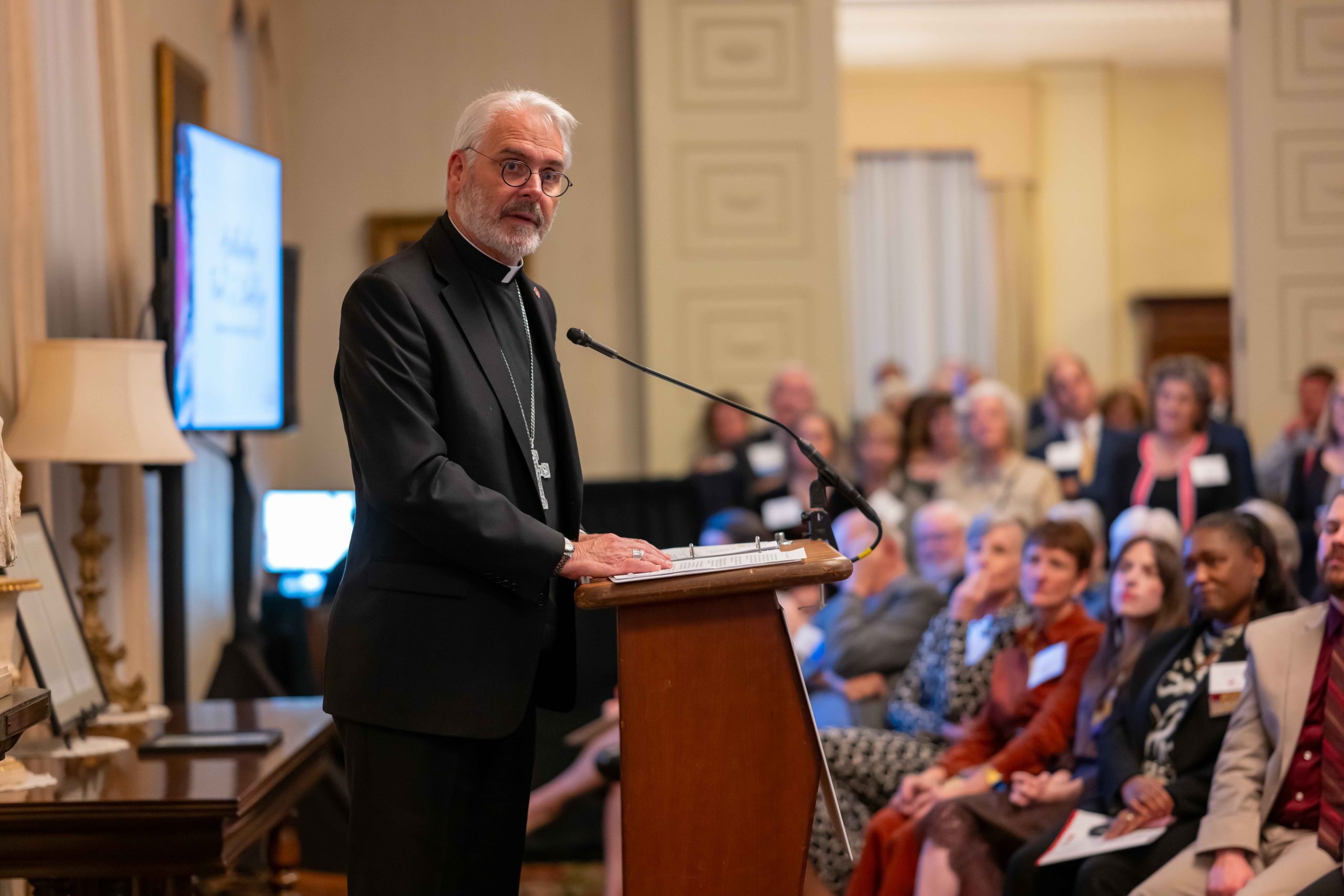
Archbishop Coakley receives award for anti-death penalty advocacy – #Catholic – Catholic Mobilizing Network (CMN) honored Archbishop Paul Coakley with an award for his public opposition to the death penalty during its Justice Reimagined Awards and Celebration at the apostolic nunciature in Washington, D.C.Coakley, president of the U.S. Conference of Catholic Bishops, received CMN’s Archbishop Fiorenza Dignity and Life Award, named after civil rights advocate and death penalty abolitionist Archbishop Joseph Fiorenza of Galveston-Houston, at the Oct. 21 event.Coakley, a longtime advocate against the death penalty including in his home state of Oklahoma, earlier this month condemned the Trump administration’s plan to livestream the military execution of the Fort Hood mass shooter, Nidal Hasan. “Our God is the God of life,” he said in an Oct. 9 statement. “In no way can Hasan’s actions be condoned but this decision is a barbaric promotion of a culture of death and must be reconsidered.”“It goes without saying that Iʼm very humbled and honored by this this award,” Coakley said during his acceptance speech. “Archbishop Fiorenza was a true champion whom I knew as the president of the bishops’ conference when I was a brand-new bishop, and I had always admired his work and his convictions and his principles.”“Being in the United States of America at this time has really turned my attention more toward advocating for the condemned on death row and the need for us as a people, as a Church, as a nation to recognize the injustice and the inhumanity of what is being done in our name,” he said.
 
 Being in the United States of America at this time has really turned my attention more toward advocating for the condemned on death row and the need for us as a people, as a Church, as a nation to recognize the injustice and the inhumanity of what is being done in our name.”
 
 Archbishop Paul CoakleyArchdiocese of Oklahoma City
 
 
 Coakley shared that he first became aware of the importance of advocating for life in 1973, the year Roe v. Wade was passed into law and the year he graduated from high school. The law, he said, allowed “the wholesale destruction of the most vulnerable and innocent of human lives on a massive scale.”“So for many years, in terms of life issues, opposing abortion and advocating for the right to the life of the unborn was really my primary passion and concern,” he said. “Only later did I come to appreciate the meaning of respect for life from conception to its natural end.”Coakley reflected that over time, “seeing up close that life is sacred and that it is to be preserved” ultimately led to him to the conclusion “that human dignity cannot be forfeited, no matter how heinous the crime that a man or woman has committed.” He noted that during his time as an archbishop in Oklahoma, he was struck by the notion that his home state, like Florida and Texas, “was very solidly pro-life in terms of supporting the right to life of the unborn” but was “unforgiving” in its embrace of capital punishment.Coakley spoke out in August against the execution of a condemned murderer in Oklahoma, calling for prayers for both the killer’s victims and the killer himself while urging a “more humane form of justice.”Concluding his speech, Coakley expressed gratitude to CMN for its advocacy.“Iʼm encouraged and hopeful, especially in view of some of the things that have been in the news of late, that weʼll all find renewed courage and determination to continue this fight to advocate for the sanctity, the dignity of every human life, from conception to its natural end,” he said.Archbishop Gabriele Caccia, apostolic nuncio to the U.S., delivered a message from Vatican Secretary of State Cardinal Pietro Parolin expressing his closeness to those gathered for the event. Elizabeth Bruening, a Catholic and two-time Pulitzer-Prize finalist and writer for The Atlantic, also received a Reimagining Justice Award at the event.

Archbishop Coakley receives award for anti-death penalty advocacy – #Catholic – Catholic Mobilizing Network (CMN) honored Archbishop Paul Coakley with an award for his public opposition to the death penalty during its Justice Reimagined Awards and Celebration at the apostolic nunciature in Washington, D.C.Coakley, president of the U.S. Conference of Catholic Bishops, received CMN’s Archbishop Fiorenza Dignity and Life Award, named after civil rights advocate and death penalty abolitionist Archbishop Joseph Fiorenza of Galveston-Houston, at the Oct. 21 event.Coakley, a longtime advocate against the death penalty including in his home state of Oklahoma, earlier this month condemned the Trump administration’s plan to livestream the military execution of the Fort Hood mass shooter, Nidal Hasan. “Our God is the God of life,” he said in an Oct. 9 statement. “In no way can Hasan’s actions be condoned but this decision is a barbaric promotion of a culture of death and must be reconsidered.”“It goes without saying that Iʼm very humbled and honored by this this award,” Coakley said during his acceptance speech. “Archbishop Fiorenza was a true champion whom I knew as the president of the bishops’ conference when I was a brand-new bishop, and I had always admired his work and his convictions and his principles.”“Being in the United States of America at this time has really turned my attention more toward advocating for the condemned on death row and the need for us as a people, as a Church, as a nation to recognize the injustice and the inhumanity of what is being done in our name,” he said. Being in the United States of America at this time has really turned my attention more toward advocating for the condemned on death row and the need for us as a people, as a Church, as a nation to recognize the injustice and the inhumanity of what is being done in our name.” Archbishop Paul CoakleyArchdiocese of Oklahoma City Coakley shared that he first became aware of the importance of advocating for life in 1973, the year Roe v. Wade was passed into law and the year he graduated from high school. The law, he said, allowed “the wholesale destruction of the most vulnerable and innocent of human lives on a massive scale.”“So for many years, in terms of life issues, opposing abortion and advocating for the right to the life of the unborn was really my primary passion and concern,” he said. “Only later did I come to appreciate the meaning of respect for life from conception to its natural end.”Coakley reflected that over time, “seeing up close that life is sacred and that it is to be preserved” ultimately led to him to the conclusion “that human dignity cannot be forfeited, no matter how heinous the crime that a man or woman has committed.” He noted that during his time as an archbishop in Oklahoma, he was struck by the notion that his home state, like Florida and Texas, “was very solidly pro-life in terms of supporting the right to life of the unborn” but was “unforgiving” in its embrace of capital punishment.Coakley spoke out in August against the execution of a condemned murderer in Oklahoma, calling for prayers for both the killer’s victims and the killer himself while urging a “more humane form of justice.”Concluding his speech, Coakley expressed gratitude to CMN for its advocacy.“Iʼm encouraged and hopeful, especially in view of some of the things that have been in the news of late, that weʼll all find renewed courage and determination to continue this fight to advocate for the sanctity, the dignity of every human life, from conception to its natural end,” he said.Archbishop Gabriele Caccia, apostolic nuncio to the U.S., delivered a message from Vatican Secretary of State Cardinal Pietro Parolin expressing his closeness to those gathered for the event. Elizabeth Bruening, a Catholic and two-time Pulitzer-Prize finalist and writer for The Atlantic, also received a Reimagining Justice Award at the event.

Coakley said living in the U.S. has deepened his commitment to advocating for death row inmates and urging the Church and the nation to see the inhumanity of executions carried out in their name.
Read More
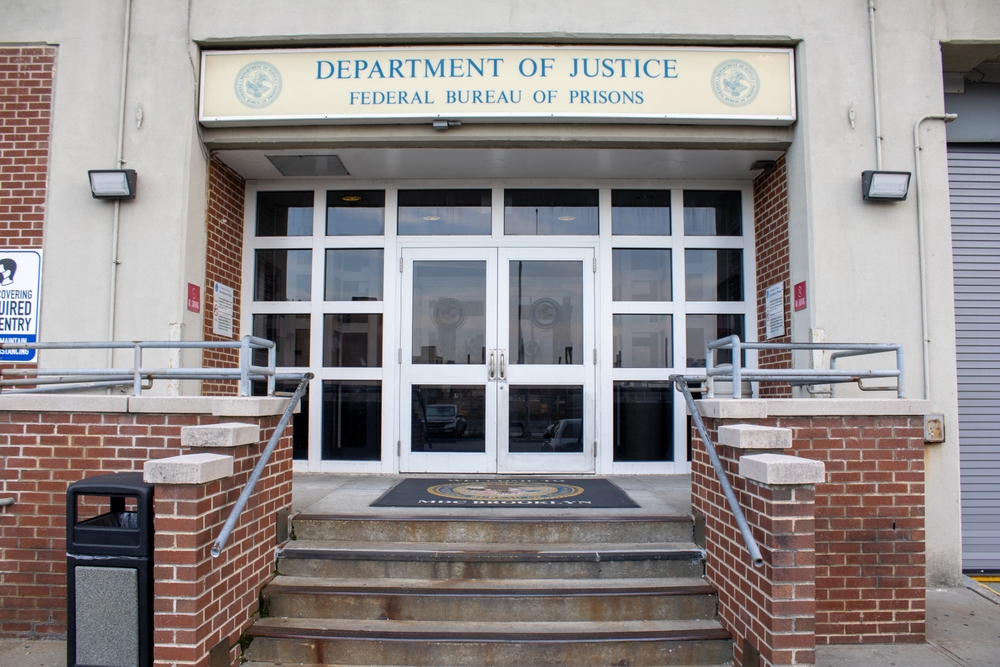
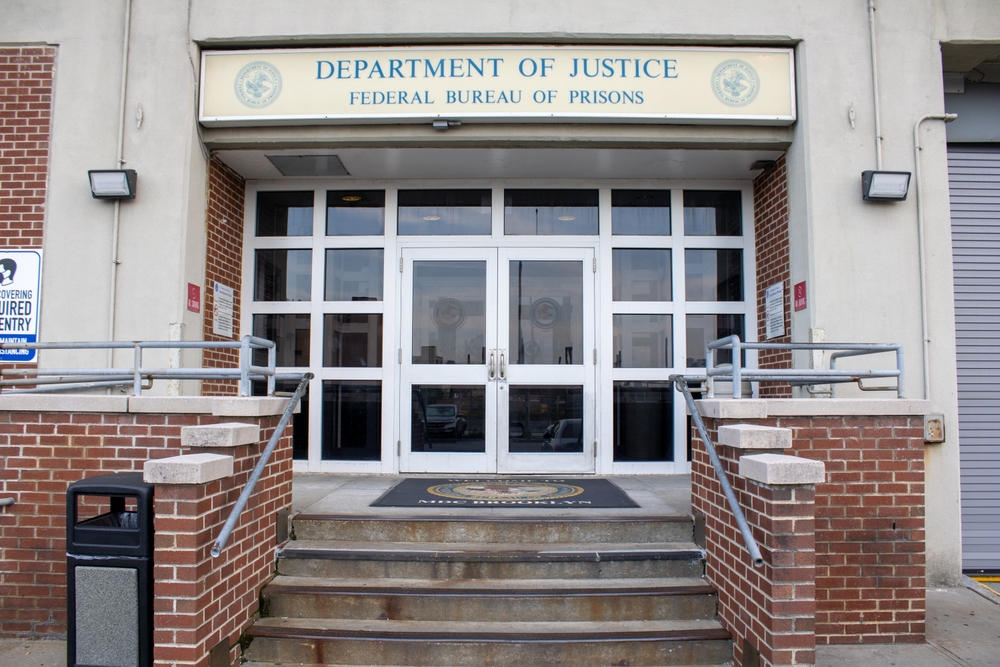
Supreme Court order leaves federal prison transgender services in place for now – #Catholic – The U.S. Supreme Court on Oct. 21 left in place lower-court rulings that require the federal prison system to continue providing transgender-related benefits to inmates.The unsigned order rejected the Bureau of Prison’s petition to reverse rulings from both the U.S. district court and the U.S. Court of Appeals for the District of Columbia. Justices Clarence Thomas and Samuel Alito said they would have granted the government’s request.The high court’s decision means that the bureau may not implement a policy passed in February that forbids the use of hormone therapy on prisoners who believe themselves to be the opposite sex. The rule also forbids “social accommodations” including wigs and makeup.The suit against the Bureau of Prisons was brought by several inmates who identify as transgender.LGBT-related policy at federal prisons has been in flux following President Donald Trump’s 2024 election. Earlier that year, the Biden Justice Department had signaled that prisons throughout the United States must provide prisoners with transgender-related medical care, including “hormone therapy” and other gender-related requests.Just after taking office in January 2025, on the other hand, Trump issued an executive order that purported to combat “efforts to eradicate the biological reality of sex.” Among the provisions of that order was a directive ordering the Bureau of Prisons to “[revise] its policies concerning medical care” to move away from gender-related provisions.

Supreme Court order leaves federal prison transgender services in place for now – #Catholic – The U.S. Supreme Court on Oct. 21 left in place lower-court rulings that require the federal prison system to continue providing transgender-related benefits to inmates.The unsigned order rejected the Bureau of Prison’s petition to reverse rulings from both the U.S. district court and the U.S. Court of Appeals for the District of Columbia. Justices Clarence Thomas and Samuel Alito said they would have granted the government’s request.The high court’s decision means that the bureau may not implement a policy passed in February that forbids the use of hormone therapy on prisoners who believe themselves to be the opposite sex. The rule also forbids “social accommodations” including wigs and makeup.The suit against the Bureau of Prisons was brought by several inmates who identify as transgender.LGBT-related policy at federal prisons has been in flux following President Donald Trump’s 2024 election. Earlier that year, the Biden Justice Department had signaled that prisons throughout the United States must provide prisoners with transgender-related medical care, including “hormone therapy” and other gender-related requests.Just after taking office in January 2025, on the other hand, Trump issued an executive order that purported to combat “efforts to eradicate the biological reality of sex.” Among the provisions of that order was a directive ordering the Bureau of Prisons to “[revise] its policies concerning medical care” to move away from gender-related provisions.

Justices Clarence Thomas and Samuel Alito said they would have granted the government’s request to reverse the rulings.
Read More
St. Vincent Ministry Day encourages students to serve others #Catholic – “I’m happy that I have the opportunity to do this to help others,” said Michael Gilgallon, an eighth grader at Assumption School in Morristown, N.J., who took part in the Sisters of Charity of St. Elizabeth’s fifth annual St. Vincent de Paul Ministry Day on Sept. 29.
Daniel Puentes, also an eighth grader at Assumption, said he was happy to be “doing what God wanted him to do: to help others.”
“It’s good for us to be here,” said Sister of Charity Maureen Shaughnessy, general superior of the Sisters of Charity, as she welcomed about 500 students, faculty, sisters, associates and volunteers to the prayer service in Holy Family Chapel at the motherhouse in the Convent Station neighborhood of Morris Township, N.J., to kick off the day.
With this year’s theme of “Hearts on Fire,” Sister Shaughnessy said she hoped everyone’s hearts would be on fire to do what Jesus did in his life for those in need. She encouraged participants to model how saints like St. Louise de Marillac, St. Vincent de Paul, and St. Elizabeth Ann Seton embraced charity in their lives.
“Share your experience with others and set their hearts on fire,” Sister Shaughnessy said.
The theme was taken from the sentiment of a quote from St. Vincent de Paul, who said one’s vocation is to set the hearts of others on fire “to do what the Son of God did, who came to set the world on fire.”

Click here to subscribe to our weekly newsletter.

Students from eight elementary and high schools, St. Elizabeth University, also in Morris Township, and the nonprofit Josephine’s Place volunteered for projects. They packed supply bags for the Father English Center in Paterson, N.J., part of Catholic Charities of the Paterson Diocese, N.J., made portable bags for food for the St. Joseph Neighborhood Center in Camden and assembled school supplies for other nonprofits to benefit children in need.
Other groups wrote greeting cards to send to sisters and Seton Associates in nursing homes, made sandwiches and breakfast bags, and assembled “Sam Bags” with toiletries, hats, and gloves for the homeless.
In the Blessed Miriam Teresa Legacy Room at the motherhouse, students created “Blessing Bookmarks” and prayer cards for people who needed comfort and encouragement. They learned about the former Sister of Charity of St. Elizabeth who is on the road to sainthood. The room is a welcoming space that displays photographs and objects celebrating Blessed Miriam’s family, heritage, and legacy.
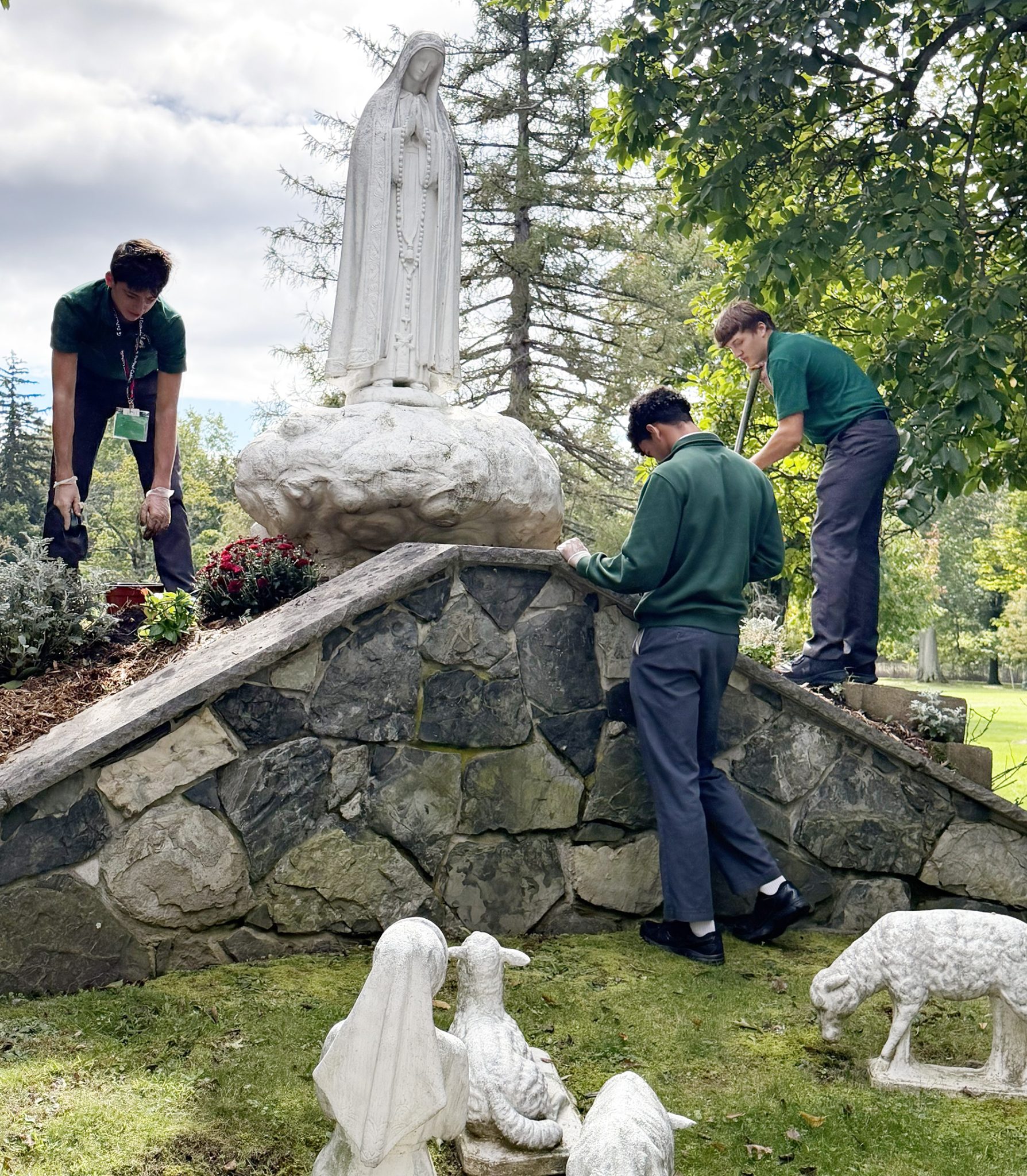
Giancarlo Glass and John Galka, students at DePaul Catholic High School in Wayne, N.J., planted flowers on the other side of the grounds and arranged the flowerpots at the Our Lady of Fatima grotto.
“We are sharing how beautiful God’s creation is,” said Glass, adding that he was happy to “give back to our earth, our planet, and all the other people who made this possible.”
The annual event takes months of planning with a team led by Sister of Charity Maryanne Tracey and Shannon O’Neill, co-directors of the Office of Vocation and Mission Engagement.
“It is heartwarming to see the children join with our sisters, Seton Associates, employees, partners in mission and friends as they work on their projects,” said Sister Tracey.
O’Neill said the students and other volunteers must understand where “the work of their hands is going” so they bring representatives of the nonprofits to St. Vincent Day to explain their ministries. Beyond the community service, she said, the experience allows the students to get to know other students from different socioeconomic backgrounds and different parts of the state and have fun.
Sister of Charity Helen Moores said she is always happy to lend a hand with many pre-event tasks, including folding hundreds of T-shirts.
O’Neill said the students benefit greatly from the caring presence of the sisters.
“It is wonderful to see how the children respond to the sisters. They love to sit with them and talk with them,” O’Neill said.
At the opening prayer service, Sister Shaughnessy told those gathered that everyone is called to care for others “whether it is convenient or inconvenient,” just like the Good Samaritan did. We are challenged, she said, to recognize everyone as a sister or brother.
“You will be making a difference by your presence, prayer and action,” Sister Shaughnessy said.
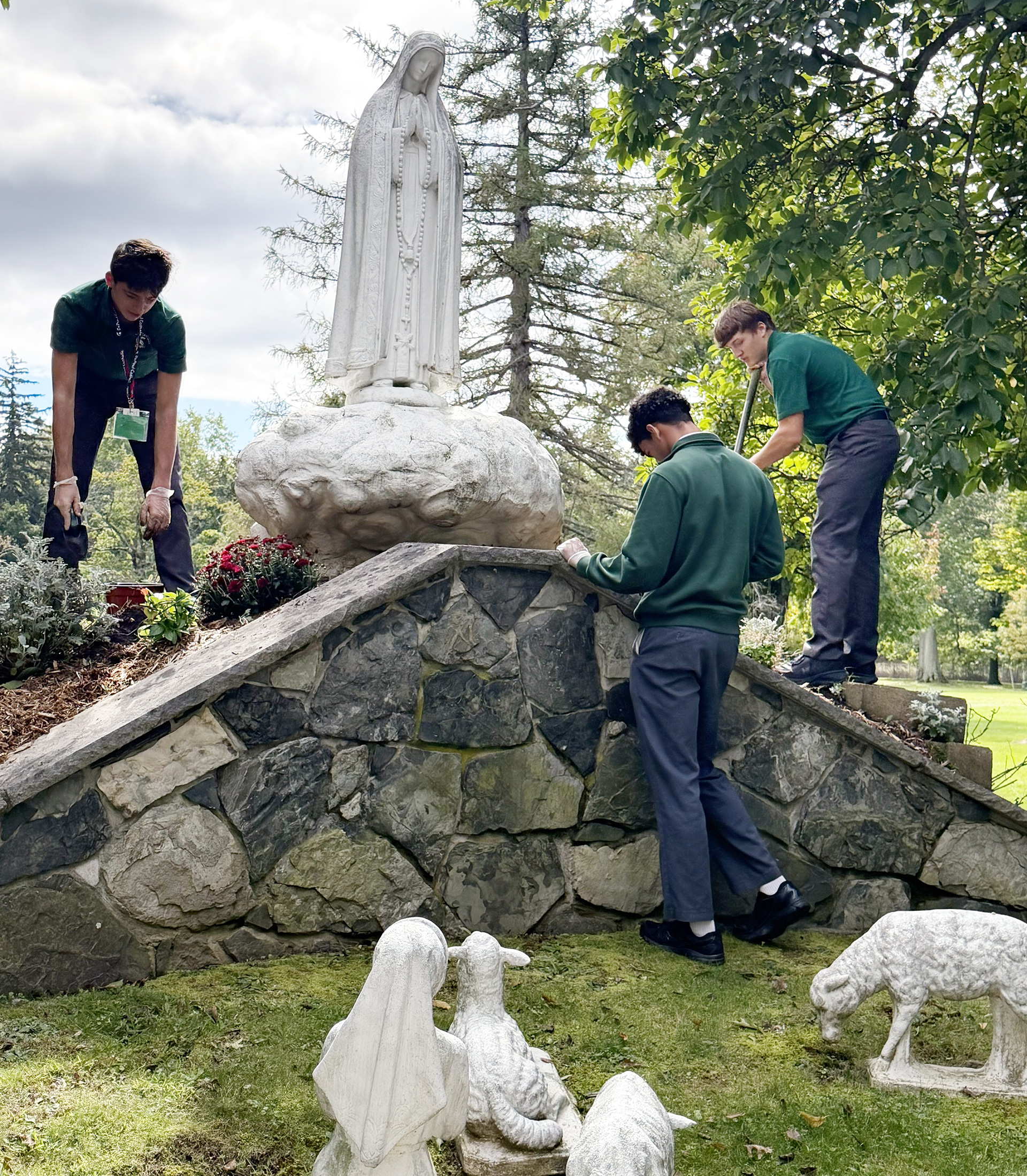
Students from De Paul Catholic High School in Wayne, N.J., volunteer to plant flowers on the motherhouse grounds and organize the flowerpots at the Our Lady of Fatima grotto during the Sisters of Charity of St. Elizabeth’s 5th annual St. Vincent de Paul Ministry Day on Sept. 29.

St. Vincent Ministry Day encourages students to serve others #Catholic – “I’m happy that I have the opportunity to do this to help others,” said Michael Gilgallon, an eighth grader at Assumption School in Morristown, N.J., who took part in the Sisters of Charity of St. Elizabeth’s fifth annual St. Vincent de Paul Ministry Day on Sept. 29. Daniel Puentes, also an eighth grader at Assumption, said he was happy to be “doing what God wanted him to do: to help others.” “It’s good for us to be here,” said Sister of Charity Maureen Shaughnessy, general superior of the Sisters of Charity, as she welcomed about 500 students, faculty, sisters, associates and volunteers to the prayer service in Holy Family Chapel at the motherhouse in the Convent Station neighborhood of Morris Township, N.J., to kick off the day. With this year’s theme of “Hearts on Fire,” Sister Shaughnessy said she hoped everyone’s hearts would be on fire to do what Jesus did in his life for those in need. She encouraged participants to model how saints like St. Louise de Marillac, St. Vincent de Paul, and St. Elizabeth Ann Seton embraced charity in their lives. “Share your experience with others and set their hearts on fire,” Sister Shaughnessy said. The theme was taken from the sentiment of a quote from St. Vincent de Paul, who said one’s vocation is to set the hearts of others on fire “to do what the Son of God did, who came to set the world on fire.” Click here to subscribe to our weekly newsletter. Students from eight elementary and high schools, St. Elizabeth University, also in Morris Township, and the nonprofit Josephine’s Place volunteered for projects. They packed supply bags for the Father English Center in Paterson, N.J., part of Catholic Charities of the Paterson Diocese, N.J., made portable bags for food for the St. Joseph Neighborhood Center in Camden and assembled school supplies for other nonprofits to benefit children in need. Other groups wrote greeting cards to send to sisters and Seton Associates in nursing homes, made sandwiches and breakfast bags, and assembled “Sam Bags” with toiletries, hats, and gloves for the homeless. In the Blessed Miriam Teresa Legacy Room at the motherhouse, students created “Blessing Bookmarks” and prayer cards for people who needed comfort and encouragement. They learned about the former Sister of Charity of St. Elizabeth who is on the road to sainthood. The room is a welcoming space that displays photographs and objects celebrating Blessed Miriam’s family, heritage, and legacy. Giancarlo Glass and John Galka, students at DePaul Catholic High School in Wayne, N.J., planted flowers on the other side of the grounds and arranged the flowerpots at the Our Lady of Fatima grotto. “We are sharing how beautiful God’s creation is,” said Glass, adding that he was happy to “give back to our earth, our planet, and all the other people who made this possible.” The annual event takes months of planning with a team led by Sister of Charity Maryanne Tracey and Shannon O’Neill, co-directors of the Office of Vocation and Mission Engagement. “It is heartwarming to see the children join with our sisters, Seton Associates, employees, partners in mission and friends as they work on their projects,” said Sister Tracey. O’Neill said the students and other volunteers must understand where “the work of their hands is going” so they bring representatives of the nonprofits to St. Vincent Day to explain their ministries. Beyond the community service, she said, the experience allows the students to get to know other students from different socioeconomic backgrounds and different parts of the state and have fun. Sister of Charity Helen Moores said she is always happy to lend a hand with many pre-event tasks, including folding hundreds of T-shirts. O’Neill said the students benefit greatly from the caring presence of the sisters. “It is wonderful to see how the children respond to the sisters. They love to sit with them and talk with them,” O’Neill said. At the opening prayer service, Sister Shaughnessy told those gathered that everyone is called to care for others “whether it is convenient or inconvenient,” just like the Good Samaritan did. We are challenged, she said, to recognize everyone as a sister or brother. “You will be making a difference by your presence, prayer and action,” Sister Shaughnessy said. Students from De Paul Catholic High School in Wayne, N.J., volunteer to plant flowers on the motherhouse grounds and organize the flowerpots at the Our Lady of Fatima grotto during the Sisters of Charity of St. Elizabeth’s 5th annual St. Vincent de Paul Ministry Day on Sept. 29.

St. Vincent Ministry Day encourages students to serve others #Catholic –

“I’m happy that I have the opportunity to do this to help others,” said Michael Gilgallon, an eighth grader at Assumption School in Morristown, N.J., who took part in the Sisters of Charity of St. Elizabeth’s fifth annual St. Vincent de Paul Ministry Day on Sept. 29.

Daniel Puentes, also an eighth grader at Assumption, said he was happy to be “doing what God wanted him to do: to help others.”

“It’s good for us to be here,” said Sister of Charity Maureen Shaughnessy, general superior of the Sisters of Charity, as she welcomed about 500 students, faculty, sisters, associates and volunteers to the prayer service in Holy Family Chapel at the motherhouse in the Convent Station neighborhood of Morris Township, N.J., to kick off the day.

With this year’s theme of “Hearts on Fire,” Sister Shaughnessy said she hoped everyone’s hearts would be on fire to do what Jesus did in his life for those in need. She encouraged participants to model how saints like St. Louise de Marillac, St. Vincent de Paul, and St. Elizabeth Ann Seton embraced charity in their lives.

“Share your experience with others and set their hearts on fire,” Sister Shaughnessy said.

The theme was taken from the sentiment of a quote from St. Vincent de Paul, who said one’s vocation is to set the hearts of others on fire “to do what the Son of God did, who came to set the world on fire.”


Click here to subscribe to our weekly newsletter.

Students from eight elementary and high schools, St. Elizabeth University, also in Morris Township, and the nonprofit Josephine’s Place volunteered for projects. They packed supply bags for the Father English Center in Paterson, N.J., part of Catholic Charities of the Paterson Diocese, N.J., made portable bags for food for the St. Joseph Neighborhood Center in Camden and assembled school supplies for other nonprofits to benefit children in need.

Other groups wrote greeting cards to send to sisters and Seton Associates in nursing homes, made sandwiches and breakfast bags, and assembled “Sam Bags” with toiletries, hats, and gloves for the homeless.

In the Blessed Miriam Teresa Legacy Room at the motherhouse, students created “Blessing Bookmarks” and prayer cards for people who needed comfort and encouragement. They learned about the former Sister of Charity of St. Elizabeth who is on the road to sainthood. The room is a welcoming space that displays photographs and objects celebrating Blessed Miriam’s family, heritage, and legacy.

Giancarlo Glass and John Galka, students at DePaul Catholic High School in Wayne, N.J., planted flowers on the other side of the grounds and arranged the flowerpots at the Our Lady of Fatima grotto.

“We are sharing how beautiful God’s creation is,” said Glass, adding that he was happy to “give back to our earth, our planet, and all the other people who made this possible.”

The annual event takes months of planning with a team led by Sister of Charity Maryanne Tracey and Shannon O’Neill, co-directors of the Office of Vocation and Mission Engagement.

“It is heartwarming to see the children join with our sisters, Seton Associates, employees, partners in mission and friends as they work on their projects,” said Sister Tracey.

O’Neill said the students and other volunteers must understand where “the work of their hands is going” so they bring representatives of the nonprofits to St. Vincent Day to explain their ministries. Beyond the community service, she said, the experience allows the students to get to know other students from different socioeconomic backgrounds and different parts of the state and have fun.

Sister of Charity Helen Moores said she is always happy to lend a hand with many pre-event tasks, including folding hundreds of T-shirts.

O’Neill said the students benefit greatly from the caring presence of the sisters.

“It is wonderful to see how the children respond to the sisters. They love to sit with them and talk with them,” O’Neill said.

At the opening prayer service, Sister Shaughnessy told those gathered that everyone is called to care for others “whether it is convenient or inconvenient,” just like the Good Samaritan did. We are challenged, she said, to recognize everyone as a sister or brother.

“You will be making a difference by your presence, prayer and action,” Sister Shaughnessy said.

Students from De Paul Catholic High School in Wayne, N.J., volunteer to plant flowers on the motherhouse grounds and organize the flowerpots at the Our Lady of Fatima grotto during the Sisters of Charity of St. Elizabeth’s 5th annual St. Vincent de Paul Ministry Day on Sept. 29.

– “I’m happy that I have the opportunity to do this to help others,” said Michael Gilgallon, an eighth grader at Assumption School in Morristown, N.J., who took part in the Sisters of Charity of St. Elizabeth’s fifth annual St. Vincent de Paul Ministry Day on Sept. 29. Daniel Puentes, also an eighth grader at Assumption, said he was happy to be “doing what God wanted him to do: to help others.” “It’s good for us to be here,” said Sister of Charity Maureen Shaughnessy, general superior of the Sisters of Charity, as she welcomed about 500 students, faculty, sisters, associates

Read More

Phobos, it seems, is not long for this universe — at least on the large cosmic timescale.  Astronomers have long known that Phobos, the larger and nearer of the two martian moons, is slowly spiraling inward to eventual destruction. The end result won’t be pretty: Phobos will slip closer and closer toward Mars, then strikeContinue reading “Mars’ moon Phobos is destined to become a ring”

The post Mars’ moon Phobos is destined to become a ring appeared first on Astronomy Magazine.

Read More
French bishops condemn ‘unacceptable violence’ as riots sweep nation #Catholic – (OSV News) — France’s bishops condemned “unacceptable violence” that “gripped” the country over the Oct. 17-18 weekend, saying the scenes of rioting “plunged the country into shock, fear, and despair, raising numerous questions about the root causes of this crisis,” the bishops wrote in their Oct. 19 statement.
“We urge everyone not to be drawn into the spiral of this deadly violence: our country deserves better,” the bishops wrote, expressing their outrage at law enforcement officers being attacked and injured, shops looted, public property damaged, and buildings representing state institutions vandalized.
“We wish to express our support and solidarity with all those who have suffered injuries, as well as with the many shopkeepers who have been victims of this vandalism,” the bishops said.
Other Church leaders and commentators joined the bishops in their appeals for peaceful solution to the crisis, urging that it’s time for citizens to become peacemakers and reject growing division, with Pope Leo XIV’s recent apostolic visit to the country remembered as a signpost to follow.

Click here to subscribe to our weekly newsletter.

Tragic violence that destroyed historic buildings
Initially called to protest the rising cost of living, the Oct. 17 demonstrations came amid a high school student protest movement that had evolved into a wider urban uprising since late September. Joined by far-left activists and masked rioters, some demonstrators clashed with police, leaving hundreds of officers injured, and carried out attacks on schools and other public property.
Rioters smashed storefronts to loot shops, with desperate owners trying to protect their property, and set cars on fire in numerous cities across France.
City halls and public buildings were attacked, severely damaged or completely destroyed. Limoges City Hall, a historic 19th-century building in central France, was almost entirely ravaged by a spectacular fire.
Cardinal Aveline: France deserves better
The president of the bishops’ conference, Cardinal Jean-Marc Aveline of Marseille, also condemned “unacceptable violence” in his Oct. 18 statement.
“Let us not get caught up in the spiral of this violence,” Cardinal Aveline said. “Our city and our country deserve better than this. Together with all believers, let us pray for an end to these disturbances and for peace to return.”
Cardinal Aveline, who witnessed the violence in Marseille, France’s second-largest city, wrote that “our city, like many others in France, has been the victim of unacceptable violence.”
“On the sidelines of planned demonstrations, shops were looted, churches were broken into, the town hall was invaded and vandalized, a police station was ransacked, and members of the security forces were attacked,” he said.
“Along with the entire Church of Marseille, I wish to express my support and solidarity with those who were injured and with the shopkeepers who were victims of this vandalism,” Cardinal Aveline said.
Archbishop of Lyon points to a ‘society in crisis’
Archbishop Olivier de Germay deplored the destruction that took place in Lyon, another major city, of which he is the archbishop.
“The violence that occurred in Lyon on Oct. 17 goes far beyond the scope of a protest in which legitimate grievances can be expressed,” he wrote on X on Oct. 18. “The city was the scene of clashes, hatred, destruction, and looting — all of which are unacceptable. Our thoughts and prayers go out to the shop owners, law enforcement, and all those who were victims of these excesses, including those who wanted to demonstrate peacefully.”
For Archbishop de Germay, the urgent need now is to act as “peacemakers.”
“I am well aware that this violence is a sign of a society in crisis,” he stated. “But I want to reiterate emphatically that it is a dead end and can only lead to further injustices and divisions. It is not by pitting one group against another, but by working together, that we will be able to meet the challenges facing our society.”
Reactions of deep dismay were evident throughout France on Oct. 18, with commentators expressing the “shame” of seeing the country so disfigured by looters and rioters bent on compulsive destruction. “What is happening to us?” wrote Jérôme Chapuis, editor-in-chief of the Catholic daily La Croix. “The outburst of violence on that fateful October 17 is disheartening, disturbing, and a source of shame for us.”
Chapuis pointed out to “the architects of chaos, influencers, or political parties engaged in the race toward extremes,” as those responsible for the damages as much as violent rioters themselves. He also called for accountability as Paris and other major cities witnessed post-warzone scenes on the morning of Oct. 19.
Voices of those tired of unrest highlight pope’s message to lawmakers
From the arrogance of protesters, Chapuis wrote, rose another form of anger in France, not even a month after a much successful papal visit in the country.
“It is the peaceful anger of men and women of good will who, in the diversity of their opinions and the ways they engage in political action, contemplate the ruins.”
“Faced with the image of the burned-out Limoges City Hall, the recent echo of a speech comes to mind,” Chapuis said, referring to the words of Pope Leo XIV at the Élysée Palace, the seat of the French presidency, on the day of his arrival in France on Sept. 25.
“Liberty, equality and fraternity are not simply words emblazoned on the front of your public buildings; they refer to universal ethical imperatives that also find in the Gospel message an inexhaustible source of inspiration and fulfillment,” the pope said that day, addressing President Emmanuel Macron and the officials present.
For Chapuis, the papal words “would do well to be heard again by all those who cherish civil peace — those who know its value and its fragility.”
President Macron: how the French could do this to France
In Paris, where entire streets had been ravaged, the violence was still ongoing on the evening of Oct. 18 as President Macron addressed the nation on television.
“Watching these images, we all asked ourselves how the French could do this to France,” Président Macron said. “How could they have come to this? Nothing justifies it; nothing explains it.” He referred to the many shop owners who had to “defend their stores themselves against criminals,” attributing responsibility for this “unbridled violence” to “troublemakers from far-left fringe groups joined by numerous criminals.”
Macron concluded his address by referring to the upcoming presidential elections, which will take place in April and May 2027.
“All those who are telling you today that the urgent need is to take to the streets, to protest, to create disorder have only one goal: to undermine the Republic and hijack the debate,” he lamented.
“Debates must take place in public meetings. They must take place with the political parties, not in the streets through violence,” Macron continued. “They must take place in newspapers, on television programs, and at peaceful gatherings, where people speak and explain themselves with respect — never amid chaos and destruction. Our country deserves a great presidential election in six months.”
“With all believers,” he said, “we pray that these disturbances will cease, that legitimate demands will be heard and addressed, and that, through dialogue and respect for justice, peace may return.”
Caroline de Sury writes for OSV News from Paris.
 

French bishops condemn ‘unacceptable violence’ as riots sweep nation #Catholic – (OSV News) — France’s bishops condemned “unacceptable violence” that “gripped” the country over the Oct. 17-18 weekend, saying the scenes of rioting “plunged the country into shock, fear, and despair, raising numerous questions about the root causes of this crisis,” the bishops wrote in their Oct. 19 statement. “We urge everyone not to be drawn into the spiral of this deadly violence: our country deserves better,” the bishops wrote, expressing their outrage at law enforcement officers being attacked and injured, shops looted, public property damaged, and buildings representing state institutions vandalized. “We wish to express our support and solidarity with all those who have suffered injuries, as well as with the many shopkeepers who have been victims of this vandalism,” the bishops said. Other Church leaders and commentators joined the bishops in their appeals for peaceful solution to the crisis, urging that it’s time for citizens to become peacemakers and reject growing division, with Pope Leo XIV’s recent apostolic visit to the country remembered as a signpost to follow. Click here to subscribe to our weekly newsletter. Tragic violence that destroyed historic buildings Initially called to protest the rising cost of living, the Oct. 17 demonstrations came amid a high school student protest movement that had evolved into a wider urban uprising since late September. Joined by far-left activists and masked rioters, some demonstrators clashed with police, leaving hundreds of officers injured, and carried out attacks on schools and other public property. Rioters smashed storefronts to loot shops, with desperate owners trying to protect their property, and set cars on fire in numerous cities across France. City halls and public buildings were attacked, severely damaged or completely destroyed. Limoges City Hall, a historic 19th-century building in central France, was almost entirely ravaged by a spectacular fire. Cardinal Aveline: France deserves better The president of the bishops’ conference, Cardinal Jean-Marc Aveline of Marseille, also condemned “unacceptable violence” in his Oct. 18 statement. “Let us not get caught up in the spiral of this violence,” Cardinal Aveline said. “Our city and our country deserve better than this. Together with all believers, let us pray for an end to these disturbances and for peace to return.” Cardinal Aveline, who witnessed the violence in Marseille, France’s second-largest city, wrote that “our city, like many others in France, has been the victim of unacceptable violence.” “On the sidelines of planned demonstrations, shops were looted, churches were broken into, the town hall was invaded and vandalized, a police station was ransacked, and members of the security forces were attacked,” he said. “Along with the entire Church of Marseille, I wish to express my support and solidarity with those who were injured and with the shopkeepers who were victims of this vandalism,” Cardinal Aveline said. Archbishop of Lyon points to a ‘society in crisis’ Archbishop Olivier de Germay deplored the destruction that took place in Lyon, another major city, of which he is the archbishop. “The violence that occurred in Lyon on Oct. 17 goes far beyond the scope of a protest in which legitimate grievances can be expressed,” he wrote on X on Oct. 18. “The city was the scene of clashes, hatred, destruction, and looting — all of which are unacceptable. Our thoughts and prayers go out to the shop owners, law enforcement, and all those who were victims of these excesses, including those who wanted to demonstrate peacefully.” For Archbishop de Germay, the urgent need now is to act as “peacemakers.” “I am well aware that this violence is a sign of a society in crisis,” he stated. “But I want to reiterate emphatically that it is a dead end and can only lead to further injustices and divisions. It is not by pitting one group against another, but by working together, that we will be able to meet the challenges facing our society.” Reactions of deep dismay were evident throughout France on Oct. 18, with commentators expressing the “shame” of seeing the country so disfigured by looters and rioters bent on compulsive destruction. “What is happening to us?” wrote Jérôme Chapuis, editor-in-chief of the Catholic daily La Croix. “The outburst of violence on that fateful October 17 is disheartening, disturbing, and a source of shame for us.” Chapuis pointed out to “the architects of chaos, influencers, or political parties engaged in the race toward extremes,” as those responsible for the damages as much as violent rioters themselves. He also called for accountability as Paris and other major cities witnessed post-warzone scenes on the morning of Oct. 19. Voices of those tired of unrest highlight pope’s message to lawmakers From the arrogance of protesters, Chapuis wrote, rose another form of anger in France, not even a month after a much successful papal visit in the country. “It is the peaceful anger of men and women of good will who, in the diversity of their opinions and the ways they engage in political action, contemplate the ruins.” “Faced with the image of the burned-out Limoges City Hall, the recent echo of a speech comes to mind,” Chapuis said, referring to the words of Pope Leo XIV at the Élysée Palace, the seat of the French presidency, on the day of his arrival in France on Sept. 25. “Liberty, equality and fraternity are not simply words emblazoned on the front of your public buildings; they refer to universal ethical imperatives that also find in the Gospel message an inexhaustible source of inspiration and fulfillment,” the pope said that day, addressing President Emmanuel Macron and the officials present. For Chapuis, the papal words “would do well to be heard again by all those who cherish civil peace — those who know its value and its fragility.” President Macron: how the French could do this to France In Paris, where entire streets had been ravaged, the violence was still ongoing on the evening of Oct. 18 as President Macron addressed the nation on television. “Watching these images, we all asked ourselves how the French could do this to France,” Président Macron said. “How could they have come to this? Nothing justifies it; nothing explains it.” He referred to the many shop owners who had to “defend their stores themselves against criminals,” attributing responsibility for this “unbridled violence” to “troublemakers from far-left fringe groups joined by numerous criminals.” Macron concluded his address by referring to the upcoming presidential elections, which will take place in April and May 2027. “All those who are telling you today that the urgent need is to take to the streets, to protest, to create disorder have only one goal: to undermine the Republic and hijack the debate,” he lamented. “Debates must take place in public meetings. They must take place with the political parties, not in the streets through violence,” Macron continued. “They must take place in newspapers, on television programs, and at peaceful gatherings, where people speak and explain themselves with respect — never amid chaos and destruction. Our country deserves a great presidential election in six months.” “With all believers,” he said, “we pray that these disturbances will cease, that legitimate demands will be heard and addressed, and that, through dialogue and respect for justice, peace may return.” Caroline de Sury writes for OSV News from Paris.  

French bishops condemn ‘unacceptable violence’ as riots sweep nation #Catholic –

(OSV News) — France’s bishops condemned “unacceptable violence” that “gripped” the country over the Oct. 17-18 weekend, saying the scenes of rioting “plunged the country into shock, fear, and despair, raising numerous questions about the root causes of this crisis,” the bishops wrote in their Oct. 19 statement.

“We urge everyone not to be drawn into the spiral of this deadly violence: our country deserves better,” the bishops wrote, expressing their outrage at law enforcement officers being attacked and injured, shops looted, public property damaged, and buildings representing state institutions vandalized.

“We wish to express our support and solidarity with all those who have suffered injuries, as well as with the many shopkeepers who have been victims of this vandalism,” the bishops said.

Other Church leaders and commentators joined the bishops in their appeals for peaceful solution to the crisis, urging that it’s time for citizens to become peacemakers and reject growing division, with Pope Leo XIV’s recent apostolic visit to the country remembered as a signpost to follow.


Click here to subscribe to our weekly newsletter.

Tragic violence that destroyed historic buildings

Initially called to protest the rising cost of living, the Oct. 17 demonstrations came amid a high school student protest movement that had evolved into a wider urban uprising since late September. Joined by far-left activists and masked rioters, some demonstrators clashed with police, leaving hundreds of officers injured, and carried out attacks on schools and other public property.

Rioters smashed storefronts to loot shops, with desperate owners trying to protect their property, and set cars on fire in numerous cities across France.

City halls and public buildings were attacked, severely damaged or completely destroyed. Limoges City Hall, a historic 19th-century building in central France, was almost entirely ravaged by a spectacular fire.

Cardinal Aveline: France deserves better

The president of the bishops’ conference, Cardinal Jean-Marc Aveline of Marseille, also condemned “unacceptable violence” in his Oct. 18 statement.

“Let us not get caught up in the spiral of this violence,” Cardinal Aveline said. “Our city and our country deserve better than this. Together with all believers, let us pray for an end to these disturbances and for peace to return.”

Cardinal Aveline, who witnessed the violence in Marseille, France’s second-largest city, wrote that “our city, like many others in France, has been the victim of unacceptable violence.”

“On the sidelines of planned demonstrations, shops were looted, churches were broken into, the town hall was invaded and vandalized, a police station was ransacked, and members of the security forces were attacked,” he said.

“Along with the entire Church of Marseille, I wish to express my support and solidarity with those who were injured and with the shopkeepers who were victims of this vandalism,” Cardinal Aveline said.

Archbishop of Lyon points to a ‘society in crisis’

Archbishop Olivier de Germay deplored the destruction that took place in Lyon, another major city, of which he is the archbishop.

“The violence that occurred in Lyon on Oct. 17 goes far beyond the scope of a protest in which legitimate grievances can be expressed,” he wrote on X on Oct. 18. “The city was the scene of clashes, hatred, destruction, and looting — all of which are unacceptable. Our thoughts and prayers go out to the shop owners, law enforcement, and all those who were victims of these excesses, including those who wanted to demonstrate peacefully.”

For Archbishop de Germay, the urgent need now is to act as “peacemakers.”

“I am well aware that this violence is a sign of a society in crisis,” he stated. “But I want to reiterate emphatically that it is a dead end and can only lead to further injustices and divisions. It is not by pitting one group against another, but by working together, that we will be able to meet the challenges facing our society.”

Reactions of deep dismay were evident throughout France on Oct. 18, with commentators expressing the “shame” of seeing the country so disfigured by looters and rioters bent on compulsive destruction. “What is happening to us?” wrote Jérôme Chapuis, editor-in-chief of the Catholic daily La Croix. “The outburst of violence on that fateful October 17 is disheartening, disturbing, and a source of shame for us.”

Chapuis pointed out to “the architects of chaos, influencers, or political parties engaged in the race toward extremes,” as those responsible for the damages as much as violent rioters themselves. He also called for accountability as Paris and other major cities witnessed post-warzone scenes on the morning of Oct. 19.

Voices of those tired of unrest highlight pope’s message to lawmakers

From the arrogance of protesters, Chapuis wrote, rose another form of anger in France, not even a month after a much successful papal visit in the country.

“It is the peaceful anger of men and women of good will who, in the diversity of their opinions and the ways they engage in political action, contemplate the ruins.”

“Faced with the image of the burned-out Limoges City Hall, the recent echo of a speech comes to mind,” Chapuis said, referring to the words of Pope Leo XIV at the Élysée Palace, the seat of the French presidency, on the day of his arrival in France on Sept. 25.

“Liberty, equality and fraternity are not simply words emblazoned on the front of your public buildings; they refer to universal ethical imperatives that also find in the Gospel message an inexhaustible source of inspiration and fulfillment,” the pope said that day, addressing President Emmanuel Macron and the officials present.

For Chapuis, the papal words “would do well to be heard again by all those who cherish civil peace — those who know its value and its fragility.”

President Macron: how the French could do this to France

In Paris, where entire streets had been ravaged, the violence was still ongoing on the evening of Oct. 18 as President Macron addressed the nation on television.

“Watching these images, we all asked ourselves how the French could do this to France,” Président Macron said. “How could they have come to this? Nothing justifies it; nothing explains it.” He referred to the many shop owners who had to “defend their stores themselves against criminals,” attributing responsibility for this “unbridled violence” to “troublemakers from far-left fringe groups joined by numerous criminals.”

Macron concluded his address by referring to the upcoming presidential elections, which will take place in April and May 2027.

“All those who are telling you today that the urgent need is to take to the streets, to protest, to create disorder have only one goal: to undermine the Republic and hijack the debate,” he lamented.

“Debates must take place in public meetings. They must take place with the political parties, not in the streets through violence,” Macron continued. “They must take place in newspapers, on television programs, and at peaceful gatherings, where people speak and explain themselves with respect — never amid chaos and destruction. Our country deserves a great presidential election in six months.”

“With all believers,” he said, “we pray that these disturbances will cease, that legitimate demands will be heard and addressed, and that, through dialogue and respect for justice, peace may return.”

Caroline de Sury writes for OSV News from Paris.


– (OSV News) — France’s bishops condemned “unacceptable violence” that “gripped” the country over the Oct. 17-18 weekend, saying the scenes of rioting “plunged the country into shock, fear, and despair, raising numerous questions about the root causes of this crisis,” the bishops wrote in their Oct. 19 statement. “We urge everyone not to be drawn into the spiral of this deadly violence: our country deserves better,” the bishops wrote, expressing their outrage at law enforcement officers being attacked and injured, shops looted, public property damaged, and buildings representing state institutions vandalized. “We wish to express our support and solidarity with
Read More
Pope Leo needs ‘no further treatment’ following lung cancer surgery #Catholic – (OSV News) — Doctors have confirmed Pope Leo XIV needs “no further treatment” following his Oct. 13 surgery for lung cancer.
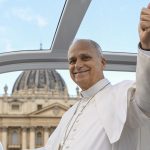
In an Oct. 21 message, the Holy See Press Office announced that Drs. Luigi Carbone and Stefano Margaritora said “the final histological examinations and molecular biology tests on the material removed” during the surgery confirmed the tumor was a “localized lung adenocarcinoma.”
The doctors said that “subsequent oncological evaluation confirmed that no further treatment is necessary.”
“This is really good news,” Dr. Nirmal Veeramachaneni, professor of cardiothoracic surgery at St. Louis University School of Medicine, told OSV News moments after the Vatican released the papal health update.
Although not part of the pope’s care team, Veeramachaneni — an oncology expert who also serves as medical director for lung cancer screening at SSM Health — said that based on his experience and the Holy See statement, Pope Leo’s prognosis seemed to be “excellent.”

Click here to subscribe to our weekly newsletter.

Now, said Veeramachaneni, the pope will simply need “long-term radiographic follow-up to look for recurrence.”
Typically, he said, that entails a regular CT (computed tomography) scan, which uses multiple X-ray images to create a 3D composite of bones, organs and tissue.
He estimated the scanning intervals to range from “every six months” to “once a year for several years.”
Based on his own clinical and research experience, Veeramachaneni said the Vatican’s news was “actually what I was expecting” and “the most likely scenario.”
Veeramachaneni said that “the fact that they (Pope Leo’s medical team) proceeded straight to surgery told me a lot.”
“If they were concerned about the imaging, or if they thought this was a more advanced state of the disease, modern care would have meant chemotherapy up front,” he said.
The Vatican has not disclosed whether Pope Leo received any presurgical, or “neoadjuvant,” cancer treatment before entering Rome’s Gemelli Hospital Oct. 13 and undergoing a 90-minute video-assisted surgery that same day.
Vatican spokesman Matteo Bruni said Oct. 14 that prior to surgery, Pope Leo had undergone several diagnostic procedures — a robotic bronchoscopy with biopsy, a chest CT scan with contrast and a PET scan — which indicated the need for the operation.
The pope announced after leading the Oct. 11 Angelus prayer in St. Peter’s Square that doctors had found a “small, localized nodule” in his lung and had recommended intervention.
Following the video-assisted surgery — which saw the removal of the lower lobe of the pope’s right lung — Carbone, the pope’s personal physician, and Margaritora, chief thoracic surgeon at Gemelli, “confirmed the diagnosis of lung adenocarcinoma, as suspected by the preoperative tests.”
Veeramachaneni noted that cancer was at an “early stage.”
Chemotherapy would normally be advised “if this tumor was greater than four centimeters in size or the lymph nodes were involved,” he said.
“As part of a standard oncological examination, the surgeon would have either sampled or dissected out the lymph nodes that hug the central airway, as well as taking out the lymph nodes in the lobe itself,” he said.
Adenocarcinomas are cancers that begin in the glands lining the body’s organs, according to the Cleveland Clinic.
Lung adenocarcinoma is “the most common subtype of lung cancer,” and “falls under the non-small cell category,” said Dr. Stephen Liu, associate professor of medicine, director of thoracic oncology and director of developmental therapeutics at Georgetown University’s Lombardi Comprehensive Cancer Center.
Almost 9 out of 10 lung cancers are of the non-small cell type, growing more slowly than its small cell counterpart, which typically attacks the airways and spreads rapidly, according to the National Foundation for Cancer Research.
Liu added that lung adenocarcinoma is also “the most common” type of lung cancer “in people without a strong smoking history.”
Gina Christian is a multimedia reporter for OSV News. Follow her on X @GinaJesseReina.
 

Pope Leo needs ‘no further treatment’ following lung cancer surgery #Catholic – (OSV News) — Doctors have confirmed Pope Leo XIV needs “no further treatment” following his Oct. 13 surgery for lung cancer. In an Oct. 21 message, the Holy See Press Office announced that Drs. Luigi Carbone and Stefano Margaritora said “the final histological examinations and molecular biology tests on the material removed” during the surgery confirmed the tumor was a “localized lung adenocarcinoma.” The doctors said that “subsequent oncological evaluation confirmed that no further treatment is necessary.” “This is really good news,” Dr. Nirmal Veeramachaneni, professor of cardiothoracic surgery at St. Louis University School of Medicine, told OSV News moments after the Vatican released the papal health update. Although not part of the pope’s care team, Veeramachaneni — an oncology expert who also serves as medical director for lung cancer screening at SSM Health — said that based on his experience and the Holy See statement, Pope Leo’s prognosis seemed to be “excellent.” Click here to subscribe to our weekly newsletter. Now, said Veeramachaneni, the pope will simply need “long-term radiographic follow-up to look for recurrence.” Typically, he said, that entails a regular CT (computed tomography) scan, which uses multiple X-ray images to create a 3D composite of bones, organs and tissue. He estimated the scanning intervals to range from “every six months” to “once a year for several years.” Based on his own clinical and research experience, Veeramachaneni said the Vatican’s news was “actually what I was expecting” and “the most likely scenario.” Veeramachaneni said that “the fact that they (Pope Leo’s medical team) proceeded straight to surgery told me a lot.” “If they were concerned about the imaging, or if they thought this was a more advanced state of the disease, modern care would have meant chemotherapy up front,” he said. The Vatican has not disclosed whether Pope Leo received any presurgical, or “neoadjuvant,” cancer treatment before entering Rome’s Gemelli Hospital Oct. 13 and undergoing a 90-minute video-assisted surgery that same day. Vatican spokesman Matteo Bruni said Oct. 14 that prior to surgery, Pope Leo had undergone several diagnostic procedures — a robotic bronchoscopy with biopsy, a chest CT scan with contrast and a PET scan — which indicated the need for the operation. The pope announced after leading the Oct. 11 Angelus prayer in St. Peter’s Square that doctors had found a “small, localized nodule” in his lung and had recommended intervention. Following the video-assisted surgery — which saw the removal of the lower lobe of the pope’s right lung — Carbone, the pope’s personal physician, and Margaritora, chief thoracic surgeon at Gemelli, “confirmed the diagnosis of lung adenocarcinoma, as suspected by the preoperative tests.” Veeramachaneni noted that cancer was at an “early stage.” Chemotherapy would normally be advised “if this tumor was greater than four centimeters in size or the lymph nodes were involved,” he said. “As part of a standard oncological examination, the surgeon would have either sampled or dissected out the lymph nodes that hug the central airway, as well as taking out the lymph nodes in the lobe itself,” he said. Adenocarcinomas are cancers that begin in the glands lining the body’s organs, according to the Cleveland Clinic. Lung adenocarcinoma is “the most common subtype of lung cancer,” and “falls under the non-small cell category,” said Dr. Stephen Liu, associate professor of medicine, director of thoracic oncology and director of developmental therapeutics at Georgetown University’s Lombardi Comprehensive Cancer Center. Almost 9 out of 10 lung cancers are of the non-small cell type, growing more slowly than its small cell counterpart, which typically attacks the airways and spreads rapidly, according to the National Foundation for Cancer Research. Liu added that lung adenocarcinoma is also “the most common” type of lung cancer “in people without a strong smoking history.” Gina Christian is a multimedia reporter for OSV News. Follow her on X @GinaJesseReina.  

Pope Leo needs ‘no further treatment’ following lung cancer surgery #Catholic –

(OSV News) — Doctors have confirmed Pope Leo XIV needs “no further treatment” following his Oct. 13 surgery for lung cancer.

In an Oct. 21 message, the Holy See Press Office announced that Drs. Luigi Carbone and Stefano Margaritora said “the final histological examinations and molecular biology tests on the material removed” during the surgery confirmed the tumor was a “localized lung adenocarcinoma.”

The doctors said that “subsequent oncological evaluation confirmed that no further treatment is necessary.”

“This is really good news,” Dr. Nirmal Veeramachaneni, professor of cardiothoracic surgery at St. Louis University School of Medicine, told OSV News moments after the Vatican released the papal health update.

Although not part of the pope’s care team, Veeramachaneni — an oncology expert who also serves as medical director for lung cancer screening at SSM Health — said that based on his experience and the Holy See statement, Pope Leo’s prognosis seemed to be “excellent.”


Click here to subscribe to our weekly newsletter.

Now, said Veeramachaneni, the pope will simply need “long-term radiographic follow-up to look for recurrence.”

Typically, he said, that entails a regular CT (computed tomography) scan, which uses multiple X-ray images to create a 3D composite of bones, organs and tissue.

He estimated the scanning intervals to range from “every six months” to “once a year for several years.”

Based on his own clinical and research experience, Veeramachaneni said the Vatican’s news was “actually what I was expecting” and “the most likely scenario.”

Veeramachaneni said that “the fact that they (Pope Leo’s medical team) proceeded straight to surgery told me a lot.”

“If they were concerned about the imaging, or if they thought this was a more advanced state of the disease, modern care would have meant chemotherapy up front,” he said.

The Vatican has not disclosed whether Pope Leo received any presurgical, or “neoadjuvant,” cancer treatment before entering Rome’s Gemelli Hospital Oct. 13 and undergoing a 90-minute video-assisted surgery that same day.

Vatican spokesman Matteo Bruni said Oct. 14 that prior to surgery, Pope Leo had undergone several diagnostic procedures — a robotic bronchoscopy with biopsy, a chest CT scan with contrast and a PET scan — which indicated the need for the operation.

The pope announced after leading the Oct. 11 Angelus prayer in St. Peter’s Square that doctors had found a “small, localized nodule” in his lung and had recommended intervention.

Following the video-assisted surgery — which saw the removal of the lower lobe of the pope’s right lung — Carbone, the pope’s personal physician, and Margaritora, chief thoracic surgeon at Gemelli, “confirmed the diagnosis of lung adenocarcinoma, as suspected by the preoperative tests.”

Veeramachaneni noted that cancer was at an “early stage.”

Chemotherapy would normally be advised “if this tumor was greater than four centimeters in size or the lymph nodes were involved,” he said.

“As part of a standard oncological examination, the surgeon would have either sampled or dissected out the lymph nodes that hug the central airway, as well as taking out the lymph nodes in the lobe itself,” he said.

Adenocarcinomas are cancers that begin in the glands lining the body’s organs, according to the Cleveland Clinic.

Lung adenocarcinoma is “the most common subtype of lung cancer,” and “falls under the non-small cell category,” said Dr. Stephen Liu, associate professor of medicine, director of thoracic oncology and director of developmental therapeutics at Georgetown University’s Lombardi Comprehensive Cancer Center.

Almost 9 out of 10 lung cancers are of the non-small cell type, growing more slowly than its small cell counterpart, which typically attacks the airways and spreads rapidly, according to the National Foundation for Cancer Research.

Liu added that lung adenocarcinoma is also “the most common” type of lung cancer “in people without a strong smoking history.”

Gina Christian is a multimedia reporter for OSV News. Follow her on X @GinaJesseReina.


– (OSV News) — Doctors have confirmed Pope Leo XIV needs “no further treatment” following his Oct. 13 surgery for lung cancer. In an Oct. 21 message, the Holy See Press Office announced that Drs. Luigi Carbone and Stefano Margaritora said “the final histological examinations and molecular biology tests on the material removed” during the surgery confirmed the tumor was a “localized lung adenocarcinoma.” The doctors said that “subsequent oncological evaluation confirmed that no further treatment is necessary.” “This is really good news,” Dr. Nirmal Veeramachaneni, professor of cardiothoracic surgery at St. Louis University School of Medicine, told OSV News moments
Read More
Georgia Martyrs’ beatification the next big event for US Church #Catholic – (OSV News) — While six years separate the two most recent U.S. beatifications of Blessed Michael J. McGivney in 2020 and Blessed Fulton J. Sheen on Sept. 24, mere weeks pass before the next: five Franciscan friars known as the Georgia Martyrs on Oct. 31.
Cardinal Frank Leo of Toronto will celebrate the 11 a.m. beatification Mass, which will be livestreamed on social media channels and the diocesan website, diosav.org, as well as by EWTN.
Speaking about the Georgia Martyrs with OSV News, Cardinal Leo said, “We all have that same command from the Lord Jesus to go make disciples.”
“The Georgia Martyrs offered more than self-sacrifice,” he said. “They brought it to the next level in terms of self-gift. … It was a choice and a decision to make a gift to the Lord by becoming a gift to his people, who needed to know him and to live for him.”
In 1597, the Spanish Franciscans Pedro de Corpa, Blas Rodríguez de Cuacos, Miguel de Añón, Antonio de Badajoz and Francisco de Veráscola were ministering at five missions along the coast and barrier islands of present-day Georgia when they were killed out of hatred for the faith by a band of Indigenous men between Sept. 14-17.

Click here to subscribe to our weekly newsletter.

The friars’ murders were prompted by Father de Corpa angering the heir to a Guale chiefdom, Juanillo, by telling him that as a baptized Christian, he could not follow his culture’s custom and take a second wife. Juanillo and his men killed the priest at a mission near the contemporary city of Eulonia, Georgia, before killing four of the other five Franciscan missionaries ministering in the area. The sixth friar, Francisco de Avila, was kidnapped and tortured for months before being set free. The incident is known as the 1597 Guale Uprising.
At the time, the Spaniards knew the wider coastal area as La Florida, home to the settlement of St. Augustine, established in 1565. By 1595, the friars had established five missions along the coast. Prior to their murders, the six Franciscans appear to have lived among the Guale and other indigenous peoples in peace, without a military presence, for two years.
About a month after the friars were killed, the governor of La Florida led an expedition to locate the martyred friars’ bodies. According to the Diocese of Savannah’s website on the martyrs, there is no record of Friar Francisco’s remains being found. The bodies of Friars Blas, Miguel and Antonio were found buried in shallow graves on St. Catherines Island. The men in the October 1597 expedition reburied them, with the exception of the severed head of Friar Miguel, which they took with them.
Less than a decade later, when Franciscans had returned to the coastline to evangelize, the friars’ bodies on St. Catherines Island were exhumed and brought to St. Augustine, but their whereabouts today are unknown. Some scholars speculate that Franciscans took the martyrs’ remains with them to Cuba when St. Augustine transferred to British rule in 1763.
Friar Pedro de Corpa was decapitated and his body was not found; the location of his skull is uncertain. A skull recovered at the Fort King George State Historical Site in Darien may belong to Friar Pedro or Father Francisco, and testing is underway to learn more about its origins.
The National Eucharistic Pilgrimage drew attention to the martyrs in May, as the nine perpetual pilgrims spent the third day of their pilgrimage in southern Georgia, walking in a Eucharistic procession at Fort King George, where Friar Francisco is believed to have been killed.
The five Franciscans’ martyrdom is “a reminder of how the Church has, over the centuries, continued to send out missionaries to all peoples, to all nations, to faraway places,” Father Pablo Migone, vicar for mission advancement for the Diocese of Savannah, said during that visit. “That is something we have done from the very beginning from the words of Jesus to the apostles.”
The Beatification Mass is not ticketed, and seats in the Savannah Convention Center are first come, first served. Doors for the liturgy open at 8 a.m. Oct. 31. The convention center will host the Georgia Martyr Museum between 8-10:30 a.m. and 1-2:30 p.m.
The Mass coincides with Halloween, the eve of All Saints’ Day. It also coincides with the Jubilee Year of their order’s founder, St. Francis of Assisi, which commemorates the 800th anniversary of his death.
On Nov. 1, Bishop Stephen D. Parkes of Savannah will celebrate a Mass of thanksgiving at 11:30 a.m. at the Cathedral Basilica of St. John the Baptist in Savannah, which will also be livestreamed at the cathedral’s website, savannahcathedral.org.
Reports from civil and religious leaders in the months and years after the Franciscans’ deaths reveal that the slain friars’ contemporaries saw them as martyrs. New research in the 20th century about the history of La Florida and the Georgia Martyrs bolstered efforts to move forward with a cause for their beatification.
With the support of the Order of Franciscans Minor, the Diocese of Savannah opened the cause for the martyrs’ canonization in February 1984 under Savannah’s Bishop Raymond W. Lessard, who died in 2016. In January 2025, Pope Francis authorized the Dicastery for the Causes of Saints to formally recognize the five friars’ martyrdom “in hatred of the faith.”
Alongside the sainthood cause for the five Georgia martyrs is a separate cause for the Martyrs of La Florida Missions, which encompasses 58 people martyred in the region between 1549 and 1715. Known as Antonio Inija and Companions, Servants of God, their collective cause officially opened Oct. 12, 2015, and includes Dominican, Franciscan and Jesuit priests; lay men and women; and children, including an unborn child.
Maria Wiering is senior managing editor for OSV News.
 

Georgia Martyrs’ beatification the next big event for US Church #Catholic – (OSV News) — While six years separate the two most recent U.S. beatifications of Blessed Michael J. McGivney in 2020 and Blessed Fulton J. Sheen on Sept. 24, mere weeks pass before the next: five Franciscan friars known as the Georgia Martyrs on Oct. 31. Cardinal Frank Leo of Toronto will celebrate the 11 a.m. beatification Mass, which will be livestreamed on social media channels and the diocesan website, diosav.org, as well as by EWTN. Speaking about the Georgia Martyrs with OSV News, Cardinal Leo said, “We all have that same command from the Lord Jesus to go make disciples.” “The Georgia Martyrs offered more than self-sacrifice,” he said. “They brought it to the next level in terms of self-gift. … It was a choice and a decision to make a gift to the Lord by becoming a gift to his people, who needed to know him and to live for him.” In 1597, the Spanish Franciscans Pedro de Corpa, Blas Rodríguez de Cuacos, Miguel de Añón, Antonio de Badajoz and Francisco de Veráscola were ministering at five missions along the coast and barrier islands of present-day Georgia when they were killed out of hatred for the faith by a band of Indigenous men between Sept. 14-17. Click here to subscribe to our weekly newsletter. The friars’ murders were prompted by Father de Corpa angering the heir to a Guale chiefdom, Juanillo, by telling him that as a baptized Christian, he could not follow his culture’s custom and take a second wife. Juanillo and his men killed the priest at a mission near the contemporary city of Eulonia, Georgia, before killing four of the other five Franciscan missionaries ministering in the area. The sixth friar, Francisco de Avila, was kidnapped and tortured for months before being set free. The incident is known as the 1597 Guale Uprising. At the time, the Spaniards knew the wider coastal area as La Florida, home to the settlement of St. Augustine, established in 1565. By 1595, the friars had established five missions along the coast. Prior to their murders, the six Franciscans appear to have lived among the Guale and other indigenous peoples in peace, without a military presence, for two years. About a month after the friars were killed, the governor of La Florida led an expedition to locate the martyred friars’ bodies. According to the Diocese of Savannah’s website on the martyrs, there is no record of Friar Francisco’s remains being found. The bodies of Friars Blas, Miguel and Antonio were found buried in shallow graves on St. Catherines Island. The men in the October 1597 expedition reburied them, with the exception of the severed head of Friar Miguel, which they took with them. Less than a decade later, when Franciscans had returned to the coastline to evangelize, the friars’ bodies on St. Catherines Island were exhumed and brought to St. Augustine, but their whereabouts today are unknown. Some scholars speculate that Franciscans took the martyrs’ remains with them to Cuba when St. Augustine transferred to British rule in 1763. Friar Pedro de Corpa was decapitated and his body was not found; the location of his skull is uncertain. A skull recovered at the Fort King George State Historical Site in Darien may belong to Friar Pedro or Father Francisco, and testing is underway to learn more about its origins. The National Eucharistic Pilgrimage drew attention to the martyrs in May, as the nine perpetual pilgrims spent the third day of their pilgrimage in southern Georgia, walking in a Eucharistic procession at Fort King George, where Friar Francisco is believed to have been killed. The five Franciscans’ martyrdom is “a reminder of how the Church has, over the centuries, continued to send out missionaries to all peoples, to all nations, to faraway places,” Father Pablo Migone, vicar for mission advancement for the Diocese of Savannah, said during that visit. “That is something we have done from the very beginning from the words of Jesus to the apostles.” The Beatification Mass is not ticketed, and seats in the Savannah Convention Center are first come, first served. Doors for the liturgy open at 8 a.m. Oct. 31. The convention center will host the Georgia Martyr Museum between 8-10:30 a.m. and 1-2:30 p.m. The Mass coincides with Halloween, the eve of All Saints’ Day. It also coincides with the Jubilee Year of their order’s founder, St. Francis of Assisi, which commemorates the 800th anniversary of his death. On Nov. 1, Bishop Stephen D. Parkes of Savannah will celebrate a Mass of thanksgiving at 11:30 a.m. at the Cathedral Basilica of St. John the Baptist in Savannah, which will also be livestreamed at the cathedral’s website, savannahcathedral.org. Reports from civil and religious leaders in the months and years after the Franciscans’ deaths reveal that the slain friars’ contemporaries saw them as martyrs. New research in the 20th century about the history of La Florida and the Georgia Martyrs bolstered efforts to move forward with a cause for their beatification. With the support of the Order of Franciscans Minor, the Diocese of Savannah opened the cause for the martyrs’ canonization in February 1984 under Savannah’s Bishop Raymond W. Lessard, who died in 2016. In January 2025, Pope Francis authorized the Dicastery for the Causes of Saints to formally recognize the five friars’ martyrdom “in hatred of the faith.” Alongside the sainthood cause for the five Georgia martyrs is a separate cause for the Martyrs of La Florida Missions, which encompasses 58 people martyred in the region between 1549 and 1715. Known as Antonio Inija and Companions, Servants of God, their collective cause officially opened Oct. 12, 2015, and includes Dominican, Franciscan and Jesuit priests; lay men and women; and children, including an unborn child. Maria Wiering is senior managing editor for OSV News.  

Georgia Martyrs’ beatification the next big event for US Church #Catholic –

(OSV News) — While six years separate the two most recent U.S. beatifications of Blessed Michael J. McGivney in 2020 and Blessed Fulton J. Sheen on Sept. 24, mere weeks pass before the next: five Franciscan friars known as the Georgia Martyrs on Oct. 31.

Cardinal Frank Leo of Toronto will celebrate the 11 a.m. beatification Mass, which will be livestreamed on social media channels and the diocesan website, diosav.org, as well as by EWTN.

Speaking about the Georgia Martyrs with OSV News, Cardinal Leo said, “We all have that same command from the Lord Jesus to go make disciples.”

“The Georgia Martyrs offered more than self-sacrifice,” he said. “They brought it to the next level in terms of self-gift. … It was a choice and a decision to make a gift to the Lord by becoming a gift to his people, who needed to know him and to live for him.”

In 1597, the Spanish Franciscans Pedro de Corpa, Blas Rodríguez de Cuacos, Miguel de Añón, Antonio de Badajoz and Francisco de Veráscola were ministering at five missions along the coast and barrier islands of present-day Georgia when they were killed out of hatred for the faith by a band of Indigenous men between Sept. 14-17.


Click here to subscribe to our weekly newsletter.

The friars’ murders were prompted by Father de Corpa angering the heir to a Guale chiefdom, Juanillo, by telling him that as a baptized Christian, he could not follow his culture’s custom and take a second wife. Juanillo and his men killed the priest at a mission near the contemporary city of Eulonia, Georgia, before killing four of the other five Franciscan missionaries ministering in the area. The sixth friar, Francisco de Avila, was kidnapped and tortured for months before being set free. The incident is known as the 1597 Guale Uprising.

At the time, the Spaniards knew the wider coastal area as La Florida, home to the settlement of St. Augustine, established in 1565. By 1595, the friars had established five missions along the coast. Prior to their murders, the six Franciscans appear to have lived among the Guale and other indigenous peoples in peace, without a military presence, for two years.

About a month after the friars were killed, the governor of La Florida led an expedition to locate the martyred friars’ bodies. According to the Diocese of Savannah’s website on the martyrs, there is no record of Friar Francisco’s remains being found. The bodies of Friars Blas, Miguel and Antonio were found buried in shallow graves on St. Catherines Island. The men in the October 1597 expedition reburied them, with the exception of the severed head of Friar Miguel, which they took with them.

Less than a decade later, when Franciscans had returned to the coastline to evangelize, the friars’ bodies on St. Catherines Island were exhumed and brought to St. Augustine, but their whereabouts today are unknown. Some scholars speculate that Franciscans took the martyrs’ remains with them to Cuba when St. Augustine transferred to British rule in 1763.

Friar Pedro de Corpa was decapitated and his body was not found; the location of his skull is uncertain. A skull recovered at the Fort King George State Historical Site in Darien may belong to Friar Pedro or Father Francisco, and testing is underway to learn more about its origins.

The National Eucharistic Pilgrimage drew attention to the martyrs in May, as the nine perpetual pilgrims spent the third day of their pilgrimage in southern Georgia, walking in a Eucharistic procession at Fort King George, where Friar Francisco is believed to have been killed.

The five Franciscans’ martyrdom is “a reminder of how the Church has, over the centuries, continued to send out missionaries to all peoples, to all nations, to faraway places,” Father Pablo Migone, vicar for mission advancement for the Diocese of Savannah, said during that visit. “That is something we have done from the very beginning from the words of Jesus to the apostles.”

The Beatification Mass is not ticketed, and seats in the Savannah Convention Center are first come, first served. Doors for the liturgy open at 8 a.m. Oct. 31. The convention center will host the Georgia Martyr Museum between 8-10:30 a.m. and 1-2:30 p.m.

The Mass coincides with Halloween, the eve of All Saints’ Day. It also coincides with the Jubilee Year of their order’s founder, St. Francis of Assisi, which commemorates the 800th anniversary of his death.

On Nov. 1, Bishop Stephen D. Parkes of Savannah will celebrate a Mass of thanksgiving at 11:30 a.m. at the Cathedral Basilica of St. John the Baptist in Savannah, which will also be livestreamed at the cathedral’s website, savannahcathedral.org.

Reports from civil and religious leaders in the months and years after the Franciscans’ deaths reveal that the slain friars’ contemporaries saw them as martyrs. New research in the 20th century about the history of La Florida and the Georgia Martyrs bolstered efforts to move forward with a cause for their beatification.

With the support of the Order of Franciscans Minor, the Diocese of Savannah opened the cause for the martyrs’ canonization in February 1984 under Savannah’s Bishop Raymond W. Lessard, who died in 2016. In January 2025, Pope Francis authorized the Dicastery for the Causes of Saints to formally recognize the five friars’ martyrdom “in hatred of the faith.”

Alongside the sainthood cause for the five Georgia martyrs is a separate cause for the Martyrs of La Florida Missions, which encompasses 58 people martyred in the region between 1549 and 1715. Known as Antonio Inija and Companions, Servants of God, their collective cause officially opened Oct. 12, 2015, and includes Dominican, Franciscan and Jesuit priests; lay men and women; and children, including an unborn child.

Maria Wiering is senior managing editor for OSV News.


– (OSV News) — While six years separate the two most recent U.S. beatifications of Blessed Michael J. McGivney in 2020 and Blessed Fulton J. Sheen on Sept. 24, mere weeks pass before the next: five Franciscan friars known as the Georgia Martyrs on Oct. 31. Cardinal Frank Leo of Toronto will celebrate the 11 a.m. beatification Mass, which will be livestreamed on social media channels and the diocesan website, diosav.org, as well as by EWTN. Speaking about the Georgia Martyrs with OSV News, Cardinal Leo said, “We all have that same command from the Lord Jesus to go make disciples.”

Read More
El Papa León no necesita ‘ningún tratamiento adicional’ tras su cirugía pulmonar #Catholic – (OSV News) — Los médicos han confirmado que el Papa León XIV no necesita “ningún tratamiento adicional” tras la cirugía a la que se sometió el 13 de octubre por cáncer de pulmón.
En un comunicado del 21 de octubre, la Oficina de Prensa de la Santa Sede anunció que los doctores Luigi Carbone y Stefano Margaritora indicaron que los resultados de “los exámenes histológicos y de los estudios de biología molecular realizados sobre el material extraído” durante la intervención quirúrgica confirmaron que el tumor era “un adenocarcinoma pulmonar y que la enfermedad estaba localizada”.
Los médicos señalaron que “una evaluación oncológica posterior ha confirmado que no es necesario ningún tratamiento adicional”.
“Esta es una muy buena noticia”, declaró el Dr. Nirmal Veeramachaneni, profesor de cirugía cardiotorácica en la Facultad de Medicina de la Universidad de St. Louis, a OSV News momentos después de que el Vaticano diera a conocer el comunicado sobre el estado de salud del pontífice.

Para suscribirse a nuestro boletín electrónico semanal, haga click aquí.

Aunque no forma parte del equipo médico del Papa León, Veeramachaneni –un experto en oncología que también se desempeña como director médico del programa de detección de cáncer de pulmón en SSM Health– señaló que, basándose en su experiencia y en el comunicado de la Santa Sede, el pronóstico del Papa León parecía ser excelente.
Ahora, dijo Veeramachaneni, el Papa simplemente necesitará “un seguimiento radiográfico a largo plazo para detectar una posible recurrencia”.
Por lo general, explicó, eso implica una tomografía computarizada periódica, que utiliza múltiples imágenes de rayos X para crear una representación tridimensional de los huesos, órganos y tejidos.
Estimó que los intervalos entre los exámenes oscilarían entre “cada seis meses” y “una vez al año durante varios años”.
Basándose en su propia experiencia clínica y de investigación, Veeramachaneni dijo que la noticia del Vaticano era “en realidad lo que esperaba” y “el escenario más probable”.
Veeramachaneni señaló que “el hecho de que ellos (el equipo médico del Papa León) procedieran directamente a la cirugía me dijo mucho”.
“Si les preocupaban los resultados de las imágenes, o si pensaban que se trataba de un estado más avanzado de la enfermedad, la atención médica moderna habría implicado comenzar con quimioterapia de inmediato”, dijo.
El Vaticano no ha revelado si el Papa León recibió algún tratamiento contra el cáncer previo a la cirugía, conocido como terapia neoadyuvante, antes de ingresar al Hospital Gemelli de Roma el 13 de octubre y someterse ese mismo día a una cirugía asistida por video de 90 minutos.
El portavoz del Vaticano, Matteo Bruni, dijo el 14 de octubre que, antes de la cirugía, el Papa León se había sometido a varios procedimientos de diagnóstico –una broncoscopia robótica con biopsia, una tomografía computarizada (TC) de tórax con contraste y una tomografía por emisión de positrones (PET)– que indicaron la necesidad de la operación.
El Papa anunció, después de dirigir la oración del Ángelus del 11 de octubre en la Plaza de San Pedro, que los médicos habían encontrado un nódulo localizado en su pulmón y le habían recomendado una intervención quirúrgica.
Tras la cirugía asistida por video –en la que se extirpó el lóbulo inferior del pulmón derecho del Papa–, Carbone, el médico personal del Papa, y Margaritora, jefe del equipo de cirugía torácica del Gemelli, dijeron que el examen histológico había “confirmado el diagnóstico de adenocarcinoma pulmonar, tal y como se sospechaba a partir de los exámenes preoperatorios”.
Veeramachaneni señaló que todo indicaba que el cáncer se encontraba en una “etapa temprana”.
Normalmente se recomendaría quimioterapia “si el tumor midiera más de cuatro centímetros o si los ganglios linfáticos estuvieran afectados”, dijo.
“Como parte de un examen oncológico estándar, el cirujano habría tomado una muestra o extirpado los ganglios linfáticos que rodean la vía aérea central, además de extirpar los ganglios linfáticos del propio lóbulo” pulmonar, explicó.
Los adenocarcinomas son cánceres que se originan en las glándulas que recubren los órganos del cuerpo, según la Clínica Cleveland.
El adenocarcinoma de pulmón es “el subtipo más común de cáncer de pulmón” y “pertenece a la categoría de cáncer de pulmón de células no pequeñas”, afirmó el Dr. Stephen Liu, profesor asociado de medicina, director de oncología torácica y director de terapias en desarrollo en el Centro Oncológico Integral Lombardi de la Universidad de Georgetown.
Casi 9 de cada 10 cánceres de pulmón son del tipo de células no pequeñas, que crecen más lentamente que su contraparte de células pequeñas, que suele originarse cerca de las vías respiratorias y se disemina rápidamente, según la Fundación Nacional para la Investigación del Cáncer.
Liu agregó que el adenocarcinoma de pulmón es también “el tipo más común” de cáncer de pulmón “en personas sin un historial significativo de tabaquismo”.
Gina Christian es reportera multimedia de OSV News. Síguela en X @GinaJesseReina.
 

El Papa León no necesita ‘ningún tratamiento adicional’ tras su cirugía pulmonar #Catholic – (OSV News) — Los médicos han confirmado que el Papa León XIV no necesita “ningún tratamiento adicional” tras la cirugía a la que se sometió el 13 de octubre por cáncer de pulmón. En un comunicado del 21 de octubre, la Oficina de Prensa de la Santa Sede anunció que los doctores Luigi Carbone y Stefano Margaritora indicaron que los resultados de “los exámenes histológicos y de los estudios de biología molecular realizados sobre el material extraído” durante la intervención quirúrgica confirmaron que el tumor era “un adenocarcinoma pulmonar y que la enfermedad estaba localizada”. Los médicos señalaron que “una evaluación oncológica posterior ha confirmado que no es necesario ningún tratamiento adicional”. “Esta es una muy buena noticia”, declaró el Dr. Nirmal Veeramachaneni, profesor de cirugía cardiotorácica en la Facultad de Medicina de la Universidad de St. Louis, a OSV News momentos después de que el Vaticano diera a conocer el comunicado sobre el estado de salud del pontífice. Para suscribirse a nuestro boletín electrónico semanal, haga click aquí. Aunque no forma parte del equipo médico del Papa León, Veeramachaneni –un experto en oncología que también se desempeña como director médico del programa de detección de cáncer de pulmón en SSM Health– señaló que, basándose en su experiencia y en el comunicado de la Santa Sede, el pronóstico del Papa León parecía ser excelente. Ahora, dijo Veeramachaneni, el Papa simplemente necesitará “un seguimiento radiográfico a largo plazo para detectar una posible recurrencia”. Por lo general, explicó, eso implica una tomografía computarizada periódica, que utiliza múltiples imágenes de rayos X para crear una representación tridimensional de los huesos, órganos y tejidos. Estimó que los intervalos entre los exámenes oscilarían entre “cada seis meses” y “una vez al año durante varios años”. Basándose en su propia experiencia clínica y de investigación, Veeramachaneni dijo que la noticia del Vaticano era “en realidad lo que esperaba” y “el escenario más probable”. Veeramachaneni señaló que “el hecho de que ellos (el equipo médico del Papa León) procedieran directamente a la cirugía me dijo mucho”. “Si les preocupaban los resultados de las imágenes, o si pensaban que se trataba de un estado más avanzado de la enfermedad, la atención médica moderna habría implicado comenzar con quimioterapia de inmediato”, dijo. El Vaticano no ha revelado si el Papa León recibió algún tratamiento contra el cáncer previo a la cirugía, conocido como terapia neoadyuvante, antes de ingresar al Hospital Gemelli de Roma el 13 de octubre y someterse ese mismo día a una cirugía asistida por video de 90 minutos. El portavoz del Vaticano, Matteo Bruni, dijo el 14 de octubre que, antes de la cirugía, el Papa León se había sometido a varios procedimientos de diagnóstico –una broncoscopia robótica con biopsia, una tomografía computarizada (TC) de tórax con contraste y una tomografía por emisión de positrones (PET)– que indicaron la necesidad de la operación. El Papa anunció, después de dirigir la oración del Ángelus del 11 de octubre en la Plaza de San Pedro, que los médicos habían encontrado un nódulo localizado en su pulmón y le habían recomendado una intervención quirúrgica. Tras la cirugía asistida por video –en la que se extirpó el lóbulo inferior del pulmón derecho del Papa–, Carbone, el médico personal del Papa, y Margaritora, jefe del equipo de cirugía torácica del Gemelli, dijeron que el examen histológico había “confirmado el diagnóstico de adenocarcinoma pulmonar, tal y como se sospechaba a partir de los exámenes preoperatorios”. Veeramachaneni señaló que todo indicaba que el cáncer se encontraba en una “etapa temprana”. Normalmente se recomendaría quimioterapia “si el tumor midiera más de cuatro centímetros o si los ganglios linfáticos estuvieran afectados”, dijo. “Como parte de un examen oncológico estándar, el cirujano habría tomado una muestra o extirpado los ganglios linfáticos que rodean la vía aérea central, además de extirpar los ganglios linfáticos del propio lóbulo” pulmonar, explicó. Los adenocarcinomas son cánceres que se originan en las glándulas que recubren los órganos del cuerpo, según la Clínica Cleveland. El adenocarcinoma de pulmón es “el subtipo más común de cáncer de pulmón” y “pertenece a la categoría de cáncer de pulmón de células no pequeñas”, afirmó el Dr. Stephen Liu, profesor asociado de medicina, director de oncología torácica y director de terapias en desarrollo en el Centro Oncológico Integral Lombardi de la Universidad de Georgetown. Casi 9 de cada 10 cánceres de pulmón son del tipo de células no pequeñas, que crecen más lentamente que su contraparte de células pequeñas, que suele originarse cerca de las vías respiratorias y se disemina rápidamente, según la Fundación Nacional para la Investigación del Cáncer. Liu agregó que el adenocarcinoma de pulmón es también “el tipo más común” de cáncer de pulmón “en personas sin un historial significativo de tabaquismo”. Gina Christian es reportera multimedia de OSV News. Síguela en X @GinaJesseReina.  

El Papa León no necesita ‘ningún tratamiento adicional’ tras su cirugía pulmonar #Catholic –

(OSV News) — Los médicos han confirmado que el Papa León XIV no necesita “ningún tratamiento adicional” tras la cirugía a la que se sometió el 13 de octubre por cáncer de pulmón.

En un comunicado del 21 de octubre, la Oficina de Prensa de la Santa Sede anunció que los doctores Luigi Carbone y Stefano Margaritora indicaron que los resultados de “los exámenes histológicos y de los estudios de biología molecular realizados sobre el material extraído” durante la intervención quirúrgica confirmaron que el tumor era “un adenocarcinoma pulmonar y que la enfermedad estaba localizada”.

Los médicos señalaron que “una evaluación oncológica posterior ha confirmado que no es necesario ningún tratamiento adicional”.

“Esta es una muy buena noticia”, declaró el Dr. Nirmal Veeramachaneni, profesor de cirugía cardiotorácica en la Facultad de Medicina de la Universidad de St. Louis, a OSV News momentos después de que el Vaticano diera a conocer el comunicado sobre el estado de salud del pontífice.


Para suscribirse a nuestro boletín electrónico semanal, haga click aquí.

Aunque no forma parte del equipo médico del Papa León, Veeramachaneni –un experto en oncología que también se desempeña como director médico del programa de detección de cáncer de pulmón en SSM Health– señaló que, basándose en su experiencia y en el comunicado de la Santa Sede, el pronóstico del Papa León parecía ser excelente.

Ahora, dijo Veeramachaneni, el Papa simplemente necesitará “un seguimiento radiográfico a largo plazo para detectar una posible recurrencia”.

Por lo general, explicó, eso implica una tomografía computarizada periódica, que utiliza múltiples imágenes de rayos X para crear una representación tridimensional de los huesos, órganos y tejidos.

Estimó que los intervalos entre los exámenes oscilarían entre “cada seis meses” y “una vez al año durante varios años”.

Basándose en su propia experiencia clínica y de investigación, Veeramachaneni dijo que la noticia del Vaticano era “en realidad lo que esperaba” y “el escenario más probable”.

Veeramachaneni señaló que “el hecho de que ellos (el equipo médico del Papa León) procedieran directamente a la cirugía me dijo mucho”.

“Si les preocupaban los resultados de las imágenes, o si pensaban que se trataba de un estado más avanzado de la enfermedad, la atención médica moderna habría implicado comenzar con quimioterapia de inmediato”, dijo.

El Vaticano no ha revelado si el Papa León recibió algún tratamiento contra el cáncer previo a la cirugía, conocido como terapia neoadyuvante, antes de ingresar al Hospital Gemelli de Roma el 13 de octubre y someterse ese mismo día a una cirugía asistida por video de 90 minutos.

El portavoz del Vaticano, Matteo Bruni, dijo el 14 de octubre que, antes de la cirugía, el Papa León se había sometido a varios procedimientos de diagnóstico –una broncoscopia robótica con biopsia, una tomografía computarizada (TC) de tórax con contraste y una tomografía por emisión de positrones (PET)– que indicaron la necesidad de la operación.

El Papa anunció, después de dirigir la oración del Ángelus del 11 de octubre en la Plaza de San Pedro, que los médicos habían encontrado un nódulo localizado en su pulmón y le habían recomendado una intervención quirúrgica.

Tras la cirugía asistida por video –en la que se extirpó el lóbulo inferior del pulmón derecho del Papa–, Carbone, el médico personal del Papa, y Margaritora, jefe del equipo de cirugía torácica del Gemelli, dijeron que el examen histológico había “confirmado el diagnóstico de adenocarcinoma pulmonar, tal y como se sospechaba a partir de los exámenes preoperatorios”.

Veeramachaneni señaló que todo indicaba que el cáncer se encontraba en una “etapa temprana”.

Normalmente se recomendaría quimioterapia “si el tumor midiera más de cuatro centímetros o si los ganglios linfáticos estuvieran afectados”, dijo.

“Como parte de un examen oncológico estándar, el cirujano habría tomado una muestra o extirpado los ganglios linfáticos que rodean la vía aérea central, además de extirpar los ganglios linfáticos del propio lóbulo” pulmonar, explicó.

Los adenocarcinomas son cánceres que se originan en las glándulas que recubren los órganos del cuerpo, según la Clínica Cleveland.

El adenocarcinoma de pulmón es “el subtipo más común de cáncer de pulmón” y “pertenece a la categoría de cáncer de pulmón de células no pequeñas”, afirmó el Dr. Stephen Liu, profesor asociado de medicina, director de oncología torácica y director de terapias en desarrollo en el Centro Oncológico Integral Lombardi de la Universidad de Georgetown.

Casi 9 de cada 10 cánceres de pulmón son del tipo de células no pequeñas, que crecen más lentamente que su contraparte de células pequeñas, que suele originarse cerca de las vías respiratorias y se disemina rápidamente, según la Fundación Nacional para la Investigación del Cáncer.

Liu agregó que el adenocarcinoma de pulmón es también “el tipo más común” de cáncer de pulmón “en personas sin un historial significativo de tabaquismo”.

Gina Christian es reportera multimedia de OSV News. Síguela en X @GinaJesseReina.


– (OSV News) — Los médicos han confirmado que el Papa León XIV no necesita “ningún tratamiento adicional” tras la cirugía a la que se sometió el 13 de octubre por cáncer de pulmón. En un comunicado del 21 de octubre, la Oficina de Prensa de la Santa Sede anunció que los doctores Luigi Carbone y Stefano Margaritora indicaron que los resultados de “los exámenes histológicos y de los estudios de biología molecular realizados sobre el material extraído” durante la intervención quirúrgica confirmaron que el tumor era “un adenocarcinoma pulmonar y que la enfermedad estaba localizada”. Los médicos señalaron que “una

Read More
5 ways St. John Paul II changed the Catholic Church forever #Catholic You may know that St. John Paul II was the second-longest-serving pope in modern history with 27 years of pontificate, and he was the first non-Italian pontiff since the Dutch Pope Adrian VI in 1523.But did you know that he also changed the Catholic Church forever during those 27 years? Here are five ways he did that:1. He helped bring about the 1989 fall of communism in Eastern Europe.The pope’s official biographer, George Weigel, who for decades chronicled the pope’s engagement with civic leaders, noted that the way Pope John Paul II influenced the political landscape was enormous. His political influence is seen best in the way his engagement with world leaders assisted the downfall of the U.S.S.R.Just days before President Ronald Reagan called on Mikhail Gorbachev to “tear down” the Berlin Wall, he met with the pope. According to historian and author Paul Kengor, Reagan went so far as to call Pope John Paul II his “best friend,” opining that no one knew his soul better than the Polish pontiff who had also suffered an assassination attempt and carried the burden of world leadership.In the course of 38 official visits and 738 audiences and meetings held with heads of state, John Paul II influenced civic leaders around the world in this epic battle with a regime that would ultimately be responsible for the deaths of more than 30 million people.“He thought of himself as the universal pastor of the Catholic Church, dealing with sovereign political actors who were as subject to the universal moral law as anybody else,” Weigel said.“He was willing to be a risk-taker, but he also appreciated that prudence is the greatest of political virtues. And I think he was quite respected by world political leaders because of his transparent integrity. His essential attitude toward these men and women was: How can I help you? What can I do to help?”More than anything, John Paul II understood his role primarily as a spiritual leader.According to Weigel, the pope’s primary impact on the world of affairs was his central role in creating the revolution of conscience that began in Poland and swept across Eastern Europe. This revolution of conscience inspired the nonviolent revolution of 1989 and the collapse of communism in Central and Eastern Europe, an astounding political achievement.2. He beatified and canonized more saints than any predecessor, making holiness more accessible to ordinary people.One of John Paul II’s most enduring legacies is the huge number of saints he recognized. He celebrated 147 beatification ceremonies, during which he proclaimed 1,338 blesseds, and celebrated 51 canonizations for a total of 482 saints. That is more than the combined tally of his predecessors over the five centuries before.Mother Teresa of Calcutta is perhaps the best-known contemporary of John Paul II who is now officially a saint, but the first saint of the new millennium and one especially dear to John Paul II was St. Faustina Kowalska, the fellow Polish native who received the message of divine mercy.“Sister Faustina’s canonization has a particular eloquence: By this act I intend today to pass this message on to the new millennium,” he said in the homily of her canonization. “I pass it on to all people, so that they will learn to know ever better the true face of God and the true face of their brethren.”St. Pier Giorgio Frassati, whom Pope John Paul II beatified in 1990 and nicknamed the “Man of the Beatitudes,” is another popular saint elevated by the Polish pope who loved to recognize the holiness of simple persons living the call to holiness with extraordinary fidelity. At the time of his death, the 24-year-old Italian was simply a student with no extraordinary accomplishments. But his love for Christ in the Eucharist and in the poor was elevated by John Paul II as heroic and worthy of imitation. Frassati was canonized Sept. 7, 2025, by Pope Leo XIV.It bears noting that Pope Francis would later surpass John Paul II when he proclaimed 800 Italian martyrs as saints in a single day.3. He transformed the papal travel schedule.John Paul II visited some 129 countries during his pontificate — more countries than any other pope had visited up to that point.He also created World Youth Days in 1985 and presided over 19 of them as pope.Weigel said John Paul II understood that the pope must be present to the people of the Church, wherever they are.“He chose to do it by these extensive travels, which he insisted were not travels, they were pilgrimages,” Weigel said.“This was the successor of Peter, on pilgrimage to various parts of the world, of the Church. And that’s why these pilgrimages were always built around liturgical events, prayer, adoration of the holy Eucharist, ecumenical and interreligious gatherings — all of this was part of a pilgrimage experience.”In the latter half of the 20th century — a time of enormous social change and upheaval — John Paul II’s extensive travels and proclamation of the Gospel to the ends of the earth were just what the world needed, Weigel said.4. He made extraordinary contributions to Church teaching.John Paul II was a scholar who promulgated the Catechism of the Catholic Church in 1992, reformed the Eastern and Western Codes of Canon Law during his pontificate, and authored 14 encyclicals, 15 apostolic exhortations, 11 apostolic constitutions, and 45 apostolic letters.This is why Weigel said the Church has only begun to unpack what he calls the “magisterium” of John Paul II, in the form of his writings and his intellectual influence.For example, John Paul’s theology of the body remains enormously influential in the United States and throughout the world, though Weigel said even this has yet to be unpacked.5. He gave new life to the Catholic Church in Africa.John Paul II’s legendary evangelical fervor took fire in Africa.He had a particular friendship with Beninese Cardinal Bernardin Gantin and visited Africa many times. His visits would inspire a generation of JPII Catholics in Africa as well as other parts of the globe.“John Paul II was fascinated by Africa; he saw African Christianity as living, a kind of New Testament experience of the freshness of the Gospel, and he was very eager to support that, and lift it up,” Gantin said.“It was very interesting that during the two synods on marriage and the family in 2014 and 2015, some of the strongest defenses of the Church’s classic understanding of marriage and family came from African bishops. Some of whom are first-, second-generation Christians, deeply formed in the image of John Paul II, whom they regard as a model bishop,” Gantin said.“I think wherever you look around the world Church, the living parts of the Church are those that have accepted the magisterium … as the authentic interpretation of Vatican II. And the dying parts of the Church, the moribund parts of the Church are those parts that have ignored that magisterium.”John Paul II’s influence in Africa and around the globe transformed the world. It also forever transformed the Church.This story was first published on Oct. 22, 2021, and was updated Oct. 22, 2024, and again on Oct. 22, 2026.

5 ways St. John Paul II changed the Catholic Church forever #Catholic You may know that St. John Paul II was the second-longest-serving pope in modern history with 27 years of pontificate, and he was the first non-Italian pontiff since the Dutch Pope Adrian VI in 1523.But did you know that he also changed the Catholic Church forever during those 27 years? Here are five ways he did that:1. He helped bring about the 1989 fall of communism in Eastern Europe.The pope’s official biographer, George Weigel, who for decades chronicled the pope’s engagement with civic leaders, noted that the way Pope John Paul II influenced the political landscape was enormous. His political influence is seen best in the way his engagement with world leaders assisted the downfall of the U.S.S.R.Just days before President Ronald Reagan called on Mikhail Gorbachev to “tear down” the Berlin Wall, he met with the pope. According to historian and author Paul Kengor, Reagan went so far as to call Pope John Paul II his “best friend,” opining that no one knew his soul better than the Polish pontiff who had also suffered an assassination attempt and carried the burden of world leadership.In the course of 38 official visits and 738 audiences and meetings held with heads of state, John Paul II influenced civic leaders around the world in this epic battle with a regime that would ultimately be responsible for the deaths of more than 30 million people.“He thought of himself as the universal pastor of the Catholic Church, dealing with sovereign political actors who were as subject to the universal moral law as anybody else,” Weigel said.“He was willing to be a risk-taker, but he also appreciated that prudence is the greatest of political virtues. And I think he was quite respected by world political leaders because of his transparent integrity. His essential attitude toward these men and women was: How can I help you? What can I do to help?”More than anything, John Paul II understood his role primarily as a spiritual leader.According to Weigel, the pope’s primary impact on the world of affairs was his central role in creating the revolution of conscience that began in Poland and swept across Eastern Europe. This revolution of conscience inspired the nonviolent revolution of 1989 and the collapse of communism in Central and Eastern Europe, an astounding political achievement.2. He beatified and canonized more saints than any predecessor, making holiness more accessible to ordinary people.One of John Paul II’s most enduring legacies is the huge number of saints he recognized. He celebrated 147 beatification ceremonies, during which he proclaimed 1,338 blesseds, and celebrated 51 canonizations for a total of 482 saints. That is more than the combined tally of his predecessors over the five centuries before.Mother Teresa of Calcutta is perhaps the best-known contemporary of John Paul II who is now officially a saint, but the first saint of the new millennium and one especially dear to John Paul II was St. Faustina Kowalska, the fellow Polish native who received the message of divine mercy.“Sister Faustina’s canonization has a particular eloquence: By this act I intend today to pass this message on to the new millennium,” he said in the homily of her canonization. “I pass it on to all people, so that they will learn to know ever better the true face of God and the true face of their brethren.”St. Pier Giorgio Frassati, whom Pope John Paul II beatified in 1990 and nicknamed the “Man of the Beatitudes,” is another popular saint elevated by the Polish pope who loved to recognize the holiness of simple persons living the call to holiness with extraordinary fidelity. At the time of his death, the 24-year-old Italian was simply a student with no extraordinary accomplishments. But his love for Christ in the Eucharist and in the poor was elevated by John Paul II as heroic and worthy of imitation. Frassati was canonized Sept. 7, 2025, by Pope Leo XIV.It bears noting that Pope Francis would later surpass John Paul II when he proclaimed 800 Italian martyrs as saints in a single day.3. He transformed the papal travel schedule.John Paul II visited some 129 countries during his pontificate — more countries than any other pope had visited up to that point.He also created World Youth Days in 1985 and presided over 19 of them as pope.Weigel said John Paul II understood that the pope must be present to the people of the Church, wherever they are.“He chose to do it by these extensive travels, which he insisted were not travels, they were pilgrimages,” Weigel said.“This was the successor of Peter, on pilgrimage to various parts of the world, of the Church. And that’s why these pilgrimages were always built around liturgical events, prayer, adoration of the holy Eucharist, ecumenical and interreligious gatherings — all of this was part of a pilgrimage experience.”In the latter half of the 20th century — a time of enormous social change and upheaval — John Paul II’s extensive travels and proclamation of the Gospel to the ends of the earth were just what the world needed, Weigel said.4. He made extraordinary contributions to Church teaching.John Paul II was a scholar who promulgated the Catechism of the Catholic Church in 1992, reformed the Eastern and Western Codes of Canon Law during his pontificate, and authored 14 encyclicals, 15 apostolic exhortations, 11 apostolic constitutions, and 45 apostolic letters.This is why Weigel said the Church has only begun to unpack what he calls the “magisterium” of John Paul II, in the form of his writings and his intellectual influence.For example, John Paul’s theology of the body remains enormously influential in the United States and throughout the world, though Weigel said even this has yet to be unpacked.5. He gave new life to the Catholic Church in Africa.John Paul II’s legendary evangelical fervor took fire in Africa.He had a particular friendship with Beninese Cardinal Bernardin Gantin and visited Africa many times. His visits would inspire a generation of JPII Catholics in Africa as well as other parts of the globe.“John Paul II was fascinated by Africa; he saw African Christianity as living, a kind of New Testament experience of the freshness of the Gospel, and he was very eager to support that, and lift it up,” Gantin said.“It was very interesting that during the two synods on marriage and the family in 2014 and 2015, some of the strongest defenses of the Church’s classic understanding of marriage and family came from African bishops. Some of whom are first-, second-generation Christians, deeply formed in the image of John Paul II, whom they regard as a model bishop,” Gantin said.“I think wherever you look around the world Church, the living parts of the Church are those that have accepted the magisterium … as the authentic interpretation of Vatican II. And the dying parts of the Church, the moribund parts of the Church are those parts that have ignored that magisterium.”John Paul II’s influence in Africa and around the globe transformed the world. It also forever transformed the Church.This story was first published on Oct. 22, 2021, and was updated Oct. 22, 2024, and again on Oct. 22, 2026.

St. John Paul II was the second-longest-serving pope in modern history with 27 years of pontificate and the first non-Italian pontiff to be elected since Pope Adrian VI in 1523.
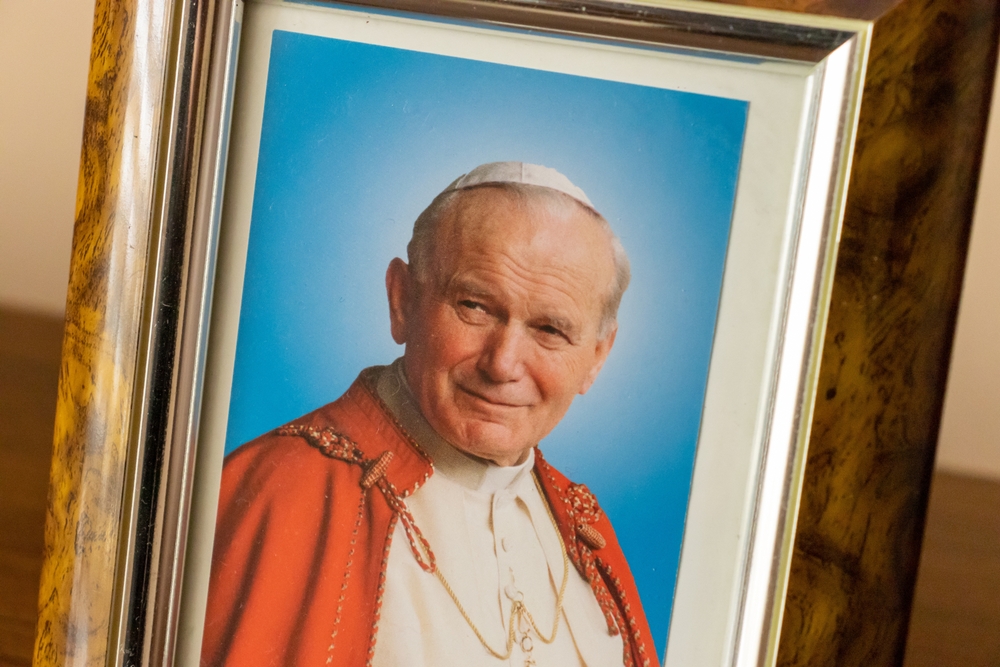

Read More