construction

Centennial honors historic Michigan church built amid KKK threats and strikes #Catholic A richly diverse Catholic community in southern Michigan is preparing to mark a milestone: the centennial of St. Mary Star of the Sea in Jackson, where the beauty of sacred space, reverent liturgy, and a vibrant musical tradition continue to shape the lives of the faithful. The church has thrived through historic events and turbulent times, even as it was being rebuilt. In 1924, one of the largest Ku Klux Klan (KKK) rallies ever recorded saw 100,000 participants tramp through Jacksonʼs streets, and parish tradition holds that the Knights of Columbus kept vigil at the construction site to protect it from KKK vandalism. 
 
 St. Mary Star of the Sea Parish in Jackson, Michigan. | Credit: Photo courtesy of Father Timothy Nelson
 
 As he prepares to wrap up his 15-year tenure as pastor of the parish, Father Timothy Nelson reflected on the churchʼs enduring vitality: “Our church is not a relic but a dynamic part of the present, enriched by a legacy of faith.”Located west of Detroit, Jackson has long been a railroad hub with ties to the automobile industry. St. Mary’s is one of three current parishes, following a consolidation of several others. Following decades of a strong Polish-American presence, demographic changes have included the growing influx of Hispanic families. Children of the latter now make up about a quarter of the enrollment at St. Mary School.St. Mary’s three spires dominate the skyline, reaching up 180 feet in an imposing Romanesque style. Long regarded as one of the most beautiful churches in Michigan, it features magnificent stained-glass windows fashioned in Innsbruck, Austria, an apse mosaic of Our Lady Star of the Sea, murals of the apostles, and Carrara marble altars and Communion rail. The latter embellishments were donated by George Washington Hill, president of the American Tobacco Co., as a memorial to his young wife, Aquinas Heiler Hill, who died in 1925. The green and red colors in the mosaics around the high altar repeat the original colors used on packs of Lucky Strike cigarettes.
 
 A mosaic of the Crucifixion at St. Mary Star of the Sea Parish in Jackson, Michigan. | Credit: Photo courtesy of Father Timothy Nelson
 
 The present structure replaced an earlier church, with its cornerstone laid on Sept. 23, 1923. Construction faced delays because of a prolonged labor strike at limestone quarries. The era was also marred with social unrest, including the Ku Klux Klan and its virulent anti-Catholicism and racism. Construction was not completed until May 31, 1926, at a cost of 5,000. Then-Auxiliary Bishop Joseph C. Plagens came from Detroit to officiate the dedicatory Mass.Among its treasures is a unique stained-glass rose window memorializing the fallen of the first world war, including nuns who tended the wounded. “The window shows not only the American soldiers and sailors of the war, but even their enemies who reach out to Jesus rising above them,” Nelson said as he gave a tour of the magnificent church. Restoration of the windows cost  million and was made possible through the generosity of parishioners and benefactors, including the Eisele Family Foundation. St. Mary’s is depicted in “Buildings of Michigan” by Kathryn Bishop Eckert as one of the most notable in the Mitten State.
 
 Stained-glass window at St. Mary Star of the Sea Parish in Jackson, Michigan. | Credit: Kathryn Mietelka
 
 Now 74, Nelson will step down as pastor this summer. A former cardiologist, he will continue his ministry as chaplain of the St. Pio Medical Center in nearby Howell, which is part of a Vatican-authorized healthcare network inspired by St. Pio of Pietrelcina (Padre Pio). He will be succeeded by Father John Vinton, who will continue offering Traditional Latin Masses and Spanish-language Masses.St. Mary’s serves about 1,086 families, including the active Sacred Heart of Jesus Hispanic Community.Nelson said: “The school is necessary for parish life” and is the most diverse parochial school in the area.The parish’s liturgical life shows both continuity and renewal. The Traditional Latin Mass, celebrated every Sunday, is accompanied by Gregorian chant and organ led by Aine Schroeder, a student at nearby Hillsdale College. Schroeder said the Gregorian schola will chant the “Ave Maria” and “Salve Regina” at the centennial concert. Dispelling concerns that the Latin liturgy is stuck in the past, Nelson said: “I agree with Pope Benedict XVI that the past continues to be lived in the present. We are bringing it into the future.”
 
 Inside St. Mary Star of the Sea Parish in Jackson, Michigan. | Credit: Photo courtesy of Father Timothy Nelson
 
 For longtime parishioner Mary Belknap, a fourth-generation member who serves on the parish guild, St. Mary’s is a spiritual home and a place of encounter. “It’s one of the hallmark parishes in the state. People come from all over to see us and our beautiful church,” she said. Bridging the gaps between communities came easily to educator Belknap, who said that, having been raised in poverty as a child, she has experienced life on the margins, and “I personally reach out to embrace the goodness of other people.”The parishʼs centennial observance will commence with a concert on May 29 and culminate in a solemn Mass on May 31 — exactly 100 years after its first Mass — to be celebrated by Bishop Earl Boyea. Mary Malewitz, parish music director since 1981, is organizing the opening concert, which will feature adult and school choirs, a Hispanic choir, and a Gregorian schola. Between each performance, parishioners will sing their favorite hymns. “St. Mary’s has brought glory to Michigan for generations,” she told EWTN News.

Centennial honors historic Michigan church built amid KKK threats and strikes #Catholic A richly diverse Catholic community in southern Michigan is preparing to mark a milestone: the centennial of St. Mary Star of the Sea in Jackson, where the beauty of sacred space, reverent liturgy, and a vibrant musical tradition continue to shape the lives of the faithful. The church has thrived through historic events and turbulent times, even as it was being rebuilt. In 1924, one of the largest Ku Klux Klan (KKK) rallies ever recorded saw 100,000 participants tramp through Jacksonʼs streets, and parish tradition holds that the Knights of Columbus kept vigil at the construction site to protect it from KKK vandalism. St. Mary Star of the Sea Parish in Jackson, Michigan. | Credit: Photo courtesy of Father Timothy Nelson As he prepares to wrap up his 15-year tenure as pastor of the parish, Father Timothy Nelson reflected on the churchʼs enduring vitality: “Our church is not a relic but a dynamic part of the present, enriched by a legacy of faith.”Located west of Detroit, Jackson has long been a railroad hub with ties to the automobile industry. St. Mary’s is one of three current parishes, following a consolidation of several others. Following decades of a strong Polish-American presence, demographic changes have included the growing influx of Hispanic families. Children of the latter now make up about a quarter of the enrollment at St. Mary School.St. Mary’s three spires dominate the skyline, reaching up 180 feet in an imposing Romanesque style. Long regarded as one of the most beautiful churches in Michigan, it features magnificent stained-glass windows fashioned in Innsbruck, Austria, an apse mosaic of Our Lady Star of the Sea, murals of the apostles, and Carrara marble altars and Communion rail. The latter embellishments were donated by George Washington Hill, president of the American Tobacco Co., as a memorial to his young wife, Aquinas Heiler Hill, who died in 1925. The green and red colors in the mosaics around the high altar repeat the original colors used on packs of Lucky Strike cigarettes. A mosaic of the Crucifixion at St. Mary Star of the Sea Parish in Jackson, Michigan. | Credit: Photo courtesy of Father Timothy Nelson The present structure replaced an earlier church, with its cornerstone laid on Sept. 23, 1923. Construction faced delays because of a prolonged labor strike at limestone quarries. The era was also marred with social unrest, including the Ku Klux Klan and its virulent anti-Catholicism and racism. Construction was not completed until May 31, 1926, at a cost of $375,000. Then-Auxiliary Bishop Joseph C. Plagens came from Detroit to officiate the dedicatory Mass.Among its treasures is a unique stained-glass rose window memorializing the fallen of the first world war, including nuns who tended the wounded. “The window shows not only the American soldiers and sailors of the war, but even their enemies who reach out to Jesus rising above them,” Nelson said as he gave a tour of the magnificent church. Restoration of the windows cost $1 million and was made possible through the generosity of parishioners and benefactors, including the Eisele Family Foundation. St. Mary’s is depicted in “Buildings of Michigan” by Kathryn Bishop Eckert as one of the most notable in the Mitten State. Stained-glass window at St. Mary Star of the Sea Parish in Jackson, Michigan. | Credit: Kathryn Mietelka Now 74, Nelson will step down as pastor this summer. A former cardiologist, he will continue his ministry as chaplain of the St. Pio Medical Center in nearby Howell, which is part of a Vatican-authorized healthcare network inspired by St. Pio of Pietrelcina (Padre Pio). He will be succeeded by Father John Vinton, who will continue offering Traditional Latin Masses and Spanish-language Masses.St. Mary’s serves about 1,086 families, including the active Sacred Heart of Jesus Hispanic Community.Nelson said: “The school is necessary for parish life” and is the most diverse parochial school in the area.The parish’s liturgical life shows both continuity and renewal. The Traditional Latin Mass, celebrated every Sunday, is accompanied by Gregorian chant and organ led by Aine Schroeder, a student at nearby Hillsdale College. Schroeder said the Gregorian schola will chant the “Ave Maria” and “Salve Regina” at the centennial concert. Dispelling concerns that the Latin liturgy is stuck in the past, Nelson said: “I agree with Pope Benedict XVI that the past continues to be lived in the present. We are bringing it into the future.” Inside St. Mary Star of the Sea Parish in Jackson, Michigan. | Credit: Photo courtesy of Father Timothy Nelson For longtime parishioner Mary Belknap, a fourth-generation member who serves on the parish guild, St. Mary’s is a spiritual home and a place of encounter. “It’s one of the hallmark parishes in the state. People come from all over to see us and our beautiful church,” she said. Bridging the gaps between communities came easily to educator Belknap, who said that, having been raised in poverty as a child, she has experienced life on the margins, and “I personally reach out to embrace the goodness of other people.”The parishʼs centennial observance will commence with a concert on May 29 and culminate in a solemn Mass on May 31 — exactly 100 years after its first Mass — to be celebrated by Bishop Earl Boyea. Mary Malewitz, parish music director since 1981, is organizing the opening concert, which will feature adult and school choirs, a Hispanic choir, and a Gregorian schola. Between each performance, parishioners will sing their favorite hymns. “St. Mary’s has brought glory to Michigan for generations,” she told EWTN News.

Founded amid hardship and change, the centennial of St. Mary Star of the Sea in Jackson, Michigan, brings together generations to honor a diverse parish that continues to thrive.

Read More
Historic parish in Toronto Archdiocese to finally break ground on new church #Catholic After well over a decade of prayer, planning, and perseverance, a historic parish in the Archdiocese of Toronto, St. Patrick’s Parish in Brampton, Ontario,  Canada, will officially break ground on its new church May 24.For many, the project’s next — and most important — step marks a joyous continuation of a dream long held by generations of parishioners and clergy alike.Celebrations will take place on Pentecost Sunday with Mass at the current St. Patrick’s Church, followed by a procession to the new site located at 150 Martin Byrne Dr. for the formal blessing and groundbreaking ceremony. There, Toronto Auxiliary Bishop Ivan Camilleri will preside, joined by parishioners, major donors, local mayors, and councillors. The day will conclude with a festive barbecue, live music, games, and family activities back at St. Patrick’s.Monsignor Owen Keenan, pastor of St. Patrick’s, the archdiocese’s second-oldest parish, said the long-awaited moment is deeply meaningful for all. He spoke to Canadaʼs The Catholic Register about the parish communityʼs vision for a larger church, dating back to the 1980s, with planning truly intensifying in 2015 under the late Father Vito Marziliano. Unfortunately, misfortune befell the project even in its earliest stages.“ First, our architect Renzo Pianon died at 47, and then COVID hit us hard with the drop in attendance and various fundraising challenges before Father Vito left us far too young,” Keenan said. “There were moments of asking what is next? How much more can the community endure?”Still, the community persisted through Marziliano’s Loaves and Fishes Campaign — a project solely dedicated to St. Patrick’s mission of building a new, larger church property to serve a growing local population.
 
 A rendering of the front of the new St. Patrick’s Parish in Brampton, Ontario, Canada. Construction on the new church is scheduled to begin May 24, 2026. | Credit: Screenshot from St. Patrick promo video
 
 Speaking to The Catholic Register in October 2025, Keenan revealed that the City of Brampton, Region of Peel, and the City of Caledon anticipated an increase of between 50,000 to 60,000 people within the confines of the parish in the next 15 to 20 years. He also shared the growing interest from parishioners — and pledges of  million to be paid upon the start of construction and an additional  million in bequests from an anonymous parishioner and an area business, respectively.While the community has continued to rally behind the cause — including a promising showing and fundraising efforts at last year’s gala in October —Keenan concedes that a sense of restlessness has been creeping in.“ Weʼve managed to maintain and reestablish a good level of fundraising after COVID, but weʼve run out of runway — people are only going to throw money at a question mark for so long. Thus far, we have around 0,000 worth of new donations already, with more expected as we go and as we break ground,” he said.In total, the project has amassed several million dollars for the project.Despite the impressive figures, Keenan reiterated that rising prices have played a role in the project’s delay. Even as the market shows itʼs a good time to build, a 32,000-square-foot project in 2018 was estimated to cost .9 million, but by 2024, a reduced 28,000-square-foot building was estimated to cost as much as .5 million, leading the parish to scale its operation back from wants to needs.Still, the new church itself is set to be Marziliano’s swan song and become something truly unique as his original vision promised.“He was quite an artist, and so the design for the new church will be based on a 19th-century reconstruction of a sixth-century church in the Holy Land, specifically the Church of the Multiplication of the Loaves and Fish in Tabgha, Israel,” Keenan said.The extensive project involves building a bigger version that remains faithful to the original design, complete with a traditional Romanesque style, rounded apse, cruciform shape, and pillars up the aisles.Now, the project that required a true test of the communityʼs resiliency, patience, and faith will reach its most defining moment with May 24’s first dig.Looking back on the multigenerational effort, Keenan is grateful for the patience and steadfast support of parishioners who have sacrificed for this new church over a decade.“ We are all very excited, and I canʼt say enough about the good people of this parish who have been wanting this for so long. There are lots of good people for whom weʼre enormously grateful,” he said.“We want a place for families who are stressed to be able to come together to appeal to the Lord. Letʼs find our identity in Christ, as St. Paul says, and letʼs truly rejoice together.”This story was first published in Canadaʼs The Catholic Register and has been adapted by EWTN News. It is reprinted here with permission.

Historic parish in Toronto Archdiocese to finally break ground on new church #Catholic After well over a decade of prayer, planning, and perseverance, a historic parish in the Archdiocese of Toronto, St. Patrick’s Parish in Brampton, Ontario,  Canada, will officially break ground on its new church May 24.For many, the project’s next — and most important — step marks a joyous continuation of a dream long held by generations of parishioners and clergy alike.Celebrations will take place on Pentecost Sunday with Mass at the current St. Patrick’s Church, followed by a procession to the new site located at 150 Martin Byrne Dr. for the formal blessing and groundbreaking ceremony. There, Toronto Auxiliary Bishop Ivan Camilleri will preside, joined by parishioners, major donors, local mayors, and councillors. The day will conclude with a festive barbecue, live music, games, and family activities back at St. Patrick’s.Monsignor Owen Keenan, pastor of St. Patrick’s, the archdiocese’s second-oldest parish, said the long-awaited moment is deeply meaningful for all. He spoke to Canadaʼs The Catholic Register about the parish communityʼs vision for a larger church, dating back to the 1980s, with planning truly intensifying in 2015 under the late Father Vito Marziliano. Unfortunately, misfortune befell the project even in its earliest stages.“ First, our architect Renzo Pianon died at 47, and then COVID hit us hard with the drop in attendance and various fundraising challenges before Father Vito left us far too young,” Keenan said. “There were moments of asking what is next? How much more can the community endure?”Still, the community persisted through Marziliano’s Loaves and Fishes Campaign — a project solely dedicated to St. Patrick’s mission of building a new, larger church property to serve a growing local population. A rendering of the front of the new St. Patrick’s Parish in Brampton, Ontario, Canada. Construction on the new church is scheduled to begin May 24, 2026. | Credit: Screenshot from St. Patrick promo video Speaking to The Catholic Register in October 2025, Keenan revealed that the City of Brampton, Region of Peel, and the City of Caledon anticipated an increase of between 50,000 to 60,000 people within the confines of the parish in the next 15 to 20 years. He also shared the growing interest from parishioners — and pledges of $1 million to be paid upon the start of construction and an additional $1 million in bequests from an anonymous parishioner and an area business, respectively.While the community has continued to rally behind the cause — including a promising showing and fundraising efforts at last year’s gala in October —Keenan concedes that a sense of restlessness has been creeping in.“ Weʼve managed to maintain and reestablish a good level of fundraising after COVID, but weʼve run out of runway — people are only going to throw money at a question mark for so long. Thus far, we have around $350,000 worth of new donations already, with more expected as we go and as we break ground,” he said.In total, the project has amassed several million dollars for the project.Despite the impressive figures, Keenan reiterated that rising prices have played a role in the project’s delay. Even as the market shows itʼs a good time to build, a 32,000-square-foot project in 2018 was estimated to cost $12.9 million, but by 2024, a reduced 28,000-square-foot building was estimated to cost as much as $26.5 million, leading the parish to scale its operation back from wants to needs.Still, the new church itself is set to be Marziliano’s swan song and become something truly unique as his original vision promised.“He was quite an artist, and so the design for the new church will be based on a 19th-century reconstruction of a sixth-century church in the Holy Land, specifically the Church of the Multiplication of the Loaves and Fish in Tabgha, Israel,” Keenan said.The extensive project involves building a bigger version that remains faithful to the original design, complete with a traditional Romanesque style, rounded apse, cruciform shape, and pillars up the aisles.Now, the project that required a true test of the communityʼs resiliency, patience, and faith will reach its most defining moment with May 24’s first dig.Looking back on the multigenerational effort, Keenan is grateful for the patience and steadfast support of parishioners who have sacrificed for this new church over a decade.“ We are all very excited, and I canʼt say enough about the good people of this parish who have been wanting this for so long. There are lots of good people for whom weʼre enormously grateful,” he said.“We want a place for families who are stressed to be able to come together to appeal to the Lord. Letʼs find our identity in Christ, as St. Paul says, and letʼs truly rejoice together.”This story was first published in Canadaʼs The Catholic Register and has been adapted by EWTN News. It is reprinted here with permission.

St. Patrick’s Parish in Brampton, Ontario, is bursting at the seams. Now, on May 24, it will break ground on its long-awaited new church.

Read More
Picture of the day


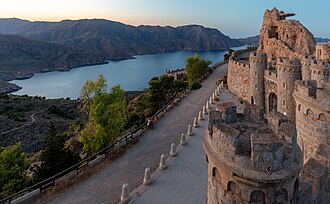
View of the coastal artillery site Castillitos, Cartagena, Spain. It was built together with the coastal artillery Cenizas in order to protect the entrance to the Bay of Cartagena in the Mediterranean Sea. The construction took place between 1933 and 1936 following a project from 1926 during the dictatorship of Primo de Rivera. It’s a Spanish National Heritage Monument since 1985.
 #ImageOfTheDay
Picture of the day
View of the coastal artillery site Castillitos, Cartagena, Spain. It was built together with the coastal artillery Cenizas in order to protect the entrance to the Bay of Cartagena in the Mediterranean Sea. The construction took place between 1933 and 1936 following a project from 1926 during the dictatorship of Primo de Rivera. It’s a Spanish National Heritage Monument since 1985.
Read More
Answering call to serve the poor: Papal Foundation announces more than  million in grants #Catholic The Papal Foundation this week announced a record-setting  million in grants for its annual distribution of humanitarian aid to support more than 144 projects across 75 countries.Since its founding, the Papal Foundation has served the Catholic Church with collaboration of laity, clergy, and hierarchy. The United States-based organization is dedicated to fulfilling the requests of the Holy Father for the needs of the Church in developing countries.The foundation has distributed more than 0 million in grants, scholarships, and humanitarian aid to more than 2,700 projects selected by Pope Leo XIV, Pope Francis, Pope Benedict XVI, and St. John Paul II.During his recent papal trip to Africa April 13–23, Pope Leo prayed at the Basilica of St. Augustine in Annaba, Algeria, and he visited the restored Church of Notre Dame dʼAfrique. Both sites were restored through the generosity of The Papal Foundation, with investments of ,000 each from the foundation in 2008.This year, The Papal Foundation’s board of trustees approved  million, including ,502,765 in current grants and an additional  million to be distributed in 2026 to further new projects. The grants will fund initiatives across the globe including the construction and renovation of Catholic schools, classrooms, monasteries, orphanages, and medical clinics in numerous countries including Tanzania, the Central African Republic, and the Philippines.“This year’s grants are a powerful testament to what can be accomplished through faithful stewardship and shared mission,” said Ward Fitzgerald, president of The Papal Foundation board of trustees, in a press release announcing the grants.“Each project represents hope, meeting urgent needs and strengthening the resolve of the Catholic Church community in developing nations,” he said.In Tanzania, the grant will aid the creation of a dormitory to rescue girls from early marriage, trafficking, and sexual abuse, and boys from school dropout. In India, a safe school for marginalized tribal children will be built.The grants will fund the creation of a library and technology center in the Central African Republic and professional IT training for vulnerable women in the Philippines. Also, in the Republic of Guinea, a well and water tower will be built for the community.“Supporting these life-changing grants is the core of the mission of The Papal Foundation,” Fitzgerald said. “The impact we have on the poor and most vulnerable is the organization’s gift to the Church and the Catholic Church’s gift to its people around the world.”Requests for the grants come in from developing nations after local bishops identify the most urgent needs. They are then advanced by apostolic nuncios to the foundation’s grants committee. The requests are then reviewed through the assessor’s office at the Vatican, led by its current assessor for general affairs of the secretariat Monsignor Anthony Onyemuche Ekpo. Members of the foundation’s grants committee met with Ekpo this week to review proposals and begin building a working relationship.“It was encouraging to meet Monsignor Ekpo at the start of his tenure and to hear his focus on expanding impact while strengthening efficiency and accountability,” Fitzgerald told EWTN News.“Those are principles we take seriously. Our goal is to be the most highly disciplined and transparent steward of funds, and the most effective means to get resources to the most in need.”Fitzgerald noted Ekpo’s work in Nigeria and in Australia, which he said has proven to be strength allowing him to bring "a clear understanding of the realities facing developing countries, along with firsthand experience in more advanced economies.” “That perspective allows us to evaluate requests more effectively and align our resources with the priorities identified by the Holy Father,” Fitzgerald said.Growing engagementThe Holy Father met with members of the Papal Foundation in an audience at the Vatican on May 2, where he said he was “deeply grateful” for the work of the foundation “to assist the Successor of Peter in his mission to care for the needs of the universal Church.”
 
 Pope Leo XIV poses with members of the Papal Foundation in the Sala Clementina at the Vatican Apostolic Palace, Saturday, May 2, 2026. | Credit: Vatican Media
 
 “Your generosity has allowed countless people to experience in a concrete fashion the goodness and kindness of God in their own communities,” the pope said. He pointed out that the charity workers “will probably never meet everyone who has benefitted from your kindness, so in their name I express heartfelt appreciation.”The 2026 grants are the result of an evaluation process led by the foundation’s grants committee, chaired by Dr. Tammy Tenaglia of the Archdiocese of Philadelphia, with assistance from the foundation’s mission fund committee.The work of The Papal Foundation has been accomplished with the help of the foundation’s Stewards of Saint Peter, which is made up of North American Catholic philanthropists committed to bringing the love of Christ to those most in need.Since Pope Leo’s election, the community of Stewards of Saint Peter has welcomed 25 new families committed to supporting the Holy Father’s mission to serve the poor. “The growth we’re seeing is incredibly encouraging, as it reflects a shared commitment to serve, to give, and to bring the Church’s mission to life in meaningful ways across the globe,” said David Savage, executive director of The Papal Foundation.The foundation’s annual pilgrimage to Rome the week of April 27 brought together 56 of the Steward families. Led by The Papal Foundation’s chairman, Cardinal Timothy Dolan, the trip included a visit to St. Peter’s Basilica and an audience with Pope Leo XIV on Saturday, May 2.

Answering call to serve the poor: Papal Foundation announces more than $15 million in grants #Catholic The Papal Foundation this week announced a record-setting $15 million in grants for its annual distribution of humanitarian aid to support more than 144 projects across 75 countries.Since its founding, the Papal Foundation has served the Catholic Church with collaboration of laity, clergy, and hierarchy. The United States-based organization is dedicated to fulfilling the requests of the Holy Father for the needs of the Church in developing countries.The foundation has distributed more than $270 million in grants, scholarships, and humanitarian aid to more than 2,700 projects selected by Pope Leo XIV, Pope Francis, Pope Benedict XVI, and St. John Paul II.During his recent papal trip to Africa April 13–23, Pope Leo prayed at the Basilica of St. Augustine in Annaba, Algeria, and he visited the restored Church of Notre Dame dʼAfrique. Both sites were restored through the generosity of The Papal Foundation, with investments of $90,000 each from the foundation in 2008.This year, The Papal Foundation’s board of trustees approved $15 million, including $12,502,765 in current grants and an additional $3 million to be distributed in 2026 to further new projects. The grants will fund initiatives across the globe including the construction and renovation of Catholic schools, classrooms, monasteries, orphanages, and medical clinics in numerous countries including Tanzania, the Central African Republic, and the Philippines.“This year’s grants are a powerful testament to what can be accomplished through faithful stewardship and shared mission,” said Ward Fitzgerald, president of The Papal Foundation board of trustees, in a press release announcing the grants.“Each project represents hope, meeting urgent needs and strengthening the resolve of the Catholic Church community in developing nations,” he said.In Tanzania, the grant will aid the creation of a dormitory to rescue girls from early marriage, trafficking, and sexual abuse, and boys from school dropout. In India, a safe school for marginalized tribal children will be built.The grants will fund the creation of a library and technology center in the Central African Republic and professional IT training for vulnerable women in the Philippines. Also, in the Republic of Guinea, a well and water tower will be built for the community.“Supporting these life-changing grants is the core of the mission of The Papal Foundation,” Fitzgerald said. “The impact we have on the poor and most vulnerable is the organization’s gift to the Church and the Catholic Church’s gift to its people around the world.”Requests for the grants come in from developing nations after local bishops identify the most urgent needs. They are then advanced by apostolic nuncios to the foundation’s grants committee. The requests are then reviewed through the assessor’s office at the Vatican, led by its current assessor for general affairs of the secretariat Monsignor Anthony Onyemuche Ekpo. Members of the foundation’s grants committee met with Ekpo this week to review proposals and begin building a working relationship.“It was encouraging to meet Monsignor Ekpo at the start of his tenure and to hear his focus on expanding impact while strengthening efficiency and accountability,” Fitzgerald told EWTN News.“Those are principles we take seriously. Our goal is to be the most highly disciplined and transparent steward of funds, and the most effective means to get resources to the most in need.”Fitzgerald noted Ekpo’s work in Nigeria and in Australia, which he said has proven to be strength allowing him to bring "a clear understanding of the realities facing developing countries, along with firsthand experience in more advanced economies.” “That perspective allows us to evaluate requests more effectively and align our resources with the priorities identified by the Holy Father,” Fitzgerald said.Growing engagementThe Holy Father met with members of the Papal Foundation in an audience at the Vatican on May 2, where he said he was “deeply grateful” for the work of the foundation “to assist the Successor of Peter in his mission to care for the needs of the universal Church.” Pope Leo XIV poses with members of the Papal Foundation in the Sala Clementina at the Vatican Apostolic Palace, Saturday, May 2, 2026. | Credit: Vatican Media “Your generosity has allowed countless people to experience in a concrete fashion the goodness and kindness of God in their own communities,” the pope said. He pointed out that the charity workers “will probably never meet everyone who has benefitted from your kindness, so in their name I express heartfelt appreciation.”The 2026 grants are the result of an evaluation process led by the foundation’s grants committee, chaired by Dr. Tammy Tenaglia of the Archdiocese of Philadelphia, with assistance from the foundation’s mission fund committee.The work of The Papal Foundation has been accomplished with the help of the foundation’s Stewards of Saint Peter, which is made up of North American Catholic philanthropists committed to bringing the love of Christ to those most in need.Since Pope Leo’s election, the community of Stewards of Saint Peter has welcomed 25 new families committed to supporting the Holy Father’s mission to serve the poor. “The growth we’re seeing is incredibly encouraging, as it reflects a shared commitment to serve, to give, and to bring the Church’s mission to life in meaningful ways across the globe,” said David Savage, executive director of The Papal Foundation.The foundation’s annual pilgrimage to Rome the week of April 27 brought together 56 of the Steward families. Led by The Papal Foundation’s chairman, Cardinal Timothy Dolan, the trip included a visit to St. Peter’s Basilica and an audience with Pope Leo XIV on Saturday, May 2.

The grants will fund initiatives across the globe including the construction and renovation of Catholic schools, monasteries, orphanages, and medical clinics in numerous countries.

Read More
Picture of the day


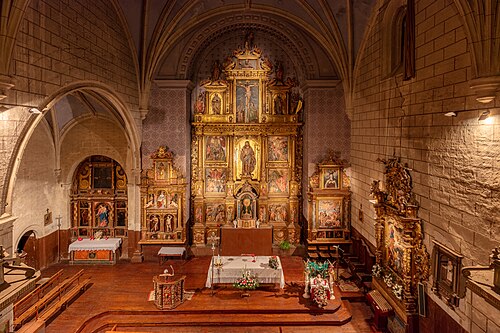
Church of El Salvador, Luesia, Zaragoza, Spain. The church is located in the highest area of the nucleus of the village of Luesia, next to the remains of the old medieval castle, to which it is historically and constructively associated. Its origin dates back to the end of the 11th century with the construction of the semicircular triple apse head with a double crypt at the bottom, while the body with three naves was built throughout the 12th century and the two portals on its southern fronts and occidental already respond to models from the beginning of the 13th century. The Romanesque building underwent a profound reform though in the mid-16th century. The main altarpiece is a Romanesque piece carved in wood; polychrome and gilt. The work is attributed to Gaspar Ramos, a sculptor from Sangüesa, who executed it around 1630.
 #ImageOfTheDay
Picture of the day
Church of El Salvador, Luesia, Zaragoza, Spain. The church is located in the highest area of the nucleus of the village of Luesia, next to the remains of the old medieval castle, to which it is historically and constructively associated. Its origin dates back to the end of the 11th century with the construction of the semicircular triple apse head with a double crypt at the bottom, while the body with three naves was built throughout the 12th century and the two portals on its southern fronts and occidental already respond to models from the beginning of the 13th century. The Romanesque building underwent a profound reform though in the mid-16th century. The main altarpiece is a Romanesque piece carved in wood; polychrome and gilt. The work is attributed to Gaspar Ramos, a sculptor from Sangüesa, who executed it around 1630.
Read More