Countries

At annual meeting, Catholic historians assess impact of first American pope #Catholic 
 
 University of Notre Dame professor Kathleen Sprows Cummings. Credit: Ken Oliver-Méndez/CNA

Jan 10, 2026 / 10:12 am (CNA).
Assessing the impact of the Catholic Church's first American pope was front and center at the 106th annual meeting of the American Catholic Historical Association (ACHA), which met in Pope Leo XIV's hometown of Chicago from Jan. 8-11.During a panel on the subject, Catholic scholars noted some of the historic caricatures of what an American papacy would be like and compared that to the first eight months of Leo's actual papacy.American Catholic History Association panelists (from left to right) Brian Flanagan, Colleen Dulle, Miguel Diaz and Kathleen Sprows Cummings. Credit: Ken Oliver-Méndez/CNAAt the outset of the panel, University of Notre Dame history professor Kathleen Sprows Cummings referenced the 1894 Puck magazine cartoon titled “ The American Pope,” which depicts the first apostolic delegate to the United States, Cardinal Francesco Satolli, sitting atop a church labeled the “American headquarters” and casting a shadow of then Pope Leo XIII over the entire country.Sprows Cummings noted the cartoon illustrates “fears about papal intervention in the United States” at a time when the country was receiving waves of Catholic immigrants from countries such as Ireland and Italy.As Catholics became more settled in American society in the subsequent decades, she said some of those prejudices began to lessen and pointed to the 1918 election of Catholic Democrat Al Smith as New York’s governor. By this point, Catholics had become “much more confident about their place in American culture.” During the same early 20th century period, the United States also began to rise as a superpower. Sprows Cummings noted that predominant concerns about an American pope shifted to Vatican concerns over the “Americanization of the Catholic Church.”America magazine's Vatican correspondent, Colleen Dulle, said some of those concerns were evidently mitigated in the person of then Cardinal Robert Prevost, whose service to the Church included many years as a missionary and bishop in Peru as well as in Rome as the head of a global religious order, the Augustinians.Sprows Cummings said the College of Cardinals clearly saw in Cardinal Prevost the "pastoral presence, administrative savvy and global vision" that the Church needed at this time and that he was “not elected in some flex of American power.”Miguel Diaz, the John Courtney Murray, S.J. Chair in Public Service at Loyola University Chicago, noted that some of Leo’s actions have actually amounted to the opposite of flexing American power, such as his focus on the dignity of migrants, which he contrasted to the policies of the Trump administration.Former U.S. Ambassador to the Holy See Miguel Diaz. Credit: Ken Oliver-Méndez/CNADiaz, who served as U.S. ambassador to the Holy See under former President Barack Obama, said Leo is “a different symbol, from America first to America cares.”He emphasized that having an American pope is significant amid the country’s political debates because “he can say things and he will be listened to.”The panelists also discussed what Leo’s papacy may look like moving forward, with Dulle noting that only this year are there clear signs of him charting his own programmatic course, as the events and itinerary of the 2025 Jubilee were primarily developed for Pope Francis. Up until now, she said, he has been mostly “continuing the Francis initiatives in a different style.”She noted Pope Leo's management of this week's consistory — a meeting between the pope and the College of Cardinals — where the pontiff gave them four topics to choose from, which were all in line with Francis’s priorities: synodality, evangelization, reform of the curia, and the liturgy. The cardinals chose synodality and evangelization.Dulle said Leo is seen as "a consensus builder” who aims to build consensus around the Church's priorities. She noted Pope Leo's announcement this week of a regular schedule of consistories, with the next one set for this June. This approach is emerging as a "hallmark of how he governs the Church" Dulle said.Brian Flanagan, the John Cardinal Cody Chair of Catholic Theology at Loyola University Chicago, also emphasized Leo’s strong appeal to the cardinals and bishops in efforts to reach consensus, in keeping with the Pope's role as a preserver of unity.Flanagan said he sees Leo exercising the papacy as not so much "at the top of the pyramid, but as at the center of conversation.” He said this is likely influenced by Leo's past as leader of a religious order — the Order of Saint Augustine — rather than a diocese because the orders are “global, diverse, and somewhat fractious.”“You can’t govern a global religious community without getting people on board,” he said.

At annual meeting, Catholic historians assess impact of first American pope #Catholic University of Notre Dame professor Kathleen Sprows Cummings. Credit: Ken Oliver-Méndez/CNA Jan 10, 2026 / 10:12 am (CNA). Assessing the impact of the Catholic Church's first American pope was front and center at the 106th annual meeting of the American Catholic Historical Association (ACHA), which met in Pope Leo XIV's hometown of Chicago from Jan. 8-11.During a panel on the subject, Catholic scholars noted some of the historic caricatures of what an American papacy would be like and compared that to the first eight months of Leo's actual papacy.American Catholic History Association panelists (from left to right) Brian Flanagan, Colleen Dulle, Miguel Diaz and Kathleen Sprows Cummings. Credit: Ken Oliver-Méndez/CNAAt the outset of the panel, University of Notre Dame history professor Kathleen Sprows Cummings referenced the 1894 Puck magazine cartoon titled “ The American Pope,” which depicts the first apostolic delegate to the United States, Cardinal Francesco Satolli, sitting atop a church labeled the “American headquarters” and casting a shadow of then Pope Leo XIII over the entire country.Sprows Cummings noted the cartoon illustrates “fears about papal intervention in the United States” at a time when the country was receiving waves of Catholic immigrants from countries such as Ireland and Italy.As Catholics became more settled in American society in the subsequent decades, she said some of those prejudices began to lessen and pointed to the 1918 election of Catholic Democrat Al Smith as New York’s governor. By this point, Catholics had become “much more confident about their place in American culture.” During the same early 20th century period, the United States also began to rise as a superpower. Sprows Cummings noted that predominant concerns about an American pope shifted to Vatican concerns over the “Americanization of the Catholic Church.”America magazine's Vatican correspondent, Colleen Dulle, said some of those concerns were evidently mitigated in the person of then Cardinal Robert Prevost, whose service to the Church included many years as a missionary and bishop in Peru as well as in Rome as the head of a global religious order, the Augustinians.Sprows Cummings said the College of Cardinals clearly saw in Cardinal Prevost the "pastoral presence, administrative savvy and global vision" that the Church needed at this time and that he was “not elected in some flex of American power.”Miguel Diaz, the John Courtney Murray, S.J. Chair in Public Service at Loyola University Chicago, noted that some of Leo’s actions have actually amounted to the opposite of flexing American power, such as his focus on the dignity of migrants, which he contrasted to the policies of the Trump administration.Former U.S. Ambassador to the Holy See Miguel Diaz. Credit: Ken Oliver-Méndez/CNADiaz, who served as U.S. ambassador to the Holy See under former President Barack Obama, said Leo is “a different symbol, from America first to America cares.”He emphasized that having an American pope is significant amid the country’s political debates because “he can say things and he will be listened to.”The panelists also discussed what Leo’s papacy may look like moving forward, with Dulle noting that only this year are there clear signs of him charting his own programmatic course, as the events and itinerary of the 2025 Jubilee were primarily developed for Pope Francis. Up until now, she said, he has been mostly “continuing the Francis initiatives in a different style.”She noted Pope Leo's management of this week's consistory — a meeting between the pope and the College of Cardinals — where the pontiff gave them four topics to choose from, which were all in line with Francis’s priorities: synodality, evangelization, reform of the curia, and the liturgy. The cardinals chose synodality and evangelization.Dulle said Leo is seen as "a consensus builder” who aims to build consensus around the Church's priorities. She noted Pope Leo's announcement this week of a regular schedule of consistories, with the next one set for this June. This approach is emerging as a "hallmark of how he governs the Church" Dulle said.Brian Flanagan, the John Cardinal Cody Chair of Catholic Theology at Loyola University Chicago, also emphasized Leo’s strong appeal to the cardinals and bishops in efforts to reach consensus, in keeping with the Pope's role as a preserver of unity.Flanagan said he sees Leo exercising the papacy as not so much "at the top of the pyramid, but as at the center of conversation.” He said this is likely influenced by Leo's past as leader of a religious order — the Order of Saint Augustine — rather than a diocese because the orders are “global, diverse, and somewhat fractious.”“You can’t govern a global religious community without getting people on board,” he said.


University of Notre Dame professor Kathleen Sprows Cummings. Credit: Ken Oliver-Méndez/CNA

Jan 10, 2026 / 10:12 am (CNA).

Assessing the impact of the Catholic Church's first American pope was front and center at the 106th annual meeting of the American Catholic Historical Association (ACHA), which met in Pope Leo XIV's hometown of Chicago from Jan. 8-11.

During a panel on the subject, Catholic scholars noted some of the historic caricatures of what an American papacy would be like and compared that to the first eight months of Leo's actual papacy.

American Catholic History Association panelists (from left to right) Brian Flanagan, Colleen Dulle, Miguel Diaz and Kathleen Sprows Cummings. Credit: Ken Oliver-Méndez/CNA

At the outset of the panel, University of Notre Dame history professor Kathleen Sprows Cummings referenced the 1894 Puck magazine cartoon titled “ The American Pope,” which depicts the first apostolic delegate to the United States, Cardinal Francesco Satolli, sitting atop a church labeled the “American headquarters” and casting a shadow of then Pope Leo XIII over the entire country.

Sprows Cummings noted the cartoon illustrates “fears about papal intervention in the United States” at a time when the country was receiving waves of Catholic immigrants from countries such as Ireland and Italy.

As Catholics became more settled in American society in the subsequent decades, she said some of those prejudices began to lessen and pointed to the 1918 election of Catholic Democrat Al Smith as New York’s governor. By this point, Catholics had become “much more confident about their place in American culture.”

During the same early 20th century period, the United States also began to rise as a superpower. Sprows Cummings noted that predominant concerns about an American pope shifted to Vatican concerns over the “Americanization of the Catholic Church.”

America magazine's Vatican correspondent, Colleen Dulle, said some of those concerns were evidently mitigated in the person of then Cardinal Robert Prevost, whose service to the Church included many years as a missionary and bishop in Peru as well as in Rome as the head of a global religious order, the Augustinians.

Sprows Cummings said the College of Cardinals clearly saw in Cardinal Prevost the "pastoral presence, administrative savvy and global vision" that the Church needed at this time and that he was “not elected in some flex of American power.”

Miguel Diaz, the John Courtney Murray, S.J. Chair in Public Service at Loyola University Chicago, noted that some of Leo’s actions have actually amounted to the opposite of flexing American power, such as his focus on the dignity of migrants, which he contrasted to the policies of the Trump administration.

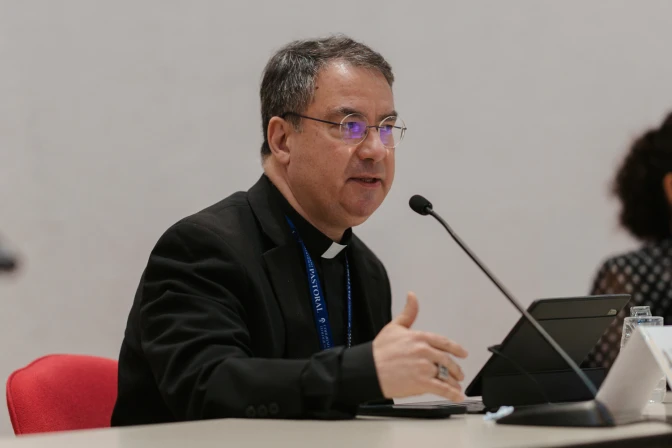
Former U.S. Ambassador to the Holy See Miguel Diaz. Credit: Ken Oliver-Méndez/CNA

Diaz, who served as U.S. ambassador to the Holy See under former President Barack Obama, said Leo is “a different symbol, from America first to America cares.”

He emphasized that having an American pope is significant amid the country’s political debates because “he can say things and he will be listened to.”

The panelists also discussed what Leo’s papacy may look like moving forward, with Dulle noting that only this year are there clear signs of him charting his own programmatic course, as the events and itinerary of the 2025 Jubilee were primarily developed for Pope Francis.

Up until now, she said, he has been mostly “continuing the Francis initiatives in a different style.”

She noted Pope Leo's management of this week's consistory — a meeting between the pope and the College of Cardinals — where the pontiff gave them four topics to choose from, which were all in line with Francis’s priorities: synodality, evangelization, reform of the curia, and the liturgy. The cardinals chose synodality and evangelization.

Dulle said Leo is seen as "a consensus builder” who aims to build consensus around the Church's priorities. She noted Pope Leo's announcement this week of a regular schedule of consistories, with the next one set for this June. This approach is emerging as a "hallmark of how he governs the Church" Dulle said.

Brian Flanagan, the John Cardinal Cody Chair of Catholic Theology at Loyola University Chicago, also emphasized Leo’s strong appeal to the cardinals and bishops in efforts to reach consensus, in keeping with the Pope's role as a preserver of unity.

Flanagan said he sees Leo exercising the papacy as not so much "at the top of the pyramid, but as at the center of conversation.” He said this is likely influenced by Leo's past as leader of a religious order — the Order of Saint Augustine — rather than a diocese because the orders are “global, diverse, and somewhat fractious.”

“You can’t govern a global religious community without getting people on board,” he said.

Read More
Bishops invite faithful to pray novena for the unborn #Catholic 
 
 Credit: chayanuphol/Shutterstock

Jan 6, 2026 / 14:00 pm (CNA).
The United States bishops have invited Catholics to pray an annual Respect Life novena for the protection of the unborn.The Committee on Pro-Life Activities of the U.S. Conference of Catholic Bishops (USCCB) is sponsoring the “9 Days for Life” prayer that will begin on Friday, Jan. 16, and end on Jan. 24. The novena is to be prayed in observance of the annual Day of Prayer for the Legal Protection of Unborn Children on Jan. 22.The 2026 “9 Days for Life” marks the 14th time the novena has taken place. Since it began, the prayer has reached hundreds of thousands of people in over 100 countries spanning six continents, according to the USCCB.The overarching intention of the novena is to end abortion, and it also offers prayers for mothers and fathers, those suffering from participation in abortions, civic leaders, and pro-life activists.Those who sign up to participate can access a resource kit with information in both English and Spanish. Participants will be offered daily prayer intentions accompanied by short reflections and suggested actions to help build a culture of life.There are also resources available to help leaders guide the novena at parishes, schools, and ministries.Day of Prayer for the Legal Protection of Unborn ChildrenThe USCCB first started sponsoring the novena in 2013 to commemorate the 40th anniversary of the Roe v. Wade Supreme Court decision on Jan. 22, 1973. Following the legalization of abortion, “millions of children have lost their lives, and millions of women and families have been wounded by abortion,” the USCCB said.While the Supreme Court overturned Roe. v Wade in 2022, continuing efforts are still “needed to protect children and their mothers from the tragedy of abortion,” the bishops said.The General Instruction of the Roman Missal (GIRM), designated Jan. 22 as “a particular day of prayer and penance.” In all the dioceses of the U.S., the day “shall be observed as a particular day of prayer for the full restoration of the legal guarantee of the right to life and of penance for violations to the dignity of the human person committed through acts of abortion,” according to the GIRM.On the Day of Prayer for the Legal Protection of Unborn Children, the bishops suggest the faithful observe the day by attending Mass, abstaining from meat, praying the Divine Mercy Chaplet, fasting, praying a decade of the rosary, or offering a prayer for life to Jesus in the Blessed Sacrament.

Bishops invite faithful to pray novena for the unborn #Catholic Credit: chayanuphol/Shutterstock Jan 6, 2026 / 14:00 pm (CNA). The United States bishops have invited Catholics to pray an annual Respect Life novena for the protection of the unborn.The Committee on Pro-Life Activities of the U.S. Conference of Catholic Bishops (USCCB) is sponsoring the “9 Days for Life” prayer that will begin on Friday, Jan. 16, and end on Jan. 24. The novena is to be prayed in observance of the annual Day of Prayer for the Legal Protection of Unborn Children on Jan. 22.The 2026 “9 Days for Life” marks the 14th time the novena has taken place. Since it began, the prayer has reached hundreds of thousands of people in over 100 countries spanning six continents, according to the USCCB.The overarching intention of the novena is to end abortion, and it also offers prayers for mothers and fathers, those suffering from participation in abortions, civic leaders, and pro-life activists.Those who sign up to participate can access a resource kit with information in both English and Spanish. Participants will be offered daily prayer intentions accompanied by short reflections and suggested actions to help build a culture of life.There are also resources available to help leaders guide the novena at parishes, schools, and ministries.Day of Prayer for the Legal Protection of Unborn ChildrenThe USCCB first started sponsoring the novena in 2013 to commemorate the 40th anniversary of the Roe v. Wade Supreme Court decision on Jan. 22, 1973. Following the legalization of abortion, “millions of children have lost their lives, and millions of women and families have been wounded by abortion,” the USCCB said.While the Supreme Court overturned Roe. v Wade in 2022, continuing efforts are still “needed to protect children and their mothers from the tragedy of abortion,” the bishops said.The General Instruction of the Roman Missal (GIRM), designated Jan. 22 as “a particular day of prayer and penance.” In all the dioceses of the U.S., the day “shall be observed as a particular day of prayer for the full restoration of the legal guarantee of the right to life and of penance for violations to the dignity of the human person committed through acts of abortion,” according to the GIRM.On the Day of Prayer for the Legal Protection of Unborn Children, the bishops suggest the faithful observe the day by attending Mass, abstaining from meat, praying the Divine Mercy Chaplet, fasting, praying a decade of the rosary, or offering a prayer for life to Jesus in the Blessed Sacrament.


Credit: chayanuphol/Shutterstock

Jan 6, 2026 / 14:00 pm (CNA).

The United States bishops have invited Catholics to pray an annual Respect Life novena for the protection of the unborn.

The Committee on Pro-Life Activities of the U.S. Conference of Catholic Bishops (USCCB) is sponsoring the “9 Days for Life” prayer that will begin on Friday, Jan. 16, and end on Jan. 24. The novena is to be prayed in observance of the annual Day of Prayer for the Legal Protection of Unborn Children on Jan. 22.

The 2026 “9 Days for Life” marks the 14th time the novena has taken place. Since it began, the prayer has reached hundreds of thousands of people in over 100 countries spanning six continents, according to the USCCB.

The overarching intention of the novena is to end abortion, and it also offers prayers for mothers and fathers, those suffering from participation in abortions, civic leaders, and pro-life activists.

Those who sign up to participate can access a resource kit with information in both English and Spanish. Participants will be offered daily prayer intentions accompanied by short reflections and suggested actions to help build a culture of life.

There are also resources available to help leaders guide the novena at parishes, schools, and ministries.

Day of Prayer for the Legal Protection of Unborn Children

The USCCB first started sponsoring the novena in 2013 to commemorate the 40th anniversary of the Roe v. Wade Supreme Court decision on Jan. 22, 1973. Following the legalization of abortion, “millions of children have lost their lives, and millions of women and families have been wounded by abortion,” the USCCB said.

While the Supreme Court overturned Roe. v Wade in 2022, continuing efforts are still “needed to protect children and their mothers from the tragedy of abortion,” the bishops said.

The General Instruction of the Roman Missal (GIRM), designated Jan. 22 as “a particular day of prayer and penance.” In all the dioceses of the U.S., the day “shall be observed as a particular day of prayer for the full restoration of the legal guarantee of the right to life and of penance for violations to the dignity of the human person committed through acts of abortion,” according to the GIRM.

On the Day of Prayer for the Legal Protection of Unborn Children, the bishops suggest the faithful observe the day by attending Mass, abstaining from meat, praying the Divine Mercy Chaplet, fasting, praying a decade of the rosary, or offering a prayer for life to Jesus in the Blessed Sacrament.

Read More
How to bless your home on the feast of Epiphany 2026 #Catholic 
 
 A chalk home blessing from the feast of the Epiphany. | Credit: A.Davey via Flickr (CC BY-NC-ND 2.0)

Jan 4, 2026 / 04:00 am (CNA).
Have you ever walked past a door and seen what appears to be random letters and numbers written at the top? These letters and numbers actually have a great significance.Traditionally on the feast of Epiphany, Catholics bless their homes by writing the letters C, M, and B and the numbers of the year on either side — so this year it would look like “20+C+M+B+26.”The letters stand for the traditional names of the three Magi: Caspar, Melchior, and Balthasar. They also represent the Latin blessing “Christus mansionem benedicat,” which means “May Christ bless this house.”Many Catholic parishes will give their parishioners a piece of chalk, a small bottle of holy water, and the words for the house blessing so that each family can bless its home.Epiphany, which is also known as “Little Christmas,” is the feast that celebrates the arrival of the three Magi who came to worship the child Jesus shortly after his birth. It is traditionally celebrated on Jan. 6. However, the Church in the United States celebrates it on the Sunday between Jan. 2 and Jan. 8. Many around the world celebrate this feast with as much pomp and circumstance as Christmas, including the exchanging of gifts.The blessing, which is popular in Poland and other Slavic countries, has spread around the world and become increasingly popular in the United States.How do you bless your home?Begin by having all family members gather outside the front door. All make the sign of the cross. One person will then read this prayer:Leader: Peace be to this house.All: And to all who dwell herein.Leader: From the east came the Magi to Bethlehem to adore the Lord; and opening their treasures they offered precious gifts: gold for the great King, incense for the true God, and myrrh in symbol of his burial.(Enter your home and read the Magnificat, the hymn of praise sung by the Blessed Virgin Mary in Luke’s Gospel after being greeted by Elizabeth. During this, sprinkle the area you are in with holy water. After that is complete, pray:)All: From the east came the Magi to Bethlehem to adore the Lord; and opening their treasures they offered precious gifts: gold for the great King, incense for the true God, and myrrh in symbol of his burial.Leader: Our Father, who art in heaven, hallowed be thy name. Thy kingdom come, thy will be done on earth as it is in heaven. Give us this day our daily bread, and forgive us our trespasses as we forgive those who trespass against us. And lead us not into temptation,All: But deliver us from evil.Leader: All they from Saba shall comeAll: Bringing gold and frankincense.Leader: O Lord, hear my prayer.All: And let my cry come unto thee.Leader: Let us pray. O God, who by the guidance of a star didst on this day manifest thine only-begotten Son to the Gentiles, mercifully grant that we who know thee by faith may also attain the vision of thy glorious majesty. Through Christ, Our Lord.All: Amen.Leader: Be enlightened, be enlightened, O Jerusalem, for thy light is come, and the glory of the Lord is risen upon thee — Jesus Christ born of the Virgin Mary.All: And the Gentiles shall walk in thy light and kings in the splendor of thy rising, and the glory of the Lord has risen upon thee.Leader: Let us pray. Bless, O Lord God almighty, this home, that in it there may be health, purity, the strength of victory, humility, goodness, and mercy, the fulfillment of thy law, the thanksgiving to God the Father and to the Son and to the Holy Spirit. And may this blessing remain upon this home and upon all who dwell herein. Through Christ, Our Lord.All: Amen.After the prayers are recited, walk throughout your home sprinkling each room with holy water. Then write the initials of the Magi connected with crosses at the top of your front door. Then the numbers of the year. The numbers will be split so that they are on each side of the initials. You will write:20 + C + M + B + 26This is a special tradition at the beginning of each year, a way to invite God into your home and place your family under his protection.This story was first published Jan. 6, 2022, and was updated Jan. 2, 2026.

How to bless your home on the feast of Epiphany 2026 #Catholic A chalk home blessing from the feast of the Epiphany. | Credit: A.Davey via Flickr (CC BY-NC-ND 2.0) Jan 4, 2026 / 04:00 am (CNA). Have you ever walked past a door and seen what appears to be random letters and numbers written at the top? These letters and numbers actually have a great significance.Traditionally on the feast of Epiphany, Catholics bless their homes by writing the letters C, M, and B and the numbers of the year on either side — so this year it would look like “20+C+M+B+26.”The letters stand for the traditional names of the three Magi: Caspar, Melchior, and Balthasar. They also represent the Latin blessing “Christus mansionem benedicat,” which means “May Christ bless this house.”Many Catholic parishes will give their parishioners a piece of chalk, a small bottle of holy water, and the words for the house blessing so that each family can bless its home.Epiphany, which is also known as “Little Christmas,” is the feast that celebrates the arrival of the three Magi who came to worship the child Jesus shortly after his birth. It is traditionally celebrated on Jan. 6. However, the Church in the United States celebrates it on the Sunday between Jan. 2 and Jan. 8. Many around the world celebrate this feast with as much pomp and circumstance as Christmas, including the exchanging of gifts.The blessing, which is popular in Poland and other Slavic countries, has spread around the world and become increasingly popular in the United States.How do you bless your home?Begin by having all family members gather outside the front door. All make the sign of the cross. One person will then read this prayer:Leader: Peace be to this house.All: And to all who dwell herein.Leader: From the east came the Magi to Bethlehem to adore the Lord; and opening their treasures they offered precious gifts: gold for the great King, incense for the true God, and myrrh in symbol of his burial.(Enter your home and read the Magnificat, the hymn of praise sung by the Blessed Virgin Mary in Luke’s Gospel after being greeted by Elizabeth. During this, sprinkle the area you are in with holy water. After that is complete, pray:)All: From the east came the Magi to Bethlehem to adore the Lord; and opening their treasures they offered precious gifts: gold for the great King, incense for the true God, and myrrh in symbol of his burial.Leader: Our Father, who art in heaven, hallowed be thy name. Thy kingdom come, thy will be done on earth as it is in heaven. Give us this day our daily bread, and forgive us our trespasses as we forgive those who trespass against us. And lead us not into temptation,All: But deliver us from evil.Leader: All they from Saba shall comeAll: Bringing gold and frankincense.Leader: O Lord, hear my prayer.All: And let my cry come unto thee.Leader: Let us pray. O God, who by the guidance of a star didst on this day manifest thine only-begotten Son to the Gentiles, mercifully grant that we who know thee by faith may also attain the vision of thy glorious majesty. Through Christ, Our Lord.All: Amen.Leader: Be enlightened, be enlightened, O Jerusalem, for thy light is come, and the glory of the Lord is risen upon thee — Jesus Christ born of the Virgin Mary.All: And the Gentiles shall walk in thy light and kings in the splendor of thy rising, and the glory of the Lord has risen upon thee.Leader: Let us pray. Bless, O Lord God almighty, this home, that in it there may be health, purity, the strength of victory, humility, goodness, and mercy, the fulfillment of thy law, the thanksgiving to God the Father and to the Son and to the Holy Spirit. And may this blessing remain upon this home and upon all who dwell herein. Through Christ, Our Lord.All: Amen.After the prayers are recited, walk throughout your home sprinkling each room with holy water. Then write the initials of the Magi connected with crosses at the top of your front door. Then the numbers of the year. The numbers will be split so that they are on each side of the initials. You will write:20 + C + M + B + 26This is a special tradition at the beginning of each year, a way to invite God into your home and place your family under his protection.This story was first published Jan. 6, 2022, and was updated Jan. 2, 2026.


A chalk home blessing from the feast of the Epiphany. | Credit: A.Davey via Flickr (CC BY-NC-ND 2.0)

Jan 4, 2026 / 04:00 am (CNA).

Have you ever walked past a door and seen what appears to be random letters and numbers written at the top? These letters and numbers actually have a great significance.

Traditionally on the feast of Epiphany, Catholics bless their homes by writing the letters C, M, and B and the numbers of the year on either side — so this year it would look like “20+C+M+B+26.”

The letters stand for the traditional names of the three Magi: Caspar, Melchior, and Balthasar. They also represent the Latin blessing “Christus mansionem benedicat,” which means “May Christ bless this house.”

Many Catholic parishes will give their parishioners a piece of chalk, a small bottle of holy water, and the words for the house blessing so that each family can bless its home.

Epiphany, which is also known as “Little Christmas,” is the feast that celebrates the arrival of the three Magi who came to worship the child Jesus shortly after his birth. It is traditionally celebrated on Jan. 6. However, the Church in the United States celebrates it on the Sunday between Jan. 2 and Jan. 8. Many around the world celebrate this feast with as much pomp and circumstance as Christmas, including the exchanging of gifts.

The blessing, which is popular in Poland and other Slavic countries, has spread around the world and become increasingly popular in the United States.

How do you bless your home?

Begin by having all family members gather outside the front door. All make the sign of the cross. One person will then read this prayer:

Leader: Peace be to this house.

All: And to all who dwell herein.

Leader: From the east came the Magi to Bethlehem to adore the Lord; and opening their treasures they offered precious gifts: gold for the great King, incense for the true God, and myrrh in symbol of his burial.

(Enter your home and read the Magnificat, the hymn of praise sung by the Blessed Virgin Mary in Luke’s Gospel after being greeted by Elizabeth. During this, sprinkle the area you are in with holy water. After that is complete, pray:)

All: From the east came the Magi to Bethlehem to adore the Lord; and opening their treasures they offered precious gifts: gold for the great King, incense for the true God, and myrrh in symbol of his burial.

Leader: Our Father, who art in heaven, hallowed be thy name. Thy kingdom come, thy will be done on earth as it is in heaven. Give us this day our daily bread, and forgive us our trespasses as we forgive those who trespass against us. And lead us not into temptation,

All: But deliver us from evil.

Leader: All they from Saba shall come

All: Bringing gold and frankincense.

Leader: O Lord, hear my prayer.

All: And let my cry come unto thee.

Leader: Let us pray. O God, who by the guidance of a star didst on this day manifest thine only-begotten Son to the Gentiles, mercifully grant that we who know thee by faith may also attain the vision of thy glorious majesty. Through Christ, Our Lord.

All: Amen.

Leader: Be enlightened, be enlightened, O Jerusalem, for thy light is come, and the glory of the Lord is risen upon thee — Jesus Christ born of the Virgin Mary.

All: And the Gentiles shall walk in thy light and kings in the splendor of thy rising, and the glory of the Lord has risen upon thee.

Leader: Let us pray. Bless, O Lord God almighty, this home, that in it there may be health, purity, the strength of victory, humility, goodness, and mercy, the fulfillment of thy law, the thanksgiving to God the Father and to the Son and to the Holy Spirit. And may this blessing remain upon this home and upon all who dwell herein. Through Christ, Our Lord.

All: Amen.

After the prayers are recited, walk throughout your home sprinkling each room with holy water. Then write the initials of the Magi connected with crosses at the top of your front door. Then the numbers of the year. The numbers will be split so that they are on each side of the initials. You will write:

20 + C + M + B + 26

This is a special tradition at the beginning of each year, a way to invite God into your home and place your family under his protection.

This story was first published Jan. 6, 2022, and was updated Jan. 2, 2026.

Read More
2025 saw expanded access to physician-assisted suicide  #Catholic 
 
 Empty wheelchairs used during the Nov. 4, 2025, anti-assisted suicide event in Rome. / Credit: Courtesy of ProVita & Famiglia

Washington, D.C. Newsroom, Dec 28, 2025 / 07:00 am (CNA).
Despite opposition from advocacy groups and Catholic leaders, multiple states and countries advanced legislation in 2025 to expand access to physician-assisted suicide.Delaware Delaware Gov. Matt Meyer signed a bill in May legalizing physician-assisted suicide for terminally ill adults with a prognosis of six months or less to live. The law will go into effect on Jan. 1, 2026, allowing patients to self-administer lethal medication. After the bill was signed, several disability and patient advocacy groups filed a lawsuit in the U.S. District Court in Delaware on Dec. 8 alleging that the law discriminates against people with disabilities. Illinois The House passed a bill in May to legalize physician-assisted suicide in Illinois, and it stalled in the Senate during the regular session. After it was taken up during the fall veto session, senators passed it on Oct. 31. The bill, which allows doctors to give terminally ill patients life-ending drugs if they request them, was signed into law by Gov. JB Pritzker on Dec. 12. The law “ignores the very real failures in access to quality care that drive vulnerable people to despair,” according to the Catholic Conference of Illinois.Illinois joined states that permit the practice including California, Colorado, Delaware, Hawaii, Maine, Montana, New Jersey, New Mexico, Oregon, Vermont, and Washington, as well as the District of Columbia.New York The New York State Assembly advanced an assisted suicide measure in May, which Cardinal Timothy Dolan called “a disaster waiting to happen.” Despite calls from Catholic bishops, the New York Legislature passed the “Medical Aid in Dying Act” in June.The legislation is expected to be signed by New York Gov. Kathy Hochul.ColoradoAssisted suicide has been legal in Colorado since 2016. In June 2025, a coalition of advocacy groups sued the state over its assisted suicide law, claiming the statute is unconstitutional for allegedly discriminating against those who suffer from disabilities. The suit was filed on June 30 in U.S. district court by organizations including Not Dead Yet and the Institute for Patients’ Rights. It calls Colorado’s assisted suicide regime “a deadly and discriminatory system that steers people with life-threatening disabilities away from necessary lifesaving and preserving mental health care.” FranceThe National Assembly approved a bill in May that would allow certain terminally ill adults to receive lethal medication. The bill passed with 305 votes in favor and 199 against. In a statement released after the vote, the French Bishops’ Conference expressed its “deep concern” over the so-called “right to assistance in dying.” United KingdomBritish lawmakers in the House of Commons passed a bill in June to legalize assisted suicide for terminally ill patients in England and Wales. In order to become law, the bill must pass the second chamber of Parliament, the unelected House of Lords. The Lords can amend legislation, but because the bill has the support of the Commons, it is likely to pass.Uruguay Legislators in Uruguay passed a bill in August to legalize euthanasia in the country. In October, Uruguay’s Parliament approved the “Dignified Death Bill,” making the bill law and allowing adults in the terminal stage of a disease to request euthanasia. Canada A Cardus Health report released in September found the legalization of medical assistance in dying (MAID) in Canada led to disproportionately high rates of premature deaths among vulnerable groups.MAID passed in 2012 with safeguards and provisions that the report said Canada has not upheld. It said: “Those who died from MAID were more likely to have been living with a disability than those who did not die from MAID, even though both groups had similar medical conditions and experienced diminished capability.”People suffering from mental illness are also dying by assisted suicide at disproportionate rates, the report said. 

2025 saw expanded access to physician-assisted suicide  #Catholic Empty wheelchairs used during the Nov. 4, 2025, anti-assisted suicide event in Rome. / Credit: Courtesy of ProVita & Famiglia Washington, D.C. Newsroom, Dec 28, 2025 / 07:00 am (CNA). Despite opposition from advocacy groups and Catholic leaders, multiple states and countries advanced legislation in 2025 to expand access to physician-assisted suicide.Delaware Delaware Gov. Matt Meyer signed a bill in May legalizing physician-assisted suicide for terminally ill adults with a prognosis of six months or less to live. The law will go into effect on Jan. 1, 2026, allowing patients to self-administer lethal medication. After the bill was signed, several disability and patient advocacy groups filed a lawsuit in the U.S. District Court in Delaware on Dec. 8 alleging that the law discriminates against people with disabilities. Illinois The House passed a bill in May to legalize physician-assisted suicide in Illinois, and it stalled in the Senate during the regular session. After it was taken up during the fall veto session, senators passed it on Oct. 31. The bill, which allows doctors to give terminally ill patients life-ending drugs if they request them, was signed into law by Gov. JB Pritzker on Dec. 12. The law “ignores the very real failures in access to quality care that drive vulnerable people to despair,” according to the Catholic Conference of Illinois.Illinois joined states that permit the practice including California, Colorado, Delaware, Hawaii, Maine, Montana, New Jersey, New Mexico, Oregon, Vermont, and Washington, as well as the District of Columbia.New York The New York State Assembly advanced an assisted suicide measure in May, which Cardinal Timothy Dolan called “a disaster waiting to happen.” Despite calls from Catholic bishops, the New York Legislature passed the “Medical Aid in Dying Act” in June.The legislation is expected to be signed by New York Gov. Kathy Hochul.ColoradoAssisted suicide has been legal in Colorado since 2016. In June 2025, a coalition of advocacy groups sued the state over its assisted suicide law, claiming the statute is unconstitutional for allegedly discriminating against those who suffer from disabilities. The suit was filed on June 30 in U.S. district court by organizations including Not Dead Yet and the Institute for Patients’ Rights. It calls Colorado’s assisted suicide regime “a deadly and discriminatory system that steers people with life-threatening disabilities away from necessary lifesaving and preserving mental health care.” FranceThe National Assembly approved a bill in May that would allow certain terminally ill adults to receive lethal medication. The bill passed with 305 votes in favor and 199 against. In a statement released after the vote, the French Bishops’ Conference expressed its “deep concern” over the so-called “right to assistance in dying.” United KingdomBritish lawmakers in the House of Commons passed a bill in June to legalize assisted suicide for terminally ill patients in England and Wales. In order to become law, the bill must pass the second chamber of Parliament, the unelected House of Lords. The Lords can amend legislation, but because the bill has the support of the Commons, it is likely to pass.Uruguay Legislators in Uruguay passed a bill in August to legalize euthanasia in the country. In October, Uruguay’s Parliament approved the “Dignified Death Bill,” making the bill law and allowing adults in the terminal stage of a disease to request euthanasia. Canada A Cardus Health report released in September found the legalization of medical assistance in dying (MAID) in Canada led to disproportionately high rates of premature deaths among vulnerable groups.MAID passed in 2012 with safeguards and provisions that the report said Canada has not upheld. It said: “Those who died from MAID were more likely to have been living with a disability than those who did not die from MAID, even though both groups had similar medical conditions and experienced diminished capability.”People suffering from mental illness are also dying by assisted suicide at disproportionate rates, the report said. 


Empty wheelchairs used during the Nov. 4, 2025, anti-assisted suicide event in Rome. / Credit: Courtesy of ProVita & Famiglia

Washington, D.C. Newsroom, Dec 28, 2025 / 07:00 am (CNA).

Despite opposition from advocacy groups and Catholic leaders, multiple states and countries advanced legislation in 2025 to expand access to physician-assisted suicide.

Delaware 

Delaware Gov. Matt Meyer signed a bill in May legalizing physician-assisted suicide for terminally ill adults with a prognosis of six months or less to live. The law will go into effect on Jan. 1, 2026, allowing patients to self-administer lethal medication. 

After the bill was signed, several disability and patient advocacy groups filed a lawsuit in the U.S. District Court in Delaware on Dec. 8 alleging that the law discriminates against people with disabilities. 

Illinois 

The House passed a bill in May to legalize physician-assisted suicide in Illinois, and it stalled in the Senate during the regular session. After it was taken up during the fall veto session, senators passed it on Oct. 31. 

The bill, which allows doctors to give terminally ill patients life-ending drugs if they request them, was signed into law by Gov. JB Pritzker on Dec. 12. The law “ignores the very real failures in access to quality care that drive vulnerable people to despair,” according to the Catholic Conference of Illinois.

Illinois joined states that permit the practice including California, Colorado, Delaware, Hawaii, Maine, Montana, New Jersey, New Mexico, Oregon, Vermont, and Washington, as well as the District of Columbia.

New York 

The New York State Assembly advanced an assisted suicide measure in May, which Cardinal Timothy Dolan called “a disaster waiting to happen.” Despite calls from Catholic bishops, the New York Legislature passed the “Medical Aid in Dying Act” in June.

The legislation is expected to be signed by New York Gov. Kathy Hochul.

Colorado

Assisted suicide has been legal in Colorado since 2016. In June 2025, a coalition of advocacy groups sued the state over its assisted suicide law, claiming the statute is unconstitutional for allegedly discriminating against those who suffer from disabilities. 

The suit was filed on June 30 in U.S. district court by organizations including Not Dead Yet and the Institute for Patients’ Rights. It calls Colorado’s assisted suicide regime “a deadly and discriminatory system that steers people with life-threatening disabilities away from necessary lifesaving and preserving mental health care.” 

France

The National Assembly approved a bill in May that would allow certain terminally ill adults to receive lethal medication. The bill passed with 305 votes in favor and 199 against. 

In a statement released after the vote, the French Bishops’ Conference expressed its “deep concern” over the so-called “right to assistance in dying.” 

United Kingdom

British lawmakers in the House of Commons passed a bill in June to legalize assisted suicide for terminally ill patients in England and Wales. 

In order to become law, the bill must pass the second chamber of Parliament, the unelected House of Lords. The Lords can amend legislation, but because the bill has the support of the Commons, it is likely to pass.

Uruguay 

Legislators in Uruguay passed a bill in August to legalize euthanasia in the country. In October, Uruguay’s Parliament approved the “Dignified Death Bill,” making the bill law and allowing adults in the terminal stage of a disease to request euthanasia. 

Canada 

A Cardus Health report released in September found the legalization of medical assistance in dying (MAID) in Canada led to disproportionately high rates of premature deaths among vulnerable groups.

MAID passed in 2012 with safeguards and provisions that the report said Canada has not upheld. It said: “Those who died from MAID were more likely to have been living with a disability than those who did not die from MAID, even though both groups had similar medical conditions and experienced diminished capability.”

People suffering from mental illness are also dying by assisted suicide at disproportionate rates, the report said. 

Read More
UPDATED: Pope asked Illinois governor to veto assisted suicide bill #Catholic 
 
 Pope Leo meets with Illinois Gov. JB Pritzker in November 2025. / Credit: Courtesy of the Office of Gov. JB Pritzker

Castel Gandolfo, Italy, Dec 23, 2025 / 14:55 pm (CNA).
Pope Leo XIV appealed to Illinois Gov. JB Pritzker to veto a bill legalizing assisted suicide during a Vatican meeting last month, the pope told reporters Tuesday.The pope, responding to a question from Rudolf Gehrig of EWTN News, said he made his opposition to the bill clear in the November conversation with the governor. Leo told Pritzker it was important to defend the value of life and that every life is sacred, the pope told reporters outside the papal villa of Castel Gandolfo before his return to Rome.The Vatican had not earlier provided details of the meeting.Pritzker signed the assisted suicide measure, ardently opposed by Catholic leaders, into law Dec. 12.“I spoke very explicitly with Gov. Pritzker about that,” the pope said, and he said Cardinal Blase Cupich also expressed his views. “But we were very clear about the necessity to respect the sacredness of life from the very beginning to the very end. And unfortunately, for different reasons, he decided to sign that bill. Very disappointed about that.”People should use Christmastime to think about the value of life, the pope added.“I would invite all people, especially in this Christmas feast days, to reflect upon the nature of human life, the goodness of human life. God became human like us to show us what it means really to live human life. And I hope and pray that the respect for life will once again grow in all moments of human existence, from conception to natural death,” the pope said.Catholic bishops had objected to the Illinois law.“This law ignores the very real failures in access to quality care that drive vulnerable people to despair,” according to the Catholic Conference of Illinois. “It does nothing to ensure patients are offered services, protected from coercion, or surrounded by loved ones when they kill themselves.” Several states and countries also have advanced legislation to expand access to physician-assisted suicide besides Illinois.Other U.S. jurisdictions with assisted suicide laws include California, Colorado, Delaware, Hawaii, Maine, New Jersey, New Mexico, Oregon, Vermont, Washington, and the District of Columbia. Pope Leo XIV tells reporters Dec. 23, 2025, that he appealed to Illinois Gov. JB Pritzer to veto a bill legalizing assisted suicide during a Vatican meeting in November. Credit: EWTN NewsBritish lawmakers in the House of Commons passed a bill in June to legalize assisted suicide for terminally ill patients in England and Wales. Legislators in Uruguay passed a bill in August to legalize euthanasia in the country.A Canadian law allowing medical assistance in dying led to disproportionately high rates of premature deaths among vulnerable groups, a report showed.Rudolf Gehrig contributed to this story.This story was updated at 3:15 p.m. ET on Dec. 23, 2025, with the quotations from the pope.

UPDATED: Pope asked Illinois governor to veto assisted suicide bill #Catholic Pope Leo meets with Illinois Gov. JB Pritzker in November 2025. / Credit: Courtesy of the Office of Gov. JB Pritzker Castel Gandolfo, Italy, Dec 23, 2025 / 14:55 pm (CNA). Pope Leo XIV appealed to Illinois Gov. JB Pritzker to veto a bill legalizing assisted suicide during a Vatican meeting last month, the pope told reporters Tuesday.The pope, responding to a question from Rudolf Gehrig of EWTN News, said he made his opposition to the bill clear in the November conversation with the governor. Leo told Pritzker it was important to defend the value of life and that every life is sacred, the pope told reporters outside the papal villa of Castel Gandolfo before his return to Rome.The Vatican had not earlier provided details of the meeting.Pritzker signed the assisted suicide measure, ardently opposed by Catholic leaders, into law Dec. 12.“I spoke very explicitly with Gov. Pritzker about that,” the pope said, and he said Cardinal Blase Cupich also expressed his views. “But we were very clear about the necessity to respect the sacredness of life from the very beginning to the very end. And unfortunately, for different reasons, he decided to sign that bill. Very disappointed about that.”People should use Christmastime to think about the value of life, the pope added.“I would invite all people, especially in this Christmas feast days, to reflect upon the nature of human life, the goodness of human life. God became human like us to show us what it means really to live human life. And I hope and pray that the respect for life will once again grow in all moments of human existence, from conception to natural death,” the pope said.Catholic bishops had objected to the Illinois law.“This law ignores the very real failures in access to quality care that drive vulnerable people to despair,” according to the Catholic Conference of Illinois. “It does nothing to ensure patients are offered services, protected from coercion, or surrounded by loved ones when they kill themselves.” Several states and countries also have advanced legislation to expand access to physician-assisted suicide besides Illinois.Other U.S. jurisdictions with assisted suicide laws include California, Colorado, Delaware, Hawaii, Maine, New Jersey, New Mexico, Oregon, Vermont, Washington, and the District of Columbia. Pope Leo XIV tells reporters Dec. 23, 2025, that he appealed to Illinois Gov. JB Pritzer to veto a bill legalizing assisted suicide during a Vatican meeting in November. Credit: EWTN NewsBritish lawmakers in the House of Commons passed a bill in June to legalize assisted suicide for terminally ill patients in England and Wales. Legislators in Uruguay passed a bill in August to legalize euthanasia in the country.A Canadian law allowing medical assistance in dying led to disproportionately high rates of premature deaths among vulnerable groups, a report showed.Rudolf Gehrig contributed to this story.This story was updated at 3:15 p.m. ET on Dec. 23, 2025, with the quotations from the pope.


Pope Leo meets with Illinois Gov. JB Pritzker in November 2025. / Credit: Courtesy of the Office of Gov. JB Pritzker

Castel Gandolfo, Italy, Dec 23, 2025 / 14:55 pm (CNA).

Pope Leo XIV appealed to Illinois Gov. JB Pritzker to veto a bill legalizing assisted suicide during a Vatican meeting last month, the pope told reporters Tuesday.

The pope, responding to a question from Rudolf Gehrig of EWTN News, said he made his opposition to the bill clear in the November conversation with the governor. 

Leo told Pritzker it was important to defend the value of life and that every life is sacred, the pope told reporters outside the papal villa of Castel Gandolfo before his return to Rome.

The Vatican had not earlier provided details of the meeting.

Pritzker signed the assisted suicide measure, ardently opposed by Catholic leaders, into law Dec. 12.

“I spoke very explicitly with Gov. Pritzker about that,” the pope said, and he said Cardinal Blase Cupich also expressed his views. “But we were very clear about the necessity to respect the sacredness of life from the very beginning to the very end. And unfortunately, for different reasons, he decided to sign that bill. Very disappointed about that.”

People should use Christmastime to think about the value of life, the pope added.

“I would invite all people, especially in this Christmas feast days, to reflect upon the nature of human life, the goodness of human life. God became human like us to show us what it means really to live human life. And I hope and pray that the respect for life will once again grow in all moments of human existence, from conception to natural death,” the pope said.

Catholic bishops had objected to the Illinois law.

“This law ignores the very real failures in access to quality care that drive vulnerable people to despair,” according to the Catholic Conference of Illinois. “It does nothing to ensure patients are offered services, protected from coercion, or surrounded by loved ones when they kill themselves.” 

Several states and countries also have advanced legislation to expand access to physician-assisted suicide besides Illinois.

Other U.S. jurisdictions with assisted suicide laws include California, Colorado, Delaware, Hawaii, Maine, New Jersey, New Mexico, Oregon, Vermont, Washington, and the District of Columbia. 

Pope Leo XIV tells reporters Dec. 23, 2025, that he appealed to Illinois Gov. JB Pritzer to veto a bill legalizing assisted suicide during a Vatican meeting in November. Credit: EWTN News

British lawmakers in the House of Commons passed a bill in June to legalize assisted suicide for terminally ill patients in England and Wales. Legislators in Uruguay passed a bill in August to legalize euthanasia in the country.

A Canadian law allowing medical assistance in dying led to disproportionately high rates of premature deaths among vulnerable groups, a report showed.

Rudolf Gehrig contributed to this story.

This story was updated at 3:15 p.m. ET on Dec. 23, 2025, with the quotations from the pope.

Read More
Top 2025 religious freedom developments included mix of persecution, protection #Catholic 
 
 null / Credit: Joe Belanger/Shutterstock

Washington, D.C. Newsroom, Dec 19, 2025 / 06:00 am (CNA).
Here is an overview of some of the religious freedom developments and news in the United States and abroad in 2025:White House started the Religious Liberty CommissionPresident Donald Trump established the White House Religious Liberty Commission in May to report on threats to religious freedom in the U.S. and seek to advance legal protections. The commission and advisory boards include members of various religions. Catholic members on the commission include Cardinal Timothy Dolan and Bishop Robert Barron. Catholic advisory board members include Archbishop Salvatore J. Cordileone, Bishop Thomas Paprocki, Bishop Kevin Rhoades, and Father Thomas Ferguson.Lawmakers condemned persecution of Christians Rep. Riley Moore, R-West Virginia, and Sen. Josh Hawley, R-Missouri, introduced a joint resolution condemning the persecution of Christians in Muslim-majority countries across the world.The measure called on the Trump administration to leverage trade, security negotiations, and other diplomatic tools to advocate for religious freedom. Court blocked law that would require priests to violate the seal of confessionWashington Gov. Bob Ferguson signed a state law in May that would require priests to report child abuse to authorities even if they hear about it during the sacrament of confession. Catholic bishops brought a lawsuit against the measure. A federal judge blocked the controversial law.Trump announced federal guidelines to protect prayer at public schoolsPresident Donald Trump announced the U.S. Department of Education will issue federal guidelines to protect prayer at public schools during a Sept. 8 Religious Liberty Commission hearing. He said the guidelines will “protect the right to prayer in our public schools and [provide for] its total protection.”The president said he sought the guidelines after hearing about instances of public school students and staff being censored and facing disciplinary action for engaging in prayer, reading the Bible, and publicly expressing their faith.Report found most states fail to safeguard religious liberty About three-fourths of states scored less than 50% on Napa Legal Institute’s religious freedom index, which measures how well states safeguard religious liberty for faith-based organizations. The October report was part of Napa’s Faith & Freedom Index that showed Alabama scored the highest and Michigan scored the lowest.Lawmakers urged federal court to allow Ten Commandments displayFirst Liberty Institute and Heather Gebelin Hacker of Hacker Stephens LLP filed an amicus brief in December on behalf of 46 United States lawmakers urging the federal court to allow the Ten Commandments to be displayed in public schools.Speaker of the U.S. House of Representatives Mike Johnson, R-Louisiana; Rep. Chip Roy, R-Texas; and Sens. Ted Cruz and John Cornyn, R-Texas, were among the lawmakers who supported the cause after federal judges blocked Texas and Louisiana laws requiring the display of the commandments.Supreme Court ruled on religious freedom cases The U.S. Supreme Court ruled in favor of a group of Maryland parents who sued a school district over its refusal to allow families to opt their children out of reading LGBT-themed books. In a 6-3 decision on July 27 in Mahmoud v. Taylor, the court ruled the Catholic, Orthodox, and Muslim parents “are likely to succeed on their claim that the board’s policies unconstitutionally burden their religious exercise.” In July, the Supreme Court ordered the New York Court of Appeals to revisit Diocese of Albany v. Harris, which challenged a 2017 New York state mandate requiring employers to cover abortions in health insurance plans.In October, a Native American group working to stop the destruction of a centuries-old religious ritual site in Arizona lost its appeal to the Supreme Court.Religious liberty abroad: Religious freedom diminished in AfghanistanThe U.S. Commission on International Religious Freedom (USCIRF) said in a report that “religious freedom conditions in Afghanistan continue to decline dramatically under Taliban rule.”The USCIRF wrote in an Aug. 15 report examining the Taliban’s Law on the Propagation of Virtue and Prevention of Vice one year after its enactment: The morality law “impacts all Afghans” but “disproportionately affects religious minorities and women, eradicating their participation in public life and systematically eliminating their right to [freedom of religious belief].”Chinese government banned Catholic priests from evangelizing onlineIn September, the State Administration for Religious Affairs in China banned several forms of online evangelization for religious clergy of all religions, including Catholic priests.The Code of Conduct for Religious Clergy was made up of 18 articles including one that said faith leaders are banned from performing religious rituals through live broadcasts, short videos, or online meetings. U.S. commission said China should be designated as a country of particular concernThe USCIRF reported China tries to exert total control over religion and said the U.S. Department of State should redesignate China as a “country of particular concern” (CPC) regarding religious freedom.USCIRF said in September that China uses surveillance, fines, retribution against family members, imprisonment, enforced disappearance, torture, and other forms of abuse to control the Catholic Church and other religious communities in the nation.In its annual report, USCIRF also recommended Afghanistan, Burma, Cuba, Eritrea, India, Iran, Nicaragua, Nigeria, North Korea, Pakistan, Russia, Saudi Arabia, Tajikistan, Turkmenistan, and Vietnam be designated as CPCs.

Top 2025 religious freedom developments included mix of persecution, protection #Catholic null / Credit: Joe Belanger/Shutterstock Washington, D.C. Newsroom, Dec 19, 2025 / 06:00 am (CNA). Here is an overview of some of the religious freedom developments and news in the United States and abroad in 2025:White House started the Religious Liberty CommissionPresident Donald Trump established the White House Religious Liberty Commission in May to report on threats to religious freedom in the U.S. and seek to advance legal protections. The commission and advisory boards include members of various religions. Catholic members on the commission include Cardinal Timothy Dolan and Bishop Robert Barron. Catholic advisory board members include Archbishop Salvatore J. Cordileone, Bishop Thomas Paprocki, Bishop Kevin Rhoades, and Father Thomas Ferguson.Lawmakers condemned persecution of Christians Rep. Riley Moore, R-West Virginia, and Sen. Josh Hawley, R-Missouri, introduced a joint resolution condemning the persecution of Christians in Muslim-majority countries across the world.The measure called on the Trump administration to leverage trade, security negotiations, and other diplomatic tools to advocate for religious freedom. Court blocked law that would require priests to violate the seal of confessionWashington Gov. Bob Ferguson signed a state law in May that would require priests to report child abuse to authorities even if they hear about it during the sacrament of confession. Catholic bishops brought a lawsuit against the measure. A federal judge blocked the controversial law.Trump announced federal guidelines to protect prayer at public schoolsPresident Donald Trump announced the U.S. Department of Education will issue federal guidelines to protect prayer at public schools during a Sept. 8 Religious Liberty Commission hearing. He said the guidelines will “protect the right to prayer in our public schools and [provide for] its total protection.”The president said he sought the guidelines after hearing about instances of public school students and staff being censored and facing disciplinary action for engaging in prayer, reading the Bible, and publicly expressing their faith.Report found most states fail to safeguard religious liberty About three-fourths of states scored less than 50% on Napa Legal Institute’s religious freedom index, which measures how well states safeguard religious liberty for faith-based organizations. The October report was part of Napa’s Faith & Freedom Index that showed Alabama scored the highest and Michigan scored the lowest.Lawmakers urged federal court to allow Ten Commandments displayFirst Liberty Institute and Heather Gebelin Hacker of Hacker Stephens LLP filed an amicus brief in December on behalf of 46 United States lawmakers urging the federal court to allow the Ten Commandments to be displayed in public schools.Speaker of the U.S. House of Representatives Mike Johnson, R-Louisiana; Rep. Chip Roy, R-Texas; and Sens. Ted Cruz and John Cornyn, R-Texas, were among the lawmakers who supported the cause after federal judges blocked Texas and Louisiana laws requiring the display of the commandments.Supreme Court ruled on religious freedom cases The U.S. Supreme Court ruled in favor of a group of Maryland parents who sued a school district over its refusal to allow families to opt their children out of reading LGBT-themed books. In a 6-3 decision on July 27 in Mahmoud v. Taylor, the court ruled the Catholic, Orthodox, and Muslim parents “are likely to succeed on their claim that the board’s policies unconstitutionally burden their religious exercise.” In July, the Supreme Court ordered the New York Court of Appeals to revisit Diocese of Albany v. Harris, which challenged a 2017 New York state mandate requiring employers to cover abortions in health insurance plans.In October, a Native American group working to stop the destruction of a centuries-old religious ritual site in Arizona lost its appeal to the Supreme Court.Religious liberty abroad: Religious freedom diminished in AfghanistanThe U.S. Commission on International Religious Freedom (USCIRF) said in a report that “religious freedom conditions in Afghanistan continue to decline dramatically under Taliban rule.”The USCIRF wrote in an Aug. 15 report examining the Taliban’s Law on the Propagation of Virtue and Prevention of Vice one year after its enactment: The morality law “impacts all Afghans” but “disproportionately affects religious minorities and women, eradicating their participation in public life and systematically eliminating their right to [freedom of religious belief].”Chinese government banned Catholic priests from evangelizing onlineIn September, the State Administration for Religious Affairs in China banned several forms of online evangelization for religious clergy of all religions, including Catholic priests.The Code of Conduct for Religious Clergy was made up of 18 articles including one that said faith leaders are banned from performing religious rituals through live broadcasts, short videos, or online meetings. U.S. commission said China should be designated as a country of particular concernThe USCIRF reported China tries to exert total control over religion and said the U.S. Department of State should redesignate China as a “country of particular concern” (CPC) regarding religious freedom.USCIRF said in September that China uses surveillance, fines, retribution against family members, imprisonment, enforced disappearance, torture, and other forms of abuse to control the Catholic Church and other religious communities in the nation.In its annual report, USCIRF also recommended Afghanistan, Burma, Cuba, Eritrea, India, Iran, Nicaragua, Nigeria, North Korea, Pakistan, Russia, Saudi Arabia, Tajikistan, Turkmenistan, and Vietnam be designated as CPCs.


null / Credit: Joe Belanger/Shutterstock

Washington, D.C. Newsroom, Dec 19, 2025 / 06:00 am (CNA).

Here is an overview of some of the religious freedom developments and news in the United States and abroad in 2025:

White House started the Religious Liberty Commission

President Donald Trump established the White House Religious Liberty Commission in May to report on threats to religious freedom in the U.S. and seek to advance legal protections. 

The commission and advisory boards include members of various religions. Catholic members on the commission include Cardinal Timothy Dolan and Bishop Robert Barron. Catholic advisory board members include Archbishop Salvatore J. Cordileone, Bishop Thomas Paprocki, Bishop Kevin Rhoades, and Father Thomas Ferguson.

Lawmakers condemned persecution of Christians

Rep. Riley Moore, R-West Virginia, and Sen. Josh Hawley, R-Missouri, introduced a joint resolution condemning the persecution of Christians in Muslim-majority countries across the world.

The measure called on the Trump administration to leverage trade, security negotiations, and other diplomatic tools to advocate for religious freedom. 

Court blocked law that would require priests to violate the seal of confession

Washington Gov. Bob Ferguson signed a state law in May that would require priests to report child abuse to authorities even if they hear about it during the sacrament of confession. Catholic bishops brought a lawsuit against the measure. A federal judge blocked the controversial law.

Trump announced federal guidelines to protect prayer at public schools

President Donald Trump announced the U.S. Department of Education will issue federal guidelines to protect prayer at public schools during a Sept. 8 Religious Liberty Commission hearing. He said the guidelines will “protect the right to prayer in our public schools and [provide for] its total protection.”

The president said he sought the guidelines after hearing about instances of public school students and staff being censored and facing disciplinary action for engaging in prayer, reading the Bible, and publicly expressing their faith.

Report found most states fail to safeguard religious liberty 

About three-fourths of states scored less than 50% on Napa Legal Institute’s religious freedom index, which measures how well states safeguard religious liberty for faith-based organizations. The October report was part of Napa’s Faith & Freedom Index that showed Alabama scored the highest and Michigan scored the lowest.

Lawmakers urged federal court to allow Ten Commandments display

First Liberty Institute and Heather Gebelin Hacker of Hacker Stephens LLP filed an amicus brief in December on behalf of 46 United States lawmakers urging the federal court to allow the Ten Commandments to be displayed in public schools.

Speaker of the U.S. House of Representatives Mike Johnson, R-Louisiana; Rep. Chip Roy, R-Texas; and Sens. Ted Cruz and John Cornyn, R-Texas, were among the lawmakers who supported the cause after federal judges blocked Texas and Louisiana laws requiring the display of the commandments.

Supreme Court ruled on religious freedom cases 

The U.S. Supreme Court ruled in favor of a group of Maryland parents who sued a school district over its refusal to allow families to opt their children out of reading LGBT-themed books. 

In a 6-3 decision on July 27 in Mahmoud v. Taylor, the court ruled the Catholic, Orthodox, and Muslim parents “are likely to succeed on their claim that the board’s policies unconstitutionally burden their religious exercise.” 

In July, the Supreme Court ordered the New York Court of Appeals to revisit Diocese of Albany v. Harris, which challenged a 2017 New York state mandate requiring employers to cover abortions in health insurance plans.

In October, a Native American group working to stop the destruction of a centuries-old religious ritual site in Arizona lost its appeal to the Supreme Court.

Religious liberty abroad: Religious freedom diminished in Afghanistan

The U.S. Commission on International Religious Freedom (USCIRF) said in a report that “religious freedom conditions in Afghanistan continue to decline dramatically under Taliban rule.”

The USCIRF wrote in an Aug. 15 report examining the Taliban’s Law on the Propagation of Virtue and Prevention of Vice one year after its enactment: The morality law “impacts all Afghans” but “disproportionately affects religious minorities and women, eradicating their participation in public life and systematically eliminating their right to [freedom of religious belief].”

Chinese government banned Catholic priests from evangelizing online

In September, the State Administration for Religious Affairs in China banned several forms of online evangelization for religious clergy of all religions, including Catholic priests.

The Code of Conduct for Religious Clergy was made up of 18 articles including one that said faith leaders are banned from performing religious rituals through live broadcasts, short videos, or online meetings. 

U.S. commission said China should be designated as a country of particular concern

The USCIRF reported China tries to exert total control over religion and said the U.S. Department of State should redesignate China as a “country of particular concern” (CPC) regarding religious freedom.

USCIRF said in September that China uses surveillance, fines, retribution against family members, imprisonment, enforced disappearance, torture, and other forms of abuse to control the Catholic Church and other religious communities in the nation.

In its annual report, USCIRF also recommended Afghanistan, Burma, Cuba, Eritrea, India, Iran, Nicaragua, Nigeria, North Korea, Pakistan, Russia, Saudi Arabia, Tajikistan, Turkmenistan, and Vietnam be designated as CPCs.

Read More
Border czar says Catholic leaders should ‘support’ safety #Catholic 
 
 Trump administration Border Czar Tom Homan interviewed on "The World Over with Raymond Arroyo" on Dec. 11, 2025. / Credit: EWTN News "The World Over with Raymond Arroyo"/Screenshot

Washington, D.C. Newsroom, Dec 12, 2025 / 07:00 am (CNA).
U.S. border czar Tom Homan said “the Catholic Church should support keeping the community safe” through a secure border and immigration enforcement. In an interview on “The World Over with Raymond Arroyo” on Thursday, Homan discussed President Donald Trump’s mass deportation policy and immigration enforcement.   “As President Trump promised on day one, we’re going to enforce immigration law,” Homan said. “That’s what he was voted into office to do, and that’s what we’re doing. We’re going to keep this promise to the American people.”“We’re going to prioritize public safety threats and national security threats,” Homan said. “The majority of people we arrest … have a criminal history. But also, like I’ve said from day one, if you’re in the country illegally, you’re not off the table.”Data on detainees’ criminal history is disputed. A Cato Institute report in November said 5% of people detained by ICE have violent convictions, and 73% had no convictions. Other analyses of deportation data also have shown a lower incidence of people arrested with prior criminal convictions.“Many people who’ve lived for years and years and years, never causing problems, have been deeply affected by what’s going on right now,” Pope Leo XIV said Nov. 4.Since President Trump began his second term, there have been about 600,000 deportations, Homan said. He added: The “results have been outstanding.”Family separationDuring the Biden administration, “just about a half a million children were smuggled into the country, separated from their families, put in the hands of criminal cartels,” Homan said. Homan said the administration has located tens of thousands of children during deportation operations.During the first two years of Trump’s first administration, U.S. authorities separated over 5,000 children from their parents at the U.S.-Mexico border, before ending the practice. In 2021, the Biden administration created a family reunification task force, and a federal judge ruled that border officials cannot use family separation as a deterrence tactic through 2031. Under the second Trump administration, enforcement actions have caused family separations through detentions.Homan told Arroyo: “President Trump promised from day one that we’re going to find these children because the last administration, even though half a million came across, they lost track of 300,000. They couldn’t find them. They weren’t responding to inquiries and their check-ins.”As of Dec. 5 there were 62,456 children “the Trump administration already found,” Homan reported.  “Some of these children were safe and with family. They’re just hiding out because they don’t want to be deported. But many of these children, and one is too many, we found were either in forced labor or forced sexual slavery. Some of these children are in really, really bad conditions,” Homan said.“About half that, 300,000, according to records, have already aged out, which means they’re over 18 already. But … we’re still going to try to locate them … We’re going to do everything we can till the last day of this administration to find these kids. Personally, I’ll do everything I can until I take my last breath on this Earth to find these kids,” Homan said.Carrying out deportations as a CatholicThe United States Conference of Catholic Bishops (USCCB) expressed concern “about the conditions in detention centers and the lack of access to pastoral care.” They wrote: “Human dignity and national security are not in conflict.” When asked how he reconciles bishops’ comments on immigration enforcement with his faith and duties, Homan said he is “willing to sit down with anybody in the Catholic Church and talk about it.”When Catholic leaders “talk about why these laws shouldn’t be enforced … they need to understand, if we don’t enforce laws, what message does that send to the world?” Homan said. He says it sends the message: “Cross the border. It’s illegal, but don’t worry about it.”People need to understand “a border wall saves lives,” Homan said. “I would ask the Catholic leadership, go talk to the hundreds of… moms and dads that have buried their children because their children were killed by someone that wasn’t supposed to be here.”During Biden’s presidency, Homan said “a record number of Americans died from fentanyl because that border was wide open … Hundreds of thousands of Americans died from a drug that came across an open border.”He said a “record number of people from terrorist-related countries” entered the country and said there was “historic increase in sex trafficking of women and children because enforcement was removed from the border.”“Over 4,000 aliens died making that journey, because we sent a message that there’s no consequences here,” Homan said. Response to Catholic leadershipThe USCCB through remarks and messages has called for humane treatment of migrants. In response, Homan said: “We treat everybody with dignity.” Bishops also stated their opposition to “the indiscriminate mass deportation of people.”Homan said: “When you come across the border illegally, not only is it a crime, but you’re cheating the system.”“There are millions of people, millions that are standing in line, taking their test, doing the background investigation, paying their fees to be part of the greatest nation on Earth,” Homan said.“The most humane thing you can do is enforce the law, secure the border, because it saves lives. The Catholic Church should support keeping the community safe again. But I’m saying this, if you’re in the country legally, it’s not OK. Illegal migration is not a victimless crime. I wish Catholic leadership would go with me. Take a border trip with me,” Homan said.“Look at some of the investigations I do. Wear my shoes … You may not agree with me 100% in the end, but you will certainly understand the importance of border security,” Homan said.

Border czar says Catholic leaders should ‘support’ safety #Catholic Trump administration Border Czar Tom Homan interviewed on "The World Over with Raymond Arroyo" on Dec. 11, 2025. / Credit: EWTN News "The World Over with Raymond Arroyo"/Screenshot Washington, D.C. Newsroom, Dec 12, 2025 / 07:00 am (CNA). U.S. border czar Tom Homan said “the Catholic Church should support keeping the community safe” through a secure border and immigration enforcement. In an interview on “The World Over with Raymond Arroyo” on Thursday, Homan discussed President Donald Trump’s mass deportation policy and immigration enforcement.   “As President Trump promised on day one, we’re going to enforce immigration law,” Homan said. “That’s what he was voted into office to do, and that’s what we’re doing. We’re going to keep this promise to the American people.”“We’re going to prioritize public safety threats and national security threats,” Homan said. “The majority of people we arrest … have a criminal history. But also, like I’ve said from day one, if you’re in the country illegally, you’re not off the table.”Data on detainees’ criminal history is disputed. A Cato Institute report in November said 5% of people detained by ICE have violent convictions, and 73% had no convictions. Other analyses of deportation data also have shown a lower incidence of people arrested with prior criminal convictions.“Many people who’ve lived for years and years and years, never causing problems, have been deeply affected by what’s going on right now,” Pope Leo XIV said Nov. 4.Since President Trump began his second term, there have been about 600,000 deportations, Homan said. He added: The “results have been outstanding.”Family separationDuring the Biden administration, “just about a half a million children were smuggled into the country, separated from their families, put in the hands of criminal cartels,” Homan said. Homan said the administration has located tens of thousands of children during deportation operations.During the first two years of Trump’s first administration, U.S. authorities separated over 5,000 children from their parents at the U.S.-Mexico border, before ending the practice. In 2021, the Biden administration created a family reunification task force, and a federal judge ruled that border officials cannot use family separation as a deterrence tactic through 2031. Under the second Trump administration, enforcement actions have caused family separations through detentions.Homan told Arroyo: “President Trump promised from day one that we’re going to find these children because the last administration, even though half a million came across, they lost track of 300,000. They couldn’t find them. They weren’t responding to inquiries and their check-ins.”As of Dec. 5 there were 62,456 children “the Trump administration already found,” Homan reported.  “Some of these children were safe and with family. They’re just hiding out because they don’t want to be deported. But many of these children, and one is too many, we found were either in forced labor or forced sexual slavery. Some of these children are in really, really bad conditions,” Homan said.“About half that, 300,000, according to records, have already aged out, which means they’re over 18 already. But … we’re still going to try to locate them … We’re going to do everything we can till the last day of this administration to find these kids. Personally, I’ll do everything I can until I take my last breath on this Earth to find these kids,” Homan said.Carrying out deportations as a CatholicThe United States Conference of Catholic Bishops (USCCB) expressed concern “about the conditions in detention centers and the lack of access to pastoral care.” They wrote: “Human dignity and national security are not in conflict.” When asked how he reconciles bishops’ comments on immigration enforcement with his faith and duties, Homan said he is “willing to sit down with anybody in the Catholic Church and talk about it.”When Catholic leaders “talk about why these laws shouldn’t be enforced … they need to understand, if we don’t enforce laws, what message does that send to the world?” Homan said. He says it sends the message: “Cross the border. It’s illegal, but don’t worry about it.”People need to understand “a border wall saves lives,” Homan said. “I would ask the Catholic leadership, go talk to the hundreds of… moms and dads that have buried their children because their children were killed by someone that wasn’t supposed to be here.”During Biden’s presidency, Homan said “a record number of Americans died from fentanyl because that border was wide open … Hundreds of thousands of Americans died from a drug that came across an open border.”He said a “record number of people from terrorist-related countries” entered the country and said there was “historic increase in sex trafficking of women and children because enforcement was removed from the border.”“Over 4,000 aliens died making that journey, because we sent a message that there’s no consequences here,” Homan said. Response to Catholic leadershipThe USCCB through remarks and messages has called for humane treatment of migrants. In response, Homan said: “We treat everybody with dignity.” Bishops also stated their opposition to “the indiscriminate mass deportation of people.”Homan said: “When you come across the border illegally, not only is it a crime, but you’re cheating the system.”“There are millions of people, millions that are standing in line, taking their test, doing the background investigation, paying their fees to be part of the greatest nation on Earth,” Homan said.“The most humane thing you can do is enforce the law, secure the border, because it saves lives. The Catholic Church should support keeping the community safe again. But I’m saying this, if you’re in the country legally, it’s not OK. Illegal migration is not a victimless crime. I wish Catholic leadership would go with me. Take a border trip with me,” Homan said.“Look at some of the investigations I do. Wear my shoes … You may not agree with me 100% in the end, but you will certainly understand the importance of border security,” Homan said.


Trump administration Border Czar Tom Homan interviewed on "The World Over with Raymond Arroyo" on Dec. 11, 2025. / Credit: EWTN News "The World Over with Raymond Arroyo"/Screenshot

Washington, D.C. Newsroom, Dec 12, 2025 / 07:00 am (CNA).

U.S. border czar Tom Homan said “the Catholic Church should support keeping the community safe” through a secure border and immigration enforcement. 

In an interview on “The World Over with Raymond Arroyo” on Thursday, Homan discussed President Donald Trump’s mass deportation policy and immigration enforcement.   

“As President Trump promised on day one, we’re going to enforce immigration law,” Homan said. “That’s what he was voted into office to do, and that’s what we’re doing. We’re going to keep this promise to the American people.”

“We’re going to prioritize public safety threats and national security threats,” Homan said. “The majority of people we arrest … have a criminal history. But also, like I’ve said from day one, if you’re in the country illegally, you’re not off the table.”

Data on detainees’ criminal history is disputed. A Cato Institute report in November said 5% of people detained by ICE have violent convictions, and 73% had no convictions. Other analyses of deportation data also have shown a lower incidence of people arrested with prior criminal convictions.

“Many people who’ve lived for years and years and years, never causing problems, have been deeply affected by what’s going on right now,” Pope Leo XIV said Nov. 4.

Since President Trump began his second term, there have been about 600,000 deportations, Homan said. He added: The “results have been outstanding.”

Family separation

During the Biden administration, “just about a half a million children were smuggled into the country, separated from their families, put in the hands of criminal cartels,” Homan said. Homan said the administration has located tens of thousands of children during deportation operations.

During the first two years of Trump’s first administration, U.S. authorities separated over 5,000 children from their parents at the U.S.-Mexico border, before ending the practice. In 2021, the Biden administration created a family reunification task force, and a federal judge ruled that border officials cannot use family separation as a deterrence tactic through 2031. 

Under the second Trump administration, enforcement actions have caused family separations through detentions.

Homan told Arroyo: “President Trump promised from day one that we’re going to find these children because the last administration, even though half a million came across, they lost track of 300,000. They couldn’t find them. They weren’t responding to inquiries and their check-ins.”

As of Dec. 5 there were 62,456 children “the Trump administration already found,” Homan reported.  

“Some of these children were safe and with family. They’re just hiding out because they don’t want to be deported. But many of these children, and one is too many, we found were either in forced labor or forced sexual slavery. Some of these children are in really, really bad conditions,” Homan said.

“About half that, 300,000, according to records, have already aged out, which means they’re over 18 already. But … we’re still going to try to locate them … We’re going to do everything we can till the last day of this administration to find these kids. Personally, I’ll do everything I can until I take my last breath on this Earth to find these kids,” Homan said.

Carrying out deportations as a Catholic

The United States Conference of Catholic Bishops (USCCB) expressed concern “about the conditions in detention centers and the lack of access to pastoral care.” They wrote: “Human dignity and national security are not in conflict.” 

When asked how he reconciles bishops’ comments on immigration enforcement with his faith and duties, Homan said he is “willing to sit down with anybody in the Catholic Church and talk about it.”

When Catholic leaders “talk about why these laws shouldn’t be enforced … they need to understand, if we don’t enforce laws, what message does that send to the world?” Homan said. He says it sends the message: “Cross the border. It’s illegal, but don’t worry about it.”

People need to understand “a border wall saves lives,” Homan said. “I would ask the Catholic leadership, go talk to the hundreds of… moms and dads that have buried their children because their children were killed by someone that wasn’t supposed to be here.”

During Biden’s presidency, Homan said “a record number of Americans died from fentanyl because that border was wide open … Hundreds of thousands of Americans died from a drug that came across an open border.”

He said a “record number of people from terrorist-related countries” entered the country and said there was “historic increase in sex trafficking of women and children because enforcement was removed from the border.”

“Over 4,000 aliens died making that journey, because we sent a message that there’s no consequences here,” Homan said. 

Response to Catholic leadership

The USCCB through remarks and messages has called for humane treatment of migrants. In response, Homan said: “We treat everybody with dignity.” 

Bishops also stated their opposition to “the indiscriminate mass deportation of people.”

Homan said: “When you come across the border illegally, not only is it a crime, but you’re cheating the system.”

“There are millions of people, millions that are standing in line, taking their test, doing the background investigation, paying their fees to be part of the greatest nation on Earth,” Homan said.

“The most humane thing you can do is enforce the law, secure the border, because it saves lives. The Catholic Church should support keeping the community safe again. But I’m saying this, if you’re in the country legally, it’s not OK. Illegal migration is not a victimless crime. I wish Catholic leadership would go with me. Take a border trip with me,” Homan said.

“Look at some of the investigations I do. Wear my shoes … You may not agree with me 100% in the end, but you will certainly understand the importance of border security,” Homan said.

Read More
Why is the Immaculate Conception patroness of the United States? #Catholic 
 
 Mary the Immaculate Conception. / Credit: Bartolomé Esteban Murillo, Public domain, via Wikimedia Commons

CNA Newsroom, Dec 8, 2025 / 04:00 am (CNA).
Mary, under her title of the Immaculate Conception, has been patroness of the United States since the mid-19th century. But her protection of the nation dates back to its earliest history. One of the first Catholic churches in what is now the United States was dedicated to the Immaculate Conception in 1584: the now-Basilica of the Immaculate Conception in Jacksonville, Florida. John Carroll, the first bishop in the United States, had a great devotion to the Blessed Virgin Mary. In 1792, he placed the Diocese of Baltimore — which encompassed the 13 colonies of the young republic — under her protection.Over the next 50 years, seven more dioceses were created, including New Orleans, Boston, Chicago, and Oregon City.“The colonies were now the U.S.A., and Baltimore was not the only diocese — so, the American hierarchy felt a need for a national protectress for this new republic,” said Geraldine M. Rohling, archivist-curator emerita for the Basilica of the National Shrine of the Immaculate Conception in Washington, D.C.U.S. bishops unanimously named Mary, under her title of the Immaculate Conception, patroness of the nation in 1846 during the Sixth Provincial Council of Baltimore. “We take this occasion, brethren, to communicate to you the determination, unanimously adopted by us, to place ourselves, and all entrusted to our charge throughout the United States, under the special patronage of the holy Mother of God, whose immaculate conception is venerated by the piety of the faithful throughout the Catholic Church. … To her, then, we commend you, in the confidence that … she will obtain for us grace and salvation,” the bishops wrote in a letter at the time.Blessed Pius IX approved the declaration in 1847.The Immaculate Conception refers to Mary being conceived without original sin. Today, it is a dogma of the Catholic Church. But back in 1846, it was not. Pius IX would promulgate the dogma of the Immaculate Conception in 1854, and many believe the U.S. bishops’ declaration may have influenced the pope’s decision. The largest Marian shrine in the United States is dedicated to the Immaculate Conception — the Basilica of the National Shrine of the Immaculate Conception in Washington, D.C. The first public Mass for the National Shrine was celebrated on the feast of the Immaculate Conception in 1917, though the shrine was not yet constructed. The Immaculate Conception is also patroness of several other countries, including Spain, South Korea, Brazil, and the Philippines. The solemnity of the Immaculate Conception is celebrated Dec. 8, nine months before the feast of the Nativity of Mary. It is a holy day of obligation in some countries, including the United States, Ireland, and the Philippines.This story was first published on Dec. 8, 2021, and has been updated.

Why is the Immaculate Conception patroness of the United States? #Catholic Mary the Immaculate Conception. / Credit: Bartolomé Esteban Murillo, Public domain, via Wikimedia Commons CNA Newsroom, Dec 8, 2025 / 04:00 am (CNA). Mary, under her title of the Immaculate Conception, has been patroness of the United States since the mid-19th century. But her protection of the nation dates back to its earliest history. One of the first Catholic churches in what is now the United States was dedicated to the Immaculate Conception in 1584: the now-Basilica of the Immaculate Conception in Jacksonville, Florida. John Carroll, the first bishop in the United States, had a great devotion to the Blessed Virgin Mary. In 1792, he placed the Diocese of Baltimore — which encompassed the 13 colonies of the young republic — under her protection.Over the next 50 years, seven more dioceses were created, including New Orleans, Boston, Chicago, and Oregon City.“The colonies were now the U.S.A., and Baltimore was not the only diocese — so, the American hierarchy felt a need for a national protectress for this new republic,” said Geraldine M. Rohling, archivist-curator emerita for the Basilica of the National Shrine of the Immaculate Conception in Washington, D.C.U.S. bishops unanimously named Mary, under her title of the Immaculate Conception, patroness of the nation in 1846 during the Sixth Provincial Council of Baltimore. “We take this occasion, brethren, to communicate to you the determination, unanimously adopted by us, to place ourselves, and all entrusted to our charge throughout the United States, under the special patronage of the holy Mother of God, whose immaculate conception is venerated by the piety of the faithful throughout the Catholic Church. … To her, then, we commend you, in the confidence that … she will obtain for us grace and salvation,” the bishops wrote in a letter at the time.Blessed Pius IX approved the declaration in 1847.The Immaculate Conception refers to Mary being conceived without original sin. Today, it is a dogma of the Catholic Church. But back in 1846, it was not. Pius IX would promulgate the dogma of the Immaculate Conception in 1854, and many believe the U.S. bishops’ declaration may have influenced the pope’s decision. The largest Marian shrine in the United States is dedicated to the Immaculate Conception — the Basilica of the National Shrine of the Immaculate Conception in Washington, D.C. The first public Mass for the National Shrine was celebrated on the feast of the Immaculate Conception in 1917, though the shrine was not yet constructed. The Immaculate Conception is also patroness of several other countries, including Spain, South Korea, Brazil, and the Philippines. The solemnity of the Immaculate Conception is celebrated Dec. 8, nine months before the feast of the Nativity of Mary. It is a holy day of obligation in some countries, including the United States, Ireland, and the Philippines.This story was first published on Dec. 8, 2021, and has been updated.


Mary the Immaculate Conception. / Credit: Bartolomé Esteban Murillo, Public domain, via Wikimedia Commons

CNA Newsroom, Dec 8, 2025 / 04:00 am (CNA).

Mary, under her title of the Immaculate Conception, has been patroness of the United States since the mid-19th century. But her protection of the nation dates back to its earliest history. 

One of the first Catholic churches in what is now the United States was dedicated to the Immaculate Conception in 1584: the now-Basilica of the Immaculate Conception in Jacksonville, Florida. 

John Carroll, the first bishop in the United States, had a great devotion to the Blessed Virgin Mary. In 1792, he placed the Diocese of Baltimore — which encompassed the 13 colonies of the young republic — under her protection.

Over the next 50 years, seven more dioceses were created, including New Orleans, Boston, Chicago, and Oregon City.

“The colonies were now the U.S.A., and Baltimore was not the only diocese — so, the American hierarchy felt a need for a national protectress for this new republic,” said Geraldine M. Rohling, archivist-curator emerita for the Basilica of the National Shrine of the Immaculate Conception in Washington, D.C.

U.S. bishops unanimously named Mary, under her title of the Immaculate Conception, patroness of the nation in 1846 during the Sixth Provincial Council of Baltimore. 

“We take this occasion, brethren, to communicate to you the determination, unanimously adopted by us, to place ourselves, and all entrusted to our charge throughout the United States, under the special patronage of the holy Mother of God, whose immaculate conception is venerated by the piety of the faithful throughout the Catholic Church. … To her, then, we commend you, in the confidence that … she will obtain for us grace and salvation,” the bishops wrote in a letter at the time.

Blessed Pius IX approved the declaration in 1847.

The Immaculate Conception refers to Mary being conceived without original sin. Today, it is a dogma of the Catholic Church. But back in 1846, it was not. Pius IX would promulgate the dogma of the Immaculate Conception in 1854, and many believe the U.S. bishops’ declaration may have influenced the pope’s decision. 

The largest Marian shrine in the United States is dedicated to the Immaculate Conception — the Basilica of the National Shrine of the Immaculate Conception in Washington, D.C. The first public Mass for the National Shrine was celebrated on the feast of the Immaculate Conception in 1917, though the shrine was not yet constructed. 

The Immaculate Conception is also patroness of several other countries, including Spain, South Korea, Brazil, and the Philippines. 

The solemnity of the Immaculate Conception is celebrated Dec. 8, nine months before the feast of the Nativity of Mary. It is a holy day of obligation in some countries, including the United States, Ireland, and the Philippines.

This story was first published on Dec. 8, 2021, and has been updated.

Read More
Pope Leo sends surprise video message to Australian Catholic youth festival #Catholic 
 
 Thousands of young pilgrims gather for the closing Mass of the Australian Catholic Youth Festival at the Melbourne Convention and Exhibition Centre on Tuesday, Dec. 2, 2025. / Credit: Theresa Wimmer

Washington, D.C. Newsroom, Dec 5, 2025 / 08:00 am (CNA).
Here is a roundup of Catholic world news from the past week that you might have missed:Pope Leo sends surprise video message to Australian Catholic youth festival Pope Leo XIV sent a surprise video message to thousands of young Catholics at the Australian Catholic Youth Festival on Nov. 30, urging them to turn to God, “especially through prayer and the sacraments. That’s where you’ll hear your Heavenly Father’s voice most clearly.”The papal message — played during the opening plenary at the Melbourne Convention and Exhibition Centre — drew cheers from young Catholics who gathered from around the country under the 2025 Jubilee theme “Pilgrims of Hope.” The three-day event, held Nov. 30–Dec. 2, opened with a five-kilometer (three-mile) pilgrimage walk from St. Patrick’s Cathedral. Participants accompanied the World Youth Day Cross and Icon through the city streets to the convention center.“Our lives find their ultimate purpose in becoming who God made us to be, by living out his will,” Leo said. He reminded pilgrims of the words of Pope Benedict XVI: “You are not the result of a random process. Each of you is willed, each of you is loved, each of you is necessary.”Holy See Permanent Observer Mission to U.N. calls for end of Ukraine war ‘right now’The Holy See’s Permanent Observer Mission to the U.N. called for the end of Russia’s military offensive in Ukraine immediately during a Dec. 3 emergency session. Monsignor Robert Murphy, chargé d’affaires, said the war in Ukraine must halt “not at some undefined moment in the future, but right now.” Murphy emphasized the need for both sides of the conflict to bring about the return of children to their families and urged all nations represented in the assembly interested in ending the war “to reject passivity and provide tangible support for any initiative that could lead to genuine negotiations and lasting peace.”Bishops praise ‘historic decision’ to end child marriage in west Pakistan provinceThe western province of Balochistan in Pakistan has passed a law criminalizing child marriages, eliciting praise from Catholic bishops in the region. The 2025 Law on the Restriction of Child Marriage in Balochistan penalizes adults who facilitate arranged marriages for minors under the age of 18, repealing a previous law that set the minimum age for girls to be married at 14 years old. Bishop Samson Shukardin, OFM, of Hyderabad and president of the Pakistan Bishops’ Conference, called the new law “a historic decision to protect children and an important step toward strengthening the rights of minors,” according to a Fides report on Monday. The bishop further expressed gratitude to lawmakers for passing the law, noting that “the Church promotes the fundamental rights of every human being, especially those of girls,” adding: “Early marriage deprives them of their education, their health, and their self-confidence.” Sri Lankan cardinal urges Catholics to join emergency response amid natural disasterCardinal Malcolm Ranjith is urging Catholics to join emergency response efforts across Sri Lanka as the country recovers from Cyclone Ditwah, the worst natural disaster in its history.“We request our priests, religious, brothers, sisters, and lay leaders to work together with all the societies and organizations to provide relief to the people who are helpless at this moment,” Ranjith said in a statement, according to UCA News. Bishop Jude N. Silva of the Diocese of Badulla, one of the “worst affected,” according to UCA, instructed all priests to cancel Masses and programs “until the situation improved.” Caritas Sri Lanka has led the emergency response, according to AsiaNews.  European bishops talk Catholic-Muslim relations at three-day meeting on Nostra AetateThe Council of the Bishops’ Conferences of Europe discussed Catholic-Muslim dialogue at a three-day conference titled “Nostra Aetate, 60 Years On: Perspectives on Catholic-Muslim Dialogue.”The meeting took place in Augsburg, Germany, and included “over 30 participants, representatives of European Bishops’ Conferences, theologians, and witnesses from 20 European countries,” according to a press release from the council.In his keynote address, Cardinal Michael Louis Fitzgerald reflected on ways Nostra Aetate may frame encounters where interreligious dialogue takes place, the release said, noting that “the three days of the meeting were characterized by a wide-ranging exchange in the plenary conversations as well as beautiful liturgies celebrated in the churches of St. Moritz, St. Peter in Perlach, and the Basilica of Sts. Ulrich and Afra.” Capuchin Friars in Sumatra welcome those displaced by severe floodingCapuchin Friars in the Sibolga province of Indonesia welcomed those displaced by flooding in the country due to Cyclone Senyar, according to Fides. “The worst is over, but the emergency continues. Floods and landslides have swept away entire villages. Many people are homeless. Rescue teams are now trying to reach the displaced: for some it is possible, for others it is not, because the areas remain isolated,” said Provincial Superior of the Capuchin Friars in Sibolga Friar Yoseph Norbert Sinaga. The cyclone has affected 1.5 million people and displaced more than 570,000, according to the report.Archdiocese of Raipur, India, completes historic Eucharistic pilgrimage The Archdiocese of Raipur in India has concluded a historic Eucharistic yatra, or pilgrimage, covering 1,655 miles across 72 parishes. The Eucharistic yatra lasted 14 days, with pilgrims traveling through 19 civil districts of the Central Indian state of Chhattisgarh, stopping in each parish for an hour of Eucharistic adoration, according to a Catholic Connect report. Participants in the yatra used a vehicle that was converted into a mobile chapel donated by the Mid India Province of the SCSC Sisters.

Pope Leo sends surprise video message to Australian Catholic youth festival #Catholic Thousands of young pilgrims gather for the closing Mass of the Australian Catholic Youth Festival at the Melbourne Convention and Exhibition Centre on Tuesday, Dec. 2, 2025. / Credit: Theresa Wimmer Washington, D.C. Newsroom, Dec 5, 2025 / 08:00 am (CNA). Here is a roundup of Catholic world news from the past week that you might have missed:Pope Leo sends surprise video message to Australian Catholic youth festival Pope Leo XIV sent a surprise video message to thousands of young Catholics at the Australian Catholic Youth Festival on Nov. 30, urging them to turn to God, “especially through prayer and the sacraments. That’s where you’ll hear your Heavenly Father’s voice most clearly.”The papal message — played during the opening plenary at the Melbourne Convention and Exhibition Centre — drew cheers from young Catholics who gathered from around the country under the 2025 Jubilee theme “Pilgrims of Hope.” The three-day event, held Nov. 30–Dec. 2, opened with a five-kilometer (three-mile) pilgrimage walk from St. Patrick’s Cathedral. Participants accompanied the World Youth Day Cross and Icon through the city streets to the convention center.“Our lives find their ultimate purpose in becoming who God made us to be, by living out his will,” Leo said. He reminded pilgrims of the words of Pope Benedict XVI: “You are not the result of a random process. Each of you is willed, each of you is loved, each of you is necessary.”Holy See Permanent Observer Mission to U.N. calls for end of Ukraine war ‘right now’The Holy See’s Permanent Observer Mission to the U.N. called for the end of Russia’s military offensive in Ukraine immediately during a Dec. 3 emergency session. Monsignor Robert Murphy, chargé d’affaires, said the war in Ukraine must halt “not at some undefined moment in the future, but right now.” Murphy emphasized the need for both sides of the conflict to bring about the return of children to their families and urged all nations represented in the assembly interested in ending the war “to reject passivity and provide tangible support for any initiative that could lead to genuine negotiations and lasting peace.”Bishops praise ‘historic decision’ to end child marriage in west Pakistan provinceThe western province of Balochistan in Pakistan has passed a law criminalizing child marriages, eliciting praise from Catholic bishops in the region. The 2025 Law on the Restriction of Child Marriage in Balochistan penalizes adults who facilitate arranged marriages for minors under the age of 18, repealing a previous law that set the minimum age for girls to be married at 14 years old. Bishop Samson Shukardin, OFM, of Hyderabad and president of the Pakistan Bishops’ Conference, called the new law “a historic decision to protect children and an important step toward strengthening the rights of minors,” according to a Fides report on Monday. The bishop further expressed gratitude to lawmakers for passing the law, noting that “the Church promotes the fundamental rights of every human being, especially those of girls,” adding: “Early marriage deprives them of their education, their health, and their self-confidence.” Sri Lankan cardinal urges Catholics to join emergency response amid natural disasterCardinal Malcolm Ranjith is urging Catholics to join emergency response efforts across Sri Lanka as the country recovers from Cyclone Ditwah, the worst natural disaster in its history.“We request our priests, religious, brothers, sisters, and lay leaders to work together with all the societies and organizations to provide relief to the people who are helpless at this moment,” Ranjith said in a statement, according to UCA News. Bishop Jude N. Silva of the Diocese of Badulla, one of the “worst affected,” according to UCA, instructed all priests to cancel Masses and programs “until the situation improved.” Caritas Sri Lanka has led the emergency response, according to AsiaNews.  European bishops talk Catholic-Muslim relations at three-day meeting on Nostra AetateThe Council of the Bishops’ Conferences of Europe discussed Catholic-Muslim dialogue at a three-day conference titled “Nostra Aetate, 60 Years On: Perspectives on Catholic-Muslim Dialogue.”The meeting took place in Augsburg, Germany, and included “over 30 participants, representatives of European Bishops’ Conferences, theologians, and witnesses from 20 European countries,” according to a press release from the council.In his keynote address, Cardinal Michael Louis Fitzgerald reflected on ways Nostra Aetate may frame encounters where interreligious dialogue takes place, the release said, noting that “the three days of the meeting were characterized by a wide-ranging exchange in the plenary conversations as well as beautiful liturgies celebrated in the churches of St. Moritz, St. Peter in Perlach, and the Basilica of Sts. Ulrich and Afra.” Capuchin Friars in Sumatra welcome those displaced by severe floodingCapuchin Friars in the Sibolga province of Indonesia welcomed those displaced by flooding in the country due to Cyclone Senyar, according to Fides. “The worst is over, but the emergency continues. Floods and landslides have swept away entire villages. Many people are homeless. Rescue teams are now trying to reach the displaced: for some it is possible, for others it is not, because the areas remain isolated,” said Provincial Superior of the Capuchin Friars in Sibolga Friar Yoseph Norbert Sinaga. The cyclone has affected 1.5 million people and displaced more than 570,000, according to the report.Archdiocese of Raipur, India, completes historic Eucharistic pilgrimage The Archdiocese of Raipur in India has concluded a historic Eucharistic yatra, or pilgrimage, covering 1,655 miles across 72 parishes. The Eucharistic yatra lasted 14 days, with pilgrims traveling through 19 civil districts of the Central Indian state of Chhattisgarh, stopping in each parish for an hour of Eucharistic adoration, according to a Catholic Connect report. Participants in the yatra used a vehicle that was converted into a mobile chapel donated by the Mid India Province of the SCSC Sisters.


Thousands of young pilgrims gather for the closing Mass of the Australian Catholic Youth Festival at the Melbourne Convention and Exhibition Centre on Tuesday, Dec. 2, 2025. / Credit: Theresa Wimmer

Washington, D.C. Newsroom, Dec 5, 2025 / 08:00 am (CNA).

Here is a roundup of Catholic world news from the past week that you might have missed:

Pope Leo sends surprise video message to Australian Catholic youth festival 

Pope Leo XIV sent a surprise video message to thousands of young Catholics at the Australian Catholic Youth Festival on Nov. 30, urging them to turn to God, “especially through prayer and the sacraments. That’s where you’ll hear your Heavenly Father’s voice most clearly.”

The papal message — played during the opening plenary at the Melbourne Convention and Exhibition Centre — drew cheers from young Catholics who gathered from around the country under the 2025 Jubilee theme “Pilgrims of Hope.” The three-day event, held Nov. 30–Dec. 2, opened with a five-kilometer (three-mile) pilgrimage walk from St. Patrick’s Cathedral. Participants accompanied the World Youth Day Cross and Icon through the city streets to the convention center.

“Our lives find their ultimate purpose in becoming who God made us to be, by living out his will,” Leo said. He reminded pilgrims of the words of Pope Benedict XVI: “You are not the result of a random process. Each of you is willed, each of you is loved, each of you is necessary.”

Holy See Permanent Observer Mission to U.N. calls for end of Ukraine war ‘right now’

The Holy See’s Permanent Observer Mission to the U.N. called for the end of Russia’s military offensive in Ukraine immediately during a Dec. 3 emergency session. 

Monsignor Robert Murphy, chargé d’affaires, said the war in Ukraine must halt “not at some undefined moment in the future, but right now.” Murphy emphasized the need for both sides of the conflict to bring about the return of children to their families and urged all nations represented in the assembly interested in ending the war “to reject passivity and provide tangible support for any initiative that could lead to genuine negotiations and lasting peace.”

Bishops praise ‘historic decision’ to end child marriage in west Pakistan province

The western province of Balochistan in Pakistan has passed a law criminalizing child marriages, eliciting praise from Catholic bishops in the region. 

The 2025 Law on the Restriction of Child Marriage in Balochistan penalizes adults who facilitate arranged marriages for minors under the age of 18, repealing a previous law that set the minimum age for girls to be married at 14 years old. Bishop Samson Shukardin, OFM, of Hyderabad and president of the Pakistan Bishops’ Conference, called the new law “a historic decision to protect children and an important step toward strengthening the rights of minors,” according to a Fides report on Monday

The bishop further expressed gratitude to lawmakers for passing the law, noting that “the Church promotes the fundamental rights of every human being, especially those of girls,” adding: “Early marriage deprives them of their education, their health, and their self-confidence.” 

Sri Lankan cardinal urges Catholics to join emergency response amid natural disaster

Cardinal Malcolm Ranjith is urging Catholics to join emergency response efforts across Sri Lanka as the country recovers from Cyclone Ditwah, the worst natural disaster in its history.

“We request our priests, religious, brothers, sisters, and lay leaders to work together with all the societies and organizations to provide relief to the people who are helpless at this moment,” Ranjith said in a statement, according to UCA News. 

Bishop Jude N. Silva of the Diocese of Badulla, one of the “worst affected,” according to UCA, instructed all priests to cancel Masses and programs “until the situation improved.” Caritas Sri Lanka has led the emergency response, according to AsiaNews.  

European bishops talk Catholic-Muslim relations at three-day meeting on Nostra Aetate

The Council of the Bishops’ Conferences of Europe discussed Catholic-Muslim dialogue at a three-day conference titled “Nostra Aetate, 60 Years On: Perspectives on Catholic-Muslim Dialogue.”

The meeting took place in Augsburg, Germany, and included “over 30 participants, representatives of European Bishops’ Conferences, theologians, and witnesses from 20 European countries,” according to a press release from the council.

In his keynote address, Cardinal Michael Louis Fitzgerald reflected on ways Nostra Aetate may frame encounters where interreligious dialogue takes place, the release said, noting that “the three days of the meeting were characterized by a wide-ranging exchange in the plenary conversations as well as beautiful liturgies celebrated in the churches of St. Moritz, St. Peter in Perlach, and the Basilica of Sts. Ulrich and Afra.” 

Capuchin Friars in Sumatra welcome those displaced by severe flooding

Capuchin Friars in the Sibolga province of Indonesia welcomed those displaced by flooding in the country due to Cyclone Senyar, according to Fides

“The worst is over, but the emergency continues. Floods and landslides have swept away entire villages. Many people are homeless. Rescue teams are now trying to reach the displaced: for some it is possible, for others it is not, because the areas remain isolated,” said Provincial Superior of the Capuchin Friars in Sibolga Friar Yoseph Norbert Sinaga. The cyclone has affected 1.5 million people and displaced more than 570,000, according to the report.

Archdiocese of Raipur, India, completes historic Eucharistic pilgrimage

The Archdiocese of Raipur in India has concluded a historic Eucharistic yatra, or pilgrimage, covering 1,655 miles across 72 parishes. 

The Eucharistic yatra lasted 14 days, with pilgrims traveling through 19 civil districts of the Central Indian state of Chhattisgarh, stopping in each parish for an hour of Eucharistic adoration, according to a Catholic Connect report. Participants in the yatra used a vehicle that was converted into a mobile chapel donated by the Mid India Province of the SCSC Sisters.

Read More
Bishop Patrick Neary of Saint Cloud to chair Catholic Relief Services board #Catholic 
 
 Bishop Patrick Neary of the Diocese of Saint Cloud, Minnesota. / Credit: Photo courtesy of the Diocese of Saint Cloud

Washington, D.C. Newsroom, Dec 2, 2025 / 12:03 pm (CNA).
Bishop Patrick Neary of Saint Cloud, Minnesota, has been appointed as the chair of Catholic Relief Services’ (CRS) board. Neary was appointed by Archbishop Paul Coakley, the U.S. Conference of Catholic Bishops’ (USCCB) president. Neary succeeds Archbishop Nelson Pérez of Philadelphia. Neary assumes responsibilities for the role immediately, and the term runs until November 2028. “It is a profound honor to serve as chairman of the Catholic Relief Services board,” Neary said, according to a press release. “My years in Africa and in parish ministry have shown me the face of Christ in the poor and the vulnerable, and I carry those encounters with me into this role.”Neary praised CRS for embodying the Church’s mission of compassionate accompaniment of those in need and lauded his predecessor, Pérez, for “his commitment to advocating for the dignity of the poor and amplifying the voices of the vulnerable.”“I hope to lead with a heart of mercy, listening and working alongside our partners to uphold the dignity of every person,” Neary said. “Together, we will continue to bring the light of Christ to communities around the world, especially those most in need.”Neary has served as bishop of Saint Cloud since he was appointed by Pope Francis in December 2022. He served in Kenya and Uganda for eight years before returning to the U.S., then served as rector of Holy Redeemer Parish in Portland, Oregon. “We are delighted for Bishop Neary to join as CRS chairman of the board of directors,” said Sean Callahan, president and CEO of CRS. “We are certain that he will bring strong leadership and help CRS continue our mission of lifesaving work and advocacy for our sisters and brothers around the world.”Neary was ordained a priest in 1991 at the University of Notre Dame, where he was also rector for many years. According to its website, CRS serves 225 million people across 122 countries annually and has 1,735 partners around the world. 

Bishop Patrick Neary of Saint Cloud to chair Catholic Relief Services board #Catholic Bishop Patrick Neary of the Diocese of Saint Cloud, Minnesota. / Credit: Photo courtesy of the Diocese of Saint Cloud Washington, D.C. Newsroom, Dec 2, 2025 / 12:03 pm (CNA). Bishop Patrick Neary of Saint Cloud, Minnesota, has been appointed as the chair of Catholic Relief Services’ (CRS) board. Neary was appointed by Archbishop Paul Coakley, the U.S. Conference of Catholic Bishops’ (USCCB) president. Neary succeeds Archbishop Nelson Pérez of Philadelphia. Neary assumes responsibilities for the role immediately, and the term runs until November 2028. “It is a profound honor to serve as chairman of the Catholic Relief Services board,” Neary said, according to a press release. “My years in Africa and in parish ministry have shown me the face of Christ in the poor and the vulnerable, and I carry those encounters with me into this role.”Neary praised CRS for embodying the Church’s mission of compassionate accompaniment of those in need and lauded his predecessor, Pérez, for “his commitment to advocating for the dignity of the poor and amplifying the voices of the vulnerable.”“I hope to lead with a heart of mercy, listening and working alongside our partners to uphold the dignity of every person,” Neary said. “Together, we will continue to bring the light of Christ to communities around the world, especially those most in need.”Neary has served as bishop of Saint Cloud since he was appointed by Pope Francis in December 2022. He served in Kenya and Uganda for eight years before returning to the U.S., then served as rector of Holy Redeemer Parish in Portland, Oregon. “We are delighted for Bishop Neary to join as CRS chairman of the board of directors,” said Sean Callahan, president and CEO of CRS. “We are certain that he will bring strong leadership and help CRS continue our mission of lifesaving work and advocacy for our sisters and brothers around the world.”Neary was ordained a priest in 1991 at the University of Notre Dame, where he was also rector for many years. According to its website, CRS serves 225 million people across 122 countries annually and has 1,735 partners around the world. 


Bishop Patrick Neary of the Diocese of Saint Cloud, Minnesota. / Credit: Photo courtesy of the Diocese of Saint Cloud

Washington, D.C. Newsroom, Dec 2, 2025 / 12:03 pm (CNA).

Bishop Patrick Neary of Saint Cloud, Minnesota, has been appointed as the chair of Catholic Relief Services’ (CRS) board. 

Neary was appointed by Archbishop Paul Coakley, the U.S. Conference of Catholic Bishops’ (USCCB) president. Neary succeeds Archbishop Nelson Pérez of Philadelphia. 

Neary assumes responsibilities for the role immediately, and the term runs until November 2028. 

“It is a profound honor to serve as chairman of the Catholic Relief Services board,” Neary said, according to a press release. “My years in Africa and in parish ministry have shown me the face of Christ in the poor and the vulnerable, and I carry those encounters with me into this role.”

Neary praised CRS for embodying the Church’s mission of compassionate accompaniment of those in need and lauded his predecessor, Pérez, for “his commitment to advocating for the dignity of the poor and amplifying the voices of the vulnerable.”

“I hope to lead with a heart of mercy, listening and working alongside our partners to uphold the dignity of every person,” Neary said. “Together, we will continue to bring the light of Christ to communities around the world, especially those most in need.”

Neary has served as bishop of Saint Cloud since he was appointed by Pope Francis in December 2022. He served in Kenya and Uganda for eight years before returning to the U.S., then served as rector of Holy Redeemer Parish in Portland, Oregon. 

“We are delighted for Bishop Neary to join as CRS chairman of the board of directors,” said Sean Callahan, president and CEO of CRS. “We are certain that he will bring strong leadership and help CRS continue our mission of lifesaving work and advocacy for our sisters and brothers around the world.”

Neary was ordained a priest in 1991 at the University of Notre Dame, where he was also rector for many years. 

According to its website, CRS serves 225 million people across 122 countries annually and has 1,735 partners around the world. 

Read More
Giving people hope is greatest challenge, custos of Holy Land says in U.S. visit #Catholic 
 
 Custos of the Holy Land Father Franceso Ielpo speaks with EWTN News in a two-part interview that began airing on “EWTN News Nightly” on Nov. 24, 2025. / Credit: “EWTN News Nightly”/Screenshot

Washington, D.C. Newsroom, Nov 25, 2025 / 09:00 am (CNA).
The custos of the Holy Land said in an interview with EWTN News that the “greatest challenge” is to be a source of hope amid perpetual devastation due to conflict. “The greatest challenge is to always be able to give people hope. One can have food, one can have a home, one can have medicine, one can have the best schools, but to live, we all need hope. And this hope always arises when you see, when you feel the presence of God through the presence of the Church beside you,” Father Franceso Ielpo told EWTN News’ Matthew Bunson in a two-part interview that began airing Nov. 24 on “EWTN News Nightly.” Ielpo has served as custos of the Holy Land since his appointment by Pope Leo XIV in June, when he succeeded Father Francesdo Patton. It is Ielpo’s first visit to the United States as custos, a Latin term for “guardian” associated with the Franciscan order’s special responsibility to oversee and care for holy sites in the Holy Land.Ielpo explained this challenge confronts the Christian community not only in Israel and Palestine but also in Lebanon and Syria. Custodians in these countries, he said, are faced with having “to grow and continue to live in a context of tension, in a context of perpetual conflict.” The Custody of the Holy Land is made up of 325 friars from over 40 countries. Ielpo said the latest conflict in Israel “has had very serious consequences” for “all communities in the Holy Land,” particularly in the employment sphere due to a lack of pilgrims to the region, which depends on religious tourism to generate income. He further emphasized the “tension of uncertainty about the future, especially for one’s children.” “The custody continues first and foremost to support and sustain the salaries of all our employees, of all our Christians, and also seeks to continue the educational work that is the schools,” Ielpo said. “We currently have 18 schools with about 10,000 students, both Christian and Muslim. Even for families who can no longer pay for school, we continue to guarantee education because we are convinced that the future is built in the classroom.” The work of the custody is not limited to the Christian community alone, he said, noting that 90% of the student population attending the Franciscan school in Jericho are Muslim. “They understand and appreciate that the service we offer is for everyone and is of high quality,” he said. At Magnificat, a music school that just celebrated its 30th anniversary, students and teachers are Christian, Muslim, and Jewish, he added.“The thing that gives me the most hope is that God’s timing is not our timing, that history is carried forward despite all its contradictions by someone else,” he said. Even amid conflict, he continued, “hope always arises from the fact that God is the true protagonist of history, even in storms, even when it seems that he is on the boat and sleeping.” Concretely, the custos emphasized the need for pilgrims to return, not only for economic reasons, but to demonstrate to residents of the Holy Land that they are “seen, recognized, wanted, loved.” “The invitation is to return to the Holy Land,” he said. “The shrines are safe — come back, visit, and don’t just visit the shrines. Always ask to meet the communities, even if only for a prayer together … even if only for a greeting, because it is good for everyone.”

Giving people hope is greatest challenge, custos of Holy Land says in U.S. visit #Catholic Custos of the Holy Land Father Franceso Ielpo speaks with EWTN News in a two-part interview that began airing on “EWTN News Nightly” on Nov. 24, 2025. / Credit: “EWTN News Nightly”/Screenshot Washington, D.C. Newsroom, Nov 25, 2025 / 09:00 am (CNA). The custos of the Holy Land said in an interview with EWTN News that the “greatest challenge” is to be a source of hope amid perpetual devastation due to conflict. “The greatest challenge is to always be able to give people hope. One can have food, one can have a home, one can have medicine, one can have the best schools, but to live, we all need hope. And this hope always arises when you see, when you feel the presence of God through the presence of the Church beside you,” Father Franceso Ielpo told EWTN News’ Matthew Bunson in a two-part interview that began airing Nov. 24 on “EWTN News Nightly.” Ielpo has served as custos of the Holy Land since his appointment by Pope Leo XIV in June, when he succeeded Father Francesdo Patton. It is Ielpo’s first visit to the United States as custos, a Latin term for “guardian” associated with the Franciscan order’s special responsibility to oversee and care for holy sites in the Holy Land.Ielpo explained this challenge confronts the Christian community not only in Israel and Palestine but also in Lebanon and Syria. Custodians in these countries, he said, are faced with having “to grow and continue to live in a context of tension, in a context of perpetual conflict.” The Custody of the Holy Land is made up of 325 friars from over 40 countries. Ielpo said the latest conflict in Israel “has had very serious consequences” for “all communities in the Holy Land,” particularly in the employment sphere due to a lack of pilgrims to the region, which depends on religious tourism to generate income. He further emphasized the “tension of uncertainty about the future, especially for one’s children.” “The custody continues first and foremost to support and sustain the salaries of all our employees, of all our Christians, and also seeks to continue the educational work that is the schools,” Ielpo said. “We currently have 18 schools with about 10,000 students, both Christian and Muslim. Even for families who can no longer pay for school, we continue to guarantee education because we are convinced that the future is built in the classroom.” The work of the custody is not limited to the Christian community alone, he said, noting that 90% of the student population attending the Franciscan school in Jericho are Muslim. “They understand and appreciate that the service we offer is for everyone and is of high quality,” he said. At Magnificat, a music school that just celebrated its 30th anniversary, students and teachers are Christian, Muslim, and Jewish, he added.“The thing that gives me the most hope is that God’s timing is not our timing, that history is carried forward despite all its contradictions by someone else,” he said. Even amid conflict, he continued, “hope always arises from the fact that God is the true protagonist of history, even in storms, even when it seems that he is on the boat and sleeping.” Concretely, the custos emphasized the need for pilgrims to return, not only for economic reasons, but to demonstrate to residents of the Holy Land that they are “seen, recognized, wanted, loved.” “The invitation is to return to the Holy Land,” he said. “The shrines are safe — come back, visit, and don’t just visit the shrines. Always ask to meet the communities, even if only for a prayer together … even if only for a greeting, because it is good for everyone.”


Custos of the Holy Land Father Franceso Ielpo speaks with EWTN News in a two-part interview that began airing on “EWTN News Nightly” on Nov. 24, 2025. / Credit: “EWTN News Nightly”/Screenshot

Washington, D.C. Newsroom, Nov 25, 2025 / 09:00 am (CNA).

The custos of the Holy Land said in an interview with EWTN News that the “greatest challenge” is to be a source of hope amid perpetual devastation due to conflict. 

“The greatest challenge is to always be able to give people hope. One can have food, one can have a home, one can have medicine, one can have the best schools, but to live, we all need hope. And this hope always arises when you see, when you feel the presence of God through the presence of the Church beside you,” Father Franceso Ielpo told EWTN News’ Matthew Bunson in a two-part interview that began airing Nov. 24 on “EWTN News Nightly.” 

Ielpo has served as custos of the Holy Land since his appointment by Pope Leo XIV in June, when he succeeded Father Francesdo Patton. It is Ielpo’s first visit to the United States as custos, a Latin term for “guardian” associated with the Franciscan order’s special responsibility to oversee and care for holy sites in the Holy Land.

Ielpo explained this challenge confronts the Christian community not only in Israel and Palestine but also in Lebanon and Syria. Custodians in these countries, he said, are faced with having “to grow and continue to live in a context of tension, in a context of perpetual conflict.” The Custody of the Holy Land is made up of 325 friars from over 40 countries. 

Ielpo said the latest conflict in Israel “has had very serious consequences” for “all communities in the Holy Land,” particularly in the employment sphere due to a lack of pilgrims to the region, which depends on religious tourism to generate income. He further emphasized the “tension of uncertainty about the future, especially for one’s children.” 

“The custody continues first and foremost to support and sustain the salaries of all our employees, of all our Christians, and also seeks to continue the educational work that is the schools,” Ielpo said. “We currently have 18 schools with about 10,000 students, both Christian and Muslim. Even for families who can no longer pay for school, we continue to guarantee education because we are convinced that the future is built in the classroom.” 

The work of the custody is not limited to the Christian community alone, he said, noting that 90% of the student population attending the Franciscan school in Jericho are Muslim. “They understand and appreciate that the service we offer is for everyone and is of high quality,” he said. At Magnificat, a music school that just celebrated its 30th anniversary, students and teachers are Christian, Muslim, and Jewish, he added.

“The thing that gives me the most hope is that God’s timing is not our timing, that history is carried forward despite all its contradictions by someone else,” he said. Even amid conflict, he continued, “hope always arises from the fact that God is the true protagonist of history, even in storms, even when it seems that he is on the boat and sleeping.” 

Concretely, the custos emphasized the need for pilgrims to return, not only for economic reasons, but to demonstrate to residents of the Holy Land that they are “seen, recognized, wanted, loved.” 

“The invitation is to return to the Holy Land,” he said. “The shrines are safe — come back, visit, and don’t just visit the shrines. Always ask to meet the communities, even if only for a prayer together … even if only for a greeting, because it is good for everyone.”

Read More
Picture of the day


Redstart (Phoenicurus phoenicurus) male ringed, Għadira Nature Reserve, Malta. Bird ringing is a vital activity that helps protect birds. In Malta, birds are humanely caught in mist nets which are checked every ten minutes. Each bird is ringed and weighed before being released. About 10% are retraps (i.e. they have been ringed before). The programme is carried on by BirdLife Malta.Ringing has shown that birds from at least 48 countries use Malta during migration. Unfortunately, Malta has the densest population of bird hunters in the European Union. The high numbers of wild birds illegally shot in Malta has led to the European Commission taking legal infringement proceedings against the Maltese Government over Article 5 of the Birds Directive.
 #ImageOfTheDay
Picture of the day
Redstart (Phoenicurus phoenicurus) male ringed, Għadira Nature Reserve, Malta. Bird ringing is a vital activity that helps protect birds. In Malta, birds are humanely caught in mist nets which are checked every ten minutes. Each bird is ringed and weighed before being released. About 10% are retraps (i.e. they have been ringed before). The programme is carried on by BirdLife Malta.
Ringing has shown that birds from at least 48 countries use Malta during migration. Unfortunately, Malta has the densest population of bird hunters in the European Union. The high numbers of wild birds illegally shot in Malta has led to the European Commission taking legal infringement proceedings against the Maltese Government over Article 5 of the Birds Directive.
Read More