Day: March 30, 2026

Leo XIV: The most difficult circumstances can be transformed by the power of love – #Catholic – At the Vatican on Monday of Holy Week — known in some places as “Authority Monday” — Pope Leo XIV recalled Jesus’ cleansing of the Temple in Matthew 23:21-27, saying that through the paschal mystery, the Lord shows “that even the most difficult and challenging circumstances can be transformed from within by the power of love.”‘The resurrection of Jesus is the ultimate source of hope’“The resurrection of Jesus is the ultimate source of hope for all who believe in Christ and await the promise of eternal life,” the pontiff said during an audience with the Illinois Municipal League, an association of municipalities that advocates for the interests of local governments in Illinois, the pope’s home state.Acknowledging that suffering cannot be avoided or eliminated, the Holy Father affirmed that one can “find a redemptive meaning” in it that restores lost dignity and “opens the door to a new life.”The Holy Father also recalled that “the victory of the risen Lord over death” reveals that the heart of authentic authority is service: “His service and obedience to the will of the Father have led to a sure hope and lasting peace for all humanity.”“Thus,” the pontiff added, “the victory born of Christ’s gift of self stands as both a beacon and a challenge for all of us today.”He invited members of the state association “to be attentive to the needs of the weakest and most vulnerable in order to assist them toward integral human development.”He cited as an example the Venerable Giorgio La Pira, who served as mayor of Florence, Italy, encouraging the group “to reduce and alleviate the suffering and hardships of their citizens in every possible way, through every measure that love suggests and the law provides.”“The dignity of every individual must be recognized and upheld, because their municipalities are not anonymous places but rather possess faces and stories that must be cherished as valuable treasures,” he said.Listening to the poor and to immigrantsThe pope asked the group to listen to the poor, to immigrants, “and to all the least among you” in order “to promote the common good for the benefit of all.”In this way, he emphasized, “each of your municipalities can become a place of genuine encounter among all citizens, providing opportunities for every individual to flourish.”Pope Leo XIV also recalled that “those who exercise authority are also servants of God” and entrusted the association members to the intercession of St. Frances Xavier Cabrini, who for many years assisted the most vulnerable in Chicago “with great love and dedication.”This story was first published by ACI Prensa, the Spanish-language sister service of EWTN News. It has been translated and adapted by EWTN News English.

Leo XIV: The most difficult circumstances can be transformed by the power of love – #Catholic – At the Vatican on Monday of Holy Week — known in some places as “Authority Monday” — Pope Leo XIV recalled Jesus’ cleansing of the Temple in Matthew 23:21-27, saying that through the paschal mystery, the Lord shows “that even the most difficult and challenging circumstances can be transformed from within by the power of love.”‘The resurrection of Jesus is the ultimate source of hope’“The resurrection of Jesus is the ultimate source of hope for all who believe in Christ and await the promise of eternal life,” the pontiff said during an audience with the Illinois Municipal League, an association of municipalities that advocates for the interests of local governments in Illinois, the pope’s home state.Acknowledging that suffering cannot be avoided or eliminated, the Holy Father affirmed that one can “find a redemptive meaning” in it that restores lost dignity and “opens the door to a new life.”The Holy Father also recalled that “the victory of the risen Lord over death” reveals that the heart of authentic authority is service: “His service and obedience to the will of the Father have led to a sure hope and lasting peace for all humanity.”“Thus,” the pontiff added, “the victory born of Christ’s gift of self stands as both a beacon and a challenge for all of us today.”He invited members of the state association “to be attentive to the needs of the weakest and most vulnerable in order to assist them toward integral human development.”He cited as an example the Venerable Giorgio La Pira, who served as mayor of Florence, Italy, encouraging the group “to reduce and alleviate the suffering and hardships of their citizens in every possible way, through every measure that love suggests and the law provides.”“The dignity of every individual must be recognized and upheld, because their municipalities are not anonymous places but rather possess faces and stories that must be cherished as valuable treasures,” he said.Listening to the poor and to immigrantsThe pope asked the group to listen to the poor, to immigrants, “and to all the least among you” in order “to promote the common good for the benefit of all.”In this way, he emphasized, “each of your municipalities can become a place of genuine encounter among all citizens, providing opportunities for every individual to flourish.”Pope Leo XIV also recalled that “those who exercise authority are also servants of God” and entrusted the association members to the intercession of St. Frances Xavier Cabrini, who for many years assisted the most vulnerable in Chicago “with great love and dedication.”This story was first published by ACI Prensa, the Spanish-language sister service of EWTN News. It has been translated and adapted by EWTN News English.

In an audience with the Illinois Municipal League, the pontiff said that Gospel values can be applied to city government to the benefit of the most vulnerable and for the common good.

Read More
White House defends praying for U.S. troops after pope condemns using prayers to justify war – #Catholic – White House Press Secretary Karoline Leavitt said military leaders and the president urging prayers is “a very noble thing to do,” pushing back after Pope Leo XIV said God rejects prayers of leaders who wage war.Leavitt, when asked March 30 by a reporter to respond to the pope’s statement that God “does not listen to the prayers of those who wage war,” said: “I think our nation was a nation founded, 250 years ago almost, on Judeo-Christian values. And we’ve seen presidents, we’ve seen the leaders of the Department of War, and we’ve seen our troops go to prayer during the most turbulent times in our nation’s history.”“I don’t think there’s anything wrong with our military leaders or with the president calling on the American people to pray for our service members and those who are serving our country overseas. In fact, I think it’s a very noble thing to do,” said Leavitt, who is Catholic. “And if you talk to many service members, they will tell you they appreciate the prayers and support from the commander in chief and from his cabinet,” Leavitt said.The pope, whose father served in the U.S. Navy on a D-Day tank landing ship, sharply condemned war in his Palm Sunday homily and said God cannot be used to justify war. He did not name specific leaders.God “does not listen to the prayers of those who wage war,” Pope Leo said during Mass in St. Peter’s Square. The pope, who has repeatedly called for a ceasefire to war in the Middle East, presented Christ as the “King of Peace,” contrasting Jesus’ meekness with the violence surrounding him as he entered into his passion.The pope tied the Church’s contemplation of Christ’s passion to the suffering of people in conflicts today, especially Christians in the Middle East.The pope recalled: “When one of his disciples drew his sword to defend him… Jesus immediately stopped him, saying: ‘Put your sword back into its place, for all who take the sword will perish by the sword.’”Leavitt’s response also follows the opening of two lawsuits against the U.S. Departments of Defense and Labor by Americans United for Separation of Church and State regarding prayer services organized by Defense Secretary Pete Hegseth and Labor Secretary Lori Chavez-DeRemer. Hegseth last week invoked Christian language and prayed for “overwhelming violence of action” against U.S. enemies.The suits allege that the Christian prayer services abuse taxpayer resources, promote Christian nationalism, violate the separation of church and state, and pressure federal employees to participate.U.S. communication with Israel  During the press briefing, Leavitt also confirmed that the U.S. communicated with Israel after Israeli police prevented Cardinal Pierbattista Pizzaballa, Latin patriarch of Jerusalem, and Father Francesco lelpo, custos of the Holy Land, from enter the Church of the Holy Sepulchre on Palm Sunday.“I did speak with Secretary [Marco] Rubio this morning and we did express our concerns with Israel with respect to these holy sites being shut down,” Leavitt said.“We want worshipers to be able to access these holy sites,” she said. “Of course, safety is a top priority, but we understand Israel is working on those security measures, to reopen the sites throughout Holy Week, and that’s something that we’re appreciative of,” she said.

White House defends praying for U.S. troops after pope condemns using prayers to justify war – #Catholic – White House Press Secretary Karoline Leavitt said military leaders and the president urging prayers is “a very noble thing to do,” pushing back after Pope Leo XIV said God rejects prayers of leaders who wage war.Leavitt, when asked March 30 by a reporter to respond to the pope’s statement that God “does not listen to the prayers of those who wage war,” said: “I think our nation was a nation founded, 250 years ago almost, on Judeo-Christian values. And we’ve seen presidents, we’ve seen the leaders of the Department of War, and we’ve seen our troops go to prayer during the most turbulent times in our nation’s history.”“I don’t think there’s anything wrong with our military leaders or with the president calling on the American people to pray for our service members and those who are serving our country overseas. In fact, I think it’s a very noble thing to do,” said Leavitt, who is Catholic. “And if you talk to many service members, they will tell you they appreciate the prayers and support from the commander in chief and from his cabinet,” Leavitt said.The pope, whose father served in the U.S. Navy on a D-Day tank landing ship, sharply condemned war in his Palm Sunday homily and said God cannot be used to justify war. He did not name specific leaders.God “does not listen to the prayers of those who wage war,” Pope Leo said during Mass in St. Peter’s Square. The pope, who has repeatedly called for a ceasefire to war in the Middle East, presented Christ as the “King of Peace,” contrasting Jesus’ meekness with the violence surrounding him as he entered into his passion.The pope tied the Church’s contemplation of Christ’s passion to the suffering of people in conflicts today, especially Christians in the Middle East.The pope recalled: “When one of his disciples drew his sword to defend him… Jesus immediately stopped him, saying: ‘Put your sword back into its place, for all who take the sword will perish by the sword.’”Leavitt’s response also follows the opening of two lawsuits against the U.S. Departments of Defense and Labor by Americans United for Separation of Church and State regarding prayer services organized by Defense Secretary Pete Hegseth and Labor Secretary Lori Chavez-DeRemer. Hegseth last week invoked Christian language and prayed for “overwhelming violence of action” against U.S. enemies.The suits allege that the Christian prayer services abuse taxpayer resources, promote Christian nationalism, violate the separation of church and state, and pressure federal employees to participate.U.S. communication with Israel  During the press briefing, Leavitt also confirmed that the U.S. communicated with Israel after Israeli police prevented Cardinal Pierbattista Pizzaballa, Latin patriarch of Jerusalem, and Father Francesco lelpo, custos of the Holy Land, from enter the Church of the Holy Sepulchre on Palm Sunday.“I did speak with Secretary [Marco] Rubio this morning and we did express our concerns with Israel with respect to these holy sites being shut down,” Leavitt said.“We want worshipers to be able to access these holy sites,” she said. “Of course, safety is a top priority, but we understand Israel is working on those security measures, to reopen the sites throughout Holy Week, and that’s something that we’re appreciative of,” she said.

White House Press Secretary Karoline Leavitt said there is nothing wrong with the president and military leaders “calling on the American people to pray for our service members.”

Read More

Gospel and Word of the Day – 31 March 2026 – A reading from the Book of Isaiah 49:1-6 Hear me, O islands, listen, O distant peoples. The LORD called me from birth, from my mother’s womb he gave me my name. He made of me a sharp-edged sword and concealed me in the shadow of his arm. He made me a polished arrow, in his quiver he hid me. You are my servant, he said to me, Israel, through whom I show my glory. Though I thought I had toiled in vain, and for nothing, uselessly, spent my strength, Yet my reward is with the LORD, my recompense is with my God. For now the LORD has spoken who formed me as his servant from the womb, That Jacob may be brought back to him and Israel gathered to him; And I am made glorious in the sight of the LORD, and my God is now my strength! It is too little, he says, for you to be my servant, to raise up the tribes of Jacob, and restore the survivors of Israel; I will make you a light to the nations, that my salvation may reach to the ends of the earth.From the Gospel according to John 13:21-33, 36-38 Reclining at table with his disciples, Jesus was deeply troubled and testified, "Amen, amen, I say to you, one of you will betray me." The disciples looked at one another, at a loss as to whom he meant. One of his disciples, the one whom Jesus loved, was reclining at Jesus’ side. So Simon Peter nodded to him to find out whom he meant. He leaned back against Jesus’ chest and said to him, "Master, who is it?" Jesus answered, "It is the one to whom I hand the morsel after I have dipped it." So he dipped the morsel and took it and handed it to Judas, son of Simon the Iscariot. After Judas took the morsel, Satan entered him. So Jesus said to him, "What you are going to do, do quickly." Now none of those reclining at table realized why he said this to him. Some thought that since Judas kept the money bag, Jesus had told him, "Buy what we need for the feast," or to give something to the poor. So Judas took the morsel and left at once. And it was night. When he had left, Jesus said, "Now is the Son of Man glorified, and God is glorified in him. If God is glorified in him, God will also glorify him in himself, and he will glorify him at once. My children, I will be with you only a little while longer. You will look for me, and as I told the Jews, ‘Where I go you cannot come,’ so now I say it to you." Simon Peter said to him, "Master, where are you going?" Jesus answered him, "Where I am going, you cannot follow me now, though you will follow later." Peter said to him, "Master, why can I not follow you now? I will lay down my life for you." Jesus answered, "Will you lay down your life for me? Amen, amen, I say to you, the cock will not crow before you deny me three times."“It is the one to whom I hand the morsel after I have dipped it” (Jn 13:26). With this simple and humble gesture, Jesus carries his love forward and to its depths, not because he is ignoring what is happening, but precisely because he sees it clearly. He has understood that the freedom of the other, even when it is lost in evil, can still be reached by the light of a meek gesture, because he knows that true forgiveness does not await repentance, but offers itself first, as a free gift, even before it is accepted. Judas, unfortunately, does not understand. After the morsel – says the Gospel – “Satan entered him” (v. 27). This passage strikes us: as if evil, hidden until then, manifested itself after love showed its most defenceless face. And precisely for this reason, brothers and sisters, that morsel is our salvation: because it tells us that God does everything – absolutely everything – to reach us, even in the hour when we reject him. It is here that forgiveness reveals all its power and manifests the true face of hope. It is not forgetfulness; it is not weakness. It is the ability to set the other free, while loving him to the end. Jesus’ love does not deny the truth of pain, but it does not allow evil to have the last word. This is the mystery Jesus accomplishes for us, in which we too, at times, are called to participate. (Pope Leo XIV – General Audience, 20 August 2025)  

A reading from the Book of Isaiah
49:1-6

Hear me, O islands,
listen, O distant peoples.
The LORD called me from birth,
from my mother’s womb he gave me my name.
He made of me a sharp-edged sword
and concealed me in the shadow of his arm.
He made me a polished arrow,
in his quiver he hid me.
You are my servant, he said to me,
Israel, through whom I show my glory.

Though I thought I had toiled in vain,
and for nothing, uselessly, spent my strength,
Yet my reward is with the LORD,
my recompense is with my God.
For now the LORD has spoken
who formed me as his servant from the womb,
That Jacob may be brought back to him
and Israel gathered to him;
And I am made glorious in the sight of the LORD,
and my God is now my strength!
It is too little, he says, for you to be my servant,
to raise up the tribes of Jacob,
and restore the survivors of Israel;
I will make you a light to the nations,
that my salvation may reach to the ends of the earth.

From the Gospel according to John
13:21-33, 36-38

Reclining at table with his disciples, Jesus was deeply troubled and testified,
"Amen, amen, I say to you, one of you will betray me."
The disciples looked at one another, at a loss as to whom he meant.
One of his disciples, the one whom Jesus loved,
was reclining at Jesus’ side.
So Simon Peter nodded to him to find out whom he meant.
He leaned back against Jesus’ chest and said to him,
"Master, who is it?"
Jesus answered,
"It is the one to whom I hand the morsel after I have dipped it."
So he dipped the morsel and took it and handed it to Judas,
son of Simon the Iscariot.
After Judas took the morsel, Satan entered him.
So Jesus said to him, "What you are going to do, do quickly."
Now none of those reclining at table realized why he said this to him.
Some thought that since Judas kept the money bag, Jesus had told him,
"Buy what we need for the feast,"
or to give something to the poor.
So Judas took the morsel and left at once. And it was night.

When he had left, Jesus said,
"Now is the Son of Man glorified, and God is glorified in him.
If God is glorified in him, God will also glorify him in himself,
and he will glorify him at once.
My children, I will be with you only a little while longer.
You will look for me, and as I told the Jews,
‘Where I go you cannot come,’ so now I say it to you."

Simon Peter said to him, "Master, where are you going?"
Jesus answered him,
"Where I am going, you cannot follow me now,
though you will follow later."
Peter said to him,
"Master, why can I not follow you now?
I will lay down my life for you."
Jesus answered, "Will you lay down your life for me?
Amen, amen, I say to you, the cock will not crow
before you deny me three times."

“It is the one to whom I hand the morsel after I have dipped it” (Jn 13:26). With this simple and humble gesture, Jesus carries his love forward and to its depths, not because he is ignoring what is happening, but precisely because he sees it clearly. He has understood that the freedom of the other, even when it is lost in evil, can still be reached by the light of a meek gesture, because he knows that true forgiveness does not await repentance, but offers itself first, as a free gift, even before it is accepted. Judas, unfortunately, does not understand. After the morsel – says the Gospel – “Satan entered him” (v. 27). This passage strikes us: as if evil, hidden until then, manifested itself after love showed its most defenceless face. And precisely for this reason, brothers and sisters, that morsel is our salvation: because it tells us that God does everything – absolutely everything – to reach us, even in the hour when we reject him. It is here that forgiveness reveals all its power and manifests the true face of hope. It is not forgetfulness; it is not weakness. It is the ability to set the other free, while loving him to the end. Jesus’ love does not deny the truth of pain, but it does not allow evil to have the last word. This is the mystery Jesus accomplishes for us, in which we too, at times, are called to participate. (Pope Leo XIV – General Audience, 20 August 2025)


Read More
Pope names members with U.S. ties to Dicastery for Promoting Integral Human Development – #Catholic – Hope Border Institute Executive Director Dylan Corbett is among four U.S. Catholics Pope Leo XIV has tapped to serve in the Vatican’s Dicastery for Promoting Integral Human Development.“It was an honor to receive the appointment from the Holy Father,” Corbett told EWTN News. “I think it’s really because the Holy Father is attentive to the presence of God in border communities and in the struggle for the rights and dignity of those who migrate.”
 
 Hope Border Institute Executive Director Dylan Corbett will serve on the Dicastery for Promoting Integral Human Development. | Credit: Photo courtesy of Dylan Corbett
 
 The Holy Father also appointed to the dicastery Father Daniel Gerard Groody, CSC, vice president and associate provost for undergraduate education at the University of Notre Dame; Meghan J. Clark, assistant chair of theology and religious studies at St. John’s University; and Léocadie Wabo Lushombo, IT, of the Jesuit School of Theology of Santa Clara University.The dicastery is a Vatican entity dedicated to advancing human dignity that was established by Pope Francis in August 2016. It is comprised of the former pontifical councils for Justice and Peace, “Cor Unum,” Pastoral Care for Migrants and Itinerant People, and Health Pastoral Care.Groody, known for his “theology of migration,” told EWTN News in a statement: “In light of the pressing global challenges facing the world and the cry of the poor and vulnerable, I am humbled and honored by this appointment and hope to contribute everything I have to help make the invisible love of God more visible to the world.”The Notre Dame priest said his goal while serving as a member of the dicastery is “to lay out the mission of Jesus Christ … so that his love speaks to everyone, especially those who are crucified today and need the hope and healing of the Gospel message.”Clark, a moral theologian whose work on Catholic social teaching examines the intersection of human dignity, solidarity, and development, echoed her colleagues, telling EWTN News she is “grateful for the opportunity to serve the dicastery and the Church in this new way.”“I am humbled to be alongside such esteemed colleagues, all deeply committed to promoting and practicing the social teachings of the Church with particular attention to the dignity of the marginalized — especially migrants — of the common good, and integral ecology,” she said.“I felt very honored,” Lushombo told EWTN News on receiving her appointment. A consecrated member of the Teresian Association, Lushombo emphasized that “our mission has always been the human person” and “care of the vulnerable.”The Jesuit School of Theology professor said she plans to apply her academic background and research on Catholic social teaching, Christian ethics, migration, the preferential option for the poor, political theology, and liberation theology to her work with the dicastery.“My objective is to bring the Church to actually consider the weakest, the least, the excluded, and the oppressed, especially women,” she said. “The teaching of the last two decades considers all these aspects very strongly, but my goal will be to bring the Church to actually do it.”‘A moment of tremendous challenge’ for human dignityCorbett, who has previously served as an official in the dicastery and on the former pontifical council for migration, emphasized the significance of being “chosen by an American pope at this moment in our history to serve the worldwide Church.”“The Holy Father clearly has a deep knowledge of the issues confronting the United States right now and a sensitivity for the pain of a lot of people who are experiencing the realities of being undocumented,” he said. Alongside Bishop Mark Seitz of El Paso, Texas, and Auxiliary Bishop Anthony Celino, Corbett met with Pope Leo on behalf of the Hope Border Institute in October 2025, giving the pope a collection of handwritten letters from migrant families expressing fear and faith. They also showed Leo a video with immigrants’ voices saying mass deportations in the U.S. are breaking family bonds and stripping children of safety.“I think that we’re living right now in a moment of tremendous challenge when you think about issues of human dignity,” he said. “This is the significance of the name Leo. I think that the Holy Father believes, and I believe this, too, that we’re really living in a Rerum Novarum moment.”“Global institutions are under threat of collapse, and we’re seeing that with the war in Iran, and on a number of different fronts,” he said. “But it’s also a moment when we can repropose the Gospel to the world.”Seitz reacted to Corbett’s appointment in a statement shared with EWTN News, saying: “I give thanks to God for the appointment of Dylan Corbett … His recognition affirms Mr. Corbett’s faithful leadership and his witness of faith to our border community, where the dignity of all that is encountered and defended each day.”“I am confident that Mr. Corbett will bring the voices and experiences of our border region to the universal Church in a meaningful way. His appointment is a sign of hope and a reminder that the Church continues to walk with those most in need, guided by the light of the Gospel,” the bishop said.

Pope names members with U.S. ties to Dicastery for Promoting Integral Human Development – #Catholic – Hope Border Institute Executive Director Dylan Corbett is among four U.S. Catholics Pope Leo XIV has tapped to serve in the Vatican’s Dicastery for Promoting Integral Human Development.“It was an honor to receive the appointment from the Holy Father,” Corbett told EWTN News. “I think it’s really because the Holy Father is attentive to the presence of God in border communities and in the struggle for the rights and dignity of those who migrate.” Hope Border Institute Executive Director Dylan Corbett will serve on the Dicastery for Promoting Integral Human Development. | Credit: Photo courtesy of Dylan Corbett The Holy Father also appointed to the dicastery Father Daniel Gerard Groody, CSC, vice president and associate provost for undergraduate education at the University of Notre Dame; Meghan J. Clark, assistant chair of theology and religious studies at St. John’s University; and Léocadie Wabo Lushombo, IT, of the Jesuit School of Theology of Santa Clara University.The dicastery is a Vatican entity dedicated to advancing human dignity that was established by Pope Francis in August 2016. It is comprised of the former pontifical councils for Justice and Peace, “Cor Unum,” Pastoral Care for Migrants and Itinerant People, and Health Pastoral Care.Groody, known for his “theology of migration,” told EWTN News in a statement: “In light of the pressing global challenges facing the world and the cry of the poor and vulnerable, I am humbled and honored by this appointment and hope to contribute everything I have to help make the invisible love of God more visible to the world.”The Notre Dame priest said his goal while serving as a member of the dicastery is “to lay out the mission of Jesus Christ … so that his love speaks to everyone, especially those who are crucified today and need the hope and healing of the Gospel message.”Clark, a moral theologian whose work on Catholic social teaching examines the intersection of human dignity, solidarity, and development, echoed her colleagues, telling EWTN News she is “grateful for the opportunity to serve the dicastery and the Church in this new way.”“I am humbled to be alongside such esteemed colleagues, all deeply committed to promoting and practicing the social teachings of the Church with particular attention to the dignity of the marginalized — especially migrants — of the common good, and integral ecology,” she said.“I felt very honored,” Lushombo told EWTN News on receiving her appointment. A consecrated member of the Teresian Association, Lushombo emphasized that “our mission has always been the human person” and “care of the vulnerable.”The Jesuit School of Theology professor said she plans to apply her academic background and research on Catholic social teaching, Christian ethics, migration, the preferential option for the poor, political theology, and liberation theology to her work with the dicastery.“My objective is to bring the Church to actually consider the weakest, the least, the excluded, and the oppressed, especially women,” she said. “The teaching of the last two decades considers all these aspects very strongly, but my goal will be to bring the Church to actually do it.”‘A moment of tremendous challenge’ for human dignityCorbett, who has previously served as an official in the dicastery and on the former pontifical council for migration, emphasized the significance of being “chosen by an American pope at this moment in our history to serve the worldwide Church.”“The Holy Father clearly has a deep knowledge of the issues confronting the United States right now and a sensitivity for the pain of a lot of people who are experiencing the realities of being undocumented,” he said. Alongside Bishop Mark Seitz of El Paso, Texas, and Auxiliary Bishop Anthony Celino, Corbett met with Pope Leo on behalf of the Hope Border Institute in October 2025, giving the pope a collection of handwritten letters from migrant families expressing fear and faith. They also showed Leo a video with immigrants’ voices saying mass deportations in the U.S. are breaking family bonds and stripping children of safety.“I think that we’re living right now in a moment of tremendous challenge when you think about issues of human dignity,” he said. “This is the significance of the name Leo. I think that the Holy Father believes, and I believe this, too, that we’re really living in a Rerum Novarum moment.”“Global institutions are under threat of collapse, and we’re seeing that with the war in Iran, and on a number of different fronts,” he said. “But it’s also a moment when we can repropose the Gospel to the world.”Seitz reacted to Corbett’s appointment in a statement shared with EWTN News, saying: “I give thanks to God for the appointment of Dylan Corbett … His recognition affirms Mr. Corbett’s faithful leadership and his witness of faith to our border community, where the dignity of all that is encountered and defended each day.”“I am confident that Mr. Corbett will bring the voices and experiences of our border region to the universal Church in a meaningful way. His appointment is a sign of hope and a reminder that the Church continues to walk with those most in need, guided by the light of the Gospel,” the bishop said.

Pope Leo XIV has chosen four U.S. Catholics to serve in a Vatican office that focuses heavily on immigration.

Read More
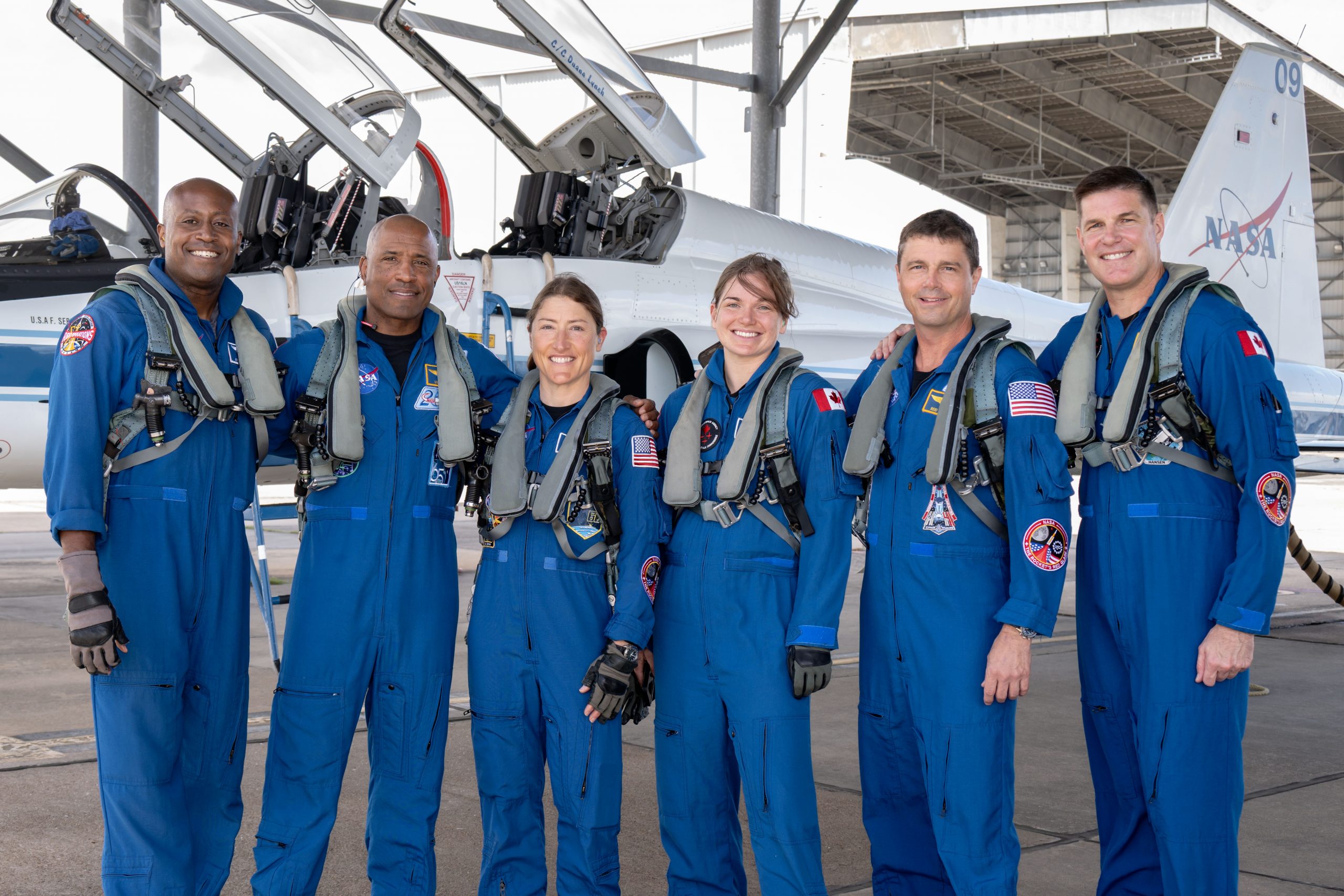
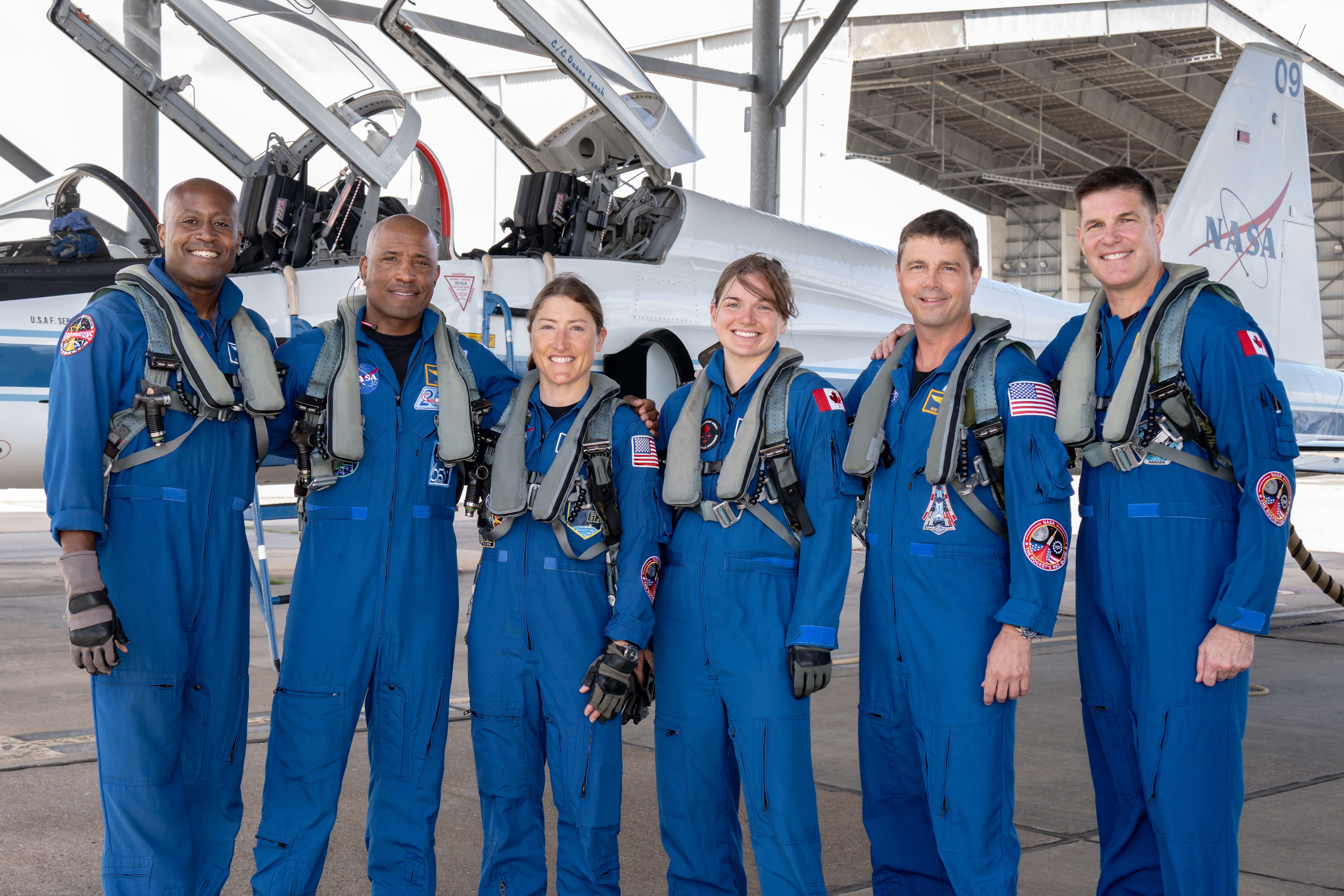
Sendoff for Artemis II Crew – From left to right, NASA astronauts Andre Douglas, Victor Glover, and Christina Koch, CSA (Canadian Space Agency) astronauts Jenni Gibbons, NASA astronaut Reid Wiseman, and CSA astronaut Jeremy Hansen pose for a photo before the Artemis II crew proceed to a media event on March 27, 2026.

From left to right, NASA astronauts Andre Douglas, Victor Glover, and Christina Koch, CSA (Canadian Space Agency) astronauts Jenni Gibbons, NASA astronaut Reid Wiseman, and CSA astronaut Jeremy Hansen pose for a photo before the Artemis II crew proceed to a media event on March 27, 2026.

Read More

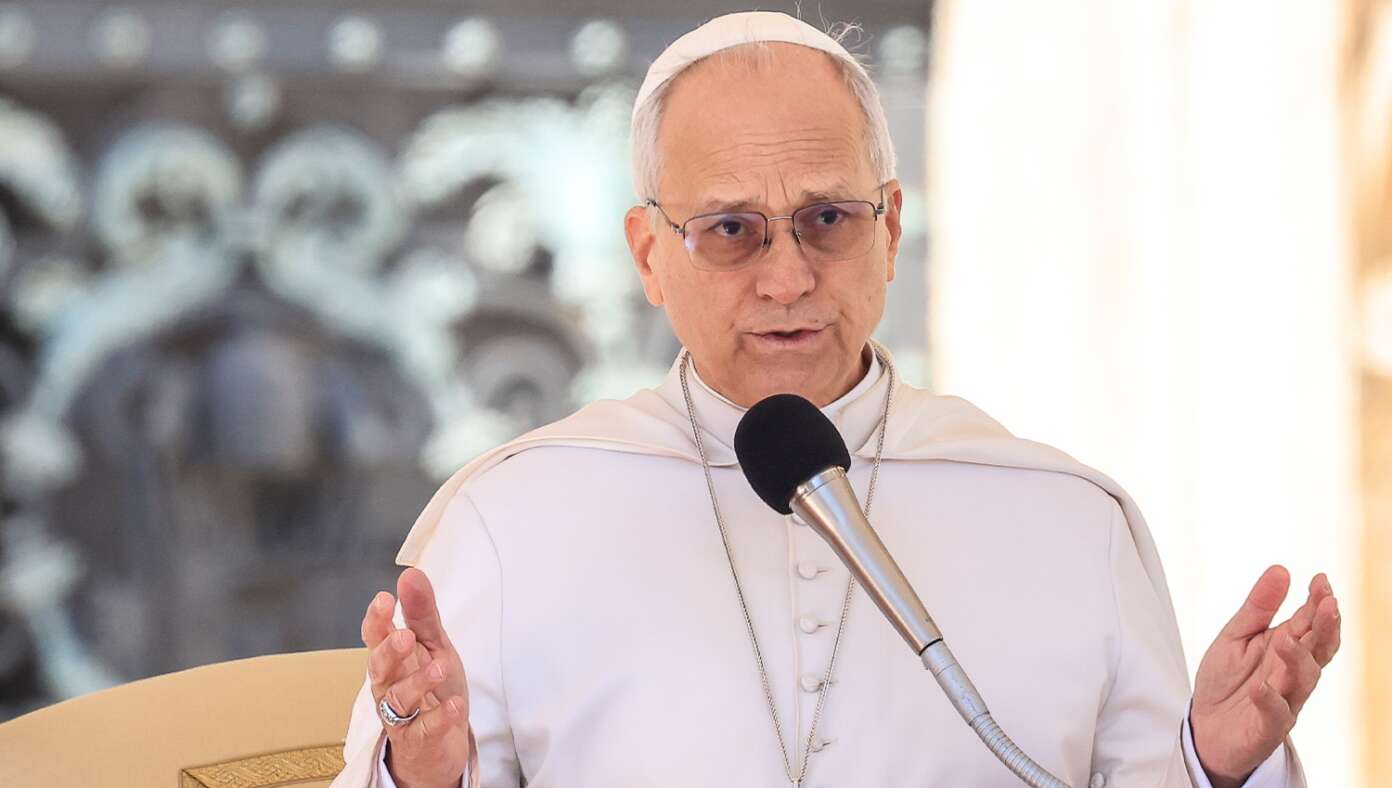
This week, Astronomy magazine Editor Emeritus Dave Eicher invites you to check out Mercury, which will be at its greatest elongation on April 3. This is when the planet appears farthest away from the Sun in the morning sky, making it easier to see. Good luck! Video transcript: Welcome to This Week in Astronomy, broughtContinue reading “Mercury at greatest elongation on April 3”

The post Mercury at greatest elongation on April 3 appeared first on Astronomy Magazine.

Read More
Adult conversions soar in dioceses across U.S. #Catholic Many U.S. dioceses are expecting heavy increases in people joining the Catholic Church at Easter 2026, including some with record highs, a survey by the National Catholic Register, the sister partner of EWTN News, found.“Something’s happening,” said John Helsey, director of communications for the Archdiocese of Oklahoma City, which is expecting a 57% increase in unbaptized people becoming Catholics at Easter — from 635 in 2025 to nearly 1,000 in 2026.In most places, this year’s increases aren’t a one-off but follow significant increases in recent years.One example is the Archdiocese of Newark, New Jersey, which had record highs attending liturgies several weeks ago that were meant to welcome would-be converts who have been preparing to enter the Church in recent months and to formalize their status.Newark is expecting a 30% jump in converts in 2026 (at 1,701) over 2025 (at 1,305). The 2026 figure is 60% higher than the 1,064 converts in 2019, the year before the COVID-19 pandemic.In the Archdiocese of Mobile, Alabama, the number of converts in 2025 (447) was the highest since at least 2014, and the number in 2026 (603) is 35% higher than in 2025.The Register recently contacted all 175 Latin-rite territorial dioceses in the United States, seeking numbers of people planning to join the Catholic Church at Easter 2026.Seventy-one, or 40% of U.S. dioceses, responded. In some cases, the Register used published sources to supplement the data it used in its analysis. In all cases, the Register attempted to make apples-to-apples comparisons, with the caveat that 2026 numbers aren’t set yet.Just five of the 71 dioceses expected a drop in converts this year, most of them slight. The remaining 66 are expecting increases — in many cases, significant ones.This year’s expected increases in converts in the United States include regions where the Church has been growing rapidly in recent decades, such as Florida, where the Diocese of St. Petersburg is expecting an 84% jump, and Texas, where the Diocese of Austin is expecting a 53% jump.But it also includes highly secularized New England, where the Archdiocese of Boston has 55% more catechumens (unbaptized) this year than last year. The Diocese of Manchester, New Hampshire, reported a 54% increase (including already-baptized and unbaptized); the Diocese of Providence has 76% more converts; and the Diocese of Norwich, Connecticut, is recording a 112% spike.In Pennsylvania, the dioceses of Harrisburg (77%) and Altoona-Johnstown (84%) are seeing big increases. Across the country, the Diocese of Pueblo, Colorado, is expecting a 105% increase.In the Archdiocese of Philadelphia, which is expecting a 60% increase in converts in 2026 over last year, a priest who oversees conversion programs said people seeking to join the Catholic Church tend to come to Mass and have an active prayer life before they ever attend formal sessions with catechists and that they tend to accept Church teachings earlier in the process than their predecessors did.“I have noticed over the last several years that there is a greater commitment to conversion, a greater commitment to the Church, when they arrive,” said Father Dennis Gill, director of the Office for Divine Worship for the Archdiocese of Philadelphia and rector of the Cathedral Basilica of Sts. Peter and Paul.Other factorsAs for why it’s happening, diocesan officials offered various theories.Immigration, particularly from the surge during the Biden administration, is a factor in some places. Some suggest the election in May 2025 of Pope Leo XIV, the first American pope, who describes Church teachings with a native accent unfiltered by translation, might also be a draw for some non-Catholics. Some diocesan officials shared a new emphasis on outreach to non-Catholics.Bishop Frank Dewane, who leads the Diocese of Venice, Florida, which is expecting a 94% increase in converts, noted that some places outside the United States are also seeing big increases this year, including England and France.He told the Register the Church is enjoying what he called “a golden age of Catholic resources,” including podcasts and other online sources that get information about the Church to people who would ordinarily never set foot in it and yet come to find Catholicism unexpectedly attractive.“Our modern culture has not borne good fruits, and I think people see that. They recognize that. They know that,” Dewane said.But ultimately, he and other Church officials the Register spoke with attributed the bountiful harvest to God.“It’s the Holy Spirit,” Dewane emphasized. “Yes, we follow promptings, also. But I think it’s the work of the Holy Spirit right now in society and in the Church.”This story was first published by the National Catholic Register, the sister partner of EWTN News, and has been adapted by EWTN News.

Adult conversions soar in dioceses across U.S. #Catholic Many U.S. dioceses are expecting heavy increases in people joining the Catholic Church at Easter 2026, including some with record highs, a survey by the National Catholic Register, the sister partner of EWTN News, found.“Something’s happening,” said John Helsey, director of communications for the Archdiocese of Oklahoma City, which is expecting a 57% increase in unbaptized people becoming Catholics at Easter — from 635 in 2025 to nearly 1,000 in 2026.In most places, this year’s increases aren’t a one-off but follow significant increases in recent years.One example is the Archdiocese of Newark, New Jersey, which had record highs attending liturgies several weeks ago that were meant to welcome would-be converts who have been preparing to enter the Church in recent months and to formalize their status.Newark is expecting a 30% jump in converts in 2026 (at 1,701) over 2025 (at 1,305). The 2026 figure is 60% higher than the 1,064 converts in 2019, the year before the COVID-19 pandemic.In the Archdiocese of Mobile, Alabama, the number of converts in 2025 (447) was the highest since at least 2014, and the number in 2026 (603) is 35% higher than in 2025.The Register recently contacted all 175 Latin-rite territorial dioceses in the United States, seeking numbers of people planning to join the Catholic Church at Easter 2026.Seventy-one, or 40% of U.S. dioceses, responded. In some cases, the Register used published sources to supplement the data it used in its analysis. In all cases, the Register attempted to make apples-to-apples comparisons, with the caveat that 2026 numbers aren’t set yet.Just five of the 71 dioceses expected a drop in converts this year, most of them slight. The remaining 66 are expecting increases — in many cases, significant ones.This year’s expected increases in converts in the United States include regions where the Church has been growing rapidly in recent decades, such as Florida, where the Diocese of St. Petersburg is expecting an 84% jump, and Texas, where the Diocese of Austin is expecting a 53% jump.But it also includes highly secularized New England, where the Archdiocese of Boston has 55% more catechumens (unbaptized) this year than last year. The Diocese of Manchester, New Hampshire, reported a 54% increase (including already-baptized and unbaptized); the Diocese of Providence has 76% more converts; and the Diocese of Norwich, Connecticut, is recording a 112% spike.In Pennsylvania, the dioceses of Harrisburg (77%) and Altoona-Johnstown (84%) are seeing big increases. Across the country, the Diocese of Pueblo, Colorado, is expecting a 105% increase.In the Archdiocese of Philadelphia, which is expecting a 60% increase in converts in 2026 over last year, a priest who oversees conversion programs said people seeking to join the Catholic Church tend to come to Mass and have an active prayer life before they ever attend formal sessions with catechists and that they tend to accept Church teachings earlier in the process than their predecessors did.“I have noticed over the last several years that there is a greater commitment to conversion, a greater commitment to the Church, when they arrive,” said Father Dennis Gill, director of the Office for Divine Worship for the Archdiocese of Philadelphia and rector of the Cathedral Basilica of Sts. Peter and Paul.Other factorsAs for why it’s happening, diocesan officials offered various theories.Immigration, particularly from the surge during the Biden administration, is a factor in some places. Some suggest the election in May 2025 of Pope Leo XIV, the first American pope, who describes Church teachings with a native accent unfiltered by translation, might also be a draw for some non-Catholics. Some diocesan officials shared a new emphasis on outreach to non-Catholics.Bishop Frank Dewane, who leads the Diocese of Venice, Florida, which is expecting a 94% increase in converts, noted that some places outside the United States are also seeing big increases this year, including England and France.He told the Register the Church is enjoying what he called “a golden age of Catholic resources,” including podcasts and other online sources that get information about the Church to people who would ordinarily never set foot in it and yet come to find Catholicism unexpectedly attractive.“Our modern culture has not borne good fruits, and I think people see that. They recognize that. They know that,” Dewane said.But ultimately, he and other Church officials the Register spoke with attributed the bountiful harvest to God.“It’s the Holy Spirit,” Dewane emphasized. “Yes, we follow promptings, also. But I think it’s the work of the Holy Spirit right now in society and in the Church.”This story was first published by the National Catholic Register, the sister partner of EWTN News, and has been adapted by EWTN News.

The National Catholic Register contacted all 175 Latin-rite territorial dioceses in the United States, seeking numbers of people planning to join the Catholic Church at Easter 2026.

Read More
Bishops’ commission considers social, cultural, and pastoral factors behind polygamy in Africa #Catholic NAIROBI, Kenya — In addition to theological reflections on marriage and the sacraments, the final report addressing the pastoral challenge of polygamy in Africa, which members of the Symposium of Episcopal Conferences of Africa and Madagascar (SECAM) issued on March 24, draws attention to a wide range of social, cultural, and pastoral realities shaping the practice across the continent.While reaffirming the Christian ideal of monogamous marriage, the 25-page report compiled by the SECAM commission — made up of selected theologians and professionals from relevant ecclesiastical disciplines — emphasizes that understanding the persistence of polygamy requires careful analysis of social change, legal frameworks, gender relations, and pastoral strategies within African societies.
 
 SECAM president Cardinal Fridolin Ambongo. | Credit: ACI Africa
 
 The report is a direct response to the mandate that the multiyear XVI Ordinary General Assembly of the Synod of Bishops — known as the Synod on Synodality — gave Catholic bishops in Africa: “to promote theological and pastoral discernment on the issue of polygamy.”Polygamy in a changing African social landscapeIn the report, the SECAM commission members note that polygamy cannot be understood solely through the lens of traditional culture. African societies have undergone profound transformation in recent decades.“The traditional environment has crumbled,” they said, leading to a climate in which many long-standing institutions and values are increasingly questioned. This transformation has also affected the dynamics of marriage and family life. Sociological studies cited in the report identify infertility as one of the principal motivations behind contemporary polygamy, though the report emphasizes that the reasons are complex.Despite modernization and evangelization, it notes that the practice of polygamy has not disappeared. Instead, “it remains alive and well” and, in some contexts, has even regained popularity.One notable development the SECAM commission members highlight in the report is the changing role of women in African societies. They observe that women increasingly occupy key economic roles, particularly within the informal sector.Legal frameworks across AfricaIn the report, commission members also highlight the legal status of polygamy across the continent.They note that roughly 30 African countries have legal frameworks that permit polygamy — either through civil law, customary law, or religious legislation. The list includes countries such as Kenya, Nigeria, Senegal, Tanzania, Morocco, and South Africa.However, the report points out that legal recognition of polygamy does not necessarily indicate broad societal consensus. In many countries, women’s movements have increasingly challenged these laws.“More and more women are speaking out against legislation in favor of polygamy, which is considered unfair and disrespectful of gender equality,” the report says.
 
 Members of the Symposium of Episcopal Conference of Africa and Madagascar (SECAM) meet at the 20th Plenary Assembly held in Kigali, Rwanda, from July 30 to Aug. 4, 2025, under the theme “Christ, Source of Hope, Reconciliation, and Peace.” | Credit: ACI Africa
 
 This tension between cultural tradition, legal frameworks, and evolving social values forms a significant part of the pastoral context in which the Catholic bishops in Africa must address the issue of polygamy, the SECAM commission says in the report.The question of women’s dignityA central theme in the report is the dignity of women within both cultural and ecclesial contexts.Pastoral responses to polygamy must explicitly seek “to enhance the dignity of women,” the report says. The report acknowledges that women sometimes choose polygamous arrangements for practical or cultural reasons — however, it raises theological questions about whether such choices correspond to God’s plan for human relationships.From a biblical perspective, polygamy “does not promote the development of women as intended by God,” according to the report. Therefore, pastoral strategies that help Christian communities reflect critically on cultural assumptions about gender roles and marriage are important.Economic vulnerability and the practice of polygamyThe report also links polygamy to economic vulnerability, particularly among widows.One example the SECAM commission members highlight is the traditional practice of levirate marriage, in which a widow marries a relative of her deceased husband in order to secure protection and support for herself and her children.While acknowledging the social security function of this practice, the report questions whether it can also lead to forms of exploitation and whether such arrangements risk reducing women to objects of exchange within family structures.For this reason, the commission members highlight the importance of pastoral care directed specifically toward widows. Ensuring their “material and moral security” can help prevent situations in which women feel compelled to enter polygamous relationships for survival, the report states.Hidden or ‘veiled’ forms of polygamyAnother issue raised in the report is what the SECAM commission members call “veiled polygamy.”This term refers to situations in which individuals maintain multiple sexual relationships outside formal marriage, resulting in families in which children are born to parents who are not married to one another.Although such situations do not present the same doctrinal challenges as formal polygamy, the commission members say they consider this harmful both to society and to the Church.One difficulty, they note, is that social stigma often falls disproportionately on women raising children outside marriage. The absence of fathers also raises concerns about the well-being of children.In response, the report calls for stronger pastoral formation within Christian communities so that believers can accompany families facing these realities with maturity and responsibility.
 
 Members of the SECAM in 2025 | Credit: ACI Africa
 
 Preparing couples for Christian marriageThe commission members in the report repeatedly emphasize that prevention is as important as pastoral accompaniment.Many cases of polygamy among baptized Christians arise from cultural expectations about fertility. In many African contexts, the inability to bear children can place intense pressure on a marriage, the report notes.Therefore, the report calls for rigorous marriage preparation programs that help couples understand the Christian meaning of marriage. While the desire for children is recognized as a legitimate cultural value, the reports stresses that biological fertility is not essential to the sacramental reality of marriage.Christian marriage, the SECAM commission members state, must be understood primarily as a covenant of love and fidelity rather than simply a means of producing offspring.A broader question of inculturationThroughout the report, commission members frame the issue of polygamy as part of a broader challenge of inculturation — the process of expressing Christian faith within diverse cultural contexts.They acknowledge that the Church’s engagement with African cultures has evolved significantly since the missionary era.While earlier pastoral approaches often treated polygamy primarily as a moral problem to be eliminated, today the Church must combine fidelity to the Gospel with attentive listening to cultural realities.In their concluding reflections, SECAM commission members call for continued dialogue among Catholic bishops in Africa, theologians, and pastoral workers to evaluate existing pastoral models and, where necessary, “propose other paths, with the aim of offering to all the possibility of an encounter with Christ and his Gospel.”In this way, the issue of polygamy is not simply a disciplinary question but part of the broader task of shaping an authentically African expression of Christian family life.This story was first published by ACI Africa, the sister service of EWTN News in Africa, and has been adapted by EWTN News.

Bishops’ commission considers social, cultural, and pastoral factors behind polygamy in Africa #Catholic NAIROBI, Kenya — In addition to theological reflections on marriage and the sacraments, the final report addressing the pastoral challenge of polygamy in Africa, which members of the Symposium of Episcopal Conferences of Africa and Madagascar (SECAM) issued on March 24, draws attention to a wide range of social, cultural, and pastoral realities shaping the practice across the continent.While reaffirming the Christian ideal of monogamous marriage, the 25-page report compiled by the SECAM commission — made up of selected theologians and professionals from relevant ecclesiastical disciplines — emphasizes that understanding the persistence of polygamy requires careful analysis of social change, legal frameworks, gender relations, and pastoral strategies within African societies. SECAM president Cardinal Fridolin Ambongo. | Credit: ACI Africa The report is a direct response to the mandate that the multiyear XVI Ordinary General Assembly of the Synod of Bishops — known as the Synod on Synodality — gave Catholic bishops in Africa: “to promote theological and pastoral discernment on the issue of polygamy.”Polygamy in a changing African social landscapeIn the report, the SECAM commission members note that polygamy cannot be understood solely through the lens of traditional culture. African societies have undergone profound transformation in recent decades.“The traditional environment has crumbled,” they said, leading to a climate in which many long-standing institutions and values are increasingly questioned. This transformation has also affected the dynamics of marriage and family life. Sociological studies cited in the report identify infertility as one of the principal motivations behind contemporary polygamy, though the report emphasizes that the reasons are complex.Despite modernization and evangelization, it notes that the practice of polygamy has not disappeared. Instead, “it remains alive and well” and, in some contexts, has even regained popularity.One notable development the SECAM commission members highlight in the report is the changing role of women in African societies. They observe that women increasingly occupy key economic roles, particularly within the informal sector.Legal frameworks across AfricaIn the report, commission members also highlight the legal status of polygamy across the continent.They note that roughly 30 African countries have legal frameworks that permit polygamy — either through civil law, customary law, or religious legislation. The list includes countries such as Kenya, Nigeria, Senegal, Tanzania, Morocco, and South Africa.However, the report points out that legal recognition of polygamy does not necessarily indicate broad societal consensus. In many countries, women’s movements have increasingly challenged these laws.“More and more women are speaking out against legislation in favor of polygamy, which is considered unfair and disrespectful of gender equality,” the report says. Members of the Symposium of Episcopal Conference of Africa and Madagascar (SECAM) meet at the 20th Plenary Assembly held in Kigali, Rwanda, from July 30 to Aug. 4, 2025, under the theme “Christ, Source of Hope, Reconciliation, and Peace.” | Credit: ACI Africa This tension between cultural tradition, legal frameworks, and evolving social values forms a significant part of the pastoral context in which the Catholic bishops in Africa must address the issue of polygamy, the SECAM commission says in the report.The question of women’s dignityA central theme in the report is the dignity of women within both cultural and ecclesial contexts.Pastoral responses to polygamy must explicitly seek “to enhance the dignity of women,” the report says. The report acknowledges that women sometimes choose polygamous arrangements for practical or cultural reasons — however, it raises theological questions about whether such choices correspond to God’s plan for human relationships.From a biblical perspective, polygamy “does not promote the development of women as intended by God,” according to the report. Therefore, pastoral strategies that help Christian communities reflect critically on cultural assumptions about gender roles and marriage are important.Economic vulnerability and the practice of polygamyThe report also links polygamy to economic vulnerability, particularly among widows.One example the SECAM commission members highlight is the traditional practice of levirate marriage, in which a widow marries a relative of her deceased husband in order to secure protection and support for herself and her children.While acknowledging the social security function of this practice, the report questions whether it can also lead to forms of exploitation and whether such arrangements risk reducing women to objects of exchange within family structures.For this reason, the commission members highlight the importance of pastoral care directed specifically toward widows. Ensuring their “material and moral security” can help prevent situations in which women feel compelled to enter polygamous relationships for survival, the report states.Hidden or ‘veiled’ forms of polygamyAnother issue raised in the report is what the SECAM commission members call “veiled polygamy.”This term refers to situations in which individuals maintain multiple sexual relationships outside formal marriage, resulting in families in which children are born to parents who are not married to one another.Although such situations do not present the same doctrinal challenges as formal polygamy, the commission members say they consider this harmful both to society and to the Church.One difficulty, they note, is that social stigma often falls disproportionately on women raising children outside marriage. The absence of fathers also raises concerns about the well-being of children.In response, the report calls for stronger pastoral formation within Christian communities so that believers can accompany families facing these realities with maturity and responsibility. Members of the SECAM in 2025 | Credit: ACI Africa Preparing couples for Christian marriageThe commission members in the report repeatedly emphasize that prevention is as important as pastoral accompaniment.Many cases of polygamy among baptized Christians arise from cultural expectations about fertility. In many African contexts, the inability to bear children can place intense pressure on a marriage, the report notes.Therefore, the report calls for rigorous marriage preparation programs that help couples understand the Christian meaning of marriage. While the desire for children is recognized as a legitimate cultural value, the reports stresses that biological fertility is not essential to the sacramental reality of marriage.Christian marriage, the SECAM commission members state, must be understood primarily as a covenant of love and fidelity rather than simply a means of producing offspring.A broader question of inculturationThroughout the report, commission members frame the issue of polygamy as part of a broader challenge of inculturation — the process of expressing Christian faith within diverse cultural contexts.They acknowledge that the Church’s engagement with African cultures has evolved significantly since the missionary era.While earlier pastoral approaches often treated polygamy primarily as a moral problem to be eliminated, today the Church must combine fidelity to the Gospel with attentive listening to cultural realities.In their concluding reflections, SECAM commission members call for continued dialogue among Catholic bishops in Africa, theologians, and pastoral workers to evaluate existing pastoral models and, where necessary, “propose other paths, with the aim of offering to all the possibility of an encounter with Christ and his Gospel.”In this way, the issue of polygamy is not simply a disciplinary question but part of the broader task of shaping an authentically African expression of Christian family life.This story was first published by ACI Africa, the sister service of EWTN News in Africa, and has been adapted by EWTN News.

The final report addressing the pastoral challenge of polygamy in Africa draws attention to a wide range of social, cultural, and pastoral realities shaping the practice across the continent.

Read More
.5M gift fuels Morris Catholic fitness center project #Catholic – Morris Catholic High School in Denville, N.J., has received an unprecedented .5 million gift from an alumnus and spouse — the most generous donation in the school’s history — to build a new Health and Fitness Center. This remarkable gift transforms the school’s nearly 70-year history, inspiring hope and excitement in students, faculty, and families.
The donors, a Morris Catholic alumnus and their spouse, have chosen to keep their identities confidential at this time. Plans for the approximately 15,000-square-foot, two-story facility addition to the Morris Catholic campus have been completed, and the school is preparing to begin construction in late spring.
The new facility will represent the first physical expansion of the Morris Catholic campus since the 1960s and mark a bold investment in the school’s future and the students it serves. The center is designed to promote and support a healthy lifestyle among students.

Click here to subscribe to our weekly newsletter.

“This extraordinary gift reflects a deep belief in the mission and future of Morris Catholic,” said Brian Vohden, Morris Catholic president. “For nearly seven decades, Morris Catholic has formed young men and women in faith, scholarship, and service. This generosity shows the value our community places on having attended Morris Catholic and in helping today’s students.”
The facility will significantly enhance Morris Catholic’s physical education and athletic programs. Designed to serve the entire student body, the center will provide modern training space for physical education, strength and conditioning, and Crusader programs’ athletic teams. The first floor will feature new weights, benches, and equipment. of treadmills, bikes, and rowing machines on the second floor, along with a space for speed and agility work. A 25-foot-tall glass wall will offer visitors a view of the football field below.
The anonymous donors shared their heartfelt motivation: “We wanted to make an immediate impact, to help our youth rise to today’s challenges. Our greatest hope is that this gift empowers every student to thrive and embrace a future filled with possibility to impact, to prepare our youth for today’s challenges. We were especially interested in providing a high-quality, state-of-the-art facility for the Morris Catholic student to thrive physically, mentally, academically, and spiritually, resulting in a truly abundant life.”
The project includes exterior restrooms and a modern concession and retail space for visitors.
modern concession and retail space to enhance the experience for families and visitors attending
outdoor athletic events.
The project arrives during a time of excitement and renewed optimism at Morris Catholic. Guided by the school’s recently adopted five-year strategic plan, the community is uniting around initiatives that promise new opportunities and brighter futures for students and families.
For recently adopted five-year strategic plan, the community is investing in a series of initiatives designed to strengthen academics, expand student opportunities, help meet the financial aid needs of students and their families, and position Morris Catholic as a leader among premier
Catholic college preparatory schools in New Jersey.
“Catholic education and Catholic Schools are a great gift to students, families, our diocese, the
whole Church and the wider community. I am always inspired by donors’ sacrificial generosity, parents’ sacrifices for their children’s education, and the leaders, faculty, staff, and volunteers in our Catholic schools,” Bishop Kevin J. Sweeney of the Paterson Diocese in New Jersey said. “This new student health and fitness center at Morris Catholic is a concrete example of a community coming together to find unique and creative ways to support and educate the whole person, body, mind, and spirit.”
Beyond the record-setting gift, additional gifts from donors and parents are enabling the center to be built.
Mark Thomas, co-chair of the Morris Catholic Board of Trustees, said, “This enormous act of generosity will touch all students. It will equip our athletes with tools and capabilities to add to our history of excellence in athletics. The board is gratified that alumni are partnering with us in strategically important areas.”
 

$2.5M gift fuels Morris Catholic fitness center project #Catholic – Morris Catholic High School in Denville, N.J., has received an unprecedented $2.5 million gift from an alumnus and spouse — the most generous donation in the school’s history — to build a new Health and Fitness Center. This remarkable gift transforms the school’s nearly 70-year history, inspiring hope and excitement in students, faculty, and families. The donors, a Morris Catholic alumnus and their spouse, have chosen to keep their identities confidential at this time. Plans for the approximately 15,000-square-foot, two-story facility addition to the Morris Catholic campus have been completed, and the school is preparing to begin construction in late spring. The new facility will represent the first physical expansion of the Morris Catholic campus since the 1960s and mark a bold investment in the school’s future and the students it serves. The center is designed to promote and support a healthy lifestyle among students. Click here to subscribe to our weekly newsletter. “This extraordinary gift reflects a deep belief in the mission and future of Morris Catholic,” said Brian Vohden, Morris Catholic president. “For nearly seven decades, Morris Catholic has formed young men and women in faith, scholarship, and service. This generosity shows the value our community places on having attended Morris Catholic and in helping today’s students.” The facility will significantly enhance Morris Catholic’s physical education and athletic programs. Designed to serve the entire student body, the center will provide modern training space for physical education, strength and conditioning, and Crusader programs’ athletic teams. The first floor will feature new weights, benches, and equipment. of treadmills, bikes, and rowing machines on the second floor, along with a space for speed and agility work. A 25-foot-tall glass wall will offer visitors a view of the football field below. The anonymous donors shared their heartfelt motivation: “We wanted to make an immediate impact, to help our youth rise to today’s challenges. Our greatest hope is that this gift empowers every student to thrive and embrace a future filled with possibility to impact, to prepare our youth for today’s challenges. We were especially interested in providing a high-quality, state-of-the-art facility for the Morris Catholic student to thrive physically, mentally, academically, and spiritually, resulting in a truly abundant life.” The project includes exterior restrooms and a modern concession and retail space for visitors. modern concession and retail space to enhance the experience for families and visitors attending outdoor athletic events. The project arrives during a time of excitement and renewed optimism at Morris Catholic. Guided by the school’s recently adopted five-year strategic plan, the community is uniting around initiatives that promise new opportunities and brighter futures for students and families. For recently adopted five-year strategic plan, the community is investing in a series of initiatives designed to strengthen academics, expand student opportunities, help meet the financial aid needs of students and their families, and position Morris Catholic as a leader among premier Catholic college preparatory schools in New Jersey. “Catholic education and Catholic Schools are a great gift to students, families, our diocese, the whole Church and the wider community. I am always inspired by donors’ sacrificial generosity, parents’ sacrifices for their children’s education, and the leaders, faculty, staff, and volunteers in our Catholic schools,” Bishop Kevin J. Sweeney of the Paterson Diocese in New Jersey said. “This new student health and fitness center at Morris Catholic is a concrete example of a community coming together to find unique and creative ways to support and educate the whole person, body, mind, and spirit.” Beyond the record-setting gift, additional gifts from donors and parents are enabling the center to be built. Mark Thomas, co-chair of the Morris Catholic Board of Trustees, said, “This enormous act of generosity will touch all students. It will equip our athletes with tools and capabilities to add to our history of excellence in athletics. The board is gratified that alumni are partnering with us in strategically important areas.”  

$2.5M gift fuels Morris Catholic fitness center project #Catholic –

Morris Catholic High School in Denville, N.J., has received an unprecedented $2.5 million gift from an alumnus and spouse — the most generous donation in the school’s history — to build a new Health and Fitness Center. This remarkable gift transforms the school’s nearly 70-year history, inspiring hope and excitement in students, faculty, and families.

The donors, a Morris Catholic alumnus and their spouse, have chosen to keep their identities confidential at this time. Plans for the approximately 15,000-square-foot, two-story facility addition to the Morris Catholic campus have been completed, and the school is preparing to begin construction in late spring.

The new facility will represent the first physical expansion of the Morris Catholic campus since the 1960s and mark a bold investment in the school’s future and the students it serves. The center is designed to promote and support a healthy lifestyle among students.


Click here to subscribe to our weekly newsletter.

“This extraordinary gift reflects a deep belief in the mission and future of Morris Catholic,” said Brian Vohden, Morris Catholic president. “For nearly seven decades, Morris Catholic has formed young men and women in faith, scholarship, and service. This generosity shows the value our community places on having attended Morris Catholic and in helping today’s students.”

The facility will significantly enhance Morris Catholic’s physical education and athletic programs. Designed to serve the entire student body, the center will provide modern training space for physical education, strength and conditioning, and Crusader programs’ athletic teams. The first floor will feature new weights, benches, and equipment. of treadmills, bikes, and rowing machines on the second floor, along with a space for speed and agility work. A 25-foot-tall glass wall will offer visitors a view of the football field below.

The anonymous donors shared their heartfelt motivation: “We wanted to make an immediate impact, to help our youth rise to today’s challenges. Our greatest hope is that this gift empowers every student to thrive and embrace a future filled with possibility to impact, to prepare our youth for today’s challenges. We were especially interested in providing a high-quality, state-of-the-art facility for the Morris Catholic student to thrive physically, mentally, academically, and spiritually, resulting in a truly abundant life.”

The project includes exterior restrooms and a modern concession and retail space for visitors.
modern concession and retail space to enhance the experience for families and visitors attending
outdoor athletic events.

The project arrives during a time of excitement and renewed optimism at Morris Catholic. Guided by the school’s recently adopted five-year strategic plan, the community is uniting around initiatives that promise new opportunities and brighter futures for students and families.

For recently adopted five-year strategic plan, the community is investing in a series of initiatives designed to strengthen academics, expand student opportunities, help meet the financial aid needs of students and their families, and position Morris Catholic as a leader among premier
Catholic college preparatory schools in New Jersey.

“Catholic education and Catholic Schools are a great gift to students, families, our diocese, the
whole Church and the wider community. I am always inspired by donors’ sacrificial generosity, parents’ sacrifices for their children’s education, and the leaders, faculty, staff, and volunteers in our Catholic schools,” Bishop Kevin J. Sweeney of the Paterson Diocese in New Jersey said. “This new student health and fitness center at Morris Catholic is a concrete example of a community coming together to find unique and creative ways to support and educate the whole person, body, mind, and spirit.”

Beyond the record-setting gift, additional gifts from donors and parents are enabling the center to be built.

Mark Thomas, co-chair of the Morris Catholic Board of Trustees, said, “This enormous act of generosity will touch all students. It will equip our athletes with tools and capabilities to add to our history of excellence in athletics. The board is gratified that alumni are partnering with us in strategically important areas.”


Morris Catholic High School in Denville, N.J., has received an unprecedented $2.5 million gift from an alumnus and spouse — the most generous donation in the school’s history — to build a new Health and Fitness Center. This remarkable gift transforms the school’s nearly 70-year history, inspiring hope and excitement in students, faculty, and families. The donors, a Morris Catholic alumnus and their spouse, have chosen to keep their identities confidential at this time. Plans for the approximately 15,000-square-foot, two-story facility addition to the Morris Catholic campus have been completed, and the school is preparing to begin construction in late

Read More