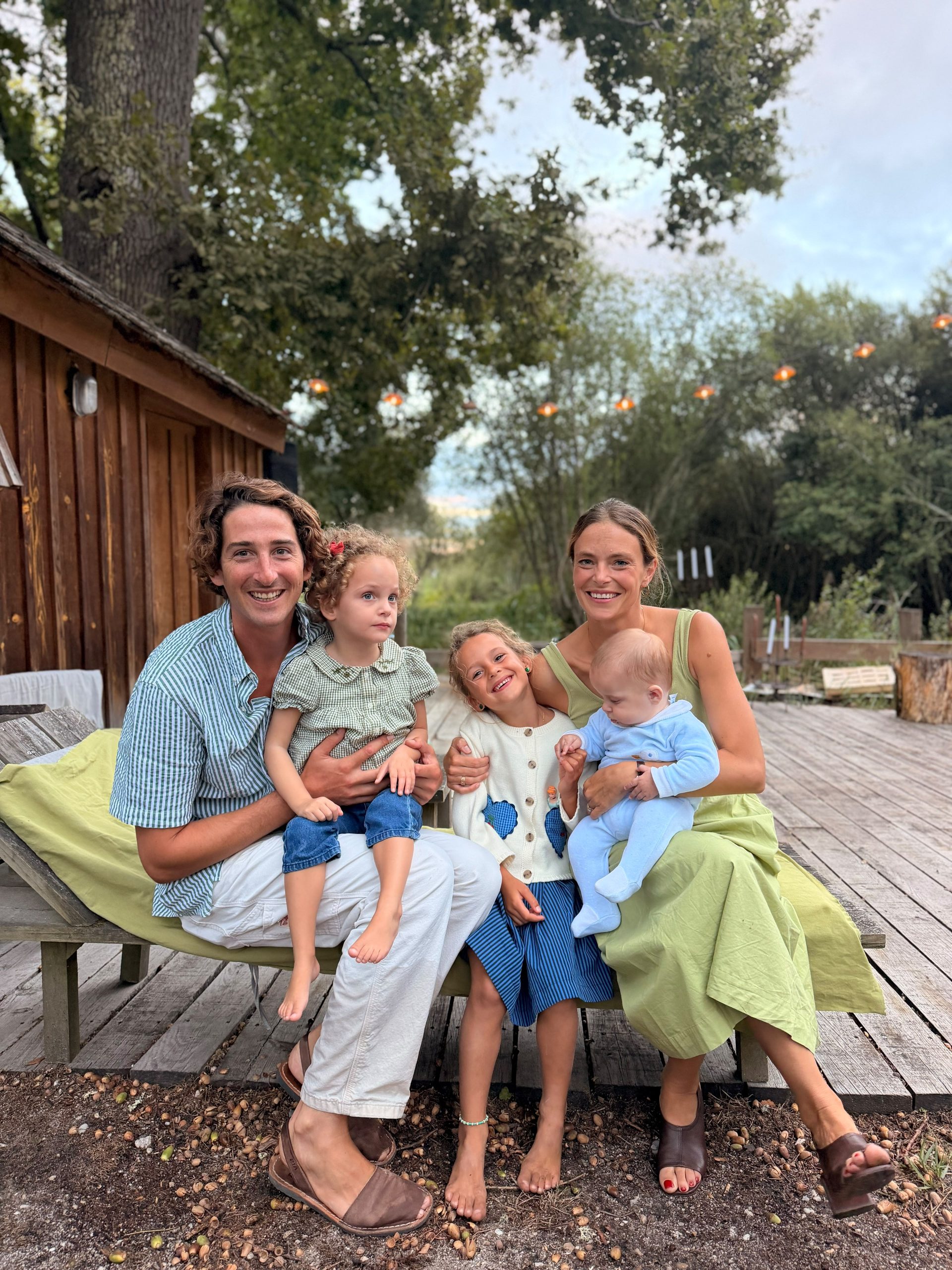

Pope Leo XIV blessed Olivia Hamelin, a 3-year-old with a rare genetic condition, during his visit to Lourdes, France.
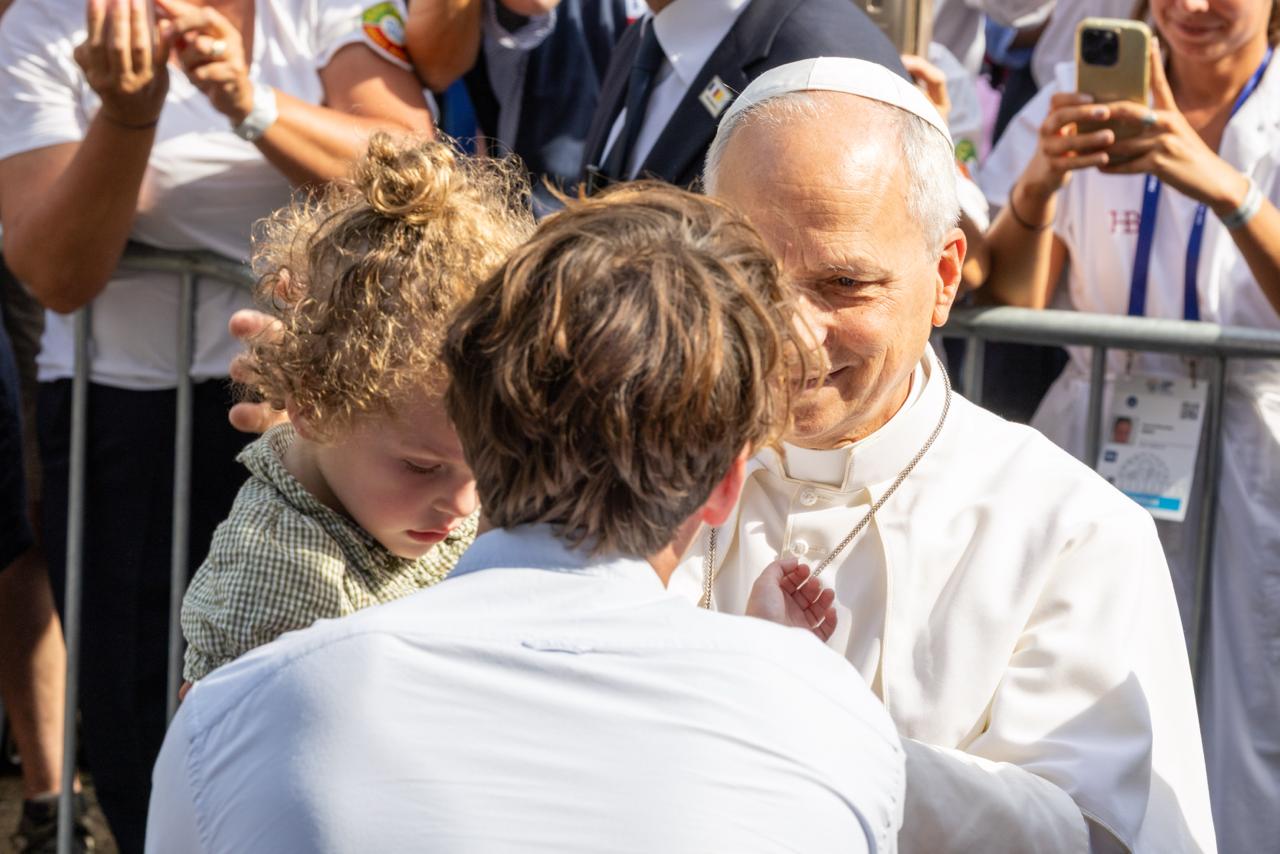
Pope Leo XIV blessed Olivia Hamelin, a 3-year-old with a rare genetic condition, during his visit to Lourdes, France.

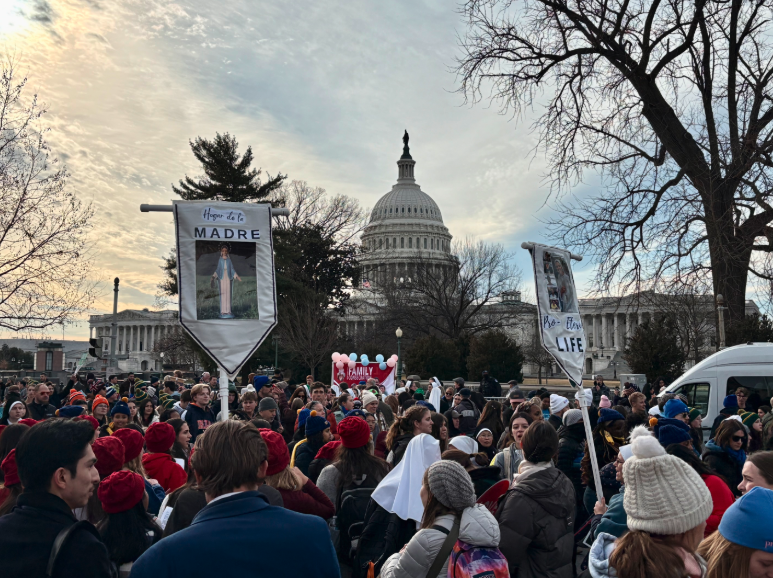
Retired Los Angeles Dodgers pitcher Clayton Kershaw is set to give the keynote address at the Jan. 22, 2027, rally.
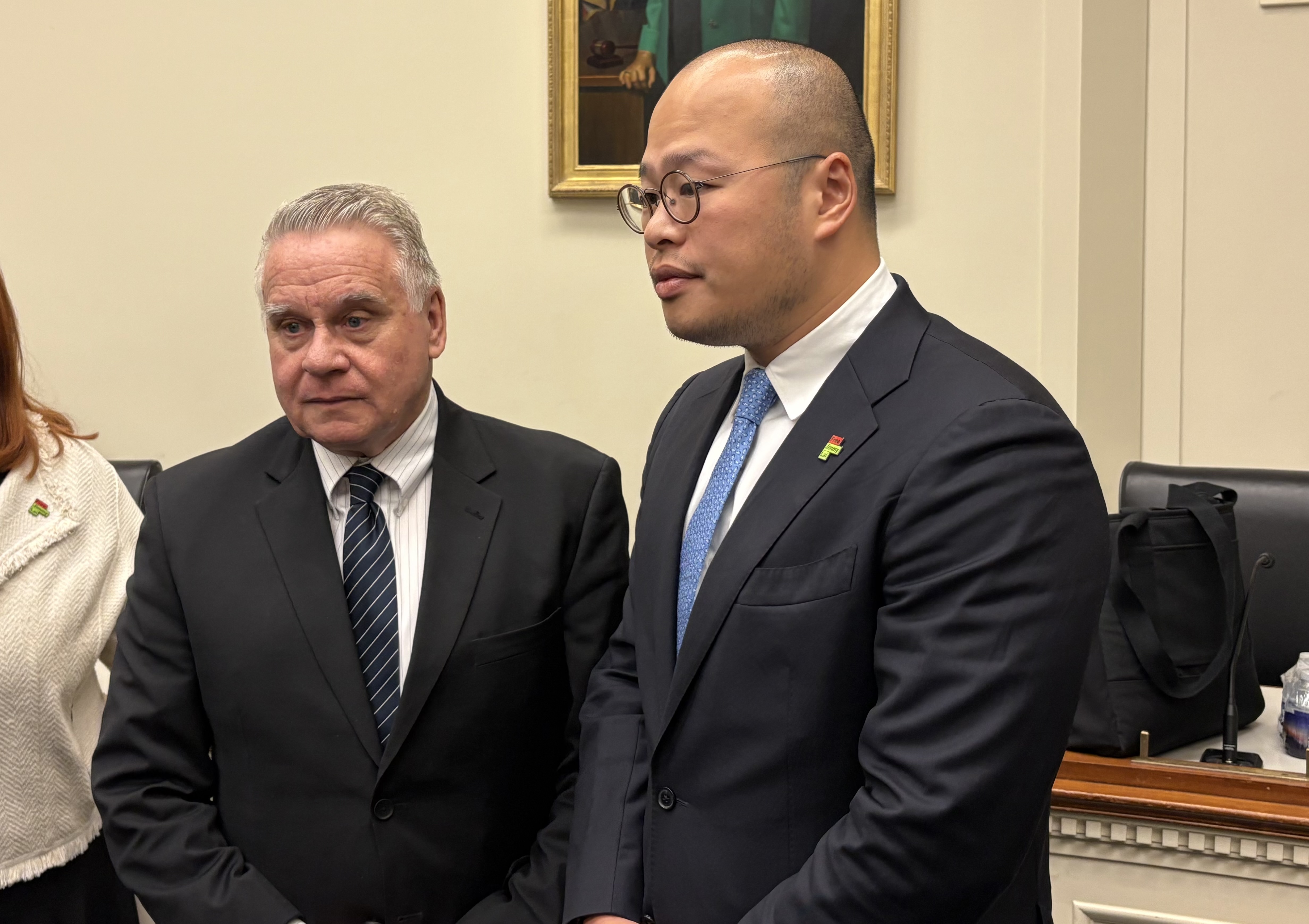
![Jimmy Lai’s family, advocates press for his release before Xi-Trump meeting #Catholic Family members and advocates of imprisoned Catholic pro-democracy activist Jimmy Lai offered urgent pleas for his release ahead of President Xi Jinping’s planned trip to the U.S. to meet with President Donald Trump.In anticipation of Xiʼs visit to Washington on Sept. 24, Sebastien Lai, Jimmy Lai’s son, met with leaders to advocate for his father. He joined a Sept. 16 congressional hearing led by Rep. Chris Smith, R-New Jersey.“Jimmy Lai is not being imprisoned because he committed any act of violence whatsoever,” Smith, co-chair of the Congressional-Executive Commission on China, said. “His son has emphasized that his father has never, never advocated violence. Rather, Jimmy Lai used his voice, his newspaper, and his public platform to support freedom and democracy,” he said. Smith said he introduced legislation Sept. 16 that would require the State Department to quickly assess any death in custody of a Hong Kong political prisoner and impose sanctions on officials found responsible. He titled the bill the “Jimmy Lai Hong Kong Political Prisoner Accountability Act of 2026.”At the hearing, Sebastien Lai offered testimony along with Steve Yates, a research fellow on China and national security policy, and Mark Clifford, president of the Committee for Freedom in Hong Kong Foundation.“I want to thank America, President Trump, who has been a true champion of my fatherʼs, his administration, and the senators and members of both parties whose support has never wavered and only gotten stronger. That is moral courage, and my family does not take it for granted,” Sebastien Lai said.“By the end of this year my father will have spent six years in a maximum-security prison in solitary. At 78, he is the oldest political prisoner in Hong Kong. With a 20-year sentence looming over him, if he’s not freed soon, he will most likely die in prison,” he said. “My sister Claire was to testify beside me today. A few weeks ago, she was diagnosed with cancer,” he said. “I was with her in London last week as she began chemotherapy. My father learned of his own daughterʼs diagnosis from a maximum-security prison. He cannot hold her hand. She wants nothing more than to have him with her for this fight,“ he said.
Claire Lai, daughter of imprisoned pro-democracy activist Jimmy Lai, discusses her father’s sentencing on “EWTN News Nightly” on Feb. 9, 2026. | Credit: “EWTN News Nightly”/Screenshot
“We hope the Chinese authorities will consider what compassionate release would mean for her, and for a 78-year-old man who has already suffered enough,” he said.“America understands, in its bones, that freedom dies with the last man willing to defend it and that the cost of not standing up for liberty is not felt until it is too late,“ he said.The appeal to Xi “is simple," Sebastien Lai said. “My father poses no threat. His imprisonment makes him a symbol of injustice; his death in prison would be a disgrace. Let Jimmy Lai come home to his family and let him sit beside his daughter in her hardest moment.”
America understands, in its bones, that freedom dies with the last man willing to defend it and that the cost of not standing up for liberty is not felt until it is too late.”
Sebastien LaiSon of imprisoned Hong Kong media publisher and democracy advocate Jimmy Lai
Clifford, of the Washington‑based advocacy group promoting human rights in Hong Kong, spoke on behalf of his friend Jimmy Lai and to remind “people that Jimmy is just one of hundreds of political prisoners being held in often appalling conditions.”“Iʼd like to emphasize the release of Jimmy Lai would be something President Trump, Republicans and Democrats, indeed, freedom-loving people around the world would applaud,” Clifford said. “It would be a unifying event at the time when the world really needs it.”Yates said Jimmy Lai’s case is “a test of character, of Xi Jinping’s leadership, of the president’s relationship with his counterpart, and of whether there remains any credible basis for the assumptions on which American policy toward Hong Kong was long constructed.”The case is “a litmus test of whether there remains any reason to believe there is a future in Xi Jinping’s China for the kind of man Jimmy Lai is: a child of God, a lover of the real China, and, it may fairly be said, one of China’s greatest entrepreneurs,” Yates said. Lai’s health ‘is going to get worse’At a subsequent event, Sebastien Lai spoke at a press conference at Georgetown University about his father.Trump has previously met with Xi about Jimmy Lai’s case, which did not end with his release, but Sebastian Lai said he does not believe “it is a lost cause.” He said he hopes Trump raises his father’s case “again and again.”Sebastian Lai detailed his father’s health, which “hasnʼt gotten any better” while in solitary confinement.“He now has heart issues. His nails fall off. His teeth are rotting. During the summer, he bleeds all over his body because [of] his rashes,” he said.His health was especially worrisome recently because “Hong Kong just had a record summer,” Sebastien Lai said. “The heat traps in there and essentially bakes in itself. So weʼre very, very worried.”Caoilfhionn Gallagher, human rights lawyer and leader of the international legal team representing Jimmy Lai, further laid out the urgency of the case.“It’s very clear that if someone is detained in solitary confinement for an extended period of time, there is a direct ramification for their mortality,” she said.“The risk to prisoners detained in solitary confinement is particularly heightened if they’re elderly or diabetic, and Jimmy Lai is both. So this couldn’t be a more urgent and timely discussion,” she said. Gallagher also noted the broader human rights issues and lack of democracy in Hong Kong.Hong Kong “has become a place where you can be thrown in prison for singing the wrong song, or not singing the right song, or wearing the wrong T-shirt, printing the wrong newspaper. And I think Jimmy Laiʼs case is hugely important in itself because of who he is,” Gallagher said.“Heʼs probably the worldʼs most famous political prisoner at the moment. His case is hugely important, but we think part of why theyʼve gone for Jimmy Lai is because by getting the biggest fish of all, it sends the message to the small fry across Hong Kong,” Gallagher said. "It makes very clear that their message is keep silent or youʼll be next,” Gallagher said. Xi’s visit to the U.S. offers “a particular opportunity to shine a light on this issue,” she said.](https://unitedyam.com/wp-content/uploads/2026/09/jimmy-lais-family-advocates-press-for-his-release-before-xi-trump-meeting-catholic-family-members-and-advocates-of-imprisoned-catholic-pro-democracy-activist-jimmy-lai-offered-urgent-pleas.jpg "Jimmy Lai’s family, advocates press for his release before Xi-Trump meeting #Catholic Family members and advocates of imprisoned Catholic pro-democracy activist Jimmy Lai offered urgent pleas for his release ahead of President Xi Jinping’s planned trip to the U.S. to meet with President Donald Trump.In anticipation of Xiʼs visit to Washington on Sept. 24, Sebastien Lai, Jimmy Lai’s son, met with leaders to advocate for his father. He joined a Sept. 16 congressional hearing led by Rep. Chris Smith, R-New Jersey.“Jimmy Lai is not being imprisoned because he committed any act of violence whatsoever,” Smith, co-chair of the Congressional-Executive Commission on China, said. “His son has emphasized that his father has never, never advocated violence. Rather, Jimmy Lai used his voice, his newspaper, and his public platform to support freedom and democracy,” he said. Smith said he introduced legislation Sept. 16 that would require the State Department to quickly assess any death in custody of a Hong Kong political prisoner and impose sanctions on officials found responsible. He titled the bill the “Jimmy Lai Hong Kong Political Prisoner Accountability Act of 2026.”At the hearing, Sebastien Lai offered testimony along with Steve Yates, a research fellow on China and national security policy, and Mark Clifford, president of the Committee for Freedom in Hong Kong Foundation.“I want to thank America, President Trump, who has been a true champion of my fatherʼs, his administration, and the senators and members of both parties whose support has never wavered and only gotten stronger. That is moral courage, and my family does not take it for granted,” Sebastien Lai said.“By the end of this year my father will have spent six years in a maximum-security prison in solitary. At 78, he is the oldest political prisoner in Hong Kong. With a 20-year sentence looming over him, if he’s not freed soon, he will most likely die in prison,” he said. “My sister Claire was to testify beside me today. A few weeks ago, she was diagnosed with cancer,” he said. “I was with her in London last week as she began chemotherapy. My father learned of his own daughterʼs diagnosis from a maximum-security prison. He cannot hold her hand. She wants nothing more than to have him with her for this fight,“ he said.
Claire Lai, daughter of imprisoned pro-democracy activist Jimmy Lai, discusses her father’s sentencing on “EWTN News Nightly” on Feb. 9, 2026. | Credit: “EWTN News Nightly”/Screenshot
“We hope the Chinese authorities will consider what compassionate release would mean for her, and for a 78-year-old man who has already suffered enough,” he said.“America understands, in its bones, that freedom dies with the last man willing to defend it and that the cost of not standing up for liberty is not felt until it is too late,“ he said.The appeal to Xi “is simple,\" Sebastien Lai said. “My father poses no threat. His imprisonment makes him a symbol of injustice; his death in prison would be a disgrace. Let Jimmy Lai come home to his family and let him sit beside his daughter in her hardest moment.”
America understands, in its bones, that freedom dies with the last man willing to defend it and that the cost of not standing up for liberty is not felt until it is too late.”
Sebastien LaiSon of imprisoned Hong Kong media publisher and democracy advocate Jimmy Lai
Clifford, of the Washington‑based advocacy group promoting human rights in Hong Kong, spoke on behalf of his friend Jimmy Lai and to remind “people that Jimmy is just one of hundreds of political prisoners being held in often appalling conditions.”“Iʼd like to emphasize the release of Jimmy Lai would be something President Trump, Republicans and Democrats, indeed, freedom-loving people around the world would applaud,” Clifford said. “It would be a unifying event at the time when the world really needs it.”Yates said Jimmy Lai’s case is “a test of character, of Xi Jinping’s leadership, of the president’s relationship with his counterpart, and of whether there remains any credible basis for the assumptions on which American policy toward Hong Kong was long constructed.”The case is “a litmus test of whether there remains any reason to believe there is a future in Xi Jinping’s China for the kind of man Jimmy Lai is: a child of God, a lover of the real China, and, it may fairly be said, one of China’s greatest entrepreneurs,” Yates said. Lai’s health ‘is going to get worse’At a subsequent event, Sebastien Lai spoke at a press conference at Georgetown University about his father.Trump has previously met with Xi about Jimmy Lai’s case, which did not end with his release, but Sebastian Lai said he does not believe “it is a lost cause.” He said he hopes Trump raises his father’s case “again and again.”Sebastian Lai detailed his father’s health, which “hasnʼt gotten any better” while in solitary confinement.“He now has heart issues. His nails fall off. His teeth are rotting. During the summer, he bleeds all over his body because [of] his rashes,” he said.His health was especially worrisome recently because “Hong Kong just had a record summer,” Sebastien Lai said. “The heat traps in there and essentially bakes in itself. So weʼre very, very worried.”Caoilfhionn Gallagher, human rights lawyer and leader of the international legal team representing Jimmy Lai, further laid out the urgency of the case.“It’s very clear that if someone is detained in solitary confinement for an extended period of time, there is a direct ramification for their mortality,” she said.“The risk to prisoners detained in solitary confinement is particularly heightened if they’re elderly or diabetic, and Jimmy Lai is both. So this couldn’t be a more urgent and timely discussion,” she said. Gallagher also noted the broader human rights issues and lack of democracy in Hong Kong.Hong Kong “has become a place where you can be thrown in prison for singing the wrong song, or not singing the right song, or wearing the wrong T-shirt, printing the wrong newspaper. And I think Jimmy Laiʼs case is hugely important in itself because of who he is,” Gallagher said.“Heʼs probably the worldʼs most famous political prisoner at the moment. His case is hugely important, but we think part of why theyʼve gone for Jimmy Lai is because by getting the biggest fish of all, it sends the message to the small fry across Hong Kong,” Gallagher said. \"It makes very clear that their message is keep silent or youʼll be next,” Gallagher said. Xi’s visit to the U.S. offers “a particular opportunity to shine a light on this issue,” she said.")
“America understands, in its bones, that freedom dies with the last man willing to defend it and that the cost of not standing up for liberty is not felt until it is too late,” Sebastien Lai said.
![Hope for broken marriages: One couple’s story #Catholic On April 7, 2009, Mariela Villanueva landed in Venezuela convinced that she was going to end her marriage. Five years had passed since her husband, Harold Figueras, had left his family in Peru and rebuilt his life in another country. She carried with her the pain of a long separation and the resolve to sign the divorce papers. He had with him a written list of all the grievances he intended to unleash the moment he saw her.Nothing happened the way either of them had imagined.They arranged to meet on a Wednesday at 3 p.m., the Hour of Mercy, at the very spot where they had courted years before. When Mariela appeared, Harold frantically searched for the sheet of paper containing his complaints. It had vanished.“I was expecting a war. She opened her arms to embrace me, and I realized that I was the only one who wanted to fight,” Harold recalled in an interview with ACI Prensa, the Spanish-language sister service of EWTN News. Mariela said she made that gesture because she had already begun a process of conversion and was holding onto one last hope.That embrace did not immediately restore the marriage, however. It would still be nearly a month before he ended the other relationship he was in and decided to return to his family. But on that day, they both attest, Jesus won the first great battle.
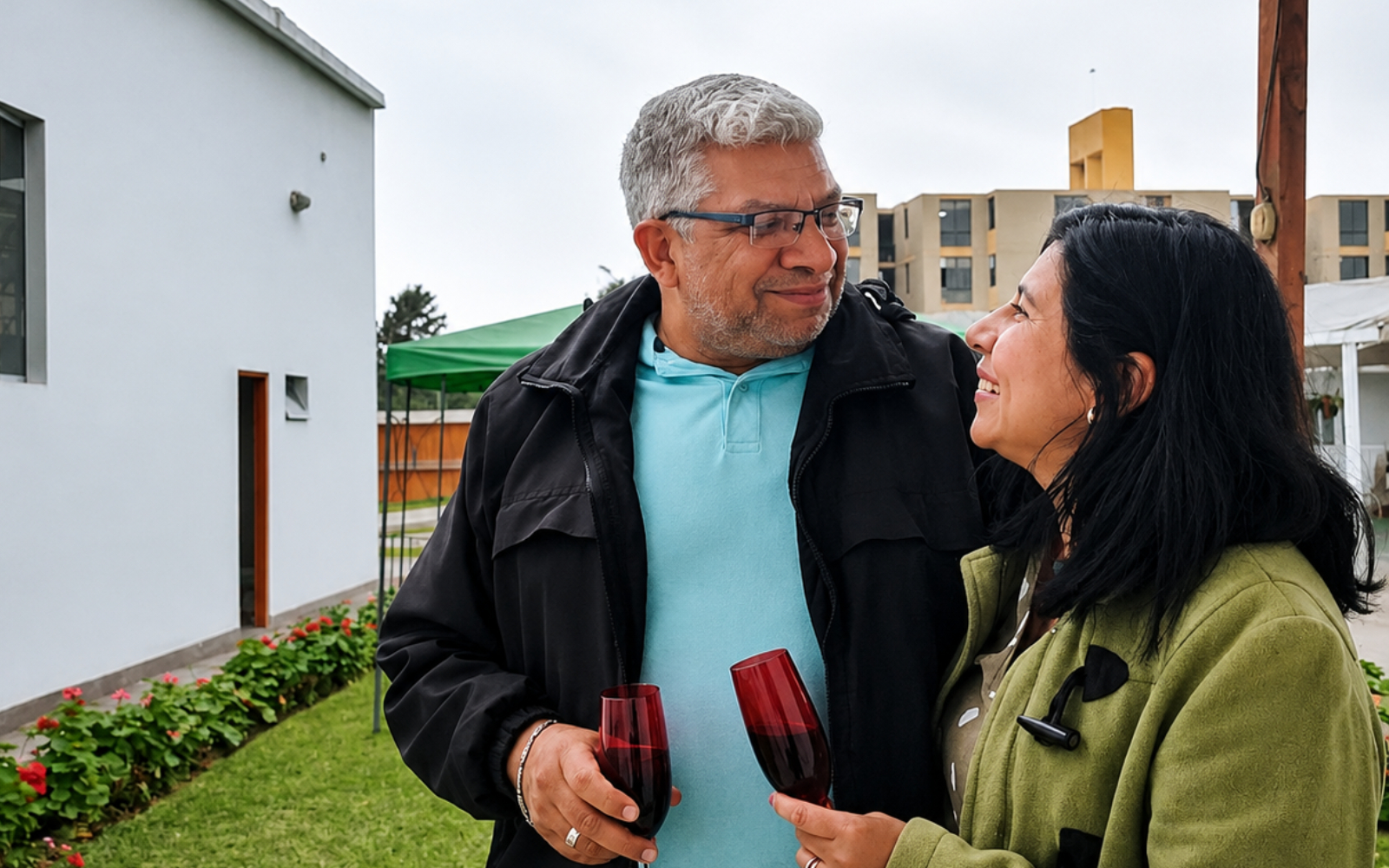
Harold and Mariela in front of Lima Cathedral. | Credit: Photo courtesy of Harold Figueras and Mariela Villanueva
A marriage marked by woundednessHarold and Mariela met in 1998 at the Venezuelan College of Engineers. He worked in systems; she was a young lawyer running a legal consultation firm with dozens of professionals under her supervision.While Mariela had grown up in a Catholic family and frequently prayed the rosary, Harold was completely indifferent to the faith.“I used to make fun of priests. For me, getting married in the Church was simply a matter of fulfilling a social formality,” he admitted.They were married in a civil ceremony and on Sept. 2, 2000, received the sacrament at marriage at St. Francis of Assisi Parish in Barranco, Peru. However, they acknowledged that they came to the altar without truly understanding the meaning of the vocation of marriage.“We began our life together without God at the center. That was the first major mistake,” Harold explained.Over the years, deep-seated wounds began to surface: abandonment, loneliness, pride, an inability to communicate, and unrealistic expectations about love. Venezuela’s economic crisis further aggravated the situation. Harold traveled constantly between the two countries until, one day, he simply stopped coming back.Mariela was left alone in Lima with her young daughter.
Recent photo of Harold and Mariela with their three daughters in Lima, Peru. | Credit: Photo courtesy of Harold Figueras and Mariela Villanueva
‘Mom, teach me to pray’Paradoxically, the restoration did not begin when Harold changed. It began when Mariela got down on her knees.Estranged from the Church and filled with resentment, the young mother had abandoned the practice of her faith after being hurt by a bad experience at a parish. Everything changed thanks to an unexpected request from her 7-year-old daughter: “Mom, grandma says you know how to pray. Teach me the rosary.”Mariela agreed, more out of a sense of obligation than anything else. Shortly after that, her daughter insisted on making her first Communion and said something that pierced her mother’s heart: “You know what it’s like to have Jesus in your heart… so why don’t you [go to Communion]?”Those words led Mariela back to the confessional.From then on, she began a routine that would change her life: daily Mass before work, Eucharistic adoration at midday, and the rosary every night with her daughter.“I was looking for God to change my husband. The Lord ended up changing me,” she related.
Harold and Mariela with members of the Peruvian Catholic movement “Jesus and Mary Are Restoring My Family.” | Credit: Photo courtesy of Harold Figueras and Mariela Villanueva
‘Look at me’During Eucharistic adoration, an experience occurred that would, years later, give its name to the retreat the couple now leads as part of the Peruvian Catholic movement “Jesus and Mary Are Restoring My Family.”Mariela was praying, seeing herself as the victim in her story: “Lord, look at me. Look at how good I am. Look at what he did to me.”Then, she raised her eyes toward the monstrance.“I no longer saw the monstrance. I saw Jesus, wounded and bloodied. And he said to me only: ‘Look at me.’”In that moment, she experienced a personal encounter with Jesus. She began to recall her own sins from childhood and realized that, for years, she had been unable to recognize her own wounds.“I realized that God wasn’t going to ask me about Harold’s sins. He was going to ask me how much I loved my husband within the sacrament.”Her prayer changed completely, and she no longer asked for Harold to return. She only prayed: “Lord, bring him back to you.”
Mariela Villanueva. | Credit: Photo courtesy of Mariela Villanueva
The hell of the occultWhile Mariela was deepening her prayer life, Harold was heading down a completely opposite path.Seeking better financial prospects, he began consulting tarot cards. Next came syncretist Santería practices, and finally Palería, a witchcraft practice involving human remains and animal sacrifices.“I entered a dark room containing skeletal remains. I felt an indescribable fear, yet I kept looking for answers where they weren’t to be found,” Harold recalled.Amid that emptiness, he began to notice something strange. Mariela kept calling him, but no longer to get him back. One afternoon, in a mocking tone, he asked her: “What’s wrong? Don’t you need me anymore?”Her answer baffled him.“No. Whatʼs going on is that I have someone here who loves me.”Harold thought she had another romantic partner, but today he knows his wife was speaking of Christ himself.
Harold Figueras. | Credit: Photo courtesy of Harold Figueras
Welcomed back with loveAfter that encounter with his wife in Venezuela, Harold eventually returned to Peru.He admitted he was terrified of facing Mariela’s family and above all, their daughter. He imagined reproaches, humiliation, and rejection. Yet, he found exactly the opposite.“They all hugged me as if I had just stepped out to buy bread,” he recounted.A few days later, he accompanied Mariela to the Oblate Fathers’ church in the Barranco neighborhood of Lima. He had no thought of even going inside. He was standing near the doorway when, as he tells it, he felt an inner impulse that led him straight to the confessional.“I told the priest: ‘Father, I’ve been separated from my wife for five years, and I don’t know why I’ve come back.’”The priest invited him to attend a spiritual retreat. It was there that Harold experienced his own conversion.Before the Blessed Sacrament, after resisting for hours, Harold looked up: “I no longer saw the monstrance. I saw two honey-colored eyes that pierced my heart. I began to weep as I never had in my life.”From that moment on, he abandoned the occult and began a journey of faith that continues to this day.An ongoing miracleMore than 15 years have passed since that reconciliation.Harold and Mariela maintain that the true miracle was not simply living together again but discovering that marriage is a daily path to holiness.“Restoring the marriage takes your whole life. It doesn’t stop when the husband returns. It begins there,” Mariela said.
Harold and Mariela today. | Credit: Photo courtesy of Harold Figueras and Mariela Villanueva
That experience gave rise to the “Jesus and Mary Are Restoring My Family” movement, an initiative that supports spouses who are separated or on the verge of divorce. The path they propose begins with oneʼs own conversion rather than an attempt to change oneʼs spouse.Those who come to the mission begin with what’s called “Mary’s Workshop,” a preparation for consecration to the Immaculate Heart of Mary that focuses on the sacrament of marriage. There, the aim is for each person to acknowledge his or her own wounds and receive the tools to discern how to handle their issues as a family.However, Harold and Mariela noted that not all journeys end the same way. Some married couples manage to reunite, while others go their separate ways, including through the process of a declaration of nullity. What remains, they maintain, is the call to conversion and to seek God’s will.“The Lord wants us to be holy,” Mariela explained. She said that even when a person goes through a process different from what she or he hoped for, suffering can become an opportunity to draw closer to Christ and offer that pain for the holiness of the Church.Today, when they look back, the couple no longer see themselves as the same people who had separated. Mariela describes Harold as a man more committed to knowing Godʼs love and capable of giving of himself to his family.For his part, he acknowledged that the woman he reunited with after five years was no longer the same one he had left behind.
The Figueras Villanueva family today. | Credit: Photo courtesy of Harold Figueras and Mariela Villanueva
For this reason, their testimony does not aim to offer a formula for restoring a lost marriage. It is, above all, the story of two people who discovered that, before asking God to change the other person, they had to allow themselves to be transformed by him.“Many people come saying, ‘I want my husband to come back.’ We tell them: First, let Jesus return to the center of your heart,” Harold explained.Their message to couples in crisis stems from that experience: Don’t hide your wounds, don’t let shame defeat you, and don’t confuse restoration with a simple return to the life you had before.For as they discovered that Wednesday afternoon in 2009, some marital battles are not won by defeating the other person but by allowing oneself to be conquered by God’s merciful love.This story was first published by ACI Prensa, the Spanish-language sister service of EWTN News. It has been translated and adapted by EWTN News English.](https://unitedyam.com/wp-content/uploads/2026/08/hope-for-broken-marriages-one-couples-story-catholic-on-april-7-2009-mariela-villanueva-landed-in-venezuela-convinced-that-she-was-going-to-end-her-marriage-five-years-had-passed-since-h.jpg "Hope for broken marriages: One couple’s story #Catholic On April 7, 2009, Mariela Villanueva landed in Venezuela convinced that she was going to end her marriage. Five years had passed since her husband, Harold Figueras, had left his family in Peru and rebuilt his life in another country. She carried with her the pain of a long separation and the resolve to sign the divorce papers. He had with him a written list of all the grievances he intended to unleash the moment he saw her.Nothing happened the way either of them had imagined.They arranged to meet on a Wednesday at 3 p.m., the Hour of Mercy, at the very spot where they had courted years before. When Mariela appeared, Harold frantically searched for the sheet of paper containing his complaints. It had vanished.“I was expecting a war. She opened her arms to embrace me, and I realized that I was the only one who wanted to fight,” Harold recalled in an interview with ACI Prensa, the Spanish-language sister service of EWTN News. Mariela said she made that gesture because she had already begun a process of conversion and was holding onto one last hope.That embrace did not immediately restore the marriage, however. It would still be nearly a month before he ended the other relationship he was in and decided to return to his family. But on that day, they both attest, Jesus won the first great battle.
Harold and Mariela in front of Lima Cathedral. | Credit: Photo courtesy of Harold Figueras and Mariela Villanueva
A marriage marked by woundednessHarold and Mariela met in 1998 at the Venezuelan College of Engineers. He worked in systems; she was a young lawyer running a legal consultation firm with dozens of professionals under her supervision.While Mariela had grown up in a Catholic family and frequently prayed the rosary, Harold was completely indifferent to the faith.“I used to make fun of priests. For me, getting married in the Church was simply a matter of fulfilling a social formality,” he admitted.They were married in a civil ceremony and on Sept. 2, 2000, received the sacrament at marriage at St. Francis of Assisi Parish in Barranco, Peru. However, they acknowledged that they came to the altar without truly understanding the meaning of the vocation of marriage.“We began our life together without God at the center. That was the first major mistake,” Harold explained.Over the years, deep-seated wounds began to surface: abandonment, loneliness, pride, an inability to communicate, and unrealistic expectations about love. Venezuela’s economic crisis further aggravated the situation. Harold traveled constantly between the two countries until, one day, he simply stopped coming back.Mariela was left alone in Lima with her young daughter.
Recent photo of Harold and Mariela with their three daughters in Lima, Peru. | Credit: Photo courtesy of Harold Figueras and Mariela Villanueva
‘Mom, teach me to pray’Paradoxically, the restoration did not begin when Harold changed. It began when Mariela got down on her knees.Estranged from the Church and filled with resentment, the young mother had abandoned the practice of her faith after being hurt by a bad experience at a parish. Everything changed thanks to an unexpected request from her 7-year-old daughter: “Mom, grandma says you know how to pray. Teach me the rosary.”Mariela agreed, more out of a sense of obligation than anything else. Shortly after that, her daughter insisted on making her first Communion and said something that pierced her mother’s heart: “You know what it’s like to have Jesus in your heart… so why don’t you [go to Communion]?”Those words led Mariela back to the confessional.From then on, she began a routine that would change her life: daily Mass before work, Eucharistic adoration at midday, and the rosary every night with her daughter.“I was looking for God to change my husband. The Lord ended up changing me,” she related.
Harold and Mariela with members of the Peruvian Catholic movement “Jesus and Mary Are Restoring My Family.” | Credit: Photo courtesy of Harold Figueras and Mariela Villanueva
‘Look at me’During Eucharistic adoration, an experience occurred that would, years later, give its name to the retreat the couple now leads as part of the Peruvian Catholic movement “Jesus and Mary Are Restoring My Family.”Mariela was praying, seeing herself as the victim in her story: “Lord, look at me. Look at how good I am. Look at what he did to me.”Then, she raised her eyes toward the monstrance.“I no longer saw the monstrance. I saw Jesus, wounded and bloodied. And he said to me only: ‘Look at me.’”In that moment, she experienced a personal encounter with Jesus. She began to recall her own sins from childhood and realized that, for years, she had been unable to recognize her own wounds.“I realized that God wasn’t going to ask me about Harold’s sins. He was going to ask me how much I loved my husband within the sacrament.”Her prayer changed completely, and she no longer asked for Harold to return. She only prayed: “Lord, bring him back to you.”
Mariela Villanueva. | Credit: Photo courtesy of Mariela Villanueva
The hell of the occultWhile Mariela was deepening her prayer life, Harold was heading down a completely opposite path.Seeking better financial prospects, he began consulting tarot cards. Next came syncretist Santería practices, and finally Palería, a witchcraft practice involving human remains and animal sacrifices.“I entered a dark room containing skeletal remains. I felt an indescribable fear, yet I kept looking for answers where they weren’t to be found,” Harold recalled.Amid that emptiness, he began to notice something strange. Mariela kept calling him, but no longer to get him back. One afternoon, in a mocking tone, he asked her: “What’s wrong? Don’t you need me anymore?”Her answer baffled him.“No. Whatʼs going on is that I have someone here who loves me.”Harold thought she had another romantic partner, but today he knows his wife was speaking of Christ himself.
Harold Figueras. | Credit: Photo courtesy of Harold Figueras
Welcomed back with loveAfter that encounter with his wife in Venezuela, Harold eventually returned to Peru.He admitted he was terrified of facing Mariela’s family and above all, their daughter. He imagined reproaches, humiliation, and rejection. Yet, he found exactly the opposite.“They all hugged me as if I had just stepped out to buy bread,” he recounted.A few days later, he accompanied Mariela to the Oblate Fathers’ church in the Barranco neighborhood of Lima. He had no thought of even going inside. He was standing near the doorway when, as he tells it, he felt an inner impulse that led him straight to the confessional.“I told the priest: ‘Father, I’ve been separated from my wife for five years, and I don’t know why I’ve come back.’”The priest invited him to attend a spiritual retreat. It was there that Harold experienced his own conversion.Before the Blessed Sacrament, after resisting for hours, Harold looked up: “I no longer saw the monstrance. I saw two honey-colored eyes that pierced my heart. I began to weep as I never had in my life.”From that moment on, he abandoned the occult and began a journey of faith that continues to this day.An ongoing miracleMore than 15 years have passed since that reconciliation.Harold and Mariela maintain that the true miracle was not simply living together again but discovering that marriage is a daily path to holiness.“Restoring the marriage takes your whole life. It doesn’t stop when the husband returns. It begins there,” Mariela said.
Harold and Mariela today. | Credit: Photo courtesy of Harold Figueras and Mariela Villanueva
That experience gave rise to the “Jesus and Mary Are Restoring My Family” movement, an initiative that supports spouses who are separated or on the verge of divorce. The path they propose begins with oneʼs own conversion rather than an attempt to change oneʼs spouse.Those who come to the mission begin with what’s called “Mary’s Workshop,” a preparation for consecration to the Immaculate Heart of Mary that focuses on the sacrament of marriage. There, the aim is for each person to acknowledge his or her own wounds and receive the tools to discern how to handle their issues as a family.However, Harold and Mariela noted that not all journeys end the same way. Some married couples manage to reunite, while others go their separate ways, including through the process of a declaration of nullity. What remains, they maintain, is the call to conversion and to seek God’s will.“The Lord wants us to be holy,” Mariela explained. She said that even when a person goes through a process different from what she or he hoped for, suffering can become an opportunity to draw closer to Christ and offer that pain for the holiness of the Church.Today, when they look back, the couple no longer see themselves as the same people who had separated. Mariela describes Harold as a man more committed to knowing Godʼs love and capable of giving of himself to his family.For his part, he acknowledged that the woman he reunited with after five years was no longer the same one he had left behind.
The Figueras Villanueva family today. | Credit: Photo courtesy of Harold Figueras and Mariela Villanueva
For this reason, their testimony does not aim to offer a formula for restoring a lost marriage. It is, above all, the story of two people who discovered that, before asking God to change the other person, they had to allow themselves to be transformed by him.“Many people come saying, ‘I want my husband to come back.’ We tell them: First, let Jesus return to the center of your heart,” Harold explained.Their message to couples in crisis stems from that experience: Don’t hide your wounds, don’t let shame defeat you, and don’t confuse restoration with a simple return to the life you had before.For as they discovered that Wednesday afternoon in 2009, some marital battles are not won by defeating the other person but by allowing oneself to be conquered by God’s merciful love.This story was first published by ACI Prensa, the Spanish-language sister service of EWTN News. It has been translated and adapted by EWTN News English.")
Starting out their marriage without God at the center, the couple became estranged and the husband left, but things began to change when their daughter asked her mom, “Teach me to pray.”