disciples

Christ is not ‘a guru or a good luck charm,’ pope says at Mass in Angola #Catholic SAURIMO, Angola — Pope Leo XIV warned at Mass in Saurimo, Angola, on Monday of making God into an idol that is sought only when advantageous — “when genuine faith is replaced with superstitious practices.”“There are erroneous motives for seeking Christ, particularly when he is considered to be a guru or a good luck charm,” the pope said on April 20, referring to how the crowds in the Gospel reading reacted after Jesus performed the miracle of the loaves and the fishes.“They were not seeking a teacher whom they love but a leader to applaud for their own advantage,” he said.Joyful faith in Saurimo
 
 Pope Leo XIV celebrates Mass in Saurimo, Angola, on April 20, 2026. | Credit: Vatican Media
 
 From the start of his arrival in Sub-Saharan Africa — first in Cameroon and then in Angola — Pope Leo has been welcomed by the warmth of the faithful. In Saurimo, a city in northeastern Angola, the atmosphere greeting the pope on Monday was marked by joyful faith. Everyone welcomed the successor of Peter with songs, dances, and applause.Despite the intense heat, upon reaching the esplanade before Mass, Leo XIV greeted the roughly 60,000 faithful of all ages — who had come from across the region and neighboring dioceses — by making a circuit in the popemobile.“This is the first time a pope has gone beyond Angola’s coastal belt and come — using Pope Francis’ language — to the peripheries,“ the director of the communications office of the Archdiocese of Saurimo said. ”This is a region rich in diamonds, but there is also great poverty, and he comes here to show our reality. For us, having the Holy Father in our region is a great joy.”“This is a unique and unforgettable moment in my life and in the lives of the many pilgrims here today,” Filomena Vunda, who works in the pastoral secretariat of the Archdiocese of Malanje, told ACI Africa, the sister service of EWTN News in Africa, at the Mass.Vunda encouraged non-Catholics in Angola to “keep in mind our African word ‘Ubuntu’: The happiness of others depends on me; my happiness depends solely on the happiness of others.”Ubuntu is an African philosophy about human interconnectedness. It can be translated as “I am because we are.”‘Disciples of Christ’In his homily at Mass, concelebrated by Angolan bishops, Pope Leo said: “In every part of the world, the Church lives as a people who walk as disciples of Christ, our brother and redeemer.”"He, the Risen One, illumines for us the path to the Father and with the strength of the Spirit he sanctifies us so that we may transform our way of life in conformity with his love," the pope said. "This is the good news, the Gospel that courses through our veins like blood, sustaining us on the journey. A journey that has brought me here with you today!”
 
 Pope Leo XIV celebrates Mass in Saurimo, Angola, on April 20, 2026. | Credit: Vatican Media
 
 Commenting on the Gospel of the day, Leo reflected: “Indeed, when the Son of God became man, he performed striking miracles in order to manifest the will of the Father: He made light shine in the darkness by giving sight to the blind, he gave a voice to the oppressed by loosening the tongues of the mute, he slaked our thirst for justice by multiplying bread for the poor and weak. Anyone who heard about these works set out in search of Jesus. At the same time, the Lord looks into our heart and asks us whether we seek him out of gratitude or for our own self-interest, with calculation or with love.”“The Lord himself says,” the pope continued, “‘you are looking for me, not because you saw signs, but because you ate your fill of the loaves’ (Jn 6:26). His words reveal the designs of those who do not want to encounter a person but want to consume things. The crowd sees Jesus as means to an end, a provider of services. If he had not given them something to eat, his actions and teachings would not have interested them.”“This happens,” Leo XIV explained, “when genuine faith is replaced with superstitious practices, in which God becomes an idol that is sought only when it is advantageous to us and only for as long as it is. Even the most beautiful gifts of the Lord, which are always for the care of his people, become a pretext, a prize or a bargaining chip, and are misinterpreted by those who receive them.”“How different is Jesus’ attitude toward us,” the pontiff continued. “Yet, he does not reject this insincere search, but encourages its conversion ... Christ calls us to freedom: He does not want servants or clients, rather he seeks brothers and sisters to whom he can totally dedicate himself.”“Therefore,” Leo XIV said, “the admonition that the Lord directs to the crowd is transformed into an invitation: ‘Do not work for the food that perishes, but for the food that endures for eternal life’ (Jn 6:27)."“His gift sheds light on our current situation,” the pope went on. “We can see today how the hope of many people is frustrated by violence, exploited by the powerful, and defrauded by the rich. Consequently, when injustice corrupts hearts, the bread of all becomes the possession of a few."“In the face of these evils, Christ hears the cry of the people and renews our history by lifting us up from every fall, comforting us in every suffering, and encouraging us in our mission," he said. 
 
 Crowds of people brave the heat and sun to attend Mass with Pope Leo XIV in Saurimo, Angola, on April 20, 2026. | Credit: Raúl Kangombe Sapiti/ACI Africa
 
 “All this,” the pope exhorted, “means that, in light of our discipleship, the ecclesial journey is a ‘synod of resurrection and hope,’ as St. John Paul II affirmed in his apostolic exhortation Ecclesia in Africa. Let us proceed in this wise direction! Christ himself guides and strengthens our journey, a journey that we want to learn to live more and more as it should be, that is, in a synodal manner.”The pope concluded by recalling the importance of the martyrs and saints, whose witness “encourages us and pushes us onto a path of hope, reconciliation, and peace, along which the gift of God becomes the responsibility of the head of the household, in the Christian community, in civil society.”"The vitality of the vocations that you experience [in Angola]," he said, "is a sign that you are responding to the Lord’s gift, which is always abundant for those who welcome it with pure hearts.”ACI Africa reporter Raúl Kangombe Sapiti contributed to this report.This story was first published by ACI Stampa, the Italian-language sister service of EWTN News. It has been translated and adapted by EWTN News English.

Christ is not ‘a guru or a good luck charm,’ pope says at Mass in Angola #Catholic SAURIMO, Angola — Pope Leo XIV warned at Mass in Saurimo, Angola, on Monday of making God into an idol that is sought only when advantageous — “when genuine faith is replaced with superstitious practices.”“There are erroneous motives for seeking Christ, particularly when he is considered to be a guru or a good luck charm,” the pope said on April 20, referring to how the crowds in the Gospel reading reacted after Jesus performed the miracle of the loaves and the fishes.“They were not seeking a teacher whom they love but a leader to applaud for their own advantage,” he said.Joyful faith in Saurimo Pope Leo XIV celebrates Mass in Saurimo, Angola, on April 20, 2026. | Credit: Vatican Media From the start of his arrival in Sub-Saharan Africa — first in Cameroon and then in Angola — Pope Leo has been welcomed by the warmth of the faithful. In Saurimo, a city in northeastern Angola, the atmosphere greeting the pope on Monday was marked by joyful faith. Everyone welcomed the successor of Peter with songs, dances, and applause.Despite the intense heat, upon reaching the esplanade before Mass, Leo XIV greeted the roughly 60,000 faithful of all ages — who had come from across the region and neighboring dioceses — by making a circuit in the popemobile.“This is the first time a pope has gone beyond Angola’s coastal belt and come — using Pope Francis’ language — to the peripheries,“ the director of the communications office of the Archdiocese of Saurimo said. ”This is a region rich in diamonds, but there is also great poverty, and he comes here to show our reality. For us, having the Holy Father in our region is a great joy.”“This is a unique and unforgettable moment in my life and in the lives of the many pilgrims here today,” Filomena Vunda, who works in the pastoral secretariat of the Archdiocese of Malanje, told ACI Africa, the sister service of EWTN News in Africa, at the Mass.Vunda encouraged non-Catholics in Angola to “keep in mind our African word ‘Ubuntu’: The happiness of others depends on me; my happiness depends solely on the happiness of others.”Ubuntu is an African philosophy about human interconnectedness. It can be translated as “I am because we are.”‘Disciples of Christ’In his homily at Mass, concelebrated by Angolan bishops, Pope Leo said: “In every part of the world, the Church lives as a people who walk as disciples of Christ, our brother and redeemer.”"He, the Risen One, illumines for us the path to the Father and with the strength of the Spirit he sanctifies us so that we may transform our way of life in conformity with his love," the pope said. "This is the good news, the Gospel that courses through our veins like blood, sustaining us on the journey. A journey that has brought me here with you today!” Pope Leo XIV celebrates Mass in Saurimo, Angola, on April 20, 2026. | Credit: Vatican Media Commenting on the Gospel of the day, Leo reflected: “Indeed, when the Son of God became man, he performed striking miracles in order to manifest the will of the Father: He made light shine in the darkness by giving sight to the blind, he gave a voice to the oppressed by loosening the tongues of the mute, he slaked our thirst for justice by multiplying bread for the poor and weak. Anyone who heard about these works set out in search of Jesus. At the same time, the Lord looks into our heart and asks us whether we seek him out of gratitude or for our own self-interest, with calculation or with love.”“The Lord himself says,” the pope continued, “‘you are looking for me, not because you saw signs, but because you ate your fill of the loaves’ (Jn 6:26). His words reveal the designs of those who do not want to encounter a person but want to consume things. The crowd sees Jesus as means to an end, a provider of services. If he had not given them something to eat, his actions and teachings would not have interested them.”“This happens,” Leo XIV explained, “when genuine faith is replaced with superstitious practices, in which God becomes an idol that is sought only when it is advantageous to us and only for as long as it is. Even the most beautiful gifts of the Lord, which are always for the care of his people, become a pretext, a prize or a bargaining chip, and are misinterpreted by those who receive them.”“How different is Jesus’ attitude toward us,” the pontiff continued. “Yet, he does not reject this insincere search, but encourages its conversion … Christ calls us to freedom: He does not want servants or clients, rather he seeks brothers and sisters to whom he can totally dedicate himself.”“Therefore,” Leo XIV said, “the admonition that the Lord directs to the crowd is transformed into an invitation: ‘Do not work for the food that perishes, but for the food that endures for eternal life’ (Jn 6:27)."“His gift sheds light on our current situation,” the pope went on. “We can see today how the hope of many people is frustrated by violence, exploited by the powerful, and defrauded by the rich. Consequently, when injustice corrupts hearts, the bread of all becomes the possession of a few."“In the face of these evils, Christ hears the cry of the people and renews our history by lifting us up from every fall, comforting us in every suffering, and encouraging us in our mission," he said. Crowds of people brave the heat and sun to attend Mass with Pope Leo XIV in Saurimo, Angola, on April 20, 2026. | Credit: Raúl Kangombe Sapiti/ACI Africa “All this,” the pope exhorted, “means that, in light of our discipleship, the ecclesial journey is a ‘synod of resurrection and hope,’ as St. John Paul II affirmed in his apostolic exhortation Ecclesia in Africa. Let us proceed in this wise direction! Christ himself guides and strengthens our journey, a journey that we want to learn to live more and more as it should be, that is, in a synodal manner.”The pope concluded by recalling the importance of the martyrs and saints, whose witness “encourages us and pushes us onto a path of hope, reconciliation, and peace, along which the gift of God becomes the responsibility of the head of the household, in the Christian community, in civil society.”"The vitality of the vocations that you experience [in Angola]," he said, "is a sign that you are responding to the Lord’s gift, which is always abundant for those who welcome it with pure hearts.”ACI Africa reporter Raúl Kangombe Sapiti contributed to this report.This story was first published by ACI Stampa, the Italian-language sister service of EWTN News. It has been translated and adapted by EWTN News English.

After praying at the Cathedral of Our Lady of the Assumption in Saurimo, Pope Leo XIV proceeded to the site of the Mass, attended by an estimated 60,000 people.

Read More
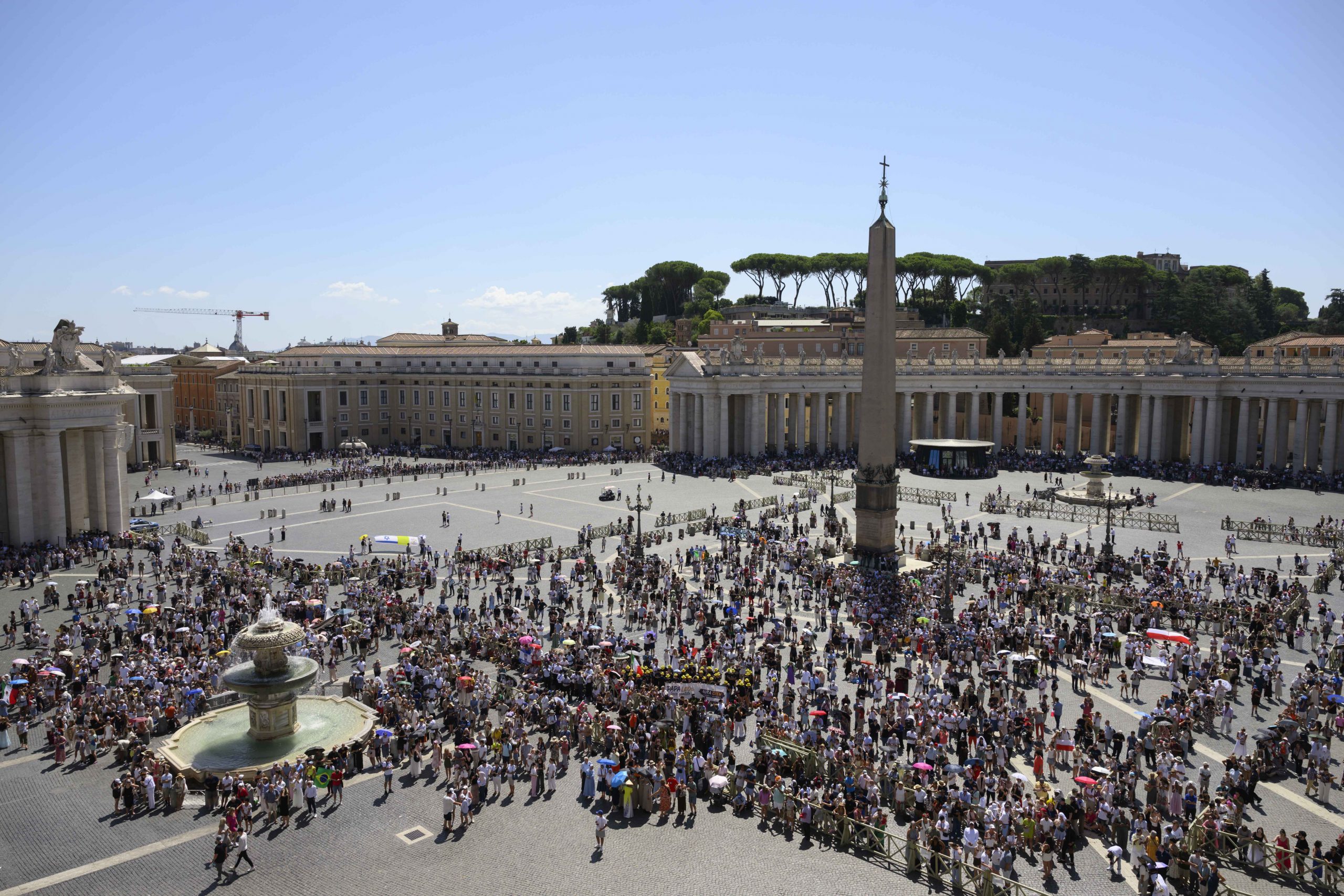
Pope Leo XIV: Eucharist is ‘indispensable for Christian life’ #Catholic “The Sunday Eucharist is indispensable for Christian life,” said Pope Leo XIV before reciting the Marian prayer of the Regina Caeli on April 12 in St. Peterʼs Square. Speaking to crowds gathered in the square, the pope noted his upcoming departure for Africa, where “some martyrs of the early African Church, the Martyrs of Abitene, have left us a beautiful testimony in this regard." "Faced with the offer to save their lives on the condition that they renounce celebrating the Eucharist, they replied that they could not live without celebrating the Lord’s Day. It is there that our faith is nourished and grows,” the Holy Father said. “Because it is through the Eucharist that even our hands become ‘hands of the Risen One,’ witnesses of his presence, of his mercy, and of his peace, in the signs of work, of sacrifices, of illness, and of the passing of the years, which are often engraved upon them — just as in the tenderness of a caress, a handshake, or a gesture of charity," he said. In his commentary on the April 12 Gospel for the second Sunday of Easter — dedicated by Pope John Paul II to Divine Mercy — the pope spoke about the faithfulʼs encounter with Jesus: “Where can we find him? How can we recognize him? How can we believe?”“Certainly, it is not always easy to believe. It was not easy for Thomas, and it is not easy for us either. Faith needs to be nourished and supported. For this reason, on the ‘eighth day,’ that is, every Sunday, the Church invites us to do as the first disciples did: to gather together and celebrate the Eucharist as one," he said.The pope concluded: “In a world that is in such great need of peace, this commits us more than ever to be assiduous and faithful in our Eucharistic encounter with the Risen Lord, so that we may depart from it as witnesses of charity and bearers of reconciliation." “May the Virgin Mary help us to do this — she who is blessed because she was the first to believe without seeing,” he said. After the prayer, Pope Leo XIV returned to the theme of peace. Recalling the Easter celebration of the Orthodox Churches, he said: “I accompany those communities with even more intense prayer for all those who suffer because of the war, in particular for the dear people of Ukraine.”“May the light of Christ bring comfort to afflicted hearts and strengthen the hope of peace. May the attention of the international community toward the drama of this war not diminish. I am also more than ever close to the beloved people of Lebanon in these days of sorrow, fear, and invincible hope in God.”“The principle of humanity, inscribed in the conscience of every person and recognized in international law, entails the moral obligation to protect the civilian population from the atrocious effects of war. I appeal to the conflicting parties to cease fire and to urgently seek a peaceful solution," he said. Next Wednesday marks three years since the beginning of the bloody conflict in Sudan. “How much the Sudanese people are suffering — innocent victims of this inhuman tragedy!“ the pope said. ”I renew my heartfelt appeal to the warring parties to silence the weapons and to begin, without preconditions, a sincere dialogue aimed at ending as soon as possible this fratricidal war.”The pope then greeted everyone: “I extend a warm welcome to all of you, Romans and pilgrims, especially to the faithful who have celebrated Divine Mercy Sunday at the Shrine of Santo Spirito in Sassia.”This story was first published by ACI Stampa, the Italian-language sister service of EWTN News. It has been translated and adapted by EWTN News English.

Pope Leo XIV: Eucharist is ‘indispensable for Christian life’ #Catholic “The Sunday Eucharist is indispensable for Christian life,” said Pope Leo XIV before reciting the Marian prayer of the Regina Caeli on April 12 in St. Peterʼs Square. Speaking to crowds gathered in the square, the pope noted his upcoming departure for Africa, where “some martyrs of the early African Church, the Martyrs of Abitene, have left us a beautiful testimony in this regard." "Faced with the offer to save their lives on the condition that they renounce celebrating the Eucharist, they replied that they could not live without celebrating the Lord’s Day. It is there that our faith is nourished and grows,” the Holy Father said. “Because it is through the Eucharist that even our hands become ‘hands of the Risen One,’ witnesses of his presence, of his mercy, and of his peace, in the signs of work, of sacrifices, of illness, and of the passing of the years, which are often engraved upon them — just as in the tenderness of a caress, a handshake, or a gesture of charity," he said. In his commentary on the April 12 Gospel for the second Sunday of Easter — dedicated by Pope John Paul II to Divine Mercy — the pope spoke about the faithfulʼs encounter with Jesus: “Where can we find him? How can we recognize him? How can we believe?”“Certainly, it is not always easy to believe. It was not easy for Thomas, and it is not easy for us either. Faith needs to be nourished and supported. For this reason, on the ‘eighth day,’ that is, every Sunday, the Church invites us to do as the first disciples did: to gather together and celebrate the Eucharist as one," he said.The pope concluded: “In a world that is in such great need of peace, this commits us more than ever to be assiduous and faithful in our Eucharistic encounter with the Risen Lord, so that we may depart from it as witnesses of charity and bearers of reconciliation." “May the Virgin Mary help us to do this — she who is blessed because she was the first to believe without seeing,” he said. After the prayer, Pope Leo XIV returned to the theme of peace. Recalling the Easter celebration of the Orthodox Churches, he said: “I accompany those communities with even more intense prayer for all those who suffer because of the war, in particular for the dear people of Ukraine.”“May the light of Christ bring comfort to afflicted hearts and strengthen the hope of peace. May the attention of the international community toward the drama of this war not diminish. I am also more than ever close to the beloved people of Lebanon in these days of sorrow, fear, and invincible hope in God.”“The principle of humanity, inscribed in the conscience of every person and recognized in international law, entails the moral obligation to protect the civilian population from the atrocious effects of war. I appeal to the conflicting parties to cease fire and to urgently seek a peaceful solution," he said. Next Wednesday marks three years since the beginning of the bloody conflict in Sudan. “How much the Sudanese people are suffering — innocent victims of this inhuman tragedy!“ the pope said. ”I renew my heartfelt appeal to the warring parties to silence the weapons and to begin, without preconditions, a sincere dialogue aimed at ending as soon as possible this fratricidal war.”The pope then greeted everyone: “I extend a warm welcome to all of you, Romans and pilgrims, especially to the faithful who have celebrated Divine Mercy Sunday at the Shrine of Santo Spirito in Sassia.”This story was first published by ACI Stampa, the Italian-language sister service of EWTN News. It has been translated and adapted by EWTN News English.

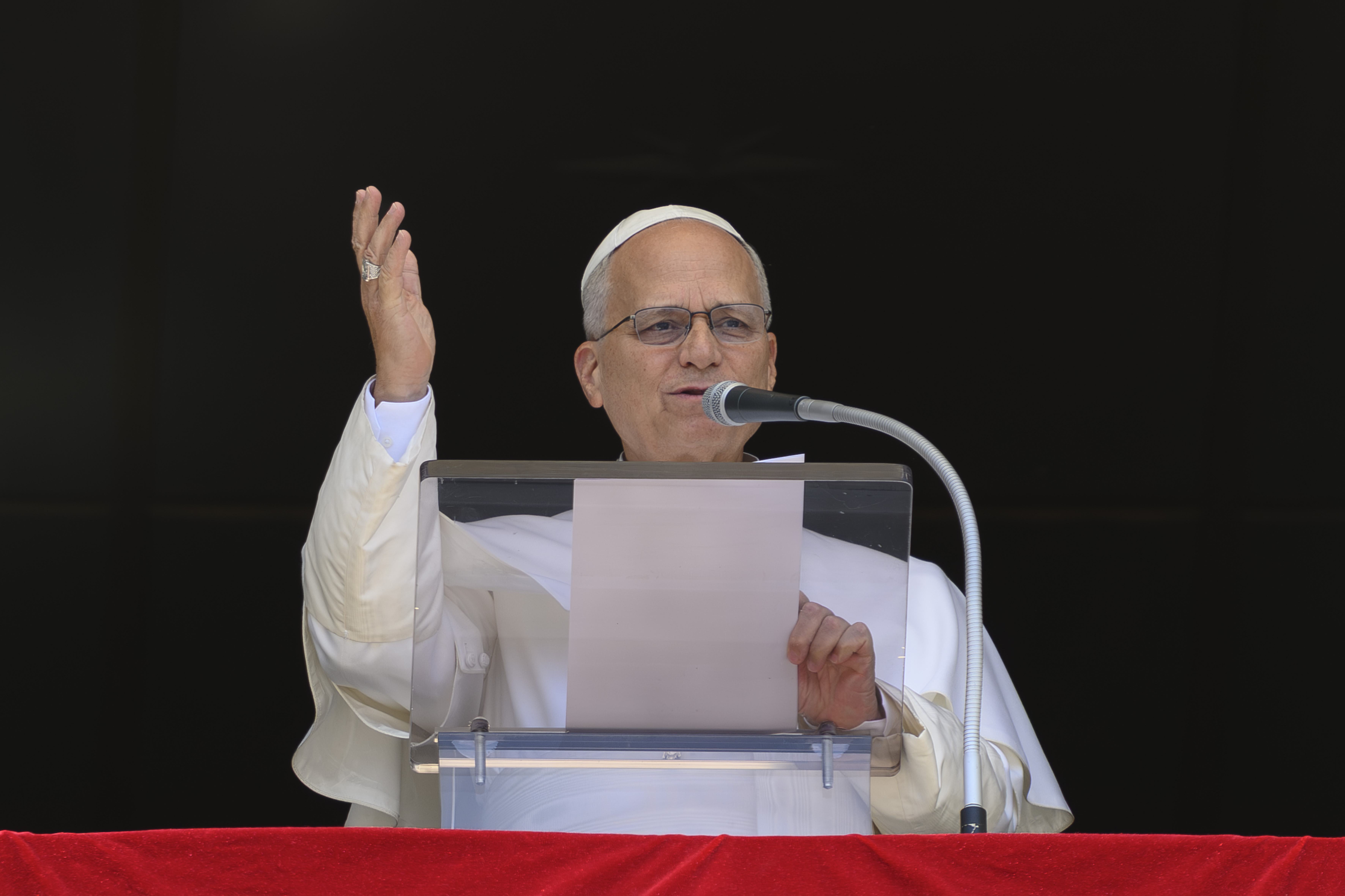
“It is through the Eucharist that even our hands become ‘hands of the Risen One’,” the pope said.

Read More
Catholic bishops in Africa release final report addressing pastoral challenge of polygamy #Catholic NAIROBI, Kenya — Catholic bishops in Africa have released a final report addressing the pastoral challenge of polygamy across Africa. The 25-page document responds directly to the mandate that the multiyear XVI Ordinary General Assembly of the Synod of Bishops, the Synod on Synodality, gave to members of the Symposium of Episcopal Conferences of Africa and Madagascar (SECAM) “to promote theological and pastoral discernment on the issue of polygamy.”Compiled by a SECAM commission made up of selected theologians and professionals from relevant ecclesiastical disciplines, the report presents a structured reflection on the phenomenon through what it describes as a process of “quadruple listening”: attentive engagement with African cultural realities, sacred Scripture, Church teaching on Christian marriage, and pastoral practices already operative within ecclesial communities across the continent.Polygamy within the context of the African familyThe report begins by situating polygamy within the broader cultural and religious context of the African family. According to the SECAM commission: “The African family is built on the covenant: an alliance between human groups, an alliance with ancestors, and an alliance with God.”Within this worldview, the birth of children is central. The commission members explained that “at the heart of this family, the child represents an inestimable treasure, a divine blessing. He perpetuates the name of the lineage while helping to consolidate the present life.”It is within this framework that members of the SECAM commission situated polygamy, defined as “a marital regime in which an individual is linked at the same time to several spouses.” They clarified that although the term technically includes both polyandry and polygyny, the latter — a man married to multiple women — remains by far the most common form in Africa.Historically, the practice emerged from specific social needs. In early agrarian and nomadic societies, large families provided economic stability and security, they noted, recalling: “Polygamous marriages were practiced not only for the sake of large families, but also for reasons of solidarity, alliances, and political objectives.”Marriage in traditional African societies also carried communal and spiritual dimensions that made divorce rare, they further noted, recalling that marriage ceremonies involved not only the spouses but entire families and even calling upon ancestors, reflecting a deeply communal understanding of family life.
 
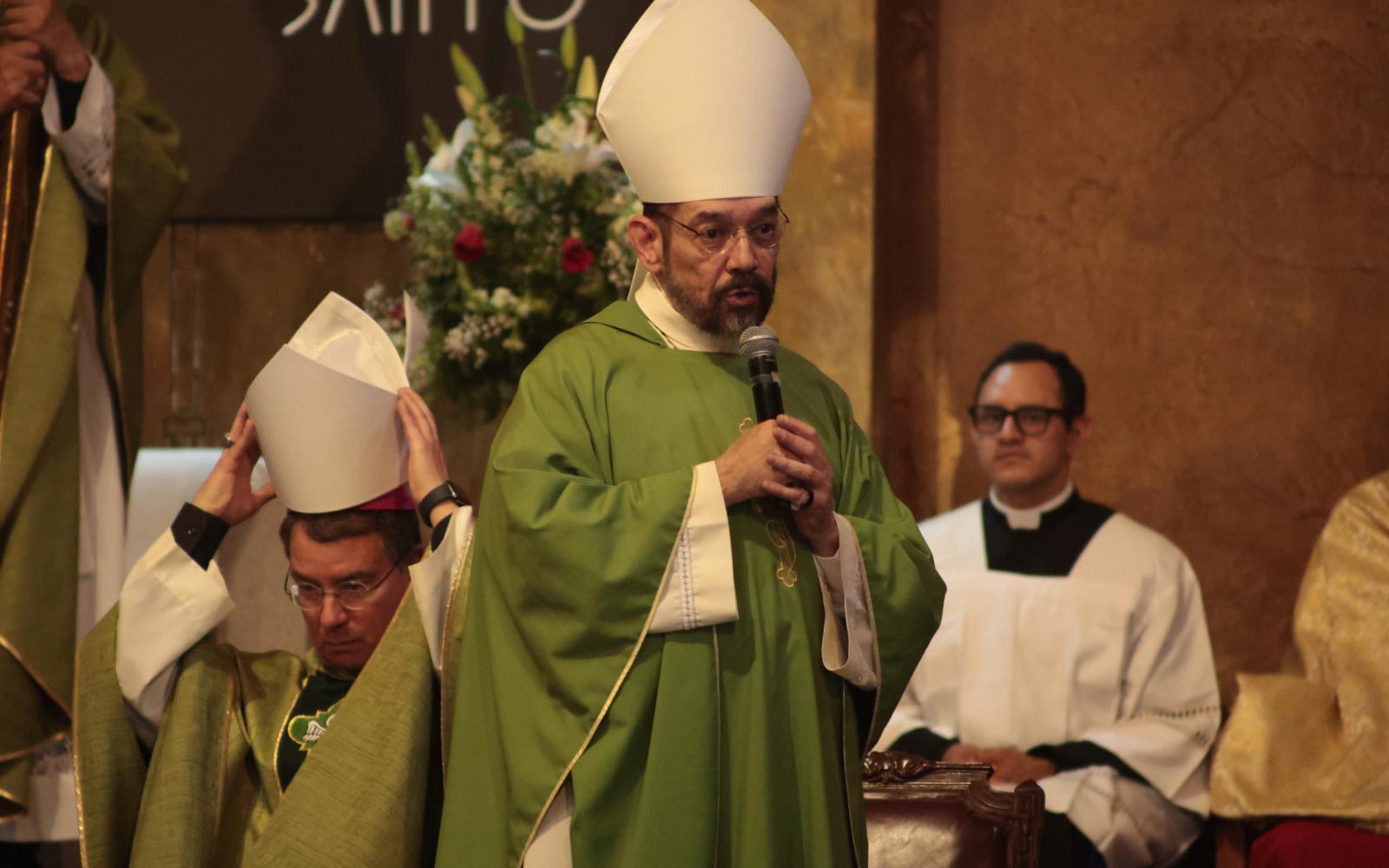
 SECAM president Cardinal Fridolin Ambongo (left) and secretary-general Father Rafael Simbine Junior (right). | Credit: ACI Africa
 
 Biblical discernmentTurning to Scripture, the SECAM commission members noted that the Bible itself reflects diverse marital practices. In the Old Testament world, “forms of marriage varied, from polygamy to monogamy,” and several biblical figures lived in polygamous unions.Nevertheless, the commission members stressed in the report that monogamy gradually emerged as the biblical ideal. They pointed to the Book of Tobit as a text that strongly “exalts monogamy,” describing families that are “strictly monogamous” and characterized by fidelity and religious devotion.The commission members interpreted this development as part of what they call a “divine pedagogy.” According to their report, God allowed polygamy historically but ultimately revealed the ideal of monogamous marriage through Christ.“In his Son, he shows that polygamy is not the ideal couple desired by God,” they said, emphasizing Jesus’ teaching that marriage is a union between “one man and one woman.”This biblical reflection also addressed one of the most common cultural motivations for polygamy — infertility. The commission insisted that biological impediments to fertility do not justify polygamy.They explained that biblical tradition broadens the understanding of motherhood and fatherhood beyond biological reproduction. True fruitfulness, the commission members wrote, can consist in fidelity to God and virtuous life rather than biological offspring alone.Ethical questions raised by polygamyThe report on the pastoral challenges of polygamy raised ethical questions about whether the core meaning of Christian marriage can be reconciled with polygamous unions. The commission highlighted the Christian understanding of marriage as a total mutual gift between two persons.“If marriage translates into ‘the gift of oneself to another,’ one might wonder how a man or woman can experience this ‘gift of self’ by giving themselves to several wives or husbands at the same time,” they observed.Commission members also raised questions about emotional and psychological dimensions, asking whether shared marital relationships risk undermining authentic communion between spouses.The Christian understanding of marriage, they noted, is further illuminated by the apostle Paul’s comparison of marriage with the relationship between Christ and the Church — a singular and exclusive covenant of love.Pastoral challenges: Baptism and sacramental lifeThe commission acknowledged that polygamy has long posed pastoral challenges for the Church in Africa, especially when individuals living in polygamous unions seek baptism or integration into Catholic communities.Historically, missionaries often approached the issue by requiring monogamy as a condition for baptism, they recalled, adding that “monogamous marriage was therefore a requirement for being or becoming a Christian.”Today, however, pastoral practice has evolved in many African dioceses, they said, identifying several pastoral approaches currently used within local churches.One approach requires a man seeking full sacramental participation to choose one spouse while continuing to provide for the other women and their children.Another response is the “permanent catechumenate,” in which a polygamous individual participates in catechetical formation and community life without receiving baptism or the other sacraments due to the continuing marital situation.A third practice involves baptizing the first wife when she has been placed in a polygamous relationship without her consent. In such cases, she may be fully integrated into the Christian community while remaining within her family environment.Position on baptism for polygamistsOne of the clearest conclusions of the SECAM commission concerned the sacrament of baptism. The commission argued that baptizing someone who intends to remain in a polygamous union risks undermining the theological meaning of baptism itself.“Baptizing a polygamist who will continue to remain so would give every appearance of legitimizing this irregularity and could distort or even devalue baptism of its substance,” they stated.For this reason, the commission recommended that baptism should normally follow a clear commitment to monogamous marriage.According to their report, polygamous catechumens should undergo thorough preparation and be ready to “accept the Gospel message, adhere to the Christian ideal, and commit to monogamous marriage before receiving baptism.”Implications for Catholics living in polygamous familiesAt the pastoral level, the members of the commission stressed accompaniment rather than exclusion. The Church, the report says, must practice “a pastoral approach of proximity, listening, and accompaniment.”This approach acknowledges that many polygamous families cannot easily dissolve existing marital bonds. In such cases, pastoral accompaniment may maintain the family structure while gradually introducing the Christian vision of marriage.The commission noted that some members of polygamous families — particularly the first wife and children — may meet the conditions for full sacramental participation, while others may live their faith “in a penitent manner and in the hope of full integration into the community of Jesus’ disciples.”Ultimately, the commission members framed the issue as part of a broader process of inculturation. The challenge for the Church in Africa, they concluded, is to present the Gospel within cultural realities while remaining faithful to the Christian understanding of marriage.This story was first published by ACI Africa, the sister service of EWTN News in Africa, and has been adapted by EWTN News.

Catholic bishops in Africa release final report addressing pastoral challenge of polygamy #Catholic NAIROBI, Kenya — Catholic bishops in Africa have released a final report addressing the pastoral challenge of polygamy across Africa. The 25-page document responds directly to the mandate that the multiyear XVI Ordinary General Assembly of the Synod of Bishops, the Synod on Synodality, gave to members of the Symposium of Episcopal Conferences of Africa and Madagascar (SECAM) “to promote theological and pastoral discernment on the issue of polygamy.”Compiled by a SECAM commission made up of selected theologians and professionals from relevant ecclesiastical disciplines, the report presents a structured reflection on the phenomenon through what it describes as a process of “quadruple listening”: attentive engagement with African cultural realities, sacred Scripture, Church teaching on Christian marriage, and pastoral practices already operative within ecclesial communities across the continent.Polygamy within the context of the African familyThe report begins by situating polygamy within the broader cultural and religious context of the African family. According to the SECAM commission: “The African family is built on the covenant: an alliance between human groups, an alliance with ancestors, and an alliance with God.”Within this worldview, the birth of children is central. The commission members explained that “at the heart of this family, the child represents an inestimable treasure, a divine blessing. He perpetuates the name of the lineage while helping to consolidate the present life.”It is within this framework that members of the SECAM commission situated polygamy, defined as “a marital regime in which an individual is linked at the same time to several spouses.” They clarified that although the term technically includes both polyandry and polygyny, the latter — a man married to multiple women — remains by far the most common form in Africa.Historically, the practice emerged from specific social needs. In early agrarian and nomadic societies, large families provided economic stability and security, they noted, recalling: “Polygamous marriages were practiced not only for the sake of large families, but also for reasons of solidarity, alliances, and political objectives.”Marriage in traditional African societies also carried communal and spiritual dimensions that made divorce rare, they further noted, recalling that marriage ceremonies involved not only the spouses but entire families and even calling upon ancestors, reflecting a deeply communal understanding of family life. SECAM president Cardinal Fridolin Ambongo (left) and secretary-general Father Rafael Simbine Junior (right). | Credit: ACI Africa Biblical discernmentTurning to Scripture, the SECAM commission members noted that the Bible itself reflects diverse marital practices. In the Old Testament world, “forms of marriage varied, from polygamy to monogamy,” and several biblical figures lived in polygamous unions.Nevertheless, the commission members stressed in the report that monogamy gradually emerged as the biblical ideal. They pointed to the Book of Tobit as a text that strongly “exalts monogamy,” describing families that are “strictly monogamous” and characterized by fidelity and religious devotion.The commission members interpreted this development as part of what they call a “divine pedagogy.” According to their report, God allowed polygamy historically but ultimately revealed the ideal of monogamous marriage through Christ.“In his Son, he shows that polygamy is not the ideal couple desired by God,” they said, emphasizing Jesus’ teaching that marriage is a union between “one man and one woman.”This biblical reflection also addressed one of the most common cultural motivations for polygamy — infertility. The commission insisted that biological impediments to fertility do not justify polygamy.They explained that biblical tradition broadens the understanding of motherhood and fatherhood beyond biological reproduction. True fruitfulness, the commission members wrote, can consist in fidelity to God and virtuous life rather than biological offspring alone.Ethical questions raised by polygamyThe report on the pastoral challenges of polygamy raised ethical questions about whether the core meaning of Christian marriage can be reconciled with polygamous unions. The commission highlighted the Christian understanding of marriage as a total mutual gift between two persons.“If marriage translates into ‘the gift of oneself to another,’ one might wonder how a man or woman can experience this ‘gift of self’ by giving themselves to several wives or husbands at the same time,” they observed.Commission members also raised questions about emotional and psychological dimensions, asking whether shared marital relationships risk undermining authentic communion between spouses.The Christian understanding of marriage, they noted, is further illuminated by the apostle Paul’s comparison of marriage with the relationship between Christ and the Church — a singular and exclusive covenant of love.Pastoral challenges: Baptism and sacramental lifeThe commission acknowledged that polygamy has long posed pastoral challenges for the Church in Africa, especially when individuals living in polygamous unions seek baptism or integration into Catholic communities.Historically, missionaries often approached the issue by requiring monogamy as a condition for baptism, they recalled, adding that “monogamous marriage was therefore a requirement for being or becoming a Christian.”Today, however, pastoral practice has evolved in many African dioceses, they said, identifying several pastoral approaches currently used within local churches.One approach requires a man seeking full sacramental participation to choose one spouse while continuing to provide for the other women and their children.Another response is the “permanent catechumenate,” in which a polygamous individual participates in catechetical formation and community life without receiving baptism or the other sacraments due to the continuing marital situation.A third practice involves baptizing the first wife when she has been placed in a polygamous relationship without her consent. In such cases, she may be fully integrated into the Christian community while remaining within her family environment.Position on baptism for polygamistsOne of the clearest conclusions of the SECAM commission concerned the sacrament of baptism. The commission argued that baptizing someone who intends to remain in a polygamous union risks undermining the theological meaning of baptism itself.“Baptizing a polygamist who will continue to remain so would give every appearance of legitimizing this irregularity and could distort or even devalue baptism of its substance,” they stated.For this reason, the commission recommended that baptism should normally follow a clear commitment to monogamous marriage.According to their report, polygamous catechumens should undergo thorough preparation and be ready to “accept the Gospel message, adhere to the Christian ideal, and commit to monogamous marriage before receiving baptism.”Implications for Catholics living in polygamous familiesAt the pastoral level, the members of the commission stressed accompaniment rather than exclusion. The Church, the report says, must practice “a pastoral approach of proximity, listening, and accompaniment.”This approach acknowledges that many polygamous families cannot easily dissolve existing marital bonds. In such cases, pastoral accompaniment may maintain the family structure while gradually introducing the Christian vision of marriage.The commission noted that some members of polygamous families — particularly the first wife and children — may meet the conditions for full sacramental participation, while others may live their faith “in a penitent manner and in the hope of full integration into the community of Jesus’ disciples.”Ultimately, the commission members framed the issue as part of a broader process of inculturation. The challenge for the Church in Africa, they concluded, is to present the Gospel within cultural realities while remaining faithful to the Christian understanding of marriage.This story was first published by ACI Africa, the sister service of EWTN News in Africa, and has been adapted by EWTN News.

SECAM has issued a 25-page final report addressing the pastoral challenge of polygamy across Africa, a direct response to a mandate given at the Synod on Synodality.

Read More