fruit

Pope Leo XIV praises U.S. Eucharistic pilgrims, highlights country’s ‘strong Eucharistic heritage’ #Catholic Pope Leo XIV on July 5 praised Eucharistic pilgrims in the U.S. for walking thousands of miles with Christ as part of a “great legacy of faith” amid the country’s 250th anniversary celebrations. The pilgrimage, which carried the theme “One Nation, Under God,” began in St. Augustine, Florida in May and went as far north as Portland, Maine, before turning south and finishing in Philadelphia.In a video message played at the concluding Mass at the Cathedral Basilica of Saints Peter and Paul, Leo XIV —  the first pope in Catholic Church history from the United States — said the pilgrimage, which traced a route through the original 13 colonies that rebelled against England in 1776, was “particularly appropriate” to commemorate the country’s 250th anniversary of its founding.The U.S., the pope said, “has been imbued with a sense of faith that recognizes God’s sovereignty even before its formal establishment.” The Holy Father cited a Mass of Thanksgiving held in 1583 in Saint Augustine, Florida, by Spanish explorers. “This historical event, accompanied by many others, attests to the strong, though largely unknown, Eucharistic heritage of the United States of America,” the pope said. “This heritage, far from being forgotten, must continue to serve as a source of both renewal and unity.”That history, the pope told the pilgrims, “has continued to bear fruit by leading new generations of American Catholics to Jesus Christ.” He also cited the examples of U.S. martyrs and U.S.-born saints, including St. Kateri Tekakwitha, St. Elizabeth Ann Seton, and St. Katharine Drexel.“The intense apostolic activity of these holy men and women, and others like them, would not have been possible without the strength they drew daily from moments of silent prayer before the tabernacle,” he said. The pope said the Eucharistic pilgrimage helps “carry on this great legacy of faith.” The Eucharist is “an invaluable gift,” he said, one that the Church in the U.S. will use to “find strength to carry on her charitable service to the wider society.” Leo urged the pilgrims to “place your lives under God’s loving providence as you return to your homes.” He also urged them to “cultivate a strong Eucharistic life among your families, friends, and communities.”After the U.S. pilgrimage began on Pentecost in St. Augustine — the site of the 1583 Thanksgiving Mass referenced by Pope Leo XIV — it worked its way up the Eastern Seaboard, stopping at multiple U.S. dioceses and holy sites.The route drew thousands of pilgrims in locations including Williamsburg, Virginia, Baltimore, and Boston. On June 6 the pilgrimage passed through the streets of Washington, D.C.Along the way the pilgrimage gave recognition to uniquely American aspects of Catholicism, such as the Georgia Martyrs, who are scheduled for beatification on Oct. 31.

Pope Leo XIV praises U.S. Eucharistic pilgrims, highlights country’s ‘strong Eucharistic heritage’ #Catholic Pope Leo XIV on July 5 praised Eucharistic pilgrims in the U.S. for walking thousands of miles with Christ as part of a “great legacy of faith” amid the country’s 250th anniversary celebrations. The pilgrimage, which carried the theme “One Nation, Under God,” began in St. Augustine, Florida in May and went as far north as Portland, Maine, before turning south and finishing in Philadelphia.In a video message played at the concluding Mass at the Cathedral Basilica of Saints Peter and Paul, Leo XIV —  the first pope in Catholic Church history from the United States — said the pilgrimage, which traced a route through the original 13 colonies that rebelled against England in 1776, was “particularly appropriate” to commemorate the country’s 250th anniversary of its founding.The U.S., the pope said, “has been imbued with a sense of faith that recognizes God’s sovereignty even before its formal establishment.” The Holy Father cited a Mass of Thanksgiving held in 1583 in Saint Augustine, Florida, by Spanish explorers. “This historical event, accompanied by many others, attests to the strong, though largely unknown, Eucharistic heritage of the United States of America,” the pope said. “This heritage, far from being forgotten, must continue to serve as a source of both renewal and unity.”That history, the pope told the pilgrims, “has continued to bear fruit by leading new generations of American Catholics to Jesus Christ.” He also cited the examples of U.S. martyrs and U.S.-born saints, including St. Kateri Tekakwitha, St. Elizabeth Ann Seton, and St. Katharine Drexel.“The intense apostolic activity of these holy men and women, and others like them, would not have been possible without the strength they drew daily from moments of silent prayer before the tabernacle,” he said. The pope said the Eucharistic pilgrimage helps “carry on this great legacy of faith.” The Eucharist is “an invaluable gift,” he said, one that the Church in the U.S. will use to “find strength to carry on her charitable service to the wider society.” Leo urged the pilgrims to “place your lives under God’s loving providence as you return to your homes.” He also urged them to “cultivate a strong Eucharistic life among your families, friends, and communities.”After the U.S. pilgrimage began on Pentecost in St. Augustine — the site of the 1583 Thanksgiving Mass referenced by Pope Leo XIV — it worked its way up the Eastern Seaboard, stopping at multiple U.S. dioceses and holy sites.The route drew thousands of pilgrims in locations including Williamsburg, Virginia, Baltimore, and Boston. On June 6 the pilgrimage passed through the streets of Washington, D.C.Along the way the pilgrimage gave recognition to uniquely American aspects of Catholicism, such as the Georgia Martyrs, who are scheduled for beatification on Oct. 31.

The Holy Father addressed pilgrims at the close of the 2026 National Eucharistic Pilgrimage, which concluded in Philadelphia on July 5.

Read More
Pope Leo XIV accepts Constitution Center’s 2026 Liberty Medal: ‘I am honored’ #Catholic PHILADELPHIA — Pope Leo XIV said he was “honored” to accept the 2026 Liberty Medal from the National Constitution Center (NCC) in livestreamed remarks delivered for the ceremony in Philadelphia on July 3.“I am honored to accept the Liberty Medal of the National Constitution Center in this year that marks the 250th anniversary of the founding of the United States of America with the signing of the Declaration of Independence on July 4, 1776,” the Holy Father said.Leo was born in Chicago but earned a bachelor’s degree at Villanova University in the Philadelphia suburbs. The NCC presented the award to the pontiff in person at the Vatican on April 30, ahead of the ceremony.In his remarks, Leo thanked those gathered in Philadelphia for the occasion. The NCC building overlooks the Liberty Bell and Independence Hall, where the country’s founders developed and adopted the Declaration of Independence, the Constitution, and the Bill of Rights.“As a son of this great country, founded by courageous men and women who dreamed of liberty and of a better life for themselves and for their children, I join you in asking God’s blessings upon America’s future, that the lofty ideals enshrined at the beginning of the Declaration of Independence may continue to guide the flourishing of the nation in unity, justice, and peace,” Leo said.“From our youth, most of us have admired the eloquence of those words, with their resounding appeal to the law of nature and to nature’s God as the basis of their assertion that all men and women are created equal and endowed by their Creator with certain inalienable rights, including the right to life, liberty, and the pursuit of happiness,” he said.The pontiff said that although the text employed “the language of the Enlightenment,” the claim is “ultimately grounded in an understanding of the human person inspired by the great biblical vision of man and woman being created in the divine image.”“It is indeed here that we discover the basis of human dignity; dignity which precedes the establishment of any state and whose custody constitutes its very purpose,” Leo said.
 
 Pope Leo XIV watches the livestreamed ceremony between the Vatican and the National Constitution Center in Philadelphia on July 3, 2026. | Credit: Vatican Media
 
 Respecting the right to life “in every form and condition,” he said, is directly tied to the nation’s vitality. He said society must cultivate a reverence for life that “sways the hearts of individuals and inspires laws that recognize and safeguard this gift from the moment of conception to natural death.”The right to liberty, the pontiff said, is much deeper than simply doing what one wants. It is “founded upon the human person’s capacity to know the truth and adhere to what is good, even at great cost — a sacrifice well known to many who have labored to shape this country,” he said.“The desire for truth and freedom, as well as the very pursuit of happiness, continues to inspire people of all generations to ask fundamental questions regarding the meaning of life, our ultimate purpose, and indeed about God, and it is proper for magnanimous hearts to endeavor to answer these questions with sincerity,” Leo said.The Holy Father said that religious freedom, to be “free from fear and coercion, as enshrined in the First Amendment to the United States Constitution,” is needed to answer those questions.“It is my hope that this tradition will continue to bear fruit in a public discourse marked by moderation, respect for the views of others, and an ongoing effort to find common ground in promoting the cause of peace and reconciliation, at home and abroad,” he added.The pope said he is praying that the 250th anniversary of the United States “may be the occasion of a solemn recommitment to these ideals that have made America a country that values peace and prosperity, a country characterized by generosity and nobility of heart.”Archbishop Perez, Gov. Shapiro speakThe ceremony was attended by a few hundred guests and included other speakers, such as Philadelphia Archbishop Nelson J. Perez, Pennsylvania Gov. Josh Shapiro, state Attorney General Dave Sunday, Philadelphia Mayor Cherelle L. Parker, and local Christian, Muslim, and Jewish religious leaders.Perez said throughout Leo’s life — as priest, bishop, cardinal, and pope — he has defended the “inherent dignity of all people and building pathways to peace,” including a defense of religious freedom.“True freedom stems from defending dignity and the value of every human being,” he said.Perez told EWTN News following the event that the pope’s words “bring us back to our origins” as Americans regarding the right to life, liberty, and the pursuit of happiness.“It was wonderful to hear him once again bring us back to center, that we all were created in a very image and likeness of God,” the archbishop said. “Our human dignity and our rights flow from that. They flow from being created in Godʼs image and likeness and from there flows our freedom and the heart that seeks God.”“Itʼs a wonderful day for Philadelphia,” Perez said. “Itʼs a wonderful day for the country. Itʼs a wonderful day for the world.”Shapiro congratulated the pope on receiving the award and thanked the Holy Father, on behalf of Pennsylvania, “for using your voice, your power, to advance religious liberty for all people.”The ceremony included the ringing of a replica of the Liberty Bell just outside the building. It was rung by Sunday, the attorney general, who recalled the words of Benjamin Franklin when the Founding Father was asked what form of government they had created after the constitutional convention: “A republic, if you can keep it.”“Our Constitution is the rock upon which we will build in the next 250 years,” Sunday said.

Pope Leo XIV accepts Constitution Center’s 2026 Liberty Medal: ‘I am honored’ #Catholic PHILADELPHIA — Pope Leo XIV said he was “honored” to accept the 2026 Liberty Medal from the National Constitution Center (NCC) in livestreamed remarks delivered for the ceremony in Philadelphia on July 3.“I am honored to accept the Liberty Medal of the National Constitution Center in this year that marks the 250th anniversary of the founding of the United States of America with the signing of the Declaration of Independence on July 4, 1776,” the Holy Father said.Leo was born in Chicago but earned a bachelor’s degree at Villanova University in the Philadelphia suburbs. The NCC presented the award to the pontiff in person at the Vatican on April 30, ahead of the ceremony.In his remarks, Leo thanked those gathered in Philadelphia for the occasion. The NCC building overlooks the Liberty Bell and Independence Hall, where the country’s founders developed and adopted the Declaration of Independence, the Constitution, and the Bill of Rights.“As a son of this great country, founded by courageous men and women who dreamed of liberty and of a better life for themselves and for their children, I join you in asking God’s blessings upon America’s future, that the lofty ideals enshrined at the beginning of the Declaration of Independence may continue to guide the flourishing of the nation in unity, justice, and peace,” Leo said.“From our youth, most of us have admired the eloquence of those words, with their resounding appeal to the law of nature and to nature’s God as the basis of their assertion that all men and women are created equal and endowed by their Creator with certain inalienable rights, including the right to life, liberty, and the pursuit of happiness,” he said.The pontiff said that although the text employed “the language of the Enlightenment,” the claim is “ultimately grounded in an understanding of the human person inspired by the great biblical vision of man and woman being created in the divine image.”“It is indeed here that we discover the basis of human dignity; dignity which precedes the establishment of any state and whose custody constitutes its very purpose,” Leo said. Pope Leo XIV watches the livestreamed ceremony between the Vatican and the National Constitution Center in Philadelphia on July 3, 2026. | Credit: Vatican Media Respecting the right to life “in every form and condition,” he said, is directly tied to the nation’s vitality. He said society must cultivate a reverence for life that “sways the hearts of individuals and inspires laws that recognize and safeguard this gift from the moment of conception to natural death.”The right to liberty, the pontiff said, is much deeper than simply doing what one wants. It is “founded upon the human person’s capacity to know the truth and adhere to what is good, even at great cost — a sacrifice well known to many who have labored to shape this country,” he said.“The desire for truth and freedom, as well as the very pursuit of happiness, continues to inspire people of all generations to ask fundamental questions regarding the meaning of life, our ultimate purpose, and indeed about God, and it is proper for magnanimous hearts to endeavor to answer these questions with sincerity,” Leo said.The Holy Father said that religious freedom, to be “free from fear and coercion, as enshrined in the First Amendment to the United States Constitution,” is needed to answer those questions.“It is my hope that this tradition will continue to bear fruit in a public discourse marked by moderation, respect for the views of others, and an ongoing effort to find common ground in promoting the cause of peace and reconciliation, at home and abroad,” he added.The pope said he is praying that the 250th anniversary of the United States “may be the occasion of a solemn recommitment to these ideals that have made America a country that values peace and prosperity, a country characterized by generosity and nobility of heart.”Archbishop Perez, Gov. Shapiro speakThe ceremony was attended by a few hundred guests and included other speakers, such as Philadelphia Archbishop Nelson J. Perez, Pennsylvania Gov. Josh Shapiro, state Attorney General Dave Sunday, Philadelphia Mayor Cherelle L. Parker, and local Christian, Muslim, and Jewish religious leaders.Perez said throughout Leo’s life — as priest, bishop, cardinal, and pope — he has defended the “inherent dignity of all people and building pathways to peace,” including a defense of religious freedom.“True freedom stems from defending dignity and the value of every human being,” he said.Perez told EWTN News following the event that the pope’s words “bring us back to our origins” as Americans regarding the right to life, liberty, and the pursuit of happiness.“It was wonderful to hear him once again bring us back to center, that we all were created in a very image and likeness of God,” the archbishop said. “Our human dignity and our rights flow from that. They flow from being created in Godʼs image and likeness and from there flows our freedom and the heart that seeks God.”“Itʼs a wonderful day for Philadelphia,” Perez said. “Itʼs a wonderful day for the country. Itʼs a wonderful day for the world.”Shapiro congratulated the pope on receiving the award and thanked the Holy Father, on behalf of Pennsylvania, “for using your voice, your power, to advance religious liberty for all people.”The ceremony included the ringing of a replica of the Liberty Bell just outside the building. It was rung by Sunday, the attorney general, who recalled the words of Benjamin Franklin when the Founding Father was asked what form of government they had created after the constitutional convention: “A republic, if you can keep it.”“Our Constitution is the rock upon which we will build in the next 250 years,” Sunday said.

The pope delivered livestreamed remarks, praising the values enshrined in the Declaration of Independence: the rights to life, liberty, and the pursuit of happiness.

Read More
Pope Leo XIV prays for Venezuela quake victims at Angelus #Catholic VATICAN CITY — Pope Leo XIV on Sunday expressed his closeness to the people of Venezuela after recent earthquakes, offering prayers for the victims and encouragement to rescue workers.“I wish to express my solidarity with our Venezuelan brothers and sisters affected by the recent earthquakes, which have caused numerous deaths and injuries, as well as extensive damage to property,” the pope said after praying the Angelus on June 28 in St. Peter’s Square.“Praying to the Lord for the eternal rest of the deceased, I renew my spiritual solidarity with their families, the injured, and all who have been shaken by this tragedy,” he continued. “I also wish to express my gratitude and encouragement to those generously working on search and rescue efforts and providing assistance.”Before the Angelus, Pope Leo reflected on the day’s Gospel reading from Matthew 10:37–42, saying that Jesus’ call to discipleship is rooted in a love that requires “detachment, loss and hospitality.”“In today’s Gospel reading, we hear some of Jesus’ exhortations on how to follow him and be witnesses to his kingdom,” the pope said. “This is not just a matter of outward acts, but of committing ourselves entirely to a loving relationship with him.”The first requirement, he said, is detachment. Citing Jesus’ words — “Whoever loves father or mother more than me is not worthy of me; and whoever loves son or daughter more than me is not worthy of me” — Pope Leo said the Lord wanted the apostles to be free for mission.“When the Lord begins to send his apostles on mission, he wants them to be free from any ties,” he said. “However, this applies to everyone, as even the most significant relationships find their fullness through the love that Christ gives us.”The pope pointed to married life as an example, saying it “can only be lived fully by ‘leaving’ one’s parents’ home in order to commit to the life of marriage.” He also spoke of raising children, saying parents help them “to fulfill themselves and be happy by teaching them to ‘stand on their own two feet’ and make their own choices.”Quoting St. Augustine, Pope Leo said: “It is painful to part from what you love. Yet even the farmer temporarily loses what he sows.”“Only by ‘losing’ that seed sown in the ground, can we see it blossom,” the pope added.Pope Leo said Christians often struggle to understand that “love is also loss,” especially “in a world where losing is seen as weakness and we are obsessed with having and possessing.”“However, love only bears fruit in self-giving: when we are willing to lose a little of ourselves to make room for another; to lose a little time to listen to a friend; to lose a little comfort to share in a time of hardship,” he said.He added that “according to the Gospel, those who hold on to their lives merely for themselves actually lose them, for they do not open themselves to the joy of love and thus become barren.”“This is why Jesus invites us to embrace the cross,” the pope said. “He offered himself, lost himself, and in this very way we were enabled to receive his life in abundance. In the same way, if we live by the logic of the gift of self, we too will be capable of bringing forth new life in our relationships.”Finally, Pope Leo turned to hospitality, saying love must take shape in concrete acts.“Love is expressed through concrete choices and actions; by a commitment made up of small daily gestures, such as offering a glass of water to someone who is thirsty,” he said.Jesus, he said, sent his disciples without provisions “so that, by being dependent on the help of others, they would inspire hospitality in those they met.”“By welcoming those who come in Jesus’ name, we welcome him and the heavenly Father who sent him,” the pope said. “Indeed, love for the Lord always involves welcoming our brothers and sisters.”This story was first published by ACI Stampa, the Italian-language sister service of EWTN News. It has been translated and adapted by EWTN News English.

Pope Leo XIV prays for Venezuela quake victims at Angelus #Catholic VATICAN CITY — Pope Leo XIV on Sunday expressed his closeness to the people of Venezuela after recent earthquakes, offering prayers for the victims and encouragement to rescue workers.“I wish to express my solidarity with our Venezuelan brothers and sisters affected by the recent earthquakes, which have caused numerous deaths and injuries, as well as extensive damage to property,” the pope said after praying the Angelus on June 28 in St. Peter’s Square.“Praying to the Lord for the eternal rest of the deceased, I renew my spiritual solidarity with their families, the injured, and all who have been shaken by this tragedy,” he continued. “I also wish to express my gratitude and encouragement to those generously working on search and rescue efforts and providing assistance.”Before the Angelus, Pope Leo reflected on the day’s Gospel reading from Matthew 10:37–42, saying that Jesus’ call to discipleship is rooted in a love that requires “detachment, loss and hospitality.”“In today’s Gospel reading, we hear some of Jesus’ exhortations on how to follow him and be witnesses to his kingdom,” the pope said. “This is not just a matter of outward acts, but of committing ourselves entirely to a loving relationship with him.”The first requirement, he said, is detachment. Citing Jesus’ words — “Whoever loves father or mother more than me is not worthy of me; and whoever loves son or daughter more than me is not worthy of me” — Pope Leo said the Lord wanted the apostles to be free for mission.“When the Lord begins to send his apostles on mission, he wants them to be free from any ties,” he said. “However, this applies to everyone, as even the most significant relationships find their fullness through the love that Christ gives us.”The pope pointed to married life as an example, saying it “can only be lived fully by ‘leaving’ one’s parents’ home in order to commit to the life of marriage.” He also spoke of raising children, saying parents help them “to fulfill themselves and be happy by teaching them to ‘stand on their own two feet’ and make their own choices.”Quoting St. Augustine, Pope Leo said: “It is painful to part from what you love. Yet even the farmer temporarily loses what he sows.”“Only by ‘losing’ that seed sown in the ground, can we see it blossom,” the pope added.Pope Leo said Christians often struggle to understand that “love is also loss,” especially “in a world where losing is seen as weakness and we are obsessed with having and possessing.”“However, love only bears fruit in self-giving: when we are willing to lose a little of ourselves to make room for another; to lose a little time to listen to a friend; to lose a little comfort to share in a time of hardship,” he said.He added that “according to the Gospel, those who hold on to their lives merely for themselves actually lose them, for they do not open themselves to the joy of love and thus become barren.”“This is why Jesus invites us to embrace the cross,” the pope said. “He offered himself, lost himself, and in this very way we were enabled to receive his life in abundance. In the same way, if we live by the logic of the gift of self, we too will be capable of bringing forth new life in our relationships.”Finally, Pope Leo turned to hospitality, saying love must take shape in concrete acts.“Love is expressed through concrete choices and actions; by a commitment made up of small daily gestures, such as offering a glass of water to someone who is thirsty,” he said.Jesus, he said, sent his disciples without provisions “so that, by being dependent on the help of others, they would inspire hospitality in those they met.”“By welcoming those who come in Jesus’ name, we welcome him and the heavenly Father who sent him,” the pope said. “Indeed, love for the Lord always involves welcoming our brothers and sisters.”This story was first published by ACI Stampa, the Italian-language sister service of EWTN News. It has been translated and adapted by EWTN News English.

The pope expressed solidarity with those affected by recent earthquakes, following a reflection on “detachment, loss and hospitality” in Christian love.

Read More
Pope Leo XIV in Barcelona calls Catholics to be martyrs of unity #Catholic BARCELONA, Spain — Pope Leo XIV dedicated Tuesday morning to thanking the thousands of volunteers who helped organize his apostolic journey to Spain before heading to Barcelona to touch the ancient traces of the country’s deeply rooted Christian faith.At the Cathedral of the Holy Cross and St. Eulalia, whose construction began at the end of the 13th century on the site of early Christian and Romanesque churches and which became, a century later, one of the most important jewels of European Gothic architecture, the pope prayed Midday Prayer with about 500 faithful.Hundreds more waited outside the cathedral to show their affection, many waving Vatican flags.The crowd erupted with excitement at his arrival. The pontiff was accompanied by Cardinal Juan José Omella, archbishop of Barcelona, who gestured with his hands to indicate to the people waiting outside that the pope had to leave. The plane carrying Leo XIV had landed in the Catalan capital 40 minutes late.During the ceremony, the pope sat in the oldest chair — the cathedra, or bishop’s seat — in the city that is still in use, dating at least to the cathedral’s consecration in 1058, according to recent research.In his homily, Leo XIV called Catholics to be builders of communion.“Dear brothers and sisters: it is in this spirit that we too, in a world torn apart by wars and divisions, in a society that is increasingly fragmented and individualistic, wish to be ‘martyrs’ — that is, witnesses and prophets of unity, of welcome, of harmony and of peace, even at the cost of sacrifice and renunciation,” the pope said.It was the first time during the trip that Leo XIV pronounced several phrases in Catalan, the language proper to Catalonia, co-official with Spanish and the main language of the regional administration.A symbol of Catalan cultural identity, the language to be used by the pontiff during the events scheduled in Barcelona had become the subject of public debate in Catalonia in recent days.The controversy intensified after it emerged that the blessing of the Tower of Jesus Christ at the Sagrada Familia — one of the central moments of the visit — would be conducted mainly in Spanish.In the Congress of Deputies, where the pope delivered an unprecedented address Monday, Junts per Catalunya lawmaker Miriam Nogueras asked him to speak Catalan.“It is important for each of us not to allow anything to destroy the unity in which God has established us and toward whose fullness he leads us day by day,” the pontiff said, alternating Catalan and Spanish in the homily.Leo XIV cited two addresses by his predecessor, Pope Francis, who never visited Spain but often expressed affection for the country.On the occasion of the inauguration of the Tower of the Virgin Mary at the Basilica of the Sagrada Familia on Dec. 8, 2021, Francis sent a message recalling that the Church “is the fruit of an act of love that precedes her and comes from God. Above all, she grows by allowing herself to be loved by him, united, with a humble and grateful heart, because only those who allow themselves to be loved by God can build, together with others, the works of love.”One year later, the Argentine pope told seminarians of the Archdiocese of Barcelona during a pilgrimage to Rome: “Never cease to savor and remember this love of predilection which pours and will pour itself abundantly into your heart.”Leo XIV structured his homily around the image of the Catholic Church as both beloved bride and body, with all believers as members of a single organism.The Spirit, he said, “impels us, as parts of a single living structure, not only to give ourselves unreservedly wherever Providence calls us, but to do so according to God’s designs, in obedience and trust.”Just as in a body, he continued, “so too among us there are members who are stronger and others who are weaker; some are visible, performing functions that are evident to the outside world, while others are hidden, working from within — in some cases without ceasing and carrying out vital functions without anyone taking notice.”The pope said there are many possible images to “illustrate the variety and importance of the roles and missions we find among ourselves,” but the message is always the same.“In the richness of the gifts we have received, we are strong because we are united, and we are united because we are animated by the same Spirit, the Spirit of Christ, who is the Spirit of communion for the salvation of all,” he said.Upon arriving, Leo XIV was received by Omella. After the greeting, the cardinal led him to the Chapel of the Blessed Sacrament for a brief moment of personal prayer.On his way to the altar, the pope passed by the baptismal font, built in 1433. It was in that baptistery that the first six Indigenous people brought from the Americas by Christopher Columbus received the sacrament of entrance into the Church, as a plaque in the chapel recalls.All of this forms part of the cathedral’s history, which inherits a tradition of worship in this part of Barcelona dating back to the fourth century.Leo XIV’s final act inside the cathedral was to descend to the crypt, where the tomb of the Roman martyr St. Eulalia, co-patroness of Barcelona, is located.Before her martyrdom, the young saint was said to have tended geese. For this reason, 13 geese are kept today in the cathedral cloister in her honor, recalling both her 13 tortures and the age at which she died for the Lord.The pontiff also spoke of “so many other martyrs” and called the faithful to respond with “our ‘yes,’ ready if necessary to die to ourselves, to lose ourselves in order to find ourselves again, to renounce the superfluous in order to build upon what is essential and lasts forever.”“This is what the crucified One teaches us,” the pope said. “This is what the Apostle Paul and the examples of the saints invite us to do.”The pope ended his homily by invoking Mary in Catalan: “Santa Maria de la Mercè, pregueu per nosaltres” — “Our Lady of Mercy, pray for us.”This story was first published by ACI Prensa, EWTN News’ Spanish-language sister service. It has been translated and adapted by EWTN News English.

Pope Leo XIV in Barcelona calls Catholics to be martyrs of unity #Catholic BARCELONA, Spain — Pope Leo XIV dedicated Tuesday morning to thanking the thousands of volunteers who helped organize his apostolic journey to Spain before heading to Barcelona to touch the ancient traces of the country’s deeply rooted Christian faith.At the Cathedral of the Holy Cross and St. Eulalia, whose construction began at the end of the 13th century on the site of early Christian and Romanesque churches and which became, a century later, one of the most important jewels of European Gothic architecture, the pope prayed Midday Prayer with about 500 faithful.Hundreds more waited outside the cathedral to show their affection, many waving Vatican flags.The crowd erupted with excitement at his arrival. The pontiff was accompanied by Cardinal Juan José Omella, archbishop of Barcelona, who gestured with his hands to indicate to the people waiting outside that the pope had to leave. The plane carrying Leo XIV had landed in the Catalan capital 40 minutes late.During the ceremony, the pope sat in the oldest chair — the cathedra, or bishop’s seat — in the city that is still in use, dating at least to the cathedral’s consecration in 1058, according to recent research.In his homily, Leo XIV called Catholics to be builders of communion.“Dear brothers and sisters: it is in this spirit that we too, in a world torn apart by wars and divisions, in a society that is increasingly fragmented and individualistic, wish to be ‘martyrs’ — that is, witnesses and prophets of unity, of welcome, of harmony and of peace, even at the cost of sacrifice and renunciation,” the pope said.It was the first time during the trip that Leo XIV pronounced several phrases in Catalan, the language proper to Catalonia, co-official with Spanish and the main language of the regional administration.A symbol of Catalan cultural identity, the language to be used by the pontiff during the events scheduled in Barcelona had become the subject of public debate in Catalonia in recent days.The controversy intensified after it emerged that the blessing of the Tower of Jesus Christ at the Sagrada Familia — one of the central moments of the visit — would be conducted mainly in Spanish.In the Congress of Deputies, where the pope delivered an unprecedented address Monday, Junts per Catalunya lawmaker Miriam Nogueras asked him to speak Catalan.“It is important for each of us not to allow anything to destroy the unity in which God has established us and toward whose fullness he leads us day by day,” the pontiff said, alternating Catalan and Spanish in the homily.Leo XIV cited two addresses by his predecessor, Pope Francis, who never visited Spain but often expressed affection for the country.On the occasion of the inauguration of the Tower of the Virgin Mary at the Basilica of the Sagrada Familia on Dec. 8, 2021, Francis sent a message recalling that the Church “is the fruit of an act of love that precedes her and comes from God. Above all, she grows by allowing herself to be loved by him, united, with a humble and grateful heart, because only those who allow themselves to be loved by God can build, together with others, the works of love.”One year later, the Argentine pope told seminarians of the Archdiocese of Barcelona during a pilgrimage to Rome: “Never cease to savor and remember this love of predilection which pours and will pour itself abundantly into your heart.”Leo XIV structured his homily around the image of the Catholic Church as both beloved bride and body, with all believers as members of a single organism.The Spirit, he said, “impels us, as parts of a single living structure, not only to give ourselves unreservedly wherever Providence calls us, but to do so according to God’s designs, in obedience and trust.”Just as in a body, he continued, “so too among us there are members who are stronger and others who are weaker; some are visible, performing functions that are evident to the outside world, while others are hidden, working from within — in some cases without ceasing and carrying out vital functions without anyone taking notice.”The pope said there are many possible images to “illustrate the variety and importance of the roles and missions we find among ourselves,” but the message is always the same.“In the richness of the gifts we have received, we are strong because we are united, and we are united because we are animated by the same Spirit, the Spirit of Christ, who is the Spirit of communion for the salvation of all,” he said.Upon arriving, Leo XIV was received by Omella. After the greeting, the cardinal led him to the Chapel of the Blessed Sacrament for a brief moment of personal prayer.On his way to the altar, the pope passed by the baptismal font, built in 1433. It was in that baptistery that the first six Indigenous people brought from the Americas by Christopher Columbus received the sacrament of entrance into the Church, as a plaque in the chapel recalls.All of this forms part of the cathedral’s history, which inherits a tradition of worship in this part of Barcelona dating back to the fourth century.Leo XIV’s final act inside the cathedral was to descend to the crypt, where the tomb of the Roman martyr St. Eulalia, co-patroness of Barcelona, is located.Before her martyrdom, the young saint was said to have tended geese. For this reason, 13 geese are kept today in the cathedral cloister in her honor, recalling both her 13 tortures and the age at which she died for the Lord.The pontiff also spoke of “so many other martyrs” and called the faithful to respond with “our ‘yes,’ ready if necessary to die to ourselves, to lose ourselves in order to find ourselves again, to renounce the superfluous in order to build upon what is essential and lasts forever.”“This is what the crucified One teaches us,” the pope said. “This is what the Apostle Paul and the examples of the saints invite us to do.”The pope ended his homily by invoking Mary in Catalan: “Santa Maria de la Mercè, pregueu per nosaltres” — “Our Lady of Mercy, pray for us.”This story was first published by ACI Prensa, EWTN News’ Spanish-language sister service. It has been translated and adapted by EWTN News English.

After an exuberant welcome in the Catalan capital, the pope prayed Midday Prayer in Barcelona’s cathedral and urged the faithful to be “witnesses and prophets of unity.”

Read More
Picture of the day


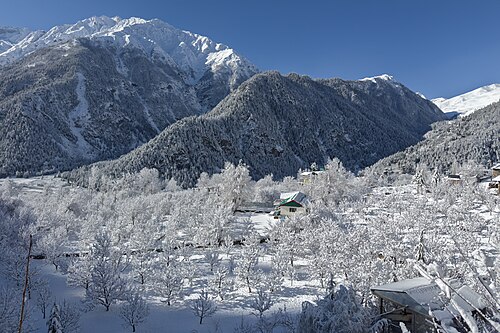
Apple orchards after snowfall in Sangla in the northern Indian state of Himachal Pradesh. India has the second largest area under apple cultivation in the world and is the fifth largest producer of the fruit globally. More than 90% of India’s apple production comes from just two of its northern Himalayan states: Jammu and Kashmir, and Himachal Pradesh. Today is Republic Day in India.
 #ImageOfTheDay
Picture of the day
Apple orchards after snowfall in Sangla in the northern Indian state of Himachal Pradesh. India has the second largest area under apple cultivation in the world and is the fifth largest producer of the fruit globally. More than 90% of India’s apple production comes from just two of its northern Himalayan states: Jammu and Kashmir, and Himachal Pradesh. Today is Republic Day in India.
Read More