gardens

Pope prays the rosary with children: ‘50 million Hail Marys rising to heaven’ #Catholic VATICAN CITY — More than 700 children from schools and parishes in Rome joined Pope Leo XIV in the Vatican Gardens on Thursday to pray the rosary for peace in the world.The Oct. 1 event marked the beginning of a week of prayer for the initiative “One Million Children Praying the Rosary,” promoted by the Catholic charity Aid to the Church in Need.The Holy Father greeted the children at the beginning. He thanked them and encouraged them to be good at home, in their families, at school, in catechism classes, and in sports, because peace also grows in this way.“I am truly happy to be with you! And you, children, tell me: Are you happy to have come? Good, that makes me happy too. Above all, because this evening we have gathered together to be with the two people who love us more than anyone else. Who are they? The Lord Jesus and his mother, Mary, who never leave us alone and who are always close to us,” Pope Leo said in his address before the rosary.
 
 An estimated more than 700 children join in praying the rosary for peace with Pope Leo XIV on Oct. 1, 2026, in the Vatican Gardens. | Credit: Daniel Ibáñez/EWTN News/Vatican Pool
 
 “We love them too, don’t we?” he added. “Shall we tell them? Let’s try. Let us repeat together: ‘I love you, Jesus. I love you, Mary.’ Yes, we love you, Jesus and Mary, and this evening we ask you for a special gift: peace for all the children of the world, especially those who live where there is war, in so many countries across the earth.”“We do this through the prayer of the holy rosary, which is a simple prayer that everyone can pray,” the pope affectionately emphasized to the children.He noted that “in a little while we will light candles, and we will reflect on Jesus in some important moments of his life … These are moments in which he gave us wonderful gifts that we must never forget, and for this we want to thank him.Calling on the children to repeat with him, he said: “Let us do that together as well, once again. Let us all say: ‘Thank you, Jesus!’ And let us ask him with confidence, all united: ‘Give us peace!’”For the pope, the children’s rosary initiative represents “50 million Hail Marys rising to heaven from every corner of the world and in every language on earth, asking for peace, and joining together like one immense rosary garland, embracing and drawing together all the continents, races, and nations of the planet.”
 
 Pope Leo XIV brings flowers to Mary at a replica of the grotto of the Sanctuary of Our Lady of Lourdes during a rosary prayed with children in the Vatican Gardens on Oct. 1, 2026. | Credit: Daniel Ibáñez/EWTN News/Vatican Pool
 
 Upon his arrival for the rosary, the pope also presented a small bouquet of flowers to Our Lady. It was a simple gesture carried out together with a child at the replica grotto of Our Lady of Lourdes in the Vatican Gardens.For the first time this year, the prayer campaign will take place over the course of an entire week, from Oct. 1–7, allowing dioceses, parishes, schools, communities, and families across different continents to participate in the prayer for peace and unity.Similar initiatives are already being prepared in other countries, such as Bolivia, Sudan, Zimbabwe, Mozambique, Sierra Leone, and many other places marked by war, poverty, or instability.The 2026 campaign is inspired by the message of Fátima: “In the end, my Immaculate Heart will triumph.”The rosary was led by the children through readings, songs, and brief reflections on countries affected by war. The Hail Mary was also recited in several languages.In this year’s invitation to participants, Cardinal Kurt Koch, international president of Aid to the Church in Need and prefect of the Dicastery for Promoting Christian Unity, recalled that Mary’s Immaculate Heart represents a life completely open to the Holy Spirit and presents Mary as a model of faith, love, and prayer.This story was first published by ACI Stampa, the Italian-language sister service of EWTN News. It has been translated and adapted by EWTN News English.

Pope prays the rosary with children: ‘50 million Hail Marys rising to heaven’ #Catholic VATICAN CITY — More than 700 children from schools and parishes in Rome joined Pope Leo XIV in the Vatican Gardens on Thursday to pray the rosary for peace in the world.The Oct. 1 event marked the beginning of a week of prayer for the initiative “One Million Children Praying the Rosary,” promoted by the Catholic charity Aid to the Church in Need.The Holy Father greeted the children at the beginning. He thanked them and encouraged them to be good at home, in their families, at school, in catechism classes, and in sports, because peace also grows in this way.“I am truly happy to be with you! And you, children, tell me: Are you happy to have come? Good, that makes me happy too. Above all, because this evening we have gathered together to be with the two people who love us more than anyone else. Who are they? The Lord Jesus and his mother, Mary, who never leave us alone and who are always close to us,” Pope Leo said in his address before the rosary. An estimated more than 700 children join in praying the rosary for peace with Pope Leo XIV on Oct. 1, 2026, in the Vatican Gardens. | Credit: Daniel Ibáñez/EWTN News/Vatican Pool “We love them too, don’t we?” he added. “Shall we tell them? Let’s try. Let us repeat together: ‘I love you, Jesus. I love you, Mary.’ Yes, we love you, Jesus and Mary, and this evening we ask you for a special gift: peace for all the children of the world, especially those who live where there is war, in so many countries across the earth.”“We do this through the prayer of the holy rosary, which is a simple prayer that everyone can pray,” the pope affectionately emphasized to the children.He noted that “in a little while we will light candles, and we will reflect on Jesus in some important moments of his life … These are moments in which he gave us wonderful gifts that we must never forget, and for this we want to thank him.Calling on the children to repeat with him, he said: “Let us do that together as well, once again. Let us all say: ‘Thank you, Jesus!’ And let us ask him with confidence, all united: ‘Give us peace!’”For the pope, the children’s rosary initiative represents “50 million Hail Marys rising to heaven from every corner of the world and in every language on earth, asking for peace, and joining together like one immense rosary garland, embracing and drawing together all the continents, races, and nations of the planet.” Pope Leo XIV brings flowers to Mary at a replica of the grotto of the Sanctuary of Our Lady of Lourdes during a rosary prayed with children in the Vatican Gardens on Oct. 1, 2026. | Credit: Daniel Ibáñez/EWTN News/Vatican Pool Upon his arrival for the rosary, the pope also presented a small bouquet of flowers to Our Lady. It was a simple gesture carried out together with a child at the replica grotto of Our Lady of Lourdes in the Vatican Gardens.For the first time this year, the prayer campaign will take place over the course of an entire week, from Oct. 1–7, allowing dioceses, parishes, schools, communities, and families across different continents to participate in the prayer for peace and unity.Similar initiatives are already being prepared in other countries, such as Bolivia, Sudan, Zimbabwe, Mozambique, Sierra Leone, and many other places marked by war, poverty, or instability.The 2026 campaign is inspired by the message of Fátima: “In the end, my Immaculate Heart will triumph.”The rosary was led by the children through readings, songs, and brief reflections on countries affected by war. The Hail Mary was also recited in several languages.In this year’s invitation to participants, Cardinal Kurt Koch, international president of Aid to the Church in Need and prefect of the Dicastery for Promoting Christian Unity, recalled that Mary’s Immaculate Heart represents a life completely open to the Holy Spirit and presents Mary as a model of faith, love, and prayer.This story was first published by ACI Stampa, the Italian-language sister service of EWTN News. It has been translated and adapted by EWTN News English.

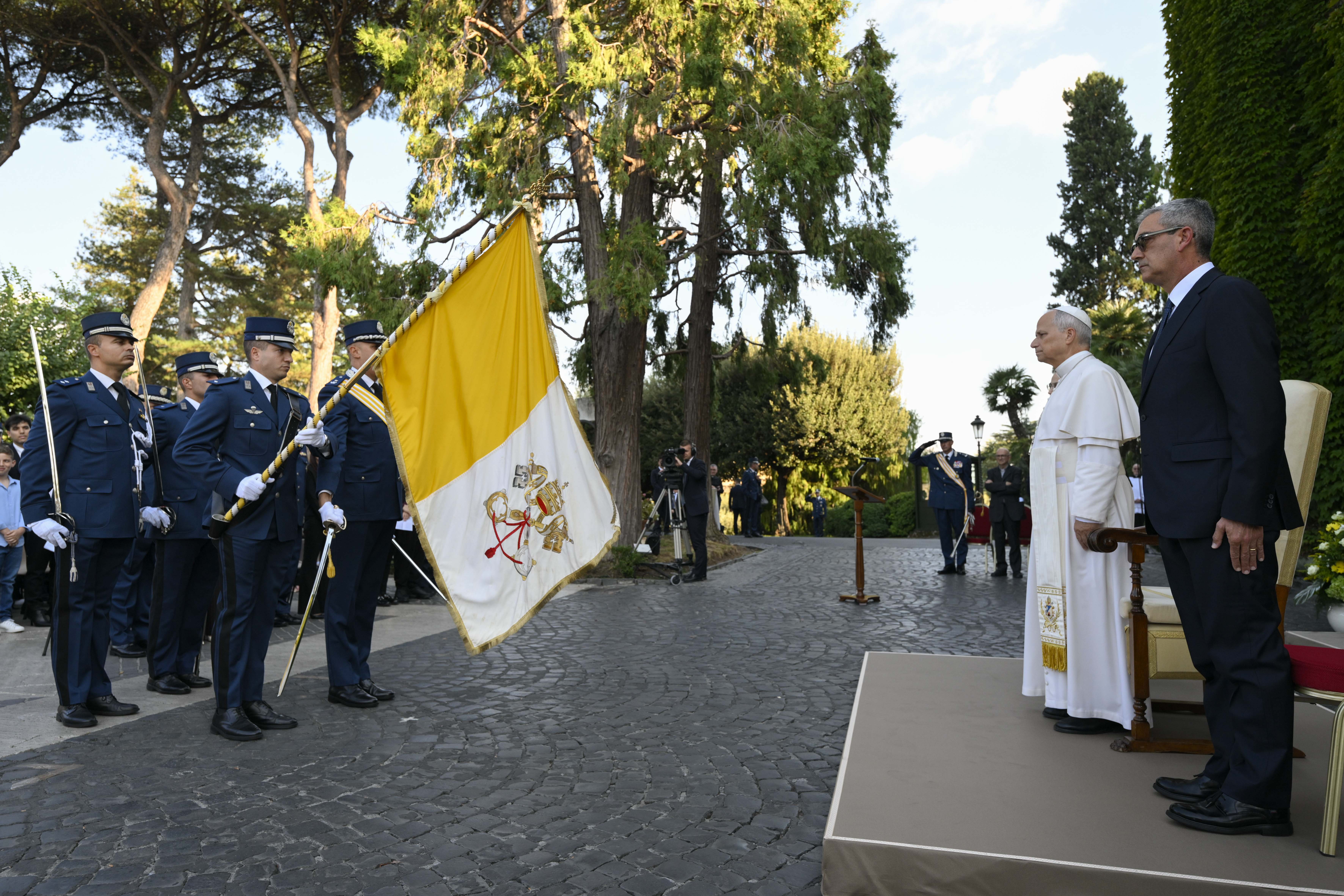
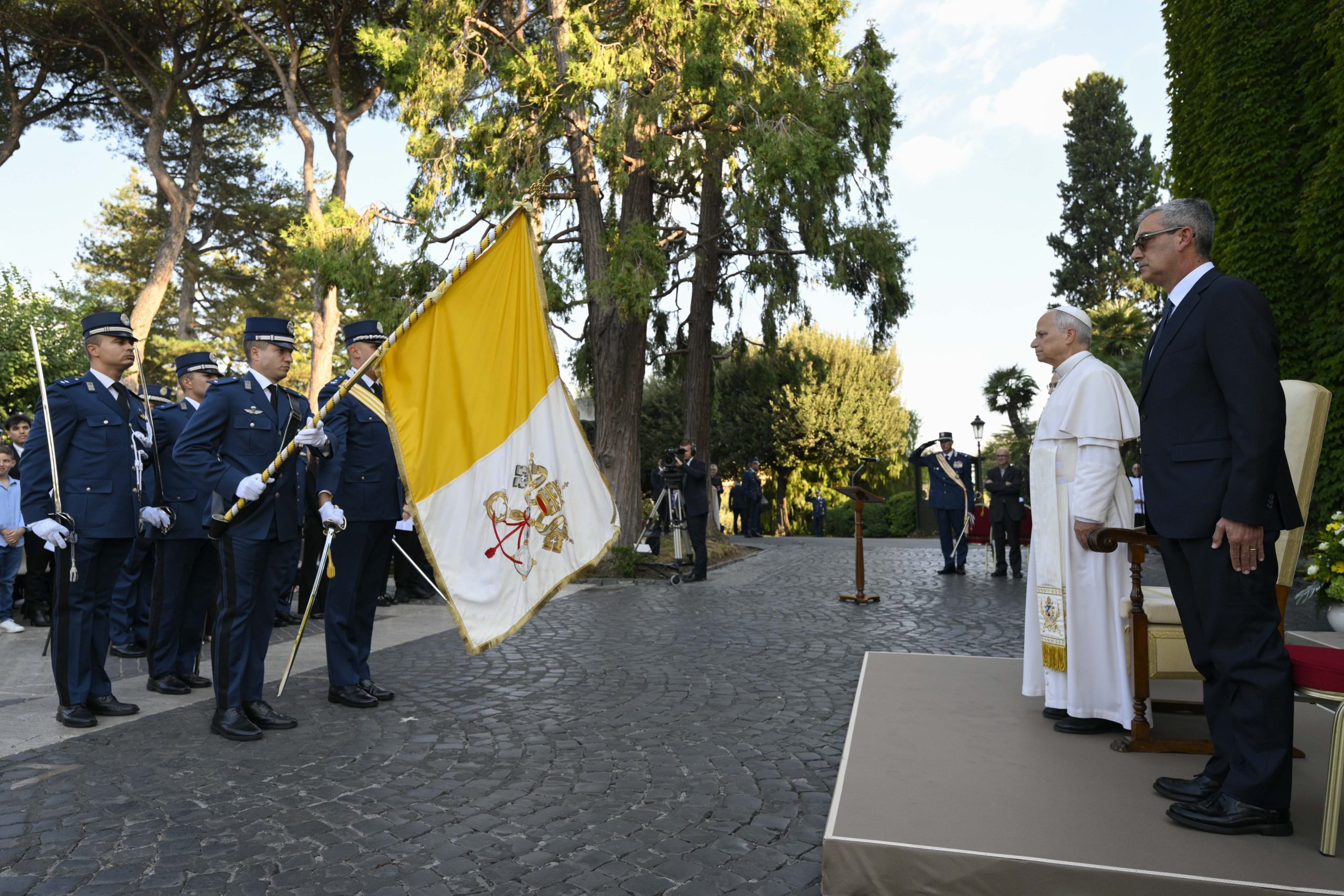
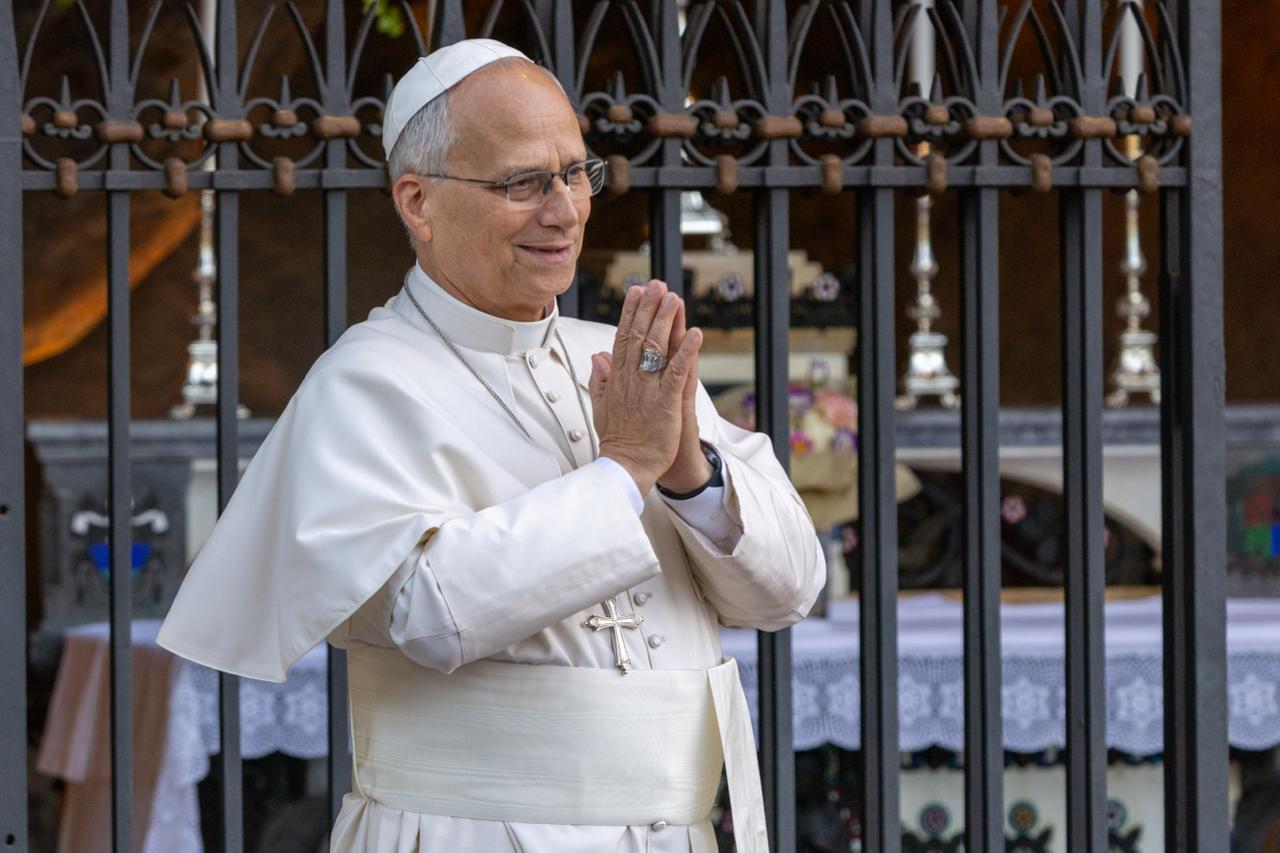
“Let us repeat together: ‘I love you, Jesus. I love you, Mary,’” the pontiff said in his remarks before the rosary in the Vatican Gardens.
Read More
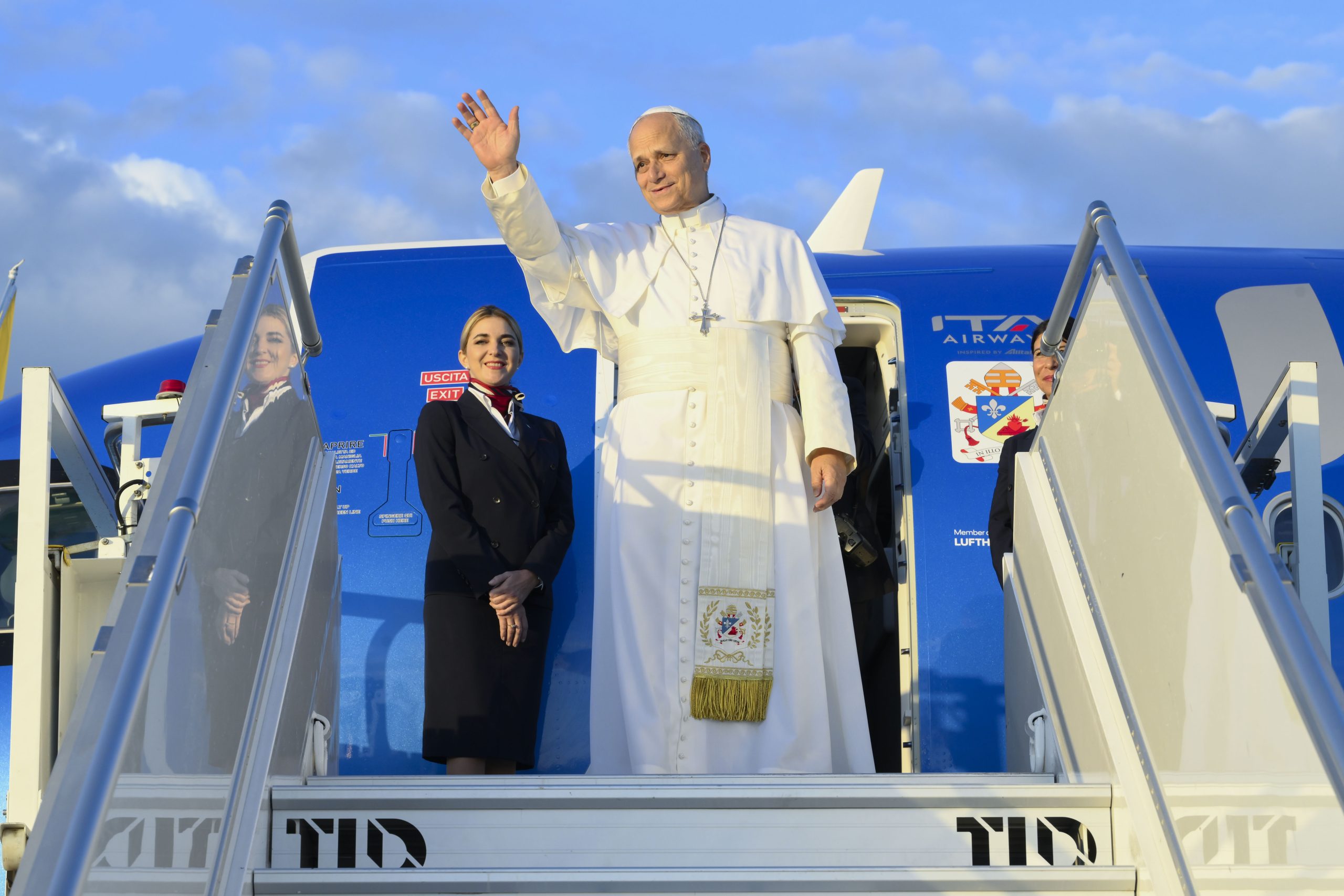
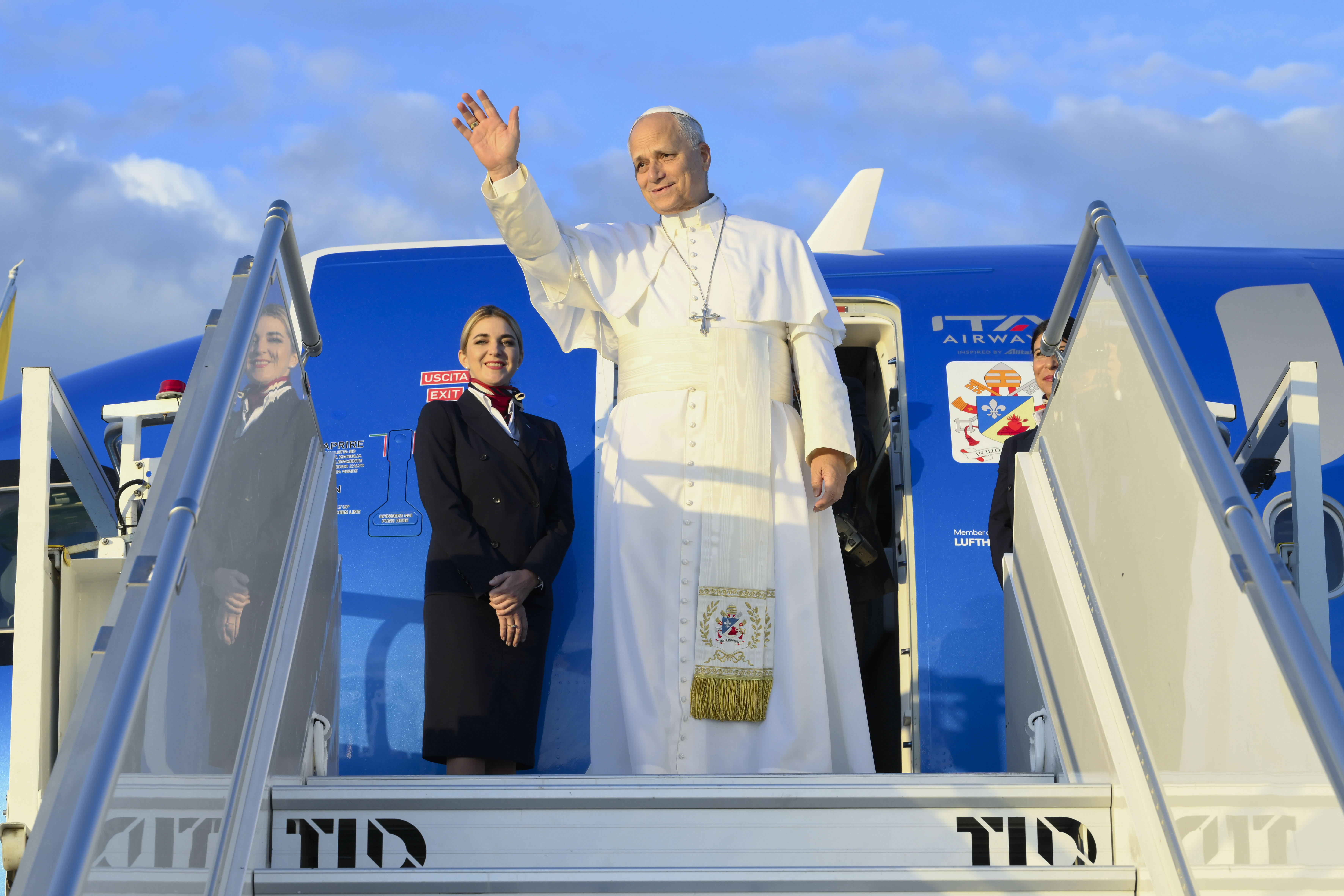
Pope Leo XIV arrives in Paris at start of 4-day visit to France #Catholic PARIS — Pope Leo XIV arrived in France on Friday for a four-day visit to the country that begins with a packed first day, with stops at UNESCO headquarters, Notre-Dame Cathedral, and the national stadium for a prayer vigil with 80,000 young people. Leo is the first pope to visit Paris since Pope Benedict XVI in 2008.Leo was welcomed at Paris Orly Airport by President Emmanuel Macron. Two local children presented flowers as the pontiff was given military honors — a formal ceremonial tribute — before entering a room of the airport with the French president for a private conversation.During the flight from Rome, the pope told reporters that he would address “a number of very important topics” during his visit. “I above all am traveling to France, as anywhere else in the world, as a follower of Jesus Christ who wants to bring peace of Christ throughout the world,” he said.The pope’s first stop in the French capital will be the Élysée Palace, the official residence of the French president, an 18th-century mansion surrounded by elaborate landscaped gardens.There, Leo will again have time to speak with Macron, before delivering the first official speech of the trip, addressed to political authorities and members of civil society, the business world, and the diplomatic corps.Among the most sensitive issues that the pope is expected to address are end-of-life questions. France legalized assisted suicide and euthanasia this summer, becoming the fifth European country to do so after Belgium, the Netherlands, Luxembourg, and Spain. After a break for lunch, the Holy Father will visit the headquarters of UNESCO — the United Nations Educational, Scientific and Cultural Organization — a specialized UN agency that preserves cultural heritage sites and promotes peace, sustainable development, and human rights.

Pope Leo XIV arrives in Paris at start of 4-day visit to France #Catholic PARIS — Pope Leo XIV arrived in France on Friday for a four-day visit to the country that begins with a packed first day, with stops at UNESCO headquarters, Notre-Dame Cathedral, and the national stadium for a prayer vigil with 80,000 young people. Leo is the first pope to visit Paris since Pope Benedict XVI in 2008.Leo was welcomed at Paris Orly Airport by President Emmanuel Macron. Two local children presented flowers as the pontiff was given military honors — a formal ceremonial tribute — before entering a room of the airport with the French president for a private conversation.During the flight from Rome, the pope told reporters that he would address “a number of very important topics” during his visit. “I above all am traveling to France, as anywhere else in the world, as a follower of Jesus Christ who wants to bring peace of Christ throughout the world,” he said.The pope’s first stop in the French capital will be the Élysée Palace, the official residence of the French president, an 18th-century mansion surrounded by elaborate landscaped gardens.There, Leo will again have time to speak with Macron, before delivering the first official speech of the trip, addressed to political authorities and members of civil society, the business world, and the diplomatic corps.Among the most sensitive issues that the pope is expected to address are end-of-life questions. France legalized assisted suicide and euthanasia this summer, becoming the fifth European country to do so after Belgium, the Netherlands, Luxembourg, and Spain. After a break for lunch, the Holy Father will visit the headquarters of UNESCO — the United Nations Educational, Scientific and Cultural Organization — a specialized UN agency that preserves cultural heritage sites and promotes peace, sustainable development, and human rights.

The pontiff is expected to proclaim Catholic social teaching to a secular country showing signs of Christian revival.
Read More
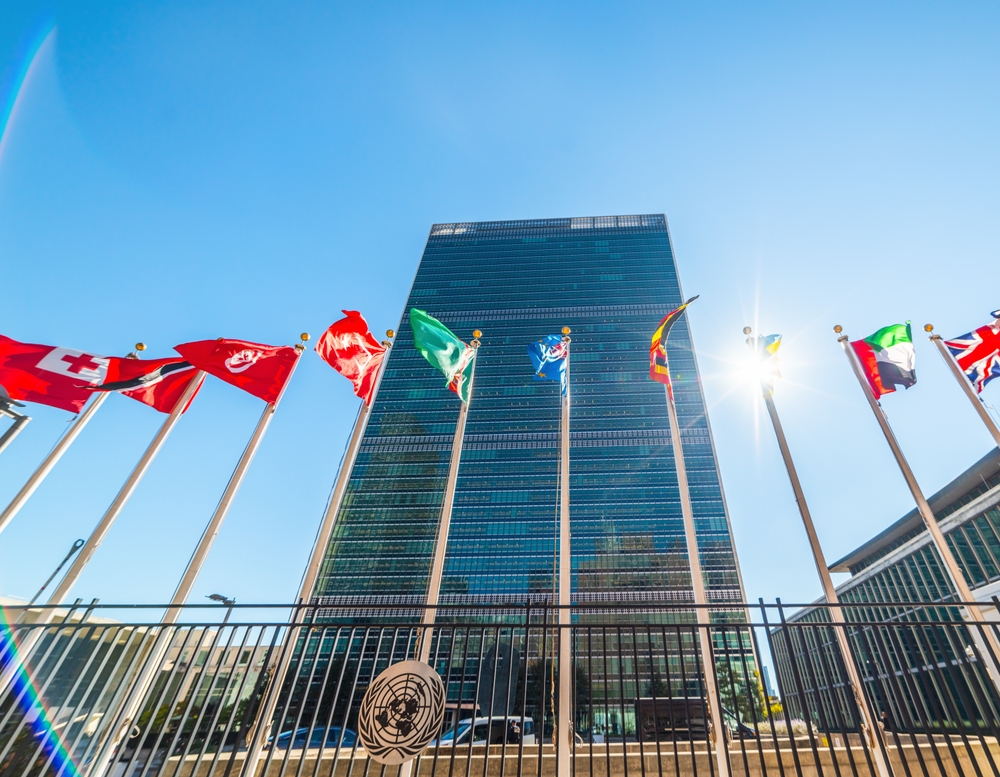
Vatican group to discuss AI, human dignity with world leaders at UN General Assembly #Catholic A Vatican-led organization is meeting with world leaders on artificial intelligence, human dignity, the common good, and other aspects of Catholic social teaching on the sidelines of the United Nations General Assembly this week.The “Borgo Dialogues,” organized by the Vatican-run Laudato Si’ Center for Higher Education, began on Sept. 20 and will continue until Sept. 23 in New York, in conjunction with the U.N. meeting.According to a news release, the gathering will focus on the question “What are we building, for whom, and who will inherit it?” The invitation-only meetings include leaders in business, finance, academia, faith, healthcare, sports, civil society, and international institutions.“The Borgo Dialogues represent an invitation to courageous leadership rooted in listening, encounter and shared responsibility,” Cardinal Fabio Baggio, director general of the Laudato Si’ Center and founder of the Borgo Dialogues, said in a statement.“At a moment when many institutions face growing fragmentation and distrust, we need spaces where leaders can engage difficult questions honestly, build trust across differences and commit themselves to actions that uphold human dignity and advance the common good,” he said.The Borgo Dialogues initiative began in June with a meeting at the Vatican. It is inspired by papal teachings contained in Pope Francis’ encyclicals Laudato Si’ and Fratelli Tutti and Pope Leo XIV’s encyclical Magnifica Humanitas.According to the news release, the main focus of the talks is AI and work transformation, healthcare and human dignity, sustainable development, systems-level change across industries, and the evolving responsibilities of leaders navigating an increasingly interconnected world.The news release states there is a shared commitment to designing technologies, institutions, and systems that recognize the inherent dignity of each person, with a focus on those who are most vulnerable.“The world’s most urgent challenges require relationships that rise above institutions and ideologies,” said Father Daniel G. Groody, CSC, a member of the Laudato Si’ Center’s General Council.“The Borgo Dialogues create a distinctive environment where intellectual rigor, moral purpose and practical leadership come together, helping diverse leaders transform reflection into responsibility and ideas into action,” said Groody, who is also the vice president and associate provost for undergraduate education at the University of Notre Dame.The inaugural Borgo Dialogues were held in the Pontifical Gardens of Castel Gandolfo, Vatican State, from June 17–19. It included more than 80 participants. The Laudato Si’ Center is expected to present proposals to the World Economic Forum based on the discussions.The 81st U.N. General Assembly began on Sept. 8 in New York. General debate meetings begin on Sept. 22 and end on Sept. 28.

Vatican group to discuss AI, human dignity with world leaders at UN General Assembly #Catholic A Vatican-led organization is meeting with world leaders on artificial intelligence, human dignity, the common good, and other aspects of Catholic social teaching on the sidelines of the United Nations General Assembly this week.The “Borgo Dialogues,” organized by the Vatican-run Laudato Si’ Center for Higher Education, began on Sept. 20 and will continue until Sept. 23 in New York, in conjunction with the U.N. meeting.According to a news release, the gathering will focus on the question “What are we building, for whom, and who will inherit it?” The invitation-only meetings include leaders in business, finance, academia, faith, healthcare, sports, civil society, and international institutions.“The Borgo Dialogues represent an invitation to courageous leadership rooted in listening, encounter and shared responsibility,” Cardinal Fabio Baggio, director general of the Laudato Si’ Center and founder of the Borgo Dialogues, said in a statement.“At a moment when many institutions face growing fragmentation and distrust, we need spaces where leaders can engage difficult questions honestly, build trust across differences and commit themselves to actions that uphold human dignity and advance the common good,” he said.The Borgo Dialogues initiative began in June with a meeting at the Vatican. It is inspired by papal teachings contained in Pope Francis’ encyclicals Laudato Si’ and Fratelli Tutti and Pope Leo XIV’s encyclical Magnifica Humanitas.According to the news release, the main focus of the talks is AI and work transformation, healthcare and human dignity, sustainable development, systems-level change across industries, and the evolving responsibilities of leaders navigating an increasingly interconnected world.The news release states there is a shared commitment to designing technologies, institutions, and systems that recognize the inherent dignity of each person, with a focus on those who are most vulnerable.“The world’s most urgent challenges require relationships that rise above institutions and ideologies,” said Father Daniel G. Groody, CSC, a member of the Laudato Si’ Center’s General Council.“The Borgo Dialogues create a distinctive environment where intellectual rigor, moral purpose and practical leadership come together, helping diverse leaders transform reflection into responsibility and ideas into action,” said Groody, who is also the vice president and associate provost for undergraduate education at the University of Notre Dame.The inaugural Borgo Dialogues were held in the Pontifical Gardens of Castel Gandolfo, Vatican State, from June 17–19. It included more than 80 participants. The Laudato Si’ Center is expected to present proposals to the World Economic Forum based on the discussions.The 81st U.N. General Assembly began on Sept. 8 in New York. General debate meetings begin on Sept. 22 and end on Sept. 28.

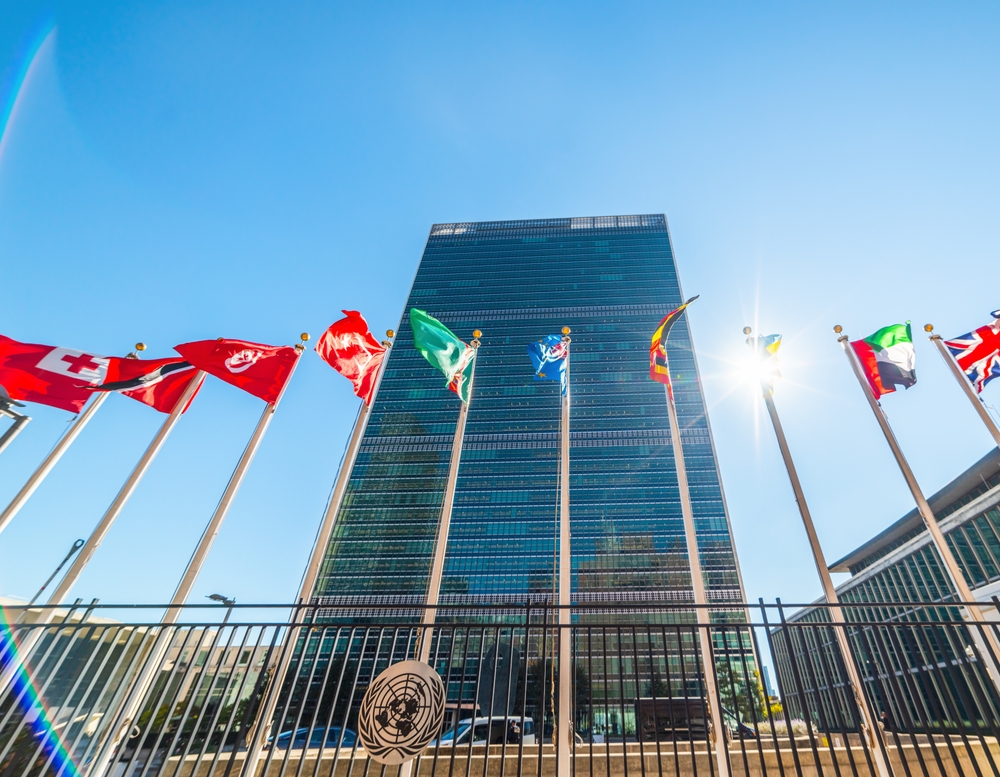
The discussion focuses on the question “What are we building, for whom, and who will inherit it?”
Read More
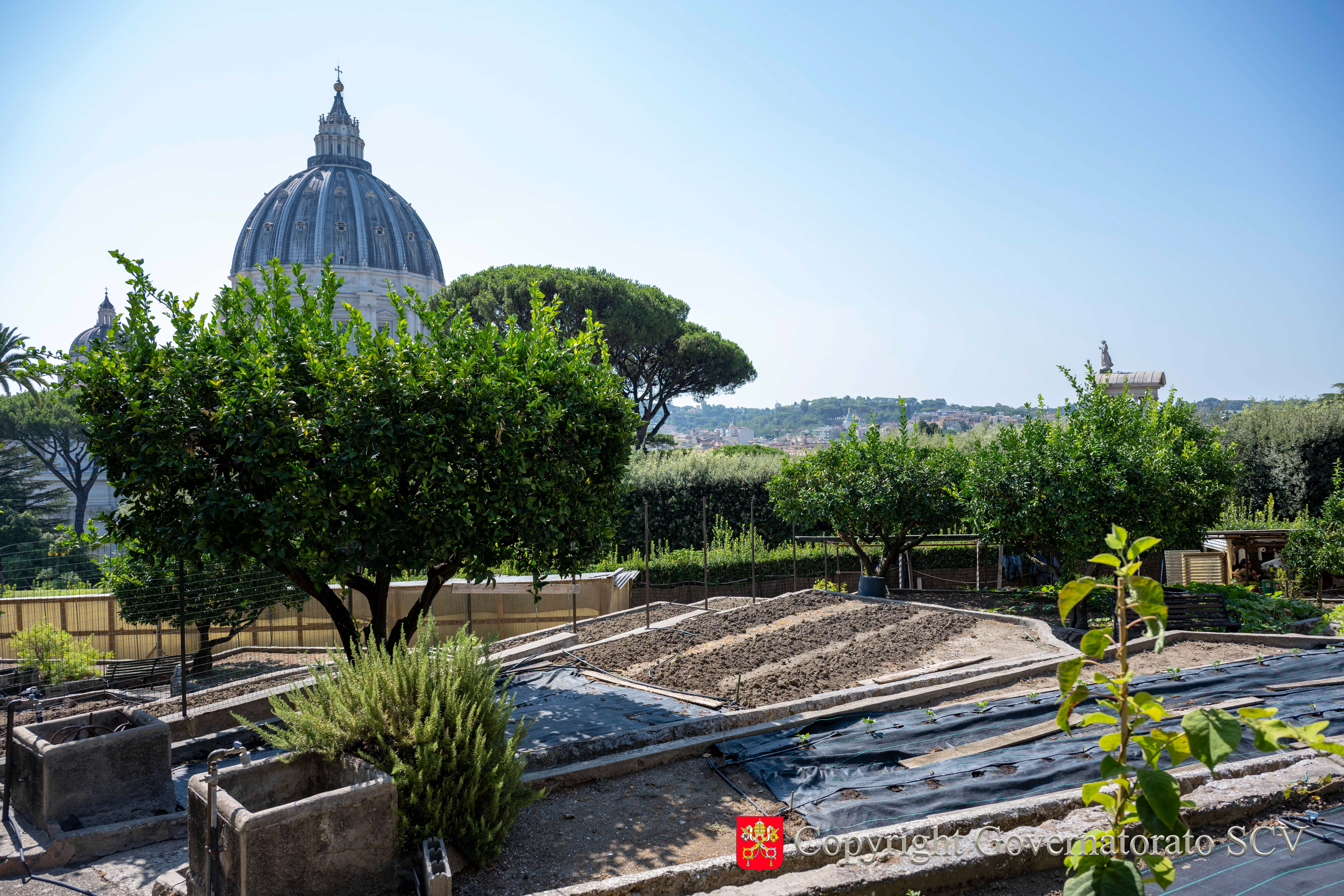
Vatican vegetable garden goes 100% organic #Catholic A vegetable garden and orchard inside the Vatican walls, which historically provided food for the pope’s household, is now cultivated using exclusively organic farming techniques.The private garden covers almost a tenth of an acre of cultivable land inside the Mater Ecclesiae Monastery property, where Pope Benedict XVI lived during his retirement and now reside cloistered Benedictine nuns from the Abbey of St. Scholastica in Victoria, Argentina.Sometimes known as “the pope’s garden,” the vegetable plot “has always been a defining feature of the Vatican Gardens because, in fact, the Vatican Gardens were originally created primarily for that purpose — to provide sustenance for the [Apostolic] Palace,” Stefano Giampaolo, a forestry expert and head of the Gardens and Environment Service of the Vatican, told EWTN News.Giampaolo explained that now the plot is more accurately understood as the vegetable garden of the Vatican Gardens — an area that covers roughly half of Vatican City at 57 acres.
 
 Mater Ecclesiae Monastery, built inside Vatican City in the 1990s to house nuns who support the ministry of the pope through prayer, has an adjoining vegetable garden and orchard. | Credit: Hannah Brockhaus/EWTN News
 
 The Benedictine nuns at Mater Ecclesiae Monastery, who pray for the pope, eat the fruit and vegetables grown in the garden and use them to make jams and other food preserves. The excess produce is given to a Vatican soup kitchen run by the Missionaries of Charity.The move to biological farming techniques has been underway for several years, partly in response to Pope Francis’ 2015 encyclical Laudato Si’, Giampaolo said.The challenges of organicAccording to Gilberto Bianchi, the gardener responsible for the orchard and vegetable patch since 2008, the Vatican has a “desire to respect nature” in how it cares for the plants and trees on its land.But it’s far from easy.“Clearly, running a completely organic vegetable garden presents challenges, partly because insects are aggressive, and we use natural predators in the soil to control them,” Bianchi said. “No chemical fertilizers or insecticides are used.”He added that soil drainage and water conservation are also challenges.“This type of soil drains very well, so to conserve water, we add coconut fiber to retain moisture. And it’s watered with a drip irrigation system specifically to target the plants and avoid wasting water,” he said.Part of an organic agriculture also means respecting the seasons, he said. “Right now, the winter crops are being planted, while the summer crops are being harvested.”
 
 The fresh produce grown in the vegetable garden and orchard in Vatican City feeds the Benedictine nuns living in the Mater Ecclesiae Monastery and supports the nearby Missionaries of Charity-run soup kitchen. | Credit: Governorate of Vatican City State
 
 The end-of-summer harvest includes tomatoes, eggplants, green beans, zucchini, cucumbers, and peppers, while the fall and winter crop has broccoli, spinach, lettuce, and pumpkins.According to Vatican Media, the garden also includes garlic, basil, and a Peruvian variety of chili peppers known for its intensity. Kiwi plants were also added recently at the request of the Argentinian nuns.Next to the garden is a small orchard of around 15 citrus trees, some of which are 150 years old.“At this time, we’re planting savoy cabbage,” Bianchi said. “In short, whatever is in season. … So whatever is planted is because nature dictates it at that moment. The plants are grown from seed. We don’t use lab-grown plants.”A historic collection of gardensBianchi, who has worked for more than three decades in the Vatican Gardens, “is the one with the most expertise in this field, and he is now passing that knowledge on to a new gardener,” Giampaolo said.The expert gardener is part of a team of around 35 gardeners and administrators who oversee the Vatican’s green spaces and provide the flower arrangements for papal ceremonies.
 
 Stefano Giampaolo, left, head of the Gardens and Environment Service of Vatican City, and expert gardener Gilberto Bianchi, right, the main caretaker of the orchard and vegetable garden commonly known as “the pope’s garden,” share their expertise with EWTN News in the Vatican Gardens on Sept. 9, 2026. | Credit: Hannah Brockhaus/EWTN News
 
 “People expect to see a single garden, but in reality, as the name suggests, they are the Vatican Gardens — a collection of gardens,” Giampaolo said.The Gardens date to the mid-13th century, when Pope Nicolas III moved the papal residence from the Lateran Palace to the Vatican, had the city state’s walls built, and ordered the creation of a lawn, orchard, and “viridarium” — a Roman-style garden with flowerbeds and a fountain.Today, Giampaolo said, “there are countless different species, both trees and flowers. This is because, over time, the gardens have been enriched by donations and the search for specific botanical material, to the point of becoming a true botanical garden.”“Visitors are often struck by the diversity of the spaces — so many different gardens contained within this small area.”Ultimately, he said, the gardeners hope to one day eliminate all synthetic fertilizers and pesticides from their care of the entire Vatican territory.“It’s a process — the transformation of all the Gardens into organic ones,” he said.

Vatican vegetable garden goes 100% organic #Catholic A vegetable garden and orchard inside the Vatican walls, which historically provided food for the pope’s household, is now cultivated using exclusively organic farming techniques.The private garden covers almost a tenth of an acre of cultivable land inside the Mater Ecclesiae Monastery property, where Pope Benedict XVI lived during his retirement and now reside cloistered Benedictine nuns from the Abbey of St. Scholastica in Victoria, Argentina.Sometimes known as “the pope’s garden,” the vegetable plot “has always been a defining feature of the Vatican Gardens because, in fact, the Vatican Gardens were originally created primarily for that purpose — to provide sustenance for the [Apostolic] Palace,” Stefano Giampaolo, a forestry expert and head of the Gardens and Environment Service of the Vatican, told EWTN News.Giampaolo explained that now the plot is more accurately understood as the vegetable garden of the Vatican Gardens — an area that covers roughly half of Vatican City at 57 acres. Mater Ecclesiae Monastery, built inside Vatican City in the 1990s to house nuns who support the ministry of the pope through prayer, has an adjoining vegetable garden and orchard. | Credit: Hannah Brockhaus/EWTN News The Benedictine nuns at Mater Ecclesiae Monastery, who pray for the pope, eat the fruit and vegetables grown in the garden and use them to make jams and other food preserves. The excess produce is given to a Vatican soup kitchen run by the Missionaries of Charity.The move to biological farming techniques has been underway for several years, partly in response to Pope Francis’ 2015 encyclical Laudato Si’, Giampaolo said.The challenges of organicAccording to Gilberto Bianchi, the gardener responsible for the orchard and vegetable patch since 2008, the Vatican has a “desire to respect nature” in how it cares for the plants and trees on its land.But it’s far from easy.“Clearly, running a completely organic vegetable garden presents challenges, partly because insects are aggressive, and we use natural predators in the soil to control them,” Bianchi said. “No chemical fertilizers or insecticides are used.”He added that soil drainage and water conservation are also challenges.“This type of soil drains very well, so to conserve water, we add coconut fiber to retain moisture. And it’s watered with a drip irrigation system specifically to target the plants and avoid wasting water,” he said.Part of an organic agriculture also means respecting the seasons, he said. “Right now, the winter crops are being planted, while the summer crops are being harvested.” The fresh produce grown in the vegetable garden and orchard in Vatican City feeds the Benedictine nuns living in the Mater Ecclesiae Monastery and supports the nearby Missionaries of Charity-run soup kitchen. | Credit: Governorate of Vatican City State The end-of-summer harvest includes tomatoes, eggplants, green beans, zucchini, cucumbers, and peppers, while the fall and winter crop has broccoli, spinach, lettuce, and pumpkins.According to Vatican Media, the garden also includes garlic, basil, and a Peruvian variety of chili peppers known for its intensity. Kiwi plants were also added recently at the request of the Argentinian nuns.Next to the garden is a small orchard of around 15 citrus trees, some of which are 150 years old.“At this time, we’re planting savoy cabbage,” Bianchi said. “In short, whatever is in season. … So whatever is planted is because nature dictates it at that moment. The plants are grown from seed. We don’t use lab-grown plants.”A historic collection of gardensBianchi, who has worked for more than three decades in the Vatican Gardens, “is the one with the most expertise in this field, and he is now passing that knowledge on to a new gardener,” Giampaolo said.The expert gardener is part of a team of around 35 gardeners and administrators who oversee the Vatican’s green spaces and provide the flower arrangements for papal ceremonies. Stefano Giampaolo, left, head of the Gardens and Environment Service of Vatican City, and expert gardener Gilberto Bianchi, right, the main caretaker of the orchard and vegetable garden commonly known as “the pope’s garden,” share their expertise with EWTN News in the Vatican Gardens on Sept. 9, 2026. | Credit: Hannah Brockhaus/EWTN News “People expect to see a single garden, but in reality, as the name suggests, they are the Vatican Gardens — a collection of gardens,” Giampaolo said.The Gardens date to the mid-13th century, when Pope Nicolas III moved the papal residence from the Lateran Palace to the Vatican, had the city state’s walls built, and ordered the creation of a lawn, orchard, and “viridarium” — a Roman-style garden with flowerbeds and a fountain.Today, Giampaolo said, “there are countless different species, both trees and flowers. This is because, over time, the gardens have been enriched by donations and the search for specific botanical material, to the point of becoming a true botanical garden.”“Visitors are often struck by the diversity of the spaces — so many different gardens contained within this small area.”Ultimately, he said, the gardeners hope to one day eliminate all synthetic fertilizers and pesticides from their care of the entire Vatican territory.“It’s a process — the transformation of all the Gardens into organic ones,” he said.

The move to biological farming techniques has been underway for several years in response to Pope Francis’ 2015 encyclical Laudato Si’.
Read More
Pope Leo: Take time out of the daily bustle to ‘listen to the melodious voice’ of creation #Catholic Pope Leo XIV invited people to take time out from the daily bustle of their lives to listen to “the melodious voice of creation,” through which God speaks, as the World Day of Prayer for the Care of Creation is observed on Sept. 1.TweetThe Holy Father noted that this day also marks the beginning of the “Season of Creation,” a five-week period dedicated “to prayer and commitment to caring for our ‘common home’” that extends until Oct. 4, the feast of St. Francis of Assisi, coinciding with the 800th anniversary of his death.“On this day, therefore, and in the weeks ahead, let us set aside a few moments to pause from the frenzy of our daily lives in order to savor the profound harmony of which we ourselves are a part,” the pope encouraged during the Mass celebrated in the Madonnina Garden of the Borgo Laudato Si’ within the pontifical gardens of Castel Gandolfo.
 
 Pope Leo XIV celebrates Mass for the World Day of Prayer for the Care of Creation on Sept. 1, 2026, in the Madonnina Garden of the Borgo Laudato Si’ within the pontifical gardens of Castel Gandolfo. | Credit: Vatican Media
 
 “Let us place in ‘silent mode’ the many noises generated by human activity, so that we may hear the melodious voice of creation, through which God, the author of all things, speaks to us,” the pontiff encouraged.Referring to his message issued for this 11th World Day of Prayer for the Care of Creation, the pope highlighted that “this contemplative exercise” is a first step toward an “authentic ecological conversion, where the effects of our encounter with Jesus Christ become evident in our relationship with the world around us.”In his homily, the pope also highlighted that the readings for this Mass — Psalm 18, the passage from the Book of Wisdom (Wis 13:1–9), and the Gospel of Matthew (Mt 6:24–34) — recall the grandeur of creation and the “Creator of so many wonders,” such as air and fire.
 
 Pope Leo XIV prayers during the Mass for the World Day of Prayer for the Care of Creation on Sept. 1, 2026, in the Madonnina Garden of the Borgo Laudato Si’ within the pontifical gardens of Castel Gandolfo. | Credit: Vatican Media
 
 He noted that they allow us to renew the idea that “if the Lord does not fail to bestow such splendid beauty upon plants and animals and provide for all their needs, how much more attentive will he be to the needs of his beloved sons and daughters!”The Holy Father also noted that “from contemplating creation and encountering its Creator, there arises an awareness of our particular place within God’s wondrous plan, and of the responsibility that we bear both personally and collectively for preserving the original harmony. Thus, as we become conscious of our shortcomings and failures, we can renew our commitment to restoring the relationships among all creatures according to the will of their Creator.”“It is not yet too late, and the Season of Creation calls us to a profound conversion,” he emphasized.
 
 Pope Leo XIV prays at the Mass for the World Day of Prayer for the Care of Creation on Sept. 1, 2026, in the Madonnina Garden of the Borgo Laudato Si’ within the pontifical gardens of Castel Gandolfo. | Credit: Vatican Media
 
 After explaining that Pope Francis drew inspiration from St. Francis of Assisi in writing his 2015 encyclical Laudato Si’, which addresses the care of our common home, Leo XIV quoted the “Poverello of Assisi’s” praises to God for the moon, stars, wind, earth, fire, and water, among other elements.“With St. Francis, let us renew our commitment to living and promoting that universal fraternity which is inseparably bound to the task of caring for creation,” the pope encouraged.This story was first published by ACI Prensa, the Spanish-language sister service of EWTN News. It has been translated and adapted by EWTN News English.

Pope Leo: Take time out of the daily bustle to ‘listen to the melodious voice’ of creation #Catholic Pope Leo XIV invited people to take time out from the daily bustle of their lives to listen to “the melodious voice of creation,” through which God speaks, as the World Day of Prayer for the Care of Creation is observed on Sept. 1.TweetThe Holy Father noted that this day also marks the beginning of the “Season of Creation,” a five-week period dedicated “to prayer and commitment to caring for our ‘common home’” that extends until Oct. 4, the feast of St. Francis of Assisi, coinciding with the 800th anniversary of his death.“On this day, therefore, and in the weeks ahead, let us set aside a few moments to pause from the frenzy of our daily lives in order to savor the profound harmony of which we ourselves are a part,” the pope encouraged during the Mass celebrated in the Madonnina Garden of the Borgo Laudato Si’ within the pontifical gardens of Castel Gandolfo. Pope Leo XIV celebrates Mass for the World Day of Prayer for the Care of Creation on Sept. 1, 2026, in the Madonnina Garden of the Borgo Laudato Si’ within the pontifical gardens of Castel Gandolfo. | Credit: Vatican Media “Let us place in ‘silent mode’ the many noises generated by human activity, so that we may hear the melodious voice of creation, through which God, the author of all things, speaks to us,” the pontiff encouraged.Referring to his message issued for this 11th World Day of Prayer for the Care of Creation, the pope highlighted that “this contemplative exercise” is a first step toward an “authentic ecological conversion, where the effects of our encounter with Jesus Christ become evident in our relationship with the world around us.”In his homily, the pope also highlighted that the readings for this Mass — Psalm 18, the passage from the Book of Wisdom (Wis 13:1–9), and the Gospel of Matthew (Mt 6:24–34) — recall the grandeur of creation and the “Creator of so many wonders,” such as air and fire. Pope Leo XIV prayers during the Mass for the World Day of Prayer for the Care of Creation on Sept. 1, 2026, in the Madonnina Garden of the Borgo Laudato Si’ within the pontifical gardens of Castel Gandolfo. | Credit: Vatican Media He noted that they allow us to renew the idea that “if the Lord does not fail to bestow such splendid beauty upon plants and animals and provide for all their needs, how much more attentive will he be to the needs of his beloved sons and daughters!”The Holy Father also noted that “from contemplating creation and encountering its Creator, there arises an awareness of our particular place within God’s wondrous plan, and of the responsibility that we bear both personally and collectively for preserving the original harmony. Thus, as we become conscious of our shortcomings and failures, we can renew our commitment to restoring the relationships among all creatures according to the will of their Creator.”“It is not yet too late, and the Season of Creation calls us to a profound conversion,” he emphasized. Pope Leo XIV prays at the Mass for the World Day of Prayer for the Care of Creation on Sept. 1, 2026, in the Madonnina Garden of the Borgo Laudato Si’ within the pontifical gardens of Castel Gandolfo. | Credit: Vatican Media After explaining that Pope Francis drew inspiration from St. Francis of Assisi in writing his 2015 encyclical Laudato Si’, which addresses the care of our common home, Leo XIV quoted the “Poverello of Assisi’s” praises to God for the moon, stars, wind, earth, fire, and water, among other elements.“With St. Francis, let us renew our commitment to living and promoting that universal fraternity which is inseparably bound to the task of caring for creation,” the pope encouraged.This story was first published by ACI Prensa, the Spanish-language sister service of EWTN News. It has been translated and adapted by EWTN News English.

The Holy Father encouraged silent contemplation of the wonders and harmony of the created world, which can lead to authentic ecological conversion and awareness of our responsibility for creation.

Read More