guardian

Revival of Latin Mass spreads among Vietnamese Catholic youth #Catholic The Latin Mass and traditional Vietnamese prayers and catechetical texts written by missionaries prior to the Second Vatican Council are growing in popularity among young Vietnamese Catholics.“Few Catholic communities in Southeast Asia still possess such a rich heritage,” Joseph Christopher Nguyen Thien Tuan Hoang, the leader of a Latin Mass community in Vietnam, said in an Aug. 25 UCA News report.While there is no established parish dedicated to the Latin Mass according to the report, traditional communities are able to attend the liturgy when approval is granted and with the help of foreign visiting priests.“Our biggest challenge is not hostility, but misunderstanding,” Hoang said. “If more Church leaders understood why some young Catholics are drawn to the older liturgy, I believe more people would have the opportunity to experience this part of the Churchʼs tradition.”From Gaza to Taybeh, priests call for living Christian presence in Holy LandFather Gabriel Romanelli of Holy Family Parish in Gaza City discussed the ongoing humanitarian crisis in Gaza during a video appearance at the Rimini Meeting, a signature event hosted by the Catholic movement Communion and Liberation.Romanelli described Gaza as a devastated territory where water, electricity, and basic necessities remain scarce. The priest said his decision to stay was rooted in pastoral duty: the parish could not abandon children, people with disabilities, or struggling families.ACI MENA, the Arabic-language sister service of EWTN News, reported Aug. 26 that Gaza’s Christian community now numbers 541 Catholics and Orthodox, and 60 members have died since the war began.Father Francesco Ielpo, custos of the Holy Land, also spoke at the event, turning attention to the attacks facing the Christian town of Taybeh and called for concrete protection of fundamental rights. He also encouraged pilgrims to return, noting that their presence supports local Christians and strengthens their calling to care for the holy sites.10 Catholic dioceses in the Philippines call for end to mining agreementBishops representing 10 Catholic dioceses in the Philippines have issued a joint pastoral statement addressed to President Ferdinand Marcos Jr. and Environment Secretary Juan Miguel T. Cuna calling for an end to mining in the island of Sibuyan.The letter, titled “Let Sibuyan Live: A Joint Call to Initiate the Cancellation of APMC’s Mining Agreement,” urges political leaders to carry out a comprehensive review of a mining agreement with Altai Philippines Mining Corp (APMC) in Sibuyan to ensure compliance with environmental laws, according to an Aug. 24 report from Inquirer.net. The bishops expressed concern over the mining agreement’s threats to the island’s mountains, watersheds, rivers, coral reefs, and species unique to the island.Recently appointed apostolic nuncio to Germany makes first visitThe recently appointed apostolic nuncio to Germany, Archbishop Hubertus van Megen, completed his inaugural visit to the headquarters of the German Bishops' Conference (DBK) in Bonn this week, CNA Deutsch, the German-language sister service of EWTN News, reported Aug. 28. During the meeting, van Megen presented his official assignment letter as nuncio to the DBK chairman signed by Vatican Secretary of State Cardinal Pietro Parolin. "It was the first visit of an apostolic nuncio to the Secretariat of the German Bishops' Conference in more than 13 years,” the DBK noted in its announcement on social media. Van Megen has served as nuncio to Kenya and South Sudan and held various positions within United Nations institutions.UK member of Parliament calls for reforms before considering assisted suicideMember of Parliament Zubir Ahmed, a former health minister in the British Labour Party and National Health Service doctor, has backed calls from Prime Minister Andy Burnham, a Catholic, to carry out health reforms before considering legislation on assisted suicide.“What kind of society are we building if, before we’ve fixed the systems designed to care for people, we introduce a system designed to help them die?” Ahmed asked in an Aug. 25 op-ed in The Guardian. “As a former health minister who has seen the system from the inside, I am able to say it is not ready or equipped to answer this question.” Ahmed’s remarks come after the prime minister said in July that debates on assisted suicide should be delayed until the country’s palliative and social care systems have been reformed.Syria’s Catholic schools seek to remain both strong and compassionateWith another school year approaching, Syria’s Christian schools are struggling to keep tuition affordable while covering salaries, taxes, electricity, books, and other rising expenses.Father Fadi Najjar, secretary-general of Catholic educational institutions in Syria, said no child should be forced out because a family cannot pay, ACI MENA reported Aug. 27. At the same time, he cautioned that schools cannot fulfill their educational mission if they are treated solely as charitable institutions. Najjar appealed to churches and aid organizations to support families in genuine need and help protect the future of Christian education in Syria.Catholic priest in Ghana suspended for ‘abandoning’ pastoral ministryGhana’s Diocese of Konongo-Mampong has imposed an indefinite canonical suspension on a priest of the diocese for taking a leave of absence and “abandoning his pastoral ministry” without legitimate permission.Bishop John Opoku-Agyemang announced the suspension of Father Samuel Adapore on Aug. 24, ACI Africa, the sister service of EWTN News in Africa, reported. The priest has been barred from administering any of the sacraments publicly, including the celebration of Mass, or officiating any other liturgical services. The bishop said he made the decision “with a heavy heart but a great sense of duty to Holy Mother Church” to suspend the priest, who he noted had left his parish without telling anyone where he was going, including immediate family members.Sierra Leonean priest cautions religious against shunning help for mental health strugglesThe president of the Regional Union of Priests of West Africa has told members of the Institutes of Consecrated Life and Societies of Apostolic Life not to be ashamed of seeking psychological support, stressing that “mental-health struggles do not cancel their vocation,” ACI Africa reported Aug. 25.“Our priests and religious spend their lives caring for others. We must also care for them. They need trusted friends, safe spaces for honest conversation, regular medical and psychological support, sufficient rest, and communities that listen without judgment,” Father Peter Konteh said following the resignation of Bishop Karl-Heinz Wiesemann of German’s Speyer Diocese over mental health struggles.Christian city of Qamishli, Syria, turns 100The city of Qamishli marked its centennial with a Christian community far smaller than the one that helped build the northeastern Syrian city.Founded in 1926 after Christians fled Ottoman-era massacres, the city once had a population that was nearly 90% Christian, ACI MENA reported Aug. 25. Father Samir Kanoun, priest of the church of St. Yacoub Al-Nusaibini in Qamishli, said decades of migration, intensified after the Syrian crisis began in 2011, have reduced that share to about 20%, leaving roughly 2,000 Christian families. Despite the decline, Qamishli retains a rich mix of Syriac, Armenian, Chaldean, Assyrian, and Protestant churches. Their cooperation grew stronger during the war through shared prayer, security coordination, and charitable work. Kanoun remains hopeful, pointing to the city’s active young Christians and the Church’s efforts to preserve their faith, heritage, and sense of belonging to Syria.

Revival of Latin Mass spreads among Vietnamese Catholic youth #Catholic The Latin Mass and traditional Vietnamese prayers and catechetical texts written by missionaries prior to the Second Vatican Council are growing in popularity among young Vietnamese Catholics.“Few Catholic communities in Southeast Asia still possess such a rich heritage,” Joseph Christopher Nguyen Thien Tuan Hoang, the leader of a Latin Mass community in Vietnam, said in an Aug. 25 UCA News report.While there is no established parish dedicated to the Latin Mass according to the report, traditional communities are able to attend the liturgy when approval is granted and with the help of foreign visiting priests.“Our biggest challenge is not hostility, but misunderstanding,” Hoang said. “If more Church leaders understood why some young Catholics are drawn to the older liturgy, I believe more people would have the opportunity to experience this part of the Churchʼs tradition.”From Gaza to Taybeh, priests call for living Christian presence in Holy LandFather Gabriel Romanelli of Holy Family Parish in Gaza City discussed the ongoing humanitarian crisis in Gaza during a video appearance at the Rimini Meeting, a signature event hosted by the Catholic movement Communion and Liberation.Romanelli described Gaza as a devastated territory where water, electricity, and basic necessities remain scarce. The priest said his decision to stay was rooted in pastoral duty: the parish could not abandon children, people with disabilities, or struggling families.ACI MENA, the Arabic-language sister service of EWTN News, reported Aug. 26 that Gaza’s Christian community now numbers 541 Catholics and Orthodox, and 60 members have died since the war began.Father Francesco Ielpo, custos of the Holy Land, also spoke at the event, turning attention to the attacks facing the Christian town of Taybeh and called for concrete protection of fundamental rights. He also encouraged pilgrims to return, noting that their presence supports local Christians and strengthens their calling to care for the holy sites.10 Catholic dioceses in the Philippines call for end to mining agreementBishops representing 10 Catholic dioceses in the Philippines have issued a joint pastoral statement addressed to President Ferdinand Marcos Jr. and Environment Secretary Juan Miguel T. Cuna calling for an end to mining in the island of Sibuyan.The letter, titled “Let Sibuyan Live: A Joint Call to Initiate the Cancellation of APMC’s Mining Agreement,” urges political leaders to carry out a comprehensive review of a mining agreement with Altai Philippines Mining Corp (APMC) in Sibuyan to ensure compliance with environmental laws, according to an Aug. 24 report from Inquirer.net. The bishops expressed concern over the mining agreement’s threats to the island’s mountains, watersheds, rivers, coral reefs, and species unique to the island.Recently appointed apostolic nuncio to Germany makes first visitThe recently appointed apostolic nuncio to Germany, Archbishop Hubertus van Megen, completed his inaugural visit to the headquarters of the German Bishops' Conference (DBK) in Bonn this week, CNA Deutsch, the German-language sister service of EWTN News, reported Aug. 28. During the meeting, van Megen presented his official assignment letter as nuncio to the DBK chairman signed by Vatican Secretary of State Cardinal Pietro Parolin. "It was the first visit of an apostolic nuncio to the Secretariat of the German Bishops' Conference in more than 13 years,” the DBK noted in its announcement on social media. Van Megen has served as nuncio to Kenya and South Sudan and held various positions within United Nations institutions.UK member of Parliament calls for reforms before considering assisted suicideMember of Parliament Zubir Ahmed, a former health minister in the British Labour Party and National Health Service doctor, has backed calls from Prime Minister Andy Burnham, a Catholic, to carry out health reforms before considering legislation on assisted suicide.“What kind of society are we building if, before we’ve fixed the systems designed to care for people, we introduce a system designed to help them die?” Ahmed asked in an Aug. 25 op-ed in The Guardian. “As a former health minister who has seen the system from the inside, I am able to say it is not ready or equipped to answer this question.” Ahmed’s remarks come after the prime minister said in July that debates on assisted suicide should be delayed until the country’s palliative and social care systems have been reformed.Syria’s Catholic schools seek to remain both strong and compassionateWith another school year approaching, Syria’s Christian schools are struggling to keep tuition affordable while covering salaries, taxes, electricity, books, and other rising expenses.Father Fadi Najjar, secretary-general of Catholic educational institutions in Syria, said no child should be forced out because a family cannot pay, ACI MENA reported Aug. 27. At the same time, he cautioned that schools cannot fulfill their educational mission if they are treated solely as charitable institutions. Najjar appealed to churches and aid organizations to support families in genuine need and help protect the future of Christian education in Syria.Catholic priest in Ghana suspended for ‘abandoning’ pastoral ministryGhana’s Diocese of Konongo-Mampong has imposed an indefinite canonical suspension on a priest of the diocese for taking a leave of absence and “abandoning his pastoral ministry” without legitimate permission.Bishop John Opoku-Agyemang announced the suspension of Father Samuel Adapore on Aug. 24, ACI Africa, the sister service of EWTN News in Africa, reported. The priest has been barred from administering any of the sacraments publicly, including the celebration of Mass, or officiating any other liturgical services. The bishop said he made the decision “with a heavy heart but a great sense of duty to Holy Mother Church” to suspend the priest, who he noted had left his parish without telling anyone where he was going, including immediate family members.Sierra Leonean priest cautions religious against shunning help for mental health strugglesThe president of the Regional Union of Priests of West Africa has told members of the Institutes of Consecrated Life and Societies of Apostolic Life not to be ashamed of seeking psychological support, stressing that “mental-health struggles do not cancel their vocation,” ACI Africa reported Aug. 25.“Our priests and religious spend their lives caring for others. We must also care for them. They need trusted friends, safe spaces for honest conversation, regular medical and psychological support, sufficient rest, and communities that listen without judgment,” Father Peter Konteh said following the resignation of Bishop Karl-Heinz Wiesemann of German’s Speyer Diocese over mental health struggles.Christian city of Qamishli, Syria, turns 100The city of Qamishli marked its centennial with a Christian community far smaller than the one that helped build the northeastern Syrian city.Founded in 1926 after Christians fled Ottoman-era massacres, the city once had a population that was nearly 90% Christian, ACI MENA reported Aug. 25. Father Samir Kanoun, priest of the church of St. Yacoub Al-Nusaibini in Qamishli, said decades of migration, intensified after the Syrian crisis began in 2011, have reduced that share to about 20%, leaving roughly 2,000 Christian families. Despite the decline, Qamishli retains a rich mix of Syriac, Armenian, Chaldean, Assyrian, and Protestant churches. Their cooperation grew stronger during the war through shared prayer, security coordination, and charitable work. Kanoun remains hopeful, pointing to the city’s active young Christians and the Church’s efforts to preserve their faith, heritage, and sense of belonging to Syria.

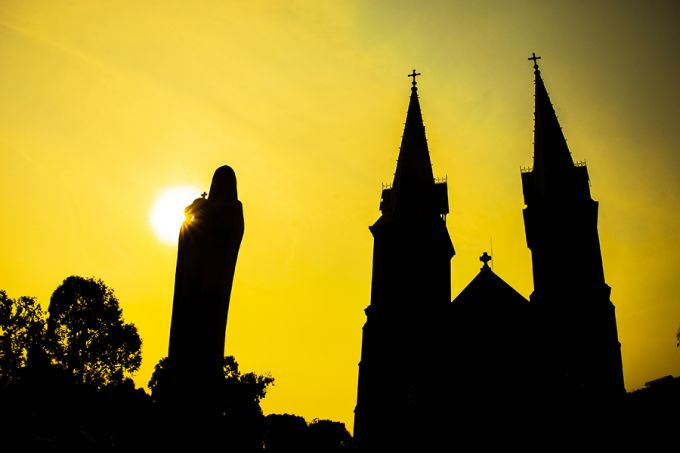
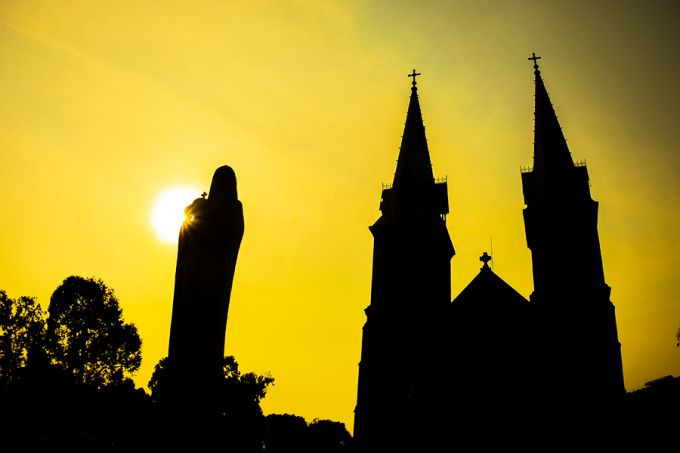
Vietnamese youth drawn to the TLM, Holy Land priests highlight plight of Christian community, Philippine dioceses call for end of mining agreement, and more in this week’s world news roundup.
Read More
7 things to know about St. Clare of Assisi, the patron saint of television #Catholic On Aug. 11, the Catholic Church celebrates St. Clare of Assisi, one of the most beloved saints of the Middle Ages. Best known as the founder of the Poor Clares and a close friend of St. Francis of Assisi, Clareʼs life was marked by radical trust in God, profound Eucharistic devotion, and remarkable courage.Here are seven things to know about the woman whose witness continues to inspire Catholics more than 800 years later:1. She came from a wealthy noble family — but left everything behind.Clare was born in Assisi, Italy, on July 16, 1194, into one of the cityʼs most prominent noble families. As a young woman, she enjoyed a privileged upbringing and was expected to marry into another wealthy household.Instead, after hearing Francis — who is now known as St. Francis of Assisi — preach about living the Gospel with radical simplicity, Clare felt called to dedicate her life entirely to Christ. At age 18, she secretly left her family home on Palm Sunday night in 1212 to begin a new life of poverty.Her family attempted to bring her home by force, but Clare firmly refused and cut off her hair as a sign that she belonged to God alone.2. She founded the Poor Clares.With Francis' guidance, Clare established a community of women at the Church of San Damiano outside Assisi that would become known as the Poor Clares. She eventually became abbess and led the monastery for more than 40 years.Despite their similarities, Franciscans and Poor Clares have distinctive differences.The Franciscans, founded by St. Francis of Assisi in 1209, include men who are called to live the Gospel through poverty, fraternity, and service, often ministering in parishes, schools, missions, and charitable works around the world. The Poor Clares, founded by St. Clare of Assisi in 1212 with the guidance of St. Francis, are a contemplative order of women who live a cloistered life centered on prayer, the Eucharist, and community life.While both embrace the Franciscan ideals of simplicity and poverty, the Franciscans are primarily active in apostolic ministry, whereas the Poor Clares dedicate their lives to supporting the Church through prayer and contemplation.3. She was the first woman to write a rule for a religious order that received papal approval.One of St. Clareʼs most significant contributions to the Church was authoring the Rule for the Poor Clares. While many womenʼs religious communities of the time followed rules adapted from existing monastic traditions, Clare aimed to preserve the distinctive charism she had embraced alongside St. Francis.For decades, Clare resisted pressure from Church authorities to modify her communityʼs way of life by accepting property or financial endowments. Instead, she carefully composed a rule that reflected the Franciscan ideal while providing practical guidance for the sisters' communal life, prayer, governance, and observance of enclosure.On Aug. 9, 1253, just two days before Clareʼs death, Pope Innocent IV formally approved her rule, making her the first woman in the history of the Church to write a rule for a religious order that received papal approval. The rule remains the foundation of Poor Clare communities throughout the world and stands as a lasting testament to Clareʼs spiritual leadership and unwavering commitment to the Franciscan vision.4. She had an extraordinary devotion to the Eucharist.Perhaps no aspect of Clareʼs spirituality stands out more than her love for Jesus in the Blessed Sacrament. She spent countless hours in prayer before the Eucharist and encouraged her sisters to center their lives on Christʼs real presence.This Eucharistic devotion became especially evident during one of the most famous events of her life.One of the best-known stories about Clare occurred when invading Saracen mercenaries threatened the convent of San Damiano. Although seriously ill, Clare asked that the Blessed Sacrament be brought to her. Holding the monstrance before the attackers, she prayed for Godʼs protection, and the invaders fled.5. She is the patron saint of television.Near the end of Clare’s life, illness prevented her from attending Mass. According to tradition, she was miraculously able to see and hear the Christmas midnight Mass in 1252 being celebrated on the wall of her room in the convent. Because of this extraordinary supernatural event, Pope Pius XII declared her the patron saint of television in 1958.6. She and St. Francis shared one of the Churchʼs most remarkable friendships.The friendship between St. Clare and St. Francis of Assisi is one of the most enduring examples of holy companionship in Church history. Although Francis played a pivotal role in Clareʼs discernment and inspired her embrace of a life of poverty, their relationship was marked by mutual respect and a shared desire to follow Christ above all else. Francis entrusted Clare with establishing and leading the community at San Damiano, while Clare remained a steadfast guardian of the Franciscan charism, especially after Francis' death in 1226.Despite living separate vocations, the two maintained a deep spiritual bond rooted in prayer, humility, and service to the Gospel. More than eight centuries later, their example continues to inspire men and women to support one another in faithfully responding to Godʼs call.7. Her influence continues more than 800 years later.On Aug. 11, 1253, Clare died at the age of 59. She was canonized by Pope Alexander IV on Sept. 26, 1255.More than 800 years after she left her family home to follow Christ, St. Clareʼs witness continues to resonate with Catholics across the globe. Her unwavering trust in Godʼs providence, profound love for the Eucharist, and commitment to a life of simplicity remain as relevant today as they were in the 13th century.Through the monasteries of the Poor Clares, her spirit of contemplative prayer and poverty lives on, with thousands of religious sisters dedicating their lives to praying for the needs of the Church and the world.Today, there are approximately 20,000 Poor Clare nuns worldwide. They live in more than 500 monasteries in over 70 countries.

7 things to know about St. Clare of Assisi, the patron saint of television #Catholic On Aug. 11, the Catholic Church celebrates St. Clare of Assisi, one of the most beloved saints of the Middle Ages. Best known as the founder of the Poor Clares and a close friend of St. Francis of Assisi, Clareʼs life was marked by radical trust in God, profound Eucharistic devotion, and remarkable courage.Here are seven things to know about the woman whose witness continues to inspire Catholics more than 800 years later:1. She came from a wealthy noble family — but left everything behind.Clare was born in Assisi, Italy, on July 16, 1194, into one of the cityʼs most prominent noble families. As a young woman, she enjoyed a privileged upbringing and was expected to marry into another wealthy household.Instead, after hearing Francis — who is now known as St. Francis of Assisi — preach about living the Gospel with radical simplicity, Clare felt called to dedicate her life entirely to Christ. At age 18, she secretly left her family home on Palm Sunday night in 1212 to begin a new life of poverty.Her family attempted to bring her home by force, but Clare firmly refused and cut off her hair as a sign that she belonged to God alone.2. She founded the Poor Clares.With Francis' guidance, Clare established a community of women at the Church of San Damiano outside Assisi that would become known as the Poor Clares. She eventually became abbess and led the monastery for more than 40 years.Despite their similarities, Franciscans and Poor Clares have distinctive differences.The Franciscans, founded by St. Francis of Assisi in 1209, include men who are called to live the Gospel through poverty, fraternity, and service, often ministering in parishes, schools, missions, and charitable works around the world. The Poor Clares, founded by St. Clare of Assisi in 1212 with the guidance of St. Francis, are a contemplative order of women who live a cloistered life centered on prayer, the Eucharist, and community life.While both embrace the Franciscan ideals of simplicity and poverty, the Franciscans are primarily active in apostolic ministry, whereas the Poor Clares dedicate their lives to supporting the Church through prayer and contemplation.3. She was the first woman to write a rule for a religious order that received papal approval.One of St. Clareʼs most significant contributions to the Church was authoring the Rule for the Poor Clares. While many womenʼs religious communities of the time followed rules adapted from existing monastic traditions, Clare aimed to preserve the distinctive charism she had embraced alongside St. Francis.For decades, Clare resisted pressure from Church authorities to modify her communityʼs way of life by accepting property or financial endowments. Instead, she carefully composed a rule that reflected the Franciscan ideal while providing practical guidance for the sisters' communal life, prayer, governance, and observance of enclosure.On Aug. 9, 1253, just two days before Clareʼs death, Pope Innocent IV formally approved her rule, making her the first woman in the history of the Church to write a rule for a religious order that received papal approval. The rule remains the foundation of Poor Clare communities throughout the world and stands as a lasting testament to Clareʼs spiritual leadership and unwavering commitment to the Franciscan vision.4. She had an extraordinary devotion to the Eucharist.Perhaps no aspect of Clareʼs spirituality stands out more than her love for Jesus in the Blessed Sacrament. She spent countless hours in prayer before the Eucharist and encouraged her sisters to center their lives on Christʼs real presence.This Eucharistic devotion became especially evident during one of the most famous events of her life.One of the best-known stories about Clare occurred when invading Saracen mercenaries threatened the convent of San Damiano. Although seriously ill, Clare asked that the Blessed Sacrament be brought to her. Holding the monstrance before the attackers, she prayed for Godʼs protection, and the invaders fled.5. She is the patron saint of television.Near the end of Clare’s life, illness prevented her from attending Mass. According to tradition, she was miraculously able to see and hear the Christmas midnight Mass in 1252 being celebrated on the wall of her room in the convent. Because of this extraordinary supernatural event, Pope Pius XII declared her the patron saint of television in 1958.6. She and St. Francis shared one of the Churchʼs most remarkable friendships.The friendship between St. Clare and St. Francis of Assisi is one of the most enduring examples of holy companionship in Church history. Although Francis played a pivotal role in Clareʼs discernment and inspired her embrace of a life of poverty, their relationship was marked by mutual respect and a shared desire to follow Christ above all else. Francis entrusted Clare with establishing and leading the community at San Damiano, while Clare remained a steadfast guardian of the Franciscan charism, especially after Francis' death in 1226.Despite living separate vocations, the two maintained a deep spiritual bond rooted in prayer, humility, and service to the Gospel. More than eight centuries later, their example continues to inspire men and women to support one another in faithfully responding to Godʼs call.7. Her influence continues more than 800 years later.On Aug. 11, 1253, Clare died at the age of 59. She was canonized by Pope Alexander IV on Sept. 26, 1255.More than 800 years after she left her family home to follow Christ, St. Clareʼs witness continues to resonate with Catholics across the globe. Her unwavering trust in Godʼs providence, profound love for the Eucharist, and commitment to a life of simplicity remain as relevant today as they were in the 13th century.Through the monasteries of the Poor Clares, her spirit of contemplative prayer and poverty lives on, with thousands of religious sisters dedicating their lives to praying for the needs of the Church and the world.Today, there are approximately 20,000 Poor Clare nuns worldwide. They live in more than 500 monasteries in over 70 countries.

The Catholic Church celebrates the feast of St. Clare of Assisi on Aug. 11.

Read More