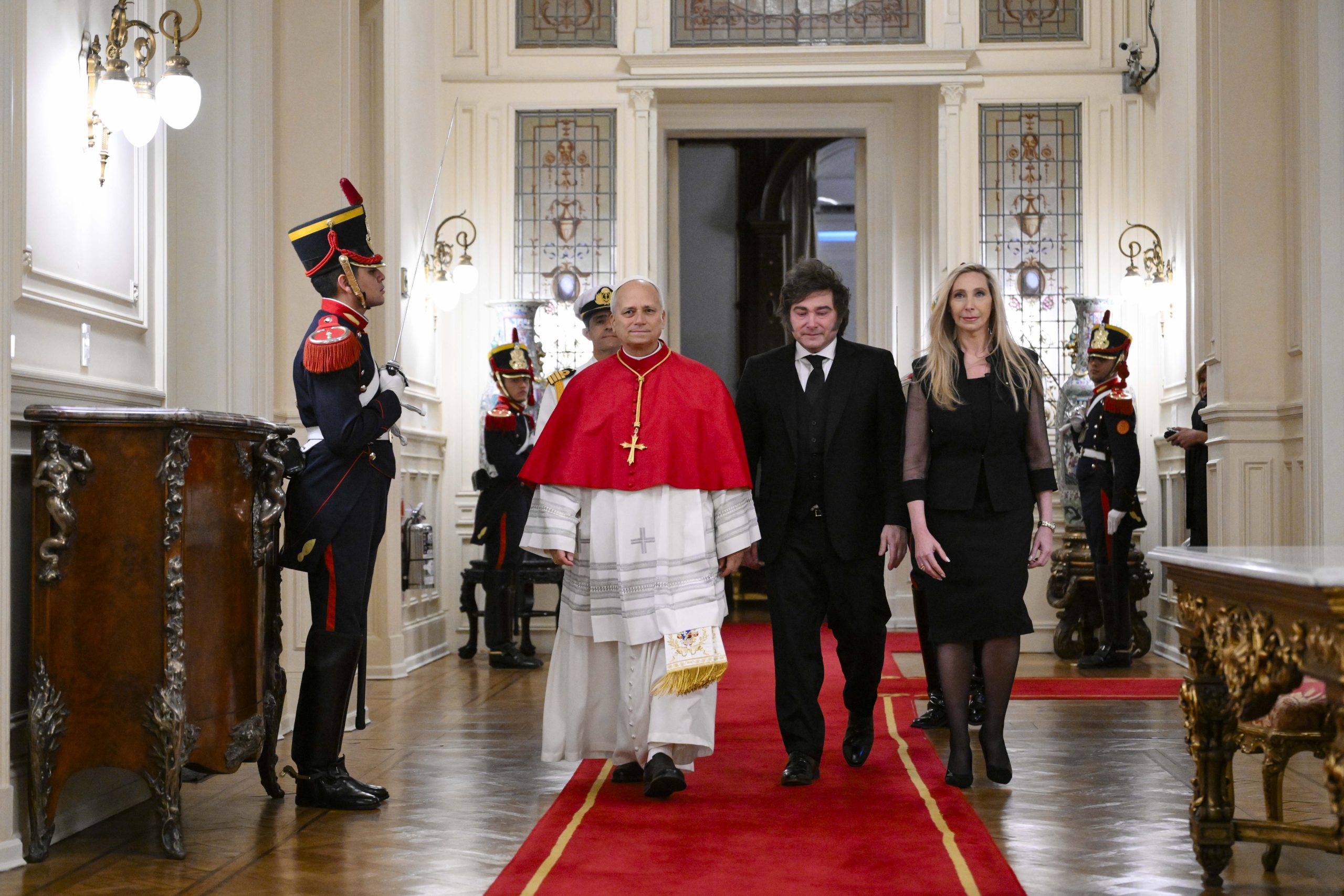
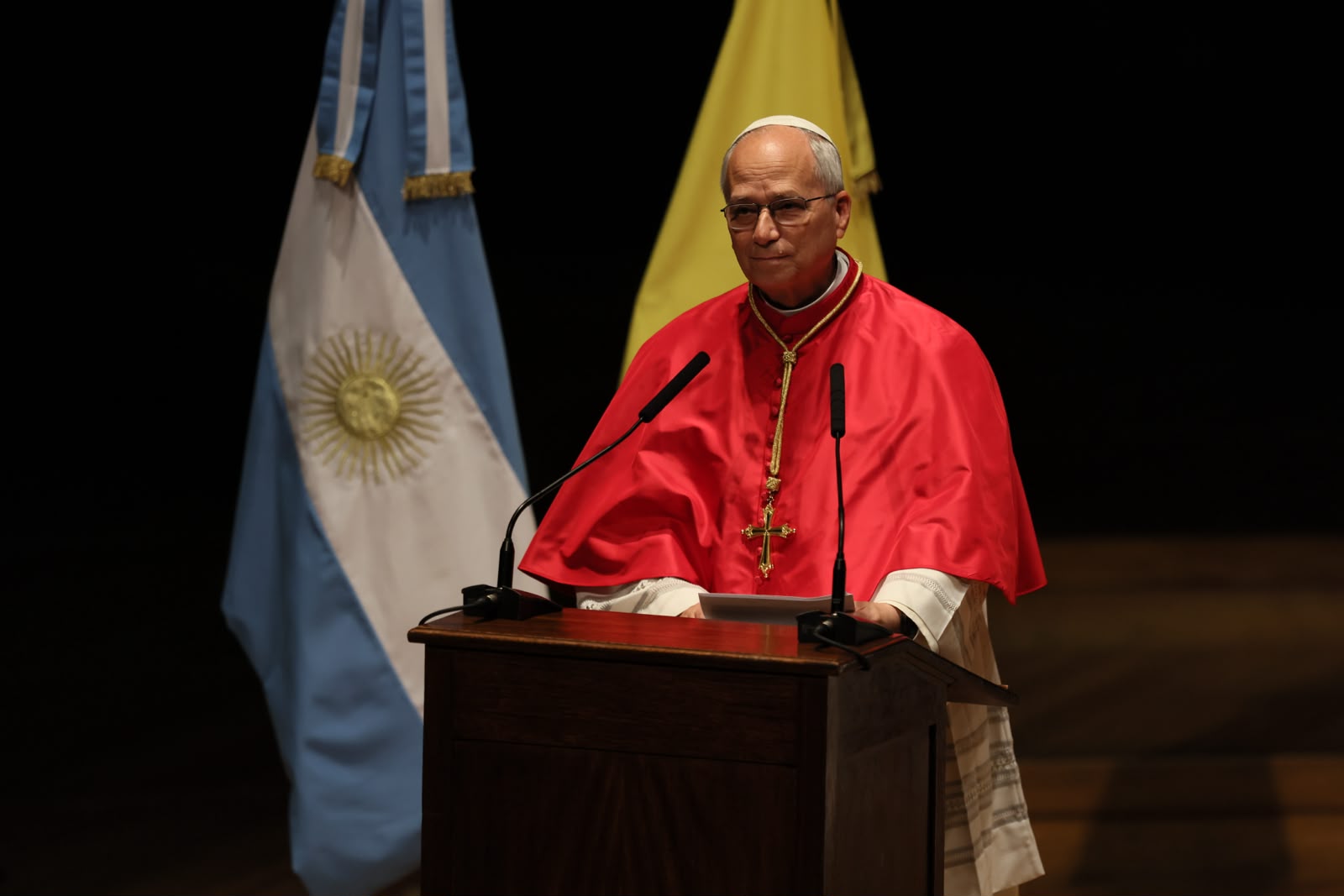
Read More In Argentina, Pope Leo XIV highlights social problems #Catholic BUENOS AIRES, Argentina — Pope Leo XIV spoke about crime, economic inequality, and political polarization, among other topics, in a wide-ranging speech to President Javier Milei and other dignitaries Nov. 8, the pope’s first day in Argentina.Milei is a self-described “anarcho-capitalist” whose policies of austerity have drawn criticism from Argentina’s Catholic bishops. Though Leo did not directly criticize the president, his speech was the most political he has given so far on his tour of South America, which began Nov. 6 in Uruguay and will conclude Nov. 16 in Peru.The pope opened by stating that he had come to Argentina “as a pastor,” but that the Church wishes “to propose to those who hold public office a message inspired by the Gospel and aimed at safeguarding the dignity of every person, civic concord, and the common good.”Leo highlighted several widespread social problems, including public safety. “Organized crime, human trafficking networks, arms and drug trafficking together with corruption all undermine social cohesion, fuel violence and divert resources necessary for the common good,” the pope said.Violent crime is an urgent concern across the region. According to a U.N. report, the homicide rate for Latin America and the Caribbean was the world’s highest in 2023, and nearly four times the world average.Addressing the question of inequality, the pope said that efforts should be made to ensure “that economic growth also benefits those who are disadvantaged. Here I think of families facing an uncertain future, the unemployed, the elderly who for years contributed to society, and all those who, despite hard work, nonetheless struggle to meet their household’s needs.”Leo pointed to the plight of young people driven to emigrate in search of opportunities. “A nation must seriously ask itself where it has failed when its young people have to leave their homeland in order to make their dreams come true,” he said. Pope Leo XIV tours the Casa Rosada alongside Argentine President Javier Milei and other members of the delegation during his visit to Buenos Aires on Nov. 8, 2026. | Credit: Vatican Media He also addressed what he described as a threat to democracy from political polarization, a widely noted trend in Latin America and beyond.The pope said democracy is strengthened “through willingness to listen, through careful use of words, through the patient search for agreement, and through the ability to see those who think differently as fellow citizens with whom we share a common future. In this way, a spirit of trust is created, one that enables a society to deal with its differences without losing sight of the things that keep it united,” Leo said.Milei campaigned for president as a firebrand, wielding a chainsaw to show what he would do to government budgets and deriding his fellow Argentine Pope Francis as, among other things, a “filthy leftist,” though he later said he apologized personally to Francis. On Sunday, speaking right before the current pope, the president lauded the late pontiff as “an exceptional figure who inspired us all with his humanity, regardless of our creed. A person of immense generosity, whom I had the honor of knowing personally.”Leo opened his own speech by recalling his predecessor, saying the universal Church had “listened to the voice of an Argentinian pope” for years. The pope also urged the countryʼs leaders to make room for the unborn. The audience of foreign diplomats and Argentine civil and political leaders frequently interrupted Leo’s speech with vigorous applause and cheering reminiscent of a parliament or a political convention.Earlier on Sunday, Milei met Leo’s plane at the airport and met with him privately at the seat of government, the Casa Rosada, before he and the pope gave their speeches. unitedyam November 8, 2026November 9, 2026 The pontiff met with President Javier Milei on his first day in the country. Read More
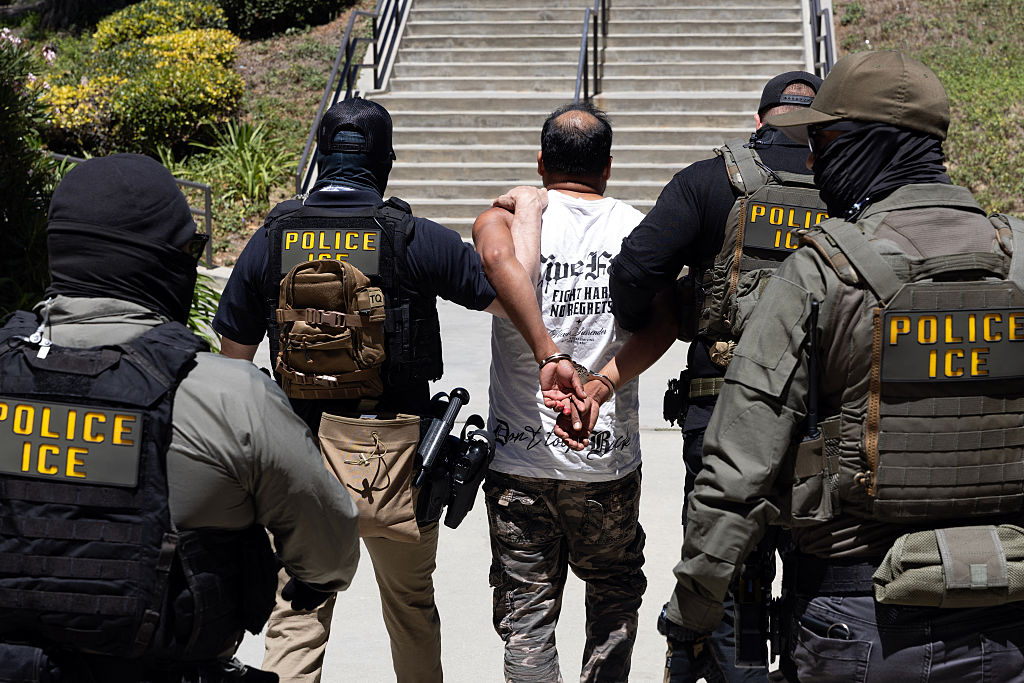
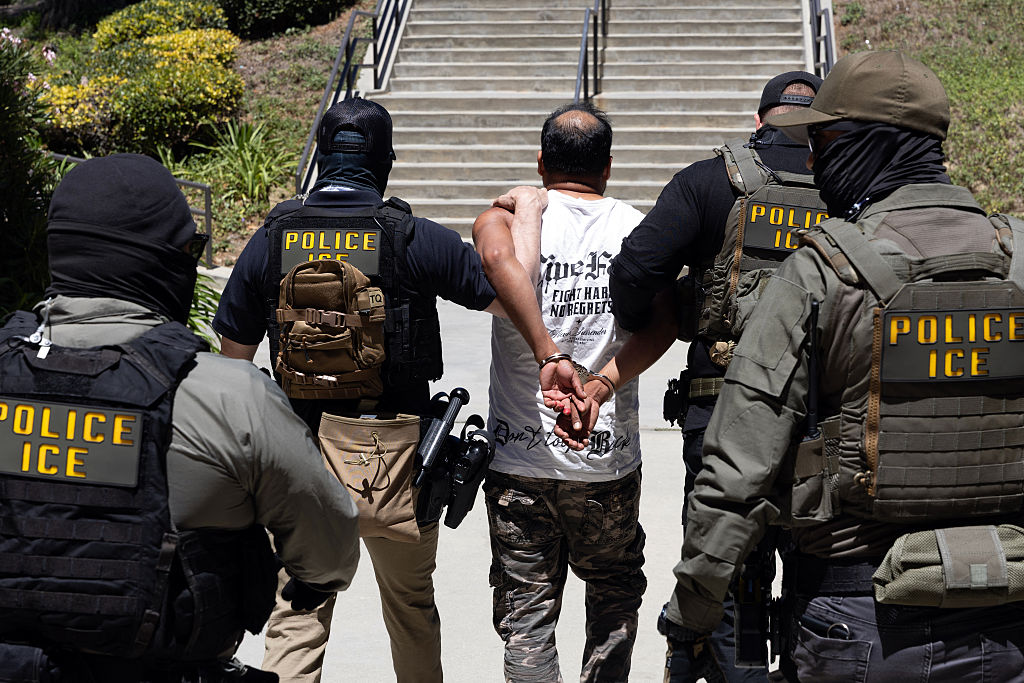
Read More Bishop: ‘Indiscriminate’ ICE raids incite anxiety, fear in California’s Central Valley #Catholic Bishop Joseph Brennan of the Diocese of Fresno, California, warned that immigration raids in California’s Central Valley are instilling “unrest, anxiety and even fear” in the community and that many of his priests are reporting that their parishes have been affected.“Even if you have not been personally affected by the increased immigration enforcement in our region, many of those who sit alongside you in the pews have been affected, with some already having been detained,” wrote Brennan, whose diocese covers a large portion of the southern Central Valley.The Department of Homeland Security (DHS) and Immigration and Customs Enforcement (ICE) have not announced any specific operations targeting California or its Central Valley. However, local media have reported a surge in enforcement in recent weeks.In his pastoral letter, Brennan said pastors reported to him that “members of their congregations have been taken away abruptly and with little or no information coming from federal agents.” He said he has been in contact with priests and interfaith and advocacy partners about ways to “help, comfort and accompany our people” amid the reported surge.”“It breaks my heart,” the bishop wrote. “… Many of those caught up in this recent immigration enforcement in our Valley are not strangers to us — they are family, neighbors, and parishioners who are being uprooted from the lives they have built over many years among us.”‘Indiscriminate’ raidsBrennan noted that the U.S. Conference of Catholic Bishops (USCCB) voted 216-5 to approve a special message that the bishops oppose “the indiscriminate mass deportation of people” during the 2025 Fall Plenary Assembly. He then expressed concern that Central Valley raids appear to be indiscriminate.“These people are valued and beloved, they are part of the fabric of our community,” he said. “It is frightening to them and disturbing to us that these current operations seem to have taken on an indiscriminate nature with little regard for the dignity of the human person.”“Our Church teaches that every human person possesses an inherent dignity,” the bishop continued. “This dignity is not granted by governments, economic status, citizenship, or legal documentation. It is given by God.”A spokesperson for DHS did not confirm any specific operation targeting California.“For operational security and the safety of our officers, ICE will not disclose or discuss law enforcement operations,” the spokesperson said. “Every day, DHS enforces the laws of the nation across the country including in California.”The spokesperson defended ongoing immigration enforcement: “To most Americans our ICE officers are heroes as they put their lives on the line to arrest murderers, rapists, pedophiles, gang members, and terrorists.”The spokesperson provided a list of five people they labeled as “public safety threats” arrested in California, which included people convicted of vehicular manslaughter, aggravated assault with a gun, burglary, homicide, and selling drugs.Church ‘will not be silent’In his pastoral letter, Brennan said the Church “will not be silent” and “will accompany our vulnerable neighbors in concrete, sustained ways.”“We will strive to be a loving presence in our society for our brothers and sisters,” Brennan said.“Our parishes will be present to them for healing and comfort,” he said. “Accompaniment might take the shape of walking with families through long and complicated legal proceedings, showing up at immigration court, organizing transportation and childcare, and refusing to let anyone face this situation alone. We will speak up for them and will encourage one another to see this work of justice as a part of our baptismal call.” Accompaniment might take the shape of walking with families through long and complicated legal proceedings, showing up at immigration court, organizing transportation and childcare, and refusing to let anyone face this situation alone. We will speak up for them and will encourage one another to see this work of justice as a part of our baptismal call.” Bishop Joseph BrennanDiocese of Fresno, California The bishop called for “real change and real reform,” saying “our country and our elected officials must do better,” calling for “tangible results that reflect meaningful and just immigration reform.”“Until such reform is achieved, the dignity of our immigrant brothers and sisters must remain in the forefront of whatever shape our efforts might take,” he wrote. “In the midst of those efforts, to be sure, we are navigating in a chaotic and emotionally charged time. I encourage the faithful to pray for one another and to act out of a spirit of communion in all things, bridging divisions and treating one another peacefully and with compassion.”“We are in this together,” Brennan wrote. “God bless you and those you love, always and in every way.” unitedyam October 16, 2026October 17, 2026 The Department of Homeland Security insisted ICE officers are “heroes,” enforcing the law. Read More