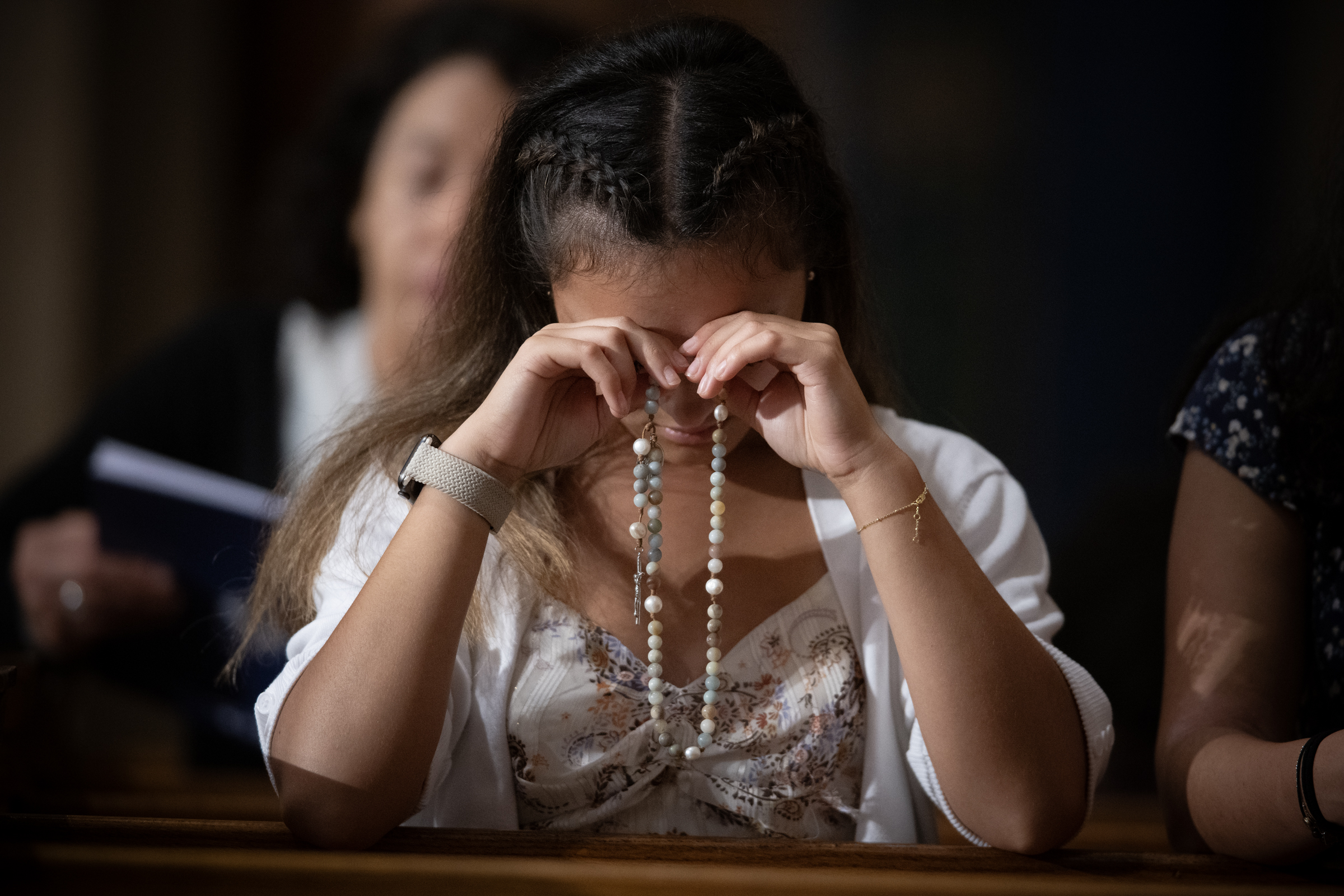
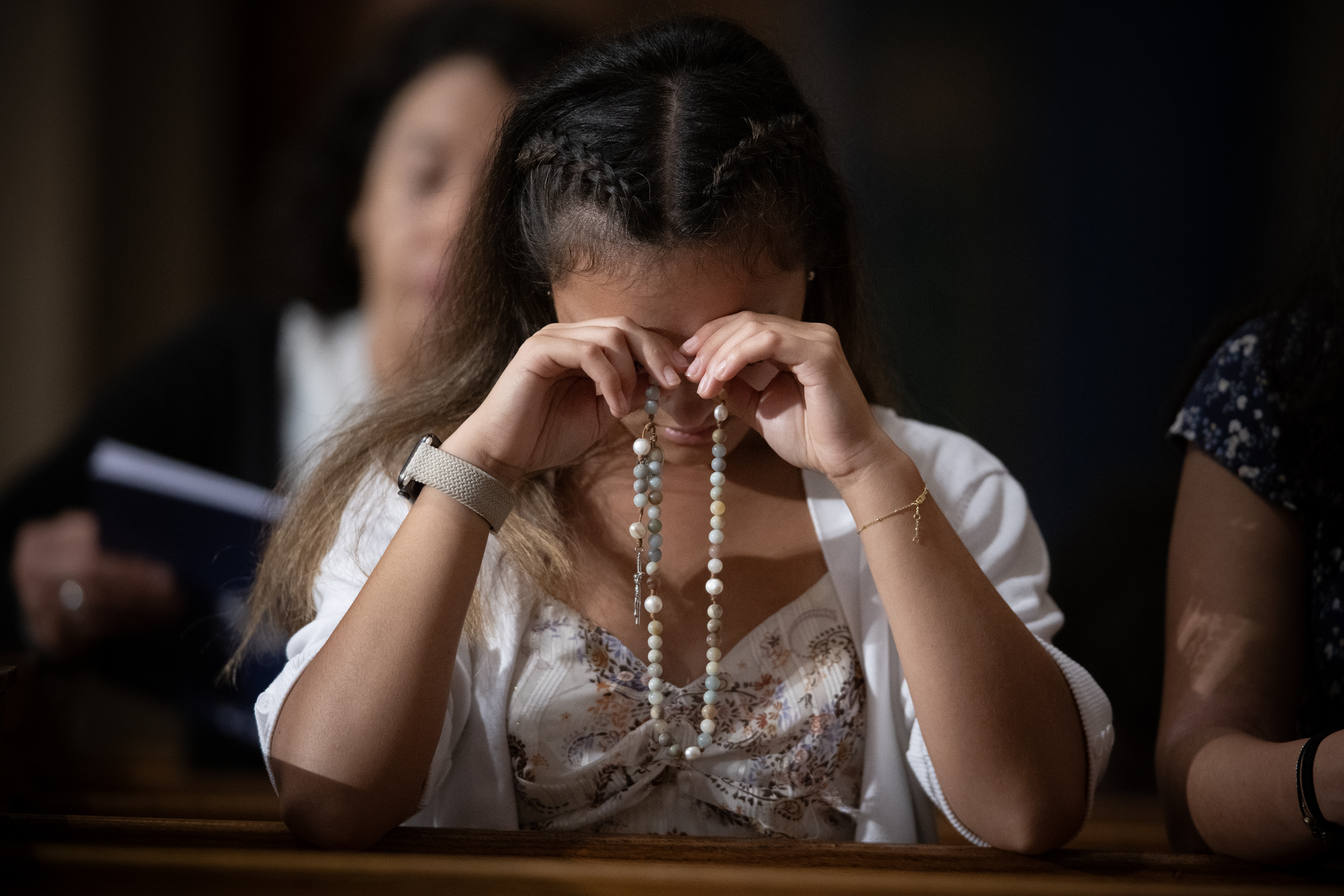
Read More 7 common myths and facts about the rosary #Catholic October is designated by the Catholic Church as the month of the rosary, and Oct. 7 is the feast of Our Lady of the Rosary.Here are seven common myths and facts about this popular devotion and prayer:1. Only Catholics can pray the rosary.False. While rosaries are typically associated with Catholics, non-Catholics can certainly pray the rosary — and in fact, many credit it to their conversion. Even some Protestants recognize the rosary as a valid form of prayer.2. Praying the rosary is idolatry.False. Some have objections to the rosary, claiming it idolizes Mary and is overly repetitive.Just like any practice, the rosary can be abused — just as someone might idolize a particular pastor or priest, a form of worship, or fasting. But the rosary itself is not a form of idolatry.The rosary is not a prayer to Mary — it is a meditation on the life of Christ revealed in five mysteries “with the purposes of drawing the person praying deeper into reflecting on Christ’s joys, sacrifices, sufferings, and the glorious miracles of his life.”When we pray the Hail Mary, we are not adoring Mary; we are asking for her intercession — just as we might ask a friend or family member to pray for us.Second, any prayer can lose its meaning if we do not intentionally meditate on it. Focusing on the mysteries with purpose and intention is key to the rosary’s transforming power. As one author encourages: “The rosary itself stays the same, but we do not.”3. You can wear a rosary as a necklace.It depends. It is typically considered disrespectful and irreverent to wear a rosary around one’s neck as jewelry, even though the Church does not have an explicit declaration against doing so.However, Canon 1171 of the Code of Canon Law says that “sacred objects, set aside for divine worship by dedication or blessing, are to be treated with reverence. They are not to be made over to secular or inappropriate use, even though they may belong to private persons.”It is important to treat the rosary with respect and intention. If you intend to wear the rosary as a piece of jewelry, this would not be respectful and should be avoided. It goes without saying that wearing the rosary as a mockery or gang symbol would be a sin.But if it is your intention to use the rosary and be mindful of prayer, then it could be permissible. It is not uncommon in some cultures, like in Honduras and El Salvador, to see the rosary respectfully worn around the neck as a sign of devotion.Rosary rings or bracelets might be a better option if you want to keep your rosary close at hand as a reminder to pray, as they are kept more out of sight and would not be as easily misconstrued to be a piece of jewelry.4. The rosary is an extremist symbol.False. Back in 2022, a widely-shared Atlantic article went viral for accusing the rosary of being an “extremist symbol.”“Just as the AR-15 rifle has become a sacred object for Christian nationalists in general, the rosary has acquired a militaristic meaning for radical-traditional (or ‘rad trad’) Catholics,” the article read.The author also cited the Church’s stance on traditional marriage and the sanctity of life as evidence of “extremism” and claimed that Catholics’ tendency to call the rosary a “weapon in the fight against evil” as dangerous.As EWTN News reported in 2022, popes have urged Catholics to pray the rosary since 1571 — often referring to the rosary as a prayer “weapon” and most powerful spiritual tool.5. The rosary is not biblical.Untrue! Most of its words come directly from Scripture.First, the Our Father is prayed. The words of the Our Father are those Christ taught his disciples to pray in Matthew 6:9–13.The Hail Mary also comes straight from the Bible. The first part, “Hail, full of grace, the Lord is with thee,” comes from Luke 1:28, and the second, “Blessed art thou amongst women and blessed is the fruit of thy womb,” is found in Luke 1:42.Finally, each of the decades prayed on the rosary symbolizes an event in the lives of Jesus and his mother. The decades are divided into four sets of mysteries: joyful, luminous, sorrowful, and glorious, the majority of which are found in Scripture.6. A rosary bead, or pea, can kill you.Somewhat true. A rosary pea, or abrus seed, is a vine plant native to India and parts of Asia. The seeds of the vine, which are red with black spots, are often used to make beaded jewelry — including rosaries. Rosary pea seeds contain a toxic substance called “abrin,” which is a naturally-occurring poison that can be fatal if ingested. However, it’s unlikely for someone to get abrin poisoning just from holding a rosary made from abrus seeds, as one would have to swallow them.Today, most rosaries are made from other nontoxic materials, such as olive wood or glass — eliminating this concern.7. The rosary can help protect you.True. Praying the rosary has proven to be a miraculous force for protecting those of faith and bestowing upon them extra graces, such as the victory of the Christian forces at the Battle of Lepanto after St. Pius V implored Western Christians to pray the rosary.Many great saints across history, including Pope John Paul II, Padre Pio, and Lucia of Fátima, have also recognized the rosary as the most powerful weapon in fighting the real spiritual battles we face in the world.We know that spiritual warfare is a real and present danger: “For our struggle is not with flesh and blood but with the principalities, with the powers, with the world rulers of this present darkness, with the evil spirits in the heavens” (Eph 6:11–12).“The rosary is a powerful weapon to put the demons to flight and to keep oneself from sin … If you desire peace in your hearts, in your homes, and in your country, assemble each evening to recite the rosary. Let not even one day pass without saying it, no matter how burdened you may be with many cares and labors,” Pope Pius XI said.This story was first published on Oct. 1, 2022, and has been updated. unitedyam October 7, 2026October 7, 2026 A look at this popular devotion and prayer on the feast of Our Lady of the Rosary. Read More
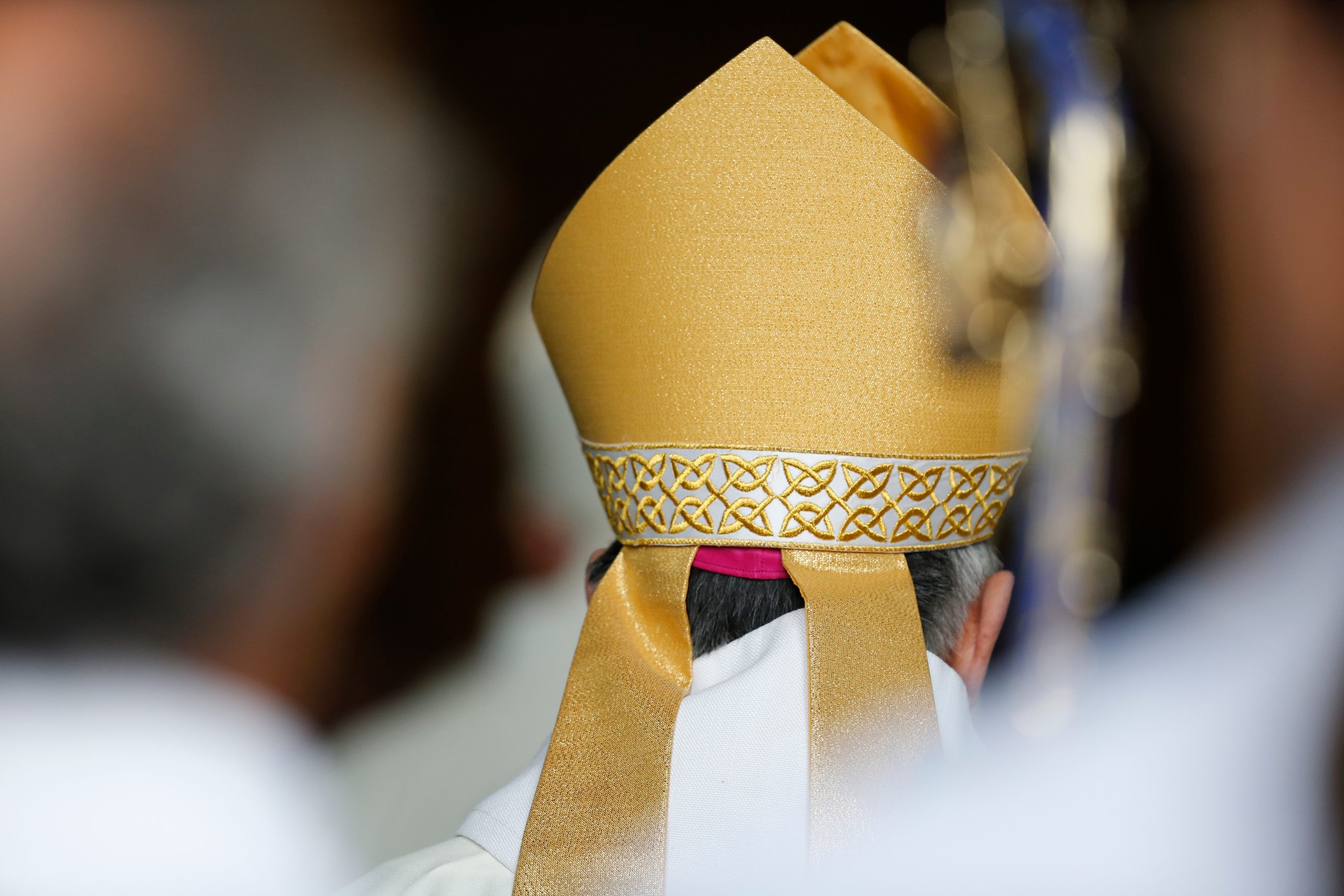
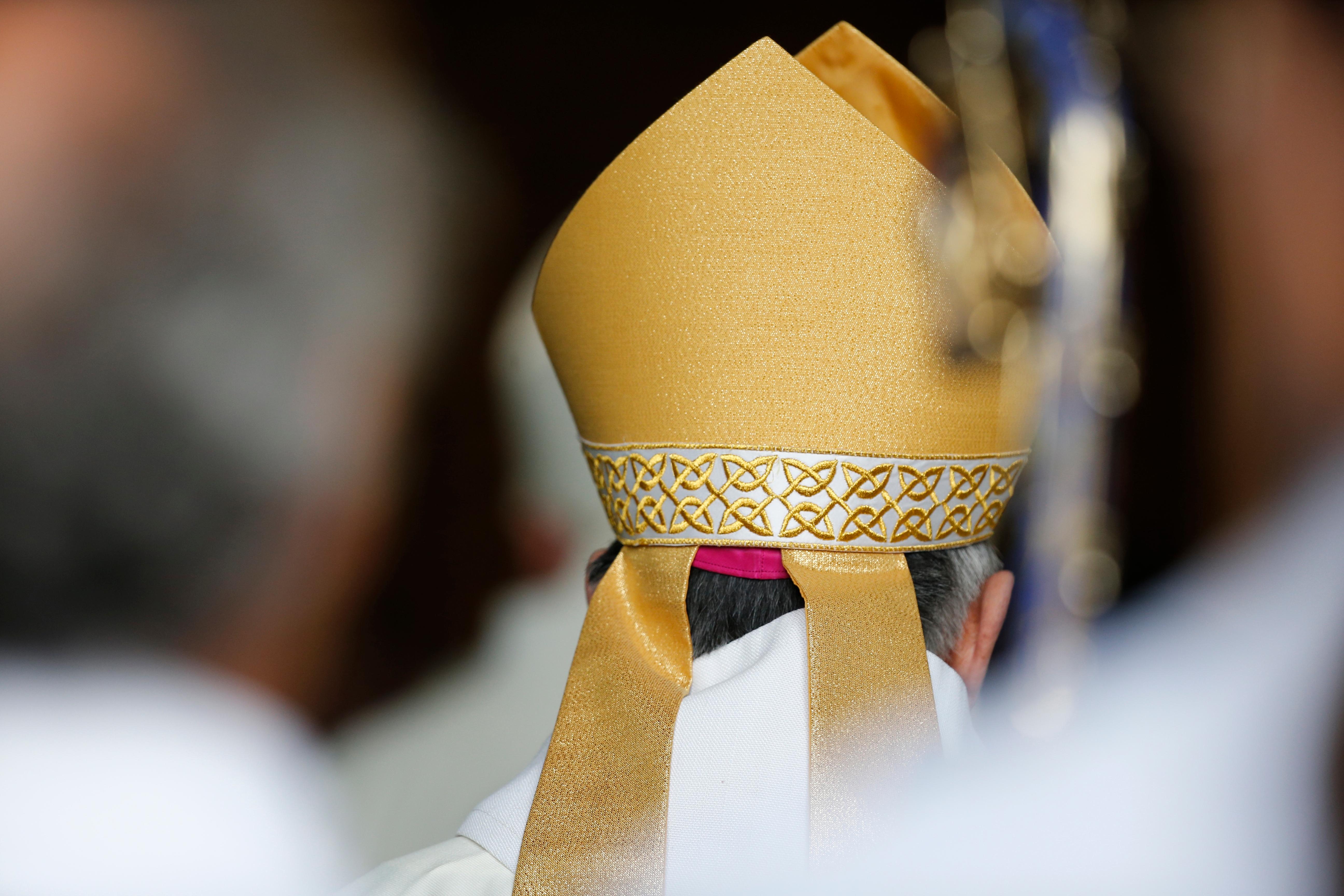
Read More Abuse prevention, liturgy central to Vatican courses for new bishops #Catholic The Vatican is hosting its annual formation course for newly appointed bishops from Sept. 2-10, bringing together 147 prelates from five continents to strengthen ecclesial communion and provide practical tools for the exercise of episcopal ministry.The program has been a fixture of the Church calendar since 2000, when it was launched by St. John Paul II. Described by Vatican media as a condensed “master’s program” for new bishops, it is designed to foster the exchange of experiences among pastors from widely differing cultural, social, and ecclesial contexts while offering practical guidance for governing local churches.This year’s participants come from countries across Africa, Asia, Oceania, and Latin America, including Algeria, Bangladesh, Cameroon, Colombia, Côte d’Ivoire, Ethiopia, the Philippines, Ghana, Honduras, India, Indonesia, Kenya, Madagascar, Mali, Myanmar, Namibia, Papua New Guinea, Peru, the Central African Republic, Senegal, the Seychelles, the Solomon Islands, Sri Lanka, South Africa, Vietnam, Zimbabwe, Kyrgyzstan, and Thailand.Most of the world’s bishops fall under the jurisdiction of the Dicastery for Bishops, which oversees the creation of dioceses, episcopal appointments, and matters related to episcopal governance in the Latin Church. Bishops serving in missionary territories, however, are under the Dicastery for Evangelization, specifically its Section for First Evangelization and New Particular Churches.Of the 147 participants, 98 are following the program organized by the Dicastery for Bishops under the theme, “In Christ, Guardians of the Magnifica Humanitas in Times of Transformation.” The remaining 49 are participating in a course sponsored by the Dicastery for Evangelization titled, “Servants of Communion in the Church.”Both tracks combine lectures, liturgical celebrations, fraternal gatherings, and working sessions led by cardinals, archbishops, and senior officials of the Roman Curia.Instagram postLiturgy, mission, and safeguarding against abuseThe program addresses key issues facing the Church, including liturgy, evangelization, child protection, financial administration, transparency, priestly formation, synodality, interreligious dialogue, the growth of new sects, and the handling of clergy-related crises.The course organized by the Dicastery for Bishops includes presentations by Cardinal Claudio Gugerotti, prefect of the Dicastery for the Eastern Churches, who will reflect on episcopal ministry, and Archbishop Vittorio Viola, secretary of the Dicastery for Divine Worship and the Discipline of the Sacraments, who will discuss liturgical matters.On Sept. 4, Archbishop Luis Javier Argüello García, president of the Spanish Bishops’ Conference, will offer reflections on the bishop’s mission within the family and society.That afternoon, attention will turn to safeguarding minors, promoting a culture of prevention, and handling abuse cases, with a presentation by Archbishop Thibault Verny, president of the Pontifical Commission for the Protection of Minors.The day will conclude with a lecture by Cardinal Pietro Parolin, the Vatican secretary of state, on the Holy See’s role in a globalized world and its efforts to promote peace.On Sept. 5, Cardinal José Tolentino de Mendonça, prefect of the Dicastery for Culture and Education, will examine the cultural changes reshaping the contemporary world.Cardinal Angelo De Donatis, as head of the Church tribunal responsible for matters of conscience, will provide a detailed explanation of the norms, theology, and limits of the Church’s absolute seal of secrecy, particularly regarding sacramental confession.Tribalism, sects, and missionary challengesThe program for bishops from territories under the Dicastery for Evangelization is being held at the Pontifical Missionary College of St. Peter the Apostle.Formal activities began Sept. 3 with a session focused on missionary work and the services provided by the dicastery to churches in mission territories.Cardinal Luis Antonio Tagle is serving as host, while Archbishop Fortunatus Nwachukwu will address issues such as tribalism, caste discrimination, racism, and exclusionary regionalism in the contemporary Church.Topics scheduled for the opening days also include clergy discipline, consecrated life, administration of Church property, associations of the faithful, and other pastoral challenges unique to missionary churches.The Sept. 4 session will focus on faith and inculturation. Speakers include Cardinal George Jacob Koovakad, prefect of the Dicastery for Interreligious Dialogue, who will reflect on interreligious dialogue in the current context, and Archbishop Aurelio García Macías, undersecretary of the Dicastery for Divine Worship, who will discuss liturgical continuity and developments in territories of first evangelization.Cardinal Kurt Koch, prefect of the Dicastery for Promoting Christian Unity, will close the day with a presentation on sects and new religious movements.Episcopal governance and canon lawOn Sept. 5, participants will delve into legal aspects of episcopal governance. Archbishop Anthony Randazzo, prefect of the Dicastery for Legislative Texts, will discuss diocesan structures of communion and collaboration, as well as the operation of ecclesiastical tribunals.Archbishop John Joseph Kennedy, secretary of the disciplinary section of the Dicastery for the Doctrine of the Faith, will provide guidance on handling cases involving delicta graviora, the most serious crimes prosecuted within the Catholic Church.The day will also include reflections on pastoral accompaniment and the formation of lay faithful, led by Archbishop Dario Gervasi and Dr. Gabriella Gambino, secretary and undersecretary, respectively, of the Dicastery for Laity, Family and Life.Pilgrimage to Assisi and joint sessionsParticipants will have a free day on Sunday, with the opportunity to make a pilgrimage to Assisi during the Jubilee Year marking the 800th anniversary of the death of St. Francis.Activities will resume Sept. 7 at the Pontifical Urbaniana University with joint sessions bringing together participants from both programs. For the third consecutive year, this format is intended to foster fraternity and the exchange of experiences among bishops from very different pastoral realities.Among the topics to be discussed is Pope Leo XIV’s encyclical Magnifica Humanitas, which will be presented by Cardinal Michael Czerny, prefect emeritus of the Dicastery for Promoting Integral Human Development. Cardinal Mario Grech, secretary-general of the Synod of Bishops, and Cardinal Roberto Repole, archbishop of Turin, will offer reflections on synodal ecclesiology.On Sept. 8, the feast of the Nativity of the Blessed Virgin Mary, the newly appointed bishops will participate in a Mass at the Basilica of St. Mary Major, celebrated by Cardinal Baldassare Reina, vicar of the Diocese of Rome.During the final days of the course, sessions will focus on priestly formation, the relationship between local churches and the Holy See, and the Church’s responsibility to protect minors and vulnerable adults.Experts from the Institute of Anthropology at Rome’s Pontifical Gregorian University, including Archbishop Peter Beer and Jesuit Father Hans Zollner, one of the Church’s leading international voices on safeguarding, will participate in these discussions.The program will conclude Sept. 10 with Mass in St. Peter’s Basilica, followed by an audience with Pope Leo XIV. The papal meeting will bring to a close several days of formation, prayer, and fraternity in the Italian capital.This story was first published by ACI Prensa, the Spanish-language sister service of EWTN News. It has been translated and adapted by EWTN News English. unitedyam September 3, 2026September 4, 2026 The program has been a fixture of the Church calendar since 2000, when it was launched by St. John Paul II. Read More