
imposition

Five years of euthanasia in Spain: The toll and path forward to overturn #Catholic It hasbeen five years since the Euthanasia Law came into effect in Spain — a law that, since its approval, has claimed the lives of 1,668 people, according to official data published by the Spanish Ministry of Health.Since its inception, the number of euthanasia procedures carried out in the country has risen steadily; from 75 in the second half of 2021 to 288 in 2022, followed by 334 in 2023, some 426 in 2024 and 565 in 2025.The Madrid-based Professionals for Ethics Association has issued a report that points out that the progression of euthanasia over the past five years shows that “once approved, euthanasia becomes a slippery slope” with destructive effects.In addition to accelerated year-to-year growth in the number of euthanasia cases, the ethics professionals cite the progressive expansion of the grounds for the procedure under the catch-all category of “severe suffering.”Euthanasia procedures have been streamlined “even at the cost of reducing or eliminating safeguards,” according to the report.Euthanasia is being promoted “as an altruistic choice, based on arguments regarding organ donation and bequests to pro-euthanasia associations.”The report denounces the “imposition of the so-called ‘right to die’ and personal autonomy over good medical practice.”The practice of euthanasia results in the “abandonment of clinical effort” in situations where it appears to be an “easier and less costly” option. The report also underscores that euthanasia “harms the relationship of trust” between patient and physician, as well as between the patient and their family members.The "normalization of euthanasia" in society and among healthcare professionals has led to the "loss of the meaning of vulnerable life, of aging, and of the value of caring for and accompanying” such patients, the report finds.Other destructive effects include “social pressure on dependent individuals based on ‘quality of life’ criteria and the perception of being a burden to others” and, finally, the fostering of individualism and “society’s indifference toward suffering.”RecommendationsBeyond pointing out dangers and contradictions inherent in the advance of euthanasia in Spain, the Professionals for Ethics Association proposes five measures “to reverse the slippery slope of euthanasia upon which we have already embarked.” The first recommended measure is to develop “the plan, organization, and resources necessary to provide nationwide palliative care coverage," which must include "home-based teams and specialized pediatric units."The ethics professionals also recommend boosting support “for vulnerable individuals and their families,” specifically those facing dependency, mental illness, and unwanted loneliness. This requires both the allocation of resources to address these challenges and facilitating “family support through programs that balance work and family life in order to provide care” for the patient.A third recommendation is to monitor official information regarding the euthanasia procedures performed in order to “ensure rigor in the processes for requesting and approving euthanasia,” as well as preventing lax interpretations of the law that make “euthanasia the easiest, most accessible, and quickest ‘solution’.”Fourth, the association holds that “it is vital to preserve the mission and objectives of healthcare aimed at preventing, curing, and caring for health as well as professional ethics and practice.”In this regard, the group emphasizes that “euthanasia runs counter to the essence of medicine, caring for human life, and should never be considered a medical act.” Thus, the association also advocates the right of healthcare workers to conscientiously object to participating in euthanasia procedures.Finally, the association calls for halting the promotion of euthanasia, as its rise “is neither a social good nor a sign of progress in human rights, nor is it even a neutral matter.”“The fact that an increasing number of people in Spain desire a lethal injection should be a cause for concern, not celebration,” the group emphasizes; and therefore advocates for “a euthanasia prevention plan” similar to those for suicide and, ultimately, the repeal of the euthanasia law and the enactment of legislation “that facilitates the care of human life until the very end.”This story was first published by ACI Prensa, the Spanish-language sister service of EWTN News. It has been translated and adapted by EWTN News English.

Five years of euthanasia in Spain: The toll and path forward to overturn #Catholic It hasbeen five years since the Euthanasia Law came into effect in Spain — a law that, since its approval, has claimed the lives of 1,668 people, according to official data published by the Spanish Ministry of Health.Since its inception, the number of euthanasia procedures carried out in the country has risen steadily; from 75 in the second half of 2021 to 288 in 2022, followed by 334 in 2023, some 426 in 2024 and 565 in 2025.The Madrid-based Professionals for Ethics Association has issued a report that points out that the progression of euthanasia over the past five years shows that “once approved, euthanasia becomes a slippery slope” with destructive effects.In addition to accelerated year-to-year growth in the number of euthanasia cases, the ethics professionals cite the progressive expansion of the grounds for the procedure under the catch-all category of “severe suffering.”Euthanasia procedures have been streamlined “even at the cost of reducing or eliminating safeguards,” according to the report.Euthanasia is being promoted “as an altruistic choice, based on arguments regarding organ donation and bequests to pro-euthanasia associations.”The report denounces the “imposition of the so-called ‘right to die’ and personal autonomy over good medical practice.”The practice of euthanasia results in the “abandonment of clinical effort” in situations where it appears to be an “easier and less costly” option. The report also underscores that euthanasia “harms the relationship of trust” between patient and physician, as well as between the patient and their family members.The "normalization of euthanasia" in society and among healthcare professionals has led to the "loss of the meaning of vulnerable life, of aging, and of the value of caring for and accompanying” such patients, the report finds.Other destructive effects include “social pressure on dependent individuals based on ‘quality of life’ criteria and the perception of being a burden to others” and, finally, the fostering of individualism and “society’s indifference toward suffering.”RecommendationsBeyond pointing out dangers and contradictions inherent in the advance of euthanasia in Spain, the Professionals for Ethics Association proposes five measures “to reverse the slippery slope of euthanasia upon which we have already embarked.” The first recommended measure is to develop “the plan, organization, and resources necessary to provide nationwide palliative care coverage," which must include "home-based teams and specialized pediatric units."The ethics professionals also recommend boosting support “for vulnerable individuals and their families,” specifically those facing dependency, mental illness, and unwanted loneliness. This requires both the allocation of resources to address these challenges and facilitating “family support through programs that balance work and family life in order to provide care” for the patient.A third recommendation is to monitor official information regarding the euthanasia procedures performed in order to “ensure rigor in the processes for requesting and approving euthanasia,” as well as preventing lax interpretations of the law that make “euthanasia the easiest, most accessible, and quickest ‘solution’.”Fourth, the association holds that “it is vital to preserve the mission and objectives of healthcare aimed at preventing, curing, and caring for health as well as professional ethics and practice.”In this regard, the group emphasizes that “euthanasia runs counter to the essence of medicine, caring for human life, and should never be considered a medical act.” Thus, the association also advocates the right of healthcare workers to conscientiously object to participating in euthanasia procedures.Finally, the association calls for halting the promotion of euthanasia, as its rise “is neither a social good nor a sign of progress in human rights, nor is it even a neutral matter.”“The fact that an increasing number of people in Spain desire a lethal injection should be a cause for concern, not celebration,” the group emphasizes; and therefore advocates for “a euthanasia prevention plan” similar to those for suicide and, ultimately, the repeal of the euthanasia law and the enactment of legislation “that facilitates the care of human life until the very end.”This story was first published by ACI Prensa, the Spanish-language sister service of EWTN News. It has been translated and adapted by EWTN News English.

Euthanasia is on the rise in Spain, and as its destructive effects become more apparent, ethics professionals are offering recommendations to prevent and ultimately eliminate the practice.

Read More
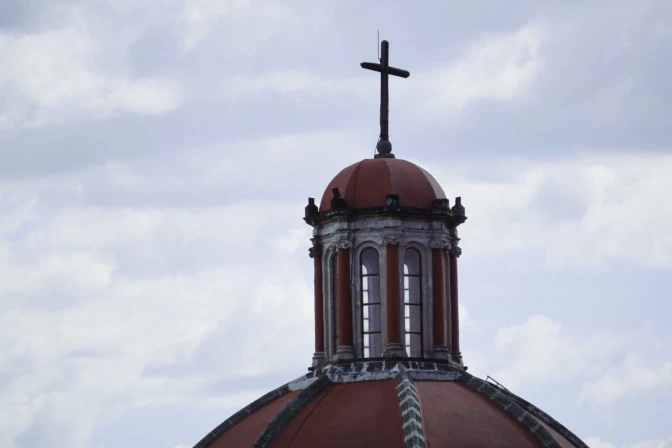
Church bells in Mexico to toll for peace and in memory of victims of violence #Catholic Catholic church bells in Mexico will be rung on June 20 “as a call to build peace” and in memory of victims of violence in the country, marking the fourth anniversary of the murders of Jesuit priests Javier Campos Morales and Joaquín César Mora Salazar.In a statement released on June 14, the National Dialogue for Peace called for placing a “white ribbon or small flag” on the doors of homes, schools, and workplaces on June 20 to make “visible the commitment to peace, dialogue, reconciliation, or hope.”The group also called for “ringing church bells on June 20 at 3 p.m. as a call to all sectors of society to build peace and to renew our commitment to forming the community that Mexico needs today.”Campos Morales and Mora Salazar were killed on June 20, 2022, inside their parish church in the town of Cerocahui in the Mexican state of Chihuahua while attempting to protect a man who was being pursued by a criminal. The organization also asked Mexicans to “place photographs of missing persons at church altars during the celebrations on Sunday, June 21,” as well as to “offer a special prayer for families searching [for their loved ones] and invite adolescents and young people to present the offerings as a sign of a Church that recognizes their place and accompanies them in building hope.”The National Dialogue for Peace was started following the murder of the Jesuits as an initiative of the Catholic Church in Mexico formed by the Mexican Bishops’ Conference, the Bishops’ Commission for the Laity, the Conference of Major Religious Superiors of Mexico, and the Society of Jesus in Mexico.In its statement, the National Dialogue for Peace stated that on June 20, “we remember the murdered religious leaders, the thousands of missing persons, the families living amid violence, the merchants suffering extortion, and the forests illegally logged.”“It’s a day to remember the suffering that we are standing against throughout Mexico and to call upon all sectors of society to redouble their efforts to sow peace. Amid the pain this country is experiencing, Jesus continues to call us to build peace,” the statement explained.Reflecting on the efforts made since 2022, the organization noted that “over these four years, we have learned that the great challenge is to build a responsible and participatory community capable of deciding its own destiny.”While “violence isolates people and stifles social participation, paving the way for the imposition of criminal projects and ideas,” the National Dialogue for Peace said, noting that “the process of building peace entails reaching out to others to heal, participate, and form one’s own judgment.”“Building peace today entails healing the wound caused by the forced disappearance of loved ones, having concern for abandoned youth, and envisioning the institutional framework Mexico needs. That wound is healed through truth, political will, and reparation for the harm done,” the National Dialogue for Peace stated.This story was first published by ACI Prensa, the Spanish-language sister service of EWTN News. It has been translated and adapted by EWTN News English.

Church bells in Mexico to toll for peace and in memory of victims of violence #Catholic Catholic church bells in Mexico will be rung on June 20 “as a call to build peace” and in memory of victims of violence in the country, marking the fourth anniversary of the murders of Jesuit priests Javier Campos Morales and Joaquín César Mora Salazar.In a statement released on June 14, the National Dialogue for Peace called for placing a “white ribbon or small flag” on the doors of homes, schools, and workplaces on June 20 to make “visible the commitment to peace, dialogue, reconciliation, or hope.”The group also called for “ringing church bells on June 20 at 3 p.m. as a call to all sectors of society to build peace and to renew our commitment to forming the community that Mexico needs today.”Campos Morales and Mora Salazar were killed on June 20, 2022, inside their parish church in the town of Cerocahui in the Mexican state of Chihuahua while attempting to protect a man who was being pursued by a criminal. The organization also asked Mexicans to “place photographs of missing persons at church altars during the celebrations on Sunday, June 21,” as well as to “offer a special prayer for families searching [for their loved ones] and invite adolescents and young people to present the offerings as a sign of a Church that recognizes their place and accompanies them in building hope.”The National Dialogue for Peace was started following the murder of the Jesuits as an initiative of the Catholic Church in Mexico formed by the Mexican Bishops’ Conference, the Bishops’ Commission for the Laity, the Conference of Major Religious Superiors of Mexico, and the Society of Jesus in Mexico.In its statement, the National Dialogue for Peace stated that on June 20, “we remember the murdered religious leaders, the thousands of missing persons, the families living amid violence, the merchants suffering extortion, and the forests illegally logged.”“It’s a day to remember the suffering that we are standing against throughout Mexico and to call upon all sectors of society to redouble their efforts to sow peace. Amid the pain this country is experiencing, Jesus continues to call us to build peace,” the statement explained.Reflecting on the efforts made since 2022, the organization noted that “over these four years, we have learned that the great challenge is to build a responsible and participatory community capable of deciding its own destiny.”While “violence isolates people and stifles social participation, paving the way for the imposition of criminal projects and ideas,” the National Dialogue for Peace said, noting that “the process of building peace entails reaching out to others to heal, participate, and form one’s own judgment.”“Building peace today entails healing the wound caused by the forced disappearance of loved ones, having concern for abandoned youth, and envisioning the institutional framework Mexico needs. That wound is healed through truth, political will, and reparation for the harm done,” the National Dialogue for Peace stated.This story was first published by ACI Prensa, the Spanish-language sister service of EWTN News. It has been translated and adapted by EWTN News English.

The National Dialogue for Peace, a Church-led organization in Mexico, is calling a day of remembrance for the victims of violence.
Read More