industrial revolution

Pope Leo unveils his encyclical: AI has ‘even greater consequences’ than Industrial Revolution #Catholic VATICAN CITY — Pope Leo XIV on Monday personally attended the presentation of his first encyclical, Magnifica Humanitas, in an uncustomary gesture. Upon his arrival at the event, held in the Vaticanʼs Synod Hall, he was greeted with sustained applause from an audience made up of members of the Roman Curia, representatives of academia, and the diplomatic corps.Among the speakers was Canadian Christopher Olah, co-founder of Anthropic, one of the leading artificial intelligence (AI) companies. The firm has recently had tensions with the administration of U.S. President Donald Trump after prohibiting the U.S. Department of Defense from using its software for military purposes.Some observers had raised concerns about including a representative of a major tech company like Anthropic in an event of this kind. The Holy Father himself dispelled any hesitation by thanking Olah for his presence: “What a great sign of hope it is that with our differences we can listen to one another,” he said in his remarks.“This interchange clearly bespeaks the gravity of the moment, as well as confidence that together we can discern the major questions of our time, and so the future of humanity,” he added.In his remarks prior to the pope’s address, Olah echoed the same idea: "That is why, if we want this technology to go well, it is enormously important that there be people outside those incentives — people who care about things going well and insist on safety, who are paying close attention, who are willing to say hard things, who are willing to be our earnest, thoughtful, critics. It is through dialogue and mutual effort, through the push and pull, that humanity will achieve great things. That is what I see in Magnifica Humanitas, and it is why I am grateful to His Holiness and the Church for taking up this work of discernment.”
 
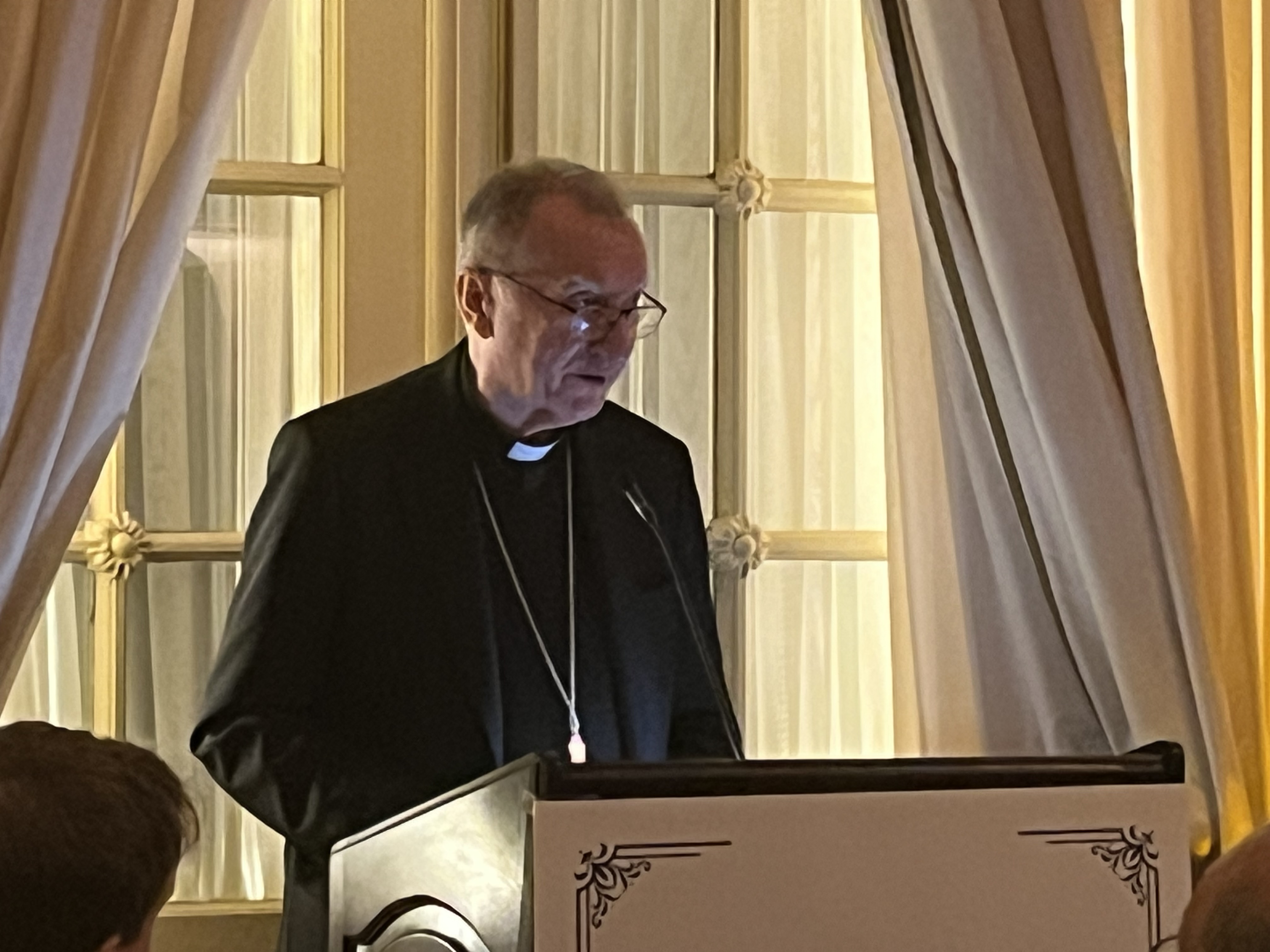
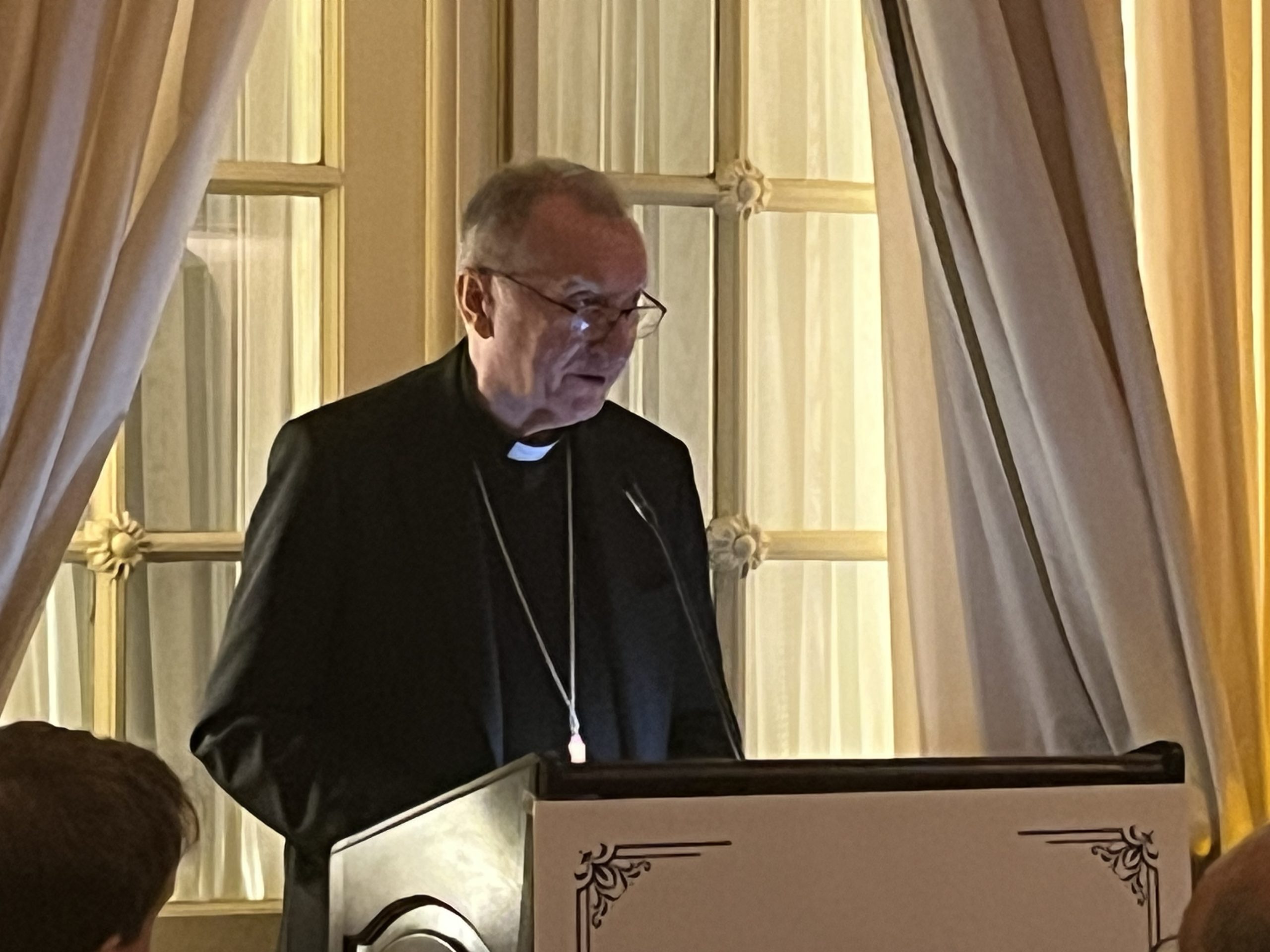
 Christopher Olah, co-founder of AI company Anthropic, says he is grateful to Pope Leo XIV and the Church for “taking up this work of discernment” on artificial intelligence, during his address at the presentation of the encyclical Magnifica Humanitas on May 25, 2026, in the Synod Hall of the Vatican. | Credit: Daniel Ibáñez/EWTN News/Vatican Pool
 
 Olah, who is not a believer, also issued a call to various sectors — religious communities, civil society, academics, and governments — to follow the pope’s example with this document: “to take this seriously, to look closely, and to push events in a better direction. We need informed critics who will tell the labs when we are failing. We need moral voices that the incentives cannot bend.”It is no coincidence that Leo XIV signed his first encyclical on May 15, the same date on which his predecessor Leo XIII promulgated Rerum Novarum (“On New Things”) in 1891 in response to the dehumanization brought about by the Industrial Revolution. As the pope explained, the world today faces a transformation of perhaps even greater scope.“Today we find ourselves facing a transformation of similar magnitude, with perhaps even greater consequences. Artificial intelligence already touches many areas of our lives and affects decisions that shape human coexistence,” he said.The pope expressed particular concern about the impact of new technologies on the conduct of war, which, he warned, is changing dramatically.“Like the earlier Leo, I feel entrusted to look upon another huge transformation with eyes of faith, with lucidity of reason, with openness to mystery, and with cries of the poor and the earth resounding in my heart,” he said.The Holy Father also described the method behind the drafting of this magisterial document, which began in July 2025 at the papal residence in Castel Gandolfo. In it, he seeks to reaffirm what makes us human in a society shaped by technology.He emphasized that Magnifica Humanitas was born from listening: “I have listened to scientists and engineers who work with sincere enthusiasm on technologies capable of alleviating immense suffering, to political leaders and public officials who have perseveringly sought just rules, to parents and teachers who are deeply concerned for the future of younger generations,” he said, without naming individuals.At the same time, he acknowledged hearing “Other very troubling voices have also reached me about increasingly autonomous weapons systems practically beyond any human reach to govern them effectively.”“I hear very troubling accounts of algorithms that can block access to healthcare, employment, and security on the basis of data tainted by prejudice and injustice. And Iʼve heard the silence of those who have no voice when decisions are made — decisions likely to generate new forms of exclusion and suffering,” he lamented.In line with the document — which states that artificial intelligence is not morally neutral — the pope called for AI to be “disarmed.”“The word is strong, I know, but deliberately chosen because this moment needs words capable of attracting attention, awakening consciences, and indicating paths forward for humanity,” he warned.“The Church has long been working for nuclear disarmament, aware that every great technical power can affect peopleʼs lives, and so must be accompanied by adequate moral discernment and public control. Nuclear disarmament remains a service to peace and the dignity of the human family,” he added.Also speaking at the presentation were three cardinals of the Roman Curia: Secretary of State Pietro Parolin; Cardinal Víctor Manuel Fernández, prefect of the Dicastery for the Doctrine of the Faith; and Cardinal Michael Czerny, SJ, prefect of the Dicastery for Promoting Integral Human Development.Two theologians also took the floor: Anna Rowlands, a specialist in Catholic social teaching and migration ethics at Durham University, and Leocadie Lushombo, an expert in political theology and Catholic social thought at the Jesuit School of Theology of Santa Clara University in California.This story was originally published by ACI Prensa, EWTN News' Spanish-language news service. It has been translated and adapted by EWTN News English.

Pope Leo unveils his encyclical: AI has ‘even greater consequences’ than Industrial Revolution #Catholic VATICAN CITY — Pope Leo XIV on Monday personally attended the presentation of his first encyclical, Magnifica Humanitas, in an uncustomary gesture. Upon his arrival at the event, held in the Vaticanʼs Synod Hall, he was greeted with sustained applause from an audience made up of members of the Roman Curia, representatives of academia, and the diplomatic corps.Among the speakers was Canadian Christopher Olah, co-founder of Anthropic, one of the leading artificial intelligence (AI) companies. The firm has recently had tensions with the administration of U.S. President Donald Trump after prohibiting the U.S. Department of Defense from using its software for military purposes.Some observers had raised concerns about including a representative of a major tech company like Anthropic in an event of this kind. The Holy Father himself dispelled any hesitation by thanking Olah for his presence: “What a great sign of hope it is that with our differences we can listen to one another,” he said in his remarks.“This interchange clearly bespeaks the gravity of the moment, as well as confidence that together we can discern the major questions of our time, and so the future of humanity,” he added.In his remarks prior to the pope’s address, Olah echoed the same idea: "That is why, if we want this technology to go well, it is enormously important that there be people outside those incentives — people who care about things going well and insist on safety, who are paying close attention, who are willing to say hard things, who are willing to be our earnest, thoughtful, critics. It is through dialogue and mutual effort, through the push and pull, that humanity will achieve great things. That is what I see in Magnifica Humanitas, and it is why I am grateful to His Holiness and the Church for taking up this work of discernment.” Christopher Olah, co-founder of AI company Anthropic, says he is grateful to Pope Leo XIV and the Church for “taking up this work of discernment” on artificial intelligence, during his address at the presentation of the encyclical Magnifica Humanitas on May 25, 2026, in the Synod Hall of the Vatican. | Credit: Daniel Ibáñez/EWTN News/Vatican Pool Olah, who is not a believer, also issued a call to various sectors — religious communities, civil society, academics, and governments — to follow the pope’s example with this document: “to take this seriously, to look closely, and to push events in a better direction. We need informed critics who will tell the labs when we are failing. We need moral voices that the incentives cannot bend.”It is no coincidence that Leo XIV signed his first encyclical on May 15, the same date on which his predecessor Leo XIII promulgated Rerum Novarum (“On New Things”) in 1891 in response to the dehumanization brought about by the Industrial Revolution. As the pope explained, the world today faces a transformation of perhaps even greater scope.“Today we find ourselves facing a transformation of similar magnitude, with perhaps even greater consequences. Artificial intelligence already touches many areas of our lives and affects decisions that shape human coexistence,” he said.The pope expressed particular concern about the impact of new technologies on the conduct of war, which, he warned, is changing dramatically.“Like the earlier Leo, I feel entrusted to look upon another huge transformation with eyes of faith, with lucidity of reason, with openness to mystery, and with cries of the poor and the earth resounding in my heart,” he said.The Holy Father also described the method behind the drafting of this magisterial document, which began in July 2025 at the papal residence in Castel Gandolfo. In it, he seeks to reaffirm what makes us human in a society shaped by technology.He emphasized that Magnifica Humanitas was born from listening: “I have listened to scientists and engineers who work with sincere enthusiasm on technologies capable of alleviating immense suffering, to political leaders and public officials who have perseveringly sought just rules, to parents and teachers who are deeply concerned for the future of younger generations,” he said, without naming individuals.At the same time, he acknowledged hearing “Other very troubling voices have also reached me about increasingly autonomous weapons systems practically beyond any human reach to govern them effectively.”“I hear very troubling accounts of algorithms that can block access to healthcare, employment, and security on the basis of data tainted by prejudice and injustice. And Iʼve heard the silence of those who have no voice when decisions are made — decisions likely to generate new forms of exclusion and suffering,” he lamented.In line with the document — which states that artificial intelligence is not morally neutral — the pope called for AI to be “disarmed.”“The word is strong, I know, but deliberately chosen because this moment needs words capable of attracting attention, awakening consciences, and indicating paths forward for humanity,” he warned.“The Church has long been working for nuclear disarmament, aware that every great technical power can affect peopleʼs lives, and so must be accompanied by adequate moral discernment and public control. Nuclear disarmament remains a service to peace and the dignity of the human family,” he added.Also speaking at the presentation were three cardinals of the Roman Curia: Secretary of State Pietro Parolin; Cardinal Víctor Manuel Fernández, prefect of the Dicastery for the Doctrine of the Faith; and Cardinal Michael Czerny, SJ, prefect of the Dicastery for Promoting Integral Human Development.Two theologians also took the floor: Anna Rowlands, a specialist in Catholic social teaching and migration ethics at Durham University, and Leocadie Lushombo, an expert in political theology and Catholic social thought at the Jesuit School of Theology of Santa Clara University in California.This story was originally published by ACI Prensa, EWTN News' Spanish-language news service. It has been translated and adapted by EWTN News English.

The pope thanked Anthropic co-founder Christopher Olah for his presence at the presentation: “What a great sign of hope it is that with our differences we can listen to one another.”

Read More
EWTN News explains: What is a papal encylical? #Catholic With the announcement of Pope Leo XIVʼs first papal encyclical, Magnifica Humanitas: “On the Protection of Human Dignity in the Age of Artificial Intelligence," there is much anticipation as to what guidance the pope will provide on the digital revolution and emerging technologies such as AI.But what are papal encyclicals, and what can they reveal about the popeʼs priorities on the world stage and for the Church?The pope’s pastoral letterA papal encyclical is a pastoral letter written by the pope, primarily addressed to bishops but also to Catholics and all people, typically reflecting on Church teachings and suggesting ways to apply them to modern issues.According to the 1917 edition of the Catholic Encyclopedia, encyclicals were “letters sent to all the bishops of Christendom, or at least to all those in one particular country, and intended to guide them in their relations with their flocks.”Encyclicals are part of the pope’s everyday teaching authority, known as his “ordinary magisterium.” They are among the most common ways he presents Church doctrine and serve as authoritative and valuable sources of Catholic teaching and guidance on contemporary topics, including sexuality, Catholic social teaching, and stewardship of the earth.Since Pope Leo XIII, encyclicals have become one of the most common means by which popes are heard across the globe on the most pressing issues of our time.Are Catholics required to believe them?A pope does not normally use an encyclical to make an "ex cathedra" declaration — a solemn, and rare, statement on faith or morals, normally promulgated in an apostolic constitution. Modern examples of "ex cathedra" proclamations include the popes' definitions of the dogmas of the Immaculate Conception (1854) and the Assumption (1950).Encyclicals, however, are not merely letters or expressions of the popeʼs opinion. They carry significant doctrinal weight and are frequently cited as important sources of Catholic teaching.According to canon law, Catholics are required to give “a religious submission of the intellect and will” to these letters and to “take care to avoid those things which do not agree with it.”Simply put, Catholics are to presume that the pope teaches the truth in these letters and to sincerely respect the teachings they contain.Recent encyclical trendsInitially addressed exclusively to bishops, papal encyclicals began reaching broader audiences in the modern period, beginning with Pope Leo XIII’s groundbreaking 1891 encyclical Rerum Novarum. It marked the first time in many years that the bishop of Rome had written a pastoral letter on matters other than doctrine or internal affairs of the Church, instead addressing workers’ rights, the right to private property, and the dangers of socialism.With St. John XXIII’s Pacem in Terris in 1963, pontiffs increasingly addressed their letters to “all men of goodwill,” shifting from a mainly Catholic audience to the global stage.
 
 Pope Leo XIII in 1898. | Credit: Francesco De Federicis/Wikimedia Commons
 
 Since the Second Vatican Council, papal encyclicals have increasingly focused on threats to the dignity of the human person and authentic human development. St. Paul VI wrote Humanae Vitae in 1968, reiterating and applying Church teaching to the question of artificial birth control. St. John Paul II dedicated four encyclicals to promoting Catholic social teaching, building on Leo XIII’s Rerum Novarum. Pope Francis’ four encyclicals largely addressed the preservation of ecology and universal fraternity.Despite the importance given to these letters in the modern period, the average number of encyclicals per pope is relatively small. Francis wrote only four, while Benedict XVI, his immediate predecessor, wrote just three. John Paul II wrote 14, but the average number of encyclicals per pope since the Second Vatican Council has been just seven.Leo XIII has the most encyclicals of any pope, with 88, 11 of which are dedicated to the rosary.Pope Leo XIVʼs first encyclical builds on othersPope Leo XIV indicated at the beginning of his pontificate that he intended to follow in the footsteps of Pope Leo XIII, his predecessor, by responding to todayʼs industrial revolution: “developments in the field of artificial intelligence.” May 15 marked the 135th anniversary of the publication of Pope Leo XIII’s 1891 encyclical on capital and labor, Rerum Novarum: “Of New Things” — the first in a long line of social encyclicals produced in the modern era of the Catholic Church.Addressing the College of Cardinals on May 10, 2025, Leo said: “In our own day, the Church offers to everyone the treasury of her social teaching in response to another industrial revolution and to developments in the field of artificial intelligence that pose new challenges for the defense of human dignity, justice, and labor.”Magnifica Humanitas is expected to be released on May 25 at 11:30 a.m. Rome time in the Vaticanʼs Synod Hall.

EWTN News explains: What is a papal encylical? #Catholic With the announcement of Pope Leo XIVʼs first papal encyclical, Magnifica Humanitas: “On the Protection of Human Dignity in the Age of Artificial Intelligence," there is much anticipation as to what guidance the pope will provide on the digital revolution and emerging technologies such as AI.But what are papal encyclicals, and what can they reveal about the popeʼs priorities on the world stage and for the Church?The pope’s pastoral letterA papal encyclical is a pastoral letter written by the pope, primarily addressed to bishops but also to Catholics and all people, typically reflecting on Church teachings and suggesting ways to apply them to modern issues.According to the 1917 edition of the Catholic Encyclopedia, encyclicals were “letters sent to all the bishops of Christendom, or at least to all those in one particular country, and intended to guide them in their relations with their flocks.”Encyclicals are part of the pope’s everyday teaching authority, known as his “ordinary magisterium.” They are among the most common ways he presents Church doctrine and serve as authoritative and valuable sources of Catholic teaching and guidance on contemporary topics, including sexuality, Catholic social teaching, and stewardship of the earth.Since Pope Leo XIII, encyclicals have become one of the most common means by which popes are heard across the globe on the most pressing issues of our time.Are Catholics required to believe them?A pope does not normally use an encyclical to make an "ex cathedra" declaration — a solemn, and rare, statement on faith or morals, normally promulgated in an apostolic constitution. Modern examples of "ex cathedra" proclamations include the popes' definitions of the dogmas of the Immaculate Conception (1854) and the Assumption (1950).Encyclicals, however, are not merely letters or expressions of the popeʼs opinion. They carry significant doctrinal weight and are frequently cited as important sources of Catholic teaching.According to canon law, Catholics are required to give “a religious submission of the intellect and will” to these letters and to “take care to avoid those things which do not agree with it.”Simply put, Catholics are to presume that the pope teaches the truth in these letters and to sincerely respect the teachings they contain.Recent encyclical trendsInitially addressed exclusively to bishops, papal encyclicals began reaching broader audiences in the modern period, beginning with Pope Leo XIII’s groundbreaking 1891 encyclical Rerum Novarum. It marked the first time in many years that the bishop of Rome had written a pastoral letter on matters other than doctrine or internal affairs of the Church, instead addressing workers’ rights, the right to private property, and the dangers of socialism.With St. John XXIII’s Pacem in Terris in 1963, pontiffs increasingly addressed their letters to “all men of goodwill,” shifting from a mainly Catholic audience to the global stage. Pope Leo XIII in 1898. | Credit: Francesco De Federicis/Wikimedia Commons Since the Second Vatican Council, papal encyclicals have increasingly focused on threats to the dignity of the human person and authentic human development. St. Paul VI wrote Humanae Vitae in 1968, reiterating and applying Church teaching to the question of artificial birth control. St. John Paul II dedicated four encyclicals to promoting Catholic social teaching, building on Leo XIII’s Rerum Novarum. Pope Francis’ four encyclicals largely addressed the preservation of ecology and universal fraternity.Despite the importance given to these letters in the modern period, the average number of encyclicals per pope is relatively small. Francis wrote only four, while Benedict XVI, his immediate predecessor, wrote just three. John Paul II wrote 14, but the average number of encyclicals per pope since the Second Vatican Council has been just seven.Leo XIII has the most encyclicals of any pope, with 88, 11 of which are dedicated to the rosary.Pope Leo XIVʼs first encyclical builds on othersPope Leo XIV indicated at the beginning of his pontificate that he intended to follow in the footsteps of Pope Leo XIII, his predecessor, by responding to todayʼs industrial revolution: “developments in the field of artificial intelligence.” May 15 marked the 135th anniversary of the publication of Pope Leo XIII’s 1891 encyclical on capital and labor, Rerum Novarum: “Of New Things” — the first in a long line of social encyclicals produced in the modern era of the Catholic Church.Addressing the College of Cardinals on May 10, 2025, Leo said: “In our own day, the Church offers to everyone the treasury of her social teaching in response to another industrial revolution and to developments in the field of artificial intelligence that pose new challenges for the defense of human dignity, justice, and labor.”Magnifica Humanitas is expected to be released on May 25 at 11:30 a.m. Rome time in the Vaticanʼs Synod Hall.

Papal encyclicals are a powerful way the pope shapes global debates and articulates Church doctrine, but how should Catholics understand them?

Read More