Inequality

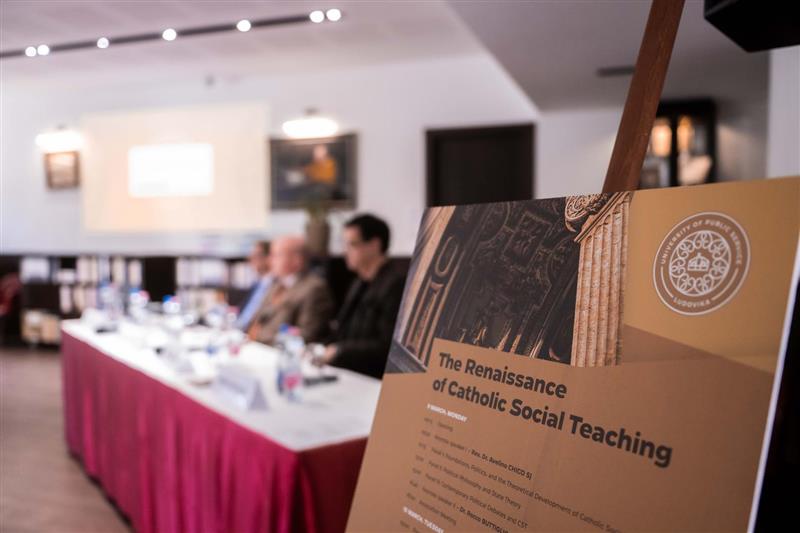
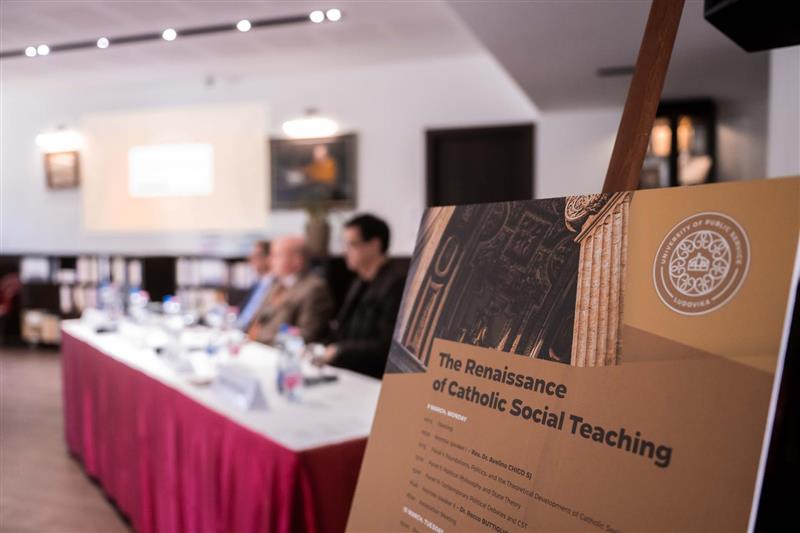
From Budapest to Princeton, Catholic scholars mobilize to reconnect faith and political life #Catholic Catholic political and social thought, one of the foundational intellectual traditions of Western civilization, is poised for renewal as a new international initiative seeks to bring it back into conversation with new generations and decision-makers of tomorrow.CatholicPOST, the Association for the Renewal of Catholic Political and Social Thought, was born from the conviction — shared by a group of European scholars during the COVID-19 lockdowns — that the health crisis had exposed not only the fragility of modern Western societies but also a deeper anthropological confusion threatening their social foundations.That vision took concrete form at the inaugural conference of the association, titled “The Renaissance of Catholic Social Teaching,” held March 9–10 at the Ludovika University of Public Service in Budapest and attended by international academics and Vatican and Hungarian Catholic Church officials.“COVID was a tragic moment in contemporary history, and it required thinking back again on the basics of social life,” Professor Ferenc Hörcher — a Hungarian professor of political philosophy, historian of ideas, and the association’s president — told EWTN News. “And that is something you can do best on the grounds of the Catholic tradition, pointing back to Aristotle and forward to the social teaching of the Church.”For Hörcher — also director of the Research Institute for Politics and Government at Ludovika — the timing has only gained relevance with the election of Pope Leo XIV, whose choice of name evokes Pope Leo XIII, author of the landmark 1891 encyclical Rerum Novarum, widely regarded as the founding text of modern Catholic social teaching.Neglected intellectual inheritanceOne of CatholicPOST’s most urgent tasks is to restore Catholic social doctrine to its rightful place in intellectual life and academic discussion — a place it has progressively lost over the past century.Secularization, according to the association’s founders, has pushed Catholic intellectual traditions to the margins of public discourse. Even conservative academic circles, in their view, have often drawn more from Anglo-Saxon traditions with Protestant roots than from Catholic social thought.“Catholicism finds itself in the second row,” Hörcher said, “despite the fact that our modern and postmodern civilization is essentially built on it.”The association presents itself as a scholarly, nonpartisan platform, open not only to Catholics but also to thinkers willing to engage seriously with the tradition.“The Church cannot enter directly into political debate — that is not its mission,” Hörcher said. “But we, as Catholic intellectuals and practitioners in our own professions, can take that on.”Deeper stakesThe initiative of the group, consisting of, among others, American, Swedish, Maltese, and Hungarian scholars, emerges at a moment of mounting polarization across Western societies, as clashes over gender identity, family, bioethics, and the very understanding of the human person grow increasingly confrontational — and, at times, violent.For Hörcher, this is precisely why a recovery of serious Catholic political and social thought matters. CatholicPOST, he said, aims to reconnect contemporary debates with an intellectual tradition capable of addressing questions of philosophical anthropology that go far beyond basic politics.That ambition also helps explain the caliber of thinkers already orbiting the initiative, from French political philosopher Pierre Manent, a leading contemporary thinker on natural law and the moral foundations of political life, to scholars at the University of Notre Dame, home to the natural law tradition developed by John Finnis, and Princeton’s James Madison Program, led by natural law theorist Robert George — a circle Hörcher is set to join for a year as a visiting scholar to Princeton’s Department of Politics.The initiative has also attracted attention in Rome. In his keynote speech at the Budapest conference, Father Avelino Chico, head of office at the Dicastery for Promoting Integral Human Development, presented Catholic social teaching as a living intellectual tradition still evolving in response to the “new things” of each age — from industrial modernity in the time of Rerum Novarum to contemporary social challenges such as artificial intelligence, migration, ecological crisis, and widening inequality.Chico portrayed Pope Leo XIV as continuing that trajectory, seeking to integrate the legacy of Leo XIII and Pope Francis through the lens of integral human development — an approach that takes seriously not only economic realities but also the spiritual, cultural, and political dimensions of human life.Supporting new generationsThe association is already planning a second conference in Kraków, a deliberate choice honoring Poland’s enduring Catholic intellectual tradition and the legacy of St. John Paul II.Registration in the U.S. is also underway, as CatholicPOST has roots in American educational institutions like Christendom College, as a result of its aim to strengthen its international footprint and deepen transatlantic academic ties.For Hörcher, however, the deeper hope is not merely institutional growth but helping provide intellectual substance to what he sees as a broader spiritual movement among younger Westerners rediscovering Christianity. “We hope to give munition,” he said, “intellectual support for those young people.”He sees CatholicPOST as part of a recurring pattern in Catholic history. “Each century brought a revival of Catholic political thought,” he said, citing the neo-scholastic revival of 16th- to 17th-century Spain, the Holy Alliance of the post-Napoleonic Age, the social teaching inaugurated by Leo XIII, and the contribution of Catholic thinkers such as Jacques Maritain to the postwar rise of the human rights framework.“These historical precedents help us envision what a new renaissance might look like — and why it is needed now."

From Budapest to Princeton, Catholic scholars mobilize to reconnect faith and political life #Catholic Catholic political and social thought, one of the foundational intellectual traditions of Western civilization, is poised for renewal as a new international initiative seeks to bring it back into conversation with new generations and decision-makers of tomorrow.CatholicPOST, the Association for the Renewal of Catholic Political and Social Thought, was born from the conviction — shared by a group of European scholars during the COVID-19 lockdowns — that the health crisis had exposed not only the fragility of modern Western societies but also a deeper anthropological confusion threatening their social foundations.That vision took concrete form at the inaugural conference of the association, titled “The Renaissance of Catholic Social Teaching,” held March 9–10 at the Ludovika University of Public Service in Budapest and attended by international academics and Vatican and Hungarian Catholic Church officials.“COVID was a tragic moment in contemporary history, and it required thinking back again on the basics of social life,” Professor Ferenc Hörcher — a Hungarian professor of political philosophy, historian of ideas, and the association’s president — told EWTN News. “And that is something you can do best on the grounds of the Catholic tradition, pointing back to Aristotle and forward to the social teaching of the Church.”For Hörcher — also director of the Research Institute for Politics and Government at Ludovika — the timing has only gained relevance with the election of Pope Leo XIV, whose choice of name evokes Pope Leo XIII, author of the landmark 1891 encyclical Rerum Novarum, widely regarded as the founding text of modern Catholic social teaching.Neglected intellectual inheritanceOne of CatholicPOST’s most urgent tasks is to restore Catholic social doctrine to its rightful place in intellectual life and academic discussion — a place it has progressively lost over the past century.Secularization, according to the association’s founders, has pushed Catholic intellectual traditions to the margins of public discourse. Even conservative academic circles, in their view, have often drawn more from Anglo-Saxon traditions with Protestant roots than from Catholic social thought.“Catholicism finds itself in the second row,” Hörcher said, “despite the fact that our modern and postmodern civilization is essentially built on it.”The association presents itself as a scholarly, nonpartisan platform, open not only to Catholics but also to thinkers willing to engage seriously with the tradition.“The Church cannot enter directly into political debate — that is not its mission,” Hörcher said. “But we, as Catholic intellectuals and practitioners in our own professions, can take that on.”Deeper stakesThe initiative of the group, consisting of, among others, American, Swedish, Maltese, and Hungarian scholars, emerges at a moment of mounting polarization across Western societies, as clashes over gender identity, family, bioethics, and the very understanding of the human person grow increasingly confrontational — and, at times, violent.For Hörcher, this is precisely why a recovery of serious Catholic political and social thought matters. CatholicPOST, he said, aims to reconnect contemporary debates with an intellectual tradition capable of addressing questions of philosophical anthropology that go far beyond basic politics.That ambition also helps explain the caliber of thinkers already orbiting the initiative, from French political philosopher Pierre Manent, a leading contemporary thinker on natural law and the moral foundations of political life, to scholars at the University of Notre Dame, home to the natural law tradition developed by John Finnis, and Princeton’s James Madison Program, led by natural law theorist Robert George — a circle Hörcher is set to join for a year as a visiting scholar to Princeton’s Department of Politics.The initiative has also attracted attention in Rome. In his keynote speech at the Budapest conference, Father Avelino Chico, head of office at the Dicastery for Promoting Integral Human Development, presented Catholic social teaching as a living intellectual tradition still evolving in response to the “new things” of each age — from industrial modernity in the time of Rerum Novarum to contemporary social challenges such as artificial intelligence, migration, ecological crisis, and widening inequality.Chico portrayed Pope Leo XIV as continuing that trajectory, seeking to integrate the legacy of Leo XIII and Pope Francis through the lens of integral human development — an approach that takes seriously not only economic realities but also the spiritual, cultural, and political dimensions of human life.Supporting new generationsThe association is already planning a second conference in Kraków, a deliberate choice honoring Poland’s enduring Catholic intellectual tradition and the legacy of St. John Paul II.Registration in the U.S. is also underway, as CatholicPOST has roots in American educational institutions like Christendom College, as a result of its aim to strengthen its international footprint and deepen transatlantic academic ties.For Hörcher, however, the deeper hope is not merely institutional growth but helping provide intellectual substance to what he sees as a broader spiritual movement among younger Westerners rediscovering Christianity. “We hope to give munition,” he said, “intellectual support for those young people.”He sees CatholicPOST as part of a recurring pattern in Catholic history. “Each century brought a revival of Catholic political thought,” he said, citing the neo-scholastic revival of 16th- to 17th-century Spain, the Holy Alliance of the post-Napoleonic Age, the social teaching inaugurated by Leo XIII, and the contribution of Catholic thinkers such as Jacques Maritain to the postwar rise of the human rights framework.“These historical precedents help us envision what a new renaissance might look like — and why it is needed now."

CatholicPOST seeks to restore Catholic social doctrine to its rightful place in intellectual life and academic discussion.
Read More
Leo XIV makes Marian pilgrimage on 1-year anniversary as pope #Catholic POMPEI, Italy — Pope Leo XIV placed his pontificate under the protection of Mary during a visit to two cities in southern Italy on Friday — the first anniversary of his election to the papacy on May 8, 2025.Leo celebrated Mass for an estimated 20,000 people outside the Shrine of Our Lady of the Rosary of Pompei, whose feast day is May 8, during the day trip to Pompei and Naples.“Exactly one year ago,” the pope said in his homily, amid thunderous applause from the assembled faithful, “when the ministry of successor of Peter was entrusted to me, it was precisely the day of the Supplication to the Virgin, this beautiful day of the Supplication to the Virgin of the Holy Rosary of Pompei! I therefore had to come here, to place my service under the protection of the Holy Virgin.”“Having then chosen the name Leo places me in the footsteps of Leo XIII, who, among his many merits, also developed a rich magisterium on the holy rosary. Added to all of this is the recent canonization of St. Bartolo Longo, apostle of the rosary,” Leo added.Before Mass, the pope — who flew about 150 miles from Rome to Pompei by helicopter early on May 8 — visited the Shrine of Our Lady of Pompei. Despite forecasts of rain, thousands of people filled Bartolo Longo Square from the first light of dawn.At the shrine, the Holy Father met the “Temple of Charity,” an organization that welcomes and assists people coming from situations of hardship.
 
 Pope Leo XIV meets the “Temple of Charity,” an organization that welcomes and assists people coming from situations of hardship, during a pastoral visit to Pompei, Italy, on May 8, 2026. | Credit: Vatican Media
 
 “Good morning, Pompei! Our Mother Mary — our mom — is always with us,” the pope said, informally greeting the faithful who were waiting for Mass. Before the Eucharistic celebration, Leo also greeted the sick and people with disabilities inside the shrine.The pope’s homily at the outdoor Mass focused on the power of the rosary.“The Hail Mary repeated in the holy rosary is an act of love,” he said. “Generations of believers have been shaped and safeguarded by this prayer — simple and popular, yet at the same time capable of mystical heights and a treasure chest of the most essential Christian theology.”He also called the Hail Mary prayer “an invitation to joy.”“It tells Mary, and in her all of us, that upon the ruins of our humanity, tried by sin and therefore always inclined to abuses, oppression, and war, the caress of God has come — the caress of mercy, which in Jesus takes on a human face. Mary thus becomes the mother of mercy.”“When St. John Paul II proclaimed the Year of the Rosary [2002–2003], he wished to place it in a special way under the gaze of the Virgin of Pompei,” Leo XIV continued. “Times have not improved since then. The wars still being fought in so many regions of the world call for renewed commitment, not only economic and political, but also spiritual and religious.”“Peace is born within the heart,” he added. “We cannot resign ourselves to the images of death that the news presents to us every day. St. Bartolo Longo, reflecting on Mary’s faith, called her ‘omnipotent by grace.’ Through her intercession, may an abundant outpouring of mercy come from the God of peace — touching hearts, calming resentments and fratricidal hatred, and enlightening those who bear special responsibilities of governance. No earthly power will save the world, but only the divine power of love.”At the conclusion of Mass, Pope Leo prayed together with the faithful the traditional Supplication to Our Lady of Pompei.The Supplication to the Queen of the Holy Rosary of Pompei was written in 1883 by St. Bartolo Longo. It is solemnly recited twice a year, at noon on May 8 and on the first Sunday of October. The supplication was composed in response to the invitation that Pope Leo XIII addressed to Catholics in his first encyclical on the rosary, Supremi Apostolatus Officio, calling for a spiritual commitment to confront the evils of society.
 
 Pope Leo XIV prays at the Cathedral of the Assumption of Mary in Naples, Italy, on Friday, May 8, 2026. | Credit: Vatican Media
 
 Visit to NaplesAfter lunch in private, Pope Leo took a helicopter about 16 miles northwest to Naples, the capital city of the Campania region of Italy, where he met with priests and religious brothers and sisters in the Naples cathedral.During his visit to the cathedral, Leo stopped in the Chapel of the Treasure of St. Januarius, where the miracle of the liquefaction of the blood of St. Januarius had taken place on May 3. The pope kissed the relic and with it blessed those in the packed cathedral.After some time in adoration of the Blessed Sacrament, the pope addressed the Catholic community: “What I therefore ask of you is this: Listen to one another, walk together, create a symphony of charisms and ministries, and in this way find ways to move from a pastoral ministry of maintenance to a missionary pastoral ministry, capable of engaging with the concrete lives of people.”“In a city marked by inequality, youth unemployment, school dropout rates, and fragile family situations, the proclamation of the Gospel cannot be separated from a concrete and supportive presence that involves everyone — priests, religious, and laypeople alike,” he added.Pope Leo XIV then arrived in the popemobile to Piazza del Plebiscito, the main square of Naples, where authorities estimate about 50,000 people were present.The pope’s address focused on peace and justice: a peace that “begins in the human heart, passes through relationships, takes root in neighborhoods and on the outskirts, and expands to embrace the entire city and the world.” A peace that needs justice “to be authentic” and that “can never be separated from charity.”Leo also spoke about the “Neapolitan paradox:” on the one hand, the significant increase in tourism, which however struggles to correspond to “economic dynamism capable of truly involving the entire social community.” He described a city “marked by a social divide that no longer separates the center from the outskirts but is even evident within every area, with existential peripheries nested even in the heart of the historic center.” Faced with these disparities, Pope Leo XIV recalled the presence of the state as “more necessary than ever, to provide security and confidence to citizens and to take space away from organized crime.”He then encouraged moving forward with the projects of hope taking shape in the city: “Gather your strength, work together, walk united — institutions, Church, and civil society — to connect the city, protect your children from the snares of hardship and evil, and restore to Naples its vocation to be a capital of humanity and hope.”This story was first published in multiple parts by ACI Stampa, the Italian-language sister service of EWTN News. It has been translated and adapted by EWTN News English.

Leo XIV makes Marian pilgrimage on 1-year anniversary as pope #Catholic POMPEI, Italy — Pope Leo XIV placed his pontificate under the protection of Mary during a visit to two cities in southern Italy on Friday — the first anniversary of his election to the papacy on May 8, 2025.Leo celebrated Mass for an estimated 20,000 people outside the Shrine of Our Lady of the Rosary of Pompei, whose feast day is May 8, during the day trip to Pompei and Naples.“Exactly one year ago,” the pope said in his homily, amid thunderous applause from the assembled faithful, “when the ministry of successor of Peter was entrusted to me, it was precisely the day of the Supplication to the Virgin, this beautiful day of the Supplication to the Virgin of the Holy Rosary of Pompei! I therefore had to come here, to place my service under the protection of the Holy Virgin.”“Having then chosen the name Leo places me in the footsteps of Leo XIII, who, among his many merits, also developed a rich magisterium on the holy rosary. Added to all of this is the recent canonization of St. Bartolo Longo, apostle of the rosary,” Leo added.Before Mass, the pope — who flew about 150 miles from Rome to Pompei by helicopter early on May 8 — visited the Shrine of Our Lady of Pompei. Despite forecasts of rain, thousands of people filled Bartolo Longo Square from the first light of dawn.At the shrine, the Holy Father met the “Temple of Charity,” an organization that welcomes and assists people coming from situations of hardship. Pope Leo XIV meets the “Temple of Charity,” an organization that welcomes and assists people coming from situations of hardship, during a pastoral visit to Pompei, Italy, on May 8, 2026. | Credit: Vatican Media “Good morning, Pompei! Our Mother Mary — our mom — is always with us,” the pope said, informally greeting the faithful who were waiting for Mass. Before the Eucharistic celebration, Leo also greeted the sick and people with disabilities inside the shrine.The pope’s homily at the outdoor Mass focused on the power of the rosary.“The Hail Mary repeated in the holy rosary is an act of love,” he said. “Generations of believers have been shaped and safeguarded by this prayer — simple and popular, yet at the same time capable of mystical heights and a treasure chest of the most essential Christian theology.”He also called the Hail Mary prayer “an invitation to joy.”“It tells Mary, and in her all of us, that upon the ruins of our humanity, tried by sin and therefore always inclined to abuses, oppression, and war, the caress of God has come — the caress of mercy, which in Jesus takes on a human face. Mary thus becomes the mother of mercy.”“When St. John Paul II proclaimed the Year of the Rosary [2002–2003], he wished to place it in a special way under the gaze of the Virgin of Pompei,” Leo XIV continued. “Times have not improved since then. The wars still being fought in so many regions of the world call for renewed commitment, not only economic and political, but also spiritual and religious.”“Peace is born within the heart,” he added. “We cannot resign ourselves to the images of death that the news presents to us every day. St. Bartolo Longo, reflecting on Mary’s faith, called her ‘omnipotent by grace.’ Through her intercession, may an abundant outpouring of mercy come from the God of peace — touching hearts, calming resentments and fratricidal hatred, and enlightening those who bear special responsibilities of governance. No earthly power will save the world, but only the divine power of love.”At the conclusion of Mass, Pope Leo prayed together with the faithful the traditional Supplication to Our Lady of Pompei.The Supplication to the Queen of the Holy Rosary of Pompei was written in 1883 by St. Bartolo Longo. It is solemnly recited twice a year, at noon on May 8 and on the first Sunday of October. The supplication was composed in response to the invitation that Pope Leo XIII addressed to Catholics in his first encyclical on the rosary, Supremi Apostolatus Officio, calling for a spiritual commitment to confront the evils of society. Pope Leo XIV prays at the Cathedral of the Assumption of Mary in Naples, Italy, on Friday, May 8, 2026. | Credit: Vatican Media Visit to NaplesAfter lunch in private, Pope Leo took a helicopter about 16 miles northwest to Naples, the capital city of the Campania region of Italy, where he met with priests and religious brothers and sisters in the Naples cathedral.During his visit to the cathedral, Leo stopped in the Chapel of the Treasure of St. Januarius, where the miracle of the liquefaction of the blood of St. Januarius had taken place on May 3. The pope kissed the relic and with it blessed those in the packed cathedral.After some time in adoration of the Blessed Sacrament, the pope addressed the Catholic community: “What I therefore ask of you is this: Listen to one another, walk together, create a symphony of charisms and ministries, and in this way find ways to move from a pastoral ministry of maintenance to a missionary pastoral ministry, capable of engaging with the concrete lives of people.”“In a city marked by inequality, youth unemployment, school dropout rates, and fragile family situations, the proclamation of the Gospel cannot be separated from a concrete and supportive presence that involves everyone — priests, religious, and laypeople alike,” he added.Pope Leo XIV then arrived in the popemobile to Piazza del Plebiscito, the main square of Naples, where authorities estimate about 50,000 people were present.The pope’s address focused on peace and justice: a peace that “begins in the human heart, passes through relationships, takes root in neighborhoods and on the outskirts, and expands to embrace the entire city and the world.” A peace that needs justice “to be authentic” and that “can never be separated from charity.”Leo also spoke about the “Neapolitan paradox:” on the one hand, the significant increase in tourism, which however struggles to correspond to “economic dynamism capable of truly involving the entire social community.” He described a city “marked by a social divide that no longer separates the center from the outskirts but is even evident within every area, with existential peripheries nested even in the heart of the historic center.” Faced with these disparities, Pope Leo XIV recalled the presence of the state as “more necessary than ever, to provide security and confidence to citizens and to take space away from organized crime.”He then encouraged moving forward with the projects of hope taking shape in the city: “Gather your strength, work together, walk united — institutions, Church, and civil society — to connect the city, protect your children from the snares of hardship and evil, and restore to Naples its vocation to be a capital of humanity and hope.”This story was first published in multiple parts by ACI Stampa, the Italian-language sister service of EWTN News. It has been translated and adapted by EWTN News English.

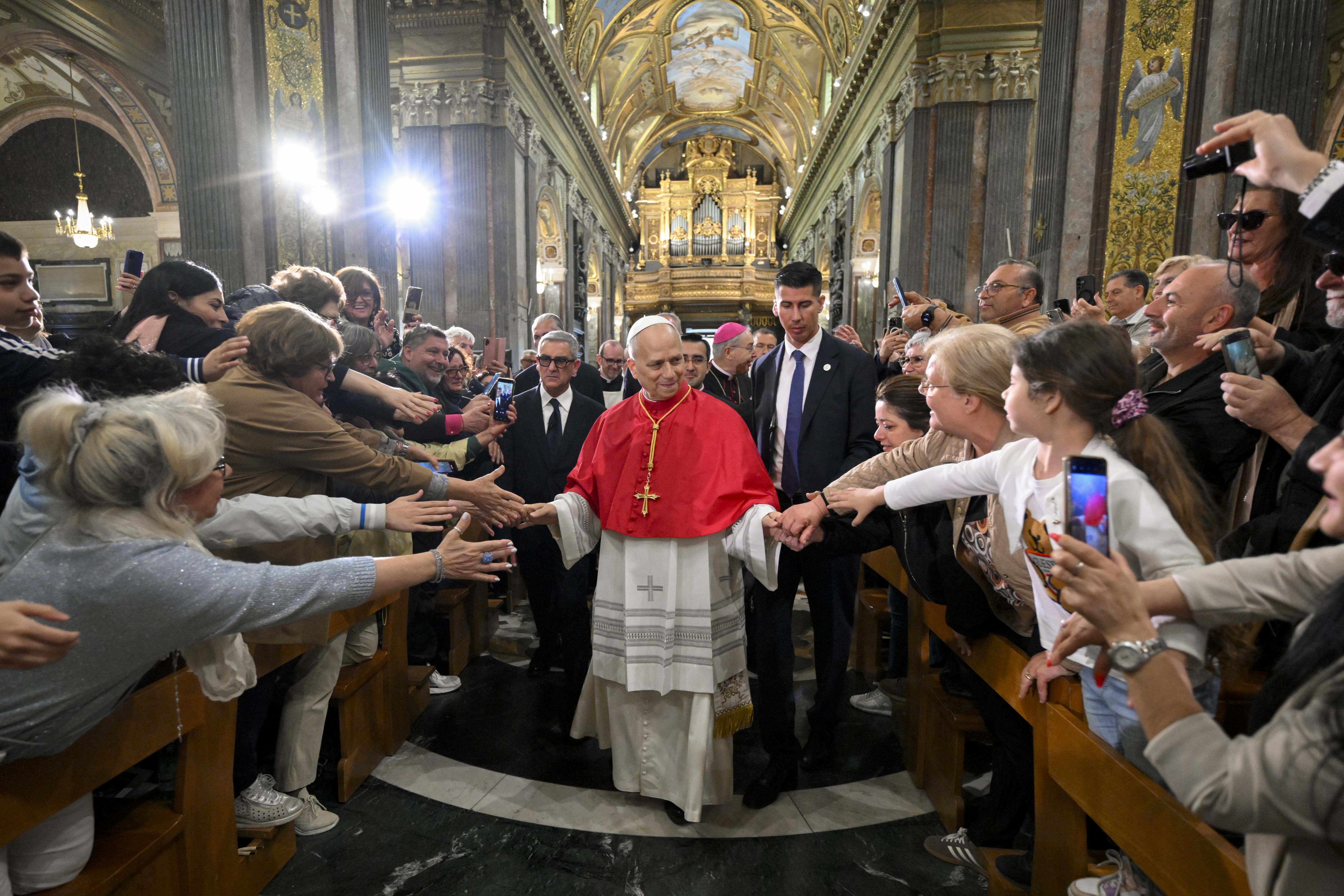
Pope Leo XIV traveled around 150 miles south of Rome to the Italian cities of Pompei and Naples on the first anniversary of his election.
Read More
Pope Leo XIV in Algeria: ‘I am here among you as a pilgrim of peace’ #Catholic ALGIERS, Algeria — Pope Leo XIV on Monday presented himself to Algeria’s diplomatic corps and civil society as “a pilgrim of peace,” urging a more just international order, warning against exclusion and inequality, and praising those who refuse to be “blinded by power or wealth.”Peace remained the central theme of the pope’s first day in Algeria, following his earlier stop at the Martyrs’ Memorial, where he delivered an appeal for peace and reconciliation.Speaking in French at the Djamaa el Djazair Conference Center, Leo recalled his previous visits to Algeria in 2001 and 2013 to Annaba, the ancient see of St. Augustine, whose spiritual legacy has long shaped the Augustinian order to which the pope belongs.“I am here among you as a pilgrim of peace, eager to meet the noble Algerian people,” the pope said. “We are brothers and sisters, for we have the same Father in heaven.”Leo said the “profound religious sense of the Algerian people” fosters “a culture of encounter and reconciliation,” adding that his visit also seeks to be a sign of that spirit.“In a world full of conflicts and misunderstandings, let us meet and strive for mutual understanding, recognizing that we are one family!” he said. “Today, the simplicity of this awareness is the key to opening many doors that are closed.”Addressing an audience of about 1,400 people from civil society and the diplomatic corps, the pope praised the resilience of the Algerian people, saying they had never been defeated by their trials because of their spirit of solidarity, hospitality, and community.“They are the truly strong ones, to whom the future belongs: those who do not allow themselves to be blinded by power or wealth, and those who refuse to sacrifice the dignity of their fellow citizens for the sake of personal or collective gain,” he said.Leo also highlighted the Algerian understanding of hospitality and almsgiving, reflected in the word “sadaka,” which he noted can also mean justice.“The one who accumulates wealth and remains indifferent to others is unjust,” the pope said, calling this vision of justice both “simple and radical” because it recognizes the image of God in others. “Indeed, a religion without mercy and a society without solidarity are a scandal in God’s eyes.”At the same time, he warned that many societies that consider themselves advanced are falling ever deeper into inequality and exclusion, while “people and organizations that dominate others destroy the world.” He said Africa knows this reality well and suggested that Algeria’s historical experience gives it a critical perspective on global power balances.“If you are able to engage in dialogue regarding the concerns of all and show solidarity with the sufferings of so many countries near and far, then you will be able to contribute to both envisioning and bringing about greater justice among peoples,” Leo said.He added that this task is especially urgent “in the face of continuous violations of international law and neocolonial tendencies.”Drawing on the teaching of Benedict XVI and Pope Francis, Leo called on Algeria’s authorities not to fear a broader social participation by those on the margins.“I therefore urge those of you who hold positions of authority in this country not to fear this outlook but to promote a vibrant, dynamic, and free civil society, in which young people in particular are recognized as capable of helping to broaden the horizon of hope for all,” he said.“The true strength of a nation lies in the cooperation of everyone in pursuing the common good,” he continued. “Authorities are called not to dominate but to serve the people and foster their development.”The pope also pointed to Algeria’s unique role as “a bridge between North and South, and between East and West,” describing the Mediterranean and the Sahara as geographical and spiritual crossroads rich with human and cultural meaning.“Woe to us if we turn them into graveyards where hope also dies!” he said. “Let us multiply oases of peace; let us denounce and remove the causes of despair; and let us oppose those who profit from the misfortune of others!”“For illicit are the gains of those who exploit human life, whose dignity is inviolable,” he added.Leo then broadened his reflection to the place of religion in modern society, noting that Algeria, like much of the world, experiences tensions between religious sensibility and modern life. He warned against both fundamentalism and secularization when they distort the true sense of God and human dignity.“Religious symbols and words can become, on the one hand, blasphemous languages of violence and oppression, or on the other, empty signs in the immense marketplace of consumption that does not satisfy us,” he said.Still, the pope insisted that such polarization should not lead to despair.“We must educate people in critical thinking and freedom, in listening and dialogue, and in the trust that leads us to recognize in those who are different fellow travelers and not threats,” he said. “We must work toward the healing of memory and reconciliation among former adversaries.”In his introduction, Algerian President Abdelmadjid Tebboune called Leo’s presence the first visit of a pope to Algeria and said it gave the occasion “a unique resonance.” He invoked both St. Augustine and Emir Abdelkader as enduring models at a time of accelerating change and weakening moral values.Tebboune also praised the pope’s moral authority and his support for social justice while reaffirming Algeria’s commitment to working with the Holy Father to promote dialogue, coexistence, and cooperation over division and conflict.This story was first published by ACI Stampa, the Italian-language sister service of EWTN News. It has been translated and adapted by EWTN News English.

Pope Leo XIV in Algeria: ‘I am here among you as a pilgrim of peace’ #Catholic ALGIERS, Algeria — Pope Leo XIV on Monday presented himself to Algeria’s diplomatic corps and civil society as “a pilgrim of peace,” urging a more just international order, warning against exclusion and inequality, and praising those who refuse to be “blinded by power or wealth.”Peace remained the central theme of the pope’s first day in Algeria, following his earlier stop at the Martyrs’ Memorial, where he delivered an appeal for peace and reconciliation.Speaking in French at the Djamaa el Djazair Conference Center, Leo recalled his previous visits to Algeria in 2001 and 2013 to Annaba, the ancient see of St. Augustine, whose spiritual legacy has long shaped the Augustinian order to which the pope belongs.“I am here among you as a pilgrim of peace, eager to meet the noble Algerian people,” the pope said. “We are brothers and sisters, for we have the same Father in heaven.”Leo said the “profound religious sense of the Algerian people” fosters “a culture of encounter and reconciliation,” adding that his visit also seeks to be a sign of that spirit.“In a world full of conflicts and misunderstandings, let us meet and strive for mutual understanding, recognizing that we are one family!” he said. “Today, the simplicity of this awareness is the key to opening many doors that are closed.”Addressing an audience of about 1,400 people from civil society and the diplomatic corps, the pope praised the resilience of the Algerian people, saying they had never been defeated by their trials because of their spirit of solidarity, hospitality, and community.“They are the truly strong ones, to whom the future belongs: those who do not allow themselves to be blinded by power or wealth, and those who refuse to sacrifice the dignity of their fellow citizens for the sake of personal or collective gain,” he said.Leo also highlighted the Algerian understanding of hospitality and almsgiving, reflected in the word “sadaka,” which he noted can also mean justice.“The one who accumulates wealth and remains indifferent to others is unjust,” the pope said, calling this vision of justice both “simple and radical” because it recognizes the image of God in others. “Indeed, a religion without mercy and a society without solidarity are a scandal in God’s eyes.”At the same time, he warned that many societies that consider themselves advanced are falling ever deeper into inequality and exclusion, while “people and organizations that dominate others destroy the world.” He said Africa knows this reality well and suggested that Algeria’s historical experience gives it a critical perspective on global power balances.“If you are able to engage in dialogue regarding the concerns of all and show solidarity with the sufferings of so many countries near and far, then you will be able to contribute to both envisioning and bringing about greater justice among peoples,” Leo said.He added that this task is especially urgent “in the face of continuous violations of international law and neocolonial tendencies.”Drawing on the teaching of Benedict XVI and Pope Francis, Leo called on Algeria’s authorities not to fear a broader social participation by those on the margins.“I therefore urge those of you who hold positions of authority in this country not to fear this outlook but to promote a vibrant, dynamic, and free civil society, in which young people in particular are recognized as capable of helping to broaden the horizon of hope for all,” he said.“The true strength of a nation lies in the cooperation of everyone in pursuing the common good,” he continued. “Authorities are called not to dominate but to serve the people and foster their development.”The pope also pointed to Algeria’s unique role as “a bridge between North and South, and between East and West,” describing the Mediterranean and the Sahara as geographical and spiritual crossroads rich with human and cultural meaning.“Woe to us if we turn them into graveyards where hope also dies!” he said. “Let us multiply oases of peace; let us denounce and remove the causes of despair; and let us oppose those who profit from the misfortune of others!”“For illicit are the gains of those who exploit human life, whose dignity is inviolable,” he added.Leo then broadened his reflection to the place of religion in modern society, noting that Algeria, like much of the world, experiences tensions between religious sensibility and modern life. He warned against both fundamentalism and secularization when they distort the true sense of God and human dignity.“Religious symbols and words can become, on the one hand, blasphemous languages of violence and oppression, or on the other, empty signs in the immense marketplace of consumption that does not satisfy us,” he said.Still, the pope insisted that such polarization should not lead to despair.“We must educate people in critical thinking and freedom, in listening and dialogue, and in the trust that leads us to recognize in those who are different fellow travelers and not threats,” he said. “We must work toward the healing of memory and reconciliation among former adversaries.”In his introduction, Algerian President Abdelmadjid Tebboune called Leo’s presence the first visit of a pope to Algeria and said it gave the occasion “a unique resonance.” He invoked both St. Augustine and Emir Abdelkader as enduring models at a time of accelerating change and weakening moral values.Tebboune also praised the pope’s moral authority and his support for social justice while reaffirming Algeria’s commitment to working with the Holy Father to promote dialogue, coexistence, and cooperation over division and conflict.This story was first published by ACI Stampa, the Italian-language sister service of EWTN News. It has been translated and adapted by EWTN News English.

The pontiff called for a world order that does not exclude the vulnerable and urged leaders to serve the common good.

Read More