jobs

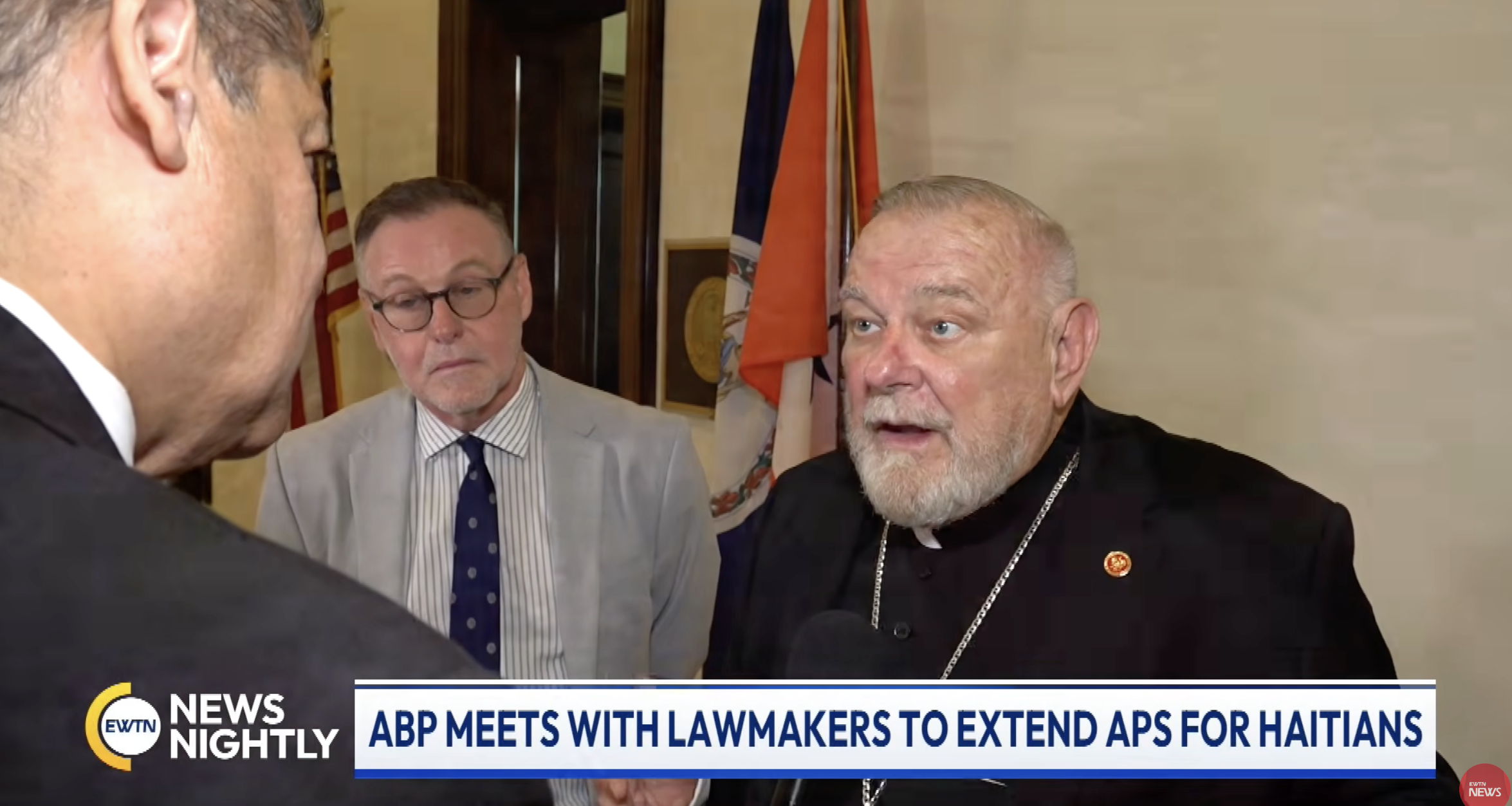
Archbishop Wenski meets lawmakers to gain support for Haitian migrants amid deportation fears #Catholic Miami Archbishop Thomas Wenski traveled to Washington, D.C., on July 28 to advocate on behalf of Haitian migrants who fear they will soon be targets of President Donald Trump’s mass deportation efforts.Wenski’s meetings with lawmakers came one day after the expiration of the automatic work‑permit extension under temporary protected status (TPS) for Haitians. The Supreme Court ruled last month that the administration has the authority to terminate TPS, which ended their work authorization and could subject them to deportation orders. “Haiti is a house on fire,” Wenski told “EWTN News Nightly” Capitol Hill correspondent Erik Rosales before entering the office of Sen. Tim Kaine, D-Virginia.The archbishop said TPS expiration and possible deportation of hundreds of thousands of Haitians is bad for the migrants — who would be sent back to an unstable country — and for the American communities in which the migrants live and work. About 353,000 Haitian nationals hold TPS status in the U.S., according to the Department of Homeland Security (DHS).“To think that we can send 350,000 people back to Haiti without that having very bad consequences in Haiti — but also here because these people are working, they’re not on the dole, they’re working, and if they’re removed from their jobs, if they lose their work permits, that’s going to have a negative economic impact on the communities in which they live,” Wenski said.As Haitian TPS status ends, some lawmakers have introduced bills to compel the DHS to extend the status. In April, the U.S. House of Representatives passed legislation, H.R. 1689, that would extend TPS for Haitians for three more years. No legislative efforts have gained traction in the Senate.The U.S. Conference of Catholic Bishops (USCCB) has advocated strongly on behalf of Haitian migrants, asking the Trump administration and lawmakers to extend TPS. About two-thirds of Haiti is Catholic.Chieko Noguchi, spokeswoman for the USCCB, told EWTN News that Bishop Brendan J. Cahill, USCCB Committee on Migration chair, “has encouraged his brother bishops across the country to engage with their elected officials” on Haitian TPS status and broader immigration reform efforts.“As pastors committed to upholding the common good, the bishops are actively engaging in this dialogue and continue to be grateful for the opportunity to do so, which they acknowledged in their special message last November,” she said.In November 2025, the USCCB adopted a message in a 216-5 vote that opposed the “indiscriminate mass deportation of people” and policies that revoke the legal status of migrants, such as the terminations of TPS for various groups of migrants.Kaine, an advocate for extending TPS, told EWTN News after meeting with Wenski that he was glad “to discuss the critical need for Congress to do what is right and protect TPS holders who have been in the U.S. legally for years” and looks forward to working with the USCCB to advocate for TPS holders.TPS holders “have made countless contributions in important sectors such as healthcare and construction, and developed deep roots in our communities through their U.S. citizen families and businesses,” he added. “Many TPS holders, such as those from Haiti, should not be forced to return to the extremely dangerous conditions that made them seek safety in the United States.”Status of Haitian migrantsOn July 27, DHS Secretary Markwayne Mullin reposted a DHS post on X, which said “temporary protected status is exactly that — TEMPORARY” and urged anyone whose TPS has expired to self-deport out of the U.S.“For those with terminated TPS: it’s closing time,” the post read. “You don’t have to go home, but you can’t stay here.”When asked whether DHS intends to specifically target Haitians for deportation amid the TPS expiration, a spokesperson told EWTN News that the department “does not discuss ongoing or future operations” but is conducting law enforcement activities daily.“For too long, TPS has been allowed to function as a de facto amnesty program despite Congress never intending it to be permanent,” the spokesperson said.Andrew Arthur, a former immigration judge and a resident fellow in law and policy for the Center for Immigration Studies, told EWTN News that TPS was initially approved for Haiti in 2010 after a devastating earthquake.Although Haiti continues to face serious safety and political stability concerns, he said the effects of the earthquake no longer impact the country. He noted that Haitians can apply for permanent status under other programs, such as if they are eligible for asylum, but that TPS is not a permanent resettlement program.Arthur said Haitians who are in the U.S. under temporary legal status “had the opportunity to work in the United States and make money” and learn skills, which they can take back “to Haiti and [it can] help them make Haiti a better country.”The former judge said he expects immigration enforcement toward Haitians to be part of “the larger enforcement efforts” rather than a targeted campaign against Haitians, with a priority toward people who have been convicted of crimes.“The response [now] is foreign aid on the part of the United States and aid from the Catholic Church toward making Haiti a better place,” Arthur said.TPS status for Syrian migrants also ended on July 27. El Salvador’s TPS designation is set to expire Sept. 9.

Archbishop Wenski meets lawmakers to gain support for Haitian migrants amid deportation fears #Catholic Miami Archbishop Thomas Wenski traveled to Washington, D.C., on July 28 to advocate on behalf of Haitian migrants who fear they will soon be targets of President Donald Trump’s mass deportation efforts.Wenski’s meetings with lawmakers came one day after the expiration of the automatic work‑permit extension under temporary protected status (TPS) for Haitians. The Supreme Court ruled last month that the administration has the authority to terminate TPS, which ended their work authorization and could subject them to deportation orders. “Haiti is a house on fire,” Wenski told “EWTN News Nightly” Capitol Hill correspondent Erik Rosales before entering the office of Sen. Tim Kaine, D-Virginia.The archbishop said TPS expiration and possible deportation of hundreds of thousands of Haitians is bad for the migrants — who would be sent back to an unstable country — and for the American communities in which the migrants live and work. About 353,000 Haitian nationals hold TPS status in the U.S., according to the Department of Homeland Security (DHS).“To think that we can send 350,000 people back to Haiti without that having very bad consequences in Haiti — but also here because these people are working, they’re not on the dole, they’re working, and if they’re removed from their jobs, if they lose their work permits, that’s going to have a negative economic impact on the communities in which they live,” Wenski said.As Haitian TPS status ends, some lawmakers have introduced bills to compel the DHS to extend the status. In April, the U.S. House of Representatives passed legislation, H.R. 1689, that would extend TPS for Haitians for three more years. No legislative efforts have gained traction in the Senate.The U.S. Conference of Catholic Bishops (USCCB) has advocated strongly on behalf of Haitian migrants, asking the Trump administration and lawmakers to extend TPS. About two-thirds of Haiti is Catholic.Chieko Noguchi, spokeswoman for the USCCB, told EWTN News that Bishop Brendan J. Cahill, USCCB Committee on Migration chair, “has encouraged his brother bishops across the country to engage with their elected officials” on Haitian TPS status and broader immigration reform efforts.“As pastors committed to upholding the common good, the bishops are actively engaging in this dialogue and continue to be grateful for the opportunity to do so, which they acknowledged in their special message last November,” she said.In November 2025, the USCCB adopted a message in a 216-5 vote that opposed the “indiscriminate mass deportation of people” and policies that revoke the legal status of migrants, such as the terminations of TPS for various groups of migrants.Kaine, an advocate for extending TPS, told EWTN News after meeting with Wenski that he was glad “to discuss the critical need for Congress to do what is right and protect TPS holders who have been in the U.S. legally for years” and looks forward to working with the USCCB to advocate for TPS holders.TPS holders “have made countless contributions in important sectors such as healthcare and construction, and developed deep roots in our communities through their U.S. citizen families and businesses,” he added. “Many TPS holders, such as those from Haiti, should not be forced to return to the extremely dangerous conditions that made them seek safety in the United States.”Status of Haitian migrantsOn July 27, DHS Secretary Markwayne Mullin reposted a DHS post on X, which said “temporary protected status is exactly that — TEMPORARY” and urged anyone whose TPS has expired to self-deport out of the U.S.“For those with terminated TPS: it’s closing time,” the post read. “You don’t have to go home, but you can’t stay here.”When asked whether DHS intends to specifically target Haitians for deportation amid the TPS expiration, a spokesperson told EWTN News that the department “does not discuss ongoing or future operations” but is conducting law enforcement activities daily.“For too long, TPS has been allowed to function as a de facto amnesty program despite Congress never intending it to be permanent,” the spokesperson said.Andrew Arthur, a former immigration judge and a resident fellow in law and policy for the Center for Immigration Studies, told EWTN News that TPS was initially approved for Haiti in 2010 after a devastating earthquake.Although Haiti continues to face serious safety and political stability concerns, he said the effects of the earthquake no longer impact the country. He noted that Haitians can apply for permanent status under other programs, such as if they are eligible for asylum, but that TPS is not a permanent resettlement program.Arthur said Haitians who are in the U.S. under temporary legal status “had the opportunity to work in the United States and make money” and learn skills, which they can take back “to Haiti and [it can] help them make Haiti a better country.”The former judge said he expects immigration enforcement toward Haitians to be part of “the larger enforcement efforts” rather than a targeted campaign against Haitians, with a priority toward people who have been convicted of crimes.“The response [now] is foreign aid on the part of the United States and aid from the Catholic Church toward making Haiti a better place,” Arthur said.TPS status for Syrian migrants also ended on July 27. El Salvador’s TPS designation is set to expire Sept. 9.

The Department of Homeland Security defended its policy, saying temporary protected status was not meant to be permanent.
Read More
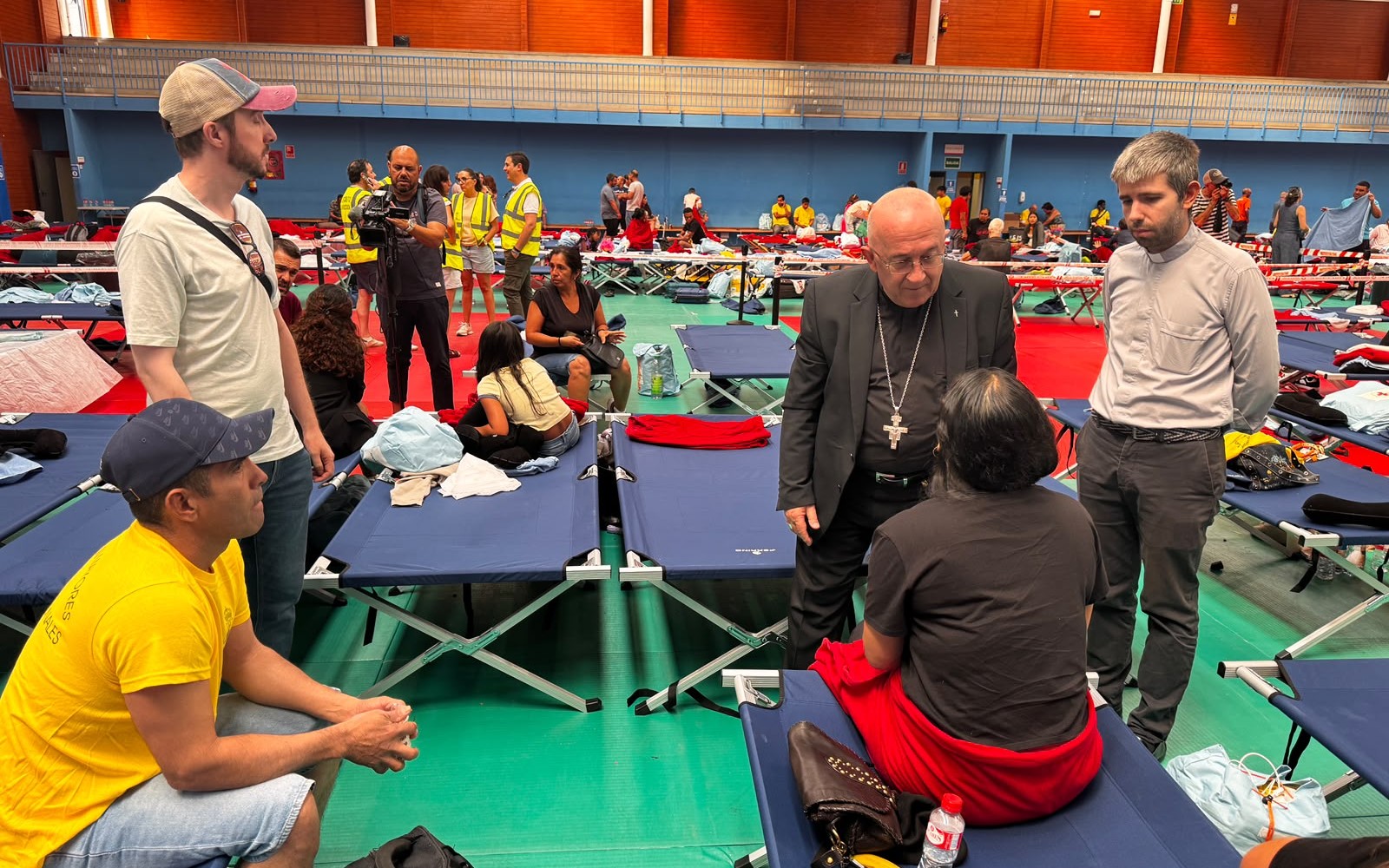
Forest fires in Spain: ‘Providence is taking super good care of us,’ priest says #Catholic The territory of the Diocese of Getafe, south of Madrid, Spain, is being especially hard hit by wildfires that have forced thousands of people to shelter in place or evacuate. The natural disaster finds the diocese’s priests on the front lines, welcoming, accompanying, consoling, and praying.In the central area of ​​Spain alone, 12 towns have been evacuated and another three are under a shelter-in-place order due to the wave of forest fires that in recent days have devastated thousands of acres. At least 50,000 people have been affected in the area.Faced with this human tragedy, the Catholic Church has set to work providing material aid, shelter, a listening ear, and the sacraments in efforts overseen by the auxiliary bishop of Getafe, José María Avendaño.Father Álvaro Piñero is the vicar of the parish in Villaviciosa de Odón, one of the towns serving as a place of refuge for those fleeing the fires who had nowhere else to go. Throughout the weekend, he has been coordinating the aid provided by the parish to the more than 300 displaced people arriving from Chapinería, Pelayos de la Presa, Navas del Rey, and other towns.Along with the residents, the parish priests from those towns are also being sheltered because as Piñero explained to ACI Prensa, the Spanish-language sister service of EWTN News, “even when displaced, one remains a priest and continues to minister to the people of oneʼs town.”“Many of the volunteers helping at the sports center are from Caritas or local confraternities from the town; they have ties to the parish,” noted Piñero, who is from Valdemoro, a nearby town where he has gone to pick up hosts for Mass.Instagram postIn addition to providing food and meeting material needs, the Church offers the treasure of the faith and the sacraments: “At the sports center, we have been attending to people, listening to them, hearing their confessions and above all, listening to so many suffering people. At the end of the day, the people here are extremely vulnerable.”The authorities specifically entrusted the care of the children to the parish. The youngsters are kept entertained with games and activities, so much so that when asked if they want to return home, some say no, “because it feels like camp.”Despite the magnitude of the tragedy, heart-wrenching from a purely human perspective, a supernatural outlook and a shepherd’s heart keep hope alive.“As St. Paul said in the reading: We hold this treasure in earthen vessels so that not only death but the glory of the Lord may be manifested in our lives. That is somewhat what we are experiencing; while we are keenly feeling the drama of so many very difficult situations, Providence is also taking super good care of us,” Piñero emphasized.“If God is looking after us now in this situation, why would he fail me tomorrow? If he is doing so now, then I believe trust is what sustains us in these moments, and not blind trust, but a trust we can tangibly feel here and now,” he explained, referring to the help provided by so many volunteers and donors.‘The Lord is going through this evacuation with us’One of the areas hardest hit by the fire is the Tiétar Valley, home to the town of Rozas de Puerto Real and the minor seminary of the Diocese of Getafe, where 130 students, 35 of whom are seminarians, normally study.The facility, currently spared by the flames, is in grave danger. A summer camp was taking place there until participants had to be evacuated on July 25, the feast of St. James the Apostle. “We were already surrounded by smoke and had to evacuate all the young people; it was done very quickly. In less than 25 minutes, the entire seminary had been cleared, and although there was great fear, everyoneʼs efforts made it possible,” Father Eliert Jerez, rector of the minor seminary, told ACI Prensa.In addition to the people, they removed the statues of the Immaculate Conception and St. Joseph, the archives, and the tabernacles containing the Blessed Sacrament from the site; these were taken to Villaviciosa de Odón, where Jerez is currently taking shelter.
 
 Father Eliert Jerez, rector of the minor seminary of the Diocese of Getafe in Spain | Credit: Nicolás de Cárdenas/ACI Prensa
 
 The moment the Body of Christ was being moved was captured on video. “I canʼt get that moment out of my head, and I donʼt want to let it go from my heart either,” the priest shared.“When you hold the Blessed Sacrament in your hand, when you can’t wear a cope or liturgical vestments — you realize the Lord’s closeness in those moments. You realize that the Lord was going through this evacuation with us, and I imagine he was also in this prayer and this plea for it to end,” he added.It’s precisely in prayer that they are finding great comfort: “Prayer is working real miracles such as the fact that the seminary has not yet been engulfed by the flames,” explained the rector, even as the burden of responsibility weighs heavily on him: “Many of our seminarians are going to be left homeless. Many of our seminarians will face immense difficulties in continuing their formation.”It’s not just for their sake that Jerez is aware of how this situation will transform life in the region for years to come: “So many towns have been affected. Many people will not get their jobs back because they make their living from the land, and that is very difficult to recover from. Many people have lost not only their homes but also their prospects for the future, and this is a reality that will stay with us in the years ahead.”Indeed, he admitted to his deep unease: “I have had trouble sleeping ever since the first flames appeared.”This story was first published by ACI Prensa, the Spanish-language sister service of EWTN News. It has been translated and adapted by EWTN News English.

Forest fires in Spain: ‘Providence is taking super good care of us,’ priest says #Catholic The territory of the Diocese of Getafe, south of Madrid, Spain, is being especially hard hit by wildfires that have forced thousands of people to shelter in place or evacuate. The natural disaster finds the diocese’s priests on the front lines, welcoming, accompanying, consoling, and praying.In the central area of ​​Spain alone, 12 towns have been evacuated and another three are under a shelter-in-place order due to the wave of forest fires that in recent days have devastated thousands of acres. At least 50,000 people have been affected in the area.Faced with this human tragedy, the Catholic Church has set to work providing material aid, shelter, a listening ear, and the sacraments in efforts overseen by the auxiliary bishop of Getafe, José María Avendaño.Father Álvaro Piñero is the vicar of the parish in Villaviciosa de Odón, one of the towns serving as a place of refuge for those fleeing the fires who had nowhere else to go. Throughout the weekend, he has been coordinating the aid provided by the parish to the more than 300 displaced people arriving from Chapinería, Pelayos de la Presa, Navas del Rey, and other towns.Along with the residents, the parish priests from those towns are also being sheltered because as Piñero explained to ACI Prensa, the Spanish-language sister service of EWTN News, “even when displaced, one remains a priest and continues to minister to the people of oneʼs town.”“Many of the volunteers helping at the sports center are from Caritas or local confraternities from the town; they have ties to the parish,” noted Piñero, who is from Valdemoro, a nearby town where he has gone to pick up hosts for Mass.Instagram postIn addition to providing food and meeting material needs, the Church offers the treasure of the faith and the sacraments: “At the sports center, we have been attending to people, listening to them, hearing their confessions and above all, listening to so many suffering people. At the end of the day, the people here are extremely vulnerable.”The authorities specifically entrusted the care of the children to the parish. The youngsters are kept entertained with games and activities, so much so that when asked if they want to return home, some say no, “because it feels like camp.”Despite the magnitude of the tragedy, heart-wrenching from a purely human perspective, a supernatural outlook and a shepherd’s heart keep hope alive.“As St. Paul said in the reading: We hold this treasure in earthen vessels so that not only death but the glory of the Lord may be manifested in our lives. That is somewhat what we are experiencing; while we are keenly feeling the drama of so many very difficult situations, Providence is also taking super good care of us,” Piñero emphasized.“If God is looking after us now in this situation, why would he fail me tomorrow? If he is doing so now, then I believe trust is what sustains us in these moments, and not blind trust, but a trust we can tangibly feel here and now,” he explained, referring to the help provided by so many volunteers and donors.‘The Lord is going through this evacuation with us’One of the areas hardest hit by the fire is the Tiétar Valley, home to the town of Rozas de Puerto Real and the minor seminary of the Diocese of Getafe, where 130 students, 35 of whom are seminarians, normally study.The facility, currently spared by the flames, is in grave danger. A summer camp was taking place there until participants had to be evacuated on July 25, the feast of St. James the Apostle. “We were already surrounded by smoke and had to evacuate all the young people; it was done very quickly. In less than 25 minutes, the entire seminary had been cleared, and although there was great fear, everyoneʼs efforts made it possible,” Father Eliert Jerez, rector of the minor seminary, told ACI Prensa.In addition to the people, they removed the statues of the Immaculate Conception and St. Joseph, the archives, and the tabernacles containing the Blessed Sacrament from the site; these were taken to Villaviciosa de Odón, where Jerez is currently taking shelter. Father Eliert Jerez, rector of the minor seminary of the Diocese of Getafe in Spain | Credit: Nicolás de Cárdenas/ACI Prensa The moment the Body of Christ was being moved was captured on video. “I canʼt get that moment out of my head, and I donʼt want to let it go from my heart either,” the priest shared.“When you hold the Blessed Sacrament in your hand, when you can’t wear a cope or liturgical vestments — you realize the Lord’s closeness in those moments. You realize that the Lord was going through this evacuation with us, and I imagine he was also in this prayer and this plea for it to end,” he added.It’s precisely in prayer that they are finding great comfort: “Prayer is working real miracles such as the fact that the seminary has not yet been engulfed by the flames,” explained the rector, even as the burden of responsibility weighs heavily on him: “Many of our seminarians are going to be left homeless. Many of our seminarians will face immense difficulties in continuing their formation.”It’s not just for their sake that Jerez is aware of how this situation will transform life in the region for years to come: “So many towns have been affected. Many people will not get their jobs back because they make their living from the land, and that is very difficult to recover from. Many people have lost not only their homes but also their prospects for the future, and this is a reality that will stay with us in the years ahead.”Indeed, he admitted to his deep unease: “I have had trouble sleeping ever since the first flames appeared.”This story was first published by ACI Prensa, the Spanish-language sister service of EWTN News. It has been translated and adapted by EWTN News English.

Amid the destructive forest fires in central Spain, the Catholic Church is ministering to the evacuees, providing material aid, shelter, a listening ear, and the sacraments.
Read More
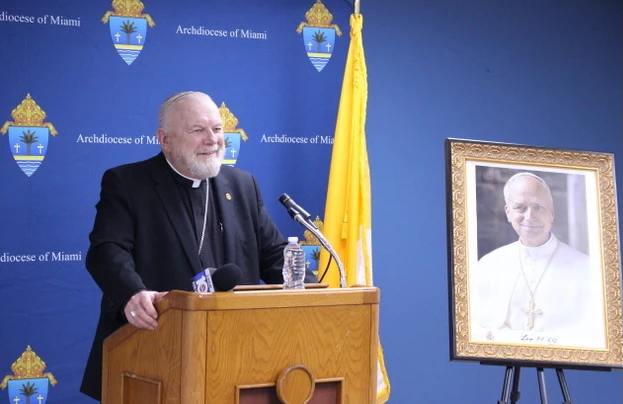
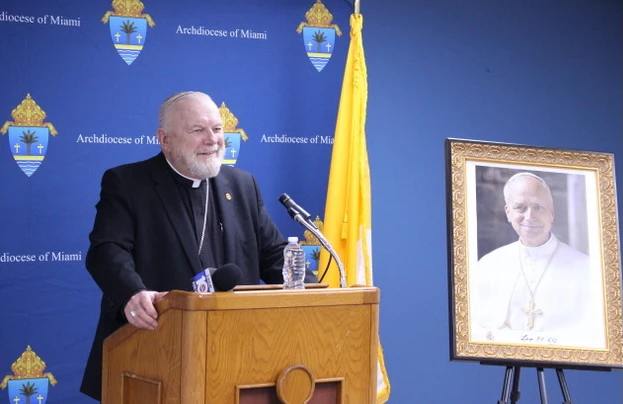
Miami archbishop calls for ‘compassionate’ protections for Haitians ahead of TPS deadline #Catholic Miami Archbishop Thomas Wenski urged “compassionate” immigration protections for Haitians with temporary protected status (TPS) upon expiration of their automatic work‑permit extension.As “widespread violence, political instability, economic collapse, and humanitarian suffering” continue in Haiti, Wenski said July 24 that the Caribbean nation remains unsafe as a place for migrants to return. About 353,000 Haitian nationals hold TPS status in the U.S., according to the Department of Homeland Security (DHS).Miami’s archbishop said local ministries are “preparing for the consequences” of policy changes, including the termination of work authorizations for diocesan employees. Employment authorization documents (EADs) reached a court-extended expiration July 27.TPS is an immigration status granted to eligible foreign nationals from designated countries that are unsafe to return to due to ongoing conflict, environmental disasters, or other extraordinary conditions.The U.S. Supreme Court on June 25 ruled that DHS could end TPS for Haitians and Syrians. El Salvador’s TPS designation is set to expire Sept. 9.The U.S. House of Representatives passed legislation (H.R. 1689) in April that would add three more years of TPS for Haitian nationals. The legislation has stalled in the Senate.Catholic Health Services (CHS), one of the Archdiocese of Miamiʼs largest ministries, which employs a significant number of Haitian workers who hold TPS, “is currently evaluating the effects of the recent federal changes affecting TPS work authorization, Wenski said.“At this time, an estimated 40 to 50 valued employees may be affected, although the final number remains under review as the organization works individually with each employee based on his or her unique circumstances,” he said.Haitian CHS workers “are more than employees — they are members of our Church and our community,” Wenski said. “They care for the sick, comfort the elderly, and serve some of the most vulnerable among us with compassion and dedication.”Ahead of the deadline, Wenski said “our hearts are with our Haitian brothers and sisters who are living with uncertainty, fear, and anxiety about what the future may hold for themselves and their families.”“The Church recognizes the right of nations to secure their borders and to establish just immigration laws. At the same time, our Catholic faith calls us to uphold the dignity of every human person and to accompany those who are vulnerable,” he said. As “Haiti continues to endure profound hardship,” Wenski urged “elected leaders to pursue compassionate and humane solutions that protect family unity and recognize the extraordinary circumstances facing the Haitian people.”“To our Haitian brothers and sisters: You are not alone. The Catholic Church walks with you,” he said.Haitian workers in Ohio face uncertain futureOhio bishops also have called for continued TPS protections for Haitians, especially as Springfield, Ohio, is home to a large Haitian population. The Catholic Conference of Ohio released a June statement urging action and continued TPS.As the Supreme Court decision has left many families worried about losing their jobs, Ohio-based organizations are also preparing to aid those facing loss of TPS.In an interview July 24 with “EWTN News Nightly,” Casey Rollins, executive director of St. Vincent de Paul in Springfield, Ohio, said the organizationʼs team helps immigrants and nonimmigrants “while theyʼre enduring, or while theyʼre navigating … a crisis or a situation.”“That would be, in this case, once they lost their jobs, we will help them take care of their rent and utilities if they now canʼt pay that,” she said.For “over 60 years, weʼve helped Americans with rent and utilities and those kinds of necessities for independent living. Now weʼre doing that with Haitians and other immigrants whoʼve recently lost jobs,” she explained.“We also are helping the families who, many of them, are certain to be deported,” she said.Following the loss of workers in the Ohio community, “weʼre going to be in trouble,” she said. For years, the area needed “more workers here,” and the Haitian community was “taking a lot of these jobs.”

Miami archbishop calls for ‘compassionate’ protections for Haitians ahead of TPS deadline #Catholic Miami Archbishop Thomas Wenski urged “compassionate” immigration protections for Haitians with temporary protected status (TPS) upon expiration of their automatic work‑permit extension.As “widespread violence, political instability, economic collapse, and humanitarian suffering” continue in Haiti, Wenski said July 24 that the Caribbean nation remains unsafe as a place for migrants to return. About 353,000 Haitian nationals hold TPS status in the U.S., according to the Department of Homeland Security (DHS).Miami’s archbishop said local ministries are “preparing for the consequences” of policy changes, including the termination of work authorizations for diocesan employees. Employment authorization documents (EADs) reached a court-extended expiration July 27.TPS is an immigration status granted to eligible foreign nationals from designated countries that are unsafe to return to due to ongoing conflict, environmental disasters, or other extraordinary conditions.The U.S. Supreme Court on June 25 ruled that DHS could end TPS for Haitians and Syrians. El Salvador’s TPS designation is set to expire Sept. 9.The U.S. House of Representatives passed legislation (H.R. 1689) in April that would add three more years of TPS for Haitian nationals. The legislation has stalled in the Senate.Catholic Health Services (CHS), one of the Archdiocese of Miamiʼs largest ministries, which employs a significant number of Haitian workers who hold TPS, “is currently evaluating the effects of the recent federal changes affecting TPS work authorization, Wenski said.“At this time, an estimated 40 to 50 valued employees may be affected, although the final number remains under review as the organization works individually with each employee based on his or her unique circumstances,” he said.Haitian CHS workers “are more than employees — they are members of our Church and our community,” Wenski said. “They care for the sick, comfort the elderly, and serve some of the most vulnerable among us with compassion and dedication.”Ahead of the deadline, Wenski said “our hearts are with our Haitian brothers and sisters who are living with uncertainty, fear, and anxiety about what the future may hold for themselves and their families.”“The Church recognizes the right of nations to secure their borders and to establish just immigration laws. At the same time, our Catholic faith calls us to uphold the dignity of every human person and to accompany those who are vulnerable,” he said. As “Haiti continues to endure profound hardship,” Wenski urged “elected leaders to pursue compassionate and humane solutions that protect family unity and recognize the extraordinary circumstances facing the Haitian people.”“To our Haitian brothers and sisters: You are not alone. The Catholic Church walks with you,” he said.Haitian workers in Ohio face uncertain futureOhio bishops also have called for continued TPS protections for Haitians, especially as Springfield, Ohio, is home to a large Haitian population. The Catholic Conference of Ohio released a June statement urging action and continued TPS.As the Supreme Court decision has left many families worried about losing their jobs, Ohio-based organizations are also preparing to aid those facing loss of TPS.In an interview July 24 with “EWTN News Nightly,” Casey Rollins, executive director of St. Vincent de Paul in Springfield, Ohio, said the organizationʼs team helps immigrants and nonimmigrants “while theyʼre enduring, or while theyʼre navigating … a crisis or a situation.”“That would be, in this case, once they lost their jobs, we will help them take care of their rent and utilities if they now canʼt pay that,” she said.For “over 60 years, weʼve helped Americans with rent and utilities and those kinds of necessities for independent living. Now weʼre doing that with Haitians and other immigrants whoʼve recently lost jobs,” she explained.“We also are helping the families who, many of them, are certain to be deported,” she said.Following the loss of workers in the Ohio community, “weʼre going to be in trouble,” she said. For years, the area needed “more workers here,” and the Haitian community was “taking a lot of these jobs.”

Catholic Health Services, one of the Archdiocese of Miami’s largest ministries, faces losing an estimated 40 to 50 employees, Miami Archbishop Thomas Wenski said.
Read More