Limit

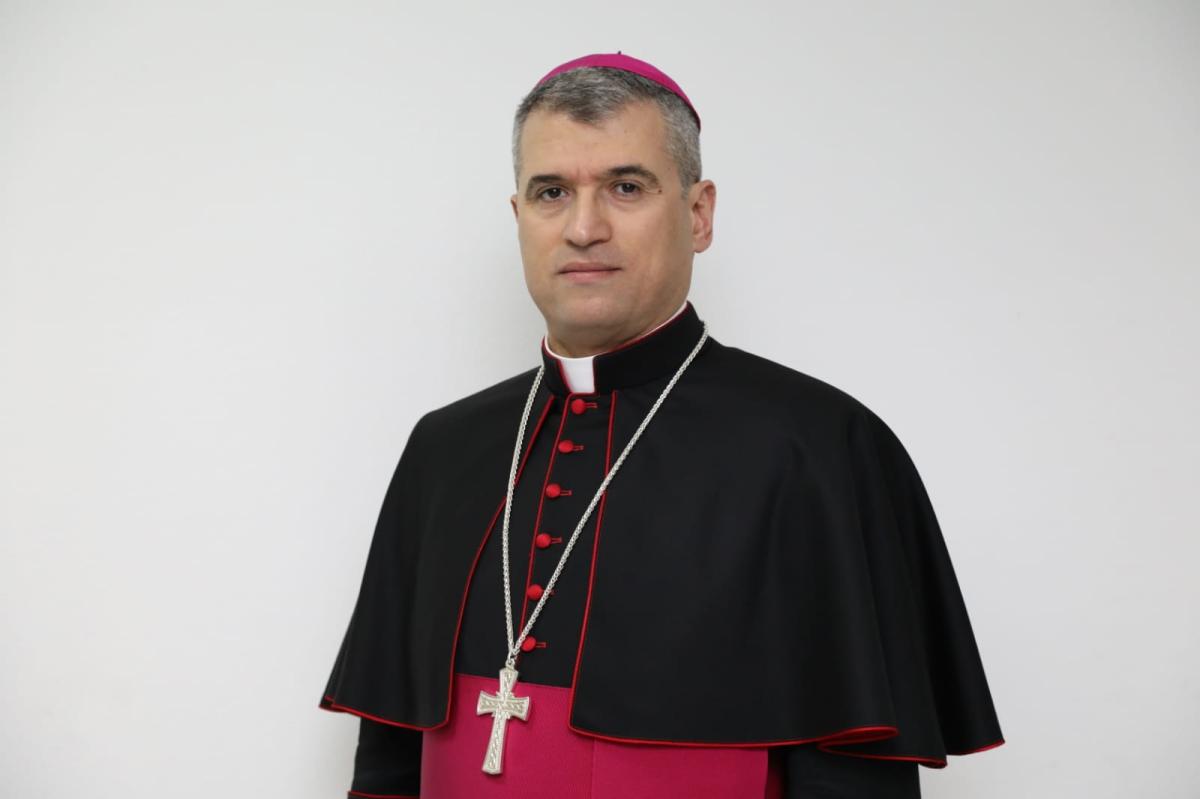
Miami Catholic schools receive  million in state security funding after ‘months of advocacy’ #Catholic Catholic schools in Miami will receive  million in security funding from the state government after successful petitioning by Floridaʼs Catholic bishops, the Archdiocese of Miami has announced. The archdiocese said the eight-figure security package was part of the newly approved state budget, which was passed by legislators in Tallahassee on May 29. The funding came about after “months of advocacy and budget negotiations,” the archdiocese said. "We prioritize the safety of our students in a day and age that has seen more anti-Catholic violence and generally more violence against schools,” archdiocesan schools Superintendent Jim Rigg said in the announcement. The archdiocese said that a “broader statewide reimbursement program” for Catholic school security failed to pass the Legislature. Rigg said in the archdiocesan announcement that schools have been using money to fund security measures “that could otherwise go toward textbooks, technology, and teacher salaries.”“In some cases, schools are collecting special security fees from parents," he said. Catholic schools have increased security amid shooting fearsNumerous Catholic and other Christian schools around the country have lately adopted enhanced security measures, particularly after the August 2025 shooting at Annunciation Catholic School in Minneapolis. That shooting came after Catholic bishops in Minnesota had petitioned state lawmakers to provide security funding for nonpublic schools; the state government had failed to grant those requests. Some schools have opted to hire security guards, while others have considered the possibility of allowing teachers to be armed while on campus.Still others have turned to technology to increase student safety. Trinity Catholic School in Fort Smith, Arkansas, recently adopted an AI-bolstered security system that can spot school shooters and quickly alert law enforcement ahead of a potential mass shooting. A Catholic school in Ohio has also deployed that system on its own campus.After the Minneapolis shooting, Jason Adkins, the executive director of the Minnesota Catholic Conference, told “EWTN News In Depth” that school security is “a basic public safety issue that should be available to all students, irrespective of where they go to school.”“Looking at school safety programs, nonprofit security grants, all these things — we have to take an all-of-the-above approach to looking at public policy solutions that limit gun violence in our communities,” he said.

Miami Catholic schools receive $15 million in state security funding after ‘months of advocacy’ #Catholic Catholic schools in Miami will receive $15 million in security funding from the state government after successful petitioning by Floridaʼs Catholic bishops, the Archdiocese of Miami has announced. The archdiocese said the eight-figure security package was part of the newly approved state budget, which was passed by legislators in Tallahassee on May 29. The funding came about after “months of advocacy and budget negotiations,” the archdiocese said. "We prioritize the safety of our students in a day and age that has seen more anti-Catholic violence and generally more violence against schools,” archdiocesan schools Superintendent Jim Rigg said in the announcement. The archdiocese said that a “broader statewide reimbursement program” for Catholic school security failed to pass the Legislature. Rigg said in the archdiocesan announcement that schools have been using money to fund security measures “that could otherwise go toward textbooks, technology, and teacher salaries.”“In some cases, schools are collecting special security fees from parents," he said. Catholic schools have increased security amid shooting fearsNumerous Catholic and other Christian schools around the country have lately adopted enhanced security measures, particularly after the August 2025 shooting at Annunciation Catholic School in Minneapolis. That shooting came after Catholic bishops in Minnesota had petitioned state lawmakers to provide security funding for nonpublic schools; the state government had failed to grant those requests. Some schools have opted to hire security guards, while others have considered the possibility of allowing teachers to be armed while on campus.Still others have turned to technology to increase student safety. Trinity Catholic School in Fort Smith, Arkansas, recently adopted an AI-bolstered security system that can spot school shooters and quickly alert law enforcement ahead of a potential mass shooting. A Catholic school in Ohio has also deployed that system on its own campus.After the Minneapolis shooting, Jason Adkins, the executive director of the Minnesota Catholic Conference, told “EWTN News In Depth” that school security is “a basic public safety issue that should be available to all students, irrespective of where they go to school.”“Looking at school safety programs, nonprofit security grants, all these things — we have to take an all-of-the-above approach to looking at public policy solutions that limit gun violence in our communities,” he said.

The Florida bishops had petitioned the state Legislature for the funding, though a broader statewide measure failed to pass.

Read More
1 in 6 face infertility; Catholic author urges faith-filled support #Catholic During this yearʼs National Infertility Awareness Week (NIAW), Leigh Fitzpatrick Snead, who personally carries the cross of infertility, spoke about the difficult topic with the hope of making others experiencing it feel less alone.NIAW runs from April 19–25, bringing attention to the high numbers of people — now 1 in 6 globally — who experience infertility at some point in their lives, according to the World Health Organization.Snead, a fellow at The Catholic Association, tackles the topic in her book “Infertile But Fruitful: Finding Fulfillment When You Canʼt Conceive.” Through her story and the stories of other women, she wrote the book to be “the voice of a friend who has been where you are now and made it through in one piece.”Snead said the book was “a chance for me to add to the growing conversation and awareness about infertility, especially among Catholics for whom in vitro fertilization (IVF) (the standard ‘cure’ for infertility) is not an option.” In an interview with EWTN News, Snead shared her perspective and offered encouragement and advice for couples navigating the grief of infertility.EWTN News: What might people not know about infertility?Leigh Snead: For sure, how many people are suffering from it. For good reasons, this is a particularly private cross — it involves the most intimate parts of your marriage, for one. But marriage is public, and people can easily see if you do or donʼt have children, or, in most cases, whether or not youʼre expecting.There is a lot of hard stuff experienced in silence and even shame. It might be hard to understand if you havenʼt been through it, but it can feel almost humiliating when you canʼt conceive and so you tend to slap on a smile and pretend nothing is wrong.Itʼs too bad when we give in to this temptation to isolate ourselves from others who really only want to help. Yes, their concern can feel like even more pressure on top of what you may already be feeling internally, but you should open yourself up to their prayers. In the same way, pray for married couples and couples you think might be carrying the cross of infertility, even before they ask you.What do you wish you knew when you began navigating infertility, and what would you tell couples who are going through it now?I wish I hadnʼt overlooked and underestimated the relief and comfort I could have received by being more open about my physical and emotional struggles when facing infertility. The more I kept it a secret, the more shameful it all felt, which led to isolation and even more secrecy and shame.Privacy is one thing, but purposefully forgoing the love and prayers of those who only care for you out of shame over something you have little to no control over — nothing good can come of that.What steps can couples who are going through infertility take?Seek good medical care that aligns with your values. Learn and develop a good understanding of what the Church teaches, especially about the prohibition of IVF. Understand the “why” — not just the fact that itʼs “not allowed.” Communicate with each other and make time to enjoy your marriage even though youʼre struggling.Bear this burden together. Find parish support groups or a group online. Pray together and choose a saint to accompany you. Youʼre probably going to feel and think some dark things, so frequent confession, spiritual direction, and counseling is a good idea.What does the Catholic Church offer couples who struggle with this? What do you think the Church can do to further help them?The teachings on marriage, sexuality, and procreation the Church gives us are such a gift, but we need to be reminded of them regularly. Iʼd like to see more priests and seminarians become fluent in the language of Catholic infertility. I think making a discussion about the possibility of infertility should be included in marriage prep courses.The Catholic infertility ministry Springs in the Desert is a great resource not only for those carrying the cross of infertility but for those, like priests, hoping to support them.What advice do you have for couples who are being pushed to try IVF and other methods that do not align with Church teaching?Seek medical care from a doctor who respects or, even better, shares your views on marriage, sexuality, procreation, and human dignity. This is true for whatever type of medical care you may be seeking and is not limited to fertility care. If you feel mistreated by your physician, just walk out. There is another doctor out there who will provide you with the care you deserve.You and your husband eventually became parents though adoption. What would you want people to know about adoption?I think itʼs important to keep in mind that infertility and adoption are not to be lumped together, and I try to not conflate the two in my work. Thatʼs not always easy for me because I have four beautiful sons through the great gift of adoption.Not everyone with a diagnosis of infertility will be called to adopt a child. There are so many ways to be fruitful! We shouldnʼt limit our idea of a fruitful marriage to the raising of children, and no one should feel obliged to adopt because theyʼre unable to conceive. And if they donʼt hear that call to adopt it does not mean that they didnʼt “really” want a child, or that they arenʼt suffering.In a similar fashion, adoption fulfilled my call to motherhood but the arrival of my sons did not “cure” my infertility, nor did it take away the scars infertility can leave behind. Itʼs one of those messy parts of life where you feel all the feelings at once.

1 in 6 face infertility; Catholic author urges faith-filled support #Catholic During this yearʼs National Infertility Awareness Week (NIAW), Leigh Fitzpatrick Snead, who personally carries the cross of infertility, spoke about the difficult topic with the hope of making others experiencing it feel less alone.NIAW runs from April 19–25, bringing attention to the high numbers of people — now 1 in 6 globally — who experience infertility at some point in their lives, according to the World Health Organization.Snead, a fellow at The Catholic Association, tackles the topic in her book “Infertile But Fruitful: Finding Fulfillment When You Canʼt Conceive.” Through her story and the stories of other women, she wrote the book to be “the voice of a friend who has been where you are now and made it through in one piece.”Snead said the book was “a chance for me to add to the growing conversation and awareness about infertility, especially among Catholics for whom in vitro fertilization (IVF) (the standard ‘cure’ for infertility) is not an option.” In an interview with EWTN News, Snead shared her perspective and offered encouragement and advice for couples navigating the grief of infertility.EWTN News: What might people not know about infertility?Leigh Snead: For sure, how many people are suffering from it. For good reasons, this is a particularly private cross — it involves the most intimate parts of your marriage, for one. But marriage is public, and people can easily see if you do or donʼt have children, or, in most cases, whether or not youʼre expecting.There is a lot of hard stuff experienced in silence and even shame. It might be hard to understand if you havenʼt been through it, but it can feel almost humiliating when you canʼt conceive and so you tend to slap on a smile and pretend nothing is wrong.Itʼs too bad when we give in to this temptation to isolate ourselves from others who really only want to help. Yes, their concern can feel like even more pressure on top of what you may already be feeling internally, but you should open yourself up to their prayers. In the same way, pray for married couples and couples you think might be carrying the cross of infertility, even before they ask you.What do you wish you knew when you began navigating infertility, and what would you tell couples who are going through it now?I wish I hadnʼt overlooked and underestimated the relief and comfort I could have received by being more open about my physical and emotional struggles when facing infertility. The more I kept it a secret, the more shameful it all felt, which led to isolation and even more secrecy and shame.Privacy is one thing, but purposefully forgoing the love and prayers of those who only care for you out of shame over something you have little to no control over — nothing good can come of that.What steps can couples who are going through infertility take?Seek good medical care that aligns with your values. Learn and develop a good understanding of what the Church teaches, especially about the prohibition of IVF. Understand the “why” — not just the fact that itʼs “not allowed.” Communicate with each other and make time to enjoy your marriage even though youʼre struggling.Bear this burden together. Find parish support groups or a group online. Pray together and choose a saint to accompany you. Youʼre probably going to feel and think some dark things, so frequent confession, spiritual direction, and counseling is a good idea.What does the Catholic Church offer couples who struggle with this? What do you think the Church can do to further help them?The teachings on marriage, sexuality, and procreation the Church gives us are such a gift, but we need to be reminded of them regularly. Iʼd like to see more priests and seminarians become fluent in the language of Catholic infertility. I think making a discussion about the possibility of infertility should be included in marriage prep courses.The Catholic infertility ministry Springs in the Desert is a great resource not only for those carrying the cross of infertility but for those, like priests, hoping to support them.What advice do you have for couples who are being pushed to try IVF and other methods that do not align with Church teaching?Seek medical care from a doctor who respects or, even better, shares your views on marriage, sexuality, procreation, and human dignity. This is true for whatever type of medical care you may be seeking and is not limited to fertility care. If you feel mistreated by your physician, just walk out. There is another doctor out there who will provide you with the care you deserve.You and your husband eventually became parents though adoption. What would you want people to know about adoption?I think itʼs important to keep in mind that infertility and adoption are not to be lumped together, and I try to not conflate the two in my work. Thatʼs not always easy for me because I have four beautiful sons through the great gift of adoption.Not everyone with a diagnosis of infertility will be called to adopt a child. There are so many ways to be fruitful! We shouldnʼt limit our idea of a fruitful marriage to the raising of children, and no one should feel obliged to adopt because theyʼre unable to conceive. And if they donʼt hear that call to adopt it does not mean that they didnʼt “really” want a child, or that they arenʼt suffering.In a similar fashion, adoption fulfilled my call to motherhood but the arrival of my sons did not “cure” my infertility, nor did it take away the scars infertility can leave behind. Itʼs one of those messy parts of life where you feel all the feelings at once.

During National Infertility Awareness Week, author Leigh Fitzpatrick Snead shared encouragement and advice for Catholic couples navigating infertility.

Read More