Markets

UPDATE: Nepal, China warn of second flood as Church launches relief efforts #Catholic Authorities are warning of a second flood after Wednesday’s devastating deluge on the Nepal-China border, which left more than 1,500 people missing, many presumed dead.Nepal’s National Disaster Risk Reduction and Management Authority said a lake at the flood site was rising and at risk of bursting, raising the prospect of another deadly disaster.China’s Minister of Water Resources said the lake had formed inside Nepal and was already overflowing. A further 3 million cubic meters could flow in over three days, the ministry said, raising the risk of a breach during that window to a high level. Rain is forecast across the coming days.Catholic relief agencies immediately responded to the unfolding disaster, linking their efforts to the urgent needs created by the floods. Caritas Nepal said it had mobilized teams and begun operating community kitchens in areas where people lost their homes, while also distributing immediate relief supplies. Some Catholics who had been working in tourist areas remain unaccounted for, the agency said.Catholic Relief Services launched an emergency appeal, saying it was coordinating with Caritas Nepal and local partners to assess urgent needs and support affected communities.Caritas Australia launched an urgent flood appeal, confirming teams are on the ground assessing the scale of the disaster and the needs it has created.The needs will most likely include emergency shelter, clean water and sanitation, food, and immediate and long-term recovery, the aid agency noted.The apostolic administrator of Nepal told Fides news agency on Thursday this was “the worst disaster in the country’s history.”“It was terrible. A flood coming from the mountains, and directed violently towards the valley, overwhelmed everything: people, homes, bridges, structures. Villages, markets, and roads were swept away. It is a serious wound for the nation,” Father Silas Krishna Bogati said.“We have about 25 Catholic families in the disaster area; they appear to be safe, but we are very worried about them,” he said. “We entrust them to God, we pray for their safety, and we will do everything we can to help them.”Bogati noted that Nepalese, as well as foreigners and tourists, were in the area at the time of the disaster.At least 392 people have been killed, 389 of them in Nepal and three in Tibet, according to Nepali authorities and Chinese state media. More than 900 remain unaccounted for in Nepal and more than 550 in Tibet; 466 people have been rescued.Pope Leo sent his condolences and offered prayers for the victims on Thursday, expressing solidarity with those affected by the floods. In an Aug. 27 telegram sent on behalf of Leo, Vatican Secretary of State Cardinal Pietro Parolin said the pope was “saddened to learn of the loss of life and devastation” caused by the floods.“Commending the souls of the deceased to the clemency of the Almighty, His Holiness sends heartfelt sympathies to the bereaved, with the assurance of his spiritual closeness to those affected by this tragedy,” the telegram said.This story was updated on Aug. 28, 2026, with details from Caritas Nepal and Catholic Relief Services.

UPDATE: Nepal, China warn of second flood as Church launches relief efforts #Catholic Authorities are warning of a second flood after Wednesday’s devastating deluge on the Nepal-China border, which left more than 1,500 people missing, many presumed dead.Nepal’s National Disaster Risk Reduction and Management Authority said a lake at the flood site was rising and at risk of bursting, raising the prospect of another deadly disaster.China’s Minister of Water Resources said the lake had formed inside Nepal and was already overflowing. A further 3 million cubic meters could flow in over three days, the ministry said, raising the risk of a breach during that window to a high level. Rain is forecast across the coming days.Catholic relief agencies immediately responded to the unfolding disaster, linking their efforts to the urgent needs created by the floods. Caritas Nepal said it had mobilized teams and begun operating community kitchens in areas where people lost their homes, while also distributing immediate relief supplies. Some Catholics who had been working in tourist areas remain unaccounted for, the agency said.Catholic Relief Services launched an emergency appeal, saying it was coordinating with Caritas Nepal and local partners to assess urgent needs and support affected communities.Caritas Australia launched an urgent flood appeal, confirming teams are on the ground assessing the scale of the disaster and the needs it has created.The needs will most likely include emergency shelter, clean water and sanitation, food, and immediate and long-term recovery, the aid agency noted.The apostolic administrator of Nepal told Fides news agency on Thursday this was “the worst disaster in the country’s history.”“It was terrible. A flood coming from the mountains, and directed violently towards the valley, overwhelmed everything: people, homes, bridges, structures. Villages, markets, and roads were swept away. It is a serious wound for the nation,” Father Silas Krishna Bogati said.“We have about 25 Catholic families in the disaster area; they appear to be safe, but we are very worried about them,” he said. “We entrust them to God, we pray for their safety, and we will do everything we can to help them.”Bogati noted that Nepalese, as well as foreigners and tourists, were in the area at the time of the disaster.At least 392 people have been killed, 389 of them in Nepal and three in Tibet, according to Nepali authorities and Chinese state media. More than 900 remain unaccounted for in Nepal and more than 550 in Tibet; 466 people have been rescued.Pope Leo sent his condolences and offered prayers for the victims on Thursday, expressing solidarity with those affected by the floods. In an Aug. 27 telegram sent on behalf of Leo, Vatican Secretary of State Cardinal Pietro Parolin said the pope was “saddened to learn of the loss of life and devastation” caused by the floods.“Commending the souls of the deceased to the clemency of the Almighty, His Holiness sends heartfelt sympathies to the bereaved, with the assurance of his spiritual closeness to those affected by this tragedy,” the telegram said.This story was updated on Aug. 28, 2026, with details from Caritas Nepal and Catholic Relief Services.

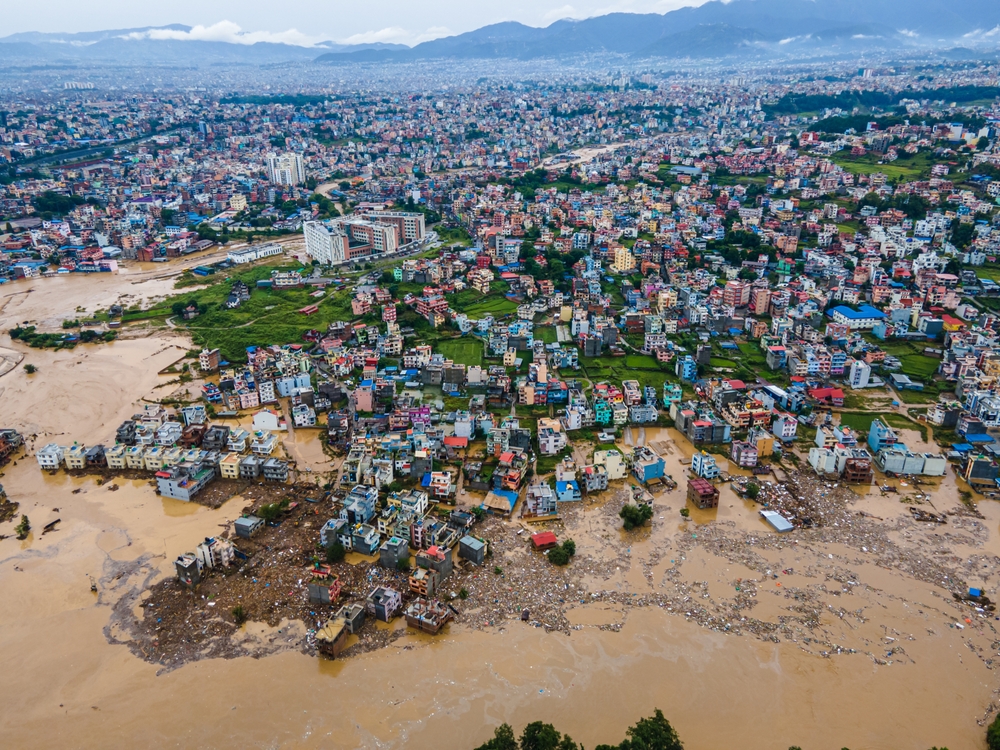
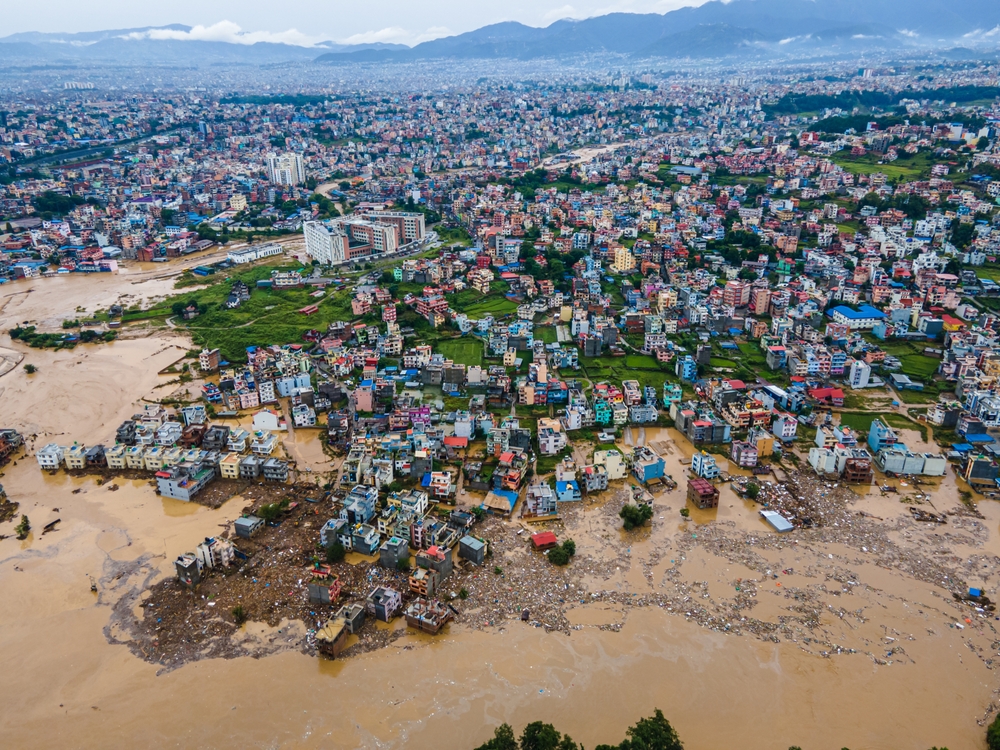
Caritas Nepal has begun distributing relief and operating community kitchens as authorities warn of a second flood following the deadliest natural disaster in Nepal’s recorded history.
Read More
Picture of the day


Yellowbar angelfish (Pomacanthus maculosus), Ras Muhammad National Park, Red Sea, Egypt. This marine angelfish is distributed throughout the Persian Gulf, the northwestern Indian Ocean, and the Red Sea south to 19°S. In 2009 it was recorded off the coast of Lebanon in the eastern Mediterranean, probably as a result of Lessepsian migration from the Red Sea through the Suez Canal. Pomacanthus maculosus is found at depths of between 4 and 50 metres (13 and 164 ft). It is a solitary species that lives in sheltered areas, often where there is a mixture of coral and silt. Their diet is dominated by sea sponges and tunicates, although other invertebrates will be eaten opportunistically. The females attain sexual maturity when the reach around 5.5 years of age and a total length of 21.6 centimetres (8.5 in). The maximum longevity is thought to be 36 years old. They are protogynous hermaphrodites and the older females can change sex to become males when there is a shortage of males. The larvae are planktonic. The yellowbar angelfish is occasionally collected for the aquarium trade and in some parts of the Persian Gulf it has been recorded in fish markets.
 #ImageOfTheDay
Picture of the day
Yellowbar angelfish (Pomacanthus maculosus), Ras Muhammad National Park, Red Sea, Egypt. This marine angelfish is distributed throughout the Persian Gulf, the northwestern Indian Ocean, and the Red Sea south to 19°S. In 2009 it was recorded off the coast of Lebanon in the eastern Mediterranean, probably as a result of Lessepsian migration from the Red Sea through the Suez Canal. Pomacanthus maculosus is found at depths of between 4 and 50 metres (13 and 164 ft). It is a solitary species that lives in sheltered areas, often where there is a mixture of coral and silt. Their diet is dominated by sea sponges and tunicates, although other invertebrates will be eaten opportunistically. The females attain sexual maturity when the reach around 5.5 years of age and a total length of 21.6 centimetres (8.5 in). The maximum longevity is thought to be 36 years old. They are protogynous hermaphrodites and the older females can change sex to become males when there is a shortage of males. The larvae are planktonic. The yellowbar angelfish is occasionally collected for the aquarium trade and in some parts of the Persian Gulf it has been recorded in fish markets.
Read More