Day: October 8, 2026

Crew-12 Returns to Earth – The SpaceX Crew Dragon Freedom spacecraft is seen as it lands with NASA astronauts Jessica Meir and Jack Hathaway, ESA (European Space Agency) astronaut Sophie Adenot, and Roscosmos cosmonaut Andrey Fedyaev aboard in the Pacific Ocean off the coast of Los Angeles, Calif., Thursday, Oct. 8, 2026.

The SpaceX Crew Dragon Freedom spacecraft is seen as it lands with NASA astronauts Jessica Meir and Jack Hathaway, ESA (European Space Agency) astronaut Sophie Adenot, and Roscosmos cosmonaut Andrey Fedyaev aboard in the Pacific Ocean off the coast of Los Angeles, Calif., Thursday, Oct. 8, 2026.

Read More

Gospel and Word of the Day – 09 October 2026 – A reading from the Letter of St. Paul to the Galatians 3:7-14 Brothers and sisters: Realize that it is those who have faith who are children of Abraham. Scripture, which saw in advance that God would justify the Gentiles by faith, foretold the good news to Abraham, saying, Through you shall all the nations be blessed. Consequently, those who have faith are blessed along with Abraham who had faith. For all who depend on works of the law are under a curse; for it is written, Cursed be everyone who does not persevere in doing all the things written in the book of the law. And that no one is justified before God by the law is clear, for the one who is righteous by faith will live. But the law does not depend on faith; rather, the one who does these things will live by them. Christ ransomed us from the curse of the law by becoming a curse for us, for it is written, Cursed be everyone who hangs on a tree, that the blessing of Abraham might be extended to the Gentiles through Christ Jesus, so that we might receive the promise of the Spirit through faith.From the Gospel according to Luke 11:15-26 When Jesus had driven out a demon, some of the crowd said: “By the power of Beelzebul, the prince of demons, he drives out demons.” Others, to test him, asked him for a sign from heaven. But he knew their thoughts and said to them, “Every kingdom divided against itself will be laid waste and house will fall against house. And if Satan is divided against himself, how will his kingdom stand? For you say that it is by Beelzebul that I drive out demons. If I, then, drive out demons by Beelzebul, by whom do your own people drive them out? Therefore they will be your judges. But if it is by the finger of God that I drive out demons, then the Kingdom of God has come upon you. When a strong man fully armed guards his palace, his possessions are safe. But when one stronger than he attacks and overcomes him, he takes away the armor on which he relied and distributes the spoils. Whoever is not with me is against me, and whoever does not gather with me scatters. “When an unclean spirit goes out of someone, it roams through arid regions searching for rest but, finding none, it says, ‘I shall return to my home from which I came.’ But upon returning, it finds it swept clean and put in order. Then it goes and brings back seven other spirits more wicked than itself who move in and dwell there, and the last condition of that man is worse than the first.”The true problem (…) and it is one that we often overlook, is that conversion does not only make us aware of evil so that we can choose the good; it also forces evil to change its tactics, to become more insidious, to find new disguises that will be hard for us to see through. The battle is real. The tempter keeps coming back, disguised, but he comes back. (…) One of the most helpful virtues to practice in this regard is the virtue of vigilance. Jesus uses a striking example to illustrate the need for vigilance, attentiveness to ourselves and to the Church. He tells us: “When the unclean spirit has gone out of a person, it wanders through waterless regions looking for a resting place, but not finding any, it says, ‘I will return to my house from which I came’. When it comes, it finds it swept and put in order. Then it goes and brings seven other spirits more evil than itself, and they enter and live there; and the last state of that person is worse than the first” (Lk 11:24-26). Our initial conversion follows a certain pattern: the evil that we acknowledge and try to uproot from our lives does indeed leave us, but we would be naïve to think that it will long be gone. In short order, it comes back under a new guise. Before, it appeared rough and violent, now it shows up as elegant and refined. We need to realize that and once again to unmask it. Let me put it this way: they are “elegant demons”: they enter smoothly, without our even being conscious of them. Only the daily practice of the examination of conscience can enable us to be aware of them. Hence the importance of the examination of conscience, to keep watch over our house. (Pope Francis, Address to the Roman Curia, 22 December 2022)

A reading from the Letter of St. Paul to the Galatians
3:7-14

Brothers and sisters:
Realize that it is those who have faith
who are children of Abraham.
Scripture, which saw in advance that God
would justify the Gentiles by faith,
foretold the good news to Abraham, saying,
Through you shall all the nations be blessed.
Consequently, those who have faith are blessed
along with Abraham who had faith.
For all who depend on works of the law are under a curse;
for it is written, Cursed be everyone
who does not persevere in doing all the things
written in the book of the law.
And that no one is justified before God by the law is clear,
for the one who is righteous by faith will live.
But the law does not depend on faith;
rather, the one who does these things will live by them.
Christ ransomed us from the curse of the law by becoming a curse for us,
for it is written, Cursed be everyone who hangs on a tree,
that the blessing of Abraham might be extended
to the Gentiles through Christ Jesus,
so that we might receive the promise of the Spirit through faith.

From the Gospel according to Luke
11:15-26

When Jesus had driven out a demon, some of the crowd said:
“By the power of Beelzebul, the prince of demons,
he drives out demons.”
Others, to test him, asked him for a sign from heaven.
But he knew their thoughts and said to them,
“Every kingdom divided against itself will be laid waste
and house will fall against house.
And if Satan is divided against himself, how will his kingdom stand?
For you say that it is by Beelzebul that I drive out demons.
If I, then, drive out demons by Beelzebul,
by whom do your own people drive them out?
Therefore they will be your judges.
But if it is by the finger of God that I drive out demons,
then the Kingdom of God has come upon you.
When a strong man fully armed guards his palace,
his possessions are safe.
But when one stronger than he attacks and overcomes him,
he takes away the armor on which he relied
and distributes the spoils.
Whoever is not with me is against me,
and whoever does not gather with me scatters.

“When an unclean spirit goes out of someone,
it roams through arid regions searching for rest
but, finding none, it says,
‘I shall return to my home from which I came.’
But upon returning, it finds it swept clean and put in order.
Then it goes and brings back seven other spirits
more wicked than itself who move in and dwell there,
and the last condition of that man is worse than the first.”

The true problem (…) and it is one that we often overlook, is that conversion does not only make us aware of evil so that we can choose the good; it also forces evil to change its tactics, to become more insidious, to find new disguises that will be hard for us to see through. The battle is real. The tempter keeps coming back, disguised, but he comes back. (…)

One of the most helpful virtues to practice in this regard is the virtue of vigilance. Jesus uses a striking example to illustrate the need for vigilance, attentiveness to ourselves and to the Church. He tells us: “When the unclean spirit has gone out of a person, it wanders through waterless regions looking for a resting place, but not finding any, it says, ‘I will return to my house from which I came’. When it comes, it finds it swept and put in order. Then it goes and brings seven other spirits more evil than itself, and they enter and live there; and the last state of that person is worse than the first” (Lk 11:24-26). Our initial conversion follows a certain pattern: the evil that we acknowledge and try to uproot from our lives does indeed leave us, but we would be naïve to think that it will long be gone. In short order, it comes back under a new guise. Before, it appeared rough and violent, now it shows up as elegant and refined. We need to realize that and once again to unmask it. Let me put it this way: they are “elegant demons”: they enter smoothly, without our even being conscious of them. Only the daily practice of the examination of conscience can enable us to be aware of them. Hence the importance of the examination of conscience, to keep watch over our house. (Pope Francis, Address to the Roman Curia, 22 December 2022)

Read More
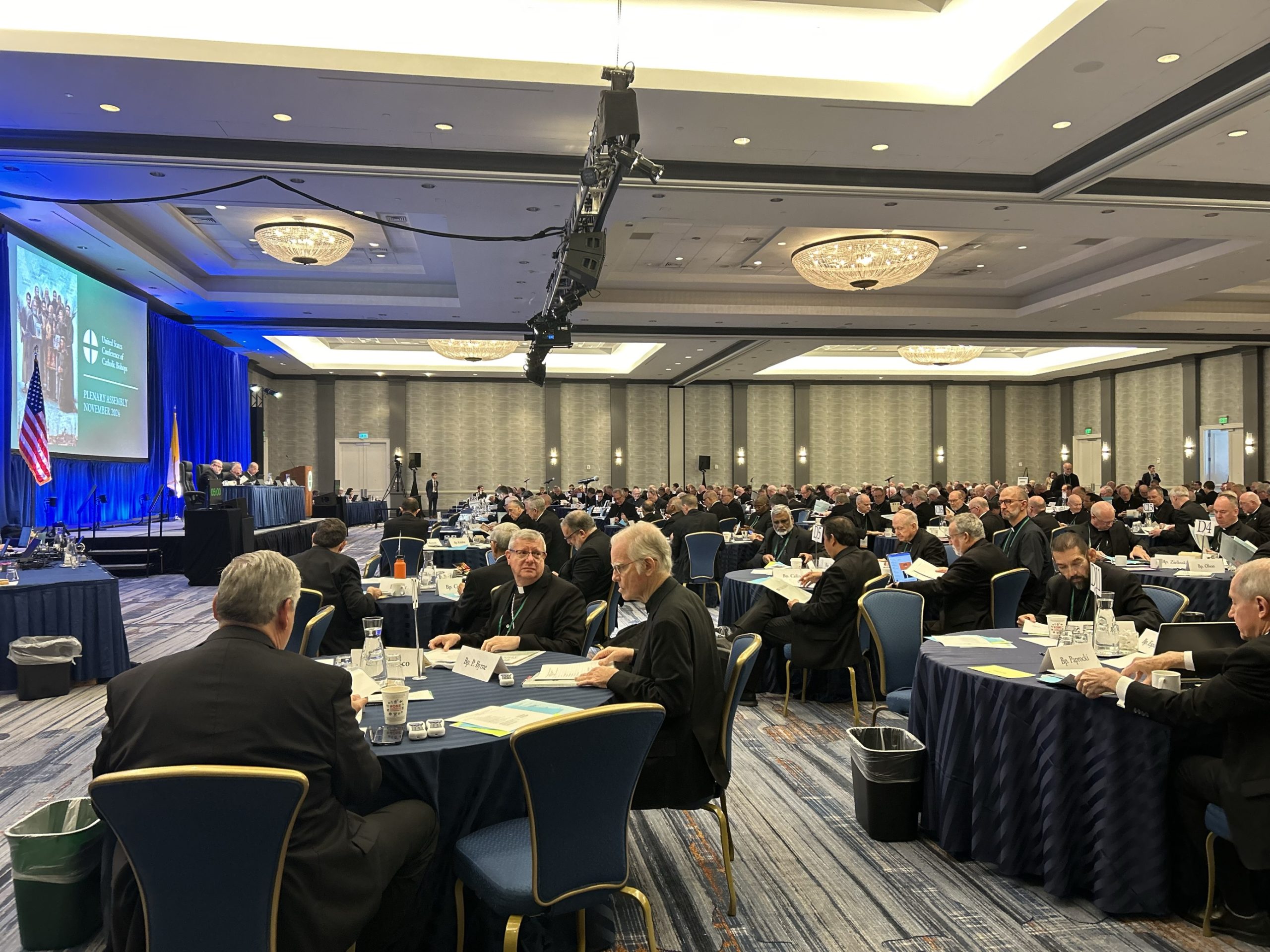
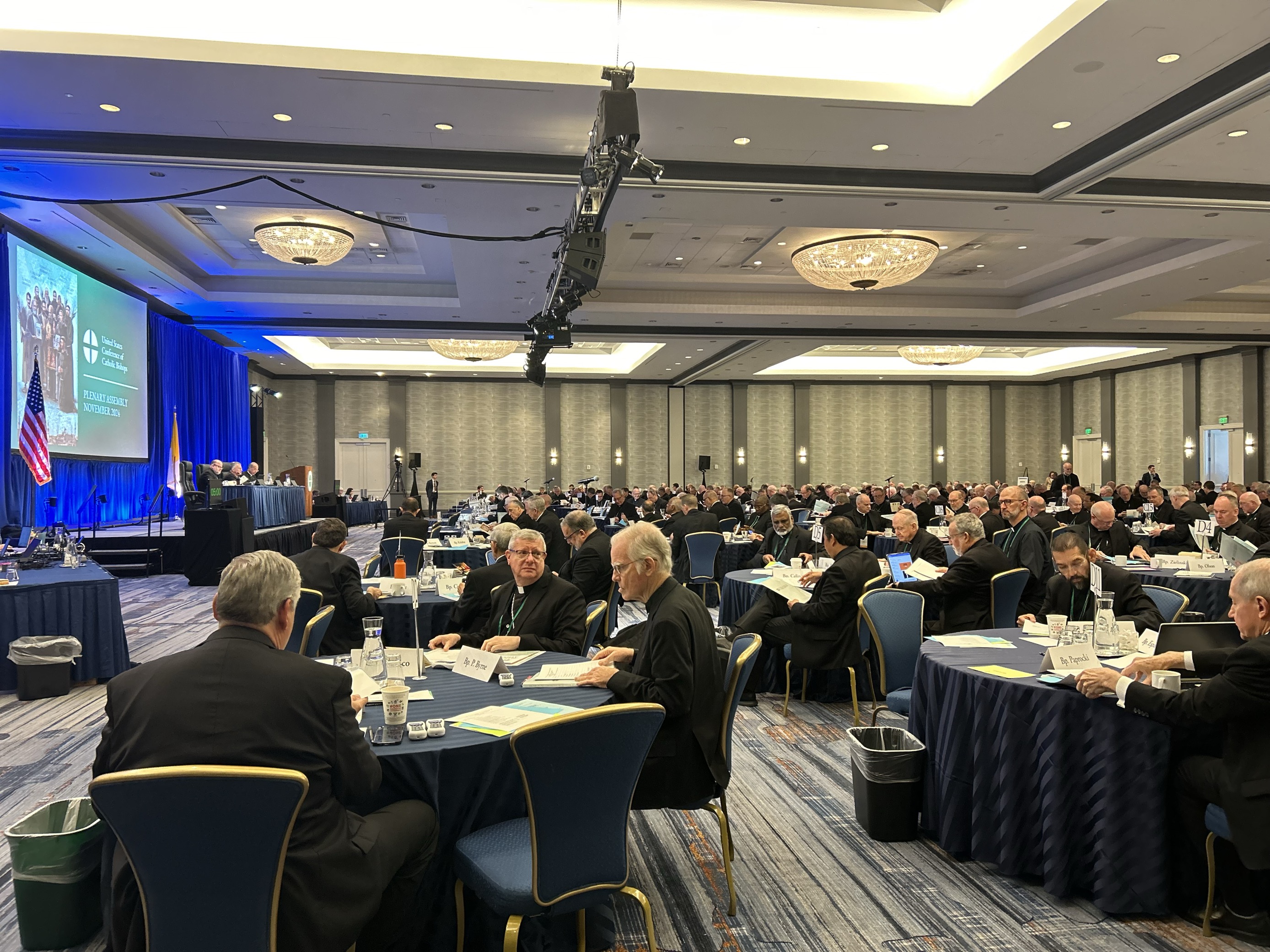
U.S. bishops to elect secretary, committee chairs at November meeting – #Catholic – The U.S. Conference of Catholic Bishops (USCCB) will elect the next secretary and leadership for six committees during its November meeting, which will determine who leads the bishops’ work on education, doctrine, pro-life activities, and other issues.American bishops will meet for their fall plenary assembly from Nov. 16–19 in Baltimore, which will include the election of bishops to the positions. Each bishop will serve as bishop-elect for one year, before taking over the role at the end of the 2027 fall plenary assembly. They serve three-year terms.The most senior office up for election is USCCB secretary, which also leads the Committee on Priorities and Planning. This bishop helps set conference-wide priorities for the bishops.Two bishops were nominated for the role: Bishop Kevin C. Rhoades of Fort Wayne-South Bend, Indiana, and Bishop Earl K. Fernandes of Columbus, Ohio. Rhoades holds the position because he was elected in 2025 to finish the term of Archbishop Paul S. Coakley of Oklahoma City, whose election to the USCCB presidency left a vacancy.There are also two nominees for each of the committee chairs:The Committee on Catholic Education: Bishop James D. Conley, Diocese of Lincoln, Nebraska, and Bishop Edmund J. Whalen, auxiliary bishop, Archdiocese of New YorkThe Committee on Communications: Bishop Daniel J. Felton, Diocese of Duluth, Minnesota, and Bishop Louis Tylka, Diocese of Peoria, IllinoisThe Committee on Cultural Diversity in the Church: Bishop Steven J. Maekawa, OP, Diocese of Fairbanks, Alaska, and Bishop Michael M. Pham, Diocese of San DiegoThe Committee on Doctrine: Bishop William M. Joensen, Diocese of Des Moines, Iowa, and Bishop Steven J. Lopes, Personal Ordinariate of the Chair of St. PeterThe Committee on National Collections: Bishop Mark A. Eckman, Diocese of Pittsburgh, and Bishop Gerald L. Vincke, Diocese of Salina, KansasThe Committee on Pro-Life Activities: Bishop John T. Folda, Diocese of Fargo, North Dakota, and Bishop Donald J. Hying, Diocese of Madison, Wisconsin

U.S. bishops to elect secretary, committee chairs at November meeting – #Catholic – The U.S. Conference of Catholic Bishops (USCCB) will elect the next secretary and leadership for six committees during its November meeting, which will determine who leads the bishops’ work on education, doctrine, pro-life activities, and other issues.American bishops will meet for their fall plenary assembly from Nov. 16–19 in Baltimore, which will include the election of bishops to the positions. Each bishop will serve as bishop-elect for one year, before taking over the role at the end of the 2027 fall plenary assembly. They serve three-year terms.The most senior office up for election is USCCB secretary, which also leads the Committee on Priorities and Planning. This bishop helps set conference-wide priorities for the bishops.Two bishops were nominated for the role: Bishop Kevin C. Rhoades of Fort Wayne-South Bend, Indiana, and Bishop Earl K. Fernandes of Columbus, Ohio. Rhoades holds the position because he was elected in 2025 to finish the term of Archbishop Paul S. Coakley of Oklahoma City, whose election to the USCCB presidency left a vacancy.There are also two nominees for each of the committee chairs:The Committee on Catholic Education: Bishop James D. Conley, Diocese of Lincoln, Nebraska, and Bishop Edmund J. Whalen, auxiliary bishop, Archdiocese of New YorkThe Committee on Communications: Bishop Daniel J. Felton, Diocese of Duluth, Minnesota, and Bishop Louis Tylka, Diocese of Peoria, IllinoisThe Committee on Cultural Diversity in the Church: Bishop Steven J. Maekawa, OP, Diocese of Fairbanks, Alaska, and Bishop Michael M. Pham, Diocese of San DiegoThe Committee on Doctrine: Bishop William M. Joensen, Diocese of Des Moines, Iowa, and Bishop Steven J. Lopes, Personal Ordinariate of the Chair of St. PeterThe Committee on National Collections: Bishop Mark A. Eckman, Diocese of Pittsburgh, and Bishop Gerald L. Vincke, Diocese of Salina, KansasThe Committee on Pro-Life Activities: Bishop John T. Folda, Diocese of Fargo, North Dakota, and Bishop Donald J. Hying, Diocese of Madison, Wisconsin

The bishops will serve one year as chair-elect and assume the positions in the fall of 2027.

Read More
Archbishop of Dijon, France, asks for prayers for priest who died by suicide – #Catholic – Archbishop Antoine Hérouard of Dijon, France, asked for prayers for Father Bernard Card, who died by suicide in his Sainte Chantal Parish house on Sunday, Oct. 4.In a letter sent to the faithful of his archdiocese, the prelate wrote of his “astonishment and deep sadness” and said that what happened was “totally unexpected and difficult to understand.”“Let us entrust him to the merciful love of the Lord. Let us pray for his parishioners, shocked by this unexpected news; for Father Jean-Philippe Nollé, his vicar; and for his family and friends, left desolate by this sudden departure,” the archbishop said.In his letter, the archbishop remembered Card — who had been “deeply affected” some time ago by his brother’s suicide — as “a pastor much appreciated by his parishioners and who moved with ease among his fellow priests, who trusted him.”He added that he was “very involved in the life of the cathedral chapter, regularly participated in the canons' prayer in the archbishopʼs chapel, and enjoyed staying afterward for coffee with the staff. He always took part with interest in the meetings of the Diocesan Council for Economic Affairs.”Looking ahead to Card’s approaching 75th birthday, Hérouard said the two had spoken about the possibility of continuing his mission a little past the usual retirement age. Some had noticed that he seemed “tired lately” and was bothered by insects in his house, but no one thought that was “anything dramatic,” the archbishop wrote.On the archdioceseʼs Facebook page, Michèle Bauchet commented: “This is deeply sad news. [Father] Bernard was a very kind person. He had agreed to officiate at our son-in-lawʼs funeral Mass.” She wrote that he was to celebrate her golden wedding anniversary Mass in 2027. “We are truly shocked. We pray for Jean-Philippe Nollé and all of Bernardʼs family,” she added.The French government declared mental health a national priority for 2025 and 2026. A 2020 study by Mutuelle Saint-Martin and Action Sociale found that 9% of French priests showed a depressive syndrome, 40% had a low sense of personal fulfillment, 7% a high degree of exhaustion, and 2% suffered from severe burnout.The archdiocese has organized several prayer vigils for the priest. The first is Thursday, Oct. 8, at 6:30 p.m. in Chenôve (Chapel of Saint Teresa). Later that same day, another vigil will be held at 3 p.m. in the church of Corcelles-les-Monts.Prayers will be held on Friday, Oct. 9, at 6 p.m. at Sainte-Chantal; and on Monday, Oct. 12, from 8:30 to 10 p.m. at the same location. The funeral will take place on Tuesday, Oct. 13, at 10 a.m., also at Sainte-Chantal.Seek helpIf you or someone you know is experiencing an emotional crisis or suicidal thoughts, remember that the Catholic Church offers spiritual guidance, prayer, and someone to talk to and encourages seeking professional help.You can contact helplines, such as the National Suicide Prevention Lifeline (988 in the U.S.) for your country, or go to your parish, where you will find pastoral support and resources.The Catholic Church teaches that life is a gift from God. The Church accompanies those who suffer with compassion and without judgment, offering hope, prayer, and consolation to the affected families.This story was first published by ACI Prensa, the Spanish-language sister service of EWTN News. It has been translated and adapted by EWTN News English.

Archbishop of Dijon, France, asks for prayers for priest who died by suicide – #Catholic – Archbishop Antoine Hérouard of Dijon, France, asked for prayers for Father Bernard Card, who died by suicide in his Sainte Chantal Parish house on Sunday, Oct. 4.In a letter sent to the faithful of his archdiocese, the prelate wrote of his “astonishment and deep sadness” and said that what happened was “totally unexpected and difficult to understand.”“Let us entrust him to the merciful love of the Lord. Let us pray for his parishioners, shocked by this unexpected news; for Father Jean-Philippe Nollé, his vicar; and for his family and friends, left desolate by this sudden departure,” the archbishop said.In his letter, the archbishop remembered Card — who had been “deeply affected” some time ago by his brother’s suicide — as “a pastor much appreciated by his parishioners and who moved with ease among his fellow priests, who trusted him.”He added that he was “very involved in the life of the cathedral chapter, regularly participated in the canons' prayer in the archbishopʼs chapel, and enjoyed staying afterward for coffee with the staff. He always took part with interest in the meetings of the Diocesan Council for Economic Affairs.”Looking ahead to Card’s approaching 75th birthday, Hérouard said the two had spoken about the possibility of continuing his mission a little past the usual retirement age. Some had noticed that he seemed “tired lately” and was bothered by insects in his house, but no one thought that was “anything dramatic,” the archbishop wrote.On the archdioceseʼs Facebook page, Michèle Bauchet commented: “This is deeply sad news. [Father] Bernard was a very kind person. He had agreed to officiate at our son-in-lawʼs funeral Mass.” She wrote that he was to celebrate her golden wedding anniversary Mass in 2027. “We are truly shocked. We pray for Jean-Philippe Nollé and all of Bernardʼs family,” she added.The French government declared mental health a national priority for 2025 and 2026. A 2020 study by Mutuelle Saint-Martin and Action Sociale found that 9% of French priests showed a depressive syndrome, 40% had a low sense of personal fulfillment, 7% a high degree of exhaustion, and 2% suffered from severe burnout.The archdiocese has organized several prayer vigils for the priest. The first is Thursday, Oct. 8, at 6:30 p.m. in Chenôve (Chapel of Saint Teresa). Later that same day, another vigil will be held at 3 p.m. in the church of Corcelles-les-Monts.Prayers will be held on Friday, Oct. 9, at 6 p.m. at Sainte-Chantal; and on Monday, Oct. 12, from 8:30 to 10 p.m. at the same location. The funeral will take place on Tuesday, Oct. 13, at 10 a.m., also at Sainte-Chantal.Seek helpIf you or someone you know is experiencing an emotional crisis or suicidal thoughts, remember that the Catholic Church offers spiritual guidance, prayer, and someone to talk to and encourages seeking professional help.You can contact helplines, such as the National Suicide Prevention Lifeline (988 in the U.S.) for your country, or go to your parish, where you will find pastoral support and resources.The Catholic Church teaches that life is a gift from God. The Church accompanies those who suffer with compassion and without judgment, offering hope, prayer, and consolation to the affected families.This story was first published by ACI Prensa, the Spanish-language sister service of EWTN News. It has been translated and adapted by EWTN News English.

“Let us entrust him to the merciful love of the Lord,” the archbishop wrote in a letter to the faithful. “Let us pray for his parishioners, shocked by this unexpected news.”

Read More
Exorcists discuss cases, emphasize essential role of sacred music and the Virgin Mary in exorcisms – #Catholic – About 120 exorcist priests met in Italy for a five-day conference on possession cases and on the place of sacred music and the Virgin Mary in exorcisms.The 15th Italian National Conference of the International Association of Exorcists (IAE) took place Sept. 21–25 at the Fraterna Domus center in Sacrofano, Italy, near Rome. The meeting focused on the pastoral experience of attendees.3 cases of demonic possessionFather Benigno Palilla, an exorcist of the Archdiocese of Palermo, Italy, described a young woman who was freed after two and a half years of demonic possession, according to IAE’s website. The association said her suffering is common among younger people and is often tied to ceasing reception of the sacraments, atheism, spiritist sessions, and occult practices. Her troubles had led to aggression toward others and self-hatred that reached suicidal thoughts, the association noted. Palilla said her liberation came on the liturgical memorial of St. Pio of Pietrelcina. He said that after she gave her life fully to God, she felt a deep interior peace and a renewed love of life.Father Angelo Barra, an exorcist of the Diocese of Salerno, Italy, spoke of a young woman who was a victim of domestic violence. After a trip, she began to complain of severe pain that started during Mass. The association said that a priest’s simple reading of passages from Acts 16 revealed an extraordinary demonic action and set off an “interior earthquake.” Blessings, together with the spiritual support of two Catholic communities in Africa, led to her liberation. She later said she had been the victim of a ritual consecration by a sect in the place she had visited.Father Michele Tenzon, a former exorcist of the Diocese of Ventimiglia-Sanremo, recalled a South American woman whose relatives had “offered her to the spirits.” He said in that case, and in an exorcist’s life generally, what matters is living an authentic Christian life, ongoing formation, and the intercession of the Virgin Mary in prayer.Sacred music and the Virgin MaryFather Giuseppe Grassi, an exorcist and director of the Office of Sacred Music of the Archdiocese of Brindisi-Ostuni, Italy, said sacred music and song are closely tied to the heights of the angelic ministry and can be used fruitfully in exorcism, according to the association. The more sacred the music, he said, the more closely it is connected to the liturgical action, because it prefigures the liturgy of the heavenly Jerusalem — from the psalms to Gregorian chant and popular songs in honor of the Virgin.Mariologist Father Salvatore Perrella, a Servite and former dean of the Pontifical Marianum in Rome, stressed the importance of the Virgin Mary’s place in exorcisms. He pointed to her constant rooting in the word of God, “since Mary is intimately involved in the heart of the mystery of the Incarnation.” Mary, he said, “lived and served with fidelity, intelligence, and sobriety the role of collaborator with the Trinity in the salvation and eschatological glorification of the ‘scattered children of God.’” She is “essential in the life of the Church, interceding and praying for good to triumph over evil,” according to the association.10 years since Father Amorth’s deathSeveral exorcists remembered Father Gabriele Amorth, the well-known exorcist of the Diocese of Rome and founder of the association, who died on Sept. 16, 2016, and who is credited with tens of thousands of exorcisms.Father Francesco Bamonte, vice president of the association, recalled Amorth’s early work with the Servant of God Father Candido Amantini, exorcist at the Scala Santa. Amorth, he said, “understood that for a novice exorcist, simply being appointed by the bishop and receiving the ritual was not enough. It was like being an inexperienced surgeon. Hence the need for the conferences, courses, and regular training sessions promoted by the association.”Father Aldo Buonaiuto, an exorcist of the Diocese of Rome, recalled Amorth’s warnings about choices that expose a person to extraordinary demonic action: dangerous occult situations, fascination with the supernatural, personal ambition, an interior predisposition, and the devaluing of affections.Father Marcello Lanza of the Diocese of Acerra, Italy, highlighted “the mystical component in the life, vocation, and teachings of Father Amorth, understood as a process of conformity to Christ. This is of great importance in the practice of exorcism, because if the ministry is mystically united to the Liberator, who is Christ, the devil is defeated all the more.”This story was first published by ACI Prensa, the Spanish-language sister service of EWTN News. It has been translated and adapted by EWTN News English.

Exorcists discuss cases, emphasize essential role of sacred music and the Virgin Mary in exorcisms – #Catholic – About 120 exorcist priests met in Italy for a five-day conference on possession cases and on the place of sacred music and the Virgin Mary in exorcisms.The 15th Italian National Conference of the International Association of Exorcists (IAE) took place Sept. 21–25 at the Fraterna Domus center in Sacrofano, Italy, near Rome. The meeting focused on the pastoral experience of attendees.3 cases of demonic possessionFather Benigno Palilla, an exorcist of the Archdiocese of Palermo, Italy, described a young woman who was freed after two and a half years of demonic possession, according to IAE’s website. The association said her suffering is common among younger people and is often tied to ceasing reception of the sacraments, atheism, spiritist sessions, and occult practices. Her troubles had led to aggression toward others and self-hatred that reached suicidal thoughts, the association noted. Palilla said her liberation came on the liturgical memorial of St. Pio of Pietrelcina. He said that after she gave her life fully to God, she felt a deep interior peace and a renewed love of life.Father Angelo Barra, an exorcist of the Diocese of Salerno, Italy, spoke of a young woman who was a victim of domestic violence. After a trip, she began to complain of severe pain that started during Mass. The association said that a priest’s simple reading of passages from Acts 16 revealed an extraordinary demonic action and set off an “interior earthquake.” Blessings, together with the spiritual support of two Catholic communities in Africa, led to her liberation. She later said she had been the victim of a ritual consecration by a sect in the place she had visited.Father Michele Tenzon, a former exorcist of the Diocese of Ventimiglia-Sanremo, recalled a South American woman whose relatives had “offered her to the spirits.” He said in that case, and in an exorcist’s life generally, what matters is living an authentic Christian life, ongoing formation, and the intercession of the Virgin Mary in prayer.Sacred music and the Virgin MaryFather Giuseppe Grassi, an exorcist and director of the Office of Sacred Music of the Archdiocese of Brindisi-Ostuni, Italy, said sacred music and song are closely tied to the heights of the angelic ministry and can be used fruitfully in exorcism, according to the association. The more sacred the music, he said, the more closely it is connected to the liturgical action, because it prefigures the liturgy of the heavenly Jerusalem — from the psalms to Gregorian chant and popular songs in honor of the Virgin.Mariologist Father Salvatore Perrella, a Servite and former dean of the Pontifical Marianum in Rome, stressed the importance of the Virgin Mary’s place in exorcisms. He pointed to her constant rooting in the word of God, “since Mary is intimately involved in the heart of the mystery of the Incarnation.” Mary, he said, “lived and served with fidelity, intelligence, and sobriety the role of collaborator with the Trinity in the salvation and eschatological glorification of the ‘scattered children of God.’” She is “essential in the life of the Church, interceding and praying for good to triumph over evil,” according to the association.10 years since Father Amorth’s deathSeveral exorcists remembered Father Gabriele Amorth, the well-known exorcist of the Diocese of Rome and founder of the association, who died on Sept. 16, 2016, and who is credited with tens of thousands of exorcisms.Father Francesco Bamonte, vice president of the association, recalled Amorth’s early work with the Servant of God Father Candido Amantini, exorcist at the Scala Santa. Amorth, he said, “understood that for a novice exorcist, simply being appointed by the bishop and receiving the ritual was not enough. It was like being an inexperienced surgeon. Hence the need for the conferences, courses, and regular training sessions promoted by the association.”Father Aldo Buonaiuto, an exorcist of the Diocese of Rome, recalled Amorth’s warnings about choices that expose a person to extraordinary demonic action: dangerous occult situations, fascination with the supernatural, personal ambition, an interior predisposition, and the devaluing of affections.Father Marcello Lanza of the Diocese of Acerra, Italy, highlighted “the mystical component in the life, vocation, and teachings of Father Amorth, understood as a process of conformity to Christ. This is of great importance in the practice of exorcism, because if the ministry is mystically united to the Liberator, who is Christ, the devil is defeated all the more.”This story was first published by ACI Prensa, the Spanish-language sister service of EWTN News. It has been translated and adapted by EWTN News English.

The exorcists discussed the importance of sacred music and the “essential” place of the Virgin Mary’s intercession in exorcisms.

Read More
‘Nearly every Catholic health care institution’ in Illinois shielded from suicide law in court order #Catholic Catholic health institutions in Illinois will enjoy broad protection against the state’s assisted suicide law after a federal court expanded a block against the law to protect religious objectors from being forced to participate in it. The U.S. District Court for the Northern District of Illinois earlier this year ruled in favor of multiple Catholic plaintiffs, including Springfield Bishop Thomas Paprocki and Chicago archbishop Cardinal Blase Cupich, barring the state from requiring them to participate in the suicide regime there. Multiple groups of religious sisters have also been included in those protective orders. The Thomas More Society, a legal group representing Paprocki and several others in their lawsuit, announced on Oct. 8 that “nearly every Catholic health care institution in Illinois” had been included in an expanded court order blocking the suicide law from being enforced. Among the protected entities are the Catholic Medical Association, the Catholic Psychotherapy Association, and numerous Catholic healthcare affiliates in the Diocese of Springfield. The order is temporary and will last only so long as the lawsuit against the state suicide law plays out, but Thomas More Society litigation head Peter Breen said in a news release that the law firm would “keep fighting until that protection is permanent.” “Catholic and Christian health care providers, from hospitals and nursing homes to physicians, nurses, and therapists, strive to heal, not harm, and for generations, have cared for the sick and dying in keeping with their faith,” Breen said, arguing that the state has “no right or authority” to coerce them into helping patients kill themselves. Narrow opt-out laws mean the Catholic care providers were not obligated to actively facilitate the specific act of suicide. But the state law still requires them to participate in the suicide regime in various other ways, including touting the alleged benefits of taking one’s own life.Elsewhere in the U.S., Rockville Centre, New York, Bishop John Barres and a coalition of four communities of religious sisters won a victory in July when a U.S. district judge said the state would be barred from enforcing its new suicide law against the Catholic plaintiffs while their own federal suit played out.

‘Nearly every Catholic health care institution’ in Illinois shielded from suicide law in court order #Catholic Catholic health institutions in Illinois will enjoy broad protection against the state’s assisted suicide law after a federal court expanded a block against the law to protect religious objectors from being forced to participate in it. The U.S. District Court for the Northern District of Illinois earlier this year ruled in favor of multiple Catholic plaintiffs, including Springfield Bishop Thomas Paprocki and Chicago archbishop Cardinal Blase Cupich, barring the state from requiring them to participate in the suicide regime there. Multiple groups of religious sisters have also been included in those protective orders. The Thomas More Society, a legal group representing Paprocki and several others in their lawsuit, announced on Oct. 8 that “nearly every Catholic health care institution in Illinois” had been included in an expanded court order blocking the suicide law from being enforced. Among the protected entities are the Catholic Medical Association, the Catholic Psychotherapy Association, and numerous Catholic healthcare affiliates in the Diocese of Springfield. The order is temporary and will last only so long as the lawsuit against the state suicide law plays out, but Thomas More Society litigation head Peter Breen said in a news release that the law firm would “keep fighting until that protection is permanent.” “Catholic and Christian health care providers, from hospitals and nursing homes to physicians, nurses, and therapists, strive to heal, not harm, and for generations, have cared for the sick and dying in keeping with their faith,” Breen said, arguing that the state has “no right or authority” to coerce them into helping patients kill themselves. Narrow opt-out laws mean the Catholic care providers were not obligated to actively facilitate the specific act of suicide. But the state law still requires them to participate in the suicide regime in various other ways, including touting the alleged benefits of taking one’s own life.Elsewhere in the U.S., Rockville Centre, New York, Bishop John Barres and a coalition of four communities of religious sisters won a victory in July when a U.S. district judge said the state would be barred from enforcing its new suicide law against the Catholic plaintiffs while their own federal suit played out.

Multiple religious objectors are suing the state over its newly instituted assisted suicide regime.

Read More

NASA has selected the far-infrared space telescope mission PRIMA (PRobe far-Infrared Mission for Astrophysics) to move to the next stage in its development. PRIMA will be the first in a new mission class and help scientists learn more about the evolution of the universe. PRIMA will carry a 5.9-foot (1.8-meter) mirror, and NASA hopes toContinue reading “Far-infrared telescope PRIMA advances toward 2033 launch”

The post Far-infrared telescope PRIMA advances toward 2033 launch appeared first on Astronomy Magazine.

Read More
Holy See calls for abolition of death penalty at UN #Catholic The Holy See’s permanent observer to the U.N. urged the international community to abolish the death penalty during a meeting at the 81st General Assembly.Archbishop Christophe El-Kassis argued for an end to capital punishment during a meeting of the Third Committee on Oct. 7, saying the defense of human rights must be “consistent and universal, extending to every person, at every stage and in every circumstance.”El-Kassis’ remarks come after Tennessee’s Sept. 30 botched execution of convicted murderer Christa Pike, who survived the administration of two syringes of lethal pentobarbital and is receiving medical treatment. A week later, Texas executed a man, marking the 30th execution carried out in the United States in 2026. Separately, President Donald Trump on Oct. 5 approved an execution by a military firing squad.“The death penalty is inadmissible because it is an attack on the inviolability and dignity of the person,” El-Kassis said, quoting the Catechism of the Catholic Church. “This God-given dignity is never forfeited, no matter the gravity of the crime. Advances in penal systems now allow states to protect society effectively without foreclosing the possibility of repentance and redemption.”El-Kassis emphasized that “there is no recourse” if the death penalty is carried out against an innocent person.“Conversely, the victims and their families are entitled to solidarity, support, and a justice that is prompt, impartial, and humane. However, the taking of another life cannot restore what has been lost,” he said. “The purpose of punishment is not vengeance, but rather to repair the social bond, protect the common good, and reintegrate the offender.”He concluded by calling on states in the U.S. where the practice is legal to “consider establishing, without delay, a moratorium on executions as a step towards abolition,” commute existing sentences, ensure fair trials, and enhance rehabilitation efforts.Drug traffickingEl-Kassis also spoke on the topic of drug trafficking addressing those gathered at the Third Committee meeting on “Crime Prevention and Criminal Justice” with a call to uphold the law for the protection of human dignity and rights of others.“Renewed determination is required in the face of expanding drug markets and the links between drug trafficking, corruption, and criminal activity around the world,” he said during the Oct. 7 session. “Furthermore, organized criminal groups are exploiting technology and innovation to expand their reach and diversify their operations.”Quoting Pope Leo XIV, El-Kassis highlighted that prevention against drug use and trafficking must be accompanied by education that begins within the family and continues in schools, “imparting accurate scientific knowledge of the ruinous effects of narcotics upon the brain, the body, personal conduct, and the common good of the community.”“The Catholic Church will continue to contribute to the common good and the inalienable, God-given dignity of every human person,” he said.Indigenous peoplesEl-Kassis also spoke during a session of the Third Committee on the “Rights of Indigenous Peoples.”“Every human person is endowed with inherent dignity and equal rights. Indigenous peoples, with their unique histories, cultures, spiritualities, and ancestral bonds to the land, form an indispensable part of the human family,” he said. “Their rights must be respected, protected, and promoted as a matter of justice and of the common good.”El-Kassis further emphasized that “Indigenous peoples are not objects of development policies, but subjects and protagonists of their own destinies.”

Holy See calls for abolition of death penalty at UN #Catholic The Holy See’s permanent observer to the U.N. urged the international community to abolish the death penalty during a meeting at the 81st General Assembly.Archbishop Christophe El-Kassis argued for an end to capital punishment during a meeting of the Third Committee on Oct. 7, saying the defense of human rights must be “consistent and universal, extending to every person, at every stage and in every circumstance.”El-Kassis’ remarks come after Tennessee’s Sept. 30 botched execution of convicted murderer Christa Pike, who survived the administration of two syringes of lethal pentobarbital and is receiving medical treatment. A week later, Texas executed a man, marking the 30th execution carried out in the United States in 2026. Separately, President Donald Trump on Oct. 5 approved an execution by a military firing squad.“The death penalty is inadmissible because it is an attack on the inviolability and dignity of the person,” El-Kassis said, quoting the Catechism of the Catholic Church. “This God-given dignity is never forfeited, no matter the gravity of the crime. Advances in penal systems now allow states to protect society effectively without foreclosing the possibility of repentance and redemption.”El-Kassis emphasized that “there is no recourse” if the death penalty is carried out against an innocent person.“Conversely, the victims and their families are entitled to solidarity, support, and a justice that is prompt, impartial, and humane. However, the taking of another life cannot restore what has been lost,” he said. “The purpose of punishment is not vengeance, but rather to repair the social bond, protect the common good, and reintegrate the offender.”He concluded by calling on states in the U.S. where the practice is legal to “consider establishing, without delay, a moratorium on executions as a step towards abolition,” commute existing sentences, ensure fair trials, and enhance rehabilitation efforts.Drug traffickingEl-Kassis also spoke on the topic of drug trafficking addressing those gathered at the Third Committee meeting on “Crime Prevention and Criminal Justice” with a call to uphold the law for the protection of human dignity and rights of others.“Renewed determination is required in the face of expanding drug markets and the links between drug trafficking, corruption, and criminal activity around the world,” he said during the Oct. 7 session. “Furthermore, organized criminal groups are exploiting technology and innovation to expand their reach and diversify their operations.”Quoting Pope Leo XIV, El-Kassis highlighted that prevention against drug use and trafficking must be accompanied by education that begins within the family and continues in schools, “imparting accurate scientific knowledge of the ruinous effects of narcotics upon the brain, the body, personal conduct, and the common good of the community.”“The Catholic Church will continue to contribute to the common good and the inalienable, God-given dignity of every human person,” he said.Indigenous peoplesEl-Kassis also spoke during a session of the Third Committee on the “Rights of Indigenous Peoples.”“Every human person is endowed with inherent dignity and equal rights. Indigenous peoples, with their unique histories, cultures, spiritualities, and ancestral bonds to the land, form an indispensable part of the human family,” he said. “Their rights must be respected, protected, and promoted as a matter of justice and of the common good.”El-Kassis further emphasized that “Indigenous peoples are not objects of development policies, but subjects and protagonists of their own destinies.”

“The death penalty is inadmissible because it is an attack on the inviolability and dignity of the person,” the Holy See’s permanent observer to the U.N. said during the 81st General Assembly.

Read More
Church leaders call for dialogue over confrontation amid turbulent protests in France #Catholic – PARIS (OSV News) — Just days after Pope Leo XIV’s Sept. 25-28 apostolic visit to France, scenes of unrest have replaced the atmosphere of unity and peace that marked the papal trip.
Riots that began in the Paris region on a small scale Sept. 17 spread nationwide after Sept. 28, forcing closures or disruptions at nearly 900 of France’s 3,700 public high schools by Oct. 6.
“After those … days of serenity, the joy of being together, and peace” during the papal visit, “reality quickly caught up with us,” Bishop Hervé Gosselin of Angoulême commented on Oct. 2 in a conversation with Les Coulisses de l’Info, podcast of the regional daily Charente Libre.
Since the outbreak of protests in Paris, students have been joined nationwide by union and political leaders, as well as hooded rioters, who fired fireworks, smashed windows with cobblestones or set trash cans on fire.

Click here to subscribe to our weekly newsletter.

According to the public radio station France Info, the Ministry of Justice has reported more than 5,000 people taken into police custody, while several hundred police officers have been injured.
Bishop Olivier de Cagny of Évreux said many young people face fears about climate change, unemployment, war and social isolation, but at the same time he called violence “unnecessary.”
“What a contrast between these scenes and those witnessed during the pope’s visit,” he said, urging prayer and renewed dialogue to end the violence.
For Le Figaro Magazine, the pope’s trip in France was therefore “a blessed interlude, a providential truce in these times of anxious gloom,” Guillaume Roquette wrote in the paper Oct. 2.
In the face of erupting violence, Bishop Matthieu Rougé of Nanterre, near Paris, remembered the papal visit as an event freeing “from the triviality and violence that all too often plague contemporary public life.” He said it was a “moment of comfort” for a France that fell into chaos hours after the pope departed from Metz and headed to Rome.
Why the protests erupted
The unrest is primarily economic in nature: The ongoing negotiations over the 2027 budget are expected to be difficult against a backdrop of inflation and soaring gas prices.
Joining the students were also farmers, whom agricultural unions had encouraged to protest following a summer of heat waves in France. The total lack of rain has dangerously strained their finances. But France’s public debt, which has hit a new record high, is making it increasingly difficult to provide the social assistance being demanded.
For Bishop Gosselin, some of the students’ demands are “futile,” such as those concerning their poorly balanced class schedules, but others are “much more profound,” as they are expressing their anxieties about the future, and these, in his opinion, must be heard.
“But violence is a failure,” the bishop insisted. “Under no circumstances can violence be justified.”
St. Denis mayor had welcomed Pope Leo, then joined protesters
The bishop’s remarks were also in response to questions about Saint-Denis Mayor Bally Bagayoko, a Muslim of Malian origin known for his widely publicized affiliation with radical far-left parties, who warmly welcomed the pope upon his arrival for the youth vigil Sept. 25 in Saint-Denis’ national stadium and participated in the vigil.
But since then, Bagayoko has spoken out alongside students, to the point of facing legal action for “alleged acts of incitement to commit a crime.” On Sept. 29, he publicly stated that “violence, at a certain point, can be legitimate,” although he conceded that “whenever it can be avoided, that is better.”
Church leaders in those circumstances have repeatedly called for dialogue over confrontation.
Bishop: Path of dialogue needs to be rediscovered
For Bishop de Cagny, “violence is unnecessary,” even to resolve “entirely legitimate problems,” such as the poor condition of certain school buildings or the shortage of teachers.
“A blockade can be a worthwhile form of protest if it helps open a dialogue,” he emphasized in his conversation with La Croix Oct. 4. “But in the current situation, no one seems to really understand what is happening.”
Bishop de Cagny said, “There is no denying that the world in which young people are growing up may seem frightening to them.” Their future “may seem bleak; climate change is a source of anxiety, as are the prospects of unemployment,” he noted. For the bishop of Evreux, young people are facing an “anxiety-inducing atmosphere,” fueled by wars and amplified by social media.
“Families are sometimes themselves weakened by crises, a lack of communication, and the omnipresence of screens,” Bishop de Clagny also noted, observing that young people are “often left alone to face their anxieties” and “sometimes find it hard to believe that dialogue is truly effective in resolving conflicts.”
“They are confronted with a world they perceive as violent and uncertain, and today, they rebel against this situation,” he added.
For Bishop de Cagny, “this inner violence can simmer beneath the surface, remaining unexpressed, and when an outlet presents itself, as is the case with this mobilization, some rush into it, driven by a sort of fascination with violence, without always fully grasping the consequences.”
“Paradoxically, they do not realize that they themselves resort to violence,” the bishop said.
“In the face of violence, young people especially need to rediscover a path of dialogue. We must pray that this violence will cease.”
Caroline de Sury writes for OSV News from Paris.

Church leaders call for dialogue over confrontation amid turbulent protests in France #Catholic – PARIS (OSV News) — Just days after Pope Leo XIV’s Sept. 25-28 apostolic visit to France, scenes of unrest have replaced the atmosphere of unity and peace that marked the papal trip. Riots that began in the Paris region on a small scale Sept. 17 spread nationwide after Sept. 28, forcing closures or disruptions at nearly 900 of France’s 3,700 public high schools by Oct. 6. “After those … days of serenity, the joy of being together, and peace” during the papal visit, “reality quickly caught up with us,” Bishop Hervé Gosselin of Angoulême commented on Oct. 2 in a conversation with Les Coulisses de l’Info, podcast of the regional daily Charente Libre. Since the outbreak of protests in Paris, students have been joined nationwide by union and political leaders, as well as hooded rioters, who fired fireworks, smashed windows with cobblestones or set trash cans on fire. Click here to subscribe to our weekly newsletter. According to the public radio station France Info, the Ministry of Justice has reported more than 5,000 people taken into police custody, while several hundred police officers have been injured. Bishop Olivier de Cagny of Évreux said many young people face fears about climate change, unemployment, war and social isolation, but at the same time he called violence “unnecessary.” “What a contrast between these scenes and those witnessed during the pope’s visit,” he said, urging prayer and renewed dialogue to end the violence. For Le Figaro Magazine, the pope’s trip in France was therefore “a blessed interlude, a providential truce in these times of anxious gloom,” Guillaume Roquette wrote in the paper Oct. 2. In the face of erupting violence, Bishop Matthieu Rougé of Nanterre, near Paris, remembered the papal visit as an event freeing “from the triviality and violence that all too often plague contemporary public life.” He said it was a “moment of comfort” for a France that fell into chaos hours after the pope departed from Metz and headed to Rome. Why the protests erupted The unrest is primarily economic in nature: The ongoing negotiations over the 2027 budget are expected to be difficult against a backdrop of inflation and soaring gas prices. Joining the students were also farmers, whom agricultural unions had encouraged to protest following a summer of heat waves in France. The total lack of rain has dangerously strained their finances. But France’s public debt, which has hit a new record high, is making it increasingly difficult to provide the social assistance being demanded. For Bishop Gosselin, some of the students’ demands are “futile,” such as those concerning their poorly balanced class schedules, but others are “much more profound,” as they are expressing their anxieties about the future, and these, in his opinion, must be heard. “But violence is a failure,” the bishop insisted. “Under no circumstances can violence be justified.” St. Denis mayor had welcomed Pope Leo, then joined protesters The bishop’s remarks were also in response to questions about Saint-Denis Mayor Bally Bagayoko, a Muslim of Malian origin known for his widely publicized affiliation with radical far-left parties, who warmly welcomed the pope upon his arrival for the youth vigil Sept. 25 in Saint-Denis’ national stadium and participated in the vigil. But since then, Bagayoko has spoken out alongside students, to the point of facing legal action for “alleged acts of incitement to commit a crime.” On Sept. 29, he publicly stated that “violence, at a certain point, can be legitimate,” although he conceded that “whenever it can be avoided, that is better.” Church leaders in those circumstances have repeatedly called for dialogue over confrontation. Bishop: Path of dialogue needs to be rediscovered For Bishop de Cagny, “violence is unnecessary,” even to resolve “entirely legitimate problems,” such as the poor condition of certain school buildings or the shortage of teachers. “A blockade can be a worthwhile form of protest if it helps open a dialogue,” he emphasized in his conversation with La Croix Oct. 4. “But in the current situation, no one seems to really understand what is happening.” Bishop de Cagny said, “There is no denying that the world in which young people are growing up may seem frightening to them.” Their future “may seem bleak; climate change is a source of anxiety, as are the prospects of unemployment,” he noted. For the bishop of Evreux, young people are facing an “anxiety-inducing atmosphere,” fueled by wars and amplified by social media. “Families are sometimes themselves weakened by crises, a lack of communication, and the omnipresence of screens,” Bishop de Clagny also noted, observing that young people are “often left alone to face their anxieties” and “sometimes find it hard to believe that dialogue is truly effective in resolving conflicts.” “They are confronted with a world they perceive as violent and uncertain, and today, they rebel against this situation,” he added. For Bishop de Cagny, “this inner violence can simmer beneath the surface, remaining unexpressed, and when an outlet presents itself, as is the case with this mobilization, some rush into it, driven by a sort of fascination with violence, without always fully grasping the consequences.” “Paradoxically, they do not realize that they themselves resort to violence,” the bishop said. “In the face of violence, young people especially need to rediscover a path of dialogue. We must pray that this violence will cease.” Caroline de Sury writes for OSV News from Paris.

Church leaders call for dialogue over confrontation amid turbulent protests in France #Catholic –

PARIS (OSV News) — Just days after Pope Leo XIV’s Sept. 25-28 apostolic visit to France, scenes of unrest have replaced the atmosphere of unity and peace that marked the papal trip.

Riots that began in the Paris region on a small scale Sept. 17 spread nationwide after Sept. 28, forcing closures or disruptions at nearly 900 of France’s 3,700 public high schools by Oct. 6.

“After those … days of serenity, the joy of being together, and peace” during the papal visit, “reality quickly caught up with us,” Bishop Hervé Gosselin of Angoulême commented on Oct. 2 in a conversation with Les Coulisses de l’Info, podcast of the regional daily Charente Libre.

Since the outbreak of protests in Paris, students have been joined nationwide by union and political leaders, as well as hooded rioters, who fired fireworks, smashed windows with cobblestones or set trash cans on fire.


Click here to subscribe to our weekly newsletter.

According to the public radio station France Info, the Ministry of Justice has reported more than 5,000 people taken into police custody, while several hundred police officers have been injured.

Bishop Olivier de Cagny of Évreux said many young people face fears about climate change, unemployment, war and social isolation, but at the same time he called violence “unnecessary.”

“What a contrast between these scenes and those witnessed during the pope’s visit,” he said, urging prayer and renewed dialogue to end the violence.

For Le Figaro Magazine, the pope’s trip in France was therefore “a blessed interlude, a providential truce in these times of anxious gloom,” Guillaume Roquette wrote in the paper Oct. 2.

In the face of erupting violence, Bishop Matthieu Rougé of Nanterre, near Paris, remembered the papal visit as an event freeing “from the triviality and violence that all too often plague contemporary public life.” He said it was a “moment of comfort” for a France that fell into chaos hours after the pope departed from Metz and headed to Rome.

Why the protests erupted

The unrest is primarily economic in nature: The ongoing negotiations over the 2027 budget are expected to be difficult against a backdrop of inflation and soaring gas prices.

Joining the students were also farmers, whom agricultural unions had encouraged to protest following a summer of heat waves in France. The total lack of rain has dangerously strained their finances. But France’s public debt, which has hit a new record high, is making it increasingly difficult to provide the social assistance being demanded.

For Bishop Gosselin, some of the students’ demands are “futile,” such as those concerning their poorly balanced class schedules, but others are “much more profound,” as they are expressing their anxieties about the future, and these, in his opinion, must be heard.

“But violence is a failure,” the bishop insisted. “Under no circumstances can violence be justified.”

St. Denis mayor had welcomed Pope Leo, then joined protesters

The bishop’s remarks were also in response to questions about Saint-Denis Mayor Bally Bagayoko, a Muslim of Malian origin known for his widely publicized affiliation with radical far-left parties, who warmly welcomed the pope upon his arrival for the youth vigil Sept. 25 in Saint-Denis’ national stadium and participated in the vigil.

But since then, Bagayoko has spoken out alongside students, to the point of facing legal action for “alleged acts of incitement to commit a crime.” On Sept. 29, he publicly stated that “violence, at a certain point, can be legitimate,” although he conceded that “whenever it can be avoided, that is better.”

Church leaders in those circumstances have repeatedly called for dialogue over confrontation.

Bishop: Path of dialogue needs to be rediscovered

For Bishop de Cagny, “violence is unnecessary,” even to resolve “entirely legitimate problems,” such as the poor condition of certain school buildings or the shortage of teachers.

“A blockade can be a worthwhile form of protest if it helps open a dialogue,” he emphasized in his conversation with La Croix Oct. 4. “But in the current situation, no one seems to really understand what is happening.”

Bishop de Cagny said, “There is no denying that the world in which young people are growing up may seem frightening to them.” Their future “may seem bleak; climate change is a source of anxiety, as are the prospects of unemployment,” he noted. For the bishop of Evreux, young people are facing an “anxiety-inducing atmosphere,” fueled by wars and amplified by social media.

“Families are sometimes themselves weakened by crises, a lack of communication, and the omnipresence of screens,” Bishop de Clagny also noted, observing that young people are “often left alone to face their anxieties” and “sometimes find it hard to believe that dialogue is truly effective in resolving conflicts.”

“They are confronted with a world they perceive as violent and uncertain, and today, they rebel against this situation,” he added.

For Bishop de Cagny, “this inner violence can simmer beneath the surface, remaining unexpressed, and when an outlet presents itself, as is the case with this mobilization, some rush into it, driven by a sort of fascination with violence, without always fully grasping the consequences.”

“Paradoxically, they do not realize that they themselves resort to violence,” the bishop said.

“In the face of violence, young people especially need to rediscover a path of dialogue. We must pray that this violence will cease.”

Caroline de Sury writes for OSV News from Paris.

– PARIS (OSV News) — Just days after Pope Leo XIV’s Sept. 25-28 apostolic visit to France, scenes of unrest have replaced the atmosphere of unity and peace that marked the papal trip. Riots that began in the Paris region on a small scale Sept. 17 spread nationwide after Sept. 28, forcing closures or disruptions at nearly 900 of France’s 3,700 public high schools by Oct. 6. “After those … days of serenity, the joy of being together, and peace” during the papal visit, “reality quickly caught up with us,” Bishop Hervé Gosselin of Angoulême commented on Oct. 2 in a

Read More
World Mission Sunday has ‘borne fruit in my own life,’ says Pope Leo #Catholic – (OSV News) — The aim of World Mission Sunday (Oct. 18), established 100 years ago by Pope Pius XI, has “borne fruit in my own life,” said Pope Leo XIV.
The pope reflected on the annual observance in a video message posted by Vatican News to its YouTube channel Oct. 7. A transcript of the message was also published on the Vatican’s website.
In January, Pope Leo XIV announced he had chosen the theme “One in Christ, united in mission” for this year’s celebration, with his message for the day encouraging “the whole Church to continue its missionary journey with joy and zeal in the Holy Spirit.”
Established by Pope Pius XI in 1926 and universally observed by 1927, World Mission Sunday is a dedicated day of “prayer and missionary promotion throughout the Catholic world,” according to its founding decree.
Held on the next-to-last Sunday of October, the observance also includes a collection that serves as the primary financial support for the Pontifical Mission Societies, a worldwide network operating at the service of the pope and consisting of four organizations designated as pontifical by Pope Pius XI in 1922.
The Society for the Propagation of the Faith supports the evangelization efforts of the local church; the Missionary Childhood Association educates children about their part in the church’s missionary outreach; the Society of St. Peter the Apostle trains the next generation of missionary clergy and consecrated religious; and the Pontifical Missionary Union focuses on forming clergy, religious and pastoral leaders more deeply in their role as evangelizers.

Click here to subscribe to our weekly newsletter.

In his video message, Pope Leo said, “Looking back on my youth, I can see how the prayers offered to the Lord of the harvest mysteriously helped prepare my heart to hear Jesus’ call to follow him as an Augustinian missionary.”
The future pope served for years in Peru, a country particularly blessed by missionary priests, said Father Anthony D. Andreassi, a priest of the Oratory of St. Philip Neri in Brooklyn, New York, and a researcher for the Pontifical Mission Societies USA.
In an Oct. 5 interview with OSV News, Father Andreassi explained how the 20th century saw an uptick in the number of North American priests, both diocesan and religious, assigned to Latin America, where the Church already had a 500-year presence, but “never enough of a native clergy.”
The Augustinian Order “started sending people into Peru in the 1960s,” said Father Andreassi. “And then, all of a sudden, you see Robert Prevost” — who would eventually become Pope Leo XIV — “there in the 1980s.”
In his video message, Pope Leo said “the prayers and contributions of the faithful encouraged and sustained my missionary work in Peru, as well as that of countless others throughout the world.”
“For this reason, I would like to express my heartfelt gratitude to everyone who has supported World Mission Sunday over the years,” he added.
The pope said this year’s theme “invites us to reflect on the fundamental task of nurturing the Church’s unity in following Christ, particularly in our commitment and responsibility to spread the Gospel message of salvation to all people.”
Baptism makes each of the faithful “a member of the Body of Christ” with “a unique role in contributing to Jesus’ saving work.”
“Our Lord calls us to cooperate as one family, with the help of the Holy Spirit, to bring everyone everywhere into a communion of faith in Christ,” said Pope Leo.
He reaffirmed his appeal from his previously released message for the day, urging all to “commit to contributing to the great mission of evangelization — which is always a work of love — according to our own vocation and the gifts we have received.”
Prayers and “practical support” will be “a great help in bringing the Gospel of God’s love to everyone, especially the poorest and those most in need,” said the pope, quoting from his earlier message.
He thanked those who “carry on the legacy of World Mission Sunday” and “support generously the evangelizing mission of the Church throughout the world.”
Gina Christian is a multimedia reporter for OSV News. Follow her on X @GinaJesseReina.

World Mission Sunday has ‘borne fruit in my own life,’ says Pope Leo #Catholic – (OSV News) — The aim of World Mission Sunday (Oct. 18), established 100 years ago by Pope Pius XI, has “borne fruit in my own life,” said Pope Leo XIV. The pope reflected on the annual observance in a video message posted by Vatican News to its YouTube channel Oct. 7. A transcript of the message was also published on the Vatican’s website. In January, Pope Leo XIV announced he had chosen the theme “One in Christ, united in mission” for this year’s celebration, with his message for the day encouraging “the whole Church to continue its missionary journey with joy and zeal in the Holy Spirit.” Established by Pope Pius XI in 1926 and universally observed by 1927, World Mission Sunday is a dedicated day of “prayer and missionary promotion throughout the Catholic world,” according to its founding decree. Held on the next-to-last Sunday of October, the observance also includes a collection that serves as the primary financial support for the Pontifical Mission Societies, a worldwide network operating at the service of the pope and consisting of four organizations designated as pontifical by Pope Pius XI in 1922. The Society for the Propagation of the Faith supports the evangelization efforts of the local church; the Missionary Childhood Association educates children about their part in the church’s missionary outreach; the Society of St. Peter the Apostle trains the next generation of missionary clergy and consecrated religious; and the Pontifical Missionary Union focuses on forming clergy, religious and pastoral leaders more deeply in their role as evangelizers. Click here to subscribe to our weekly newsletter. In his video message, Pope Leo said, “Looking back on my youth, I can see how the prayers offered to the Lord of the harvest mysteriously helped prepare my heart to hear Jesus’ call to follow him as an Augustinian missionary.” The future pope served for years in Peru, a country particularly blessed by missionary priests, said Father Anthony D. Andreassi, a priest of the Oratory of St. Philip Neri in Brooklyn, New York, and a researcher for the Pontifical Mission Societies USA. In an Oct. 5 interview with OSV News, Father Andreassi explained how the 20th century saw an uptick in the number of North American priests, both diocesan and religious, assigned to Latin America, where the Church already had a 500-year presence, but “never enough of a native clergy.” The Augustinian Order “started sending people into Peru in the 1960s,” said Father Andreassi. “And then, all of a sudden, you see Robert Prevost” — who would eventually become Pope Leo XIV — “there in the 1980s.” In his video message, Pope Leo said “the prayers and contributions of the faithful encouraged and sustained my missionary work in Peru, as well as that of countless others throughout the world.” “For this reason, I would like to express my heartfelt gratitude to everyone who has supported World Mission Sunday over the years,” he added. The pope said this year’s theme “invites us to reflect on the fundamental task of nurturing the Church’s unity in following Christ, particularly in our commitment and responsibility to spread the Gospel message of salvation to all people.” Baptism makes each of the faithful “a member of the Body of Christ” with “a unique role in contributing to Jesus’ saving work.” “Our Lord calls us to cooperate as one family, with the help of the Holy Spirit, to bring everyone everywhere into a communion of faith in Christ,” said Pope Leo. He reaffirmed his appeal from his previously released message for the day, urging all to “commit to contributing to the great mission of evangelization — which is always a work of love — according to our own vocation and the gifts we have received.” Prayers and “practical support” will be “a great help in bringing the Gospel of God’s love to everyone, especially the poorest and those most in need,” said the pope, quoting from his earlier message. He thanked those who “carry on the legacy of World Mission Sunday” and “support generously the evangelizing mission of the Church throughout the world.” Gina Christian is a multimedia reporter for OSV News. Follow her on X @GinaJesseReina.

World Mission Sunday has ‘borne fruit in my own life,’ says Pope Leo #Catholic –

(OSV News) — The aim of World Mission Sunday (Oct. 18), established 100 years ago by Pope Pius XI, has “borne fruit in my own life,” said Pope Leo XIV.

The pope reflected on the annual observance in a video message posted by Vatican News to its YouTube channel Oct. 7. A transcript of the message was also published on the Vatican’s website.

In January, Pope Leo XIV announced he had chosen the theme “One in Christ, united in mission” for this year’s celebration, with his message for the day encouraging “the whole Church to continue its missionary journey with joy and zeal in the Holy Spirit.”

Established by Pope Pius XI in 1926 and universally observed by 1927, World Mission Sunday is a dedicated day of “prayer and missionary promotion throughout the Catholic world,” according to its founding decree.

Held on the next-to-last Sunday of October, the observance also includes a collection that serves as the primary financial support for the Pontifical Mission Societies, a worldwide network operating at the service of the pope and consisting of four organizations designated as pontifical by Pope Pius XI in 1922.

The Society for the Propagation of the Faith supports the evangelization efforts of the local church; the Missionary Childhood Association educates children about their part in the church’s missionary outreach; the Society of St. Peter the Apostle trains the next generation of missionary clergy and consecrated religious; and the Pontifical Missionary Union focuses on forming clergy, religious and pastoral leaders more deeply in their role as evangelizers.


Click here to subscribe to our weekly newsletter.

In his video message, Pope Leo said, “Looking back on my youth, I can see how the prayers offered to the Lord of the harvest mysteriously helped prepare my heart to hear Jesus’ call to follow him as an Augustinian missionary.”

The future pope served for years in Peru, a country particularly blessed by missionary priests, said Father Anthony D. Andreassi, a priest of the Oratory of St. Philip Neri in Brooklyn, New York, and a researcher for the Pontifical Mission Societies USA.

In an Oct. 5 interview with OSV News, Father Andreassi explained how the 20th century saw an uptick in the number of North American priests, both diocesan and religious, assigned to Latin America, where the Church already had a 500-year presence, but “never enough of a native clergy.”

The Augustinian Order “started sending people into Peru in the 1960s,” said Father Andreassi. “And then, all of a sudden, you see Robert Prevost” — who would eventually become Pope Leo XIV — “there in the 1980s.”

In his video message, Pope Leo said “the prayers and contributions of the faithful encouraged and sustained my missionary work in Peru, as well as that of countless others throughout the world.”

“For this reason, I would like to express my heartfelt gratitude to everyone who has supported World Mission Sunday over the years,” he added.

The pope said this year’s theme “invites us to reflect on the fundamental task of nurturing the Church’s unity in following Christ, particularly in our commitment and responsibility to spread the Gospel message of salvation to all people.”

Baptism makes each of the faithful “a member of the Body of Christ” with “a unique role in contributing to Jesus’ saving work.”

“Our Lord calls us to cooperate as one family, with the help of the Holy Spirit, to bring everyone everywhere into a communion of faith in Christ,” said Pope Leo.

He reaffirmed his appeal from his previously released message for the day, urging all to “commit to contributing to the great mission of evangelization — which is always a work of love — according to our own vocation and the gifts we have received.”

Prayers and “practical support” will be “a great help in bringing the Gospel of God’s love to everyone, especially the poorest and those most in need,” said the pope, quoting from his earlier message.

He thanked those who “carry on the legacy of World Mission Sunday” and “support generously the evangelizing mission of the Church throughout the world.”

Gina Christian is a multimedia reporter for OSV News. Follow her on X @GinaJesseReina.

– (OSV News) — The aim of World Mission Sunday (Oct. 18), established 100 years ago by Pope Pius XI, has “borne fruit in my own life,” said Pope Leo XIV. The pope reflected on the annual observance in a video message posted by Vatican News to its YouTube channel Oct. 7. A transcript of the message was also published on the Vatican’s website. In January, Pope Leo XIV announced he had chosen the theme “One in Christ, united in mission” for this year’s celebration, with his message for the day encouraging “the whole Church to continue its missionary journey with

Read More
At Red Mass, Archbishop Broglio urges lawmakers to ‘direct our thoughts in the ways of peace’ #Catholic – WASHINGTON (OSV News) — Lawmakers and those in the legal profession were reminded Oct. 4 that the law should be practiced with “caritas,” Latin for charity, because “the Lord makes it clear that there is a link between love and respect for the commandments.”
“So often a rule is interpreted as a restraint or a limit that somehow restricts my liberty,” Archbishop Timothy P. Broglio of the U.S. Archdiocese for the Military Services said. “In the mouth of Jesus Christ, it becomes clear that my respect for the commandments is an expression of my response to the loving God who has given me these precepts to ensure my happiness or my respect for my neighbor.”
Archbishop Broglio was the homilist at the 74th annual Red Mass celebrated Oct. 4 at the Cathedral of St. Matthew the Apostle in Washington.
The Mass is offered each year to invoke God’s blessings on those responsible for the administration of justice as well as on all public officials.

Click here to subscribe to our weekly newsletter.

In his homily, the archbishop said it was his prayer that “our understanding of God’s presence and His commandments will inspire integrity, devotion to duty, and the promotion of harmony.”
“Caritas certainly has a place in the law school just as it has a place in every angle of society,” Archbishop Broglio said. “If we come to beg the Father to send the Holy Spirit upon the members of the legal profession this morning, we do so with confidence in His care and in the fervent hope the caritas will be a part of the gift.”
The Red Mass is traditionally celebrated on the Sunday before the first Monday in October, the day on which the U.S. Supreme Court reconvenes after its summer recess. The name comes from the color of the liturgical vestments worn by the celebrants and the color of fire, a symbol of the Holy Spirit.
Washington Cardinal Robert W. McElroy was the principal celebrant. Concelebrants included Archbishop Gabriele Caccia, apostolic nuncio to the United States; Bishop Michael F. Burbidge of Arlington, Virginia; Washington Auxiliary Bishops Gary R. Studniewski and Robert P. Boxie III; retired Washington Auxiliary Bishop Roy E. Campbell Jr.; and 10 priests.
Among the nearly 1,000 worshippers in attendance were Vice President JD Vance; Chief Justice of the United States John G. Roberts Jr; Associate Justices Brett M. Kavanaugh and Amy Coney Barrett ; retired Associate Justice Anthony M. Kennedy; members of the diplomatic corps; Peter K. Kilpatrick, president of The Catholic University of America; Eduardo M. Peñalver, president of Georgetown University; the deans of local law schools; and law professors.
The Red Mass is sponsored by the John Carroll Society, which is named for Archbishop John Carroll, who in 1789 became the nation’s first Catholic bishop, leading the new Diocese of Baltimore which then included the territory of all 13 original states.
Archbishop Broglio stressed in his homily that “liberty in the Christian context is not from, but rather for. We have been redeemed, freed from sin, so that we might give witness to the Gospel, so that we might meet our neighbor’s needs, or so that we might respect his rights.”
“Keeping the Lord’s word also means that the Triune God dwells with us and we draw on His presence to move forward. Gradually, we learn that we are not the center of existence,” he said. “If we all took that to heart we probably would need fewer courts and smaller police forces.”
“How appropriate that we gather at the traditional beginning of the judicial year to beg divine blessings on our human endeavors by invoking the guidance of the Holy Spirit and entrusting our cares to a loving God who brings consolation to us,” Archbishop Broglio said. “It is good to invoke the wisdom and power of the Holy Spirit to guide our endeavors and bring us to the fullness of our potential in all our activities.”
Archbishop Broglio also reminded lawmakers that “if more of us directed our thoughts in the ways of peace, we would discover and develop a more civil society and learn to live in harmony with our neighbors.”
“In the midst of the challenges and anxieties of the contemporary world, we seek the presence of God. We know that the marks of the presence of God are consolation, peace, and that serenity that tells us we are in the right place and engaged as we should be,” he said. “When we look at the cross we are reassured, because we know that Almighty God can bring good even from evil.”
During the Mass, Cardinal McElroy asked the faithful to pray “for our nation and for all those who administer justice under God.”
In remarks at the end of the Mass, Cardinal McElroy thanked all “guardians and practitioners and lovers of the law.” Speaking directly to the Supreme Court justices at the Mass, the cardinal thanked them for all they do “in the foundational, burdensome and glorious mission that you have in our nation and in our society.”
He also thanked men and women in the judiciary “who carry out the very task of bringing justice also in difficult and complex situations to the lives and hearts and souls of men and women. … You are asked always to bring the justice that is due to them — justice which is in the heart of God.”
The cardinal also expressed gratitude to prosecutors and defense lawyers and those who practice civil law, and he also encouraged law students, hoping that in their studies they will “come to love the law and the sacredness of justice which is behind it.”
Richard Szczepanowski is managing editor of the Catholic Standard, newspaper of the Archdiocese of Washington. This story was originally published by the Catholic Standard and distributed through a partnership with OSV News.

At Red Mass, Archbishop Broglio urges lawmakers to ‘direct our thoughts in the ways of peace’ #Catholic – WASHINGTON (OSV News) — Lawmakers and those in the legal profession were reminded Oct. 4 that the law should be practiced with “caritas,” Latin for charity, because “the Lord makes it clear that there is a link between love and respect for the commandments.” “So often a rule is interpreted as a restraint or a limit that somehow restricts my liberty,” Archbishop Timothy P. Broglio of the U.S. Archdiocese for the Military Services said. “In the mouth of Jesus Christ, it becomes clear that my respect for the commandments is an expression of my response to the loving God who has given me these precepts to ensure my happiness or my respect for my neighbor.” Archbishop Broglio was the homilist at the 74th annual Red Mass celebrated Oct. 4 at the Cathedral of St. Matthew the Apostle in Washington. The Mass is offered each year to invoke God’s blessings on those responsible for the administration of justice as well as on all public officials. Click here to subscribe to our weekly newsletter. In his homily, the archbishop said it was his prayer that “our understanding of God’s presence and His commandments will inspire integrity, devotion to duty, and the promotion of harmony.” “Caritas certainly has a place in the law school just as it has a place in every angle of society,” Archbishop Broglio said. “If we come to beg the Father to send the Holy Spirit upon the members of the legal profession this morning, we do so with confidence in His care and in the fervent hope the caritas will be a part of the gift.” The Red Mass is traditionally celebrated on the Sunday before the first Monday in October, the day on which the U.S. Supreme Court reconvenes after its summer recess. The name comes from the color of the liturgical vestments worn by the celebrants and the color of fire, a symbol of the Holy Spirit. Washington Cardinal Robert W. McElroy was the principal celebrant. Concelebrants included Archbishop Gabriele Caccia, apostolic nuncio to the United States; Bishop Michael F. Burbidge of Arlington, Virginia; Washington Auxiliary Bishops Gary R. Studniewski and Robert P. Boxie III; retired Washington Auxiliary Bishop Roy E. Campbell Jr.; and 10 priests. Among the nearly 1,000 worshippers in attendance were Vice President JD Vance; Chief Justice of the United States John G. Roberts Jr; Associate Justices Brett M. Kavanaugh and Amy Coney Barrett ; retired Associate Justice Anthony M. Kennedy; members of the diplomatic corps; Peter K. Kilpatrick, president of The Catholic University of America; Eduardo M. Peñalver, president of Georgetown University; the deans of local law schools; and law professors. The Red Mass is sponsored by the John Carroll Society, which is named for Archbishop John Carroll, who in 1789 became the nation’s first Catholic bishop, leading the new Diocese of Baltimore which then included the territory of all 13 original states. Archbishop Broglio stressed in his homily that “liberty in the Christian context is not from, but rather for. We have been redeemed, freed from sin, so that we might give witness to the Gospel, so that we might meet our neighbor’s needs, or so that we might respect his rights.” “Keeping the Lord’s word also means that the Triune God dwells with us and we draw on His presence to move forward. Gradually, we learn that we are not the center of existence,” he said. “If we all took that to heart we probably would need fewer courts and smaller police forces.” “How appropriate that we gather at the traditional beginning of the judicial year to beg divine blessings on our human endeavors by invoking the guidance of the Holy Spirit and entrusting our cares to a loving God who brings consolation to us,” Archbishop Broglio said. “It is good to invoke the wisdom and power of the Holy Spirit to guide our endeavors and bring us to the fullness of our potential in all our activities.” Archbishop Broglio also reminded lawmakers that “if more of us directed our thoughts in the ways of peace, we would discover and develop a more civil society and learn to live in harmony with our neighbors.” “In the midst of the challenges and anxieties of the contemporary world, we seek the presence of God. We know that the marks of the presence of God are consolation, peace, and that serenity that tells us we are in the right place and engaged as we should be,” he said. “When we look at the cross we are reassured, because we know that Almighty God can bring good even from evil.” During the Mass, Cardinal McElroy asked the faithful to pray “for our nation and for all those who administer justice under God.” In remarks at the end of the Mass, Cardinal McElroy thanked all “guardians and practitioners and lovers of the law.” Speaking directly to the Supreme Court justices at the Mass, the cardinal thanked them for all they do “in the foundational, burdensome and glorious mission that you have in our nation and in our society.” He also thanked men and women in the judiciary “who carry out the very task of bringing justice also in difficult and complex situations to the lives and hearts and souls of men and women. … You are asked always to bring the justice that is due to them — justice which is in the heart of God.” The cardinal also expressed gratitude to prosecutors and defense lawyers and those who practice civil law, and he also encouraged law students, hoping that in their studies they will “come to love the law and the sacredness of justice which is behind it.” Richard Szczepanowski is managing editor of the Catholic Standard, newspaper of the Archdiocese of Washington. This story was originally published by the Catholic Standard and distributed through a partnership with OSV News.

At Red Mass, Archbishop Broglio urges lawmakers to ‘direct our thoughts in the ways of peace’ #Catholic –

WASHINGTON (OSV News) — Lawmakers and those in the legal profession were reminded Oct. 4 that the law should be practiced with “caritas,” Latin for charity, because “the Lord makes it clear that there is a link between love and respect for the commandments.”

“So often a rule is interpreted as a restraint or a limit that somehow restricts my liberty,” Archbishop Timothy P. Broglio of the U.S. Archdiocese for the Military Services said. “In the mouth of Jesus Christ, it becomes clear that my respect for the commandments is an expression of my response to the loving God who has given me these precepts to ensure my happiness or my respect for my neighbor.”

Archbishop Broglio was the homilist at the 74th annual Red Mass celebrated Oct. 4 at the Cathedral of St. Matthew the Apostle in Washington.

The Mass is offered each year to invoke God’s blessings on those responsible for the administration of justice as well as on all public officials.


Click here to subscribe to our weekly newsletter.

In his homily, the archbishop said it was his prayer that “our understanding of God’s presence and His commandments will inspire integrity, devotion to duty, and the promotion of harmony.”

“Caritas certainly has a place in the law school just as it has a place in every angle of society,” Archbishop Broglio said. “If we come to beg the Father to send the Holy Spirit upon the members of the legal profession this morning, we do so with confidence in His care and in the fervent hope the caritas will be a part of the gift.”

The Red Mass is traditionally celebrated on the Sunday before the first Monday in October, the day on which the U.S. Supreme Court reconvenes after its summer recess. The name comes from the color of the liturgical vestments worn by the celebrants and the color of fire, a symbol of the Holy Spirit.

Washington Cardinal Robert W. McElroy was the principal celebrant. Concelebrants included Archbishop Gabriele Caccia, apostolic nuncio to the United States; Bishop Michael F. Burbidge of Arlington, Virginia; Washington Auxiliary Bishops Gary R. Studniewski and Robert P. Boxie III; retired Washington Auxiliary Bishop Roy E. Campbell Jr.; and 10 priests.

Among the nearly 1,000 worshippers in attendance were Vice President JD Vance; Chief Justice of the United States John G. Roberts Jr; Associate Justices Brett M. Kavanaugh and Amy Coney Barrett ; retired Associate Justice Anthony M. Kennedy; members of the diplomatic corps; Peter K. Kilpatrick, president of The Catholic University of America; Eduardo M. Peñalver, president of Georgetown University; the deans of local law schools; and law professors.

The Red Mass is sponsored by the John Carroll Society, which is named for Archbishop John Carroll, who in 1789 became the nation’s first Catholic bishop, leading the new Diocese of Baltimore which then included the territory of all 13 original states.

Archbishop Broglio stressed in his homily that “liberty in the Christian context is not from, but rather for. We have been redeemed, freed from sin, so that we might give witness to the Gospel, so that we might meet our neighbor’s needs, or so that we might respect his rights.”

“Keeping the Lord’s word also means that the Triune God dwells with us and we draw on His presence to move forward. Gradually, we learn that we are not the center of existence,” he said. “If we all took that to heart we probably would need fewer courts and smaller police forces.”

“How appropriate that we gather at the traditional beginning of the judicial year to beg divine blessings on our human endeavors by invoking the guidance of the Holy Spirit and entrusting our cares to a loving God who brings consolation to us,” Archbishop Broglio said. “It is good to invoke the wisdom and power of the Holy Spirit to guide our endeavors and bring us to the fullness of our potential in all our activities.”

Archbishop Broglio also reminded lawmakers that “if more of us directed our thoughts in the ways of peace, we would discover and develop a more civil society and learn to live in harmony with our neighbors.”

“In the midst of the challenges and anxieties of the contemporary world, we seek the presence of God. We know that the marks of the presence of God are consolation, peace, and that serenity that tells us we are in the right place and engaged as we should be,” he said. “When we look at the cross we are reassured, because we know that Almighty God can bring good even from evil.”

During the Mass, Cardinal McElroy asked the faithful to pray “for our nation and for all those who administer justice under God.”

In remarks at the end of the Mass, Cardinal McElroy thanked all “guardians and practitioners and lovers of the law.” Speaking directly to the Supreme Court justices at the Mass, the cardinal thanked them for all they do “in the foundational, burdensome and glorious mission that you have in our nation and in our society.”

He also thanked men and women in the judiciary “who carry out the very task of bringing justice also in difficult and complex situations to the lives and hearts and souls of men and women. … You are asked always to bring the justice that is due to them — justice which is in the heart of God.”

The cardinal also expressed gratitude to prosecutors and defense lawyers and those who practice civil law, and he also encouraged law students, hoping that in their studies they will “come to love the law and the sacredness of justice which is behind it.”

Richard Szczepanowski is managing editor of the Catholic Standard, newspaper of the Archdiocese of Washington. This story was originally published by the Catholic Standard and distributed through a partnership with OSV News.

– WASHINGTON (OSV News) — Lawmakers and those in the legal profession were reminded Oct. 4 that the law should be practiced with “caritas,” Latin for charity, because “the Lord makes it clear that there is a link between love and respect for the commandments.” “So often a rule is interpreted as a restraint or a limit that somehow restricts my liberty,” Archbishop Timothy P. Broglio of the U.S. Archdiocese for the Military Services said. “In the mouth of Jesus Christ, it becomes clear that my respect for the commandments is an expression of my response to the loving God who

Read More
El Papa León inaugura la reunión de obispos en el Vaticano y destaca la ‘fragilidad de las familias’ #Catholic – CIUDAD DEL VATICANO (OSV News) — El 7 de octubre, el Papa León XIV inauguró en el Vaticano un encuentro de los presidentes de las conferencias episcopales de todo el mundo y de los líderes de las Iglesias católicas orientales para conmemorar el décimo aniversario de “Amoris Laetitia” y afirmó que “la belleza” y “la fragilidad” de las familias de hoy estarán en el centro de las discusiones de la semana.
“En estos días dedicados a la oración y la reflexión, queremos poner en el centro de nuestro camino la belleza y la fragilidad de las familias”, dijo el Papa León al inaugurar el encuentro en la Sala de Audiencias Pablo VI.
“Queremos discernir la dirección por la que el Espíritu Santo nos está guiando, para reconocer, promover, apoyar la obra que ya está cumpliendo y valorizar su valiosa contribución a la misión de la Iglesia”.
La reunión a puerta cerrada de los obispos, que se llevará a cabo del 7 al 14 de octubre y fue convocada por el Papa León, se centra en el matrimonio y la familia, y conmemora el décimo aniversario de la exhortación apostólica del Papa Francisco “Amoris Laetitia”, o “La alegría del amor”.

Para suscribirse a nuestro boletín electrónico semanal, haga click aquí.

Al pronunciar su discurso en inglés desde una de las muchas mesas redondas en la Sala Pablo VI del Vaticano, alrededor de las cuales se sentaban más de 150 obispos, el Papa León animó a los obispos a enfrentar las cuestiones que plantea la realidad vivida por las familias de hoy, prestando especial atención a las situaciones de fragilidad.
El Papa León señaló la creciente distancia que existe en muchos contextos “entre las formas en que se viven la sexualidad y la intimidad y la visión cristiana del matrimonio”.
“Los jóvenes siguen anhelando el amor, la fidelidad y el sentido de pertenencia, sin embargo, a muchos les cuesta aceptar cómo esa visión del amor puede materializarse en sus propias vidas o creer que un compromiso para toda la vida es la condición necesaria para alcanzar lo que desean”, dijo.
El Papa afirmó que la fe puede iluminar a todas las familias, incluso en situaciones marcadas por dificultades, soledad y, a veces, incluso por un aparente fracaso, y señaló que la brecha entre el bien que anhelamos y lo que somos capaces de vivir nos recuerda la necesidad de “la gracia, el perdón y nuevos comienzos para cumplir la voluntad de Dios”.
“La experiencia de la fragilidad nos lleva a preguntarnos si somos capaces de mantenernos unidos cuando la vida ya no se corresponde con lo que habíamos esperado, y si podemos reconocer la obra de la gracia incluso en situaciones marcadas por las limitaciones, las heridas y el aparente fracaso”, dijo el Papa.
El Papa León pidió a los obispos de todo el mundo que reflexionaran sobre qué tipo de Iglesia encuentran las personas precisamente cuando se encuentran en su momento de mayor fragilidad.
“El Espíritu Santo suele hablar a través de las mismas situaciones que nos plantean retos, y nos ilumina para que podamos descubrir cómo la misericordia de Dios y la gracia salvífica de Cristo pueden llegar a nuestras familias hoy, especialmente en su debilidad y su resiliencia, en sus esperanzas y decepciones, en su anhelo de comunión y en su búsqueda de sentido”, dijo el Papa León.
“Nuestra tarea, por tanto, no es sólo interpretar estas realidades, sino dejar que nos interroguen y motiven nuestra responsabilidad pastoral, para que la Iglesia pueda encontrar formas renovadas de anunciar el Evangelio, ofrecer la gracia sacramental, acompañar a las familias y hacer visible la ternura con la que Cristo sigue caminando entre su pueblo”.
La cumbre de los obispos sobre la familia se divide en cinco temas de debate para cada día, que van desde el discernimiento de la vocación al matrimonio hasta el acompañamiento y el apoyo ante las dificultades de la vida. Familias de los cinco continentes también compartirán sus testimonios con los obispos.
En su discurso de apertura, el Papa León recordó a los obispos que no hablaran con la prensa, pidiéndoles que “todos mantengamos la discreción y la confidencialidad que exige este tiempo de escucha y discernimiento”.
Si bien la reunión se lleva a cabo a puerta cerrada, la sesión inaugural del 7 de octubre se transmitió en vivo por Vatican Media, y el último día de la reunión, el 14 de octubre, incluirá una Misa de clausura en la Plaza de San Pedro y la publicación de un documento de síntesis final de los debates de la semana.
La sesión inaugural de la tarde del 7 de octubre contó con una meditación a cargo de la hermana dominica Helen Alford, presidenta de la Pontificia Academia de Ciencias Sociales, quien reflexionó sobre cómo el relato evangélico de la mujer samaritana junto al pozo es un ejemplo bíblico de alguien que vive en “una situación familiar frágil e irregular”.
La hermana Alford señaló que el encuentro de esta mujer con Jesús –que nunca habría ocurrido de no ser por su situación familiar irregular– culmina con la conversión de la mujer anónima, quien se convierte “no solo en la primera evangelizadora pública, sino también, a pesar de su mala reputación –y tal vez precisamente por eso–, en una evangelizadora muy eficaz”.
“Difícilmente se podría imaginar una historia más relacionada con la proclamación del Evangelio para y a través de una persona en una situación familiar frágil, con toda la belleza que esta historia encierra”, dijo.
La religiosa instó a los obispos a buscar formas de “animar a los jóvenes a asumir el gran desafío del matrimonio y la vida familiar, abrazándolo con plena conciencia de que experimentarán una gran fragilidad como parte del proceso de descubrir su belleza, y de que, en esa fragilidad, encontrarán fuentes nuevas e inesperadas de la gracia de Dios y experimentarán un deseo de santidad que les es propio”.
“Unámonos a Jesús para animarlos a asumir el desafío –tal como Jesús animó a la mujer samaritana– de proclamar el Evangelio a los demás, precisamente al reconocer su fragilidad, a fin de invitar a otros a unirse a ellos en la confianza en la gracia de Dios y en la experiencia del anhelo cristiano de santidad”, dijo.
El encuentro de obispos está organizado conjuntamente por el Dicasterio del Vaticano para los Laicos, la Familia y la Vida y la Secretaría General del Sínodo. El cardenal Kevin Farrell, prefecto del Dicasterio para la Familia, y el cardenal Mario Grech, secretario general del Sínodo de los Obispos, se sentaron a la derecha y a la izquierda del Papa León, respectivamente, mientras el Papa pronunciaba sus palabras de apertura.
El Papa León animó a todos los obispos que participaban en la reunión a escucharse unos a otros, y agregó que “permanecer atentos a las inspiraciones del Espíritu Santo puede despertar la creatividad pastoral que necesitamos ante los nuevos interrogantes”.
“Que el Señor nos conceda la libertad de escucharnos unos a otros, la sabiduría para reconocer su obra entre su pueblo y el valor para seguirle adonde nos guíe, para que, cada día, el Evangelio se convierta cada vez más plenamente en buena nueva para las familias de todo el mundo”, dijo.
Courtney Mares es editora del Vaticano para OSV News. Síguela en X @catholicourtney.

El Papa León inaugura la reunión de obispos en el Vaticano y destaca la ‘fragilidad de las familias’ #Catholic – CIUDAD DEL VATICANO (OSV News) — El 7 de octubre, el Papa León XIV inauguró en el Vaticano un encuentro de los presidentes de las conferencias episcopales de todo el mundo y de los líderes de las Iglesias católicas orientales para conmemorar el décimo aniversario de “Amoris Laetitia” y afirmó que “la belleza” y “la fragilidad” de las familias de hoy estarán en el centro de las discusiones de la semana. “En estos días dedicados a la oración y la reflexión, queremos poner en el centro de nuestro camino la belleza y la fragilidad de las familias”, dijo el Papa León al inaugurar el encuentro en la Sala de Audiencias Pablo VI. “Queremos discernir la dirección por la que el Espíritu Santo nos está guiando, para reconocer, promover, apoyar la obra que ya está cumpliendo y valorizar su valiosa contribución a la misión de la Iglesia”. La reunión a puerta cerrada de los obispos, que se llevará a cabo del 7 al 14 de octubre y fue convocada por el Papa León, se centra en el matrimonio y la familia, y conmemora el décimo aniversario de la exhortación apostólica del Papa Francisco “Amoris Laetitia”, o “La alegría del amor”. Para suscribirse a nuestro boletín electrónico semanal, haga click aquí. Al pronunciar su discurso en inglés desde una de las muchas mesas redondas en la Sala Pablo VI del Vaticano, alrededor de las cuales se sentaban más de 150 obispos, el Papa León animó a los obispos a enfrentar las cuestiones que plantea la realidad vivida por las familias de hoy, prestando especial atención a las situaciones de fragilidad. El Papa León señaló la creciente distancia que existe en muchos contextos “entre las formas en que se viven la sexualidad y la intimidad y la visión cristiana del matrimonio”. “Los jóvenes siguen anhelando el amor, la fidelidad y el sentido de pertenencia, sin embargo, a muchos les cuesta aceptar cómo esa visión del amor puede materializarse en sus propias vidas o creer que un compromiso para toda la vida es la condición necesaria para alcanzar lo que desean”, dijo. El Papa afirmó que la fe puede iluminar a todas las familias, incluso en situaciones marcadas por dificultades, soledad y, a veces, incluso por un aparente fracaso, y señaló que la brecha entre el bien que anhelamos y lo que somos capaces de vivir nos recuerda la necesidad de “la gracia, el perdón y nuevos comienzos para cumplir la voluntad de Dios”. “La experiencia de la fragilidad nos lleva a preguntarnos si somos capaces de mantenernos unidos cuando la vida ya no se corresponde con lo que habíamos esperado, y si podemos reconocer la obra de la gracia incluso en situaciones marcadas por las limitaciones, las heridas y el aparente fracaso”, dijo el Papa. El Papa León pidió a los obispos de todo el mundo que reflexionaran sobre qué tipo de Iglesia encuentran las personas precisamente cuando se encuentran en su momento de mayor fragilidad. “El Espíritu Santo suele hablar a través de las mismas situaciones que nos plantean retos, y nos ilumina para que podamos descubrir cómo la misericordia de Dios y la gracia salvífica de Cristo pueden llegar a nuestras familias hoy, especialmente en su debilidad y su resiliencia, en sus esperanzas y decepciones, en su anhelo de comunión y en su búsqueda de sentido”, dijo el Papa León. “Nuestra tarea, por tanto, no es sólo interpretar estas realidades, sino dejar que nos interroguen y motiven nuestra responsabilidad pastoral, para que la Iglesia pueda encontrar formas renovadas de anunciar el Evangelio, ofrecer la gracia sacramental, acompañar a las familias y hacer visible la ternura con la que Cristo sigue caminando entre su pueblo”. La cumbre de los obispos sobre la familia se divide en cinco temas de debate para cada día, que van desde el discernimiento de la vocación al matrimonio hasta el acompañamiento y el apoyo ante las dificultades de la vida. Familias de los cinco continentes también compartirán sus testimonios con los obispos. En su discurso de apertura, el Papa León recordó a los obispos que no hablaran con la prensa, pidiéndoles que “todos mantengamos la discreción y la confidencialidad que exige este tiempo de escucha y discernimiento”. Si bien la reunión se lleva a cabo a puerta cerrada, la sesión inaugural del 7 de octubre se transmitió en vivo por Vatican Media, y el último día de la reunión, el 14 de octubre, incluirá una Misa de clausura en la Plaza de San Pedro y la publicación de un documento de síntesis final de los debates de la semana. La sesión inaugural de la tarde del 7 de octubre contó con una meditación a cargo de la hermana dominica Helen Alford, presidenta de la Pontificia Academia de Ciencias Sociales, quien reflexionó sobre cómo el relato evangélico de la mujer samaritana junto al pozo es un ejemplo bíblico de alguien que vive en “una situación familiar frágil e irregular”. La hermana Alford señaló que el encuentro de esta mujer con Jesús –que nunca habría ocurrido de no ser por su situación familiar irregular– culmina con la conversión de la mujer anónima, quien se convierte “no solo en la primera evangelizadora pública, sino también, a pesar de su mala reputación –y tal vez precisamente por eso–, en una evangelizadora muy eficaz”. “Difícilmente se podría imaginar una historia más relacionada con la proclamación del Evangelio para y a través de una persona en una situación familiar frágil, con toda la belleza que esta historia encierra”, dijo. La religiosa instó a los obispos a buscar formas de “animar a los jóvenes a asumir el gran desafío del matrimonio y la vida familiar, abrazándolo con plena conciencia de que experimentarán una gran fragilidad como parte del proceso de descubrir su belleza, y de que, en esa fragilidad, encontrarán fuentes nuevas e inesperadas de la gracia de Dios y experimentarán un deseo de santidad que les es propio”. “Unámonos a Jesús para animarlos a asumir el desafío –tal como Jesús animó a la mujer samaritana– de proclamar el Evangelio a los demás, precisamente al reconocer su fragilidad, a fin de invitar a otros a unirse a ellos en la confianza en la gracia de Dios y en la experiencia del anhelo cristiano de santidad”, dijo. El encuentro de obispos está organizado conjuntamente por el Dicasterio del Vaticano para los Laicos, la Familia y la Vida y la Secretaría General del Sínodo. El cardenal Kevin Farrell, prefecto del Dicasterio para la Familia, y el cardenal Mario Grech, secretario general del Sínodo de los Obispos, se sentaron a la derecha y a la izquierda del Papa León, respectivamente, mientras el Papa pronunciaba sus palabras de apertura. El Papa León animó a todos los obispos que participaban en la reunión a escucharse unos a otros, y agregó que “permanecer atentos a las inspiraciones del Espíritu Santo puede despertar la creatividad pastoral que necesitamos ante los nuevos interrogantes”. “Que el Señor nos conceda la libertad de escucharnos unos a otros, la sabiduría para reconocer su obra entre su pueblo y el valor para seguirle adonde nos guíe, para que, cada día, el Evangelio se convierta cada vez más plenamente en buena nueva para las familias de todo el mundo”, dijo. Courtney Mares es editora del Vaticano para OSV News. Síguela en X @catholicourtney.

El Papa León inaugura la reunión de obispos en el Vaticano y destaca la ‘fragilidad de las familias’ #Catholic –

CIUDAD DEL VATICANO (OSV News) — El 7 de octubre, el Papa León XIV inauguró en el Vaticano un encuentro de los presidentes de las conferencias episcopales de todo el mundo y de los líderes de las Iglesias católicas orientales para conmemorar el décimo aniversario de “Amoris Laetitia” y afirmó que “la belleza” y “la fragilidad” de las familias de hoy estarán en el centro de las discusiones de la semana.

“En estos días dedicados a la oración y la reflexión, queremos poner en el centro de nuestro camino la belleza y la fragilidad de las familias”, dijo el Papa León al inaugurar el encuentro en la Sala de Audiencias Pablo VI.

“Queremos discernir la dirección por la que el Espíritu Santo nos está guiando, para reconocer, promover, apoyar la obra que ya está cumpliendo y valorizar su valiosa contribución a la misión de la Iglesia”.

La reunión a puerta cerrada de los obispos, que se llevará a cabo del 7 al 14 de octubre y fue convocada por el Papa León, se centra en el matrimonio y la familia, y conmemora el décimo aniversario de la exhortación apostólica del Papa Francisco “Amoris Laetitia”, o “La alegría del amor”.


Para suscribirse a nuestro boletín electrónico semanal, haga click aquí.

Al pronunciar su discurso en inglés desde una de las muchas mesas redondas en la Sala Pablo VI del Vaticano, alrededor de las cuales se sentaban más de 150 obispos, el Papa León animó a los obispos a enfrentar las cuestiones que plantea la realidad vivida por las familias de hoy, prestando especial atención a las situaciones de fragilidad.

El Papa León señaló la creciente distancia que existe en muchos contextos “entre las formas en que se viven la sexualidad y la intimidad y la visión cristiana del matrimonio”.

“Los jóvenes siguen anhelando el amor, la fidelidad y el sentido de pertenencia, sin embargo, a muchos les cuesta aceptar cómo esa visión del amor puede materializarse en sus propias vidas o creer que un compromiso para toda la vida es la condición necesaria para alcanzar lo que desean”, dijo.

El Papa afirmó que la fe puede iluminar a todas las familias, incluso en situaciones marcadas por dificultades, soledad y, a veces, incluso por un aparente fracaso, y señaló que la brecha entre el bien que anhelamos y lo que somos capaces de vivir nos recuerda la necesidad de “la gracia, el perdón y nuevos comienzos para cumplir la voluntad de Dios”.

“La experiencia de la fragilidad nos lleva a preguntarnos si somos capaces de mantenernos unidos cuando la vida ya no se corresponde con lo que habíamos esperado, y si podemos reconocer la obra de la gracia incluso en situaciones marcadas por las limitaciones, las heridas y el aparente fracaso”, dijo el Papa.

El Papa León pidió a los obispos de todo el mundo que reflexionaran sobre qué tipo de Iglesia encuentran las personas precisamente cuando se encuentran en su momento de mayor fragilidad.

“El Espíritu Santo suele hablar a través de las mismas situaciones que nos plantean retos, y nos ilumina para que podamos descubrir cómo la misericordia de Dios y la gracia salvífica de Cristo pueden llegar a nuestras familias hoy, especialmente en su debilidad y su resiliencia, en sus esperanzas y decepciones, en su anhelo de comunión y en su búsqueda de sentido”, dijo el Papa León.

“Nuestra tarea, por tanto, no es sólo interpretar estas realidades, sino dejar que nos interroguen y motiven nuestra responsabilidad pastoral, para que la Iglesia pueda encontrar formas renovadas de anunciar el Evangelio, ofrecer la gracia sacramental, acompañar a las familias y hacer visible la ternura con la que Cristo sigue caminando entre su pueblo”.

La cumbre de los obispos sobre la familia se divide en cinco temas de debate para cada día, que van desde el discernimiento de la vocación al matrimonio hasta el acompañamiento y el apoyo ante las dificultades de la vida. Familias de los cinco continentes también compartirán sus testimonios con los obispos.

En su discurso de apertura, el Papa León recordó a los obispos que no hablaran con la prensa, pidiéndoles que “todos mantengamos la discreción y la confidencialidad que exige este tiempo de escucha y discernimiento”.

Si bien la reunión se lleva a cabo a puerta cerrada, la sesión inaugural del 7 de octubre se transmitió en vivo por Vatican Media, y el último día de la reunión, el 14 de octubre, incluirá una Misa de clausura en la Plaza de San Pedro y la publicación de un documento de síntesis final de los debates de la semana.

La sesión inaugural de la tarde del 7 de octubre contó con una meditación a cargo de la hermana dominica Helen Alford, presidenta de la Pontificia Academia de Ciencias Sociales, quien reflexionó sobre cómo el relato evangélico de la mujer samaritana junto al pozo es un ejemplo bíblico de alguien que vive en “una situación familiar frágil e irregular”.

La hermana Alford señaló que el encuentro de esta mujer con Jesús –que nunca habría ocurrido de no ser por su situación familiar irregular– culmina con la conversión de la mujer anónima, quien se convierte “no solo en la primera evangelizadora pública, sino también, a pesar de su mala reputación –y tal vez precisamente por eso–, en una evangelizadora muy eficaz”.

“Difícilmente se podría imaginar una historia más relacionada con la proclamación del Evangelio para y a través de una persona en una situación familiar frágil, con toda la belleza que esta historia encierra”, dijo.

La religiosa instó a los obispos a buscar formas de “animar a los jóvenes a asumir el gran desafío del matrimonio y la vida familiar, abrazándolo con plena conciencia de que experimentarán una gran fragilidad como parte del proceso de descubrir su belleza, y de que, en esa fragilidad, encontrarán fuentes nuevas e inesperadas de la gracia de Dios y experimentarán un deseo de santidad que les es propio”.

“Unámonos a Jesús para animarlos a asumir el desafío –tal como Jesús animó a la mujer samaritana– de proclamar el Evangelio a los demás, precisamente al reconocer su fragilidad, a fin de invitar a otros a unirse a ellos en la confianza en la gracia de Dios y en la experiencia del anhelo cristiano de santidad”, dijo.

El encuentro de obispos está organizado conjuntamente por el Dicasterio del Vaticano para los Laicos, la Familia y la Vida y la Secretaría General del Sínodo. El cardenal Kevin Farrell, prefecto del Dicasterio para la Familia, y el cardenal Mario Grech, secretario general del Sínodo de los Obispos, se sentaron a la derecha y a la izquierda del Papa León, respectivamente, mientras el Papa pronunciaba sus palabras de apertura.

El Papa León animó a todos los obispos que participaban en la reunión a escucharse unos a otros, y agregó que “permanecer atentos a las inspiraciones del Espíritu Santo puede despertar la creatividad pastoral que necesitamos ante los nuevos interrogantes”.

“Que el Señor nos conceda la libertad de escucharnos unos a otros, la sabiduría para reconocer su obra entre su pueblo y el valor para seguirle adonde nos guíe, para que, cada día, el Evangelio se convierta cada vez más plenamente en buena nueva para las familias de todo el mundo”, dijo.

Courtney Mares es editora del Vaticano para OSV News. Síguela en X @catholicourtney.

– CIUDAD DEL VATICANO (OSV News) — El 7 de octubre, el Papa León XIV inauguró en el Vaticano un encuentro de los presidentes de las conferencias episcopales de todo el mundo y de los líderes de las Iglesias católicas orientales para conmemorar el décimo aniversario de “Amoris Laetitia” y afirmó que “la belleza” y “la fragilidad” de las familias de hoy estarán en el centro de las discusiones de la semana. “En estos días dedicados a la oración y la reflexión, queremos poner en el centro de nuestro camino la belleza y la fragilidad de las familias”, dijo el Papa

Read More