

Moth

Researchers name moth species after Pope Leo XIV #Catholic Researchers have named a moth species “Pyralis papaleonei,” or “Pope Leo moth," in honor of the Holy Father.“The new species is dedicated to the head of the Catholic Church, Pope Leo XIV,” authors Peter Huemer, Lauri Kaila, and Andreas H. Segerer wrote in a research article on the species. “The pontiff is a strong advocate of climate and environmental protection, and we hope that his voice may serve as an example for humanity.”In the journal, Nota Lepidopterologica, the entomologists said the species was discovered on the Mediterranean island of Crete. It is a medium-sized species with a 2-centimeter wingspan, gold spots, and prominent white bands.“Furthermore, due to its distinctive coloration and overall appearance, the new species belongs to a group of Pyralidae whose species names refer to high secular or ecclesiastical offices including Pyralis regalis, Pyralis imperialis, Pyralis princeps, and Pyralis cardinalis,” they wrote.Butterflies are often named after external characteristics, geographical locations, or in honor of distinguished individuals, according to a press release from Tiroler Landesmuseum Ferdinandeum, or the Tyrolean State Museum, located in Innsbruck, Austria.
 
 Pyralis papaleonei species. | Credit: Photo courtesy of the Tyrolean State Museum
 
 Within the Pyralis genus, a different tradition has emerged. As early as 1775, Austrian naturalists and Jesuits Michael Denis and Ignaz Schiffermüller described the first species of the group as Pyralis regalis, or "royal,” due to its coloration.This prompted similar names including Pyralis princeps and Pyralis cardinalis, which belong to the superfamily Pyraloidea comprised of 16,000 described species worldwide.In the Old Testament (Genesis 2), Adam is instructed to name all animals. According to the museum, this led to the action of taxonomy — the science of classifying, naming, and categorizing organisms — to often be considered, “in the biblical sense, the oldest task of humankind.” According to Huemer, head of studies at the Tyrolean State Museum, the naming process is more than a scientific act but a symbolic gesture. For the Pope Leo moth, it is an appeal to the head of the Catholic Church and to draw attention to humanityʼs central responsibility for the preservation of creation.“We are facing a global biodiversity crisis, yet only a fraction of the world’s species has been scientifically documented,” Huemer said in a statement. “Effective conservation of biodiversity requires that species are first recognized, described, and named.”Huemer’s call echoes the pope’s "call for conversion” at a 2025 international conference on climate justice, celebrating the 10th anniversary of Pope Francis' encyclical Laudato Si’.“It is only by returning to the heart that a true ecological conversion can take place,” the Holy Father said. “We must shift from collecting data to caring, and from environmental discourse to an ecological conversion that transforms both personal and communal lifestyles."

Researchers name moth species after Pope Leo XIV #Catholic Researchers have named a moth species “Pyralis papaleonei,” or “Pope Leo moth," in honor of the Holy Father.“The new species is dedicated to the head of the Catholic Church, Pope Leo XIV,” authors Peter Huemer, Lauri Kaila, and Andreas H. Segerer wrote in a research article on the species. “The pontiff is a strong advocate of climate and environmental protection, and we hope that his voice may serve as an example for humanity.”In the journal, Nota Lepidopterologica, the entomologists said the species was discovered on the Mediterranean island of Crete. It is a medium-sized species with a 2-centimeter wingspan, gold spots, and prominent white bands.“Furthermore, due to its distinctive coloration and overall appearance, the new species belongs to a group of Pyralidae whose species names refer to high secular or ecclesiastical offices including Pyralis regalis, Pyralis imperialis, Pyralis princeps, and Pyralis cardinalis,” they wrote.Butterflies are often named after external characteristics, geographical locations, or in honor of distinguished individuals, according to a press release from Tiroler Landesmuseum Ferdinandeum, or the Tyrolean State Museum, located in Innsbruck, Austria. Pyralis papaleonei species. | Credit: Photo courtesy of the Tyrolean State Museum Within the Pyralis genus, a different tradition has emerged. As early as 1775, Austrian naturalists and Jesuits Michael Denis and Ignaz Schiffermüller described the first species of the group as Pyralis regalis, or "royal,” due to its coloration.This prompted similar names including Pyralis princeps and Pyralis cardinalis, which belong to the superfamily Pyraloidea comprised of 16,000 described species worldwide.In the Old Testament (Genesis 2), Adam is instructed to name all animals. According to the museum, this led to the action of taxonomy — the science of classifying, naming, and categorizing organisms — to often be considered, “in the biblical sense, the oldest task of humankind.” According to Huemer, head of studies at the Tyrolean State Museum, the naming process is more than a scientific act but a symbolic gesture. For the Pope Leo moth, it is an appeal to the head of the Catholic Church and to draw attention to humanityʼs central responsibility for the preservation of creation.“We are facing a global biodiversity crisis, yet only a fraction of the world’s species has been scientifically documented,” Huemer said in a statement. “Effective conservation of biodiversity requires that species are first recognized, described, and named.”Huemer’s call echoes the pope’s "call for conversion” at a 2025 international conference on climate justice, celebrating the 10th anniversary of Pope Francis' encyclical Laudato Si’.“It is only by returning to the heart that a true ecological conversion can take place,” the Holy Father said. “We must shift from collecting data to caring, and from environmental discourse to an ecological conversion that transforms both personal and communal lifestyles."

“The pontiff is a strong advocate of climate and environmental protection, and we hope that his voice may serve as an example for humanity,” researchers wrote.

Read More
Picture of the day


A caterpillar of the spurge hawk moth (Hyles euphorbiae), photographed in the Scrivia riverbed, in Novi Ligure, Piedmont, Italy. The larvae of this Europiean hawk moth eat the leaves and bracts of the leafy spurge (Euphorbia virgata), which gives the species its common name.
 #ImageOfTheDay
Picture of the day
A caterpillar of the spurge hawk moth (Hyles euphorbiae), photographed in the Scrivia riverbed, in Novi Ligure, Piedmont, Italy. The larvae of this Europiean hawk moth eat the leaves and bracts of the leafy spurge (Euphorbia virgata), which gives the species its common name.
Read More
Madagascan Sunset Moth

#AIPrompt – In the Style of van Gogh create an image of Madagascan Sunset Moth -Chrysiridia rhipheus- The Madagascan Sunset Moth is renowned for its iridescent wings- displaying a rainbow of colors including green- blue- red- and yellow. Its wingspan can reach up to 7 cm- making it one of the most colorful moths. — using acid-culture Color – #AIArt

Read More
#AIPrompt – In the Style of van Gogh create an image of Madagascan Sunset Moth -Chrysiridia rhipheus- The Madagascan Sunset Moth is renowned for its iridescent wings- displaying a rainbow of colors including green- blue- red- and yellow. Its wingspan can reach up to 7 cm- making it one of the most colorful moths. — using acid-culture Color – #AIArt

In a vibrant scene inspired by Van Gogh’s dynamic style, imagine the Madagascan Sunset Moth, Chrysiridia rhipheus, with its wings outstretched, displaying a kaleidoscope of iridescent colors—greens, blues, reds, and yellows. The moth’s expansive 7 cm wingspan is alive with swirling patterns reminiscent of Van Gogh’s brushstrokes, capturing the essence of acid-culture color. The bold hues pulse with intensity, creating a dazzling contrast against a textured, swirling background that evokes a sense of movement and vitality. This depiction transforms the moth into a living masterpiece, blending natural beauty with artistic expression.

Read More
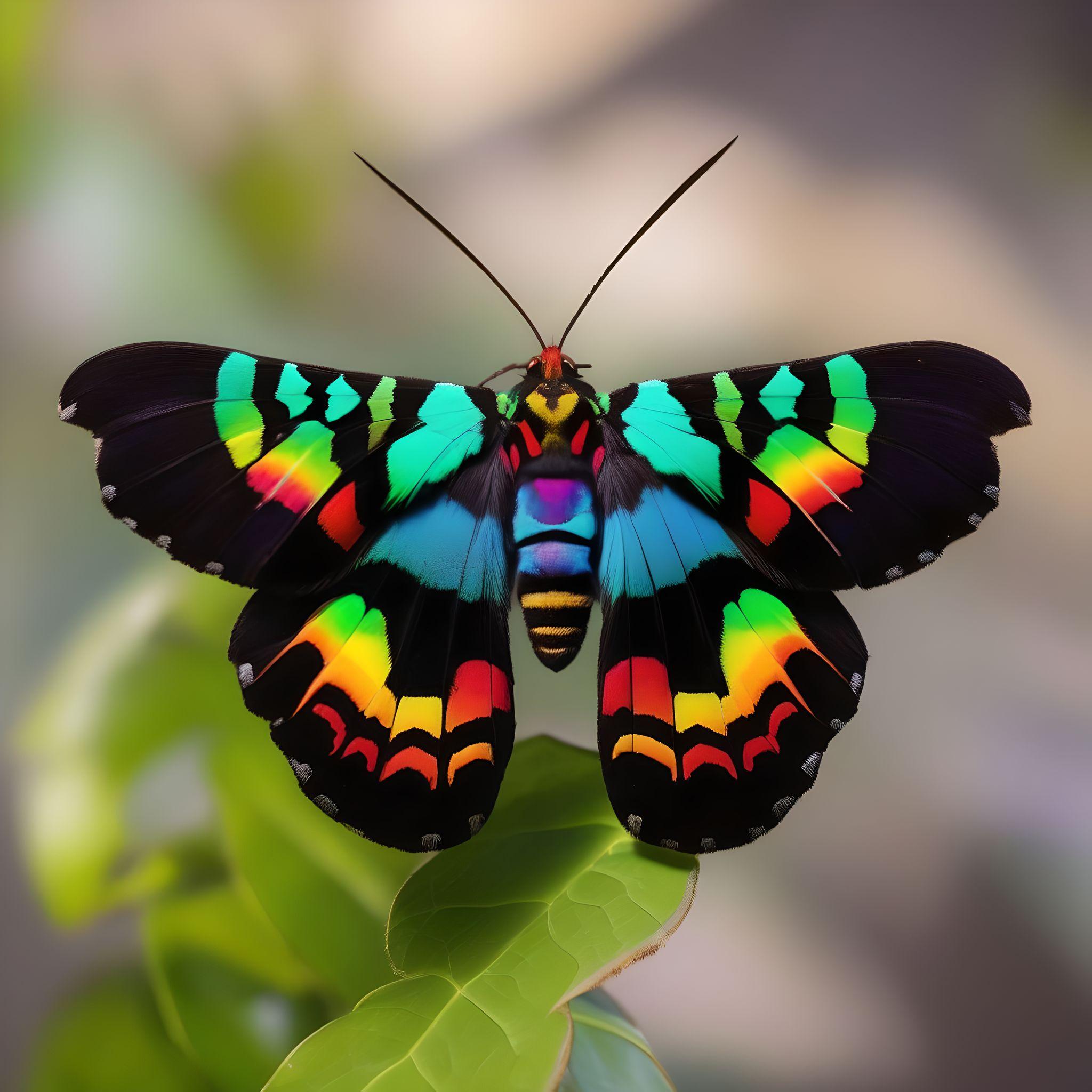
The Madagascan Sunset Moth is a dazzling marvel of nature

Imagine the Madagascan Sunset Moth, Chrysiridia rhipheus, brought to life in the vibrant and dynamic style of Van Gogh. The moth’s wings, outstretched in a kaleidoscope of iridescent greens, blues, reds, and yellows, shimmer with Van Gogh’s iconic swirling brushstrokes. Each wing is a riot of color and movement, capturing the essence of acid-culture intensity against a textured, swirling backdrop that evokes a sense of pulsating vitality. The bold hues and intricate patterns transform the moth into a living masterpiece, blending the raw beauty of nature with Van Gogh’s expressive artistic vision.

Read More