![‘It’s always the Holy Spirit’: Meet 3 dioceses seeing large numbers of priestly ordinations #Catholic What drives a young man to discern into the priesthood — a supportive family, a vibrant parish, a proactive pastor, an outspoken bishop? Father John Eckert’s response: “Yes.” Eckert, the vocations director for the Diocese of Charlotte, North Carolina, chuckled a little when describing the myriad paths that a young man may take when finding his way to holy orders. But, he said, “it’s always the Holy Spirit at work. It’s always cooperating with the grace of God.” The Charlotte Diocese is among those in the U.S. seeing high numbers of seminarians and priestly ordinations. The diocese in western North Carolina saw a record 10 young men ordained to the priesthood earlier in 2026; that followed six ordinations in 2025 and seven in 2024. “We’re blessed in the Diocese of Charlotte,” Eckert said. “It’s a beautiful moment.” The priest just wrapped up his first full year as vocations director there. He said one of the strengths of the diocese is in its vibrant faith life, which he attributed partly to the “evangelical Bible-belt roots” of the region. “This is Billy Graham territory,” he joked. The diocese itself bears out that witness, he said. “The Church is growing like crazy down here,” he said. “We have wonderful families. We have faithful, hardworking priests. We’ve had five bishops who keep on striving to bear the Gospel message and bring that to every corner of the diocese.”The growing ranks of the priesthood is proof of that high spirit, though Eckert said it can be tricky to tease out just what contributes to years of high ordinations. One of the diocese’s strengths, he said, is its own “in-house college seminary.” “It’s so wonderful that if we have a young man interested in the priesthood, we can actually just bring him to this place and show him where the initial years of formation will take place,” he said. The school offers prospective seminarians a chance to see “a group of men living this out, being very intentional about their prayer life, striving to grow in love of Our Lord.”Charlotte Bishop Michael Martin, OFM Conv, told EWTN News that when seeing such high levels of devotion to the priesthood, “we often have to just marvel at God’s work.” Priests in the diocese, he said, excel at offering candidates to the priesthood “the opportunity to see a healthy, holy, good person that they can see themselves becoming.” Families, meanwhile, have become “far more open” to communicating to their sons that they would be “honored to see [them] consider the priesthood.”“That dynamic has come about because the presbyterate gives a good example,” the bishop said. “It makes families, and parents in particular, more willing to be able to create that environment in their own families.”Both Martin and Eckert said that at a certain point Church leaders simply have to acknowledge the work of the Holy Spirit. “To fully try to understand it is important,” Martin said, “but in some ways it’s best just to appreciate and enjoy it and be grateful for it.”Eckert, meanwhile, cited as an example 1 Corinthians 3:6, in which Paul tells the Church at Corinth about its faith: “I planted, Apollos watered, but God gave the growth.”The priest spoke joyfully about his work in the diocesan vocations office, though he downplayed his own role in bringing men to holy orders. He recounted with a laugh what a speaker told a group of vocations directors at a recent conference: “Gentlemen, get over yourselves. Nobody ever entered seminary because of their vocations director.”Priestly vocation ‘seen as a natural, fulfilling life’Father Garett Burns, the director of vocations promotion in the Diocese of Wichita, Kansas, admitted that the Midwestern diocese is “blessed with a strong culture of vocations.” “For example, this past May six men were ordained to the priesthood,” he said. “We’ve been blessed to generally have a steady number of ordinations each year. There have been 22 priestly ordinations since 2020 and 44 priestly ordinations in the last 10 years. We will begin this academic year with 50 seminarians in formation.”He said that it is “difficult to capture succinctly” why a diocese might have such abundant vocations, describing every Catholic’s vocation as a “mystery of grace.” But he said promoting vocations throughout every aspect of Church life — including in families, schools, and parishes — has borne steady fruit. The diocese has an abundance of Eucharistic adoration, he said, including perpetual adoration. Such chapels present opportunities for young people to spend time in silence before Christ, he said, and “these moments are where vocations grow and flourish.”Priests and bishops in the diocese, meanwhile, are “deeply committed to the Lord.” “When priests love their priesthood and enjoy each other, that is attractive to young men,” he said. A local seminary program has also borne fruit, he said, allowing young men to form a close, core connection with the Church “at home.” The priest said he hesitates to offer advice to other dioceses, admitting that there is “no universal solution” given the unique histories, gifts, and challenges of each diocese. But expanding opportunities for Eucharistic adoration, he said, offers “one viable option that promises to deepen the culture of vocations.”Father Noah Morey, the vocations director in the Diocese of Arlington, Virginia, echoed the assessment of his fellow vocations directors: “It’s not just one thing, it’s everything,” he told EWTN News. The Arlington Diocese saw seven new priests ordained in 2026; it recorded 12 ordinations in 2025. Morey noted that when it comes to ordinations, “it’s not about numbers, it’s about quality.” But he said the Arlington Diocese has a “strong culture of vocations” that has helped produce exemplary priests over the years. The diocese has promoted vocations since its founding in 1974. Its first leader, Bishop Thomas Welsh, “really fostered that culture” in part by bringing a Poor Clares monastery to the diocese. “Our bishops have all taken a hands-on approach of fostering vocations in young men from a young age,” Morey said. Bishops in Arlington regularly attend seminary events and meet personally with aspiring priests, he said. Eucharistic adoration is prolific throughout the diocese, meanwhile; several years ago, Morey said, current Bishop Michael Burbidge asked every pastor in the diocese to institute 40 hours of Eucharistic adoration annually.The diocese also holds St. Andrew dinners several times a year, which allows young men to speak to both the bishop and diocesan priests about their potential discernment. “I tell the young men, it’s a very low-commitment event — you’re not signing your life away!” he said. “You just show up for a free dinner with the bishop.” A yearly “Quo Vadis?” summer camp offers another opportunity for young men to have face-to-face discernment with Church leaders. An active, vibrant priesthood in the diocese also helps foster vocational discernment, he said. “If a young man sees a priest who’s in love with the Lord, that’s really attractive to the priesthood,” he said. And faith-filled and encouraging families are equally to credit for fostering vocations in young men, Morey continued. He offered a baseball analogy to describe the process by which young men find their way to the priesthood. “The families are the starting pitchers,” he said. “The priests are the middle relievers. And the vocations director is the closer.”Globally the Church has continued to see lower vocations; the most recent data shows a continued drop in priests, with significant declines in Europe and the Americas, though Africa and Asia saw notable increases. In the first 15 months of his pontificate Pope Leo XIV has continued to emphasize the importance of vocations. In June 2025 he told vocations ministers at the Vatican that their job consisted of “forming men capable of loving, listening, praying, and serving as a community.”The pope said God “continues to call and remains faithful to his promises.” He urged leaders to help bring about the creation of appropriate conditions “to hear [God’s] voice.”In Charlotte, Bishop Martin said the best response to an increase in vocations is to be both joyful for the gift and determined to help it flourish. “There’s something in God’s design that’s beyond even what I can say,” he said. “I can provide some insights, but at the end of the day, this is the work of the Holy Spirit.” Eckert, meanwhile, said an increase in vocations is a blessing no matter where it develops.“The job that I think we all have is being intentional in our discipleship of Jesus Christ,” he said. “I pray for myself and all my brother vocations directors out there. Whether it happens in Peoria or it happens in Charlotte, it’s good for all of us.”](https://unitedyam.com/wp-content/uploads/2026/08/its-always-the-holy-spirit-meet-3-dioceses-seeing-large-numbers-of-priestly-ordinations-catholic-what-drives-a-young-man-to-discern-into-the-priesthood-a-support.jpg "‘It’s always the Holy Spirit’: Meet 3 dioceses seeing large numbers of priestly ordinations #Catholic What drives a young man to discern into the priesthood — a supportive family, a vibrant parish, a proactive pastor, an outspoken bishop? Father John Eckert’s response: “Yes.” Eckert, the vocations director for the Diocese of Charlotte, North Carolina, chuckled a little when describing the myriad paths that a young man may take when finding his way to holy orders. But, he said, “it’s always the Holy Spirit at work. It’s always cooperating with the grace of God.” The Charlotte Diocese is among those in the U.S. seeing high numbers of seminarians and priestly ordinations. The diocese in western North Carolina saw a record 10 young men ordained to the priesthood earlier in 2026; that followed six ordinations in 2025 and seven in 2024. “We’re blessed in the Diocese of Charlotte,” Eckert said. “It’s a beautiful moment.” The priest just wrapped up his first full year as vocations director there. He said one of the strengths of the diocese is in its vibrant faith life, which he attributed partly to the “evangelical Bible-belt roots” of the region. “This is Billy Graham territory,” he joked. The diocese itself bears out that witness, he said. “The Church is growing like crazy down here,” he said. “We have wonderful families. We have faithful, hardworking priests. We’ve had five bishops who keep on striving to bear the Gospel message and bring that to every corner of the diocese.”The growing ranks of the priesthood is proof of that high spirit, though Eckert said it can be tricky to tease out just what contributes to years of high ordinations. One of the diocese’s strengths, he said, is its own “in-house college seminary.” “It’s so wonderful that if we have a young man interested in the priesthood, we can actually just bring him to this place and show him where the initial years of formation will take place,” he said. The school offers prospective seminarians a chance to see “a group of men living this out, being very intentional about their prayer life, striving to grow in love of Our Lord.”Charlotte Bishop Michael Martin, OFM Conv, told EWTN News that when seeing such high levels of devotion to the priesthood, “we often have to just marvel at God’s work.” Priests in the diocese, he said, excel at offering candidates to the priesthood “the opportunity to see a healthy, holy, good person that they can see themselves becoming.” Families, meanwhile, have become “far more open” to communicating to their sons that they would be “honored to see [them] consider the priesthood.”“That dynamic has come about because the presbyterate gives a good example,” the bishop said. “It makes families, and parents in particular, more willing to be able to create that environment in their own families.”Both Martin and Eckert said that at a certain point Church leaders simply have to acknowledge the work of the Holy Spirit. “To fully try to understand it is important,” Martin said, “but in some ways it’s best just to appreciate and enjoy it and be grateful for it.”Eckert, meanwhile, cited as an example 1 Corinthians 3:6, in which Paul tells the Church at Corinth about its faith: “I planted, Apollos watered, but God gave the growth.”The priest spoke joyfully about his work in the diocesan vocations office, though he downplayed his own role in bringing men to holy orders. He recounted with a laugh what a speaker told a group of vocations directors at a recent conference: “Gentlemen, get over yourselves. Nobody ever entered seminary because of their vocations director.”Priestly vocation ‘seen as a natural, fulfilling life’Father Garett Burns, the director of vocations promotion in the Diocese of Wichita, Kansas, admitted that the Midwestern diocese is “blessed with a strong culture of vocations.” “For example, this past May six men were ordained to the priesthood,” he said. “We’ve been blessed to generally have a steady number of ordinations each year. There have been 22 priestly ordinations since 2020 and 44 priestly ordinations in the last 10 years. We will begin this academic year with 50 seminarians in formation.”He said that it is “difficult to capture succinctly” why a diocese might have such abundant vocations, describing every Catholic’s vocation as a “mystery of grace.” But he said promoting vocations throughout every aspect of Church life — including in families, schools, and parishes — has borne steady fruit. The diocese has an abundance of Eucharistic adoration, he said, including perpetual adoration. Such chapels present opportunities for young people to spend time in silence before Christ, he said, and “these moments are where vocations grow and flourish.”Priests and bishops in the diocese, meanwhile, are “deeply committed to the Lord.” “When priests love their priesthood and enjoy each other, that is attractive to young men,” he said. A local seminary program has also borne fruit, he said, allowing young men to form a close, core connection with the Church “at home.” The priest said he hesitates to offer advice to other dioceses, admitting that there is “no universal solution” given the unique histories, gifts, and challenges of each diocese. But expanding opportunities for Eucharistic adoration, he said, offers “one viable option that promises to deepen the culture of vocations.”Father Noah Morey, the vocations director in the Diocese of Arlington, Virginia, echoed the assessment of his fellow vocations directors: “It’s not just one thing, it’s everything,” he told EWTN News. The Arlington Diocese saw seven new priests ordained in 2026; it recorded 12 ordinations in 2025. Morey noted that when it comes to ordinations, “it’s not about numbers, it’s about quality.” But he said the Arlington Diocese has a “strong culture of vocations” that has helped produce exemplary priests over the years. The diocese has promoted vocations since its founding in 1974. Its first leader, Bishop Thomas Welsh, “really fostered that culture” in part by bringing a Poor Clares monastery to the diocese. “Our bishops have all taken a hands-on approach of fostering vocations in young men from a young age,” Morey said. Bishops in Arlington regularly attend seminary events and meet personally with aspiring priests, he said. Eucharistic adoration is prolific throughout the diocese, meanwhile; several years ago, Morey said, current Bishop Michael Burbidge asked every pastor in the diocese to institute 40 hours of Eucharistic adoration annually.The diocese also holds St. Andrew dinners several times a year, which allows young men to speak to both the bishop and diocesan priests about their potential discernment. “I tell the young men, it’s a very low-commitment event — you’re not signing your life away!” he said. “You just show up for a free dinner with the bishop.” A yearly “Quo Vadis?” summer camp offers another opportunity for young men to have face-to-face discernment with Church leaders. An active, vibrant priesthood in the diocese also helps foster vocational discernment, he said. “If a young man sees a priest who’s in love with the Lord, that’s really attractive to the priesthood,” he said. And faith-filled and encouraging families are equally to credit for fostering vocations in young men, Morey continued. He offered a baseball analogy to describe the process by which young men find their way to the priesthood. “The families are the starting pitchers,” he said. “The priests are the middle relievers. And the vocations director is the closer.”Globally the Church has continued to see lower vocations; the most recent data shows a continued drop in priests, with significant declines in Europe and the Americas, though Africa and Asia saw notable increases. In the first 15 months of his pontificate Pope Leo XIV has continued to emphasize the importance of vocations. In June 2025 he told vocations ministers at the Vatican that their job consisted of “forming men capable of loving, listening, praying, and serving as a community.”The pope said God “continues to call and remains faithful to his promises.” He urged leaders to help bring about the creation of appropriate conditions “to hear [God’s] voice.”In Charlotte, Bishop Martin said the best response to an increase in vocations is to be both joyful for the gift and determined to help it flourish. “There’s something in God’s design that’s beyond even what I can say,” he said. “I can provide some insights, but at the end of the day, this is the work of the Holy Spirit.” Eckert, meanwhile, said an increase in vocations is a blessing no matter where it develops.“The job that I think we all have is being intentional in our discipleship of Jesus Christ,” he said. “I pray for myself and all my brother vocations directors out there. Whether it happens in Peoria or it happens in Charlotte, it’s good for all of us.”")

Multiple dioceses throughout the U.S. are bucking national trends and seeing large numbers of men discern into the priesthood.
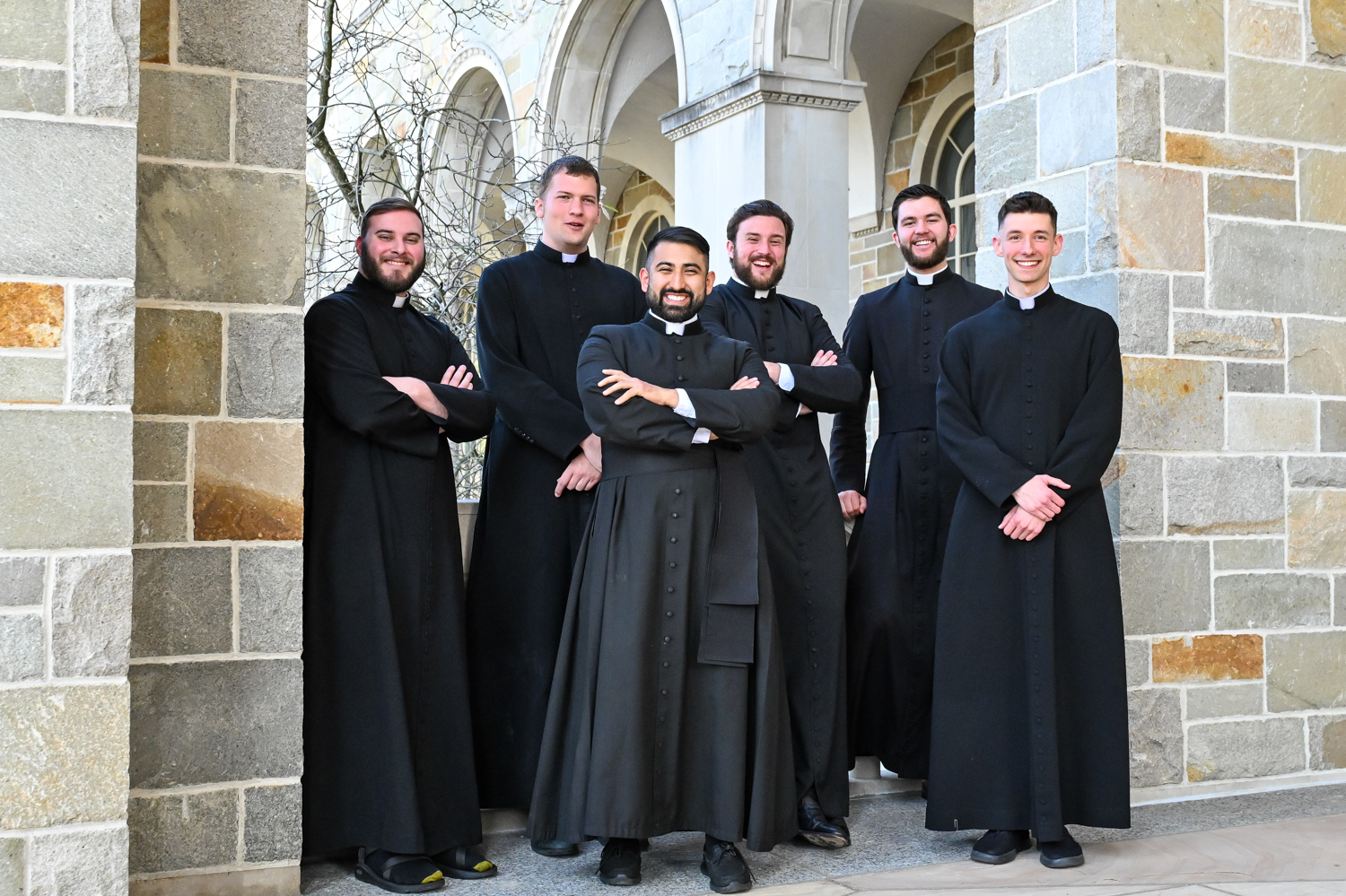
Multiple dioceses throughout the U.S. are bucking national trends and seeing large numbers of men discern into the priesthood.

A newly discovered object may be a key to unlocking the true nature of a mysterious class of sources that astronomers have found in the early universe in recent years.
Read More
Mystery Readers will be enthralled by this book!
L. D. C. Fitzgerald, renowned author of two nonfiction books about Kennedy, brings you ‘Saving Jackie K’, a science fiction odyssey with a time-travel twist on one of the most significant conspiracy theories of modern times. This gripping tale blends fact and fiction to unravel the greatest mystery of the 20th century. ‘Saving Jackie K’ offers a thrilling, intellectual journey and is the most provocative science fiction thriller you’ll ever read.
Read More