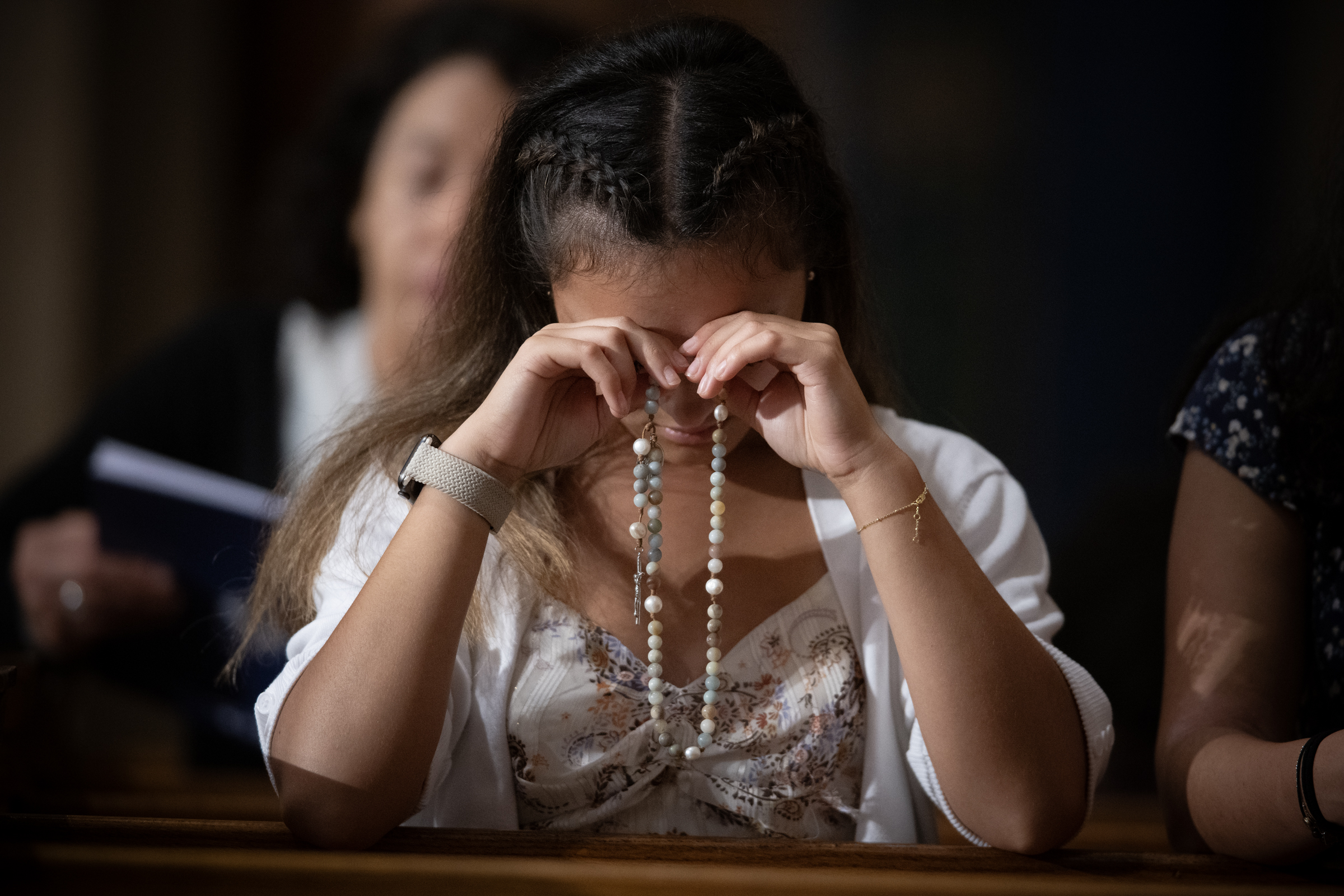
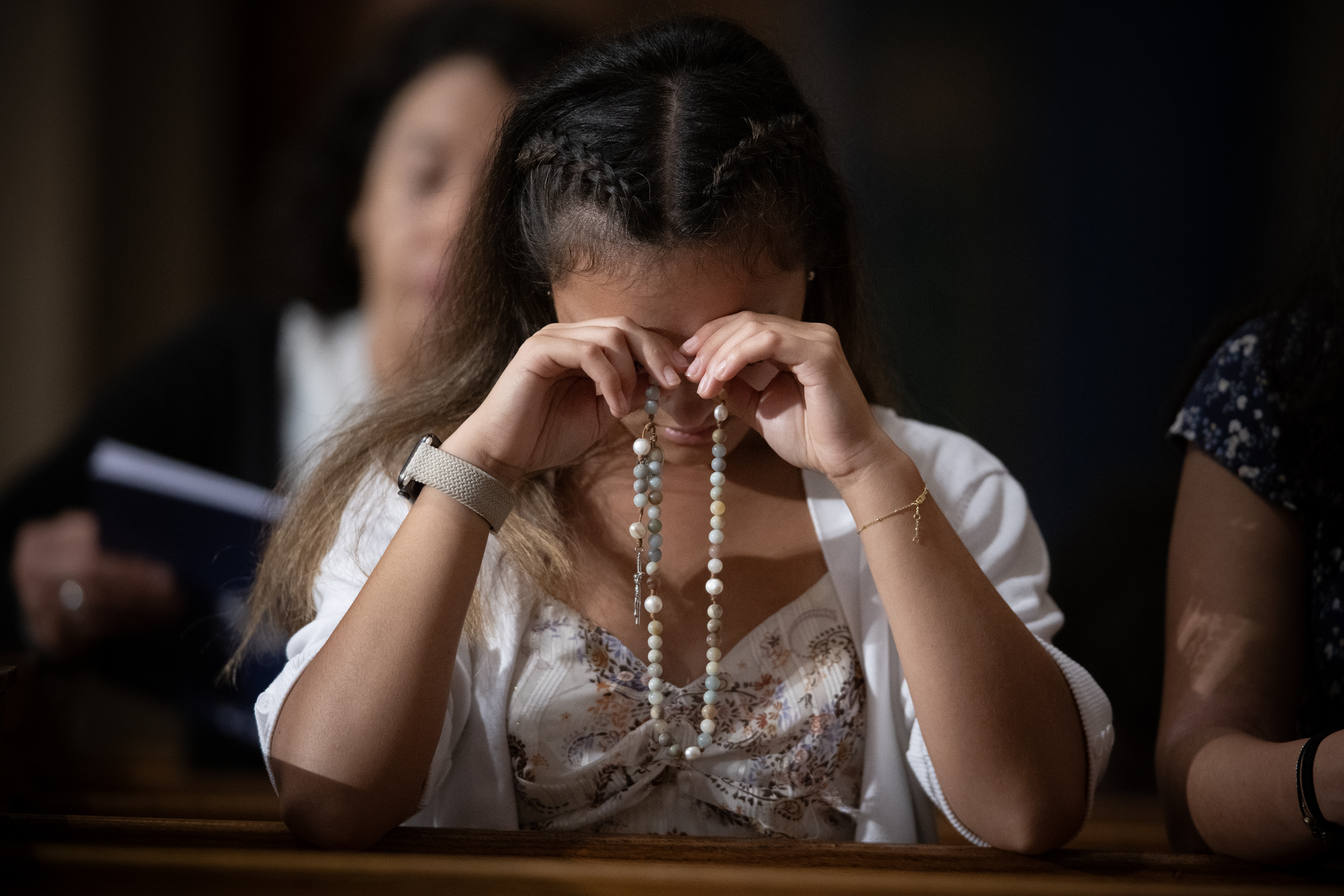

padre pio

Vatican elevates Philippine Padre Pio shrine to international status #Catholic The Vatican has elevated the National Shrine and Parish of St. Padre Pio in Batangas, Philippines, to the rank of an international shrine, making it only the second shrine in the Philippines to receive the designation from the Holy See.The decree was issued by the Dicastery for Evangelization on May 25, coinciding with the 139th anniversary of the birth of St. Pio of Pietrelcina (also known as Padre Pio), the Capuchin saint whose spirituality continues to attract millions of devotees worldwide.The recognition places the shrine among a select group of Catholic pilgrimage sites acknowledged by the universal Church for their exceptional spiritual significance and their capacity to welcome pilgrims from around the world.Archbishop Gilbert Garcera of Lipa, president of the Catholic Bishops' Conference of the Philippines (CBCP), announced the news in a video message posted on the shrineʼs official social media page.The archbishop said he personally received the official communication from Archbishop Charles John Brown, apostolic nuncio to the Philippines.“This recognition marks a historic milestone not only for the shrine and the Archdiocese of Lipa but also for the Church in the Philippines, as it becomes a place of pilgrimage and devotion with international significance,” Garcera said in a separate statement.The elevation follows the unanimous approval by the CBCP during its plenary assembly in July 2024, when the bishops endorsed the shrineʼs application and recommended it to the Holy See for international recognition.For Father Oscar L. Andal, rector and parish priest of the shrine, the designation represents both an honor and a mission.“This distinguished recognition is both a blessing and a responsibility,” Andal told EWTN News. “As an international shrine, we are called to welcome pilgrims from every corner of the world and continue sharing Padre Pioʼs message of prayer, trust in God, and love for humanity. We receive this honor with gratitude and humility, recognizing that it strengthens our commitment to serve the faithful and bring them closer to Christ,” he said.The priest also noted that the recognition deepens the spiritual bond between the Batangas shrine and the Sanctuary of St. Pio of Pietrelcina in San Giovanni Rotondo, Italy, where the saint spent much of his priestly ministry.A historic moment for the Philippine ChurchFather Reynante Tolentino, president of the Association of Catholic Shrines and Pilgrimages of the Philippines, described the declaration as a historic milestone not only for the Church in the Philippines but also for the entire nation.“The declaration of the National Shrine of St. Padre Pio in Batangas as an international shrine is a historic and tremendous blessing,” Tolentino said.
 
 The interior of the National Shrine and Parish of St. Padre Pio in Santo Tomas, Batangas, Philippines. | Credit: Photo courtesy of Father Oscar Andal, National Shrine of St. Padre Pio
 
 He noted that the shrine becomes the second international shrine in the Philippines and Southeast Asia after the International Shrine of Our Lady of Peace and Good Voyage in Antipolo. Tolentino was the rector of the Cathedral and National Shrine of Our Lady of Peace and Good Voyage in Antipolo, Rizal province, when it became the first national shrine in the Philippines and Southeast Asia to be elevated to international shrine status.For Tolentino, the Holy Seeʼs decision affirms the enduring devotion of Filipinos to the saint known for bearing the stigmata and for his ministry of spiritual and physical healing.“This is a clear affirmation and validation of the strong devotion of Batangueños and Filipinos in general to Padre Pio,” he said.“People continue to come because everyone seeks healing — not only physical healing but spiritual healing as well.”He emphasized that while the shrineʼs administrators and devotees supported the initiative from the beginning, the formal recommendation to Rome came through the collective discernment and approval of the CBCP.Tolentino also expressed hope that all shrines in the country — whether diocesan, national, or international — would continue to serve as centers of evangelization and places of refuge for those in need.From local devotion to international pilgrimage destinationThe history of the shrine is closely linked to the rapid growth of devotion to Padre Pio following his canonization by St. John Paul II in 2002.What began as a small chapel in Santo Tomas in 2003 gradually developed into a major pilgrimage center. It was declared an archdiocesan shrine in 2008 and elevated to national shrine status in 2015.Today, the shrine welcomes hundreds of thousands of pilgrims annually who seek healing, spiritual renewal, and a deeper encounter with Christ through the intercession of Padre Pio.The shrine houses first-class relics of the saint and has become known for its vibrant sacramental life, particularly the celebration of the Eucharist, the sacrament of reconciliation, healing Masses, and devotional activities.Every 23rd day of the month, commemorating the saintʼs death on Sept. 23, thousands gather for healing Masses and pastoral activities.The shrineʼs ministry has also extended beyond Philippine shores through pilgrimages and devotional missions in Thailand, Hong Kong, and Malaysia.According to Andal, the growth of the shrine has been made possible through the dedication of clergy, religious communities, benefactors, volunteers, and countless devotees whose support has enabled the expansion of its ministries while remaining faithful to its spiritual mission.Occupying more than 17 hectares (about 42 acres), the shrine continues to implement a long-term development plan aimed at creating a more prayerful and pilgrim-centered environment.A recognition of universal significanceThe title of international shrine is reserved for a church or other sacred place that possesses particular importance for the life of the universal Church.The designation recognizes the Batangas shrine not only as a center of local devotion but also as a destination capable of serving pilgrims from across Asia and the wider world.Church leaders say the recognition highlights the universal appeal of Padre Pioʼs spirituality — a spirituality rooted in prayer, repentance, trust in divine providence, and devotion to Godʼs mercy.As an international shrine, the sanctuary is expected to strengthen its pilgrim programs, expand opportunities for spiritual formation, and foster greater collaboration with Catholic communities in promoting the life and teachings of the Capuchin saint.“As we celebrate this momentous recognition,” Andal said, “we entrust ourselves to the intercession of St. Padre Pio and renew our commitment to being a beacon of faith, hope, and charity.”“May all who visit this sacred space encounter Godʼs mercy, experience spiritual renewal, and find inspiration in the example of Padre Pioʼs holy life.”The formal declaration and presentation of the Holy Seeʼs decree will take place on Sept. 23, the liturgical memorial of St. Padre Pio, marking a new chapter in the history of one of the Philippines' most beloved pilgrimage destinations.

Vatican elevates Philippine Padre Pio shrine to international status #Catholic The Vatican has elevated the National Shrine and Parish of St. Padre Pio in Batangas, Philippines, to the rank of an international shrine, making it only the second shrine in the Philippines to receive the designation from the Holy See.The decree was issued by the Dicastery for Evangelization on May 25, coinciding with the 139th anniversary of the birth of St. Pio of Pietrelcina (also known as Padre Pio), the Capuchin saint whose spirituality continues to attract millions of devotees worldwide.The recognition places the shrine among a select group of Catholic pilgrimage sites acknowledged by the universal Church for their exceptional spiritual significance and their capacity to welcome pilgrims from around the world.Archbishop Gilbert Garcera of Lipa, president of the Catholic Bishops' Conference of the Philippines (CBCP), announced the news in a video message posted on the shrineʼs official social media page.The archbishop said he personally received the official communication from Archbishop Charles John Brown, apostolic nuncio to the Philippines.“This recognition marks a historic milestone not only for the shrine and the Archdiocese of Lipa but also for the Church in the Philippines, as it becomes a place of pilgrimage and devotion with international significance,” Garcera said in a separate statement.The elevation follows the unanimous approval by the CBCP during its plenary assembly in July 2024, when the bishops endorsed the shrineʼs application and recommended it to the Holy See for international recognition.For Father Oscar L. Andal, rector and parish priest of the shrine, the designation represents both an honor and a mission.“This distinguished recognition is both a blessing and a responsibility,” Andal told EWTN News. “As an international shrine, we are called to welcome pilgrims from every corner of the world and continue sharing Padre Pioʼs message of prayer, trust in God, and love for humanity. We receive this honor with gratitude and humility, recognizing that it strengthens our commitment to serve the faithful and bring them closer to Christ,” he said.The priest also noted that the recognition deepens the spiritual bond between the Batangas shrine and the Sanctuary of St. Pio of Pietrelcina in San Giovanni Rotondo, Italy, where the saint spent much of his priestly ministry.A historic moment for the Philippine ChurchFather Reynante Tolentino, president of the Association of Catholic Shrines and Pilgrimages of the Philippines, described the declaration as a historic milestone not only for the Church in the Philippines but also for the entire nation.“The declaration of the National Shrine of St. Padre Pio in Batangas as an international shrine is a historic and tremendous blessing,” Tolentino said. The interior of the National Shrine and Parish of St. Padre Pio in Santo Tomas, Batangas, Philippines. | Credit: Photo courtesy of Father Oscar Andal, National Shrine of St. Padre Pio He noted that the shrine becomes the second international shrine in the Philippines and Southeast Asia after the International Shrine of Our Lady of Peace and Good Voyage in Antipolo. Tolentino was the rector of the Cathedral and National Shrine of Our Lady of Peace and Good Voyage in Antipolo, Rizal province, when it became the first national shrine in the Philippines and Southeast Asia to be elevated to international shrine status.For Tolentino, the Holy Seeʼs decision affirms the enduring devotion of Filipinos to the saint known for bearing the stigmata and for his ministry of spiritual and physical healing.“This is a clear affirmation and validation of the strong devotion of Batangueños and Filipinos in general to Padre Pio,” he said.“People continue to come because everyone seeks healing — not only physical healing but spiritual healing as well.”He emphasized that while the shrineʼs administrators and devotees supported the initiative from the beginning, the formal recommendation to Rome came through the collective discernment and approval of the CBCP.Tolentino also expressed hope that all shrines in the country — whether diocesan, national, or international — would continue to serve as centers of evangelization and places of refuge for those in need.From local devotion to international pilgrimage destinationThe history of the shrine is closely linked to the rapid growth of devotion to Padre Pio following his canonization by St. John Paul II in 2002.What began as a small chapel in Santo Tomas in 2003 gradually developed into a major pilgrimage center. It was declared an archdiocesan shrine in 2008 and elevated to national shrine status in 2015.Today, the shrine welcomes hundreds of thousands of pilgrims annually who seek healing, spiritual renewal, and a deeper encounter with Christ through the intercession of Padre Pio.The shrine houses first-class relics of the saint and has become known for its vibrant sacramental life, particularly the celebration of the Eucharist, the sacrament of reconciliation, healing Masses, and devotional activities.Every 23rd day of the month, commemorating the saintʼs death on Sept. 23, thousands gather for healing Masses and pastoral activities.The shrineʼs ministry has also extended beyond Philippine shores through pilgrimages and devotional missions in Thailand, Hong Kong, and Malaysia.According to Andal, the growth of the shrine has been made possible through the dedication of clergy, religious communities, benefactors, volunteers, and countless devotees whose support has enabled the expansion of its ministries while remaining faithful to its spiritual mission.Occupying more than 17 hectares (about 42 acres), the shrine continues to implement a long-term development plan aimed at creating a more prayerful and pilgrim-centered environment.A recognition of universal significanceThe title of international shrine is reserved for a church or other sacred place that possesses particular importance for the life of the universal Church.The designation recognizes the Batangas shrine not only as a center of local devotion but also as a destination capable of serving pilgrims from across Asia and the wider world.Church leaders say the recognition highlights the universal appeal of Padre Pioʼs spirituality — a spirituality rooted in prayer, repentance, trust in divine providence, and devotion to Godʼs mercy.As an international shrine, the sanctuary is expected to strengthen its pilgrim programs, expand opportunities for spiritual formation, and foster greater collaboration with Catholic communities in promoting the life and teachings of the Capuchin saint.“As we celebrate this momentous recognition,” Andal said, “we entrust ourselves to the intercession of St. Padre Pio and renew our commitment to being a beacon of faith, hope, and charity.”“May all who visit this sacred space encounter Godʼs mercy, experience spiritual renewal, and find inspiration in the example of Padre Pioʼs holy life.”The formal declaration and presentation of the Holy Seeʼs decree will take place on Sept. 23, the liturgical memorial of St. Padre Pio, marking a new chapter in the history of one of the Philippines' most beloved pilgrimage destinations.

Only the second International Shrine in the Philippines, the Batangas sanctuary will mark its new status with a formal declaration on the saint’s Sept. 23 memorial.

Read More
Pope sets up commission to tackle 0 million debt at Padre Pio’s hospital #Catholic Pope Leo XIV on Wednesday created a commission to identify solutions for long-term sustainability at the Casa Sollievo della Sofferenza, a major hospital complex founded by St. Pio of Pietrelcina and directly overseen by the Vatican Secretariat of State.The Catholic hospital — which is located in the southern Italian region of Puglia — is facing a debt crisis from which “we will emerge together,” Secretary of State Cardinal Pietro Parolin said during a May 5 visit to the facility.The hospital in San Giovanni Rotondo, where the saint known as Padre Pio lived for most of his life, has debts estimated to run between 250 million to 300 million euros (about 0 million to 0 million).The hospital is currently in a dispute with officials from the Puglia region over reimbursements — the regional authority claims it is owed 32 million euros ( million) — and is also involved in a conflict over new labor contracts.The new commission now aims to resolve what is a highly complex situation.The papal chirograph (a kind of decree) establishing the commission states that the pope’s decision arises from the Apostolic See’s love for works of charity and from the awareness that large institutions, in order to remain faithful to their mission, must be capable of facing the challenges of change.“The evolution of the times, technology, law, and economics places the mission of the Church before the challenge of continuous renewal,” particularly in sectors such as healthcare that require vision, investment, and prudent management, the chirograph says.Among these institutions is Casa Sollievo della Sofferenza, founded “with the aim of providing hospitality, assistance, and care to the sick, pilgrims, and their families, inspired by the spirituality and the figure of its saintly founder.”The guidance and oversight commission has the task of analyzing the hospital foundation’s “current situation, identifying the best solutions for ever-greater efficiency, effectiveness, and long-term sustainability of its work and mission, and ensuring the concrete implementation of those solutions.”The commission will operate on all fronts — financial, patrimonial, and operational — with full authority to carry out the necessary acts of both ordinary and extraordinary administration. It will report directly to the pope before any decision of particular significance and before adopting measures of special importance or those that would have a decisive and substantial impact on the foundation’s assets or modify its statutes.The commission represents a combined effort by Vatican economic bodies and the Secretariat of State. Maximino Caballero Ledo, prefect of the Secretariat for the Economy, will serve as president. The coordinator is Fabio Gasperini, secretary-general of the Governorate. Archbishop Giordano Piccinotti, president of the Administration of the Patrimony of the Apostolic See, is a member together with Archbishop Paolo Rudelli, undersecretary for general affairs of the Secretariat of State. The technical committee includes Benjamín Estévez de Cominges, Gino Gumirato, and attorney Alessandro Ela Oyana.Casa Sollievo della Sofferenza was born from Padre Pio’s concrete faith, rooted in the conviction that caring for the body is an integral part of the Christian mission.The decision to establish an ad hoc commission is a sign of Leo’s interest in the hospital but also unusual, given that Pope Francis already established a Vatican commission for Catholic healthcare.This story was first published by ACI Stampa, the Italian-language sister service of EWTN News. It has been translated and adapted by EWTN News English.

Pope sets up commission to tackle $290 million debt at Padre Pio’s hospital #Catholic Pope Leo XIV on Wednesday created a commission to identify solutions for long-term sustainability at the Casa Sollievo della Sofferenza, a major hospital complex founded by St. Pio of Pietrelcina and directly overseen by the Vatican Secretariat of State.The Catholic hospital — which is located in the southern Italian region of Puglia — is facing a debt crisis from which “we will emerge together,” Secretary of State Cardinal Pietro Parolin said during a May 5 visit to the facility.The hospital in San Giovanni Rotondo, where the saint known as Padre Pio lived for most of his life, has debts estimated to run between 250 million to 300 million euros (about $290 million to $350 million).The hospital is currently in a dispute with officials from the Puglia region over reimbursements — the regional authority claims it is owed 32 million euros ($37 million) — and is also involved in a conflict over new labor contracts.The new commission now aims to resolve what is a highly complex situation.The papal chirograph (a kind of decree) establishing the commission states that the pope’s decision arises from the Apostolic See’s love for works of charity and from the awareness that large institutions, in order to remain faithful to their mission, must be capable of facing the challenges of change.“The evolution of the times, technology, law, and economics places the mission of the Church before the challenge of continuous renewal,” particularly in sectors such as healthcare that require vision, investment, and prudent management, the chirograph says.Among these institutions is Casa Sollievo della Sofferenza, founded “with the aim of providing hospitality, assistance, and care to the sick, pilgrims, and their families, inspired by the spirituality and the figure of its saintly founder.”The guidance and oversight commission has the task of analyzing the hospital foundation’s “current situation, identifying the best solutions for ever-greater efficiency, effectiveness, and long-term sustainability of its work and mission, and ensuring the concrete implementation of those solutions.”The commission will operate on all fronts — financial, patrimonial, and operational — with full authority to carry out the necessary acts of both ordinary and extraordinary administration. It will report directly to the pope before any decision of particular significance and before adopting measures of special importance or those that would have a decisive and substantial impact on the foundation’s assets or modify its statutes.The commission represents a combined effort by Vatican economic bodies and the Secretariat of State. Maximino Caballero Ledo, prefect of the Secretariat for the Economy, will serve as president. The coordinator is Fabio Gasperini, secretary-general of the Governorate. Archbishop Giordano Piccinotti, president of the Administration of the Patrimony of the Apostolic See, is a member together with Archbishop Paolo Rudelli, undersecretary for general affairs of the Secretariat of State. The technical committee includes Benjamín Estévez de Cominges, Gino Gumirato, and attorney Alessandro Ela Oyana.Casa Sollievo della Sofferenza was born from Padre Pio’s concrete faith, rooted in the conviction that caring for the body is an integral part of the Christian mission.The decision to establish an ad hoc commission is a sign of Leo’s interest in the hospital but also unusual, given that Pope Francis already established a Vatican commission for Catholic healthcare.This story was first published by ACI Stampa, the Italian-language sister service of EWTN News. It has been translated and adapted by EWTN News English.

The hospital in San Giovanni Rotondo, Italy, where the saint known as Padre Pio lived for most of his life, has debts estimated to run between about $290 million to $350 million.

Read More
Centennial honors historic Michigan church built amid KKK threats and strikes #Catholic A richly diverse Catholic community in southern Michigan is preparing to mark a milestone: the centennial of St. Mary Star of the Sea in Jackson, where the beauty of sacred space, reverent liturgy, and a vibrant musical tradition continue to shape the lives of the faithful. The church has thrived through historic events and turbulent times, even as it was being rebuilt. In 1924, one of the largest Ku Klux Klan (KKK) rallies ever recorded saw 100,000 participants tramp through Jacksonʼs streets, and parish tradition holds that the Knights of Columbus kept vigil at the construction site to protect it from KKK vandalism. 
 
 St. Mary Star of the Sea Parish in Jackson, Michigan. | Credit: Photo courtesy of Father Timothy Nelson
 
 As he prepares to wrap up his 15-year tenure as pastor of the parish, Father Timothy Nelson reflected on the churchʼs enduring vitality: “Our church is not a relic but a dynamic part of the present, enriched by a legacy of faith.”Located west of Detroit, Jackson has long been a railroad hub with ties to the automobile industry. St. Mary’s is one of three current parishes, following a consolidation of several others. Following decades of a strong Polish-American presence, demographic changes have included the growing influx of Hispanic families. Children of the latter now make up about a quarter of the enrollment at St. Mary School.St. Mary’s three spires dominate the skyline, reaching up 180 feet in an imposing Romanesque style. Long regarded as one of the most beautiful churches in Michigan, it features magnificent stained-glass windows fashioned in Innsbruck, Austria, an apse mosaic of Our Lady Star of the Sea, murals of the apostles, and Carrara marble altars and Communion rail. The latter embellishments were donated by George Washington Hill, president of the American Tobacco Co., as a memorial to his young wife, Aquinas Heiler Hill, who died in 1925. The green and red colors in the mosaics around the high altar repeat the original colors used on packs of Lucky Strike cigarettes.
 
 A mosaic of the Crucifixion at St. Mary Star of the Sea Parish in Jackson, Michigan. | Credit: Photo courtesy of Father Timothy Nelson
 
 The present structure replaced an earlier church, with its cornerstone laid on Sept. 23, 1923. Construction faced delays because of a prolonged labor strike at limestone quarries. The era was also marred with social unrest, including the Ku Klux Klan and its virulent anti-Catholicism and racism. Construction was not completed until May 31, 1926, at a cost of 5,000. Then-Auxiliary Bishop Joseph C. Plagens came from Detroit to officiate the dedicatory Mass.Among its treasures is a unique stained-glass rose window memorializing the fallen of the first world war, including nuns who tended the wounded. “The window shows not only the American soldiers and sailors of the war, but even their enemies who reach out to Jesus rising above them,” Nelson said as he gave a tour of the magnificent church. Restoration of the windows cost  million and was made possible through the generosity of parishioners and benefactors, including the Eisele Family Foundation. St. Mary’s is depicted in “Buildings of Michigan” by Kathryn Bishop Eckert as one of the most notable in the Mitten State.
 
 Stained-glass window at St. Mary Star of the Sea Parish in Jackson, Michigan. | Credit: Kathryn Mietelka
 
 Now 74, Nelson will step down as pastor this summer. A former cardiologist, he will continue his ministry as chaplain of the St. Pio Medical Center in nearby Howell, which is part of a Vatican-authorized healthcare network inspired by St. Pio of Pietrelcina (Padre Pio). He will be succeeded by Father John Vinton, who will continue offering Traditional Latin Masses and Spanish-language Masses.St. Mary’s serves about 1,086 families, including the active Sacred Heart of Jesus Hispanic Community.Nelson said: “The school is necessary for parish life” and is the most diverse parochial school in the area.The parish’s liturgical life shows both continuity and renewal. The Traditional Latin Mass, celebrated every Sunday, is accompanied by Gregorian chant and organ led by Aine Schroeder, a student at nearby Hillsdale College. Schroeder said the Gregorian schola will chant the “Ave Maria” and “Salve Regina” at the centennial concert. Dispelling concerns that the Latin liturgy is stuck in the past, Nelson said: “I agree with Pope Benedict XVI that the past continues to be lived in the present. We are bringing it into the future.”
 
 Inside St. Mary Star of the Sea Parish in Jackson, Michigan. | Credit: Photo courtesy of Father Timothy Nelson
 
 For longtime parishioner Mary Belknap, a fourth-generation member who serves on the parish guild, St. Mary’s is a spiritual home and a place of encounter. “It’s one of the hallmark parishes in the state. People come from all over to see us and our beautiful church,” she said. Bridging the gaps between communities came easily to educator Belknap, who said that, having been raised in poverty as a child, she has experienced life on the margins, and “I personally reach out to embrace the goodness of other people.”The parishʼs centennial observance will commence with a concert on May 29 and culminate in a solemn Mass on May 31 — exactly 100 years after its first Mass — to be celebrated by Bishop Earl Boyea. Mary Malewitz, parish music director since 1981, is organizing the opening concert, which will feature adult and school choirs, a Hispanic choir, and a Gregorian schola. Between each performance, parishioners will sing their favorite hymns. “St. Mary’s has brought glory to Michigan for generations,” she told EWTN News.

Centennial honors historic Michigan church built amid KKK threats and strikes #Catholic A richly diverse Catholic community in southern Michigan is preparing to mark a milestone: the centennial of St. Mary Star of the Sea in Jackson, where the beauty of sacred space, reverent liturgy, and a vibrant musical tradition continue to shape the lives of the faithful. The church has thrived through historic events and turbulent times, even as it was being rebuilt. In 1924, one of the largest Ku Klux Klan (KKK) rallies ever recorded saw 100,000 participants tramp through Jacksonʼs streets, and parish tradition holds that the Knights of Columbus kept vigil at the construction site to protect it from KKK vandalism. St. Mary Star of the Sea Parish in Jackson, Michigan. | Credit: Photo courtesy of Father Timothy Nelson As he prepares to wrap up his 15-year tenure as pastor of the parish, Father Timothy Nelson reflected on the churchʼs enduring vitality: “Our church is not a relic but a dynamic part of the present, enriched by a legacy of faith.”Located west of Detroit, Jackson has long been a railroad hub with ties to the automobile industry. St. Mary’s is one of three current parishes, following a consolidation of several others. Following decades of a strong Polish-American presence, demographic changes have included the growing influx of Hispanic families. Children of the latter now make up about a quarter of the enrollment at St. Mary School.St. Mary’s three spires dominate the skyline, reaching up 180 feet in an imposing Romanesque style. Long regarded as one of the most beautiful churches in Michigan, it features magnificent stained-glass windows fashioned in Innsbruck, Austria, an apse mosaic of Our Lady Star of the Sea, murals of the apostles, and Carrara marble altars and Communion rail. The latter embellishments were donated by George Washington Hill, president of the American Tobacco Co., as a memorial to his young wife, Aquinas Heiler Hill, who died in 1925. The green and red colors in the mosaics around the high altar repeat the original colors used on packs of Lucky Strike cigarettes. A mosaic of the Crucifixion at St. Mary Star of the Sea Parish in Jackson, Michigan. | Credit: Photo courtesy of Father Timothy Nelson The present structure replaced an earlier church, with its cornerstone laid on Sept. 23, 1923. Construction faced delays because of a prolonged labor strike at limestone quarries. The era was also marred with social unrest, including the Ku Klux Klan and its virulent anti-Catholicism and racism. Construction was not completed until May 31, 1926, at a cost of $375,000. Then-Auxiliary Bishop Joseph C. Plagens came from Detroit to officiate the dedicatory Mass.Among its treasures is a unique stained-glass rose window memorializing the fallen of the first world war, including nuns who tended the wounded. “The window shows not only the American soldiers and sailors of the war, but even their enemies who reach out to Jesus rising above them,” Nelson said as he gave a tour of the magnificent church. Restoration of the windows cost $1 million and was made possible through the generosity of parishioners and benefactors, including the Eisele Family Foundation. St. Mary’s is depicted in “Buildings of Michigan” by Kathryn Bishop Eckert as one of the most notable in the Mitten State. Stained-glass window at St. Mary Star of the Sea Parish in Jackson, Michigan. | Credit: Kathryn Mietelka Now 74, Nelson will step down as pastor this summer. A former cardiologist, he will continue his ministry as chaplain of the St. Pio Medical Center in nearby Howell, which is part of a Vatican-authorized healthcare network inspired by St. Pio of Pietrelcina (Padre Pio). He will be succeeded by Father John Vinton, who will continue offering Traditional Latin Masses and Spanish-language Masses.St. Mary’s serves about 1,086 families, including the active Sacred Heart of Jesus Hispanic Community.Nelson said: “The school is necessary for parish life” and is the most diverse parochial school in the area.The parish’s liturgical life shows both continuity and renewal. The Traditional Latin Mass, celebrated every Sunday, is accompanied by Gregorian chant and organ led by Aine Schroeder, a student at nearby Hillsdale College. Schroeder said the Gregorian schola will chant the “Ave Maria” and “Salve Regina” at the centennial concert. Dispelling concerns that the Latin liturgy is stuck in the past, Nelson said: “I agree with Pope Benedict XVI that the past continues to be lived in the present. We are bringing it into the future.” Inside St. Mary Star of the Sea Parish in Jackson, Michigan. | Credit: Photo courtesy of Father Timothy Nelson For longtime parishioner Mary Belknap, a fourth-generation member who serves on the parish guild, St. Mary’s is a spiritual home and a place of encounter. “It’s one of the hallmark parishes in the state. People come from all over to see us and our beautiful church,” she said. Bridging the gaps between communities came easily to educator Belknap, who said that, having been raised in poverty as a child, she has experienced life on the margins, and “I personally reach out to embrace the goodness of other people.”The parishʼs centennial observance will commence with a concert on May 29 and culminate in a solemn Mass on May 31 — exactly 100 years after its first Mass — to be celebrated by Bishop Earl Boyea. Mary Malewitz, parish music director since 1981, is organizing the opening concert, which will feature adult and school choirs, a Hispanic choir, and a Gregorian schola. Between each performance, parishioners will sing their favorite hymns. “St. Mary’s has brought glory to Michigan for generations,” she told EWTN News.

Founded amid hardship and change, the centennial of St. Mary Star of the Sea in Jackson, Michigan, brings together generations to honor a diverse parish that continues to thrive.

Read More