Price

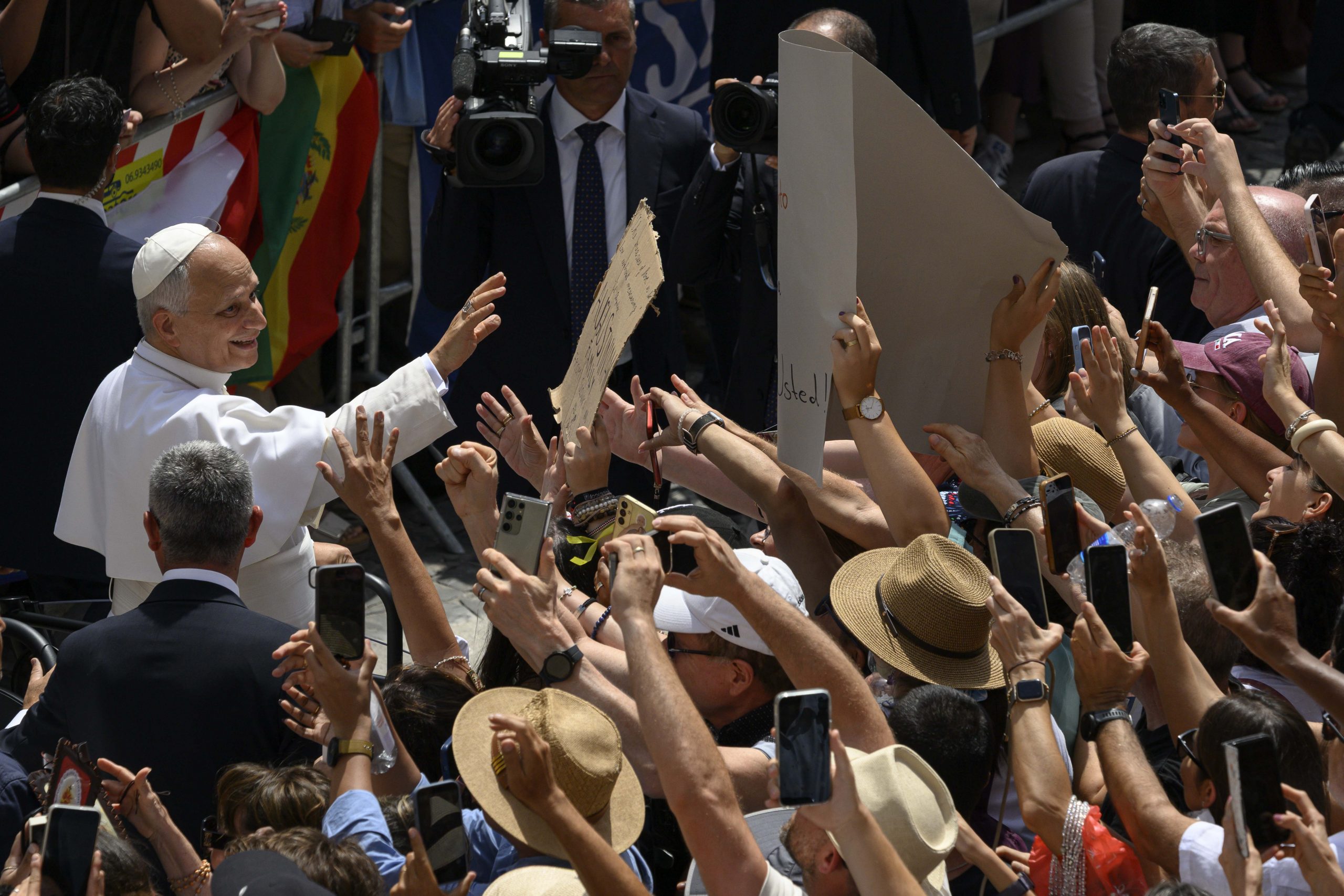
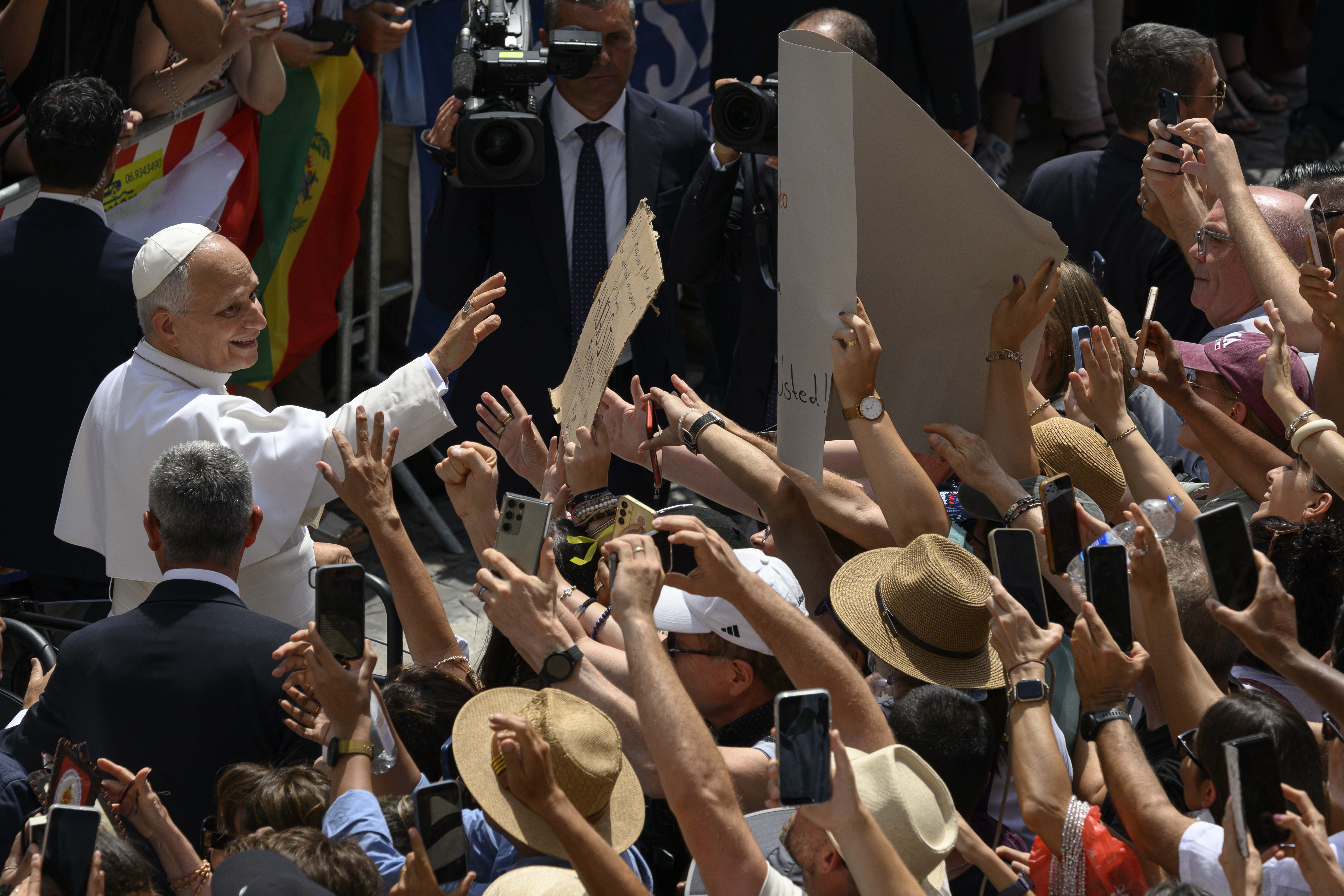
Pope Leo XIV urges halt to Mideast attacks, return to diplomacy #Catholic Pope Leo XIV on Sunday urged parties across the Middle East to suspend their attacks and reopen diplomatic negotiations, warning that escalating military operations were endangering civilians and worsening shortages of drinking water and electricity.“I continue to follow with deep concern the ongoing and escalating violence in the Holy Land, where, in recent days, many civilians, both in the West Bank and in Gaza, have once again fallen victim,” the pope said July 26 after leading the Angelus from the Apostolic Palace in Castel Gandolfo.His remarks followed one of the most tense days in the West Bank in recent months. A shooting in Tell, southwest of Nablus, reportedly killed at least four Palestinians and two Israeli soldiers and was followed by attacks by Israeli settlers against several Palestinian communities.Israeli Prime Minister Benjamin Netanyahu and Defense Minister Israel Katz subsequently announced that military operations would be intensified in areas Israel considers centers of terrorism.“I make a heartfelt appeal for a return to negotiations to achieve a just political solution, founded on the equal dignity and equal rights of every human person,” Pope Leo said.“At the same time, I urge the rejection of further military actions and unilateral decisions, especially those that violate the respect for and the status quo of the holy places of every religion.”The pope also renewed his appeal concerning the wider Middle East, where he said intensified military operations had “again wreaked violence and destruction, endangering the lives of countless civilians and further aggravating the shortages of drinking water and electricity.”“From the depths of my heart, I exhort all parties involved to suspend the attacks and urgently reopen paths of dialogue and diplomacy, so that the longed-for peace for the entire region may be achieved without delay,” he said.Pope Leo invited the faithful to continue praying for people throughout the world who are suffering because of war.“May the Lord touch the hearts and enlighten the minds of those in power, so that reconciliation and peace may soon prevail,” he said.Prayers for wildfire victimsThe pope also expressed his closeness to people affected by devastating wildfires in France and Spain and called for prayers for both the victims and emergency workers involved in relief efforts.The fires have forced hundreds of thousands of people to leave their homes, while forecasts of temperatures reaching approximately 108 degrees Fahrenheit were expected to increase the danger in the affected areas.Beatification of Elias HoayekPope Leo recalled the July 25 beatification in Lebanon of Elias Hoayek, who served as Maronite patriarch of Antioch from 1899 to 1931 and founded the Congregation of the Maronite Sisters of the Holy Family.“For more than thirty years, he led the Maronite Church with great dedication and pastoral sensitivity,” the pope said.“A man of dialogue and hope, he was an outstanding ecclesial, social and political leader, so much so that he came to be known as the ‘Father of Greater Lebanon.’”The pope prayed that the new blessed’s intercession would accompany Maronite Catholics throughout the world and obtain peace for Lebanon, “a country dear to my heart.”World Day for Grandparents and the ElderlyPope Leo also marked the sixth World Day for Grandparents and the Elderly, whose theme was drawn from the words of the prophet Isaiah: “I will never forget you.”“Together, let us give thanks to the Lord for the gift that the elderly are to the Church and society,” he said.“Let us also commit ourselves to respecting and valuing the precious role they play, and to ensuring that they always receive the care, attention and assistance they deserve.”The kingdom of God enlarges lifeDuring his Angelus reflection, Pope Leo focused on the Gospel’s images of the kingdom of God as a hidden treasure and a pearl of great price.“The parables convey the surprise of those who find something far beyond what they could have hoped for, so much so that selling or leaving everything behind no longer seems a sacrifice, but a gain,” he said.The pope said the evangelists present Christ’s call to discipleship as irresistible.“It is a free choice, yet also urgent and capable of eliciting a ready and wholehearted response,” he said. “Encountering his Kingdom marks a turning point that does not limit life but enlarges it.”“If anything must change on our part, it is only so that our lives may be opened to greater possibilities, not fewer.”Pope Leo noted that the figures appearing in Christ’s parables include peasants, merchants, travelers, fishermen, scribes, shepherds, farmers and women carrying out ordinary household tasks.“In short, the Kingdom of God reveals its inestimable beauty in different ways, but calls everyone — men and women, young and old, rich and poor — to a profound renewal,” he said. “Everyone is capable of understanding it and is drawn to it.”The pope said that the Church likewise brings together people with different backgrounds, cultures, abilities and responsibilities.“Yet all are called to recognize themselves as ‘one’ in Jesus Christ: he is the hidden treasure, the pearl of great price, the net that gathers those who are scattered,” he said.“From the beginning, Jesus called and gathered around himself people who would otherwise never have come to know one another. In this way, he demonstrated that God has no favorites, but instead offers his love freely, especially to the little ones or those cast aside.”Pope Leo concluded by urging Catholics to ask for the wisdom sought by the young King Solomon: the ability to recognize what is truly valuable.“While the consumer culture influences our tastes, constantly creating new needs only to sell us solutions that never satisfy, and that sometimes even poison the heart, we must learn to grasp what truly matters,” he said.That treasure, the pope continued, is “a relationship with God that opens us to joy and helps us to live our relationships with one another more fully.”The July 26 Angelus was Pope Leo’s final Sunday appearance during his summer stay at the Apostolic Palace in Castel Gandolfo. He was scheduled to return to the Vatican on Monday, July 27.The pope was expected to return to Castel Gandolfo on Wednesday, July 29, to meet young choristers participating in the Andrea Bocelli Foundation’s Voices of Global Gathering at the Borgo Laudato Si’. Bocelli was scheduled to perform a musical work titled “Cantico di Pace.”This story was first published in two parts by ACI Prensa, the Spanish-language sister service of EWTN News. It has been translated and adapted by EWTN News English.

Pope Leo XIV urges halt to Mideast attacks, return to diplomacy #Catholic Pope Leo XIV on Sunday urged parties across the Middle East to suspend their attacks and reopen diplomatic negotiations, warning that escalating military operations were endangering civilians and worsening shortages of drinking water and electricity.“I continue to follow with deep concern the ongoing and escalating violence in the Holy Land, where, in recent days, many civilians, both in the West Bank and in Gaza, have once again fallen victim,” the pope said July 26 after leading the Angelus from the Apostolic Palace in Castel Gandolfo.His remarks followed one of the most tense days in the West Bank in recent months. A shooting in Tell, southwest of Nablus, reportedly killed at least four Palestinians and two Israeli soldiers and was followed by attacks by Israeli settlers against several Palestinian communities.Israeli Prime Minister Benjamin Netanyahu and Defense Minister Israel Katz subsequently announced that military operations would be intensified in areas Israel considers centers of terrorism.“I make a heartfelt appeal for a return to negotiations to achieve a just political solution, founded on the equal dignity and equal rights of every human person,” Pope Leo said.“At the same time, I urge the rejection of further military actions and unilateral decisions, especially those that violate the respect for and the status quo of the holy places of every religion.”The pope also renewed his appeal concerning the wider Middle East, where he said intensified military operations had “again wreaked violence and destruction, endangering the lives of countless civilians and further aggravating the shortages of drinking water and electricity.”“From the depths of my heart, I exhort all parties involved to suspend the attacks and urgently reopen paths of dialogue and diplomacy, so that the longed-for peace for the entire region may be achieved without delay,” he said.Pope Leo invited the faithful to continue praying for people throughout the world who are suffering because of war.“May the Lord touch the hearts and enlighten the minds of those in power, so that reconciliation and peace may soon prevail,” he said.Prayers for wildfire victimsThe pope also expressed his closeness to people affected by devastating wildfires in France and Spain and called for prayers for both the victims and emergency workers involved in relief efforts.The fires have forced hundreds of thousands of people to leave their homes, while forecasts of temperatures reaching approximately 108 degrees Fahrenheit were expected to increase the danger in the affected areas.Beatification of Elias HoayekPope Leo recalled the July 25 beatification in Lebanon of Elias Hoayek, who served as Maronite patriarch of Antioch from 1899 to 1931 and founded the Congregation of the Maronite Sisters of the Holy Family.“For more than thirty years, he led the Maronite Church with great dedication and pastoral sensitivity,” the pope said.“A man of dialogue and hope, he was an outstanding ecclesial, social and political leader, so much so that he came to be known as the ‘Father of Greater Lebanon.’”The pope prayed that the new blessed’s intercession would accompany Maronite Catholics throughout the world and obtain peace for Lebanon, “a country dear to my heart.”World Day for Grandparents and the ElderlyPope Leo also marked the sixth World Day for Grandparents and the Elderly, whose theme was drawn from the words of the prophet Isaiah: “I will never forget you.”“Together, let us give thanks to the Lord for the gift that the elderly are to the Church and society,” he said.“Let us also commit ourselves to respecting and valuing the precious role they play, and to ensuring that they always receive the care, attention and assistance they deserve.”The kingdom of God enlarges lifeDuring his Angelus reflection, Pope Leo focused on the Gospel’s images of the kingdom of God as a hidden treasure and a pearl of great price.“The parables convey the surprise of those who find something far beyond what they could have hoped for, so much so that selling or leaving everything behind no longer seems a sacrifice, but a gain,” he said.The pope said the evangelists present Christ’s call to discipleship as irresistible.“It is a free choice, yet also urgent and capable of eliciting a ready and wholehearted response,” he said. “Encountering his Kingdom marks a turning point that does not limit life but enlarges it.”“If anything must change on our part, it is only so that our lives may be opened to greater possibilities, not fewer.”Pope Leo noted that the figures appearing in Christ’s parables include peasants, merchants, travelers, fishermen, scribes, shepherds, farmers and women carrying out ordinary household tasks.“In short, the Kingdom of God reveals its inestimable beauty in different ways, but calls everyone — men and women, young and old, rich and poor — to a profound renewal,” he said. “Everyone is capable of understanding it and is drawn to it.”The pope said that the Church likewise brings together people with different backgrounds, cultures, abilities and responsibilities.“Yet all are called to recognize themselves as ‘one’ in Jesus Christ: he is the hidden treasure, the pearl of great price, the net that gathers those who are scattered,” he said.“From the beginning, Jesus called and gathered around himself people who would otherwise never have come to know one another. In this way, he demonstrated that God has no favorites, but instead offers his love freely, especially to the little ones or those cast aside.”Pope Leo concluded by urging Catholics to ask for the wisdom sought by the young King Solomon: the ability to recognize what is truly valuable.“While the consumer culture influences our tastes, constantly creating new needs only to sell us solutions that never satisfy, and that sometimes even poison the heart, we must learn to grasp what truly matters,” he said.That treasure, the pope continued, is “a relationship with God that opens us to joy and helps us to live our relationships with one another more fully.”The July 26 Angelus was Pope Leo’s final Sunday appearance during his summer stay at the Apostolic Palace in Castel Gandolfo. He was scheduled to return to the Vatican on Monday, July 27.The pope was expected to return to Castel Gandolfo on Wednesday, July 29, to meet young choristers participating in the Andrea Bocelli Foundation’s Voices of Global Gathering at the Borgo Laudato Si’. Bocelli was scheduled to perform a musical work titled “Cantico di Pace.”This story was first published in two parts by ACI Prensa, the Spanish-language sister service of EWTN News. It has been translated and adapted by EWTN News English.

The pontiff also reflected on the kingdom of God as a treasure that enlarges life and unites people of different backgrounds in Christ.
Read More
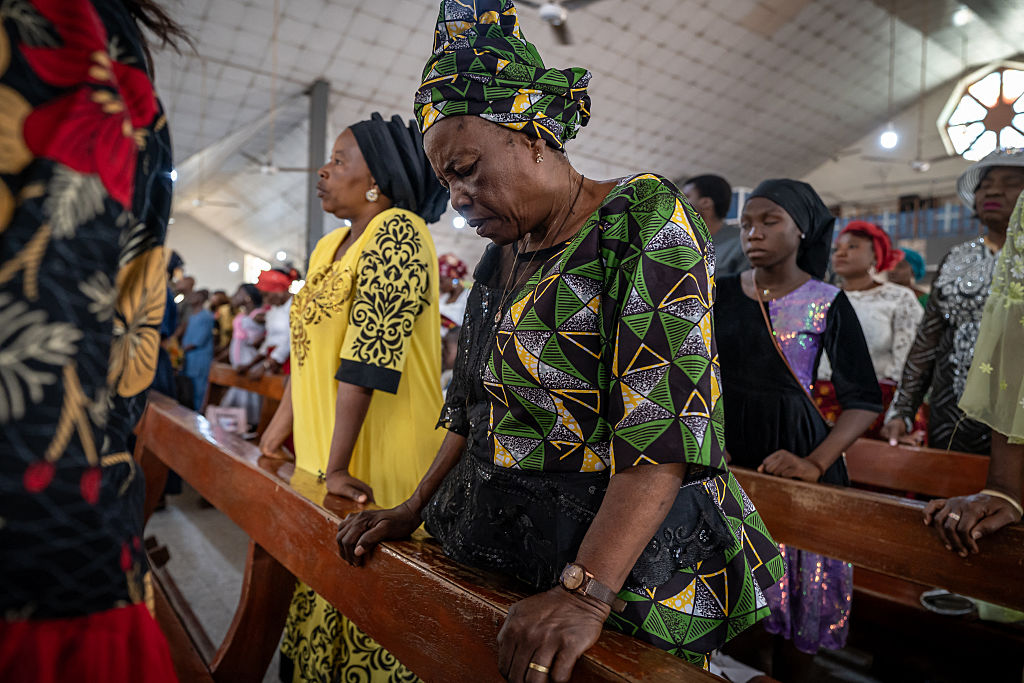
Nigeria, Nicaragua, Syria, India cited in index of rising Christian persecution #Catholic International Christian Concern (ICC) released its 2026 Global Persecution Index, offering an in-depth analysis of the persecution Christians face in more than 20 countries and recommendations for how policymakers and organizations can combat escalating violations.“This year’s Global Persecution Index is a sobering reminder that millions of our brothers and sisters in Christ continue to pay a high price for their faith,” Shawn Wright, president of ICC, said in a statement.ICC is a nonprofit organization assisting the persecuted Christian church through assistance, advocacy, and awareness across the globe.The index, “Faces of the Persecuted,” was created by ICC as more than 388 million Christians worldwide — or 1 in 7 believers — live under "high levels of persecution and discrimination for their faith,” according to the report.The index highlights the leaders of countries where persecution is worsening including Nigerian President Bola Ahmed Tinubu, Nicaraguan President Daniel Ortega, Syrian President Ahmed al-Sharaa, and Indian Prime Minister Narendra Modi.The index outlines trends in religious freedom that are aiding the rise of persecution including religious nationalism, transnational repression, state control over religious organizations, terrorism, authoritarianism, restrictions on women, and the use of the West to persecute.The report states: “Despite these challenges, the church continues to grow in some of the most hostile environments, and resistance to repression is rising as individuals and communities push back against injustice and demand greater freedom.”“Behind every statistic is a real person: someone who has chosen faithfulness to Jesus over safety, comfort, or even life itself,” Wright said. “Our hope is that this report not only informs decision-makers and stakeholders but moves readers to act with urgency, conviction, and compassion.”Recommendations to ‘ease the burden of persecuted Christians’The index details Christian persecution in African, Latin American, Middle Eastern, North African, South Asian, and Southeast Asian countries, and it specifically offers recommendations to aid the faithful in Nigeria, Nicaragua, Syria, and India.As Nigerians face political persecution, mob violence, and other actions aiding the nation’s religious persecution, ICC recommends immediate and independent investigations into the reported mass killings against the faithful in the country.It also calls for international leadership to reverse legal barriers, including blasphemy laws in the nation that criminalize disfavored religious beliefs.In Nicaragua, ICC notes that hundreds of priests, nuns, and other religious workers have disappeared or been detained. The nation’s regime also engages in systematic attempts to control religious sermons and media, and surveil members of independent religious organizations.To combat the issues, ICC recommends expedited asylum pathways for the exiled clergy and calls for the support of aid to parishes and civil society organizations shuttered by the regime. It also urges expanded international sanctions against Nicaraguan officials, including regime leaders Daniel Ortega and Rosario Murillo.In Syria, religious people face numerous challenges despite a shift of government following the Assad regime. They experience reprisals, detentions, and discrimination that prevents their participation in governance councils and denies them property restitution.In its index, ICC recommends support for programs that aid displaced communities and protect targeted Christians in Syria. It also calls for accountability for war crimes committed by both Assad and post-Assad actors.As India’s persecution is on the rise, ICC urges the protection of independent nongovernmental organizations and media working to provide aid and to report on the persecuted groups as the faithful in the nation face mob attacks and other acts of violence.

Nigeria, Nicaragua, Syria, India cited in index of rising Christian persecution #Catholic International Christian Concern (ICC) released its 2026 Global Persecution Index, offering an in-depth analysis of the persecution Christians face in more than 20 countries and recommendations for how policymakers and organizations can combat escalating violations.“This year’s Global Persecution Index is a sobering reminder that millions of our brothers and sisters in Christ continue to pay a high price for their faith,” Shawn Wright, president of ICC, said in a statement.ICC is a nonprofit organization assisting the persecuted Christian church through assistance, advocacy, and awareness across the globe.The index, “Faces of the Persecuted,” was created by ICC as more than 388 million Christians worldwide — or 1 in 7 believers — live under "high levels of persecution and discrimination for their faith,” according to the report.The index highlights the leaders of countries where persecution is worsening including Nigerian President Bola Ahmed Tinubu, Nicaraguan President Daniel Ortega, Syrian President Ahmed al-Sharaa, and Indian Prime Minister Narendra Modi.The index outlines trends in religious freedom that are aiding the rise of persecution including religious nationalism, transnational repression, state control over religious organizations, terrorism, authoritarianism, restrictions on women, and the use of the West to persecute.The report states: “Despite these challenges, the church continues to grow in some of the most hostile environments, and resistance to repression is rising as individuals and communities push back against injustice and demand greater freedom.”“Behind every statistic is a real person: someone who has chosen faithfulness to Jesus over safety, comfort, or even life itself,” Wright said. “Our hope is that this report not only informs decision-makers and stakeholders but moves readers to act with urgency, conviction, and compassion.”Recommendations to ‘ease the burden of persecuted Christians’The index details Christian persecution in African, Latin American, Middle Eastern, North African, South Asian, and Southeast Asian countries, and it specifically offers recommendations to aid the faithful in Nigeria, Nicaragua, Syria, and India.As Nigerians face political persecution, mob violence, and other actions aiding the nation’s religious persecution, ICC recommends immediate and independent investigations into the reported mass killings against the faithful in the country.It also calls for international leadership to reverse legal barriers, including blasphemy laws in the nation that criminalize disfavored religious beliefs.In Nicaragua, ICC notes that hundreds of priests, nuns, and other religious workers have disappeared or been detained. The nation’s regime also engages in systematic attempts to control religious sermons and media, and surveil members of independent religious organizations.To combat the issues, ICC recommends expedited asylum pathways for the exiled clergy and calls for the support of aid to parishes and civil society organizations shuttered by the regime. It also urges expanded international sanctions against Nicaraguan officials, including regime leaders Daniel Ortega and Rosario Murillo.In Syria, religious people face numerous challenges despite a shift of government following the Assad regime. They experience reprisals, detentions, and discrimination that prevents their participation in governance councils and denies them property restitution.In its index, ICC recommends support for programs that aid displaced communities and protect targeted Christians in Syria. It also calls for accountability for war crimes committed by both Assad and post-Assad actors.As India’s persecution is on the rise, ICC urges the protection of independent nongovernmental organizations and media working to provide aid and to report on the persecuted groups as the faithful in the nation face mob attacks and other acts of violence.

Religious nationalism, state control, terrorism, authoritarianism, and limits on women are among drivers of rising persecution globally, the International Christian Concern (ICC) report said.
Read More