Public Office

Perpetual Eucharistic pilgrims reflect on ‘being with Christ 24/7’ as pilgrimage nears end #Catholic When John Paul Flynn, a rising junior at The Catholic University of America, decided to do mission work, he did not realize he would be doing it with Christ himself.Since May 24, Flynn has been part of a nine-person team taking the Blessed Sacrament across 18 dioceses as part of the National Eucharistic Pilgrimage, which will finish in Philadelphia on Sunday in celebration of the country’s 250th anniversary celebrations. Pope Leo XIV will deliver a video message prior to the closing Mass in the  Cathedral Basilica of Saints Peter and Paul. 
 
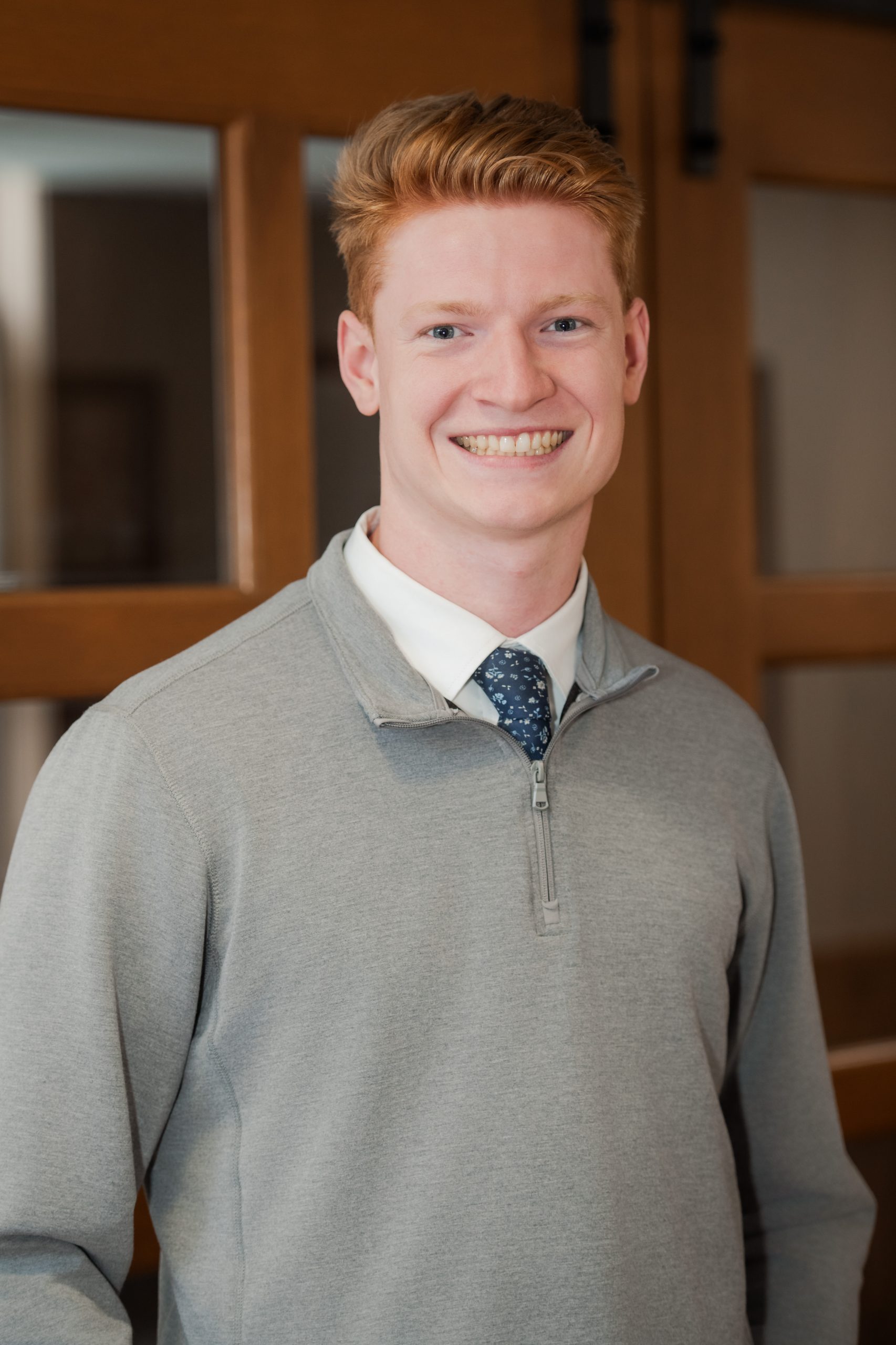
 Perpetual pilgrim John Paul Flynn. Photo credit: Simple Heart Photography in partnership with the National Eucharistic Congress.
 
 The 2026 pilgrimage is under the patronage of Saint Frances Xavier Cabrini, the first United States citizen to be canonized. During Pope Leo XIV’s visit to Pavia on June 20th, he venerated a relic of the heart of Saint Frances Xavier Cabrini brought from Codogno. The pope’s veneration of St. Frances’ relic occurred the same week that Flynn and his fellow perpetual pilgrims accompanied the Eucharist to a private retreat at the Mother Cabrini National Shrine in Manhattan, where the saint is buried.The procession crossed the Delaware River in homage to the route George Washington took during his iconic crossing there in 1776.Another highlight for Flynn was when the monstrance was lifted high in front of the Washington Monument. “I knew I wanted to do mission work. I saw an application, prayed about it, and applied to be a part of the team,” Flynn, a social media coordinator and photographer, told EWTN News. “I knew I wanted to use my talents for Christ. This is a special opportunity to be with Christ 24/7.”In this case, “24/7” means taking the Tabernacle by van in between pilgrimage stops and accompanying the Eucharist down city streets, country roads, even into retirement homes, and encountering people of “diverse communities,” he said. When Flynn and the team recently walked through Boston, including down the Freedom Trail, they were joined by some 3,000 fellow believers, the biggest showing on the pilgrimage yet.Pilgrim Raymond Martinez, II, a fourth-year seminarian at Conception Seminary College in Conception, Missouri, said the processions and the timing around the nation’s milestone made him reflect on the history of the Church in America, and how far Catholics had come from, being excluded from public office to being able to worship freely like they did this summer.
 
 Perpetual pilgrim Raymond Martinez. Photo credit: Simple Heart Photography in partnership with the National Eucharistic Congress.
 
 The closing events in Philadelphia on Independence Day weekend will draw pilgrims to two shrines that speak to the legacy of the Church in America: the tomb of St. Katharine Drexel, the first native-born United States citizen to be canonized, and the shrine of Saint John Neumann, the first canonized American bishop.Martinez and Flynn both said they encountered the occasional heckler as well as commuters annoyed by street closures, but overall, the reception in the processions was positive and conducive to evangelization. "If youʼve pulled off all these logistics, there must be divine help,“ they recalled an atheist telling them in Georgia.While Flynn managed social media, Martinez was tasked with missionary work from handing out prayer cards, t-shirts and food to homeless people watching from the sidelines to answering questions from curious bystanders who had never seen the Eucharist.Flynn and Martinez said that the response they received from non-Catholics — as well as those estranged from the Church — was worth the long days, many in extreme heat. One bystander told pilgrims he was Catholic but had never actually attended Mass. Another they encountered on a boardwalk explained he had been away from the Church for years but felt inspired to return.The pilgrimage will continue next year, with the goal of visiting all fifty states. The next National Eucharistic Congress will take place in 2029 and is still collecting prayer intentions from across the country and Holy Hour pledges as part of its goal of offering 250,000 Holy Hours in honor of the anniversary year.

Perpetual Eucharistic pilgrims reflect on ‘being with Christ 24/7’ as pilgrimage nears end #Catholic When John Paul Flynn, a rising junior at The Catholic University of America, decided to do mission work, he did not realize he would be doing it with Christ himself.Since May 24, Flynn has been part of a nine-person team taking the Blessed Sacrament across 18 dioceses as part of the National Eucharistic Pilgrimage, which will finish in Philadelphia on Sunday in celebration of the country’s 250th anniversary celebrations. Pope Leo XIV will deliver a video message prior to the closing Mass in the  Cathedral Basilica of Saints Peter and Paul. Perpetual pilgrim John Paul Flynn. Photo credit: Simple Heart Photography in partnership with the National Eucharistic Congress. The 2026 pilgrimage is under the patronage of Saint Frances Xavier Cabrini, the first United States citizen to be canonized. During Pope Leo XIV’s visit to Pavia on June 20th, he venerated a relic of the heart of Saint Frances Xavier Cabrini brought from Codogno. The pope’s veneration of St. Frances’ relic occurred the same week that Flynn and his fellow perpetual pilgrims accompanied the Eucharist to a private retreat at the Mother Cabrini National Shrine in Manhattan, where the saint is buried.The procession crossed the Delaware River in homage to the route George Washington took during his iconic crossing there in 1776.Another highlight for Flynn was when the monstrance was lifted high in front of the Washington Monument. “I knew I wanted to do mission work. I saw an application, prayed about it, and applied to be a part of the team,” Flynn, a social media coordinator and photographer, told EWTN News. “I knew I wanted to use my talents for Christ. This is a special opportunity to be with Christ 24/7.”In this case, “24/7” means taking the Tabernacle by van in between pilgrimage stops and accompanying the Eucharist down city streets, country roads, even into retirement homes, and encountering people of “diverse communities,” he said. When Flynn and the team recently walked through Boston, including down the Freedom Trail, they were joined by some 3,000 fellow believers, the biggest showing on the pilgrimage yet.Pilgrim Raymond Martinez, II, a fourth-year seminarian at Conception Seminary College in Conception, Missouri, said the processions and the timing around the nation’s milestone made him reflect on the history of the Church in America, and how far Catholics had come from, being excluded from public office to being able to worship freely like they did this summer. Perpetual pilgrim Raymond Martinez. Photo credit: Simple Heart Photography in partnership with the National Eucharistic Congress. The closing events in Philadelphia on Independence Day weekend will draw pilgrims to two shrines that speak to the legacy of the Church in America: the tomb of St. Katharine Drexel, the first native-born United States citizen to be canonized, and the shrine of Saint John Neumann, the first canonized American bishop.Martinez and Flynn both said they encountered the occasional heckler as well as commuters annoyed by street closures, but overall, the reception in the processions was positive and conducive to evangelization. "If youʼve pulled off all these logistics, there must be divine help,“ they recalled an atheist telling them in Georgia.While Flynn managed social media, Martinez was tasked with missionary work from handing out prayer cards, t-shirts and food to homeless people watching from the sidelines to answering questions from curious bystanders who had never seen the Eucharist.Flynn and Martinez said that the response they received from non-Catholics — as well as those estranged from the Church — was worth the long days, many in extreme heat. One bystander told pilgrims he was Catholic but had never actually attended Mass. Another they encountered on a boardwalk explained he had been away from the Church for years but felt inspired to return.The pilgrimage will continue next year, with the goal of visiting all fifty states. The next National Eucharistic Congress will take place in 2029 and is still collecting prayer intentions from across the country and Holy Hour pledges as part of its goal of offering 250,000 Holy Hours in honor of the anniversary year.

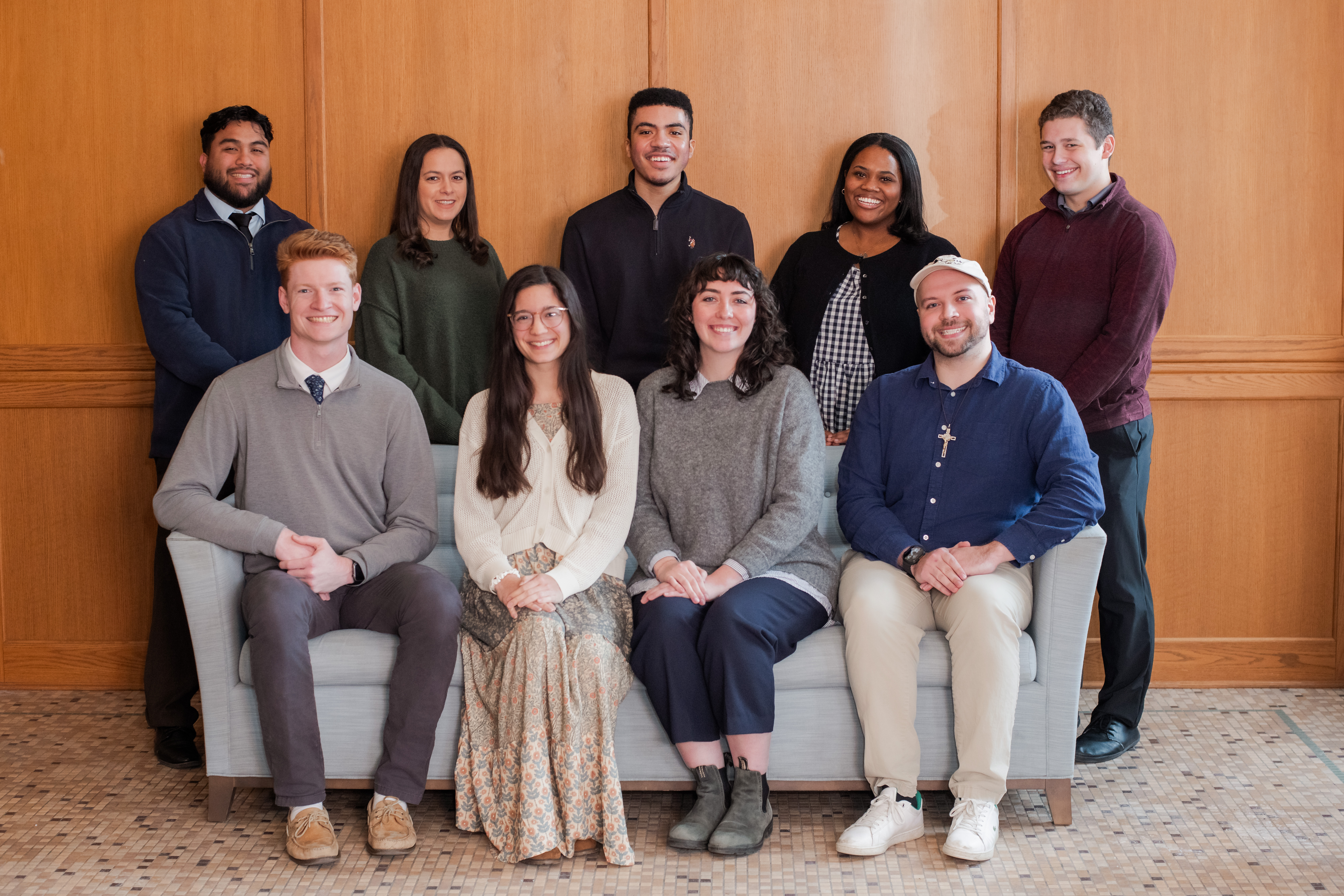
A nine-person team has taken the Blessed Sacrament across 18 dioceses as part of the National Eucharistic Pilgrimage, which will come to an end in Philadelphia on July 5.
Read More
Bishop Barron speaks on U.S. religious roots ahead of nation’s 250th anniversary #Catholic While there has been a tendency in the United Sates "to hyper-stress separation of church and state," Bishop Robert Barron said "the roots of our country are deeply religious" and "the basic principles of the country are inescapably religious.” On May 17, thousands gathered on the National Mall in Washington, D.C., for the White House event celebrating “one nation under God” and "the connection between religion and our American democracy,”  Barron said.In an interview with EWTN News’ Colm Flynn ahead of the event, Barron discussed the “hugely important” phrase "one nation under God.”“In the written versions of the Gettysburg Address that [Abraham Lincoln] prepared before giving it, the phrase ‘under God’ is not there,” Barron explained.“But then when he was delivering it he added ... ‘under God,’“ Barron said. ”I think it represented a deep intuition that Lincoln had that you canʼt really understand our democracy without it.” The phrase “under God” is “meant to hold off tyranny,” he said. It is clear that “all kings and all rulers are under God, meaning under the judgment and authority of God. Our founders understood that.”“And that little phrase is meant to hold off that tendency to deify any political establishment, political party, political ruler. Weʼre a nation, yes indeed, but weʼre under God. Our laws are determined by God,” he said.“I love the First Amendment to our Constitution, which in its opening lines expresses very eloquently … the right balance,“ he said. ”Namely, ‘Congress shall make no law respecting the establishment of religion.’”“But then thereʼs a second part, the second clause of that: ‘Congress shall make no law limiting the free exercise of religion,’” he said.“Thatʼs an eloquent balance. So thereʼs no officially state-sanctioned religion, but that does not mean that religion has no role in public life. On the contrary, because there should be no law restricting the free exercise of religion,” Barron said. Catholics’ role in public life and public officeCatholics in public office should bring “moral sensibility into their public decisions,” Barron said.“Weʼre not here to impose Catholicism on anybody,” he said. “But I think to bring a moral and spiritual sensibility into the decisions that you make at these high levels is altogether valid.”As a member of the White House Religious Liberty Commission, Barron said he met “lots of Catholics in the present administration” and told them to “bring Thomas Aquinas into your public life.”“By which I mean bring these great moral and spiritual principles that indeed undergird our democracy, but make them a lively presence in the work that you do,” he said.Barron further spoke about his time on the White House commission, where he received both criticism and praise.When asked to be a commissioner, “my first reaction was very positive,” Barron said. “I thought … ‘Theyʼre inviting a Catholic bishop to be a voice around the table in the formulation of this policy. Why would I say no?’”To say no would be “taking a Catholic voice away from that process,” he said.“I’m not implementing the policy. Iʼm making suggestions regarding the formulation of policy,” Barron explained. “The president could take or leave what we say … So Iʼm not implementing the presidentʼs policies. Iʼm helping to shape public policy.”“The commission was great. I spoke my mind in every setting. No one censored me,” said Barron, who was present at a White House Holy Week event when Pentecostal pastor Paula Cain White compared the president’s suffering to Jesus Christ’s.Barron said he was able to address issues within the administration, specifically about Immigration and Customs Enforcement (ICE) “detainees in Chicago having access to sacraments and pastoral care.”The bishop took the matter to Homeland Security and “no one questioned” him. It was “a religious liberty issue,” because “people have a right to their sacraments and pastoral care,” he said.Barron also spoke out in regard to the president’s “critical remarks about the pope.”“I said in an X post that I have deep admiration for the president in regard to religion. Heʼs done wonderful things. But I said I think that was a disrespectful way to talk to the pope,” Barron said.“In regards to prudential judgment,” a president can “disagree with the pope,” Barron said. “But the pope is not ... just an ordinary hack politician that you can sort of talk in that flippant way to.”
 
 Bishop Robert Barron speaks with EWTN News’ Colm Flynn ahead of the May 17, 2026, White House event on “one nation under God” in Washington, D.C. | Credit: EWTN News
 
 “Heʼs the vicar of Christ, successor of Peter. Heʼs our Holy Father. And I just felt that was disrespectful, and I thought it was not a constructive contribution to the conversation,” he said.“Heʼs the Holy Father, so we have a filial relationship to him. Heʼs a father, weʼre like children … we have a family relationship to the pope. So itʼs different than just our relationship to a political leader.”“At the level of principle and the moral values that ought to be informing our life … we abide by what the pope is saying, but I think there can be disagreement at the prudential level,” Barron said.Dividing issues in the nation todayAmid numerous wars right now, Barron said “we should study” the just war tradition.It offers “very useful criteria, and I think the Churchʼs job is to bring these to consciousness and urge political leaders to apply them,” he said.“The Catechism of the Catholic Church says that when it comes to the evaluation and application of the criteria, that belongs to the civil authorities. And I think thereʼs great wisdom there too.”Barron also spoke to the ongoing matters with U.S. immigration enforcement.“A completely open border invites a lot of moral chaos, and a lot of catastrophe happens because of an open border. So the Church recognizes the legitimacy of that,” Barron said. “At the same time, the Church wants us to welcome the stranger and to be open to those who are in great need and those who are seeking refuge.”ICE “is a very legitimate expression of the governmentʼs authority, but … I think ICE is way too blunt a tool to use to solve the general issue of people in the country illegally,” Barron said.“I think a political solution has to be found. I donʼt think ICE is the right instrument to do that,” he said. “Iʼd invite people who are intimately involved in these things to have a good, morally informed conversation about it and come to good prudential judgments.”“Iʼm not an expert in immigration policy, and Iʼm not an expert in the economics that are prevailing on the ground in various situations,” he said. “I think we have to inform all those who are making those decisions, make sure they have a keen moral sensibility, [and] know what the principles are.”“But I think people of goodwill can, and obviously do, disagree about how they are applied … concretely,” he said.

Bishop Barron speaks on U.S. religious roots ahead of nation’s 250th anniversary #Catholic While there has been a tendency in the United Sates "to hyper-stress separation of church and state," Bishop Robert Barron said "the roots of our country are deeply religious" and "the basic principles of the country are inescapably religious.” On May 17, thousands gathered on the National Mall in Washington, D.C., for the White House event celebrating “one nation under God” and "the connection between religion and our American democracy,”  Barron said.In an interview with EWTN News’ Colm Flynn ahead of the event, Barron discussed the “hugely important” phrase "one nation under God.”“In the written versions of the Gettysburg Address that [Abraham Lincoln] prepared before giving it, the phrase ‘under God’ is not there,” Barron explained.“But then when he was delivering it he added … ‘under God,’“ Barron said. ”I think it represented a deep intuition that Lincoln had that you canʼt really understand our democracy without it.” The phrase “under God” is “meant to hold off tyranny,” he said. It is clear that “all kings and all rulers are under God, meaning under the judgment and authority of God. Our founders understood that.”“And that little phrase is meant to hold off that tendency to deify any political establishment, political party, political ruler. Weʼre a nation, yes indeed, but weʼre under God. Our laws are determined by God,” he said.“I love the First Amendment to our Constitution, which in its opening lines expresses very eloquently … the right balance,“ he said. ”Namely, ‘Congress shall make no law respecting the establishment of religion.’”“But then thereʼs a second part, the second clause of that: ‘Congress shall make no law limiting the free exercise of religion,’” he said.“Thatʼs an eloquent balance. So thereʼs no officially state-sanctioned religion, but that does not mean that religion has no role in public life. On the contrary, because there should be no law restricting the free exercise of religion,” Barron said. Catholics’ role in public life and public officeCatholics in public office should bring “moral sensibility into their public decisions,” Barron said.“Weʼre not here to impose Catholicism on anybody,” he said. “But I think to bring a moral and spiritual sensibility into the decisions that you make at these high levels is altogether valid.”As a member of the White House Religious Liberty Commission, Barron said he met “lots of Catholics in the present administration” and told them to “bring Thomas Aquinas into your public life.”“By which I mean bring these great moral and spiritual principles that indeed undergird our democracy, but make them a lively presence in the work that you do,” he said.Barron further spoke about his time on the White House commission, where he received both criticism and praise.When asked to be a commissioner, “my first reaction was very positive,” Barron said. “I thought … ‘Theyʼre inviting a Catholic bishop to be a voice around the table in the formulation of this policy. Why would I say no?’”To say no would be “taking a Catholic voice away from that process,” he said.“I’m not implementing the policy. Iʼm making suggestions regarding the formulation of policy,” Barron explained. “The president could take or leave what we say … So Iʼm not implementing the presidentʼs policies. Iʼm helping to shape public policy.”“The commission was great. I spoke my mind in every setting. No one censored me,” said Barron, who was present at a White House Holy Week event when Pentecostal pastor Paula Cain White compared the president’s suffering to Jesus Christ’s.Barron said he was able to address issues within the administration, specifically about Immigration and Customs Enforcement (ICE) “detainees in Chicago having access to sacraments and pastoral care.”The bishop took the matter to Homeland Security and “no one questioned” him. It was “a religious liberty issue,” because “people have a right to their sacraments and pastoral care,” he said.Barron also spoke out in regard to the president’s “critical remarks about the pope.”“I said in an X post that I have deep admiration for the president in regard to religion. Heʼs done wonderful things. But I said I think that was a disrespectful way to talk to the pope,” Barron said.“In regards to prudential judgment,” a president can “disagree with the pope,” Barron said. “But the pope is not … just an ordinary hack politician that you can sort of talk in that flippant way to.” Bishop Robert Barron speaks with EWTN News’ Colm Flynn ahead of the May 17, 2026, White House event on “one nation under God” in Washington, D.C. | Credit: EWTN News “Heʼs the vicar of Christ, successor of Peter. Heʼs our Holy Father. And I just felt that was disrespectful, and I thought it was not a constructive contribution to the conversation,” he said.“Heʼs the Holy Father, so we have a filial relationship to him. Heʼs a father, weʼre like children … we have a family relationship to the pope. So itʼs different than just our relationship to a political leader.”“At the level of principle and the moral values that ought to be informing our life … we abide by what the pope is saying, but I think there can be disagreement at the prudential level,” Barron said.Dividing issues in the nation todayAmid numerous wars right now, Barron said “we should study” the just war tradition.It offers “very useful criteria, and I think the Churchʼs job is to bring these to consciousness and urge political leaders to apply them,” he said.“The Catechism of the Catholic Church says that when it comes to the evaluation and application of the criteria, that belongs to the civil authorities. And I think thereʼs great wisdom there too.”Barron also spoke to the ongoing matters with U.S. immigration enforcement.“A completely open border invites a lot of moral chaos, and a lot of catastrophe happens because of an open border. So the Church recognizes the legitimacy of that,” Barron said. “At the same time, the Church wants us to welcome the stranger and to be open to those who are in great need and those who are seeking refuge.”ICE “is a very legitimate expression of the governmentʼs authority, but … I think ICE is way too blunt a tool to use to solve the general issue of people in the country illegally,” Barron said.“I think a political solution has to be found. I donʼt think ICE is the right instrument to do that,” he said. “Iʼd invite people who are intimately involved in these things to have a good, morally informed conversation about it and come to good prudential judgments.”“Iʼm not an expert in immigration policy, and Iʼm not an expert in the economics that are prevailing on the ground in various situations,” he said. “I think we have to inform all those who are making those decisions, make sure they have a keen moral sensibility, [and] know what the principles are.”“But I think people of goodwill can, and obviously do, disagree about how they are applied … concretely,” he said.

“There’s no officially state-sanctioned religion, but that does not mean that religion has no role in public life,” Bishop Robert Barron said.

Read More