redemption

How Catholics can receive a plenary indulgence on Pentecost #Catholic On the solemnity of Pentecost, which this year is celebrated on May 24, Catholics have the opportunity to gain a plenary indulgence.An indulgence can be received by praying or singing the hymn "Veni Creator Spiritus" during the solemnity of Pentecost. The prayer is below.What is a plenary indulgence?The following “General Remarks on Indulgences” from “Gift of the Indulgence” summarizes the usual conditions given in the Churchʼs law (cf. Apostolic Penitentiary, Prot. N. 39/05/I): “This is how an indulgence is defined in the Code of Canon Law (can. 992) and in the Catechism of the Catholic Church (n. 1471): ‘An indulgence is a remission before God of the temporal punishment due to sins whose guilt has already been forgiven, which the faithful Christian who is duly disposed gains under certain prescribed conditions through the action of the Church which, as the minister of redemption, dispenses and applies with authority the treasury of the satisfactions of Christ and the saints.’”Conditions in all casesIn order to obtain the plenary indulgence, in addition to praying or signing the hymn mentioned above, the following conditions must be fulfilled:1. Detachment from all sin, even venial.2. Sacramental confession, holy Communion, and prayer for the intentions of the pope. These three conditions can be fulfilled a few days before or after performing the works to gain the indulgence, but it is appropriate that Communion and the prayer take place on the same day that the work is completed.A single sacramental confession is sufficient for several plenary indulgences, but frequent sacramental confession is encouraged in order to obtain the grace of deeper conversion and purity of heart.Prayer: Veni Creator SpiritusCome, Holy Spirit, Creator blest, and in our souls take up thy rest; come with thy grace and heavenly aid to fill the hearts which thou hast made.O comforter, to thee we cry, O heavenly gift of God Most High, O fount of life and fire of love, and sweet anointing from above.Thou in thy sevenfold gifts are known; thou, finger of Godʼs hand we own; thou, promise of the Father, thou who dost the tongue with power imbue.Kindle our sense from above, and make our hearts oʼerflow with love; with patience firm and virtue high the weakness of our flesh supply.Far from us drive the foe we dread, and grant us thy peace instead; so shall we not, with thee for guide, turn from the path of life aside.Oh, may thy grace on us bestow the Father and the Son to know; and thee, through endless times confessed, of both the eternal Spirit blest.Now to the Father and the Son, who rose from death, be glory given, with thou, O Holy Comforter, henceforth by all in earth and heaven. Amen.This story was first published by ACI Prensa, the Spanish-language sister service of EWTN News, and has been translated and adapted by EWTN News English.

How Catholics can receive a plenary indulgence on Pentecost #Catholic On the solemnity of Pentecost, which this year is celebrated on May 24, Catholics have the opportunity to gain a plenary indulgence.An indulgence can be received by praying or singing the hymn "Veni Creator Spiritus" during the solemnity of Pentecost. The prayer is below.What is a plenary indulgence?The following “General Remarks on Indulgences” from “Gift of the Indulgence” summarizes the usual conditions given in the Churchʼs law (cf. Apostolic Penitentiary, Prot. N. 39/05/I): “This is how an indulgence is defined in the Code of Canon Law (can. 992) and in the Catechism of the Catholic Church (n. 1471): ‘An indulgence is a remission before God of the temporal punishment due to sins whose guilt has already been forgiven, which the faithful Christian who is duly disposed gains under certain prescribed conditions through the action of the Church which, as the minister of redemption, dispenses and applies with authority the treasury of the satisfactions of Christ and the saints.’”Conditions in all casesIn order to obtain the plenary indulgence, in addition to praying or signing the hymn mentioned above, the following conditions must be fulfilled:1. Detachment from all sin, even venial.2. Sacramental confession, holy Communion, and prayer for the intentions of the pope. These three conditions can be fulfilled a few days before or after performing the works to gain the indulgence, but it is appropriate that Communion and the prayer take place on the same day that the work is completed.A single sacramental confession is sufficient for several plenary indulgences, but frequent sacramental confession is encouraged in order to obtain the grace of deeper conversion and purity of heart.Prayer: Veni Creator SpiritusCome, Holy Spirit, Creator blest, and in our souls take up thy rest; come with thy grace and heavenly aid to fill the hearts which thou hast made.O comforter, to thee we cry, O heavenly gift of God Most High, O fount of life and fire of love, and sweet anointing from above.Thou in thy sevenfold gifts are known; thou, finger of Godʼs hand we own; thou, promise of the Father, thou who dost the tongue with power imbue.Kindle our sense from above, and make our hearts oʼerflow with love; with patience firm and virtue high the weakness of our flesh supply.Far from us drive the foe we dread, and grant us thy peace instead; so shall we not, with thee for guide, turn from the path of life aside.Oh, may thy grace on us bestow the Father and the Son to know; and thee, through endless times confessed, of both the eternal Spirit blest.Now to the Father and the Son, who rose from death, be glory given, with thou, O Holy Comforter, henceforth by all in earth and heaven. Amen.This story was first published by ACI Prensa, the Spanish-language sister service of EWTN News, and has been translated and adapted by EWTN News English.

On the solemnity of Pentecost, which this year is celebrated on May 24, Catholics have the opportunity to gain a plenary indulgence.

Read More
SSPX responds to Vatican warning about excommunication with ‘declaration of Catholic faith’ #Catholic The traditionalist Society of St. Pius X (SSPX) addressed Pope Leo XIV this week with a statement of faith it called “the minimum necessary to be in communion with the Church.”In an introduction to the “Declaration of Catholic Faith” — published May 14 on the society’s website — the SSPX said that for more than 50 years it has raised the issue of what it believes are “errors that are destroying Catholic faith and morals” but that the group has never received “any truly satisfactory response” from the Holy See.The statement, signed by SSPX superior general Father Davide Pagliarani, said it "places this simple Declaration of Faith” into the hands of Pope Leo: “It seems to us to correspond to the minimum necessary to be in communion with the Church, to call ourselves truly Catholic and, consequently, Your children.”The Vatican’s prefect for the Dicastery for the Doctrine of the Faith (DDF), Cardinal Víctor Manuel Fernández, issued a brief statement on May 13, warning that if the SSPX carried out the “schismatic act” of consecrating new bishops without papal mandate — as the group has announced it plans to do on July 1 — it will result in excommunications as established by canon law.Fernández also said Pope Leo XIV is praying that the leaders of the SSPX “may reconsider the very grave decision they have made.”In the society’s declaration following Fernández’s statement, it reiterates the teachings of the Catholic faith about the existence of only one faith and one Church, and that Jesus Christ is the one mediator between God and men.The declaration appears to reject a document issued by the DDF last year stating that “Co-Redemptrix” is not an appropriate way to describe the Virgin Mary’s participation in salvation because “it carries the risk of eclipsing the exclusive role of Jesus Christ.”The SSPX said, “By divine decree, the Most Holy Virgin Mary has been directly and intimately associated with the entire work of Redemption; to deny this association — in the terms received from Tradition — is therefore to alter the very notion of Redemption as willed by divine Providence.”The “declaration of Catholic faith” also appears to make oblique references to some of the theological questions contested by the SSPX, which are mostly tied to the interpretation of post–Second Vatican Council teaching, including God’s will regarding the plurality of religions; and the differing levels of assent required by various Vatican II texts and their interpretation.For example, the society’s statement says the necessity to be a part of the Catholic Church to save one’s soul “concerns the whole of humanity without exception and embraces without distinction Christians, Jews, Muslims, pagans, and atheists” and that the mandate “to convert every man to the Catholic Faith, remains binding until the end of time and responds to the most absolute and most pressing necessity in the world.”The declaration also says a couple living a “lifestyle” that includes “sins of impurity” should be helped to free themselves from sin and that the couple “can in no way be blessed — formally or informally — by ministers of the Church” — an apparent reference to Pope Francis’ 2023 declaration Fiducia Supplicans, which allows priests to offer private, nonliturgical blessings to same-sex couples.

SSPX responds to Vatican warning about excommunication with ‘declaration of Catholic faith’ #Catholic The traditionalist Society of St. Pius X (SSPX) addressed Pope Leo XIV this week with a statement of faith it called “the minimum necessary to be in communion with the Church.”In an introduction to the “Declaration of Catholic Faith” — published May 14 on the society’s website — the SSPX said that for more than 50 years it has raised the issue of what it believes are “errors that are destroying Catholic faith and morals” but that the group has never received “any truly satisfactory response” from the Holy See.The statement, signed by SSPX superior general Father Davide Pagliarani, said it "places this simple Declaration of Faith” into the hands of Pope Leo: “It seems to us to correspond to the minimum necessary to be in communion with the Church, to call ourselves truly Catholic and, consequently, Your children.”The Vatican’s prefect for the Dicastery for the Doctrine of the Faith (DDF), Cardinal Víctor Manuel Fernández, issued a brief statement on May 13, warning that if the SSPX carried out the “schismatic act” of consecrating new bishops without papal mandate — as the group has announced it plans to do on July 1 — it will result in excommunications as established by canon law.Fernández also said Pope Leo XIV is praying that the leaders of the SSPX “may reconsider the very grave decision they have made.”In the society’s declaration following Fernández’s statement, it reiterates the teachings of the Catholic faith about the existence of only one faith and one Church, and that Jesus Christ is the one mediator between God and men.The declaration appears to reject a document issued by the DDF last year stating that “Co-Redemptrix” is not an appropriate way to describe the Virgin Mary’s participation in salvation because “it carries the risk of eclipsing the exclusive role of Jesus Christ.”The SSPX said, “By divine decree, the Most Holy Virgin Mary has been directly and intimately associated with the entire work of Redemption; to deny this association — in the terms received from Tradition — is therefore to alter the very notion of Redemption as willed by divine Providence.”The “declaration of Catholic faith” also appears to make oblique references to some of the theological questions contested by the SSPX, which are mostly tied to the interpretation of post–Second Vatican Council teaching, including God’s will regarding the plurality of religions; and the differing levels of assent required by various Vatican II texts and their interpretation.For example, the society’s statement says the necessity to be a part of the Catholic Church to save one’s soul “concerns the whole of humanity without exception and embraces without distinction Christians, Jews, Muslims, pagans, and atheists” and that the mandate “to convert every man to the Catholic Faith, remains binding until the end of time and responds to the most absolute and most pressing necessity in the world.”The declaration also says a couple living a “lifestyle” that includes “sins of impurity” should be helped to free themselves from sin and that the couple “can in no way be blessed — formally or informally — by ministers of the Church” — an apparent reference to Pope Francis’ 2023 declaration Fiducia Supplicans, which allows priests to offer private, nonliturgical blessings to same-sex couples.

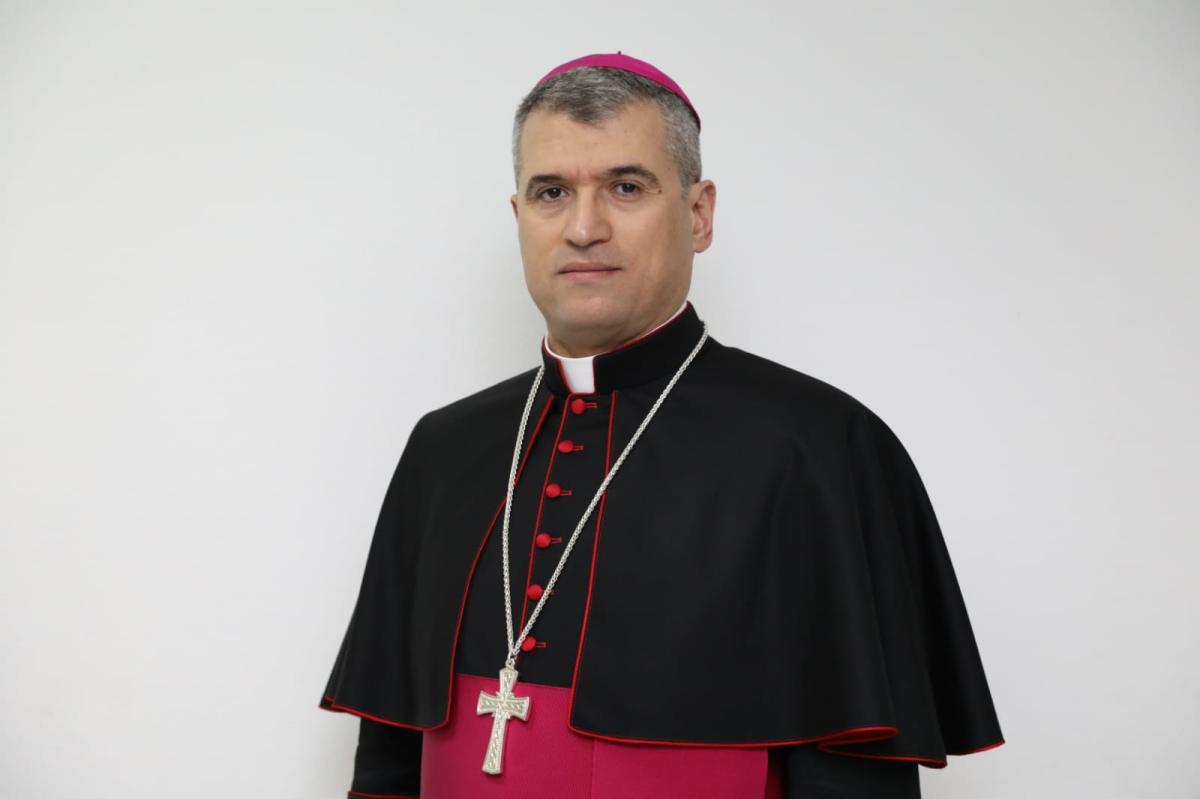
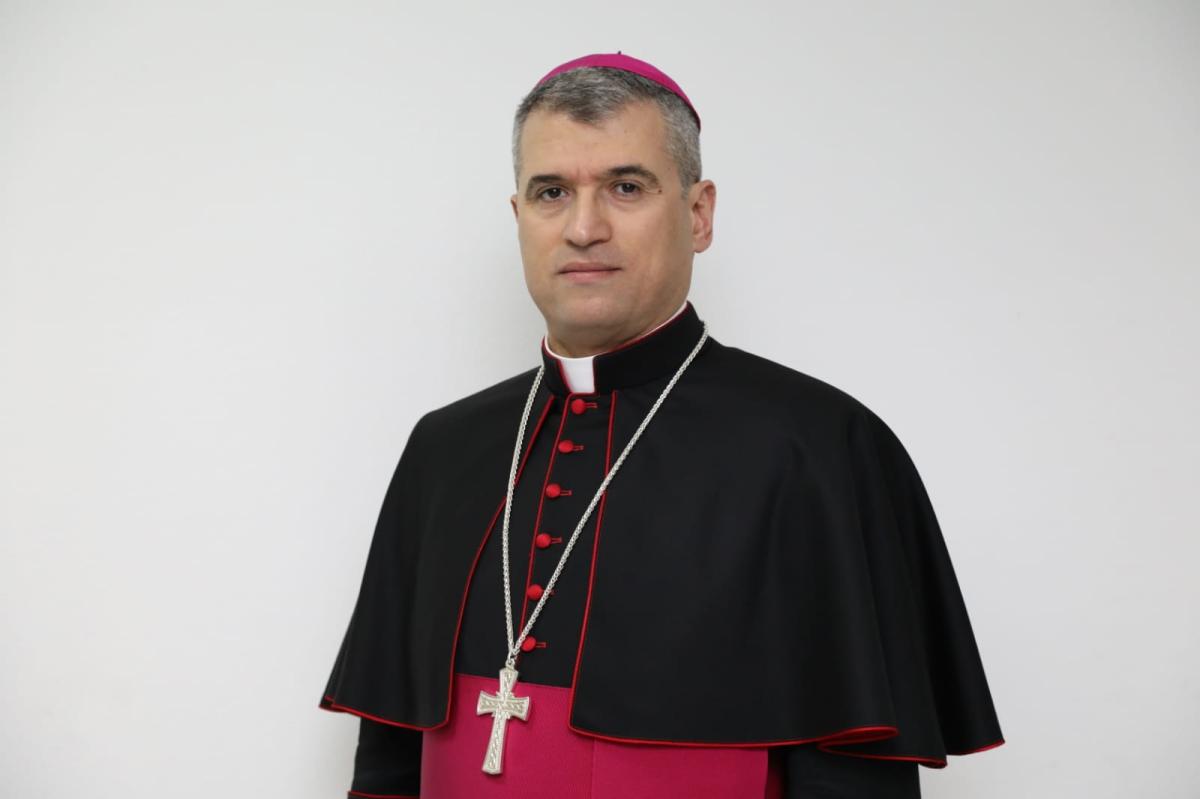
The Vatican said on May 13 that the Society of St. Pius X’s plan to consecrate new bishops without papal mandate will be a schismatic act resulting in excommunication.

Read More
Pope Leo XIV: Universities must seek truth and form the whole person #Catholic MALABO, Equatorial Guinea — Pope Leo XIV on Tuesday said the inauguration of a new university campus in Equatorial Guinea is “an act of trust in human beings,” praising investment in the education of young people during the final stop of his Africa trip.Speaking at the opening of the Pope Leo XIV University Campus in Basupú, part of the National University of Equatorial Guinea (UNGE), the pontiff said the new institution represents more than new buildings.“This inauguration is an act of trust in human beings, an affirmation of the fact that it is worth the effort to continue wagering on the formation of new generations and on the task, so demanding and yet so noble, of seeking the truth and putting knowledge at the service of the common good,” Leo said.The new campus, in the northern part of Bioko Island, is the country’s largest academic facility. The government chose to dedicate it to the pope in conjunction with his visit. Founded in 1995, the National University of Equatorial Guinea was established to help form national leaders and align academic and professional training with the country’s development needs.Leo was welcomed by Rector Filiberto Ntutumu Nguema Nchama and the archbishop of Malabo, Archbishop Juan Nsue Edjang May. A bust of the pope was unveiled before he met with students and professors gathered in the square outside the main entrance.Students appealed to the pope for encouragement in becoming “a generation characterized by discipline, respect, responsibility, and commitment to the common good,” one aimed not only at personal success but also at contributing to the development of Equatorial Guinea.Faculty members, for their part, pledged themselves to academic excellence, innovation, and the integral formation of students. University officials also stressed that science and technology are powerful tools whose value depends on how they are used and that Christian moral tradition offers essential guidance in that task.In his address, Leo turned to an image deeply resonant in Equatorial Guinea: the ceiba, the country’s national tree.“For the people of Equatorial Guinea, the ceiba, the national tree, has a great symbolic meaning,” he said. “A tree puts forth deep roots and ascends slowly with patience and strength to the heights, embodying in itself a fruitfulness that does not exist for itself.”The pope said the tree offers “a parable of that which a university is called to be”: an institution rooted in serious study, living memory, and the persevering search for truth.Leo then drew on biblical imagery to reflect on the relationship between faith, reason, and knowledge. Referring to the tree of the knowledge of good and evil in Genesis, he said the biblical account is not a rejection of human intelligence.“It should be emphasized that this story is not about a condemnation of knowledge as such, as if faith was afraid of intelligence or looked with suspicion upon the desire for knowledge,” he said.Instead, he warned against knowledge detached from truth and goodness and reduced to self-interest or domination.“The problem, therefore, does not rest with knowledge but in its deviation towards an intelligence that no longer seeks to correspond to reality but rather to twist it for its own purposes,” he said.Leo said Christian tradition points to another tree — the cross — as the redemption, not the negation, of human intelligence.“Christian tradition contemplates another tree, that of the cross, not as a denial of human intelligence but as a sign of its redemption,” he said.“At the cross, human beings are invited to allow their desire for knowledge to be healed: to rediscover that truth is not fabricated, not manipulated nor possessed like a trophy but welcomed, sought with humility, and served with responsibility.”For that reason, he said, Christ is not an escape from intellectual effort.“From a Christian perspective, Christ does not appear as a religious escape in the face of intellectual endeavors, as if faith began where reason ended,” Leo said. “On the contrary, in him the profound harmony between truth, reason, and freedom are manifested.”The pope said the Church’s concern in education is that young people be formed integrally, “rather than giving the mere appearance of success.”He added that the university should be judged less by its size or number of graduates than by the quality of the people it forms for society.“Here on this campus, the ceiba of Equatorial Guinea is called to bear fruits of progress rooted in solidarity and of a knowledge that ennobles and develops the human being in an integral way,” he said. “It is called to offer the fruits of intelligence and uprightness, of competence and wisdom, of excellence and service.”“If generations of men and women are profoundly shaped in this place by truth and are capable of transforming their own existence into a gift for others, then the ceiba will remain an eloquent symbol rooted in the best things of this land, elevated by wisdom and abounding in fruits that pay tribute to Equatorial Guinea and enrich the entire human family.”Before the university event, the pope also made a brief visit to St. Elizabeth of Hungary Cathedral in Malabo, built in 1897.This story was first published by ACI Stampa, the Italian-language sister service of EWTN News. It has been translated and adapted by EWTN News English.

Pope Leo XIV: Universities must seek truth and form the whole person #Catholic MALABO, Equatorial Guinea — Pope Leo XIV on Tuesday said the inauguration of a new university campus in Equatorial Guinea is “an act of trust in human beings,” praising investment in the education of young people during the final stop of his Africa trip.Speaking at the opening of the Pope Leo XIV University Campus in Basupú, part of the National University of Equatorial Guinea (UNGE), the pontiff said the new institution represents more than new buildings.“This inauguration is an act of trust in human beings, an affirmation of the fact that it is worth the effort to continue wagering on the formation of new generations and on the task, so demanding and yet so noble, of seeking the truth and putting knowledge at the service of the common good,” Leo said.The new campus, in the northern part of Bioko Island, is the country’s largest academic facility. The government chose to dedicate it to the pope in conjunction with his visit. Founded in 1995, the National University of Equatorial Guinea was established to help form national leaders and align academic and professional training with the country’s development needs.Leo was welcomed by Rector Filiberto Ntutumu Nguema Nchama and the archbishop of Malabo, Archbishop Juan Nsue Edjang May. A bust of the pope was unveiled before he met with students and professors gathered in the square outside the main entrance.Students appealed to the pope for encouragement in becoming “a generation characterized by discipline, respect, responsibility, and commitment to the common good,” one aimed not only at personal success but also at contributing to the development of Equatorial Guinea.Faculty members, for their part, pledged themselves to academic excellence, innovation, and the integral formation of students. University officials also stressed that science and technology are powerful tools whose value depends on how they are used and that Christian moral tradition offers essential guidance in that task.In his address, Leo turned to an image deeply resonant in Equatorial Guinea: the ceiba, the country’s national tree.“For the people of Equatorial Guinea, the ceiba, the national tree, has a great symbolic meaning,” he said. “A tree puts forth deep roots and ascends slowly with patience and strength to the heights, embodying in itself a fruitfulness that does not exist for itself.”The pope said the tree offers “a parable of that which a university is called to be”: an institution rooted in serious study, living memory, and the persevering search for truth.Leo then drew on biblical imagery to reflect on the relationship between faith, reason, and knowledge. Referring to the tree of the knowledge of good and evil in Genesis, he said the biblical account is not a rejection of human intelligence.“It should be emphasized that this story is not about a condemnation of knowledge as such, as if faith was afraid of intelligence or looked with suspicion upon the desire for knowledge,” he said.Instead, he warned against knowledge detached from truth and goodness and reduced to self-interest or domination.“The problem, therefore, does not rest with knowledge but in its deviation towards an intelligence that no longer seeks to correspond to reality but rather to twist it for its own purposes,” he said.Leo said Christian tradition points to another tree — the cross — as the redemption, not the negation, of human intelligence.“Christian tradition contemplates another tree, that of the cross, not as a denial of human intelligence but as a sign of its redemption,” he said.“At the cross, human beings are invited to allow their desire for knowledge to be healed: to rediscover that truth is not fabricated, not manipulated nor possessed like a trophy but welcomed, sought with humility, and served with responsibility.”For that reason, he said, Christ is not an escape from intellectual effort.“From a Christian perspective, Christ does not appear as a religious escape in the face of intellectual endeavors, as if faith began where reason ended,” Leo said. “On the contrary, in him the profound harmony between truth, reason, and freedom are manifested.”The pope said the Church’s concern in education is that young people be formed integrally, “rather than giving the mere appearance of success.”He added that the university should be judged less by its size or number of graduates than by the quality of the people it forms for society.“Here on this campus, the ceiba of Equatorial Guinea is called to bear fruits of progress rooted in solidarity and of a knowledge that ennobles and develops the human being in an integral way,” he said. “It is called to offer the fruits of intelligence and uprightness, of competence and wisdom, of excellence and service.”“If generations of men and women are profoundly shaped in this place by truth and are capable of transforming their own existence into a gift for others, then the ceiba will remain an eloquent symbol rooted in the best things of this land, elevated by wisdom and abounding in fruits that pay tribute to Equatorial Guinea and enrich the entire human family.”Before the university event, the pope also made a brief visit to St. Elizabeth of Hungary Cathedral in Malabo, built in 1897.This story was first published by ACI Stampa, the Italian-language sister service of EWTN News. It has been translated and adapted by EWTN News English.

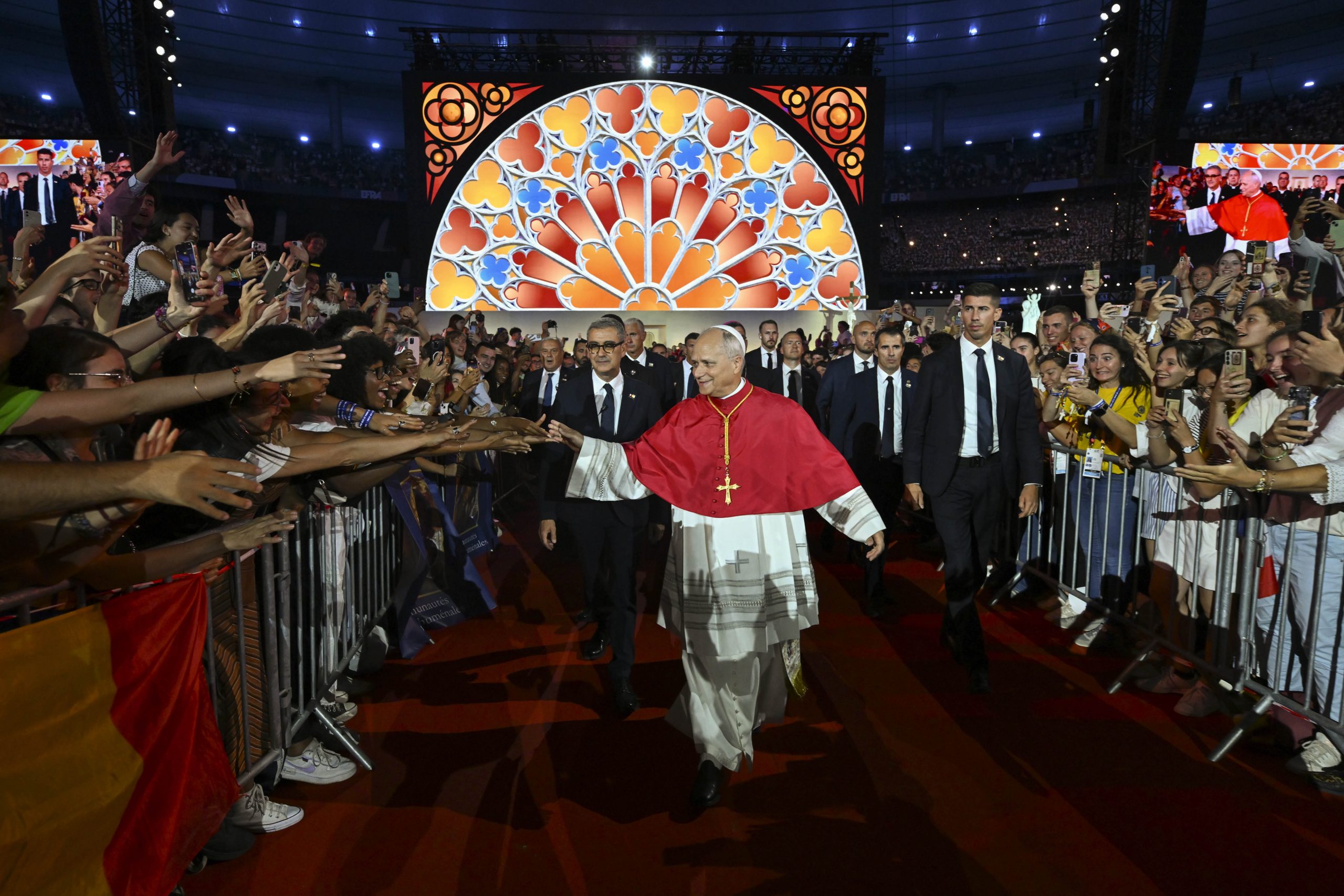
At the inauguration of a new campus named in his honor in Equatorial Guinea, the pope urged the education of young people in truth, responsibility, and service to the common good.

Read More