remote

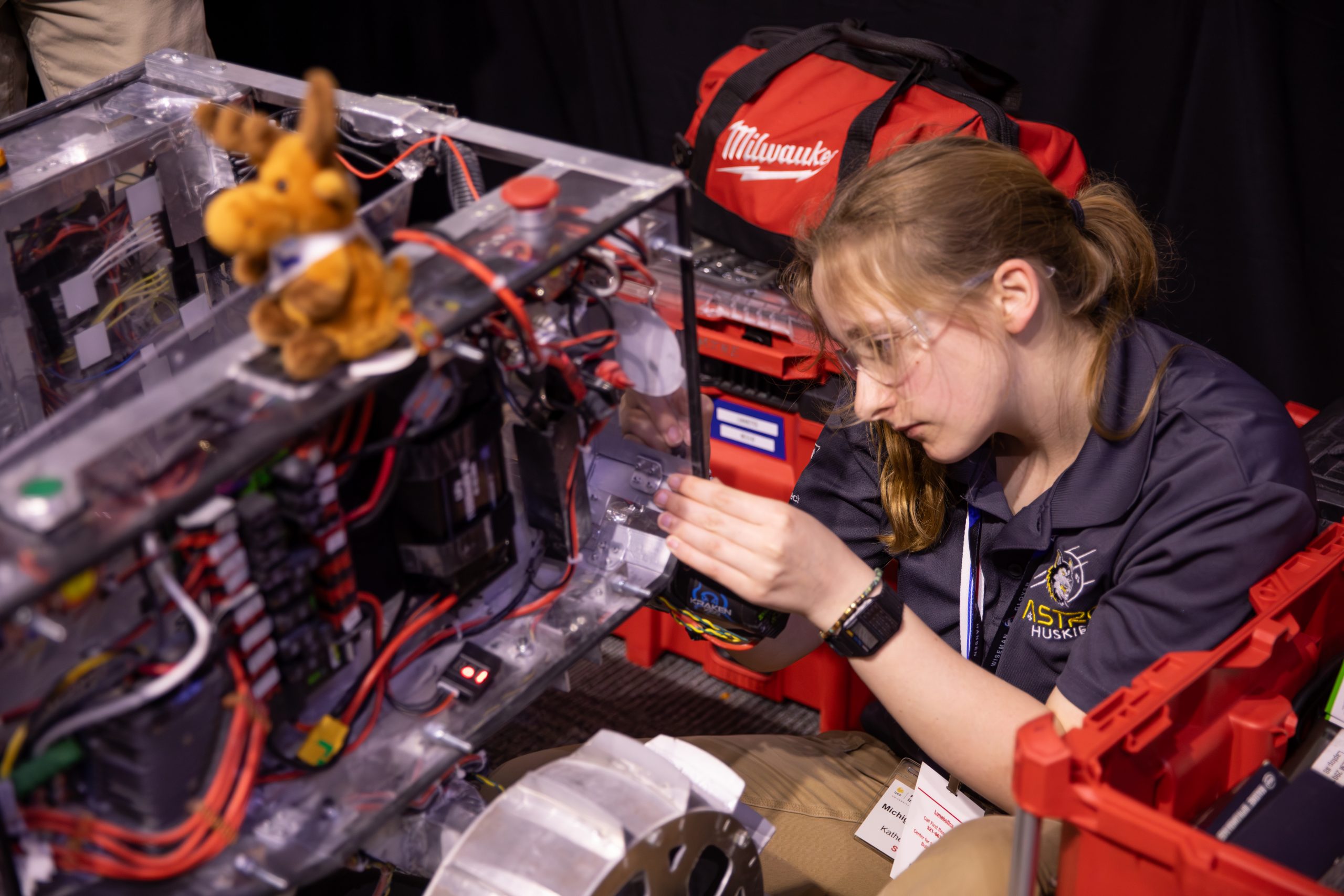
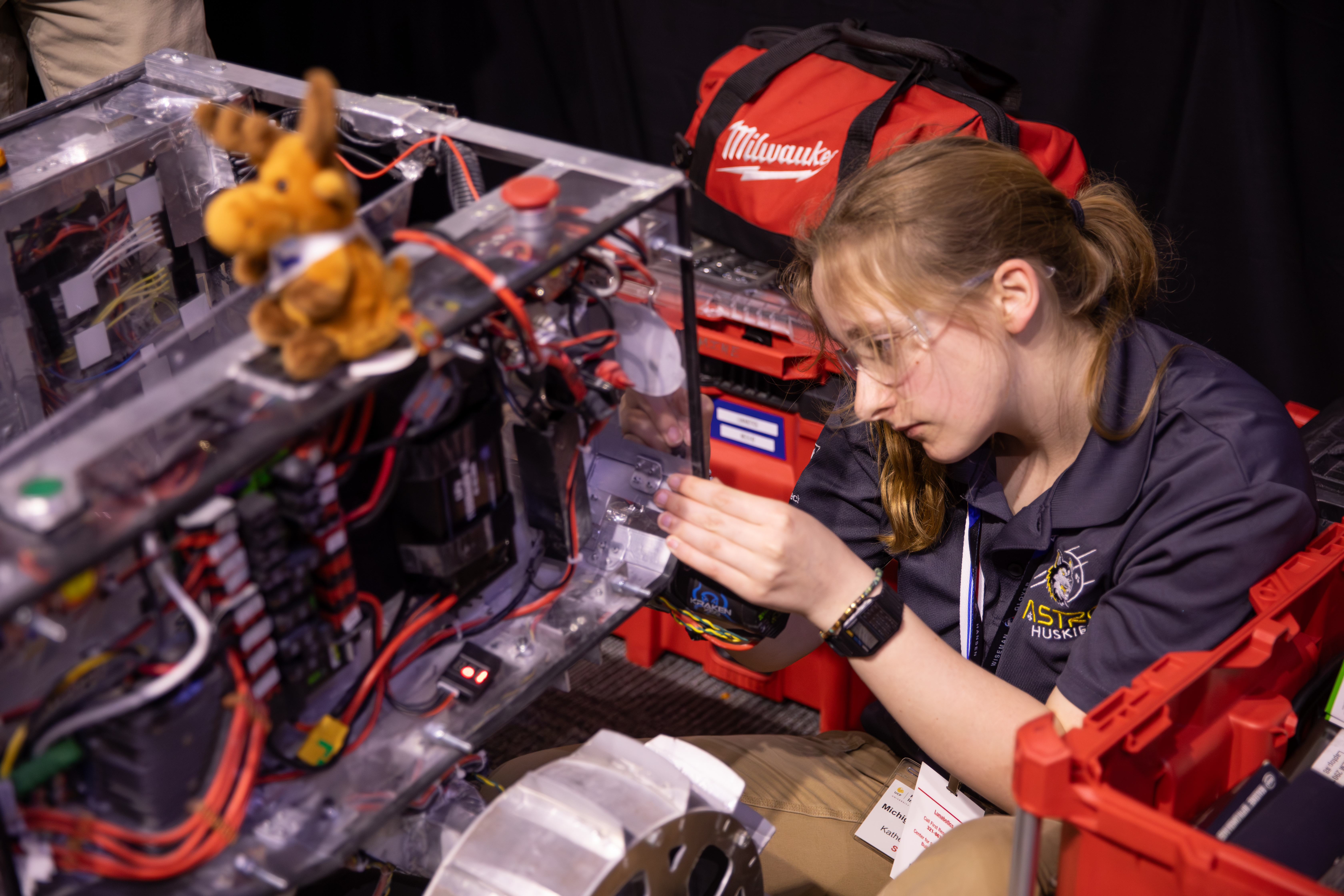
Students Build Moon Robots for NASA’s 2026 Lunabotics Challenge – Katherine Rauscher, of Michigan Technological University, prepares her team’s prototype lunar robot for its turn during the finals for NASA’s 2026 Lunabotics Challenge competition on Tuesday, May 19, 2026, inside the Astronauts Memorial Foundation’s Center for Space Education at the Kennedy Space Center Visitor Complex in Florida. Forty-seven teams from around the U.S. designed and built remote-controlled robots capable of traversing challenging lunar terrain while constructing regolith-based berm under conditions similar to those the agency will face as it returns to the lunar surface through Artemis.

Katherine Rauscher, of Michigan Technological University, prepares her team’s prototype lunar robot for its turn during the finals for NASA’s 2026 Lunabotics Challenge competition on Tuesday, May 19, 2026, inside the Astronauts Memorial Foundation’s Center for Space Education at the Kennedy Space Center Visitor Complex in Florida. Forty-seven teams from around the U.S. designed and built remote-controlled robots capable of traversing challenging lunar terrain while constructing regolith-based berm under conditions similar to those the agency will face as it returns to the lunar surface through Artemis.

Read More
Indian Catholics denied bail after confronting mob that disrupted Mass #Catholic UDAIPUR, India — Nine Catholics have been behind bars for more than two weeks after parishioners chased out more than a dozen people who barged into a village church during Mass, shouting accusations of conversion, in a remote village in Indiaʼs desert state of Rajasthan.“We feel frustrated that our people were denied bail a second time today on the false allegation of conversion,” Bishop Devprasad John Ganawa of Udaipur, a Divine Word missionary, told EWTN News on May 12.“When the hooligans disrupted the Mass on May 1 shouting ‘conversion,’ our people forced them out. Instead of registering a criminal case against the intruders, the police have charged our people with ‘conversion and attempt to murder’ and arrested nine Catholics of Bandaria Parish,” Ganawa explained.‘They took out a knife’“I was saying the evening Mass at the substation of my parish at Kalinjara village when the incident happened,” Father Arvind Amliyar recounted to EWTN News.“During the Communion time over a dozen people stormed into the church, shouted ‘conversion,’ and started filming with cameras. When one of them took out a knife, our people snatched it and chased them out,” Amliyar said.“Soon police came and what happened then shocked me. Instead of finding out what had happened, they arrested four Catholics the same night,” the priest said.A Hindu mob then staged a protest outside the police station and demanded action against the parishioners, according to Amliyar. Police turned away Catholics who went to them twice, including at midnight the same day and the next day, refusing to register their complaint.Police came knocking on May 4 at 2:30 a.m. and arrested five more parishioners, including Anil Rawat, 70, a retired headmaster of a government school who now runs a private school in the village.Bail denied twiceThe local magistrate court rejected the parishioners' bail application the next day, as they were charged with “serious crimes”: conversion and attempted murder. Church lawyers then moved the case to the Banswara district court, which denied bail again on May 12.“Now, we have to go to the High Court with senior lawyers,” Amliyar said of the challenging situation facing the village church, which serves about 70 Catholic families. About 70 people were attending Mass when the intruders stormed in.“I cannot understand what is going on. The police bluntly refused to register the complaint of our people and have filed a serious charge of conversion against our people and imprisoned them,” Ganawa said of the first case of alleged conversion in Udaipur Diocese, where he has served as bishop for 13 years.Anti-conversion laws ‘reduced to a tool to harass minorities’“This is another typical case of the widespread abuse of anti-conversion laws against Christians in several states, most of them ruled by the BJP [Bharatiya Janata Party],” A.C. Michael, a Catholic and national coordinator of the United Christian Forum, which monitors atrocities against Christians, told EWTN News from New Delhi.Under the Indian criminal system, the burden of proof lies with the prosecution. However, under recently enacted or amended anti-conversion laws, Michael said, the burden of disproving the charge of conversion is shifted to the accused, making it difficult for defendants to secure bail from trial courts quickly, even in fraudulent cases.Under the Rajasthan Prohibition of Unlawful Conversion of Religion Act, enacted in 2025, the burden of disproving the allegation of conversion falls on the accused.As a result, Michael said, hundreds of Christians are languishing in jails in BJP-ruled states while protracted legal challenges drag on in higher courts.“The shocking reality is that there has been hardly any conviction in so-called conversion cases. That is why the churches and Christian groups have moved the Supreme Court for abolishing the anti-conversion laws that have been reduced to a tool to harass minorities,” Michael said.He noted that the Supreme Court in May 2024 observed that certain provisions in anti-conversion laws may be in violation of Article 25 of the Indian Constitution, which guarantees the right to freely profess, practice, and propagate oneʼs religion.The Feb. 4–10 biennial assembly of more than 200 bishops in India in Bangalore also reiterated this concern in its final statement: “As many innocent individuals are incarcerated based on unfounded allegations of forceful religious conversions, we strongly demand the repealing of legislations which are inconsistent with religious freedom and right to privacy.”

Indian Catholics denied bail after confronting mob that disrupted Mass #Catholic UDAIPUR, India — Nine Catholics have been behind bars for more than two weeks after parishioners chased out more than a dozen people who barged into a village church during Mass, shouting accusations of conversion, in a remote village in Indiaʼs desert state of Rajasthan.“We feel frustrated that our people were denied bail a second time today on the false allegation of conversion,” Bishop Devprasad John Ganawa of Udaipur, a Divine Word missionary, told EWTN News on May 12.“When the hooligans disrupted the Mass on May 1 shouting ‘conversion,’ our people forced them out. Instead of registering a criminal case against the intruders, the police have charged our people with ‘conversion and attempt to murder’ and arrested nine Catholics of Bandaria Parish,” Ganawa explained.‘They took out a knife’“I was saying the evening Mass at the substation of my parish at Kalinjara village when the incident happened,” Father Arvind Amliyar recounted to EWTN News.“During the Communion time over a dozen people stormed into the church, shouted ‘conversion,’ and started filming with cameras. When one of them took out a knife, our people snatched it and chased them out,” Amliyar said.“Soon police came and what happened then shocked me. Instead of finding out what had happened, they arrested four Catholics the same night,” the priest said.A Hindu mob then staged a protest outside the police station and demanded action against the parishioners, according to Amliyar. Police turned away Catholics who went to them twice, including at midnight the same day and the next day, refusing to register their complaint.Police came knocking on May 4 at 2:30 a.m. and arrested five more parishioners, including Anil Rawat, 70, a retired headmaster of a government school who now runs a private school in the village.Bail denied twiceThe local magistrate court rejected the parishioners' bail application the next day, as they were charged with “serious crimes”: conversion and attempted murder. Church lawyers then moved the case to the Banswara district court, which denied bail again on May 12.“Now, we have to go to the High Court with senior lawyers,” Amliyar said of the challenging situation facing the village church, which serves about 70 Catholic families. About 70 people were attending Mass when the intruders stormed in.“I cannot understand what is going on. The police bluntly refused to register the complaint of our people and have filed a serious charge of conversion against our people and imprisoned them,” Ganawa said of the first case of alleged conversion in Udaipur Diocese, where he has served as bishop for 13 years.Anti-conversion laws ‘reduced to a tool to harass minorities’“This is another typical case of the widespread abuse of anti-conversion laws against Christians in several states, most of them ruled by the BJP [Bharatiya Janata Party],” A.C. Michael, a Catholic and national coordinator of the United Christian Forum, which monitors atrocities against Christians, told EWTN News from New Delhi.Under the Indian criminal system, the burden of proof lies with the prosecution. However, under recently enacted or amended anti-conversion laws, Michael said, the burden of disproving the charge of conversion is shifted to the accused, making it difficult for defendants to secure bail from trial courts quickly, even in fraudulent cases.Under the Rajasthan Prohibition of Unlawful Conversion of Religion Act, enacted in 2025, the burden of disproving the allegation of conversion falls on the accused.As a result, Michael said, hundreds of Christians are languishing in jails in BJP-ruled states while protracted legal challenges drag on in higher courts.“The shocking reality is that there has been hardly any conviction in so-called conversion cases. That is why the churches and Christian groups have moved the Supreme Court for abolishing the anti-conversion laws that have been reduced to a tool to harass minorities,” Michael said.He noted that the Supreme Court in May 2024 observed that certain provisions in anti-conversion laws may be in violation of Article 25 of the Indian Constitution, which guarantees the right to freely profess, practice, and propagate oneʼs religion.The Feb. 4–10 biennial assembly of more than 200 bishops in India in Bangalore also reiterated this concern in its final statement: “As many innocent individuals are incarcerated based on unfounded allegations of forceful religious conversions, we strongly demand the repealing of legislations which are inconsistent with religious freedom and right to privacy.”

Nine parishioners face conversion and attempted murder charges after forcing out intruders who stormed a village church during Mass in Rajasthan.

Read More
From seminarian in Nicaragua to priest in Miami: ‘I carry my people and my homeland in my heart’ #Catholic As a seminarian, Cristhian David Mendieta Hernández had to flee Nicaragua, persecuted by the very dictatorship that had recently exiled his bishop. The regime of President Daniel Ortega and his wife and vice president, Rosario Murillo, ramped up its persecution of the Catholic Church in 2018.After the dictatorship exiled Silvio Báez, the auxiliary bishop of Managua, from Nicaragua in April 2019, Mendieta, who as a seminarian often accompanied the bishop, was forced to flee the country as well, traveling first to Guatemala and then to Costa Rica. His journey concluded in Miami in January 2022, where, with the assistance of Báez and Father Marco Somarriba, pastor of St. Agatha Parish in Miami, he was able to continue his priestly formation.On May 9 at St. Mary’s Cathedral, he knelt before Archbishop Thomas Wenski and received the priestly ordination that the Nicaraguan dictatorship had attempted to deny him.“I carry my people and my homeland in my heart, and I will offer my first Mass for them,” the newly ordained Nicaraguan priest, who will serve as parochial vicar at St. Thomas the Apostle in Miami, told ACI Prensa, the Spanish-language sister service of EWTN News, on May 10.“This priesthood is a blessing for me, for my family, for the Church, and for the people of Nicaragua,” added Mendieta, who was born in La Concepción township in the Masaya district of Nicaragua. He celebrated his first Mass on May 10 at St. Agatha, accompanied by Báez and other Nicaraguan priests who attended the ordination.“I am grateful to the Archdiocese of Miami for welcoming me and giving me the opportunity to serve the people of God. Here we have a broader perspective that our ministry is for all of God’s people and that our people, especially those from Latin America, share the same aspirations for freedom, peace, and stability,” he emphasized. Father Edwing Román, parochial vicar at St. Agatha, told ACI Prensa that “it’s a source of great joy to have Father Cristhian as another brother in the priesthood. He is a young man of many virtues and a dedicated scholar.”“I admire his piety and humility as well as his ease in forming friendships with the faithful. May God bless him abundantly, and may he be a shepherd modeled after Jesus Christ, the eternal high priest,” Román said.In a video posted by the Archdiocese of Miami on May 6, Mendieta recalled that when he was 6 years old and attending a concert, he announced that he was thinking of becoming a priest, which surprised his family.Years later, while involved in his parishʼs youth ministry, the example of his hardworking parish priest, Father José Antonio, who strove to reach every community, no matter how remote, encouraged him to pursue his vocation and change his plans to become a doctor.The young priest also shared that he enjoys classical music and Frank Sinatra, and that when he is driving, he entertains himself by listening to the British band Queen.Along with Mendieta, the following men were ordained: Adam Cahill, Henry Cárdenas Afanador, Tomasz Kaziel, Arístides Lima, Carlos Luzardo, Saint-Clos Papouloute, Pietro Pironato, and Michele Sega.In his homily, Wenski highlighted the diverse origins of the new priests — Nicaragua, Italy, Poland, Haiti, Venezuela, Colombia, etc. — and noted that “in an increasingly secularized world, where many have lost the sense of the transcendent, the priest is an enigma, a symbol of great contradiction.”"Nowadays, many view religious faith with hostility or at best, with indifference. In such a world, the Church will always appear out of step and irrelevant. Often, such a Church will be viewed if not with contempt and mockery, with total incomprehension. As Jesus said: ‘If the world hates you, know that it hated me first,’” the archbishop said.“Face the challenges of your ministry without anxiety or mediocrity, and do not allow yourselves to be intimidated or influenced by those who make power, wealth, or pleasure the primary criteria of their lives,” he exhorted.After encouraging the new priests to lay down their lives for their faithful, Wenski urged them to be “generous with their time and available to hear the confessions of the faithful.”This story was first published by ACI Prensa, the Spanish-language sister service of EWTN News. It has been translated and adapted by EWTN News English.

From seminarian in Nicaragua to priest in Miami: ‘I carry my people and my homeland in my heart’ #Catholic As a seminarian, Cristhian David Mendieta Hernández had to flee Nicaragua, persecuted by the very dictatorship that had recently exiled his bishop. The regime of President Daniel Ortega and his wife and vice president, Rosario Murillo, ramped up its persecution of the Catholic Church in 2018.After the dictatorship exiled Silvio Báez, the auxiliary bishop of Managua, from Nicaragua in April 2019, Mendieta, who as a seminarian often accompanied the bishop, was forced to flee the country as well, traveling first to Guatemala and then to Costa Rica. His journey concluded in Miami in January 2022, where, with the assistance of Báez and Father Marco Somarriba, pastor of St. Agatha Parish in Miami, he was able to continue his priestly formation.On May 9 at St. Mary’s Cathedral, he knelt before Archbishop Thomas Wenski and received the priestly ordination that the Nicaraguan dictatorship had attempted to deny him.“I carry my people and my homeland in my heart, and I will offer my first Mass for them,” the newly ordained Nicaraguan priest, who will serve as parochial vicar at St. Thomas the Apostle in Miami, told ACI Prensa, the Spanish-language sister service of EWTN News, on May 10.“This priesthood is a blessing for me, for my family, for the Church, and for the people of Nicaragua,” added Mendieta, who was born in La Concepción township in the Masaya district of Nicaragua. He celebrated his first Mass on May 10 at St. Agatha, accompanied by Báez and other Nicaraguan priests who attended the ordination.“I am grateful to the Archdiocese of Miami for welcoming me and giving me the opportunity to serve the people of God. Here we have a broader perspective that our ministry is for all of God’s people and that our people, especially those from Latin America, share the same aspirations for freedom, peace, and stability,” he emphasized. Father Edwing Román, parochial vicar at St. Agatha, told ACI Prensa that “it’s a source of great joy to have Father Cristhian as another brother in the priesthood. He is a young man of many virtues and a dedicated scholar.”“I admire his piety and humility as well as his ease in forming friendships with the faithful. May God bless him abundantly, and may he be a shepherd modeled after Jesus Christ, the eternal high priest,” Román said.In a video posted by the Archdiocese of Miami on May 6, Mendieta recalled that when he was 6 years old and attending a concert, he announced that he was thinking of becoming a priest, which surprised his family.Years later, while involved in his parishʼs youth ministry, the example of his hardworking parish priest, Father José Antonio, who strove to reach every community, no matter how remote, encouraged him to pursue his vocation and change his plans to become a doctor.The young priest also shared that he enjoys classical music and Frank Sinatra, and that when he is driving, he entertains himself by listening to the British band Queen.Along with Mendieta, the following men were ordained: Adam Cahill, Henry Cárdenas Afanador, Tomasz Kaziel, Arístides Lima, Carlos Luzardo, Saint-Clos Papouloute, Pietro Pironato, and Michele Sega.In his homily, Wenski highlighted the diverse origins of the new priests — Nicaragua, Italy, Poland, Haiti, Venezuela, Colombia, etc. — and noted that “in an increasingly secularized world, where many have lost the sense of the transcendent, the priest is an enigma, a symbol of great contradiction.”"Nowadays, many view religious faith with hostility or at best, with indifference. In such a world, the Church will always appear out of step and irrelevant. Often, such a Church will be viewed if not with contempt and mockery, with total incomprehension. As Jesus said: ‘If the world hates you, know that it hated me first,’” the archbishop said.“Face the challenges of your ministry without anxiety or mediocrity, and do not allow yourselves to be intimidated or influenced by those who make power, wealth, or pleasure the primary criteria of their lives,” he exhorted.After encouraging the new priests to lay down their lives for their faithful, Wenski urged them to be “generous with their time and available to hear the confessions of the faithful.”This story was first published by ACI Prensa, the Spanish-language sister service of EWTN News. It has been translated and adapted by EWTN News English.

The Ortega regime’s repression of the Catholic Church could not silence God’s call to Cristhian Mendieta. Having fled Nicaragua as a seminarian, the young man was ordained to the priesthood in Miami.

Read More
Israeli, Polish foreign ministers spar on X about destroyed Jesus statue #Catholic Israeli Foreign Minister Gideon Sa’ar and his Polish counterpart, Radosław Sikorski, sparred on X over an incident involving an Israel Defense Forces (IDF) soldier who was caught on video destroying a statue of Jesus in southern Lebanon.The online confrontation began after Sikorski responded to Sa’ar’s post apologizing for the destruction of the statue, which he called “grave and disgraceful.” Sikorski wrote that the IDF soldier “should be punished” and that “IDF soldiers themselves admit to war crimes. They killed not only civilian Palestinians but even their own hostages.” Sa’ar condemned the response, describing the IDF as “a professional and ethical army” adding: “One should be cautious about making irresponsible statements that can ultimately lead to dangerous consequences.”Catholic Church in South Korea surpasses major population milestoneSouth Korea’s Catholic population has surpassed 6 million people for the first time, according to statistics released by the Catholic Bishops’ Conference of Korea.The numbers released on Tuesday indicated that while the total population of Catholics in the country did not change from the previous year at 11.4%, the total number of Catholics rose by 9,178 from the year prior to 6,006,832, according to a Seoul Economic Daily Report Thursday.Jesus mosaic created by refugee fleeing Nazis to be preserved A mosaic of Jesus created by a refugee of Nazi persecution will be preserved, along with the historic Catholic church it is housed in, according to The Tablet.The mural depicting Jesus on the cross created by Jewish Hungarian emigre artist George Mayer-Marton in 1955 will remain at Holy Rosary Church in Manchester, England, after the Oldham Mural & Cultural Heritage Trust launched a plan to turn the church into an arts and culture center.Report alleges violations during Syria cost-of-living protestA report on the April 17 protest in Damascus, Syria, says a peaceful civic demonstration calling for better living conditions, anti-corruption measures, justice, and accountability was met by intimidation, incitement, and multiple violations, ACI MENA, the Arabic-language sister service of EWTN News, reported Sunday.The “Justice for All” report said five people were injured, journalists were targeted in attacks, and a car attempted to drive into the protest, where between 900 and 1,200 Syrians staged a sit-in in Yusuf al-Azma Square. The report also noted verbal threats against the protesters, who remained peaceful and carried only the Syrian flag, while some opponents used inflammatory slogans, filmed demonstrators, and challenged them over their political history. It urged independent investigations, prosecution of those responsible for incitement and abuse, stronger protections for journalists, and better safeguards for the right to peaceful assembly.Beloved Italian missionary in Indonesia dies after five decades of ministryFather Natalino Belingheri, the last surviving member of the first group of Italian missionaries assigned to Indonesia’s North Kalimantan province, has died.“Thousands” of Indigenous Dayak in North Kalimantan attended Belingheri’s funeral, according to a Licas News report on Monday. Belingheri, who was known locally by his Dayak name, “Wan Abung,” died April 10. He had been serving in remote areas across the northern province of Indonesia since 1977 and played a significant part in the establishment of the Diocese of Tanjung Selor in 2001, according to the report.Catholic Nobel laureate urges Church not to ignore political prisoners in BelarusAles Bialiatski, a Catholic and Nobel laureate, is calling on Church leaders to intervene on behalf of political prisoners in Belarus in the wake of recent crackdowns on religious freedom.“Western Church leaders and Vatican diplomats should be helping more against current restrictions,” Bialiatski told OSV News Thursday. Bialiatski’s remarks come after the March 16 arrest of Father Anatoly Parakhnevich, a Catholic priest in the Archdiocese of Minsk-Mohilev, by KGB agents and the closure of his church. Bialiatski has been detained multiple times, including in 2021 amid government crackdowns on nationwide protests following President Alexander Lukashenko’s contested election. “I know from my own experience how good it is to be free, with time to recover and rebuild oneself — and if I get to meet the pope, Iʼll inform him of our Churchʼs needs,” Bialiatski said.Thailand Catholics mourn seminarians killed in car accidentA funeral for four teenaged boys, including two seminarians, in Thailand drew hundreds of attendees, according to a report from Licas News on Monday.“With their character and faith, they were the hope of their families and of the Thabom community, who longed to see them become priests,” said Father Nicholas Sarawut Sahaikaen, rector of the Prince of Peace Seminary in Udon Thani, in his eulogy for the two seminarians. He noted that one of the boys had also applied to seminary but was unable to attend due to family circumstances.

Israeli, Polish foreign ministers spar on X about destroyed Jesus statue #Catholic Israeli Foreign Minister Gideon Sa’ar and his Polish counterpart, Radosław Sikorski, sparred on X over an incident involving an Israel Defense Forces (IDF) soldier who was caught on video destroying a statue of Jesus in southern Lebanon.The online confrontation began after Sikorski responded to Sa’ar’s post apologizing for the destruction of the statue, which he called “grave and disgraceful.” Sikorski wrote that the IDF soldier “should be punished” and that “IDF soldiers themselves admit to war crimes. They killed not only civilian Palestinians but even their own hostages.” Sa’ar condemned the response, describing the IDF as “a professional and ethical army” adding: “One should be cautious about making irresponsible statements that can ultimately lead to dangerous consequences.”Catholic Church in South Korea surpasses major population milestoneSouth Korea’s Catholic population has surpassed 6 million people for the first time, according to statistics released by the Catholic Bishops’ Conference of Korea.The numbers released on Tuesday indicated that while the total population of Catholics in the country did not change from the previous year at 11.4%, the total number of Catholics rose by 9,178 from the year prior to 6,006,832, according to a Seoul Economic Daily Report Thursday.Jesus mosaic created by refugee fleeing Nazis to be preserved A mosaic of Jesus created by a refugee of Nazi persecution will be preserved, along with the historic Catholic church it is housed in, according to The Tablet.The mural depicting Jesus on the cross created by Jewish Hungarian emigre artist George Mayer-Marton in 1955 will remain at Holy Rosary Church in Manchester, England, after the Oldham Mural & Cultural Heritage Trust launched a plan to turn the church into an arts and culture center.Report alleges violations during Syria cost-of-living protestA report on the April 17 protest in Damascus, Syria, says a peaceful civic demonstration calling for better living conditions, anti-corruption measures, justice, and accountability was met by intimidation, incitement, and multiple violations, ACI MENA, the Arabic-language sister service of EWTN News, reported Sunday.The “Justice for All” report said five people were injured, journalists were targeted in attacks, and a car attempted to drive into the protest, where between 900 and 1,200 Syrians staged a sit-in in Yusuf al-Azma Square. The report also noted verbal threats against the protesters, who remained peaceful and carried only the Syrian flag, while some opponents used inflammatory slogans, filmed demonstrators, and challenged them over their political history. It urged independent investigations, prosecution of those responsible for incitement and abuse, stronger protections for journalists, and better safeguards for the right to peaceful assembly.Beloved Italian missionary in Indonesia dies after five decades of ministryFather Natalino Belingheri, the last surviving member of the first group of Italian missionaries assigned to Indonesia’s North Kalimantan province, has died.“Thousands” of Indigenous Dayak in North Kalimantan attended Belingheri’s funeral, according to a Licas News report on Monday. Belingheri, who was known locally by his Dayak name, “Wan Abung,” died April 10. He had been serving in remote areas across the northern province of Indonesia since 1977 and played a significant part in the establishment of the Diocese of Tanjung Selor in 2001, according to the report.Catholic Nobel laureate urges Church not to ignore political prisoners in BelarusAles Bialiatski, a Catholic and Nobel laureate, is calling on Church leaders to intervene on behalf of political prisoners in Belarus in the wake of recent crackdowns on religious freedom.“Western Church leaders and Vatican diplomats should be helping more against current restrictions,” Bialiatski told OSV News Thursday. Bialiatski’s remarks come after the March 16 arrest of Father Anatoly Parakhnevich, a Catholic priest in the Archdiocese of Minsk-Mohilev, by KGB agents and the closure of his church. Bialiatski has been detained multiple times, including in 2021 amid government crackdowns on nationwide protests following President Alexander Lukashenko’s contested election. “I know from my own experience how good it is to be free, with time to recover and rebuild oneself — and if I get to meet the pope, Iʼll inform him of our Churchʼs needs,” Bialiatski said.Thailand Catholics mourn seminarians killed in car accidentA funeral for four teenaged boys, including two seminarians, in Thailand drew hundreds of attendees, according to a report from Licas News on Monday.“With their character and faith, they were the hope of their families and of the Thabom community, who longed to see them become priests,” said Father Nicholas Sarawut Sahaikaen, rector of the Prince of Peace Seminary in Udon Thani, in his eulogy for the two seminarians. He noted that one of the boys had also applied to seminary but was unable to attend due to family circumstances.

Israel and Poland’s foreign ministers argue on X, a mosaic of Jesus by a survivor of Nazism will be saved, South Korea’s Catholic population grows, and more in this week’s world news roundup.

Read More
Pope Leo XIV urges Angola to ‘remove the obstacles to integral human development’ #Catholic LUANDA, Angola — Pope Leo XIV on April 18 called on Angola’s leaders and people to “remove the obstacles to integral human development,” urging them to choose the path of the common good, resist exploitative interests, and preserve the hope and joy that, he said, remain among Africa’s greatest treasures.The pope spoke at the presidential palace in Luanda during his meeting with authorities, civil society, and the diplomatic corps, the first public event of the Angola leg of his broader trip to Africa.Arriving in Luanda earlier in the day, Leo traveled by popemobile through jubilant crowds lining the route to the palace. He also held a private meeting with Angolan President João Lourenço before delivering his address.At the outset of his speech, the pope expressed solidarity with those affected by recent flooding in the country.“Before continuing, I would like to offer the assurance of my prayers for the victims of the heavy rains and floods that have struck the province of Benguela, and to express my closeness to the families who have lost their homes,” he said. “I also know that you, the people of Angola, are united in a great chain of solidarity with those affected.”His remarks came against the backdrop of mounting social strains in Angola, including protests last year over fuel price increases, repeated criticism by the country’s bishops over entrenched corruption, and deadly flooding in early April.Leo framed his address around themes that have marked earlier stops on his Africa trip, including peace, reconciliation, the common good, and criticism of those who exploit the continent for personal gain.Speaking in Portuguese, the pope praised the Angolan people for possessing “treasures that cannot be bought or taken away.”“In particular, there dwells within you a joy that not even the most adverse circumstances have been able to extinguish,” he said. This joy, he added, “is no stranger to sorrow, indignation, disappointment and defeat,” yet continues to be reborn in those who have resisted “the seductions of wealth.”The pope sharply criticized patterns of exploitation directed at Africa.“You know well that all too often people have looked — and continue to look — to your lands in order to give, or, more commonly, in order to take,” he said. “It is necessary to break this cycle of interests, which reduces reality, and even life itself, to mere commodities.”Leo described Africa’s joy and hope as “virtues that I would not hesitate to call ‘political,’” because “her young people and her poor continue to dream and to hope.” He said they “are not content with what already exists; they strive to rise above, to prepare themselves for great responsibilities, and to take an active part in shaping their own future.”He also emphasized that authentic social transformation cannot be imposed ideologically.“Indeed, the wisdom of a people cannot be stifled by any ideology, and the longing for the infinite that dwells in the human heart is a principle of social transformation far deeper than any political or cultural program,” he said.The pope said he had come to “listen to and encourage all those who have already chosen the paths of goodness, justice, peace, tolerance and reconciliation,” while also praying “for the conversion of those who choose contrary paths and hinder its harmonious and fraternal development.”Turning to Angola’s natural wealth, Leo warned against what he called a destructive extractive logic.“How much suffering, how many deaths, how many social and environmental disasters are brought about by this logic of extractivism!” he said. At every level, he added, it supports “a model of development that discriminates and excludes, while still presuming to impose itself as the only viable option.”He said Africa “urgently needs to overcome situations and dynamics of conflict and enmity that tear apart the social and political fabric of many countries, fostering poverty and exclusion.”Only encounter allows life to flourish, the pope said, and dialogue must come first, even when disagreements emerge.“Angola can experience great growth if, first of all, those who hold authority in the country believe in the manifold nature of its riches,” he said. “Do not be afraid of disagreement; do not suppress the ideas of the young or the dreams of the elderly; and know how to manage conflicts by transforming them into paths of renewal. Place the common good before every particular interest, never confusing your own part with the whole. History will then vindicate you, even if in the near term some may oppose you.”Leo then returned to the themes of joy and hope, describing them not as merely private sentiments but as forces with public and political consequences.“Despots and tyrants of both body and spirit seek to render souls passive and passions gloomy; they prefer a populace prone to inertia, docile and subservient to power,” he said.Sadness, he argued, leaves people vulnerable to fear, fanaticism, manipulation, and isolation from public life. By contrast, “true joy frees us from such alienation,” he said, calling joy “a gift of the Holy Spirit.”“Joy intensifies life and leads to the creation of community,” the pope said. “Joy knows how to carve paths even in the darkest zones of stagnation and hardship.”He concluded with an appeal for moral and social renewal.“Let us therefore examine our own hearts, dear friends, because without joy there is no renewal; without interiority there is no liberation; without encounter there is no politics; without the other there is no justice.”Leo said the Catholic Church wants to help Angola become “a project of hope” by fostering a just model of coexistence, especially in poor urban neighborhoods and remote rural areas.“Let us remove the obstacles to integral human development, working and hoping together alongside those whom the world has discarded but whom God has chosen,” he said.This story was first published by ACI Stampa, the Italian-language sister service of EWTN News. It has been translated and adapted by EWTN News English.

Pope Leo XIV urges Angola to ‘remove the obstacles to integral human development’ #Catholic LUANDA, Angola — Pope Leo XIV on April 18 called on Angola’s leaders and people to “remove the obstacles to integral human development,” urging them to choose the path of the common good, resist exploitative interests, and preserve the hope and joy that, he said, remain among Africa’s greatest treasures.The pope spoke at the presidential palace in Luanda during his meeting with authorities, civil society, and the diplomatic corps, the first public event of the Angola leg of his broader trip to Africa.Arriving in Luanda earlier in the day, Leo traveled by popemobile through jubilant crowds lining the route to the palace. He also held a private meeting with Angolan President João Lourenço before delivering his address.At the outset of his speech, the pope expressed solidarity with those affected by recent flooding in the country.“Before continuing, I would like to offer the assurance of my prayers for the victims of the heavy rains and floods that have struck the province of Benguela, and to express my closeness to the families who have lost their homes,” he said. “I also know that you, the people of Angola, are united in a great chain of solidarity with those affected.”His remarks came against the backdrop of mounting social strains in Angola, including protests last year over fuel price increases, repeated criticism by the country’s bishops over entrenched corruption, and deadly flooding in early April.Leo framed his address around themes that have marked earlier stops on his Africa trip, including peace, reconciliation, the common good, and criticism of those who exploit the continent for personal gain.Speaking in Portuguese, the pope praised the Angolan people for possessing “treasures that cannot be bought or taken away.”“In particular, there dwells within you a joy that not even the most adverse circumstances have been able to extinguish,” he said. This joy, he added, “is no stranger to sorrow, indignation, disappointment and defeat,” yet continues to be reborn in those who have resisted “the seductions of wealth.”The pope sharply criticized patterns of exploitation directed at Africa.“You know well that all too often people have looked — and continue to look — to your lands in order to give, or, more commonly, in order to take,” he said. “It is necessary to break this cycle of interests, which reduces reality, and even life itself, to mere commodities.”Leo described Africa’s joy and hope as “virtues that I would not hesitate to call ‘political,’” because “her young people and her poor continue to dream and to hope.” He said they “are not content with what already exists; they strive to rise above, to prepare themselves for great responsibilities, and to take an active part in shaping their own future.”He also emphasized that authentic social transformation cannot be imposed ideologically.“Indeed, the wisdom of a people cannot be stifled by any ideology, and the longing for the infinite that dwells in the human heart is a principle of social transformation far deeper than any political or cultural program,” he said.The pope said he had come to “listen to and encourage all those who have already chosen the paths of goodness, justice, peace, tolerance and reconciliation,” while also praying “for the conversion of those who choose contrary paths and hinder its harmonious and fraternal development.”Turning to Angola’s natural wealth, Leo warned against what he called a destructive extractive logic.“How much suffering, how many deaths, how many social and environmental disasters are brought about by this logic of extractivism!” he said. At every level, he added, it supports “a model of development that discriminates and excludes, while still presuming to impose itself as the only viable option.”He said Africa “urgently needs to overcome situations and dynamics of conflict and enmity that tear apart the social and political fabric of many countries, fostering poverty and exclusion.”Only encounter allows life to flourish, the pope said, and dialogue must come first, even when disagreements emerge.“Angola can experience great growth if, first of all, those who hold authority in the country believe in the manifold nature of its riches,” he said. “Do not be afraid of disagreement; do not suppress the ideas of the young or the dreams of the elderly; and know how to manage conflicts by transforming them into paths of renewal. Place the common good before every particular interest, never confusing your own part with the whole. History will then vindicate you, even if in the near term some may oppose you.”Leo then returned to the themes of joy and hope, describing them not as merely private sentiments but as forces with public and political consequences.“Despots and tyrants of both body and spirit seek to render souls passive and passions gloomy; they prefer a populace prone to inertia, docile and subservient to power,” he said.Sadness, he argued, leaves people vulnerable to fear, fanaticism, manipulation, and isolation from public life. By contrast, “true joy frees us from such alienation,” he said, calling joy “a gift of the Holy Spirit.”“Joy intensifies life and leads to the creation of community,” the pope said. “Joy knows how to carve paths even in the darkest zones of stagnation and hardship.”He concluded with an appeal for moral and social renewal.“Let us therefore examine our own hearts, dear friends, because without joy there is no renewal; without interiority there is no liberation; without encounter there is no politics; without the other there is no justice.”Leo said the Catholic Church wants to help Angola become “a project of hope” by fostering a just model of coexistence, especially in poor urban neighborhoods and remote rural areas.“Let us remove the obstacles to integral human development, working and hoping together alongside those whom the world has discarded but whom God has chosen,” he said.This story was first published by ACI Stampa, the Italian-language sister service of EWTN News. It has been translated and adapted by EWTN News English.

The pontiff urged the country to reject exploitative models of development and place the common good above particular interests.

Read More
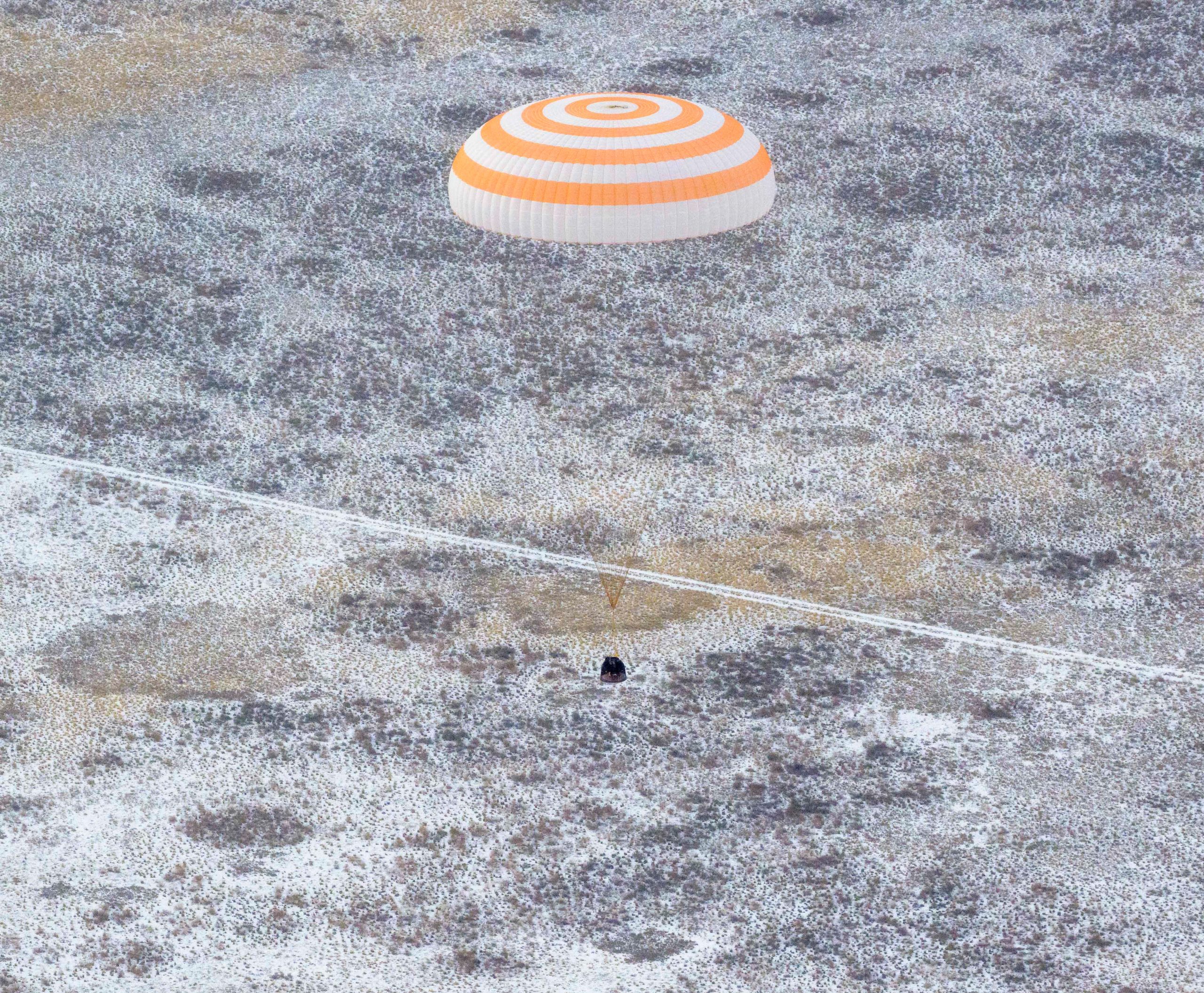
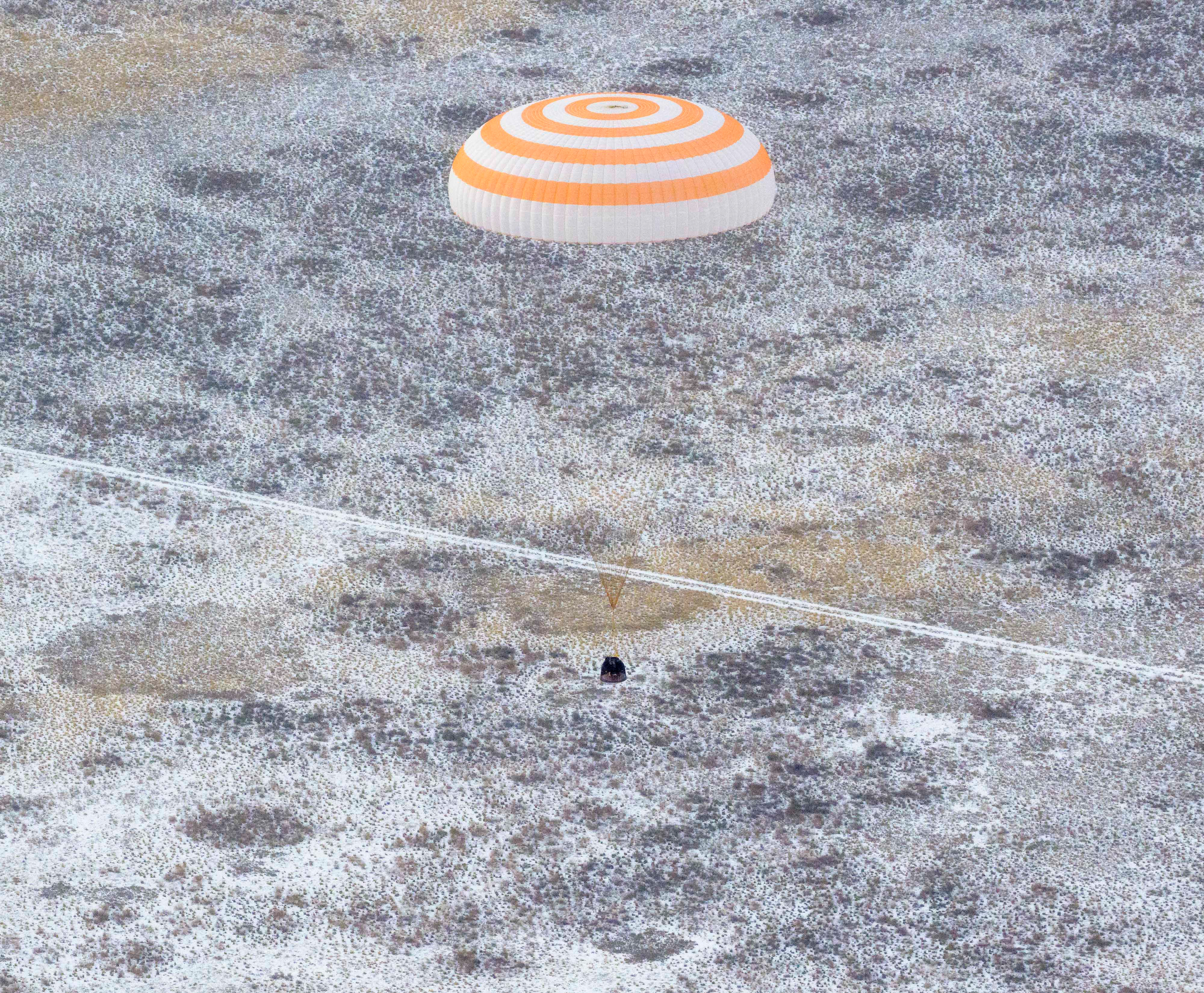
NASA Astronaut Jonny Kim Returns to Earth – The Soyuz MS-27 spacecraft is seen as it lands in a remote area near the town of Zhezkazgan, Kazakhstan with Expedition 73 NASA astronaut Jonny Kim, and Roscosmos cosmonauts Sergey Ryzhikov and Alexey Zubritsky aboard, Tuesday, Dec. 9, 2025.

The Soyuz MS-27 spacecraft is seen as it lands in a remote area near the town of Zhezkazgan, Kazakhstan with Expedition 73 NASA astronaut Jonny Kim, and Roscosmos cosmonauts Sergey Ryzhikov and Alexey Zubritsky aboard, Tuesday, Dec. 9, 2025.

Read More