Sacrifice

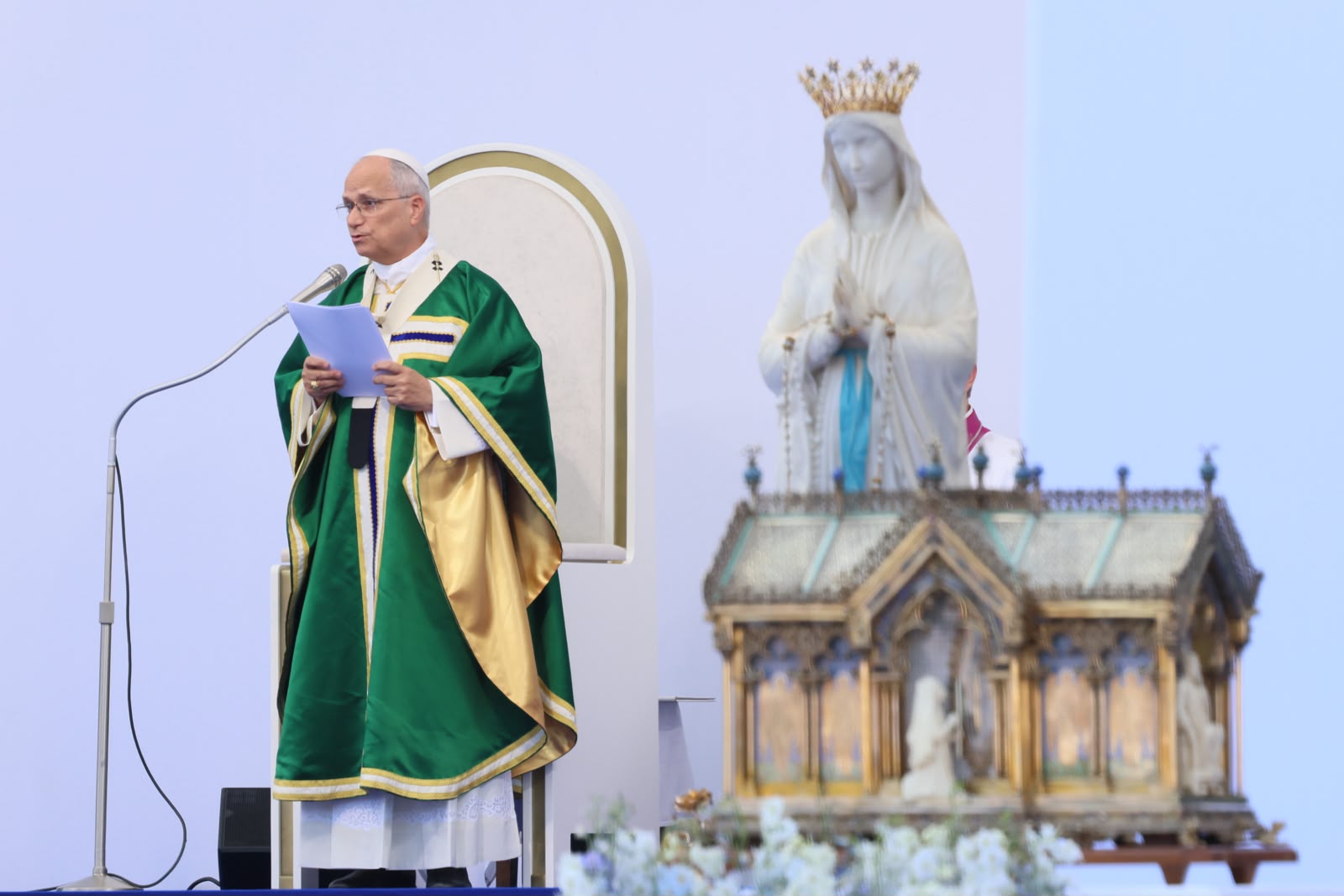
Pope Leo XIV in Algeria: ‘I am here among you as a pilgrim of peace’ #Catholic ALGIERS, Algeria — Pope Leo XIV on Monday presented himself to Algeria’s diplomatic corps and civil society as “a pilgrim of peace,” urging a more just international order, warning against exclusion and inequality, and praising those who refuse to be “blinded by power or wealth.”Peace remained the central theme of the pope’s first day in Algeria, following his earlier stop at the Martyrs’ Memorial, where he delivered an appeal for peace and reconciliation.Speaking in French at the Djamaa el Djazair Conference Center, Leo recalled his previous visits to Algeria in 2001 and 2013 to Annaba, the ancient see of St. Augustine, whose spiritual legacy has long shaped the Augustinian order to which the pope belongs.“I am here among you as a pilgrim of peace, eager to meet the noble Algerian people,” the pope said. “We are brothers and sisters, for we have the same Father in heaven.”Leo said the “profound religious sense of the Algerian people” fosters “a culture of encounter and reconciliation,” adding that his visit also seeks to be a sign of that spirit.“In a world full of conflicts and misunderstandings, let us meet and strive for mutual understanding, recognizing that we are one family!” he said. “Today, the simplicity of this awareness is the key to opening many doors that are closed.”Addressing an audience of about 1,400 people from civil society and the diplomatic corps, the pope praised the resilience of the Algerian people, saying they had never been defeated by their trials because of their spirit of solidarity, hospitality, and community.“They are the truly strong ones, to whom the future belongs: those who do not allow themselves to be blinded by power or wealth, and those who refuse to sacrifice the dignity of their fellow citizens for the sake of personal or collective gain,” he said.Leo also highlighted the Algerian understanding of hospitality and almsgiving, reflected in the word “sadaka,” which he noted can also mean justice.“The one who accumulates wealth and remains indifferent to others is unjust,” the pope said, calling this vision of justice both “simple and radical” because it recognizes the image of God in others. “Indeed, a religion without mercy and a society without solidarity are a scandal in God’s eyes.”At the same time, he warned that many societies that consider themselves advanced are falling ever deeper into inequality and exclusion, while “people and organizations that dominate others destroy the world.” He said Africa knows this reality well and suggested that Algeria’s historical experience gives it a critical perspective on global power balances.“If you are able to engage in dialogue regarding the concerns of all and show solidarity with the sufferings of so many countries near and far, then you will be able to contribute to both envisioning and bringing about greater justice among peoples,” Leo said.He added that this task is especially urgent “in the face of continuous violations of international law and neocolonial tendencies.”Drawing on the teaching of Benedict XVI and Pope Francis, Leo called on Algeria’s authorities not to fear a broader social participation by those on the margins.“I therefore urge those of you who hold positions of authority in this country not to fear this outlook but to promote a vibrant, dynamic, and free civil society, in which young people in particular are recognized as capable of helping to broaden the horizon of hope for all,” he said.“The true strength of a nation lies in the cooperation of everyone in pursuing the common good,” he continued. “Authorities are called not to dominate but to serve the people and foster their development.”The pope also pointed to Algeria’s unique role as “a bridge between North and South, and between East and West,” describing the Mediterranean and the Sahara as geographical and spiritual crossroads rich with human and cultural meaning.“Woe to us if we turn them into graveyards where hope also dies!” he said. “Let us multiply oases of peace; let us denounce and remove the causes of despair; and let us oppose those who profit from the misfortune of others!”“For illicit are the gains of those who exploit human life, whose dignity is inviolable,” he added.Leo then broadened his reflection to the place of religion in modern society, noting that Algeria, like much of the world, experiences tensions between religious sensibility and modern life. He warned against both fundamentalism and secularization when they distort the true sense of God and human dignity.“Religious symbols and words can become, on the one hand, blasphemous languages of violence and oppression, or on the other, empty signs in the immense marketplace of consumption that does not satisfy us,” he said.Still, the pope insisted that such polarization should not lead to despair.“We must educate people in critical thinking and freedom, in listening and dialogue, and in the trust that leads us to recognize in those who are different fellow travelers and not threats,” he said. “We must work toward the healing of memory and reconciliation among former adversaries.”In his introduction, Algerian President Abdelmadjid Tebboune called Leo’s presence the first visit of a pope to Algeria and said it gave the occasion “a unique resonance.” He invoked both St. Augustine and Emir Abdelkader as enduring models at a time of accelerating change and weakening moral values.Tebboune also praised the pope’s moral authority and his support for social justice while reaffirming Algeria’s commitment to working with the Holy Father to promote dialogue, coexistence, and cooperation over division and conflict.This story was first published by ACI Stampa, the Italian-language sister service of EWTN News. It has been translated and adapted by EWTN News English.

Pope Leo XIV in Algeria: ‘I am here among you as a pilgrim of peace’ #Catholic ALGIERS, Algeria — Pope Leo XIV on Monday presented himself to Algeria’s diplomatic corps and civil society as “a pilgrim of peace,” urging a more just international order, warning against exclusion and inequality, and praising those who refuse to be “blinded by power or wealth.”Peace remained the central theme of the pope’s first day in Algeria, following his earlier stop at the Martyrs’ Memorial, where he delivered an appeal for peace and reconciliation.Speaking in French at the Djamaa el Djazair Conference Center, Leo recalled his previous visits to Algeria in 2001 and 2013 to Annaba, the ancient see of St. Augustine, whose spiritual legacy has long shaped the Augustinian order to which the pope belongs.“I am here among you as a pilgrim of peace, eager to meet the noble Algerian people,” the pope said. “We are brothers and sisters, for we have the same Father in heaven.”Leo said the “profound religious sense of the Algerian people” fosters “a culture of encounter and reconciliation,” adding that his visit also seeks to be a sign of that spirit.“In a world full of conflicts and misunderstandings, let us meet and strive for mutual understanding, recognizing that we are one family!” he said. “Today, the simplicity of this awareness is the key to opening many doors that are closed.”Addressing an audience of about 1,400 people from civil society and the diplomatic corps, the pope praised the resilience of the Algerian people, saying they had never been defeated by their trials because of their spirit of solidarity, hospitality, and community.“They are the truly strong ones, to whom the future belongs: those who do not allow themselves to be blinded by power or wealth, and those who refuse to sacrifice the dignity of their fellow citizens for the sake of personal or collective gain,” he said.Leo also highlighted the Algerian understanding of hospitality and almsgiving, reflected in the word “sadaka,” which he noted can also mean justice.“The one who accumulates wealth and remains indifferent to others is unjust,” the pope said, calling this vision of justice both “simple and radical” because it recognizes the image of God in others. “Indeed, a religion without mercy and a society without solidarity are a scandal in God’s eyes.”At the same time, he warned that many societies that consider themselves advanced are falling ever deeper into inequality and exclusion, while “people and organizations that dominate others destroy the world.” He said Africa knows this reality well and suggested that Algeria’s historical experience gives it a critical perspective on global power balances.“If you are able to engage in dialogue regarding the concerns of all and show solidarity with the sufferings of so many countries near and far, then you will be able to contribute to both envisioning and bringing about greater justice among peoples,” Leo said.He added that this task is especially urgent “in the face of continuous violations of international law and neocolonial tendencies.”Drawing on the teaching of Benedict XVI and Pope Francis, Leo called on Algeria’s authorities not to fear a broader social participation by those on the margins.“I therefore urge those of you who hold positions of authority in this country not to fear this outlook but to promote a vibrant, dynamic, and free civil society, in which young people in particular are recognized as capable of helping to broaden the horizon of hope for all,” he said.“The true strength of a nation lies in the cooperation of everyone in pursuing the common good,” he continued. “Authorities are called not to dominate but to serve the people and foster their development.”The pope also pointed to Algeria’s unique role as “a bridge between North and South, and between East and West,” describing the Mediterranean and the Sahara as geographical and spiritual crossroads rich with human and cultural meaning.“Woe to us if we turn them into graveyards where hope also dies!” he said. “Let us multiply oases of peace; let us denounce and remove the causes of despair; and let us oppose those who profit from the misfortune of others!”“For illicit are the gains of those who exploit human life, whose dignity is inviolable,” he added.Leo then broadened his reflection to the place of religion in modern society, noting that Algeria, like much of the world, experiences tensions between religious sensibility and modern life. He warned against both fundamentalism and secularization when they distort the true sense of God and human dignity.“Religious symbols and words can become, on the one hand, blasphemous languages of violence and oppression, or on the other, empty signs in the immense marketplace of consumption that does not satisfy us,” he said.Still, the pope insisted that such polarization should not lead to despair.“We must educate people in critical thinking and freedom, in listening and dialogue, and in the trust that leads us to recognize in those who are different fellow travelers and not threats,” he said. “We must work toward the healing of memory and reconciliation among former adversaries.”In his introduction, Algerian President Abdelmadjid Tebboune called Leo’s presence the first visit of a pope to Algeria and said it gave the occasion “a unique resonance.” He invoked both St. Augustine and Emir Abdelkader as enduring models at a time of accelerating change and weakening moral values.Tebboune also praised the pope’s moral authority and his support for social justice while reaffirming Algeria’s commitment to working with the Holy Father to promote dialogue, coexistence, and cooperation over division and conflict.This story was first published by ACI Stampa, the Italian-language sister service of EWTN News. It has been translated and adapted by EWTN News English.

The pontiff called for a world order that does not exclude the vulnerable and urged leaders to serve the common good.

Read More
Pope Leo XIV: Sport must be a ‘space for encounter’ #Catholic VATICAN CITY — Pope Leo XIV on Thursday praised athletes from the Milan-Cortina 2026 Olympic and Paralympic Games, saying sport “can and must truly become a space for encounter” in a world marked by “polarization, rivalry, and conflicts that escalate into devastating wars.”Speaking in the Clementine Hall at the Vatican on April 9, the Holy Father welcomed the athletes “with joy” shortly after the conclusion of the Winter Games and thanked them for their witness.“Thank you for what you have shown,” the pope said. “Truly, sport, when lived authentically, is not merely a performance: It is a form of language, a narrative made up of gestures, of effort, of anticipation, of falls, and of new beginnings.”Leo XIV said the games revealed not only athletic achievement but also “stories of sacrifice, of discipline, of tenacity.”“In particular, in Paralympic competitions we have seen how a limitation can become a source of revelation: not something that holds a person back but something that can be transformed, even transfigured into newfound qualities,” he said. “You athletes have become life stories that inspire a great number of people.”The pope also emphasized the communal dimension of athletic success, saying: “No one wins alone.”“Your team spirit reminds us that no one wins alone, because behind every victory there are many people involved — from family to teams — as well as many days of training, pressure, and solitude,” he said.Quoting Psalm 18, he added: “It is often precisely in these moments that God reveals himself, as the psalmist sings: ‘Thou didst give a wide place for my steps under me, and my feet did not slip.’”Leo XIV said sport helps mature the human person by fostering discipline, humility, and right relationships.“Sport contributes to the maturing of our character, requires a steadfast spirituality, and is a fruitful form of education,” he said. “By training the mind, along with the limbs, sport is authentic when it remains humane — that is, when it remains faithful to its first vocation: to be a school of life and talent.”“A school in which one learns that true success is measured by the quality of relationships: not by the amount of prizes but by mutual respect, by shared joy in the game,” he continued.Referring to his Feb. 6 apostolic letter “Life in Abundance,” written for the occasion of the Olympics and Paralympics, the pope said the Gospel’s vision of abundant life points to harmony between the physical and interior dimensions of the person.Turning to the present global situation, Leo XIV said the athletes’ witness carries special importance.“At the present time, so marked by polarization, rivalry, and conflicts that escalate into devastating wars, your commitment takes on an even greater value: Sport can and must truly become a space for encounter!” he said. “Not a show of strength but an exercise in relationship.”Recalling the value of the Olympic truce, he thanked the athletes for making visible “this possibility of peace as a prophecy that is by no means rhetorical: breaking the logic of violence to promote that of encounter.”The pope also warned against distortions in sport, including doping, commercialism, and the reduction of athletes to mere spectacle.“We are well aware that sport also brings with it certain temptations: that of performance at any cost, which can lead to doping; that of profit, which transforms the game into a market and the athlete into a star; that of spectacle, which reduces the athlete to an image or a number,” he said. “Against these excesses, your witness is essential.”Leo XIV concluded by thanking the athletes for showing “an honest and beautiful way of inhabiting the world” and urged them to keep the human person at the center of sport in all its forms.Following the audience, several of the athletes spoke to journalists about their experience of the audience and competing in the Winter Games, including speed skater Francesca Lollobrigida, who won two gold medals at Milan-Cortina this year.
 
 Francesca Lollobrigida responds to journalists after a papal audience at the Apostolic Palace in Vatican City on April 9, 2026. | Credit: Ishmael Adibuah/EWTN News
 
 “My goal was just to show that in my sport; I was able to combine, you know, being a mother and a top athlete,“ Lollobrigida told EWTN News. ”Iʼm just doing this for the other women, you know, that maybe at some points during their career they want to stop to focus on the family and then to come back.”Nikko Landeros, an American-born Catholic who lost both his legs in 2007, represented Italy in ice hockey at the latest Paralympic games. He described to EWTN News the role of Catholicism in his athletic journey.“At home, I started pretty much Catholic. You know, I went to Catholic school in the U.S. Weʼve been going to church now… not as much as I should, but, you know, I still pray every day, and Iʼm thankful to be here. You know, if it werenʼt for God, I wouldnʼt be alive. So, you know, Iʼm super thankful,” Landeros said.This story was first published by ACI Stampa, the Italian-language sister service of EWTN News. It has been translated and adapted by EWTN News English.

Pope Leo XIV: Sport must be a ‘space for encounter’ #Catholic VATICAN CITY — Pope Leo XIV on Thursday praised athletes from the Milan-Cortina 2026 Olympic and Paralympic Games, saying sport “can and must truly become a space for encounter” in a world marked by “polarization, rivalry, and conflicts that escalate into devastating wars.”Speaking in the Clementine Hall at the Vatican on April 9, the Holy Father welcomed the athletes “with joy” shortly after the conclusion of the Winter Games and thanked them for their witness.“Thank you for what you have shown,” the pope said. “Truly, sport, when lived authentically, is not merely a performance: It is a form of language, a narrative made up of gestures, of effort, of anticipation, of falls, and of new beginnings.”Leo XIV said the games revealed not only athletic achievement but also “stories of sacrifice, of discipline, of tenacity.”“In particular, in Paralympic competitions we have seen how a limitation can become a source of revelation: not something that holds a person back but something that can be transformed, even transfigured into newfound qualities,” he said. “You athletes have become life stories that inspire a great number of people.”The pope also emphasized the communal dimension of athletic success, saying: “No one wins alone.”“Your team spirit reminds us that no one wins alone, because behind every victory there are many people involved — from family to teams — as well as many days of training, pressure, and solitude,” he said.Quoting Psalm 18, he added: “It is often precisely in these moments that God reveals himself, as the psalmist sings: ‘Thou didst give a wide place for my steps under me, and my feet did not slip.’”Leo XIV said sport helps mature the human person by fostering discipline, humility, and right relationships.“Sport contributes to the maturing of our character, requires a steadfast spirituality, and is a fruitful form of education,” he said. “By training the mind, along with the limbs, sport is authentic when it remains humane — that is, when it remains faithful to its first vocation: to be a school of life and talent.”“A school in which one learns that true success is measured by the quality of relationships: not by the amount of prizes but by mutual respect, by shared joy in the game,” he continued.Referring to his Feb. 6 apostolic letter “Life in Abundance,” written for the occasion of the Olympics and Paralympics, the pope said the Gospel’s vision of abundant life points to harmony between the physical and interior dimensions of the person.Turning to the present global situation, Leo XIV said the athletes’ witness carries special importance.“At the present time, so marked by polarization, rivalry, and conflicts that escalate into devastating wars, your commitment takes on an even greater value: Sport can and must truly become a space for encounter!” he said. “Not a show of strength but an exercise in relationship.”Recalling the value of the Olympic truce, he thanked the athletes for making visible “this possibility of peace as a prophecy that is by no means rhetorical: breaking the logic of violence to promote that of encounter.”The pope also warned against distortions in sport, including doping, commercialism, and the reduction of athletes to mere spectacle.“We are well aware that sport also brings with it certain temptations: that of performance at any cost, which can lead to doping; that of profit, which transforms the game into a market and the athlete into a star; that of spectacle, which reduces the athlete to an image or a number,” he said. “Against these excesses, your witness is essential.”Leo XIV concluded by thanking the athletes for showing “an honest and beautiful way of inhabiting the world” and urged them to keep the human person at the center of sport in all its forms.Following the audience, several of the athletes spoke to journalists about their experience of the audience and competing in the Winter Games, including speed skater Francesca Lollobrigida, who won two gold medals at Milan-Cortina this year. Francesca Lollobrigida responds to journalists after a papal audience at the Apostolic Palace in Vatican City on April 9, 2026. | Credit: Ishmael Adibuah/EWTN News “My goal was just to show that in my sport; I was able to combine, you know, being a mother and a top athlete,“ Lollobrigida told EWTN News. ”Iʼm just doing this for the other women, you know, that maybe at some points during their career they want to stop to focus on the family and then to come back.”Nikko Landeros, an American-born Catholic who lost both his legs in 2007, represented Italy in ice hockey at the latest Paralympic games. He described to EWTN News the role of Catholicism in his athletic journey.“At home, I started pretty much Catholic. You know, I went to Catholic school in the U.S. Weʼve been going to church now… not as much as I should, but, you know, I still pray every day, and Iʼm thankful to be here. You know, if it werenʼt for God, I wouldnʼt be alive. So, you know, Iʼm super thankful,” Landeros said.This story was first published by ACI Stampa, the Italian-language sister service of EWTN News. It has been translated and adapted by EWTN News English.

The pontiff addressed athletes from the Milan-Cortina 2026 Olympic and Paralympic Games.

Read More
Collection for the Holy Land: Christians need concrete hope, not just consoling words #Catholic Cardinal Claudio Gugerotti, prefect of the Dicastery for the Eastern Churches, called upon the faithful worldwide to participate in the Good Friday collection aimed at assisting Christian communities in the Holy Land.The Good Friday collection is one of the primary sources of support for the Custody of the Holy Land — the Franciscan institution that for centuries has safeguarded the sites connected to the life of Jesus Christ and accompanied the Christian communities living in the region.The prefect called upon the faithful around the world to respond with a concrete gesture of solidarity. “I wish to propose a small gesture to you: to offer a little of our money to help our brothers and sisters who find themselves in extreme peril to live one more day, to find hope, and to find the possibility of starting anew.”“How many times have I personally visited those Christian minorities who wake up every morning facing the danger of no longer having a place to exist!” Gugerotti wrote in the March 18 letter, which was also signed by the dicastery’s secretary, Archbishop Michel Jalakh.“Help us to offer them concrete hope, not merely words of consolation — for we who visit them will leave, while they remain with their fears, even with the terror that, precisely because they are Christians, they may be eliminated,” the cardinal stated. The cardinal explained that the Good Friday donations hold a twofold significance: on the one hand, providing material aid to those living amid war and poverty, and on the other, challenging the conscience of the faithful.“It is also vital for us, because without sacrifice, without a real change in our way of living, we risk remaining inert before a world in flames — and thus complicit in its destruction,” he said. Gugerotti noted that many Christians in the Holy Land have lost their means of livelihood, especially those who depended on religious tourism, which historically sustained a large portion of the local economy. The conflict that began on Oct. 7, 2023, when Hamas attacked Israel, triggered a sharp decline in religious tourism.“A great many Christians in the Holy Land have lost everything, even the work that came from serving pilgrims,” he pointed out.In early 2025, Israel’s Ministry of Tourism characterized the year as a turning point, with 1.3 million international arrivals. However, 2026 has once again proven to be a highly problematic year for pilgrimages primarily due to the military escalation by the United States and Israel against Iran, which has thrown the entire region into crisis.The drastic reduction in pilgrimages and the current climate of insecurity have  exacerbated the situation. “Now, out of fear, almost everyone tends to avoid venturing into those lands,” he said.What is done with the money collected?In 2023 — the most recent year for which official data are available — the Holy Land collection raised 6,571,893 euros (.5 million). The Custody of the Holy Land typically receives 65% of the proceeds, while the remaining 35% goes to the Dicastery for the Eastern Churches, which uses it for the formation of priests and for subsidies to the various dioceses and eparchies in Palestine, Israel, Jordan, Lebanon, Syria, Turkey, and Iraq.Of the money it receives, the Custody of the Holy Land normally invests 20% in the upkeep of the sites where Jesus Christ walked, while the remainder goes to Christian families, who, in 1948, constituted 20% of the local population but now make up less than 1.4%.In the Gaza Strip, it collaborates with the Latin parish and the Atfa-Luna association to provide psycho-social support “to some 1,000 children and 300 adults,” as well as to distribute emergency kits and aid to families of people with disabilities.In Lebanon, the Church responded to the 2024 crisis (the fighting between Israel and Hezbollah) by providing “hot meals for some 500 beneficiaries every day” and ensuring “drinking water for about 250 people daily.” The Custody of the Holy Land also manages hundreds of housing units at nominal rents to prevent emigration.“It has been said that peace has been achieved; however, even though the media speak of it much less today than before, the shooting continues, people continue to die, lands remain disputed, and Christians continue to emigrate to save their lives,” the cardinal noted.According to the 2023 data released by the Dicastery for the Eastern Churches, 2,376,167 euros (.7 million) was donated to seminaries, houses of religious formation, and cultural institutions. The Franciscan Custody allocated more than 2 million euros (.3 million) to the education of young people in the Holy Land in 2023, funding scholarships at various universities in the region. Nearly 1 million euros (.15 million) were allocated to the Pontifical Oriental Institute, which now encompasses, at Pope Francis’ direction, the Pontifical Gregorian University.A portion was also invested in Bethlehem University, one of the prestigious foundations that underwrites the academic studies of 3,300 young people, both Muslim and Christian, with the aim of educating them to build a future of peace in the Holy Land.A concrete gesture: Giving is a ‘strong sign of faith’In his message, the cardinal invited bishops and pastoral leaders to raise awareness among the faithful regarding the importance of sustaining the Christian presence in the places where Christianity was born.“Let us ensure that our people approach the collection with the awareness that giving is a strong sign of faith,” he wrote. “A Holy Land without believers is a lost land, for the living memory of salvation is lost,” he added.“Pope Leo XIV never ceases to bring to our minds and hearts this commitment to be one, so that there may be peace — not a provisional truce, not perpetual hatred, not an immense expenditure on armaments, but a contribution to our common rebirth,” the cardinal wrote.The prelate concluded his letter by acknowledging that the collection would be merely “a drop in the ocean” but that “the ocean, as a result of losing its drops, is turning into a desert.”In addition to supporting the Franciscan mission in the Holy Land to safeguard the holy places, sustain local Christian communities, and foster peace in the region where Jesus lived, the cardinal said Christians can actively contribute by offering prayers to support this work and inspire new vocations, or by undertaking a pilgrimage to discover the roots of Christianity.This story was first published by ACI Prensa, the Spanish-language sister service of EWTN News. It has been translated and adapted by EWTN News English.

Collection for the Holy Land: Christians need concrete hope, not just consoling words #Catholic Cardinal Claudio Gugerotti, prefect of the Dicastery for the Eastern Churches, called upon the faithful worldwide to participate in the Good Friday collection aimed at assisting Christian communities in the Holy Land.The Good Friday collection is one of the primary sources of support for the Custody of the Holy Land — the Franciscan institution that for centuries has safeguarded the sites connected to the life of Jesus Christ and accompanied the Christian communities living in the region.The prefect called upon the faithful around the world to respond with a concrete gesture of solidarity. “I wish to propose a small gesture to you: to offer a little of our money to help our brothers and sisters who find themselves in extreme peril to live one more day, to find hope, and to find the possibility of starting anew.”“How many times have I personally visited those Christian minorities who wake up every morning facing the danger of no longer having a place to exist!” Gugerotti wrote in the March 18 letter, which was also signed by the dicastery’s secretary, Archbishop Michel Jalakh.“Help us to offer them concrete hope, not merely words of consolation — for we who visit them will leave, while they remain with their fears, even with the terror that, precisely because they are Christians, they may be eliminated,” the cardinal stated. The cardinal explained that the Good Friday donations hold a twofold significance: on the one hand, providing material aid to those living amid war and poverty, and on the other, challenging the conscience of the faithful.“It is also vital for us, because without sacrifice, without a real change in our way of living, we risk remaining inert before a world in flames — and thus complicit in its destruction,” he said. Gugerotti noted that many Christians in the Holy Land have lost their means of livelihood, especially those who depended on religious tourism, which historically sustained a large portion of the local economy. The conflict that began on Oct. 7, 2023, when Hamas attacked Israel, triggered a sharp decline in religious tourism.“A great many Christians in the Holy Land have lost everything, even the work that came from serving pilgrims,” he pointed out.In early 2025, Israel’s Ministry of Tourism characterized the year as a turning point, with 1.3 million international arrivals. However, 2026 has once again proven to be a highly problematic year for pilgrimages primarily due to the military escalation by the United States and Israel against Iran, which has thrown the entire region into crisis.The drastic reduction in pilgrimages and the current climate of insecurity have  exacerbated the situation. “Now, out of fear, almost everyone tends to avoid venturing into those lands,” he said.What is done with the money collected?In 2023 — the most recent year for which official data are available — the Holy Land collection raised 6,571,893 euros ($7.5 million). The Custody of the Holy Land typically receives 65% of the proceeds, while the remaining 35% goes to the Dicastery for the Eastern Churches, which uses it for the formation of priests and for subsidies to the various dioceses and eparchies in Palestine, Israel, Jordan, Lebanon, Syria, Turkey, and Iraq.Of the money it receives, the Custody of the Holy Land normally invests 20% in the upkeep of the sites where Jesus Christ walked, while the remainder goes to Christian families, who, in 1948, constituted 20% of the local population but now make up less than 1.4%.In the Gaza Strip, it collaborates with the Latin parish and the Atfa-Luna association to provide psycho-social support “to some 1,000 children and 300 adults,” as well as to distribute emergency kits and aid to families of people with disabilities.In Lebanon, the Church responded to the 2024 crisis (the fighting between Israel and Hezbollah) by providing “hot meals for some 500 beneficiaries every day” and ensuring “drinking water for about 250 people daily.” The Custody of the Holy Land also manages hundreds of housing units at nominal rents to prevent emigration.“It has been said that peace has been achieved; however, even though the media speak of it much less today than before, the shooting continues, people continue to die, lands remain disputed, and Christians continue to emigrate to save their lives,” the cardinal noted.According to the 2023 data released by the Dicastery for the Eastern Churches, 2,376,167 euros ($2.7 million) was donated to seminaries, houses of religious formation, and cultural institutions. The Franciscan Custody allocated more than 2 million euros ($2.3 million) to the education of young people in the Holy Land in 2023, funding scholarships at various universities in the region. Nearly 1 million euros ($1.15 million) were allocated to the Pontifical Oriental Institute, which now encompasses, at Pope Francis’ direction, the Pontifical Gregorian University.A portion was also invested in Bethlehem University, one of the prestigious foundations that underwrites the academic studies of 3,300 young people, both Muslim and Christian, with the aim of educating them to build a future of peace in the Holy Land.A concrete gesture: Giving is a ‘strong sign of faith’In his message, the cardinal invited bishops and pastoral leaders to raise awareness among the faithful regarding the importance of sustaining the Christian presence in the places where Christianity was born.“Let us ensure that our people approach the collection with the awareness that giving is a strong sign of faith,” he wrote. “A Holy Land without believers is a lost land, for the living memory of salvation is lost,” he added.“Pope Leo XIV never ceases to bring to our minds and hearts this commitment to be one, so that there may be peace — not a provisional truce, not perpetual hatred, not an immense expenditure on armaments, but a contribution to our common rebirth,” the cardinal wrote.The prelate concluded his letter by acknowledging that the collection would be merely “a drop in the ocean” but that “the ocean, as a result of losing its drops, is turning into a desert.”In addition to supporting the Franciscan mission in the Holy Land to safeguard the holy places, sustain local Christian communities, and foster peace in the region where Jesus lived, the cardinal said Christians can actively contribute by offering prayers to support this work and inspire new vocations, or by undertaking a pilgrimage to discover the roots of Christianity.This story was first published by ACI Prensa, the Spanish-language sister service of EWTN News. It has been translated and adapted by EWTN News English.

Now more than ever, the Christian minority in the Holy Land needs the support it receives through the annual Good Friday collection as ongoing violence in the Middle East has curtailed pilgrimages.

Read More
‘God wants to cover us in robes of grace,’ Catholic fashion writer says #Catholic According to Catholic author Mary Harper, the way we dress can be a way to express faith, human dignity, and personal identity.Harper, author of “The Liturgical Style Guide,” in which she explores how faith should influence how we dress, noted that the Bible shows the symbolic importance of clothing: “It’s actually pretty amazing how, throughout both the Old Testament and the New … clothing is mentioned over 100 times... The majority of times, it’s meant to be a sign of God’s mercy and providence.”This symbolism appears from the very beginning of the Bible, she said in a recent interview posted by the Archdiocese of Miami.
 
 Mary Harper, author of “The Liturgical Style Guide,” explores how faith can influence even everyday dress. | Credit: Archdiocese of Miami
 
 After original sin, Adam and Eve tried to cover themselves by sewing together fig leaves, which Harper called “flimsy.”“What does God do? He literally slaughters an animal, the first sacrifice in Scripture. He covers them in leather garments because he wants them to have something that’s worthy, something that’s good, something that’s actually going to protect them and be lasting,” she explained.According to Harper, this biblical image helps us understand human dignity. “God wants to cover us in robes of grace,” she said, also recalling the parable of the prodigal son, when the father “puts a robe on him and a ring on him, as a reminder of his goodness and his dignity and his identity.”That’s why even something as ordinary as getting dressed every day can have a spiritual dimension. “Even through something that we do every day — getting dressed for the day — the Lord is speaking his providence over you. He desires to lavish you in grace. Even getting dressed in the morning is a way to remember putting on Christ, putting on your baptismal garment again, remembering who you are and who you’re called to be in Christ,” she pointed out.Harper grew up Catholic in New Orleans. She earned her master’s and bachelor’s degrees in theology from Ave Maria University and is the founder of LiturgicalStyle.com, a project dedicated to reflecting on the theological significance of clothing based on the Bible, the stories of the saints, and the liturgical calendar.She also writes for litanynyc.com a Catholic made-to-measure clothing company that seeks to apply the Church’s social teaching in its production process.Clothing as a form of Christian witness“Whether I intend it or not, my clothing is going to communicate something. You wear a school uniform, it tells you what school you go to; priests put on vestments that tell you about the liturgical season. Well, there’s great power in that,” she said.From that perspective, she added, clothing can become a form of Christian witness. “I have the capacity to communicate the Gospel through my very garments, through intentionality, creativity, and beauty.”The author also cautioned that the Christian view of modesty avoids two extremes: absolute individualism and fear of the body.“One extreme is, I can wear whatever I want, I don’t care what anyone else thinks about it. At the same time, we don’t want to get to the point of, ‘I don’t know how to dress myself well, and I’m so scared of doing the wrong thing … [and] nothing can show because my body is bad,’” she explained.“The Church has never said that,” Harper added, noting that Christian teaching on the goodness of the human body is developed in depth in St. John Paul II’s theology of the body.More than strict rules, she argued, the key lies in discerning: “What is it that I want to communicate through what I’m wearing?” Harper also explained that modesty involves considering the context and the activity.“It is my responsibility to wear something that makes sense for the activity at hand, for the environment that I’m in, and that allows me to be fully present. That’s a service to everyone around me and to myself,” she stated, citing as an example the impracticality of wearing flip flops to hike in the Rocky Mountains.Drawing inspiration from the saintsHarper also proposed a creative idea for living out one’s faith in everyday life: finding inspiration in the saints when choosing what to wear.This does not mean, she clarified, that we imitate them literally. “I’m not telling you to go around wearing a Carmelite habit,” she joked.Rather, she suggested small symbolic gestures: “If you have Western boots, you can say you’re wearing them in honor of St. Teresa of the Andes,” who loved horseback riding. Or “when you wear jeans, you can think of her, because she just loved to be this great adventurer and going into the mountains” and “I’m going to ask her to pray for me."Creativity and freedom in the Christian lifeFor Harper, the relationship between faith and clothing should not become a source of scrupulosity or pressure.“Sometimes we can get so caught up saying, ‘If I’m a ‘real Catholic,’ then I’m going to dress in this particular way.’ I think it’s really easy to get kind of scrupulous when it comes to clothing,” she reflected.Instead, she recommended bringing the matter to prayer and discernment with trusted individuals. “If you have any concern about, ‘Am I dressing in a way that is good?’, talk to someone who knows your heart,” she advised.Finally, Harper encouraged living out Christian creativity in these everyday details as well: “The Holy Spirit is creative."“When you get dressed for the day, if you just say, ‘Come, Holy Spirit,’ he’s going to show up. It’s going to be awesome and joyful, and it’ll be more fun.”This story was first published by ACI Prensa, the Spanish-language sister service of EWTN News. It has been translated and adapted by EWTN News English.

‘God wants to cover us in robes of grace,’ Catholic fashion writer says #Catholic According to Catholic author Mary Harper, the way we dress can be a way to express faith, human dignity, and personal identity.Harper, author of “The Liturgical Style Guide,” in which she explores how faith should influence how we dress, noted that the Bible shows the symbolic importance of clothing: “It’s actually pretty amazing how, throughout both the Old Testament and the New … clothing is mentioned over 100 times… The majority of times, it’s meant to be a sign of God’s mercy and providence.”This symbolism appears from the very beginning of the Bible, she said in a recent interview posted by the Archdiocese of Miami. Mary Harper, author of “The Liturgical Style Guide,” explores how faith can influence even everyday dress. | Credit: Archdiocese of Miami After original sin, Adam and Eve tried to cover themselves by sewing together fig leaves, which Harper called “flimsy.”“What does God do? He literally slaughters an animal, the first sacrifice in Scripture. He covers them in leather garments because he wants them to have something that’s worthy, something that’s good, something that’s actually going to protect them and be lasting,” she explained.According to Harper, this biblical image helps us understand human dignity. “God wants to cover us in robes of grace,” she said, also recalling the parable of the prodigal son, when the father “puts a robe on him and a ring on him, as a reminder of his goodness and his dignity and his identity.”That’s why even something as ordinary as getting dressed every day can have a spiritual dimension. “Even through something that we do every day — getting dressed for the day — the Lord is speaking his providence over you. He desires to lavish you in grace. Even getting dressed in the morning is a way to remember putting on Christ, putting on your baptismal garment again, remembering who you are and who you’re called to be in Christ,” she pointed out.Harper grew up Catholic in New Orleans. She earned her master’s and bachelor’s degrees in theology from Ave Maria University and is the founder of LiturgicalStyle.com, a project dedicated to reflecting on the theological significance of clothing based on the Bible, the stories of the saints, and the liturgical calendar.She also writes for litanynyc.com a Catholic made-to-measure clothing company that seeks to apply the Church’s social teaching in its production process.Clothing as a form of Christian witness“Whether I intend it or not, my clothing is going to communicate something. You wear a school uniform, it tells you what school you go to; priests put on vestments that tell you about the liturgical season. Well, there’s great power in that,” she said.From that perspective, she added, clothing can become a form of Christian witness. “I have the capacity to communicate the Gospel through my very garments, through intentionality, creativity, and beauty.”The author also cautioned that the Christian view of modesty avoids two extremes: absolute individualism and fear of the body.“One extreme is, I can wear whatever I want, I don’t care what anyone else thinks about it. At the same time, we don’t want to get to the point of, ‘I don’t know how to dress myself well, and I’m so scared of doing the wrong thing … [and] nothing can show because my body is bad,’” she explained.“The Church has never said that,” Harper added, noting that Christian teaching on the goodness of the human body is developed in depth in St. John Paul II’s theology of the body.More than strict rules, she argued, the key lies in discerning: “What is it that I want to communicate through what I’m wearing?” Harper also explained that modesty involves considering the context and the activity.“It is my responsibility to wear something that makes sense for the activity at hand, for the environment that I’m in, and that allows me to be fully present. That’s a service to everyone around me and to myself,” she stated, citing as an example the impracticality of wearing flip flops to hike in the Rocky Mountains.Drawing inspiration from the saintsHarper also proposed a creative idea for living out one’s faith in everyday life: finding inspiration in the saints when choosing what to wear.This does not mean, she clarified, that we imitate them literally. “I’m not telling you to go around wearing a Carmelite habit,” she joked.Rather, she suggested small symbolic gestures: “If you have Western boots, you can say you’re wearing them in honor of St. Teresa of the Andes,” who loved horseback riding. Or “when you wear jeans, you can think of her, because she just loved to be this great adventurer and going into the mountains” and “I’m going to ask her to pray for me."Creativity and freedom in the Christian lifeFor Harper, the relationship between faith and clothing should not become a source of scrupulosity or pressure.“Sometimes we can get so caught up saying, ‘If I’m a ‘real Catholic,’ then I’m going to dress in this particular way.’ I think it’s really easy to get kind of scrupulous when it comes to clothing,” she reflected.Instead, she recommended bringing the matter to prayer and discernment with trusted individuals. “If you have any concern about, ‘Am I dressing in a way that is good?’, talk to someone who knows your heart,” she advised.Finally, Harper encouraged living out Christian creativity in these everyday details as well: “The Holy Spirit is creative."“When you get dressed for the day, if you just say, ‘Come, Holy Spirit,’ he’s going to show up. It’s going to be awesome and joyful, and it’ll be more fun.”This story was first published by ACI Prensa, the Spanish-language sister service of EWTN News. It has been translated and adapted by EWTN News English.

Mary Harper explains the positive dimension of choosing what to wear and what it can express, urging Catholics to invite the Holy Spirit into their fashion choices.

Read More
Lebanon mourns Father Pierre El-Rahi as calls for peace echo at his funeral #Catholic Amid a war weighing heavily on southern Lebanon with fear and destruction, a prayer of farewell rose from the town of Qlayaa for a priest who chose to remain beside his people until the very end. In the courtyard of St. George Church in a scene marked by tears, prayer, and hope, mourners bid farewell to Father Pierre El-Rahi, who was killed after shelling struck his town.The funeral and burial rites were held with the participation of Bishop Elias Nassar, representing Maronite Patriarch Cardinal Bechara Boutros al-Rahi, and Maronite Archbishop of Tyre Charbel Abdallah, along with Lebanese Army Commander Gen. Rodolphe Haykal, members of the clergy, and a large crowd of townspeople and loved ones who came to bid farewell to their pastor.In a message read on his behalf by Nassar, al-Rahi expressed his “deep pain and sorrow” at the news of the priest’s martyrdom. He described him as a “zealous and courageous pastor” and a man marked by “priestly virtues filled with divine grace.” Recalling El-Rahi’s priestly journey and pastoral service, the patriarch noted that the late priest was a son of the town of Debel and had lived his priesthood, since his ordination in 2014, with unconditional love, remaining close to children, youth, and families. As a result, St. George Parish in Qlayaa, which he had served for about five years, became “a model of a vibrant parish of Christ.”Al-Rahi noted that the martyred priest’s role was not limited to pastoral work. He also held ecclesial, canonical, and social responsibilities in the Archdiocese of Tyre, while serving those who were suffering, the poor, and prisoners. 
 
 Mourners gather for the funeral of Father Pierre El-Rahi at St. George Church in the town of Qlayaa in southern Lebanon. | Credit: ACI MENA
 
 The patriarch also stressed El-Rahi’s “courageous” decision to remain with the steadfast people of Qlayaa while the region bears the cost of the ongoing war. He added in his message: “We pray that his martyrdom may be an act of redemption for the people of Qlayaa and for all Lebanon and the Lebanese who reject this war and long for a just, comprehensive, and lasting peace.”Pope Leo XIV mourned the martyred priest at the end of his weekly general audience on Wednesday. He said El-Rahi embodied the meaning of his family name, becoming “a true shepherd,” always close to his flock and filled with the love and sacrifice of Jesus, the Good Shepherd. He added that the priest rushed without hesitation to help members of his parish as soon as he heard they had been wounded in the shelling. The pope concluded with a prayer for peace in the Middle East, saying: “We ask God to make his shed blood a seed of peace for beloved Lebanon.”This story was first published by ACI MENA, the Arabic-language sister service of EWTN News. It has been translated and adapted by EWTN News English.

Lebanon mourns Father Pierre El-Rahi as calls for peace echo at his funeral #Catholic Amid a war weighing heavily on southern Lebanon with fear and destruction, a prayer of farewell rose from the town of Qlayaa for a priest who chose to remain beside his people until the very end. In the courtyard of St. George Church in a scene marked by tears, prayer, and hope, mourners bid farewell to Father Pierre El-Rahi, who was killed after shelling struck his town.The funeral and burial rites were held with the participation of Bishop Elias Nassar, representing Maronite Patriarch Cardinal Bechara Boutros al-Rahi, and Maronite Archbishop of Tyre Charbel Abdallah, along with Lebanese Army Commander Gen. Rodolphe Haykal, members of the clergy, and a large crowd of townspeople and loved ones who came to bid farewell to their pastor.In a message read on his behalf by Nassar, al-Rahi expressed his “deep pain and sorrow” at the news of the priest’s martyrdom. He described him as a “zealous and courageous pastor” and a man marked by “priestly virtues filled with divine grace.” Recalling El-Rahi’s priestly journey and pastoral service, the patriarch noted that the late priest was a son of the town of Debel and had lived his priesthood, since his ordination in 2014, with unconditional love, remaining close to children, youth, and families. As a result, St. George Parish in Qlayaa, which he had served for about five years, became “a model of a vibrant parish of Christ.”Al-Rahi noted that the martyred priest’s role was not limited to pastoral work. He also held ecclesial, canonical, and social responsibilities in the Archdiocese of Tyre, while serving those who were suffering, the poor, and prisoners. Mourners gather for the funeral of Father Pierre El-Rahi at St. George Church in the town of Qlayaa in southern Lebanon. | Credit: ACI MENA The patriarch also stressed El-Rahi’s “courageous” decision to remain with the steadfast people of Qlayaa while the region bears the cost of the ongoing war. He added in his message: “We pray that his martyrdom may be an act of redemption for the people of Qlayaa and for all Lebanon and the Lebanese who reject this war and long for a just, comprehensive, and lasting peace.”Pope Leo XIV mourned the martyred priest at the end of his weekly general audience on Wednesday. He said El-Rahi embodied the meaning of his family name, becoming “a true shepherd,” always close to his flock and filled with the love and sacrifice of Jesus, the Good Shepherd. He added that the priest rushed without hesitation to help members of his parish as soon as he heard they had been wounded in the shelling. The pope concluded with a prayer for peace in the Middle East, saying: “We ask God to make his shed blood a seed of peace for beloved Lebanon.”This story was first published by ACI MENA, the Arabic-language sister service of EWTN News. It has been translated and adapted by EWTN News English.

In the courtyard of St. George Church, in a scene marked by tears, prayer, and hope, mourners bid farewell to a beloved priest who was killed after shelling struck his town.

Read More

In the Style of Pop Art – recreate ‘The Sacrifice of Elijah Before the Priests of Baal’ by Domenico Fetti – Ahab summoned the people of Israel and 450 prophets of Baal to Mount Carmel. Elijah proposed that he and Baal’s prophets each sacrifice one of two bulls by placing them on wood that they would not light. Instead, Elijah bade the prophets of Baal to pray for a fire that would light the sacrifice. All day they prayed, but with no success. — using neon Color

Read More