Day: April 13, 2026

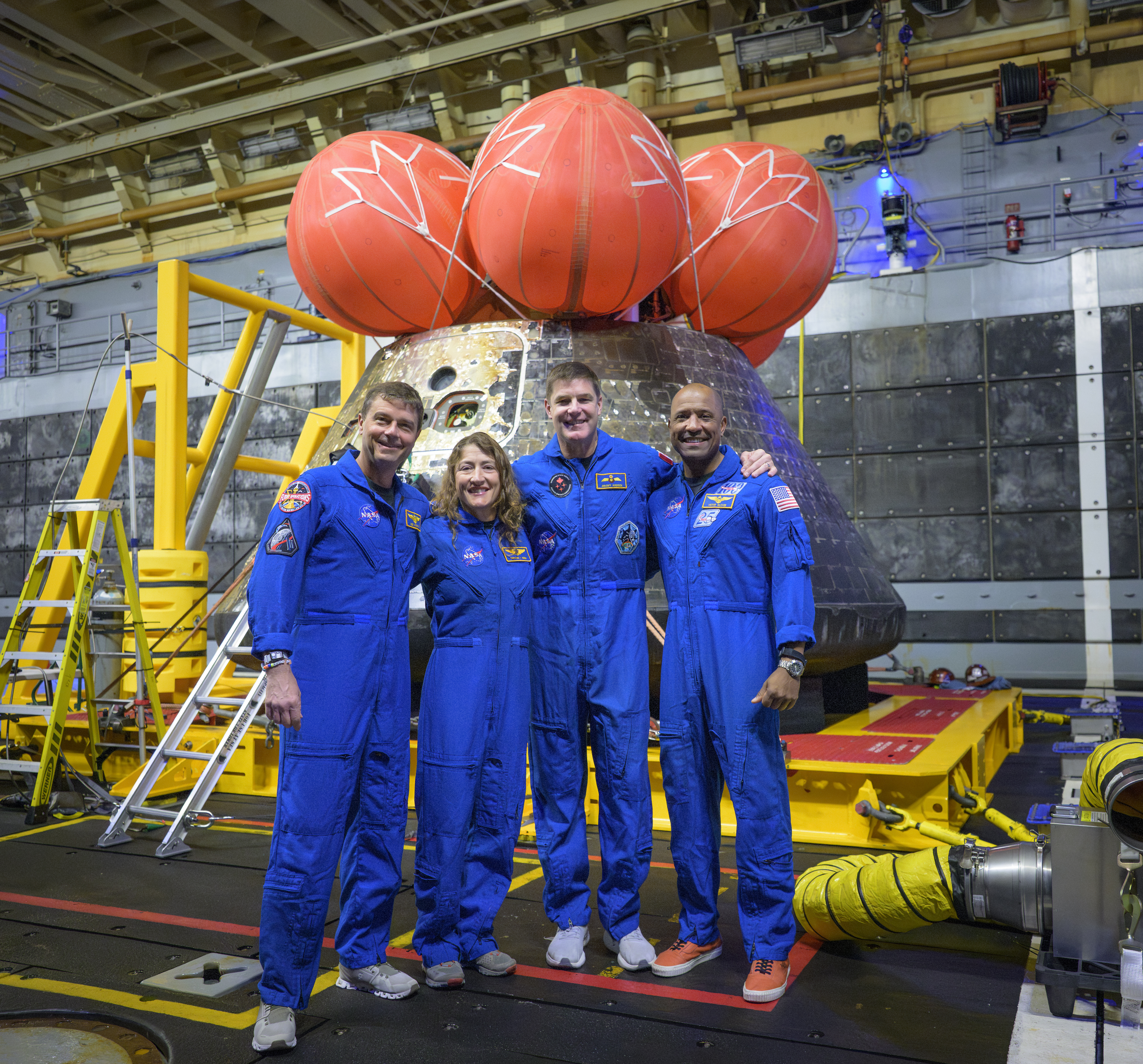
NASA astronauts Reid Wiseman, commander; left, Christina Koch, mission specialist; CSA (Canadian Space Agency) astronaut Jeremy Hansen, mission specialist; and NASA astronaut Victor Glover, Artemis II pilot, right, pose for a group photo after viewing the Orion spacecraft in the well deck of USS John P. Murtha, Saturday, April 11, 2026, in the Pacific Ocean off the coast of California. The quartet splashed down Friday, April 10 at 5:07 p.m. PDT (8:07p.m. EDT).

Read More

Gospel and Word of the Day – 14 April 2026 – A reading from the Book of the Acts of the Apostles Acts 4:32-37 The community of believers was of one heart and mind, and no one claimed that any of his possessions was his own, but they had everything in common. With great power the Apostles bore witness to the resurrection of the Lord Jesus, and great favor was accorded them all. There was no needy person among them, for those who owned property or houses would sell them, bring the proceeds of the sale, and put them at the feet of the Apostles, and they were distributed to each according to need. Thus Joseph, also named by the Apostles Barnabas (which is translated "son of encouragement"), a Levite, a Cypriot by birth, sold a piece of property that he owned, then brought the money and put it at the feet of the Apostles.From the Gospel according to John 3:7b-15 Jesus said to Nicodemus: "’You must be born from above.’ The wind blows where it wills, and you can hear the sound it makes, but you do not know where it comes from or where it goes; so it is with everyone who is born of the Spirit." Nicodemus answered and said to him, ‘How can this happen?" Jesus answered and said to him, "You are the teacher of Israel and you do not understand this? Amen, amen, I say to you, we speak of what we know and we testify to what we have seen, but you people do not accept our testimony. If I tell you about earthly things and you do not believe, how will you believe if I tell you about heavenly things? No one has gone up to heaven except the one who has come down from heaven, the Son of Man. And just as Moses lifted up the serpent in the desert, so must the Son of Man be lifted up, so that everyone who believes in him may have eternal life."The scene unfolds at night: Nicodemus, one of the leaders of the Jews, a righteous and open-minded person (cf. Jn 7:50-51), comes to meet Jesus. He needs light and guidance: he seeks God and asks the Teacher of Nazareth for help because he recognizes him as a prophet, a man who performs extraordinary signs. The Lord welcomes him, listens to him, and eventually reveals to him that the Son of Man must be lifted up, “so that whoever believes in him may have eternal life” (Jn 3:15), adding: “For God so loved the world that he gave his only Son, so that everyone who believes in him might not perish but might have eternal life” (v. 16). Nicodemus, who perhaps does not fully comprehend the meaning of these words in the moment, will certainly do so when he helps to bury the Savior’s body after the crucifixion (cf. Jn 19:39). It is then that he will understand that God, in order to redeem humanity, became man and died on the cross (…) for the immense love with which God has transformed the means to death into an instrument of life, embracing it for our salvation, teaching us that nothing can separate us from him (cf. Rom 8:35-39) and that his love is greater than our own sin (cf. Francis, Catechesis, 30 March 2016). (Pope Leo XIV, Angelus, 14 September 2025)

A reading from the Book of the Acts of the Apostles
Acts 4:32-37

The community of believers was of one heart and mind,
and no one claimed that any of his possessions was his own,
but they had everything in common.
With great power the Apostles bore witness
to the resurrection of the Lord Jesus,
and great favor was accorded them all.
There was no needy person among them,
for those who owned property or houses would sell them,
bring the proceeds of the sale,
and put them at the feet of the Apostles,
and they were distributed to each according to need.

Thus Joseph, also named by the Apostles Barnabas
(which is translated "son of encouragement"),
a Levite, a Cypriot by birth,
sold a piece of property that he owned,
then brought the money and put it at the feet of the Apostles.

From the Gospel according to John
3:7b-15

Jesus said to Nicodemus:
"’You must be born from above.’
The wind blows where it wills, and you can hear the sound it makes,
but you do not know where it comes from or where it goes;
so it is with everyone who is born of the Spirit."
Nicodemus answered and said to him,
‘How can this happen?"
Jesus answered and said to him,
"You are the teacher of Israel and you do not understand this?
Amen, amen, I say to you,
we speak of what we know and we testify to what we have seen,
but you people do not accept our testimony.
If I tell you about earthly things and you do not believe,
how will you believe if I tell you about heavenly things?
No one has gone up to heaven
except the one who has come down from heaven, the Son of Man.
And just as Moses lifted up the serpent in the desert,
so must the Son of Man be lifted up,
so that everyone who believes in him may have eternal life."

The scene unfolds at night: Nicodemus, one of the leaders of the Jews, a righteous and open-minded person (cf. Jn 7:50-51), comes to meet Jesus. He needs light and guidance: he seeks God and asks the Teacher of Nazareth for help because he recognizes him as a prophet, a man who performs extraordinary signs. The Lord welcomes him, listens to him, and eventually reveals to him that the Son of Man must be lifted up, “so that whoever believes in him may have eternal life” (Jn 3:15), adding: “For God so loved the world that he gave his only Son, so that everyone who believes in him might not perish but might have eternal life” (v. 16). Nicodemus, who perhaps does not fully comprehend the meaning of these words in the moment, will certainly do so when he helps to bury the Savior’s body after the crucifixion (cf. Jn 19:39). It is then that he will understand that God, in order to redeem humanity, became man and died on the cross (…) for the immense love with which God has transformed the means to death into an instrument of life, embracing it for our salvation, teaching us that nothing can separate us from him (cf. Rom 8:35-39) and that his love is greater than our own sin (cf. Francis, Catechesis, 30 March 2016). (Pope Leo XIV, Angelus, 14 September 2025)

Read More
‘Cabrini’ screening to boost awareness of Eucharistic pilgrimage event #Catholic – “Cabrini,” the 2024 film about St. Frances Xavier Cabrini, America’s first Catholic saint and advocate for immigrants, will be screened Tuesday, April 21, at 7 p.m. at the Dolan Performing Arts Center, St. Elizabeth University in the Convent Station neighborhood of Morris Township, N.J.
A week later, on Tuesday, April 28, at 7 p.m., executive producer J. Eustace Wolfington and his team will host a “talk-back” on the film’s creation, focusing on human rights, women’s leadership, and hope. Bishop Emeritus Nicholas DiMarzio of the Brooklyn Diocese in New York, who advocates for immigrants’ rights, and Mother Cabrini’s family are also scheduled to appear.
Both events at St. Elizabeth’s will focus on St. Frances Cabrini as a model of women’s leadership, especially in her work with immigrants and the poor. They also promote the 2026 National Eucharistic Pilgrimage (NEP) stops in Passaic and Paterson, N.J., on June 14 and 15. The St. Frances Xavier Cabrini Route of the NEP will travel the Eastern Seaboard this summer.
Before the “Cabrini” screening, Father Cesar Jaramillo, pilgrimage stop delegate and pastor of Holy Spirit Parish in Pequannock, N.J., will address attendees and invite them to join the local NEP event. Members of the Communications Department of the Paterson Diocese in New Jersey will also be present to distribute NEP promotional materials.
Register now to secure your spot for the pilgrimage. See the schedule below for details.

Click here to subscribe to our weekly newsletter.

“The pilgrimage in our diocese is an opportunity for Catholics to renew their love for Jesus and the Eucharist — a goal of the New Evangelization — and to show solidarity with immigrants,” Father Cesar Jaramillo said. “We invite all Paterson parishes and the broader community to attend and join us in this spiritual journey.”
The pilgrimage route honors Mother Cabrini, born in Italy in 1850. She founded the Missionary Sisters of the Sacred Heart of Jesus. In 1889, Pope Leo XIII sent her and her sisters to New York. They opened schools and orphanages for Italian immigrants despite many challenges. According to the Missionary Sisters, Mother Cabrini traveled across Europe, the Americas, and the U.S., founding 67 institutions.
Father Jaramillo described “Cabrini” as telling the story of “a remarkable woman who was passionate about social justice.”
“Mother Cabrini was steadfast in giving a voice to the voiceless. Most were Italian immigrants who were ignored. The movie reflects today’s immigrant crisis in the U.S. The pilgrimage will also honor the U.S.’s 250th birthday. Immigrants built much of our country in search of the American Dream,” Father Jaramillo said.
The “Cabrini” screening and “talk-back” are possible through the friendship between Carol Bezak — a St. Elizabeth’s alumna and president of the National Association of Shrine and Pilgrimage Apostolate — and one of the film’s executive producers. Other NEP stops will also host screenings of the films, said Andrea M. Adams, director of alumni engagement and annual giving.
All are welcome to attend the two “Cabrini” film events at St. Elizabeth’s. Admission is free.
The pilgrimage, themed “One Nation Under God,” includes 18 stops from Pentecost to Independence Day in Philadelphia. It calls for renewal, unity, and mission. Nine young adult Perpetual Pilgrims and their chaplains will carry the Blessed Sacrament through the original 13 colonies, 18 dioceses, and two Eastern Rite eparchies.
All are welcome to pray before the Blessed Sacrament during the pilgrimage. Admission to events is free, but advance registration is requested to assist organizers. Please register now to reserve your spot for one or more events using the QR code on this page.
 For questions about events in this diocese, please contact:MMoncaleano@patersondiocese.org. For registration assistance, please contact:registration@eucharisticcongress.org.

National Eucharistic Pilgrimage activities in the Paterson Diocese, N.J., on June 14 and 15
Pilgrimage activities on June 14:
3:30–5 p.m.: Eucharist talk (English), Fr. Rafael Capo, Holy Rosary Church, 6 Wall St., Passaic, N.J.
3:30–5 p.m.: “Influenciados por la Eucaristía” opening talk (Spanish), P. Heriberto García, St. Nicholas, 217 President St., Passaic, N.J.
5–6:30 p.m.: Eucharistic Procession from Holy Rosary Church (6 Wall St, Passaic, N.J.) to Boverini Stadium (1.5 miles). The procession will end with the opening Mass.
6:30–8 p.m.: Opening Mass, Boverini Stadium, 262 River Dr., Passaic, N.J., with Bishop Kevin J. Sweeney.
Pilgrimage events on June 15:
3–5 p.m.: Divine Liturgy with Byzantine Catholic community, St. Michael Chapel, 415 Lackawanna Ave., Woodland Park, N.J.
5:30–7 p.m.: Eucharistic Procession (loop) for communicants and local faithful at the Cathedral of St. John the Baptist, 381 Grand St., Paterson, N.J.
7–8:30 p.m.: Closing Mass with Bishop Sweeney and homily by Father Casey Cole, O.F.M., at the Cathedral of St. John the Baptist, 381 Grand St., Paterson. The municipal parking lot opens at 5 p.m. across from the Cathedral. Watch the livestream at https://rcdopcathedral.org/

‘Cabrini’ screening to boost awareness of Eucharistic pilgrimage event #Catholic – “Cabrini,” the 2024 film about St. Frances Xavier Cabrini, America’s first Catholic saint and advocate for immigrants, will be screened Tuesday, April 21, at 7 p.m. at the Dolan Performing Arts Center, St. Elizabeth University in the Convent Station neighborhood of Morris Township, N.J. A week later, on Tuesday, April 28, at 7 p.m., executive producer J. Eustace Wolfington and his team will host a “talk-back” on the film’s creation, focusing on human rights, women’s leadership, and hope. Bishop Emeritus Nicholas DiMarzio of the Brooklyn Diocese in New York, who advocates for immigrants’ rights, and Mother Cabrini’s family are also scheduled to appear. Both events at St. Elizabeth’s will focus on St. Frances Cabrini as a model of women’s leadership, especially in her work with immigrants and the poor. They also promote the 2026 National Eucharistic Pilgrimage (NEP) stops in Passaic and Paterson, N.J., on June 14 and 15. The St. Frances Xavier Cabrini Route of the NEP will travel the Eastern Seaboard this summer. Before the “Cabrini” screening, Father Cesar Jaramillo, pilgrimage stop delegate and pastor of Holy Spirit Parish in Pequannock, N.J., will address attendees and invite them to join the local NEP event. Members of the Communications Department of the Paterson Diocese in New Jersey will also be present to distribute NEP promotional materials. Register now to secure your spot for the pilgrimage. See the schedule below for details. Click here to subscribe to our weekly newsletter. “The pilgrimage in our diocese is an opportunity for Catholics to renew their love for Jesus and the Eucharist — a goal of the New Evangelization — and to show solidarity with immigrants,” Father Cesar Jaramillo said. “We invite all Paterson parishes and the broader community to attend and join us in this spiritual journey.” The pilgrimage route honors Mother Cabrini, born in Italy in 1850. She founded the Missionary Sisters of the Sacred Heart of Jesus. In 1889, Pope Leo XIII sent her and her sisters to New York. They opened schools and orphanages for Italian immigrants despite many challenges. According to the Missionary Sisters, Mother Cabrini traveled across Europe, the Americas, and the U.S., founding 67 institutions. Father Jaramillo described “Cabrini” as telling the story of “a remarkable woman who was passionate about social justice.” “Mother Cabrini was steadfast in giving a voice to the voiceless. Most were Italian immigrants who were ignored. The movie reflects today’s immigrant crisis in the U.S. The pilgrimage will also honor the U.S.’s 250th birthday. Immigrants built much of our country in search of the American Dream,” Father Jaramillo said. The “Cabrini” screening and “talk-back” are possible through the friendship between Carol Bezak — a St. Elizabeth’s alumna and president of the National Association of Shrine and Pilgrimage Apostolate — and one of the film’s executive producers. Other NEP stops will also host screenings of the films, said Andrea M. Adams, director of alumni engagement and annual giving. All are welcome to attend the two “Cabrini” film events at St. Elizabeth’s. Admission is free. The pilgrimage, themed “One Nation Under God,” includes 18 stops from Pentecost to Independence Day in Philadelphia. It calls for renewal, unity, and mission. Nine young adult Perpetual Pilgrims and their chaplains will carry the Blessed Sacrament through the original 13 colonies, 18 dioceses, and two Eastern Rite eparchies. All are welcome to pray before the Blessed Sacrament during the pilgrimage. Admission to events is free, but advance registration is requested to assist organizers. Please register now to reserve your spot for one or more events using the QR code on this page.  For questions about events in this diocese, please contact:MMoncaleano@patersondiocese.org. For registration assistance, please contact:registration@eucharisticcongress.org. National Eucharistic Pilgrimage activities in the Paterson Diocese, N.J., on June 14 and 15 Pilgrimage activities on June 14: 3:30–5 p.m.: Eucharist talk (English), Fr. Rafael Capo, Holy Rosary Church, 6 Wall St., Passaic, N.J. 3:30–5 p.m.: “Influenciados por la Eucaristía” opening talk (Spanish), P. Heriberto García, St. Nicholas, 217 President St., Passaic, N.J. 5–6:30 p.m.: Eucharistic Procession from Holy Rosary Church (6 Wall St, Passaic, N.J.) to Boverini Stadium (1.5 miles). The procession will end with the opening Mass. 6:30–8 p.m.: Opening Mass, Boverini Stadium, 262 River Dr., Passaic, N.J., with Bishop Kevin J. Sweeney. Pilgrimage events on June 15: 3–5 p.m.: Divine Liturgy with Byzantine Catholic community, St. Michael Chapel, 415 Lackawanna Ave., Woodland Park, N.J. 5:30–7 p.m.: Eucharistic Procession (loop) for communicants and local faithful at the Cathedral of St. John the Baptist, 381 Grand St., Paterson, N.J. 7–8:30 p.m.: Closing Mass with Bishop Sweeney and homily by Father Casey Cole, O.F.M., at the Cathedral of St. John the Baptist, 381 Grand St., Paterson. The municipal parking lot opens at 5 p.m. across from the Cathedral. Watch the livestream at https://rcdopcathedral.org/

‘Cabrini’ screening to boost awareness of Eucharistic pilgrimage event #Catholic –

“Cabrini,” the 2024 film about St. Frances Xavier Cabrini, America’s first Catholic saint and advocate for immigrants, will be screened Tuesday, April 21, at 7 p.m. at the Dolan Performing Arts Center, St. Elizabeth University in the Convent Station neighborhood of Morris Township, N.J.

A week later, on Tuesday, April 28, at 7 p.m., executive producer J. Eustace Wolfington and his team will host a “talk-back” on the film’s creation, focusing on human rights, women’s leadership, and hope. Bishop Emeritus Nicholas DiMarzio of the Brooklyn Diocese in New York, who advocates for immigrants’ rights, and Mother Cabrini’s family are also scheduled to appear.

Both events at St. Elizabeth’s will focus on St. Frances Cabrini as a model of women’s leadership, especially in her work with immigrants and the poor. They also promote the 2026 National Eucharistic Pilgrimage (NEP) stops in Passaic and Paterson, N.J., on June 14 and 15. The St. Frances Xavier Cabrini Route of the NEP will travel the Eastern Seaboard this summer.

Before the “Cabrini” screening, Father Cesar Jaramillo, pilgrimage stop delegate and pastor of Holy Spirit Parish in Pequannock, N.J., will address attendees and invite them to join the local NEP event. Members of the Communications Department of the Paterson Diocese in New Jersey will also be present to distribute NEP promotional materials.

Register now to secure your spot for the pilgrimage. See the schedule below for details.


Click here to subscribe to our weekly newsletter.

“The pilgrimage in our diocese is an opportunity for Catholics to renew their love for Jesus and the Eucharist — a goal of the New Evangelization — and to show solidarity with immigrants,” Father Cesar Jaramillo said. “We invite all Paterson parishes and the broader community to attend and join us in this spiritual journey.”

The pilgrimage route honors Mother Cabrini, born in Italy in 1850. She founded the Missionary Sisters of the Sacred Heart of Jesus. In 1889, Pope Leo XIII sent her and her sisters to New York. They opened schools and orphanages for Italian immigrants despite many challenges. According to the Missionary Sisters, Mother Cabrini traveled across Europe, the Americas, and the U.S., founding 67 institutions.

Father Jaramillo described “Cabrini” as telling the story of “a remarkable woman who was passionate about social justice.”

“Mother Cabrini was steadfast in giving a voice to the voiceless. Most were Italian immigrants who were ignored. The movie reflects today’s immigrant crisis in the U.S. The pilgrimage will also honor the U.S.’s 250th birthday. Immigrants built much of our country in search of the American Dream,” Father Jaramillo said.

The “Cabrini” screening and “talk-back” are possible through the friendship between Carol Bezak — a St. Elizabeth’s alumna and president of the National Association of Shrine and Pilgrimage Apostolate — and one of the film’s executive producers. Other NEP stops will also host screenings of the films, said Andrea M. Adams, director of alumni engagement and annual giving.

All are welcome to attend the two “Cabrini” film events at St. Elizabeth’s. Admission is free.

The pilgrimage, themed “One Nation Under God,” includes 18 stops from Pentecost to Independence Day in Philadelphia. It calls for renewal, unity, and mission. Nine young adult Perpetual Pilgrims and their chaplains will carry the Blessed Sacrament through the original 13 colonies, 18 dioceses, and two Eastern Rite eparchies.

All are welcome to pray before the Blessed Sacrament during the pilgrimage. Admission to events is free, but advance registration is requested to assist organizers. Please register now to reserve your spot for one or more events using the QR code on this page.

 For questions about events in this diocese, please contact:MMoncaleano@patersondiocese.org. For registration assistance, please contact:registration@eucharisticcongress.org.


National Eucharistic Pilgrimage activities in the Paterson Diocese, N.J., on June 14 and 15

Pilgrimage activities on June 14:

3:30–5 p.m.: Eucharist talk (English), Fr. Rafael Capo, Holy Rosary Church, 6 Wall St., Passaic, N.J.

3:30–5 p.m.: “Influenciados por la Eucaristía” opening talk (Spanish), P. Heriberto García, St. Nicholas, 217 President St., Passaic, N.J.

5–6:30 p.m.: Eucharistic Procession from Holy Rosary Church (6 Wall St, Passaic, N.J.) to Boverini Stadium (1.5 miles). The procession will end with the opening Mass.

6:30–8 p.m.: Opening Mass, Boverini Stadium, 262 River Dr., Passaic, N.J., with Bishop Kevin J. Sweeney.

Pilgrimage events on June 15:

3–5 p.m.: Divine Liturgy with Byzantine Catholic community, St. Michael Chapel, 415 Lackawanna Ave., Woodland Park, N.J.

5:30–7 p.m.: Eucharistic Procession (loop) for communicants and local faithful at the Cathedral of St. John the Baptist, 381 Grand St., Paterson, N.J.

7–8:30 p.m.: Closing Mass with Bishop Sweeney and homily by Father Casey Cole, O.F.M., at the Cathedral of St. John the Baptist, 381 Grand St., Paterson. The municipal parking lot opens at 5 p.m. across from the Cathedral. Watch the livestream at https://rcdopcathedral.org/

“Cabrini,” the 2024 film about St. Frances Xavier Cabrini, America’s first Catholic saint and advocate for immigrants, will be screened Tuesday, April 21, at 7 p.m. at the Dolan Performing Arts Center, St. Elizabeth University in the Convent Station neighborhood of Morris Township, N.J. A week later, on Tuesday, April 28, at 7 p.m., executive producer J. Eustace Wolfington and his team will host a “talk-back” on the film’s creation, focusing on human rights, women’s leadership, and hope. Bishop Emeritus Nicholas DiMarzio of the Brooklyn Diocese in New York, who advocates for immigrants’ rights, and Mother Cabrini’s family are also

Read More
‘60 Minutes’ takes stock of Catholic Church under Leo with top cardinals – #Catholic – Three influential American cardinals spoke about the Church under Pope Leo XIV in an interview on “60 Minutes” this week.In two segments of the show, Cardinal Robert McElroy of Washington, D.C.; Cardinal Joseph Tobin of Newark, New Jersey; and Cardinal Blaise Cupich of Chicago spoke on the Church in America, from increased conversions and the meaning of patriotism to controversial topics like the Iran ceasefire and immigration enforcement.Why are young people joining the Church?Cupich said he does not entirely know what is behind the reported rise in young people entering the Catholic Church as U.S. dioceses report elevated numbers of Easter baptisms and confirmations.“We are doing some surveys about people who are coming to church to see whatʼs motivating them,” he said. “I do think, though, that research is showing that there really is a deep hunger in the hearts of young people for something that can help them with the meaning of life. But also thereʼs a woundedness on the part of young people that they are seeking healing for.”“We donʼt have all the answers, but we are going to try to drill down to find out more about that,” Cupich said.McElroy pointed to a need for “moral leadership in the world” as a partial explanation.“What a tragedy to have a world in which there are not moral leaders,” he said. “I think young people, and young adults particularly, are looking for a sense of that in their lives — and some of those are coming into the Church for that reason.”“The number of those joining the Church this year is a record for the archdiocese, which is a wonderful thing,” he said of the Archdiocese of Washington, which had 1,800 converts.Tobin credited some of the rising interest and attendance in the Catholic Church to Pope Leo.“Iʼve had the privilege of working closely with four popes: very different people in a lot of ways, but each one in some way was the right one for that moment in time,” Tobin said. “I believe that Pope Leo is the right man at this time.”When asked about the effect of the sex abuse scandal on people leaving the Church, Cupich noted that it “prompts us to be even more forthright in doing everything possible to protect children, but also to address the harm that was done.”“That, I think, is something thatʼs always on the front burner for us with regard to the fall off in terms of people practicing,” he said.Cupich noted, however, that other religions are seeing declines in membership as well.“Itʼs also part of the secularization thatʼs happening in society today,” he said. “People have a lot more options on Sunday, on the weekend, than they did before. So I think there are a number of factors that contributed to that decline.”What does patriotism look like for Catholics?In light of the upcoming 250th anniversary of the founding of the United States, the cardinals shared their thoughts on a Catholic understanding of patriotism.“For us as Catholic Americans, we love our country because of what it aspires to be and has for the past 250 years,” McElroy said.“We love our country not merely because we were born here, if we were, but rather because of its aspirations of democracy, justice, equality, of freedom that have been lived out with differing levels of success all through our history, and having to change it and readapt it to make it more true to its core,” he continued.“For me," Cupich said, "patriotism is about being united in the common task of creating the opportunities for everyone to flourish — that they would have the opportunity to be the person God intended them to be."“That is part of the aspirations that immigrants came here with; an opportunity to have a fresh start,” he said. “So how can we work together to make sure that everybody has an opportunity to flourish? I think thatʼs patriotism.”Pope Leo and politics: Iran and ICEWhen asked if he would like to see the first American pope be more outspoken on controversial issues, Tobin said: “Heʼs the pastor of the world; heʼs not a pundit.”“The distinction is heʼs not going to pronounce on everything, but heʼs going to pronounce on whatʼs important,” Tobin said.Recently, Pope Leo has called for an end to the war with Iran, advocating for peace and dialogue.When asked if the Iran war is a just war according to Catholic teaching, McElroy said it is not.“Catholic faith teaches us there are certain prerequisites for a just war,“ he said. ”You canʼt go for a variety of different aims. You have to have a focused aim, which is to restore justice and restore peace. Thatʼs it.”When asked about the destruction of the Iranian regimeʼs nuclear and ballistic missile capabilities as an aim of the war, McElroy agreed that the regime “should be removed.”“Itʼs an abominable regime and it should be removed,” McElroy said. “But this is a war of choice that we went to and I think itʼs embedded in a wider moment in the United States thatʼs worrying, which is this. Weʼre seeing before us the possibility of war after war after war.”Cupich criticized the Trump administrationʼs “gamification” of the war through social media posts and edits, calling it “sickening.”“Weʼre dehumanizing the victims of war by turning the suffering of people and the killing of children and our own soldiers into entertainment,” he said. “It is sickening. To splice together movie cuts with actual bombing and targeting of people for the purposes of entertainment is sickening. This is not who we are. Weʼre better than this.”The cardinals also shared pastoral concerns amid ongoing deportations, an issue about which Pope Leo has also spoken.Tobin criticized the tactics used by the U.S. Immigration and Customs Enforcement agency, saying that when immigrants “have to hide their identities,” this “can actually violate other guarantees of our Constitution and Bill of Rights.”“I think somebodyʼs got to call that out,” he said. “And Iʼm not the only one.”McElroy shared his concern that many immigrants “live under fear.”He said attendance at Spanish Masses in his archdiocese went down 30% in the past year. “Thirty percent — thatʼs a lot, and itʼs all fear,” he said.McElroy said there "is a roundup of people throughout the country, people who have been living good, strong lives; [who have] been here a long time." These people "raised their children here; many of their children [were] born here and are citizens,” he said. “Thatʼs what our objection is.”But the cardinal, who for 10 years served as bishop of San Diego, added that he does believe in strong borders, noting that under Biden, “it got to a point where it was getting out of control.”Recalling the popeʼs recent words and actions (the pope is currently visiting Africa on his third international journey), Cupich said Leo is “sending a message that his top priority right now is to be with those who are downcast and marginalized.”

‘60 Minutes’ takes stock of Catholic Church under Leo with top cardinals – #Catholic – Three influential American cardinals spoke about the Church under Pope Leo XIV in an interview on “60 Minutes” this week.In two segments of the show, Cardinal Robert McElroy of Washington, D.C.; Cardinal Joseph Tobin of Newark, New Jersey; and Cardinal Blaise Cupich of Chicago spoke on the Church in America, from increased conversions and the meaning of patriotism to controversial topics like the Iran ceasefire and immigration enforcement.Why are young people joining the Church?Cupich said he does not entirely know what is behind the reported rise in young people entering the Catholic Church as U.S. dioceses report elevated numbers of Easter baptisms and confirmations.“We are doing some surveys about people who are coming to church to see whatʼs motivating them,” he said. “I do think, though, that research is showing that there really is a deep hunger in the hearts of young people for something that can help them with the meaning of life. But also thereʼs a woundedness on the part of young people that they are seeking healing for.”“We donʼt have all the answers, but we are going to try to drill down to find out more about that,” Cupich said.McElroy pointed to a need for “moral leadership in the world” as a partial explanation.“What a tragedy to have a world in which there are not moral leaders,” he said. “I think young people, and young adults particularly, are looking for a sense of that in their lives — and some of those are coming into the Church for that reason.”“The number of those joining the Church this year is a record for the archdiocese, which is a wonderful thing,” he said of the Archdiocese of Washington, which had 1,800 converts.Tobin credited some of the rising interest and attendance in the Catholic Church to Pope Leo.“Iʼve had the privilege of working closely with four popes: very different people in a lot of ways, but each one in some way was the right one for that moment in time,” Tobin said. “I believe that Pope Leo is the right man at this time.”When asked about the effect of the sex abuse scandal on people leaving the Church, Cupich noted that it “prompts us to be even more forthright in doing everything possible to protect children, but also to address the harm that was done.”“That, I think, is something thatʼs always on the front burner for us with regard to the fall off in terms of people practicing,” he said.Cupich noted, however, that other religions are seeing declines in membership as well.“Itʼs also part of the secularization thatʼs happening in society today,” he said. “People have a lot more options on Sunday, on the weekend, than they did before. So I think there are a number of factors that contributed to that decline.”What does patriotism look like for Catholics?In light of the upcoming 250th anniversary of the founding of the United States, the cardinals shared their thoughts on a Catholic understanding of patriotism.“For us as Catholic Americans, we love our country because of what it aspires to be and has for the past 250 years,” McElroy said.“We love our country not merely because we were born here, if we were, but rather because of its aspirations of democracy, justice, equality, of freedom that have been lived out with differing levels of success all through our history, and having to change it and readapt it to make it more true to its core,” he continued.“For me," Cupich said, "patriotism is about being united in the common task of creating the opportunities for everyone to flourish — that they would have the opportunity to be the person God intended them to be."“That is part of the aspirations that immigrants came here with; an opportunity to have a fresh start,” he said. “So how can we work together to make sure that everybody has an opportunity to flourish? I think thatʼs patriotism.”Pope Leo and politics: Iran and ICEWhen asked if he would like to see the first American pope be more outspoken on controversial issues, Tobin said: “Heʼs the pastor of the world; heʼs not a pundit.”“The distinction is heʼs not going to pronounce on everything, but heʼs going to pronounce on whatʼs important,” Tobin said.Recently, Pope Leo has called for an end to the war with Iran, advocating for peace and dialogue.When asked if the Iran war is a just war according to Catholic teaching, McElroy said it is not.“Catholic faith teaches us there are certain prerequisites for a just war,“ he said. ”You canʼt go for a variety of different aims. You have to have a focused aim, which is to restore justice and restore peace. Thatʼs it.”When asked about the destruction of the Iranian regimeʼs nuclear and ballistic missile capabilities as an aim of the war, McElroy agreed that the regime “should be removed.”“Itʼs an abominable regime and it should be removed,” McElroy said. “But this is a war of choice that we went to and I think itʼs embedded in a wider moment in the United States thatʼs worrying, which is this. Weʼre seeing before us the possibility of war after war after war.”Cupich criticized the Trump administrationʼs “gamification” of the war through social media posts and edits, calling it “sickening.”“Weʼre dehumanizing the victims of war by turning the suffering of people and the killing of children and our own soldiers into entertainment,” he said. “It is sickening. To splice together movie cuts with actual bombing and targeting of people for the purposes of entertainment is sickening. This is not who we are. Weʼre better than this.”The cardinals also shared pastoral concerns amid ongoing deportations, an issue about which Pope Leo has also spoken.Tobin criticized the tactics used by the U.S. Immigration and Customs Enforcement agency, saying that when immigrants “have to hide their identities,” this “can actually violate other guarantees of our Constitution and Bill of Rights.”“I think somebodyʼs got to call that out,” he said. “And Iʼm not the only one.”McElroy shared his concern that many immigrants “live under fear.”He said attendance at Spanish Masses in his archdiocese went down 30% in the past year. “Thirty percent — thatʼs a lot, and itʼs all fear,” he said.McElroy said there "is a roundup of people throughout the country, people who have been living good, strong lives; [who have] been here a long time." These people "raised their children here; many of their children [were] born here and are citizens,” he said. “Thatʼs what our objection is.”But the cardinal, who for 10 years served as bishop of San Diego, added that he does believe in strong borders, noting that under Biden, “it got to a point where it was getting out of control.”Recalling the popeʼs recent words and actions (the pope is currently visiting Africa on his third international journey), Cupich said Leo is “sending a message that his top priority right now is to be with those who are downcast and marginalized.”

Three influential American cardinals spoke about the Church under Pope Leo XIV in an interview on “60 Minutes” that looked at rising conversions, patriotism, the Iran war, and immigration enforcement.

Read More
President Trump’s criticism of Pope Leo XIV sparks global reaction – #Catholic – President Donald Trump sharply criticized Pope Leo XIV on Sunday, calling him “weak on crime” and “terrible for foreign policy” and saying he is “not a fan” of the pope, prompting a wave of international reactions.Trump made the comments about the Holy Father in a lengthy April 12 post on Truth Social that appeared to be reacting to the pontiff’s recent appeals for peace and an end to the war in Iran. In comments to reporters at Joint Base Andrews, Maryland, shortly afterward, Trump said: “I don’t think he’s doing a very good job. … I am not a fan of Pope Leo.” He added: “He’s a very liberal person.”On Monday morning, the president doubled down on his comments, saying he would not apologize to the pontiff “because Pope Leo said things that are wrong.”In recent weeks, the pope has repeatedly called for an end to hostilities, crying out “Enough of war!” while presiding over a vigil for peace at St. Peterʼs Basilica at the Vatican on April 11. “Stop! Itʼs time for peace! Sit at tables of dialogue and mediation, not at tables where rearmament is planned and death actions are deliberated,” he continued.Iranian leadership spoke out against Trump’s comments, with both the current presidentʼs and the late Imam Sayyid Ali Khameneiʼs social media accounts issuing statements.Iranian President Masoud Pezeshkian wrote in an April 13 social media post: “His Holiness Pope Leo XIV, I condemn the insult to Your Excellency on behalf of the great nation of Iran and declare that the desecration of Jesus, the prophet of peace and brotherhood, is not acceptable to any free person. I wish you glory by Allah.”Pezeshkian’s statement comes after peace talks involving Vice President JD Vance collapsed on April 12. Vance, a Catholic convert and Iraq War veteran, blamed Iran’s refusal to commit to abandoning its nuclear program.Khamenei’s social media account posted an April 13 message invoking the teachings of Jesus against war: “Prophet Jesus (peace be upon him) used to call people to the path of God, and forbade them from vice and injustice.”Tweet“The corrupt and tyrannical powers sought to assassinate that divine Messenger,” the post read, “for those steeped in their passions and the instigators of wars could not tolerate the religion, nor the Prophet, nor those who followed the divine path.”Romeʼs mayor, Roberto Gualtieri, wrote in an April 13 post: “Rome is close to Pope Leo. Donald Trump’s attacks on his high spiritual magisterium and on his commitment to peace are unacceptable and wound sensitivities and consciences. The city of Rome, uniquely bound to its bishop, firmly reaffirms the values of respect, dialogue, and peace.”Italian Prime Minister Giorgia Meloni, who has strong diplomatic ties to the Trump administration, has yet to make a statement.Father Nikodemus Schnabel, abbot of the Benedictine Abbey of the Dormition in Jerusalem, denounced Trump’s post, writing in German: “And then there are actually Catholics — even in the German-speaking world (!) — who still try to sugarcoat the words and actions of this morally bankrupt president and even defend him on moral grounds.”Catholic bishops in the United Kingdom condemned Trump’s criticism of Pope Leo and defended the Holy Father’s repeated calls for peace.“As Pope Leo has made clear, we cannot stand by and allow the message of the Gospel to be abused,” Archbishop John Wilson of Southwark, England, said in a statement shared with EWTN News. “As bishops, we are not politicians, nor statesmen, nor do we pretend to have all the answers. But as followers of the Lord Jesus Christ, the Prince of Peace, we know that each of us is called to be a beacon of his peace."Wilson called Catholics in the U.K. to “be as courageous as our Holy Father in proclaiming the truth that God demands peace.”Cardinal Fernando Chomali of Santiago, Chile, also defended the Holy Father, writing in an April 13 post: “Pope Leo XIV is a good man, forged by years of prayer, study, and closeness to the poor.”Tweet“[Leo] prefers to obey God rather than men. His courage comes from his deepest convictions, from God, and not from passions. We have a coherent leader who charts a path of no return for us: to promote peace always and under all circumstances,” Chomali said.

President Trump’s criticism of Pope Leo XIV sparks global reaction – #Catholic – President Donald Trump sharply criticized Pope Leo XIV on Sunday, calling him “weak on crime” and “terrible for foreign policy” and saying he is “not a fan” of the pope, prompting a wave of international reactions.Trump made the comments about the Holy Father in a lengthy April 12 post on Truth Social that appeared to be reacting to the pontiff’s recent appeals for peace and an end to the war in Iran. In comments to reporters at Joint Base Andrews, Maryland, shortly afterward, Trump said: “I don’t think he’s doing a very good job. … I am not a fan of Pope Leo.” He added: “He’s a very liberal person.”On Monday morning, the president doubled down on his comments, saying he would not apologize to the pontiff “because Pope Leo said things that are wrong.”In recent weeks, the pope has repeatedly called for an end to hostilities, crying out “Enough of war!” while presiding over a vigil for peace at St. Peterʼs Basilica at the Vatican on April 11. “Stop! Itʼs time for peace! Sit at tables of dialogue and mediation, not at tables where rearmament is planned and death actions are deliberated,” he continued.Iranian leadership spoke out against Trump’s comments, with both the current presidentʼs and the late Imam Sayyid Ali Khameneiʼs social media accounts issuing statements.Iranian President Masoud Pezeshkian wrote in an April 13 social media post: “His Holiness Pope Leo XIV, I condemn the insult to Your Excellency on behalf of the great nation of Iran and declare that the desecration of Jesus, the prophet of peace and brotherhood, is not acceptable to any free person. I wish you glory by Allah.”Pezeshkian’s statement comes after peace talks involving Vice President JD Vance collapsed on April 12. Vance, a Catholic convert and Iraq War veteran, blamed Iran’s refusal to commit to abandoning its nuclear program.Khamenei’s social media account posted an April 13 message invoking the teachings of Jesus against war: “Prophet Jesus (peace be upon him) used to call people to the path of God, and forbade them from vice and injustice.”Tweet“The corrupt and tyrannical powers sought to assassinate that divine Messenger,” the post read, “for those steeped in their passions and the instigators of wars could not tolerate the religion, nor the Prophet, nor those who followed the divine path.”Romeʼs mayor, Roberto Gualtieri, wrote in an April 13 post: “Rome is close to Pope Leo. Donald Trump’s attacks on his high spiritual magisterium and on his commitment to peace are unacceptable and wound sensitivities and consciences. The city of Rome, uniquely bound to its bishop, firmly reaffirms the values of respect, dialogue, and peace.”Italian Prime Minister Giorgia Meloni, who has strong diplomatic ties to the Trump administration, has yet to make a statement.Father Nikodemus Schnabel, abbot of the Benedictine Abbey of the Dormition in Jerusalem, denounced Trump’s post, writing in German: “And then there are actually Catholics — even in the German-speaking world (!) — who still try to sugarcoat the words and actions of this morally bankrupt president and even defend him on moral grounds.”Catholic bishops in the United Kingdom condemned Trump’s criticism of Pope Leo and defended the Holy Father’s repeated calls for peace.“As Pope Leo has made clear, we cannot stand by and allow the message of the Gospel to be abused,” Archbishop John Wilson of Southwark, England, said in a statement shared with EWTN News. “As bishops, we are not politicians, nor statesmen, nor do we pretend to have all the answers. But as followers of the Lord Jesus Christ, the Prince of Peace, we know that each of us is called to be a beacon of his peace."Wilson called Catholics in the U.K. to “be as courageous as our Holy Father in proclaiming the truth that God demands peace.”Cardinal Fernando Chomali of Santiago, Chile, also defended the Holy Father, writing in an April 13 post: “Pope Leo XIV is a good man, forged by years of prayer, study, and closeness to the poor.”Tweet“[Leo] prefers to obey God rather than men. His courage comes from his deepest convictions, from God, and not from passions. We have a coherent leader who charts a path of no return for us: to promote peace always and under all circumstances,” Chomali said.

Politicians and faith leaders around the world condemned President Donald Trump’s comments about the American pontiff.

Read More

Galaxy season is upon us  —  the time of the year in the Northern Hemisphere when Earth’s nightside faces out of the plane of the Milky Way. This week, Astronomy magazine Editor Emeritus Dave Eicher invites you to explore some of the best galaxies on offer in Leo, Ursa Major, Coma Berenices, and Virgo. ClearContinue reading “See spring’s best galaxies”

The post See spring’s best galaxies appeared first on Astronomy Magazine.

Read More
Pope Leo XIV recalls the ‘living seed’ of the martyrs of Algeria – #Catholic – ALGIERS, Algeria — The first day of Pope Leo XIV’s international apostolic journey to Africa concluded with an encounter with the Algerian community at the Basilica of Our Lady of Africa in Algiers.“It is with profound joy and fatherly affection that I meet with you today, you whose discrete and precious presence in this land is marked by an ancient heritage and by luminous witnesses of the faith," Pope Leo said after listening to several testimonies."Your community has deep roots indeed. You are the heirs of a host of witnesses who gave their lives, motivated by love for God and neighbor," he continued. "I am particularly reminded of the 19 men and women religious who were martyred in Algeria, choosing to stand alongside this people in its joys and sorrows. Their blood is a living seed that never ceases to bear fruit.”After fulfilling the more formal engagements — beginning with the late‑morning meeting with the president of the Algerian Republic, authorities, and the diplomatic corps — Leo on Monday afternoon received the embrace of the Algerian Catholic community, present despite heavy rain.At the opening of the meeting, the pope knelt in adoration in front of a tabernacle containing the Eucharist.
 
 Pope Leo XIV prays in front of a tabernacle in the Basilica of Our Lady of Africa in Algiers, Algeria, on April 13, 2026, the first day of an apostolic journey to four countries in Africa. | Credit: AIGAV Pool
 
 “You are also heirs to a still more ancient tradition, dating back to the early centuries of Christianity," he said in a speech delivered in French. "In this land resounded the fervent voice of Augustine of Hippo, preceded by the testimony of his mother, St. Monica, and of other saints. Their memory shines as a call to be authentic signs of communion, dialogue, and peace today."“To all of you, dear friends, and to those who are not able to be present but are following this meeting from afar,“ he added, ”I express my gratitude for your daily commitment to manifest the maternal heart of the Church.”After thanking Cardinal Dieudonné Nzapalainga and a religious sister, Pentecostal student, basilica guide, and Muslim woman who had spoken, the pope invited those present to reflect on three essential aspects of Christian life.“First, prayer. We all need to pray. … Prayer unites, humanizes, strengthens, and purifies the heart. Through prayer, the Church in Algeria sows humanity, unity, strength, and purity, reaching places known only to the Lord," he said.Turning to charity, Leo emphasized that mercy and service are not merely practical assistance but places of grace and mutual growth.“After all, it is precisely love for their brothers and sisters that inspired the witness of the martyrs we have commemorated. In the face of hatred and violence, they remained faithful to charity even to the point of sacrificing themselves alongside many other men and women, Christians and Muslims. They did so without ostentation or fanfare, with serenity and steadfastness, neither falling into presumption nor despair, for they knew the One in whom they had placed their trust.”Addressing peace and unity, Pope Leo recalled that this was the central theme of his visit.“In a world where division and wars sow pain and death among nations, in communities, and even within families, your experience of unity and peace is a compelling sign. Together, you spread fraternity and inspire a deep longing for communion and reconciliation with a powerful and clear message that is borne in simplicity and humility," the pope said.“A considerable part of this country’s territory is desert, and in the desert, no one can survive alone. The hostile environment dispels any presumptions of self‑sufficiency, reminding us that we need one another, and that we need God,“ he said. ”When we acknowledge our fragility, our hearts become open to supporting one another and to invoking the One who can grant what no human power can ensure: the profound reconciliation of hearts and, with it, true peace.”Before reaching the Basilica of Our Lady of Africa, Pope Leo XIV stopped at the Great Mosque of Algiers and earlier at the center of hospitality and friendship of the Augustinian Missionary Sisters in Bab El Oued.There, the pope paid homage to the memory of several religious sisters of this community killed during the civil war in the 1990s. After praying with the sisters and listening to the words of their superior, Leo XIV recalled the martyrs as a precious presence in the land and as a sign of the heart of Augustinian life: witness, even unto martyrdom.“Your presence here means a great deal,” the Holy Father said, recalling a previous visit and highlighting the legacy of St. Augustine in the region: promoting respect for the dignity of every person and affirming that it is possible to live in peace while valuing differences.Before departing, he thanked the sisters and encouraged them to persevere, recalling that the feast of the 19 martyrs of Algeria falls on May 8 — the day of his election.Tomorrow, Pope Leo XIV will make what he described as a true return to his roots, with a visit to Hippo, where St. Augustine — founder of the order to which the pope belongs — served as bishop from A.D. 396 to 430.This story was first published by ACI Stampa, the Italian-language sister service of EWTN News. It has been translated and adapted by EWTN News English.

Pope Leo XIV recalls the ‘living seed’ of the martyrs of Algeria – #Catholic – ALGIERS, Algeria — The first day of Pope Leo XIV’s international apostolic journey to Africa concluded with an encounter with the Algerian community at the Basilica of Our Lady of Africa in Algiers.“It is with profound joy and fatherly affection that I meet with you today, you whose discrete and precious presence in this land is marked by an ancient heritage and by luminous witnesses of the faith," Pope Leo said after listening to several testimonies."Your community has deep roots indeed. You are the heirs of a host of witnesses who gave their lives, motivated by love for God and neighbor," he continued. "I am particularly reminded of the 19 men and women religious who were martyred in Algeria, choosing to stand alongside this people in its joys and sorrows. Their blood is a living seed that never ceases to bear fruit.”After fulfilling the more formal engagements — beginning with the late‑morning meeting with the president of the Algerian Republic, authorities, and the diplomatic corps — Leo on Monday afternoon received the embrace of the Algerian Catholic community, present despite heavy rain.At the opening of the meeting, the pope knelt in adoration in front of a tabernacle containing the Eucharist. Pope Leo XIV prays in front of a tabernacle in the Basilica of Our Lady of Africa in Algiers, Algeria, on April 13, 2026, the first day of an apostolic journey to four countries in Africa. | Credit: AIGAV Pool “You are also heirs to a still more ancient tradition, dating back to the early centuries of Christianity," he said in a speech delivered in French. "In this land resounded the fervent voice of Augustine of Hippo, preceded by the testimony of his mother, St. Monica, and of other saints. Their memory shines as a call to be authentic signs of communion, dialogue, and peace today."“To all of you, dear friends, and to those who are not able to be present but are following this meeting from afar,“ he added, ”I express my gratitude for your daily commitment to manifest the maternal heart of the Church.”After thanking Cardinal Dieudonné Nzapalainga and a religious sister, Pentecostal student, basilica guide, and Muslim woman who had spoken, the pope invited those present to reflect on three essential aspects of Christian life.“First, prayer. We all need to pray. … Prayer unites, humanizes, strengthens, and purifies the heart. Through prayer, the Church in Algeria sows humanity, unity, strength, and purity, reaching places known only to the Lord," he said.Turning to charity, Leo emphasized that mercy and service are not merely practical assistance but places of grace and mutual growth.“After all, it is precisely love for their brothers and sisters that inspired the witness of the martyrs we have commemorated. In the face of hatred and violence, they remained faithful to charity even to the point of sacrificing themselves alongside many other men and women, Christians and Muslims. They did so without ostentation or fanfare, with serenity and steadfastness, neither falling into presumption nor despair, for they knew the One in whom they had placed their trust.”Addressing peace and unity, Pope Leo recalled that this was the central theme of his visit.“In a world where division and wars sow pain and death among nations, in communities, and even within families, your experience of unity and peace is a compelling sign. Together, you spread fraternity and inspire a deep longing for communion and reconciliation with a powerful and clear message that is borne in simplicity and humility," the pope said.“A considerable part of this country’s territory is desert, and in the desert, no one can survive alone. The hostile environment dispels any presumptions of self‑sufficiency, reminding us that we need one another, and that we need God,“ he said. ”When we acknowledge our fragility, our hearts become open to supporting one another and to invoking the One who can grant what no human power can ensure: the profound reconciliation of hearts and, with it, true peace.”Before reaching the Basilica of Our Lady of Africa, Pope Leo XIV stopped at the Great Mosque of Algiers and earlier at the center of hospitality and friendship of the Augustinian Missionary Sisters in Bab El Oued.There, the pope paid homage to the memory of several religious sisters of this community killed during the civil war in the 1990s. After praying with the sisters and listening to the words of their superior, Leo XIV recalled the martyrs as a precious presence in the land and as a sign of the heart of Augustinian life: witness, even unto martyrdom.“Your presence here means a great deal,” the Holy Father said, recalling a previous visit and highlighting the legacy of St. Augustine in the region: promoting respect for the dignity of every person and affirming that it is possible to live in peace while valuing differences.Before departing, he thanked the sisters and encouraged them to persevere, recalling that the feast of the 19 martyrs of Algeria falls on May 8 — the day of his election.Tomorrow, Pope Leo XIV will make what he described as a true return to his roots, with a visit to Hippo, where St. Augustine — founder of the order to which the pope belongs — served as bishop from A.D. 396 to 430.This story was first published by ACI Stampa, the Italian-language sister service of EWTN News. It has been translated and adapted by EWTN News English.

The meeting in the Catholic Basilica of Our Lady of Africa concluded the first day of the pope’s journey to Africa.

Read More
Trump’s comments on Pope Leo called ‘disrespectful’ as Americans react #Catholic Catholic bishops and U.S. elected officials have publicly criticized the president’s statements about Pope Leo XIV.President Donald Trump called Leo “weak on crime and terrible for foreign policy” in a lengthy social media post April 12 that drew response from the United States Conference of Catholic Bishops (USCCB) and elected officials.Bishop Robert Barron of the Diocese of Winona-Rochester, Minnesota, called Trump’s attack on Pope Leo XIV “disrespectful." Barron, who serves on Trump’s Religious Liberty Commission, said in a post on X that Trump’s comments “were entirely inappropriate and disrespectful” and “I think the president owes the pope an apology.”“[Trump’s comments] don’t contribute at all to a constructive conversation,” he said. “It is the pope’s prerogative to articulate Catholic doctrine and the principles that govern the moral life. In regard to the concrete application of those principles, people of goodwill can and do disagree.”Barron encouraged Catholic Trump officials to arrange a meeting with Vatican officials “so that a real dialogue can take place,” saying “this is far preferable to the statements on social media.”Bishop Michael Burbidge of Arlington, Virginia, said in a social media post: “Along with Archbishop [Paul] Coakley, president of the USCCB, and my brother bishops, I was disheartened by recent comments from President Trump concerning Pope Leo XIV and the Church. I pray that civility and respect are fully restored as together, with God’s grace, we work for peace and harmony among all people. May we also be united in our prayer for the end of war and violence so that Christ’s peace reigns throughout the world and in our hearts.”Palm Beach, Florida, Bishop Manuel de Jesús Rodríguez posted on X: “The @DiocesePB stands firm with our Holy Father, @Pontifex, and strongly rejects the disrespectful and violent attacks that Donald J. Trump has directed against the Holy Father.”Buffalo, New York, Bishop Michael Fisher posted on X: “This is not about politics but the very cause of humanity.”The Catholic Association's Ashley McGuire said in a statement: “The Catholic Church does not in any way fit into American political boxes. It will always prioritize the protection of innocent life in all its stages as well as the cause of the poor and marginalized. Insulting the pope, and all Catholics by extension, with the hope of making the Church bend to American political agendas, is discouraging and counterproductive.” McGuire added: “We pray that President Trump apologizes to Pope Leo.”U.S. officials' reaction beginsRepublican Vice President JD Vance, who is Catholic, has not yet commented on the matter, nor has Secretary of State Marco Rubio, also a Catholic.Sen. Mark Kelly, D-Arizona, who is Catholic, posted on X that “I find it abhorrent that the president of the United States would publicly attack the successor of St. Peter.”U.S. House Minority Leader Hakeem Jeffries said on X that Trump “shamefully attacked” the pope. Few Republican elected officials have spoken out.TweetDemocratic California Gov. Gavin Newsom posted on X: “Hey @GOP, you good with your guy directly attacking the pope now?”Rep. Lukas Schubert, a Republican Montana state lawmaker, disputed the presidentʼs statement that the pope is a “liberal person.”“Pope Leo is significantly further to the right than President Trump on abortion, gay marriage, and family values. Also he is more America First on the Iran War,” Schubert said.AI imageTrump also posted an AI-created image on Truth Social that appeared to portray himself as Jesus Christ, healing the sick, which led several Catholics to accuse the president of blasphemy.Edward Feser, a Catholic philosopher and professor at Pasadena City College, posted on X that Trump’s comments illustrate “how utter enslavement to the sin of pride makes a man unsuitable for the presidency.”“For all their faults, previous presidents had the visceral understanding of proper boundaries not to attack the vicar of Christ even when they disagreed with him,” he said.Feser quoted Daniel 11:36-37 in response to Trump’s AI image of himself as Christ, which reads: “And the king shall do according to his will; he shall exalt himself and magnify himself above every god, and shall speak astonishing things against the God of gods … He shall not give heed to any other god, for he shall magnify himself above all.”In reaction to the AI photo, Matt Fradd, the host of “Pints With Aquinas,“ urged Catholics to “offer a rosary today for Donald Trump and all blasphemers. … Seriously. Do it. I will too.”TweetRep. Shontel Brown, D-Ohio, did not directly reference Trumpʼs remarks about the pope but criticized the AI-created image on X: “There aren’t enough words to denounce how wrong this is.”The comments came after Leo criticized the Iran war and Trump’s rhetoric about targeting the entire civilization of Iran. Leo said in response to the post: “I have no fear neither of the Trump administration nor of speaking out loudly about the message of the Gospel.”Marjorie Taylor Greene, a former Republican congresswoman who was a strong ally of Trump before splitting with him on the Iran war and his handling of the Jeffrey Epstein files, posted on X that Trump “attacked the pope because the pope is rightly against Trump’s war in Iran and then he posted this picture of himself as if he is replacing Jesus.”“This comes after last week’s post of his evil tirade on Easter and then threatening to kill an entire civilization,” she said. “I completely denounce this and I’m praying against it!!!”‘Fuels division’Father Robert Sirico, the founder of the Acton Institute, said in a statement that Leo “has both the right and the duty to speak prophetically on matters of war and peace, the dignity of the human person, and the moral limits of force — even when his words discomfort political leaders.”He said Trump’s post does not “strengthen America’s moral standing but “merely fuels division.”Sirico also added that Catholics can disagree with popes on prudential judgments, such as foreign policy or crime, which he said are not infallible: “The Church herself teaches that such applications of principle admit of legitimate debate.”This story was updated at 11:50 a.m. ET on April 13, 2026, with comments from Buffalo, New York, Bishop Michael Fisher and The Catholic Associationʼs Ashley McGuire.

Trump’s comments on Pope Leo called ‘disrespectful’ as Americans react #Catholic Catholic bishops and U.S. elected officials have publicly criticized the president’s statements about Pope Leo XIV.President Donald Trump called Leo “weak on crime and terrible for foreign policy” in a lengthy social media post April 12 that drew response from the United States Conference of Catholic Bishops (USCCB) and elected officials.Bishop Robert Barron of the Diocese of Winona-Rochester, Minnesota, called Trump’s attack on Pope Leo XIV “disrespectful." Barron, who serves on Trump’s Religious Liberty Commission, said in a post on X that Trump’s comments “were entirely inappropriate and disrespectful” and “I think the president owes the pope an apology.”“[Trump’s comments] don’t contribute at all to a constructive conversation,” he said. “It is the pope’s prerogative to articulate Catholic doctrine and the principles that govern the moral life. In regard to the concrete application of those principles, people of goodwill can and do disagree.”Barron encouraged Catholic Trump officials to arrange a meeting with Vatican officials “so that a real dialogue can take place,” saying “this is far preferable to the statements on social media.”Bishop Michael Burbidge of Arlington, Virginia, said in a social media post: “Along with Archbishop [Paul] Coakley, president of the USCCB, and my brother bishops, I was disheartened by recent comments from President Trump concerning Pope Leo XIV and the Church. I pray that civility and respect are fully restored as together, with God’s grace, we work for peace and harmony among all people. May we also be united in our prayer for the end of war and violence so that Christ’s peace reigns throughout the world and in our hearts.”Palm Beach, Florida, Bishop Manuel de Jesús Rodríguez posted on X: “The @DiocesePB stands firm with our Holy Father, @Pontifex, and strongly rejects the disrespectful and violent attacks that Donald J. Trump has directed against the Holy Father.”Buffalo, New York, Bishop Michael Fisher posted on X: “This is not about politics but the very cause of humanity.”The Catholic Association's Ashley McGuire said in a statement: “The Catholic Church does not in any way fit into American political boxes. It will always prioritize the protection of innocent life in all its stages as well as the cause of the poor and marginalized. Insulting the pope, and all Catholics by extension, with the hope of making the Church bend to American political agendas, is discouraging and counterproductive.” McGuire added: “We pray that President Trump apologizes to Pope Leo.”U.S. officials' reaction beginsRepublican Vice President JD Vance, who is Catholic, has not yet commented on the matter, nor has Secretary of State Marco Rubio, also a Catholic.Sen. Mark Kelly, D-Arizona, who is Catholic, posted on X that “I find it abhorrent that the president of the United States would publicly attack the successor of St. Peter.”U.S. House Minority Leader Hakeem Jeffries said on X that Trump “shamefully attacked” the pope. Few Republican elected officials have spoken out.TweetDemocratic California Gov. Gavin Newsom posted on X: “Hey @GOP, you good with your guy directly attacking the pope now?”Rep. Lukas Schubert, a Republican Montana state lawmaker, disputed the presidentʼs statement that the pope is a “liberal person.”“Pope Leo is significantly further to the right than President Trump on abortion, gay marriage, and family values. Also he is more America First on the Iran War,” Schubert said.AI imageTrump also posted an AI-created image on Truth Social that appeared to portray himself as Jesus Christ, healing the sick, which led several Catholics to accuse the president of blasphemy.Edward Feser, a Catholic philosopher and professor at Pasadena City College, posted on X that Trump’s comments illustrate “how utter enslavement to the sin of pride makes a man unsuitable for the presidency.”“For all their faults, previous presidents had the visceral understanding of proper boundaries not to attack the vicar of Christ even when they disagreed with him,” he said.Feser quoted Daniel 11:36-37 in response to Trump’s AI image of himself as Christ, which reads: “And the king shall do according to his will; he shall exalt himself and magnify himself above every god, and shall speak astonishing things against the God of gods … He shall not give heed to any other god, for he shall magnify himself above all.”In reaction to the AI photo, Matt Fradd, the host of “Pints With Aquinas,“ urged Catholics to “offer a rosary today for Donald Trump and all blasphemers. … Seriously. Do it. I will too.”TweetRep. Shontel Brown, D-Ohio, did not directly reference Trumpʼs remarks about the pope but criticized the AI-created image on X: “There aren’t enough words to denounce how wrong this is.”The comments came after Leo criticized the Iran war and Trump’s rhetoric about targeting the entire civilization of Iran. Leo said in response to the post: “I have no fear neither of the Trump administration nor of speaking out loudly about the message of the Gospel.”Marjorie Taylor Greene, a former Republican congresswoman who was a strong ally of Trump before splitting with him on the Iran war and his handling of the Jeffrey Epstein files, posted on X that Trump “attacked the pope because the pope is rightly against Trump’s war in Iran and then he posted this picture of himself as if he is replacing Jesus.”“This comes after last week’s post of his evil tirade on Easter and then threatening to kill an entire civilization,” she said. “I completely denounce this and I’m praying against it!!!”‘Fuels division’Father Robert Sirico, the founder of the Acton Institute, said in a statement that Leo “has both the right and the duty to speak prophetically on matters of war and peace, the dignity of the human person, and the moral limits of force — even when his words discomfort political leaders.”He said Trump’s post does not “strengthen America’s moral standing but “merely fuels division.”Sirico also added that Catholics can disagree with popes on prudential judgments, such as foreign policy or crime, which he said are not infallible: “The Church herself teaches that such applications of principle admit of legitimate debate.”This story was updated at 11:50 a.m. ET on April 13, 2026, with comments from Buffalo, New York, Bishop Michael Fisher and The Catholic Associationʼs Ashley McGuire.

President Donald Trump called Leo “weak on crime and terrible for foreign policy” in a lengthy social media post April 12 that drew response from U.S. bishops and elected officials.

Read More
Pope Leo XIV in Algeria: ‘I am here among you as a pilgrim of peace’ #Catholic ALGIERS, Algeria — Pope Leo XIV on Monday presented himself to Algeria’s diplomatic corps and civil society as “a pilgrim of peace,” urging a more just international order, warning against exclusion and inequality, and praising those who refuse to be “blinded by power or wealth.”Peace remained the central theme of the pope’s first day in Algeria, following his earlier stop at the Martyrs’ Memorial, where he delivered an appeal for peace and reconciliation.Speaking in French at the Djamaa el Djazair Conference Center, Leo recalled his previous visits to Algeria in 2001 and 2013 to Annaba, the ancient see of St. Augustine, whose spiritual legacy has long shaped the Augustinian order to which the pope belongs.“I am here among you as a pilgrim of peace, eager to meet the noble Algerian people,” the pope said. “We are brothers and sisters, for we have the same Father in heaven.”Leo said the “profound religious sense of the Algerian people” fosters “a culture of encounter and reconciliation,” adding that his visit also seeks to be a sign of that spirit.“In a world full of conflicts and misunderstandings, let us meet and strive for mutual understanding, recognizing that we are one family!” he said. “Today, the simplicity of this awareness is the key to opening many doors that are closed.”Addressing an audience of about 1,400 people from civil society and the diplomatic corps, the pope praised the resilience of the Algerian people, saying they had never been defeated by their trials because of their spirit of solidarity, hospitality, and community.“They are the truly strong ones, to whom the future belongs: those who do not allow themselves to be blinded by power or wealth, and those who refuse to sacrifice the dignity of their fellow citizens for the sake of personal or collective gain,” he said.Leo also highlighted the Algerian understanding of hospitality and almsgiving, reflected in the word “sadaka,” which he noted can also mean justice.“The one who accumulates wealth and remains indifferent to others is unjust,” the pope said, calling this vision of justice both “simple and radical” because it recognizes the image of God in others. “Indeed, a religion without mercy and a society without solidarity are a scandal in God’s eyes.”At the same time, he warned that many societies that consider themselves advanced are falling ever deeper into inequality and exclusion, while “people and organizations that dominate others destroy the world.” He said Africa knows this reality well and suggested that Algeria’s historical experience gives it a critical perspective on global power balances.“If you are able to engage in dialogue regarding the concerns of all and show solidarity with the sufferings of so many countries near and far, then you will be able to contribute to both envisioning and bringing about greater justice among peoples,” Leo said.He added that this task is especially urgent “in the face of continuous violations of international law and neocolonial tendencies.”Drawing on the teaching of Benedict XVI and Pope Francis, Leo called on Algeria’s authorities not to fear a broader social participation by those on the margins.“I therefore urge those of you who hold positions of authority in this country not to fear this outlook but to promote a vibrant, dynamic, and free civil society, in which young people in particular are recognized as capable of helping to broaden the horizon of hope for all,” he said.“The true strength of a nation lies in the cooperation of everyone in pursuing the common good,” he continued. “Authorities are called not to dominate but to serve the people and foster their development.”The pope also pointed to Algeria’s unique role as “a bridge between North and South, and between East and West,” describing the Mediterranean and the Sahara as geographical and spiritual crossroads rich with human and cultural meaning.“Woe to us if we turn them into graveyards where hope also dies!” he said. “Let us multiply oases of peace; let us denounce and remove the causes of despair; and let us oppose those who profit from the misfortune of others!”“For illicit are the gains of those who exploit human life, whose dignity is inviolable,” he added.Leo then broadened his reflection to the place of religion in modern society, noting that Algeria, like much of the world, experiences tensions between religious sensibility and modern life. He warned against both fundamentalism and secularization when they distort the true sense of God and human dignity.“Religious symbols and words can become, on the one hand, blasphemous languages of violence and oppression, or on the other, empty signs in the immense marketplace of consumption that does not satisfy us,” he said.Still, the pope insisted that such polarization should not lead to despair.“We must educate people in critical thinking and freedom, in listening and dialogue, and in the trust that leads us to recognize in those who are different fellow travelers and not threats,” he said. “We must work toward the healing of memory and reconciliation among former adversaries.”In his introduction, Algerian President Abdelmadjid Tebboune called Leo’s presence the first visit of a pope to Algeria and said it gave the occasion “a unique resonance.” He invoked both St. Augustine and Emir Abdelkader as enduring models at a time of accelerating change and weakening moral values.Tebboune also praised the pope’s moral authority and his support for social justice while reaffirming Algeria’s commitment to working with the Holy Father to promote dialogue, coexistence, and cooperation over division and conflict.This story was first published by ACI Stampa, the Italian-language sister service of EWTN News. It has been translated and adapted by EWTN News English.

Pope Leo XIV in Algeria: ‘I am here among you as a pilgrim of peace’ #Catholic ALGIERS, Algeria — Pope Leo XIV on Monday presented himself to Algeria’s diplomatic corps and civil society as “a pilgrim of peace,” urging a more just international order, warning against exclusion and inequality, and praising those who refuse to be “blinded by power or wealth.”Peace remained the central theme of the pope’s first day in Algeria, following his earlier stop at the Martyrs’ Memorial, where he delivered an appeal for peace and reconciliation.Speaking in French at the Djamaa el Djazair Conference Center, Leo recalled his previous visits to Algeria in 2001 and 2013 to Annaba, the ancient see of St. Augustine, whose spiritual legacy has long shaped the Augustinian order to which the pope belongs.“I am here among you as a pilgrim of peace, eager to meet the noble Algerian people,” the pope said. “We are brothers and sisters, for we have the same Father in heaven.”Leo said the “profound religious sense of the Algerian people” fosters “a culture of encounter and reconciliation,” adding that his visit also seeks to be a sign of that spirit.“In a world full of conflicts and misunderstandings, let us meet and strive for mutual understanding, recognizing that we are one family!” he said. “Today, the simplicity of this awareness is the key to opening many doors that are closed.”Addressing an audience of about 1,400 people from civil society and the diplomatic corps, the pope praised the resilience of the Algerian people, saying they had never been defeated by their trials because of their spirit of solidarity, hospitality, and community.“They are the truly strong ones, to whom the future belongs: those who do not allow themselves to be blinded by power or wealth, and those who refuse to sacrifice the dignity of their fellow citizens for the sake of personal or collective gain,” he said.Leo also highlighted the Algerian understanding of hospitality and almsgiving, reflected in the word “sadaka,” which he noted can also mean justice.“The one who accumulates wealth and remains indifferent to others is unjust,” the pope said, calling this vision of justice both “simple and radical” because it recognizes the image of God in others. “Indeed, a religion without mercy and a society without solidarity are a scandal in God’s eyes.”At the same time, he warned that many societies that consider themselves advanced are falling ever deeper into inequality and exclusion, while “people and organizations that dominate others destroy the world.” He said Africa knows this reality well and suggested that Algeria’s historical experience gives it a critical perspective on global power balances.“If you are able to engage in dialogue regarding the concerns of all and show solidarity with the sufferings of so many countries near and far, then you will be able to contribute to both envisioning and bringing about greater justice among peoples,” Leo said.He added that this task is especially urgent “in the face of continuous violations of international law and neocolonial tendencies.”Drawing on the teaching of Benedict XVI and Pope Francis, Leo called on Algeria’s authorities not to fear a broader social participation by those on the margins.“I therefore urge those of you who hold positions of authority in this country not to fear this outlook but to promote a vibrant, dynamic, and free civil society, in which young people in particular are recognized as capable of helping to broaden the horizon of hope for all,” he said.“The true strength of a nation lies in the cooperation of everyone in pursuing the common good,” he continued. “Authorities are called not to dominate but to serve the people and foster their development.”The pope also pointed to Algeria’s unique role as “a bridge between North and South, and between East and West,” describing the Mediterranean and the Sahara as geographical and spiritual crossroads rich with human and cultural meaning.“Woe to us if we turn them into graveyards where hope also dies!” he said. “Let us multiply oases of peace; let us denounce and remove the causes of despair; and let us oppose those who profit from the misfortune of others!”“For illicit are the gains of those who exploit human life, whose dignity is inviolable,” he added.Leo then broadened his reflection to the place of religion in modern society, noting that Algeria, like much of the world, experiences tensions between religious sensibility and modern life. He warned against both fundamentalism and secularization when they distort the true sense of God and human dignity.“Religious symbols and words can become, on the one hand, blasphemous languages of violence and oppression, or on the other, empty signs in the immense marketplace of consumption that does not satisfy us,” he said.Still, the pope insisted that such polarization should not lead to despair.“We must educate people in critical thinking and freedom, in listening and dialogue, and in the trust that leads us to recognize in those who are different fellow travelers and not threats,” he said. “We must work toward the healing of memory and reconciliation among former adversaries.”In his introduction, Algerian President Abdelmadjid Tebboune called Leo’s presence the first visit of a pope to Algeria and said it gave the occasion “a unique resonance.” He invoked both St. Augustine and Emir Abdelkader as enduring models at a time of accelerating change and weakening moral values.Tebboune also praised the pope’s moral authority and his support for social justice while reaffirming Algeria’s commitment to working with the Holy Father to promote dialogue, coexistence, and cooperation over division and conflict.This story was first published by ACI Stampa, the Italian-language sister service of EWTN News. It has been translated and adapted by EWTN News English.

The pontiff called for a world order that does not exclude the vulnerable and urged leaders to serve the common good.

Read More
St. Therese Ministry reignites powerful gatherings praying for America #Catholic – The rosary and prayer ministry of St. Thérèse of Lisieux, also known as the “Little Flower,” at St. Catherine of Siena Parish in Mountain Lakes, N.J., will restart its activities for the year with its first monthly meeting at the parish church on Tuesday, May 5, at 1 p.m.
The group will meet on Tuesdays until the end of the year. Members will pray the Novena to St. Therese, a PEACE prayer for the United States, the Memorare, and the rosary. Intentions will include prayers for peace in the Middle East.

Click here to subscribe to our weekly newsletter.

Upcoming St. Therese Ministry events at St. Catherine’s will include:
• Healing service on Tuesday, May 19 at 1 p.m. led by Father Edward Rama, pastor of St. Bernard of Clairvaux Parish in Wharton, N.J. Those suffering serious illness will have the opportunity to be anointed with healing oil. A reception will follow in the gym.
• Musical performance on July 28 at 1 p.m. by, Karen Jaworski, vocalist, and Joe Tamburro, pianist, of St. Lawrence the Martyr Parish in Chester, N.J.
• Talk on Tuesday, Sept. 15 at 1 p.m. by Father Jared Brogan, director of the Worship Office of the Paterson Diocese, N.J.
• Celebration of the Feast Day of St. Therese on Sunday, Oct. 11, at 2 p.m. led by Bishop Kevin J. Sweeney. It will not be a Mass. The celebration will feature five vocalists, the Knights of Columbus, an organist, and bagpipers. A reception will follow.
• Healing service on Tuesday, Nov. 17, at 1 p.m. with Father Rama.
• A Christmas concert and final prayer service on Dec. 15 at 1 p.m.
For more information, call Carol Bsarany at 973-271-9252.

St. Therese Ministry reignites powerful gatherings praying for America #Catholic – The rosary and prayer ministry of St. Thérèse of Lisieux, also known as the “Little Flower,” at St. Catherine of Siena Parish in Mountain Lakes, N.J., will restart its activities for the year with its first monthly meeting at the parish church on Tuesday, May 5, at 1 p.m. The group will meet on Tuesdays until the end of the year. Members will pray the Novena to St. Therese, a PEACE prayer for the United States, the Memorare, and the rosary. Intentions will include prayers for peace in the Middle East. Click here to subscribe to our weekly newsletter. Upcoming St. Therese Ministry events at St. Catherine’s will include: • Healing service on Tuesday, May 19 at 1 p.m. led by Father Edward Rama, pastor of St. Bernard of Clairvaux Parish in Wharton, N.J. Those suffering serious illness will have the opportunity to be anointed with healing oil. A reception will follow in the gym. • Musical performance on July 28 at 1 p.m. by, Karen Jaworski, vocalist, and Joe Tamburro, pianist, of St. Lawrence the Martyr Parish in Chester, N.J. • Talk on Tuesday, Sept. 15 at 1 p.m. by Father Jared Brogan, director of the Worship Office of the Paterson Diocese, N.J. • Celebration of the Feast Day of St. Therese on Sunday, Oct. 11, at 2 p.m. led by Bishop Kevin J. Sweeney. It will not be a Mass. The celebration will feature five vocalists, the Knights of Columbus, an organist, and bagpipers. A reception will follow. • Healing service on Tuesday, Nov. 17, at 1 p.m. with Father Rama. • A Christmas concert and final prayer service on Dec. 15 at 1 p.m. For more information, call Carol Bsarany at 973-271-9252.

St. Therese Ministry reignites powerful gatherings praying for America #Catholic –

The rosary and prayer ministry of St. Thérèse of Lisieux, also known as the “Little Flower,” at St. Catherine of Siena Parish in Mountain Lakes, N.J., will restart its activities for the year with its first monthly meeting at the parish church on Tuesday, May 5, at 1 p.m.

The group will meet on Tuesdays until the end of the year. Members will pray the Novena to St. Therese, a PEACE prayer for the United States, the Memorare, and the rosary. Intentions will include prayers for peace in the Middle East.


Click here to subscribe to our weekly newsletter.

Upcoming St. Therese Ministry events at St. Catherine’s will include:

• Healing service on Tuesday, May 19 at 1 p.m. led by Father Edward Rama, pastor of St. Bernard of Clairvaux Parish in Wharton, N.J. Those suffering serious illness will have the opportunity to be anointed with healing oil. A reception will follow in the gym.

• Musical performance on July 28 at 1 p.m. by, Karen Jaworski, vocalist, and Joe Tamburro, pianist, of St. Lawrence the Martyr Parish in Chester, N.J.

• Talk on Tuesday, Sept. 15 at 1 p.m. by Father Jared Brogan, director of the Worship Office of the Paterson Diocese, N.J.

• Celebration of the Feast Day of St. Therese on Sunday, Oct. 11, at 2 p.m. led by Bishop Kevin J. Sweeney. It will not be a Mass. The celebration will feature five vocalists, the Knights of Columbus, an organist, and bagpipers. A reception will follow.

• Healing service on Tuesday, Nov. 17, at 1 p.m. with Father Rama.

• A Christmas concert and final prayer service on Dec. 15 at 1 p.m.

For more information, call Carol Bsarany at 973-271-9252.

The rosary and prayer ministry of St. Thérèse of Lisieux, also known as the “Little Flower,” at St. Catherine of Siena Parish in Mountain Lakes, N.J., will restart its activities for the year with its first monthly meeting at the parish church on Tuesday, May 5, at 1 p.m. The group will meet on Tuesdays until the end of the year. Members will pray the Novena to St. Therese, a PEACE prayer for the United States, the Memorare, and the rosary. Intentions will include prayers for peace in the Middle East. Click here to subscribe to our weekly newsletter. Upcoming

Read More