Side

Pope Leo XIV in Madrid: Corpus Christi must not become museum of the past #Catholic Madrid, Spain, June 7, 2026 — Pope Leo XIV on Sunday called on Spain to renew its historic Eucharistic faith, warning that the country’s centuries-old religious traditions must not become “a museum of the past to be visited” but remain “a school of faith from which to draw even today.”The pope made the appeal while presiding over Mass, a procession, and Eucharistic blessing for the solemnity of Corpus Christi in Madrid’s Plaza de Cibeles, one of the Spanish capital’s most emblematic sites.“As I begin my visit to Spain, it is with a heart filled with joy that I preside over this celebration on the Solemnity of Corpus Christi,” the pope said in his homily.Corpus Christi has deep roots in Spain and throughout the Catholic world. The feast originated after the efforts of St. Juliana of Cornillon, a Belgian religious sister who promoted a liturgical celebration dedicated to the Blessed Sacrament. Pope Urban IV confirmed the feast for the universal Church in 1264, and within decades it had reached the Iberian Peninsula. King Alfonso X, known as “the Wise,” took part in a Corpus Christi celebration in Toledo in 1280.Over the centuries, the tradition became firmly established in Spain, making the country one of the great centers of Eucharistic devotion. During the period of the Council of Trent, when the real presence of Christ in the Eucharist was contested in parts of Europe, Spanish popular piety continued to exalt it through processions, music, art, and public expressions of faith.In Madrid, Pope Leo said Corpus Christi is “more than just another celebration on the liturgical calendar.”“It is a way of returning to the heart of the faith to renew our love and fidelity to God,” he said.“The solemn processions held on this day have for centuries shaped the piety, art, music, architecture and life of the Spanish people,” the pope continued. “Even today, they still express and manifest the spiritual sentiments of this country through the beauty and elegance of the floral carpets, the altars erected in the streets, the carefully crafted monstrances and stands, the hymns and the liturgical vestments.”The setting itself added a striking backdrop to the celebration. Plaza de Cibeles, crowned by the statue of the Roman goddess in a chariot drawn by lions, is known internationally as the place where Real Madrid celebrates its titles. On Sunday, however, the square’s focus was Christ in the Eucharist.One participant joked that with Pope Leo XIV in Madrid, the Spanish capital had three lions.The pope said the Corpus Christi procession is not “an exhibition, a remnant of folklore or a simple display of beauty.”“It is a profession of faith in the presence of the risen Lord, who is alive and continues to walk among us, who becomes bread to satiate our hunger for life, and visits the recesses of our hearts and history, even those shrouded in darkness,” he said.The procession route, about 600 meters along Calle de Alcalá, one of Madrid’s central thoroughfares, was adorned with 16 floral carpets — eight on each side — made with more than 30,000 carnations. Numerous faithful joined the pope, including many boys and girls who had recently received their first Communion.Pope Leo said the procession reveals that Christ “is not confined to the church, but comes out to meet us.”“Jesus travels the streets, crosses the squares and visits our neighborhoods, dwelling in the settings of our daily lives,” he said. “He is a God who is close to us, who walks with his people, the Lord of history.”The pope also connected Corpus Christi with charity, noting that the Church in Spain has long associated the solemnity with the Day for Charity.“The Christ who processes through the streets in the monstrance is the same one who identifies with the poor, the downtrodden, those who are alone and forsaken,” he said.“It is not merely a matter of bringing out the monstrance,” Pope Leo emphasized, “but of allowing ourselves to be brought out of our selfishness and indifference, of a comfortable, private faith, so as to respond to his invitation to conversion, to change our perspective, and to welcome his presence which transforms us and makes us builders of a new world.”The pope said the historical memory of Spain’s Corpus Christi processions “is not confined to wistful nostalgia.”“Instead, it stands as an invitation in the present moment, in our daily lives, in our relationships, in society, and in the building of the future,” he said.That, he added, is the task facing Spain today and tomorrow: “to ensure that the religiosity which has shaped and defined this country for centuries is not a museum of the past to be visited, but a school of faith from which to draw even today.”The pope described that school of faith as one that “teaches us to kneel before God and before our neighbor, because no one can kneel before the Lord and despise their brother.”It is also, he said, “a school that teaches us of the gratitude of love that becomes a gift, so that it may flow among us and break the chains of all selfishness.”From the Eucharist, he continued, Catholics learn “that God is a real presence and that we too are called to be present in the realities and challenges of society, not shying away, but personally committing ourselves to the building of the common good.”Pope Leo also recalled St. Manuel González García, the Spanish bishop known as “the bishop of the abandoned tabernacle.”“His life reminds us that the Eucharist should be honored not only during great celebrations or on special occasions, but also through the silent fidelity of those who accompany the Lord with a humble and quiet friendship that is nourished day by day,” the pope said.The pope also cited St. John of the Cross, recalling that while imprisoned in harsh conditions in Toledo around the time of Corpus Christi in 1578, the Spanish mystic recognized the hidden presence of the Lord even in darkness.“The Eucharistic Jesus is ‘that eternal spring that is hidden’ — a spring that flows and quenches thirst, yet without blinding, without imposing itself through outward power, without presenting itself in a spectacular way,” the pope said.Pope Leo closed by urging the faithful to return to Christ in the Eucharist with “sincere love.”“Let us open ourselves to the encounter with him, let us allow him to quench the thirst of our hearts, so that we may then go forth into the paths of life and history, bringing to the people this stream of fresh water, a stream of love, peace, justice and joy,” he said.“Let us drink anew from this Eucharistic spring, which does not enclose us in private devotion, but sends us out to refresh our brothers and sisters, our families, the poor, the suffering, and those who have lost hope,” the pope said. “Eucharistic grace transforms us and makes us protagonists of the transformation of history, a sign of hope for those we meet.”“May the Lord Jesus, present in the Eucharist, transform you into bread that is broken, given, and offered,” he concluded, “so that a life of fullness may spring forth for you, for your families, and for your country.”This story was first published by ACI Prensa, the Spanish-language sister service of EWTN News. It has been translated and adapted by EWTN News English.

Pope Leo XIV in Madrid: Corpus Christi must not become museum of the past #Catholic Madrid, Spain, June 7, 2026 — Pope Leo XIV on Sunday called on Spain to renew its historic Eucharistic faith, warning that the country’s centuries-old religious traditions must not become “a museum of the past to be visited” but remain “a school of faith from which to draw even today.”The pope made the appeal while presiding over Mass, a procession, and Eucharistic blessing for the solemnity of Corpus Christi in Madrid’s Plaza de Cibeles, one of the Spanish capital’s most emblematic sites.“As I begin my visit to Spain, it is with a heart filled with joy that I preside over this celebration on the Solemnity of Corpus Christi,” the pope said in his homily.Corpus Christi has deep roots in Spain and throughout the Catholic world. The feast originated after the efforts of St. Juliana of Cornillon, a Belgian religious sister who promoted a liturgical celebration dedicated to the Blessed Sacrament. Pope Urban IV confirmed the feast for the universal Church in 1264, and within decades it had reached the Iberian Peninsula. King Alfonso X, known as “the Wise,” took part in a Corpus Christi celebration in Toledo in 1280.Over the centuries, the tradition became firmly established in Spain, making the country one of the great centers of Eucharistic devotion. During the period of the Council of Trent, when the real presence of Christ in the Eucharist was contested in parts of Europe, Spanish popular piety continued to exalt it through processions, music, art, and public expressions of faith.In Madrid, Pope Leo said Corpus Christi is “more than just another celebration on the liturgical calendar.”“It is a way of returning to the heart of the faith to renew our love and fidelity to God,” he said.“The solemn processions held on this day have for centuries shaped the piety, art, music, architecture and life of the Spanish people,” the pope continued. “Even today, they still express and manifest the spiritual sentiments of this country through the beauty and elegance of the floral carpets, the altars erected in the streets, the carefully crafted monstrances and stands, the hymns and the liturgical vestments.”The setting itself added a striking backdrop to the celebration. Plaza de Cibeles, crowned by the statue of the Roman goddess in a chariot drawn by lions, is known internationally as the place where Real Madrid celebrates its titles. On Sunday, however, the square’s focus was Christ in the Eucharist.One participant joked that with Pope Leo XIV in Madrid, the Spanish capital had three lions.The pope said the Corpus Christi procession is not “an exhibition, a remnant of folklore or a simple display of beauty.”“It is a profession of faith in the presence of the risen Lord, who is alive and continues to walk among us, who becomes bread to satiate our hunger for life, and visits the recesses of our hearts and history, even those shrouded in darkness,” he said.The procession route, about 600 meters along Calle de Alcalá, one of Madrid’s central thoroughfares, was adorned with 16 floral carpets — eight on each side — made with more than 30,000 carnations. Numerous faithful joined the pope, including many boys and girls who had recently received their first Communion.Pope Leo said the procession reveals that Christ “is not confined to the church, but comes out to meet us.”“Jesus travels the streets, crosses the squares and visits our neighborhoods, dwelling in the settings of our daily lives,” he said. “He is a God who is close to us, who walks with his people, the Lord of history.”The pope also connected Corpus Christi with charity, noting that the Church in Spain has long associated the solemnity with the Day for Charity.“The Christ who processes through the streets in the monstrance is the same one who identifies with the poor, the downtrodden, those who are alone and forsaken,” he said.“It is not merely a matter of bringing out the monstrance,” Pope Leo emphasized, “but of allowing ourselves to be brought out of our selfishness and indifference, of a comfortable, private faith, so as to respond to his invitation to conversion, to change our perspective, and to welcome his presence which transforms us and makes us builders of a new world.”The pope said the historical memory of Spain’s Corpus Christi processions “is not confined to wistful nostalgia.”“Instead, it stands as an invitation in the present moment, in our daily lives, in our relationships, in society, and in the building of the future,” he said.That, he added, is the task facing Spain today and tomorrow: “to ensure that the religiosity which has shaped and defined this country for centuries is not a museum of the past to be visited, but a school of faith from which to draw even today.”The pope described that school of faith as one that “teaches us to kneel before God and before our neighbor, because no one can kneel before the Lord and despise their brother.”It is also, he said, “a school that teaches us of the gratitude of love that becomes a gift, so that it may flow among us and break the chains of all selfishness.”From the Eucharist, he continued, Catholics learn “that God is a real presence and that we too are called to be present in the realities and challenges of society, not shying away, but personally committing ourselves to the building of the common good.”Pope Leo also recalled St. Manuel González García, the Spanish bishop known as “the bishop of the abandoned tabernacle.”“His life reminds us that the Eucharist should be honored not only during great celebrations or on special occasions, but also through the silent fidelity of those who accompany the Lord with a humble and quiet friendship that is nourished day by day,” the pope said.The pope also cited St. John of the Cross, recalling that while imprisoned in harsh conditions in Toledo around the time of Corpus Christi in 1578, the Spanish mystic recognized the hidden presence of the Lord even in darkness.“The Eucharistic Jesus is ‘that eternal spring that is hidden’ — a spring that flows and quenches thirst, yet without blinding, without imposing itself through outward power, without presenting itself in a spectacular way,” the pope said.Pope Leo closed by urging the faithful to return to Christ in the Eucharist with “sincere love.”“Let us open ourselves to the encounter with him, let us allow him to quench the thirst of our hearts, so that we may then go forth into the paths of life and history, bringing to the people this stream of fresh water, a stream of love, peace, justice and joy,” he said.“Let us drink anew from this Eucharistic spring, which does not enclose us in private devotion, but sends us out to refresh our brothers and sisters, our families, the poor, the suffering, and those who have lost hope,” the pope said. “Eucharistic grace transforms us and makes us protagonists of the transformation of history, a sign of hope for those we meet.”“May the Lord Jesus, present in the Eucharist, transform you into bread that is broken, given, and offered,” he concluded, “so that a life of fullness may spring forth for you, for your families, and for your country.”This story was first published by ACI Prensa, the Spanish-language sister service of EWTN News. It has been translated and adapted by EWTN News English.

At Mass in Madrid’s Plaza de Cibeles, the pope called Spain’s centuries-old Eucharistic devotion “a school of faith” for the present and future.

Read More
Former Russian Orthodox ‘foreign minister’ freed after Czech drug probe #Catholic Czech police arrested Metropolitan Hilarion, a prominent clergyman of the Russian Orthodox Church, on suspicion of drug possession during a vehicle stop on May 24. Officers acted “on anonymous information” about the alleged “transportation of narcotics and psychotropic substances.”A few grams of an unidentified substance were found in the vehicle, though the discovery “does not answer the central question: how the items ended up in the vehicle,” Hilarion said, denying “any involvement in the illegal possession or transportation of prohibited substances.”He was released May 26 after protests from the Russian Ministry of Foreign Affairs, which called the detention a “deliberate, orchestrated provocation” and summoned a Czech diplomat in Moscow. The Russian Orthodox Church likewise defended him, saying the incident “looks like a classic farce” since drug smuggling is often used by “unscrupulous police officers around the world.”No charges have been brought, and Hilarion is free without restrictions while the investigation continues, according to a statement on his Telegram account. His team also called the arrest “a provocation,” claiming he had received anonymous death threats demanding he leave the country.Who is Hilarion?Metropolitan Hilarion, whose secular name is Grigory Alfeyev, headed the Moscow Patriarchateʼs Department for External Church Relations from 2009 to 2022, a role often described as the Russian Orthodox Churchʼs “foreign minister.” He was widely regarded as a close ally of Patriarch Kirill and a possible successor.In June 2022, he was removed from the post and appointed to the Budapest diocese, a move widely interpreted as a demotion. During Pope Francis' apostolic trip to Budapest in April 2023, the two held a private meeting at the apostolic nunciature.In July 2024, Hilarion was accused of sexual harassment by George Suzuki, a former personal attendant. Hilarion denied the allegations. The Holy Synod of the Russian Orthodox Church subsequently declared “the inconsistency of the nature of his relations with his immediate environment and his life with the image of a monk and clergyman” and removed him from the Budapest diocese on Dec. 27, 2024. He has since been serving at the Church of Sts. Peter and Paul in Karlovy Vary, a spa town in western Czech Republic.Rising tensions over the Russian Orthodox Church in Czech RepublicSergei Chapnin, a Russian church affairs scholar at Fordham University and former employee of the Moscow Patriarchate, offered two possible explanations for the incident. First, Hilarion may serve “as a high-level courier” who “moves sensitive documents and other items around Western Europe” since “Russian diplomats are closely monitored and constrained in their movements.” Second, Hilarion was operating “inside a very rough political and ecclesiastical game … over assets and influence” involving local Orthodox communities.The Church of Sts. Peter and Paul was recently registered under the Russian Orthodox Church in Hungary to prevent Czech authorities from freezing Russian assets. Patriarch Kirill, the churchʼs head, is personally listed on the Czech national sanctions list for his support of Russiaʼs invasion of Ukraine.Concerns about the churchʼs role in Czech Republic have been escalating. The Czech security agencyʼs annual report said the Russian Orthodox Churchʼs local representatives are loyal to the Moscow leadership and their “support for the Russian official line is evident.”A study titled “Security Risks of the Orthodox Church,” published by the Czech Academy of Sciences in 2025, called for systematic monitoring of the Russian Orthodox Church in the country. The authors recommended investigating “activities with regard to the danger of money laundering, purposeful export of funds and property, smuggling of goods and people, passing information to the enemy, for example the Russian side, [and] influencing the opinions of Czech society through social networks.”The study also noted that the Church of Sts. Peter and Paul in Karlovy Vary allegedly hosted meetings involving Russian military intelligence (GRU) officials.In a related case, a Prague court recently convicted former Orthodox abbess Taťána Hanhur for the unauthorized transfer of a monastery and property worth 73 million Czech crowns (approximately $3.2 million). The property had belonged to the autocephalous Orthodox Church of the Czech Lands and Slovakia.

Former Russian Orthodox ‘foreign minister’ freed after Czech drug probe #Catholic Czech police arrested Metropolitan Hilarion, a prominent clergyman of the Russian Orthodox Church, on suspicion of drug possession during a vehicle stop on May 24. Officers acted “on anonymous information” about the alleged “transportation of narcotics and psychotropic substances.”A few grams of an unidentified substance were found in the vehicle, though the discovery “does not answer the central question: how the items ended up in the vehicle,” Hilarion said, denying “any involvement in the illegal possession or transportation of prohibited substances.”He was released May 26 after protests from the Russian Ministry of Foreign Affairs, which called the detention a “deliberate, orchestrated provocation” and summoned a Czech diplomat in Moscow. The Russian Orthodox Church likewise defended him, saying the incident “looks like a classic farce” since drug smuggling is often used by “unscrupulous police officers around the world.”No charges have been brought, and Hilarion is free without restrictions while the investigation continues, according to a statement on his Telegram account. His team also called the arrest “a provocation,” claiming he had received anonymous death threats demanding he leave the country.Who is Hilarion?Metropolitan Hilarion, whose secular name is Grigory Alfeyev, headed the Moscow Patriarchateʼs Department for External Church Relations from 2009 to 2022, a role often described as the Russian Orthodox Churchʼs “foreign minister.” He was widely regarded as a close ally of Patriarch Kirill and a possible successor.In June 2022, he was removed from the post and appointed to the Budapest diocese, a move widely interpreted as a demotion. During Pope Francis' apostolic trip to Budapest in April 2023, the two held a private meeting at the apostolic nunciature.In July 2024, Hilarion was accused of sexual harassment by George Suzuki, a former personal attendant. Hilarion denied the allegations. The Holy Synod of the Russian Orthodox Church subsequently declared “the inconsistency of the nature of his relations with his immediate environment and his life with the image of a monk and clergyman” and removed him from the Budapest diocese on Dec. 27, 2024. He has since been serving at the Church of Sts. Peter and Paul in Karlovy Vary, a spa town in western Czech Republic.Rising tensions over the Russian Orthodox Church in Czech RepublicSergei Chapnin, a Russian church affairs scholar at Fordham University and former employee of the Moscow Patriarchate, offered two possible explanations for the incident. First, Hilarion may serve “as a high-level courier” who “moves sensitive documents and other items around Western Europe” since “Russian diplomats are closely monitored and constrained in their movements.” Second, Hilarion was operating “inside a very rough political and ecclesiastical game … over assets and influence” involving local Orthodox communities.The Church of Sts. Peter and Paul was recently registered under the Russian Orthodox Church in Hungary to prevent Czech authorities from freezing Russian assets. Patriarch Kirill, the churchʼs head, is personally listed on the Czech national sanctions list for his support of Russiaʼs invasion of Ukraine.Concerns about the churchʼs role in Czech Republic have been escalating. The Czech security agencyʼs annual report said the Russian Orthodox Churchʼs local representatives are loyal to the Moscow leadership and their “support for the Russian official line is evident.”A study titled “Security Risks of the Orthodox Church,” published by the Czech Academy of Sciences in 2025, called for systematic monitoring of the Russian Orthodox Church in the country. The authors recommended investigating “activities with regard to the danger of money laundering, purposeful export of funds and property, smuggling of goods and people, passing information to the enemy, for example the Russian side, [and] influencing the opinions of Czech society through social networks.”The study also noted that the Church of Sts. Peter and Paul in Karlovy Vary allegedly hosted meetings involving Russian military intelligence (GRU) officials.In a related case, a Prague court recently convicted former Orthodox abbess Taťána Hanhur for the unauthorized transfer of a monastery and property worth 73 million Czech crowns (approximately $3.2 million). The property had belonged to the autocephalous Orthodox Church of the Czech Lands and Slovakia.

Metropolitan Hilarion, once tipped as successor to Patriarch Kirill, was released without charges after Czech police found an unidentified substance in his vehicle.

Read More
Leo XIV at Pentecost: The Spirit overcomes war with the omnipotence of love #Catholic VATICAN CITY — Pope Leo XIV marked Pentecost Sunday with a plea for peace, praying that the Holy Spirit would save the world “from the evil of war” and renew the Church in its mission to transform confusion into communion.Celebrating Mass in St. Peter’s Basilica on May 24, the pope centered his homily on the risen Christ’s appearance to the disciples in the upper room, where Jesus showed them “his hands and his side” and breathed the Holy Spirit upon them.“The Lord reveals his glorious body, specifically his wounds, the marks of the crucifixion,” Pope Leo said. “These signs of the Passion, more eloquent than words, are now transfigured; he who was dead lives forever.”The pope said the same upper room that had been marked by fear and betrayal became, through Christ’s gift of the Spirit, “for the entire Church, the womb of the Resurrection.”“Pentecost is therefore a paschal feast and a feast of the body of Christ, which by grace is all of us,” he said.Leo framed his homily around three aspects of the Holy Spirit: peace, mission, and truth.“First of all, the Spirit of the risen One is the Spirit of peace,” he said. “Indeed, through his paschal mystery, Christ restores peace between God and humanity, and the Holy Spirit pours this peace into our hearts and spreads it throughout the world.”That peace, the pope said, “stems from forgiveness and leads us to forgiveness,” beginning with Christ’s forgiveness of humanity.The pope then described the Holy Spirit as “the Spirit of mission,” citing Christ’s words: “As the Father has sent me, so I send you.”“We are truly co-workers of the Gospel: The whole Church is its protagonist, not merely its guardian,” Leo said. “Through the power of the Spirit, our proclamation is filled with joy and hope, for we — yes, we ourselves — are the newness of the world, the light and the salt of the earth.”The pope warned that some changes “do not bring new life to the world, but make it grow old through error and violence.” By contrast, he said, “the Holy Spirit enlightens minds and instils new vitality in our hearts.”“This is how he transfigures history, opening it to salvation, which is the gift that the Lord offers to everyone,” he said. “The Church’s mission bears witness to this offer, thereby transforming the world’s confusion into communion with God and among ourselves.”Finally, Leo said the Spirit is “the Spirit of truth,” who “always promotes unity in truth” and protects the Church from “partisanship, hypocrisy, and fads that obscure the light of the Gospel.”“The truth that God gives us thus stands as a liberating word for all peoples, a message that transforms every culture from within,” he said.Concluding his homily, the pope offered a prayer for a world wounded by war, poverty, and sin.“Dear friends, with fervent hearts, let us pray today that the Spirit of the risen One may save us from the evil of war, which is overcome not by a superpower, but by the omnipotence of love,” he said. “Let us pray that he free humanity from misery, which is redeemed not by immeasurable wealth, but by an inexhaustible gift. Let us pray that he heal us from the scourge of sin through the salvation proclaimed to all peoples in the name of Jesus.”After the Mass, Pope Leo appeared from his study in the Apostolic Palace to pray the Regina Coeli, returning again to the theme of the Holy Spirit as the one who opens what fear and sin have closed.The pope said the Spirit was poured out abundantly on the newborn Church and is given anew to the faithful today as “light and strength” in every circumstance of life.“The Spirit opens doors,” he said, pointing to the image of Christ opening the doors of the upper room and to the Acts of the Apostles, where the Spirit comes “like a violent wind.”Leo asked: “What doors does the Holy Spirit open?”The first, he said, is “the door of God himself,” opening access to the mystery of God as revealed in Jesus Christ. The Holy Spirit, he said, helps believers encounter God personally in Jesus, recognize him within themselves, and discover the signs of his presence in daily life.The second door is that of the upper room, “that is, of the Church.” Without the fire of the Spirit, the pope said, the Church “remains a prisoner of fear,” timid before the challenges of the world, closed in on itself, and unable to enter into dialogue with changing times.The third door, Leo said, is “the door of our hearts.” The Spirit helps believers overcome resistance, selfishness, mistrust, and prejudice, making them capable of living as children of God and brothers and sisters to one another.“Where the Spirit of the Lord is, fraternity is born among persons, groups, and peoples of the earth,” he said, adding that all are called to speak “the one language of love, which unites and harmonizes differences.”The pope also recalled the day of prayer for the Church in China, observed on the liturgical memorial of the Blessed Virgin Mary, Help of Christians, who is venerated at the Shrine of Our Lady of Sheshan in Shanghai.Leo invited the faithful to join in prayer with Chinese Catholics “as a sign of our affection for them and of their communion with the universal Church and with the successor of Peter.” He prayed that Mary’s intercession would obtain for the Church in China the grace of unity and the strength to witness to the Gospel in daily hardship, becoming a seed of hope and peace.The pope also remembered victims of a recent mining accident in northern China and entrusted to Mary the Christian communities of the Holy Land, Lebanon, and the wider Middle East suffering because of war.This story was first published in two parts by ACI Stampa, the Italian-language sister service of EWTN News. It has been translated and adapted by EWTN News English.

Leo XIV at Pentecost: The Spirit overcomes war with the omnipotence of love #Catholic VATICAN CITY — Pope Leo XIV marked Pentecost Sunday with a plea for peace, praying that the Holy Spirit would save the world “from the evil of war” and renew the Church in its mission to transform confusion into communion.Celebrating Mass in St. Peter’s Basilica on May 24, the pope centered his homily on the risen Christ’s appearance to the disciples in the upper room, where Jesus showed them “his hands and his side” and breathed the Holy Spirit upon them.“The Lord reveals his glorious body, specifically his wounds, the marks of the crucifixion,” Pope Leo said. “These signs of the Passion, more eloquent than words, are now transfigured; he who was dead lives forever.”The pope said the same upper room that had been marked by fear and betrayal became, through Christ’s gift of the Spirit, “for the entire Church, the womb of the Resurrection.”“Pentecost is therefore a paschal feast and a feast of the body of Christ, which by grace is all of us,” he said.Leo framed his homily around three aspects of the Holy Spirit: peace, mission, and truth.“First of all, the Spirit of the risen One is the Spirit of peace,” he said. “Indeed, through his paschal mystery, Christ restores peace between God and humanity, and the Holy Spirit pours this peace into our hearts and spreads it throughout the world.”That peace, the pope said, “stems from forgiveness and leads us to forgiveness,” beginning with Christ’s forgiveness of humanity.The pope then described the Holy Spirit as “the Spirit of mission,” citing Christ’s words: “As the Father has sent me, so I send you.”“We are truly co-workers of the Gospel: The whole Church is its protagonist, not merely its guardian,” Leo said. “Through the power of the Spirit, our proclamation is filled with joy and hope, for we — yes, we ourselves — are the newness of the world, the light and the salt of the earth.”The pope warned that some changes “do not bring new life to the world, but make it grow old through error and violence.” By contrast, he said, “the Holy Spirit enlightens minds and instils new vitality in our hearts.”“This is how he transfigures history, opening it to salvation, which is the gift that the Lord offers to everyone,” he said. “The Church’s mission bears witness to this offer, thereby transforming the world’s confusion into communion with God and among ourselves.”Finally, Leo said the Spirit is “the Spirit of truth,” who “always promotes unity in truth” and protects the Church from “partisanship, hypocrisy, and fads that obscure the light of the Gospel.”“The truth that God gives us thus stands as a liberating word for all peoples, a message that transforms every culture from within,” he said.Concluding his homily, the pope offered a prayer for a world wounded by war, poverty, and sin.“Dear friends, with fervent hearts, let us pray today that the Spirit of the risen One may save us from the evil of war, which is overcome not by a superpower, but by the omnipotence of love,” he said. “Let us pray that he free humanity from misery, which is redeemed not by immeasurable wealth, but by an inexhaustible gift. Let us pray that he heal us from the scourge of sin through the salvation proclaimed to all peoples in the name of Jesus.”After the Mass, Pope Leo appeared from his study in the Apostolic Palace to pray the Regina Coeli, returning again to the theme of the Holy Spirit as the one who opens what fear and sin have closed.The pope said the Spirit was poured out abundantly on the newborn Church and is given anew to the faithful today as “light and strength” in every circumstance of life.“The Spirit opens doors,” he said, pointing to the image of Christ opening the doors of the upper room and to the Acts of the Apostles, where the Spirit comes “like a violent wind.”Leo asked: “What doors does the Holy Spirit open?”The first, he said, is “the door of God himself,” opening access to the mystery of God as revealed in Jesus Christ. The Holy Spirit, he said, helps believers encounter God personally in Jesus, recognize him within themselves, and discover the signs of his presence in daily life.The second door is that of the upper room, “that is, of the Church.” Without the fire of the Spirit, the pope said, the Church “remains a prisoner of fear,” timid before the challenges of the world, closed in on itself, and unable to enter into dialogue with changing times.The third door, Leo said, is “the door of our hearts.” The Spirit helps believers overcome resistance, selfishness, mistrust, and prejudice, making them capable of living as children of God and brothers and sisters to one another.“Where the Spirit of the Lord is, fraternity is born among persons, groups, and peoples of the earth,” he said, adding that all are called to speak “the one language of love, which unites and harmonizes differences.”The pope also recalled the day of prayer for the Church in China, observed on the liturgical memorial of the Blessed Virgin Mary, Help of Christians, who is venerated at the Shrine of Our Lady of Sheshan in Shanghai.Leo invited the faithful to join in prayer with Chinese Catholics “as a sign of our affection for them and of their communion with the universal Church and with the successor of Peter.” He prayed that Mary’s intercession would obtain for the Church in China the grace of unity and the strength to witness to the Gospel in daily hardship, becoming a seed of hope and peace.The pope also remembered victims of a recent mining accident in northern China and entrusted to Mary the Christian communities of the Holy Land, Lebanon, and the wider Middle East suffering because of war.This story was first published in two parts by ACI Stampa, the Italian-language sister service of EWTN News. It has been translated and adapted by EWTN News English.

The pontiff prayed that the Holy Spirit would save humanity from war, misery, and sin.

Read More
Chicago priest removed after ‘inappropriate conversations’ with children, women #Catholic A priest in the Archdiocese of Chicago has been barred from ministry there after allegations he engaged in “inappropriate conversations” with both children and adults. Father Jose Molina, a priest of the Institute of the Incarnate Word, was accused of engaging in “improper and inappropriate conversations and communications with minors and adult women,” Chicago archbishop Cardinal Blase Cupich said in a May 9 letter. Cupich, in the letter addressed to parishioners at St. Francis of Assisi Parish on Chicagoʼs Near West Side, said he had sent Molina back to the provincial house of the Institute of the Incarnate Word and had removed Molinaʼs faculties to minister in the archdiocese. The letter also said the archdiocese has “reported the allegations to civil authorities,” while Molinaʼs accusers were “offered the services of the archdiocese’s Office of Assistance Ministry.”The archbishopʼs letter did not offer any further details about the allegations against Molina and indicated the investigation was ongoing.Priest in New Mexico also removed from ministryA priest in New Mexico was also recently removed from ministry amid allegations of the theft of diocesan records. In a May 8 letter to parishioners at the Basilica of San Albino, Las Cruces Bishop Peter Baldacchino said Father Chris Williams had been “relieved of all his duties” in the diocese and suspended as pastor of the basilica amid a controversy involving the reported theft of tens of thousands of diocesan files. The bishop said a civil discovery process revealed that Williams and “certain employees” of the basilica allegedly conspired to steal “over 60,000 private diocesan records,” specifically financial records. The diocese has referred the theft to law enforcement, he said. The alleged robbery “exposed the diocese and all parishes to a significant risk of misappropriation and theft,” the bishop said. Williams' brother, Father Michael Williams, would serve as the temporary pastor of the basilica, Baldacchino said, noting he was unable to share further details due to the ongoing investigation.

Chicago priest removed after ‘inappropriate conversations’ with children, women #Catholic A priest in the Archdiocese of Chicago has been barred from ministry there after allegations he engaged in “inappropriate conversations” with both children and adults. Father Jose Molina, a priest of the Institute of the Incarnate Word, was accused of engaging in “improper and inappropriate conversations and communications with minors and adult women,” Chicago archbishop Cardinal Blase Cupich said in a May 9 letter. Cupich, in the letter addressed to parishioners at St. Francis of Assisi Parish on Chicagoʼs Near West Side, said he had sent Molina back to the provincial house of the Institute of the Incarnate Word and had removed Molinaʼs faculties to minister in the archdiocese. The letter also said the archdiocese has “reported the allegations to civil authorities,” while Molinaʼs accusers were “offered the services of the archdiocese’s Office of Assistance Ministry.”The archbishopʼs letter did not offer any further details about the allegations against Molina and indicated the investigation was ongoing.Priest in New Mexico also removed from ministryA priest in New Mexico was also recently removed from ministry amid allegations of the theft of diocesan records. In a May 8 letter to parishioners at the Basilica of San Albino, Las Cruces Bishop Peter Baldacchino said Father Chris Williams had been “relieved of all his duties” in the diocese and suspended as pastor of the basilica amid a controversy involving the reported theft of tens of thousands of diocesan files. The bishop said a civil discovery process revealed that Williams and “certain employees” of the basilica allegedly conspired to steal “over 60,000 private diocesan records,” specifically financial records. The diocese has referred the theft to law enforcement, he said. The alleged robbery “exposed the diocese and all parishes to a significant risk of misappropriation and theft,” the bishop said. Williams' brother, Father Michael Williams, would serve as the temporary pastor of the basilica, Baldacchino said, noting he was unable to share further details due to the ongoing investigation.

Cardinal Blase Cupich said Father Jose Molina was accused of “improper communications” and was barred from ministering in Chicago.

Read More
After stillbirth loss, mother of 7 returns to school to help others heal #Catholic After experiencing an unimaginable loss, Kelly Helsel felt called to begin a new chapter. Following 17 years as a stay-at-home mother, she returned to school to pursue her dream of becoming a counselor — hoping to offer others the same compassionate support and Catholic guidance that helped bring healing to her own life.In 2023 Helsel’s daughter, Mary Catherine, was stillborn. The experience and grief was ultimately “a huge catalyst to me going back to school,” Helsel told EWTN News.“I think death has an interesting way of snapping your priorities in line,” she said. “And through the death of our daughter, I understood that tomorrow was not promised. And I had been holding this dream very closely for 17 years, just trusting,” she said.“Much of my healing process after the stillbirth of our daughter was helped along by solid Catholic counseling,” she said. “So I just felt a whisper at first, and then I felt like, ‘I can turn around and be this for someone else in need.’ And so I did.”Path back to schoolA native of Arizona, Helsel met her now-husband, Doug, in high school. She then attended Northern Arizona University to receive a bachelorʼs degree in psychology with the hopes of becoming a counselor, but motherhood ultimately became her first priority.“My firstborn … was born during finals week of my bachelorʼs degree,” Helsel said. “I actually had a positive pregnancy test the day before I was scheduled to take the GRE [Graduate Record Examination].”“I just knew that motherhood was the priority and that Godʼs timing would take care of things. So I stayed at home,” she said.Helsel decided to put her plans of working as a counselor on the side and focus on her growing family. She and her husband had seven children over the next 17 years, but after the loss of their sixth child she felt called to switch her plans and return to school. “We just started taking one step in front of the other,” she said. Helsel started by applying to the University of Mary’s master’s program for counseling about six months after her daughter’s passing but was thrown an unexpected “curveball” during the process.“On the feast of the Annunciation, I got in. But then I also had a positive pregnancy test with my daughter, Isabel, on the very same day.”“I remember standing in the bathroom with my husband with my phone in one hand with an acceptance letter, and on the counter was a positive pregnancy test with our seventh baby.”Motherhood provided ‘the skills to be a fantastic student’Despite navigating grief, welcoming a new baby, and continuing to care for the rest of her family, Helsel not only decided to return to school but also opted for a five-semester accelerated program.She graduated on April 25 with a 4.0 GPA and her whole family by her side. It was all possible not in spite of her 17 years as a stay-at-home mom but because of the experience.
 
 Kelly Helsel, her husband Doug Helsel, and their children at her graduation a the University of Mary on April 25, 2026. | Credit: Photo courtesy of Kelly Helsel
 
 “I actually think that motherhood, 17 years of motherhood, gave me the skills to be a fantastic student,” she said. “I learned time management. I learned prioritization. I learned how to ask for help. I learned all kinds of things in the trenches of motherhood that gave me the opportunity to really thrive at UMary.” “I guess the loss of my daughter really showed me that like all things are ‘figure-out-able,’” she said. “When youʼve gone through something like that, it makes you unafraid to do really big things.”“I knew that I could just cannonball into the deep end and we could do this. And my husband was an amazing support throughout the program. But, Isabel was the curveball of all curveballs,” she said.“She was born during Christmas break and I just jumped back in in January. I didnʼt take any time off,” she said. "I would be in a rocking chair breastfeeding her, and my laptop is sitting next to me and Iʼm listening to a lecture.”“I became a pro at using the dictation tool on Microsoft Word” so “I could hold my baby and dictate a paper,” she said. “It was just a really wild time. I learned to be extremely flexible and gentle with myself ... But I just knew God was like, ‘go, go right now.’”“It was super bumpy at some points,“ she said. ”But I chose the University of Mary because I feel like [University of Mary president] Monsignor [James] Shea and the university really put their money where their mouth is in terms of supporting nontraditional students — especially mothers.”“All of my professors were extremely accommodating with extensions if I needed one. A few professors gave me early finals because Isabel was born right at the end of that first semester,” she said. “So the University of Mary was really crucial to my success because everyone was behind me.” Helsel noted that her professors, especially counseling professor Olivia Wedel, and other facility members and students were champions in cheering her “all the way to the finish line.”Waddell “would always remind me that ‘Iʼm surrounded by support,’” Helsel said. “When youʼre super tired and youʼre on your fourth Crock-Pot meal of the week and you donʼt have anymore bandwidth left, I just thought, ‘I am surrounded by support.’”“Jesus is real and his promises are too,” Helsel said. “I just remember really having to trust the Lord in a new way and also having to be very open to my dream not looking exactly like I wanted.”“So yes, I went back to school and I got a masterʼs degree, but it looked absolutely nothing like I thought it was going to, but it was also better, just like he had promised me.”“Your dreams matter to him,“ she said. ”Trust him, and especially Our Lady, with your dreams. Because he wants both. He wants your motherhood and your dreams.”Catholic counseling offers ‘the keys to real human flourishing’Officially a licensed counselor, Helsel is ready to jump in headfirst to help others in need by utilizing the guidance offered by the Catholic Church.“I believe very deeply that the Catholic Church has the keys to real human flourishing,” she said. “So I knew I wanted to become a mental health professional with those guardrails in place, because I benefited so much from Catholic counseling.”“I want to turn back around and help the next woman or couple or … anyone in line that needs to hear the good news, coupled with solid mental health formation. Like St. Thomas Aquinas says, ‘faith and reason.’ We need both.”With her “perinatal mental health training,” Helsel hopes to primarily work in the womenʼs health category “to support other women, pregnant women, postpartum women,” she said. “And obviously I have a love for people who may have lost a child in a particular way.”Helsel is interested in helping those discerning vocations, as her oldest son plans to apply to the priesthood. She is also hoping to support the vocation of marriage as it is “under a particular attack at this time.”To accomplish all of this, Helsel has already started her own private practice called Concordia Counseling.“I chose Concordia because Mary Catherine had a congenital heart condition,” she said. “Concordia means heart to heart or to bring two hearts into harmony. I wanted to honor my baby in heaven and Our Lord with my work. And so I started Concordia Counseling.”“Iʼm just getting it started. I have a caseload of about 10 clients, but Iʼm hoping to accept more,“ Helsel said. ”I know that the work I want to do most of all involves not just mental health but the teachings of the Catholic Church.”“I just think the framework needs to be formed properly, and that is the Catholic understanding of the whole person. And from there we can jump off anywhere,” she said.

After stillbirth loss, mother of 7 returns to school to help others heal #Catholic After experiencing an unimaginable loss, Kelly Helsel felt called to begin a new chapter. Following 17 years as a stay-at-home mother, she returned to school to pursue her dream of becoming a counselor — hoping to offer others the same compassionate support and Catholic guidance that helped bring healing to her own life.In 2023 Helsel’s daughter, Mary Catherine, was stillborn. The experience and grief was ultimately “a huge catalyst to me going back to school,” Helsel told EWTN News.“I think death has an interesting way of snapping your priorities in line,” she said. “And through the death of our daughter, I understood that tomorrow was not promised. And I had been holding this dream very closely for 17 years, just trusting,” she said.“Much of my healing process after the stillbirth of our daughter was helped along by solid Catholic counseling,” she said. “So I just felt a whisper at first, and then I felt like, ‘I can turn around and be this for someone else in need.’ And so I did.”Path back to schoolA native of Arizona, Helsel met her now-husband, Doug, in high school. She then attended Northern Arizona University to receive a bachelorʼs degree in psychology with the hopes of becoming a counselor, but motherhood ultimately became her first priority.“My firstborn … was born during finals week of my bachelorʼs degree,” Helsel said. “I actually had a positive pregnancy test the day before I was scheduled to take the GRE [Graduate Record Examination].”“I just knew that motherhood was the priority and that Godʼs timing would take care of things. So I stayed at home,” she said.Helsel decided to put her plans of working as a counselor on the side and focus on her growing family. She and her husband had seven children over the next 17 years, but after the loss of their sixth child she felt called to switch her plans and return to school. “We just started taking one step in front of the other,” she said. Helsel started by applying to the University of Mary’s master’s program for counseling about six months after her daughter’s passing but was thrown an unexpected “curveball” during the process.“On the feast of the Annunciation, I got in. But then I also had a positive pregnancy test with my daughter, Isabel, on the very same day.”“I remember standing in the bathroom with my husband with my phone in one hand with an acceptance letter, and on the counter was a positive pregnancy test with our seventh baby.”Motherhood provided ‘the skills to be a fantastic student’Despite navigating grief, welcoming a new baby, and continuing to care for the rest of her family, Helsel not only decided to return to school but also opted for a five-semester accelerated program.She graduated on April 25 with a 4.0 GPA and her whole family by her side. It was all possible not in spite of her 17 years as a stay-at-home mom but because of the experience. Kelly Helsel, her husband Doug Helsel, and their children at her graduation a the University of Mary on April 25, 2026. | Credit: Photo courtesy of Kelly Helsel “I actually think that motherhood, 17 years of motherhood, gave me the skills to be a fantastic student,” she said. “I learned time management. I learned prioritization. I learned how to ask for help. I learned all kinds of things in the trenches of motherhood that gave me the opportunity to really thrive at UMary.” “I guess the loss of my daughter really showed me that like all things are ‘figure-out-able,’” she said. “When youʼve gone through something like that, it makes you unafraid to do really big things.”“I knew that I could just cannonball into the deep end and we could do this. And my husband was an amazing support throughout the program. But, Isabel was the curveball of all curveballs,” she said.“She was born during Christmas break and I just jumped back in in January. I didnʼt take any time off,” she said. "I would be in a rocking chair breastfeeding her, and my laptop is sitting next to me and Iʼm listening to a lecture.”“I became a pro at using the dictation tool on Microsoft Word” so “I could hold my baby and dictate a paper,” she said. “It was just a really wild time. I learned to be extremely flexible and gentle with myself … But I just knew God was like, ‘go, go right now.’”“It was super bumpy at some points,“ she said. ”But I chose the University of Mary because I feel like [University of Mary president] Monsignor [James] Shea and the university really put their money where their mouth is in terms of supporting nontraditional students — especially mothers.”“All of my professors were extremely accommodating with extensions if I needed one. A few professors gave me early finals because Isabel was born right at the end of that first semester,” she said. “So the University of Mary was really crucial to my success because everyone was behind me.” Helsel noted that her professors, especially counseling professor Olivia Wedel, and other facility members and students were champions in cheering her “all the way to the finish line.”Waddell “would always remind me that ‘Iʼm surrounded by support,’” Helsel said. “When youʼre super tired and youʼre on your fourth Crock-Pot meal of the week and you donʼt have anymore bandwidth left, I just thought, ‘I am surrounded by support.’”“Jesus is real and his promises are too,” Helsel said. “I just remember really having to trust the Lord in a new way and also having to be very open to my dream not looking exactly like I wanted.”“So yes, I went back to school and I got a masterʼs degree, but it looked absolutely nothing like I thought it was going to, but it was also better, just like he had promised me.”“Your dreams matter to him,“ she said. ”Trust him, and especially Our Lady, with your dreams. Because he wants both. He wants your motherhood and your dreams.”Catholic counseling offers ‘the keys to real human flourishing’Officially a licensed counselor, Helsel is ready to jump in headfirst to help others in need by utilizing the guidance offered by the Catholic Church.“I believe very deeply that the Catholic Church has the keys to real human flourishing,” she said. “So I knew I wanted to become a mental health professional with those guardrails in place, because I benefited so much from Catholic counseling.”“I want to turn back around and help the next woman or couple or … anyone in line that needs to hear the good news, coupled with solid mental health formation. Like St. Thomas Aquinas says, ‘faith and reason.’ We need both.”With her “perinatal mental health training,” Helsel hopes to primarily work in the womenʼs health category “to support other women, pregnant women, postpartum women,” she said. “And obviously I have a love for people who may have lost a child in a particular way.”Helsel is interested in helping those discerning vocations, as her oldest son plans to apply to the priesthood. She is also hoping to support the vocation of marriage as it is “under a particular attack at this time.”To accomplish all of this, Helsel has already started her own private practice called Concordia Counseling.“I chose Concordia because Mary Catherine had a congenital heart condition,” she said. “Concordia means heart to heart or to bring two hearts into harmony. I wanted to honor my baby in heaven and Our Lord with my work. And so I started Concordia Counseling.”“Iʼm just getting it started. I have a caseload of about 10 clients, but Iʼm hoping to accept more,“ Helsel said. ”I know that the work I want to do most of all involves not just mental health but the teachings of the Catholic Church.”“I just think the framework needs to be formed properly, and that is the Catholic understanding of the whole person. And from there we can jump off anywhere,” she said.

After navigating loss and grief, Kelly Helsel is officially now a licensed counselor thanks to the guidance given to her by the Catholic Church and her desire to use her experience to help others.

Read More
Picture of the day


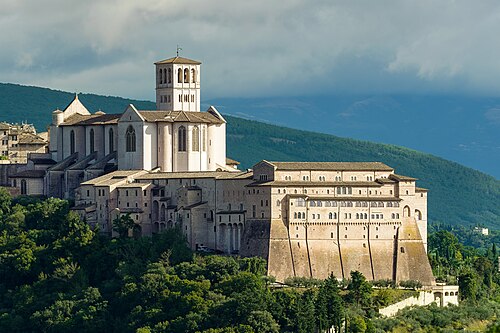
Side view of the Basilica of Saint Francis of Assisi from the north-west, showing the imposing structure of the Basilica and monastery located in Assisi, Umbria, Italy. Today (4th October) is the feast day of St. Francis of Assisi, Patron of Ecologists.
 #ImageOfTheDay
Picture of the day
Side view of the Basilica of Saint Francis of Assisi from the north-west, showing the imposing structure of the Basilica and monastery located in Assisi, Umbria, Italy. Today (4th October) is the feast day of St. Francis of Assisi, Patron of Ecologists.
Read More
Webb Sees Sombrero Galaxy in Near-Infrared

NASA’s James Webb Space Telescope recently imaged the Sombrero Galaxy with its NIRCam (Near-Infrared Camera), which shows dust from the galaxy’s outer ring blocking stellar light from stars within the galaxy. In the central region of the galaxy, the roughly 2,000 globular clusters, or collections of hundreds of thousands of old stars held together by gravity, glow in the near-infrared. The Sombrero Galaxy is around 30 million light-years from Earth in the constellation Virgo. From Earth, we see this galaxy nearly “edge-on,” or from the side.

Read More