slavery

Transnational online scam operations on the rise, U.S. State Department says #Catholic The State Department released its 2026 Trafficking in Persons (TIP) Report on Oct. 8, showing criminal organizations and repressive governments are using trafficking for profit in new ways.The report, released more than three months after the June 30 deadline, said the spread of industrial-scale online scam operations “pose a direct threat to US national security.”Transnational crime organizations, mostly run by Chinese nationals and long based in Southeast Asia, have moved into Africa, the Middle East, Europe, and Latin America, destabilizing local communities and cheating people out of billions of dollars each year, according to the report. Fraudulent online romance, gambling, and cryptocurrency schemes have defrauded people in more than 125 countries, with Americans, the primary targets, losing at least .2 billion in 2025 to compounds operating out of Southeast Asia, according to the report.The organizations recruited people from at least 80 countries over the past few years through fraudulent schemes, often pushing them into forced labor and holding them in guarded compounds and manipulating them through violence, sexual exploitation, intimidation, and other acts. They are often coerced into committing crimes, the report found.The report, an annual assessment required by the Trafficking Victims Protection Act (TVPA) of 2000, covers April 1, 2025, through March 31.The State Department said it relied on information from embassy reporting, government officials, nongovernmental and international organizations, published reports, news articles, and other sources.The State Department said that governments that fail to punish traffickers and protect victims should be held accountable.12 governments citedTwelve governments are cited in the report for a “policy or pattern” of state-sponsored human trafficking: Afghanistan, Belarus, Burma, Cambodia, China, Cuba, Eritrea, Iran, North Korea, Russia, South Sudan, and Sudan. This designation covers “trafficking in government-funded programs, forced labor in government-affiliated medical services or other sectors, sexual slavery in government camps, or the employment or recruitment of child soldiers.”Under the Child Soldiers Prevention Act, the department listed 14 countries whose forces or state-backed militias recruited or used children in any capacity during hostilities, including as sex slaves: Afghanistan, Burma, the Central African Republic, the Democratic Republic of Congo, Ethiopia, Iran, Nigeria, Russia, Rwanda, Somalia, South Sudan, Sudan, Venezuela, and Yemen.Among country rankings reported so far, Israel returned to Tier 1, the highest category, for the first time since 2021, after five years on Tier 2. The Republic of Congo was downgraded to Tier 3, the lowest, for failing to meet minimum standards and not making significant efforts. A Tier 3 listing can restrict certain U.S. assistance, including security assistance, the report said.A Tier 1 ranking does not mean that a country has no human trafficking. Instead, according to the report, “a Tier 1 ranking indicates that a government has made efforts to address the problem … and met the TVPA’s minimum standards.”Rep. Chris Smith, R-New Jersey, author of the Trafficking Victims Protection Act, said in a statement on Oct. 8 that the report’s findings are “a stark reminder that modern-day slavery remains a global scourge — and that governments must be held accountable when they fail to protect vulnerable people.”“Human trafficking is an assault on human dignity and freedom,” the congressman wrote. “The United States must continue to use every tool at its disposal — including the TIP Report — to expose human trafficking whenever it rears its ugly head, protect survivors, and press foreign governments to end this blight upon humanity.”“China remains on Tier 3 — the lowest ranking,” Smith continued, “reflecting its continued failure to meet the minimum standards for eliminating trafficking. The Chinese Communist Party’s (CCP) use and enabling of forced labor — including the systematic exploitation of Uyghurs and other persecuted minorities — is deeply troubling and deserves the greatest level of scrutiny.”“Moreover, the horrific, ongoing consequences of China’s one-child per couple policy can still be seen and felt today, as the Report notes that a gross disparity — tens of millions more boys than girls — has driven the demand for commercial sex trafficking and coercive marriages in the country,” Smith wrote.“Governments on Tier 3 — including China, North Korea, Iran, Russia, Burma, Belarus, Cambodia, Cuba, Laos, Nicaragua, Sudan, South Sudan, and Venezuela — can and must do more. Tier 3 must never become a permanent designation; it should serve as a dire warning and a call to action,” Smith wrote.

Transnational online scam operations on the rise, U.S. State Department says #Catholic The State Department released its 2026 Trafficking in Persons (TIP) Report on Oct. 8, showing criminal organizations and repressive governments are using trafficking for profit in new ways.The report, released more than three months after the June 30 deadline, said the spread of industrial-scale online scam operations “pose a direct threat to US national security.”Transnational crime organizations, mostly run by Chinese nationals and long based in Southeast Asia, have moved into Africa, the Middle East, Europe, and Latin America, destabilizing local communities and cheating people out of billions of dollars each year, according to the report. Fraudulent online romance, gambling, and cryptocurrency schemes have defrauded people in more than 125 countries, with Americans, the primary targets, losing at least $18.2 billion in 2025 to compounds operating out of Southeast Asia, according to the report.The organizations recruited people from at least 80 countries over the past few years through fraudulent schemes, often pushing them into forced labor and holding them in guarded compounds and manipulating them through violence, sexual exploitation, intimidation, and other acts. They are often coerced into committing crimes, the report found.The report, an annual assessment required by the Trafficking Victims Protection Act (TVPA) of 2000, covers April 1, 2025, through March 31.The State Department said it relied on information from embassy reporting, government officials, nongovernmental and international organizations, published reports, news articles, and other sources.The State Department said that governments that fail to punish traffickers and protect victims should be held accountable.12 governments citedTwelve governments are cited in the report for a “policy or pattern” of state-sponsored human trafficking: Afghanistan, Belarus, Burma, Cambodia, China, Cuba, Eritrea, Iran, North Korea, Russia, South Sudan, and Sudan. This designation covers “trafficking in government-funded programs, forced labor in government-affiliated medical services or other sectors, sexual slavery in government camps, or the employment or recruitment of child soldiers.”Under the Child Soldiers Prevention Act, the department listed 14 countries whose forces or state-backed militias recruited or used children in any capacity during hostilities, including as sex slaves: Afghanistan, Burma, the Central African Republic, the Democratic Republic of Congo, Ethiopia, Iran, Nigeria, Russia, Rwanda, Somalia, South Sudan, Sudan, Venezuela, and Yemen.Among country rankings reported so far, Israel returned to Tier 1, the highest category, for the first time since 2021, after five years on Tier 2. The Republic of Congo was downgraded to Tier 3, the lowest, for failing to meet minimum standards and not making significant efforts. A Tier 3 listing can restrict certain U.S. assistance, including security assistance, the report said.A Tier 1 ranking does not mean that a country has no human trafficking. Instead, according to the report, “a Tier 1 ranking indicates that a government has made efforts to address the problem … and met the TVPA’s minimum standards.”Rep. Chris Smith, R-New Jersey, author of the Trafficking Victims Protection Act, said in a statement on Oct. 8 that the report’s findings are “a stark reminder that modern-day slavery remains a global scourge — and that governments must be held accountable when they fail to protect vulnerable people.”“Human trafficking is an assault on human dignity and freedom,” the congressman wrote. “The United States must continue to use every tool at its disposal — including the TIP Report — to expose human trafficking whenever it rears its ugly head, protect survivors, and press foreign governments to end this blight upon humanity.”“China remains on Tier 3 — the lowest ranking,” Smith continued, “reflecting its continued failure to meet the minimum standards for eliminating trafficking. The Chinese Communist Party’s (CCP) use and enabling of forced labor — including the systematic exploitation of Uyghurs and other persecuted minorities — is deeply troubling and deserves the greatest level of scrutiny.”“Moreover, the horrific, ongoing consequences of China’s one-child per couple policy can still be seen and felt today, as the Report notes that a gross disparity — tens of millions more boys than girls — has driven the demand for commercial sex trafficking and coercive marriages in the country,” Smith wrote.“Governments on Tier 3 — including China, North Korea, Iran, Russia, Burma, Belarus, Cambodia, Cuba, Laos, Nicaragua, Sudan, South Sudan, and Venezuela — can and must do more. Tier 3 must never become a permanent designation; it should serve as a dire warning and a call to action,” Smith wrote.

Fraudulent online romance, gambling, and cryptocurrency schemes have defrauded people in more than 125 countries, with Americans losing at least $18.2 billion in 2025, according to a new report.

Read More
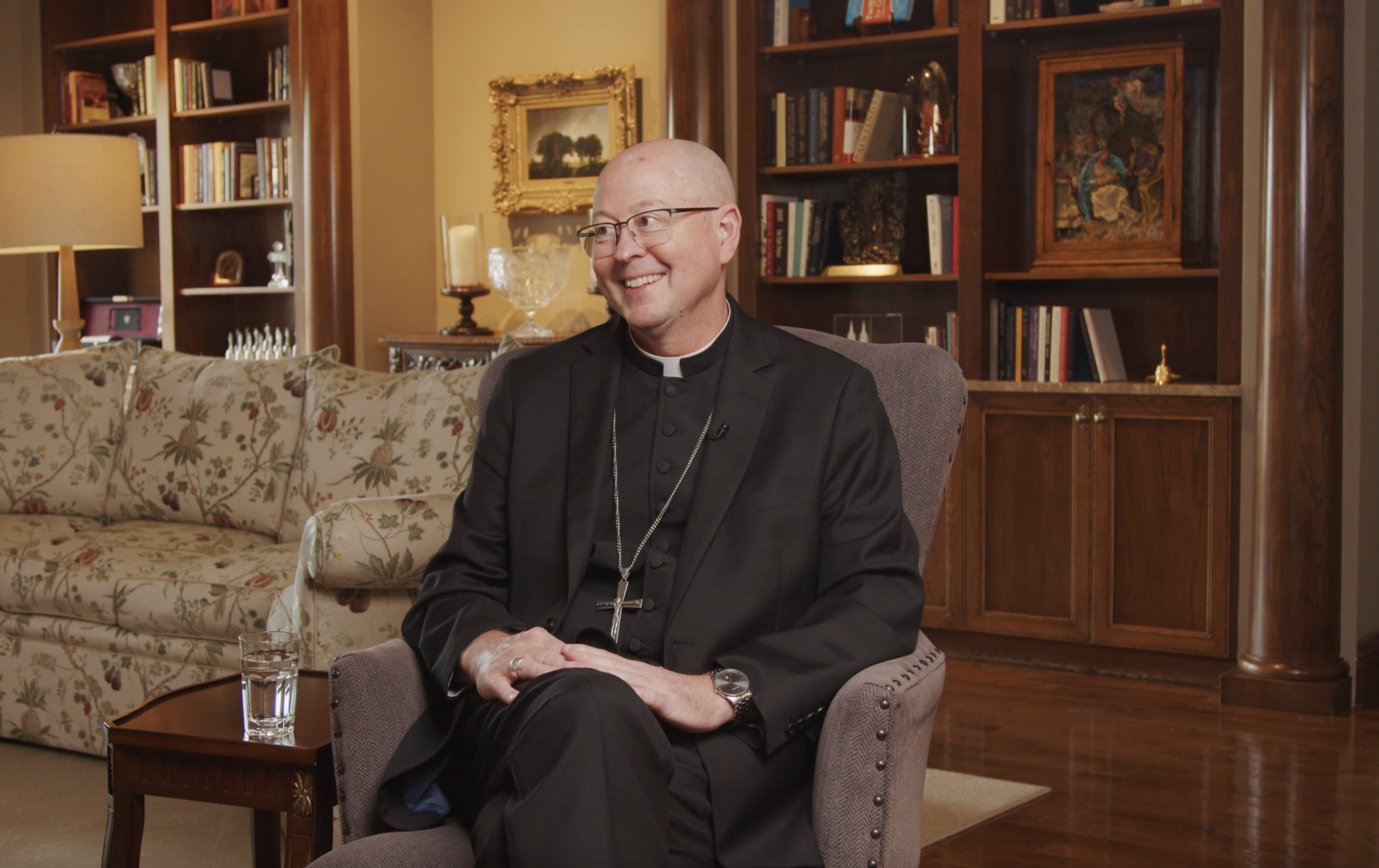
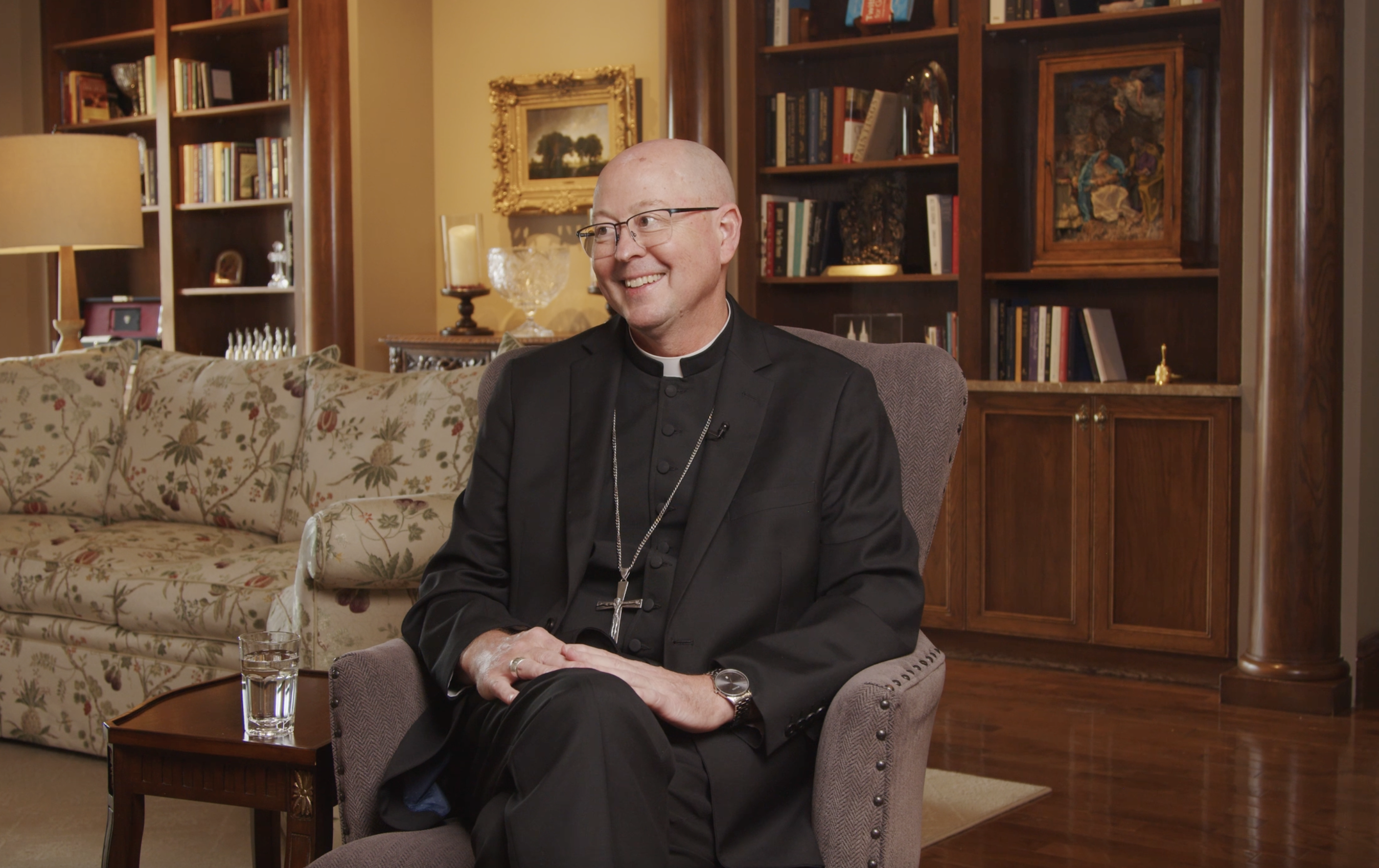
Denver bishops mark America 250 with message on migrants and refugees #Catholic Catholic bishops and other Christian leaders in Colorado issued a letter on immigrants and refugees in observance of St. Frances Xavier Cabrini’s feast day during the 250th anniversary of U.S. independence. “This anniversary invites us to remember not only the founding of our nation but also the generations who have helped bring its ideals to life,” the letter, released on Oct. 5, Cabrini’s feast day, said, highlighting that “America’s immigrant heritage is an essential part of, and inseparable from, our national identity.”Cabrini is the patron saint of immigrants and is the first American to be canonized.The message, titled “A Pilgrim People, A Shared Hope,” is signed by Archbishop James Golka and Auxiliary Bishop Jorge Rodriguez of Denver, Bishop Stephen Berg of Pueblo, and Father Kyle Ingels, the diocesan administrator of Colorado Springs, as well as several other Christian leaders across denominations. The letter comes as the Trump administration’s deportation efforts across the country continue to stir controversy among Catholics, including in the Archdiocese of St. Louis, which filed a lawsuit Oct. 5 against local and federal officials for barring priests from ministering to Catholic immigrant detainees. “We remember with respect the Indigenous peoples who inhabited this land long before the nation’s founding, as well as those brought here through slavery and denied the freedom our nation proclaimed,” the letter said. “We also give thanks for generations of immigrants and refugees who arrived carrying their faith, cultures, hopes, and gifts.”The letter underscored the contributions of immigrants across agriculture, business, science, medicine, technology, and more. “Here in Colorado, immigrants have worked in our mines and fields, taught in our schools, opened businesses, served in our hospitals, raised families and enriched our civic and religious life,” the letter said.Addressing concerns about national sovereignty and border security, the Christian leaders affirmed “both a nation’s responsibility to protect its people and maintain an orderly immigration system and its duty to treat every person with justice and mercy.”“Laws should serve the common good while respecting human dignity, protecting the vulnerable, preserving family unity and providing fair legal processes,” the letter said, concluding: “On this anniversary, we invite the faithful to remember the immigrant and refugee stories that have shaped their families and communities; to pray for those displaced from their homes; to support ministries that accompany newcomers; and to build friendships across differences of language, culture and nationality.”

Denver bishops mark America 250 with message on migrants and refugees #Catholic Catholic bishops and other Christian leaders in Colorado issued a letter on immigrants and refugees in observance of St. Frances Xavier Cabrini’s feast day during the 250th anniversary of U.S. independence. “This anniversary invites us to remember not only the founding of our nation but also the generations who have helped bring its ideals to life,” the letter, released on Oct. 5, Cabrini’s feast day, said, highlighting that “America’s immigrant heritage is an essential part of, and inseparable from, our national identity.”Cabrini is the patron saint of immigrants and is the first American to be canonized.The message, titled “A Pilgrim People, A Shared Hope,” is signed by Archbishop James Golka and Auxiliary Bishop Jorge Rodriguez of Denver, Bishop Stephen Berg of Pueblo, and Father Kyle Ingels, the diocesan administrator of Colorado Springs, as well as several other Christian leaders across denominations. The letter comes as the Trump administration’s deportation efforts across the country continue to stir controversy among Catholics, including in the Archdiocese of St. Louis, which filed a lawsuit Oct. 5 against local and federal officials for barring priests from ministering to Catholic immigrant detainees. “We remember with respect the Indigenous peoples who inhabited this land long before the nation’s founding, as well as those brought here through slavery and denied the freedom our nation proclaimed,” the letter said. “We also give thanks for generations of immigrants and refugees who arrived carrying their faith, cultures, hopes, and gifts.”The letter underscored the contributions of immigrants across agriculture, business, science, medicine, technology, and more. “Here in Colorado, immigrants have worked in our mines and fields, taught in our schools, opened businesses, served in our hospitals, raised families and enriched our civic and religious life,” the letter said.Addressing concerns about national sovereignty and border security, the Christian leaders affirmed “both a nation’s responsibility to protect its people and maintain an orderly immigration system and its duty to treat every person with justice and mercy.”“Laws should serve the common good while respecting human dignity, protecting the vulnerable, preserving family unity and providing fair legal processes,” the letter said, concluding: “On this anniversary, we invite the faithful to remember the immigrant and refugee stories that have shaped their families and communities; to pray for those displaced from their homes; to support ministries that accompany newcomers; and to build friendships across differences of language, culture and nationality.”

“This anniversary invites us to remember not only the founding of our nation but also the generations who have helped bring its ideals to life,” said the letter from Colorado Christian leaders.
Read More
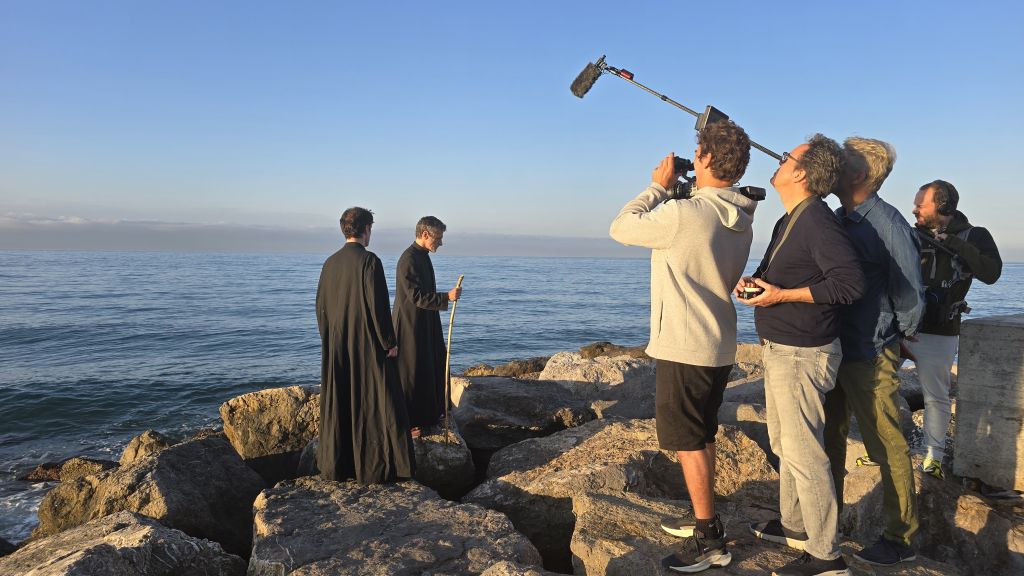
EWTN to air film on St. Peter Claver, slave of the slaves #Catholic St. Peter Claver was a Spanish Jesuit priest who dedicated his life to the care of African slaves. On Sept. 9 — the saint’s feast day — EWTN will release an original docudrama on his life titled “Saint Peter Claver — Slave of the Slaves.”The docudrama was filmed on location in Spain, Colombia, and Cape Verde and uses interviews and dramatizations to present the life of Claver, who tirelessly ministered to the spiritual and physical needs of African slaves in Cartagena, Colombia, for 40 years.The film will air on EWTN TV and EWTN+ on Sept. 9 at 9:30 p.m. ET and re-air on Sept. 12 at 8 p.m. ET. At this time, the program will not air on YouTube.
 
 A behind-the-scenes look at the making of “Saint Peter Claver — Slave of the Slaves.” | Credit: EWTN
 
 Who was St. Peter Claver?Born on June 26, 1580, in Catalonia, Spain, Claver grew up in a devout Catholic farming family. He attended the University of Barcelona and at age 20 joined the Jesuits.During his studies as a novice, Claver met an older lay Jesuit brother, Alphonsus Rodriguez. It was Rodriguez who encouraged Claver to become a missionary in the Spanish colonies in the Americas.In 1610, Claver traveled from Spain to Cartagena, Colombia, where he was ordained a priest five years later.At that time, the African slave trade had been in place for several decades in the Americas, and Cartagena was one of the busiest slave ports in the Spanish empire.While there, Claver witnessed the cruelty with which the slaves were treated firsthand, despite Pope Paul III’s repeated condemnations of slavery. It is estimated that tens of thousands of enslaved Africans passed through Cartagena during Claver’s ministry.Moved by their suffering, Claver worked to bring both bodily and spiritual aid to the slaves. Despite his own health problems and the language barrier, he dedicated himself to his vocation.Claver would meet slave ships upon arrival in the harbor and board them to care for the poorly treated passengers on board who had made the journey from Africa in diseased and cramped conditions over the course of several months. He would tend to the sick — bringing food, water, and medicine — and treat wounds and illnesses. He would immediately baptize babies and those near death.After a slave was sold, Claver would continue to visit the individual, providing physical and spiritual support.When it came to catechesis, due to the language barrier, Claver used pictorial representations of the Gospel stories he was teaching.Throughout his ministry, Claver lived on small amounts of food and sleep. His lifestyle led to several miraculous occurrences, including when he healed the sick with the touch of his cloak or appeared surrounded by a supernatural light during his hospital visits.After suffering for several years from poor health, Claver died on Sept. 8, 1654. He had baptized and taught the faith to more than 300,000 slaves during his 40 years in Colombia.He was beatified by Pius IX on July 16, 1850, and canonized along with his friend St. Alphonsus Rodriguez on Jan. 15, 1888, by Pope Leo XIII.Claver is the patron saint of enslaved peoples, African missions, and interracial justice, and one of several patron saints of Colombia.

EWTN to air film on St. Peter Claver, slave of the slaves #Catholic St. Peter Claver was a Spanish Jesuit priest who dedicated his life to the care of African slaves. On Sept. 9 — the saint’s feast day — EWTN will release an original docudrama on his life titled “Saint Peter Claver — Slave of the Slaves.”The docudrama was filmed on location in Spain, Colombia, and Cape Verde and uses interviews and dramatizations to present the life of Claver, who tirelessly ministered to the spiritual and physical needs of African slaves in Cartagena, Colombia, for 40 years.The film will air on EWTN TV and EWTN+ on Sept. 9 at 9:30 p.m. ET and re-air on Sept. 12 at 8 p.m. ET. At this time, the program will not air on YouTube. A behind-the-scenes look at the making of “Saint Peter Claver — Slave of the Slaves.” | Credit: EWTN Who was St. Peter Claver?Born on June 26, 1580, in Catalonia, Spain, Claver grew up in a devout Catholic farming family. He attended the University of Barcelona and at age 20 joined the Jesuits.During his studies as a novice, Claver met an older lay Jesuit brother, Alphonsus Rodriguez. It was Rodriguez who encouraged Claver to become a missionary in the Spanish colonies in the Americas.In 1610, Claver traveled from Spain to Cartagena, Colombia, where he was ordained a priest five years later.At that time, the African slave trade had been in place for several decades in the Americas, and Cartagena was one of the busiest slave ports in the Spanish empire.While there, Claver witnessed the cruelty with which the slaves were treated firsthand, despite Pope Paul III’s repeated condemnations of slavery. It is estimated that tens of thousands of enslaved Africans passed through Cartagena during Claver’s ministry.Moved by their suffering, Claver worked to bring both bodily and spiritual aid to the slaves. Despite his own health problems and the language barrier, he dedicated himself to his vocation.Claver would meet slave ships upon arrival in the harbor and board them to care for the poorly treated passengers on board who had made the journey from Africa in diseased and cramped conditions over the course of several months. He would tend to the sick — bringing food, water, and medicine — and treat wounds and illnesses. He would immediately baptize babies and those near death.After a slave was sold, Claver would continue to visit the individual, providing physical and spiritual support.When it came to catechesis, due to the language barrier, Claver used pictorial representations of the Gospel stories he was teaching.Throughout his ministry, Claver lived on small amounts of food and sleep. His lifestyle led to several miraculous occurrences, including when he healed the sick with the touch of his cloak or appeared surrounded by a supernatural light during his hospital visits.After suffering for several years from poor health, Claver died on Sept. 8, 1654. He had baptized and taught the faith to more than 300,000 slaves during his 40 years in Colombia.He was beatified by Pius IX on July 16, 1850, and canonized along with his friend St. Alphonsus Rodriguez on Jan. 15, 1888, by Pope Leo XIII.Claver is the patron saint of enslaved peoples, African missions, and interracial justice, and one of several patron saints of Colombia.

“Saint Peter Claver — Slave of the Slaves” will air on EWTN on Sept. 9.

Read More