Day: October 9, 2026

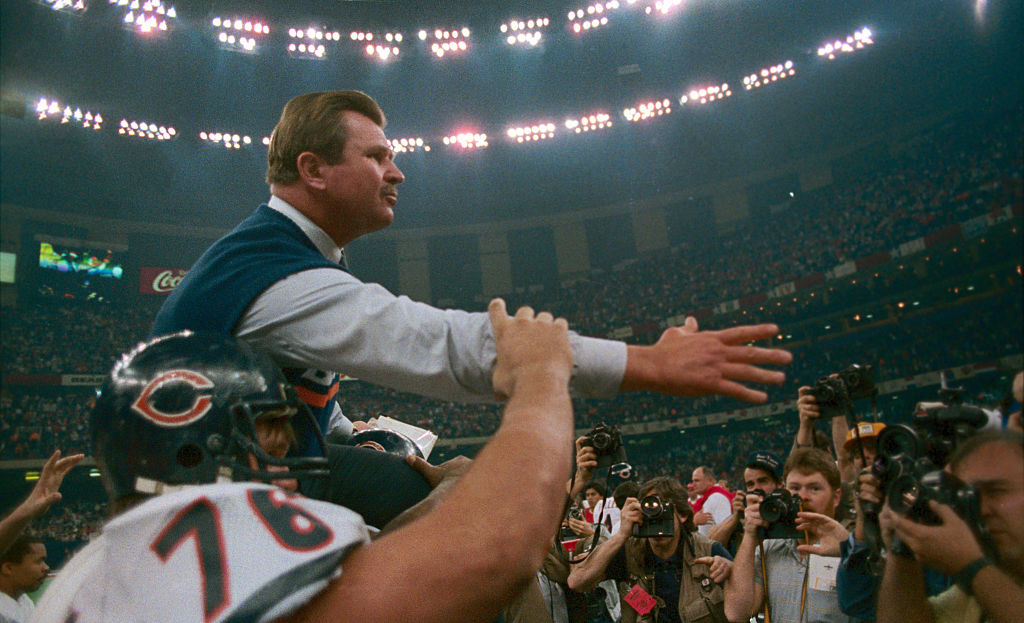
NFL legend Mike Ditka was a Catholic coach #Catholic Former professional football coach Mike Ditka, a practicing Catholic who occasionally served as lector at the 7 a.m. team Mass on game-day Sundays during his decade leading the Chicago Bears, died Friday. He was 86.“Iron Mike,” as Ditka was known, had a famously explosive temper, which often boiled over on the sidelines and in postgame press conferences. Ditka, who led the Bears to a Super Bowl XX victory in 1986, once broke his right hand after punching a hard object over frustration with the play of a rookie offensive lineman — then, before the next game, told his team to “win this one for Lefty.”Less well known was Ditka’s commitment to his Catholic faith, for which he credited his convert mother and the nuns of his parochial school in Aliquippa, Pennsylvania, where he was raised.“Growing up, the most important thing was the sacraments with my family,” Ditka told an interviewer with the Catholic website “One Peter Five” in August 2018. “We loved everything about the faith. Going to Catholic school and learning the faith, I wouldn’t trade that for anything.”“I don’t care how many times I got hit by a nun,” Ditka said, “it was good for me.”Football successBorn Michael Dyczko in 1939, Ditka was the son of a non-churchgoing Ukrainian and Polish steelworker father and an Irish and German mother who converted to Catholicism.He played tight end for the University of Pittsburgh and then in the NFL for the Chicago Bears, Philadelphia Eagles, and Dallas Cowboys. In 1988 Ditka was honored as the first tight end ever to be inducted into the Pro Football Hall of Fame.After retiring from playing, Ditka served as an assistant coach before getting his unlikely chance as the head coach of the Bears in 1982.His 1985 Bears went 15-1 during the regular season and stomped their way through the playoffs to a Super Bowl victory. So confident were the players of that dominant team that they recorded a rap song called “The Super Bowl Shuffle” during the regular season. (Ditka later said he didn’t know about it, but he didn’t criticize the players for doing it.)Ditka’s success, toughness, temper, and sense of humor made him a cultural phenomenon, inspiring a recurring skit (and guest appearances) on “Saturday Night Live” and launching a career as a motivational speaker.When the team’s fortunes plummeted, he was fired in 1992. He later coached the New Orleans Saints but was fired after three years.Off-field philanthropyDitka made millions as a pitchman for dozens of products after he left football, and he used some of that wealth to help others.“Ditka was very supportive of Misericordia and other charities that supported children with special needs and disabilities,” Mary FioRito, an attorney, lifelong Chicagoan, and Cardinal Francis George Fellow at the Ethics and Public Policy Center, told the National Catholic Register, the sister partner of EWTN News.And not just with checks.“He spoke at fundraisers, and surprised observers could catch him privately visiting with residents he knew by name,” reported the suburban Chicago Daily Herald.Ditka was also a member of the Knights of Columbus and participated in the organization’s charitable activities.‘Constant turmoil’In his 1986 autobiography “Ditka,” published at the peak of his success, Ditka admitted to having had “no spiritual life at all” during the 1970s, before two other coaches got him involved in a Bible study that reintroduced him to God.“I always had faith, but I never had understanding,” Ditka said. “I always knew what was going on in life. I was raised right. I did all the things you were supposed to do. But I never understood why I was supposed to do them, because I never had a total understanding of what was going on.”He also acknowledged what he called “constant turmoil inside,” and he compared himself unfavorably to longtime Dallas Cowboys coach Tom Landry (1924–2000), whom he admired for always keeping his cool on the sidelines and for his involvement in the Fellowship of Christian Athletes.“My priorities can get mixed up. I don’t think he ever gets his priorities mixed up,” Ditka said in the book.Ditka said he discovered that following his faith was hard work.“Sometimes you take for granted that your faith will always be there and everything will be fine. But without making the effort, that’s just not a fact. You have to make a real effort to live your faith daily,” Ditka said in the book.“Nobody is going to do it every day. Nobody is going to do it perfectly,” he continued. “But unless you make the effort you’ve got no chance at all.”Ditka married in 1961, got divorced in 1973, and then remarried in 1977. Both wives survive him, as do his four children, according to an obituary in the Daily Herald.“I’m far from perfect now, and I’m never going to be perfect,” Ditka said in his autobiography. “When I die, I’m going to be still trying to get better than I am.”This story was first published by the National Catholic Register, the sister partner of EWTN News, and has been adapted by EWTN News.

NFL legend Mike Ditka was a Catholic coach #Catholic Former professional football coach Mike Ditka, a practicing Catholic who occasionally served as lector at the 7 a.m. team Mass on game-day Sundays during his decade leading the Chicago Bears, died Friday. He was 86.“Iron Mike,” as Ditka was known, had a famously explosive temper, which often boiled over on the sidelines and in postgame press conferences. Ditka, who led the Bears to a Super Bowl XX victory in 1986, once broke his right hand after punching a hard object over frustration with the play of a rookie offensive lineman — then, before the next game, told his team to “win this one for Lefty.”Less well known was Ditka’s commitment to his Catholic faith, for which he credited his convert mother and the nuns of his parochial school in Aliquippa, Pennsylvania, where he was raised.“Growing up, the most important thing was the sacraments with my family,” Ditka told an interviewer with the Catholic website “One Peter Five” in August 2018. “We loved everything about the faith. Going to Catholic school and learning the faith, I wouldn’t trade that for anything.”“I don’t care how many times I got hit by a nun,” Ditka said, “it was good for me.”Football successBorn Michael Dyczko in 1939, Ditka was the son of a non-churchgoing Ukrainian and Polish steelworker father and an Irish and German mother who converted to Catholicism.He played tight end for the University of Pittsburgh and then in the NFL for the Chicago Bears, Philadelphia Eagles, and Dallas Cowboys. In 1988 Ditka was honored as the first tight end ever to be inducted into the Pro Football Hall of Fame.After retiring from playing, Ditka served as an assistant coach before getting his unlikely chance as the head coach of the Bears in 1982.His 1985 Bears went 15-1 during the regular season and stomped their way through the playoffs to a Super Bowl victory. So confident were the players of that dominant team that they recorded a rap song called “The Super Bowl Shuffle” during the regular season. (Ditka later said he didn’t know about it, but he didn’t criticize the players for doing it.)Ditka’s success, toughness, temper, and sense of humor made him a cultural phenomenon, inspiring a recurring skit (and guest appearances) on “Saturday Night Live” and launching a career as a motivational speaker.When the team’s fortunes plummeted, he was fired in 1992. He later coached the New Orleans Saints but was fired after three years.Off-field philanthropyDitka made millions as a pitchman for dozens of products after he left football, and he used some of that wealth to help others.“Ditka was very supportive of Misericordia and other charities that supported children with special needs and disabilities,” Mary FioRito, an attorney, lifelong Chicagoan, and Cardinal Francis George Fellow at the Ethics and Public Policy Center, told the National Catholic Register, the sister partner of EWTN News.And not just with checks.“He spoke at fundraisers, and surprised observers could catch him privately visiting with residents he knew by name,” reported the suburban Chicago Daily Herald.Ditka was also a member of the Knights of Columbus and participated in the organization’s charitable activities.‘Constant turmoil’In his 1986 autobiography “Ditka,” published at the peak of his success, Ditka admitted to having had “no spiritual life at all” during the 1970s, before two other coaches got him involved in a Bible study that reintroduced him to God.“I always had faith, but I never had understanding,” Ditka said. “I always knew what was going on in life. I was raised right. I did all the things you were supposed to do. But I never understood why I was supposed to do them, because I never had a total understanding of what was going on.”He also acknowledged what he called “constant turmoil inside,” and he compared himself unfavorably to longtime Dallas Cowboys coach Tom Landry (1924–2000), whom he admired for always keeping his cool on the sidelines and for his involvement in the Fellowship of Christian Athletes.“My priorities can get mixed up. I don’t think he ever gets his priorities mixed up,” Ditka said in the book.Ditka said he discovered that following his faith was hard work.“Sometimes you take for granted that your faith will always be there and everything will be fine. But without making the effort, that’s just not a fact. You have to make a real effort to live your faith daily,” Ditka said in the book.“Nobody is going to do it every day. Nobody is going to do it perfectly,” he continued. “But unless you make the effort you’ve got no chance at all.”Ditka married in 1961, got divorced in 1973, and then remarried in 1977. Both wives survive him, as do his four children, according to an obituary in the Daily Herald.“I’m far from perfect now, and I’m never going to be perfect,” Ditka said in his autobiography. “When I die, I’m going to be still trying to get better than I am.”This story was first published by the National Catholic Register, the sister partner of EWTN News, and has been adapted by EWTN News.

The Chicago Bears icon, who died on Friday, gave to charities, lectored at Mass, and belonged to the Knights of Columbus.
Read More

Gospel and Word of the Day – 10 October 2026 – A reading from the Letter of St. Paul to the Galatians 3:22-29 Brothers and sisters: Scripture confined all things under the power of sin, that through faith in Jesus Christ the promise might be given to those who believe. Before faith came, we were held in custody under law, confined for the faith that was to be revealed. Consequently, the law was our disciplinarian for Christ, that we might be justified by faith. But now that faith has come, we are no longer under a disciplinarian. For through faith you are all children of God in Christ Jesus. For all of you who were baptized into Christ have clothed yourselves with Christ. There is neither Jew nor Greek, there is neither slave nor free person, there is not male and female; for you are all one in Christ Jesus. And if you belong to Christ, then you are Abraham’s descendants, heirs according to the promise.From the Gospel according to Luke 11:27-28 While Jesus was speaking, a woman from the crowd called out and said to him, “Blessed is the womb that carried you and the breasts at which you nursed.” He replied, “Rather, blessed are those who hear the word of God and observe it.”To listen to the Word of God and practise it, are the only two “conditions” established by Jesus for those who want to follow him. Christian life is “simple, simple”. Perhaps we have made it a bit difficult, with so many explanations that nobody understands, but the Christian life is like this: listening to the Word of God and practising it. (…) Every time we open the Gospel and read a passage and ask ourselves: ‘Is God speaking to me with this, is he saying something to me’?. This means “to listen to the Word of God, to listen with the ears and listen with the heart, to open the heart to God’s Word”. On the other hand, “Jesus’ enemies listened to Jesus’ words but they were close by in order to try and find a mistake, to make him slip up” and make him lose authority. But they never asked themselves: ‘What is God telling me with these words’?. Moreover, the Pontiff added, “God does not speak only to all but he speaks to each one of us. The Gospel was written for each one of us. (…) The Lord, “always plants his Word”, and in exchange “he asks only for an open heart to listen to it and good will to put it into practise. This is why today’s prayer is that of the Psalm: ‘Guide me, Lord, in the way of your commands’, that is, on the path of your Word, so that, with your guidance, I may learn to practice it”. (Pope Francis, Santa Marta, 23 September 2014)

A reading from the Letter of St. Paul to the Galatians
3:22-29

Brothers and sisters:
Scripture confined all things under the power of sin,
that through faith in Jesus Christ
the promise might be given to those who believe.

Before faith came, we were held in custody under law,
confined for the faith that was to be revealed.
Consequently, the law was our disciplinarian for Christ,
that we might be justified by faith.
But now that faith has come, we are no longer under a disciplinarian.
For through faith you are all children of God in Christ Jesus.
For all of you who were baptized into Christ
have clothed yourselves with Christ.
There is neither Jew nor Greek,
there is neither slave nor free person,
there is not male and female;
for you are all one in Christ Jesus.
And if you belong to Christ, then you are Abraham’s descendants,
heirs according to the promise.

From the Gospel according to Luke
11:27-28

While Jesus was speaking,
a woman from the crowd called out and said to him,
“Blessed is the womb that carried you
and the breasts at which you nursed.”
He replied, “Rather, blessed are those
who hear the word of God and observe it.”

To listen to the Word of God and practise it, are the only two “conditions” established by Jesus for those who want to follow him. Christian life is “simple, simple”. Perhaps we have made it a bit difficult, with so many explanations that nobody understands, but the Christian life is like this: listening to the Word of God and practising it. (…)

Every time we open the Gospel and read a passage and ask ourselves: ‘Is God speaking to me with this, is he saying something to me’?. This means “to listen to the Word of God, to listen with the ears and listen with the heart, to open the heart to God’s Word”. On the other hand, “Jesus’ enemies listened to Jesus’ words but they were close by in order to try and find a mistake, to make him slip up” and make him lose authority. But they never asked themselves: ‘What is God telling me with these words’?. Moreover, the Pontiff added, “God does not speak only to all but he speaks to each one of us. The Gospel was written for each one of us. (…)

The Lord, “always plants his Word”, and in exchange “he asks only for an open heart to listen to it and good will to put it into practise. This is why today’s prayer is that of the Psalm: ‘Guide me, Lord, in the way of your commands’, that is, on the path of your Word, so that, with your guidance, I may learn to practice it”. (Pope Francis, Santa Marta, 23 September 2014)

Read More
Transnational online scam operations on the rise, U.S. State Department says #Catholic The State Department released its 2026 Trafficking in Persons (TIP) Report on Oct. 8, showing criminal organizations and repressive governments are using trafficking for profit in new ways.The report, released more than three months after the June 30 deadline, said the spread of industrial-scale online scam operations “pose a direct threat to US national security.”Transnational crime organizations, mostly run by Chinese nationals and long based in Southeast Asia, have moved into Africa, the Middle East, Europe, and Latin America, destabilizing local communities and cheating people out of billions of dollars each year, according to the report. Fraudulent online romance, gambling, and cryptocurrency schemes have defrauded people in more than 125 countries, with Americans, the primary targets, losing at least .2 billion in 2025 to compounds operating out of Southeast Asia, according to the report.The organizations recruited people from at least 80 countries over the past few years through fraudulent schemes, often pushing them into forced labor and holding them in guarded compounds and manipulating them through violence, sexual exploitation, intimidation, and other acts. They are often coerced into committing crimes, the report found.The report, an annual assessment required by the Trafficking Victims Protection Act (TVPA) of 2000, covers April 1, 2025, through March 31.The State Department said it relied on information from embassy reporting, government officials, nongovernmental and international organizations, published reports, news articles, and other sources.The State Department said that governments that fail to punish traffickers and protect victims should be held accountable.12 governments citedTwelve governments are cited in the report for a “policy or pattern” of state-sponsored human trafficking: Afghanistan, Belarus, Burma, Cambodia, China, Cuba, Eritrea, Iran, North Korea, Russia, South Sudan, and Sudan. This designation covers “trafficking in government-funded programs, forced labor in government-affiliated medical services or other sectors, sexual slavery in government camps, or the employment or recruitment of child soldiers.”Under the Child Soldiers Prevention Act, the department listed 14 countries whose forces or state-backed militias recruited or used children in any capacity during hostilities, including as sex slaves: Afghanistan, Burma, the Central African Republic, the Democratic Republic of Congo, Ethiopia, Iran, Nigeria, Russia, Rwanda, Somalia, South Sudan, Sudan, Venezuela, and Yemen.Among country rankings reported so far, Israel returned to Tier 1, the highest category, for the first time since 2021, after five years on Tier 2. The Republic of Congo was downgraded to Tier 3, the lowest, for failing to meet minimum standards and not making significant efforts. A Tier 3 listing can restrict certain U.S. assistance, including security assistance, the report said.A Tier 1 ranking does not mean that a country has no human trafficking. Instead, according to the report, “a Tier 1 ranking indicates that a government has made efforts to address the problem … and met the TVPA’s minimum standards.”Rep. Chris Smith, R-New Jersey, author of the Trafficking Victims Protection Act, said in a statement on Oct. 8 that the report’s findings are “a stark reminder that modern-day slavery remains a global scourge — and that governments must be held accountable when they fail to protect vulnerable people.”“Human trafficking is an assault on human dignity and freedom,” the congressman wrote. “The United States must continue to use every tool at its disposal — including the TIP Report — to expose human trafficking whenever it rears its ugly head, protect survivors, and press foreign governments to end this blight upon humanity.”“China remains on Tier 3 — the lowest ranking,” Smith continued, “reflecting its continued failure to meet the minimum standards for eliminating trafficking. The Chinese Communist Party’s (CCP) use and enabling of forced labor — including the systematic exploitation of Uyghurs and other persecuted minorities — is deeply troubling and deserves the greatest level of scrutiny.”“Moreover, the horrific, ongoing consequences of China’s one-child per couple policy can still be seen and felt today, as the Report notes that a gross disparity — tens of millions more boys than girls — has driven the demand for commercial sex trafficking and coercive marriages in the country,” Smith wrote.“Governments on Tier 3 — including China, North Korea, Iran, Russia, Burma, Belarus, Cambodia, Cuba, Laos, Nicaragua, Sudan, South Sudan, and Venezuela — can and must do more. Tier 3 must never become a permanent designation; it should serve as a dire warning and a call to action,” Smith wrote.

Transnational online scam operations on the rise, U.S. State Department says #Catholic The State Department released its 2026 Trafficking in Persons (TIP) Report on Oct. 8, showing criminal organizations and repressive governments are using trafficking for profit in new ways.The report, released more than three months after the June 30 deadline, said the spread of industrial-scale online scam operations “pose a direct threat to US national security.”Transnational crime organizations, mostly run by Chinese nationals and long based in Southeast Asia, have moved into Africa, the Middle East, Europe, and Latin America, destabilizing local communities and cheating people out of billions of dollars each year, according to the report. Fraudulent online romance, gambling, and cryptocurrency schemes have defrauded people in more than 125 countries, with Americans, the primary targets, losing at least $18.2 billion in 2025 to compounds operating out of Southeast Asia, according to the report.The organizations recruited people from at least 80 countries over the past few years through fraudulent schemes, often pushing them into forced labor and holding them in guarded compounds and manipulating them through violence, sexual exploitation, intimidation, and other acts. They are often coerced into committing crimes, the report found.The report, an annual assessment required by the Trafficking Victims Protection Act (TVPA) of 2000, covers April 1, 2025, through March 31.The State Department said it relied on information from embassy reporting, government officials, nongovernmental and international organizations, published reports, news articles, and other sources.The State Department said that governments that fail to punish traffickers and protect victims should be held accountable.12 governments citedTwelve governments are cited in the report for a “policy or pattern” of state-sponsored human trafficking: Afghanistan, Belarus, Burma, Cambodia, China, Cuba, Eritrea, Iran, North Korea, Russia, South Sudan, and Sudan. This designation covers “trafficking in government-funded programs, forced labor in government-affiliated medical services or other sectors, sexual slavery in government camps, or the employment or recruitment of child soldiers.”Under the Child Soldiers Prevention Act, the department listed 14 countries whose forces or state-backed militias recruited or used children in any capacity during hostilities, including as sex slaves: Afghanistan, Burma, the Central African Republic, the Democratic Republic of Congo, Ethiopia, Iran, Nigeria, Russia, Rwanda, Somalia, South Sudan, Sudan, Venezuela, and Yemen.Among country rankings reported so far, Israel returned to Tier 1, the highest category, for the first time since 2021, after five years on Tier 2. The Republic of Congo was downgraded to Tier 3, the lowest, for failing to meet minimum standards and not making significant efforts. A Tier 3 listing can restrict certain U.S. assistance, including security assistance, the report said.A Tier 1 ranking does not mean that a country has no human trafficking. Instead, according to the report, “a Tier 1 ranking indicates that a government has made efforts to address the problem … and met the TVPA’s minimum standards.”Rep. Chris Smith, R-New Jersey, author of the Trafficking Victims Protection Act, said in a statement on Oct. 8 that the report’s findings are “a stark reminder that modern-day slavery remains a global scourge — and that governments must be held accountable when they fail to protect vulnerable people.”“Human trafficking is an assault on human dignity and freedom,” the congressman wrote. “The United States must continue to use every tool at its disposal — including the TIP Report — to expose human trafficking whenever it rears its ugly head, protect survivors, and press foreign governments to end this blight upon humanity.”“China remains on Tier 3 — the lowest ranking,” Smith continued, “reflecting its continued failure to meet the minimum standards for eliminating trafficking. The Chinese Communist Party’s (CCP) use and enabling of forced labor — including the systematic exploitation of Uyghurs and other persecuted minorities — is deeply troubling and deserves the greatest level of scrutiny.”“Moreover, the horrific, ongoing consequences of China’s one-child per couple policy can still be seen and felt today, as the Report notes that a gross disparity — tens of millions more boys than girls — has driven the demand for commercial sex trafficking and coercive marriages in the country,” Smith wrote.“Governments on Tier 3 — including China, North Korea, Iran, Russia, Burma, Belarus, Cambodia, Cuba, Laos, Nicaragua, Sudan, South Sudan, and Venezuela — can and must do more. Tier 3 must never become a permanent designation; it should serve as a dire warning and a call to action,” Smith wrote.

Fraudulent online romance, gambling, and cryptocurrency schemes have defrauded people in more than 125 countries, with Americans losing at least $18.2 billion in 2025, according to a new report.

Read More
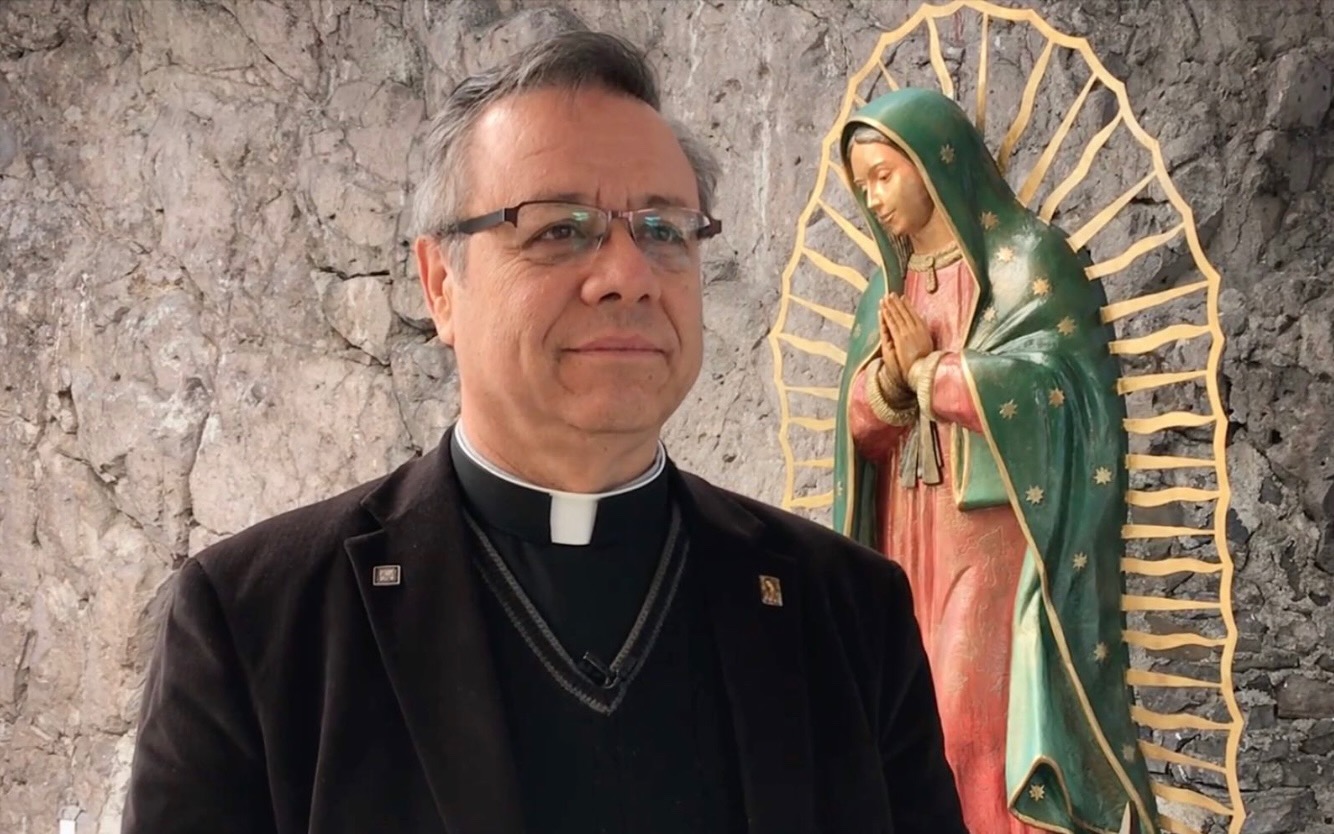
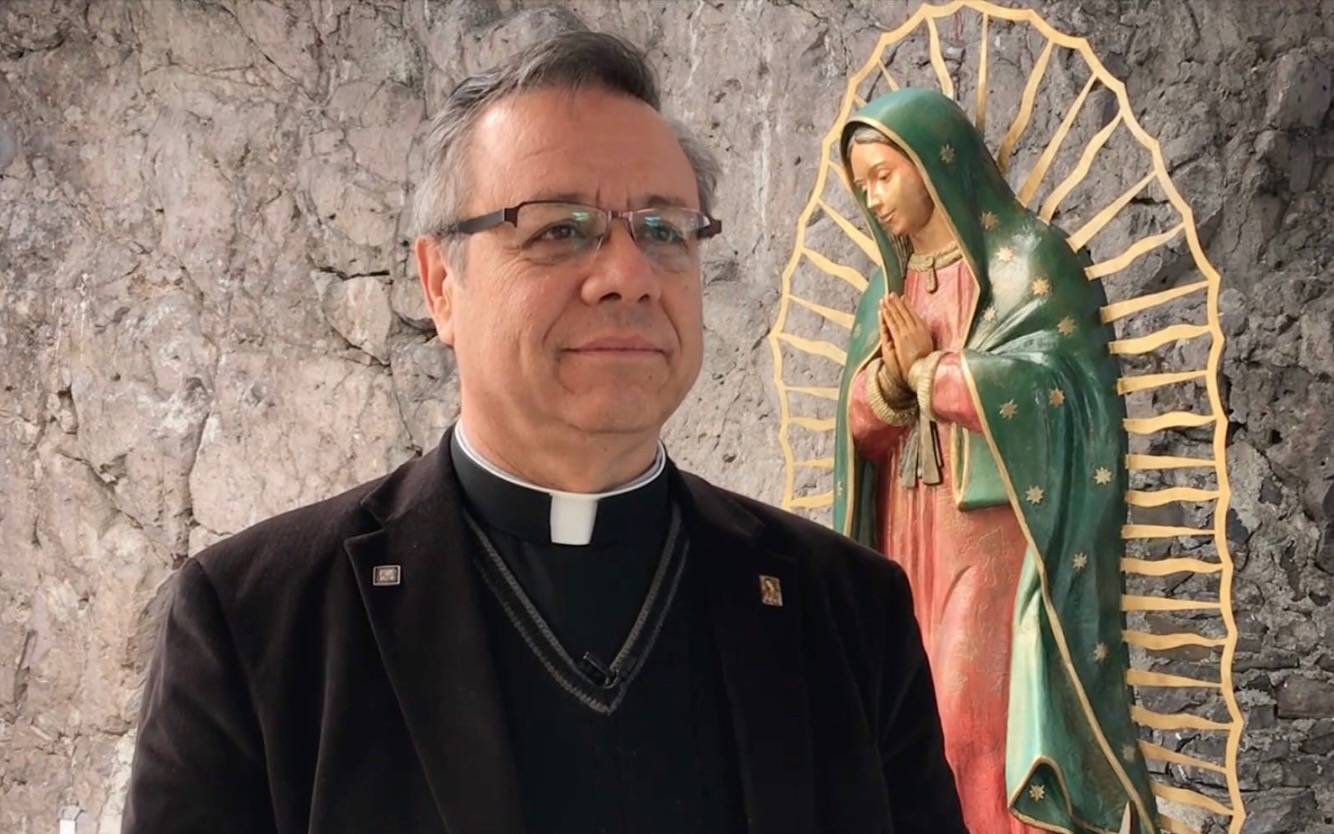
Guadalupe expert appointed to lead Mexico’s preparations for 500th anniversary of apparitions – #Catholic – Father Eduardo Chávez has been named representative of the Primate Archdiocese of Mexico for the celebrations of the fifth centenary of the apparitions of Our Lady of Guadalupe, which will take place in 2031.In a letter signed on Sept. 22, Cardinal Carlos Aguiar Retes, primate archbishop of Mexico, appointed Chávez, the magisterial Guadalupan theologian of the Basilica of Guadalupe in Mexico City, “representative of this particular church, especially in everything concerning the content of this marvelous Guadalupan event, in the preparation and in the celebrations of the fifth centenary of the apparitions of Holy Mary of Tepeyac.”He said he made the decision in light of Chávez’s “preparation and experience in the subject of the Guadalupan event.”In the letter, the cardinal recognized the Mexican priest’s work as postulator of the cause of St. Juan Diego, the visionary of Our Lady of Guadalupe, as well as his leadership of the Higher Institute of Guadalupan Studies, which for more than 25 years has borne “fruit in continuing research, in the formation of formators, and in spreading the message of love to so many peoples.”“May God, Our Lady of Guadalupe, and St. Juan Diego continue to enlighten, inspire, and strengthen you in this mission,” Aguiar wrote.Our Lady of Guadalupe appeared to St. Juan Diego between Dec. 9 and 12, 1531, asking him to intercede with the first bishop of Mexico, Friar Juan de Zumárraga, so that a “sacred little house” would be built at the foot of Tepeyac Hill to exalt God: “he who is my compassionate gaze, he who is my help, he who is my salvation.”On Dec. 12, as proof for the bishop that the apparitions were true, the Virgin sent Juan Diego with roses that had miraculously bloomed on the barren Tepeyac, carried in his tilma, or cloak. When the Indigenous man opened his tilma before de Zumárraga, the image of Mary had been miraculously imprinted on the cloth.Nearly 500 years later, St. Juan Diego’s tilma with the image of Our Lady of Guadalupe is still preserved in her shrine in Mexico City.‘A great honor, but also a great responsibility’In remarks to ACI Prensa, the Spanish-language sister service of EWTN News, on Oct. 7, Chávez, known as the leading expert on the apparitions of Our Lady of Guadalupe, said Aguiar’s appointment fills him “with tremendous enthusiasm.”“It is a great honor, but also a great responsibility,” he said. “It will be a lot of work, but work done with so much affection that you hardly feel it. It is joyful work for Our Lady of Guadalupe.”The celebration of the fifth centenary of the apparitions of Our Lady of Guadalupe, he said, is meant to promote “the exaltation of, devotion to, and above all adoration of Jesus, her beloved Son, because that is the center of her message.”He said the celebration, now only five years away, “should unite us all: unite us in love and in enthusiasm to celebrate her who is our Mother and who offers us, gives us, and entrusts to us her Son Jesus Christ.”“She is our Mother, she protects us, and she is the source of our joy,” he said.This story was first published by ACI Prensa, the Spanish-language sister service of EWTN News. It has been translated and adapted by EWTN News English.

Guadalupe expert appointed to lead Mexico’s preparations for 500th anniversary of apparitions – #Catholic – Father Eduardo Chávez has been named representative of the Primate Archdiocese of Mexico for the celebrations of the fifth centenary of the apparitions of Our Lady of Guadalupe, which will take place in 2031.In a letter signed on Sept. 22, Cardinal Carlos Aguiar Retes, primate archbishop of Mexico, appointed Chávez, the magisterial Guadalupan theologian of the Basilica of Guadalupe in Mexico City, “representative of this particular church, especially in everything concerning the content of this marvelous Guadalupan event, in the preparation and in the celebrations of the fifth centenary of the apparitions of Holy Mary of Tepeyac.”He said he made the decision in light of Chávez’s “preparation and experience in the subject of the Guadalupan event.”In the letter, the cardinal recognized the Mexican priest’s work as postulator of the cause of St. Juan Diego, the visionary of Our Lady of Guadalupe, as well as his leadership of the Higher Institute of Guadalupan Studies, which for more than 25 years has borne “fruit in continuing research, in the formation of formators, and in spreading the message of love to so many peoples.”“May God, Our Lady of Guadalupe, and St. Juan Diego continue to enlighten, inspire, and strengthen you in this mission,” Aguiar wrote.Our Lady of Guadalupe appeared to St. Juan Diego between Dec. 9 and 12, 1531, asking him to intercede with the first bishop of Mexico, Friar Juan de Zumárraga, so that a “sacred little house” would be built at the foot of Tepeyac Hill to exalt God: “he who is my compassionate gaze, he who is my help, he who is my salvation.”On Dec. 12, as proof for the bishop that the apparitions were true, the Virgin sent Juan Diego with roses that had miraculously bloomed on the barren Tepeyac, carried in his tilma, or cloak. When the Indigenous man opened his tilma before de Zumárraga, the image of Mary had been miraculously imprinted on the cloth.Nearly 500 years later, St. Juan Diego’s tilma with the image of Our Lady of Guadalupe is still preserved in her shrine in Mexico City.‘A great honor, but also a great responsibility’In remarks to ACI Prensa, the Spanish-language sister service of EWTN News, on Oct. 7, Chávez, known as the leading expert on the apparitions of Our Lady of Guadalupe, said Aguiar’s appointment fills him “with tremendous enthusiasm.”“It is a great honor, but also a great responsibility,” he said. “It will be a lot of work, but work done with so much affection that you hardly feel it. It is joyful work for Our Lady of Guadalupe.”The celebration of the fifth centenary of the apparitions of Our Lady of Guadalupe, he said, is meant to promote “the exaltation of, devotion to, and above all adoration of Jesus, her beloved Son, because that is the center of her message.”He said the celebration, now only five years away, “should unite us all: unite us in love and in enthusiasm to celebrate her who is our Mother and who offers us, gives us, and entrusts to us her Son Jesus Christ.”“She is our Mother, she protects us, and she is the source of our joy,” he said.This story was first published by ACI Prensa, the Spanish-language sister service of EWTN News. It has been translated and adapted by EWTN News English.

Cardinal Carlos Aguiar Retes chose Father Eduardo Chávez because of his expertise concerning the “Guadalupan event.”
Read More
Emaús Retreat at cathedral fosters deeper life of evangelization #Catholic – Linked arm-in-arm, hand-in-hand in sung prayer, believers filled the Cathedral of St. John the Baptist as alumni of a retreat experience that has connected thousands across the Paterson Diocese and throughout New Jersey.
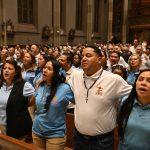
Pilgrims who have experienced the powerful Emaús retreat celebrated Christ’s love at a Spanish-language Mass with Bishop Kevin J. Sweeney on Sept. 25 at the cathedral.
Each of them has participated in the three-day, mainly Spanish-language experience, in which Deacon German Vargas from the cathedral has played a major part in infusing the life of faith in the diocese. He calls the “siblinghood” of Emaús a community of brothers and sisters who, after the retreat, encounter the presence, grace, love, and mercy of Christ and make the Catholic faith the center of their lives.

Click here to subscribe to our weekly newsletter.

“The bishop affirmed that the movement of the Holy Spirit has gifted us the Emaús fellowship,” Deacon Vargas shared. “The bishop emphasized the need not to be afraid and to keep walking together, like the disciples of Emmaus, strengthened by the Word of God,” he said.
The retreat program has touched thousands of New Jerseyans. Its title comes from the story of the road to Emmaus as shared in Luke. In it, Christ draws near to two people taking that road without identifying himself until he breaks bread with them in a Eucharistic expression, following the pattern of the Last Supper.
“Were not our hearts burning [within us] while he spoke to us on the way and opened the scriptures to us?” the two men say about Jesus.
Emaús, a retreat program that began at a parish in 1978 at St. Louis Parish in Miami, came to St. Mary Help of Christians in Paterson, N.J., in 2017 and has spread to 10 parishes in the diocese.
“The idea was to make a retreat for people who didn’t have the chance to go to other retreats,” said Father Duberney Villamizar, pastor at St. Margaret of Scotland Parish in Morristown, N.J., who also helps facilitate Emaús.
Father Villamizar added, “There are some retreats that require some background for the people — a discernment retreat for those thinking about vocations or retreats for couples, married couples. There were other requirements at the time this Emmaus retreat started in Florida. The parish priest wanted to have a retreat for anybody, those who are in the pews, those who are just arriving in the church.”
Through Emaús, men and women hold separate retreats that become deeply personal encounters with the Lord.
“It grew organically here at the cathedral,” said Msgr. Geno Sylva, the rector of St. John’s and diocesan vicar for special projects. “After the retreat, I started seeing not only that the lives of people who went on the retreat converted and changed, but they became so faithful, not only with being here [on] Sunday, but getting involved in so many other areas of the cathedral’s life. It’s part of my vision for evangelization here at the cathedral,” he said.
Msgr. Sylva credits Deacon Vargas and Father Villamizar with helping expand the retreat, which has become a key outreach tool, inviting people into the faith who have not had that deeper encounter with Christ.
“I have a St. John Paul II, Pope Francis, and Benedict XIV [approach] to New Evangelization. It has to be about going beyond the walls to inviting people to a larger communion and to Sunday Mass,” Msgr. Sylva said.
That invitation often comes from Emaús alums who also help make the retreat happen.
“It started forming what we call now the brotherhoods and the sisterhoods in the different parishes,” Father Villamizar said. “Those who leave the retreat already are the ones who prepare a new retreat and invite new people,” he said.
Those alumni also create regular follow-up opportunities for others who have gone on the retreat to continue the spiritual growth in community with others who know the power of the experience.
“They meet biweekly after the retreat,” Msgr. Sylva said, “and you have to make the retreat to be at those meetings because there’s a real focus on trust and confidentiality at that level of faith sharing.”
Leaders are launching a school with Emaús alums to form disciples who can support the New Evangelization. They aim to bring the fire for Christ that was launched when the Lord approached a pair of people who didn’t initially recognize him — the kind that changes hearts so passionately that they come together on a Friday night for a Mass that fills a cathedral.
“Just like the disciples of Emmaus,” said Deacon Vargas, “we must ask the Lord to stay with us, in our hearts and in our families.”
Click here to find more on Emaús in New Jersey.
BEACON PHOTOS | JOE GIGLI
 [See image gallery at beaconnj.org]  

Emaús Retreat at cathedral fosters deeper life of evangelization #Catholic – Linked arm-in-arm, hand-in-hand in sung prayer, believers filled the Cathedral of St. John the Baptist as alumni of a retreat experience that has connected thousands across the Paterson Diocese and throughout New Jersey. Pilgrims who have experienced the powerful Emaús retreat celebrated Christ’s love at a Spanish-language Mass with Bishop Kevin J. Sweeney on Sept. 25 at the cathedral. Each of them has participated in the three-day, mainly Spanish-language experience, in which Deacon German Vargas from the cathedral has played a major part in infusing the life of faith in the diocese. He calls the “siblinghood” of Emaús a community of brothers and sisters who, after the retreat, encounter the presence, grace, love, and mercy of Christ and make the Catholic faith the center of their lives. Click here to subscribe to our weekly newsletter. “The bishop affirmed that the movement of the Holy Spirit has gifted us the Emaús fellowship,” Deacon Vargas shared. “The bishop emphasized the need not to be afraid and to keep walking together, like the disciples of Emmaus, strengthened by the Word of God,” he said. The retreat program has touched thousands of New Jerseyans. Its title comes from the story of the road to Emmaus as shared in Luke. In it, Christ draws near to two people taking that road without identifying himself until he breaks bread with them in a Eucharistic expression, following the pattern of the Last Supper. “Were not our hearts burning [within us] while he spoke to us on the way and opened the scriptures to us?” the two men say about Jesus. Emaús, a retreat program that began at a parish in 1978 at St. Louis Parish in Miami, came to St. Mary Help of Christians in Paterson, N.J., in 2017 and has spread to 10 parishes in the diocese. “The idea was to make a retreat for people who didn’t have the chance to go to other retreats,” said Father Duberney Villamizar, pastor at St. Margaret of Scotland Parish in Morristown, N.J., who also helps facilitate Emaús. Father Villamizar added, “There are some retreats that require some background for the people — a discernment retreat for those thinking about vocations or retreats for couples, married couples. There were other requirements at the time this Emmaus retreat started in Florida. The parish priest wanted to have a retreat for anybody, those who are in the pews, those who are just arriving in the church.” Through Emaús, men and women hold separate retreats that become deeply personal encounters with the Lord. “It grew organically here at the cathedral,” said Msgr. Geno Sylva, the rector of St. John’s and diocesan vicar for special projects. “After the retreat, I started seeing not only that the lives of people who went on the retreat converted and changed, but they became so faithful, not only with being here [on] Sunday, but getting involved in so many other areas of the cathedral’s life. It’s part of my vision for evangelization here at the cathedral,” he said. Msgr. Sylva credits Deacon Vargas and Father Villamizar with helping expand the retreat, which has become a key outreach tool, inviting people into the faith who have not had that deeper encounter with Christ. “I have a St. John Paul II, Pope Francis, and Benedict XIV [approach] to New Evangelization. It has to be about going beyond the walls to inviting people to a larger communion and to Sunday Mass,” Msgr. Sylva said. That invitation often comes from Emaús alums who also help make the retreat happen. “It started forming what we call now the brotherhoods and the sisterhoods in the different parishes,” Father Villamizar said. “Those who leave the retreat already are the ones who prepare a new retreat and invite new people,” he said. Those alumni also create regular follow-up opportunities for others who have gone on the retreat to continue the spiritual growth in community with others who know the power of the experience. “They meet biweekly after the retreat,” Msgr. Sylva said, “and you have to make the retreat to be at those meetings because there’s a real focus on trust and confidentiality at that level of faith sharing.” Leaders are launching a school with Emaús alums to form disciples who can support the New Evangelization. They aim to bring the fire for Christ that was launched when the Lord approached a pair of people who didn’t initially recognize him — the kind that changes hearts so passionately that they come together on a Friday night for a Mass that fills a cathedral. “Just like the disciples of Emmaus,” said Deacon Vargas, “we must ask the Lord to stay with us, in our hearts and in our families.” Click here to find more on Emaús in New Jersey. BEACON PHOTOS | JOE GIGLI [See image gallery at beaconnj.org]  

Emaús Retreat at cathedral fosters deeper life of evangelization #Catholic –

Linked arm-in-arm, hand-in-hand in sung prayer, believers filled the Cathedral of St. John the Baptist as alumni of a retreat experience that has connected thousands across the Paterson Diocese and throughout New Jersey.

Pilgrims who have experienced the powerful Emaús retreat celebrated Christ’s love at a Spanish-language Mass with Bishop Kevin J. Sweeney on Sept. 25 at the cathedral.

Each of them has participated in the three-day, mainly Spanish-language experience, in which Deacon German Vargas from the cathedral has played a major part in infusing the life of faith in the diocese. He calls the “siblinghood” of Emaús a community of brothers and sisters who, after the retreat, encounter the presence, grace, love, and mercy of Christ and make the Catholic faith the center of their lives.


Click here to subscribe to our weekly newsletter.

“The bishop affirmed that the movement of the Holy Spirit has gifted us the Emaús fellowship,” Deacon Vargas shared. “The bishop emphasized the need not to be afraid and to keep walking together, like the disciples of Emmaus, strengthened by the Word of God,” he said.

The retreat program has touched thousands of New Jerseyans. Its title comes from the story of the road to Emmaus as shared in Luke. In it, Christ draws near to two people taking that road without identifying himself until he breaks bread with them in a Eucharistic expression, following the pattern of the Last Supper.

“Were not our hearts burning [within us] while he spoke to us on the way and opened the scriptures to us?” the two men say about Jesus.

Emaús, a retreat program that began at a parish in 1978 at St. Louis Parish in Miami, came to St. Mary Help of Christians in Paterson, N.J., in 2017 and has spread to 10 parishes in the diocese.

“The idea was to make a retreat for people who didn’t have the chance to go to other retreats,” said Father Duberney Villamizar, pastor at St. Margaret of Scotland Parish in Morristown, N.J., who also helps facilitate Emaús.

Father Villamizar added, “There are some retreats that require some background for the people — a discernment retreat for those thinking about vocations or retreats for couples, married couples. There were other requirements at the time this Emmaus retreat started in Florida. The parish priest wanted to have a retreat for anybody, those who are in the pews, those who are just arriving in the church.”

Through Emaús, men and women hold separate retreats that become deeply personal encounters with the Lord.

“It grew organically here at the cathedral,” said Msgr. Geno Sylva, the rector of St. John’s and diocesan vicar for special projects. “After the retreat, I started seeing not only that the lives of people who went on the retreat converted and changed, but they became so faithful, not only with being here [on] Sunday, but getting involved in so many other areas of the cathedral’s life. It’s part of my vision for evangelization here at the cathedral,” he said.

Msgr. Sylva credits Deacon Vargas and Father Villamizar with helping expand the retreat, which has become a key outreach tool, inviting people into the faith who have not had that deeper encounter with Christ.

“I have a St. John Paul II, Pope Francis, and Benedict XIV [approach] to New Evangelization. It has to be about going beyond the walls to inviting people to a larger communion and to Sunday Mass,” Msgr. Sylva said.

That invitation often comes from Emaús alums who also help make the retreat happen.

“It started forming what we call now the brotherhoods and the sisterhoods in the different parishes,” Father Villamizar said. “Those who leave the retreat already are the ones who prepare a new retreat and invite new people,” he said.

Those alumni also create regular follow-up opportunities for others who have gone on the retreat to continue the spiritual growth in community with others who know the power of the experience.

“They meet biweekly after the retreat,” Msgr. Sylva said, “and you have to make the retreat to be at those meetings because there’s a real focus on trust and confidentiality at that level of faith sharing.”
Leaders are launching a school with Emaús alums to form disciples who can support the New Evangelization. They aim to bring the fire for Christ that was launched when the Lord approached a pair of people who didn’t initially recognize him — the kind that changes hearts so passionately that they come together on a Friday night for a Mass that fills a cathedral.

“Just like the disciples of Emmaus,” said Deacon Vargas, “we must ask the Lord to stay with us, in our hearts and in our families.”

Click here to find more on Emaús in New Jersey.

BEACON PHOTOS | JOE GIGLI

– Linked arm-in-arm, hand-in-hand in sung prayer, believers filled the Cathedral of St. John the Baptist as alumni of a retreat experience that has connected thousands across the Paterson Diocese and throughout New Jersey. Pilgrims who have experienced the powerful Emaús retreat celebrated Christ’s love at a Spanish-language Mass with Bishop Kevin J. Sweeney on Sept. 25 at the cathedral. Each of them has participated in the three-day, mainly Spanish-language experience, in which Deacon German Vargas from the cathedral has played a major part in infusing the life of faith in the diocese. He calls the “siblinghood” of Emaús a community
Read More
Obituary: Franciscan Father Bernard ‘Bernie’ Creighton, 86 #Catholic – A Mass of Christian Burial will be held on Thursday, Oct. 15 at 10:30 a.m. at St. Anthony of Padua Church in Butler, N.J., for Franciscan Father Bernard “Bernie” Creighton, who died Oct. 7. He was 86.
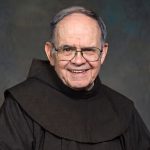
For more than 60 years, Father Creighton devoted his life to service, education, and pastoral ministry. He spent decades supporting the Franciscan Institute at St. Bonaventure University in St. Bonaventure, N.Y., an international center for research, publishing, and academia dedicated to studying the Franciscan intellectual tradition, history, and theology.
Father Creighton was born on Dec. 7, 1939, to Stanley and Helen Creighton (née Palizay). He was an only child, and his family ran a milk processing and delivery business in Elmira, N.Y.
The future Franciscan Friar attended Catholic grade school and high school in Elmira, N.Y. In 1961, he earned a bachelor’s degree in journalism from St. Bonaventure University, where he met the friars who inspired his vocation.
As a senior, Father Creighton was chosen to receive the 1961 Mark Hellinger Award, an annual recognition from St. Bonaventure University’s Jandoli School of Communication that honors outstanding academic achievement in journalism. However, Fr. Bernie declined the award for “up-and-coming journalists” because God was calling him to religious life.
Then, in 1991, Father Creighton received the honor he had earned as a college student three decades earlier.
At age 23, Father Creighton entered the Franciscan Order, professing first vows in 1963 and solemn vows in 1966. He was ordained a priest in 1967.
Father Creighton became a trusted source of knowledge about the history and traditions of the Franciscan community after serving from 1968 to 1972 as editor of the Provincial Annals, an archival periodical published by the legacy Holy Name Province.
From 1994 to 2026, Father Creighton served as vicar of the St. Anthony Friary in Butler, N.J., where he faithfully handled the daily needs of the friary community.
Father Creighton is remembered for being approachable, detailed, humble, knowledgeable, and deeply dedicated to others. He embraced the Franciscan ideals of simplicity, hospitality and service, believing that the best part of ministry was working with the people of God and helping them to live in the spirit of the Lord.
Father Creighton is survived by his friar brothers of the Province of Our Lady of Guadalupe; his cousins, Catherine Creighton Saal (Frank), Eugene Creighton (Patricia), James Creighton, Debbie Creighton, Tom Gilmore, Marilyn Lilly (Bill), James Ripley (Marilyn); and a cousin by marriage, Nancy Levanduski.
Visitation for Father Creighton will be held on Thursday, Oct. 15at 9:30 a.m. at St. Anthony of Padua Church in Butler, N.J., followed by a Mass of Christian Burial at 10:30 a.m. in the church.
A Memorial Mass will be held on Monday, Oct. 19, at 11 a.m. at St. Bonaventure University Chapel in St. Bonaventure, N.Y. Burial will follow at St. Bonaventure Cemetery.

Click here to subscribe to our weekly newsletter.

Obituary: Franciscan Father Bernard ‘Bernie’ Creighton, 86 #Catholic – A Mass of Christian Burial will be held on Thursday, Oct. 15 at 10:30 a.m. at St. Anthony of Padua Church in Butler, N.J., for Franciscan Father Bernard “Bernie” Creighton, who died Oct. 7. He was 86. For more than 60 years, Father Creighton devoted his life to service, education, and pastoral ministry. He spent decades supporting the Franciscan Institute at St. Bonaventure University in St. Bonaventure, N.Y., an international center for research, publishing, and academia dedicated to studying the Franciscan intellectual tradition, history, and theology. Father Creighton was born on Dec. 7, 1939, to Stanley and Helen Creighton (née Palizay). He was an only child, and his family ran a milk processing and delivery business in Elmira, N.Y. The future Franciscan Friar attended Catholic grade school and high school in Elmira, N.Y. In 1961, he earned a bachelor’s degree in journalism from St. Bonaventure University, where he met the friars who inspired his vocation. As a senior, Father Creighton was chosen to receive the 1961 Mark Hellinger Award, an annual recognition from St. Bonaventure University’s Jandoli School of Communication that honors outstanding academic achievement in journalism. However, Fr. Bernie declined the award for “up-and-coming journalists” because God was calling him to religious life. Then, in 1991, Father Creighton received the honor he had earned as a college student three decades earlier. At age 23, Father Creighton entered the Franciscan Order, professing first vows in 1963 and solemn vows in 1966. He was ordained a priest in 1967. Father Creighton became a trusted source of knowledge about the history and traditions of the Franciscan community after serving from 1968 to 1972 as editor of the Provincial Annals, an archival periodical published by the legacy Holy Name Province. From 1994 to 2026, Father Creighton served as vicar of the St. Anthony Friary in Butler, N.J., where he faithfully handled the daily needs of the friary community. Father Creighton is remembered for being approachable, detailed, humble, knowledgeable, and deeply dedicated to others. He embraced the Franciscan ideals of simplicity, hospitality and service, believing that the best part of ministry was working with the people of God and helping them to live in the spirit of the Lord. Father Creighton is survived by his friar brothers of the Province of Our Lady of Guadalupe; his cousins, Catherine Creighton Saal (Frank), Eugene Creighton (Patricia), James Creighton, Debbie Creighton, Tom Gilmore, Marilyn Lilly (Bill), James Ripley (Marilyn); and a cousin by marriage, Nancy Levanduski. Visitation for Father Creighton will be held on Thursday, Oct. 15at 9:30 a.m. at St. Anthony of Padua Church in Butler, N.J., followed by a Mass of Christian Burial at 10:30 a.m. in the church. A Memorial Mass will be held on Monday, Oct. 19, at 11 a.m. at St. Bonaventure University Chapel in St. Bonaventure, N.Y. Burial will follow at St. Bonaventure Cemetery. Click here to subscribe to our weekly newsletter.

Obituary: Franciscan Father Bernard ‘Bernie’ Creighton, 86 #Catholic –

A Mass of Christian Burial will be held on Thursday, Oct. 15 at 10:30 a.m. at St. Anthony of Padua Church in Butler, N.J., for Franciscan Father Bernard “Bernie” Creighton, who died Oct. 7. He was 86.

For more than 60 years, Father Creighton devoted his life to service, education, and pastoral ministry. He spent decades supporting the Franciscan Institute at St. Bonaventure University in St. Bonaventure, N.Y., an international center for research, publishing, and academia dedicated to studying the Franciscan intellectual tradition, history, and theology.

Father Creighton was born on Dec. 7, 1939, to Stanley and Helen Creighton (née Palizay). He was an only child, and his family ran a milk processing and delivery business in Elmira, N.Y.

The future Franciscan Friar attended Catholic grade school and high school in Elmira, N.Y. In 1961, he earned a bachelor’s degree in journalism from St. Bonaventure University, where he met the friars who inspired his vocation.

As a senior, Father Creighton was chosen to receive the 1961 Mark Hellinger Award, an annual recognition from St. Bonaventure University’s Jandoli School of Communication that honors outstanding academic achievement in journalism. However, Fr. Bernie declined the award for “up-and-coming journalists” because God was calling him to religious life.
Then, in 1991, Father Creighton received the honor he had earned as a college student three decades earlier.

At age 23, Father Creighton entered the Franciscan Order, professing first vows in 1963 and solemn vows in 1966. He was ordained a priest in 1967.

Father Creighton became a trusted source of knowledge about the history and traditions of the Franciscan community after serving from 1968 to 1972 as editor of the Provincial Annals, an archival periodical published by the legacy Holy Name Province.

From 1994 to 2026, Father Creighton served as vicar of the St. Anthony Friary in Butler, N.J., where he faithfully handled the daily needs of the friary community.

Father Creighton is remembered for being approachable, detailed, humble, knowledgeable, and deeply dedicated to others. He embraced the Franciscan ideals of simplicity, hospitality and service, believing that the best part of ministry was working with the people of God and helping them to live in the spirit of the Lord.

Father Creighton is survived by his friar brothers of the Province of Our Lady of Guadalupe; his cousins, Catherine Creighton Saal (Frank), Eugene Creighton (Patricia), James Creighton, Debbie Creighton, Tom Gilmore, Marilyn Lilly (Bill), James Ripley (Marilyn); and a cousin by marriage, Nancy Levanduski.

Visitation for Father Creighton will be held on Thursday, Oct. 15at 9:30 a.m. at St. Anthony of Padua Church in Butler, N.J., followed by a Mass of Christian Burial at 10:30 a.m. in the church.

A Memorial Mass will be held on Monday, Oct. 19, at 11 a.m. at St. Bonaventure University Chapel in St. Bonaventure, N.Y. Burial will follow at St. Bonaventure Cemetery.


Click here to subscribe to our weekly newsletter.

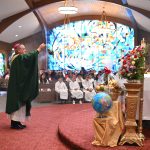
– A Mass of Christian Burial will be held on Thursday, Oct. 15 at 10:30 a.m. at St. Anthony of Padua Church in Butler, N.J., for Franciscan Father Bernard “Bernie” Creighton, who died Oct. 7. He was 86. For more than 60 years, Father Creighton devoted his life to service, education, and pastoral ministry. He spent decades supporting the Franciscan Institute at St. Bonaventure University in St. Bonaventure, N.Y., an international center for research, publishing, and academia dedicated to studying the Franciscan intellectual tradition, history, and theology. Father Creighton was born on Dec. 7, 1939, to Stanley and Helen Creighton (née
Read More
In Morristown, Bishop offers hope to fearful migrants, refugees #Catholic – On Sept. 27, many Hispanic Catholics joined Bishop Kevin J. Sweeney, who celebrated a Spanish Mass for the 112th World Day for Migrants and Refugees at St. Margaret of Scotland Church in Morristown, N.J. During the liturgy, the bishop offered Latino Catholics hope at a time when many of them are in fear of being targeted by law enforcement in the current immigration crisis or mistreated because of their ethnicity.
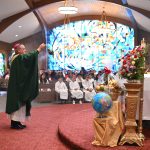
“The message is [to] know that whatever is going on, you are not alone, and the Church is here for you,” Father Duberney Villamizar, the pastor of St. Margaret of Scotland, said.
The Mass was filled with praiseful songs, assisted by dozens of altar servers, and concelebrated by many priests. Bishop Sweeney and the other clergy shared a bilingual message of solidarity and symbolism with the pilgrimage to heaven.

Click here to subscribe to our weekly newsletter.

“We’re blessed to live in a community, an immigrant community here in Morristown,” said Bishop Sweeney in English during the mostly Spanish Mass.
“As members of the Church, we’re all migrants; we’re all peregrinos [pilgrims] in pilgrimage together, hopefully one day to God, to the life of Heaven. Pope Leo invited us all to be part of this 112th World Day for Migrants and Refugees. We pray for migrants and refugees in a special way during this Mass,” Bishop Sweeney said.
Bishop Sweeney said that while the Church respects the law, every person is a child of God and deserves treatment that reflects that human dignity.
Bishop Sweeney’s message of “you are not alone” reflects the United States Conference of Catholic Bishops’ (USCCB) Justice for Immigrants Initiative. It offers Church resources for emergency support, solidarity in public witness and prayer, and pastoral support for immigrants and those suffering during the current crisis.
The Mass at St. Margaret’s was part of a week planned by the USCCB dedicated to immigrants and refugees in the U.S. St. Margaret of Scotland Parish held an additional rosary this week.
“It’s something that we have been trying to do in the last almost two years [with] everything that is going on in the country,” Father Villamizar said.
Father Villamizar estimates that about 800 people came to Sunday’s Mass, which happened just five days after U.S. Immigration and Customs Enforcement (ICE) officers conducted activity in the Morristown.
“People are afraid to even go to church,” Father Villamizar said. “People are really concerned, not because we are doing anything wrong.”
Father Villamizar even shared his own concern, as he is an immigrant from Colombia who took the proper steps to become an American citizen.
“What if I just work without my wallet, or I don’t have any proof that I am an American citizen? They can detain me until I prove that I am here doing good things,’ Father Villamizar said.
In this climate, the Mass celebrated on Sunday at his church helps people enduring such fear recognize the human sanctity they have, which cannot be taken away from them, and gives them the courage to endure while living their lives, Father Villamizar said.
“There is a dignity that comes only from God,” Father Villamizar said.
“The suffering is real. So many people try to keep going on with their lives, with their businesses, with whatever they are doing, making this place a better place with everything they are, with everything they are giving,” Father Villamizar said.
Father Villamizar said the message on Sept. 27 will remain true for everyone who feels the anxiety of the current age and culture surrounding Latinos: that the Catholic Church may not be able to fix every issue, but that Christ and his Church will be here to accompany them every step, no matter what happens.
“We are not promising to solve everyone’s problems, but at least you know that you are not by yourself,” Father Villamizar said. “Somebody cares about you, somebody wants to be with you, somebody wants to be in this experience with you,” he said.
BEACON PHOTOS | JOE GIGLI
 [See image gallery at beaconnj.org]  

In Morristown, Bishop offers hope to fearful migrants, refugees #Catholic – On Sept. 27, many Hispanic Catholics joined Bishop Kevin J. Sweeney, who celebrated a Spanish Mass for the 112th World Day for Migrants and Refugees at St. Margaret of Scotland Church in Morristown, N.J. During the liturgy, the bishop offered Latino Catholics hope at a time when many of them are in fear of being targeted by law enforcement in the current immigration crisis or mistreated because of their ethnicity. “The message is [to] know that whatever is going on, you are not alone, and the Church is here for you,” Father Duberney Villamizar, the pastor of St. Margaret of Scotland, said. The Mass was filled with praiseful songs, assisted by dozens of altar servers, and concelebrated by many priests. Bishop Sweeney and the other clergy shared a bilingual message of solidarity and symbolism with the pilgrimage to heaven. Click here to subscribe to our weekly newsletter. “We’re blessed to live in a community, an immigrant community here in Morristown,” said Bishop Sweeney in English during the mostly Spanish Mass. “As members of the Church, we’re all migrants; we’re all peregrinos [pilgrims] in pilgrimage together, hopefully one day to God, to the life of Heaven. Pope Leo invited us all to be part of this 112th World Day for Migrants and Refugees. We pray for migrants and refugees in a special way during this Mass,” Bishop Sweeney said. Bishop Sweeney said that while the Church respects the law, every person is a child of God and deserves treatment that reflects that human dignity. Bishop Sweeney’s message of “you are not alone” reflects the United States Conference of Catholic Bishops’ (USCCB) Justice for Immigrants Initiative. It offers Church resources for emergency support, solidarity in public witness and prayer, and pastoral support for immigrants and those suffering during the current crisis. The Mass at St. Margaret’s was part of a week planned by the USCCB dedicated to immigrants and refugees in the U.S. St. Margaret of Scotland Parish held an additional rosary this week. “It’s something that we have been trying to do in the last almost two years [with] everything that is going on in the country,” Father Villamizar said. Father Villamizar estimates that about 800 people came to Sunday’s Mass, which happened just five days after U.S. Immigration and Customs Enforcement (ICE) officers conducted activity in the Morristown. “People are afraid to even go to church,” Father Villamizar said. “People are really concerned, not because we are doing anything wrong.” Father Villamizar even shared his own concern, as he is an immigrant from Colombia who took the proper steps to become an American citizen. “What if I just work without my wallet, or I don’t have any proof that I am an American citizen? They can detain me until I prove that I am here doing good things,’ Father Villamizar said. In this climate, the Mass celebrated on Sunday at his church helps people enduring such fear recognize the human sanctity they have, which cannot be taken away from them, and gives them the courage to endure while living their lives, Father Villamizar said. “There is a dignity that comes only from God,” Father Villamizar said. “The suffering is real. So many people try to keep going on with their lives, with their businesses, with whatever they are doing, making this place a better place with everything they are, with everything they are giving,” Father Villamizar said. Father Villamizar said the message on Sept. 27 will remain true for everyone who feels the anxiety of the current age and culture surrounding Latinos: that the Catholic Church may not be able to fix every issue, but that Christ and his Church will be here to accompany them every step, no matter what happens. “We are not promising to solve everyone’s problems, but at least you know that you are not by yourself,” Father Villamizar said. “Somebody cares about you, somebody wants to be with you, somebody wants to be in this experience with you,” he said. BEACON PHOTOS | JOE GIGLI [See image gallery at beaconnj.org]  

In Morristown, Bishop offers hope to fearful migrants, refugees #Catholic –

On Sept. 27, many Hispanic Catholics joined Bishop Kevin J. Sweeney, who celebrated a Spanish Mass for the 112th World Day for Migrants and Refugees at St. Margaret of Scotland Church in Morristown, N.J. During the liturgy, the bishop offered Latino Catholics hope at a time when many of them are in fear of being targeted by law enforcement in the current immigration crisis or mistreated because of their ethnicity.

“The message is [to] know that whatever is going on, you are not alone, and the Church is here for you,” Father Duberney Villamizar, the pastor of St. Margaret of Scotland, said.

The Mass was filled with praiseful songs, assisted by dozens of altar servers, and concelebrated by many priests. Bishop Sweeney and the other clergy shared a bilingual message of solidarity and symbolism with the pilgrimage to heaven.


Click here to subscribe to our weekly newsletter.

“We’re blessed to live in a community, an immigrant community here in Morristown,” said Bishop Sweeney in English during the mostly Spanish Mass.

“As members of the Church, we’re all migrants; we’re all peregrinos [pilgrims] in pilgrimage together, hopefully one day to God, to the life of Heaven. Pope Leo invited us all to be part of this 112th World Day for Migrants and Refugees. We pray for migrants and refugees in a special way during this Mass,” Bishop Sweeney said.

Bishop Sweeney said that while the Church respects the law, every person is a child of God and deserves treatment that reflects that human dignity.

Bishop Sweeney’s message of “you are not alone” reflects the United States Conference of Catholic Bishops’ (USCCB) Justice for Immigrants Initiative. It offers Church resources for emergency support, solidarity in public witness and prayer, and pastoral support for immigrants and those suffering during the current crisis.

The Mass at St. Margaret’s was part of a week planned by the USCCB dedicated to immigrants and refugees in the U.S. St. Margaret of Scotland Parish held an additional rosary this week.

“It’s something that we have been trying to do in the last almost two years [with] everything that is going on in the country,” Father Villamizar said.

Father Villamizar estimates that about 800 people came to Sunday’s Mass, which happened just five days after U.S. Immigration and Customs Enforcement (ICE) officers conducted activity in the Morristown.

“People are afraid to even go to church,” Father Villamizar said. “People are really concerned, not because we are doing anything wrong.”

Father Villamizar even shared his own concern, as he is an immigrant from Colombia who took the proper steps to become an American citizen.

“What if I just work without my wallet, or I don’t have any proof that I am an American citizen? They can detain me until I prove that I am here doing good things,’ Father Villamizar said.

In this climate, the Mass celebrated on Sunday at his church helps people enduring such fear recognize the human sanctity they have, which cannot be taken away from them, and gives them the courage to endure while living their lives, Father Villamizar said.

“There is a dignity that comes only from God,” Father Villamizar said.

“The suffering is real. So many people try to keep going on with their lives, with their businesses, with whatever they are doing, making this place a better place with everything they are, with everything they are giving,” Father Villamizar said.

Father Villamizar said the message on Sept. 27 will remain true for everyone who feels the anxiety of the current age and culture surrounding Latinos: that the Catholic Church may not be able to fix every issue, but that Christ and his Church will be here to accompany them every step, no matter what happens.

“We are not promising to solve everyone’s problems, but at least you know that you are not by yourself,” Father Villamizar said. “Somebody cares about you, somebody wants to be with you, somebody wants to be in this experience with you,” he said.

BEACON PHOTOS | JOE GIGLI

– On Sept. 27, many Hispanic Catholics joined Bishop Kevin J. Sweeney, who celebrated a Spanish Mass for the 112th World Day for Migrants and Refugees at St. Margaret of Scotland Church in Morristown, N.J. During the liturgy, the bishop offered Latino Catholics hope at a time when many of them are in fear of being targeted by law enforcement in the current immigration crisis or mistreated because of their ethnicity. “The message is [to] know that whatever is going on, you are not alone, and the Church is here for you,” Father Duberney Villamizar, the pastor of St. Margaret of

Read More
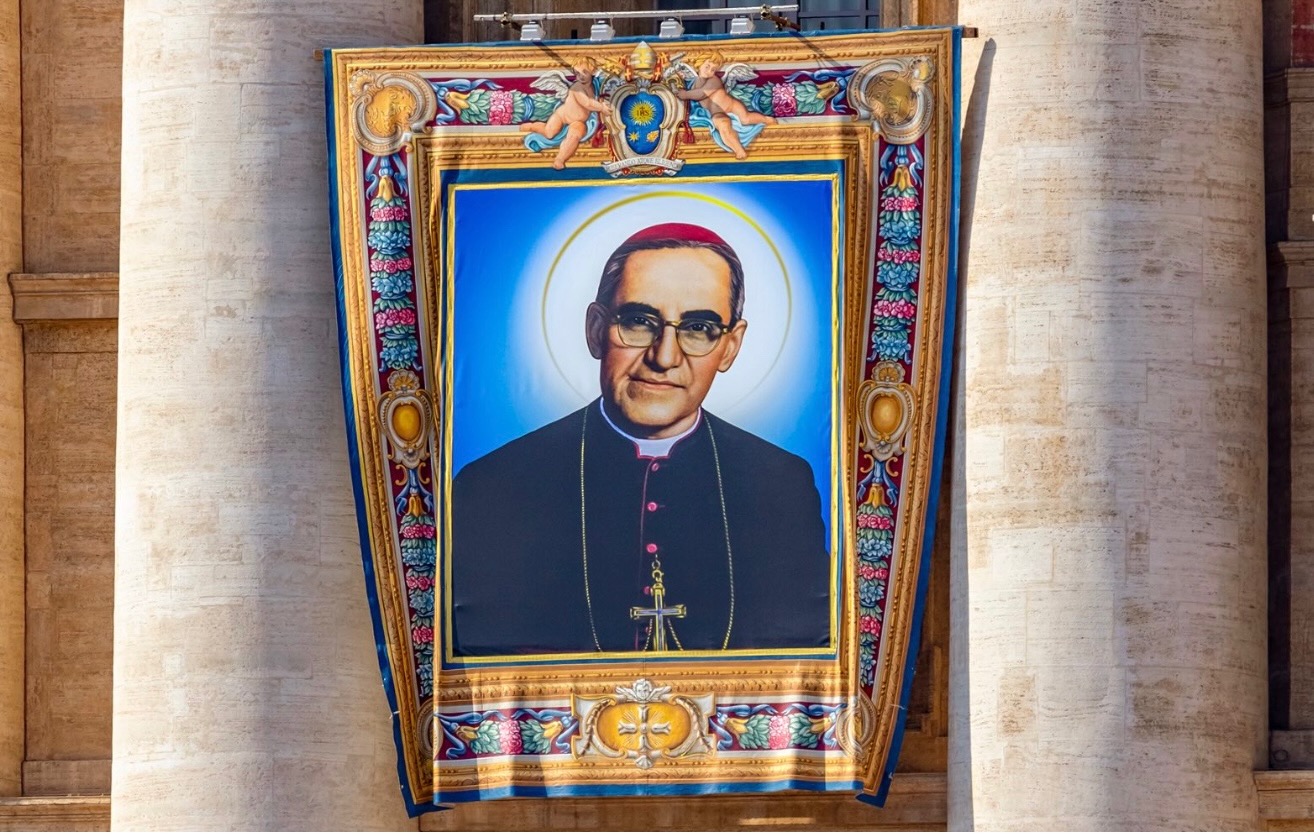
Bishops of El Salvador ask Pope Leo to proclaim Saint Óscar Romero a Doctor of the Church – #Catholic – The bishops of El Salvador asked Pope Leo XIV to proclaim St. Óscar Arnulfo Romero a doctor of the Church and to visit the Central American country to pray at the tomb of the martyred archbishop.The requests were made during an audience on Sept. 11 as part of the ad limina visit the Salvadoran prelates made to Rome from Sept. 7–11.The Episcopal Conference of El Salvador announced the request in a press release issued Oct. 4 that noted the meeting with the Holy Father “was marked by closeness, fraternity, and the paternal character of the Pontiff.”In that setting, the bishops presented both petitions concerning St. Óscar Romero, who was assassinated on March 24, 1980, while celebrating Mass in the chapel of Divine Providence Hospital in San Salvador and who was canonized by Pope Francis on Oct. 14, 2018.
 
 Salvadoran bishops meet with Pope Leo XIV on Sept. 11, 2026. | Credit: Vatican Media
 
 According to Archbishop José Luis Escobar Alas of San Salvador, president of the Episcopal Conference of El Salvador, the Holy Father received the proposals with “a very positive and welcoming attitude.” The prelate explained, however, that “both decisions require a process of consultation and discernment before a definitive response can be given.”Pope Leo XIV’s devotion to St. Óscar RomeroDuring the meeting, Leo also told the Salvadoran bishops of his particular devotion to St. Óscar Romero.Escobar said the pope used to carry “a holy card of Monsignor Romero together with a third-class relic and commended himself daily to his intercession.”During the meeting, the bishops of El Salvador gave the pope a first-class relic of St. Óscar Romero.
 
 Archbishop José Luis Escobar gives a first-degree relic of St. Óscar Romero to Pope Leo XIV on Sept. 11, 2026. | Credit: Vatican Media
 
 What is a doctor of the Church?The title “doctor of the Church” recognizes canonized men and women who possessed deep knowledge, were outstanding teachers, and contributed significantly to the theology of the Church.Traditionally the title has been granted on three conditions: evident holiness of the candidate, confirmed by canonization as a saint; eminence in doctrine, shown by a body of teaching that made significant and lasting contributions to the life of the Church; and a formal declaration by the Church, usually by a pope.There are currently 38 doctors of the Church.This story was first published by ACI Prensa, the Spanish-language sister service of EWTN News. It has been translated and adapted by EWTN News English.

Bishops of El Salvador ask Pope Leo to proclaim Saint Óscar Romero a Doctor of the Church – #Catholic – The bishops of El Salvador asked Pope Leo XIV to proclaim St. Óscar Arnulfo Romero a doctor of the Church and to visit the Central American country to pray at the tomb of the martyred archbishop.The requests were made during an audience on Sept. 11 as part of the ad limina visit the Salvadoran prelates made to Rome from Sept. 7–11.The Episcopal Conference of El Salvador announced the request in a press release issued Oct. 4 that noted the meeting with the Holy Father “was marked by closeness, fraternity, and the paternal character of the Pontiff.”In that setting, the bishops presented both petitions concerning St. Óscar Romero, who was assassinated on March 24, 1980, while celebrating Mass in the chapel of Divine Providence Hospital in San Salvador and who was canonized by Pope Francis on Oct. 14, 2018. Salvadoran bishops meet with Pope Leo XIV on Sept. 11, 2026. | Credit: Vatican Media According to Archbishop José Luis Escobar Alas of San Salvador, president of the Episcopal Conference of El Salvador, the Holy Father received the proposals with “a very positive and welcoming attitude.” The prelate explained, however, that “both decisions require a process of consultation and discernment before a definitive response can be given.”Pope Leo XIV’s devotion to St. Óscar RomeroDuring the meeting, Leo also told the Salvadoran bishops of his particular devotion to St. Óscar Romero.Escobar said the pope used to carry “a holy card of Monsignor Romero together with a third-class relic and commended himself daily to his intercession.”During the meeting, the bishops of El Salvador gave the pope a first-class relic of St. Óscar Romero. Archbishop José Luis Escobar gives a first-degree relic of St. Óscar Romero to Pope Leo XIV on Sept. 11, 2026. | Credit: Vatican Media What is a doctor of the Church?The title “doctor of the Church” recognizes canonized men and women who possessed deep knowledge, were outstanding teachers, and contributed significantly to the theology of the Church.Traditionally the title has been granted on three conditions: evident holiness of the candidate, confirmed by canonization as a saint; eminence in doctrine, shown by a body of teaching that made significant and lasting contributions to the life of the Church; and a formal declaration by the Church, usually by a pope.There are currently 38 doctors of the Church.This story was first published by ACI Prensa, the Spanish-language sister service of EWTN News. It has been translated and adapted by EWTN News English.

During a meeting in September, the bishops also asked the pope to visit the country.

Read More

NASA has selected a mission proposal that will peer below a volcanic pit on the Moon to find out whether it opens onto a hidden lava tube — a geologic formation long theorized, but never confirmed on the Moon. The proposal will send a mission to the Marius Hills Pit, a large hole — approximatelyContinue reading “Newly selected NASA mission will hunt for caves on the Moon”

The post Newly selected NASA mission will hunt for caves on the Moon appeared first on Astronomy Magazine.

Read More
U.S. Catholic bishops condemn ‘barbaric’ plan to livestream military execution – #Catholic – The U.S. Conference of Catholic Bishops (USCCB) condemned Secretary of Defense Pete Hegseth’s announcement that the military execution of the Fort Hood mass shooter, Nidal Hasan, will be livestreamed for the public to view.“It is with shock and great sorrow that I have learned of the Department of War’s decision to publicly livestream the execution of Nidal Hasan,” Archbishop Paul S. Coakley, president of the USCCB, said in a statement on Oct. 9.“Our God is the God of life,” he said. “In no way can Hasan’s actions be condoned but this decision is a barbaric promotion of a culture of death and must be reconsidered.”Coakley quoted Romans 12:17, which commands: “Do not repay anyone evil for evil.”“The public execution even of one who has done grave harm will only further undermine the moral fabric of our nation and be a blight on the conscience of its people,” the archbishop said. “I pray for the intercession of Our Lady of Good Counsel that we as a nation may always choose life even in the most trying times and circumstances.”Hasan, a man from Arlington, Virginia, was convicted of murdering 13 people and injuring 32 others in a mass shooting at Fort Hood in Killeen, Texas, on Nov. 5, 2009, while working as a psychiatrist for the Army. Public witnesses said he screamed “Allahu Akbar” immediately before he began firing. He had email communications with Anwar al-Awlaki, an American-born al-Qaeda recruiter.On Oct. 2, President Donald Trump approved a military execution via firing squad for Hasan, which is scheduled for 1 p.m. on Dec. 3 at Fort Hood. On Oct. 8, Hegseth said in an interview with the news outlet Real Americaʼs Voice that the execution will be livestreamed and later reaffirmed this plan on social media.The announcement of the execution and livestream also faced criticism from the Archdiocese for the Military Services, USA. Archbishop Timothy Broglio reaffirmed the Catholic Church’s opposition to the death penalty in a statement to EWTN News.“Catholic teaching about the death penalty is clear,” Broglio said. “Already the Catechism of the Catholic Church, even before its revision by the late Pope Francis, indicated that in a country such as the United States where the means exist to protect society from such criminals, the death penalty was inadmissible.”The archbishop said that now, “the teaching is even clearer and more universal” and cited CCC 2267: “Consequently, the Church teaches, in the light of the Gospel, that ‘the death penalty is inadmissible because it is an attack on the inviolability and dignity of the person,’ and she works with determination for its abolition worldwide.”Broglio added: “Even in the case of the most heinous crimes, the Church begs for clemency.”‘A grotesque display of hatred’The Catholic Mobilizing Network, which works closely with the USCCB on efforts to oppose the death penalty, condemned both the decision to execute Hasan and the decision to livestream his death.“Beyond the fact that executions do not deter crime or increase safety, it’s appalling that a public official would try to introduce it as a livestream arcade,” Krisanne Vaillancourt Murphy, executive director of Catholic Mobilizing Network, said in a statement.“It’s been almost a century since our country’s last public execution, and we must not fall into the abyss of such a vengeful practice,” she said. “We undermine our own humanity when we treat another person’s death as something to watch, celebrate, or use for entertainment. It is [reminiscent] of the horrors of lynching in our nation’s past, and would be a grotesque display of hatred witnessed in the public executions of some authoritarian countries today.”Murphy quoted a Sept. 28 address from Pope Leo XIV, in which he said “the greatness of a civilization is not measured by its material achievements, but by the way it cares for, protects, and upholds the human person.”She warned that “we violate human dignity” with every execution “because every person is created in the image of God.” She said “the Church instructs us to not seek cruel retribution, but a justice that holds people accountable without perpetuating the cycle of death.”“What Mr. Hasan did at Fort Hood in 2009 ought not be condoned in any way,” she said. “He inflicted horrible pain and caused terrifying trauma. … But we must not be blinded by bloodlust. The macabre spectacle proposed by Secretary Hegseth is not what our Lord asks of us—it will neither honor victims nor bring healing.”

U.S. Catholic bishops condemn ‘barbaric’ plan to livestream military execution – #Catholic – The U.S. Conference of Catholic Bishops (USCCB) condemned Secretary of Defense Pete Hegseth’s announcement that the military execution of the Fort Hood mass shooter, Nidal Hasan, will be livestreamed for the public to view.“It is with shock and great sorrow that I have learned of the Department of War’s decision to publicly livestream the execution of Nidal Hasan,” Archbishop Paul S. Coakley, president of the USCCB, said in a statement on Oct. 9.“Our God is the God of life,” he said. “In no way can Hasan’s actions be condoned but this decision is a barbaric promotion of a culture of death and must be reconsidered.”Coakley quoted Romans 12:17, which commands: “Do not repay anyone evil for evil.”“The public execution even of one who has done grave harm will only further undermine the moral fabric of our nation and be a blight on the conscience of its people,” the archbishop said. “I pray for the intercession of Our Lady of Good Counsel that we as a nation may always choose life even in the most trying times and circumstances.”Hasan, a man from Arlington, Virginia, was convicted of murdering 13 people and injuring 32 others in a mass shooting at Fort Hood in Killeen, Texas, on Nov. 5, 2009, while working as a psychiatrist for the Army. Public witnesses said he screamed “Allahu Akbar” immediately before he began firing. He had email communications with Anwar al-Awlaki, an American-born al-Qaeda recruiter.On Oct. 2, President Donald Trump approved a military execution via firing squad for Hasan, which is scheduled for 1 p.m. on Dec. 3 at Fort Hood. On Oct. 8, Hegseth said in an interview with the news outlet Real Americaʼs Voice that the execution will be livestreamed and later reaffirmed this plan on social media.The announcement of the execution and livestream also faced criticism from the Archdiocese for the Military Services, USA. Archbishop Timothy Broglio reaffirmed the Catholic Church’s opposition to the death penalty in a statement to EWTN News.“Catholic teaching about the death penalty is clear,” Broglio said. “Already the Catechism of the Catholic Church, even before its revision by the late Pope Francis, indicated that in a country such as the United States where the means exist to protect society from such criminals, the death penalty was inadmissible.”The archbishop said that now, “the teaching is even clearer and more universal” and cited CCC 2267: “Consequently, the Church teaches, in the light of the Gospel, that ‘the death penalty is inadmissible because it is an attack on the inviolability and dignity of the person,’ and she works with determination for its abolition worldwide.”Broglio added: “Even in the case of the most heinous crimes, the Church begs for clemency.”‘A grotesque display of hatred’The Catholic Mobilizing Network, which works closely with the USCCB on efforts to oppose the death penalty, condemned both the decision to execute Hasan and the decision to livestream his death.“Beyond the fact that executions do not deter crime or increase safety, it’s appalling that a public official would try to introduce it as a livestream arcade,” Krisanne Vaillancourt Murphy, executive director of Catholic Mobilizing Network, said in a statement.“It’s been almost a century since our country’s last public execution, and we must not fall into the abyss of such a vengeful practice,” she said. “We undermine our own humanity when we treat another person’s death as something to watch, celebrate, or use for entertainment. It is [reminiscent] of the horrors of lynching in our nation’s past, and would be a grotesque display of hatred witnessed in the public executions of some authoritarian countries today.”Murphy quoted a Sept. 28 address from Pope Leo XIV, in which he said “the greatness of a civilization is not measured by its material achievements, but by the way it cares for, protects, and upholds the human person.”She warned that “we violate human dignity” with every execution “because every person is created in the image of God.” She said “the Church instructs us to not seek cruel retribution, but a justice that holds people accountable without perpetuating the cycle of death.”“What Mr. Hasan did at Fort Hood in 2009 ought not be condoned in any way,” she said. “He inflicted horrible pain and caused terrifying trauma. … But we must not be blinded by bloodlust. The macabre spectacle proposed by Secretary Hegseth is not what our Lord asks of us—it will neither honor victims nor bring healing.”

The decision to livestream the execution of Fort Hood mass shooter Nidal Hasan faced strong criticism from the U.S. Conference of Catholic Bishops and the Archdiocese for the Military Services, USA.
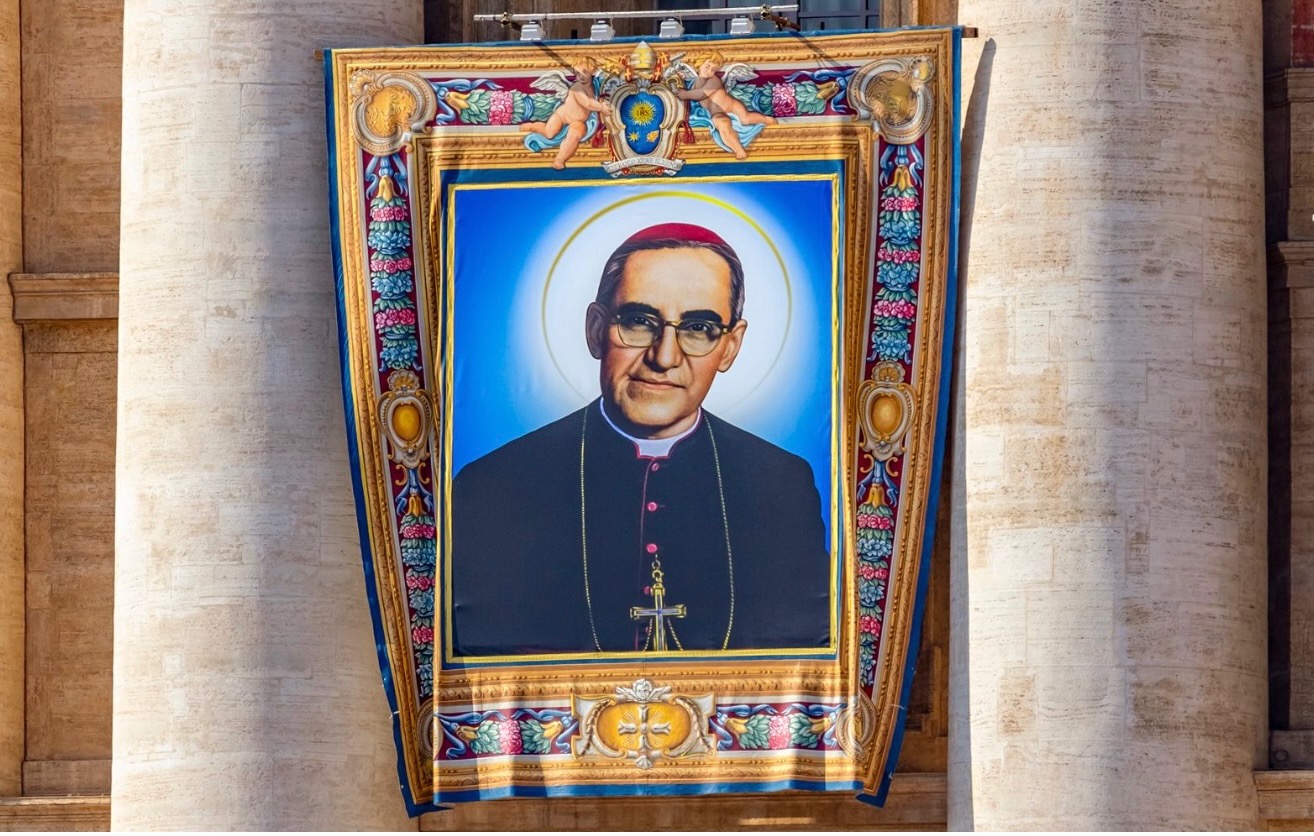
Read More