Survivors

Bishops issue new calls for recognition of immigrants’ human dignity and immigration reform #Catholic In response to increased immigration enforcement measures throughout the country, two U.S. Catholic bishops have issued fresh statements affirming the human dignity of immigrants as children of God and calling for immigration reform.Both prelates said Americans should understand why people flee their home countries in search of a better life while acknowledging the nation’s right to enforce its immigration laws. The current situation, however, is unjust, immoral, and must be fixed, both men emphasized.On Aug. 3, the centennial anniversary of the elevation of San Antonio to a metropolitan archdiocese, Archbishop Gustavo García-Siller released a pastoral letter expressing the Church’s solidarity with migrants and calling for the “careful and well-formed moral discernment of every Catholic conscience” in response.Meanwhile, on Aug. 1, Bishop Robert Gruss of the Diocese of Saginaw, Michigan, issued a statement in which he reminded the faithful of the “inherent human dignity” of every person.Gruss said the current “challenge” facing the United States, which has “consistently received immigrants, refugees, exiles, and the persecuted from other lands” throughout its history, is “how to deal with a situation when one administration has allowed individuals and families to migrate … freely and the next administration wants their removal.”The bishop wrote that the removal of “immigrants who have caused harm to society by participating in criminal activity” is understandable, but asked if it is “fair to remove those who are and have been contributing to society in a positive way, oftentimes for many years?”He said that a “just and civil society” would not allow the deportation or detention of people “without cause” or “meaningful legal representation, without access to family or a supportive community, and without basic human needs being met.”He urged the faithful to “push for public policy changes that secure civil rights for all immigrants” and “humane border enforcement policies” that simultaneously uphold national security while protecting the “safety and dignity” of those who come to the country to work.‘We will come to you’García-Siller promulgated his letter, titled “We Will Come to You: United in Solidarity with Our Brothers and Sisters in Migration,” at a Mass at San Fernando Cathedral in downtown San Antonio.“We are living in a world of war,” the letter began. “Across continents, people are dying every day. Across borders, survivors are forced to migrate. They do not leave by choice, but because of violence, hunger, fear, and oppression.”In the 56-page letter, composed of five sections and concluding with a prayer to Our Lady of Guadalupe, García-Siller said he prayed “for a long time” before writing, saying he wanted to write from “the right place, one of accompaniment and solidarity.”He said the letter addresses an “unprecedented” time in the country, writing that “a convergence of structural and legal tactics … calls for the careful and well-formed moral discernment of every Catholic conscience.”“I write to comfort the afflicted, to ignite the comfortable, and to confront injustice with the full conviction of the Gospel.”He went on to cite his personal experience of “years walking alongside” migrants, many of whom are living in so much fear they rarely leave their homes, as well as his own story as a migrant himself.The archbishop wrote that he has witnessed a “fear that has taken root” across the archdiocese, saying he and other pastors “pray with parents who embrace their children each morning unsure if they will be home at night,” and describing parents who avoid taking children to the doctor or to go to work “because each mile carries risk.”“The community bears this cross, and the Church cannot be silent,” he wrote, describing declining Mass attendance and the worsening physical health of those who suffer fear related to immigration.“The people have not lost their faith,” he wrote. “Many, however, have lost their sense of safety and belonging.”The Church must “defend the dignity of those caught in the machinery of removal,” he emphasized.García-Siller described visiting three detention centers in the area, including the South Texas Family Residential Center in Dilley, the largest family detention center in the nation, saying he’s witnessed "firsthand, violations of human dignity within their walls.”He went on to quote Bishop Steven Biegler of the Diocese of Cheyenne, Wyoming, who wrote in a pastoral letter in April that “‘the current campaign of mass detention and deportations is immoral.’”García-Siller accused private corporations of profiting from the processing and movement of large numbers of detained immigrants from one site to another.He also cited an investigation by U.S. Sen. John Ossoff, D-Georgia, which documented more than 1,000 “credible reports of human rights abuses since January 2025, including “medical neglect, denial of food and water, overcrowding, sleep deprivation, and the separation of breastfeeding mothers from their infants,” as well as similar abuses in privately-run sites.García-Siller called the public narrative that only criminals are being removed “misleading,” writing that “73% of those in immigration detention have no criminal conviction, and only 5% have been convicted of a violent crime.”He described how pastors, deacons, extraordinary ministers, and trained catechists are developing “active ministries of accompaniment” in the archdiocese, visiting migrants in their homes, bringing the sacraments along with medicines and other supplies, as well as in detention centers.“If your family has been detained, tell us. We will go to them. The Body of Christ does not abandon its members in chains,” García-Siller declared.The archbishop went on to lament that existing legal pathways take years to navigate, years that families cannot afford to wait as they seek safety and stability. He called for more accessible legal pathways, saying migrants would take those pathways if they were available. Migrants’ “contribution to the common good of our nation” demands such, he wrote.At the end of the letter, García-Siller entrusted the situation to Our Lady of Guadalupe, who herself crossed borders of culture and race and walked the road of exile with the Holy Family: “Long before she was Queen of Mexico … she was a mother who crossed a border. She knows this road; she walked it with her own feet.”

Bishops issue new calls for recognition of immigrants’ human dignity and immigration reform #Catholic In response to increased immigration enforcement measures throughout the country, two U.S. Catholic bishops have issued fresh statements affirming the human dignity of immigrants as children of God and calling for immigration reform.Both prelates said Americans should understand why people flee their home countries in search of a better life while acknowledging the nation’s right to enforce its immigration laws. The current situation, however, is unjust, immoral, and must be fixed, both men emphasized.On Aug. 3, the centennial anniversary of the elevation of San Antonio to a metropolitan archdiocese, Archbishop Gustavo García-Siller released a pastoral letter expressing the Church’s solidarity with migrants and calling for the “careful and well-formed moral discernment of every Catholic conscience” in response.Meanwhile, on Aug. 1, Bishop Robert Gruss of the Diocese of Saginaw, Michigan, issued a statement in which he reminded the faithful of the “inherent human dignity” of every person.Gruss said the current “challenge” facing the United States, which has “consistently received immigrants, refugees, exiles, and the persecuted from other lands” throughout its history, is “how to deal with a situation when one administration has allowed individuals and families to migrate … freely and the next administration wants their removal.”The bishop wrote that the removal of “immigrants who have caused harm to society by participating in criminal activity” is understandable, but asked if it is “fair to remove those who are and have been contributing to society in a positive way, oftentimes for many years?”He said that a “just and civil society” would not allow the deportation or detention of people “without cause” or “meaningful legal representation, without access to family or a supportive community, and without basic human needs being met.”He urged the faithful to “push for public policy changes that secure civil rights for all immigrants” and “humane border enforcement policies” that simultaneously uphold national security while protecting the “safety and dignity” of those who come to the country to work.‘We will come to you’García-Siller promulgated his letter, titled “We Will Come to You: United in Solidarity with Our Brothers and Sisters in Migration,” at a Mass at San Fernando Cathedral in downtown San Antonio.“We are living in a world of war,” the letter began. “Across continents, people are dying every day. Across borders, survivors are forced to migrate. They do not leave by choice, but because of violence, hunger, fear, and oppression.”In the 56-page letter, composed of five sections and concluding with a prayer to Our Lady of Guadalupe, García-Siller said he prayed “for a long time” before writing, saying he wanted to write from “the right place, one of accompaniment and solidarity.”He said the letter addresses an “unprecedented” time in the country, writing that “a convergence of structural and legal tactics … calls for the careful and well-formed moral discernment of every Catholic conscience.”“I write to comfort the afflicted, to ignite the comfortable, and to confront injustice with the full conviction of the Gospel.”He went on to cite his personal experience of “years walking alongside” migrants, many of whom are living in so much fear they rarely leave their homes, as well as his own story as a migrant himself.The archbishop wrote that he has witnessed a “fear that has taken root” across the archdiocese, saying he and other pastors “pray with parents who embrace their children each morning unsure if they will be home at night,” and describing parents who avoid taking children to the doctor or to go to work “because each mile carries risk.”“The community bears this cross, and the Church cannot be silent,” he wrote, describing declining Mass attendance and the worsening physical health of those who suffer fear related to immigration.“The people have not lost their faith,” he wrote. “Many, however, have lost their sense of safety and belonging.”The Church must “defend the dignity of those caught in the machinery of removal,” he emphasized.García-Siller described visiting three detention centers in the area, including the South Texas Family Residential Center in Dilley, the largest family detention center in the nation, saying he’s witnessed "firsthand, violations of human dignity within their walls.”He went on to quote Bishop Steven Biegler of the Diocese of Cheyenne, Wyoming, who wrote in a pastoral letter in April that “‘the current campaign of mass detention and deportations is immoral.’”García-Siller accused private corporations of profiting from the processing and movement of large numbers of detained immigrants from one site to another.He also cited an investigation by U.S. Sen. John Ossoff, D-Georgia, which documented more than 1,000 “credible reports of human rights abuses since January 2025, including “medical neglect, denial of food and water, overcrowding, sleep deprivation, and the separation of breastfeeding mothers from their infants,” as well as similar abuses in privately-run sites.García-Siller called the public narrative that only criminals are being removed “misleading,” writing that “73% of those in immigration detention have no criminal conviction, and only 5% have been convicted of a violent crime.”He described how pastors, deacons, extraordinary ministers, and trained catechists are developing “active ministries of accompaniment” in the archdiocese, visiting migrants in their homes, bringing the sacraments along with medicines and other supplies, as well as in detention centers.“If your family has been detained, tell us. We will go to them. The Body of Christ does not abandon its members in chains,” García-Siller declared.The archbishop went on to lament that existing legal pathways take years to navigate, years that families cannot afford to wait as they seek safety and stability. He called for more accessible legal pathways, saying migrants would take those pathways if they were available. Migrants’ “contribution to the common good of our nation” demands such, he wrote.At the end of the letter, García-Siller entrusted the situation to Our Lady of Guadalupe, who herself crossed borders of culture and race and walked the road of exile with the Holy Family: “Long before she was Queen of Mexico … she was a mother who crossed a border. She knows this road; she walked it with her own feet.”

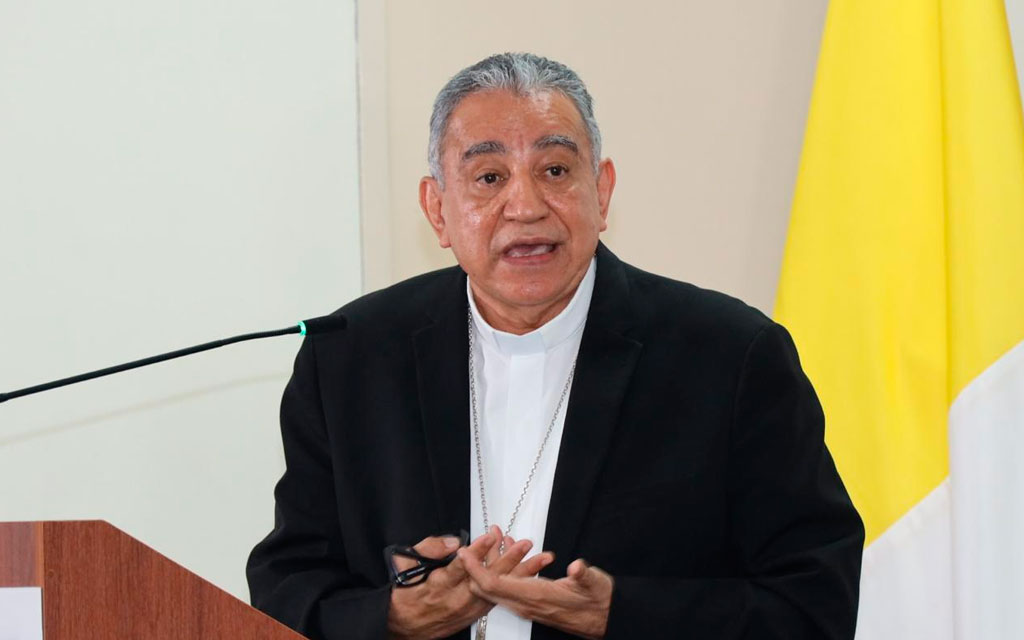
“I write to comfort the afflicted, to ignite the comfortable, and to confront injustice with the full conviction of the Gospel,” San Antonio Archbishop Gustavo García-Siller wrote.

Read More
Church in Venezuela to ‘remain at the side of the suffering’ following earthquakes #Catholic One month after the devastating earthquakes in Venezuela, the Catholic Church is focused on “remaining at the side of the suffering,” according to Father Ricardo Guillén, episcopal vicar for pastoral ministry of the Archdiocese of Caracas.In an interview with the archdiocesan press office, the priest explained how “physical presence, active listening, and organized charity” have been the cornerstones of the Church’s response to the tragedy, which claimed the lives of thousands of people and severely affected tens of thousands more.“Our immediate priority was to be present where the suffering was most acute; we showed up and shared close up with the vulnerability of our people,” he said.From the very first hours following the earthquakes, he continued, the Church understood that this accompaniment “could not take place from a distance” but rather “required being physically present in the places of greatest uncertainty to support those who had lost everything.”“For this reason, we deployed directly to the areas most critical to the emergency,” he added. Consecrated personnel and lay volunteers assessed the scale of the disaster, offering special support to people at the morgues “to embrace and share in the families’ painful silence” and bringing the comfort of the sacraments.“In each of those places, our mission was simply to be present, to listen, and not to leave anyone alone,” Guillén added.‘God never abandons us’After highlighting “the profound vocation of service and solidarity,” which he said especially characterizes the new generations of Venezuelans and which enabled the enormous logistical response to the emergency, the episcopal vicar noted that it is precisely “in closeness and compassion” that God’s presence is revealed amid so much pain.Beyond providing material aid, the Catholic Church’s “fundamental mission” was to “be a living presence of the Lord and sustain the faith where suffering was the greatest,” regardless of the difficulties posed by the earthquakes. Thus, the Church “had to take to the streets,” transforming plazas, parks, and sports fields into “open-air altars” for religious services and encouraging the most popular devotions in Caracas and La Guaira.“One of the most moving services was accompanying people in their grief,” he said. “We priests were present in morgues, hospitals, and cemeteries in Caracas and La Guaira, supporting those who were suffering, often offering nothing more than a hug, weeping with those who wept, praying together, or maintaining a respectful silence in the face of such immense pain.”“Bringing grace and comfort to places where suffering reigned was living proof that God never abandons us,” he added.What are lessons the earthquakes taught the Church?Guillén emphasized that “the earthquake left deep scars, but it also revealed the immense spiritual and solidarity reserves of our people.”“Far from plunging us into despair, this tragedy becomes an urgent call to make fraternity a permanent way of life, oriented toward the common good and the recognition of every person’s dignity,” he said.He remarked that “true consolation requires neither explanations nor grand speeches,” but rather manifests itself “in quiet presence, in an outstretched hand, in attentive listening that takes in the pain, and in respectful silence that helps heal the wounds of the soul.”The earthquakes “leave us with profound lessons” for the Church in Venezuela and have confronted the entire country with “the urgent need to organize ourselves better in the face of contingencies of this magnitude,” he said. In that sense, he continued, Cáritas must strengthen itself and become “a true network of solidarity capable of reaching even the most remote areas” of Venezuela. “Ultimately, this time confirms for us that the faith lived out is authenticated through charity and tangible dedication to the most vulnerable,” Guillén said.“For this reason, the Church in Caracas reaffirms its unwavering commitment to continue accompanying those affected. We are not pulling out now that the immediate phase of the emergency has ended; we will be there for the long road of rebuilding society and the integral healing of our people’s lives,” he pledged.This story was first published by ACI Prensa, the Spanish-language sister service of EWTN News. It has been translated and adapted by EWTN News English.

Church in Venezuela to ‘remain at the side of the suffering’ following earthquakes #Catholic One month after the devastating earthquakes in Venezuela, the Catholic Church is focused on “remaining at the side of the suffering,” according to Father Ricardo Guillén, episcopal vicar for pastoral ministry of the Archdiocese of Caracas.In an interview with the archdiocesan press office, the priest explained how “physical presence, active listening, and organized charity” have been the cornerstones of the Church’s response to the tragedy, which claimed the lives of thousands of people and severely affected tens of thousands more.“Our immediate priority was to be present where the suffering was most acute; we showed up and shared close up with the vulnerability of our people,” he said.From the very first hours following the earthquakes, he continued, the Church understood that this accompaniment “could not take place from a distance” but rather “required being physically present in the places of greatest uncertainty to support those who had lost everything.”“For this reason, we deployed directly to the areas most critical to the emergency,” he added. Consecrated personnel and lay volunteers assessed the scale of the disaster, offering special support to people at the morgues “to embrace and share in the families’ painful silence” and bringing the comfort of the sacraments.“In each of those places, our mission was simply to be present, to listen, and not to leave anyone alone,” Guillén added.‘God never abandons us’After highlighting “the profound vocation of service and solidarity,” which he said especially characterizes the new generations of Venezuelans and which enabled the enormous logistical response to the emergency, the episcopal vicar noted that it is precisely “in closeness and compassion” that God’s presence is revealed amid so much pain.Beyond providing material aid, the Catholic Church’s “fundamental mission” was to “be a living presence of the Lord and sustain the faith where suffering was the greatest,” regardless of the difficulties posed by the earthquakes. Thus, the Church “had to take to the streets,” transforming plazas, parks, and sports fields into “open-air altars” for religious services and encouraging the most popular devotions in Caracas and La Guaira.“One of the most moving services was accompanying people in their grief,” he said. “We priests were present in morgues, hospitals, and cemeteries in Caracas and La Guaira, supporting those who were suffering, often offering nothing more than a hug, weeping with those who wept, praying together, or maintaining a respectful silence in the face of such immense pain.”“Bringing grace and comfort to places where suffering reigned was living proof that God never abandons us,” he added.What are lessons the earthquakes taught the Church?Guillén emphasized that “the earthquake left deep scars, but it also revealed the immense spiritual and solidarity reserves of our people.”“Far from plunging us into despair, this tragedy becomes an urgent call to make fraternity a permanent way of life, oriented toward the common good and the recognition of every person’s dignity,” he said.He remarked that “true consolation requires neither explanations nor grand speeches,” but rather manifests itself “in quiet presence, in an outstretched hand, in attentive listening that takes in the pain, and in respectful silence that helps heal the wounds of the soul.”The earthquakes “leave us with profound lessons” for the Church in Venezuela and have confronted the entire country with “the urgent need to organize ourselves better in the face of contingencies of this magnitude,” he said. In that sense, he continued, Cáritas must strengthen itself and become “a true network of solidarity capable of reaching even the most remote areas” of Venezuela. “Ultimately, this time confirms for us that the faith lived out is authenticated through charity and tangible dedication to the most vulnerable,” Guillén said.“For this reason, the Church in Caracas reaffirms its unwavering commitment to continue accompanying those affected. We are not pulling out now that the immediate phase of the emergency has ended; we will be there for the long road of rebuilding society and the integral healing of our people’s lives,” he pledged.This story was first published by ACI Prensa, the Spanish-language sister service of EWTN News. It has been translated and adapted by EWTN News English.

While the Church’s response to the earthquakes in Venezuela certainly involved material aid, a major part was simply being present to minister to survivors, offering consolation and the sacraments.

Read More
Irish bishops condemn burning of mosque replica at holiday festivities #Catholic Archbishop Eamon Martin of the Catholic Archdiocese of Armagh and Archbishop John McDowell of the Church of Ireland have condemned the burning of a mosque replica in Northern Ireland during the country’s Eleventh Night bonfires.“The placement of a replica mosque atop a bonfire is grossly offensive and raises tensions so soon after the unrest that destroyed property and severely impacted the lives of individuals and families,” the archbishops said. Bonfires are traditionally lit in loyalist areas of Northern Ireland on the night before July 12 — a holiday referred to as “The Twelfth” — marking the Battle of the Boyne in 1690, which saw the defeat of Catholic King James II. The mosque replica placed on top of a bonfire was reported to depict a person holding a knife and a flag.The incident follows weeks of civil unrest and targeting of migrant communities throughout Northern Ireland after a brutal knife attack in Belfast carried out by a Sudanese national.Little Sisters of the Poor set up field hospital for Venezuela earthquake victimsThe Congregation of the Little Sisters of the Poor of Maiquetía has set up a field hospital following the destruction of San José Hospital during the earthquakes in Venezuela last month.The sisters are continuing their health ministry operations across the street from the damaged hospital, Sister María Yraida Mora Sánchez, vicar general of the Congregation of the Little Sisters of the Poor, told Vatican News. "We are also making regular visits to three emergency shelters, and the situation is extremely difficult. It is especially challenging because Venezuela was already facing a severe economic and humanitarian crisis, as much of the world already knows,” she said. Abuse survivors seek damages from entity tied to Christian Brothers’ asset transfersSurvivors of clergy abuse at the hands of the Congregation of Christian Brothers are seeking to transfer their compensation claims to Edmund Rice Education Australia, a Catholic entity that received over  million worth of property from the Christian Brothers over the course of a decade in symbolic  transfers. The move comes after the Christian Brothers said in court that they could not afford to pay survivors’ claims in full but that they would sell off their remaining 36 properties valued at 7 million to divide among creditors and abuse survivors, according to a report from The Guardian on Friday.Indonesia bishops speak out against killing of American mission pilotCatholic bishops in Papua, Indonesia’s easternmost province, have condemned the murder of an American pilot on July 2 by an armed group.“We strongly condemn this brutal act,” Archbishop Petrus Canisius Mandagi of Merauke said, according to Licas News, noting that the plane that was set on fire by the group was an Associated Mission Aviation (AMA) aircraft owned by five dioceses in Papua. AMA has served Papua for 67 years, delivering humanitarian aid to areas difficult to reach by land. “For decades, we have faced risks from weather and technical problems. However, a criminal act involving the burning of an aircraft and the murder of a pilot is extremely difficult to accept. It is a barbaric and inhumane act,” Bishop Yanuarius Theofilus Matopai of Jayapura in Papua said. Pakistan archbishop declares child abuse a national, moral crisisArchbishop Joseph Arshad of Islamabad-Rawalpindi in Pakistan has designated 2026 the “Year of Children” amid what he described as “deep concern over the growing number of child abuse cases in society.”"The issue of child sexual abuse in Pakistan remains widespread and requires urgent attention,” the archbishop said in an interview with Fides News Agency on July 8. “Crimes against children are among the most shameful and intolerable violations of human dignity. No society can call itself just, peaceful, or civilized as long as its children live under threat, fear, and insecurity. Children are a sacred gift from God and must be protected with the highest level of moral, social, legal and institutional responsibility,” he said, calling for action from the Pakistani government. New Zealand marks near-50% surge in euthanasia deaths in 3 yearsA report has recorded a 48.17% increase in deaths by euthanasia and assisted suicide in New Zealand over the past three years.The Registrar (assisted dying) Annual Report to the Minister of Health June 2026 report found there was a total of 486 cases of euthanasia and assisted suicide in New Zealand from April 1, 2025, to March 31, 2026. In 2023-2024, there were 328 cases nationwide. The New Zealand Catholic Bishops’ Conference has repeatedly spoken out against euthanasia and assisted suicide laws in the country. Bishop of Alexandria, Egypt, celebrates centenary of Latin Vicariate of Port SaidHundreds of pilgrims gathered in Port Said in Egypt to celebrate 100 years after the establishment of the apostolic procurator there, ACI MENA, the Arabic-language sister service of EWTN News, reported Sunday.Bishop Claudio Lurati of the Apostolic Vicariate of Alexandria presided over the Mass celebrating the anniversary at the Regina Mundi Cathedral. Beyond the anniversary itself, the celebration brought together the history of the local Church, the legacy of generations of Christians, and a remarkable example of ecumenical cooperation, with Regina Mundi Cathedral serving both Latin Catholic and Coptic Orthodox communities.Thailand Catholic schools launch program to combat food insecurityIn the wake of catastrophic flooding across southern Thailand, the Catholic Foundation of the Surat Thani Diocese has launched a program to transform schools into food hubs.The “Promoting Nutrition and Sustainable Food Production for Children and the Poor” project is funded by Pope Leo XIV through the apostolic nuncio to Thailand, according to a report from Licas News on Wednesday. The project is designed to ensure that students receive balanced meals every day by enabling schools to become agricultural food production zones. The program will also establish health monitoring systems to track body mass index (BMI) of students suffering from food insecurity.

Irish bishops condemn burning of mosque replica at holiday festivities #Catholic Archbishop Eamon Martin of the Catholic Archdiocese of Armagh and Archbishop John McDowell of the Church of Ireland have condemned the burning of a mosque replica in Northern Ireland during the country’s Eleventh Night bonfires.“The placement of a replica mosque atop a bonfire is grossly offensive and raises tensions so soon after the unrest that destroyed property and severely impacted the lives of individuals and families,” the archbishops said. Bonfires are traditionally lit in loyalist areas of Northern Ireland on the night before July 12 — a holiday referred to as “The Twelfth” — marking the Battle of the Boyne in 1690, which saw the defeat of Catholic King James II. The mosque replica placed on top of a bonfire was reported to depict a person holding a knife and a flag.The incident follows weeks of civil unrest and targeting of migrant communities throughout Northern Ireland after a brutal knife attack in Belfast carried out by a Sudanese national.Little Sisters of the Poor set up field hospital for Venezuela earthquake victimsThe Congregation of the Little Sisters of the Poor of Maiquetía has set up a field hospital following the destruction of San José Hospital during the earthquakes in Venezuela last month.The sisters are continuing their health ministry operations across the street from the damaged hospital, Sister María Yraida Mora Sánchez, vicar general of the Congregation of the Little Sisters of the Poor, told Vatican News. "We are also making regular visits to three emergency shelters, and the situation is extremely difficult. It is especially challenging because Venezuela was already facing a severe economic and humanitarian crisis, as much of the world already knows,” she said. Abuse survivors seek damages from entity tied to Christian Brothers’ asset transfersSurvivors of clergy abuse at the hands of the Congregation of Christian Brothers are seeking to transfer their compensation claims to Edmund Rice Education Australia, a Catholic entity that received over $50 million worth of property from the Christian Brothers over the course of a decade in symbolic $1 transfers. The move comes after the Christian Brothers said in court that they could not afford to pay survivors’ claims in full but that they would sell off their remaining 36 properties valued at $217 million to divide among creditors and abuse survivors, according to a report from The Guardian on Friday.Indonesia bishops speak out against killing of American mission pilotCatholic bishops in Papua, Indonesia’s easternmost province, have condemned the murder of an American pilot on July 2 by an armed group.“We strongly condemn this brutal act,” Archbishop Petrus Canisius Mandagi of Merauke said, according to Licas News, noting that the plane that was set on fire by the group was an Associated Mission Aviation (AMA) aircraft owned by five dioceses in Papua. AMA has served Papua for 67 years, delivering humanitarian aid to areas difficult to reach by land. “For decades, we have faced risks from weather and technical problems. However, a criminal act involving the burning of an aircraft and the murder of a pilot is extremely difficult to accept. It is a barbaric and inhumane act,” Bishop Yanuarius Theofilus Matopai of Jayapura in Papua said. Pakistan archbishop declares child abuse a national, moral crisisArchbishop Joseph Arshad of Islamabad-Rawalpindi in Pakistan has designated 2026 the “Year of Children” amid what he described as “deep concern over the growing number of child abuse cases in society.”"The issue of child sexual abuse in Pakistan remains widespread and requires urgent attention,” the archbishop said in an interview with Fides News Agency on July 8. “Crimes against children are among the most shameful and intolerable violations of human dignity. No society can call itself just, peaceful, or civilized as long as its children live under threat, fear, and insecurity. Children are a sacred gift from God and must be protected with the highest level of moral, social, legal and institutional responsibility,” he said, calling for action from the Pakistani government. New Zealand marks near-50% surge in euthanasia deaths in 3 yearsA report has recorded a 48.17% increase in deaths by euthanasia and assisted suicide in New Zealand over the past three years.The Registrar (assisted dying) Annual Report to the Minister of Health June 2026 report found there was a total of 486 cases of euthanasia and assisted suicide in New Zealand from April 1, 2025, to March 31, 2026. In 2023-2024, there were 328 cases nationwide. The New Zealand Catholic Bishops’ Conference has repeatedly spoken out against euthanasia and assisted suicide laws in the country. Bishop of Alexandria, Egypt, celebrates centenary of Latin Vicariate of Port SaidHundreds of pilgrims gathered in Port Said in Egypt to celebrate 100 years after the establishment of the apostolic procurator there, ACI MENA, the Arabic-language sister service of EWTN News, reported Sunday.Bishop Claudio Lurati of the Apostolic Vicariate of Alexandria presided over the Mass celebrating the anniversary at the Regina Mundi Cathedral. Beyond the anniversary itself, the celebration brought together the history of the local Church, the legacy of generations of Christians, and a remarkable example of ecumenical cooperation, with Regina Mundi Cathedral serving both Latin Catholic and Coptic Orthodox communities.Thailand Catholic schools launch program to combat food insecurityIn the wake of catastrophic flooding across southern Thailand, the Catholic Foundation of the Surat Thani Diocese has launched a program to transform schools into food hubs.The “Promoting Nutrition and Sustainable Food Production for Children and the Poor” project is funded by Pope Leo XIV through the apostolic nuncio to Thailand, according to a report from Licas News on Wednesday. The project is designed to ensure that students receive balanced meals every day by enabling schools to become agricultural food production zones. The program will also establish health monitoring systems to track body mass index (BMI) of students suffering from food insecurity.

Irish bishops condemn anti-Muslim display, religious sisters set up a field hospital for Venezuela earthquake victims, euthanasia in New Zealand surges, and more in this week’s world news roundup.

Read More