teachers

Quebec secularism law is ‘anti-religious ideology,’ bishops tell Canada Supreme Court #Catholic Canada’s bishops told the Supreme Court of Canada that Quebec’s secularism legislation Bill 21 “denies the divine” going well beyond provincial jurisdiction by imposing an anti-religious ideology on the province.The bishops were among more than 50 intervenors presenting arguments at a landmark Supreme Court of Canada hearing into the constitutionality of Quebec’s 2019 secularism law. The hearing, one of the longest in the court’s history, ran from March 23–26. The court reserved its decision, with a ruling expected later this year.The secularism law, which lower courts have twice upheld, prohibits certain public employees — such as teachers and police officers — from wearing religious symbols while at work.Toronto lawyer Phil Horgan, president and general counsel of the Catholic Civil Rights League (CCRL), argued on behalf of the Canadian Conference of Catholic Bishops (CCCB), summarizing a factum that argued the “purpose and effect” of Quebec’s legislation is to “amend Canada’s federal constitution by imposing an anti-religious, non-neutral ideology, which goes beyond Québec’s jurisdiction.”Such a “drastic” change can only be made by the federal government using its authority over criminal law or its constitutional “peace, order, and good government” powers, according to the bishops’ argument.Quebec preemptively invoked the notwithstanding clause of the Canadian Charter of Rights and Freedoms when it drafted Bill 21 to shield it from judicial review.Federal and provincial governments can invoke the notwithstanding clause of the Constitution to temporarily prevent courts from invalidating legislation as unconstitutional.The timing and impact of the use of Charter Section 33 became a significant issue during the four days of hearings and will likely be central in the court’s analysis, Horgan told The Catholic Register.The appellants challenging Bill 21 include individual teachers directly affected by it as well as advocacy groups including the National Council of Canadian Muslims (NCCM), the Canadian Civil Liberties Association (CCLA), and the Legal Committee of the Coalition Inclusion Québec. They argue Bill 21 is “ultra vires,” beyond the powers of provincial jurisdiction.In a five-minute oral argument, Horgan told the seven justices that “Canada’s existing federal constitution is pluralist and pro-religion.” Although “the doctrine of state neutrality is well established, Canada has never adopted laicity or an absolutist separation of church and state,” he said.Justice Malcolm Rowe questioned Horgan on the point, asking: “Other than the reference to the supremacy of God in the preamble to the Charter, would you direct me to the provision in the Constitution which is pro-religion?”Horgan cited Section 93 of the Constitution Act, 1867, which protects denominational school rights and privileges, and noted federal charity law recognizes religion as a public good.Horgan said he wasn’t concerned by the pushback, noting judges often ask questions “not so much to get the answers from counsel but to help … persuade other members of the bench on some of the merits of the argument.”In its factum, the CCCB said Bill 21 “turns the expression of religious belief, through the wearing of symbols, into something to be punished because such expression now conflicts with the dominant philosophical posture of laïcité.”Just as religious symbols are an illustration of underlying personal faith, “the prohibition of religious symbols manifests an outlook from the provincial government that denies the divine,” the bishops said.Quebec has argued the notwithstanding clause disqualifies courts from weighing in on matters deemed political debates. Isabelle Brunet, a lawyer for the Quebec government, told the justices: “It is not up to a court to answer a question that doesn’t concern the courts.”Quebec received support from the attorneys general of Alberta, Ontario, and Saskatchewan, who maintain the courts should not interfere once the notwithstanding clause is invoked.Alberta and Ontario take a contrary position, arguing there is nothing in the notwithstanding clause that precludes judicial scrutiny of legislation.Guy J. Pratte, a lawyer for the attorney general of Canada, said Section 33 gives legislatures the power to override Charter rights but does not nullify the rights altogether or prevent judges from issuing an opinion if freedoms are violated.‘Imposing an anti-religious, non-neutral ideology’The following excerpts are from the factum submitted to the Supreme Court of Canada by the Canadian bishops:“The purpose and effect of the act is unilaterally to amend Canada’s federal constitution by imposing an anti-religious, non-neutral ideology, which goes beyond Québec’s jurisdiction.”“When a province makes itself laïc, it is adopting a non-neutral stance on religion. The provinces do not have that power.”“Québec is attempting to impose an atheistic posture on religious believers.”“Our constitution is founded on a political theory that sees fundamental rights and freedoms as God-given. To adopt an expressly anti-religious viewpoint, as the act purports to do, is an amendment of our existing federal constitution.”“In the place of a genuinely neutral, pluralist, and pro-religious approach, the act substitutes an anti-religious constitutional settlement where symbols of religion worn by individuals are not permitted.”“Just as religious symbols manifest an underlying personal faith, the prohibition of religious symbols manifests an outlook … that denies the divine.”This story was first published by The B.C. Catholic and is reprinted here with permission.

Quebec secularism law is ‘anti-religious ideology,’ bishops tell Canada Supreme Court #Catholic Canada’s bishops told the Supreme Court of Canada that Quebec’s secularism legislation Bill 21 “denies the divine” going well beyond provincial jurisdiction by imposing an anti-religious ideology on the province.The bishops were among more than 50 intervenors presenting arguments at a landmark Supreme Court of Canada hearing into the constitutionality of Quebec’s 2019 secularism law. The hearing, one of the longest in the court’s history, ran from March 23–26. The court reserved its decision, with a ruling expected later this year.The secularism law, which lower courts have twice upheld, prohibits certain public employees — such as teachers and police officers — from wearing religious symbols while at work.Toronto lawyer Phil Horgan, president and general counsel of the Catholic Civil Rights League (CCRL), argued on behalf of the Canadian Conference of Catholic Bishops (CCCB), summarizing a factum that argued the “purpose and effect” of Quebec’s legislation is to “amend Canada’s federal constitution by imposing an anti-religious, non-neutral ideology, which goes beyond Québec’s jurisdiction.”Such a “drastic” change can only be made by the federal government using its authority over criminal law or its constitutional “peace, order, and good government” powers, according to the bishops’ argument.Quebec preemptively invoked the notwithstanding clause of the Canadian Charter of Rights and Freedoms when it drafted Bill 21 to shield it from judicial review.Federal and provincial governments can invoke the notwithstanding clause of the Constitution to temporarily prevent courts from invalidating legislation as unconstitutional.The timing and impact of the use of Charter Section 33 became a significant issue during the four days of hearings and will likely be central in the court’s analysis, Horgan told The Catholic Register.The appellants challenging Bill 21 include individual teachers directly affected by it as well as advocacy groups including the National Council of Canadian Muslims (NCCM), the Canadian Civil Liberties Association (CCLA), and the Legal Committee of the Coalition Inclusion Québec. They argue Bill 21 is “ultra vires,” beyond the powers of provincial jurisdiction.In a five-minute oral argument, Horgan told the seven justices that “Canada’s existing federal constitution is pluralist and pro-religion.” Although “the doctrine of state neutrality is well established, Canada has never adopted laicity or an absolutist separation of church and state,” he said.Justice Malcolm Rowe questioned Horgan on the point, asking: “Other than the reference to the supremacy of God in the preamble to the Charter, would you direct me to the provision in the Constitution which is pro-religion?”Horgan cited Section 93 of the Constitution Act, 1867, which protects denominational school rights and privileges, and noted federal charity law recognizes religion as a public good.Horgan said he wasn’t concerned by the pushback, noting judges often ask questions “not so much to get the answers from counsel but to help … persuade other members of the bench on some of the merits of the argument.”In its factum, the CCCB said Bill 21 “turns the expression of religious belief, through the wearing of symbols, into something to be punished because such expression now conflicts with the dominant philosophical posture of laïcité.”Just as religious symbols are an illustration of underlying personal faith, “the prohibition of religious symbols manifests an outlook from the provincial government that denies the divine,” the bishops said.Quebec has argued the notwithstanding clause disqualifies courts from weighing in on matters deemed political debates. Isabelle Brunet, a lawyer for the Quebec government, told the justices: “It is not up to a court to answer a question that doesn’t concern the courts.”Quebec received support from the attorneys general of Alberta, Ontario, and Saskatchewan, who maintain the courts should not interfere once the notwithstanding clause is invoked.Alberta and Ontario take a contrary position, arguing there is nothing in the notwithstanding clause that precludes judicial scrutiny of legislation.Guy J. Pratte, a lawyer for the attorney general of Canada, said Section 33 gives legislatures the power to override Charter rights but does not nullify the rights altogether or prevent judges from issuing an opinion if freedoms are violated.‘Imposing an anti-religious, non-neutral ideology’The following excerpts are from the factum submitted to the Supreme Court of Canada by the Canadian bishops:“The purpose and effect of the act is unilaterally to amend Canada’s federal constitution by imposing an anti-religious, non-neutral ideology, which goes beyond Québec’s jurisdiction.”“When a province makes itself laïc, it is adopting a non-neutral stance on religion. The provinces do not have that power.”“Québec is attempting to impose an atheistic posture on religious believers.”“Our constitution is founded on a political theory that sees fundamental rights and freedoms as God-given. To adopt an expressly anti-religious viewpoint, as the act purports to do, is an amendment of our existing federal constitution.”“In the place of a genuinely neutral, pluralist, and pro-religious approach, the act substitutes an anti-religious constitutional settlement where symbols of religion worn by individuals are not permitted.”“Just as religious symbols manifest an underlying personal faith, the prohibition of religious symbols manifests an outlook … that denies the divine.”This story was first published by The B.C. Catholic and is reprinted here with permission.

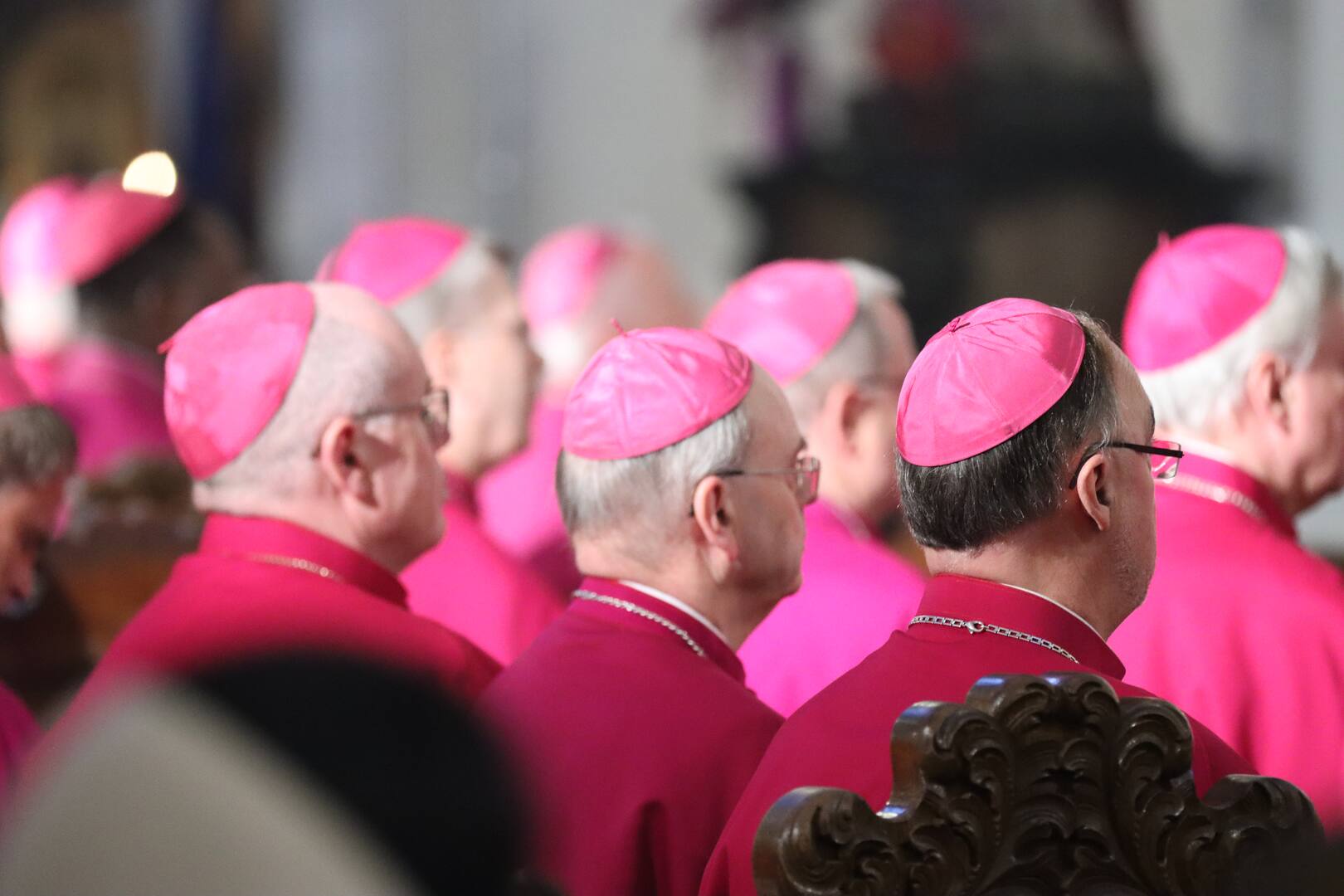
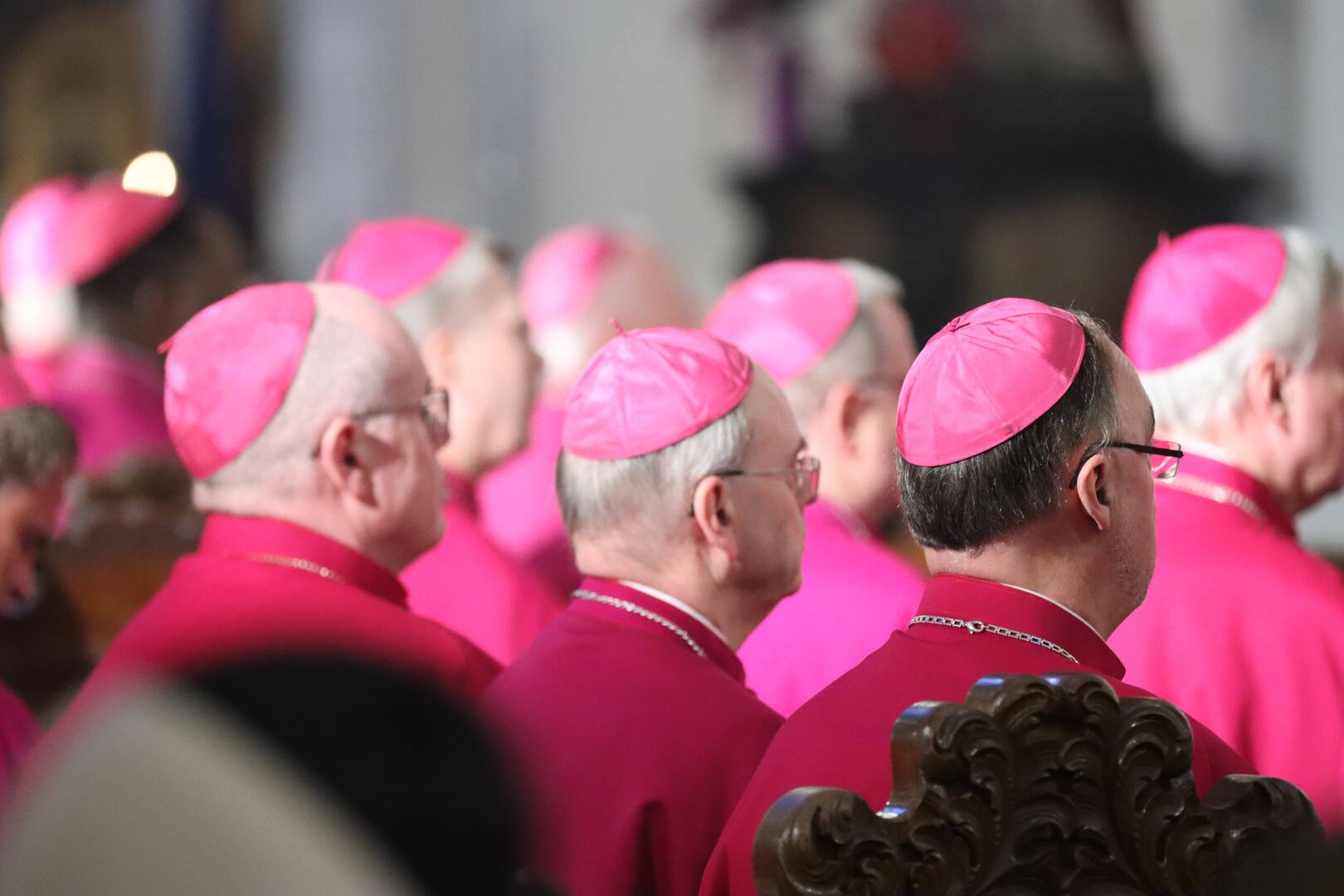
The Catholic bishops were among more than 50 intervenors presenting arguments at a landmark Supreme Court of Canada hearing into the constitutionality of Quebec’s 2019 secularism law.

Read More
Michigan teen starts Catholic online newspaper for other teens #Catholic Luis Nava, a high school freshman at the International Academy in Michigan, takes to heart that he wants to be ready to answer any questions from his peers but also to better understand his Catholic faith. He began an online newspaper called The Catholic Michigander, where he tackles some of those questions and more.Nava is a parishioner at St. Joseph Parish in Lake Orion, Michigan, and spent his first few years attending school there. He recently spoke to students at the Catholic school about a project he started to help spread the Catholic faith among teens and to help young people understand what the faith is all about.“A lot of the times, if I’m facing questions from classmates that don’t have the same beliefs as me, I want to know exactly what I believe and exactly why I believe it,” Nava said.Learning about his faith became more of a quest after Nava attended a pro-life conference in 2024 at his parish. While he was there, Nava picked up a quote from William Wilberforce that he says inspired him to fulfill what he believes is his calling: “Let it not be said that I was silent when they needed me,” he said. The saying is posted above his desk. “I see it every day.”Nava, who plans to study neuroscience, said he has always been passionate about writing and hoped to start a newspaper one day. After the conference, he felt the prompting of the Holy Spirit guiding him, and he got to work on a website.“It all came from a project that I had when I was in middle school,” he said. “I was on the newspaper for my middle school in sixth grade, and then in seventh grade I took over as the editor.”Nava takes ideas for content for the newspaper from his daily experiences and conversations with classmates. He also invites others to write with him.The newspaper contains a wide variety of articles on different topics, from infertility and natural family planning to life issues and the real presence of Christ in the Eucharist. Nava said he writes “if a particular issue sparks my interest.” Father Jim Kean advises Nava on Catholic theology to ensure that all of the content adheres to Catholic teaching.“There was a report that a huge amount of Catholics don’t know that Christ is really present in the Eucharist, so I thought topics like those would be good to address,” Nava said.Each month, Nava writes and edits the copy and posts it to the website, featuring not only his writing but also that of some of his peers.
 
 A middle school student at St. Joseph School in Lake Orion, Michigan, reviews an article in Luis Nava’s online newspaper, The Catholic Michigander. | Credit: Photo courtesy of Luis Nava/Detroit Catholic
 
 “A couple of them are parishioners here at St. Joseph Parish, but they were public school students,” said Doris Fornasiero, principal at St. Joseph School. “I think that’s also a remarkable piece, that he’s reaching and pulling in students from all over the public school, private school, but students who are passionate about their faith.”Nava doesn’t just write about his faith, but he brings it to life, said Lindy Cubba, a middle school religion teacher at St. Joseph.“As teachers and educators, listening to him, it was remarkable because he had captured this passion for faith and yet this way to inspire and nurture beliefs that people already have and bring them into the open,” Cubba said.In addition to his work with the newspaper, Nava is also active in the youth group and as an athlete, where he encourages others to live their lives of faith. Recently he spoke to St. Joseph students about his project.“He’s just an incredibly positive, strong influence in the right way,” Fornasiero said. “He inspired the kids and encouraged them to speak out, that they didn’t have to keep their beliefs and their feelings about their faith to themselves. He was giving them a safe place to voice their beliefs.”Nava said he is grateful to the Holy Spirit, as well as mentors such as Fornasiero and Cubba, and said he wants to encourage other students to be courageous enough to do what they dream.“Well, I try to be a model to imitate, but I mean it’s a work in progress,” he said.“Like with everything, we’re all called to be saints, so I’m trying to walk down that road, as I’m sure everybody is,” Nava said. “I hope this can inspire other people to maybe take action and realize they can do anything. Hopefully, we can get all of the youth of today to really grow in their love for God.”Nava believes his newspaper project and his interest in neuroscience are related.“It’s really perfect, because neuroscience and religion and spirituality go hand in hand so well together,” Nava said. “We need God at the center of our lives if we want to have good mental health. I thought that would integrate very well with the writing and with religion.”With three more years of high school ahead of him, Nava said he hopes he can continue the newspaper for several more years.“I’m not sure how it’s going to evolve,” he said, “but I hope that we can continue to put out articles that teenagers can see and be inspired by.”This story was first published by the Detroit Catholic and is reprinted here with permission.

Michigan teen starts Catholic online newspaper for other teens #Catholic Luis Nava, a high school freshman at the International Academy in Michigan, takes to heart that he wants to be ready to answer any questions from his peers but also to better understand his Catholic faith. He began an online newspaper called The Catholic Michigander, where he tackles some of those questions and more.Nava is a parishioner at St. Joseph Parish in Lake Orion, Michigan, and spent his first few years attending school there. He recently spoke to students at the Catholic school about a project he started to help spread the Catholic faith among teens and to help young people understand what the faith is all about.“A lot of the times, if I’m facing questions from classmates that don’t have the same beliefs as me, I want to know exactly what I believe and exactly why I believe it,” Nava said.Learning about his faith became more of a quest after Nava attended a pro-life conference in 2024 at his parish. While he was there, Nava picked up a quote from William Wilberforce that he says inspired him to fulfill what he believes is his calling: “Let it not be said that I was silent when they needed me,” he said. The saying is posted above his desk. “I see it every day.”Nava, who plans to study neuroscience, said he has always been passionate about writing and hoped to start a newspaper one day. After the conference, he felt the prompting of the Holy Spirit guiding him, and he got to work on a website.“It all came from a project that I had when I was in middle school,” he said. “I was on the newspaper for my middle school in sixth grade, and then in seventh grade I took over as the editor.”Nava takes ideas for content for the newspaper from his daily experiences and conversations with classmates. He also invites others to write with him.The newspaper contains a wide variety of articles on different topics, from infertility and natural family planning to life issues and the real presence of Christ in the Eucharist. Nava said he writes “if a particular issue sparks my interest.” Father Jim Kean advises Nava on Catholic theology to ensure that all of the content adheres to Catholic teaching.“There was a report that a huge amount of Catholics don’t know that Christ is really present in the Eucharist, so I thought topics like those would be good to address,” Nava said.Each month, Nava writes and edits the copy and posts it to the website, featuring not only his writing but also that of some of his peers. A middle school student at St. Joseph School in Lake Orion, Michigan, reviews an article in Luis Nava’s online newspaper, The Catholic Michigander. | Credit: Photo courtesy of Luis Nava/Detroit Catholic “A couple of them are parishioners here at St. Joseph Parish, but they were public school students,” said Doris Fornasiero, principal at St. Joseph School. “I think that’s also a remarkable piece, that he’s reaching and pulling in students from all over the public school, private school, but students who are passionate about their faith.”Nava doesn’t just write about his faith, but he brings it to life, said Lindy Cubba, a middle school religion teacher at St. Joseph.“As teachers and educators, listening to him, it was remarkable because he had captured this passion for faith and yet this way to inspire and nurture beliefs that people already have and bring them into the open,” Cubba said.In addition to his work with the newspaper, Nava is also active in the youth group and as an athlete, where he encourages others to live their lives of faith. Recently he spoke to St. Joseph students about his project.“He’s just an incredibly positive, strong influence in the right way,” Fornasiero said. “He inspired the kids and encouraged them to speak out, that they didn’t have to keep their beliefs and their feelings about their faith to themselves. He was giving them a safe place to voice their beliefs.”Nava said he is grateful to the Holy Spirit, as well as mentors such as Fornasiero and Cubba, and said he wants to encourage other students to be courageous enough to do what they dream.“Well, I try to be a model to imitate, but I mean it’s a work in progress,” he said.“Like with everything, we’re all called to be saints, so I’m trying to walk down that road, as I’m sure everybody is,” Nava said. “I hope this can inspire other people to maybe take action and realize they can do anything. Hopefully, we can get all of the youth of today to really grow in their love for God.”Nava believes his newspaper project and his interest in neuroscience are related.“It’s really perfect, because neuroscience and religion and spirituality go hand in hand so well together,” Nava said. “We need God at the center of our lives if we want to have good mental health. I thought that would integrate very well with the writing and with religion.”With three more years of high school ahead of him, Nava said he hopes he can continue the newspaper for several more years.“I’m not sure how it’s going to evolve,” he said, “but I hope that we can continue to put out articles that teenagers can see and be inspired by.”This story was first published by the Detroit Catholic and is reprinted here with permission.

Luis Nava, a high school freshman in Lake Orion, Michigan, felt inspired to help peers find their voice and live their Catholic faith.

Read More
Maryland high school seniors arrive home safely after being stuck in Middle East during hostilities #Catholic A group of high schoolers from a Maryland boys' school found themselves in the crosshairs of international conflict in the Middle East this week, turning what was meant to be a brief layover in Abu Dhabi into a multi-day ordeal amid escalating hostilities between Iran, Israel, and the United States.The group — 18 seniors and two faculty members from the Heights School in Potomac, Maryland, just outside of Washington, D.C. — had departed on the afternoon of Feb. 27 for a cultural exchange trip to Thailand.The voyage was part of the school’s yearly Crescite Trips, where students in grades 9-12 participate during the first week of March in local seminars as well as domestic and international trips intended for the students’ growth.The group was scheduled for a two-hour layover in the United Arab Emirates after their 12-hour flight when regional airspace slammed shut following U.S.-Israeli strikes on Iran and Iranʼs retaliatory missile barrages.Initially, all flights were cancelled, but soon the airport was closed and had to be evacuated. According to Aidan Korn, a student on the trip, the group was seated at the gate for their next flight when they learned it had been suspended because “the war had begun.”“It was scary at first. We were sitting by a giant window at the gate and all of our phones started going off at the same time. I saw texts from friends in the U.S. asking if I was alive,” he said. “We saw military men running with guns through the airport.”Korn said the two faculty chaperones, Justin Myers and Dan Sushinsky, told them to get away from the windows and seek shelter in the airport bathroom. They learned later that a drone was intercepted above the airport, and the debris killed one person and injured several others.Myers and Sushinksy, both seasoned teachers as well as college counselors at the Heights, immediately called headmaster Alvaro de Vicente, who told EWTN News he called “everyone I know to help” the boys.De Vicente said the teachers and boys registered through the state department website for U.S. citizens stuck in the Middle East.The teachers “did an incredible job keeping the boys calm, safe, and engaged,” said de Vicente. He described the men as “real pros in handling a situation no teacher can prepare for.”“This is not what we do. We donʼt prepare for this!” he said.Bryson Begg, another senior on the trip, agreed, telling EWTN News that the teachers were "incredible. Their number-one priority was our safety. They cared for us so much.”Begg described a “confidence” that Myers and Sushinksy emanated that they would all get home safely. “We had this sense that they’ve got it.”The teachers instructed the boys to be cautious and not to post anything on social media that could compromise their security, Korn said.Myers told EWTN News the situation felt chaotic at first, as thousands of people with canceled flights tried to find hotels using airline-provided vouchers. Initially, the group was split up and assigned to different hotels, which they deemed unacceptable, so he and Sushinsky decided to stay the night in the airport, hoping a flight would open up while they waited.The airport was then closed and everyone was ordered to evacuate. After several hours, with the help of several airport employees, Myers said they were able to find a hotel for all 20 of them. When they boarded the bus, again amidst the chaos of thousands of evacuating travelers, the driver asked Myers where the hotel was, and they figured out the directions there together.Myers said either he or Sushinsky was on the phone almost constantly with the State Department, parents, de Vicente, Heights alumni who lived in the area, and  the U.S. embassy. Myers, who has taught at the Heights for over 30 years and has led many trips, told EWTN News it was “an unusually good group” of boys. "All of our top students were on this trip. They were very brave.”“They were probably not as scared as they should have been! And now that they’re home safe, they’re saying it was the best trip ever!” he laughed.Once at the hotel, he and Sushinsky held group meetings at set times each day, where they ate together, played games, prayed the rosary, and told funny stories. The leaders also made themselves available at set times each day to talk with any boys who wanted to.Begg said the teachers made sure the boys kept their bags packed and ready to go at all times in case they had to rush to the airport to catch an available flight out.Korn told EWTN News the hotel’s doors were initially zip tied shut, but as the days went on, they were occasionally allowed to venture outside briefly. On one of these occasions, Begg said he was praying the rosary when warning sirens went off, and the hotel staff urgently called him back inside.“Most of the time it felt perfectly safe,” Myers said. “We saw some drones a couple of times; saw them intercepted, mostly at night. We’d watch the news and they’d make it worse than it is. They kept showing the same building being hit.”“It was not like what was being shown on TV. People in the city were going about their daily lives.”Nevertheless, the boys spent most of their time indoors eating (“The hotel had really nice food,” said Korn), working out at the gym, watching movies in the presidential suite, where two of the students were staying, and even playing hide and seek throughout the hotel.Thanks to a Heights alumnus who lives there, the group (with all the parents’ permission) was able to go to the beach one day, and on a desert excursion to an oasis, where they rode camels, according to Begg.‘An overwhelming feeling of comfort’By 4:30 a.m. on Feb. 28, Karen Korn, Aidan’s mother, told EWTN News she was awakened by the dozens of notifications on her phone from the boys as well as other parents.“I’m so humbled by and grateful to the amount of people that reached out to us, who were praying,” she said. “I truly believe that was what got us through. It’s unbelievable how many people were praying.”“We had people praying 24 hours a day; priests at every church around us that had holy hours and said Masses for them … even outside of this area.”She described “an overwhelming feeling of comfort” knowing how many prayers were being said for the young men. While praying on Sunday, she said she saw an image of Jesus wrapping his arms around the boys, keeping them safe.‘Men fully alive’Begg, who has attended the Heights since 3rd grade, credited de Vicente for working “tirelessly to help us.”“He is the pinnacle of what a Heights man is. ‘Men fully alive’ is our motto, and he’s the epitome of that. He’s strong in his beliefs, and cared for us so much. He waited in the airport for hours before we arrived. It was incredibly heartwarming to see that.”“He was right at the front of the group of parents at the airport with a big smile on his face, welcoming us home. We all shook his hand.”De Vicente said he was “thankful to the United Arab Emirates government” for hosting the boys, providing them the hotel and transportation. He also said he was "thankful to our government for being able to get them out.”The boys left on a charter flight — one arranged by the U.S. State Department filled with other American families — and returned safely to Dulles Airport on the afternoon of Thursday, March 5.
 
 Aidan Korn hugs his parents, Karen and Jason Korn, at Dulles Airport in Virginia upon his safe return, Thursday, March 5, 2026 | Credit: Courtesy of the Korn family
 
 The Heights School, an independent day school for grades 3-12, teaches boys “with a Christian spirit and in accord with the teachings of the Catholic Church” and the Personal Prelature of Opus Dei “provides chaplains for the school and oversees its program of classes in Catholic doctrine,” according to its website.Over the years, the school has drawn politically conservative families, including the sons of prominent politicians such as former senator and presidential candidate Rick Santorum as well as Maggie Gallagher, president of the National Organization for Marriage, among others.

Maryland high school seniors arrive home safely after being stuck in Middle East during hostilities #Catholic A group of high schoolers from a Maryland boys' school found themselves in the crosshairs of international conflict in the Middle East this week, turning what was meant to be a brief layover in Abu Dhabi into a multi-day ordeal amid escalating hostilities between Iran, Israel, and the United States.The group — 18 seniors and two faculty members from the Heights School in Potomac, Maryland, just outside of Washington, D.C. — had departed on the afternoon of Feb. 27 for a cultural exchange trip to Thailand.The voyage was part of the school’s yearly Crescite Trips, where students in grades 9-12 participate during the first week of March in local seminars as well as domestic and international trips intended for the students’ growth.The group was scheduled for a two-hour layover in the United Arab Emirates after their 12-hour flight when regional airspace slammed shut following U.S.-Israeli strikes on Iran and Iranʼs retaliatory missile barrages.Initially, all flights were cancelled, but soon the airport was closed and had to be evacuated. According to Aidan Korn, a student on the trip, the group was seated at the gate for their next flight when they learned it had been suspended because “the war had begun.”“It was scary at first. We were sitting by a giant window at the gate and all of our phones started going off at the same time. I saw texts from friends in the U.S. asking if I was alive,” he said. “We saw military men running with guns through the airport.”Korn said the two faculty chaperones, Justin Myers and Dan Sushinsky, told them to get away from the windows and seek shelter in the airport bathroom. They learned later that a drone was intercepted above the airport, and the debris killed one person and injured several others.Myers and Sushinksy, both seasoned teachers as well as college counselors at the Heights, immediately called headmaster Alvaro de Vicente, who told EWTN News he called “everyone I know to help” the boys.De Vicente said the teachers and boys registered through the state department website for U.S. citizens stuck in the Middle East.The teachers “did an incredible job keeping the boys calm, safe, and engaged,” said de Vicente. He described the men as “real pros in handling a situation no teacher can prepare for.”“This is not what we do. We donʼt prepare for this!” he said.Bryson Begg, another senior on the trip, agreed, telling EWTN News that the teachers were "incredible. Their number-one priority was our safety. They cared for us so much.”Begg described a “confidence” that Myers and Sushinksy emanated that they would all get home safely. “We had this sense that they’ve got it.”The teachers instructed the boys to be cautious and not to post anything on social media that could compromise their security, Korn said.Myers told EWTN News the situation felt chaotic at first, as thousands of people with canceled flights tried to find hotels using airline-provided vouchers. Initially, the group was split up and assigned to different hotels, which they deemed unacceptable, so he and Sushinsky decided to stay the night in the airport, hoping a flight would open up while they waited.The airport was then closed and everyone was ordered to evacuate. After several hours, with the help of several airport employees, Myers said they were able to find a hotel for all 20 of them. When they boarded the bus, again amidst the chaos of thousands of evacuating travelers, the driver asked Myers where the hotel was, and they figured out the directions there together.Myers said either he or Sushinsky was on the phone almost constantly with the State Department, parents, de Vicente, Heights alumni who lived in the area, and  the U.S. embassy. Myers, who has taught at the Heights for over 30 years and has led many trips, told EWTN News it was “an unusually good group” of boys. "All of our top students were on this trip. They were very brave.”“They were probably not as scared as they should have been! And now that they’re home safe, they’re saying it was the best trip ever!” he laughed.Once at the hotel, he and Sushinsky held group meetings at set times each day, where they ate together, played games, prayed the rosary, and told funny stories. The leaders also made themselves available at set times each day to talk with any boys who wanted to.Begg said the teachers made sure the boys kept their bags packed and ready to go at all times in case they had to rush to the airport to catch an available flight out.Korn told EWTN News the hotel’s doors were initially zip tied shut, but as the days went on, they were occasionally allowed to venture outside briefly. On one of these occasions, Begg said he was praying the rosary when warning sirens went off, and the hotel staff urgently called him back inside.“Most of the time it felt perfectly safe,” Myers said. “We saw some drones a couple of times; saw them intercepted, mostly at night. We’d watch the news and they’d make it worse than it is. They kept showing the same building being hit.”“It was not like what was being shown on TV. People in the city were going about their daily lives.”Nevertheless, the boys spent most of their time indoors eating (“The hotel had really nice food,” said Korn), working out at the gym, watching movies in the presidential suite, where two of the students were staying, and even playing hide and seek throughout the hotel.Thanks to a Heights alumnus who lives there, the group (with all the parents’ permission) was able to go to the beach one day, and on a desert excursion to an oasis, where they rode camels, according to Begg.‘An overwhelming feeling of comfort’By 4:30 a.m. on Feb. 28, Karen Korn, Aidan’s mother, told EWTN News she was awakened by the dozens of notifications on her phone from the boys as well as other parents.“I’m so humbled by and grateful to the amount of people that reached out to us, who were praying,” she said. “I truly believe that was what got us through. It’s unbelievable how many people were praying.”“We had people praying 24 hours a day; priests at every church around us that had holy hours and said Masses for them … even outside of this area.”She described “an overwhelming feeling of comfort” knowing how many prayers were being said for the young men. While praying on Sunday, she said she saw an image of Jesus wrapping his arms around the boys, keeping them safe.‘Men fully alive’Begg, who has attended the Heights since 3rd grade, credited de Vicente for working “tirelessly to help us.”“He is the pinnacle of what a Heights man is. ‘Men fully alive’ is our motto, and he’s the epitome of that. He’s strong in his beliefs, and cared for us so much. He waited in the airport for hours before we arrived. It was incredibly heartwarming to see that.”“He was right at the front of the group of parents at the airport with a big smile on his face, welcoming us home. We all shook his hand.”De Vicente said he was “thankful to the United Arab Emirates government” for hosting the boys, providing them the hotel and transportation. He also said he was "thankful to our government for being able to get them out.”The boys left on a charter flight — one arranged by the U.S. State Department filled with other American families — and returned safely to Dulles Airport on the afternoon of Thursday, March 5. Aidan Korn hugs his parents, Karen and Jason Korn, at Dulles Airport in Virginia upon his safe return, Thursday, March 5, 2026 | Credit: Courtesy of the Korn family The Heights School, an independent day school for grades 3-12, teaches boys “with a Christian spirit and in accord with the teachings of the Catholic Church” and the Personal Prelature of Opus Dei “provides chaplains for the school and oversees its program of classes in Catholic doctrine,” according to its website.Over the years, the school has drawn politically conservative families, including the sons of prominent politicians such as former senator and presidential candidate Rick Santorum as well as Maggie Gallagher, president of the National Organization for Marriage, among others.

A group of high school seniors and their teacher chaperones spoke with EWTN News about being stuck in the Middle East during the beginning of hostilities there last week.

Read More
From heiress to saint: The radical life of St. Katharine Drexel #Catholic St. Katharine Drexel was born in 1858 to a wealthy family in Philadelphia. Five weeks after her birth, her mother died. She and her two sisters were reared by their father, Frank, a successful international banker, and stepmother, Emma — whom Katharine always considered her mother. Both were devout Catholics and loving parents. The family was generous with the poor — three times a week they opened their lavish home to those in need, offering them food, clothing, medicine, and other necessities.From the earliest ages, the Drexel children were taught to pursue personal holiness through daily Mass, meditation, the rosary, and other devotions as well as by acts of penance and sacrifice. Katharine kept notes on her efforts to grow in virtue. In 1878, she wrote: “I am resolved during this year to try to overcome impatience and give attention to lessons. I, Katie, put these resolutions at the feet of Jesus, Mary, and Joseph hoping that they will find acceptance there. May Jesus, Mary, and Joseph help me to bear much fruit in the year 1878.”When she was in her 20s, Katharine lost both of her parents and inherited a portion of the family’s vast wealth. At this time, she became aware of the plight of the Native Americans, many of whom suffered from dire poverty and a lack of education. She would devote the remainder of her life to assisting them.In two private audiences with Pope Leo XIII, she begged him to send more missionaries to the Native Americans. During one of these meetings, the Holy Father suggested to an astonished Katharine that she herself become such a missionary.Although Katharine enjoyed an opulent lifestyle, she became disillusioned with the things of the world. She wrote a longtime friend, Bishop James O’Connor, of her desire to enter religious life.“Like the little girl who wept when she found that her doll was stuffed with sawdust and her drum was hollow, I, too, have made a horrifying discovery and my discovery, like hers, is true. I have ripped both the doll and the drum open and the fact lies plainly and in all its glaring reality before me: All, all, all (there is no exception) is passing away and will pass away,” she wrote.The bishop thought Katharine could do more for the Church in her position in society and worried she might have difficulty in renouncing her wealth. She responded: “The question alone important, the solution of which depends upon how I have spent my life, is the state of my soul at the moment of death. Infinite misery or infinite happiness! There is no half and half, either one or the other.”The bishop eventually relented and advised her to found a community to work among Native Americans and African Americans, declaring: “God has put in your heart a great love for the Indian and the Negroes.” In 1891, joined by 13 others, she founded the Sisters of the Blessed Sacrament.Mother Drexel went to work opening mission churches and boarding schools for Black and Native American children throughout the U.S.At times, prejudice and racism hindered her work. She would often buy buildings to create schools through third parties — otherwise, when sellers learned Mother Drexel was buying them to educate Black or Native children, they wouldn’t sell to her.Once, when members of the Nashville, Tennessee, city council wondered if Blacks were capable of higher education, she responded: “I cannot share these views with regard to the education of the race. I feel that if among our colored people we find individuals gifted with capabilities, with those sterling qualities which constitute character, our holy mother the Church who fosters and develops the intellect only that it may give God more glory and be of benefit to others, should also concede to the Negro the privilege of higher education.”In 1915, Katharine founded a teachers’ college in Louisiana, which would eventually become Xavier University of New Orleans and one of the first American colleges to admit Black students.Throughout her life, Mother Drexel’s chief motivation in addition to her missionary outreach was to help more souls know and love Jesus in the Blessed Sacrament. She believed devotion to the Blessed Sacrament was key to the success to her community’s missionary work.She died in 1955 at the age of 96 and was canonized by Pope John Paul II in 2000. Her community’s motherhouse for decades was located in Bensalem, Pennsylvania, a Philadelphia suburb, which included a shrine — elements of which included Mother Drexel’s remains and a museum dedicated to her memory. However, due to a lack of vocations, the motherhouse closed and the property sold at the end of 2017. The St. Katharine Drexel Shrine is now part of the Cathedral Basilica of Sts. Peter and Paul in Philadelphia.St. Katharine Drexel is honored in the Church on March 3.This story was first published by the National Catholic Register, a sister news service of EWTN News, on March 3, 2021, and has been updated and adapted by EWTN News.

From heiress to saint: The radical life of St. Katharine Drexel #Catholic St. Katharine Drexel was born in 1858 to a wealthy family in Philadelphia. Five weeks after her birth, her mother died. She and her two sisters were reared by their father, Frank, a successful international banker, and stepmother, Emma — whom Katharine always considered her mother. Both were devout Catholics and loving parents. The family was generous with the poor — three times a week they opened their lavish home to those in need, offering them food, clothing, medicine, and other necessities.From the earliest ages, the Drexel children were taught to pursue personal holiness through daily Mass, meditation, the rosary, and other devotions as well as by acts of penance and sacrifice. Katharine kept notes on her efforts to grow in virtue. In 1878, she wrote: “I am resolved during this year to try to overcome impatience and give attention to lessons. I, Katie, put these resolutions at the feet of Jesus, Mary, and Joseph hoping that they will find acceptance there. May Jesus, Mary, and Joseph help me to bear much fruit in the year 1878.”When she was in her 20s, Katharine lost both of her parents and inherited a portion of the family’s vast wealth. At this time, she became aware of the plight of the Native Americans, many of whom suffered from dire poverty and a lack of education. She would devote the remainder of her life to assisting them.In two private audiences with Pope Leo XIII, she begged him to send more missionaries to the Native Americans. During one of these meetings, the Holy Father suggested to an astonished Katharine that she herself become such a missionary.Although Katharine enjoyed an opulent lifestyle, she became disillusioned with the things of the world. She wrote a longtime friend, Bishop James O’Connor, of her desire to enter religious life.“Like the little girl who wept when she found that her doll was stuffed with sawdust and her drum was hollow, I, too, have made a horrifying discovery and my discovery, like hers, is true. I have ripped both the doll and the drum open and the fact lies plainly and in all its glaring reality before me: All, all, all (there is no exception) is passing away and will pass away,” she wrote.The bishop thought Katharine could do more for the Church in her position in society and worried she might have difficulty in renouncing her wealth. She responded: “The question alone important, the solution of which depends upon how I have spent my life, is the state of my soul at the moment of death. Infinite misery or infinite happiness! There is no half and half, either one or the other.”The bishop eventually relented and advised her to found a community to work among Native Americans and African Americans, declaring: “God has put in your heart a great love for the Indian and the Negroes.” In 1891, joined by 13 others, she founded the Sisters of the Blessed Sacrament.Mother Drexel went to work opening mission churches and boarding schools for Black and Native American children throughout the U.S.At times, prejudice and racism hindered her work. She would often buy buildings to create schools through third parties — otherwise, when sellers learned Mother Drexel was buying them to educate Black or Native children, they wouldn’t sell to her.Once, when members of the Nashville, Tennessee, city council wondered if Blacks were capable of higher education, she responded: “I cannot share these views with regard to the education of the race. I feel that if among our colored people we find individuals gifted with capabilities, with those sterling qualities which constitute character, our holy mother the Church who fosters and develops the intellect only that it may give God more glory and be of benefit to others, should also concede to the Negro the privilege of higher education.”In 1915, Katharine founded a teachers’ college in Louisiana, which would eventually become Xavier University of New Orleans and one of the first American colleges to admit Black students.Throughout her life, Mother Drexel’s chief motivation in addition to her missionary outreach was to help more souls know and love Jesus in the Blessed Sacrament. She believed devotion to the Blessed Sacrament was key to the success to her community’s missionary work.She died in 1955 at the age of 96 and was canonized by Pope John Paul II in 2000. Her community’s motherhouse for decades was located in Bensalem, Pennsylvania, a Philadelphia suburb, which included a shrine — elements of which included Mother Drexel’s remains and a museum dedicated to her memory. However, due to a lack of vocations, the motherhouse closed and the property sold at the end of 2017. The St. Katharine Drexel Shrine is now part of the Cathedral Basilica of Sts. Peter and Paul in Philadelphia.St. Katharine Drexel is honored in the Church on March 3.This story was first published by the National Catholic Register, a sister news service of EWTN News, on March 3, 2021, and has been updated and adapted by EWTN News.

Throughout her life, St. Katharine Drexel’s chief motivation was to help more people know and love Jesus in the Blessed Sacrament.

Read More