the internet

How to face tragedy and still affirm God is your friend? The answer of a Venezuelan mother #Catholic On June 24, 2026, María Elena Rocha was in Caracas. That Wednesday, a public holiday in Venezuela, she decided to set out on a pilgrimage with two friends to visit sites associated with Venezuela’s first saints: St. Carmen Rendiles and St. José Gregorio Hernández.Her devotion made the circuitous, hour-long  journey from her home in La Guaira to the capital city feel shorter. María Elena lived in La Guaira’s Caribbean Golf I building with her family: her husband, Wilson, and their sons, 25-year-old Ricardo and 22-year-old Enrique, all three of whom chose to stay home that day.In Caracas, the day unfolded normally. María Elena and her friends visited the Colegio Belén, where the remains of Mother Carmen rest. Afterward, they went to the José Gregorio Hernández House Museum and concluded their pilgrimage with a Mass at Our Lady of La Candelaria Parish, where the remains of the “doctor of the poor” also rest.Earthquakes and uncertaintyAt 6:04 p.m., María Elena and her friends were in line to buy ice cream. Dark gray clouds over Caracas signaled an approaching storm, but the roar would not come from the sky but from the earth. At that moment, the ground shook with extreme violence, and panic reigned. The three of them managed to get out of the shopping mall where they had been.Soon, the power grid failed and both the internet and telephone lines went down. Two hours later, the group was finally able to retrieve their car from where it was parked and began the journey back home, a trip that, this time, seemed to last forever.
 
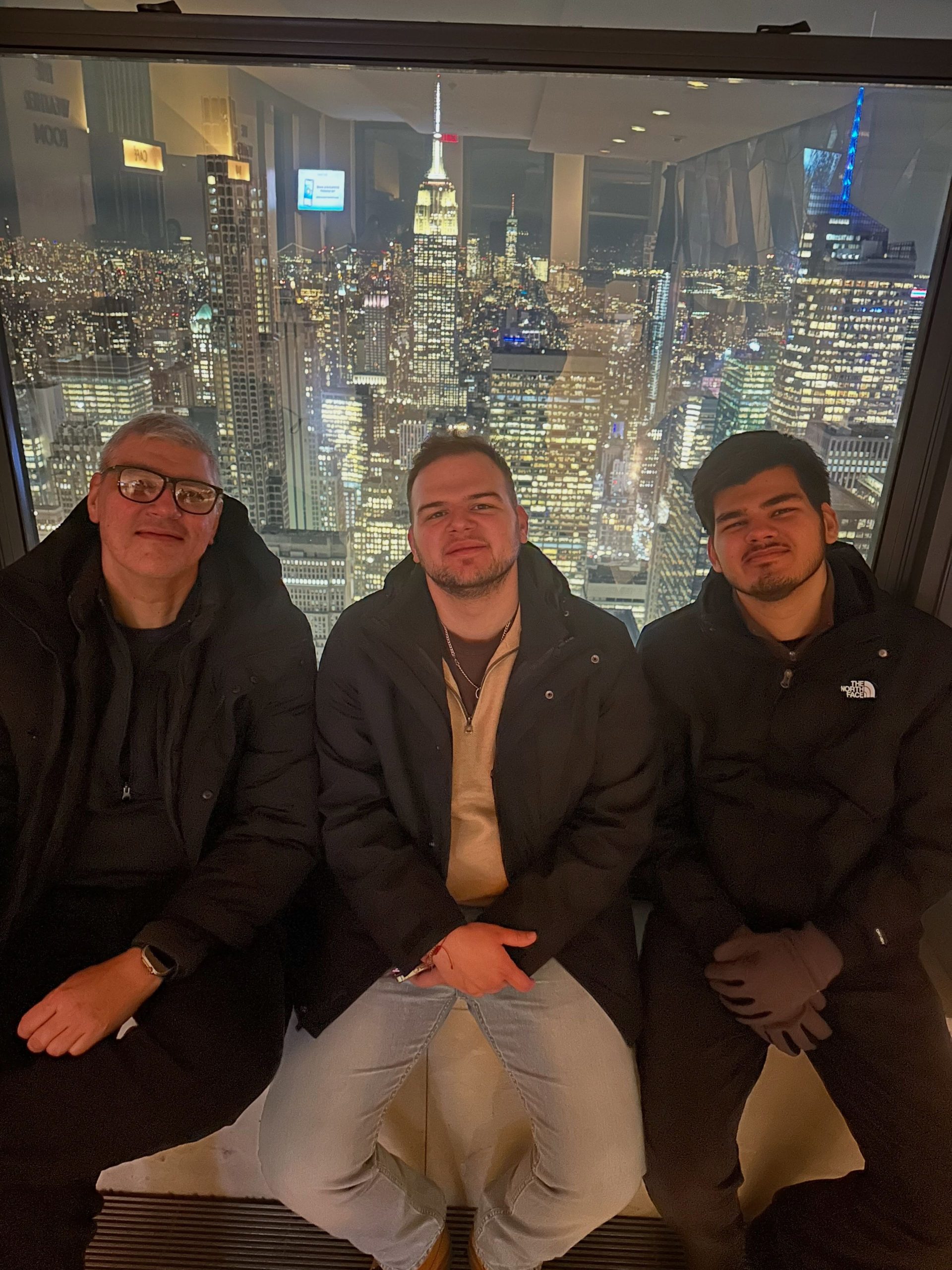
 Wilson, Ricardo, and Enrique on vacation | Credit: Courtesy of María Elena Rocha
 
 María Elena told EWTN News Español, the Spanish-language sister service of EWTN News, that what she encountered in La Guaira looked like something out of a horror movie. Late into the night, only fires broke the darkness. Entire buildings had collapsed. People were searching desperately through the rubble, while others were stealing and looting. There were shrieks, wailing, and weeping.The journey home was difficult, not only because of the damaged state of the road, but also because of the shock evoked by the scene. Every meter covered, every sight of pain and destruction, dealt a blow to the hope María Elena still clung to: the hope of reuniting with her loved ones. She could only reach her home on foot.María Elena faces unimaginable painIt was nearly midnight when María Elena saw that where the Caribbean Golf I building had once stood there was now only a massive pile of rubble. The 49-year-old woman said that paradoxically she felt a great sense of inner peace despite the tragedy. Amidst the confusion, she was told that one of her children was alive but trapped in the rubble. With great effort, María Elena made her way to the spot.It was Enrique, her youngest son. He was severely injured but was able to communicate with his mother. The first few hours following the earthquakes were chaotic in La Guaira; rescue efforts had to be carried out by hand because the necessary equipment for a swift response was not available. It was a very long night during which Enrique asked María Elena not to abandon him. “Don’t worry, son, I will never leave you alone,” she told him.
 
 María Elena with Enrique | Credit: Courtesy of María Elena Rocha
 
 And so, morning came, followed by the afternoon. Trapped and in pain, Enrique could hold on no longer. María Elena, always close by, said she heard his final breath: “He waited for me to take his last breath.” Enrique died right there, alongside his father and his older brother. It was days later that rescuers managed to recover their bodies, which María Elena was then able to give a Christian burial.“My faith grew stronger,” María Elena said. Her journey, however, has not been easy. It has been filled with pain, reproaches, and at times even anger toward God. María Elena was left on her own, and many times she sought answers.“I fought with God. I was filled with rage. ‘Why did you leave me here? Am I so bad that I have to stay here?’ Yet, I surrendered all my suffering to God for the sanctification of their souls,” she shared.Her greatest refuge has always been faith. Now she regularly attends a prayer group at a parish in Caracas, which she says has been very beneficial. She seeks indulgences for her husband and children and says she always tries to be cheerful and “let others see God in me.”“Despite the great loss I’ve experienced, I’ve held onto my sense of humor. That‘s one of the things I asked of God when my son Enrique passed away. I accepted his death with deep pain and entrusted him to God, but I prayed that he wouldn’t take away my joy because I had always been the source of joy in our home. That’s what my children and my husband used to say,” she remarked.“I want my husband and my children to feel proud of their wife and mother. I know that if I am happy, they will be happy, too. Happiness is a decision, and I decided to entrust my happiness to God because he wants all of us to be happy,” she added.Oct. 24 marks four months since that terrible day. More than 6,000 Venezuelans lost their lives in a matter of seconds; thousands were left injured, and many others remain missing. “Despite everything, I thank God for the fact that I was able to speak with my youngest son at that moment. I am grateful to God for life,” María Elena says, though she adds with that sense of humor she hasn’t lost: “Although I do ask him to take me soon.”“I ask that I might fulfill my mission quickly so that I can go to Heaven, because that’s what I long for most these days. Even before, I had no fear of death, because that is our destiny: to die in order to live and I want to live with God,” she said.María Elena says she doesn’t yet know what will become of her life, but affirms that she has “surrendered herself” to whatever Providence may decide.A message on the value of sufferingThe Church teaches us that God does not desire suffering for its own sake, nor is he its direct cause. The explanation of how God can permit evil without being its author is profound, yet it does not fully resolve the pain of any given loss. Through faith, we believe that God can bring good even out of evil; however, this does not make the death of innocent people a good thing, nor does it justify tragedies.Such suffering can take on meaning when experienced in union with Christ. As has been evidenced in the case in Venezuela following the earthquakes, pain can awaken solidarity and mutual responsibility; it can even prompt a society to reflect on how it might improve. This is María Elena’s conviction.“We have been suffering for years. Just try it, you’ll see: when you entrust that suffering to Christ, all the little things we go through, those moments of anger and indignation, offering them to Jesus for the sake of someone else, you will see how the blessings follow,” she said.
 
 María Elena after recovering intact from the rubble a statue of Our Lady of Fatima which belonged to the Luso-Venezuelan Center of Vargas | Credit: Courtesy of María Elena Rocha
 
 “And another thing: thank God for everything. It’s incredible, when you thank God for both the bad things and the good, blessings will follow. I’m not saying that problems won’t continue to arise; I still have plenty of things to deal with myself, but when we are with God, our burdens are lighter,” María Elena reflected.“I am not alone, because I have God; I have the Most Holy Virgin Mary, who has always been with me and I have felt her presence. And who better than she who knows what this pain is like?” she said.This story was first published by EWTN News Español, the Spanish-language sister service of EWTN News. It has been translated and adapted by EWTN News English.

How to face tragedy and still affirm God is your friend? The answer of a Venezuelan mother #Catholic On June 24, 2026, María Elena Rocha was in Caracas. That Wednesday, a public holiday in Venezuela, she decided to set out on a pilgrimage with two friends to visit sites associated with Venezuela’s first saints: St. Carmen Rendiles and St. José Gregorio Hernández.Her devotion made the circuitous, hour-long  journey from her home in La Guaira to the capital city feel shorter. María Elena lived in La Guaira’s Caribbean Golf I building with her family: her husband, Wilson, and their sons, 25-year-old Ricardo and 22-year-old Enrique, all three of whom chose to stay home that day.In Caracas, the day unfolded normally. María Elena and her friends visited the Colegio Belén, where the remains of Mother Carmen rest. Afterward, they went to the José Gregorio Hernández House Museum and concluded their pilgrimage with a Mass at Our Lady of La Candelaria Parish, where the remains of the “doctor of the poor” also rest.Earthquakes and uncertaintyAt 6:04 p.m., María Elena and her friends were in line to buy ice cream. Dark gray clouds over Caracas signaled an approaching storm, but the roar would not come from the sky but from the earth. At that moment, the ground shook with extreme violence, and panic reigned. The three of them managed to get out of the shopping mall where they had been.Soon, the power grid failed and both the internet and telephone lines went down. Two hours later, the group was finally able to retrieve their car from where it was parked and began the journey back home, a trip that, this time, seemed to last forever. Wilson, Ricardo, and Enrique on vacation | Credit: Courtesy of María Elena Rocha María Elena told EWTN News Español, the Spanish-language sister service of EWTN News, that what she encountered in La Guaira looked like something out of a horror movie. Late into the night, only fires broke the darkness. Entire buildings had collapsed. People were searching desperately through the rubble, while others were stealing and looting. There were shrieks, wailing, and weeping.The journey home was difficult, not only because of the damaged state of the road, but also because of the shock evoked by the scene. Every meter covered, every sight of pain and destruction, dealt a blow to the hope María Elena still clung to: the hope of reuniting with her loved ones. She could only reach her home on foot.María Elena faces unimaginable painIt was nearly midnight when María Elena saw that where the Caribbean Golf I building had once stood there was now only a massive pile of rubble. The 49-year-old woman said that paradoxically she felt a great sense of inner peace despite the tragedy. Amidst the confusion, she was told that one of her children was alive but trapped in the rubble. With great effort, María Elena made her way to the spot.It was Enrique, her youngest son. He was severely injured but was able to communicate with his mother. The first few hours following the earthquakes were chaotic in La Guaira; rescue efforts had to be carried out by hand because the necessary equipment for a swift response was not available. It was a very long night during which Enrique asked María Elena not to abandon him. “Don’t worry, son, I will never leave you alone,” she told him. María Elena with Enrique | Credit: Courtesy of María Elena Rocha And so, morning came, followed by the afternoon. Trapped and in pain, Enrique could hold on no longer. María Elena, always close by, said she heard his final breath: “He waited for me to take his last breath.” Enrique died right there, alongside his father and his older brother. It was days later that rescuers managed to recover their bodies, which María Elena was then able to give a Christian burial.“My faith grew stronger,” María Elena said. Her journey, however, has not been easy. It has been filled with pain, reproaches, and at times even anger toward God. María Elena was left on her own, and many times she sought answers.“I fought with God. I was filled with rage. ‘Why did you leave me here? Am I so bad that I have to stay here?’ Yet, I surrendered all my suffering to God for the sanctification of their souls,” she shared.Her greatest refuge has always been faith. Now she regularly attends a prayer group at a parish in Caracas, which she says has been very beneficial. She seeks indulgences for her husband and children and says she always tries to be cheerful and “let others see God in me.”“Despite the great loss I’ve experienced, I’ve held onto my sense of humor. That‘s one of the things I asked of God when my son Enrique passed away. I accepted his death with deep pain and entrusted him to God, but I prayed that he wouldn’t take away my joy because I had always been the source of joy in our home. That’s what my children and my husband used to say,” she remarked.“I want my husband and my children to feel proud of their wife and mother. I know that if I am happy, they will be happy, too. Happiness is a decision, and I decided to entrust my happiness to God because he wants all of us to be happy,” she added.Oct. 24 marks four months since that terrible day. More than 6,000 Venezuelans lost their lives in a matter of seconds; thousands were left injured, and many others remain missing. “Despite everything, I thank God for the fact that I was able to speak with my youngest son at that moment. I am grateful to God for life,” María Elena says, though she adds with that sense of humor she hasn’t lost: “Although I do ask him to take me soon.”“I ask that I might fulfill my mission quickly so that I can go to Heaven, because that’s what I long for most these days. Even before, I had no fear of death, because that is our destiny: to die in order to live and I want to live with God,” she said.María Elena says she doesn’t yet know what will become of her life, but affirms that she has “surrendered herself” to whatever Providence may decide.A message on the value of sufferingThe Church teaches us that God does not desire suffering for its own sake, nor is he its direct cause. The explanation of how God can permit evil without being its author is profound, yet it does not fully resolve the pain of any given loss. Through faith, we believe that God can bring good even out of evil; however, this does not make the death of innocent people a good thing, nor does it justify tragedies.Such suffering can take on meaning when experienced in union with Christ. As has been evidenced in the case in Venezuela following the earthquakes, pain can awaken solidarity and mutual responsibility; it can even prompt a society to reflect on how it might improve. This is María Elena’s conviction.“We have been suffering for years. Just try it, you’ll see: when you entrust that suffering to Christ, all the little things we go through, those moments of anger and indignation, offering them to Jesus for the sake of someone else, you will see how the blessings follow,” she said. María Elena after recovering intact from the rubble a statue of Our Lady of Fatima which belonged to the Luso-Venezuelan Center of Vargas | Credit: Courtesy of María Elena Rocha “And another thing: thank God for everything. It’s incredible, when you thank God for both the bad things and the good, blessings will follow. I’m not saying that problems won’t continue to arise; I still have plenty of things to deal with myself, but when we are with God, our burdens are lighter,” María Elena reflected.“I am not alone, because I have God; I have the Most Holy Virgin Mary, who has always been with me and I have felt her presence. And who better than she who knows what this pain is like?” she said.This story was first published by EWTN News Español, the Spanish-language sister service of EWTN News. It has been translated and adapted by EWTN News English.

Maria Elena Rocha recounts how despite the tragedy of losing her husband and two sons in last summer’s earthquake in Venezuela, her faith and trust in God still sustains her.
Read More
ACI Prensa becomes EWTN News Español #Catholic There are dates that could not be better selected, even with the liturgical calendar in hand. On Monday, Oct. 12, ACI Prensa became EWTN News Español and launched its new platform at EWTNNews.com/es. This is a day when so many celebrations converge that it is impossible not to see the hand of God behind it.I would be lying if I said this was the date we had in mind from the moment we began this project, as if we had experienced a supernatural vision. That was not the case. But when you work in the service of God and the Church, you learn to view coincidences through different eyes. They are “God-incidences.”This relaunch goes far beyond simply changing a websiteʼs name. Since 1980, ACI Prensa has accompanied generations of Spanish-speaking Catholics, and since 2014 it has been part of the EWTN family. Today, that journey enters a new phase: the same mission, but with the strength and reach of a global brand like EWTN News.I confess that, while I am incredibly excited to launch EWTN News Español, I also feel a touch of nostalgia at saying goodbye to ACI Prensa — a brand I have followed and admired for decades. Yet, “we know that all things work together for good for those who love God” (Rom 8:28). St. Augustine spoke of God as a beauty “ever ancient, ever new.” The Gospel does not change; what changes are the ways we transmit and communicate it, or the technologies that help us spread it throughout history.3 feasts, 3 patronsThis Oct. 12 marks 20 years since the death of St. Carlo Acutis at the age of 15. Canonized by Pope Leo XIV in September 2025, Acutis is the first millennial saint, and his defining characteristic was his use of new technologies to share the faith.We ask him to guide us in the apostolic use of communication technologies (including the internet, social media, and artificial intelligence) and to help us bring God closer to the many young souls who live their lives online today. It cannot be a coincidence that a new platform is being born under the gaze of a teenager who turned the internet into a path to heaven.It is also the feast of Our Lady of the Pillar, patroness of the Hispanic world — a title recognized by St. John Paul II in 1984 — and the date on which Spain celebrates its National Day.There could hardly be a better day to launch EWTN News Español: a language that connects hundreds of millions of people — from the historic Catholic communities of Latin America and Spain to the ever-growing Catholic population of the United States, which now has a home of its own within the global EWTN family.On this same day of Oct. 12, Brazil celebrates its patroness, Our Lady of Aparecida, a title proclaimed by Pius XI in 1930. Since the mission of EWTN News extends beyond a single language — and with ACI Digital delivering our news in Portuguese — we place our work under her protection as well, honoring her as a patroness of our efforts across the Americas, alongside our beloved Virgin of Guadalupe. Yet today, the focus is on Spanish, and to that we now return.A platform built for usA shared brand does not imply an identical experience for everyone. Our goal is not merely to translate the English-language EWTN News site into Spanish but to build a platform tailored to the Spanish-speaking audience — reflecting their customs, their culture, and the ways they stay informed today. That is why EWTN News Español combines the technology and editorial resources of EWTN News with the expertise and capabilities of a team that deeply understands the people it serves and the evolving nature of news consumption habits.We used to expect users to come looking for us. Now, it’s the other way around: We go where the people are. The latest Reuters Institute report on journalism makes this clear: Today, most people get their news from social media and video rather than from media websites.That is why EWTN News Español is designed for mobile, where you and I spend our day. We offer content that keeps you informed wherever you are (whether via a newsletter sent to your email or your WhatsApp) while also enriching your faith with devotional material, such as the daily Mass readings or the lives of the saints. The good news alongside the dayʼs headlines.And if you prefer watching to reading, we now have “Watch” — a new tab on the EWTN News Español site where we gather all our video content, featuring the best reports, interviews, broadcasts, and viral social media clips.Plus, if something major happens in the Church or the world, we cover it with you in real time through updates on our live blog.And speaking of staying connected, your EWTN News Español account goes wherever you go. Not only can you save articles, comment on them, and follow your favorite writers and topics, but you can also personalize your experience across EWTN.com, EWTNNews.com, Roku, and EWTN+ using the same login.As always, access is free, sustained by the generous donations of so many people who believe in and support our mission, a mission that began when Mother Angelica had the “crazy” idea to launch a Catholic television channel on Aug. 15, 1981 (talk about providential dates!).Behind this platform lies an incredible team that is deeply dedicated to the mission and has decades of experience covering conclaves, World Youth Days, synods, jubilees, and International Eucharistic Congresses, as well as the daily lives of Catholic communities throughout the Spanish-speaking world. The new platform makes this work easier to discover, whether for those who live out their faith every day or for those who are just beginning to explore it.What does not changeThe name (from ACI Prensa to EWTN News Español), along with the design and the site’s tools and features, are changing.What does not change is our commitment to the truth, to our audiences, and to journalistic excellence — a path ACI Prensa charted four decades ago, bringing hundreds of thousands of people closer to God through quality content and a faithful commitment to the Church’s magisterium. That will not change, with God’s help and the guidance of Mother Angelica.St. Carlo Acutis used to say that the Eucharist was his “highway to heaven.” We simply aspire to build, by God’s grace, a few digital lanes leading to it. Our hope is that EWTN News — in all its languages — becomes the place where every Catholic turns for information and that we prove ourselves worthy, day by day, of the trust that aspiration represents. Welcome to EWTN News Español!This story was first published by EWTN News Español, the Spanish-language sister service of EWTN News. It has been translated and adapted by EWTN News English.

ACI Prensa becomes EWTN News Español #Catholic There are dates that could not be better selected, even with the liturgical calendar in hand. On Monday, Oct. 12, ACI Prensa became EWTN News Español and launched its new platform at EWTNNews.com/es. This is a day when so many celebrations converge that it is impossible not to see the hand of God behind it.I would be lying if I said this was the date we had in mind from the moment we began this project, as if we had experienced a supernatural vision. That was not the case. But when you work in the service of God and the Church, you learn to view coincidences through different eyes. They are “God-incidences.”This relaunch goes far beyond simply changing a websiteʼs name. Since 1980, ACI Prensa has accompanied generations of Spanish-speaking Catholics, and since 2014 it has been part of the EWTN family. Today, that journey enters a new phase: the same mission, but with the strength and reach of a global brand like EWTN News.I confess that, while I am incredibly excited to launch EWTN News Español, I also feel a touch of nostalgia at saying goodbye to ACI Prensa — a brand I have followed and admired for decades. Yet, “we know that all things work together for good for those who love God” (Rom 8:28). St. Augustine spoke of God as a beauty “ever ancient, ever new.” The Gospel does not change; what changes are the ways we transmit and communicate it, or the technologies that help us spread it throughout history.3 feasts, 3 patronsThis Oct. 12 marks 20 years since the death of St. Carlo Acutis at the age of 15. Canonized by Pope Leo XIV in September 2025, Acutis is the first millennial saint, and his defining characteristic was his use of new technologies to share the faith.We ask him to guide us in the apostolic use of communication technologies (including the internet, social media, and artificial intelligence) and to help us bring God closer to the many young souls who live their lives online today. It cannot be a coincidence that a new platform is being born under the gaze of a teenager who turned the internet into a path to heaven.It is also the feast of Our Lady of the Pillar, patroness of the Hispanic world — a title recognized by St. John Paul II in 1984 — and the date on which Spain celebrates its National Day.There could hardly be a better day to launch EWTN News Español: a language that connects hundreds of millions of people — from the historic Catholic communities of Latin America and Spain to the ever-growing Catholic population of the United States, which now has a home of its own within the global EWTN family.On this same day of Oct. 12, Brazil celebrates its patroness, Our Lady of Aparecida, a title proclaimed by Pius XI in 1930. Since the mission of EWTN News extends beyond a single language — and with ACI Digital delivering our news in Portuguese — we place our work under her protection as well, honoring her as a patroness of our efforts across the Americas, alongside our beloved Virgin of Guadalupe. Yet today, the focus is on Spanish, and to that we now return.A platform built for usA shared brand does not imply an identical experience for everyone. Our goal is not merely to translate the English-language EWTN News site into Spanish but to build a platform tailored to the Spanish-speaking audience — reflecting their customs, their culture, and the ways they stay informed today. That is why EWTN News Español combines the technology and editorial resources of EWTN News with the expertise and capabilities of a team that deeply understands the people it serves and the evolving nature of news consumption habits.We used to expect users to come looking for us. Now, it’s the other way around: We go where the people are. The latest Reuters Institute report on journalism makes this clear: Today, most people get their news from social media and video rather than from media websites.That is why EWTN News Español is designed for mobile, where you and I spend our day. We offer content that keeps you informed wherever you are (whether via a newsletter sent to your email or your WhatsApp) while also enriching your faith with devotional material, such as the daily Mass readings or the lives of the saints. The good news alongside the dayʼs headlines.And if you prefer watching to reading, we now have “Watch” — a new tab on the EWTN News Español site where we gather all our video content, featuring the best reports, interviews, broadcasts, and viral social media clips.Plus, if something major happens in the Church or the world, we cover it with you in real time through updates on our live blog.And speaking of staying connected, your EWTN News Español account goes wherever you go. Not only can you save articles, comment on them, and follow your favorite writers and topics, but you can also personalize your experience across EWTN.com, EWTNNews.com, Roku, and EWTN+ using the same login.As always, access is free, sustained by the generous donations of so many people who believe in and support our mission, a mission that began when Mother Angelica had the “crazy” idea to launch a Catholic television channel on Aug. 15, 1981 (talk about providential dates!).Behind this platform lies an incredible team that is deeply dedicated to the mission and has decades of experience covering conclaves, World Youth Days, synods, jubilees, and International Eucharistic Congresses, as well as the daily lives of Catholic communities throughout the Spanish-speaking world. The new platform makes this work easier to discover, whether for those who live out their faith every day or for those who are just beginning to explore it.What does not changeThe name (from ACI Prensa to EWTN News Español), along with the design and the site’s tools and features, are changing.What does not change is our commitment to the truth, to our audiences, and to journalistic excellence — a path ACI Prensa charted four decades ago, bringing hundreds of thousands of people closer to God through quality content and a faithful commitment to the Church’s magisterium. That will not change, with God’s help and the guidance of Mother Angelica.St. Carlo Acutis used to say that the Eucharist was his “highway to heaven.” We simply aspire to build, by God’s grace, a few digital lanes leading to it. Our hope is that EWTN News — in all its languages — becomes the place where every Catholic turns for information and that we prove ourselves worthy, day by day, of the trust that aspiration represents. Welcome to EWTN News Español!This story was first published by EWTN News Español, the Spanish-language sister service of EWTN News. It has been translated and adapted by EWTN News English.

The platform and name are new, but the mission is the same: report the truth and bring the faith to the Spanish-speaking world.

Read More