tired

‘Chant GPT’: How Catholics are responding to AI-generated Gregorian chant #Catholic In the early morning and late at night, monks still rise to sing the divine office, their voices low and hoarse from sleep. With every breath they are keeping alive a centuries-old tradition in monasteries around the world.But in a small corner of the internet, and on music providers like Spotify, another form of chant has taken hold. The text is often a hodgepodge of Latin-sounding words; a mechanical simulation not sung by human voices but generated by artificial intelligence (AI).How should Catholics navigate the new phenomenon of AI-generated chant, or, in the term hymnist Alan Hommerding coined, “Chant GPT”?What is Gregorian chant?Chant isn’t something that is consumed, like social media or food. Instead, it is a way to worship and pray, according to Catholic theologians and musicians.“Chant is not meant to be performed for artistic consumption but meant to attune our hearts to the Lord over the course of time,” Father Phillip Alcon Ganir, a Jesuit priest who teaches sacred music classes at Boston College, told EWTN News.
 
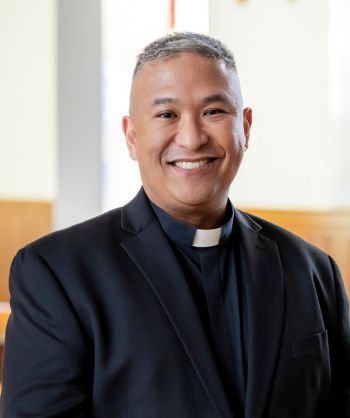
 Father Phillip Alcon Ganir, a Jesuit priest who researches and teaches about music, catechetics, and liturgy at Boston College’s School of Theology and Ministry, encourages Catholics to “develop a more nuanced appreciation” of Gregorian chant by engaging more deeply with it. | Credit: Photo courtesy of Father Phillip Alcon Ganir
 
 Composer and liturgist Father Ricky Manalo, a Paulist priest, agreed, adding: “Gregorian chant is not merely an aesthetic; it is part of the Church’s living tradition of sung prayer, as much as Gospel music is a living tradition for many African American Catholics, or pentatonic melodies are a living tradition for many East Asian Catholics.”“Its beauty is tied not only to its sound but to its liturgical, scriptural, and cultural roots,” he said.Named for St. Gregory the Great, Gregorian chant is a “musical synthesis” of Roman and Gallican chant, according to Father Basil Nixen, a monk of the Abbey of San Benedetto in Monte, Norcia, Italy, where the monks chant daily together. These chanted psalms continue to be prayed as part of the Divine Office, or Liturgy of the Hours — a daily practice for Catholic priests, religious, and laypeople.
 
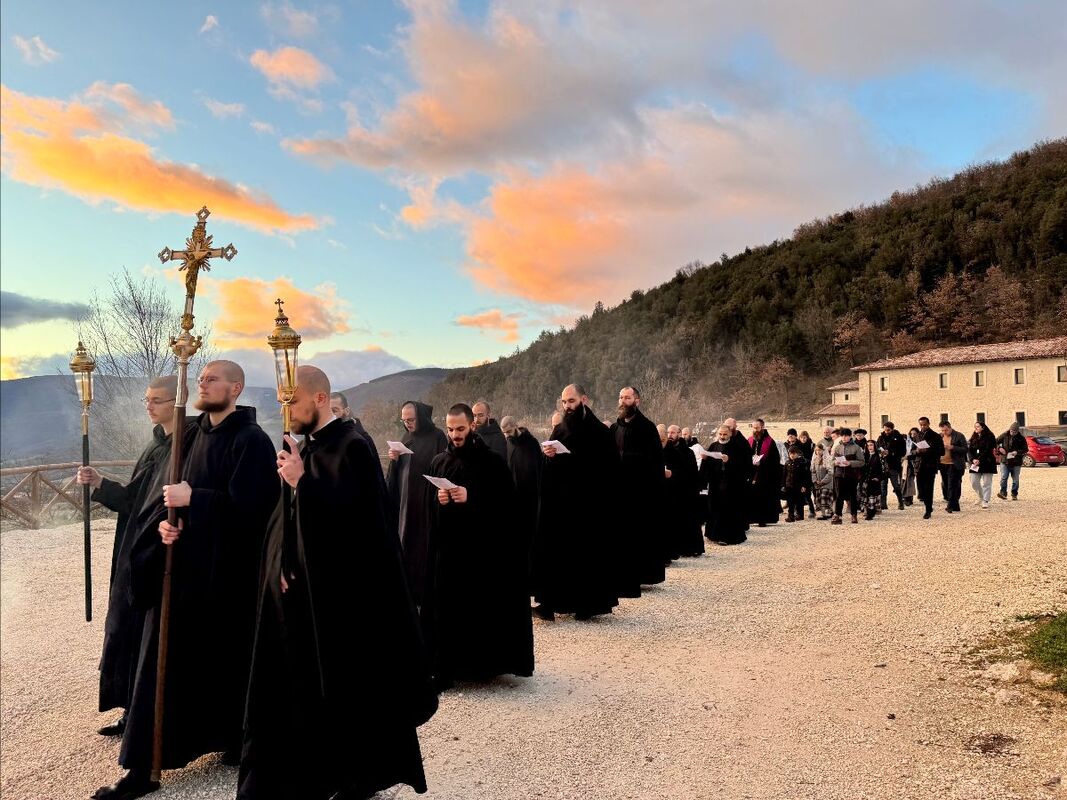
 The Monks of Norcia. | Credit: Christopher McLallen, courtesy of Benedicta, de Montfort Music
 
 “Many might assume that Gregorian chant is really a product of the medieval or dark ages from Western Christianity,” noted Giorgio Navarini, founder and director of the Catholic chant group Floriani Sacred Music. “However, Gregorian chant derives its existence from the Hebrew Temple. Sung psalmody, lamentations, and hymns were a significant part of the Hebraic liturgical life in both the synagogue and Temple.”In the Middle Ages came the “unprecedented notation” of the chant, which helped Gregorian chant spread, Nixen explained.“The sacred melodies of the chant were written by men and women inspired by the Holy Spirit, and every time we sing them, we allow the Holy Spirit to possess our hearts too so as to enter more fully into communion with God in prayer,” Nixen said.“Through the Divine Office the voice of Christ praying to his Father mingles with our own, allowing us to unite our voice with his and to participate in his priestly intercession for the salvation of the world,” Nixen said.How do we pray through Gregorian chant?Because Gregorian chant is more than just an aesthetic, questions about Gregorian chant are, at their root, questions about the connection between prayer and song.“Christian worship involves the whole human being — body and soul,” Nixen said. “Chanting is fundamental for Christian worship precisely for this purpose, because it allows us to pray not only with our minds but also with our bodies, our heart, our sentiments.”“Worship is the natural expression of the highest love, the love which most engages and engrosses us, which is why we owe it to God alone, whom we must love with all our hearts, all our minds, and all our strength — i.e., with body, heart, mind, and soul,” Nixen said. “And we do this most perfectly when we sing.”
 
 The Benedictine Monks of Norcia give their lives to pray for the world. | Credit: Photo courtesy of Monks of Norcia
 
 Music, Navarini said, is “an art form that directly reflects the inner workings of the soul, unlike other art forms, which gives it a unique power of being united to prayer.”“Chant has the power to raise the soul to the divine,” Navarini said. “It is unlike any music in this world and truly provides a doorway and glimpse into the life to come.”Can machines pray?Human chant is meant to be just that — human, in every imperfection, hoarse voice, or flat note.“Even with AI aside, one of the dangers of chant recordings is that singers often aim to present pristine, errorless, and sublime sounds — which are good and holy in and of themselves,” Ganir said. “But such perfection is not often reflective of a life that worships regularly with chant.”The monks who chant daily in monasteries often sing with “tired” voices, Ganir observed.
 
 The monks of Norcia chant the Divine Office seven times during the day and once during the night. | Credit: Photo courtesy of the Monks of Norcia
 
 “Sung prayer early in the morning or in the evening is often a different, usually 'tired,’ sound than prayers chanted during the day,” Ganir said.This isn’t a bad thing; in fact, it’s part of the deeper meaning behind chant.“Prayer is meant to span and intersect through all of life,” Ganir continued. “And music, especially our chant tradition, can be such a worthy and life-giving companion.”“AI-generated sacred-sounding music may have a place as a tool for study, preparation, or even private reflection, but it should not replace the living voice of the Church, the trained pastoral musician, the human composer, or the sung participation of the assembly,” Manalo said.
 
 Father Ricky Manalo, a distinguished liturgical composer who also gives lectures on artificial intelligence, defines liturgical music as “sung prayer” that “belongs to the embodied worship of a community gathered before God.” | Credit: Photo courtesy of Father Ricky Manalo
 
 “AI can generate chant-like sounds or contemporary songs, but it cannot replace the faith, breath, body, and communal participation during a liturgy,” Manalo continued.“Sacred music requires theological depth, pastoral sensitivity, scriptural grounding, ritual awareness, and a sense of the actual community that will sing or hear it,” Manalo said.“Every true prayer is an authentic and personal encounter of trust between a creature with its Creator, a recognition of our dependence on the one who is infinitely good,” Father Ezra Sullivan, a Dominican priest and director of the Spirituality Institute at the Angelicum, told EWTN News.“There is an old saying: ‘You cannot give what you do not have,’” Sullivan continued. “Because an algorithm does not have a knowledge and love of God, no person to have a relationship with him, it cannot make prayers or music that authentically express the raising up of the soul to the hands of our loving Father — even if it makes imitations that are somewhat pleasing, the soul would be missing.”“One of the reasons why we like to know the biography of composers or authors is because when we read their works or listen to their music, we can commune with them across the ages and join our souls with theirs in coming closer to God,” Sullivan continued. “Artificial intelligence might be able to fool us into thinking that it facilitates these horizontal and vertical relationships, and thatʼs precisely how it can be dangerous in the spiritual realm.”
 
 Giorgio Navarini, right, sings with his chant group Floriani Sacred Music, a group founded to bring about a revival of Catholic sacred chant. | Credit: Photo courtesy of Floriani Sacred Music
 
 In Pope Leoʼs recent encyclical letter, Magnifica Humanitas, the Holy Father wrote: “No computational system, however sophisticated, can create a heart that gives itself, or a conscience that discerns good from evil.”“Gregorian chant is what the soul sings to God; it is what a bride sings to her Divine Bridegroom,” Nixen said. “If an AI-generated thing can love and get married, then it can sing chant. If it can get baptized, then it can sing chant. But if it cannot love, get married, get baptized, or be united to God, then it cannot chant.”

‘Chant GPT’: How Catholics are responding to AI-generated Gregorian chant #Catholic In the early morning and late at night, monks still rise to sing the divine office, their voices low and hoarse from sleep. With every breath they are keeping alive a centuries-old tradition in monasteries around the world.But in a small corner of the internet, and on music providers like Spotify, another form of chant has taken hold. The text is often a hodgepodge of Latin-sounding words; a mechanical simulation not sung by human voices but generated by artificial intelligence (AI).How should Catholics navigate the new phenomenon of AI-generated chant, or, in the term hymnist Alan Hommerding coined, “Chant GPT”?What is Gregorian chant?Chant isn’t something that is consumed, like social media or food. Instead, it is a way to worship and pray, according to Catholic theologians and musicians.“Chant is not meant to be performed for artistic consumption but meant to attune our hearts to the Lord over the course of time,” Father Phillip Alcon Ganir, a Jesuit priest who teaches sacred music classes at Boston College, told EWTN News. Father Phillip Alcon Ganir, a Jesuit priest who researches and teaches about music, catechetics, and liturgy at Boston College’s School of Theology and Ministry, encourages Catholics to “develop a more nuanced appreciation” of Gregorian chant by engaging more deeply with it. | Credit: Photo courtesy of Father Phillip Alcon Ganir Composer and liturgist Father Ricky Manalo, a Paulist priest, agreed, adding: “Gregorian chant is not merely an aesthetic; it is part of the Church’s living tradition of sung prayer, as much as Gospel music is a living tradition for many African American Catholics, or pentatonic melodies are a living tradition for many East Asian Catholics.”“Its beauty is tied not only to its sound but to its liturgical, scriptural, and cultural roots,” he said.Named for St. Gregory the Great, Gregorian chant is a “musical synthesis” of Roman and Gallican chant, according to Father Basil Nixen, a monk of the Abbey of San Benedetto in Monte, Norcia, Italy, where the monks chant daily together. These chanted psalms continue to be prayed as part of the Divine Office, or Liturgy of the Hours — a daily practice for Catholic priests, religious, and laypeople. The Monks of Norcia. | Credit: Christopher McLallen, courtesy of Benedicta, de Montfort Music “Many might assume that Gregorian chant is really a product of the medieval or dark ages from Western Christianity,” noted Giorgio Navarini, founder and director of the Catholic chant group Floriani Sacred Music. “However, Gregorian chant derives its existence from the Hebrew Temple. Sung psalmody, lamentations, and hymns were a significant part of the Hebraic liturgical life in both the synagogue and Temple.”In the Middle Ages came the “unprecedented notation” of the chant, which helped Gregorian chant spread, Nixen explained.“The sacred melodies of the chant were written by men and women inspired by the Holy Spirit, and every time we sing them, we allow the Holy Spirit to possess our hearts too so as to enter more fully into communion with God in prayer,” Nixen said.“Through the Divine Office the voice of Christ praying to his Father mingles with our own, allowing us to unite our voice with his and to participate in his priestly intercession for the salvation of the world,” Nixen said.How do we pray through Gregorian chant?Because Gregorian chant is more than just an aesthetic, questions about Gregorian chant are, at their root, questions about the connection between prayer and song.“Christian worship involves the whole human being — body and soul,” Nixen said. “Chanting is fundamental for Christian worship precisely for this purpose, because it allows us to pray not only with our minds but also with our bodies, our heart, our sentiments.”“Worship is the natural expression of the highest love, the love which most engages and engrosses us, which is why we owe it to God alone, whom we must love with all our hearts, all our minds, and all our strength — i.e., with body, heart, mind, and soul,” Nixen said. “And we do this most perfectly when we sing.” The Benedictine Monks of Norcia give their lives to pray for the world. | Credit: Photo courtesy of Monks of Norcia Music, Navarini said, is “an art form that directly reflects the inner workings of the soul, unlike other art forms, which gives it a unique power of being united to prayer.”“Chant has the power to raise the soul to the divine,” Navarini said. “It is unlike any music in this world and truly provides a doorway and glimpse into the life to come.”Can machines pray?Human chant is meant to be just that — human, in every imperfection, hoarse voice, or flat note.“Even with AI aside, one of the dangers of chant recordings is that singers often aim to present pristine, errorless, and sublime sounds — which are good and holy in and of themselves,” Ganir said. “But such perfection is not often reflective of a life that worships regularly with chant.”The monks who chant daily in monasteries often sing with “tired” voices, Ganir observed. The monks of Norcia chant the Divine Office seven times during the day and once during the night. | Credit: Photo courtesy of the Monks of Norcia “Sung prayer early in the morning or in the evening is often a different, usually 'tired,’ sound than prayers chanted during the day,” Ganir said.This isn’t a bad thing; in fact, it’s part of the deeper meaning behind chant.“Prayer is meant to span and intersect through all of life,” Ganir continued. “And music, especially our chant tradition, can be such a worthy and life-giving companion.”“AI-generated sacred-sounding music may have a place as a tool for study, preparation, or even private reflection, but it should not replace the living voice of the Church, the trained pastoral musician, the human composer, or the sung participation of the assembly,” Manalo said. Father Ricky Manalo, a distinguished liturgical composer who also gives lectures on artificial intelligence, defines liturgical music as “sung prayer” that “belongs to the embodied worship of a community gathered before God.” | Credit: Photo courtesy of Father Ricky Manalo “AI can generate chant-like sounds or contemporary songs, but it cannot replace the faith, breath, body, and communal participation during a liturgy,” Manalo continued.“Sacred music requires theological depth, pastoral sensitivity, scriptural grounding, ritual awareness, and a sense of the actual community that will sing or hear it,” Manalo said.“Every true prayer is an authentic and personal encounter of trust between a creature with its Creator, a recognition of our dependence on the one who is infinitely good,” Father Ezra Sullivan, a Dominican priest and director of the Spirituality Institute at the Angelicum, told EWTN News.“There is an old saying: ‘You cannot give what you do not have,’” Sullivan continued. “Because an algorithm does not have a knowledge and love of God, no person to have a relationship with him, it cannot make prayers or music that authentically express the raising up of the soul to the hands of our loving Father — even if it makes imitations that are somewhat pleasing, the soul would be missing.”“One of the reasons why we like to know the biography of composers or authors is because when we read their works or listen to their music, we can commune with them across the ages and join our souls with theirs in coming closer to God,” Sullivan continued. “Artificial intelligence might be able to fool us into thinking that it facilitates these horizontal and vertical relationships, and thatʼs precisely how it can be dangerous in the spiritual realm.” Giorgio Navarini, right, sings with his chant group Floriani Sacred Music, a group founded to bring about a revival of Catholic sacred chant. | Credit: Photo courtesy of Floriani Sacred Music In Pope Leoʼs recent encyclical letter, Magnifica Humanitas, the Holy Father wrote: “No computational system, however sophisticated, can create a heart that gives itself, or a conscience that discerns good from evil.”“Gregorian chant is what the soul sings to God; it is what a bride sings to her Divine Bridegroom,” Nixen said. “If an AI-generated thing can love and get married, then it can sing chant. If it can get baptized, then it can sing chant. But if it cannot love, get married, get baptized, or be united to God, then it cannot chant.”

As AI encroaches on sacred music, Catholics still hold true to Gregorian chant, a historical form of sacred music that is still alive today.
Read More
Pope Leo XIV prayed with this young man’s rosary in Barcelona — and gave it back #Catholic Sergi, a young Catalan man, was surprised by an encounter with Pope Leo XIV in Spain on June 10 he will never forget.During the pope’s visit to the Shrine of Our Lady of Montserrat, an abbey northwest of Barcelona, Sergi handed Leo his rosary. The pontiff slipped it into his pocket before using it minutes later to pray.Unexpectedly, the story did not end there — after the event, Sergi managed to recover his prized sacramental, now prayed with by the pope.Sergi (who asked that his last name not be shared) told EWTN News he had not planned to go to the shrine on the day of the papal visit. He is from Terrassa, a city between Barcelona and Montserrat.The invitation to go to the popeʼs prayer came unexpectedly through a volunteer with the Missionaries of Charity, connected to his youth group, who encouraged both him and his girlfriend, María, to join the gathering. The night before, they attended the pope’s event at the Olympic Stadium in Barcelona and returned so tired that they almost decided not to go again.However, they felt they could not miss the chance to see Pope Leo during his visit to their homeland, and in order to attend they both had to take the day off from work. They never imagined what would happen or the gift they would receive.Sergi, María, and their friend secured a spot in the atrium of the basilica, and when the pope arrived, Sergi managed to get very close to the mini-popemobile as it passed by. At that moment he took out his rosary, hoping it would be blessed.“I just wanted him to bless it, that’s all, but he asked me, ‘Is it for me?’ And I’m not going to say no, so of course I said yes, and he kept it,” the young man said.Indeed, in a video recorded by EWTN News, the pope can be seen taking the rosary and putting it in his pocket. A few minutes later, to the young couple’s total surprise, they saw the pope praying with Sergi’s rosary in his hands.“When we saw it on the screen, we realized it was the same one he was using to pray!” Sergi said.
 
 Pope Leo XIV prays with a simple, wooden rosary during a prayer at the Abbey of Our Lady of Montserrat, northwest of Barcelona, Spain, on June 10, 2026. The rosary belongs to Sergi, a young Catalan man who gave it to the pope to be blessed. | Credit: Vatican Media.
 
 But the story did not end there. María had the idea of trying to get the rosary back, and when the event ended, they tried. However, the pope was already in the official car, and the security caravan would not allow anyone to approach.“We tried to tell him, but he just passed us by,” Sergi told EWTN News.At that moment, the run of his life began. Montserrat, as its name suggests, is set on a mountain range, so he had to run downhill.“I ran the whole way down until I said, ‘Well, let the pope keep it,’ and I gave up, but my girlfriend told me, ‘Keep trying.’”So Sergi started running again, sprinting and shouting to the pope to give it back. Knowing the caravan could not stop, he took an extreme measure: asking the pope to throw it to him.“At that moment I wasn’t thinking — I just knew I wanted to get the rosary back, knowing the pope had prayed with it. I was overwhelmed with excitement by the moment and the situation.”The pope granted his request, tossing the rosary from the car window as he drove by. Then, with the help of a police officer, Sergi recovered his rosary, now prayed with by the pope.“We went without expecting anything, and we came back with the greatest gift we could have received,” the young man said, still moved by the experience.This story was first published by ACI Prensa, EWTN News' Spanish sister service. It has been translated and adapted by EWTN News English.

Pope Leo XIV prayed with this young man’s rosary in Barcelona — and gave it back #Catholic Sergi, a young Catalan man, was surprised by an encounter with Pope Leo XIV in Spain on June 10 he will never forget.During the pope’s visit to the Shrine of Our Lady of Montserrat, an abbey northwest of Barcelona, Sergi handed Leo his rosary. The pontiff slipped it into his pocket before using it minutes later to pray.Unexpectedly, the story did not end there — after the event, Sergi managed to recover his prized sacramental, now prayed with by the pope.Sergi (who asked that his last name not be shared) told EWTN News he had not planned to go to the shrine on the day of the papal visit. He is from Terrassa, a city between Barcelona and Montserrat.The invitation to go to the popeʼs prayer came unexpectedly through a volunteer with the Missionaries of Charity, connected to his youth group, who encouraged both him and his girlfriend, María, to join the gathering. The night before, they attended the pope’s event at the Olympic Stadium in Barcelona and returned so tired that they almost decided not to go again.However, they felt they could not miss the chance to see Pope Leo during his visit to their homeland, and in order to attend they both had to take the day off from work. They never imagined what would happen or the gift they would receive.Sergi, María, and their friend secured a spot in the atrium of the basilica, and when the pope arrived, Sergi managed to get very close to the mini-popemobile as it passed by. At that moment he took out his rosary, hoping it would be blessed.“I just wanted him to bless it, that’s all, but he asked me, ‘Is it for me?’ And I’m not going to say no, so of course I said yes, and he kept it,” the young man said.Indeed, in a video recorded by EWTN News, the pope can be seen taking the rosary and putting it in his pocket. A few minutes later, to the young couple’s total surprise, they saw the pope praying with Sergi’s rosary in his hands.“When we saw it on the screen, we realized it was the same one he was using to pray!” Sergi said. Pope Leo XIV prays with a simple, wooden rosary during a prayer at the Abbey of Our Lady of Montserrat, northwest of Barcelona, Spain, on June 10, 2026. The rosary belongs to Sergi, a young Catalan man who gave it to the pope to be blessed. | Credit: Vatican Media. But the story did not end there. María had the idea of trying to get the rosary back, and when the event ended, they tried. However, the pope was already in the official car, and the security caravan would not allow anyone to approach.“We tried to tell him, but he just passed us by,” Sergi told EWTN News.At that moment, the run of his life began. Montserrat, as its name suggests, is set on a mountain range, so he had to run downhill.“I ran the whole way down until I said, ‘Well, let the pope keep it,’ and I gave up, but my girlfriend told me, ‘Keep trying.’”So Sergi started running again, sprinting and shouting to the pope to give it back. Knowing the caravan could not stop, he took an extreme measure: asking the pope to throw it to him.“At that moment I wasn’t thinking — I just knew I wanted to get the rosary back, knowing the pope had prayed with it. I was overwhelmed with excitement by the moment and the situation.”The pope granted his request, tossing the rosary from the car window as he drove by. Then, with the help of a police officer, Sergi recovered his rosary, now prayed with by the pope.“We went without expecting anything, and we came back with the greatest gift we could have received,” the young man said, still moved by the experience.This story was first published by ACI Prensa, EWTN News' Spanish sister service. It has been translated and adapted by EWTN News English.

“We went without expecting anything, and we came back with the greatest gift we could have received,” Sergi told EWTN News.

Read More
After stillbirth loss, mother of 7 returns to school to help others heal #Catholic After experiencing an unimaginable loss, Kelly Helsel felt called to begin a new chapter. Following 17 years as a stay-at-home mother, she returned to school to pursue her dream of becoming a counselor — hoping to offer others the same compassionate support and Catholic guidance that helped bring healing to her own life.In 2023 Helsel’s daughter, Mary Catherine, was stillborn. The experience and grief was ultimately “a huge catalyst to me going back to school,” Helsel told EWTN News.“I think death has an interesting way of snapping your priorities in line,” she said. “And through the death of our daughter, I understood that tomorrow was not promised. And I had been holding this dream very closely for 17 years, just trusting,” she said.“Much of my healing process after the stillbirth of our daughter was helped along by solid Catholic counseling,” she said. “So I just felt a whisper at first, and then I felt like, ‘I can turn around and be this for someone else in need.’ And so I did.”Path back to schoolA native of Arizona, Helsel met her now-husband, Doug, in high school. She then attended Northern Arizona University to receive a bachelorʼs degree in psychology with the hopes of becoming a counselor, but motherhood ultimately became her first priority.“My firstborn … was born during finals week of my bachelorʼs degree,” Helsel said. “I actually had a positive pregnancy test the day before I was scheduled to take the GRE [Graduate Record Examination].”“I just knew that motherhood was the priority and that Godʼs timing would take care of things. So I stayed at home,” she said.Helsel decided to put her plans of working as a counselor on the side and focus on her growing family. She and her husband had seven children over the next 17 years, but after the loss of their sixth child she felt called to switch her plans and return to school. “We just started taking one step in front of the other,” she said. Helsel started by applying to the University of Mary’s master’s program for counseling about six months after her daughter’s passing but was thrown an unexpected “curveball” during the process.“On the feast of the Annunciation, I got in. But then I also had a positive pregnancy test with my daughter, Isabel, on the very same day.”“I remember standing in the bathroom with my husband with my phone in one hand with an acceptance letter, and on the counter was a positive pregnancy test with our seventh baby.”Motherhood provided ‘the skills to be a fantastic student’Despite navigating grief, welcoming a new baby, and continuing to care for the rest of her family, Helsel not only decided to return to school but also opted for a five-semester accelerated program.She graduated on April 25 with a 4.0 GPA and her whole family by her side. It was all possible not in spite of her 17 years as a stay-at-home mom but because of the experience.
 
 Kelly Helsel, her husband Doug Helsel, and their children at her graduation a the University of Mary on April 25, 2026. | Credit: Photo courtesy of Kelly Helsel
 
 “I actually think that motherhood, 17 years of motherhood, gave me the skills to be a fantastic student,” she said. “I learned time management. I learned prioritization. I learned how to ask for help. I learned all kinds of things in the trenches of motherhood that gave me the opportunity to really thrive at UMary.” “I guess the loss of my daughter really showed me that like all things are ‘figure-out-able,’” she said. “When youʼve gone through something like that, it makes you unafraid to do really big things.”“I knew that I could just cannonball into the deep end and we could do this. And my husband was an amazing support throughout the program. But, Isabel was the curveball of all curveballs,” she said.“She was born during Christmas break and I just jumped back in in January. I didnʼt take any time off,” she said. "I would be in a rocking chair breastfeeding her, and my laptop is sitting next to me and Iʼm listening to a lecture.”“I became a pro at using the dictation tool on Microsoft Word” so “I could hold my baby and dictate a paper,” she said. “It was just a really wild time. I learned to be extremely flexible and gentle with myself ... But I just knew God was like, ‘go, go right now.’”“It was super bumpy at some points,“ she said. ”But I chose the University of Mary because I feel like [University of Mary president] Monsignor [James] Shea and the university really put their money where their mouth is in terms of supporting nontraditional students — especially mothers.”“All of my professors were extremely accommodating with extensions if I needed one. A few professors gave me early finals because Isabel was born right at the end of that first semester,” she said. “So the University of Mary was really crucial to my success because everyone was behind me.” Helsel noted that her professors, especially counseling professor Olivia Wedel, and other facility members and students were champions in cheering her “all the way to the finish line.”Waddell “would always remind me that ‘Iʼm surrounded by support,’” Helsel said. “When youʼre super tired and youʼre on your fourth Crock-Pot meal of the week and you donʼt have anymore bandwidth left, I just thought, ‘I am surrounded by support.’”“Jesus is real and his promises are too,” Helsel said. “I just remember really having to trust the Lord in a new way and also having to be very open to my dream not looking exactly like I wanted.”“So yes, I went back to school and I got a masterʼs degree, but it looked absolutely nothing like I thought it was going to, but it was also better, just like he had promised me.”“Your dreams matter to him,“ she said. ”Trust him, and especially Our Lady, with your dreams. Because he wants both. He wants your motherhood and your dreams.”Catholic counseling offers ‘the keys to real human flourishing’Officially a licensed counselor, Helsel is ready to jump in headfirst to help others in need by utilizing the guidance offered by the Catholic Church.“I believe very deeply that the Catholic Church has the keys to real human flourishing,” she said. “So I knew I wanted to become a mental health professional with those guardrails in place, because I benefited so much from Catholic counseling.”“I want to turn back around and help the next woman or couple or … anyone in line that needs to hear the good news, coupled with solid mental health formation. Like St. Thomas Aquinas says, ‘faith and reason.’ We need both.”With her “perinatal mental health training,” Helsel hopes to primarily work in the womenʼs health category “to support other women, pregnant women, postpartum women,” she said. “And obviously I have a love for people who may have lost a child in a particular way.”Helsel is interested in helping those discerning vocations, as her oldest son plans to apply to the priesthood. She is also hoping to support the vocation of marriage as it is “under a particular attack at this time.”To accomplish all of this, Helsel has already started her own private practice called Concordia Counseling.“I chose Concordia because Mary Catherine had a congenital heart condition,” she said. “Concordia means heart to heart or to bring two hearts into harmony. I wanted to honor my baby in heaven and Our Lord with my work. And so I started Concordia Counseling.”“Iʼm just getting it started. I have a caseload of about 10 clients, but Iʼm hoping to accept more,“ Helsel said. ”I know that the work I want to do most of all involves not just mental health but the teachings of the Catholic Church.”“I just think the framework needs to be formed properly, and that is the Catholic understanding of the whole person. And from there we can jump off anywhere,” she said.

After stillbirth loss, mother of 7 returns to school to help others heal #Catholic After experiencing an unimaginable loss, Kelly Helsel felt called to begin a new chapter. Following 17 years as a stay-at-home mother, she returned to school to pursue her dream of becoming a counselor — hoping to offer others the same compassionate support and Catholic guidance that helped bring healing to her own life.In 2023 Helsel’s daughter, Mary Catherine, was stillborn. The experience and grief was ultimately “a huge catalyst to me going back to school,” Helsel told EWTN News.“I think death has an interesting way of snapping your priorities in line,” she said. “And through the death of our daughter, I understood that tomorrow was not promised. And I had been holding this dream very closely for 17 years, just trusting,” she said.“Much of my healing process after the stillbirth of our daughter was helped along by solid Catholic counseling,” she said. “So I just felt a whisper at first, and then I felt like, ‘I can turn around and be this for someone else in need.’ And so I did.”Path back to schoolA native of Arizona, Helsel met her now-husband, Doug, in high school. She then attended Northern Arizona University to receive a bachelorʼs degree in psychology with the hopes of becoming a counselor, but motherhood ultimately became her first priority.“My firstborn … was born during finals week of my bachelorʼs degree,” Helsel said. “I actually had a positive pregnancy test the day before I was scheduled to take the GRE [Graduate Record Examination].”“I just knew that motherhood was the priority and that Godʼs timing would take care of things. So I stayed at home,” she said.Helsel decided to put her plans of working as a counselor on the side and focus on her growing family. She and her husband had seven children over the next 17 years, but after the loss of their sixth child she felt called to switch her plans and return to school. “We just started taking one step in front of the other,” she said. Helsel started by applying to the University of Mary’s master’s program for counseling about six months after her daughter’s passing but was thrown an unexpected “curveball” during the process.“On the feast of the Annunciation, I got in. But then I also had a positive pregnancy test with my daughter, Isabel, on the very same day.”“I remember standing in the bathroom with my husband with my phone in one hand with an acceptance letter, and on the counter was a positive pregnancy test with our seventh baby.”Motherhood provided ‘the skills to be a fantastic student’Despite navigating grief, welcoming a new baby, and continuing to care for the rest of her family, Helsel not only decided to return to school but also opted for a five-semester accelerated program.She graduated on April 25 with a 4.0 GPA and her whole family by her side. It was all possible not in spite of her 17 years as a stay-at-home mom but because of the experience. Kelly Helsel, her husband Doug Helsel, and their children at her graduation a the University of Mary on April 25, 2026. | Credit: Photo courtesy of Kelly Helsel “I actually think that motherhood, 17 years of motherhood, gave me the skills to be a fantastic student,” she said. “I learned time management. I learned prioritization. I learned how to ask for help. I learned all kinds of things in the trenches of motherhood that gave me the opportunity to really thrive at UMary.” “I guess the loss of my daughter really showed me that like all things are ‘figure-out-able,’” she said. “When youʼve gone through something like that, it makes you unafraid to do really big things.”“I knew that I could just cannonball into the deep end and we could do this. And my husband was an amazing support throughout the program. But, Isabel was the curveball of all curveballs,” she said.“She was born during Christmas break and I just jumped back in in January. I didnʼt take any time off,” she said. "I would be in a rocking chair breastfeeding her, and my laptop is sitting next to me and Iʼm listening to a lecture.”“I became a pro at using the dictation tool on Microsoft Word” so “I could hold my baby and dictate a paper,” she said. “It was just a really wild time. I learned to be extremely flexible and gentle with myself … But I just knew God was like, ‘go, go right now.’”“It was super bumpy at some points,“ she said. ”But I chose the University of Mary because I feel like [University of Mary president] Monsignor [James] Shea and the university really put their money where their mouth is in terms of supporting nontraditional students — especially mothers.”“All of my professors were extremely accommodating with extensions if I needed one. A few professors gave me early finals because Isabel was born right at the end of that first semester,” she said. “So the University of Mary was really crucial to my success because everyone was behind me.” Helsel noted that her professors, especially counseling professor Olivia Wedel, and other facility members and students were champions in cheering her “all the way to the finish line.”Waddell “would always remind me that ‘Iʼm surrounded by support,’” Helsel said. “When youʼre super tired and youʼre on your fourth Crock-Pot meal of the week and you donʼt have anymore bandwidth left, I just thought, ‘I am surrounded by support.’”“Jesus is real and his promises are too,” Helsel said. “I just remember really having to trust the Lord in a new way and also having to be very open to my dream not looking exactly like I wanted.”“So yes, I went back to school and I got a masterʼs degree, but it looked absolutely nothing like I thought it was going to, but it was also better, just like he had promised me.”“Your dreams matter to him,“ she said. ”Trust him, and especially Our Lady, with your dreams. Because he wants both. He wants your motherhood and your dreams.”Catholic counseling offers ‘the keys to real human flourishing’Officially a licensed counselor, Helsel is ready to jump in headfirst to help others in need by utilizing the guidance offered by the Catholic Church.“I believe very deeply that the Catholic Church has the keys to real human flourishing,” she said. “So I knew I wanted to become a mental health professional with those guardrails in place, because I benefited so much from Catholic counseling.”“I want to turn back around and help the next woman or couple or … anyone in line that needs to hear the good news, coupled with solid mental health formation. Like St. Thomas Aquinas says, ‘faith and reason.’ We need both.”With her “perinatal mental health training,” Helsel hopes to primarily work in the womenʼs health category “to support other women, pregnant women, postpartum women,” she said. “And obviously I have a love for people who may have lost a child in a particular way.”Helsel is interested in helping those discerning vocations, as her oldest son plans to apply to the priesthood. She is also hoping to support the vocation of marriage as it is “under a particular attack at this time.”To accomplish all of this, Helsel has already started her own private practice called Concordia Counseling.“I chose Concordia because Mary Catherine had a congenital heart condition,” she said. “Concordia means heart to heart or to bring two hearts into harmony. I wanted to honor my baby in heaven and Our Lord with my work. And so I started Concordia Counseling.”“Iʼm just getting it started. I have a caseload of about 10 clients, but Iʼm hoping to accept more,“ Helsel said. ”I know that the work I want to do most of all involves not just mental health but the teachings of the Catholic Church.”“I just think the framework needs to be formed properly, and that is the Catholic understanding of the whole person. And from there we can jump off anywhere,” she said.

After navigating loss and grief, Kelly Helsel is officially now a licensed counselor thanks to the guidance given to her by the Catholic Church and her desire to use her experience to help others.

Read More