USA

ACI Prensa becomes EWTN News Español #Catholic There are dates that could not be better selected, even with the liturgical calendar in hand. On Monday, Oct. 12, ACI Prensa became EWTN News Español and launched its new platform at EWTNNews.com/es. This is a day when so many celebrations converge that it is impossible not to see the hand of God behind it.I would be lying if I said this was the date we had in mind from the moment we began this project, as if we had experienced a supernatural vision. That was not the case. But when you work in the service of God and the Church, you learn to view coincidences through different eyes. They are “God-incidences.”This relaunch goes far beyond simply changing a websiteʼs name. Since 1980, ACI Prensa has accompanied generations of Spanish-speaking Catholics, and since 2014 it has been part of the EWTN family. Today, that journey enters a new phase: the same mission, but with the strength and reach of a global brand like EWTN News.I confess that, while I am incredibly excited to launch EWTN News Español, I also feel a touch of nostalgia at saying goodbye to ACI Prensa — a brand I have followed and admired for decades. Yet, “we know that all things work together for good for those who love God” (Rom 8:28). St. Augustine spoke of God as a beauty “ever ancient, ever new.” The Gospel does not change; what changes are the ways we transmit and communicate it, or the technologies that help us spread it throughout history.3 feasts, 3 patronsThis Oct. 12 marks 20 years since the death of St. Carlo Acutis at the age of 15. Canonized by Pope Leo XIV in September 2025, Acutis is the first millennial saint, and his defining characteristic was his use of new technologies to share the faith.We ask him to guide us in the apostolic use of communication technologies (including the internet, social media, and artificial intelligence) and to help us bring God closer to the many young souls who live their lives online today. It cannot be a coincidence that a new platform is being born under the gaze of a teenager who turned the internet into a path to heaven.It is also the feast of Our Lady of the Pillar, patroness of the Hispanic world — a title recognized by St. John Paul II in 1984 — and the date on which Spain celebrates its National Day.There could hardly be a better day to launch EWTN News Español: a language that connects hundreds of millions of people — from the historic Catholic communities of Latin America and Spain to the ever-growing Catholic population of the United States, which now has a home of its own within the global EWTN family.On this same day of Oct. 12, Brazil celebrates its patroness, Our Lady of Aparecida, a title proclaimed by Pius XI in 1930. Since the mission of EWTN News extends beyond a single language — and with ACI Digital delivering our news in Portuguese — we place our work under her protection as well, honoring her as a patroness of our efforts across the Americas, alongside our beloved Virgin of Guadalupe. Yet today, the focus is on Spanish, and to that we now return.A platform built for usA shared brand does not imply an identical experience for everyone. Our goal is not merely to translate the English-language EWTN News site into Spanish but to build a platform tailored to the Spanish-speaking audience — reflecting their customs, their culture, and the ways they stay informed today. That is why EWTN News Español combines the technology and editorial resources of EWTN News with the expertise and capabilities of a team that deeply understands the people it serves and the evolving nature of news consumption habits.We used to expect users to come looking for us. Now, it’s the other way around: We go where the people are. The latest Reuters Institute report on journalism makes this clear: Today, most people get their news from social media and video rather than from media websites.That is why EWTN News Español is designed for mobile, where you and I spend our day. We offer content that keeps you informed wherever you are (whether via a newsletter sent to your email or your WhatsApp) while also enriching your faith with devotional material, such as the daily Mass readings or the lives of the saints. The good news alongside the dayʼs headlines.And if you prefer watching to reading, we now have “Watch” — a new tab on the EWTN News Español site where we gather all our video content, featuring the best reports, interviews, broadcasts, and viral social media clips.Plus, if something major happens in the Church or the world, we cover it with you in real time through updates on our live blog.And speaking of staying connected, your EWTN News Español account goes wherever you go. Not only can you save articles, comment on them, and follow your favorite writers and topics, but you can also personalize your experience across EWTN.com, EWTNNews.com, Roku, and EWTN+ using the same login.As always, access is free, sustained by the generous donations of so many people who believe in and support our mission, a mission that began when Mother Angelica had the “crazy” idea to launch a Catholic television channel on Aug. 15, 1981 (talk about providential dates!).Behind this platform lies an incredible team that is deeply dedicated to the mission and has decades of experience covering conclaves, World Youth Days, synods, jubilees, and International Eucharistic Congresses, as well as the daily lives of Catholic communities throughout the Spanish-speaking world. The new platform makes this work easier to discover, whether for those who live out their faith every day or for those who are just beginning to explore it.What does not changeThe name (from ACI Prensa to EWTN News Español), along with the design and the site’s tools and features, are changing.What does not change is our commitment to the truth, to our audiences, and to journalistic excellence — a path ACI Prensa charted four decades ago, bringing hundreds of thousands of people closer to God through quality content and a faithful commitment to the Church’s magisterium. That will not change, with God’s help and the guidance of Mother Angelica.St. Carlo Acutis used to say that the Eucharist was his “highway to heaven.” We simply aspire to build, by God’s grace, a few digital lanes leading to it. Our hope is that EWTN News — in all its languages — becomes the place where every Catholic turns for information and that we prove ourselves worthy, day by day, of the trust that aspiration represents. Welcome to EWTN News Español!This story was first published by EWTN News Español, the Spanish-language sister service of EWTN News. It has been translated and adapted by EWTN News English.

ACI Prensa becomes EWTN News Español #Catholic There are dates that could not be better selected, even with the liturgical calendar in hand. On Monday, Oct. 12, ACI Prensa became EWTN News Español and launched its new platform at EWTNNews.com/es. This is a day when so many celebrations converge that it is impossible not to see the hand of God behind it.I would be lying if I said this was the date we had in mind from the moment we began this project, as if we had experienced a supernatural vision. That was not the case. But when you work in the service of God and the Church, you learn to view coincidences through different eyes. They are “God-incidences.”This relaunch goes far beyond simply changing a websiteʼs name. Since 1980, ACI Prensa has accompanied generations of Spanish-speaking Catholics, and since 2014 it has been part of the EWTN family. Today, that journey enters a new phase: the same mission, but with the strength and reach of a global brand like EWTN News.I confess that, while I am incredibly excited to launch EWTN News Español, I also feel a touch of nostalgia at saying goodbye to ACI Prensa — a brand I have followed and admired for decades. Yet, “we know that all things work together for good for those who love God” (Rom 8:28). St. Augustine spoke of God as a beauty “ever ancient, ever new.” The Gospel does not change; what changes are the ways we transmit and communicate it, or the technologies that help us spread it throughout history.3 feasts, 3 patronsThis Oct. 12 marks 20 years since the death of St. Carlo Acutis at the age of 15. Canonized by Pope Leo XIV in September 2025, Acutis is the first millennial saint, and his defining characteristic was his use of new technologies to share the faith.We ask him to guide us in the apostolic use of communication technologies (including the internet, social media, and artificial intelligence) and to help us bring God closer to the many young souls who live their lives online today. It cannot be a coincidence that a new platform is being born under the gaze of a teenager who turned the internet into a path to heaven.It is also the feast of Our Lady of the Pillar, patroness of the Hispanic world — a title recognized by St. John Paul II in 1984 — and the date on which Spain celebrates its National Day.There could hardly be a better day to launch EWTN News Español: a language that connects hundreds of millions of people — from the historic Catholic communities of Latin America and Spain to the ever-growing Catholic population of the United States, which now has a home of its own within the global EWTN family.On this same day of Oct. 12, Brazil celebrates its patroness, Our Lady of Aparecida, a title proclaimed by Pius XI in 1930. Since the mission of EWTN News extends beyond a single language — and with ACI Digital delivering our news in Portuguese — we place our work under her protection as well, honoring her as a patroness of our efforts across the Americas, alongside our beloved Virgin of Guadalupe. Yet today, the focus is on Spanish, and to that we now return.A platform built for usA shared brand does not imply an identical experience for everyone. Our goal is not merely to translate the English-language EWTN News site into Spanish but to build a platform tailored to the Spanish-speaking audience — reflecting their customs, their culture, and the ways they stay informed today. That is why EWTN News Español combines the technology and editorial resources of EWTN News with the expertise and capabilities of a team that deeply understands the people it serves and the evolving nature of news consumption habits.We used to expect users to come looking for us. Now, it’s the other way around: We go where the people are. The latest Reuters Institute report on journalism makes this clear: Today, most people get their news from social media and video rather than from media websites.That is why EWTN News Español is designed for mobile, where you and I spend our day. We offer content that keeps you informed wherever you are (whether via a newsletter sent to your email or your WhatsApp) while also enriching your faith with devotional material, such as the daily Mass readings or the lives of the saints. The good news alongside the dayʼs headlines.And if you prefer watching to reading, we now have “Watch” — a new tab on the EWTN News Español site where we gather all our video content, featuring the best reports, interviews, broadcasts, and viral social media clips.Plus, if something major happens in the Church or the world, we cover it with you in real time through updates on our live blog.And speaking of staying connected, your EWTN News Español account goes wherever you go. Not only can you save articles, comment on them, and follow your favorite writers and topics, but you can also personalize your experience across EWTN.com, EWTNNews.com, Roku, and EWTN+ using the same login.As always, access is free, sustained by the generous donations of so many people who believe in and support our mission, a mission that began when Mother Angelica had the “crazy” idea to launch a Catholic television channel on Aug. 15, 1981 (talk about providential dates!).Behind this platform lies an incredible team that is deeply dedicated to the mission and has decades of experience covering conclaves, World Youth Days, synods, jubilees, and International Eucharistic Congresses, as well as the daily lives of Catholic communities throughout the Spanish-speaking world. The new platform makes this work easier to discover, whether for those who live out their faith every day or for those who are just beginning to explore it.What does not changeThe name (from ACI Prensa to EWTN News Español), along with the design and the site’s tools and features, are changing.What does not change is our commitment to the truth, to our audiences, and to journalistic excellence — a path ACI Prensa charted four decades ago, bringing hundreds of thousands of people closer to God through quality content and a faithful commitment to the Church’s magisterium. That will not change, with God’s help and the guidance of Mother Angelica.St. Carlo Acutis used to say that the Eucharist was his “highway to heaven.” We simply aspire to build, by God’s grace, a few digital lanes leading to it. Our hope is that EWTN News — in all its languages — becomes the place where every Catholic turns for information and that we prove ourselves worthy, day by day, of the trust that aspiration represents. Welcome to EWTN News Español!This story was first published by EWTN News Español, the Spanish-language sister service of EWTN News. It has been translated and adapted by EWTN News English.

The platform and name are new, but the mission is the same: report the truth and bring the faith to the Spanish-speaking world.
Read More
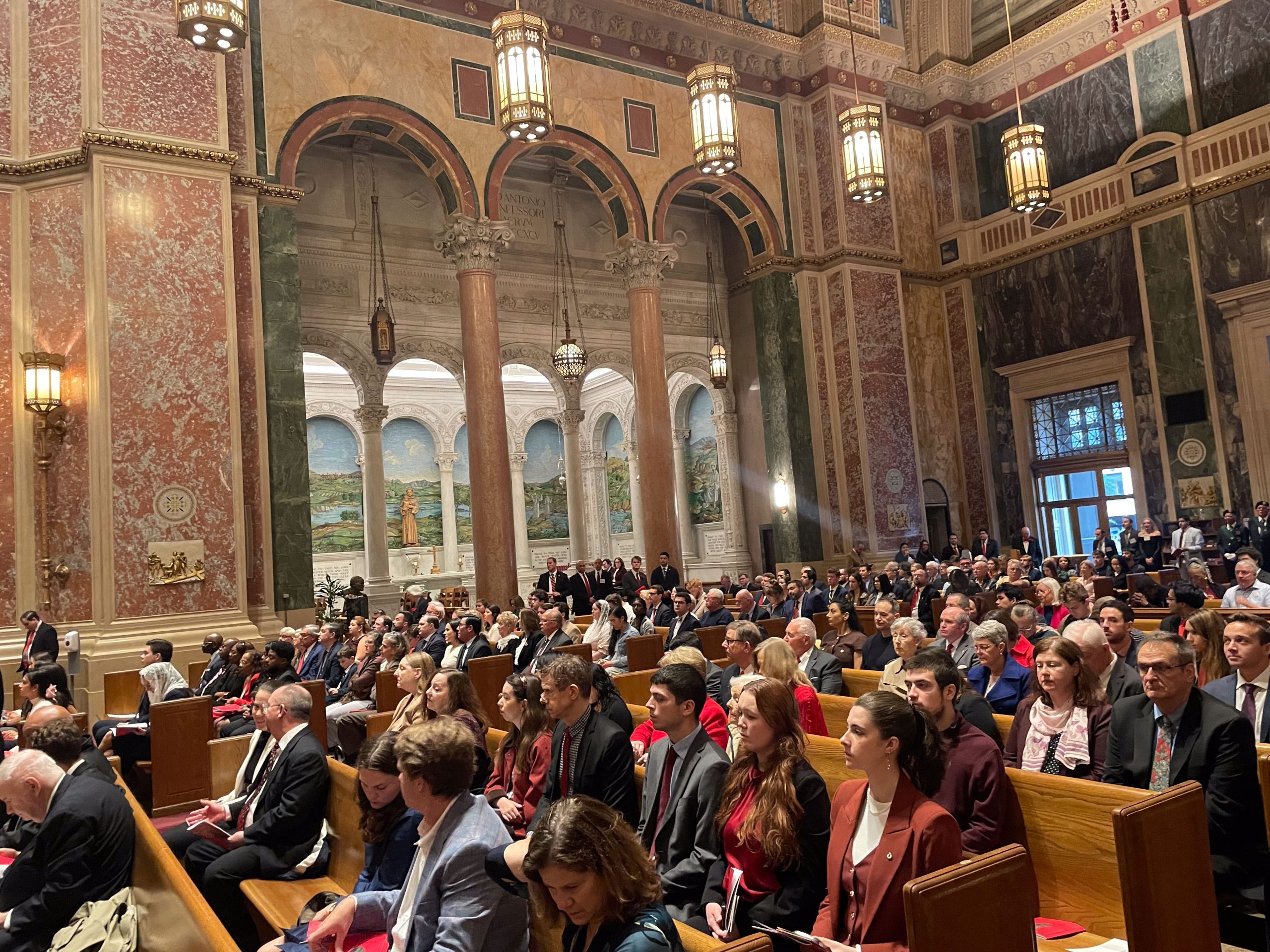
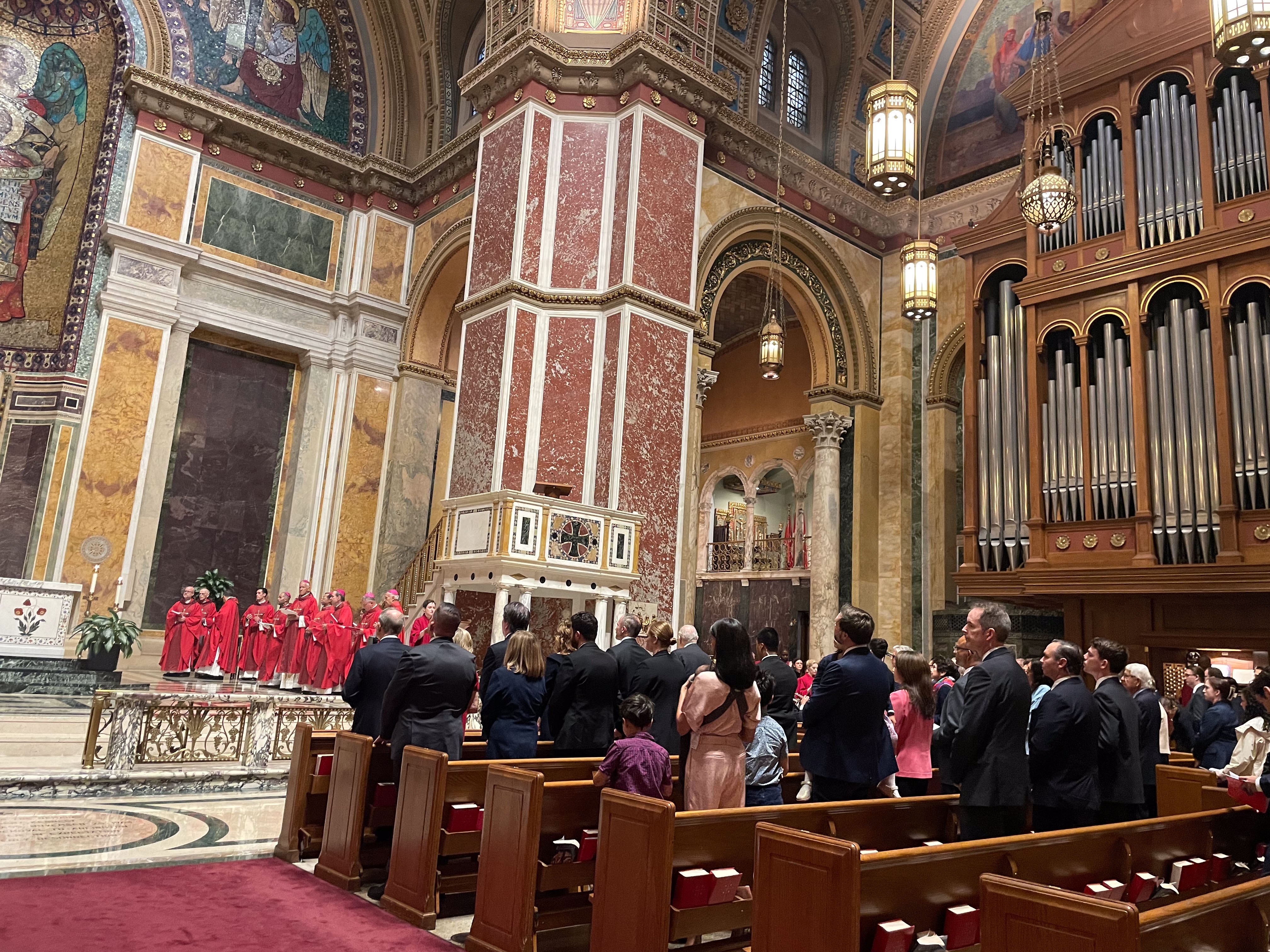
Red Mass marks opening of Supreme Court term in Washington #Catholic WASHINGTON — Archbishop Timothy Broglio of the Archdiocese for the Military Services, USA, underscored the importance of using the Holy Spirit’s guidance in public affairs at the annual Red Mass marking the opening of the Supreme Court term.Seeking the Holy Spirit’s wisdom will help people reach their full potential in their work and responsibilities, Broglio said in the homily Oct. 4 at the Cathedral of St. Matthew the Apostle in Washington, D.C.“We also pray that our understanding of Godʼs presence and his commandments will inspire integrity, devotion to meaning, and the promotion of harmony,” he said.Hosted by The John Carroll Society, the Red Mass drew more than 1,000 people, including Supreme Court justices, public officials, and Vice President JD Vance, to mark the opening of the judiciary term and pray for judges, attorneys, diplomats, and government leaders.The name derives from the red color of the archbishops’, cardinals’, and priests’ vestments. All Church officials who participated wore red to represent the tongues of fire symbolizing the presence of the Holy Spirit.This year marked the 74th anniversary of the Red Mass in Washington, one of several such celebrations held worldwide, such as in Rome, Paris, and London, to invoke blessings on justice administrators.In response to last year’s Red Mass, when a New Jersey man threatened Catholics and Supreme Court justices, security measures were increased. Amid the increased security, attendees included law students and faculty from area schools such as Georgetown University and The Catholic University of America.
 
 Red Mass attendees sit in the pews at the Cathedral of St. Matthew the Apostle on Oct. 4, 2026, in Washington, D.C. | Credit: Emma R.C. Lyons/EWTN News
 
 Mark Cummings, a member of the John Carroll Society, an adjunct professor at George Mason University, and a partner at Sher, Cummings, and Ellis, said attendance at the Mass would help students.“Itʼs inspiring for them, and I think itʼs a very healthy thing to be able to mix with the Supreme Court justices, superior court judges and courts of appeals, as well as Vice President Vance,” Cummings said. “I donʼt know where else theyʼd have an opportunity to see so many people who have made it in the profession and are serving as Supreme Court justices.”Broglio “talked about the importance of the Constitution, the importance of our laws, and that everybody, even the meekest and lowest of citizens, should have access to justice and how we should. Itʼs set up that way with our Constitution and Bill of Rights,” Cummings said.Cummings said Broglio’s message was a call for those in the legal profession and public service to help ensure that everyone has equal access to justice.Broglio also advised officials on how charity should guide all legal professions.“Your service to order and the virtue of justice is deeply appreciated even by this canon lawyer,” said Broglio, who holds a doctorate in canon law.Broglio said immigrants, past and present, have helped build the United States, and he urged legal professionals to be “architects of hope” to ensure that charity and fraternity shape the pursuit of justice.“In his first encyclical, Pope Leo wrote that the way a society treats migrants, refugees, and those forced to move reveals whether its sense of justice is driven by fear or by the spirit of fraternity,” Broglio said.“Perhaps if more of us directed our thoughts in the ways of peace, we would discover and develop a more civil society and and learn to live in harmony with our neighbors,” Broglio said.

Red Mass marks opening of Supreme Court term in Washington #Catholic WASHINGTON — Archbishop Timothy Broglio of the Archdiocese for the Military Services, USA, underscored the importance of using the Holy Spirit’s guidance in public affairs at the annual Red Mass marking the opening of the Supreme Court term.Seeking the Holy Spirit’s wisdom will help people reach their full potential in their work and responsibilities, Broglio said in the homily Oct. 4 at the Cathedral of St. Matthew the Apostle in Washington, D.C.“We also pray that our understanding of Godʼs presence and his commandments will inspire integrity, devotion to meaning, and the promotion of harmony,” he said.Hosted by The John Carroll Society, the Red Mass drew more than 1,000 people, including Supreme Court justices, public officials, and Vice President JD Vance, to mark the opening of the judiciary term and pray for judges, attorneys, diplomats, and government leaders.The name derives from the red color of the archbishops’, cardinals’, and priests’ vestments. All Church officials who participated wore red to represent the tongues of fire symbolizing the presence of the Holy Spirit.This year marked the 74th anniversary of the Red Mass in Washington, one of several such celebrations held worldwide, such as in Rome, Paris, and London, to invoke blessings on justice administrators.In response to last year’s Red Mass, when a New Jersey man threatened Catholics and Supreme Court justices, security measures were increased. Amid the increased security, attendees included law students and faculty from area schools such as Georgetown University and The Catholic University of America. Red Mass attendees sit in the pews at the Cathedral of St. Matthew the Apostle on Oct. 4, 2026, in Washington, D.C. | Credit: Emma R.C. Lyons/EWTN News Mark Cummings, a member of the John Carroll Society, an adjunct professor at George Mason University, and a partner at Sher, Cummings, and Ellis, said attendance at the Mass would help students.“Itʼs inspiring for them, and I think itʼs a very healthy thing to be able to mix with the Supreme Court justices, superior court judges and courts of appeals, as well as Vice President Vance,” Cummings said. “I donʼt know where else theyʼd have an opportunity to see so many people who have made it in the profession and are serving as Supreme Court justices.”Broglio “talked about the importance of the Constitution, the importance of our laws, and that everybody, even the meekest and lowest of citizens, should have access to justice and how we should. Itʼs set up that way with our Constitution and Bill of Rights,” Cummings said.Cummings said Broglio’s message was a call for those in the legal profession and public service to help ensure that everyone has equal access to justice.Broglio also advised officials on how charity should guide all legal professions.“Your service to order and the virtue of justice is deeply appreciated even by this canon lawyer,” said Broglio, who holds a doctorate in canon law.Broglio said immigrants, past and present, have helped build the United States, and he urged legal professionals to be “architects of hope” to ensure that charity and fraternity shape the pursuit of justice.“In his first encyclical, Pope Leo wrote that the way a society treats migrants, refugees, and those forced to move reveals whether its sense of justice is driven by fear or by the spirit of fraternity,” Broglio said.“Perhaps if more of us directed our thoughts in the ways of peace, we would discover and develop a more civil society and and learn to live in harmony with our neighbors,” Broglio said.

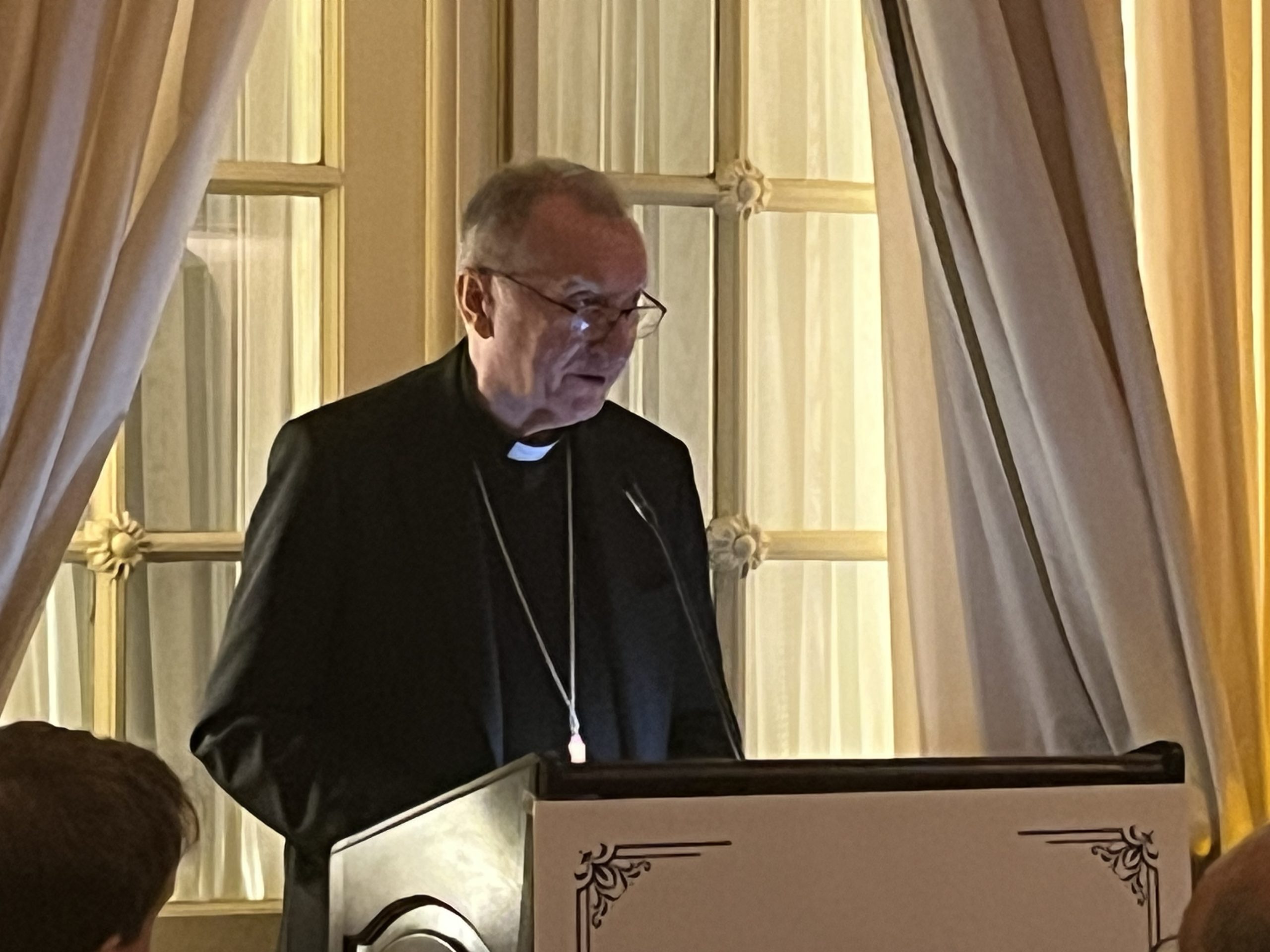
Washington Cardinal Robert McElroy was the principal celebrant of the Mass, and Archbishop Timothy Broglio of the Archdiocese for the Military Services, USA, offered the homily.
Read More
Vatican secretary of state says world’s fragmentation starts with forgetting what a human person is #Catholic NEW YORK — The root of today’s fragmented world is not technology, excess freedom, or diversity but the loss of a common understanding of who the human person is, Vatican Secretary of State Cardinal Pietro Parolin said at a New York dinner that took place during the United Nations General Assembly’s High-level Week.Parolin spoke Sept. 25 as an honoree of CAPP-USA, the U.S. arm of the Fondazione Centesimus Annus Pro Pontifice, a Vatican foundation that promotes Catholic social teaching and was established by St. John Paul II in 1993.Among those present at the event were the U.S. Ambassador to the United Nations (U.N.) Mike Waltz, Knights of Columbus Supreme Knight Patrick Kelly, and the Holy See’s permanent observer to the U.N., Archbishop Christophe-Zakhia El-Kassis, who delivered the evening’s benediction.Parolin said: “In the light of the Gospel, each generation must read the signs of its own times.”Citing Pope Leo XIV’s encyclical Magnifica Humanitas, Parolin said modern technology is not humanity’s enemy but that dignity belongs to people, not systems or algorithms. He also recalled Rerum Novarum, the encyclical Pope Leo XIII penned in 1891 as the Church’s response to the industrial revolution and which laid the foundation for Catholic social teaching.“In a world that builds towers, build places of encounter,” Parolin challenged his listeners. “In a world connected online and disconnected offline, be people of presence. In a world asking whether we can remain human, answer with the witness of your lives.”He told attendees the foundation matters because its members are meant to be “bridge builders between the encyclicals … and the decisions made in daily life.”Fragmentation and lonelinessParolin said people “are more connected than any generation in history, and yet many of us are lonelier than ever.” Exchanging information instantly but struggling to encounter one another as human beings has led to fragmentation, he said, and families, communities, and nations are “divided into camps that no longer even speak the same language.”He noted Pope Leo’s description of this moment in the opening lines of Magnifica Humanitas, saying: “We can either construct a new tower of Babel or build the city in which God and humanity dwell together.”‘A fragmented world is a searching world’Regarding the spiritual hunger many modern people are feeling, he said restlessness, especially among the young, is evidence that our hearts are made for God and cannot rest until we rest in him, citing St. Augustine.“A fragmented world is also a searching world,” he noted.“The human person is not self-made, but receives; he is a being created for relationship,” he said. “Leo expressed the hope that the world will come to recognize the human heart is the place where God desires to dwell.”The Church’s social doctrine is “itself an expression of the spiritual life,” Parolin said, and results in a faith that becomes real “concern for the worker, the family, the poor, and the seeking of the common good.”Freedom and pluralism not to blame, Parolin saysOn freedom and pluralism, he rejected blaming “too much freedom” or “too many voices.” The Church defends “freedom as a gift inseparable from human dignity,” he said, noting the Second Vatican Council’s teaching on “religious freedom as a right found in the very nature of the human person.” But, he said, “freedom detached from truth and responsibility for others turns against itself.” Freedom, in the Christian vision, “is not the capacity to choose anything whatsoever. It is the capacity to choose the good.”Authentic pluralism, he said, rests on dignity, the common good, solidarity, and subsidiarity. “We should respect the family, communities, and institutions through which people flourish,” he urged.The next day, Sept. 26, Parolin addressed the opening of the 81st U.N. General Assembly, whose theme is “Restoring Trust, Managing Transformation: A United Nations That Delivers for All.”

Vatican secretary of state says world’s fragmentation starts with forgetting what a human person is #Catholic NEW YORK — The root of today’s fragmented world is not technology, excess freedom, or diversity but the loss of a common understanding of who the human person is, Vatican Secretary of State Cardinal Pietro Parolin said at a New York dinner that took place during the United Nations General Assembly’s High-level Week.Parolin spoke Sept. 25 as an honoree of CAPP-USA, the U.S. arm of the Fondazione Centesimus Annus Pro Pontifice, a Vatican foundation that promotes Catholic social teaching and was established by St. John Paul II in 1993.Among those present at the event were the U.S. Ambassador to the United Nations (U.N.) Mike Waltz, Knights of Columbus Supreme Knight Patrick Kelly, and the Holy See’s permanent observer to the U.N., Archbishop Christophe-Zakhia El-Kassis, who delivered the evening’s benediction.Parolin said: “In the light of the Gospel, each generation must read the signs of its own times.”Citing Pope Leo XIV’s encyclical Magnifica Humanitas, Parolin said modern technology is not humanity’s enemy but that dignity belongs to people, not systems or algorithms. He also recalled Rerum Novarum, the encyclical Pope Leo XIII penned in 1891 as the Church’s response to the industrial revolution and which laid the foundation for Catholic social teaching.“In a world that builds towers, build places of encounter,” Parolin challenged his listeners. “In a world connected online and disconnected offline, be people of presence. In a world asking whether we can remain human, answer with the witness of your lives.”He told attendees the foundation matters because its members are meant to be “bridge builders between the encyclicals … and the decisions made in daily life.”Fragmentation and lonelinessParolin said people “are more connected than any generation in history, and yet many of us are lonelier than ever.” Exchanging information instantly but struggling to encounter one another as human beings has led to fragmentation, he said, and families, communities, and nations are “divided into camps that no longer even speak the same language.”He noted Pope Leo’s description of this moment in the opening lines of Magnifica Humanitas, saying: “We can either construct a new tower of Babel or build the city in which God and humanity dwell together.”‘A fragmented world is a searching world’Regarding the spiritual hunger many modern people are feeling, he said restlessness, especially among the young, is evidence that our hearts are made for God and cannot rest until we rest in him, citing St. Augustine.“A fragmented world is also a searching world,” he noted.“The human person is not self-made, but receives; he is a being created for relationship,” he said. “Leo expressed the hope that the world will come to recognize the human heart is the place where God desires to dwell.”The Church’s social doctrine is “itself an expression of the spiritual life,” Parolin said, and results in a faith that becomes real “concern for the worker, the family, the poor, and the seeking of the common good.”Freedom and pluralism not to blame, Parolin saysOn freedom and pluralism, he rejected blaming “too much freedom” or “too many voices.” The Church defends “freedom as a gift inseparable from human dignity,” he said, noting the Second Vatican Council’s teaching on “religious freedom as a right found in the very nature of the human person.” But, he said, “freedom detached from truth and responsibility for others turns against itself.” Freedom, in the Christian vision, “is not the capacity to choose anything whatsoever. It is the capacity to choose the good.”Authentic pluralism, he said, rests on dignity, the common good, solidarity, and subsidiarity. “We should respect the family, communities, and institutions through which people flourish,” he urged.The next day, Sept. 26, Parolin addressed the opening of the 81st U.N. General Assembly, whose theme is “Restoring Trust, Managing Transformation: A United Nations That Delivers for All.”

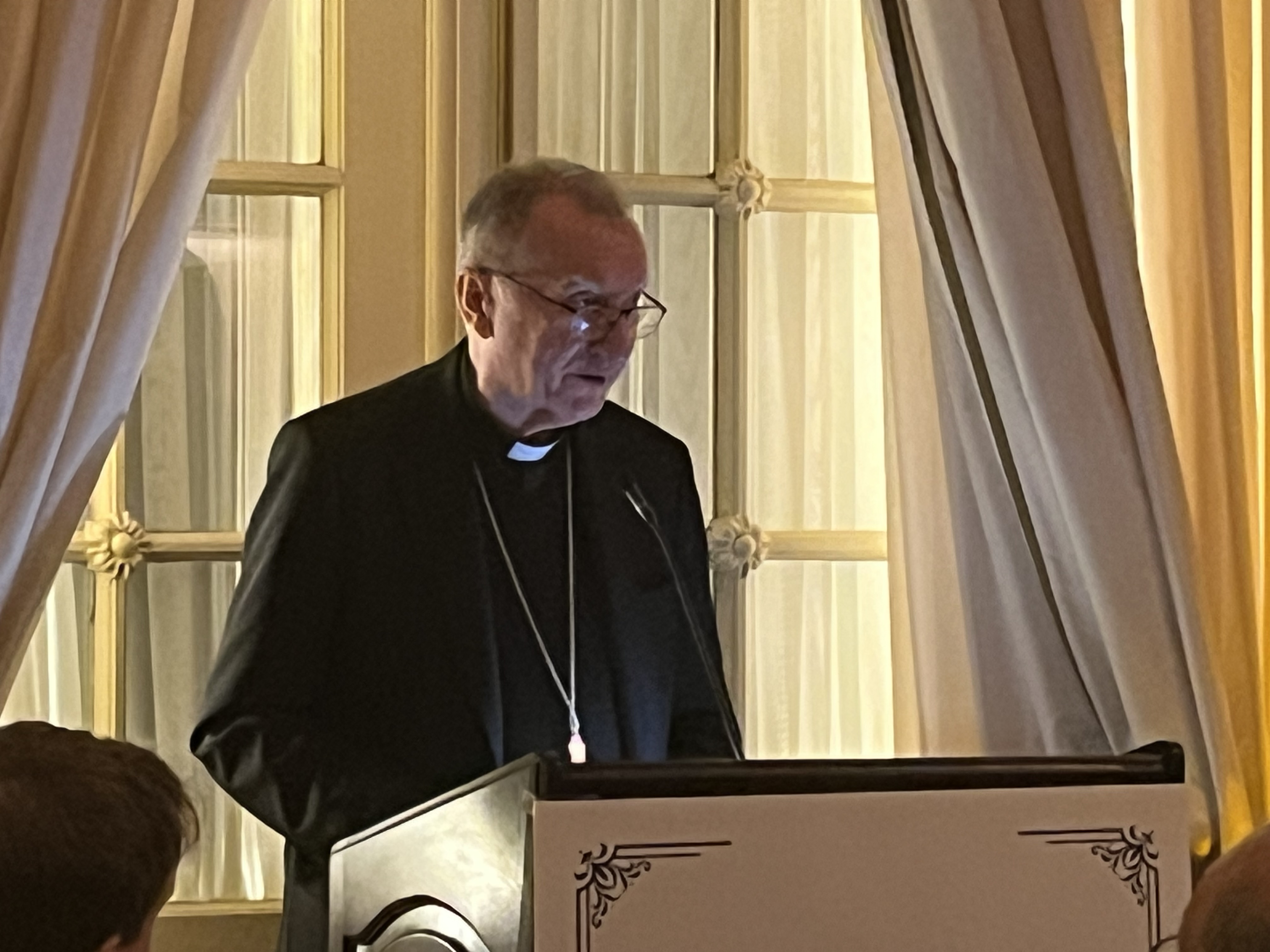
“In a world connected online and disconnected offline, be people of presence,” Cardinal Pietro Parolin said. “In a world asking whether we can remain human, answer with the witness of your lives.”
Read More
Picture of the day


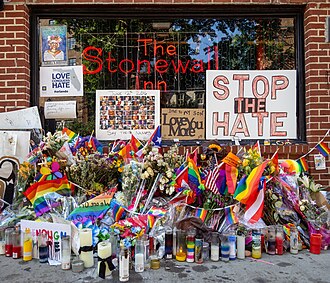
A memorial to victims of the Pulse nightclub shooting in front the Stonewall Inn in New York City. On June 12, 2016, a terrorist shot and killed 49 people and wounded 53 more in a mass shooting at Pulse, a gay nightclub in Orlando, Florida, USA.
 #ImageOfTheDay
Picture of the day
A memorial to victims of the Pulse nightclub shooting in front the Stonewall Inn in New York City. On June 12, 2016, a terrorist shot and killed 49 people and wounded 53 more in a mass shooting at Pulse, a gay nightclub in Orlando, Florida, USA.
Read More