Virgin Mary

Melkite priest finds consecrated host intact after 47 days in damaged church #Catholic Amid widespread destruction and amid the rubble in the southern Lebanese village of Tbenine, what some call a “miracle” in St. George Church offered renewed hope and reminded parishioners that Christ’s presence does not fade, even in war.Melkite Greek Catholic priest Father Marios Khairallah told ACI MENA, the Arabic-language sister service of EWTN News, that he returned to the Lebanese town of Tbenine on April 17 following the ceasefire that had come into effect. Entering the church, surrounded by shattered glass, he found the consecrated bread exactly where he had left it weeks earlier — unchanged despite the absence of people for 47 days. He described the discovery as a confirmation of God’s enduring presence amid suffering.“After 47 days, there is no scientific explanation for why the bread did not spoil,” Khairallah said. “But for us, this is not strange, because we believe this is the body of Christ. This is our faith, it is neither new nor unfamiliar. We believe in God’s presence in the Eucharist.”
 
 A Melkite priest returned to his church damaged in an attack in southern Lebanon to find the Eucharistic bread unchanged after 47 days. | Credit: Photo courtesy of Father Marios Khairallah
 
 He said the story was a “message of hope for the parish,” adding: “It is true that there is destruction in Tbenine. But there is also an encounter with Jesus… Jesus waited for us for 47 days, without human presence.”Khairallah also noted that a statue of the Virgin Mary remained standing amid the devastation, describing her as “the mother who awaits her children.”Khairallah also spoke about the situation of residents, noting that the town is home to around 55 Melkite Catholic families who were forced to leave due to the war. After the ceasefire, some returned temporarily to retrieve clothes and belongings, while most are now staying with relatives, in rented apartments, schools, monasteries, or with friends.The priest pointed out that aid remains almost nonexistent so far, except for assistance that arrived through a papal mission, while some individuals have helped provide medication.
 
 Melkite Greek Catholic priest Father Marios Khairallah told ACI MENA that he found the Eucharistic bread intact after 47 days in the damaged parish. | Credit: Photo courtesy of Father Marios Khairallah
 
 He also praised the role of the apostolic nuncio to Lebanon, Archbishop Paolo Borgia, describing him as “a true shepherd and father who cares for everyone” and noting that “he does what no one else does, visiting us even under shelling.”As for the town itself, he said it suffers from an almost complete lack of basic necessities: no water, no electricity, and no internet, along with harsh cold that worsens the already difficult conditions. He explained that most of Tbenine’s residents are of limited means: retirees, teachers, soldiers, and farmers with no affluent class able to absorb the impact of the crisis. This story was first published by ACI MENA, the Arabic-language sister service of EWTN News, and has been translated and adapted by EWTN News English.

Melkite priest finds consecrated host intact after 47 days in damaged church #Catholic Amid widespread destruction and amid the rubble in the southern Lebanese village of Tbenine, what some call a “miracle” in St. George Church offered renewed hope and reminded parishioners that Christ’s presence does not fade, even in war.Melkite Greek Catholic priest Father Marios Khairallah told ACI MENA, the Arabic-language sister service of EWTN News, that he returned to the Lebanese town of Tbenine on April 17 following the ceasefire that had come into effect. Entering the church, surrounded by shattered glass, he found the consecrated bread exactly where he had left it weeks earlier — unchanged despite the absence of people for 47 days. He described the discovery as a confirmation of God’s enduring presence amid suffering.“After 47 days, there is no scientific explanation for why the bread did not spoil,” Khairallah said. “But for us, this is not strange, because we believe this is the body of Christ. This is our faith, it is neither new nor unfamiliar. We believe in God’s presence in the Eucharist.” A Melkite priest returned to his church damaged in an attack in southern Lebanon to find the Eucharistic bread unchanged after 47 days. | Credit: Photo courtesy of Father Marios Khairallah He said the story was a “message of hope for the parish,” adding: “It is true that there is destruction in Tbenine. But there is also an encounter with Jesus… Jesus waited for us for 47 days, without human presence.”Khairallah also noted that a statue of the Virgin Mary remained standing amid the devastation, describing her as “the mother who awaits her children.”Khairallah also spoke about the situation of residents, noting that the town is home to around 55 Melkite Catholic families who were forced to leave due to the war. After the ceasefire, some returned temporarily to retrieve clothes and belongings, while most are now staying with relatives, in rented apartments, schools, monasteries, or with friends.The priest pointed out that aid remains almost nonexistent so far, except for assistance that arrived through a papal mission, while some individuals have helped provide medication. Melkite Greek Catholic priest Father Marios Khairallah told ACI MENA that he found the Eucharistic bread intact after 47 days in the damaged parish. | Credit: Photo courtesy of Father Marios Khairallah He also praised the role of the apostolic nuncio to Lebanon, Archbishop Paolo Borgia, describing him as “a true shepherd and father who cares for everyone” and noting that “he does what no one else does, visiting us even under shelling.”As for the town itself, he said it suffers from an almost complete lack of basic necessities: no water, no electricity, and no internet, along with harsh cold that worsens the already difficult conditions. He explained that most of Tbenine’s residents are of limited means: retirees, teachers, soldiers, and farmers with no affluent class able to absorb the impact of the crisis. This story was first published by ACI MENA, the Arabic-language sister service of EWTN News, and has been translated and adapted by EWTN News English.

“Jesus was waiting for us,” a priest in southern Lebanon said after returning to his damaged church in the town of Tbenine following the ceasefire on April 17.

Read More
Pope Leo XIV: Eucharist is ‘indispensable for Christian life’ #Catholic “The Sunday Eucharist is indispensable for Christian life,” said Pope Leo XIV before reciting the Marian prayer of the Regina Caeli on April 12 in St. Peterʼs Square. Speaking to crowds gathered in the square, the pope noted his upcoming departure for Africa, where “some martyrs of the early African Church, the Martyrs of Abitene, have left us a beautiful testimony in this regard." "Faced with the offer to save their lives on the condition that they renounce celebrating the Eucharist, they replied that they could not live without celebrating the Lord’s Day. It is there that our faith is nourished and grows,” the Holy Father said. “Because it is through the Eucharist that even our hands become ‘hands of the Risen One,’ witnesses of his presence, of his mercy, and of his peace, in the signs of work, of sacrifices, of illness, and of the passing of the years, which are often engraved upon them — just as in the tenderness of a caress, a handshake, or a gesture of charity," he said. In his commentary on the April 12 Gospel for the second Sunday of Easter — dedicated by Pope John Paul II to Divine Mercy — the pope spoke about the faithfulʼs encounter with Jesus: “Where can we find him? How can we recognize him? How can we believe?”“Certainly, it is not always easy to believe. It was not easy for Thomas, and it is not easy for us either. Faith needs to be nourished and supported. For this reason, on the ‘eighth day,’ that is, every Sunday, the Church invites us to do as the first disciples did: to gather together and celebrate the Eucharist as one," he said.The pope concluded: “In a world that is in such great need of peace, this commits us more than ever to be assiduous and faithful in our Eucharistic encounter with the Risen Lord, so that we may depart from it as witnesses of charity and bearers of reconciliation." “May the Virgin Mary help us to do this — she who is blessed because she was the first to believe without seeing,” he said. After the prayer, Pope Leo XIV returned to the theme of peace. Recalling the Easter celebration of the Orthodox Churches, he said: “I accompany those communities with even more intense prayer for all those who suffer because of the war, in particular for the dear people of Ukraine.”“May the light of Christ bring comfort to afflicted hearts and strengthen the hope of peace. May the attention of the international community toward the drama of this war not diminish. I am also more than ever close to the beloved people of Lebanon in these days of sorrow, fear, and invincible hope in God.”“The principle of humanity, inscribed in the conscience of every person and recognized in international law, entails the moral obligation to protect the civilian population from the atrocious effects of war. I appeal to the conflicting parties to cease fire and to urgently seek a peaceful solution," he said. Next Wednesday marks three years since the beginning of the bloody conflict in Sudan. “How much the Sudanese people are suffering — innocent victims of this inhuman tragedy!“ the pope said. ”I renew my heartfelt appeal to the warring parties to silence the weapons and to begin, without preconditions, a sincere dialogue aimed at ending as soon as possible this fratricidal war.”The pope then greeted everyone: “I extend a warm welcome to all of you, Romans and pilgrims, especially to the faithful who have celebrated Divine Mercy Sunday at the Shrine of Santo Spirito in Sassia.”This story was first published by ACI Stampa, the Italian-language sister service of EWTN News. It has been translated and adapted by EWTN News English.

Pope Leo XIV: Eucharist is ‘indispensable for Christian life’ #Catholic “The Sunday Eucharist is indispensable for Christian life,” said Pope Leo XIV before reciting the Marian prayer of the Regina Caeli on April 12 in St. Peterʼs Square. Speaking to crowds gathered in the square, the pope noted his upcoming departure for Africa, where “some martyrs of the early African Church, the Martyrs of Abitene, have left us a beautiful testimony in this regard." "Faced with the offer to save their lives on the condition that they renounce celebrating the Eucharist, they replied that they could not live without celebrating the Lord’s Day. It is there that our faith is nourished and grows,” the Holy Father said. “Because it is through the Eucharist that even our hands become ‘hands of the Risen One,’ witnesses of his presence, of his mercy, and of his peace, in the signs of work, of sacrifices, of illness, and of the passing of the years, which are often engraved upon them — just as in the tenderness of a caress, a handshake, or a gesture of charity," he said. In his commentary on the April 12 Gospel for the second Sunday of Easter — dedicated by Pope John Paul II to Divine Mercy — the pope spoke about the faithfulʼs encounter with Jesus: “Where can we find him? How can we recognize him? How can we believe?”“Certainly, it is not always easy to believe. It was not easy for Thomas, and it is not easy for us either. Faith needs to be nourished and supported. For this reason, on the ‘eighth day,’ that is, every Sunday, the Church invites us to do as the first disciples did: to gather together and celebrate the Eucharist as one," he said.The pope concluded: “In a world that is in such great need of peace, this commits us more than ever to be assiduous and faithful in our Eucharistic encounter with the Risen Lord, so that we may depart from it as witnesses of charity and bearers of reconciliation." “May the Virgin Mary help us to do this — she who is blessed because she was the first to believe without seeing,” he said. After the prayer, Pope Leo XIV returned to the theme of peace. Recalling the Easter celebration of the Orthodox Churches, he said: “I accompany those communities with even more intense prayer for all those who suffer because of the war, in particular for the dear people of Ukraine.”“May the light of Christ bring comfort to afflicted hearts and strengthen the hope of peace. May the attention of the international community toward the drama of this war not diminish. I am also more than ever close to the beloved people of Lebanon in these days of sorrow, fear, and invincible hope in God.”“The principle of humanity, inscribed in the conscience of every person and recognized in international law, entails the moral obligation to protect the civilian population from the atrocious effects of war. I appeal to the conflicting parties to cease fire and to urgently seek a peaceful solution," he said. Next Wednesday marks three years since the beginning of the bloody conflict in Sudan. “How much the Sudanese people are suffering — innocent victims of this inhuman tragedy!“ the pope said. ”I renew my heartfelt appeal to the warring parties to silence the weapons and to begin, without preconditions, a sincere dialogue aimed at ending as soon as possible this fratricidal war.”The pope then greeted everyone: “I extend a warm welcome to all of you, Romans and pilgrims, especially to the faithful who have celebrated Divine Mercy Sunday at the Shrine of Santo Spirito in Sassia.”This story was first published by ACI Stampa, the Italian-language sister service of EWTN News. It has been translated and adapted by EWTN News English.

“It is through the Eucharist that even our hands become ‘hands of the Risen One’,” the pope said.

Read More
On Easter Monday, Pope Leo XIV remembers those ‘tormented’ by war: ‘The truth does not remain hidden’ #Catholic On his first Easter Monday as pope, Leo XIV appeared at the window of the Apostolic Palace under bright sunshine and clear skies to lead the Regina Caeli with thousands of pilgrims gathered in St. Peter’s Square.“Dear brothers and sisters, Christ is risen! Happy Easter!“ he exclaimed. “This greeting, full of wonder and joy, will accompany us throughout the week. As we celebrate this new day that the Lord has made for us, the liturgy celebrates the entrance of all creation into the time of salvation: The despair of death has been banished forever, in the name of Jesus.”He continued: “Today’s Gospel asks us to choose between two accounts: that of the women, who encountered the Risen One, or that of the guards, who were bribed by the leaders of the Sanhedrin.” The women proclaim “the victory of Christ over death,” while the guards “proclaim that death always wins, no matter what,” the pope said, illustrating two opposing versions of the same event. In the guards’ version, Christ did not rise, “but his body was stolen,” the pope recalled. From this comes the fact that “from the same event — the empty tomb — two interpretations spring forth: One is a source of new and eternal life, the other of certain and definitive death,” he explained.This contrast “makes us reflect on the value of Christian witness and the honesty of human communication. Often, in fact, the telling of the truth is obscured by what we today call fake news — that is, lies, insinuations, and baseless accusations. Yet in the face of such obstacles, the truth does not remain hidden; on the contrary, it comes to meet us, alive and radiant, illuminating even the densest darkness,” he continued.Christ is the good news to be proclaimed to the world, he said: “The Lord’s passover is our passover, the passover of humanity, because this man, who died for us, is the Son of God, who gave his life for us.”Leo then turned his thoughts to “peoples tormented by war, to Christians persecuted for their faith, and to children deprived of education. To announce the passover of Christ in words and deeds means giving new voice to hope, otherwise stifled by the hands of the violent.”Finally, he remembered Pope Francis, “who exactly one year ago, on Easter Monday, entrusted his life to the Lord. As we recall his great witness of faith and love, let us pray together to the Virgin Mary, Seat of Wisdom, so that we may become ever brighter heralds of the truth.”After reciting the Marian prayer, Pope Leo XIV added a few more words: “I thank the initiatives promoted for the International Day of Sport for Development and Peace, and I renew the appeal that sport, with its universal language of fraternity, may be a place of inclusion and peace. I thank all those who in these days have sent me Easter greetings. I am especially grateful for the prayers. Through the intercession of the Virgin Mary, may God reward each one with his gifts.” He concluded: “I wish you a joyful and faithful celebration of this Easter Monday and these days of the Octave of Easter, during which the celebration of Christ’s resurrection continues. Let us persevere in invoking the gift of peace for the whole world.”This story was first published by ACI Stampa, the Italian-language sister service of EWTN News. It has been translated and adapted by EWTN News English.

On Easter Monday, Pope Leo XIV remembers those ‘tormented’ by war: ‘The truth does not remain hidden’ #Catholic On his first Easter Monday as pope, Leo XIV appeared at the window of the Apostolic Palace under bright sunshine and clear skies to lead the Regina Caeli with thousands of pilgrims gathered in St. Peter’s Square.“Dear brothers and sisters, Christ is risen! Happy Easter!“ he exclaimed. “This greeting, full of wonder and joy, will accompany us throughout the week. As we celebrate this new day that the Lord has made for us, the liturgy celebrates the entrance of all creation into the time of salvation: The despair of death has been banished forever, in the name of Jesus.”He continued: “Today’s Gospel asks us to choose between two accounts: that of the women, who encountered the Risen One, or that of the guards, who were bribed by the leaders of the Sanhedrin.” The women proclaim “the victory of Christ over death,” while the guards “proclaim that death always wins, no matter what,” the pope said, illustrating two opposing versions of the same event. In the guards’ version, Christ did not rise, “but his body was stolen,” the pope recalled. From this comes the fact that “from the same event — the empty tomb — two interpretations spring forth: One is a source of new and eternal life, the other of certain and definitive death,” he explained.This contrast “makes us reflect on the value of Christian witness and the honesty of human communication. Often, in fact, the telling of the truth is obscured by what we today call fake news — that is, lies, insinuations, and baseless accusations. Yet in the face of such obstacles, the truth does not remain hidden; on the contrary, it comes to meet us, alive and radiant, illuminating even the densest darkness,” he continued.Christ is the good news to be proclaimed to the world, he said: “The Lord’s passover is our passover, the passover of humanity, because this man, who died for us, is the Son of God, who gave his life for us.”Leo then turned his thoughts to “peoples tormented by war, to Christians persecuted for their faith, and to children deprived of education. To announce the passover of Christ in words and deeds means giving new voice to hope, otherwise stifled by the hands of the violent.”Finally, he remembered Pope Francis, “who exactly one year ago, on Easter Monday, entrusted his life to the Lord. As we recall his great witness of faith and love, let us pray together to the Virgin Mary, Seat of Wisdom, so that we may become ever brighter heralds of the truth.”After reciting the Marian prayer, Pope Leo XIV added a few more words: “I thank the initiatives promoted for the International Day of Sport for Development and Peace, and I renew the appeal that sport, with its universal language of fraternity, may be a place of inclusion and peace. I thank all those who in these days have sent me Easter greetings. I am especially grateful for the prayers. Through the intercession of the Virgin Mary, may God reward each one with his gifts.” He concluded: “I wish you a joyful and faithful celebration of this Easter Monday and these days of the Octave of Easter, during which the celebration of Christ’s resurrection continues. Let us persevere in invoking the gift of peace for the whole world.”This story was first published by ACI Stampa, the Italian-language sister service of EWTN News. It has been translated and adapted by EWTN News English.

Upon the recitation of the Regina Caeli, the pope also remembered Pope Francis, who died a year ago on Easter Monday.

Read More
Pope Leo XIV says God ‘does not listen’ to prayers of those who wage war #Catholic Pope Leo XIV on Palm Sunday sharply condemned war and the use of religion to justify violence, saying during Mass in St. Peter’s Square that God “does not listen to the prayers of those who wage war.”At the start of Holy Week, the pope tied the Church’s contemplation of Christ’s Passion to the suffering of people caught in today’s conflicts, especially Christians in the Middle East.In his Palm Sunday homily, Leo repeatedly presented Christ as the “King of Peace,” contrasting Jesus’ meekness with the violence surrounding him as he entered into his Passion.“We turn our gaze to Jesus, who reveals himself as King of Peace, even as war looms abounds him,” the pope said. “He remains steadfast in meekness, while others are stirring up violence.”Leo said Christ “did not arm himself, or defend himself, or fight any war” but instead “revealed the gentle face of God, who always rejects violence.”“Rather than saving himself, he allowed himself to be nailed to the cross, embracing every cross borne in every time and place throughout human history,” the pope said.The pope then issued one of the strongest lines of his homily, rejecting any attempt to invoke God in support of armed conflict.“Brothers and sisters, this is our God: Jesus, King of Peace, who rejects war, whom no one can use to justify war,” Leo said. “He does not listen to the prayers of those who wage war, but rejects them, saying: ‘Even though you make many prayers, I will not listen: your hands are full of blood.’”The Palm Sunday liturgy, which opened Holy Week, began with the traditional procession in St. Peter’s Square with cardinals, bishops, priests, religious, and thousands of faithful carrying palms and olive branches.In his homily, Leo reflected on Jesus’ entry into Jerusalem on a donkey rather than a war horse, saying the moment fulfilled the prophecy of a king who would “command peace to the nations.”Recalling the Gospel account of Peter drawing a sword to defend Jesus, Leo cited Christ’s rebuke: “Put your sword back into its place, for all who take the sword will perish by the sword.”The pope said that in the crucified Christ “we can see a crucified humanity.”“In his wounds, we see the hurts of so many women and men today,” he said. “Above all, we hear the painful groans of all those who are oppressed by violence and are victims of war.”“Christ, King of Peace, cries out again from his cross: God is love! Have mercy! Lay down your weapons! Remember that you are brothers and sisters!”Following the Mass, Leo returned to the theme of war during the Angelus, praying in particular for Christians in the Middle East who have been prevented in some places from fully taking part in Holy Week rites.“At the beginning of Holy Week, our prayers are more than ever with the Christians of the Middle East, who are suffering the consequences of a brutal conflict and, in many cases, are unable to observe fully the liturgies of these holy days,” he said.“Just as the Church contemplates the mystery of the Lord’s Passion, we cannot forget those who today are truly sharing in his suffering. Their ordeal challenges all our consciences.”The pope added: “Let us raise our prayer to the Prince of Peace that he may sustain the peoples wounded by war and open concrete paths to reconciliation and peace.”Leo also remembered “the maritime workers who have fallen victim to the conflict,” adding: “I pray for the deceased, the wounded and their families. Land, sky and sea were all created for life and peace!”He further called attention to migrants who died in the Mediterranean, saying: “Let us also pray for all the migrants who have died at sea, especially those who lost their lives in recent days off the coast of Crete.”Near the end of his homily, the pope entrusted his plea for peace to the intercession of Mary, quoting the Servant of God Bishop Tonino Bello and praying that “the tears of all the victims of violence and pain will soon be dried up.”He concluded the Angelus by asking the Virgin Mary to accompany the faithful through the days ahead.“May she guide us during these holy days, so that we may follow Jesus, our Savior, with faith and love,” he said.This story was first published in two parts by ACI Prensa, EWTN News’ Spanish-language news partner. It has been translated and adapted by EWTN News English.

Pope Leo XIV says God ‘does not listen’ to prayers of those who wage war #Catholic Pope Leo XIV on Palm Sunday sharply condemned war and the use of religion to justify violence, saying during Mass in St. Peter’s Square that God “does not listen to the prayers of those who wage war.”At the start of Holy Week, the pope tied the Church’s contemplation of Christ’s Passion to the suffering of people caught in today’s conflicts, especially Christians in the Middle East.In his Palm Sunday homily, Leo repeatedly presented Christ as the “King of Peace,” contrasting Jesus’ meekness with the violence surrounding him as he entered into his Passion.“We turn our gaze to Jesus, who reveals himself as King of Peace, even as war looms abounds him,” the pope said. “He remains steadfast in meekness, while others are stirring up violence.”Leo said Christ “did not arm himself, or defend himself, or fight any war” but instead “revealed the gentle face of God, who always rejects violence.”“Rather than saving himself, he allowed himself to be nailed to the cross, embracing every cross borne in every time and place throughout human history,” the pope said.The pope then issued one of the strongest lines of his homily, rejecting any attempt to invoke God in support of armed conflict.“Brothers and sisters, this is our God: Jesus, King of Peace, who rejects war, whom no one can use to justify war,” Leo said. “He does not listen to the prayers of those who wage war, but rejects them, saying: ‘Even though you make many prayers, I will not listen: your hands are full of blood.’”The Palm Sunday liturgy, which opened Holy Week, began with the traditional procession in St. Peter’s Square with cardinals, bishops, priests, religious, and thousands of faithful carrying palms and olive branches.In his homily, Leo reflected on Jesus’ entry into Jerusalem on a donkey rather than a war horse, saying the moment fulfilled the prophecy of a king who would “command peace to the nations.”Recalling the Gospel account of Peter drawing a sword to defend Jesus, Leo cited Christ’s rebuke: “Put your sword back into its place, for all who take the sword will perish by the sword.”The pope said that in the crucified Christ “we can see a crucified humanity.”“In his wounds, we see the hurts of so many women and men today,” he said. “Above all, we hear the painful groans of all those who are oppressed by violence and are victims of war.”“Christ, King of Peace, cries out again from his cross: God is love! Have mercy! Lay down your weapons! Remember that you are brothers and sisters!”Following the Mass, Leo returned to the theme of war during the Angelus, praying in particular for Christians in the Middle East who have been prevented in some places from fully taking part in Holy Week rites.“At the beginning of Holy Week, our prayers are more than ever with the Christians of the Middle East, who are suffering the consequences of a brutal conflict and, in many cases, are unable to observe fully the liturgies of these holy days,” he said.“Just as the Church contemplates the mystery of the Lord’s Passion, we cannot forget those who today are truly sharing in his suffering. Their ordeal challenges all our consciences.”The pope added: “Let us raise our prayer to the Prince of Peace that he may sustain the peoples wounded by war and open concrete paths to reconciliation and peace.”Leo also remembered “the maritime workers who have fallen victim to the conflict,” adding: “I pray for the deceased, the wounded and their families. Land, sky and sea were all created for life and peace!”He further called attention to migrants who died in the Mediterranean, saying: “Let us also pray for all the migrants who have died at sea, especially those who lost their lives in recent days off the coast of Crete.”Near the end of his homily, the pope entrusted his plea for peace to the intercession of Mary, quoting the Servant of God Bishop Tonino Bello and praying that “the tears of all the victims of violence and pain will soon be dried up.”He concluded the Angelus by asking the Virgin Mary to accompany the faithful through the days ahead.“May she guide us during these holy days, so that we may follow Jesus, our Savior, with faith and love,” he said.This story was first published in two parts by ACI Prensa, EWTN News’ Spanish-language news partner. It has been translated and adapted by EWTN News English.

At Palm Sunday Mass and the Angelus following it, the pope prayed for Middle East Christians, victims of war, and migrants who died at sea off Crete.

Read More
Pope decries war’s toll #Catholic Pope Leo XIV on Sunday voiced dismay over ongoing conflicts around the world, saying the suffering of innocent victims “hurts all of humanity” and urging an end to hostilities grounded in dialogue and respect for human dignity.“We cannot remain silent in the face of the suffering of so many defenseless people who are victims of these conflicts. What hurts them hurts all of humanity,” the pope said after praying the Angelus on March 22.“The death and pain caused by these wars is a scandal for the entire human family and a cry that rises to God,” he continued. “I strongly renew my appeal to persevere in prayer, so that hostilities may cease and paths to peace may finally open up, based on sincere dialogue and respect for the dignity of every human person.”Earlier, in his reflection before the Angelus, the pope focused on the Gospel account of the raising of Lazarus, describing it as a sign of Christ’s victory over death and the promise of eternal life received through baptism.“The account of the resurrection of Lazarus, then, invites us to listen to this profound need and, with the power of the Holy Spirit, to free our hearts from habits, conditioning, and ways of thinking which, like boulders, shut us away in the tomb of selfishness, materialism, violence, and superficiality,” he said.“In these places there is no life but only confusion, dissatisfaction, and loneliness.”Quoting Jesus’ command in the Gospel — “Come out!” — the pope said Christ calls believers to emerge from such “cramped spaces,” renewed by his grace, and to “walk in the light of love, as new women and men, capable of hoping and loving, without calculation and without measure, according to the model of his infinite charity.”He also warned that the world seems “to constantly search for novelty and change, even at the cost of sacrificing important things — time, energy, values, affections,” as though “fame, material goods, entertainment, and fleeting relationships could fill our hearts or make us immortal.”“It is a symptom of a longing for the infinite that each of us carries within us, a need that cannot be satisfied by passing things,” he said. “Nothing finite can quench our inner thirst, for we are made for God, and we find no peace until we rest in him.”The pope concluded by entrusting the faithful to the Virgin Mary, praying that the experience of encountering the risen Christ may be renewed in them each day.This story was first published by ACI Stampa, the Italian-language sister service of EWTN News. It has been translated and adapted by EWTN News English.

Pope decries war’s toll #Catholic Pope Leo XIV on Sunday voiced dismay over ongoing conflicts around the world, saying the suffering of innocent victims “hurts all of humanity” and urging an end to hostilities grounded in dialogue and respect for human dignity.“We cannot remain silent in the face of the suffering of so many defenseless people who are victims of these conflicts. What hurts them hurts all of humanity,” the pope said after praying the Angelus on March 22.“The death and pain caused by these wars is a scandal for the entire human family and a cry that rises to God,” he continued. “I strongly renew my appeal to persevere in prayer, so that hostilities may cease and paths to peace may finally open up, based on sincere dialogue and respect for the dignity of every human person.”Earlier, in his reflection before the Angelus, the pope focused on the Gospel account of the raising of Lazarus, describing it as a sign of Christ’s victory over death and the promise of eternal life received through baptism.“The account of the resurrection of Lazarus, then, invites us to listen to this profound need and, with the power of the Holy Spirit, to free our hearts from habits, conditioning, and ways of thinking which, like boulders, shut us away in the tomb of selfishness, materialism, violence, and superficiality,” he said.“In these places there is no life but only confusion, dissatisfaction, and loneliness.”Quoting Jesus’ command in the Gospel — “Come out!” — the pope said Christ calls believers to emerge from such “cramped spaces,” renewed by his grace, and to “walk in the light of love, as new women and men, capable of hoping and loving, without calculation and without measure, according to the model of his infinite charity.”He also warned that the world seems “to constantly search for novelty and change, even at the cost of sacrificing important things — time, energy, values, affections,” as though “fame, material goods, entertainment, and fleeting relationships could fill our hearts or make us immortal.”“It is a symptom of a longing for the infinite that each of us carries within us, a need that cannot be satisfied by passing things,” he said. “Nothing finite can quench our inner thirst, for we are made for God, and we find no peace until we rest in him.”The pope concluded by entrusting the faithful to the Virgin Mary, praying that the experience of encountering the risen Christ may be renewed in them each day.This story was first published by ACI Stampa, the Italian-language sister service of EWTN News. It has been translated and adapted by EWTN News English.

Pope Leo XIV says suffering of innocent victims “hurts all of humanity” as he calls for end to hostilities and renewed paths to peace.

Read More
Picture of the day


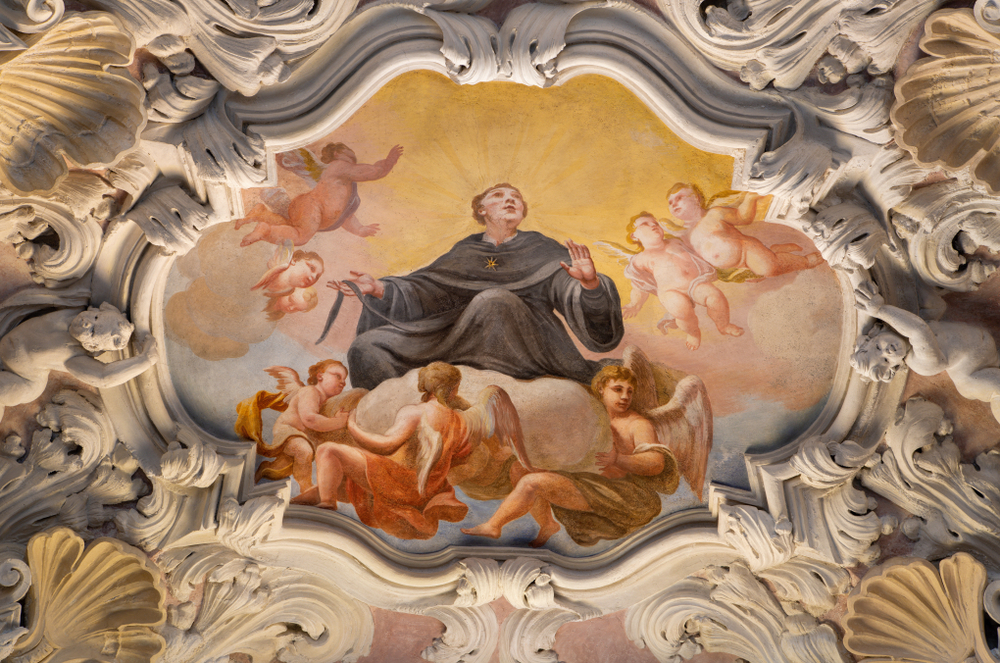
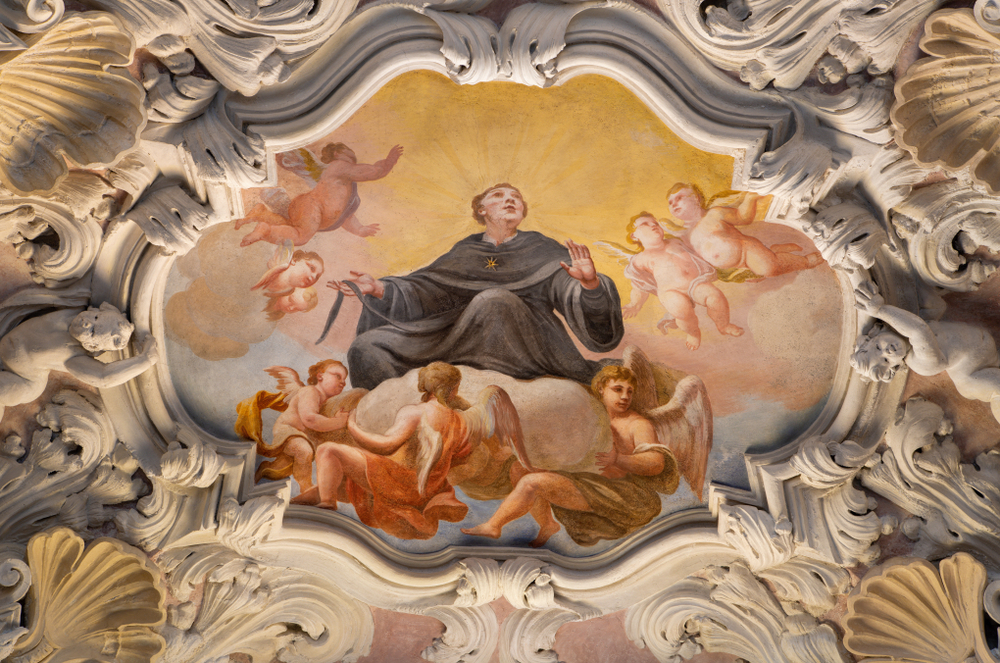
This painting on the ceiling in Santa Maria della Concezione dei Cappuccini, a church on Via Veneto in Rome, depicts the Virgin Mary being assumed body and soul into heaven. Today is the Feast of the Assumption of Mary in much of Western Christianity or the Dormition of the Mother of God in Eastern Christianity.
 #ImageOfTheDay
Picture of the day
This painting on the ceiling in Santa Maria della Concezione dei Cappuccini, a church on Via Veneto in Rome, depicts the Virgin Mary being assumed body and soul into heaven. Today is the Feast of the Assumption of Mary in much of Western Christianity or the Dormition of the Mother of God in Eastern Christianity.
Read More