
President Trump’s first address on the Iran war signaled continued military action, as Catholic leaders called for dialogue and a ceasefire.


President Trump’s first address on the Iran war signaled continued military action, as Catholic leaders called for dialogue and a ceasefire.


President Trump is scheduled to address the nation tonight with an update on the war in Iran, nearly five weeks into the conflict. As The Gateway Pundit reported, White House Press Secretary Karoline Leavitt announced on Tuesday that Trump would give an “important update on Iran.” This comes as Trump threatens to escalate the war amid the deployment of thousands of additional troops and weighs his options to end the war or deploy boots on the ground.
The post WATCH LIVE: President Trump Addresses the Nation With Important Update on Iran – 9 PM ET appeared first on The Gateway Pundit.
Read More


A federal judge has revoked the U.S.
The post Federal Judge STRIPS Citizenship from Chinese Couple Who Sold Out America to China appeared first on The Gateway Pundit.
Read More


A Democrat congressman has been left embarrassed after thinking he could get away with spreading propaganda in front of what he thought was a friendly audience.
The post WATCH: Democrat Congressman Tries to Scaremonger Church Attendees About Voter ID and It Blows Up in His Face appeared first on The Gateway Pundit.
Read More
Communities of faith prepare hearts for Christ’s resurrection Sunday #Catholic – ![]()
The 107 parishes of the Paterson Diocese in New Jersey are readying their faithful for Christ’s resurrection on Easter Sunday, April 4, with a traditional array of spiritual events and Mass to commemorate his passion, death, and resurrection during the Paschal Triduum, from Holy Thursday on April 1 to its triumphant culmination of Holy Week on April 4, Easter Sunday.
Typically, these parishes, including the Cathedral of St. John the Baptist in Paterson, N.J. — the mother church of the diocese — and various shrines, hold a full schedule of activities, starting with the Mass of the Lord’s Supper on Holy Thursday. Observances continue on Good Friday with Veneration of the Cross and/or Stations of the Cross, and again on Good Friday and on Holy Saturday with the Blessing of Food and the Easter Vigil. Celebrations conclude on Easter Sunday with Masses in various languages, celebrating Christ’s resurrection for the redemption of the world. See individual parish websites for schedules.
Additionally, many parishes of the diocese, including the cathedral, will hold special events and Masses during the Paschal Triduum. These include Living Stations of the Cross, Easter egg hunts, and Masses celebrated by visiting Bishop Kevin J. Sweeney. Check parish websites, social media, and The Beacon’s “What To Do Calendar.”
On Good Friday, the cathedral will hold Via Crucis (Way of the Cross), a popular street procession and reenactment of Christ’s passion, and a formal Good Friday service featuring solemn intercessions, and the Veneration of the Cross, starting outside on the streets at noon. St. John’s will also welcome Bishop Sweeney for a Passion of the Lord service that day at 3 p.m. and again on Holy Saturday for the Easter Vigil at 8 p.m.
St. Francis of Assisi Parish in the Haskell neighborhood of Wanaque, N.J., will hold a Living Station at 7 p.m. on Good Friday. St. Gerard Majella Parish in Paterson will present the Living Stations by students of its parish school at 7:30 p.m.
The Performing Arts Ministry at Notre Dame of Mount Carmel Parish in the Cedar Knolls neighborhood of Harding Township will present a Living Stations, including the 15th, at 8 p.m. on Good Friday. The multigenerational cast, narrators, and musicians tell the story of our Lord’s journey to the Cross.
In Randolph, N.J., Resurrection Parish will hold a Living Stations at 7 p.m. on Good Friday. The parish’s Easter Vigil on Holy Saturday, April 4, from 8 to 9:30 p.m., will include Blessing of the New Fire and procession into the church with the Paschal Candle. The liturgy continues with Night Watch of the Resurrection, Liturgy of the Word, Blessing of Easter Water, Celebration of the Sacraments of Initiation, and Liturgy of the Eucharist. On Easter Sunday, Bishop Sweeney will celebrate Mass at 11 a.m. in the church.
St. Jude Parish in Hardyston, N.J., will hold Seven Last Words, a service reflecting on the final seven sayings of Jesus Christ from the cross, central to Holy Week reflections, on Good Friday from 12 to 2 p.m. This will be followed by a Service of the Lord’s Passion at 3 p.m. and Adoration of the Cross and Stations of the Cross at 7 p.m.
On Easter Sunday, April 5, Holy Spirit Parish in Pequannock, N.J., will hold an Easter egg hunt for children and families on the parish school playground after the 10 a.m. family Mass, weather permitting. The rain date will be Sunday, April 12, after the 10 a.m. Mass. That day, St. Clare Parish in Clifton, N.J., will have an Easter egg hunt following the 11 a.m. Mass.
–
The 107 parishes of the Paterson Diocese in New Jersey are readying their faithful for Christ’s resurrection on Easter Sunday, April 4, with a traditional array of spiritual events and Mass to commemorate his passion, death, and resurrection during the Paschal Triduum, from Holy Thursday on April 1 to its triumphant culmination of Holy Week on April 4, Easter Sunday. Typically, these parishes, including the Cathedral of St. John the Baptist in Paterson, N.J. — the mother church of the diocese — and various shrines, hold a full schedule of activities, starting with the Mass of the Lord’s Supper on

EWTN News speaks with Jesuit Father Richard A. D’Souza, director of the Vatican Observatory since September 2025.

A reading from the Exodus
12:1-8, 11-14
The LORD said to Moses and Aaron in the land of Egypt,
“This month shall stand at the head of your calendar;
you shall reckon it the first month of the year.
Tell the whole community of Israel:
On the tenth of this month every one of your families
must procure for itself a lamb, one apiece for each household.
If a family is too small for a whole lamb,
it shall join the nearest household in procuring one
and shall share in the lamb
in proportion to the number of persons who partake of it.
The lamb must be a year-old male and without blemish.
You may take it from either the sheep or the goats.
You shall keep it until the fourteenth day of this month,
and then, with the whole assembly of Israel present,
it shall be slaughtered during the evening twilight.
They shall take some of its blood
and apply it to the two doorposts and the lintel
of every house in which they partake of the lamb.
That same night they shall eat its roasted flesh
with unleavened bread and bitter herbs.
“This is how you are to eat it:
with your loins girt, sandals on your feet and your staff in hand,
you shall eat like those who are in flight.
It is the Passover of the LORD.
For on this same night I will go through Egypt,
striking down every firstborn of the land, both man and beast,
and executing judgment on all the gods of Egypt—I, the LORD!
But the blood will mark the houses where you are.
Seeing the blood, I will pass over you;
thus, when I strike the land of Egypt,
no destructive blow will come upon you.
“This day shall be a memorial feast for you,
which all your generations shall celebrate
with pilgrimage to the LORD, as a perpetual institution.”
A reading from the Letter of St. Paul to the Corinthians
11:23-26
Brothers and sisters:
I received from the Lord what I also handed on to you,
that the Lord Jesus, on the night he was handed over,
took bread, and, after he had given thanks,
broke it and said, “This is my body that is for you.
Do this in remembrance of me.”
In the same way also the cup, after supper, saying,
“This cup is the new covenant in my blood.
Do this, as often as you drink it, in remembrance of me.”
For as often as you eat this bread and drink the cup,
you proclaim the death of the Lord until he comes.
From thw Gospel according to John
13:1-15
Before the feast of Passover, Jesus knew that his hour had come
to pass from this world to the Father.
He loved his own in the world and he loved them to the end.
The devil had already induced Judas, son of Simon the Iscariot, to hand him over.
So, during supper,
fully aware that the Father had put everything into his power
and that he had come from God and was returning to God,
he rose from supper and took off his outer garments.
He took a towel and tied it around his waist.
Then he poured water into a basin
and began to wash the disciples’ feet
and dry them with the towel around his waist.
He came to Simon Peter, who said to him,
“Master, are you going to wash my feet?”
Jesus answered and said to him,
“What I am doing, you do not understand now,
but you will understand later.”
Peter said to him, “You will never wash my feet.”
Jesus answered him,
“Unless I wash you, you will have no inheritance with me.”
Simon Peter said to him,
“Master, then not only my feet, but my hands and head as well.”
Jesus said to him,
“Whoever has bathed has no need except to have his feet washed,
for he is clean all over;
so you are clean, but not all.”
For he knew who would betray him;
for this reason, he said, “Not all of you are clean.”
So when he had washed their feet
and put his garments back on and reclined at table again,
he said to them, “Do you realize what I have done for you?
You call me ‘teacher’ and ‘master,’ and rightly so, for indeed I am.
If I, therefore, the master and teacher, have washed your feet,
you ought to wash one another’s feet.
I have given you a model to follow,
so that as I have done for you, you should also do.”
Let us listen once more to the words of Jesus: the leaders of this world build empires with power and money (cf. Mt 20:25; Mk 10:42), “but not so with you” (Lk 22:26). This is not how God acts: the Master has no throne, but girds himself with a towel and kneels at the feet of each one of us. His empire is the small space required to wash the feet of his friends and care for them. It is also an invitation to adopt a different perspective, to look at the world from a lower position: through the eyes of those who suffer rather than the mighty; to view history through the eyes of the little ones, rather than through the perspective of the powerful; to interpret the events of history from the viewpoint of the widow, the orphan, the stranger, the wounded child, the exile and the fugitive; to see things through the eyes of the shipwrecked and of the poor man Lazarus lying at the rich man’s doorstep. Otherwise, nothing will ever change, and a new era, a kingdom of justice and peace, will never dawn. This is precisely what Mary does in the Canticle of the Magnificat when she considers the points at which humanity is broken and the world becomes distorted: the contrast between the humble and the powerful, the poor and the rich, the satiated and the hungry. She chooses the little ones; she stands with the least powerful in history, to teach us to imagine and to dream together with her of a new heavens and a new earth. (Pope Leo XIV – Prayer Vigil and Rosary for Peace, 11 October 2025)
Read More![Supreme Court grills both sides in ‘birthright citizenship’ oral arguments - #Catholic - The U.S. Supreme Court on Wednesday considered whether President Donald Trump’s executive order denying citizenship to children of parents without legal immigration status complies with the Constitution.Trump signed an executive order on his first day in office to block children from automatically receiving citizenship if their parents were residing in the country unlawfully during the birth. It immediately faced legal challenges, based on the 14th Amendment of the U.S. Constitution, ratified in 1868, which established birthright citizenship.The amendment guarantees citizenship to any person born in the country and “subject to the jurisdiction thereof.” The April 1 arguments, which Trump attended, focused on the meaning of the latter phrase and on Supreme Court precedent in the 1898 decision in the U.S. v. Wong Kim Ark case.In February, the U.S. Conference of Catholic Bishops (USCCB) petitioned the Supreme Court to consider the moral implications of Trump’s order, saying it will determine “whether the law will protect the human dignity of all God’s children.”Andrew Arthur, resident fellow in law and policy at the Center for Immigration Studies and a former immigration judge, told “EWTN News Nightly” those questions “weren’t really relevant” to the legal debate in court, which instead focused on the proper interpretation of the amendment and precedent.The bishops’ objections were “heavy on morality, on human dignity, but rather light on the law itself,” he said.Justices question Trump’s authoritySolicitor General D. John Sauer, who defended the government, noted the motivation for the 14th Amendment was to guarantee citizenship to “the newly freed slaves and their children” after the abolition of slavery.He argued that the text is meant to protect those who are “domiciled” in the country, which he defined as those with a “lawful presence with the intent to remain.” He said the “domicile of the child follows the domicile of the parents,” and those who are meant to be temporarily present or not allowed to be present are “not covered by the clause.”Sauer referenced the Wong Kim Ark case, in which the Supreme Court said the man — born in the United States to two parents who were legal permanent residents but not citizens — was a citizen upon birth and referenced the parents’ “domiciled” status.Although the nearly 130-year-old decision held a broad view of birthright citizenship, he said the court at the time did not directly address the citizenship of those born to parents who were not “domiciled.”That decision, however, only listed a few examples for when birthright citizenship did not apply: those born to foreign diplomats, those born to occupying enemy forces, and certain Indigenous Americans.Sauer added that there is a problem with “birth tourism,” stating people have “flocked to give birth in the United States in recent decades,” creating citizens with “no meaningful ties” to the country. He told the justices it is “a new world,” which forces the justices to deal with questions that the previous court did not have to consider.This prompted a response from Chief Justice John Roberts: “It’s a new world, [but] it’s the same Constitution.”
It’s a new world, [but] it’s the same Constitution.
John RobertsChief Justice of the U.S. Supreme Court
Justice Neil Gorsuch expressed heavy skepticism of the argument, saying: “You don’t see ‘domicile’ mentioned in the debates” in Congress over the 14th Amendment, stating: “These concepts aren’t discussed in them.”Justice Elena Kagan similarly said the “domiciled” element is “not what we think of when we think of the word jurisdiction” and accused him of “using some pretty obscure sources to get to this concept.”More concerns came from Justice Amy Coney Barrett, who pointed out the historical distinction between “Jus soli” and “Jus sanguinis” citizenship, with the former guaranteeing citizenship based on the soil and the latter guaranteeing citizenship based on the parents.She said it would be “puzzling” for the framers to word the amendment that way if they wanted to tie citizenship to the parents and that one would expect “more discussion” of that. She said the language doesn’t “focus on the parents” but rather the child.Justices leave door open to interpretationIn spite of the heavy skepticism of the government’s position, several justices left the door open to a more restrictive interpretation of birthright citizenship.Cecillia Wang, an attorney for the American Civil Liberties Union and a beneficiary of birthright citizenship herself, argued that the framers of the amendment enshrined birthright citizenship in the Constitution to “put it out of the reach of any government official to destroy.”She argued that the 14th amendment embodies the English common law tradition, which did not consider “domicile” to be relevant to “Jus soli” citizenship and said the Wong Kim Ark case did not limit the ruling to the children of “domiciled” parents.Rather, Wang argued the decision provides “a closed set of exceptions” to birthright citizenship, which cannot be expanded without overturning that precedent. She said it was written in a way “to foreclose new exceptions.”Several justices took issue with this as well, with Justice Brett Kavanaugh asking whether there could be “additional exceptions, based on modern circumstances, reasoning by analogy,” and Barrett raising the same point, stating: “The language doesn’t say it’s closed.”Kagan noted that the Wong Kim Ark case used the word “domiciled” several times to explain the ruling, and Justice Samuel Alito argued “domiciled” was used to distinguish permanent residents from migrant laborers who did not plan to remain.Alternatively, Justice Ketanji Brown Jackson suggested the language for “domiciled” may have simply been used “to help the public accept the outcome of this case” rather than to limit the decision.Gorsuch said the legal opinion following the Wong Kim Ark decision, about whether the ruling applied to the children of non-domiciled people, “remained opened” and scholarly opinion was varied and unclear, adding: “It seems to me it’s a mess.”The Supreme Court has the option to simply rule on Trump’s executive order or wade into the broader constitutional questions in its decision. The government is not asking the court to reject the birthright citizenship of people who have already received it but is seeking to have a different policy moving forward.](https://unitedyam.com/wp-content/uploads/2026/04/supreme-court-grills-both-sides-in-birthright-citizenship-oral-arguments-catholic-the-u-s-supreme-court-on-wednesday-considered-whether-president-donald-trumps-executi.jpg)
The U.S. Supreme Court will decide the constitutionality of President Donald Trump’s executive order denying citizenship to children of parents without legal immigration status.


Jerusalem Church leaders decry death penalty law, ‘lifeless’ holy city ahead of Easter #Catholic – ![]()
JERUSALEM (OSV News) — Church leaders in Jerusalem expressed sorrow over the news of the passage by the Israeli Knesset of a death penalty law — by hanging — for Palestinians convicted of lethal attacks on Israelis, noting that Easter, which celebrates life, represents the opposite.
The Holy See and the Catholic Church are very clear that there are no circumstances in which the death penalty is necessary, said Latin Patriarch Cardinal Pierbattista Pizzaballa and Franciscan Custos Father Francesco Ielpo at the annual pre-Easter press conference on March 31.
They said the new law serves only to create deeper distrust and hatred between Israelis and Palestinians and alters the concept of the State of Israel.
“It is for us, not only for me but for all of us, news that we have taken with great pain,” said Cardinal Pizzaballa. “We must work with all parts of civil society to ensure that attention is kept alive and the situation does not deteriorate further.”
“Killing is wrong. And cutting (short a) life is never good for any reason,” added the custos.
While settler violence against Palestinians in the West Bank increases and remains “very tense” and very problematic, Cardinal Pizzaballa said he was appreciative to see former Israeli diplomats and rabbis starting to speak out against it and creating more awareness about the situation.
Jerusalem remains a city without life as pilgrims who normally fill the streets and holy sites during Easter, as well as those celebrating the Jewish holiday of Passover, which begins the evening of April 1, have not been able to travel because of the war, said Cardinal Pizzaballa.
“(Jerusalem) is a place of life, but lifeless at this time, which is very sad,” he said. “And we also feel uncomfortable at times, because we ask(ed) the pilgrims to come so many times, and when they started to come, another war started. Now it is more difficult to convince them that Jerusalem is safe. But we know that there is a strong desire to come, and we need to work for this. But now it will take a little more time, I’m afraid.”
On Palm Sunday Cardinal Pizzaballa and Father Ielpo were barred by Israeli police from entering the Church of the Holy Sepulcher — an incident that created international pushback against Israel and prompted Israeli authorities to reassure smooth access to holy sites for the prelates.
Father Ielpo described the incident as “a painful episode,” emphasizing that it also presented an opportunity to clarify certain “fundamental” and “non-negotiable” rights.
“It is not our intention to return polemically to what happened last Sunday,” he said. “Rather our desire is to look ahead in a constructive spirit, so that freedom of worship for all religions is always respected, and that the Status Quo — especially within the Basilica of the Holy Sepulcher — is fully upheld,” Father Ielpo said.
“It is on these principles that we wish to continue building, in dialogue and cooperation with the authorities, convinced that mutual respect is the foundation for authentic coexistence and for the protection of the holy places, which belong not only to this land, but to all humanity,” the custos emphasized.
He stressed that with billions of believers worldwide looking to Jerusalem and its holy sites, the government of Israel must uphold its responsibility to ensure that prayers continue at all times, despite difficulties, by working in coordination with Church authorities to find appropriate solutions.
“We don’t want to exacerbate the situation. We are sorry for what happened,” added Cardinal Pizzaballa. “The situation here for a very long time is very polarized. We don’t want to become any instrument for anti-Jewish, anti-Israel or antisemitic (discourses). We can’t avoid people using these events.”
Cardinal Pizzaballa said they have understood and followed the need for the Home Front Command directives because of the monthlong U.S. and Israel-Iran war. He said liturgies within the Church of the Holy Sepulcher during Holy Week will proceed “internally with closed doors” with “very few people” — perhaps up to five — joining the 10 Franciscans who live daily in the basilica to respect security norms.
However, the crucial principle of the bishop presiding over these important liturgies will be maintained.
Other parishes and churches are encouraged to remain open and allow participation according to local situations, potentially by holding multiple Masses, he said.
Cardinal Pizzaballa called on local and global Christians to remain attached to the teachings of Jesus, particularly humility and service, despite current difficulties. The resurrection of Christ transforms what is considered “foolish” by human criteria, offering hope and a different way forward, he said.
“We should accept that this is our way as Christians and despite the situation, we should remain attached to this,” he said.
Judith Sudilovsky writes for OSV News from Jerusalem.
–
JERUSALEM (OSV News) — Church leaders in Jerusalem expressed sorrow over the news of the passage by the Israeli Knesset of a death penalty law — by hanging — for Palestinians convicted of lethal attacks on Israelis, noting that Easter, which celebrates life, represents the opposite. The Holy See and the Catholic Church are very clear that there are no circumstances in which the death penalty is necessary, said Latin Patriarch Cardinal Pierbattista Pizzaballa and Franciscan Custos Father Francesco Ielpo at the annual pre-Easter press conference on March 31. They said the new law serves only to create deeper distrust

Christian leaders and Catholic clergy in the Muslim-majority South Asian nation are urging Prime Minister Tarique Rahman to add Easter Sunday to the government holiday calendar.


Catholic Charities USA’s traveling museum ‘celebrates power of Christian service’ #Catholic – ![]()
NEW YORK (OSV News) — Catholic Charities of the Archdiocese of New York welcomed the mobile People of Hope Museum March 26, near Union Square in Manhattan. The tractor-trailer-sized traveling museum will tour under the sponsorship of Catholic Charities USA.
With its welcome in New York, “People of Hope: Faith-Filled Stories of Neighbors Helping Neighbors” began a three-year journey across the United States.
Produced by Catholic Charities USA, the People of Hope Museum will ultimately visit more than 150 communities to promote empathy and inspire visitors to find ways to serve those in need in their local areas. The initiative is made possible thanks to a 2024 grant of nearly $5 million from Lilly Endowment Inc. through an invitational round of its National Storytelling Initiative on Christian Faith and Life.
The museum is a nationwide storytelling initiative from CCUSA “highlighting the impact of neighbors helping neighbors, and celebrating the power of Christian service,” organizers said.
Locally, Catholic Charities of New York is co-sponsoring the People of Hope Museum with CCUSA, along with Catholic Charities of the Diocese of Brooklyn.
The People of Hope Museum was parked March 26 in an area near Union Square. A 10 a.m. opening ceremony and ribbon cutting took place in front of three dozen Catholic Charities staff, affiliates and journalists.
About an hour later, the museum was open to the public until 6 p.m. The next day it was open to the public again from 12 noon to 6 p.m.
“We’re here to tell the stories of many, many employees of Catholic Charities throughout the country — hundreds of Catholic Charities (chapters), thousands of employees, who day in and day out, they take care of the people who need it the most,” J. Antonio Fernandez, president and CEO of Catholic Charities of the Archdiocese of New York, said during the opening ceremony. “Thank you for coming today as we celebrate this wonderful museum. Thank you, and God bless you.”
Kerry Alys Robinson, president and CEO of Catholic Charities USA, was at the opening of the mobile museum, a venture she said “is a testament to mercy, service, hope, compassion and faith. And it is a special honor that we are here in New York City, and that it is co-hosted by Catholic Charities (of the) Archdiocese of New York, and Catholic Charities Brooklyn and Queens.”
Father Patrick J. Keating, deputy CEO of Catholic Charities of the Diocese of Brooklyn, offered a prayer of blessing for the museum, the people who enter it, and for “the human family.”
Jamar Carr, a substance abuse counselor with the Brooklyn Diocese, was given the honor of cutting the ribbon.
Housed in a digitally outfitted semi-truck, the People of Hope Museum features 42 original, authentic video stories told by Catholic Charities staff and volunteers from agencies around the country. In the brief videos, the storytellers share first-person accounts of what it means to serve someone in need in their darkest moment.
Beyond these stories, the museum contains an interactive poverty simulation of stepping into another person’s life, making difficult choices and experiencing the realities of living on the margins.
Visitors can also peruse a learning library featuring curated 2- to 4-minute audio segments from prominent books on poverty, social isolation, bridgebuilding and community action, including by authors Matthew Desmond, Arthur Brooks and Robert Putnam.
National and state data illustrate the scope of need and the vital role of social services organizations across the country, and a recording room allows attendees to share their own stories of hope and service.
From New York, through December, the mobile museum will go through 21 states, from Texas to Ohio and from Maine to Florida, mostly in the eastern half of the United States. It will tour the Western states in 2027. In the first half of 2028, the museum will visit communities that were missed or would like a repeat visit, CCUSA said in a news release.
CCUSA, which has its headquarters in Alexandria, Virginia, is a network of local Catholic Charities agencies in dioceses across the U.S.
Thomas Galfo, 44, and his wife, Hazel Yaptangco, were among members of the public who entered the mobile museum on its opening morning to view and listen to what the museum had to offer. They are parishioners of St. Simon the Apostle Catholic Church in Green Pond, New Jersey, in the Paterson Diocese.
“We heard about this through social media, and we wanted to take the trip into the city to see it firsthand. It’s absolutely amazing, from the second that you walk up to the trailer, and walking through the trailer with all the details. They did an excellent job,” Galfo said in an interview inside the museum with The Good Newsroom, the news outlet of the Archdiocese of New York.
Yaptangco said, “Wow, there are many real stories here, of people struggling every day. This really spells it out, what is going on in their lives. It’s great to see an organization bringing awareness to that, and showing ways that you can take action.”
Click here to sign up for updates on the tour stops for the People of Hope traveling museum.
Armando Machado writes for The Good Newsroom. This story was originally published by The Good Newsroom, the online news outlet of the Archdiocese of New York, and distributed through a partnership with OSV News.
–
NEW YORK (OSV News) — Catholic Charities of the Archdiocese of New York welcomed the mobile People of Hope Museum March 26, near Union Square in Manhattan. The tractor-trailer-sized traveling museum will tour under the sponsorship of Catholic Charities USA. With its welcome in New York, “People of Hope: Faith-Filled Stories of Neighbors Helping Neighbors” began a three-year journey across the United States. Produced by Catholic Charities USA, the People of Hope Museum will ultimately visit more than 150 communities to promote empathy and inspire visitors to find ways to serve those in need in their local areas. The initiative
UEFA told EWTN News its fine on a Serbian soccer club was for offensive language, not a massive Orthodox Christian display — contradicting widespread reports the sanction targeted religious imagery.


HOLLYWOOD, CA — The movie industry saw the revival of one of its brightest young stars, as actress Brie Larson’s career showed signs of taking off to new heights after she started shutting up.
Read More
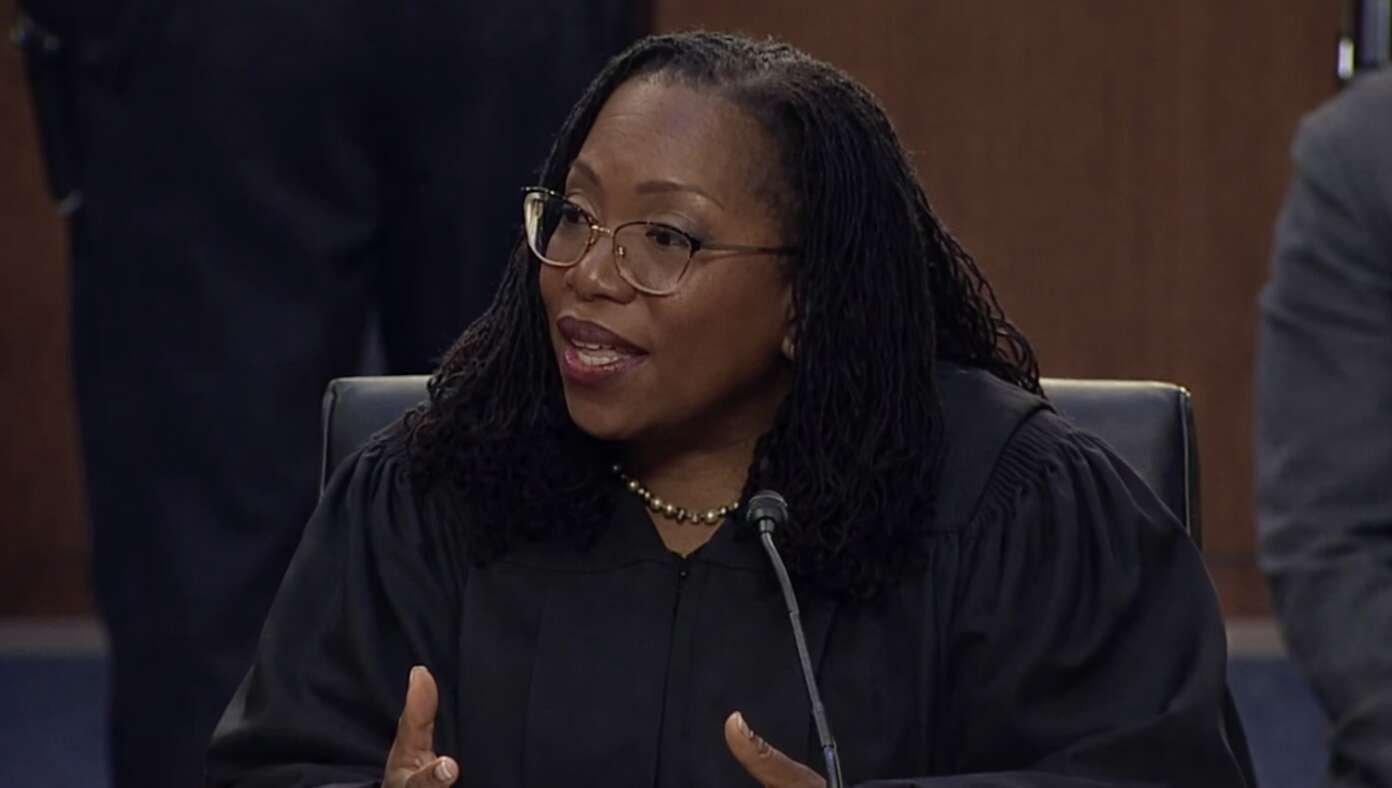
WASHINGTON, D.C. — As the United States Supreme Court issued a decisive ruling on a controversial case in Colorado regarding conversion therapy for minors, Justice Ketanji Brown Jackson raised a pertinent question about the constitutionality of the law.
Read More
Two Paterson churches will merge to create a vibrant St. Pio Parish #Catholic – ![]()
Located only three blocks apart, St. Bonaventure and Our Lady of Pompei (OLP) parishes brought Christ’s love to the people of the Stoney Road section of Paterson, N.J., as separate faith communities for more than 260 years combined. The churches are so close that each parish can hear the other’s church bells from its front steps.
So it might seem providential that on Divine Mercy Sunday, April 12, these two parishes, each with its own history and traditions, will merge into a single parish under a new name: St. Pio of Pietrelcina — also known as “Padre Pio” — Parish. The merger will streamline the administration of St. Bonaventure’s and OLP into one parish. To keep meeting the people’s spiritual and pastoral needs, St. Pio’s is ensuring that both churches will remain open and has readjusted the Mass schedules at both locations.
Father Manuel Cuellar, who will become pastor on April 12, and St. Pio’s looks forward to uniting both parishes and bringing together their (Anglo) English-speaking and growing Hispanic communities. During the past year, this merger process has unfolded in a spirit of prayerful discernment and collaboration.
On April 12, Bishop Kevin J. Sweeney will celebrate the establishment of St. Pio’s during a Eucharistic procession at 3 p.m. from OLP on Murray Avenue to St. Bonaventure’s on Ramsey Street. The event will start with the Divine Mercy Chaplet at OLP and conclude with Benediction at St. Bonaventure’s. Bishop Sweeney approved the merger after prayer and consultation and accompanied parishioners during the process.
“Our Lady of Pompei and St. Bonaventure’s have four different communities, including two (Anglo) English-speaking and two Hispanic. But I want to see St. Pio become one dynamic community,” said Father Cuellar. He will remain the parochial vicar of St. Gerard Majella Parish in Paterson until he becomes St. Pio’s pastor. “In my homilies, I say that no matter what language we speak or where we come from, we are all children of God. We are doing this merger for the good of the people, especially for our children.”
Also attending the April 12 prayer service will be clergy from the Paterson Diocese in New Jersey, who have been instrumental in shepherding this merger. They are Msgr. George Hundt, pastor of St. Gerard’s and pastor of OLP until Father Cuellar becomes pastor of St. Pio’s, and Father Alex Nevitt, diocesan episcopal delegate for parish leadership development and administrator of St. Bonaventure’s until that day.
Father Cuellar helped expand and strengthen OLP’s Hispanic community. He established the parish’s first Spanish Mass at 11:30 a.m. on Sunday in September 2024. It has grown from 12 churchgoers to more than 140. The priest united the community through a December procession through the city streets for Our Lady of Guadalupe, a Mexican Catholic devotion, and has encouraged other lively, colorful devotions, such as Our Lady of Altagracia, a Dominican devotion. He also brought the OLP parish together for a Christmas party.
Meanwhile, St. Bonaventure’s has been expanding its digital presence. The parish recently launched a young adult ministry that has attracted about 40 members and become the largest of its kind in the diocese. St. Bonaventure’s has a Spanish Mass at 5:30 p.m. on Sunday.
Raysa Gonzalez, a lector for OLP’s Spanish Mass, was involved in roundtable discussions about the merger. A lifelong churchgoer, she didn’t feel connected to her faith until she started attending the parish’s Spanish Mass. Her son also enjoys attending the liturgy.
“In his homilies, Father Manuel relates the Gospel by giving examples from real life. It helps me understand the message of the bible,” said Gonzalez, who called the merger process “a little scary, but we have faith and pray. Everything has been wonderful. Everybody is trying to do their part to connect with each other and grow together as one family.”
Last year, parishioners voted to choose the name of the new faith community: St. Pio of Pietrelcina. Padre Pio (1887–1968) was an Italian Capuchin priest renowned for his intense prayer, stigmatization, and service to the suffering. Father Nevitt said the name “recounts Padre Pio’s bilocation, an evocative sign as we unite two churches within one parish.”
“In proposing St. Pio of Pietrelcina, we express our desire to form a community of deep sacramental life and missionary outreach — one that inspires every generation, including young people and families, through a clear witness of holiness, Eucharistic devotion, and prayerful charity,” Father Nevitt wrote in a letter about the new name to Bishop Sweeney.
Temporarily, St. Pio’s staff will work from St. Bonaventure’s offices, while clergy will live in St. Bonaventure’s rectory. Eventually, the OLP rectory will be renovated into St. Pio’s offices, and St. Bonaventure’s rectory will be renovated into St. Pio’s rectory. Father Nevitt will assist Father Cuellar, a fellow 2019 ordination classmate, with technology upgrades, a new website, and a new logo featuring a smiling St. Pio.
The two parishes represent more than 260 years of service to the area —150 at St. Bonaventure’s and 110 at OLP. St. Bonaventure’s, the diocese’s second-oldest parish, was founded when Franciscan Friars arrived in Paterson from Germany in 1876. Bishop Sweeney assigned Father Nevitt to help transition St. Bonaventure’s to a diocesan parish after the Franciscan Friars announced they were leaving, citing manpower shortages, in 2024.
In 1916, OLP was started as a mission of St. Michael Parish in Paterson to serve the Italian community. Msgr. Hundt became pastor of OLP and St. Gerard’s in July 2024, before the Franciscans left St. Bonaventure. The populations of OLP and St. Bonaventure’s were both declining, and OLP was also facing financial struggles.
Msgr. Hundt praised the decision to keep both churches open, which provides more room for St. Pio Parish. Merger discussions became more relaxed once parishioners were reassured that neither church would close, he said.
“The challenge was helping people realize we’re moving toward something important, but that it’s going to involve letting go of part of their experience of community,” Msgr. Hundt said. “There’s a certain dying that has to take place in both communities to rise to the new parish of St. Padre Pio. It takes a lot of grace for God to help us let that happen. I think they’re doing that beautifully.”
For Mass times and other information, visit piopaterson.org as of April 12.
–
Located only three blocks apart, St. Bonaventure and Our Lady of Pompei (OLP) parishes brought Christ’s love to the people of the Stoney Road section of Paterson, N.J., as separate faith communities for more than 260 years combined. The churches are so close that each parish can hear the other’s church bells from its front steps. So it might seem providential that on Divine Mercy Sunday, April 12, these two parishes, each with its own history and traditions, will merge into a single parish under a new name: St. Pio of Pietrelcina — also known as “Padre Pio” — Parish.
Looking for a sky event this week? Check out our full Sky This Week column. March 31: The galaxy’s Great Bird April’s evenings kick off with a Full Moon, which occurs at 10:12 P.M. EDT tonight. The April Full Moon is also called the Pink Moon, after the wildflowers that begin to run rampant as spring begins. Continue reading “The Sky Today on Wednesday, April 1: A Full Pink Moon and a double star”
The post The Sky Today on Wednesday, April 1: A Full Pink Moon and a double star appeared first on Astronomy Magazine.
Read More