Day: April 30, 2026

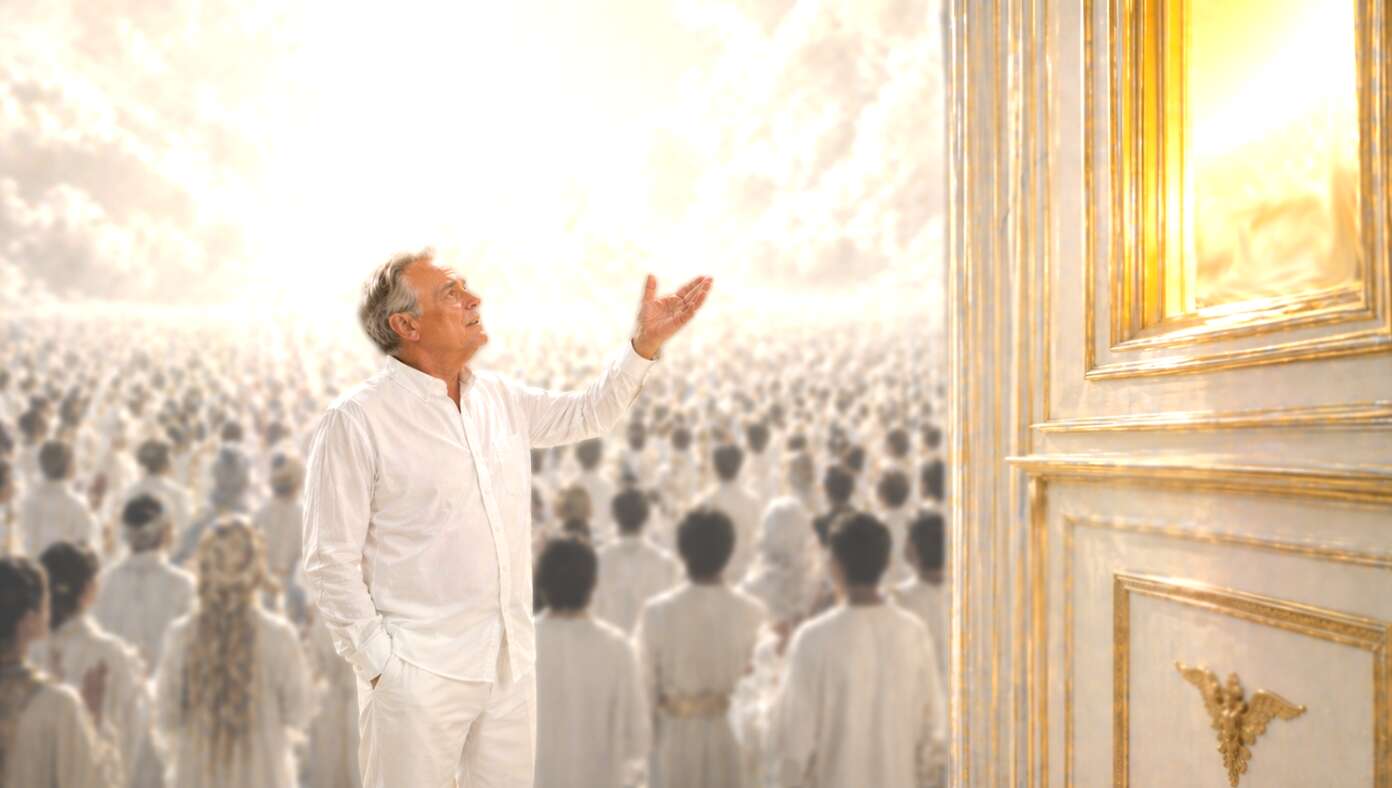
O great St. Peregrine, you have been called “The Mighty,” “The Wonder-Worker,” because of the numerous miracles which you have obtained from God for those who have had recourse to you. For so many years you bore in your own flesh this cancerous disease that destroys the very fiber of our being, and who had recourse to the source of all grace when the power of man could do no more. You were favored with the vision of Jesus coming down from His Cross to heal your affliction. Ask of God and Our …

Read More
Picture of the day


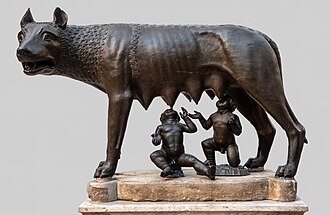
The Capitoline Wolf is a bronze sculpture made by unknown Etruscan sculptors (5th century BC), with the twins Romulus and Remus added in the late 15th century AD, by sculptor Antonio del Pollaiuolo. The sculptural group depicts a scene from the legend of the founding of Rome, occurred on 21 April 753 BC.
 #ImageOfTheDay
Picture of the day
The Capitoline Wolf is a bronze sculpture made by unknown Etruscan sculptors (5th century BC), with the twins Romulus and Remus added in the late 15th century AD, by sculptor Antonio del Pollaiuolo. The sculptural group depicts a scene from the legend of the founding of Rome, occurred on 21 April 753 BC.
Read More
Vatican prepares Pope Leo XIV summit on marriage crisis #Catholic Pope Leo XIV is aware that among the vocations to which men and women are called by God, marriage is one of the “noblest and highest.”He said as much last October, on the 10th anniversary of the canonization of Sts. Louis and Zélie Martin, the parents of St. Thérèse of the Child Jesus. Now, the pope has set in motion a process to address both marital crises and the growing fear among young people of getting married and forming a family.Leo XIV has called the presidents of the world’s bishops’ conferences to Rome this October to seek a response to an issue he considers crucial not only for the Church but also for society.In preparation for the high-level meeting, the Vatican organized a study day Tuesday titled “The Sacrament of Marriage, Faith, and Munus Docendi” at the Casina Pio IV.The initiative, hosted by the Dicastery for the Laity, the Family, and Life, brought together about 75 participants by invitation, including representatives of various dicasteries of the Roman Curia as well as rectors, lecturers, and others involved in the formation of future pastors.According to the dicastery, the study day was devoted to the formation of priests in accompanying “young people, engaged couples, and married couples in faith.”How can the Church form pastors capable of accompanying young people, engaged couples, and spouses so that they live Christian marriage as an authentic experience of faith in a cultural context marked by secularization? Several speakers addressed that question, including Father Andrea Bozzolo, rector of the Pontifical Salesian University.Speaking with ACI Prensa, the Spanish-language sister service of EWTN News, the Italian priest — who has taught theology of marriage at the Pontifical John Paul II Institute for Studies on Marriage and Family — emphasized the urgent need to form priests who are prepared to accompany young people and help them live Christian marriage as a true event of faith rather than as a mere “formality or social rite.”According to Bozzolo, in large sectors of contemporary society, marriage is no longer perceived as a decisive moment in the formation of a family.“For many couples, marriage today seems to be a less decisive step in the emergence of the family covenant,” he said.In that context, he added, cohabitation before marriage has become widespread as a kind of trial stage. For many young people, the strength of that relationship, tested in daily life, “has become the condition for eventually considering access to marriage,” he said.Bozzolo explained that this mentality fuels the now widespread phenomenon of couples living together before going to the altar.Unlike in past decades, when de facto unions were presented as an ideological alternative to marriage, today “they are often understood as a preparatory path,” he said.In what he described as a “liquid society,” cohabitation frequently functions as a first family experience, open to being consolidated over time into a more stable relationship.“Cohabitation in most cases does not seek to exclude the marriage covenant but rather to verify its viability,” he said, noting that the increase in separations also reflects this way of understanding the bond.Not blaming, but not trivializingIn response to this reality, Bozzolo said the Church should “not blame” young people who ask to marry after living together, but it also should not “trivialize” premarital cohabitation, because “it is not the correct way” to arrive at the altar.He also called on the Church to break with stereotypes that present love as if it were “a simple feeling.”“Love has ontological value — and not merely psychological value — and that is why marriage is a privileged vehicle for the biblical revelation of the face of God,” he said.Bozzolo insisted on the need for priestly formation that helps future priests rediscover the decisive value of marriage as a public and sacramental act.“The public and religious expression of consent,” he said, is no longer usually perceived today as something that substantially affects the stability of the bond — a reality he described as “a pastoral challenge of the first order.”Marriage is not a simple social procedureFor that reason, he said, it is essential for the Church to prepare priests who can accompany young people along a journey of faith that presents Christian marriage not as a “simple social procedure.”The goal, Bozzolo explained, is to help priests accompany married couples so that they learn to “recognize the presence and action of God in the concrete history of their bond.”Such accompaniment, he said, requires a “formative approach” capable of bringing together biblical wisdom, theological understanding, an awareness of contemporary cultural trends, and attentive listening to the real experiences of families.One current problem among couples, he said, is the tendency to absolutize the relationship and place expectations on the spousal bond that the other person cannot sustain alone.“We cannot place the entire responsibility for our happiness on our spouse, because he or she will disappoint us. For that, we have Jesus, the true messiah,” Bozzolo said.Only from a well-grounded faith, he emphasized, is it possible to live marriage in a healthy, realistic way that is open to gratuitousness, without making the other person the ultimate source of meaning.For that reason, and in direct relation to the formation of future priests, Bozzolo highlighted the need to create formation paths in seminaries that integrate these dimensions and prepare pastors for authentic marriage ministry, rooted in life and not reduced to theoretical frameworks.The last time a pope called together all the presidents of the world’s bishops’ conferences was in February 2019, when Pope Francis gathered them to address the wound of sexual abuse in the Church. That meeting marked a shift in the global perception of the problem and made it possible to outline a long-term strategy.This story was first published by ACI Prensa, the Spanish-language sister service of EWTN News. It has been translated and adapted by EWTN News English.

Vatican prepares Pope Leo XIV summit on marriage crisis #Catholic Pope Leo XIV is aware that among the vocations to which men and women are called by God, marriage is one of the “noblest and highest.”He said as much last October, on the 10th anniversary of the canonization of Sts. Louis and Zélie Martin, the parents of St. Thérèse of the Child Jesus. Now, the pope has set in motion a process to address both marital crises and the growing fear among young people of getting married and forming a family.Leo XIV has called the presidents of the world’s bishops’ conferences to Rome this October to seek a response to an issue he considers crucial not only for the Church but also for society.In preparation for the high-level meeting, the Vatican organized a study day Tuesday titled “The Sacrament of Marriage, Faith, and Munus Docendi” at the Casina Pio IV.The initiative, hosted by the Dicastery for the Laity, the Family, and Life, brought together about 75 participants by invitation, including representatives of various dicasteries of the Roman Curia as well as rectors, lecturers, and others involved in the formation of future pastors.According to the dicastery, the study day was devoted to the formation of priests in accompanying “young people, engaged couples, and married couples in faith.”How can the Church form pastors capable of accompanying young people, engaged couples, and spouses so that they live Christian marriage as an authentic experience of faith in a cultural context marked by secularization? Several speakers addressed that question, including Father Andrea Bozzolo, rector of the Pontifical Salesian University.Speaking with ACI Prensa, the Spanish-language sister service of EWTN News, the Italian priest — who has taught theology of marriage at the Pontifical John Paul II Institute for Studies on Marriage and Family — emphasized the urgent need to form priests who are prepared to accompany young people and help them live Christian marriage as a true event of faith rather than as a mere “formality or social rite.”According to Bozzolo, in large sectors of contemporary society, marriage is no longer perceived as a decisive moment in the formation of a family.“For many couples, marriage today seems to be a less decisive step in the emergence of the family covenant,” he said.In that context, he added, cohabitation before marriage has become widespread as a kind of trial stage. For many young people, the strength of that relationship, tested in daily life, “has become the condition for eventually considering access to marriage,” he said.Bozzolo explained that this mentality fuels the now widespread phenomenon of couples living together before going to the altar.Unlike in past decades, when de facto unions were presented as an ideological alternative to marriage, today “they are often understood as a preparatory path,” he said.In what he described as a “liquid society,” cohabitation frequently functions as a first family experience, open to being consolidated over time into a more stable relationship.“Cohabitation in most cases does not seek to exclude the marriage covenant but rather to verify its viability,” he said, noting that the increase in separations also reflects this way of understanding the bond.Not blaming, but not trivializingIn response to this reality, Bozzolo said the Church should “not blame” young people who ask to marry after living together, but it also should not “trivialize” premarital cohabitation, because “it is not the correct way” to arrive at the altar.He also called on the Church to break with stereotypes that present love as if it were “a simple feeling.”“Love has ontological value — and not merely psychological value — and that is why marriage is a privileged vehicle for the biblical revelation of the face of God,” he said.Bozzolo insisted on the need for priestly formation that helps future priests rediscover the decisive value of marriage as a public and sacramental act.“The public and religious expression of consent,” he said, is no longer usually perceived today as something that substantially affects the stability of the bond — a reality he described as “a pastoral challenge of the first order.”Marriage is not a simple social procedureFor that reason, he said, it is essential for the Church to prepare priests who can accompany young people along a journey of faith that presents Christian marriage not as a “simple social procedure.”The goal, Bozzolo explained, is to help priests accompany married couples so that they learn to “recognize the presence and action of God in the concrete history of their bond.”Such accompaniment, he said, requires a “formative approach” capable of bringing together biblical wisdom, theological understanding, an awareness of contemporary cultural trends, and attentive listening to the real experiences of families.One current problem among couples, he said, is the tendency to absolutize the relationship and place expectations on the spousal bond that the other person cannot sustain alone.“We cannot place the entire responsibility for our happiness on our spouse, because he or she will disappoint us. For that, we have Jesus, the true messiah,” Bozzolo said.Only from a well-grounded faith, he emphasized, is it possible to live marriage in a healthy, realistic way that is open to gratuitousness, without making the other person the ultimate source of meaning.For that reason, and in direct relation to the formation of future priests, Bozzolo highlighted the need to create formation paths in seminaries that integrate these dimensions and prepare pastors for authentic marriage ministry, rooted in life and not reduced to theoretical frameworks.The last time a pope called together all the presidents of the world’s bishops’ conferences was in February 2019, when Pope Francis gathered them to address the wound of sexual abuse in the Church. That meeting marked a shift in the global perception of the problem and made it possible to outline a long-term strategy.This story was first published by ACI Prensa, the Spanish-language sister service of EWTN News. It has been translated and adapted by EWTN News English.

The October meeting in Rome will bring together presidents of bishops’ conferences from around the world to seek a response to what the pope considers a crucial issue for the Church and society.

Read More
New York City street renamed for religious sister’s decades of service #Catholic A New York City street acquired a new name this past weekend honoring a Catholic sister’s decades of dedication to the East Harlem community.On Saturday, April 25, more than 100 people gathered to celebrate the newly named street — Sister Susanne Lachapelle Way — named for the life and legacy of Lachapelle and her contributions as a registered nurse, advocate, and Little Sister of the Assumption (LSA).“With a heart rooted in justice, she dedicated herself to serving the vulnerable through home visits, healthcare, and tireless advocacy, both locally and globally,” Rosario Jimenez, director for LSA Family in Mission, told EWTN News.The event and street naming flowed from Lachapelleʼs work with Little Sisters of the Assumption Family Health Service, a community-based nonprofit based in East Harlem. Founded by the Little Sisters, the organization offers numerous programs to help vulnerable families and children meet their basic needs.
 
 Crowd celebrates the unveiling of the Sister Susanne Lachapelle Way street sign in East Harlem, New York, on April 25, 2026. | Credit: Photo courtesy of Alysa Jette and Grace Ayres-Doyle
 
 The group has been in the city for almost 70 years and Lachapelle “really helped to set the trajectory for the organization,” Ray Lopez, chief program officer of LSA Family Health Service, told EWTN News.She was “a foundational visionary staff person and a leader who really, to this day, has a very profound impact on many of us who are on the staff and worked shoulder to shoulder with her, learning from her,” he said.“Since her passing, weʼve all … redoubled our efforts to find a way to keep LSAʼs original mission and vision going in this current environment,” Lopez said. “We really wanted to find ways to keep her name out there and the legacy going.”The street is on the southeast corner of East 115th Street and First Avenue. "Itʼs almost the exact midpoint of where Sister Susanne Lachapelle lived in the Little Sisters of the Assumption brownstone and where the LSA Family Health Service … center is located,” Lopez said.“She walked there every day for at least two decades,” he said. “We thought it was the appropriate place.”Sister Susanne and the Little Sisters: ‘Unsung heroes’Lachapelle entered the LSA order in 1962 and took the religious name Sister Susanne Mary of the Sacred Heart. She made her final vows in 1971.
 
 Sister Susanne Lachapelle. | Credit: Photo courtesy of LSA Family in Mission
 
 In her 60 years of religious life, she served in numerous areas and worked with many ministries. But for 45 years she made the community of East Harlem her home, helping to spearhead the LSA Family Health Service’s programs.As a nurse, Lachapelle conducted home visits, which “was a foundational program of LSA Family Health Service,” Lopez said. “All of the programs grew out of those interactions, those early interactions of nurses going into the homes to treat the sick and poor and really seeing conditions firsthand, sitting with families at their kitchen table, hearing their stories.”“Sister Susanne and the rest of the leadership created other programs to really provide wraparound services for families,” he said. "The Little Sisters set up a food pantry and a thrift store just to make sure that people had the very basics.”“From there, the services were about connecting people with public benefits, providing support around education, education enrichment, education navigation. A lot of … programs focused on maternal child health and early childhood development.”Along with her support for health and families, Lachapelle also had a passion for protecting the environment through her commitment to Pope Francis' Laudato Si', a call to protect our common home.
 
 Sister Susanne Lachapelle. | Credit: Photo courtesy of LSA Family in Mission
 
 Lachapelle decided to initiate “an environmental health component to the work that the Little Sisters were doing,” Lynn Tiede, a volunteer for LSA Health Service who worked with Lachapelle, told EWTN News.“She worked with the families and saw problems like asthma and other debilitating health things, she realized that … itʼs mold, itʼs the air quality, itʼs these other things that are really at the root of these health problems.”“Everybody was just so inspired … to see her traipsing into rough, rough buildings and just without any hesitation,” Tiede said. “If you went into a home and people were dealing with asthma, you … send in the environmental health team and then they try to work to get the building management to actually address those things.”With the success of her work, she even collaborated with the human rights group and nongovernmental organization Vivat International, where she helped bring voices and environmental issues to the United Nations, but she always remained “very, very humble,” Tiede said.Due to her humility “there were a few people who were against [the street-naming] when we proposed it, because they thought she would hate it — because she was so humble,” Tiede said.
 
 Sister Susanne Lachapelle Way in East Harlem, New York. | Credit: Photo courtesy of LSA Family in Mission
 
 Ultimately they chose to honor Lachapelle and the Little Sisters because they are “unsung heroes — these quiet heroes,” Tiede said.The process to get the street renamed began in 2024 and it was found to be an easier process than expected, as the city council was eager to acknowledge Lachapelle and the Little Sisters.Sister Susanne’s lasting impactAt the street naming celebration organizers “were expecting around 80 participants, but I think it was maybe 150 or a little bit more,” Jimenez said. “There were community members, families that she served, youth that she served, … volunteers, and of course, our board members and benefactors.”It honored her “simplicity and the way that she used to be a leader,” which was “was grounded in integrity, purpose, love,” Jimenez said. “Having a street named after her will honor all of that.”Reflecting on the event, Lopez said: “[It] feels like a dream because so many people came that worked with her in the past.”Despite having to move the event inside to avoid the cold and rain, the crowd of people stayed to celebrate. It “was crowded with people, and our center lobby was filled completely,” Lopez said. “It was just a very festive atmosphere.”He added: “It was really moving to have so many people there from so long ago that still feel it in their hearts, [how] the work here in East Harlem impacted their careers, impacted their lives, and that itʼs still a very significant thing for them,” he said.

New York City street renamed for religious sister’s decades of service #Catholic A New York City street acquired a new name this past weekend honoring a Catholic sister’s decades of dedication to the East Harlem community.On Saturday, April 25, more than 100 people gathered to celebrate the newly named street — Sister Susanne Lachapelle Way — named for the life and legacy of Lachapelle and her contributions as a registered nurse, advocate, and Little Sister of the Assumption (LSA).“With a heart rooted in justice, she dedicated herself to serving the vulnerable through home visits, healthcare, and tireless advocacy, both locally and globally,” Rosario Jimenez, director for LSA Family in Mission, told EWTN News.The event and street naming flowed from Lachapelleʼs work with Little Sisters of the Assumption Family Health Service, a community-based nonprofit based in East Harlem. Founded by the Little Sisters, the organization offers numerous programs to help vulnerable families and children meet their basic needs. Crowd celebrates the unveiling of the Sister Susanne Lachapelle Way street sign in East Harlem, New York, on April 25, 2026. | Credit: Photo courtesy of Alysa Jette and Grace Ayres-Doyle The group has been in the city for almost 70 years and Lachapelle “really helped to set the trajectory for the organization,” Ray Lopez, chief program officer of LSA Family Health Service, told EWTN News.She was “a foundational visionary staff person and a leader who really, to this day, has a very profound impact on many of us who are on the staff and worked shoulder to shoulder with her, learning from her,” he said.“Since her passing, weʼve all … redoubled our efforts to find a way to keep LSAʼs original mission and vision going in this current environment,” Lopez said. “We really wanted to find ways to keep her name out there and the legacy going.”The street is on the southeast corner of East 115th Street and First Avenue. "Itʼs almost the exact midpoint of where Sister Susanne Lachapelle lived in the Little Sisters of the Assumption brownstone and where the LSA Family Health Service … center is located,” Lopez said.“She walked there every day for at least two decades,” he said. “We thought it was the appropriate place.”Sister Susanne and the Little Sisters: ‘Unsung heroes’Lachapelle entered the LSA order in 1962 and took the religious name Sister Susanne Mary of the Sacred Heart. She made her final vows in 1971. Sister Susanne Lachapelle. | Credit: Photo courtesy of LSA Family in Mission In her 60 years of religious life, she served in numerous areas and worked with many ministries. But for 45 years she made the community of East Harlem her home, helping to spearhead the LSA Family Health Service’s programs.As a nurse, Lachapelle conducted home visits, which “was a foundational program of LSA Family Health Service,” Lopez said. “All of the programs grew out of those interactions, those early interactions of nurses going into the homes to treat the sick and poor and really seeing conditions firsthand, sitting with families at their kitchen table, hearing their stories.”“Sister Susanne and the rest of the leadership created other programs to really provide wraparound services for families,” he said. "The Little Sisters set up a food pantry and a thrift store just to make sure that people had the very basics.”“From there, the services were about connecting people with public benefits, providing support around education, education enrichment, education navigation. A lot of … programs focused on maternal child health and early childhood development.”Along with her support for health and families, Lachapelle also had a passion for protecting the environment through her commitment to Pope Francis' Laudato Si', a call to protect our common home. Sister Susanne Lachapelle. | Credit: Photo courtesy of LSA Family in Mission Lachapelle decided to initiate “an environmental health component to the work that the Little Sisters were doing,” Lynn Tiede, a volunteer for LSA Health Service who worked with Lachapelle, told EWTN News.“She worked with the families and saw problems like asthma and other debilitating health things, she realized that … itʼs mold, itʼs the air quality, itʼs these other things that are really at the root of these health problems.”“Everybody was just so inspired … to see her traipsing into rough, rough buildings and just without any hesitation,” Tiede said. “If you went into a home and people were dealing with asthma, you … send in the environmental health team and then they try to work to get the building management to actually address those things.”With the success of her work, she even collaborated with the human rights group and nongovernmental organization Vivat International, where she helped bring voices and environmental issues to the United Nations, but she always remained “very, very humble,” Tiede said.Due to her humility “there were a few people who were against [the street-naming] when we proposed it, because they thought she would hate it — because she was so humble,” Tiede said. Sister Susanne Lachapelle Way in East Harlem, New York. | Credit: Photo courtesy of LSA Family in Mission Ultimately they chose to honor Lachapelle and the Little Sisters because they are “unsung heroes — these quiet heroes,” Tiede said.The process to get the street renamed began in 2024 and it was found to be an easier process than expected, as the city council was eager to acknowledge Lachapelle and the Little Sisters.Sister Susanne’s lasting impactAt the street naming celebration organizers “were expecting around 80 participants, but I think it was maybe 150 or a little bit more,” Jimenez said. “There were community members, families that she served, youth that she served, … volunteers, and of course, our board members and benefactors.”It honored her “simplicity and the way that she used to be a leader,” which was “was grounded in integrity, purpose, love,” Jimenez said. “Having a street named after her will honor all of that.”Reflecting on the event, Lopez said: “[It] feels like a dream because so many people came that worked with her in the past.”Despite having to move the event inside to avoid the cold and rain, the crowd of people stayed to celebrate. It “was crowded with people, and our center lobby was filled completely,” Lopez said. “It was just a very festive atmosphere.”He added: “It was really moving to have so many people there from so long ago that still feel it in their hearts, [how] the work here in East Harlem impacted their careers, impacted their lives, and that itʼs still a very significant thing for them,” he said.

For 45 years, Sister Susanne Lachapelle made the community of East Harlem her home, helping to spearhead the LSA Family Health Service’s programs to help the most vulnerable.

Read More
St. Elizabeth University event highlights Mother Cabrini’s local connections #Catholic - St. Francis Xavier Cabrini, America’s first Catholic saint, significantly impacted the nation by leading efforts to care for poor Italians and marginalized people in New York City and beyond. Her extensive connections also reached into the heart of Northern New Jersey, including the Paterson Diocese.
A distinguished panel of guests highlighted Mother Cabrini’s local connections and strong advocacy for immigrants and poor communities at a discussion of “Cabrini,” the 2024 feature film about the saint. The event drew a sizable audience to the Dolan Performing Arts Center at St. Elizabeth University in Morris Township, N.J., on April 28, underscoring her local and broader impact.
This “talk back” session followed a screening of powerful and dramatic clips from “Cabrini” at St. Elizabeth’s on April 21. Both events promoted the National Eucharistic Pilgrimage (NEP), which will stop in the Paterson Diocese, N.J. at sites in Passaic and Paterson on June 14 and 15. The NEP’s Cabrini Route will travel up the Eastern Seaboard, including through the diocese, this summer.
At both the screening and the discussion, Father Cesar Jaramillo, pilgrimage stop delegate and pastor of Holy Spirit Parish in Pequannock, N.J., encouraged participation in the NEP events being hosted by the diocese. He also offered theological and legal perspectives on the immigrant experience. As a panelist, he noted that the Cabrini Route “underscores what Mother Cabrini means to the East Coast because we were the witnesses of that great arrival of immigrants during her day.”

Click here to subscribe to our weekly newsletter.

“And the plight isn’t over. We have many immigrants still trying to provide a better life for their families by coming to the country,” Father Jaramillo said. “We can see how Mother Cabrini’s powerful example brought Christ to others and is still very much alive in the many wonderful religious we have and the wonderful work they do in favor of immigrants.”
The Missionary Sisters of the Sacred Heart of Jesus, which Mother Cabrini founded, opened schools and orphanages for Italian immigrants despite many challenges. Mother Cabrini traveled across Europe, the Americas, and the U.S., founding 67 institutions.
Father Jaramillo also spoke about a Mother Cabrini connection in the Paterson Diocese. Bishop Emeritus Arthur J. Serratelli’s mother, Eva, received religious education in New York City from the future saint. Before the Cathedral of St. John the Baptist in Paterson was rededicated in 2017, the bishop commissioned a large stained-glass window of Mother Cabrini in her honor, as part of major renovations to the diocese’s mother church.
The panel included J. Eustace Wolfington, executive producer of “Cabrini” and key organizer; Gilda Bello of Cabrini Asset Management, a journalist and promoter of Mother Cabrini’s story and mission; Carol Bezak, a St. Elizabeth’s graduate, administrator of the National Shrine of Our Lady of Mount Carmel in Middletown, N.Y., and president of the National Association of U.S. Shrines; Msgr. Paul Bochicchio, retired priest of the Newark Archdiocese, author, and chaplain/consultant on the film; Sister of Charity Judy Mertz, founding director of Josephine’s Place, a women’s outreach in Elizabeth, N.J.; and Zachary DeCarlo Jr., founder and president of ZCD Advisors, who worked with Wolfington on “Cabrini.”
Sister Mertz described how the Sisters of Charity in New York City welcomed Mother Cabrini and her  Missionary Sisters of the Sacred Heart of Jesus after their arrival from Italy around 1889, sent by Pope Leo XIII. She explained a further local connection: then-Sister of Charity Mary Xavier Mehegan, herself an Irish immigrant, traveled to Convent Station to help found the Sisters of Charity of St. Elizabeth with several fellow religious sister. Together, they established the Academy of St. Elizabeth and later the College of St. Elizabeth, now St. Elizabeth University, demonstrating how Cabrini’s influence helped shape women’s religious life in New Jersey.
“Mother Cabrini was a great model of women in the Church at that time, who had the conviction of her calling, and a deep trust in God’s providence. She had such compassion,” said Sister Mertz. She called Mother Cabrini and Mother Mehegan “catalysts for systemic change.”
The NEP is an initiative of the U.S. bishops inspired by the Eucharistic Revival, held last year in Indianapolis, which sought to “to ignite that flame of love for Jesus in the Eucharist, especially geared to young people.” The NEP also will commemorate the 250th anniversary of the United States, Father Jaramillo said.
“Mother Cabrini’s love for Jesus in the Eucharist was without a doubt what empowered her to carry out her missionary work,” Father Jaramillo said. “We want the events of the National Eucharistic Pilgrimage to remind young people of her beautiful example and make them aware of how we too can exercise that same operative  charity through a deep and lasting relationship with Christ in the Eucharist.”
A former parish pastoral associate in the diocese, Bezak brought a Mother Cabrini image with a third-class relic to the “talk back.” The “Cabrini” screening and “talk-back” were possible through her friendship with one of the film’s executive producers.
Initially, Wolfington, now 93, had refused a request to make a film about Mother Cabrini, but later accepted, believing he could make a better movie about her than another film company that had signed on to do it.
“Everywhere we go with the film, there’s been a transformation. People who walk in the movie are not the same people walking out, especially the young people. It’s had an incredible effect,” Wolfington said.
For questions about events in this diocese, please contact: MMoncaleano@patersondiocese.org. For registration assistance, please contact: registration@eucharisticcongress.org.
National Eucharistic Pilgrimage activities in the Paterson Diocese, N.J., on June 14 and 15
Pilgrimage activities on June 14:
3:30–5 p.m.: Eucharist talk (English), Fr. Rafael Capo, Holy Rosary Church, 6 Wall St., Passaic, N.J.
3:30–5 p.m.: “Influenciados por la Eucaristía” opening talk (Spanish), P. Heriberto García, St. Nicholas, 217 President St., Passaic, N.J.
5–6:30 p.m.: Eucharistic Procession from Holy Rosary Church (6 Wall St, Passaic, N.J.) to Boverini Stadium (1.5 miles). The procession will end with the opening Mass.
6:30–8 p.m.: Opening Mass, Boverini Stadium, 262 River Dr., Passaic, N.J., with Bishop Kevin J. Sweeney.
Pilgrimage events on June 15:
3–5 p.m.: Divine Liturgy with Byzantine Catholic community at St. Michael Chapel, 415 Lackawanna Ave., Woodland Park, N.J.
5:30–7 p.m.: Eucharistic Procession starting at the Father English Center, 435 Main St., in Paterson, N.J. and ending at the Cathedral of St. John the Baptist, 381 Grand St., Paterson, N.J.
7–8:30 p.m.: Closing Mass with Bishop Sweeney and homily by Father Casey Cole, O.F.M., at the Cathedral of St. John the Baptist, 381 Grand St., Paterson. The municipal parking lot opens at 5 p.m. across from the Cathedral. Watch the livestream at https://rcdopcathedral.org/.
BEACON PHOTOS | JOE GIGLI
 [See image gallery at beaconnj.org]

St. Elizabeth University event highlights Mother Cabrini’s local connections #Catholic – St. Francis Xavier Cabrini, America’s first Catholic saint, significantly impacted the nation by leading efforts to care for poor Italians and marginalized people in New York City and beyond. Her extensive connections also reached into the heart of Northern New Jersey, including the Paterson Diocese. A distinguished panel of guests highlighted Mother Cabrini’s local connections and strong advocacy for immigrants and poor communities at a discussion of “Cabrini,” the 2024 feature film about the saint. The event drew a sizable audience to the Dolan Performing Arts Center at St. Elizabeth University in Morris Township, N.J., on April 28, underscoring her local and broader impact. This “talk back” session followed a screening of powerful and dramatic clips from “Cabrini” at St. Elizabeth’s on April 21. Both events promoted the National Eucharistic Pilgrimage (NEP), which will stop in the Paterson Diocese, N.J. at sites in Passaic and Paterson on June 14 and 15. The NEP’s Cabrini Route will travel up the Eastern Seaboard, including through the diocese, this summer. At both the screening and the discussion, Father Cesar Jaramillo, pilgrimage stop delegate and pastor of Holy Spirit Parish in Pequannock, N.J., encouraged participation in the NEP events being hosted by the diocese. He also offered theological and legal perspectives on the immigrant experience. As a panelist, he noted that the Cabrini Route “underscores what Mother Cabrini means to the East Coast because we were the witnesses of that great arrival of immigrants during her day.” Click here to subscribe to our weekly newsletter. “And the plight isn’t over. We have many immigrants still trying to provide a better life for their families by coming to the country,” Father Jaramillo said. “We can see how Mother Cabrini’s powerful example brought Christ to others and is still very much alive in the many wonderful religious we have and the wonderful work they do in favor of immigrants.” The Missionary Sisters of the Sacred Heart of Jesus, which Mother Cabrini founded, opened schools and orphanages for Italian immigrants despite many challenges. Mother Cabrini traveled across Europe, the Americas, and the U.S., founding 67 institutions. Father Jaramillo also spoke about a Mother Cabrini connection in the Paterson Diocese. Bishop Emeritus Arthur J. Serratelli’s mother, Eva, received religious education in New York City from the future saint. Before the Cathedral of St. John the Baptist in Paterson was rededicated in 2017, the bishop commissioned a large stained-glass window of Mother Cabrini in her honor, as part of major renovations to the diocese’s mother church. The panel included J. Eustace Wolfington, executive producer of “Cabrini” and key organizer; Gilda Bello of Cabrini Asset Management, a journalist and promoter of Mother Cabrini’s story and mission; Carol Bezak, a St. Elizabeth’s graduate, administrator of the National Shrine of Our Lady of Mount Carmel in Middletown, N.Y., and president of the National Association of U.S. Shrines; Msgr. Paul Bochicchio, retired priest of the Newark Archdiocese, author, and chaplain/consultant on the film; Sister of Charity Judy Mertz, founding director of Josephine’s Place, a women’s outreach in Elizabeth, N.J.; and Zachary DeCarlo Jr., founder and president of ZCD Advisors, who worked with Wolfington on “Cabrini.” Sister Mertz described how the Sisters of Charity in New York City welcomed Mother Cabrini and her  Missionary Sisters of the Sacred Heart of Jesus after their arrival from Italy around 1889, sent by Pope Leo XIII. She explained a further local connection: then-Sister of Charity Mary Xavier Mehegan, herself an Irish immigrant, traveled to Convent Station to help found the Sisters of Charity of St. Elizabeth with several fellow religious sister. Together, they established the Academy of St. Elizabeth and later the College of St. Elizabeth, now St. Elizabeth University, demonstrating how Cabrini’s influence helped shape women’s religious life in New Jersey. “Mother Cabrini was a great model of women in the Church at that time, who had the conviction of her calling, and a deep trust in God’s providence. She had such compassion,” said Sister Mertz. She called Mother Cabrini and Mother Mehegan “catalysts for systemic change.” The NEP is an initiative of the U.S. bishops inspired by the Eucharistic Revival, held last year in Indianapolis, which sought to “to ignite that flame of love for Jesus in the Eucharist, especially geared to young people.” The NEP also will commemorate the 250th anniversary of the United States, Father Jaramillo said. “Mother Cabrini’s love for Jesus in the Eucharist was without a doubt what empowered her to carry out her missionary work,” Father Jaramillo said. “We want the events of the National Eucharistic Pilgrimage to remind young people of her beautiful example and make them aware of how we too can exercise that same operative  charity through a deep and lasting relationship with Christ in the Eucharist.” A former parish pastoral associate in the diocese, Bezak brought a Mother Cabrini image with a third-class relic to the “talk back.” The “Cabrini” screening and “talk-back” were possible through her friendship with one of the film’s executive producers. Initially, Wolfington, now 93, had refused a request to make a film about Mother Cabrini, but later accepted, believing he could make a better movie about her than another film company that had signed on to do it. “Everywhere we go with the film, there’s been a transformation. People who walk in the movie are not the same people walking out, especially the young people. It’s had an incredible effect,” Wolfington said. For questions about events in this diocese, please contact: MMoncaleano@patersondiocese.org. For registration assistance, please contact: registration@eucharisticcongress.org. National Eucharistic Pilgrimage activities in the Paterson Diocese, N.J., on June 14 and 15 Pilgrimage activities on June 14: 3:30–5 p.m.: Eucharist talk (English), Fr. Rafael Capo, Holy Rosary Church, 6 Wall St., Passaic, N.J. 3:30–5 p.m.: “Influenciados por la Eucaristía” opening talk (Spanish), P. Heriberto García, St. Nicholas, 217 President St., Passaic, N.J. 5–6:30 p.m.: Eucharistic Procession from Holy Rosary Church (6 Wall St, Passaic, N.J.) to Boverini Stadium (1.5 miles). The procession will end with the opening Mass. 6:30–8 p.m.: Opening Mass, Boverini Stadium, 262 River Dr., Passaic, N.J., with Bishop Kevin J. Sweeney. Pilgrimage events on June 15: 3–5 p.m.: Divine Liturgy with Byzantine Catholic community at St. Michael Chapel, 415 Lackawanna Ave., Woodland Park, N.J. 5:30–7 p.m.: Eucharistic Procession starting at the Father English Center, 435 Main St., in Paterson, N.J. and ending at the Cathedral of St. John the Baptist, 381 Grand St., Paterson, N.J. 7–8:30 p.m.: Closing Mass with Bishop Sweeney and homily by Father Casey Cole, O.F.M., at the Cathedral of St. John the Baptist, 381 Grand St., Paterson. The municipal parking lot opens at 5 p.m. across from the Cathedral. Watch the livestream at https://rcdopcathedral.org/. BEACON PHOTOS | JOE GIGLI [See image gallery at beaconnj.org]

St. Elizabeth University event highlights Mother Cabrini’s local connections #Catholic –

St. Francis Xavier Cabrini, America’s first Catholic saint, significantly impacted the nation by leading efforts to care for poor Italians and marginalized people in New York City and beyond. Her extensive connections also reached into the heart of Northern New Jersey, including the Paterson Diocese.

A distinguished panel of guests highlighted Mother Cabrini’s local connections and strong advocacy for immigrants and poor communities at a discussion of “Cabrini,” the 2024 feature film about the saint. The event drew a sizable audience to the Dolan Performing Arts Center at St. Elizabeth University in Morris Township, N.J., on April 28, underscoring her local and broader impact.

This “talk back” session followed a screening of powerful and dramatic clips from “Cabrini” at St. Elizabeth’s on April 21. Both events promoted the National Eucharistic Pilgrimage (NEP), which will stop in the Paterson Diocese, N.J. at sites in Passaic and Paterson on June 14 and 15. The NEP’s Cabrini Route will travel up the Eastern Seaboard, including through the diocese, this summer.

At both the screening and the discussion, Father Cesar Jaramillo, pilgrimage stop delegate and pastor of Holy Spirit Parish in Pequannock, N.J., encouraged participation in the NEP events being hosted by the diocese. He also offered theological and legal perspectives on the immigrant experience. As a panelist, he noted that the Cabrini Route “underscores what Mother Cabrini means to the East Coast because we were the witnesses of that great arrival of immigrants during her day.”


Click here to subscribe to our weekly newsletter.

“And the plight isn’t over. We have many immigrants still trying to provide a better life for their families by coming to the country,” Father Jaramillo said. “We can see how Mother Cabrini’s powerful example brought Christ to others and is still very much alive in the many wonderful religious we have and the wonderful work they do in favor of immigrants.”

The Missionary Sisters of the Sacred Heart of Jesus, which Mother Cabrini founded, opened schools and orphanages for Italian immigrants despite many challenges. Mother Cabrini traveled across Europe, the Americas, and the U.S., founding 67 institutions.

Father Jaramillo also spoke about a Mother Cabrini connection in the Paterson Diocese. Bishop Emeritus Arthur J. Serratelli’s mother, Eva, received religious education in New York City from the future saint. Before the Cathedral of St. John the Baptist in Paterson was rededicated in 2017, the bishop commissioned a large stained-glass window of Mother Cabrini in her honor, as part of major renovations to the diocese’s mother church.

The panel included J. Eustace Wolfington, executive producer of “Cabrini” and key organizer; Gilda Bello of Cabrini Asset Management, a journalist and promoter of Mother Cabrini’s story and mission; Carol Bezak, a St. Elizabeth’s graduate, administrator of the National Shrine of Our Lady of Mount Carmel in Middletown, N.Y., and president of the National Association of U.S. Shrines; Msgr. Paul Bochicchio, retired priest of the Newark Archdiocese, author, and chaplain/consultant on the film; Sister of Charity Judy Mertz, founding director of Josephine’s Place, a women’s outreach in Elizabeth, N.J.; and Zachary DeCarlo Jr., founder and president of ZCD Advisors, who worked with Wolfington on “Cabrini.”

Sister Mertz described how the Sisters of Charity in New York City welcomed Mother Cabrini and her  Missionary Sisters of the Sacred Heart of Jesus after their arrival from Italy around 1889, sent by Pope Leo XIII. She explained a further local connection: then-Sister of Charity Mary Xavier Mehegan, herself an Irish immigrant, traveled to Convent Station to help found the Sisters of Charity of St. Elizabeth with several fellow religious sister. Together, they established the Academy of St. Elizabeth and later the College of St. Elizabeth, now St. Elizabeth University, demonstrating how Cabrini’s influence helped shape women’s religious life in New Jersey.

“Mother Cabrini was a great model of women in the Church at that time, who had the conviction of her calling, and a deep trust in God’s providence. She had such compassion,” said Sister Mertz. She called Mother Cabrini and Mother Mehegan “catalysts for systemic change.”

The NEP is an initiative of the U.S. bishops inspired by the Eucharistic Revival, held last year in Indianapolis, which sought to “to ignite that flame of love for Jesus in the Eucharist, especially geared to young people.” The NEP also will commemorate the 250th anniversary of the United States, Father Jaramillo said.

“Mother Cabrini’s love for Jesus in the Eucharist was without a doubt what empowered her to carry out her missionary work,” Father Jaramillo said. “We want the events of the National Eucharistic Pilgrimage to remind young people of her beautiful example and make them aware of how we too can exercise that same operative  charity through a deep and lasting relationship with Christ in the Eucharist.”

A former parish pastoral associate in the diocese, Bezak brought a Mother Cabrini image with a third-class relic to the “talk back.” The “Cabrini” screening and “talk-back” were possible through her friendship with one of the film’s executive producers.

Initially, Wolfington, now 93, had refused a request to make a film about Mother Cabrini, but later accepted, believing he could make a better movie about her than another film company that had signed on to do it.

“Everywhere we go with the film, there’s been a transformation. People who walk in the movie are not the same people walking out, especially the young people. It’s had an incredible effect,” Wolfington said.

For questions about events in this diocese, please contact: MMoncaleano@patersondiocese.org. For registration assistance, please contact: registration@eucharisticcongress.org.

National Eucharistic Pilgrimage activities in the Paterson Diocese, N.J., on June 14 and 15

Pilgrimage activities on June 14:

3:30–5 p.m.: Eucharist talk (English), Fr. Rafael Capo, Holy Rosary Church, 6 Wall St., Passaic, N.J.

3:30–5 p.m.: “Influenciados por la Eucaristía” opening talk (Spanish), P. Heriberto García, St. Nicholas, 217 President St., Passaic, N.J.

5–6:30 p.m.: Eucharistic Procession from Holy Rosary Church (6 Wall St, Passaic, N.J.) to Boverini Stadium (1.5 miles). The procession will end with the opening Mass.

6:30–8 p.m.: Opening Mass, Boverini Stadium, 262 River Dr., Passaic, N.J., with Bishop Kevin J. Sweeney.

Pilgrimage events on June 15:

3–5 p.m.: Divine Liturgy with Byzantine Catholic community at St. Michael Chapel, 415 Lackawanna Ave., Woodland Park, N.J.

5:30–7 p.m.: Eucharistic Procession starting at the Father English Center, 435 Main St., in Paterson, N.J. and ending at the Cathedral of St. John the Baptist, 381 Grand St., Paterson, N.J.

7–8:30 p.m.: Closing Mass with Bishop Sweeney and homily by Father Casey Cole, O.F.M., at the Cathedral of St. John the Baptist, 381 Grand St., Paterson. The municipal parking lot opens at 5 p.m. across from the Cathedral. Watch the livestream at https://rcdopcathedral.org/.

BEACON PHOTOS | JOE GIGLI

[See image gallery at beaconnj.org] – St. Francis Xavier Cabrini, America’s first Catholic saint, significantly impacted the nation by leading efforts to care for poor Italians and marginalized people in New York City and beyond. Her extensive connections also reached into the heart of Northern New Jersey, including the Paterson Diocese. A distinguished panel of guests highlighted Mother Cabrini’s local connections and strong advocacy for immigrants and poor communities at a discussion of “Cabrini,” the 2024 feature film about the saint. The event drew a sizable audience to the Dolan Performing Arts Center at St. Elizabeth University in Morris Township, N.J., on April 28, underscoring her

Read More
12 Ringwood youth confirmed by Bishop at Mass #Catholic - On April 25, St. Catherine of Bologna Parish in Ringwood, N.J., welcomed Bishop Kevin J. Sweeney, who celebrated Mass. He also confirmed 12 youth during the liturgy. Father Pawel Szurek, pastor of St. Catherine’s, concelebrated the Mass with Bishop Sweeney. Father Jared Brogan, director of the Worship Office of the Paterson Diocese, N.J., served as master of ceremonies of the Mass.
BEACON PHOTOS | JOE GIGLI
 [See image gallery at beaconnj.org]  

Click here to subscribe to our weekly newsletter.


12 Ringwood youth confirmed by Bishop at Mass #Catholic –

On April 25, St. Catherine of Bologna Parish in Ringwood, N.J., welcomed Bishop Kevin J. Sweeney, who celebrated Mass. He also confirmed 12 youth during the liturgy. Father Pawel Szurek, pastor of St. Catherine’s, concelebrated the Mass with Bishop Sweeney. Father Jared Brogan, director of the Worship Office of the Paterson Diocese, N.J., served as master of ceremonies of the Mass.

BEACON PHOTOS | JOE GIGLI

Click here to subscribe to our weekly newsletter.


On April 25, St. Catherine of Bologna Parish in Ringwood, N.J., welcomed Bishop Kevin J. Sweeney, who celebrated Mass. He also confirmed 12 youth during the liturgy. Father Pawel Szurek, pastor of St. Catherine’s, concelebrated the Mass with Bishop Sweeney. Father Jared Brogan, director of the Worship Office of the Paterson Diocese, N.J., served as master of ceremonies of the Mass. BEACON PHOTOS | JOE GIGLI   Click here to subscribe to our weekly newsletter.  

Read More
Archdiocese of Atlanta launches online high school program – #Catholic – The Archdiocese of Atlanta is launching a fully online high school program, known as Sacred Heart Virtual Academy, designed to expand access to Catholic education throughout Georgia and beyond. Enrollment is currently open for students in grades 9–12, both inside and outside of the Archdiocese of Atlanta, including those living in other states or countries.“We know this type of offering can have an impact on a global scale, and we are excited about that opportunity,” said Kim Shields, facilitator of the program and an associate superintendent of the Catholic school office of the archdiocese. “Our commitment starts with the communities of the Archdiocese of Atlanta, but we will welcome anyone who feels our program will meet their child’s learning needs."The archdiocese designed the program with home-schooling students and students with flexible learning needs in mind, according to Shields.“Sacred Heart Virtual Academy was created in response to home-schooling groups and others in the archdiocese who are looking for more flexible options for high school,” Shields told EWTN News.“This program will also enable us to meet the needs of rural students, students with diverse learning needs, and any other student who just needs an alternative to a brick-and-mortar school,” Shields continued.The archdiocese is partnering with Catholic Education Services, a provider of Catholic virtual education, to provide courses. The group has “partnered with several archdioceses to provide programs for Catholic schools,” according to Shields.Organizers hope to expand courses to provide more opportunities for students, including a course in American Sign Language. “We have an inclusion program in the archdiocese, and we are hoping to offer some alternative courses for foreign language such as American Sign Language through the virtual academy for students who need that opportunity,” Shields said.Students will follow a traditional school year schedule from late August to late May. Optional summer classes are also offered.“Students will need to complete 24 credits to graduate, and this requirement is in alignment with our current brick-and-mortar high schools,” Shields added. “Class offerings will be synchronous and asynchronous depending on the course.”Full-time tuition for one year is ,200, while individual classes cost between 0 and 0.“The diploma and transcripts will be issued from the Archdiocese of Atlanta, and we are proud to be able to offer that to any student who completes our high school program,” Shields said.Quoting from the value statements of the Office of Catholic Schools, Shields said the branch is “committed to providing an excellent education in an environment of spiritual, moral, intellectual, and physical formation in accordance with the teachings of the Catholic Church.”“Our vision is to provide all families and children in the Archdiocese of Atlanta with faith-filled, high-quality, accessible, and affordable educational opportunities,” Shields continued.“We also believe that all of God’s children deserve a Catholic education, and to live our mission, it is our responsibility to meet the needs of all students as best we can,” Shields added.Sacred Heart Virtual Academy applications are currently open. For more information, visit here.

Archdiocese of Atlanta launches online high school program – #Catholic – The Archdiocese of Atlanta is launching a fully online high school program, known as Sacred Heart Virtual Academy, designed to expand access to Catholic education throughout Georgia and beyond. Enrollment is currently open for students in grades 9–12, both inside and outside of the Archdiocese of Atlanta, including those living in other states or countries.“We know this type of offering can have an impact on a global scale, and we are excited about that opportunity,” said Kim Shields, facilitator of the program and an associate superintendent of the Catholic school office of the archdiocese. “Our commitment starts with the communities of the Archdiocese of Atlanta, but we will welcome anyone who feels our program will meet their child’s learning needs."The archdiocese designed the program with home-schooling students and students with flexible learning needs in mind, according to Shields.“Sacred Heart Virtual Academy was created in response to home-schooling groups and others in the archdiocese who are looking for more flexible options for high school,” Shields told EWTN News.“This program will also enable us to meet the needs of rural students, students with diverse learning needs, and any other student who just needs an alternative to a brick-and-mortar school,” Shields continued.The archdiocese is partnering with Catholic Education Services, a provider of Catholic virtual education, to provide courses. The group has “partnered with several archdioceses to provide programs for Catholic schools,” according to Shields.Organizers hope to expand courses to provide more opportunities for students, including a course in American Sign Language. “We have an inclusion program in the archdiocese, and we are hoping to offer some alternative courses for foreign language such as American Sign Language through the virtual academy for students who need that opportunity,” Shields said.Students will follow a traditional school year schedule from late August to late May. Optional summer classes are also offered.“Students will need to complete 24 credits to graduate, and this requirement is in alignment with our current brick-and-mortar high schools,” Shields added. “Class offerings will be synchronous and asynchronous depending on the course.”Full-time tuition for one year is $7,200, while individual classes cost between $500 and $600.“The diploma and transcripts will be issued from the Archdiocese of Atlanta, and we are proud to be able to offer that to any student who completes our high school program,” Shields said.Quoting from the value statements of the Office of Catholic Schools, Shields said the branch is “committed to providing an excellent education in an environment of spiritual, moral, intellectual, and physical formation in accordance with the teachings of the Catholic Church.”“Our vision is to provide all families and children in the Archdiocese of Atlanta with faith-filled, high-quality, accessible, and affordable educational opportunities,” Shields continued.“We also believe that all of God’s children deserve a Catholic education, and to live our mission, it is our responsibility to meet the needs of all students as best we can,” Shields added.Sacred Heart Virtual Academy applications are currently open. For more information, visit here.

The Archdiocese of Atlanta is launching Sacred Heart Virtual Academy, an online high school program for students in Georgia and beyond.

Read More

Looking for a sky event this week? Check out our full Sky This Week column.  April 29: Jupiter nudges up to Wasat Venus ends the month of April near a pair of 4th-magnitude stars in Taurus the Bull: Kappa (κ) and Upsilon (υ) Tauri. The bright planet now lies to the upper right of 1st-magnitude Aldebaran, theContinue reading “The Sky Today on Thursday, April 30: Venus poses with a pair of stars”

The post The Sky Today on Thursday, April 30: Venus poses with a pair of stars appeared first on Astronomy Magazine.

Read More