Day: May 29, 2026

Gospel and Word of the Day – 30 May 2026 – A reading from the Letter of Jude 17, 20b-25 Beloved, remember the words spoken beforehand by the Apostles of our Lord Jesus Christ. Build yourselves up in your most holy faith; pray in the Holy Spirit. Keep yourselves in the love of God and wait for the mercy of our Lord Jesus Christ that leads to eternal life. On those who waver, have mercy;  save others by snatching them out of the fire; on others have mercy with fear, abhorring even the outer garment stained by the flesh. To the one who is able to keep you from stumbling and to present you unblemished and exultant, in the presence of his glory, to the only God, our savior, through Jesus Christ our Lord be glory, majesty, power, and authority from ages past, now, and for ages to come. Amen.From the Gospel according to Mark 11:27-33 Jesus and his disciples returned once more to Jerusalem. As he was walking in the temple area, the chief priests, the scribes, and the elders approached him and said to him, “By what authority are you doing these things? Or who gave you this authority to do them?” Jesus said to them, “I shall ask you one question. Answer me, and I will tell you by what authority I do these things.  Was John’s baptism of heavenly or of human origin? Answer me.” They discussed this among themselves and said, “If we say, ‘Of heavenly origin,’ he will say, ‘Then why did you not believe him?’ But shall we say, ‘Of human origin’?”–  they feared the crowd, for they all thought John really was a prophet. So they said to Jesus in reply, “We do not know.” Then Jesus said to them, “Neither shall I tell you by what authority I do these things.”What authority does Jesus have? It is the Lord’s style, that ‘lordship’ – so to speak – with which the Lord moved, taught, healed, and listened. What does this style of the Lord – which comes from within – reveal? Consistency. Jesus had authority because he was consistent between what he taught and what he did, that is, how he lived. That consistency is what gives expression to a person who has authority: “This person has authority, that person has authority, because they are consistent,” that is, they bear witness. Authority is seen in this: consistency and witness.  (Pope Francis, Santa Marta, 14 January 2020)

A reading from the Letter of Jude
17, 20b-25

Beloved, remember the words spoken beforehand
by the Apostles of our Lord Jesus Christ.
Build yourselves up in your most holy faith; pray in the Holy Spirit.
Keep yourselves in the love of God
and wait for the mercy of our Lord Jesus Christ
that leads to eternal life.
On those who waver, have mercy; 
save others by snatching them out of the fire;
on others have mercy with fear,
abhorring even the outer garment stained by the flesh.

To the one who is able to keep you from stumbling
and to present you unblemished and exultant,
in the presence of his glory,
to the only God, our savior,
through Jesus Christ our Lord
be glory, majesty, power, and authority
from ages past, now, and for ages to come. Amen.

From the Gospel according to Mark
11:27-33

Jesus and his disciples returned once more to Jerusalem.
As he was walking in the temple area,
the chief priests, the scribes, and the elders
approached him and said to him,
“By what authority are you doing these things?
Or who gave you this authority to do them?”
Jesus said to them, “I shall ask you one question.
Answer me, and I will tell you by what authority I do these things. 
Was John’s baptism of heavenly or of human origin? Answer me.”
They discussed this among themselves and said,
“If we say, ‘Of heavenly origin,’ he will say,
‘Then why did you not believe him?’
But shall we say, ‘Of human origin’?”– 
they feared the crowd,
for they all thought John really was a prophet.
So they said to Jesus in reply, “We do not know.”
Then Jesus said to them,
“Neither shall I tell you by what authority I do these things.”

What authority does Jesus have? It is the Lord’s style, that ‘lordship’ – so to speak – with which the Lord moved, taught, healed, and listened. What does this style of the Lord – which comes from within – reveal? Consistency. Jesus had authority because he was consistent between what he taught and what he did, that is, how he lived. That consistency is what gives expression to a person who has authority: “This person has authority, that person has authority, because they are consistent,” that is, they bear witness. Authority is seen in this: consistency and witness.  (Pope Francis, Santa Marta, 14 January 2020)

Read More
Bishop Kevin J. Sweeney’s Schedule: June, 2026 #Catholic – 


6/1
Mon., 11 a.m. Tri-County Golf Outing; 6 p.m. Confirmation — Our Lady of Consolation Parish, Wayne.


6/2
Tues., 10 a.m. Mass – DePaul Catholic High School followed by graduation.


6/4
Thu., 10 a.m. Mass – Morris Catholic High School followed by graduation; 6:30 p.m. Morris W Deanery meeting — Our Lady Star of the Sea Parish, Lake Hopatcong.


6/5
Fri., 10 a.m. Mass – Pope John XXIII Regional High School followed by Graduation; 7 p.m. Garden Party — St. Paul inside the Walls, Madison.


6/6
Sat., 8 a.m. Mass for Life & Procession — St. Margaret of Scotland Parish, Morristown; 10 a.m. Confirmation — St. Joseph Parish, Newton; 2 p.m. Graduation ceremony – Mary Help of Christians Academy, North Haledon; 6 p.m. Mass — St. Margaret of Scotland, Morristown, celebrating Father Duberney’s 10th anniversary.


6/7
Sun., 9:30 a.m. Confirmation — St. Joseph Parish, Paterson; 2:30 p.m. N.J. Army Tank Pull, Clifton.


6/9
Tue., 8:30 a.m. Priestly Candidates Morning Prayer and Holy Hour — St. Paul Inside the Walls, Madison; 11 a.m. Jubilee of Priestly Ordination Mass & luncheon — Corpus Christi Parish, Chatham.


6/10–12
Wed.–Fri. USCCB – Spring General Meeting, Orlando, Fla.


6/12
Fri., 7 p.m. Bilingual Mass — Sacred Heart and Our Lady Queen of the Most Holy Rosary Parish, Dover.


6/13
Sat., 10 a.m. Priesthood Ordination — the Cathedral of St. John the Baptist, Paterson; 4 p.m. Confirmation — St. Bonaventure Parish, Paterson.


6/14
Sun., 9:30 a.m. Mass — Sacred Heart Retreat Center, Newton, for Salesian sister’s discernment; 3 p.m. National Eucharistic Pilgrimage Exposition of the Blessed Sacrament — Holy Trinity Parish, Passaic; 6:30 p.m. Opening Mass for the National Eucharistic Pilgrimage — Boverini Stadium, Passaic.


6/15
Mon., 10 a.m. Morning Eucharistic Procession for the National Eucharistic Pilgrimage – St. Peter’s; 5:30 p.m. Eucharistic Procession, Cathedral of St. John the Baptist, Paterson; 7 p.m. Closing Mass for the National Eucharistic Pilgrimage – the Cathedral of St. John the Baptist, Paterson.


6/16
Tues., 12 Noon Mass for Philippine Independence – St. Joseph’s Health, Paterson; 7 p.m. St. Dymphna/OLH Meeting opening prayer – St. Mary’s, Parish, Pompton Lakes.


6/19
Fri., 7 p.m. Confirmation – St. Anthony Parish, Paterson.


6/20
Sat., 10 a.m. Confirmation – St. Mary Parish, Dover; 5 p.m. Confirmation – St. Margaret of Scotland Parish, Morristown.


6/21
Sun., 12 Noon Confirmation – Our Lady of the Valley Parish, Wayne (with Holy Cross).


6/22
Mon., 9 a.m. 52nd Wiegand Farm Golf Classic – Crystal Springs Resort.


6/23
Tues., 1:30 p.m. Meeting for all Pastors/Administrators – St. Paul Inside the Walls, Madison.


6/24
Wed., 7 p.m. Mass celebrating the Feast of St. John the Baptist – the Cathedral of St. John the Baptist, Paterson.


6/25
Thurs., 11 a.m. Mass – Quo Vadis Retreat, Camp Shiloh, Hewitt; 6 p.m. Mass – St. Brendan and St. George Parish, Clifton.


6/26
Fri., 7 p.m. Confirmation – St. Mary Parish, Passaic.


6/27
Sat., 10 a.m. Confirmation – Ss. Cyril & Methodius Parish, Clifton; 5 p.m. Mass to celebrate the Feast of St. Thomas the Apostle – St. Thomas the Apostle Parish, Oak Ridge.


6/28
Sun., 10:30 a.m. Mass – Our Lady Star of the Sea Parish, Lake Hopatcong.


6/29
Mon., 7 p.m. Pastoral Migratoria Commissioning Mass – St. Anthony of Padua Parish, Passaic.

Bishop Kevin J. Sweeney’s Schedule: June, 2026 #Catholic – 6/1 Mon., 11 a.m. Tri-County Golf Outing; 6 p.m. Confirmation — Our Lady of Consolation Parish, Wayne. 6/2 Tues., 10 a.m. Mass – DePaul Catholic High School followed by graduation. 6/4 Thu., 10 a.m. Mass – Morris Catholic High School followed by graduation; 6:30 p.m. Morris W Deanery meeting — Our Lady Star of the Sea Parish, Lake Hopatcong. 6/5 Fri., 10 a.m. Mass – Pope John XXIII Regional High School followed by Graduation; 7 p.m. Garden Party — St. Paul inside the Walls, Madison. 6/6 Sat., 8 a.m. Mass for Life & Procession — St. Margaret of Scotland Parish, Morristown; 10 a.m. Confirmation — St. Joseph Parish, Newton; 2 p.m. Graduation ceremony – Mary Help of Christians Academy, North Haledon; 6 p.m. Mass — St. Margaret of Scotland, Morristown, celebrating Father Duberney’s 10th anniversary. 6/7 Sun., 9:30 a.m. Confirmation — St. Joseph Parish, Paterson; 2:30 p.m. N.J. Army Tank Pull, Clifton. 6/9 Tue., 8:30 a.m. Priestly Candidates Morning Prayer and Holy Hour — St. Paul Inside the Walls, Madison; 11 a.m. Jubilee of Priestly Ordination Mass & luncheon — Corpus Christi Parish, Chatham. 6/10–12 Wed.–Fri. USCCB – Spring General Meeting, Orlando, Fla. 6/12 Fri., 7 p.m. Bilingual Mass — Sacred Heart and Our Lady Queen of the Most Holy Rosary Parish, Dover. 6/13 Sat., 10 a.m. Priesthood Ordination — the Cathedral of St. John the Baptist, Paterson; 4 p.m. Confirmation — St. Bonaventure Parish, Paterson. 6/14 Sun., 9:30 a.m. Mass — Sacred Heart Retreat Center, Newton, for Salesian sister’s discernment; 3 p.m. National Eucharistic Pilgrimage Exposition of the Blessed Sacrament — Holy Trinity Parish, Passaic; 6:30 p.m. Opening Mass for the National Eucharistic Pilgrimage — Boverini Stadium, Passaic. 6/15 Mon., 10 a.m. Morning Eucharistic Procession for the National Eucharistic Pilgrimage – St. Peter’s; 5:30 p.m. Eucharistic Procession, Cathedral of St. John the Baptist, Paterson; 7 p.m. Closing Mass for the National Eucharistic Pilgrimage – the Cathedral of St. John the Baptist, Paterson. 6/16 Tues., 12 Noon Mass for Philippine Independence – St. Joseph’s Health, Paterson; 7 p.m. St. Dymphna/OLH Meeting opening prayer – St. Mary’s, Parish, Pompton Lakes. 6/19 Fri., 7 p.m. Confirmation – St. Anthony Parish, Paterson. 6/20 Sat., 10 a.m. Confirmation – St. Mary Parish, Dover; 5 p.m. Confirmation – St. Margaret of Scotland Parish, Morristown. 6/21 Sun., 12 Noon Confirmation – Our Lady of the Valley Parish, Wayne (with Holy Cross). 6/22 Mon., 9 a.m. 52nd Wiegand Farm Golf Classic – Crystal Springs Resort. 6/23 Tues., 1:30 p.m. Meeting for all Pastors/Administrators – St. Paul Inside the Walls, Madison. 6/24 Wed., 7 p.m. Mass celebrating the Feast of St. John the Baptist – the Cathedral of St. John the Baptist, Paterson. 6/25 Thurs., 11 a.m. Mass – Quo Vadis Retreat, Camp Shiloh, Hewitt; 6 p.m. Mass – St. Brendan and St. George Parish, Clifton. 6/26 Fri., 7 p.m. Confirmation – St. Mary Parish, Passaic. 6/27 Sat., 10 a.m. Confirmation – Ss. Cyril & Methodius Parish, Clifton; 5 p.m. Mass to celebrate the Feast of St. Thomas the Apostle – St. Thomas the Apostle Parish, Oak Ridge. 6/28 Sun., 10:30 a.m. Mass – Our Lady Star of the Sea Parish, Lake Hopatcong. 6/29 Mon., 7 p.m. Pastoral Migratoria Commissioning Mass – St. Anthony of Padua Parish, Passaic.

Bishop Kevin J. Sweeney’s Schedule: June, 2026 #Catholic –

6/1 Mon., 11 a.m. Tri-County Golf Outing; 6 p.m. Confirmation — Our Lady of Consolation Parish, Wayne.
6/2 Tues., 10 a.m. Mass – DePaul Catholic High School followed by graduation.
6/4 Thu., 10 a.m. Mass – Morris Catholic High School followed by graduation; 6:30 p.m. Morris W Deanery meeting — Our Lady Star of the Sea Parish, Lake Hopatcong.
6/5 Fri., 10 a.m. Mass – Pope John XXIII Regional High School followed by Graduation; 7 p.m. Garden Party — St. Paul inside the Walls, Madison.
6/6 Sat., 8 a.m. Mass for Life & Procession — St. Margaret of Scotland Parish, Morristown; 10 a.m. Confirmation — St. Joseph Parish, Newton; 2 p.m. Graduation ceremony – Mary Help of Christians Academy, North Haledon; 6 p.m. Mass — St. Margaret of Scotland, Morristown, celebrating Father Duberney’s 10th anniversary.
6/7 Sun., 9:30 a.m. Confirmation — St. Joseph Parish, Paterson; 2:30 p.m. N.J. Army Tank Pull, Clifton.
6/9 Tue., 8:30 a.m. Priestly Candidates Morning Prayer and Holy Hour — St. Paul Inside the Walls, Madison; 11 a.m. Jubilee of Priestly Ordination Mass & luncheon — Corpus Christi Parish, Chatham.
6/10–12 Wed.–Fri. USCCB – Spring General Meeting, Orlando, Fla.
6/12 Fri., 7 p.m. Bilingual Mass — Sacred Heart and Our Lady Queen of the Most Holy Rosary Parish, Dover.
6/13 Sat., 10 a.m. Priesthood Ordination — the Cathedral of St. John the Baptist, Paterson; 4 p.m. Confirmation — St. Bonaventure Parish, Paterson.
6/14 Sun., 9:30 a.m. Mass — Sacred Heart Retreat Center, Newton, for Salesian sister’s discernment; 3 p.m. National Eucharistic Pilgrimage Exposition of the Blessed Sacrament — Holy Trinity Parish, Passaic; 6:30 p.m. Opening Mass for the National Eucharistic Pilgrimage — Boverini Stadium, Passaic.
6/15 Mon., 10 a.m. Morning Eucharistic Procession for the National Eucharistic Pilgrimage – St. Peter’s; 5:30 p.m. Eucharistic Procession, Cathedral of St. John the Baptist, Paterson; 7 p.m. Closing Mass for the National Eucharistic Pilgrimage – the Cathedral of St. John the Baptist, Paterson.
6/16 Tues., 12 Noon Mass for Philippine Independence – St. Joseph’s Health, Paterson; 7 p.m. St. Dymphna/OLH Meeting opening prayer – St. Mary’s, Parish, Pompton Lakes.
6/19 Fri., 7 p.m. Confirmation – St. Anthony Parish, Paterson.
6/20 Sat., 10 a.m. Confirmation – St. Mary Parish, Dover; 5 p.m. Confirmation – St. Margaret of Scotland Parish, Morristown.
6/21 Sun., 12 Noon Confirmation – Our Lady of the Valley Parish, Wayne (with Holy Cross).
6/22 Mon., 9 a.m. 52nd Wiegand Farm Golf Classic – Crystal Springs Resort.
6/23 Tues., 1:30 p.m. Meeting for all Pastors/Administrators – St. Paul Inside the Walls, Madison.
6/24 Wed., 7 p.m. Mass celebrating the Feast of St. John the Baptist – the Cathedral of St. John the Baptist, Paterson.
6/25 Thurs., 11 a.m. Mass – Quo Vadis Retreat, Camp Shiloh, Hewitt; 6 p.m. Mass – St. Brendan and St. George Parish, Clifton.
6/26 Fri., 7 p.m. Confirmation – St. Mary Parish, Passaic.
6/27 Sat., 10 a.m. Confirmation – Ss. Cyril & Methodius Parish, Clifton; 5 p.m. Mass to celebrate the Feast of St. Thomas the Apostle – St. Thomas the Apostle Parish, Oak Ridge.
6/28 Sun., 10:30 a.m. Mass – Our Lady Star of the Sea Parish, Lake Hopatcong.
6/29 Mon., 7 p.m. Pastoral Migratoria Commissioning Mass – St. Anthony of Padua Parish, Passaic.

6/1 Mon., 11 a.m. Tri-County Golf Outing; 6 p.m. Confirmation — Our Lady of Consolation Parish, Wayne. 6/2 Tues., 10 a.m. Mass – DePaul Catholic High School followed by graduation. 6/4 Thu., 10 a.m. Mass – Morris Catholic High School followed by graduation; 6:30 p.m. Morris W Deanery meeting — Our Lady Star of the Sea Parish, Lake Hopatcong. 6/5 Fri., 10 a.m. Mass – Pope John XXIII Regional High School followed by Graduation; 7 p.m. Garden Party — St. Paul inside the Walls, Madison. 6/6 Sat., 8 a.m. Mass for Life & Procession — St. Margaret of Scotland Parish,

Read More
Pope receives Ferrari Luce steering wheel — Italian brand’s first fully electric car – #Catholic – Pope Leo XIV this week received as a gift the steering wheel of the Ferrari Luce, the Italian brand’s first fully electric car.Leo also had the opportunity to sit in the driver’s seat of the new vehicle, presented by Ferrari as “not only the ‘electric Ferrari,’ but an entirely new Ferrari.”In a statement, the Italian brand said the meeting with the Holy Father took place at the papal residence of Castel Gandolfo on the morning of Tuesday, May 26, with a Ferrari delegation led by its chairman, John Elkann, and its CEO, Benedetto Vigna.
 
 Pope Leo XIV receives from Ferrari chairman John Elkann the steering wheel of a Ferrari Luce, the Italian luxury sports car manufacturer’s first fully electric car, which the pope got to see during a meeting with a delegation from Ferrari at Castel Gandolfo, south of Rome, on May 26, 2026. | Credit: Ferrari
 
 Elkann said it was “a great emotion and an immense honor to meet with His Holiness together with my Ferrari colleagues,” noting that it was “a moment of extraordinary human and symbolic value, which inspired everyone in our company to continue on its path with passion, responsibility, and confidence in the future.”He added that the meeting with Leo was “an occasion that will remain forever etched in our memory and in the history of Ferrari.”In promoting its new vehicle, the Italian brand highlights both its “mechanical performance” and its “energy efficiency.”Explaining its corporate environmental vision, Ferrari says on its website that “we are using science-based solutions to reduce emissions, increase energy efficiency, foster the circular economy, and inspire suppliers to join our initiative.”This story was first published by ACI Prensa, the Spanish-language sister service of EWTN News. It has been translated and adapted by EWTN News English.

Pope receives Ferrari Luce steering wheel — Italian brand’s first fully electric car – #Catholic – Pope Leo XIV this week received as a gift the steering wheel of the Ferrari Luce, the Italian brand’s first fully electric car.Leo also had the opportunity to sit in the driver’s seat of the new vehicle, presented by Ferrari as “not only the ‘electric Ferrari,’ but an entirely new Ferrari.”In a statement, the Italian brand said the meeting with the Holy Father took place at the papal residence of Castel Gandolfo on the morning of Tuesday, May 26, with a Ferrari delegation led by its chairman, John Elkann, and its CEO, Benedetto Vigna. Pope Leo XIV receives from Ferrari chairman John Elkann the steering wheel of a Ferrari Luce, the Italian luxury sports car manufacturer’s first fully electric car, which the pope got to see during a meeting with a delegation from Ferrari at Castel Gandolfo, south of Rome, on May 26, 2026. | Credit: Ferrari Elkann said it was “a great emotion and an immense honor to meet with His Holiness together with my Ferrari colleagues,” noting that it was “a moment of extraordinary human and symbolic value, which inspired everyone in our company to continue on its path with passion, responsibility, and confidence in the future.”He added that the meeting with Leo was “an occasion that will remain forever etched in our memory and in the history of Ferrari.”In promoting its new vehicle, the Italian brand highlights both its “mechanical performance” and its “energy efficiency.”Explaining its corporate environmental vision, Ferrari says on its website that “we are using science-based solutions to reduce emissions, increase energy efficiency, foster the circular economy, and inspire suppliers to join our initiative.”This story was first published by ACI Prensa, the Spanish-language sister service of EWTN News. It has been translated and adapted by EWTN News English.

A delegation from the Italian luxury sports car manufacturer met Pope Leo at Castel Gandolfo on May 26.

Read More

As winter’s brilliant stars slip toward the western horizon and the constellations of spring climb higher, Northern Hemisphere observers discover a quieter but richly rewarding sky. Spring is celebrated for its galaxies, yet our own Milky Way offers an equally compelling bounty of open and globular clusters. From youthful, loosely packed groups that still sparkleContinue reading “Observe spring’s star clusters”

The post Observe spring’s star clusters appeared first on Astronomy Magazine.

Read More
Pope Leo will visit a polarized Spain in political turmoil but where all sides want to hear him - #Catholic - Pope Leo XIV’s upcoming visit to Spain will take place against a political and social backdrop marked by intense polarization.The divided political climate coincides with an unprecedented event in Spanish democracy: the indictment on charges of alleged corruption by a former prime minister, José Luis Rodríguez Zapatero of the Spanish Socialist Workers’ Party, who held the office when Pope Benedict XVI visited the country 15 years ago.Zapatero’s scheduled court appearance in connection with his alleged involvement in a scheme linked to the 2021 public bailout of the airline Plus Ultra, originally set for June 2, has been postponed by the judge to June 17–18.The cardinal archbishop of Madrid, José Cobo, downplayed the impact the case will have on the popeʼs June 6–12 visit. “We are accustomed to operating amid many events in political life. That is simply part of life, and the headlines keep shifting,” he stated in an interview with EWTN News.
 
 The archbishop of Madrid, Spain, Cardinal José Cobo Cano. | Credit: EWTN News
 
 The stability of Prime Minister Pedro Sánchezʼs government is also being called into question by some of its coalition partners, such as the Basque Nationalist Party, which has labeled the decision not to call general elections before the end of the year “irresponsible.”Polarization is not limited to the political sphere, however. According to the Atlas of Polarization by More in Common (2025), nearly 5 million Spaniards have broken off a personal relationship in the past year due to ideological differences, a figure equivalent to 14% of the population. Furthermore, three out of every five citizens say they avoid discussing politics to avoid creating conflict.According to jurist Rafael Domingo Oslé, professor at the University of Navarra in Spain, this phenomenon reflects a grave deterioration of society at large. “Spain is experiencing a moment of profound social fragmentation, exacerbated by a political class incapable of lowering the tone,” he said in an interview with ACI Prensa, the Spanish-language sister service of EWTN News. In his view, the volume of personal breakups “is a symptom that we are losing the respect necessary to prevent a society from fragmenting.”A shared languageIn this context, the pope’s visit takes on a particular significance as the emergence of a voice capable of introducing a different language into the public debate.“A papal visit does not, in and of itself, resolve a crisis of this nature. But it can accomplish something that politics, by its very logic, is no longer able to achieve: offering a common framework and a shared language,” Domingo explained. The key, he added, lies in the pontiff’s unique position: “The pope arrives not as an arbiter of an ideological debate but as a shepherd reminding a weary society that every person, regardless of whom they vote for, possesses a dignity that precedes their opinions.”
 
 Main façade of the Congress of Deputies (lower house) in Madrid. | Credit: Nicolás de Cárdenas/ACI Prensa
 
 This circumstance has prompted an unusual gesture in recent Spanish politics: a unanimous invitation to the pope extended by both the House and the Senate.“In a country where parliamentary consensus is nearly impossible, all political forces have agreed to listen to the same voice. That, in itself, is already a healthy gesture,” Domingo emphasized.Leo XIV will address a joint session of the Legislature on June 8, marking the first time a pontiff has spoken before both Spanish legislative chambers. The motto of the trip, “Lift Up Your Eyes,” encapsulates the spirit of the visit, according to Domingo, who said he hopes Spaniards will "cease focusing solely on immediate conflict and look toward what truly matters.” Concurrently, the encyclical Magnifica Humanitas has met with a remarkable reception in the Spanish political world.In a message posted on X, Sánchez emphasized: “Leo XIV’s encyclical Magnifica Humanitas challenges us all. AI is not neutral, and digital power could lead us to new atrocities if it is not directed toward the common good. The text is also a defense of peace, human dignity, and multilateralism. Spain is clear on this: In this moment of change, we cannot be resigned spectators. Everything that makes us human is at stake.”Along the same lines, Foreign Minister José Manuel Albares told the press, following his audience with the pope on May 4: “There is a great convergence between the Vatican’s positions and Spain’s humanist foreign policy at this time.”Despite these points of convergence, tensions between the Church and the political realm remain. One of the most visible flashpoints is the re-signification of the Valley of the Fallen (Cuelgamuros), a monument to the victims from both sides of the 1936–1939 Spanish Civil War comprising a basilica, a cemetery, and a guesthouse. For 44 years, the mortal remains of dictator Francisco Franco lay buried there until their exhumation in 2019. Franco was the general who led the victorious right-wing Nationalist side against the leftist Republican side in the conflict. The current government has led the drive to transform the site into a political memorial, while the Church has advocated for the preservation of the monumentʼs religious dimension.Italian constitutional scholar Marco Olivetti warned during a press conference at LUMSA University in Rome that “historical memory has been used as a divisive element that shapes public perception of the Church.”Added to this are legislative clashes such as the attempt to enshrine abortion rights in the Spanish Constitution or proposals to eliminate military chaplains, efforts in direct confrontation with Church doctrine.However, criticism of the Church does not stem solely from the left. The bishops' defense of immigrants, including their support for the government’s plan to give legal status to undocumented immigrants, which would benefit nearly half a million people already residing in Spain, has also drawn reproaches from conservative quarters.Santiago Abascal, the leader of the Vox party, which declares itself Catholic, lashed out at the secretary-general of the Spanish Bishops’ Conference, Bishop Francisco César García Magán: “This character never dares to criticize the mafioso government. Because the government provides him with his business through the invasion [the influx of illegal immigrants]. And that’s his priority: the business. And a profound contempt for the Spaniards who wish to defend their homeland.”The risk of instrumentalizing the pope’s wordsThe papal visit is not without risks in a climate of high polarization, Domingo warns. “One party will highlight whatever suits its agenda while remaining silent on the rest; another will try to do the opposite. It’s inevitable.” Nevertheless, he underscored the Holy See’s experience in “writing speeches that stand as a cohesive whole.”“Taking the pope out of context is relatively easy; refuting him is much more difficult,” he said.Cobo shared this concern regarding the pontiffʼs address before the joint session. “I believe this is a gesture that is also very characteristic of the Church, for it entails listening to the Christian tradition speaking about politics, but ‘Politics with a capital P’ [the noble art or statesmanship]. In a society where we are accustomed to talking about political parties, that moment is significant. The fear, indeed, is that we might attempt to make a discourse on ‘Politics with a capital P’ to fit into a partisan narrative, effectively pitting one against the other,” he noted in his interview with EWTN News.Moreover, the context is exacerbated by the rise of identity-based discourses that conflate politics and faith.Sociologist Rafael Ruiz Andrés, a professor at Complutense University in Madrid, warned in an interview with ACI Prensa that “there is a whole range of sectors, located primarily within the far-right spectrum, and specifically in Spain within the Vox party, that seek to portray the defense of Christian culture as a central tenet of their platforms.” However, he qualified this by noting that “it’s not necessarily a defense based on religion” but is rather linked to “identity-based culture, and in many instances, positioned in opposition to Islam.”In his view, one of Pope Leo XIV’s concerns is precisely “that there be this sort of hijacking of Christianity by politics.” In line with this, reports published following a meeting of the executive committee of the Spanish Bishops’ Conference with the pope pointed to the Vatican’s unease regarding attempts to “instrumentalize the Church,” although the bishops subsequently clarified that the pontiff spoke in general terms about “the risks of subjecting faith to ideologies,” without referring to any specific group.This story was first published by ACI Prensa, the Spanish-language sister service of EWTN News. It has been translated and adapted by EWTN News English.

Pope Leo will visit a polarized Spain in political turmoil but where all sides want to hear him – #Catholic – Pope Leo XIV’s upcoming visit to Spain will take place against a political and social backdrop marked by intense polarization.The divided political climate coincides with an unprecedented event in Spanish democracy: the indictment on charges of alleged corruption by a former prime minister, José Luis Rodríguez Zapatero of the Spanish Socialist Workers’ Party, who held the office when Pope Benedict XVI visited the country 15 years ago.Zapatero’s scheduled court appearance in connection with his alleged involvement in a scheme linked to the 2021 public bailout of the airline Plus Ultra, originally set for June 2, has been postponed by the judge to June 17–18.The cardinal archbishop of Madrid, José Cobo, downplayed the impact the case will have on the popeʼs June 6–12 visit. “We are accustomed to operating amid many events in political life. That is simply part of life, and the headlines keep shifting,” he stated in an interview with EWTN News. The archbishop of Madrid, Spain, Cardinal José Cobo Cano. | Credit: EWTN News The stability of Prime Minister Pedro Sánchezʼs government is also being called into question by some of its coalition partners, such as the Basque Nationalist Party, which has labeled the decision not to call general elections before the end of the year “irresponsible.”Polarization is not limited to the political sphere, however. According to the Atlas of Polarization by More in Common (2025), nearly 5 million Spaniards have broken off a personal relationship in the past year due to ideological differences, a figure equivalent to 14% of the population. Furthermore, three out of every five citizens say they avoid discussing politics to avoid creating conflict.According to jurist Rafael Domingo Oslé, professor at the University of Navarra in Spain, this phenomenon reflects a grave deterioration of society at large. “Spain is experiencing a moment of profound social fragmentation, exacerbated by a political class incapable of lowering the tone,” he said in an interview with ACI Prensa, the Spanish-language sister service of EWTN News. In his view, the volume of personal breakups “is a symptom that we are losing the respect necessary to prevent a society from fragmenting.”A shared languageIn this context, the pope’s visit takes on a particular significance as the emergence of a voice capable of introducing a different language into the public debate.“A papal visit does not, in and of itself, resolve a crisis of this nature. But it can accomplish something that politics, by its very logic, is no longer able to achieve: offering a common framework and a shared language,” Domingo explained. The key, he added, lies in the pontiff’s unique position: “The pope arrives not as an arbiter of an ideological debate but as a shepherd reminding a weary society that every person, regardless of whom they vote for, possesses a dignity that precedes their opinions.” Main façade of the Congress of Deputies (lower house) in Madrid. | Credit: Nicolás de Cárdenas/ACI Prensa This circumstance has prompted an unusual gesture in recent Spanish politics: a unanimous invitation to the pope extended by both the House and the Senate.“In a country where parliamentary consensus is nearly impossible, all political forces have agreed to listen to the same voice. That, in itself, is already a healthy gesture,” Domingo emphasized.Leo XIV will address a joint session of the Legislature on June 8, marking the first time a pontiff has spoken before both Spanish legislative chambers. The motto of the trip, “Lift Up Your Eyes,” encapsulates the spirit of the visit, according to Domingo, who said he hopes Spaniards will "cease focusing solely on immediate conflict and look toward what truly matters.” Concurrently, the encyclical Magnifica Humanitas has met with a remarkable reception in the Spanish political world.In a message posted on X, Sánchez emphasized: “Leo XIV’s encyclical Magnifica Humanitas challenges us all. AI is not neutral, and digital power could lead us to new atrocities if it is not directed toward the common good. The text is also a defense of peace, human dignity, and multilateralism. Spain is clear on this: In this moment of change, we cannot be resigned spectators. Everything that makes us human is at stake.”Along the same lines, Foreign Minister José Manuel Albares told the press, following his audience with the pope on May 4: “There is a great convergence between the Vatican’s positions and Spain’s humanist foreign policy at this time.”Despite these points of convergence, tensions between the Church and the political realm remain. One of the most visible flashpoints is the re-signification of the Valley of the Fallen (Cuelgamuros), a monument to the victims from both sides of the 1936–1939 Spanish Civil War comprising a basilica, a cemetery, and a guesthouse. For 44 years, the mortal remains of dictator Francisco Franco lay buried there until their exhumation in 2019. Franco was the general who led the victorious right-wing Nationalist side against the leftist Republican side in the conflict. The current government has led the drive to transform the site into a political memorial, while the Church has advocated for the preservation of the monumentʼs religious dimension.Italian constitutional scholar Marco Olivetti warned during a press conference at LUMSA University in Rome that “historical memory has been used as a divisive element that shapes public perception of the Church.”Added to this are legislative clashes such as the attempt to enshrine abortion rights in the Spanish Constitution or proposals to eliminate military chaplains, efforts in direct confrontation with Church doctrine.However, criticism of the Church does not stem solely from the left. The bishops' defense of immigrants, including their support for the government’s plan to give legal status to undocumented immigrants, which would benefit nearly half a million people already residing in Spain, has also drawn reproaches from conservative quarters.Santiago Abascal, the leader of the Vox party, which declares itself Catholic, lashed out at the secretary-general of the Spanish Bishops’ Conference, Bishop Francisco César García Magán: “This character never dares to criticize the mafioso government. Because the government provides him with his business through the invasion [the influx of illegal immigrants]. And that’s his priority: the business. And a profound contempt for the Spaniards who wish to defend their homeland.”The risk of instrumentalizing the pope’s wordsThe papal visit is not without risks in a climate of high polarization, Domingo warns. “One party will highlight whatever suits its agenda while remaining silent on the rest; another will try to do the opposite. It’s inevitable.” Nevertheless, he underscored the Holy See’s experience in “writing speeches that stand as a cohesive whole.”“Taking the pope out of context is relatively easy; refuting him is much more difficult,” he said.Cobo shared this concern regarding the pontiffʼs address before the joint session. “I believe this is a gesture that is also very characteristic of the Church, for it entails listening to the Christian tradition speaking about politics, but ‘Politics with a capital P’ [the noble art or statesmanship]. In a society where we are accustomed to talking about political parties, that moment is significant. The fear, indeed, is that we might attempt to make a discourse on ‘Politics with a capital P’ to fit into a partisan narrative, effectively pitting one against the other,” he noted in his interview with EWTN News.Moreover, the context is exacerbated by the rise of identity-based discourses that conflate politics and faith.Sociologist Rafael Ruiz Andrés, a professor at Complutense University in Madrid, warned in an interview with ACI Prensa that “there is a whole range of sectors, located primarily within the far-right spectrum, and specifically in Spain within the Vox party, that seek to portray the defense of Christian culture as a central tenet of their platforms.” However, he qualified this by noting that “it’s not necessarily a defense based on religion” but is rather linked to “identity-based culture, and in many instances, positioned in opposition to Islam.”In his view, one of Pope Leo XIV’s concerns is precisely “that there be this sort of hijacking of Christianity by politics.” In line with this, reports published following a meeting of the executive committee of the Spanish Bishops’ Conference with the pope pointed to the Vatican’s unease regarding attempts to “instrumentalize the Church,” although the bishops subsequently clarified that the pontiff spoke in general terms about “the risks of subjecting faith to ideologies,” without referring to any specific group.This story was first published by ACI Prensa, the Spanish-language sister service of EWTN News. It has been translated and adapted by EWTN News English.

In the divisive political climate in Spain, some say there is the risk that political factions will try to use the pope’s words to their advantage.

Read More
Certificate inspires catechetical, lay leaders to serve Church better #Catholic - On May 18 at Resurrection Parish in Randolph, N.J., Bishop Kevin J. Sweeney celebrated a Graduation Mass for 15 catechetical leaders and lay ministers in the Church who earned the NCCL Certificate in Catechetical Ministry and Religious Education. This initiative seeks to expand and enrich the graduates’ training.
In 2024, Saint Elizabeth University, located in the Convent Station neighborhood of Morris Township, N.J., and the Paterson Diocese, N.J., partnered to offer a certificate program using the NCCL curriculum. This collaboration represents a pivotal step in a broader effort across the Church to elevate the standard of catechetical ministry and religious education.
Those who complete the NCCL program can take additional graduate credits at Saint Elizabeth’s.
Bishop Sweeney concelebrated the Graduation Mass on May 18. Father Yojaneider Garcia, pastor of Resurrection and director of the diocesan Office of Catechesis and Faith Formation, concelebrated the liturgy.
The certificate recipients were: Cathy Metcalf, Martha Spyker, Cheryl Wallace, Magda Campson, Carolyn Kelly, Colleen Huber, Debbie Dericks, Teresa Gallo, Denise Gaylord, Elsa Gonzalez, Jean Caughey, Lauro Marcillo, Mary Hill, Maryann Schwork and Thomas Schwork.
BEACON PHOTOS | JOE GIGLI
 [See image gallery at beaconnj.org] 

Click here to subscribe to our weekly newsletter.

Certificate inspires catechetical, lay leaders to serve Church better #Catholic –

On May 18 at Resurrection Parish in Randolph, N.J., Bishop Kevin J. Sweeney celebrated a Graduation Mass for 15 catechetical leaders and lay ministers in the Church who earned the NCCL Certificate in Catechetical Ministry and Religious Education. This initiative seeks to expand and enrich the graduates’ training.

In 2024, Saint Elizabeth University, located in the Convent Station neighborhood of Morris Township, N.J., and the Paterson Diocese, N.J., partnered to offer a certificate program using the NCCL curriculum. This collaboration represents a pivotal step in a broader effort across the Church to elevate the standard of catechetical ministry and religious education.

Those who complete the NCCL program can take additional graduate credits at Saint Elizabeth’s.

Bishop Sweeney concelebrated the Graduation Mass on May 18. Father Yojaneider Garcia, pastor of Resurrection and director of the diocesan Office of Catechesis and Faith Formation, concelebrated the liturgy.

The certificate recipients were: Cathy Metcalf, Martha Spyker, Cheryl Wallace, Magda Campson, Carolyn Kelly, Colleen Huber, Debbie Dericks, Teresa Gallo, Denise Gaylord, Elsa Gonzalez, Jean Caughey, Lauro Marcillo, Mary Hill, Maryann Schwork and Thomas Schwork.

BEACON PHOTOS | JOE GIGLI

Click here to subscribe to our weekly newsletter.

On May 18 at Resurrection Parish in Randolph, N.J., Bishop Kevin J. Sweeney celebrated a Graduation Mass for 15 catechetical leaders and lay ministers in the Church who earned the NCCL Certificate in Catechetical Ministry and Religious Education. This initiative seeks to expand and enrich the graduates’ training. In 2024, Saint Elizabeth University, located in the Convent Station neighborhood of Morris Township, N.J., and the Paterson Diocese, N.J., partnered to offer a certificate program using the NCCL curriculum. This collaboration represents a pivotal step in a broader effort across the Church to elevate the standard of catechetical ministry and religious

Read More
Defending marriage ‘is not against anyone’s dignity,’ Polish bishops say #Catholic Polandʼs bishops have defended the constitutional meaning of marriage, saying that upholding it is not acting “against anyone or taking away anyoneʼs dignity,” as Polish cities begin registering same-sex couples following an EU court ruling.“Respect for each person does not mean giving up the truth about marriage that the Church has been preaching from the beginning,” the Family Council of the Polish Bishops' Conference (KEP) said in a May 22 statement signed by its chairman, Archbishop Wiesław Śmigiel.Warsaw and Wrocław have begun transcribing same-sex “marriage” certificates into Polandʼs civil registry after Prime Minister Donald Tusk pledged to implement a November 2025 ruling by the Court of Justice of the European Union requiring member states to recognize such unions contracted elsewhere in the bloc.In their reaction, the bishops recall that Article 18 of the Polish Constitution states that “marriage, being a union of a man and a woman, as well as the family, motherhood, and parenthood, shall be placed under the protection and care of the Republic of Poland.”This is not a formality, the bishops say, warning that “expansive interpretations of law may lead to the weakening of the constitutional understanding of marriage.” They contend that “such fundamental issues should not be resolved through interpretations that raise serious social and constitutional concerns,” pointing instead to a deeply rooted reality in “the Polish legal system, cultural tradition, and the Christian understanding of marriage and family, which for centuries have co-shaped European understanding of humanity.”The episcopate stressed that the debate on marriage “should be conducted with responsibility, calm, and genuine concern for the common good.”
 
 Poland to register same-sex ‘marriages’ from EU countries
 
 Meanwhile, Slovak lawmaker Michal Šabo “married” his male partner in Hainburg, Austria, just across the Slovak border, where same-sex marriage is legal. He wants Slovakia to recognize the marriage, but the countryʼs constitution has defined marriage as a union of a man and a woman since 2014, and a September 2025 amendment recognized only two sexes, male and female.Šabo knows Slovakia cannot register the union and would eventually sue the country over it, former minister Milan Krajniak warned. The progressives “do not want tolerance” but want others “to have to accept their idea of the world,” the former minister claimed.In April, after elections in Hungary, the EUʼs top court ruled that the countryʼs 2021 law limiting the promotion of LGBT and gender-related issues to minors, passed under outgoing Prime Minister Viktor Orbán, breached the EUʼs founding values.

Defending marriage ‘is not against anyone’s dignity,’ Polish bishops say #Catholic Polandʼs bishops have defended the constitutional meaning of marriage, saying that upholding it is not acting “against anyone or taking away anyoneʼs dignity,” as Polish cities begin registering same-sex couples following an EU court ruling.“Respect for each person does not mean giving up the truth about marriage that the Church has been preaching from the beginning,” the Family Council of the Polish Bishops' Conference (KEP) said in a May 22 statement signed by its chairman, Archbishop Wiesław Śmigiel.Warsaw and Wrocław have begun transcribing same-sex “marriage” certificates into Polandʼs civil registry after Prime Minister Donald Tusk pledged to implement a November 2025 ruling by the Court of Justice of the European Union requiring member states to recognize such unions contracted elsewhere in the bloc.In their reaction, the bishops recall that Article 18 of the Polish Constitution states that “marriage, being a union of a man and a woman, as well as the family, motherhood, and parenthood, shall be placed under the protection and care of the Republic of Poland.”This is not a formality, the bishops say, warning that “expansive interpretations of law may lead to the weakening of the constitutional understanding of marriage.” They contend that “such fundamental issues should not be resolved through interpretations that raise serious social and constitutional concerns,” pointing instead to a deeply rooted reality in “the Polish legal system, cultural tradition, and the Christian understanding of marriage and family, which for centuries have co-shaped European understanding of humanity.”The episcopate stressed that the debate on marriage “should be conducted with responsibility, calm, and genuine concern for the common good.” Poland to register same-sex ‘marriages’ from EU countries Meanwhile, Slovak lawmaker Michal Šabo “married” his male partner in Hainburg, Austria, just across the Slovak border, where same-sex marriage is legal. He wants Slovakia to recognize the marriage, but the countryʼs constitution has defined marriage as a union of a man and a woman since 2014, and a September 2025 amendment recognized only two sexes, male and female.Šabo knows Slovakia cannot register the union and would eventually sue the country over it, former minister Milan Krajniak warned. The progressives “do not want tolerance” but want others “to have to accept their idea of the world,” the former minister claimed.In April, after elections in Hungary, the EUʼs top court ruled that the countryʼs 2021 law limiting the promotion of LGBT and gender-related issues to minors, passed under outgoing Prime Minister Viktor Orbán, breached the EUʼs founding values.

As an EU court presses member states to recognize same-sex “marriages,” Poland’s bishops insist defending marriage takes nothing from anyone’s dignity.

Read More
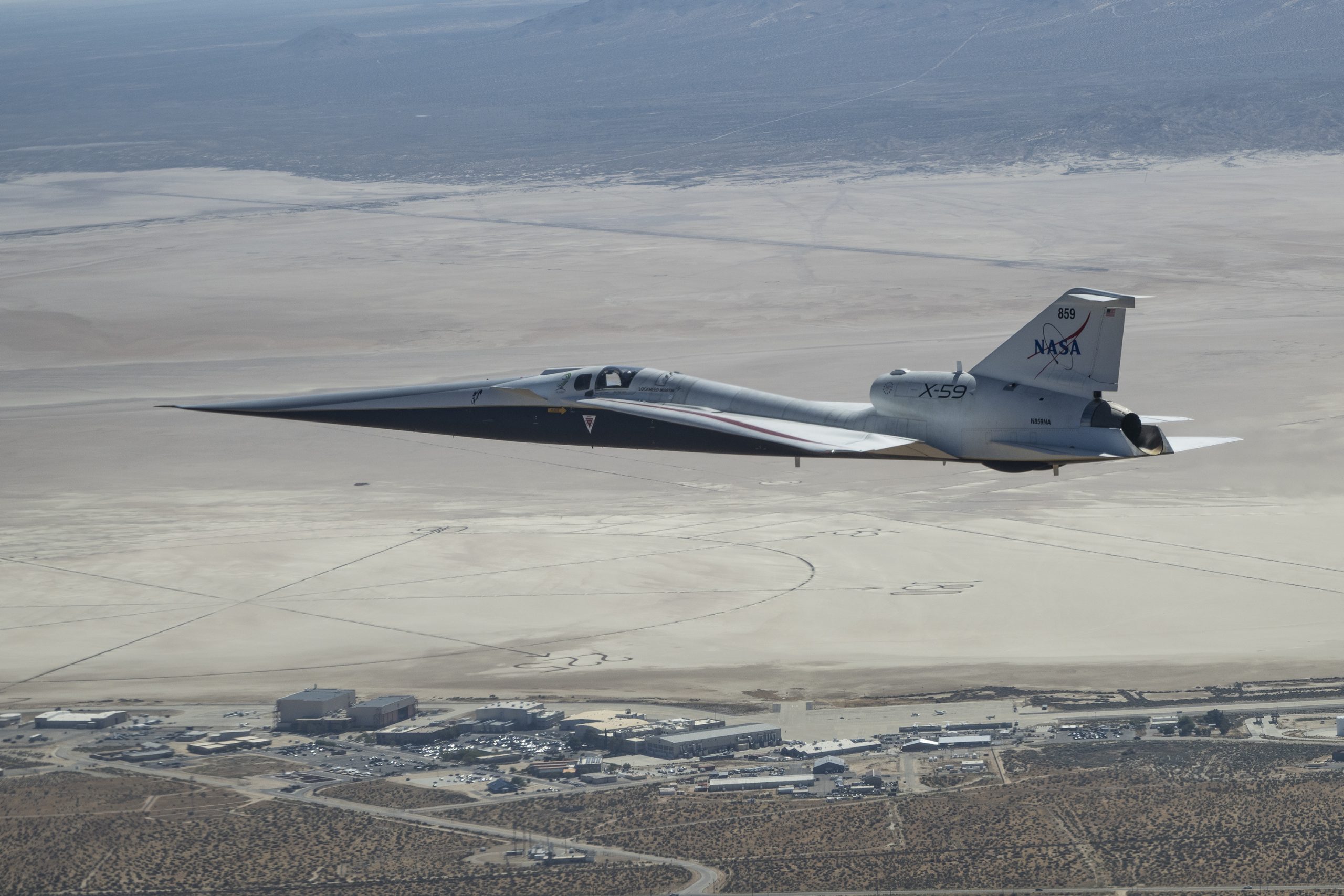
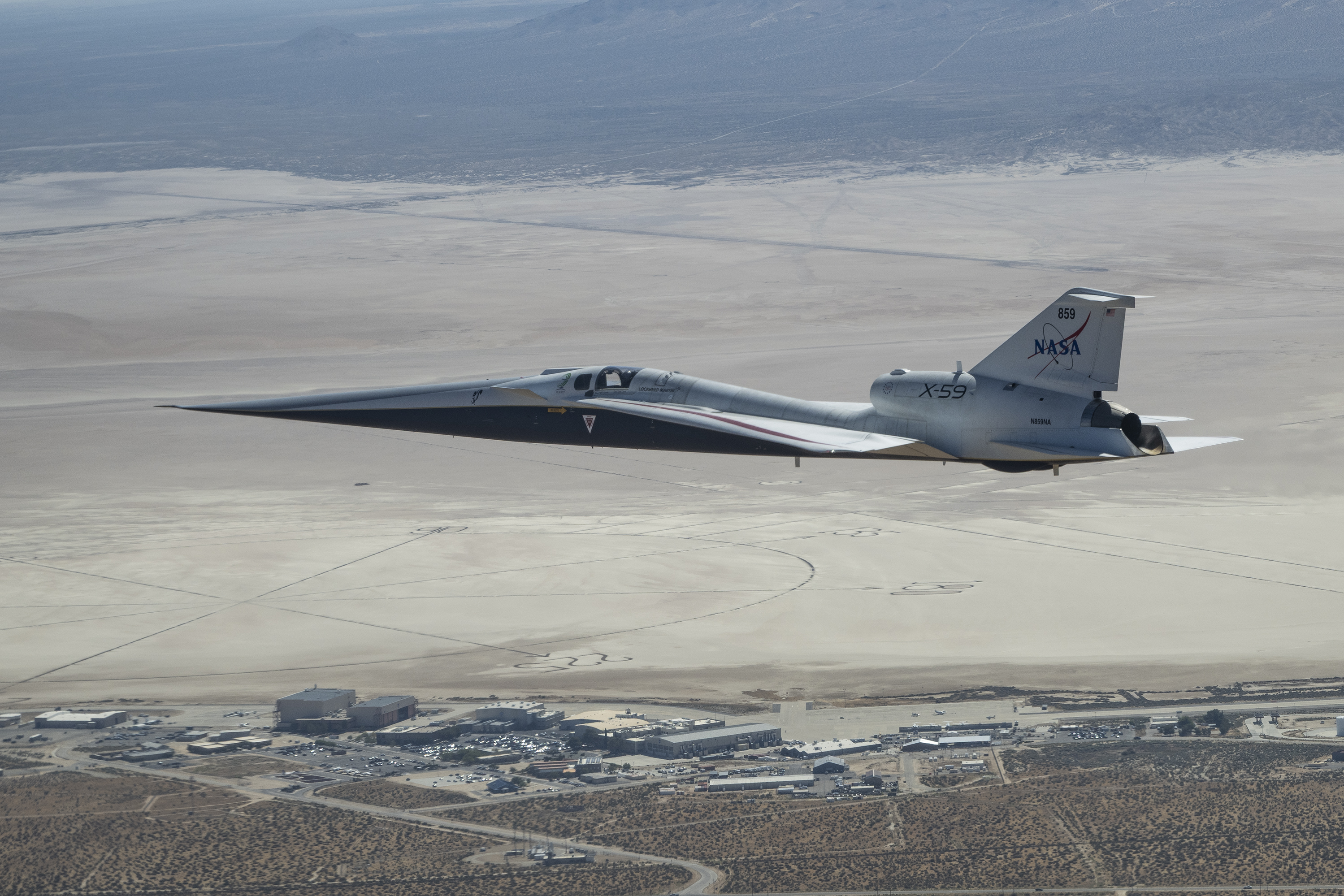
Going Low and Slow in Testing – NASA’s X-59 quiet supersonic research aircraft flies above NASA’s Armstrong Flight Research Center in Edwards, California, during testing focused on lower-speed and altitude flight conditions in support of NASA’s Quesst mission. NASA continues to include two-flight days in its envelope expansion as teams work to better understand how the aircraft responds throughout its operating range.

NASA’s X-59 quiet supersonic research aircraft flies above NASA’s Armstrong Flight Research Center in Edwards, California, during testing focused on lower-speed and altitude flight conditions in support of NASA’s Quesst mission. NASA continues to include two-flight days in its envelope expansion as teams work to better understand how the aircraft responds throughout its operating range.

Read More