Day: June 10, 2026

Pope Leo XIV: Fragility in old age can teach our efficiency-obsessed world – #Catholic – Pope Leo XIV has called for greater respect for the elderly, affirming that their fragility still has much to teach humanity today.In a letter sent via the Vatican secretary of state, Cardinal Pietro Parolin, to the participants of the June 10 symposium in Rome titled “A Bridge Toward Heaven,” the pontiff expressed his hope that their efforts would encourage “renewed attitudes of respect, gratitude, and esteem toward the elderly.”Leo also criticized the modern tendency to equate strength with mere displays of power. “The society we live in is dominated by the logic of performance and competition, whereby strength is conceived as a display of power and tends to degenerate into abuse,” the message said.The pope also praised the witness of the elderly in their physical weakness with age and described them as offering profound lessons for the younger generation, who might not yet recognize their value.“The elderly, in the serene acceptance of the limitations linked to the passing of the years, without hiding them or being ashamed of them, can be teachers of life, capable of showing everyone — and especially young people — that the value of an existence is not measured by the yardstick of efficiency or self-sufficiency but by the capacity to love and to let oneself be loved, to give and to receive,” the message said.

The pontiff, who is traveling in Spain, sent a letter to be read at a Vatican symposium on the elderly.

Read More
Refusing to inherit hatred and war: Teenagers launch peace initiative at the Vatican – #Catholic – Amid worsening armed conflicts in countries such as Ukraine, Nigeria, and those in the Middle East, a group of teenagers recently came to Rome to launch a new peace initiative, Project Oxygen.From May 31 to June 5, 40 teenagers from war-torn regions worldwide, including Ukraine, Nigeria, and the Middle East, participated in peace-building workshops on diplomacy and political engagement in conflict-affected areas. Through Project Oxygen, they aim to shift current narratives about conflict toward a future of creativity and compassion.Their activities included visits to Vatican dicasteries and the Italian Parliament, conferences on artificial intelligence, and a Wednesday general audience with Pope Leo XIV.One of the participants, Olena from Ukraine, expressed her conviction that her young generation can make a difference by uniting around shared values in a divided world.“We can make a change altogether and understand what things and circumstances unite us, and by that go to peace altogether,” Olena told EWTN News.Kathleen Hessert, founder of Project Oxygen and CEO of Sports Media Challenge, added: “The people in charge have not been able to come up with the solutions to peace. So we need to look somewhere else. And [by] their creativity and their imagination, these kids can bring a vibrancy, a creativity, and a dedication to peace.”

Refusing to inherit hatred and war: Teenagers launch peace initiative at the Vatican – #Catholic – Amid worsening armed conflicts in countries such as Ukraine, Nigeria, and those in the Middle East, a group of teenagers recently came to Rome to launch a new peace initiative, Project Oxygen.From May 31 to June 5, 40 teenagers from war-torn regions worldwide, including Ukraine, Nigeria, and the Middle East, participated in peace-building workshops on diplomacy and political engagement in conflict-affected areas. Through Project Oxygen, they aim to shift current narratives about conflict toward a future of creativity and compassion.Their activities included visits to Vatican dicasteries and the Italian Parliament, conferences on artificial intelligence, and a Wednesday general audience with Pope Leo XIV.One of the participants, Olena from Ukraine, expressed her conviction that her young generation can make a difference by uniting around shared values in a divided world.“We can make a change altogether and understand what things and circumstances unite us, and by that go to peace altogether,” Olena told EWTN News.Kathleen Hessert, founder of Project Oxygen and CEO of Sports Media Challenge, added: “The people in charge have not been able to come up with the solutions to peace. So we need to look somewhere else. And [by] their creativity and their imagination, these kids can bring a vibrancy, a creativity, and a dedication to peace.”

Forty teenagers from war-torn countries recently took part in the Project Oxygen Teen Peace Summit.

Read More
Pope Leo entrusts his pontificate to Our Lady of Montserrat: May she ‘guide us to Jesus’ – #Catholic – MONTSERRAT, Spain — The rugged silhouette of the Montserrat mountain range was one of the first symbols of Catalonia that Pope Leo XIV saw from above as his plane brought him to Barcelona from Madrid on June 9.The following day, the pope traveled by car to the mountainous area of Montserrat — whose name in Catalan means “serrated mountain” — home to a Benedictine abbey, which rises to a height of over 4,000 feet on the west side of the Llobregat River.Before arriving, however, the pontiff made a brief detour during the approximate 25-mile journey from Barcelona to stop at Brians 1 Penitentiary Center — a place steeped in suffering, where the lives of inmates find some comfort thanks to the prison chaplain, Father Jesús Bel, coordinator of prison ministry for the Diocese of Sant Feliu de Llobregat and a Mercedarian priest who has spent 40 years accompanying those deprived of their freedom.As he did during his trip to Equatorial Guinea, the pope embraced the suffering carried by prisoners.There, he heard directly from two inmates, Montserrat and Josefina, about the importance of having an anchor such as faith in Christ when life shows its harshest face. Their testimony moved the pope.“Here in prison I am not alone — Jesus gives me strength, he gives me life. I feel him within me; otherwise, I don’t know how I could have endured this,” Josefina told him.After her words, a heavy silence fell. Then, Leo offered a reflection that resonated among those present: “The mistakes of a person’s life do not determine who they are.”God loves you as you areThe pontiff invoked St. Augustine to underscore that the past does not chain the future, adding: “God loves you just as you are, but he dreams of you being even better! The Lord allows us all to start anew, for being human and being Christian does not mean never making mistakes, but rather growing in the ability to convert, repent, make amends, and, above all, to reconcile and forgive.”The encounter — though barely 20 minutes — set the tone for the rest of the day: the mercy of God embracing even the darkest hearts.The ascent to MontserratAfter visiting the prison, the pontiff headed to the Abbey of Montserrat, nestled among towering rock formations that resemble sculpted figures of animals or objects. The monastery radiates peace both inside and outside its ancient walls.In 1025, Abbot Oliba, then superior of the monastery of Ripoll, founded a smaller monastery on the mountain of Montserrat at a site where a small hermitage dedicated to the Virgin already stood.According to tradition, the first image of the Virgin — known in Catalan as “La Mare de Déu de Montserrat” — was discovered in the year 880 by children tending a flock in a cave after seeing a light on the mountain.When the bishop learned of the discovery, he sought to move the small statue to Manresa but was unable to do so because it became too heavy — a sign, he believed, that the Virgin wished to remain there. He then ordered a sanctuary to be built on the spot.At the foot of Montserrat, after praying the rosary, the pope lifted up his prayer: “Let us ask her to help us clothe ourselves only with the armor of God.”“Let us also consider how the Virgin holds the globe in her right hand, a sign of her maternal care, for the whole world finds a place in her heart. She invites us to recognize one another as brothers and sisters, so that no one is excluded and that communion is stronger than every division,” he added.The image of Mary currently venerated is a 12th-century Romanesque wooden sculpture, just over 3 feet tall, depicting the Blessed Virgin Mary with the Child Jesus.Except for the faces and hands, the statue is covered in gold, while the Virgin’s dark complexion has earned her the popular nickname “La Moreneta." In 2023, Pope Francis offered a Golden Rose to this venerated image.Among those who entrusted themselves to her was St. Ignatius of Loyola, in one of the most profound conversions in Christian tradition: “After a night spent in prayer before the Virgin, [he] laid aside his knightly arms — a moment that marked the beginning of a new life in the service of Jesus Christ,” Pope Leo XIV recalled.For centuries, faithful from all walks of life have passed through this sanctuary, praying the rosary bead by bead, because Mary, “Mare de Déu,” as the pope said, “is fundamental in the life of every Christian.”“I am happy to come to the feet of La Moreneta to entrust to her, with full confidence in her maternal intercession, my Petrine ministry and the mission of the Church in a world that cries out for justice and peace,” the pope said.“I invite you today to accept Mary’s invitation: ‘Do whatever he tells you' (Jn 2:5). These words spoken at Cana in Galilee contain a true guide for Christian living, because Mary leads us to Christ and teaches us to listen to his voice, obey his word, and allow him to transform us,” he added.The pontiff also made clear the message God brought to the world when he became man: “Jesus shows us the path of mercy, reconciliation, truth, and gentleness. At the same time, he exposes the violence that can lurk in our words and attitudes: criticism that humiliates, condemnation that destroys, and aggression that divides.”That hidden violence, he continued, “can often disguise itself as a kind of armor, which we use to protect our wounds, our fears, and the suffering caused by injustice.”Over the centuries, Montserrat has grown as living things do — with scars and memory. It has not always been a place of peace. It was plundered, destroyed, abandoned. Yet it always rose again, as if the mountain itself sustained it.Leo XIV concluded by asking that “Mary, Mother of the Church, always guide us to Jesus. I invite you to honor her with these words that you know so well: To the Catalans, you will always be the Princess; to the Spanish people and to the whole world, all our love; say to us: You are my treasure, I am your mother, do not be afraid.”In the abbey cloister, hundreds of people waited eagerly for the pope. Among them was Miguel, a kind-eyed boy who wrote a letter hoping to hand it to the pontiff himself.“He wanted to write it in Italian, even though the pope — as we know — speaks Spanish perfectly,” said his father, also named Miguel. In the letter, he asks nothing for himself or his family. “I would like him to bless all of Ukraine,” said the 9-year-old, an avid reader who currently keeps the greatest of all books on his nightstand. “I’m reading the Bible. I love everything about it,” he said.‘Catalonia without La Moreneta would be nothing’Also waiting for the pope were two nuns from the Congregation of the Little Sisters of the Poor, Sister Ángeles Piqué, from a small town in Lleida, and Sister Doraliza, originally from Cajamarca, Peru. “We need the pope to bring us Christ’s message: unity, fraternity, and to come to the Virgin as our point of reference," Sister Doralizia said.She gave voice to the widespread devotion to the Virgin of Montserrat in this region of Spain. “Catalonia without La Moreneta would be nothing,” she said.“Our Lady of Montserrat is a very special grace. This is her sanctuary, and all her children come here to ask for her protection and to be sheltered under her mantle,” Piqué added.This story was first published by ACI Prensa, the Spanish-language sister service of EWTN News. It has been translated and adapted by EWTN News English.

Pope Leo entrusts his pontificate to Our Lady of Montserrat: May she ‘guide us to Jesus’ – #Catholic – MONTSERRAT, Spain — The rugged silhouette of the Montserrat mountain range was one of the first symbols of Catalonia that Pope Leo XIV saw from above as his plane brought him to Barcelona from Madrid on June 9.The following day, the pope traveled by car to the mountainous area of Montserrat — whose name in Catalan means “serrated mountain” — home to a Benedictine abbey, which rises to a height of over 4,000 feet on the west side of the Llobregat River.Before arriving, however, the pontiff made a brief detour during the approximate 25-mile journey from Barcelona to stop at Brians 1 Penitentiary Center — a place steeped in suffering, where the lives of inmates find some comfort thanks to the prison chaplain, Father Jesús Bel, coordinator of prison ministry for the Diocese of Sant Feliu de Llobregat and a Mercedarian priest who has spent 40 years accompanying those deprived of their freedom.As he did during his trip to Equatorial Guinea, the pope embraced the suffering carried by prisoners.There, he heard directly from two inmates, Montserrat and Josefina, about the importance of having an anchor such as faith in Christ when life shows its harshest face. Their testimony moved the pope.“Here in prison I am not alone — Jesus gives me strength, he gives me life. I feel him within me; otherwise, I don’t know how I could have endured this,” Josefina told him.After her words, a heavy silence fell. Then, Leo offered a reflection that resonated among those present: “The mistakes of a person’s life do not determine who they are.”God loves you as you areThe pontiff invoked St. Augustine to underscore that the past does not chain the future, adding: “God loves you just as you are, but he dreams of you being even better! The Lord allows us all to start anew, for being human and being Christian does not mean never making mistakes, but rather growing in the ability to convert, repent, make amends, and, above all, to reconcile and forgive.”The encounter — though barely 20 minutes — set the tone for the rest of the day: the mercy of God embracing even the darkest hearts.The ascent to MontserratAfter visiting the prison, the pontiff headed to the Abbey of Montserrat, nestled among towering rock formations that resemble sculpted figures of animals or objects. The monastery radiates peace both inside and outside its ancient walls.In 1025, Abbot Oliba, then superior of the monastery of Ripoll, founded a smaller monastery on the mountain of Montserrat at a site where a small hermitage dedicated to the Virgin already stood.According to tradition, the first image of the Virgin — known in Catalan as “La Mare de Déu de Montserrat” — was discovered in the year 880 by children tending a flock in a cave after seeing a light on the mountain.When the bishop learned of the discovery, he sought to move the small statue to Manresa but was unable to do so because it became too heavy — a sign, he believed, that the Virgin wished to remain there. He then ordered a sanctuary to be built on the spot.At the foot of Montserrat, after praying the rosary, the pope lifted up his prayer: “Let us ask her to help us clothe ourselves only with the armor of God.”“Let us also consider how the Virgin holds the globe in her right hand, a sign of her maternal care, for the whole world finds a place in her heart. She invites us to recognize one another as brothers and sisters, so that no one is excluded and that communion is stronger than every division,” he added.The image of Mary currently venerated is a 12th-century Romanesque wooden sculpture, just over 3 feet tall, depicting the Blessed Virgin Mary with the Child Jesus.Except for the faces and hands, the statue is covered in gold, while the Virgin’s dark complexion has earned her the popular nickname “La Moreneta." In 2023, Pope Francis offered a Golden Rose to this venerated image.Among those who entrusted themselves to her was St. Ignatius of Loyola, in one of the most profound conversions in Christian tradition: “After a night spent in prayer before the Virgin, [he] laid aside his knightly arms — a moment that marked the beginning of a new life in the service of Jesus Christ,” Pope Leo XIV recalled.For centuries, faithful from all walks of life have passed through this sanctuary, praying the rosary bead by bead, because Mary, “Mare de Déu,” as the pope said, “is fundamental in the life of every Christian.”“I am happy to come to the feet of La Moreneta to entrust to her, with full confidence in her maternal intercession, my Petrine ministry and the mission of the Church in a world that cries out for justice and peace,” the pope said.“I invite you today to accept Mary’s invitation: ‘Do whatever he tells you' (Jn 2:5). These words spoken at Cana in Galilee contain a true guide for Christian living, because Mary leads us to Christ and teaches us to listen to his voice, obey his word, and allow him to transform us,” he added.The pontiff also made clear the message God brought to the world when he became man: “Jesus shows us the path of mercy, reconciliation, truth, and gentleness. At the same time, he exposes the violence that can lurk in our words and attitudes: criticism that humiliates, condemnation that destroys, and aggression that divides.”That hidden violence, he continued, “can often disguise itself as a kind of armor, which we use to protect our wounds, our fears, and the suffering caused by injustice.”Over the centuries, Montserrat has grown as living things do — with scars and memory. It has not always been a place of peace. It was plundered, destroyed, abandoned. Yet it always rose again, as if the mountain itself sustained it.Leo XIV concluded by asking that “Mary, Mother of the Church, always guide us to Jesus. I invite you to honor her with these words that you know so well: To the Catalans, you will always be the Princess; to the Spanish people and to the whole world, all our love; say to us: You are my treasure, I am your mother, do not be afraid.”In the abbey cloister, hundreds of people waited eagerly for the pope. Among them was Miguel, a kind-eyed boy who wrote a letter hoping to hand it to the pontiff himself.“He wanted to write it in Italian, even though the pope — as we know — speaks Spanish perfectly,” said his father, also named Miguel. In the letter, he asks nothing for himself or his family. “I would like him to bless all of Ukraine,” said the 9-year-old, an avid reader who currently keeps the greatest of all books on his nightstand. “I’m reading the Bible. I love everything about it,” he said.‘Catalonia without La Moreneta would be nothing’Also waiting for the pope were two nuns from the Congregation of the Little Sisters of the Poor, Sister Ángeles Piqué, from a small town in Lleida, and Sister Doraliza, originally from Cajamarca, Peru. “We need the pope to bring us Christ’s message: unity, fraternity, and to come to the Virgin as our point of reference," Sister Doralizia said.She gave voice to the widespread devotion to the Virgin of Montserrat in this region of Spain. “Catalonia without La Moreneta would be nothing,” she said.“Our Lady of Montserrat is a very special grace. This is her sanctuary, and all her children come here to ask for her protection and to be sheltered under her mantle,” Piqué added.This story was first published by ACI Prensa, the Spanish-language sister service of EWTN News. It has been translated and adapted by EWTN News English.

After visiting a prison, Pope Leo headed to the Abbey of Montserrat northwest of Barcelona and nestled among towering rock formations that resemble sculpted figures of animals or objects.

Read More

Eugene Parker, pioneer of theoretical solar and plasma astrophysics, was born June 10, 1927. Parker revolutionized the field of heliophysics, notably by first proposing the existence of the solar wind — a stream of charged particles ejected from the Sun — in 1958. His theory was confirmed by Mariner II in 1962. Among many otherContinue reading “June 10, 1927: The birth of Eugene Parker”

The post June 10, 1927: The birth of Eugene Parker appeared first on Astronomy Magazine.

Read More
Pope Leo XIV honors Our Lady of Almudena with Golden Rose, reflects on Spain’s Christian heritage #Catholic For more than a thousand years, generations of Catholics in Madrid have turned to Our Lady of Almudena in times of celebration, hardship, and prayer. On June 8, that enduring devotion received one of the Church’s highest marks of recognition when Pope Leo XIV bestowed a Golden Rose upon the historic statue.“As a symbol of the pope’s filial love for the Virgin Mary, I will place a Golden Rose at her feet,” Leo said during a ceremony at Madrid’s Cathedral of Santa María la Real de la Almudena.The papal honor — one of the highest distinctions a pope can bestow upon a Marian image or shrine — recognizes the deep devotion generations of Spanish Catholics have shown to the Blessed Virgin under the title of Almudena.The exact origin of the gifting of a Golden Rose is unknown, although it is considered one of the oldest papal traditions. The earliest reliable record dates to 1096, when Pope Urban II sent one to Fulcone d’Angers. Hidden in the citadel wallAddressing the faithful gathered in the cathedral, Leo reflected on the image’s unique place in Madrid’s history.“For centuries, countless generations of Madrileños have venerated this image of the Blessed Virgin Mary holding her divine Son in her arms and presenting him to us,” the pope said.According to long-standing tradition, the devotion dates to the early centuries of Christianity in Spain. When Muslim forces conquered much of the Iberian Peninsula in A.D. 712, Christians in Madrid reportedly concealed the statue within the city’s defensive walls to protect it from destruction. The image remained hidden for centuries as Christian kingdoms gradually sought to reclaim territories across the peninsula during the Reconquista.The wall that fell In 1083, after King Alfonso VI of Castile recaptured Madrid, Christians searched for the long-lost statue. Tradition holds that after days of prayer, a section of the city wall suddenly collapsed, revealing the image preserved within. Witnesses reported seeing lights near the site, and the statue was discovered largely intact despite centuries of concealment.Recalling the story, Leo noted that “during challenging periods for the Christian community, the statue of the Virgin Mary was hidden in a niche of the citadel wall for protection. It remained concealed for some time, until parts of the wall collapsed and it was miraculously discovered intact.”The title “Almudena” derives from the Arabic word “al-mudayna,” meaning “citadel” or “fortress,” a reference to the location where the image was found.A message for today In his homily, the pope used the collapse of the wall as a spiritual lesson for modern society.“It was thanks to a collapsed wall that the Mother was reunited with her people,” Leo said. “This event is providential, because it points to the path that Jesus, through his most holy mother, invites us to follow.”Leo connected that image to challenges facing the modern world, observing that “there are still many walls that do not protect but rather divide, separate, and isolate.”The ceremony also highlighted the popeʼs connection to Spain, a nation whose Catholic heritage has profoundly shaped the history of the Church. By honoring one of Spain’s most beloved Marian images, the pontiff underscored the enduring importance of popular Marian devotion and the Christian roots that continue to influence Spanish culture.Renewing faith and hope Beyond its historical significance, the story of Our Lady of Almudena continues to resonate with Catholics today. The devotion recalls themes of perseverance, hope, and trust in God’s providence, themes Pope Leo himself highlighted as he encouraged the faithful to remain steadfast in faith, charity, and hope.Calling the devotion a source of hope, Leo described it as “a sign of the Christian roots that characterize you and give you life, but also of the great hope which continues to motivate you to move forward.”He concluded by encouraging Catholics to remain steadfast in faith, charity, and hope, asking that the intercession of Our Lady of Almudena strengthen believers in their love for Christ and help them “form bonds and restore the universal language of communion, fraternal love, and harmony.”

Pope Leo XIV honors Our Lady of Almudena with Golden Rose, reflects on Spain’s Christian heritage #Catholic For more than a thousand years, generations of Catholics in Madrid have turned to Our Lady of Almudena in times of celebration, hardship, and prayer. On June 8, that enduring devotion received one of the Church’s highest marks of recognition when Pope Leo XIV bestowed a Golden Rose upon the historic statue.“As a symbol of the pope’s filial love for the Virgin Mary, I will place a Golden Rose at her feet,” Leo said during a ceremony at Madrid’s Cathedral of Santa María la Real de la Almudena.The papal honor — one of the highest distinctions a pope can bestow upon a Marian image or shrine — recognizes the deep devotion generations of Spanish Catholics have shown to the Blessed Virgin under the title of Almudena.The exact origin of the gifting of a Golden Rose is unknown, although it is considered one of the oldest papal traditions. The earliest reliable record dates to 1096, when Pope Urban II sent one to Fulcone d’Angers. Hidden in the citadel wallAddressing the faithful gathered in the cathedral, Leo reflected on the image’s unique place in Madrid’s history.“For centuries, countless generations of Madrileños have venerated this image of the Blessed Virgin Mary holding her divine Son in her arms and presenting him to us,” the pope said.According to long-standing tradition, the devotion dates to the early centuries of Christianity in Spain. When Muslim forces conquered much of the Iberian Peninsula in A.D. 712, Christians in Madrid reportedly concealed the statue within the city’s defensive walls to protect it from destruction. The image remained hidden for centuries as Christian kingdoms gradually sought to reclaim territories across the peninsula during the Reconquista.The wall that fell In 1083, after King Alfonso VI of Castile recaptured Madrid, Christians searched for the long-lost statue. Tradition holds that after days of prayer, a section of the city wall suddenly collapsed, revealing the image preserved within. Witnesses reported seeing lights near the site, and the statue was discovered largely intact despite centuries of concealment.Recalling the story, Leo noted that “during challenging periods for the Christian community, the statue of the Virgin Mary was hidden in a niche of the citadel wall for protection. It remained concealed for some time, until parts of the wall collapsed and it was miraculously discovered intact.”The title “Almudena” derives from the Arabic word “al-mudayna,” meaning “citadel” or “fortress,” a reference to the location where the image was found.A message for today In his homily, the pope used the collapse of the wall as a spiritual lesson for modern society.“It was thanks to a collapsed wall that the Mother was reunited with her people,” Leo said. “This event is providential, because it points to the path that Jesus, through his most holy mother, invites us to follow.”Leo connected that image to challenges facing the modern world, observing that “there are still many walls that do not protect but rather divide, separate, and isolate.”The ceremony also highlighted the popeʼs connection to Spain, a nation whose Catholic heritage has profoundly shaped the history of the Church. By honoring one of Spain’s most beloved Marian images, the pontiff underscored the enduring importance of popular Marian devotion and the Christian roots that continue to influence Spanish culture.Renewing faith and hope Beyond its historical significance, the story of Our Lady of Almudena continues to resonate with Catholics today. The devotion recalls themes of perseverance, hope, and trust in God’s providence, themes Pope Leo himself highlighted as he encouraged the faithful to remain steadfast in faith, charity, and hope.Calling the devotion a source of hope, Leo described it as “a sign of the Christian roots that characterize you and give you life, but also of the great hope which continues to motivate you to move forward.”He concluded by encouraging Catholics to remain steadfast in faith, charity, and hope, asking that the intercession of Our Lady of Almudena strengthen believers in their love for Christ and help them “form bonds and restore the universal language of communion, fraternal love, and harmony.”

The origin of the gifting of a golden rose is unknown, but it is considered one of the oldest papal traditions dating back to 1096.

Read More
13,000 gather at Knock in Ireland for largest Catholic rally since papal visit #Catholic In the largest gathering of Catholics in Ireland since Pope Francis’ visit in 2018, the annual All Ireland Rosary brought over 13,000 people to Knock Shrine on June 6 in a joint prayer for peace. Speaking to EWTN News after the rally, Archbishop of Armagh and Primate of All Ireland Eamon Martin said: “It was a very special joy for me to preside at the Eucharist in Knock at the rosary rally. I felt a tremendous sense of joy and hope among the people who were gathered there. And it was especially gratifying to see many young people, including the childrenʼs rosary group, who made a very important and beautiful contribution to the day.”The archbishop added: “I really felt that Knock was alive, and it makes me realize that our Blessed Mother continues to speak into the troubled world in which we live, with many new problems and new challenges. From the point of view of Ireland, itʼs very important for us to have a gathering like this, to affirm the very many people who have remained strong and steadfast in their faith and who need this kind of gathering in order to give them encouragement and a strong sense of mission.”Martin said the word “mission” stayed with him after leaving the rally. “Thatʼs a word that I went home with in my head,“ he said. ”There is a wonderful mission involved in the rosary rally. Itʼs about gathering people but also about sending them back into their homes, parishes, and communities, to continue to make the beautiful graces of our Blessed Mother well known, to continue to pray for peace.”
 
 Thousands gather at Knock Shrine in Knock, Ireland, for the All Ireland Rosary Rally on June 6, 2026. | Credit Dáithi Quinn
 
 Turning to the practical ways in which people can make a difference in their local parishes, Martin said: “I personally would invite people to restore the practice of the First Saturday devotions. This would be in fulfillment of our Blessed Motherʼs own wish, but it would also provide a new and further structure for parishes to gather, to pray the rosary, to have adoration, to have the sacrament of reconciliation available.”Martin also expressed hope that other countries might be inspired by the example of the All Ireland Rosary Rally.In his sermon during the Mass at the shrine on the day of the rally, the archbishop encouraged the congregation of thousands to pray often, in union with Mary, for the protection of humanity in this technological age.Echoing the words of Pope Leo XIV in his recent encyclical Magnifica Humanitas, he said: “Artificial Intelligence is already shaping human life in homes, workplaces, and communities; in hospitals, public services, and economies. AI can do remarkable and helpful things. It can even mimic human behavior and voices, but it cannot love, suffer, forgive, pray, or hope as humans can, nor can it be truly ‘wise.’ AI does not have a conscience.”Together with Bishop Donal McKeown and Bishop John Buckley, Martin led the renewal of the consecration of Ireland to the Immaculate Heart of Mary at the culmination of the rosary procession.Speaking to EWTN News, Christine O’Hara, a secondary schoolteacher in Cork, Ireland, said: “The rosary rally was a very blessed and grace-filled day, and thereʼs a number of things that weʼre really hoping people will take away from the event. The first being that people will feel inspired to pray the rosary every day.”O’Hara, who runs a childrenʼs rosary group and two First Saturday communities, added: “Our Lady said in Fátima, pray the rosary every day to obtain peace in the world and an end to the war. Itʼs the desire of Archbishop Eamon Martin that the renewal of the First Saturday devotion would happen in this country. Weʼre really hoping and praying that one of the fruits, and Iʼm sure there will be many fruits from this rosary rally, but weʼre really hoping and praying that people will feel inspired to start the First Saturday devotion in their parish.”OʼHara also said she hopes more people will be inspired to start childrenʼs rosary groups as well as rosary groups for adults in their parishes. The huge crowd also heard from an inspiring panel of international speakers. Bishop Oliver Doeme spoke to the crowds about the power of the rosary in strengthening the faith and courage of the people of his diocese in Nigeria who live in daily fear of murder at the hands of Boko Haram terrorists.Nikki Kingsley shared her remarkable conversion journey from the Muslim faith in her native Pakistan to being received into the Catholic faith. Her moving and inspiring story focused on the power of the rosary and her devotion to Our Lady.Other speakers included Father Chris Alar, the provincial superior of the Marian Fathers of the Immaculate Conception, who talked of the importance of Marian devotion, and Sister Ângela de Fátima, vice postulator for the cause of the three Fátima children.

13,000 gather at Knock in Ireland for largest Catholic rally since papal visit #Catholic In the largest gathering of Catholics in Ireland since Pope Francis’ visit in 2018, the annual All Ireland Rosary brought over 13,000 people to Knock Shrine on June 6 in a joint prayer for peace. Speaking to EWTN News after the rally, Archbishop of Armagh and Primate of All Ireland Eamon Martin said: “It was a very special joy for me to preside at the Eucharist in Knock at the rosary rally. I felt a tremendous sense of joy and hope among the people who were gathered there. And it was especially gratifying to see many young people, including the childrenʼs rosary group, who made a very important and beautiful contribution to the day.”The archbishop added: “I really felt that Knock was alive, and it makes me realize that our Blessed Mother continues to speak into the troubled world in which we live, with many new problems and new challenges. From the point of view of Ireland, itʼs very important for us to have a gathering like this, to affirm the very many people who have remained strong and steadfast in their faith and who need this kind of gathering in order to give them encouragement and a strong sense of mission.”Martin said the word “mission” stayed with him after leaving the rally. “Thatʼs a word that I went home with in my head,“ he said. ”There is a wonderful mission involved in the rosary rally. Itʼs about gathering people but also about sending them back into their homes, parishes, and communities, to continue to make the beautiful graces of our Blessed Mother well known, to continue to pray for peace.” Thousands gather at Knock Shrine in Knock, Ireland, for the All Ireland Rosary Rally on June 6, 2026. | Credit Dáithi Quinn Turning to the practical ways in which people can make a difference in their local parishes, Martin said: “I personally would invite people to restore the practice of the First Saturday devotions. This would be in fulfillment of our Blessed Motherʼs own wish, but it would also provide a new and further structure for parishes to gather, to pray the rosary, to have adoration, to have the sacrament of reconciliation available.”Martin also expressed hope that other countries might be inspired by the example of the All Ireland Rosary Rally.In his sermon during the Mass at the shrine on the day of the rally, the archbishop encouraged the congregation of thousands to pray often, in union with Mary, for the protection of humanity in this technological age.Echoing the words of Pope Leo XIV in his recent encyclical Magnifica Humanitas, he said: “Artificial Intelligence is already shaping human life in homes, workplaces, and communities; in hospitals, public services, and economies. AI can do remarkable and helpful things. It can even mimic human behavior and voices, but it cannot love, suffer, forgive, pray, or hope as humans can, nor can it be truly ‘wise.’ AI does not have a conscience.”Together with Bishop Donal McKeown and Bishop John Buckley, Martin led the renewal of the consecration of Ireland to the Immaculate Heart of Mary at the culmination of the rosary procession.Speaking to EWTN News, Christine O’Hara, a secondary schoolteacher in Cork, Ireland, said: “The rosary rally was a very blessed and grace-filled day, and thereʼs a number of things that weʼre really hoping people will take away from the event. The first being that people will feel inspired to pray the rosary every day.”O’Hara, who runs a childrenʼs rosary group and two First Saturday communities, added: “Our Lady said in Fátima, pray the rosary every day to obtain peace in the world and an end to the war. Itʼs the desire of Archbishop Eamon Martin that the renewal of the First Saturday devotion would happen in this country. Weʼre really hoping and praying that one of the fruits, and Iʼm sure there will be many fruits from this rosary rally, but weʼre really hoping and praying that people will feel inspired to start the First Saturday devotion in their parish.”OʼHara also said she hopes more people will be inspired to start childrenʼs rosary groups as well as rosary groups for adults in their parishes. The huge crowd also heard from an inspiring panel of international speakers. Bishop Oliver Doeme spoke to the crowds about the power of the rosary in strengthening the faith and courage of the people of his diocese in Nigeria who live in daily fear of murder at the hands of Boko Haram terrorists.Nikki Kingsley shared her remarkable conversion journey from the Muslim faith in her native Pakistan to being received into the Catholic faith. Her moving and inspiring story focused on the power of the rosary and her devotion to Our Lady.Other speakers included Father Chris Alar, the provincial superior of the Marian Fathers of the Immaculate Conception, who talked of the importance of Marian devotion, and Sister Ângela de Fátima, vice postulator for the cause of the three Fátima children.

Busloads of people from across Ireland converged on Knock on Saturday for the 41st All Ireland Rosary, with crowds exceeding last year’s attendance.

Read More
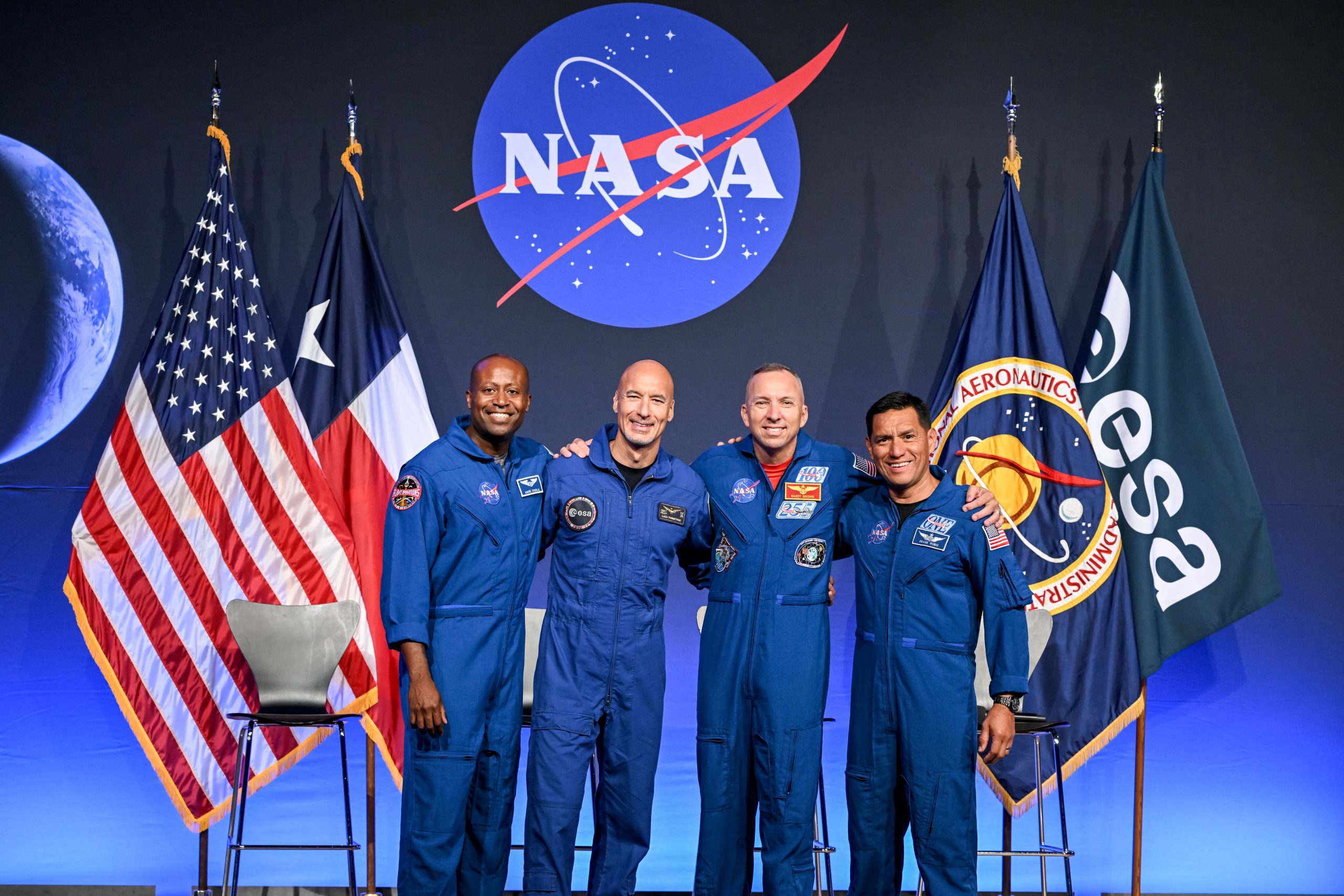
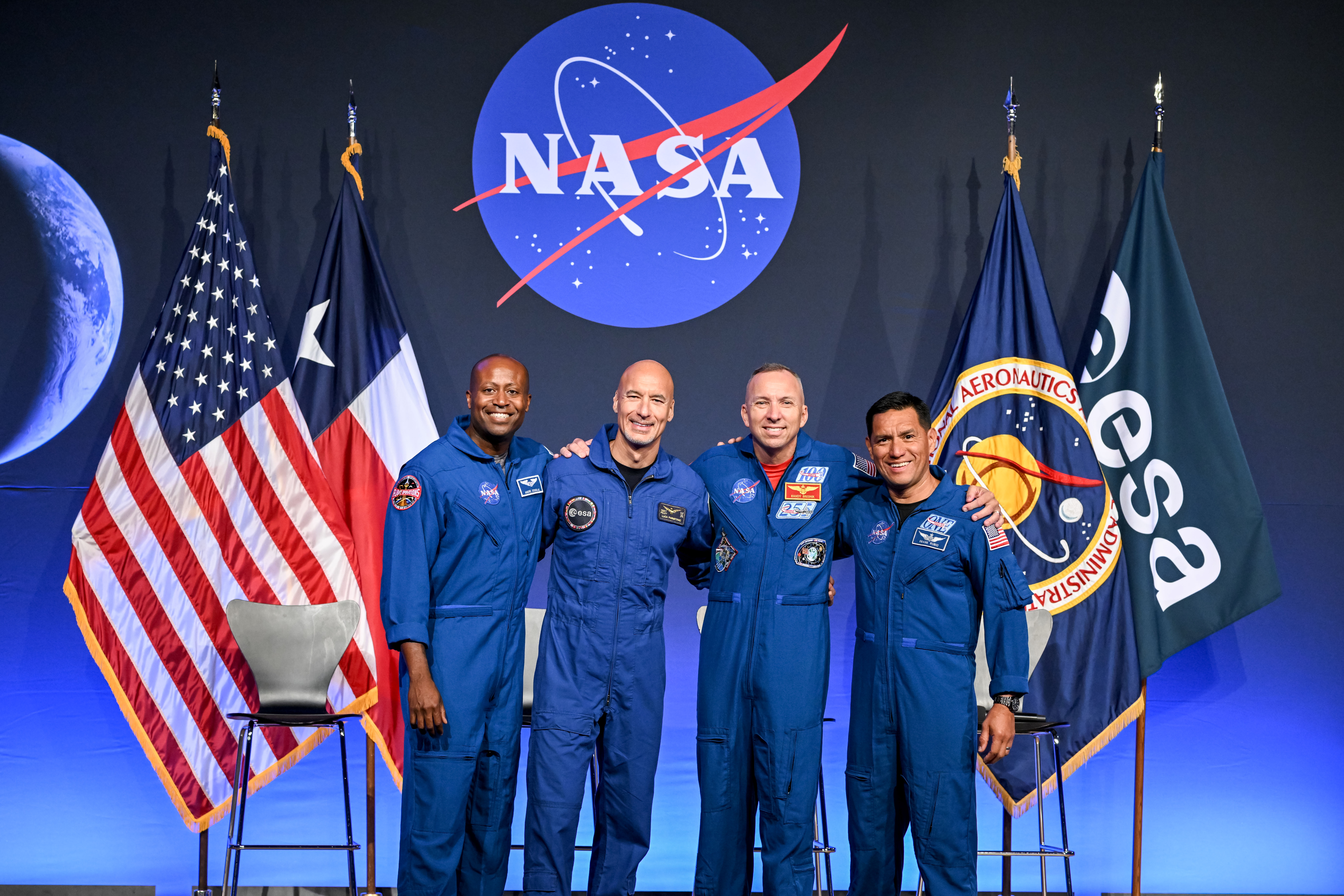
Artemis III Crew Announced – NASA announced the Artemis III crew on Tuesday, June 9, 2026. NASA astronaut Andre Douglas, mission specialist; ESA (European Space Agency) astronaut Luca Parmitano, pilot; NASA astronaut Randy Bresnik, commander; and NASA astronaut Frank Rubio, mission specialist, will demonstrate the Orion spacecraft’s rendezvous and docking capabilities with test versions from one, or both, American commercial human landing systems in development by Blue Origin and SpaceX.

NASA announced the Artemis III crew on Tuesday, June 9, 2026. NASA astronaut Andre Douglas, mission specialist; ESA (European Space Agency) astronaut Luca Parmitano, pilot; NASA astronaut Randy Bresnik, commander; and NASA astronaut Frank Rubio, mission specialist, will demonstrate the Orion spacecraft’s rendezvous and docking capabilities with test versions from one, or both, American commercial human landing systems in development by Blue Origin and SpaceX.

Read More