Day: June 17, 2026

Gospel and Word of the Day – 18 June 2026 – A reading from the Book of Sirach 48:1-14 Like a fire there appeared the prophet Elijah whose words were as a flaming furnace. Their staff of bread he shattered, in his zeal he reduced them to straits; By the Lord’s word he shut up the heavens and three times brought down fire. How awesome are you, Elijah, in your wondrous deeds! Whose glory is equal to yours? You brought a dead man back to life from the nether world, by the will of the LORD. You sent kings down to destruction, and easily broke their power into pieces. You brought down nobles, from their beds of sickness. You heard threats at Sinai, at Horeb avenging judgments. You anointed kings who should inflict vengeance, and a prophet as your successor. You were taken aloft in a whirlwind of fire, in a chariot with fiery horses. You were destined, it is written, in time to come to put an end to wrath before the day of the LORD, To turn back the hearts of fathers toward their sons, and to re-establish the tribes of Jacob. Blessed is he who shall have seen you  And who falls asleep in your friendship. For we live only in our life, but after death our name will not be such. O Elijah, enveloped in the whirlwind! Then Elisha, filled with the twofold portion of his spirit, wrought many marvels by his mere word. During his lifetime he feared no one, nor was any man able to intimidate his will. Nothing was beyond his power; beneath him flesh was brought back into life. In life he performed wonders, and after death, marvelous deeds.From the Gospel according to Matthew 6:7-15 Jesus said to his disciples: “In praying, do not babble like the pagans, who think that they will be heard because of their many words. Do not be like them. Your Father knows what you need before you ask him. “This is how you are to pray: ‘Our Father who art in heaven, hallowed be thy name, thy Kingdom come, thy will be done, on earth as it is in heaven. Give us this day our daily bread; and forgive us our trespasses, as we forgive those who trespass against us; and lead us not into temptation, but deliver us from evil.’ “If you forgive others their transgressions, your heavenly Father will forgive you. But if you do not forgive others, neither will your Father forgive your transgressions.”Today’s Gospel presents Jesus teaching his disciples the Our Father (…). This is the prayer that unites all Christians. (…) The Catechism of the Catholic Church expresses this very well: “Thus the Lord’s Prayer reveals us to ourselves at the same time that it reveals the Father to us” (ibid., 2783). Indeed, how true this is, for the more we pray with confidence to our heavenly Father, the more we discover that we are beloved children and the more we come to know the greatness of his love (…). The Lord always listens to us when we pray to him. If he sometimes responds in ways or at times that are difficult to understand, it is because he acts with wisdom and providence, which are beyond our understanding. Even in these moments, then, let us not cease to pray — and pray with confidence — for in him we will always find light and strength. When we recite the Our Father, in addition to celebrating the grace of being children of God, we also express our commitment to responding to this gift by loving one another as brothers and sisters in Christ. (…). We cannot pray to God as “Father” and then be harsh and insensitive towards others. Instead, it is important to let ourselves be transformed by his goodness, his patience, his mercy, so that his face may be reflected in ours as in a mirror. (Pope Leo XVI, Angelus, 27 luglio 2025)

A reading from the Book of Sirach
48:1-14

Like a fire there appeared the prophet Elijah
whose words were as a flaming furnace.
Their staff of bread he shattered,
in his zeal he reduced them to straits;
By the Lord’s word he shut up the heavens
and three times brought down fire.
How awesome are you, Elijah, in your wondrous deeds!
Whose glory is equal to yours?
You brought a dead man back to life
from the nether world, by the will of the LORD.
You sent kings down to destruction,
and easily broke their power into pieces.
You brought down nobles, from their beds of sickness.
You heard threats at Sinai,
at Horeb avenging judgments.
You anointed kings who should inflict vengeance,
and a prophet as your successor.
You were taken aloft in a whirlwind of fire,
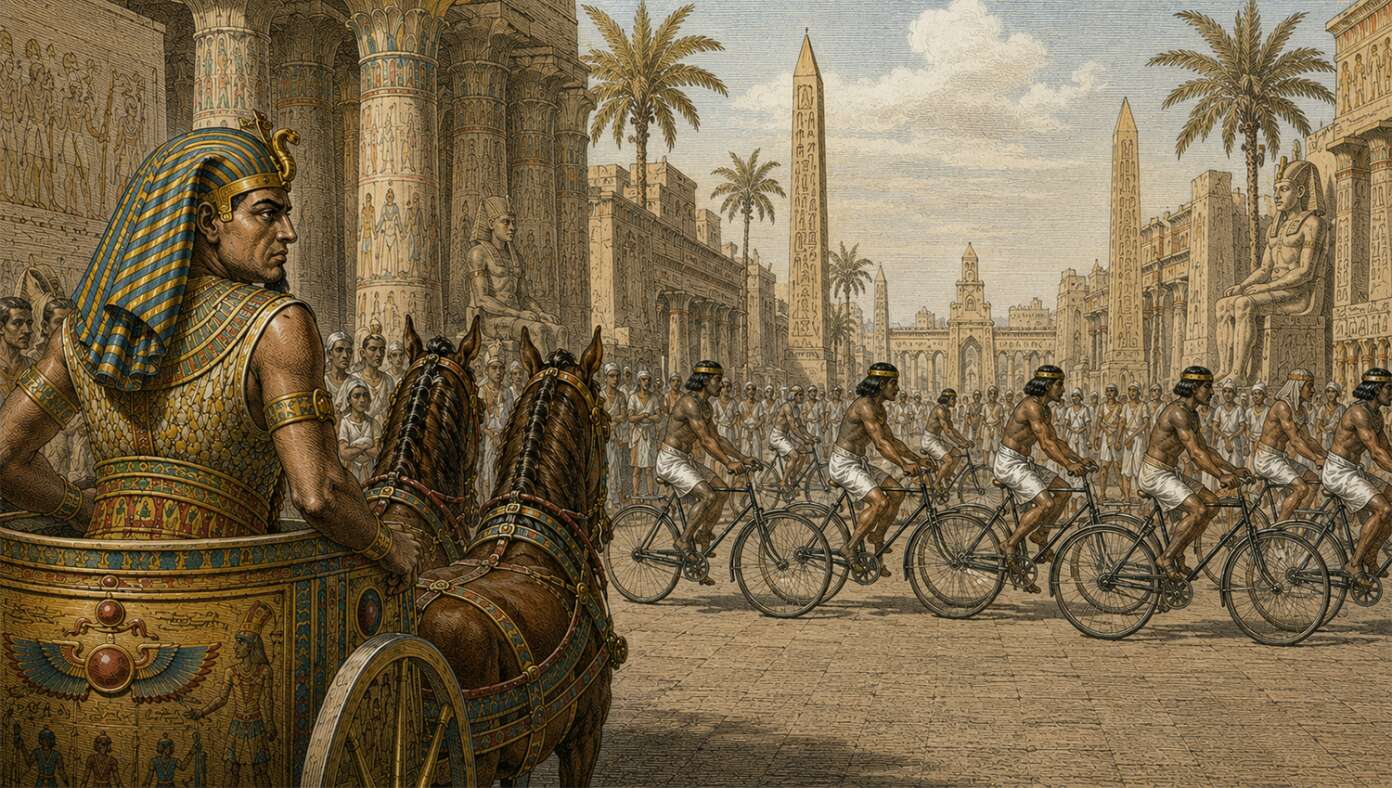
in a chariot with fiery horses.
You were destined, it is written, in time to come
to put an end to wrath before the day of the LORD,
To turn back the hearts of fathers toward their sons,
and to re-establish the tribes of Jacob.
Blessed is he who shall have seen you 
And who falls asleep in your friendship.
For we live only in our life,
but after death our name will not be such.
O Elijah, enveloped in the whirlwind!
Then Elisha, filled with the twofold portion of his spirit,
wrought many marvels by his mere word.
During his lifetime he feared no one,
nor was any man able to intimidate his will.
Nothing was beyond his power;
beneath him flesh was brought back into life.
In life he performed wonders,
and after death, marvelous deeds.

From the Gospel according to Matthew
6:7-15

Jesus said to his disciples:
“In praying, do not babble like the pagans,
who think that they will be heard because of their many words.
Do not be like them.
Your Father knows what you need before you ask him.

“This is how you are to pray:

‘Our Father who art in heaven,
hallowed be thy name,
thy Kingdom come,
thy will be done,
on earth as it is in heaven.
Give us this day our daily bread;
and forgive us our trespasses,
as we forgive those who trespass against us;
and lead us not into temptation,
but deliver us from evil.’

“If you forgive others their transgressions,
your heavenly Father will forgive you.
But if you do not forgive others,
neither will your Father forgive your transgressions.”

Today’s Gospel presents Jesus teaching his disciples the Our Father (…). This is the prayer that unites all Christians. (…) The Catechism of the Catholic Church expresses this very well: “Thus the Lord’s Prayer reveals us to ourselves at the same time that it reveals the Father to us” (ibid., 2783). Indeed, how true this is, for the more we pray with confidence to our heavenly Father, the more we discover that we are beloved children and the more we come to know the greatness of his love (…).

The Lord always listens to us when we pray to him. If he sometimes responds in ways or at times that are difficult to understand, it is because he acts with wisdom and providence, which are beyond our understanding. Even in these moments, then, let us not cease to pray — and pray with confidence — for in him we will always find light and strength.

When we recite the Our Father, in addition to celebrating the grace of being children of God, we also express our commitment to responding to this gift by loving one another as brothers and sisters in Christ. (…). We cannot pray to God as “Father” and then be harsh and insensitive towards others. Instead, it is important to let ourselves be transformed by his goodness, his patience, his mercy, so that his face may be reflected in ours as in a mirror. (Pope Leo XVI, Angelus, 27 luglio 2025)

Read More
‘Fidelity Month’ event explores what binds Americans together ahead of 250th anniversary – #Catholic – Princeton University professor and conservative intellectual Robert P. George called for a renewed commitment to America’s founding values at an event promoting “Fidelity Month,” a month dedicated to strengthening faithfulness to God, family, community, and country.In the spring of 2023, George launched Fidelity Month, a grassroots initiative in response to a Wall Street Journal poll indicating a significant decline in religious belief, patriotism, and family values among Americans.“I was particularly alarmed because those values — fidelity to God, fidelity to spouses and families, fidelity to country, service to communities — these have historically been the values that have provided this very pluralistic nation from the beginning with its sources of unity and strength,” George said at the June 17 event hosted by the Advancing American Freedom Foundation (AAF).During the discussion with AAF President Tim Chapman, George attributed the decline to “a loss of faith” and failure to have gratitude for America.“So what binds us together?” George asked. “Well, No. 1, our shared commitment to our basic constitutional principles, the principles of our civic order, the principles of the Declaration of Independence and the Constitution.”“Americans across the racial spectrum, across the ideological or the ethnic spectrum, across the religious divides, have all shared a commitment to the principles of the declaration that all men are created equal and endowed by their creator with unalienable rights,” he said. “But that has never been the whole story, and by itself, it has never been enough.”George underscored “shared belief in the importance of fidelity to God” and “belief in the importance of marriage and family” as binding factors, noting that these values, along with patriotism, are “not a distinctively or uniquely Christian thing.”During the month of June, George encouraged those in attendance to find simple ways to “spread the word about Fidelity Month,” whether by sharing articles on social media that promote fidelity to God, family, and country, or asking religious leaders to speak about the importance of fidelity during at least one sermon in June.Governors in Utah and Arkansas have issued proclamations recognizing Fidelity Month, and the Michigan House and Kentucky Senate have adopted resolutions.“Thatʼs the first time in our four years that weʼve had public officials at that level,” George said. “Weʼve had more local officials recognize Fidelity Month, but now weʼre having governors and legislatures. And next year Iʼd like to see 10 or 12 or 15 more, and then weʼll see how we go from there.”

‘Fidelity Month’ event explores what binds Americans together ahead of 250th anniversary – #Catholic – Princeton University professor and conservative intellectual Robert P. George called for a renewed commitment to America’s founding values at an event promoting “Fidelity Month,” a month dedicated to strengthening faithfulness to God, family, community, and country.In the spring of 2023, George launched Fidelity Month, a grassroots initiative in response to a Wall Street Journal poll indicating a significant decline in religious belief, patriotism, and family values among Americans.“I was particularly alarmed because those values — fidelity to God, fidelity to spouses and families, fidelity to country, service to communities — these have historically been the values that have provided this very pluralistic nation from the beginning with its sources of unity and strength,” George said at the June 17 event hosted by the Advancing American Freedom Foundation (AAF).During the discussion with AAF President Tim Chapman, George attributed the decline to “a loss of faith” and failure to have gratitude for America.“So what binds us together?” George asked. “Well, No. 1, our shared commitment to our basic constitutional principles, the principles of our civic order, the principles of the Declaration of Independence and the Constitution.”“Americans across the racial spectrum, across the ideological or the ethnic spectrum, across the religious divides, have all shared a commitment to the principles of the declaration that all men are created equal and endowed by their creator with unalienable rights,” he said. “But that has never been the whole story, and by itself, it has never been enough.”George underscored “shared belief in the importance of fidelity to God” and “belief in the importance of marriage and family” as binding factors, noting that these values, along with patriotism, are “not a distinctively or uniquely Christian thing.”During the month of June, George encouraged those in attendance to find simple ways to “spread the word about Fidelity Month,” whether by sharing articles on social media that promote fidelity to God, family, and country, or asking religious leaders to speak about the importance of fidelity during at least one sermon in June.Governors in Utah and Arkansas have issued proclamations recognizing Fidelity Month, and the Michigan House and Kentucky Senate have adopted resolutions.“Thatʼs the first time in our four years that weʼve had public officials at that level,” George said. “Weʼve had more local officials recognize Fidelity Month, but now weʼre having governors and legislatures. And next year Iʼd like to see 10 or 12 or 15 more, and then weʼll see how we go from there.”

Fidelity to God, family, and country are the founding principles that bind American society together, according to Princeton University professor Robert P. George.

Read More
2 newly ordained men thankful for gift of priesthood #Catholic - Sunlight streamed through the stained-glass windows of the Cathedral of St. John the Baptist in Paterson, N.J., on the morning of June 13 as Bishop Kevin J. Sweeney ordained two seminarians as the newest priests of the Paterson Diocese, N.J. In his homily, Bishop Sweeney told the two men that Jesus calls them to “have a missionary spirit in care for those who are most in need.”
The newest priests are Father Lucas Sebastian Mateo Folan, a member of Notre Dame of Mount Carmel Parish in the Cedar Knolls neighborhood of Hanover Township, N.J., and Father Jender Arley Medina Palencia, who was born and raised in Colombia. He served St. Margaret of Scotland Parish in Morristown, N.J., as a temporary deacon before priesthood.
Before the ordination, Father Folan and Father Medina both told BeaconNJ.org that they were “excited” to begin their ministries as priests. The men especially looked forward to consecrating the Eucharist and hearing confessions, and both thanked God for the beautiful “gift of the priesthood.”
Bishop Sweeney, that sunny Saturday, celebrated the English and Spanish ordination Mass, rooted in early Church tradition, at St. John’s, the mother church of the diocese. [Read a detailed description of the Rite of Ordination in the story below.] Priests of the diocese and beyond concelebrated, while deacons and seminarians assisted.
A broad spectrum of well-wishers — including family, friends, priests, parishioners, and diocesan faithful — attended the ordination to support the new priests. The Diocesan Choir and musicians, led by Preston Dibble, diocesan music minister and choir director, performed worship music for the Mass, which was livestreamed for family and loved ones unable to attend.
“Before Christ’s pierced heart, give yourselves entirely to me so that you may love his people with the same love that he loves them,” Bishop Sweeney told the men in his homily. “The priesthood is the love of the heart of Jesus. This love is our pledge as priests. If we surrender and offer ourselves completely, nothing of us will be lost,” he said.
Father Medina celebrated his first Mass as a priest the next day, June 14, at St. Margaret’s in Morristown. His younger sister, Liz, traveled from their native Colombia with her boyfriend for the Masses. Other family and friends watched on a livestream. Father Medina’s first assignment as a priest will be as a parochial vicar of the cathedral.
Father Folan celebrated his first Mass at Notre Dame the next day, in the presence of family and loved ones. In the fall, he will travel to Rome to complete a licentiate in sacred theology, with a focus on fundamental and dogmatic theology, at the Pontifical University of St. Thomas Aquinas. Before that, Father Folan will serve at Lady of Mount Carmel Parish in Boonton, N.J.
Also in his homily, Bishop Sweeney reminded the two men to “be true priests of the New Testament, in order to preach the Gospel. Shepherd God’s people, and celebrate divine worship, especially the Eucharist and reconciliation of the sacraments, especially in the Lord’s sacrifice,” he said.
At the conclusion of Mass, Bishop Sweeney thanked the families of the new priests and their parishes and seminaries, which had representatives present, for nurturing their vocations. He urged the faithful at the liturgy to continue praying for the priests.
Immediately following the recessional at the end of the Mass, the new priests returned to the front of St. John’s altar to give their first blessing as priests to family members and well-wishers.
At the end of Mass, Bishop Sweeney told the new priests, “May God, who founded the Church and guides her still, protect you constantly with his grace that you may faithfully discharge the duties of the priesthood.”
“May he make you servants and a witness and witnesses in the world to divine charity and truth and faithful ministers of reconciliation,” Bishop Sweeney continued. “May he make you two shepherds to provide the living bread and word of life to the faithful so that they may continue to grow in the unity of the one body of Christ,” he said.

Click here to subscribe to our weekly newsletter.

Ordination liturgy steeped in rich traditions of the early Church
The two newest priests for the Paterson Diocese received the Sacrament of Holy Orders and were ordained Saturday, June 13, at the Cathedral of St. John the Baptist in Paterson, N.J., in an ordination liturgy steeped in ceremony and in the rich traditions of the Church.
First, the men were called forward by name. Msgr. Mark Condon, diocesan vicar general, moderator of the Curia, and pastor of Our Lady of the Holy Angels Parish in Little Falls, N.J., requested that Bishop Kevin J. Sweeney ordain the candidates. With that, the bishop announced that he had chosen the candidates for the priesthood, and the congregation greeted the announcement with enthusiastic applause.
Then the priest candidates were asked if they were willing to discharge the Office of Priesthood, to celebrate the mysteries of Christ faithfully and religiously, to preach the Gospel worthily and wisely, to consecrate their lives to God, and to grow closer to Christ. They knelt before the bishop, placing their hands between his, promising obedience to him and his successors.
During the Litany of Saints, the candidates prostrated themselves before the altar and the bishop as a sign of humility and their total reliance on God’s grace. They received the strength of the Holy Spirit as the bishop imposed hands on them in silence. Then, the assembled priests were invited to lay hands on the seven men, part of the ancient sign of ordination.
In the Prayer of Consecration, Bishop Sweeney implored God’s help so the priesthood may continue in the Church. He prayed that the dignity of the priesthood be granted to the candidates. Priests vested the newly ordained with a stole and chasuble. Then the bishop anointed the new priests’ palms with Sacred Chrism as a sign that they now share in Christ’s mission.
Bishop Sweeney accepted the Offertory gifts and then, in turn, handed them to the newly ordained. The new priests and many other diocesan priests were concelebrants at the Mass. Later, the new priests exchanged the sign of peace with Bishop Sweeney and the concelebrating priests as a sign of welcome into the presbyterate.
At the end of the Mass, the new priests gave their first blessing to the Bishop. Then, in front of the altar after Mass, they gave blessings to their family members and friends who had come from near and far to show their support on their ordination day.
BEACON PHOTOS | JOE GIGLI
 [See image gallery at beaconnj.org]  

2 newly ordained men thankful for gift of priesthood #Catholic – Sunlight streamed through the stained-glass windows of the Cathedral of St. John the Baptist in Paterson, N.J., on the morning of June 13 as Bishop Kevin J. Sweeney ordained two seminarians as the newest priests of the Paterson Diocese, N.J. In his homily, Bishop Sweeney told the two men that Jesus calls them to “have a missionary spirit in care for those who are most in need.” The newest priests are Father Lucas Sebastian Mateo Folan, a member of Notre Dame of Mount Carmel Parish in the Cedar Knolls neighborhood of Hanover Township, N.J., and Father Jender Arley Medina Palencia, who was born and raised in Colombia. He served St. Margaret of Scotland Parish in Morristown, N.J., as a temporary deacon before priesthood. Before the ordination, Father Folan and Father Medina both told BeaconNJ.org that they were “excited” to begin their ministries as priests. The men especially looked forward to consecrating the Eucharist and hearing confessions, and both thanked God for the beautiful “gift of the priesthood.” Bishop Sweeney, that sunny Saturday, celebrated the English and Spanish ordination Mass, rooted in early Church tradition, at St. John’s, the mother church of the diocese. [Read a detailed description of the Rite of Ordination in the story below.] Priests of the diocese and beyond concelebrated, while deacons and seminarians assisted. A broad spectrum of well-wishers — including family, friends, priests, parishioners, and diocesan faithful — attended the ordination to support the new priests. The Diocesan Choir and musicians, led by Preston Dibble, diocesan music minister and choir director, performed worship music for the Mass, which was livestreamed for family and loved ones unable to attend. “Before Christ’s pierced heart, give yourselves entirely to me so that you may love his people with the same love that he loves them,” Bishop Sweeney told the men in his homily. “The priesthood is the love of the heart of Jesus. This love is our pledge as priests. If we surrender and offer ourselves completely, nothing of us will be lost,” he said. Father Medina celebrated his first Mass as a priest the next day, June 14, at St. Margaret’s in Morristown. His younger sister, Liz, traveled from their native Colombia with her boyfriend for the Masses. Other family and friends watched on a livestream. Father Medina’s first assignment as a priest will be as a parochial vicar of the cathedral. Father Folan celebrated his first Mass at Notre Dame the next day, in the presence of family and loved ones. In the fall, he will travel to Rome to complete a licentiate in sacred theology, with a focus on fundamental and dogmatic theology, at the Pontifical University of St. Thomas Aquinas. Before that, Father Folan will serve at Lady of Mount Carmel Parish in Boonton, N.J. Also in his homily, Bishop Sweeney reminded the two men to “be true priests of the New Testament, in order to preach the Gospel. Shepherd God’s people, and celebrate divine worship, especially the Eucharist and reconciliation of the sacraments, especially in the Lord’s sacrifice,” he said. At the conclusion of Mass, Bishop Sweeney thanked the families of the new priests and their parishes and seminaries, which had representatives present, for nurturing their vocations. He urged the faithful at the liturgy to continue praying for the priests. Immediately following the recessional at the end of the Mass, the new priests returned to the front of St. John’s altar to give their first blessing as priests to family members and well-wishers. At the end of Mass, Bishop Sweeney told the new priests, “May God, who founded the Church and guides her still, protect you constantly with his grace that you may faithfully discharge the duties of the priesthood.” “May he make you servants and a witness and witnesses in the world to divine charity and truth and faithful ministers of reconciliation,” Bishop Sweeney continued. “May he make you two shepherds to provide the living bread and word of life to the faithful so that they may continue to grow in the unity of the one body of Christ,” he said. Click here to subscribe to our weekly newsletter. Ordination liturgy steeped in rich traditions of the early Church The two newest priests for the Paterson Diocese received the Sacrament of Holy Orders and were ordained Saturday, June 13, at the Cathedral of St. John the Baptist in Paterson, N.J., in an ordination liturgy steeped in ceremony and in the rich traditions of the Church. First, the men were called forward by name. Msgr. Mark Condon, diocesan vicar general, moderator of the Curia, and pastor of Our Lady of the Holy Angels Parish in Little Falls, N.J., requested that Bishop Kevin J. Sweeney ordain the candidates. With that, the bishop announced that he had chosen the candidates for the priesthood, and the congregation greeted the announcement with enthusiastic applause. Then the priest candidates were asked if they were willing to discharge the Office of Priesthood, to celebrate the mysteries of Christ faithfully and religiously, to preach the Gospel worthily and wisely, to consecrate their lives to God, and to grow closer to Christ. They knelt before the bishop, placing their hands between his, promising obedience to him and his successors. During the Litany of Saints, the candidates prostrated themselves before the altar and the bishop as a sign of humility and their total reliance on God’s grace. They received the strength of the Holy Spirit as the bishop imposed hands on them in silence. Then, the assembled priests were invited to lay hands on the seven men, part of the ancient sign of ordination. In the Prayer of Consecration, Bishop Sweeney implored God’s help so the priesthood may continue in the Church. He prayed that the dignity of the priesthood be granted to the candidates. Priests vested the newly ordained with a stole and chasuble. Then the bishop anointed the new priests’ palms with Sacred Chrism as a sign that they now share in Christ’s mission. Bishop Sweeney accepted the Offertory gifts and then, in turn, handed them to the newly ordained. The new priests and many other diocesan priests were concelebrants at the Mass. Later, the new priests exchanged the sign of peace with Bishop Sweeney and the concelebrating priests as a sign of welcome into the presbyterate. At the end of the Mass, the new priests gave their first blessing to the Bishop. Then, in front of the altar after Mass, they gave blessings to their family members and friends who had come from near and far to show their support on their ordination day. BEACON PHOTOS | JOE GIGLI [See image gallery at beaconnj.org]  

2 newly ordained men thankful for gift of priesthood #Catholic –

Sunlight streamed through the stained-glass windows of the Cathedral of St. John the Baptist in Paterson, N.J., on the morning of June 13 as Bishop Kevin J. Sweeney ordained two seminarians as the newest priests of the Paterson Diocese, N.J. In his homily, Bishop Sweeney told the two men that Jesus calls them to “have a missionary spirit in care for those who are most in need.”

The newest priests are Father Lucas Sebastian Mateo Folan, a member of Notre Dame of Mount Carmel Parish in the Cedar Knolls neighborhood of Hanover Township, N.J., and Father Jender Arley Medina Palencia, who was born and raised in Colombia. He served St. Margaret of Scotland Parish in Morristown, N.J., as a temporary deacon before priesthood.

Before the ordination, Father Folan and Father Medina both told BeaconNJ.org that they were “excited” to begin their ministries as priests. The men especially looked forward to consecrating the Eucharist and hearing confessions, and both thanked God for the beautiful “gift of the priesthood.”

Bishop Sweeney, that sunny Saturday, celebrated the English and Spanish ordination Mass, rooted in early Church tradition, at St. John’s, the mother church of the diocese. [Read a detailed description of the Rite of Ordination in the story below.] Priests of the diocese and beyond concelebrated, while deacons and seminarians assisted.

A broad spectrum of well-wishers — including family, friends, priests, parishioners, and diocesan faithful — attended the ordination to support the new priests. The Diocesan Choir and musicians, led by Preston Dibble, diocesan music minister and choir director, performed worship music for the Mass, which was livestreamed for family and loved ones unable to attend.

“Before Christ’s pierced heart, give yourselves entirely to me so that you may love his people with the same love that he loves them,” Bishop Sweeney told the men in his homily. “The priesthood is the love of the heart of Jesus. This love is our pledge as priests. If we surrender and offer ourselves completely, nothing of us will be lost,” he said.

Father Medina celebrated his first Mass as a priest the next day, June 14, at St. Margaret’s in Morristown. His younger sister, Liz, traveled from their native Colombia with her boyfriend for the Masses. Other family and friends watched on a livestream. Father Medina’s first assignment as a priest will be as a parochial vicar of the cathedral.

Father Folan celebrated his first Mass at Notre Dame the next day, in the presence of family and loved ones. In the fall, he will travel to Rome to complete a licentiate in sacred theology, with a focus on fundamental and dogmatic theology, at the Pontifical University of St. Thomas Aquinas. Before that, Father Folan will serve at Lady of Mount Carmel Parish in Boonton, N.J.

Also in his homily, Bishop Sweeney reminded the two men to “be true priests of the New Testament, in order to preach the Gospel. Shepherd God’s people, and celebrate divine worship, especially the Eucharist and reconciliation of the sacraments, especially in the Lord’s sacrifice,” he said.

At the conclusion of Mass, Bishop Sweeney thanked the families of the new priests and their parishes and seminaries, which had representatives present, for nurturing their vocations. He urged the faithful at the liturgy to continue praying for the priests.

Immediately following the recessional at the end of the Mass, the new priests returned to the front of St. John’s altar to give their first blessing as priests to family members and well-wishers.

At the end of Mass, Bishop Sweeney told the new priests, “May God, who founded the Church and guides her still, protect you constantly with his grace that you may faithfully discharge the duties of the priesthood.”

“May he make you servants and a witness and witnesses in the world to divine charity and truth and faithful ministers of reconciliation,” Bishop Sweeney continued. “May he make you two shepherds to provide the living bread and word of life to the faithful so that they may continue to grow in the unity of the one body of Christ,” he said.


Click here to subscribe to our weekly newsletter.

Ordination liturgy steeped in rich traditions of the early Church

The two newest priests for the Paterson Diocese received the Sacrament of Holy Orders and were ordained Saturday, June 13, at the Cathedral of St. John the Baptist in Paterson, N.J., in an ordination liturgy steeped in ceremony and in the rich traditions of the Church.

First, the men were called forward by name. Msgr. Mark Condon, diocesan vicar general, moderator of the Curia, and pastor of Our Lady of the Holy Angels Parish in Little Falls, N.J., requested that Bishop Kevin J. Sweeney ordain the candidates. With that, the bishop announced that he had chosen the candidates for the priesthood, and the congregation greeted the announcement with enthusiastic applause.

Then the priest candidates were asked if they were willing to discharge the Office of Priesthood, to celebrate the mysteries of Christ faithfully and religiously, to preach the Gospel worthily and wisely, to consecrate their lives to God, and to grow closer to Christ. They knelt before the bishop, placing their hands between his, promising obedience to him and his successors.

During the Litany of Saints, the candidates prostrated themselves before the altar and the bishop as a sign of humility and their total reliance on God’s grace. They received the strength of the Holy Spirit as the bishop imposed hands on them in silence. Then, the assembled priests were invited to lay hands on the seven men, part of the ancient sign of ordination.

In the Prayer of Consecration, Bishop Sweeney implored God’s help so the priesthood may continue in the Church. He prayed that the dignity of the priesthood be granted to the candidates. Priests vested the newly ordained with a stole and chasuble. Then the bishop anointed the new priests’ palms with Sacred Chrism as a sign that they now share in Christ’s mission.

Bishop Sweeney accepted the Offertory gifts and then, in turn, handed them to the newly ordained. The new priests and many other diocesan priests were concelebrants at the Mass. Later, the new priests exchanged the sign of peace with Bishop Sweeney and the concelebrating priests as a sign of welcome into the presbyterate.

At the end of the Mass, the new priests gave their first blessing to the Bishop. Then, in front of the altar after Mass, they gave blessings to their family members and friends who had come from near and far to show their support on their ordination day.

BEACON PHOTOS | JOE GIGLI

Sunlight streamed through the stained-glass windows of the Cathedral of St. John the Baptist in Paterson, N.J., on the morning of June 13 as Bishop Kevin J. Sweeney ordained two seminarians as the newest priests of the Paterson Diocese, N.J. In his homily, Bishop Sweeney told the two men that Jesus calls them to “have a missionary spirit in care for those who are most in need.” The newest priests are Father Lucas Sebastian Mateo Folan, a member of Notre Dame of Mount Carmel Parish in the Cedar Knolls neighborhood of Hanover Township, N.J., and Father Jender Arley Medina Palencia,

Read More
Cardinal Ruini, John Paul II’s chief strategist in Italy, dies at age 95 – #Catholic – Cardinal Camillo Ruini, a formidable strategist of the Church in Italy during the pontificate of St. John Paul II and a key architect of its post-Cold War engagement with politics and culture, died Tuesday in Rome.As head of Italy’s bishops’ conference and vicar of Rome during the 1990s and the 2000s, the cardinal often took strong and influential stances on social and moral issues, giving him a reputation for helping to shape ecclesiastical and political opinion.Personally courteous, reserved, and even shy in manner, he was also intellectually sharp, politically shrewd, and very determined on questions of principle, especially when it came to “nonnegotiable” issues such as the right to life, marriage, and the family. Any severity he would direct toward ideas rather than persons, while he remained generally polite and respectful toward opponents.All of this made him a trusted collaborator of John Paul II — and later of Benedict XVI — as he dedicated himself to keeping the Catholic Church in Italy relevant at a time when secularism was increasingly taking hold of the nation’s politics and society.His skills and tact became most evident in 2004 when he urged Italian Catholics to boycott advocating the liberalization of Italy’s legal restrictions on in vitro fertilization (IVF). The referendum the following year failed due to low turnout and while secularists accused Ruini of having overstepped the mark for a churchman, others praised his strategy and his determination to speak out. Some affectionately awarded him the nickname “Rovini,” meaning the “ruiner” of secularists’ plans. A year later, the cardinal drew the ire of the “gay lobby” when he warned that giving full legal recognition to unmarried couples would represent an “eclipsing of the nature and value of a family and a very grave harm to the Italian people.” In 2007, he was the key promoter and inspirer of a large Family Day rally in Rome, intended to block civil-unions legislation being pushed by the government of Romano Prodi. He also spoke out on several high-profile “end-of-life” cases, always in defense of the sanctity of human life. Also known for his views on the relationship between faith and politics, Ruini frequently addressed issues such as secularism, a “healthy secularity” regarding Islam, and what he perceived as the “naturalistic tendency of modern man,” which he considered a significant threat to religious faith.In Italy he was especially noted for being the architect and longtime president of the Church’s “cultural project,” formed in the aftermath of the collapse of the Christian Democracy era that had dominated postwar Italian politics. The project sought to shift Catholic influence from party politics to the deeper work of shaping national culture and public debate.Evangelizing missionBoth the cardinal and St. John Paul II worked well together, giving renewed coherence to the Church’s evangelizing mission and devising a framework in connection with John Paul II’s encyclicals. But his positions also drew opposition within the Church, especially from allies of Jesuit Cardinal Carlo Maria Martini, a former archbishop of Milan, who believed he was abandoning the “spirit of the Council.”“Cardinal Ruini deserves recognition for having steered the ship through the storm, for having shared John Paul II’s vision and for having fought to implement it in our country,” wrote Italian commentator Professor Stefano Fontana in La Nuova Bussola Quotidiana on June 17.Born in Sassuolo in the province of Modena on Feb. 19, 1931, Camillo Ruini was the son of a local doctor who, during his schooling and in late adolescence, discerned a vocation to the priesthood. At 18 he entered seminary, later continuing his studies in philosophy and theology in Reggio Emilia and then at the Pontifical Gregorian University in Rome.Ordained a priest on Dec. 8, 1954, Ruini returned three years later to his native Reggio Emilia, where for nearly two decades he formed young clergy as a philosophy lecturer in the diocesan seminary before becoming a widely respected professor and then head of inter‑diocesan and academic theology institutes in Modena and Bologna. Alongside this teaching he threw himself into lay apostolates, serving as chaplain to Catholic university graduates, diocesan delegate for Catholic Action, and president of the John XXIII Cultural Centre — work that honed the intellectual and pastoral instincts he later brought to the national stage.Appointed auxiliary bishop of Reggio Emilia‑Guastalla in 1983, he soon emerged as a key organizer of the 1985 Loreto ecclesial convention, a landmark attempt to reset relations between the Church and Italian society after the political and ecclesial upheavals of the 1960s and 1970s. In 1985 he joined the bishops’ commission for Catholic education, culture, and schools.John Paul II elevated him to the cardinalate in 1991, after which he entered the decisive phase of his episcopal career as president of the Italian Bishops’ Conference (1991–2007) and vicar of Rome (1991–2008). A member of several Vatican dicasteries and the author of numerous essays and research works, he also served as grand chancellor of the Pontifical Lateran University. He played a significant role in the 2005 conclave that elected Benedict XVI, and from 2010 to 2014, at the request of Pope Benedict, he served as president of the International Commission of Inquiry on Medjugorje. He also headed the academic committee of the Joseph Ratzinger-Benedict XVI Vatican Foundation.He praised John Paul II and Benedict XVI but was less at ease during the pontificate of Pope Francis. His criticisms, he suggested, stemmed not from conservatism but from concern that some of the faithful might struggle to understand Francis’ direction of the Church. Upon the pontiff’s death in April 2025, Ruini set out four conditions that, in his view, the new pope should possess: sound doctrine, capacity for governance, a spirit of communion, and the strengthening of the faith. Many observers saw in these criteria an implicit critique of the pontificate just ended.Final interviewThe cardinal continued to speak out publicly up until his final days. In one of his last interviews given to Corriere della Sera to coincide with his 95th birthday in February, Ruini said he disapproved of Benedict XVI’s resignation, praised Francis for his “great courage” but faulted him for “taking too little account of tradition,” and said his first impression of Leo XIV was excellent. He had a negative opinion of President Trump, saying he had “upset American and world politics,” which were “going in a very questionable direction.” He was also not supportive of restoring the Traditional Latin Mass, saying: “It’s very important for people to understand the language in which they celebrate.” The cardinal died after suffering from a heart condition in his later years, but he endured his final months with serenity. He spoke and wrote often about death, reported Corriere della Sera, accepting his approaching end with “detachment and even cheerfulness,” and continued to celebrate Mass until shortly before his passing. In his tribute to the late cardinal published June 17, Pope Leo XIV said the news of his death had awakened in his heart “deep feelings of closeness, together with gratitude to the Lord for the gift of this esteemed man of the Church, who lived his ministry generously.” He recalled the cardinal’s legacy to the Italian Church, remembering him as an “experienced and wise brother, strengthened by deep faith, sharp intelligence, and farsighted vision,” and who “served the Gospel and the Church with discretion and self‑sacrifice.”Similar heartfelt tributes were received from the ecclesial and political world: John Paul II’s former personal secretary, Cardinal Stanislaw Dziwisz, said Ruini “always sought the good of the Church, with clarity of faith, loyalty to the magisterium, and a deep sense of duty and pastoral responsibility.” He expressed his gratitude for Ruini’s collaboration with John Paul II at “decisive moments” in the life of the Church.The current Vicar of Rome, Cardinal Baldassare Reina, gave thanks for Ruini’s “long and fruitful Christian life and for his service to the Church,” and Cardinal Matteo Zuppi, president of the Italian bishops’ conference, said the cardinal helped the Church in Italy to “think, discern, speak, and walk in its own time.”Ruini’s episcopal motto — “Veritas liberabit nos” (“The truth sets us free”) — “remains a summons for all,” he said. Italy’s premier, Giorgia Meloni, described him as a “great man of the Church,” while Prodi recalled a “profound connection” with Ruini, who, as a young man in Reggio Emilia, guided him and other youth in the diocese. Elisabetta Valgiusti, a Roman citizen who knew Ruini personally, praised him for being a “leading figure in the life of the Catholic Church at every level and in public debate more broadly.” She especially lauded him for his understanding of culture, which she said he saw as a “meeting ground between the Church’s own mission and the nation’s most urgent needs.”Valgiusti, an EWTN documentary filmmaker who founded Save the Monasteries to help Christian communities through cultural and communication projects, told the National Catholic Register, the sister partner of EWTN News, that she remembered her conversations with him “with gratitude and respect,” especially during the pandemic period. “We will miss his strong and upright voice, and also his piercing gaze,” she said. Pope Leo XIV will celebrate the funeral for Ruini at the Altar of the Chair in St. Peter’s Basilica on Thursday afternoon, June 18, together with cardinals, archbishops, and bishops.This story was first published by the National Catholic Register, the sister partner of EWTN News, and has been adapted and updated by EWTN News.

Cardinal Ruini, John Paul II’s chief strategist in Italy, dies at age 95 – #Catholic – Cardinal Camillo Ruini, a formidable strategist of the Church in Italy during the pontificate of St. John Paul II and a key architect of its post-Cold War engagement with politics and culture, died Tuesday in Rome.As head of Italy’s bishops’ conference and vicar of Rome during the 1990s and the 2000s, the cardinal often took strong and influential stances on social and moral issues, giving him a reputation for helping to shape ecclesiastical and political opinion.Personally courteous, reserved, and even shy in manner, he was also intellectually sharp, politically shrewd, and very determined on questions of principle, especially when it came to “nonnegotiable” issues such as the right to life, marriage, and the family. Any severity he would direct toward ideas rather than persons, while he remained generally polite and respectful toward opponents.All of this made him a trusted collaborator of John Paul II — and later of Benedict XVI — as he dedicated himself to keeping the Catholic Church in Italy relevant at a time when secularism was increasingly taking hold of the nation’s politics and society.His skills and tact became most evident in 2004 when he urged Italian Catholics to boycott advocating the liberalization of Italy’s legal restrictions on in vitro fertilization (IVF). The referendum the following year failed due to low turnout and while secularists accused Ruini of having overstepped the mark for a churchman, others praised his strategy and his determination to speak out. Some affectionately awarded him the nickname “Rovini,” meaning the “ruiner” of secularists’ plans. A year later, the cardinal drew the ire of the “gay lobby” when he warned that giving full legal recognition to unmarried couples would represent an “eclipsing of the nature and value of a family and a very grave harm to the Italian people.” In 2007, he was the key promoter and inspirer of a large Family Day rally in Rome, intended to block civil-unions legislation being pushed by the government of Romano Prodi. He also spoke out on several high-profile “end-of-life” cases, always in defense of the sanctity of human life. Also known for his views on the relationship between faith and politics, Ruini frequently addressed issues such as secularism, a “healthy secularity” regarding Islam, and what he perceived as the “naturalistic tendency of modern man,” which he considered a significant threat to religious faith.In Italy he was especially noted for being the architect and longtime president of the Church’s “cultural project,” formed in the aftermath of the collapse of the Christian Democracy era that had dominated postwar Italian politics. The project sought to shift Catholic influence from party politics to the deeper work of shaping national culture and public debate.Evangelizing missionBoth the cardinal and St. John Paul II worked well together, giving renewed coherence to the Church’s evangelizing mission and devising a framework in connection with John Paul II’s encyclicals. But his positions also drew opposition within the Church, especially from allies of Jesuit Cardinal Carlo Maria Martini, a former archbishop of Milan, who believed he was abandoning the “spirit of the Council.”“Cardinal Ruini deserves recognition for having steered the ship through the storm, for having shared John Paul II’s vision and for having fought to implement it in our country,” wrote Italian commentator Professor Stefano Fontana in La Nuova Bussola Quotidiana on June 17.Born in Sassuolo in the province of Modena on Feb. 19, 1931, Camillo Ruini was the son of a local doctor who, during his schooling and in late adolescence, discerned a vocation to the priesthood. At 18 he entered seminary, later continuing his studies in philosophy and theology in Reggio Emilia and then at the Pontifical Gregorian University in Rome.Ordained a priest on Dec. 8, 1954, Ruini returned three years later to his native Reggio Emilia, where for nearly two decades he formed young clergy as a philosophy lecturer in the diocesan seminary before becoming a widely respected professor and then head of inter‑diocesan and academic theology institutes in Modena and Bologna. Alongside this teaching he threw himself into lay apostolates, serving as chaplain to Catholic university graduates, diocesan delegate for Catholic Action, and president of the John XXIII Cultural Centre — work that honed the intellectual and pastoral instincts he later brought to the national stage.Appointed auxiliary bishop of Reggio Emilia‑Guastalla in 1983, he soon emerged as a key organizer of the 1985 Loreto ecclesial convention, a landmark attempt to reset relations between the Church and Italian society after the political and ecclesial upheavals of the 1960s and 1970s. In 1985 he joined the bishops’ commission for Catholic education, culture, and schools.John Paul II elevated him to the cardinalate in 1991, after which he entered the decisive phase of his episcopal career as president of the Italian Bishops’ Conference (1991–2007) and vicar of Rome (1991–2008). A member of several Vatican dicasteries and the author of numerous essays and research works, he also served as grand chancellor of the Pontifical Lateran University. He played a significant role in the 2005 conclave that elected Benedict XVI, and from 2010 to 2014, at the request of Pope Benedict, he served as president of the International Commission of Inquiry on Medjugorje. He also headed the academic committee of the Joseph Ratzinger-Benedict XVI Vatican Foundation.He praised John Paul II and Benedict XVI but was less at ease during the pontificate of Pope Francis. His criticisms, he suggested, stemmed not from conservatism but from concern that some of the faithful might struggle to understand Francis’ direction of the Church. Upon the pontiff’s death in April 2025, Ruini set out four conditions that, in his view, the new pope should possess: sound doctrine, capacity for governance, a spirit of communion, and the strengthening of the faith. Many observers saw in these criteria an implicit critique of the pontificate just ended.Final interviewThe cardinal continued to speak out publicly up until his final days. In one of his last interviews given to Corriere della Sera to coincide with his 95th birthday in February, Ruini said he disapproved of Benedict XVI’s resignation, praised Francis for his “great courage” but faulted him for “taking too little account of tradition,” and said his first impression of Leo XIV was excellent. He had a negative opinion of President Trump, saying he had “upset American and world politics,” which were “going in a very questionable direction.” He was also not supportive of restoring the Traditional Latin Mass, saying: “It’s very important for people to understand the language in which they celebrate.” The cardinal died after suffering from a heart condition in his later years, but he endured his final months with serenity. He spoke and wrote often about death, reported Corriere della Sera, accepting his approaching end with “detachment and even cheerfulness,” and continued to celebrate Mass until shortly before his passing. In his tribute to the late cardinal published June 17, Pope Leo XIV said the news of his death had awakened in his heart “deep feelings of closeness, together with gratitude to the Lord for the gift of this esteemed man of the Church, who lived his ministry generously.” He recalled the cardinal’s legacy to the Italian Church, remembering him as an “experienced and wise brother, strengthened by deep faith, sharp intelligence, and farsighted vision,” and who “served the Gospel and the Church with discretion and self‑sacrifice.”Similar heartfelt tributes were received from the ecclesial and political world: John Paul II’s former personal secretary, Cardinal Stanislaw Dziwisz, said Ruini “always sought the good of the Church, with clarity of faith, loyalty to the magisterium, and a deep sense of duty and pastoral responsibility.” He expressed his gratitude for Ruini’s collaboration with John Paul II at “decisive moments” in the life of the Church.The current Vicar of Rome, Cardinal Baldassare Reina, gave thanks for Ruini’s “long and fruitful Christian life and for his service to the Church,” and Cardinal Matteo Zuppi, president of the Italian bishops’ conference, said the cardinal helped the Church in Italy to “think, discern, speak, and walk in its own time.”Ruini’s episcopal motto — “Veritas liberabit nos” (“The truth sets us free”) — “remains a summons for all,” he said. Italy’s premier, Giorgia Meloni, described him as a “great man of the Church,” while Prodi recalled a “profound connection” with Ruini, who, as a young man in Reggio Emilia, guided him and other youth in the diocese. Elisabetta Valgiusti, a Roman citizen who knew Ruini personally, praised him for being a “leading figure in the life of the Catholic Church at every level and in public debate more broadly.” She especially lauded him for his understanding of culture, which she said he saw as a “meeting ground between the Church’s own mission and the nation’s most urgent needs.”Valgiusti, an EWTN documentary filmmaker who founded Save the Monasteries to help Christian communities through cultural and communication projects, told the National Catholic Register, the sister partner of EWTN News, that she remembered her conversations with him “with gratitude and respect,” especially during the pandemic period. “We will miss his strong and upright voice, and also his piercing gaze,” she said. Pope Leo XIV will celebrate the funeral for Ruini at the Altar of the Chair in St. Peter’s Basilica on Thursday afternoon, June 18, together with cardinals, archbishops, and bishops.This story was first published by the National Catholic Register, the sister partner of EWTN News, and has been adapted and updated by EWTN News.

Architect of the Italian Church’s “cultural project,” he led high‑stakes fights over life, family, and secularism while seeking to re‑anchor Catholic witness in national culture.

Read More
Diocesan stops energize Catholics along National Eucharistic Pilgrimage route #Catholic – More than 1,700 faithful happily joined Bishop Kevin J. Sweeney for a 3.2-mile Eucharistic procession through the streets of Passaic in the late afternoon of June 14. Even though crowds along the route had gathered to watch FIFA World Cup broadcasts on outdoor screens, many of them paused to honor Christ’s presence in the Eucharist.
This week, the Paterson Diocese hosted a historic first: stops on the 2026 National Eucharistic Pilgrimage (NEP) on June 14 and 15 in Passaic and Paterson, N.J. The event inspired thousands of faithful, near and far, to renew their love for Jesus in the Eucharist.
Guided by the theme “One Nation Under God,” the 18-stop pilgrimage up the Eastern Seaboard this summer is a nationwide call to national renewal, unity, and mission. That call is rooted in the Eucharist, in honor of the United States’ 250th birthday. The NEP also highlights immigrants’ contributions to the country.

Click here to subscribe to our weekly newsletter.

Luis Martinez, 18, a youth-group member at St. Therese Parish in Paterson, was stirred when, at each parish, the faithful knelt outside, waiting and praying for the arriving pilgrims, and then joined the procession.
“This was a great opportunity. I didn’t want to miss it,” said Martinez, adding that the pilgrims sang hymns in Spanish and English and prayed the rosary, especially the Divine Mercy Chaplet. Speaking about the Eucharist, Martinez said, “I go to daily Mass if I can. I wants to be present to Jesus. I don’t know what he wants with me yet, but I know he’s working on my heart.”
Bishop Kevin J. Sweeney of Paterson led the well-attended events on the local pilgrimage. He and several guest speakers encouraged the faithful to allow Jesus in the Eucharist to call them to a sense of mission: sharing his love with others.
The NEP began in St. Augustine, Fla., where the first Catholic Mass in the United States was held on Memorial Day. From there, it moved up the East Coast to New England and will visit Philadelphia, Penn., the nation’s birthplace, for the 250th anniversary celebrations. The journey ends on July 5. These pilgrimages occur between National Eucharistic Congresses.
A group of young-adult Perpetual Pilgrims and media missionaries are traveling by van through most of the original 13 colonies on the St. Francis Xavier Cabrini Route. The route is named after the first American citizen canonized as a saint. Special guests on the pilgrimage will be three priests with strong social media presence: Father Rafael Capo, Father Heriberto Garcia, and Franciscan Father Casey Cole.
The procession started at the Diocesan Shrine of St. John Paul II/Holy Rosary in Passaic passed by several churches, and ended at Boverini Stadium for the opening Mass. It’s considered one of NEP’s largest processions so far.
A Knights of Columbus honor guard accompanied Bishop Sweeney as he walked under a processional canopy, holding the monstrance that contained the Blessed Sacrament.
Pilgrims were moved by the overwhelming devotion displayed throughout the procession.
“The crowd grew at every corner,” one pilgrim reflected. “The entire community sang and prayed with their whole breath. Looking at the monstrance, I thought: ‘Behold this Heart which loves so much, and now receives the love of all these people gathered here,’” according to Our Sunday Visitor.
Among the faithful waiting for the pilgrims to arrive at Boverini Stadium on June 14 was Lizette Canari of Passaic. She considers receiving the Eucharist at Mass each week a “beautiful moment” that nourishes her soul — and has comforted her in dark times.
Canari, a catechist at Our Lady of Fatima and St. Nicholas Parish in Passaic, called the pilgrimage a “beautiful occasion.”
“The pilgrimage celebrates the 250th birthday of the country and the Eucharist, which is a wonderful thing,” said Canari, who attended the opening Mass for the pilgrimage with her husband and two daughters She told BeaconNJ.com, “Through the Eucharist, Jesus has pulled me out of the darkness, like when I was grieving after my father died.”
Then, Bishop Sweeney celebrated an outside opening Mass at Boverini Stadium — another first for the diocese. Among the celebrants were three auxiliary bishops from the Archdiocese of Newark, N.J. Father Capó delivered a homily in English, while Father Garcia spoke in Spanish.
“We have been gathered around the Eucharistic Lord to be sent out on a mission into the world from our parishes,” Father Capó told worshippers in his homily.
At the end of the Mass, Bishop Sweeney thanked the pilgrimage volunteers and organizers, including Father Cesar Jaramillo, pastor of Holy Spirit Parish in Pequannock, N.J. The bishop also said, “We love and pray for our community and our one nation under God.” He led the large congregation in singing “God Bless America.”
Afterwards, Malgorzata Tyszko, a Holy Rosary parishioner and mother of Father Krzysztof Tyszko, parochial vicar of Assumption Parish in Morristown, N.J., called the liturgy “special — something that doesn’t happen every day.”
Reflecting on the Eucharist, Tyszko said, “Some days are easier and others are challenge. The Eucharist gives me the strength to fight through each day with God.”
The first day of the pilgrimage, June 14, began with Eucharistic adoration, followed by witness talks by Father Capó in English at the Diocesan Shrine of St. John Paul II/Holy Rosary and by Father García in Spanish at Our Lady of Fatima and St. Nicholas Parish. The priests focused on how lives are transformed when influenced by the Eucharist.
“Let the Eucharist influence your mission until it becomes your way of life — until you stop keeping Christ to yourself and share him with the world,” Father Capó said in his talk.
That pilgrimage experience continued on Monday, June 15. In the morning, Bishop Kevin J. Sweeney met with a gathering of Catholic middle-school and high-school students of the Paterson Diocese, N.J., at St. Peter the Apostle Parish in Parsippany, N.J. There Bishop Sweeney led Eucharistic adoration and a Eucharistic procession. Franciscan Father Casey Cole delivered a talk, “Influenced by the Eucharist.”
Later that afternoon, a Eucharistic procession took place in Paterson, starting at Father English Food Pantry of diocesan Catholic Charities and ending at Cathedral of St. John the Baptist, the mother church of the diocese.
After the procession, Bishop Sweeney celebrated a closing Mass for the NEP visit at the cathedral. In his homily, Franciscan Father Casey Cole said that God invites us to participate in his salvific will — his desire for the salvation of all humanity — and that God can make the impossible possible.
Father Jaramillo called the diocesan NEP stops “a moment of profound grace for all who participated and reminded everyone that a true Pastoral de Conjunto, or Coordinated Pastoral Ministry, is possible if our hearts are centered in Christ.”
“Only then can we truly appreciate each other’s gifts and talents and realize we all have a role to play in building up God’s Kingdom here in our local Church,” Father Jaramillo said.
 

Diocesan stops energize Catholics along National Eucharistic Pilgrimage route #Catholic – More than 1,700 faithful happily joined Bishop Kevin J. Sweeney for a 3.2-mile Eucharistic procession through the streets of Passaic in the late afternoon of June 14. Even though crowds along the route had gathered to watch FIFA World Cup broadcasts on outdoor screens, many of them paused to honor Christ’s presence in the Eucharist. This week, the Paterson Diocese hosted a historic first: stops on the 2026 National Eucharistic Pilgrimage (NEP) on June 14 and 15 in Passaic and Paterson, N.J. The event inspired thousands of faithful, near and far, to renew their love for Jesus in the Eucharist. Guided by the theme “One Nation Under God,” the 18-stop pilgrimage up the Eastern Seaboard this summer is a nationwide call to national renewal, unity, and mission. That call is rooted in the Eucharist, in honor of the United States’ 250th birthday. The NEP also highlights immigrants’ contributions to the country. Click here to subscribe to our weekly newsletter. Luis Martinez, 18, a youth-group member at St. Therese Parish in Paterson, was stirred when, at each parish, the faithful knelt outside, waiting and praying for the arriving pilgrims, and then joined the procession. “This was a great opportunity. I didn’t want to miss it,” said Martinez, adding that the pilgrims sang hymns in Spanish and English and prayed the rosary, especially the Divine Mercy Chaplet. Speaking about the Eucharist, Martinez said, “I go to daily Mass if I can. I wants to be present to Jesus. I don’t know what he wants with me yet, but I know he’s working on my heart.” Bishop Kevin J. Sweeney of Paterson led the well-attended events on the local pilgrimage. He and several guest speakers encouraged the faithful to allow Jesus in the Eucharist to call them to a sense of mission: sharing his love with others. The NEP began in St. Augustine, Fla., where the first Catholic Mass in the United States was held on Memorial Day. From there, it moved up the East Coast to New England and will visit Philadelphia, Penn., the nation’s birthplace, for the 250th anniversary celebrations. The journey ends on July 5. These pilgrimages occur between National Eucharistic Congresses. A group of young-adult Perpetual Pilgrims and media missionaries are traveling by van through most of the original 13 colonies on the St. Francis Xavier Cabrini Route. The route is named after the first American citizen canonized as a saint. Special guests on the pilgrimage will be three priests with strong social media presence: Father Rafael Capo, Father Heriberto Garcia, and Franciscan Father Casey Cole. The procession started at the Diocesan Shrine of St. John Paul II/Holy Rosary in Passaic passed by several churches, and ended at Boverini Stadium for the opening Mass. It’s considered one of NEP’s largest processions so far. A Knights of Columbus honor guard accompanied Bishop Sweeney as he walked under a processional canopy, holding the monstrance that contained the Blessed Sacrament. Pilgrims were moved by the overwhelming devotion displayed throughout the procession. “The crowd grew at every corner,” one pilgrim reflected. “The entire community sang and prayed with their whole breath. Looking at the monstrance, I thought: ‘Behold this Heart which loves so much, and now receives the love of all these people gathered here,’” according to Our Sunday Visitor. Among the faithful waiting for the pilgrims to arrive at Boverini Stadium on June 14 was Lizette Canari of Passaic. She considers receiving the Eucharist at Mass each week a “beautiful moment” that nourishes her soul — and has comforted her in dark times. Canari, a catechist at Our Lady of Fatima and St. Nicholas Parish in Passaic, called the pilgrimage a “beautiful occasion.” “The pilgrimage celebrates the 250th birthday of the country and the Eucharist, which is a wonderful thing,” said Canari, who attended the opening Mass for the pilgrimage with her husband and two daughters She told BeaconNJ.com, “Through the Eucharist, Jesus has pulled me out of the darkness, like when I was grieving after my father died.” Then, Bishop Sweeney celebrated an outside opening Mass at Boverini Stadium — another first for the diocese. Among the celebrants were three auxiliary bishops from the Archdiocese of Newark, N.J. Father Capó delivered a homily in English, while Father Garcia spoke in Spanish. “We have been gathered around the Eucharistic Lord to be sent out on a mission into the world from our parishes,” Father Capó told worshippers in his homily. At the end of the Mass, Bishop Sweeney thanked the pilgrimage volunteers and organizers, including Father Cesar Jaramillo, pastor of Holy Spirit Parish in Pequannock, N.J. The bishop also said, “We love and pray for our community and our one nation under God.” He led the large congregation in singing “God Bless America.” Afterwards, Malgorzata Tyszko, a Holy Rosary parishioner and mother of Father Krzysztof Tyszko, parochial vicar of Assumption Parish in Morristown, N.J., called the liturgy “special — something that doesn’t happen every day.” Reflecting on the Eucharist, Tyszko said, “Some days are easier and others are challenge. The Eucharist gives me the strength to fight through each day with God.” The first day of the pilgrimage, June 14, began with Eucharistic adoration, followed by witness talks by Father Capó in English at the Diocesan Shrine of St. John Paul II/Holy Rosary and by Father García in Spanish at Our Lady of Fatima and St. Nicholas Parish. The priests focused on how lives are transformed when influenced by the Eucharist. “Let the Eucharist influence your mission until it becomes your way of life — until you stop keeping Christ to yourself and share him with the world,” Father Capó said in his talk. That pilgrimage experience continued on Monday, June 15. In the morning, Bishop Kevin J. Sweeney met with a gathering of Catholic middle-school and high-school students of the Paterson Diocese, N.J., at St. Peter the Apostle Parish in Parsippany, N.J. There Bishop Sweeney led Eucharistic adoration and a Eucharistic procession. Franciscan Father Casey Cole delivered a talk, “Influenced by the Eucharist.” Later that afternoon, a Eucharistic procession took place in Paterson, starting at Father English Food Pantry of diocesan Catholic Charities and ending at Cathedral of St. John the Baptist, the mother church of the diocese. After the procession, Bishop Sweeney celebrated a closing Mass for the NEP visit at the cathedral. In his homily, Franciscan Father Casey Cole said that God invites us to participate in his salvific will — his desire for the salvation of all humanity — and that God can make the impossible possible. Father Jaramillo called the diocesan NEP stops “a moment of profound grace for all who participated and reminded everyone that a true Pastoral de Conjunto, or Coordinated Pastoral Ministry, is possible if our hearts are centered in Christ.” “Only then can we truly appreciate each other’s gifts and talents and realize we all have a role to play in building up God’s Kingdom here in our local Church,” Father Jaramillo said.  

Diocesan stops energize Catholics along National Eucharistic Pilgrimage route #Catholic –

More than 1,700 faithful happily joined Bishop Kevin J. Sweeney for a 3.2-mile Eucharistic procession through the streets of Passaic in the late afternoon of June 14. Even though crowds along the route had gathered to watch FIFA World Cup broadcasts on outdoor screens, many of them paused to honor Christ’s presence in the Eucharist.

This week, the Paterson Diocese hosted a historic first: stops on the 2026 National Eucharistic Pilgrimage (NEP) on June 14 and 15 in Passaic and Paterson, N.J. The event inspired thousands of faithful, near and far, to renew their love for Jesus in the Eucharist.

Guided by the theme “One Nation Under God,” the 18-stop pilgrimage up the Eastern Seaboard this summer is a nationwide call to national renewal, unity, and mission. That call is rooted in the Eucharist, in honor of the United States’ 250th birthday. The NEP also highlights immigrants’ contributions to the country.


Click here to subscribe to our weekly newsletter.

Luis Martinez, 18, a youth-group member at St. Therese Parish in Paterson, was stirred when, at each parish, the faithful knelt outside, waiting and praying for the arriving pilgrims, and then joined the procession.

“This was a great opportunity. I didn’t want to miss it,” said Martinez, adding that the pilgrims sang hymns in Spanish and English and prayed the rosary, especially the Divine Mercy Chaplet. Speaking about the Eucharist, Martinez said, “I go to daily Mass if I can. I wants to be present to Jesus. I don’t know what he wants with me yet, but I know he’s working on my heart.”

Bishop Kevin J. Sweeney of Paterson led the well-attended events on the local pilgrimage. He and several guest speakers encouraged the faithful to allow Jesus in the Eucharist to call them to a sense of mission: sharing his love with others.

The NEP began in St. Augustine, Fla., where the first Catholic Mass in the United States was held on Memorial Day. From there, it moved up the East Coast to New England and will visit Philadelphia, Penn., the nation’s birthplace, for the 250th anniversary celebrations. The journey ends on July 5. These pilgrimages occur between National Eucharistic Congresses.

A group of young-adult Perpetual Pilgrims and media missionaries are traveling by van through most of the original 13 colonies on the St. Francis Xavier Cabrini Route. The route is named after the first American citizen canonized as a saint. Special guests on the pilgrimage will be three priests with strong social media presence: Father Rafael Capo, Father Heriberto Garcia, and Franciscan Father Casey Cole.

The procession started at the Diocesan Shrine of St. John Paul II/Holy Rosary in Passaic passed by several churches, and ended at Boverini Stadium for the opening Mass. It’s considered one of NEP’s largest processions so far.

A Knights of Columbus honor guard accompanied Bishop Sweeney as he walked under a processional canopy, holding the monstrance that contained the Blessed Sacrament.

Pilgrims were moved by the overwhelming devotion displayed throughout the procession.

“The crowd grew at every corner,” one pilgrim reflected. “The entire community sang and prayed with their whole breath. Looking at the monstrance, I thought: ‘Behold this Heart which loves so much, and now receives the love of all these people gathered here,’” according to Our Sunday Visitor.

Among the faithful waiting for the pilgrims to arrive at Boverini Stadium on June 14 was Lizette Canari of Passaic. She considers receiving the Eucharist at Mass each week a “beautiful moment” that nourishes her soul — and has comforted her in dark times.

Canari, a catechist at Our Lady of Fatima and St. Nicholas Parish in Passaic, called the pilgrimage a “beautiful occasion.”

“The pilgrimage celebrates the 250th birthday of the country and the Eucharist, which is a wonderful thing,” said Canari, who attended the opening Mass for the pilgrimage with her husband and two daughters She told BeaconNJ.com, “Through the Eucharist, Jesus has pulled me out of the darkness, like when I was grieving after my father died.”

Then, Bishop Sweeney celebrated an outside opening Mass at Boverini Stadium — another first for the diocese. Among the celebrants were three auxiliary bishops from the Archdiocese of Newark, N.J. Father Capó delivered a homily in English, while Father Garcia spoke in Spanish.

“We have been gathered around the Eucharistic Lord to be sent out on a mission into the world from our parishes,” Father Capó told worshippers in his homily.

At the end of the Mass, Bishop Sweeney thanked the pilgrimage volunteers and organizers, including Father Cesar Jaramillo, pastor of Holy Spirit Parish in Pequannock, N.J. The bishop also said, “We love and pray for our community and our one nation under God.” He led the large congregation in singing “God Bless America.”

Afterwards, Malgorzata Tyszko, a Holy Rosary parishioner and mother of Father Krzysztof Tyszko, parochial vicar of Assumption Parish in Morristown, N.J., called the liturgy “special — something that doesn’t happen every day.”

Reflecting on the Eucharist, Tyszko said, “Some days are easier and others are challenge. The Eucharist gives me the strength to fight through each day with God.”

The first day of the pilgrimage, June 14, began with Eucharistic adoration, followed by witness talks by Father Capó in English at the Diocesan Shrine of St. John Paul II/Holy Rosary and by Father García in Spanish at Our Lady of Fatima and St. Nicholas Parish. The priests focused on how lives are transformed when influenced by the Eucharist.

“Let the Eucharist influence your mission until it becomes your way of life — until you stop keeping Christ to yourself and share him with the world,” Father Capó said in his talk.

That pilgrimage experience continued on Monday, June 15. In the morning, Bishop Kevin J. Sweeney met with a gathering of Catholic middle-school and high-school students of the Paterson Diocese, N.J., at St. Peter the Apostle Parish in Parsippany, N.J. There Bishop Sweeney led Eucharistic adoration and a Eucharistic procession. Franciscan Father Casey Cole delivered a talk, “Influenced by the Eucharist.”

Later that afternoon, a Eucharistic procession took place in Paterson, starting at Father English Food Pantry of diocesan Catholic Charities and ending at Cathedral of St. John the Baptist, the mother church of the diocese.

After the procession, Bishop Sweeney celebrated a closing Mass for the NEP visit at the cathedral. In his homily, Franciscan Father Casey Cole said that God invites us to participate in his salvific will — his desire for the salvation of all humanity — and that God can make the impossible possible.

Father Jaramillo called the diocesan NEP stops “a moment of profound grace for all who participated and reminded everyone that a true Pastoral de Conjunto, or Coordinated Pastoral Ministry, is possible if our hearts are centered in Christ.”

“Only then can we truly appreciate each other’s gifts and talents and realize we all have a role to play in building up God’s Kingdom here in our local Church,” Father Jaramillo said.


More than 1,700 faithful happily joined Bishop Kevin J. Sweeney for a 3.2-mile Eucharistic procession through the streets of Passaic in the late afternoon of June 14. Even though crowds along the route had gathered to watch FIFA World Cup broadcasts on outdoor screens, many of them paused to honor Christ’s presence in the Eucharist. This week, the Paterson Diocese hosted a historic first: stops on the 2026 National Eucharistic Pilgrimage (NEP) on June 14 and 15 in Passaic and Paterson, N.J. The event inspired thousands of faithful, near and far, to renew their love for Jesus in the Eucharist.

Read More
Fate of St. Teresa of Ávila’s left hand to be determined in coming months – #Catholic – A lack of vocations threatens the closure after more than a century of the Discalced Carmelite monastery in Ronda, Spain, which houses the left hand of St. Teresa of Ávila. The relicʼs final destination will be decided in the coming months.The monastery’s numbers dwindled in recent years from nine to four sisters — one of them with Alzheimerʼs. Since the COVID-19 pandemic, five have passed away due to old age and various medical conditions.According to the apostolic constitution Vultum Dei Quaerere, promulgated by Pope Francis in 2016, the minimum number of sisters required to maintain a community is six; otherwise, the remaining members must join other, larger communities.The nuns have not been able to find two more sisters despite efforts to publicize their need. As a result, the four remaining sisters from Ronda will move to other communities, and the most important relic housed in their convent will have to be relocated.Since 1924, the Carmelites have occupied a former Mercedarian convent founded in the 16th century but which was expropriated in the 19th century during the processes known in Spain as “desamortización,” the confiscation and sale of Church properties by the government.An incorrupt relic after 444 yearsThe relic of the incorrupt left hand of St. Teresa, a Carmelite reformer and doctor of the Church, was separated from her body in 1582. Following various historical twists and turns, it wound up with a religious community in Portugal.In 1910, a decree expelled religious orders from that country; consequently, the Carmelites fled to Spain, taking the relic to Ávila. When the Portuguese community was reestablished in Ronda, they requested the relic’s return.With the outbreak of the Spanish Civil War in 1936, militiamen from the Red Army forced the nuns to hand over the relic. Shortly thereafter, it was recovered by General Francisco Franco’s Nationalist Army and was moved to Burgos, the general’s headquarters, where he kept it until his death.In January 1976, the relic returned to the convent in Ronda, which now faces closure.The relic’s final destination remains uncertain, although there has been speculation about its return to Alba de Tormes, the saintʼs birthplace and the location of the rest of her body, which also remains incorrupt after 444 years. If the left hand were to return to Alba de Tormes, all of St. Teresa’s mortal remains would be reunited once more, after more than four and a half centuries.However, sources from the Iberian Province of the Discalced Carmelites have told ACI Prensa, the Spanish-language sister service of EWTN News, that a definitive decision has not been made on the matter.The canonical process for closing the Ronda monastery has not yet concluded and ultimately depends on the Vatican. The process is expected to be completed by early 2027.Also, the remaining nuns in Ronda, who will determine the fate of the relic, must now discern if they want to remain together and, if so, must ask to join one of the convents of the Our Lady of Mount Carmel Federation to which they belong.Likewise, they must determine the fate of the other belongings owned by the community.St. Teresa’s left hand could go to one of the monasteries where the four nuns settle or be entrusted to a diocese or the Carmelite motherhouse.This story was first published by ACI Prensa, the Spanish-language sister service of EWTN News. It has been translated and adapted by EWTN News English.

Fate of St. Teresa of Ávila’s left hand to be determined in coming months – #Catholic – A lack of vocations threatens the closure after more than a century of the Discalced Carmelite monastery in Ronda, Spain, which houses the left hand of St. Teresa of Ávila. The relicʼs final destination will be decided in the coming months.The monastery’s numbers dwindled in recent years from nine to four sisters — one of them with Alzheimerʼs. Since the COVID-19 pandemic, five have passed away due to old age and various medical conditions.According to the apostolic constitution Vultum Dei Quaerere, promulgated by Pope Francis in 2016, the minimum number of sisters required to maintain a community is six; otherwise, the remaining members must join other, larger communities.The nuns have not been able to find two more sisters despite efforts to publicize their need. As a result, the four remaining sisters from Ronda will move to other communities, and the most important relic housed in their convent will have to be relocated.Since 1924, the Carmelites have occupied a former Mercedarian convent founded in the 16th century but which was expropriated in the 19th century during the processes known in Spain as “desamortización,” the confiscation and sale of Church properties by the government.An incorrupt relic after 444 yearsThe relic of the incorrupt left hand of St. Teresa, a Carmelite reformer and doctor of the Church, was separated from her body in 1582. Following various historical twists and turns, it wound up with a religious community in Portugal.In 1910, a decree expelled religious orders from that country; consequently, the Carmelites fled to Spain, taking the relic to Ávila. When the Portuguese community was reestablished in Ronda, they requested the relic’s return.With the outbreak of the Spanish Civil War in 1936, militiamen from the Red Army forced the nuns to hand over the relic. Shortly thereafter, it was recovered by General Francisco Franco’s Nationalist Army and was moved to Burgos, the general’s headquarters, where he kept it until his death.In January 1976, the relic returned to the convent in Ronda, which now faces closure.The relic’s final destination remains uncertain, although there has been speculation about its return to Alba de Tormes, the saintʼs birthplace and the location of the rest of her body, which also remains incorrupt after 444 years. If the left hand were to return to Alba de Tormes, all of St. Teresa’s mortal remains would be reunited once more, after more than four and a half centuries.However, sources from the Iberian Province of the Discalced Carmelites have told ACI Prensa, the Spanish-language sister service of EWTN News, that a definitive decision has not been made on the matter.The canonical process for closing the Ronda monastery has not yet concluded and ultimately depends on the Vatican. The process is expected to be completed by early 2027.Also, the remaining nuns in Ronda, who will determine the fate of the relic, must now discern if they want to remain together and, if so, must ask to join one of the convents of the Our Lady of Mount Carmel Federation to which they belong.Likewise, they must determine the fate of the other belongings owned by the community.St. Teresa’s left hand could go to one of the monasteries where the four nuns settle or be entrusted to a diocese or the Carmelite motherhouse.This story was first published by ACI Prensa, the Spanish-language sister service of EWTN News. It has been translated and adapted by EWTN News English.

The relic needs to be relocated because the convent where it is kept is scheduled to close due to a lack of vocations.

Read More
Mass concludes powerful local National Eucharistic Pilgrimage stops #Catholic - Bishop Kevin J. Sweeney celebrated a closing Mass for the National Eucharistic Pilgrimage visit to the Paterson Diocese, N.J., at the Cathedral of St. John the Baptist in Paterson, N.J., on the evening of June 15. This week, the Paterson Diocese hosted a historic first: stops on the 2026 National Eucharistic Pilgrimage on June 14 and 15 in Passaic and Paterson, N.J. Before the Mass, a Eucharistic procession took place in Paterson, starting at Catholic Charities Father English Food Pantry and ending at Cathedral of St. John the Baptist, the mother church of the diocese. In his homily, Franciscan Father Casey Cole, one of three priests with strong social media presences who is participating in the national pilgrimage, said that God invites us to participate in his salvific will — his desire for the salvation of all humanity — and that God can make the impossible possible.


BEACON PHOTOS | MATTHEW GIGLI
 [See image gallery at beaconnj.org] 

Click here to subscribe to our weekly newsletter.

Mass concludes powerful local National Eucharistic Pilgrimage stops #Catholic –

Bishop Kevin J. Sweeney celebrated a closing Mass for the National Eucharistic Pilgrimage visit to the Paterson Diocese, N.J., at the Cathedral of St. John the Baptist in Paterson, N.J., on the evening of June 15. This week, the Paterson Diocese hosted a historic first: stops on the 2026 National Eucharistic Pilgrimage on June 14 and 15 in Passaic and Paterson, N.J. Before the Mass, a Eucharistic procession took place in Paterson, starting at Catholic Charities Father English Food Pantry and ending at Cathedral of St. John the Baptist, the mother church of the diocese. In his homily, Franciscan Father Casey Cole, one of three priests with strong social media presences who is participating in the national pilgrimage, said that God invites us to participate in his salvific will — his desire for the salvation of all humanity — and that God can make the impossible possible.

BEACON PHOTOS | MATTHEW GIGLI

Click here to subscribe to our weekly newsletter.

Bishop Kevin J. Sweeney celebrated a closing Mass for the National Eucharistic Pilgrimage visit to the Paterson Diocese, N.J., at the Cathedral of St. John the Baptist in Paterson, N.J., on the evening of June 15. This week, the Paterson Diocese hosted a historic first: stops on the 2026 National Eucharistic Pilgrimage on June 14 and 15 in Passaic and Paterson, N.J. Before the Mass, a Eucharistic procession took place in Paterson, starting at Catholic Charities Father English Food Pantry and ending at Cathedral of St. John the Baptist, the mother church of the diocese. In his homily, Franciscan Father

Read More
Students learn Eucharistic influence during meaningful pilgrimage stop experience #Catholic - On the morning of June 15, Bishop Kevin J. Sweeney met with a gathering of Catholic middle-school and high-school students of the Paterson Diocese, N.J., at St. Peter the Apostle Parish in Parsippany, N.J. This week, the Paterson Diocese hosted a historic first: stops on the 2026 National Eucharistic Pilgrimage. At St. Peter’s, Bishop Sweeney led a Eucharistic procession with the students. Franciscan Father Casey Cole, one of three priests on the national pilgrimage with strong social media presence, delivered a talk to the students, “Influenced by the Eucharist.”
BEACON PHOTOS | MATTHEW GIGLI
 [See image gallery at beaconnj.org] 

Click here to subscribe to our weekly newsletter.

Students learn Eucharistic influence during meaningful pilgrimage stop experience #Catholic –

On the morning of June 15, Bishop Kevin J. Sweeney met with a gathering of Catholic middle-school and high-school students of the Paterson Diocese, N.J., at St. Peter the Apostle Parish in Parsippany, N.J. This week, the Paterson Diocese hosted a historic first: stops on the 2026 National Eucharistic Pilgrimage. At St. Peter’s, Bishop Sweeney led a Eucharistic procession with the students. Franciscan Father Casey Cole, one of three priests on the national pilgrimage with strong social media presence, delivered a talk to the students, “Influenced by the Eucharist.”

BEACON PHOTOS | MATTHEW GIGLI

Click here to subscribe to our weekly newsletter.

On the morning of June 15, Bishop Kevin J. Sweeney met with a gathering of Catholic middle-school and high-school students of the Paterson Diocese, N.J., at St. Peter the Apostle Parish in Parsippany, N.J. This week, the Paterson Diocese hosted a historic first: stops on the 2026 National Eucharistic Pilgrimage. At St. Peter’s, Bishop Sweeney led a Eucharistic procession with the students. Franciscan Father Casey Cole, one of three priests on the national pilgrimage with strong social media presence, delivered a talk to the students, “Influenced by the Eucharist.” BEACON PHOTOS | MATTHEW GIGLI Click here to subscribe to our

Read More

The wait is almost over. The Vera C. Rubin Observatory is just weeks, maybe even just days, away from officially beginning its landmark 10-year sky survey, according to officials at the 248th American Astronomical Society (AAS) meeting in Pasadena this week. “A lot of people in the community are waiting for that moment for theContinue reading “Vera C. Rubin Observatory days away from launching decade-long sky survey”

The post Vera C. Rubin Observatory days away from launching decade-long sky survey appeared first on Astronomy Magazine.

Read More
Pope Leo XIV: Spain is an example of unity despite differences #Catholic Pope Leo XIV dedicated his general audience on June 17 to reflecting on his apostolic journey to Spain the previous week, during which he visited Madrid, Barcelona, ​​and the Canary Islands.In his remarks, the pope praised Spainʼs "very rich Catholic tradition" and highlighted the countryʼs “joyful expression of their faith" as well as the affection shown to him by the people.“In the case of Spain, I was able to observe with joy how much people of every age and situation were looking forward to the pope’s visit: Everywhere I found multitudes who welcomed me with great warmth,” Leo remarked, acknowledging that this was not something to be taken for granted.Safeguarding encounter between Catholic tradition, contemporary cultureReferring to the events in Madrid and Barcelona during his trip to Spain, the pope also described his trip as an “encounter of ancient and modern, Catholic tradition and contemporary culture,” allowing him to experience “the very character of Europe, its inestimable wealth, as a living reality, not a thing of the past.”Leo also said that Europeʼs cultural heritage must be preserved to address ongoing challenges.“It is a heritage to be safeguarded with care, so that it may be invested in today’s global world with its momentous challenges: peace, integral ecology, equitable and sustainable development, and respect for human dignity,” Leo said.Care for migrantsReferring to the final stage of the journey at the Canary Islands, where Leo met a large number of African migrants, the pope acknowledged that the migration phenomenon “is complex and requires organic and coordinated action plans.”The pontiff noted, however, that this reality also offers an interpretation that “opens up a different, broader perspective,” allowing Catholics to understand how “to reread the Gospel in today’s world, exchanging with each other the gifts of our respective cultures, and in particular the results produced in them by the fruitfulness of Christ’s message.”Among these results, he highlighted “dialogue between people and between peoples, the encounter in a spirit of fraternity, which enables us to discover and appreciate one another’s values.” He cautioned that this path is not easy and that asking for God’s help is essential to achieving a “civilization of love.”Praise for U.S.-Iran peace dealLeo concluded his remarks by expressing his satisfaction with the peace agreement between the United States and Iran, to be signed on June 19, which will bring an end to prolonged hostilities.He also renewed his appeal for peace in Ukraine, acknowledging with concern the casualties suffered in the Russo-Ukrainian war. He invited all to “ask the Lord to open pathways to dialogue, to extinguish hatred, and to make a just and lasting peace possible.”This story was first published by ACI Prensa, the Spanish-language sister service of EWTN News. It has been translated and adapted by EWTN News English.

Pope Leo XIV: Spain is an example of unity despite differences #Catholic Pope Leo XIV dedicated his general audience on June 17 to reflecting on his apostolic journey to Spain the previous week, during which he visited Madrid, Barcelona, ​​and the Canary Islands.In his remarks, the pope praised Spainʼs "very rich Catholic tradition" and highlighted the countryʼs “joyful expression of their faith" as well as the affection shown to him by the people.“In the case of Spain, I was able to observe with joy how much people of every age and situation were looking forward to the pope’s visit: Everywhere I found multitudes who welcomed me with great warmth,” Leo remarked, acknowledging that this was not something to be taken for granted.Safeguarding encounter between Catholic tradition, contemporary cultureReferring to the events in Madrid and Barcelona during his trip to Spain, the pope also described his trip as an “encounter of ancient and modern, Catholic tradition and contemporary culture,” allowing him to experience “the very character of Europe, its inestimable wealth, as a living reality, not a thing of the past.”Leo also said that Europeʼs cultural heritage must be preserved to address ongoing challenges.“It is a heritage to be safeguarded with care, so that it may be invested in today’s global world with its momentous challenges: peace, integral ecology, equitable and sustainable development, and respect for human dignity,” Leo said.Care for migrantsReferring to the final stage of the journey at the Canary Islands, where Leo met a large number of African migrants, the pope acknowledged that the migration phenomenon “is complex and requires organic and coordinated action plans.”The pontiff noted, however, that this reality also offers an interpretation that “opens up a different, broader perspective,” allowing Catholics to understand how “to reread the Gospel in today’s world, exchanging with each other the gifts of our respective cultures, and in particular the results produced in them by the fruitfulness of Christ’s message.”Among these results, he highlighted “dialogue between people and between peoples, the encounter in a spirit of fraternity, which enables us to discover and appreciate one another’s values.” He cautioned that this path is not easy and that asking for God’s help is essential to achieving a “civilization of love.”Praise for U.S.-Iran peace dealLeo concluded his remarks by expressing his satisfaction with the peace agreement between the United States and Iran, to be signed on June 19, which will bring an end to prolonged hostilities.He also renewed his appeal for peace in Ukraine, acknowledging with concern the casualties suffered in the Russo-Ukrainian war. He invited all to “ask the Lord to open pathways to dialogue, to extinguish hatred, and to make a just and lasting peace possible.”This story was first published by ACI Prensa, the Spanish-language sister service of EWTN News. It has been translated and adapted by EWTN News English.

The pontiff reflected on his recent apostolic journey to Spain during his general audience on June 17.

Read More
Pope Leo XIV prays for parents who have suffered the loss of a baby #Catholic Pope Leo XIV assured his prayers “for all parents who suffer the loss of a child, especially a baby,” on the occasion of the upcoming Day for Life, which will be celebrated in England, Wales, Scotland, and Ireland this coming Sunday, June 21.In a message signed by Vatican Secretary of State Cardinal Pietro Parolin, the pope said he is praying that these parents “find consolation and peace in the knowledge of God’s love for them” and for the child they have lost. “This divine love gives meaning to the life of every person and, far from ending with death, invites us to a new fullness in eternity,” the pontiff affirmed.According to a statement from the Irish Bishops’ Conference, Pope Leo XIV also sent his best wishes and prayers to all those participating in this day of prayer, which is centered on “wonder at the full humanity of the child in the mother’s womb” as well as the efforts made to support mothers and fathers who have suffered the loss of a baby.He also urged parents to find the support they need in the Church community, “especially in a life nourished by prayer and the sacraments.”‘Wonder at the child in the mother’s womb’Organized under the title “Wonder at the Child in the Mother’s Womb,” the Day for Life, which always falls on Father’s Day, recalls that every human being is endowed with infinite dignity from the very moment of conception, “simply by existing, by having been wanted, created, and loved by God,” as the pope recalled in his recent encyclical Magnifica Humanitas.The Bishops’ Conferences of England, Wales, Scotland, and Ireland recalled in their statement that fatherhood “is a vocation full of joys and hopes, but also of sorrows and concerns.”The bishops wished to specially acknowledge the pain of parents who have lost a child before birth or during infancy and to offer them a message of hope and consolation: that of fullness in eternity.The Church wants to be especially close to these parents, according to the bishops, who emphasized the need for spiritual and pastoral accompaniment as parents face physical and psychological consequences, as well as the feeling of powerlessness in not knowing how to support their family or how to express their own grief. The bishops also recalled that “God has created, wanted, and deeply loved from all eternity every child, including those who lose their lives before birth or shortly afterward.”The prelates emphasized that the word of God “reveals the sacred humanity of the unborn child” and that parents therefore understand how precious and unique the child they have lost is: “They know that no other child will ever be able to replace him,” they affirmed.From this perspective, the bishops denounced the inconsistency of describing life in the mother’s womb as a mere cluster of cells. “How can that life be someone so loved and valuable to their parents and, at the same time, be considered something worthless and disposable?” they asked.The prelates insisted that science is clear in stating that life begins at the moment of fertilization. “The more we learn from science, the more we understand the Church’s teaching on the unique value of the unborn child,” they highlighted.They further recalled that every human being is not only a body “but also an immortal soul, with a unique and eternal relationship with God, our Creator,” which is why the unborn child “deserves full protection under the law.”They emphasized that the Church “has always rejected voluntary abortion” and committed themselves to “work and pray so that our society values the life of every child,” especially in the earliest stages of human existence.This story was first published by ACI Prensa, the Spanish-language sister service of EWTN News. It has been translated and adapted by EWTN News English.

Pope Leo XIV prays for parents who have suffered the loss of a baby #Catholic Pope Leo XIV assured his prayers “for all parents who suffer the loss of a child, especially a baby,” on the occasion of the upcoming Day for Life, which will be celebrated in England, Wales, Scotland, and Ireland this coming Sunday, June 21.In a message signed by Vatican Secretary of State Cardinal Pietro Parolin, the pope said he is praying that these parents “find consolation and peace in the knowledge of God’s love for them” and for the child they have lost. “This divine love gives meaning to the life of every person and, far from ending with death, invites us to a new fullness in eternity,” the pontiff affirmed.According to a statement from the Irish Bishops’ Conference, Pope Leo XIV also sent his best wishes and prayers to all those participating in this day of prayer, which is centered on “wonder at the full humanity of the child in the mother’s womb” as well as the efforts made to support mothers and fathers who have suffered the loss of a baby.He also urged parents to find the support they need in the Church community, “especially in a life nourished by prayer and the sacraments.”‘Wonder at the child in the mother’s womb’Organized under the title “Wonder at the Child in the Mother’s Womb,” the Day for Life, which always falls on Father’s Day, recalls that every human being is endowed with infinite dignity from the very moment of conception, “simply by existing, by having been wanted, created, and loved by God,” as the pope recalled in his recent encyclical Magnifica Humanitas.The Bishops’ Conferences of England, Wales, Scotland, and Ireland recalled in their statement that fatherhood “is a vocation full of joys and hopes, but also of sorrows and concerns.”The bishops wished to specially acknowledge the pain of parents who have lost a child before birth or during infancy and to offer them a message of hope and consolation: that of fullness in eternity.The Church wants to be especially close to these parents, according to the bishops, who emphasized the need for spiritual and pastoral accompaniment as parents face physical and psychological consequences, as well as the feeling of powerlessness in not knowing how to support their family or how to express their own grief. The bishops also recalled that “God has created, wanted, and deeply loved from all eternity every child, including those who lose their lives before birth or shortly afterward.”The prelates emphasized that the word of God “reveals the sacred humanity of the unborn child” and that parents therefore understand how precious and unique the child they have lost is: “They know that no other child will ever be able to replace him,” they affirmed.From this perspective, the bishops denounced the inconsistency of describing life in the mother’s womb as a mere cluster of cells. “How can that life be someone so loved and valuable to their parents and, at the same time, be considered something worthless and disposable?” they asked.The prelates insisted that science is clear in stating that life begins at the moment of fertilization. “The more we learn from science, the more we understand the Church’s teaching on the unique value of the unborn child,” they highlighted.They further recalled that every human being is not only a body “but also an immortal soul, with a unique and eternal relationship with God, our Creator,” which is why the unborn child “deserves full protection under the law.”They emphasized that the Church “has always rejected voluntary abortion” and committed themselves to “work and pray so that our society values the life of every child,” especially in the earliest stages of human existence.This story was first published by ACI Prensa, the Spanish-language sister service of EWTN News. It has been translated and adapted by EWTN News English.

God’s “divine love gives meaning to the life of every person and, far from ending with death, invites us to a new fullness in eternity,” the pope said.

Read More