Day: June 30, 2026

Gospel and Word of the Day – 01 July 2026 – A reading from the Book of Amos 5:14-15, 21-24 Seek good and not evil, that you may live; Then truly will the LORD, the God of hosts, be with you as you claim! Hate evil and love good, and let justice prevail at the gate; Then it may be that the LORD, the God of hosts, will have pity on the remnant of Joseph.I hate, I spurn your feasts, says the LORD, I take no pleasure in your solemnities; Your cereal offerings I will not accept, nor consider your stall-fed peace offerings. Away with your noisy songs! I will not listen to the melodies of your harps. But if you would offer me burnt offerings, then let justice surge like water, and goodness like an unfailing stream.From the Gospel according to Matthew 8:28-34 When Jesus came to the territory of the Gadarenes, two demoniacs who were coming from the tombs met him. They were so savage that no one could travel by that road. They cried out, “What have you to do with us, Son of God? Have you come here to torment us before the appointed time?” Some distance away a herd of many swine was feeding. The demons pleaded with him, “If you drive us out, send us into the herd of swine.” And he said to them, “Go then!” They came out and entered the swine, and the whole herd rushed down the steep bank into the sea where they drowned. The swineherds ran away, and when they came to the town they reported everything, including what had happened to the demoniacs. Thereupon the whole town came out to meet Jesus, and when they saw him they begged him to leave their district.Satan’s power is not infinite. He is merely a creature, powerful inasmuch as he is a pure spirit, but still a creature, subject to the limitations of a creature and subordinate to God’s will and dominion. If Satan acts in the world out of his hatred for God and His kingdom, this is permitted by divine Providence, which with power and goodness (“fortiter et suaviter”) guides the history of man and the world. Although Satan’s actions certainly cause great harm – of a spiritual nature and indirectly also of a physical nature – to individuals and society, he is nevertheless unable to nullify the ultimate end towards which humanity and all creation are directed: the Good (…). Thus, the entire history of humanity can be viewed in terms of total salvation, in which Christ’s victory over the “prince of this world” is inscribed. (Saint John Paul II, General Audience, 20 August 1986)

A reading from the Book of Amos
5:14-15, 21-24

Seek good and not evil,
that you may live;
Then truly will the LORD, the God of hosts,
be with you as you claim!
Hate evil and love good,
and let justice prevail at the gate;
Then it may be that the LORD, the God of hosts,
will have pity on the remnant of Joseph.I hate, I spurn your feasts, says the LORD,
I take no pleasure in your solemnities;
Your cereal offerings I will not accept,
nor consider your stall-fed peace offerings.
Away with your noisy songs!
I will not listen to the melodies of your harps.
But if you would offer me burnt offerings,
then let justice surge like water,
and goodness like an unfailing stream.

From the Gospel according to Matthew
8:28-34

When Jesus came to the territory of the Gadarenes,
two demoniacs who were coming from the tombs met him.
They were so savage that no one could travel by that road.
They cried out, “What have you to do with us, Son of God?
Have you come here to torment us before the appointed time?”
Some distance away a herd of many swine was feeding.
The demons pleaded with him,
“If you drive us out, send us into the herd of swine.”
And he said to them, “Go then!”
They came out and entered the swine,
and the whole herd rushed down the steep bank into the sea
where they drowned.
The swineherds ran away,
and when they came to the town they reported everything,
including what had happened to the demoniacs.
Thereupon the whole town came out to meet Jesus,
and when they saw him they begged him to leave their district.

Satan’s power is not infinite. He is merely a creature, powerful inasmuch as he is a pure spirit, but still a creature, subject to the limitations of a creature and subordinate to God’s will and dominion. If Satan acts in the world out of his hatred for God and His kingdom, this is permitted by divine Providence, which with power and goodness (“fortiter et suaviter”) guides the history of man and the world. Although Satan’s actions certainly cause great harm – of a spiritual nature and indirectly also of a physical nature – to individuals and society, he is nevertheless unable to nullify the ultimate end towards which humanity and all creation are directed: the Good (…). Thus, the entire history of humanity can be viewed in terms of total salvation, in which Christ’s victory over the “prince of this world” is inscribed. (Saint John Paul II, General Audience, 20 August 1986)

Read More
Nicaraguan police arrest 80-year-old bishop being treated at a medical clinic – #Catholic – Abelardo Mata, the bishop emeritus of Estelí, Nicaragua, who recently turned 80, was detained for several hours on June 29 by the dictatorships’s police one day after he had celebrated a Mass in which he called for prayers for the persecuted Church in the country.Around midday on Monday, the prelate was taken into police custody from the clinic to the Investigations Center at the Evaristo Vásquez Sánchez Police Complex, headquarters of the Directorate of Judicial Assistance known as “El Nuevo Chipote,” according to reports by Arnulfo Peralta Solís, a Nicaraguan journalist based in the United States.El Nuevo Chipote is where political dissidents have been imprisoned and allegedly tortured.Peralta further stated that on that same day, Mata returned to his home in the town of Tisma. The journalist had spoken with the bishop on May 18 during the latterʼs first public appearance in years as he congratulated an Indigenous Nicaraguan doctor working in Denver.According to the newspaper La Prensa, Mata arrived in Estelí on Thursday, June 25, and his detention took place following a Mass he celebrated on Sunday, June 28, at the Calvary’s Cross church, where the bishop “asked for prayers for the persecuted Church and prayed for exiled priests, including Bishop Rolando Álvarez and Father Frutos Constantino Valle Salmerón.”According to the Nicaraguan newspaper, Mata is reportedly barred by authorities from traveling to Estelí and celebrating Mass there.The Nicaraguan media Mosaico CSI reported that the prelate had visited a clinic in Estelí for a checkup, as he uses a pacemaker.Álvarez, who serves as apostolic administrator of Estelí since Mata resigned in 2021, currently lives in Rome. He was exiled there in January 2024 after serving about 11 months of a 26-year prison sentence, not counting the approximately seven months he was held under house arrest prior. The prelate was a consistent critic of the dictatorship of President Daniel Ortega and his wife and vice president, Rosario Murillo.Valle, who is over 80 years old, holds the position of “administrator ad omnia” for Estelí, meaning he can carry out all ordinary functions of pastoral governance except those reserved to a bishop. Valle is currently living at the Our Lady of Fatima Seminary and is under house arrest, prohibited from leaving the seminary.“Bishop Emeritus Juan Abelardo Mata has been a bishop close to the people who has spoken the truth, actions that the Sandinista dictatorship does not tolerate,” researcher Martha Patricia Molina stated on June 30 in comments to ACI Prensa, the Spanish-language sister service of EWTN News.Molina, the author of the report “Nicaragua: A Persecuted Church,” which has documented thousands of attacks by the Ortega-Murillo dictatorship against Catholics since 2018, noted that “in Nicaragua, anyone who dares to voice an opinion, however obvious it may seem, ends up offending the dictatorship and that’s why they keep the prelates under surveillance.”“They are constantly threatened with imprisonment or exile, and while not all cases become public, several priests are enduring this same constant harassment without reporting it publicly, because the dictatorship reacts more harshly when they do,” Molina explained.In April, a priest in Nicaragua speaking on condition of anonymity for security reasons gave an interview to ACI Prensa to denounce the harassment he faces on a daily basis.Every Sunday, the police arrive to photograph him. He is required to report every time he leaves his parish, every religious service, and every movement outside his territory. If he speaks about a social issue during his homily, he risks one of two things: imprisonment or exile.Mata is ‘courageous, beloved, and credible voice in Nicaragua’“Bishop Mata has been a strong, courageous voice that has always spoken truth to power, and that truth and light are unsettling. He is a beloved and credible voice in Nicaragua,” Arturo McFields, Nicaragua’s former ambassador to the Organization of American States, told ACI Prensa.“The dictatorship tends to want to normalize what is happening in the country, and what has happened to Bishop Mata shows us that there is nothing normal in Nicaragua,” he said. “There is a spiteful, dangerous, criminal, and satanic dictatorship, and this must be denounced because it is the only way to put a stop to these actions, especially against any voice that dares to question the regime.”McFields also charged that the dictatorship “harbors a deep-seated grudge against Bishop Mata and is intent on ‘settling scores.’”Bishop Báez condemns attack on Mata“I am deeply outraged by and absolutely condemn the act of aggression committed by the regime’s police against my brother Juan Abelardo Mata, bishop emeritus of Estelí,” ​​Bishop Silvio Báez, auxiliary bishop of Managua, currently in exile in Miami, wrote on X.“These cowardly actions only demonstrate the weakness and irrationality of a criminal dictatorship,” the prelate stated on June 30.This story was first published by ACI Prensa, the Spanish-language sister service of EWTN News. It has been translated and adapted by EWTN News English.

Nicaraguan police arrest 80-year-old bishop being treated at a medical clinic – #Catholic – Abelardo Mata, the bishop emeritus of Estelí, Nicaragua, who recently turned 80, was detained for several hours on June 29 by the dictatorships’s police one day after he had celebrated a Mass in which he called for prayers for the persecuted Church in the country.Around midday on Monday, the prelate was taken into police custody from the clinic to the Investigations Center at the Evaristo Vásquez Sánchez Police Complex, headquarters of the Directorate of Judicial Assistance known as “El Nuevo Chipote,” according to reports by Arnulfo Peralta Solís, a Nicaraguan journalist based in the United States.El Nuevo Chipote is where political dissidents have been imprisoned and allegedly tortured.Peralta further stated that on that same day, Mata returned to his home in the town of Tisma. The journalist had spoken with the bishop on May 18 during the latterʼs first public appearance in years as he congratulated an Indigenous Nicaraguan doctor working in Denver.According to the newspaper La Prensa, Mata arrived in Estelí on Thursday, June 25, and his detention took place following a Mass he celebrated on Sunday, June 28, at the Calvary’s Cross church, where the bishop “asked for prayers for the persecuted Church and prayed for exiled priests, including Bishop Rolando Álvarez and Father Frutos Constantino Valle Salmerón.”According to the Nicaraguan newspaper, Mata is reportedly barred by authorities from traveling to Estelí and celebrating Mass there.The Nicaraguan media Mosaico CSI reported that the prelate had visited a clinic in Estelí for a checkup, as he uses a pacemaker.Álvarez, who serves as apostolic administrator of Estelí since Mata resigned in 2021, currently lives in Rome. He was exiled there in January 2024 after serving about 11 months of a 26-year prison sentence, not counting the approximately seven months he was held under house arrest prior. The prelate was a consistent critic of the dictatorship of President Daniel Ortega and his wife and vice president, Rosario Murillo.Valle, who is over 80 years old, holds the position of “administrator ad omnia” for Estelí, meaning he can carry out all ordinary functions of pastoral governance except those reserved to a bishop. Valle is currently living at the Our Lady of Fatima Seminary and is under house arrest, prohibited from leaving the seminary.“Bishop Emeritus Juan Abelardo Mata has been a bishop close to the people who has spoken the truth, actions that the Sandinista dictatorship does not tolerate,” researcher Martha Patricia Molina stated on June 30 in comments to ACI Prensa, the Spanish-language sister service of EWTN News.Molina, the author of the report “Nicaragua: A Persecuted Church,” which has documented thousands of attacks by the Ortega-Murillo dictatorship against Catholics since 2018, noted that “in Nicaragua, anyone who dares to voice an opinion, however obvious it may seem, ends up offending the dictatorship and that’s why they keep the prelates under surveillance.”“They are constantly threatened with imprisonment or exile, and while not all cases become public, several priests are enduring this same constant harassment without reporting it publicly, because the dictatorship reacts more harshly when they do,” Molina explained.In April, a priest in Nicaragua speaking on condition of anonymity for security reasons gave an interview to ACI Prensa to denounce the harassment he faces on a daily basis.Every Sunday, the police arrive to photograph him. He is required to report every time he leaves his parish, every religious service, and every movement outside his territory. If he speaks about a social issue during his homily, he risks one of two things: imprisonment or exile.Mata is ‘courageous, beloved, and credible voice in Nicaragua’“Bishop Mata has been a strong, courageous voice that has always spoken truth to power, and that truth and light are unsettling. He is a beloved and credible voice in Nicaragua,” Arturo McFields, Nicaragua’s former ambassador to the Organization of American States, told ACI Prensa.“The dictatorship tends to want to normalize what is happening in the country, and what has happened to Bishop Mata shows us that there is nothing normal in Nicaragua,” he said. “There is a spiteful, dangerous, criminal, and satanic dictatorship, and this must be denounced because it is the only way to put a stop to these actions, especially against any voice that dares to question the regime.”McFields also charged that the dictatorship “harbors a deep-seated grudge against Bishop Mata and is intent on ‘settling scores.’”Bishop Báez condemns attack on Mata“I am deeply outraged by and absolutely condemn the act of aggression committed by the regime’s police against my brother Juan Abelardo Mata, bishop emeritus of Estelí,” ​​Bishop Silvio Báez, auxiliary bishop of Managua, currently in exile in Miami, wrote on X.“These cowardly actions only demonstrate the weakness and irrationality of a criminal dictatorship,” the prelate stated on June 30.This story was first published by ACI Prensa, the Spanish-language sister service of EWTN News. It has been translated and adapted by EWTN News English.

In retaliation for asking for prayers for the persecuted Church at a Mass he celebrated, the bishop was held for several hours by police, part of an ongoing campaign of harassment of clergy.

Read More
East Hanover Knights present scholarships, accept state award #Catholic – The Knights of Columbus East Hanover Council 6504 presented college scholarship awards to several local students at the council’s awards night held at St. Rose of Lima Church in East Hanover, N.J., on June 22. The council, with the support from an anonymous donor, awarded one-time college scholarships of ,000 each to seven students: Sophia Duarte, Villanova University; Alicia Cosentino, Sacred Heart University; Lucas Lorent, University of Tennessee; Ryan Carrell, University of Miami; Anthony Cosentino, Rutgers University; Ava Patanella, Rider University; and Emma Patanella, University of Delaware. The students were congratulated by the council along with their family and friends who attended. Pictured with the students is Council 6504 Grand Knight Michael Trocchia.

At the same event, the East Hanover council was presented with the Drive for Persons with Intellectual Disabilities Appreciation Award which had been given to the council on May 16 at the Knights of Columbus annual N.J. State Council Convention in appreciation for the council’s outstanding work with their Intellectual Disabilities Drive. Pictured above: Michael Spiecker, district deputy, who presented the award to the council; Michael Trocchia, Council 6504 Grand Knight; and Robert Cosentino, Council 6504’s Intellectual Disabilities Drive chairman.

Click here to subscribe to our weekly newsletter.

East Hanover Knights present scholarships, accept state award #Catholic – The Knights of Columbus East Hanover Council 6504 presented college scholarship awards to several local students at the council’s awards night held at St. Rose of Lima Church in East Hanover, N.J., on June 22. The council, with the support from an anonymous donor, awarded one-time college scholarships of $3,000 each to seven students: Sophia Duarte, Villanova University; Alicia Cosentino, Sacred Heart University; Lucas Lorent, University of Tennessee; Ryan Carrell, University of Miami; Anthony Cosentino, Rutgers University; Ava Patanella, Rider University; and Emma Patanella, University of Delaware. The students were congratulated by the council along with their family and friends who attended. Pictured with the students is Council 6504 Grand Knight Michael Trocchia. At the same event, the East Hanover council was presented with the Drive for Persons with Intellectual Disabilities Appreciation Award which had been given to the council on May 16 at the Knights of Columbus annual N.J. State Council Convention in appreciation for the council’s outstanding work with their Intellectual Disabilities Drive. Pictured above: Michael Spiecker, district deputy, who presented the award to the council; Michael Trocchia, Council 6504 Grand Knight; and Robert Cosentino, Council 6504’s Intellectual Disabilities Drive chairman. Click here to subscribe to our weekly newsletter.

East Hanover Knights present scholarships, accept state award #Catholic –

The Knights of Columbus East Hanover Council 6504 presented college scholarship awards to several local students at the council’s awards night held at St. Rose of Lima Church in East Hanover, N.J., on June 22. The council, with the support from an anonymous donor, awarded one-time college scholarships of $3,000 each to seven students: Sophia Duarte, Villanova University; Alicia Cosentino, Sacred Heart University; Lucas Lorent, University of Tennessee; Ryan Carrell, University of Miami; Anthony Cosentino, Rutgers University; Ava Patanella, Rider University; and Emma Patanella, University of Delaware. The students were congratulated by the council along with their family and friends who attended. Pictured with the students is Council 6504 Grand Knight Michael Trocchia.

At the same event, the East Hanover council was presented with the Drive for Persons with Intellectual Disabilities Appreciation Award which had been given to the council on May 16 at the Knights of Columbus annual N.J. State Council Convention in appreciation for the council’s outstanding work with their Intellectual Disabilities Drive. Pictured above: Michael Spiecker, district deputy, who presented the award to the council; Michael Trocchia, Council 6504 Grand Knight; and Robert Cosentino, Council 6504’s Intellectual Disabilities Drive chairman.


Click here to subscribe to our weekly newsletter.

The Knights of Columbus East Hanover Council 6504 presented college scholarship awards to several local students at the council’s awards night held at St. Rose of Lima Church in East Hanover, N.J., on June 22. The council, with the support from an anonymous donor, awarded one-time college scholarships of $3,000 each to seven students: Sophia Duarte, Villanova University; Alicia Cosentino, Sacred Heart University; Lucas Lorent, University of Tennessee; Ryan Carrell, University of Miami; Anthony Cosentino, Rutgers University; Ava Patanella, Rider University; and Emma Patanella, University of Delaware. The students were congratulated by the council along with their family and friends

Read More
All Saints Academy celebrates 8th grade graduates #Catholic – All Saints Academy in Parsippany, N.J. celebrated this year’s eight-grade graduates on June 5. The day began with a family breakfast followed by the annual clap-out and concluded with a graduation Mass and award ceremony.

Click here to subscribe to our weekly newsletter.

All Saints Academy celebrates 8th grade graduates #Catholic –

All Saints Academy in Parsippany, N.J. celebrated this year’s eight-grade graduates on June 5. The day began with a family breakfast followed by the annual clap-out and concluded with a graduation Mass and award ceremony.


Click here to subscribe to our weekly newsletter.

All Saints Academy in Parsippany, N.J. celebrated this year’s eight-grade graduates on June 5. The day began with a family breakfast followed by the annual clap-out and concluded with a graduation Mass and award ceremony. Click here to subscribe to our weekly newsletter.

Read More
Aid official: ‘The world fell apart’ as coastal Venezuela awaits assistance – #Catholic – Several coastal states in Venezuela remain without foreign assistance as thousands of people — including children who have lost their families — are homeless or missing after two earthquakes last week.“The world fell apart in less than two minutes,” Claudia Gonzales, an external relations manager for World Vision Venezuela, told “EWTN News Nightly” on June 30. “And yesterday our government says that we already have confirmed 1,700 people that died during the earthquakes.”According to Gonzales, who lives just outside of Caracas, more than 60,000 people remain missing and 50,000 are homeless following a pair of 7.2- and 7.5-magnitude earthquakes that struck the country on June 24.In her own city of Guarenas, she said, “we have more than 500 families that are sleeping in the streets, looking for help and looking for comfort.”“We have people on the ground with concrete under them, and we donʼt know if they are still alive,” she said.According to Gonzales, the most affected area is the coastal state of La Guaira, north of Caracas. She noted that several other northern states, including Carabobo, Falcón, Aragua, and Miranda, have not received aid.“We have a lot of children that have not only [lost] their houses,” she said. “We have children that have lost their entire family, their neighbors.”While Gonzales expressed gratitude for the influx of foreign aid and support, she emphasized that large parts of the population are still waiting for help.“The international help came,” she said. “But the thing is, La Guaira is big; that is not enough.”“The size of this tragedy, we’re talking about 80% of the buildings in La Guaira collapsed,” she said. “You know, itʼs just something that we never thought could happen in our country.”Catholic responseThe Catholic Church in Venezuela has mobilized alongside international Catholic nonprofits such as Catholic Relief Services (CRS), Caritas International, and Catholic Charities to provide support for earthquake victims.CRS has been working in partnership with Caritas to provide food, shelter, and emergency healthcare to earthquake victims, according to CRS’ website.Catholic Charities in the Archdiocese of Miami announced a relief fund for earthquake victims on June 26, with Archbishop Thomas Wenski calling for “our Catholic faithful and all people of goodwill across South Florida to stand in solidarity with the communities that will be hard hit” and “to please be generous in providing assistance.”

Aid official: ‘The world fell apart’ as coastal Venezuela awaits assistance – #Catholic – Several coastal states in Venezuela remain without foreign assistance as thousands of people — including children who have lost their families — are homeless or missing after two earthquakes last week.“The world fell apart in less than two minutes,” Claudia Gonzales, an external relations manager for World Vision Venezuela, told “EWTN News Nightly” on June 30. “And yesterday our government says that we already have confirmed 1,700 people that died during the earthquakes.”According to Gonzales, who lives just outside of Caracas, more than 60,000 people remain missing and 50,000 are homeless following a pair of 7.2- and 7.5-magnitude earthquakes that struck the country on June 24.In her own city of Guarenas, she said, “we have more than 500 families that are sleeping in the streets, looking for help and looking for comfort.”“We have people on the ground with concrete under them, and we donʼt know if they are still alive,” she said.According to Gonzales, the most affected area is the coastal state of La Guaira, north of Caracas. She noted that several other northern states, including Carabobo, Falcón, Aragua, and Miranda, have not received aid.“We have a lot of children that have not only [lost] their houses,” she said. “We have children that have lost their entire family, their neighbors.”While Gonzales expressed gratitude for the influx of foreign aid and support, she emphasized that large parts of the population are still waiting for help.“The international help came,” she said. “But the thing is, La Guaira is big; that is not enough.”“The size of this tragedy, we’re talking about 80% of the buildings in La Guaira collapsed,” she said. “You know, itʼs just something that we never thought could happen in our country.”Catholic responseThe Catholic Church in Venezuela has mobilized alongside international Catholic nonprofits such as Catholic Relief Services (CRS), Caritas International, and Catholic Charities to provide support for earthquake victims.CRS has been working in partnership with Caritas to provide food, shelter, and emergency healthcare to earthquake victims, according to CRS’ website.Catholic Charities in the Archdiocese of Miami announced a relief fund for earthquake victims on June 26, with Archbishop Thomas Wenski calling for “our Catholic faithful and all people of goodwill across South Florida to stand in solidarity with the communities that will be hard hit” and “to please be generous in providing assistance.”

Claudia Gonzales, a World Vision Venezuela manager, said the quakes left children without families and thousands of people missing or homeless, with at least 1,700 confirmed deaths.

Read More
A New Mexico mountain with Christ at the top is the latest battleground in U.S. immigration debate - #Catholic - Deacon Jim Winder, the chancellor of the Diocese of Las Cruces in New Mexico, says the diocese, which sits along the U.S.-Mexico border, is “not against border security.” “We’ve been accused of that, and it’s not correct,” he told EWTN News. In 2021 the diocese allowed federal immigration officials to build an access road and place motion sensors on diocesan-owned land that runs alongside Mexico, an arrangement the diocese renewed in 2023. “They’ve had that ever since,” Winder said. “We think that’s adequate. I don’t think any people can get through there with that system.” The U.S. federal government, however, is attempting to seize that land outright from the diocese and build a much more substantial border wall there. It is so determined to do so that it seeks to seize the land through eminent domain. Las Cruces is fighting the government’s attempt in court, putting the diocese at the forefront of the current U.S. immigration debate.Quite literally at the apex of the dispute is Mount Cristo Rey, a small mountain with a nearly-century-old statue of Jesus Christ atop it that has been a pilgrimage site for decades. The diocese says the government’s proposed border security at the base of the mountain would negatively affect pilgrims coming to the site.
 
 A towering statue of Christ the King sits atop Mount Cristo Rey in the Diocese of Las Cruces, New Mexico, June 28, 2026. The mountain has become the site of a dispute between the diocese and the U.S. federal government over the seizure of land for a border wall. | Credit: Photo courtesy of Jim Winder
 
 The Trump administration’s immigration policy has come under fire from numerous elements of the U.S. Catholic Church over the past 18 months, including the U.S. bishops and multiple dioceses that have witnessed enhanced immigration enforcement. Various Church leaders have urged the administration to balance its border security efforts with more mercy and discretion.Winder stressed that the diocese is supportive of immigration security. But, he said, “we see the border wall as more of a political tool — something that the administration wants to do to show that they’re tough on immigration.” Winder said the disputed stretch of land near El Paso, Texas, is not ideal for illegal immigration. Mount Cristo Rey, he said, is “really rough. It’s not super tall but it’s rough. To try to go over the mountain to get in the United States — it’s a pretty effective barrier in and of itself.”“It’s nice flat ground on either side of it, for hundreds of miles,” he said. “[The government] patrols it. They’ve got vehicles parked there. I don’t think it’s a real high-volume place,” he observed, for illegal immigration crossings.Statue of Christ arose from priest’s visionAmid the ongoing court battle, Las Cruces Bishop Peter Baldacchino held a Mass atop Mount Cristo Rey on June 28, drawing hundreds of faithful to the sun-baked top of the mountain with Christ towering over them.
 
 Bishop Peter Baldacchino celebrates Mass atop Mount Cristo Rey in the Diocese of Las Cruces, New Mexico, on June 28, 2026. The mountain has become the site of a dispute between the diocese and the federal government over the seizure of land for a border wall. | Credit: Photo courtesy of Jim Winder
 
 Mount Cristo Rey sits near the now-vanished town of Smeltertown within what Winder called a “unique” tip of land in New Mexico, one that is surrounded both by the state of Texas and the nation of Mexico. Both El Paso, Texas, and Juarez, Mexico, are roughly southeast of the mountain. An informational website says the towering statue of Christ took shape from 1933, when local priest Father Lourdes Costa “[looked] out the back window of his residence in the community of Smeltertown [and] envisioned erecting a monument at the summit of this glorious mountain.” The 29-foot-tall limestone statue was dedicated in 1940. It has since become a regular pilgrimage site, with the faithful hiking up the short summit to the base of the monument. Winder said the decision to hold the Mass on June 28 was “completely apolitical.”“It wasn’t meant as a protest,” he said. “It was a Mass. It was meant for prayer, to bring people together, to practice unity, to pray for the Church, and to pray for government leaders.”The response to the Mass was “very good,” the deacon said. “It was very hot. It’s not a great time to climb mountains in southern New Mexico. But about 400 people showed up and made the climb. They came from all over. Some from El Paso, some from our diocese, some from Albuquerque and beyond.”
 
 Pilgrims hike to the top of Mount Cristo Rey for Mass in the Diocese of Las Cruces, New Mexico, on June 28, 2026. | Credit: Photo courtesy of Jim Winder
 
 The mountain has served as a significant site for local Catholic worship for nearly a century, Winder said. He compared the geography of the area to the “Four Corners” monument where Utah, Colorado, Arizona, and New Mexico all meet. “This is a place where there’s this unity of two nations and two states,” he said. “There’s a symbolism of that unity in Christ the King standing above it. But it’s also a pilgrimage site.” “It’s just a special place,” he said. “It’s very powerful. It’s a magnificent place to have Mass.”
 
 Bishop Peter Baldacchino hikes to the top of Mount Cristo Rey for Mass in the Diocese of Las Cruces, New Mexico, June 28, 2026. | Credit: Photo courtesy of Jim Winder
 
 The diocese was dealt a blow in June when a federal district court said the government could put down a six-figure deposit on the land as a pretext to obtaining it. The dispute is still ongoing, Winder said, with another hearing anticipated in late July. The diocese has filed numerous motions against the government’s effort, he said. He described the proposed border wall as more of a political symbol than a really practical measure, one that would mar the sacredness of the site.“If you go to the mountain and hike to the top, you’ll see a 30-foot-tall image of Christ the King,” he said. “And if the government builds this wall, and you turn your head slightly [from Christ], you’ll see a 30-foot ‘Keep Out’ sign below.” “It’s an affront,” he said.

A New Mexico mountain with Christ at the top is the latest battleground in U.S. immigration debate – #Catholic – Deacon Jim Winder, the chancellor of the Diocese of Las Cruces in New Mexico, says the diocese, which sits along the U.S.-Mexico border, is “not against border security.” “We’ve been accused of that, and it’s not correct,” he told EWTN News. In 2021 the diocese allowed federal immigration officials to build an access road and place motion sensors on diocesan-owned land that runs alongside Mexico, an arrangement the diocese renewed in 2023. “They’ve had that ever since,” Winder said. “We think that’s adequate. I don’t think any people can get through there with that system.” The U.S. federal government, however, is attempting to seize that land outright from the diocese and build a much more substantial border wall there. It is so determined to do so that it seeks to seize the land through eminent domain. Las Cruces is fighting the government’s attempt in court, putting the diocese at the forefront of the current U.S. immigration debate.Quite literally at the apex of the dispute is Mount Cristo Rey, a small mountain with a nearly-century-old statue of Jesus Christ atop it that has been a pilgrimage site for decades. The diocese says the government’s proposed border security at the base of the mountain would negatively affect pilgrims coming to the site. A towering statue of Christ the King sits atop Mount Cristo Rey in the Diocese of Las Cruces, New Mexico, June 28, 2026. The mountain has become the site of a dispute between the diocese and the U.S. federal government over the seizure of land for a border wall. | Credit: Photo courtesy of Jim Winder The Trump administration’s immigration policy has come under fire from numerous elements of the U.S. Catholic Church over the past 18 months, including the U.S. bishops and multiple dioceses that have witnessed enhanced immigration enforcement. Various Church leaders have urged the administration to balance its border security efforts with more mercy and discretion.Winder stressed that the diocese is supportive of immigration security. But, he said, “we see the border wall as more of a political tool — something that the administration wants to do to show that they’re tough on immigration.” Winder said the disputed stretch of land near El Paso, Texas, is not ideal for illegal immigration. Mount Cristo Rey, he said, is “really rough. It’s not super tall but it’s rough. To try to go over the mountain to get in the United States — it’s a pretty effective barrier in and of itself.”“It’s nice flat ground on either side of it, for hundreds of miles,” he said. “[The government] patrols it. They’ve got vehicles parked there. I don’t think it’s a real high-volume place,” he observed, for illegal immigration crossings.Statue of Christ arose from priest’s visionAmid the ongoing court battle, Las Cruces Bishop Peter Baldacchino held a Mass atop Mount Cristo Rey on June 28, drawing hundreds of faithful to the sun-baked top of the mountain with Christ towering over them. Bishop Peter Baldacchino celebrates Mass atop Mount Cristo Rey in the Diocese of Las Cruces, New Mexico, on June 28, 2026. The mountain has become the site of a dispute between the diocese and the federal government over the seizure of land for a border wall. | Credit: Photo courtesy of Jim Winder Mount Cristo Rey sits near the now-vanished town of Smeltertown within what Winder called a “unique” tip of land in New Mexico, one that is surrounded both by the state of Texas and the nation of Mexico. Both El Paso, Texas, and Juarez, Mexico, are roughly southeast of the mountain. An informational website says the towering statue of Christ took shape from 1933, when local priest Father Lourdes Costa “[looked] out the back window of his residence in the community of Smeltertown [and] envisioned erecting a monument at the summit of this glorious mountain.” The 29-foot-tall limestone statue was dedicated in 1940. It has since become a regular pilgrimage site, with the faithful hiking up the short summit to the base of the monument. Winder said the decision to hold the Mass on June 28 was “completely apolitical.”“It wasn’t meant as a protest,” he said. “It was a Mass. It was meant for prayer, to bring people together, to practice unity, to pray for the Church, and to pray for government leaders.”The response to the Mass was “very good,” the deacon said. “It was very hot. It’s not a great time to climb mountains in southern New Mexico. But about 400 people showed up and made the climb. They came from all over. Some from El Paso, some from our diocese, some from Albuquerque and beyond.” Pilgrims hike to the top of Mount Cristo Rey for Mass in the Diocese of Las Cruces, New Mexico, on June 28, 2026. | Credit: Photo courtesy of Jim Winder The mountain has served as a significant site for local Catholic worship for nearly a century, Winder said. He compared the geography of the area to the “Four Corners” monument where Utah, Colorado, Arizona, and New Mexico all meet. “This is a place where there’s this unity of two nations and two states,” he said. “There’s a symbolism of that unity in Christ the King standing above it. But it’s also a pilgrimage site.” “It’s just a special place,” he said. “It’s very powerful. It’s a magnificent place to have Mass.” Bishop Peter Baldacchino hikes to the top of Mount Cristo Rey for Mass in the Diocese of Las Cruces, New Mexico, June 28, 2026. | Credit: Photo courtesy of Jim Winder The diocese was dealt a blow in June when a federal district court said the government could put down a six-figure deposit on the land as a pretext to obtaining it. The dispute is still ongoing, Winder said, with another hearing anticipated in late July. The diocese has filed numerous motions against the government’s effort, he said. He described the proposed border wall as more of a political symbol than a really practical measure, one that would mar the sacredness of the site.“If you go to the mountain and hike to the top, you’ll see a 30-foot-tall image of Christ the King,” he said. “And if the government builds this wall, and you turn your head slightly [from Christ], you’ll see a 30-foot ‘Keep Out’ sign below.” “It’s an affront,” he said.

Mount Cristo Rey in the Diocese of Las Cruces stands over a disputed patch of borderland that the U.S. government is attempting to seize from the Catholic Church.

Read More
Argentinians join in prayer for earthquake-shattered Venezuelans #Catholic With thousands dead, injured, and missing in the wake of last week’s devastating earthquakes in Venezuela, Argentinians gathered in prayer for the Venezuelan people on June 28 at the basilica and national shrine of Our Lady of Luján. There, the archbishop of Mercedes-Luján, Jorge Eduardo Scheinig, offered Mass for the Venezuelan people.“Let us think of those who have died and their families,” Scheinig said in his homily. “In a single minute, so many people were left with nothing, absolutely nothing,” he noted.“Let us pray for the rescue workers and for all those who are working [on the ground]. Let us stand in solidarity with them through prayer,” said Scheinig, who proceeded to lead a moment of silence to pray to God and the Virgin for the people of Venezuela.The archbishop dedicated the rest of his homily to examining priorities, those things that “carry more weight than others” and “have the power to bring order to our lives.”“If you have the right priorities, you are at peace. But if you choose your priorities poorly, it causes confusion and anguish for you; it doesn’t help you live well. So, from time to time, we need to have the courage to reexamine our priorities,” he noted.In this regard, he said that “Jesus helps us order our priorities,” and elaborated: “What is Jesus’ priority? God. What comes first for Jesus? God. And what does he advise us? Put God first, and you won’t regret it,” he explained.He therefore urged people to ask themselves: “What place does God hold? What place does Mass hold?” he continued. “If you put God’s love first, if you love God in your life — that love is so good, so pure, and so radiant that it brings order to your entire life and helps you understand your whole life. Because God takes nothing away from you; he fills your life with love,” he pointed out. “Putting God first means taking a stand, taking a risk, and filling your heart with love; that helps you love everyone and everything in a different way, to love better,” he emphasized.Referring to the situation in Venezuela, Scheinig reflected: “Just look at how strange the world is. Today, television shows harrowing scenes. I was watching the news and saw a little boy crying — he had been left all alone after the earthquake, and it breaks your heart. Yet, a short while later, we’re watching the Argentina [World Cup] match.”“And notice, too, that we see scenes of war, of migrants who have nothing and live in a small tent. That’s the world. It happens to us in a family as well: You might be celebrating the 15th birthday of one of your children and then a close relative dies or someone comes down with an illness. That’s life. Life is that strange mix of very beautiful things and deeply painful things,” he noted.“But when your heart has priorities, you don’t get confused. And so, yes, we can cheer for the national team, but my priority isn’t soccer; my priority is life, it’s what happens to other people. I don’t let the things of life desensitize me,” he cautioned.That is why, “if God is your priority, you are able to not get desensitized to pain. You have your life on track. You can watch the World Cup, but you realize that it isn’t the priority. Your life is in order. You know where you stand, what you want, and what you don’t want,” he continued.In that context, he added, the need arises to stand with Venezuelans in prayer: “God, strengthen so many people whose lives changed in an instant.”“We also feel moved to show solidarity, to give money and goods, and to share what we have with those in need because your heart is rightly ordered; it is with God.”“Life presents us with complex, difficult moments in the world,” Scheinig acknowledged, while expressing the hope that “God holds first place on our list of priorities, so that we may remain good people.”This story was first published by ACI Prensa, the Spanish-language sister service of EWTN News. It has been translated and adapted by EWTN News English.

Argentinians join in prayer for earthquake-shattered Venezuelans #Catholic With thousands dead, injured, and missing in the wake of last week’s devastating earthquakes in Venezuela, Argentinians gathered in prayer for the Venezuelan people on June 28 at the basilica and national shrine of Our Lady of Luján. There, the archbishop of Mercedes-Luján, Jorge Eduardo Scheinig, offered Mass for the Venezuelan people.“Let us think of those who have died and their families,” Scheinig said in his homily. “In a single minute, so many people were left with nothing, absolutely nothing,” he noted.“Let us pray for the rescue workers and for all those who are working [on the ground]. Let us stand in solidarity with them through prayer,” said Scheinig, who proceeded to lead a moment of silence to pray to God and the Virgin for the people of Venezuela.The archbishop dedicated the rest of his homily to examining priorities, those things that “carry more weight than others” and “have the power to bring order to our lives.”“If you have the right priorities, you are at peace. But if you choose your priorities poorly, it causes confusion and anguish for you; it doesn’t help you live well. So, from time to time, we need to have the courage to reexamine our priorities,” he noted.In this regard, he said that “Jesus helps us order our priorities,” and elaborated: “What is Jesus’ priority? God. What comes first for Jesus? God. And what does he advise us? Put God first, and you won’t regret it,” he explained.He therefore urged people to ask themselves: “What place does God hold? What place does Mass hold?” he continued. “If you put God’s love first, if you love God in your life — that love is so good, so pure, and so radiant that it brings order to your entire life and helps you understand your whole life. Because God takes nothing away from you; he fills your life with love,” he pointed out. “Putting God first means taking a stand, taking a risk, and filling your heart with love; that helps you love everyone and everything in a different way, to love better,” he emphasized.Referring to the situation in Venezuela, Scheinig reflected: “Just look at how strange the world is. Today, television shows harrowing scenes. I was watching the news and saw a little boy crying — he had been left all alone after the earthquake, and it breaks your heart. Yet, a short while later, we’re watching the Argentina [World Cup] match.”“And notice, too, that we see scenes of war, of migrants who have nothing and live in a small tent. That’s the world. It happens to us in a family as well: You might be celebrating the 15th birthday of one of your children and then a close relative dies or someone comes down with an illness. That’s life. Life is that strange mix of very beautiful things and deeply painful things,” he noted.“But when your heart has priorities, you don’t get confused. And so, yes, we can cheer for the national team, but my priority isn’t soccer; my priority is life, it’s what happens to other people. I don’t let the things of life desensitize me,” he cautioned.That is why, “if God is your priority, you are able to not get desensitized to pain. You have your life on track. You can watch the World Cup, but you realize that it isn’t the priority. Your life is in order. You know where you stand, what you want, and what you don’t want,” he continued.In that context, he added, the need arises to stand with Venezuelans in prayer: “God, strengthen so many people whose lives changed in an instant.”“We also feel moved to show solidarity, to give money and goods, and to share what we have with those in need because your heart is rightly ordered; it is with God.”“Life presents us with complex, difficult moments in the world,” Scheinig acknowledged, while expressing the hope that “God holds first place on our list of priorities, so that we may remain good people.”This story was first published by ACI Prensa, the Spanish-language sister service of EWTN News. It has been translated and adapted by EWTN News English.

In his homily during a Mass offered for the earthquake’s victims, Archbishop Jorge Scheinig urged the faithful to reexamine their priorities in life, realizing one can lose everything in an instant.

Read More
Catholic youth chaplains in Nigeria urged to report abuse allegations to Church, civil authorities #Catholic ABUJA, Nigeria — The national director of the Pastoral Affairs Department of the Catholic Secretariat of Nigeria has urged youth chaplains across the country to promptly report allegations of abuse involving minors to both Church and civil authorities, emphasizing that safeguarding is an essential responsibility of youth ministry.Speaking to ACI Africa, the sister service of EWTN News in Africa, on the sidelines of a June 25 seminar for provincial youth chaplains, Father Augustine Olusegun Fasiku said the Churchʼs commitment to young people requires creating and maintaining safe environments.“The Church entrusts young people to chaplains not merely to organize programs or celebrate Masses. She entrusts them with the lives, safety, dignity, and spiritual growth of those young people, and so you must report abuse of minors anytime it occurs under your watch,” Fasiku said.Describing youth chaplains as both “pastor and protector,” he said every retreat, counseling session, youth gathering, and online interaction should reflect accountability, vigilance, and care.Fasiku stressed that chaplains have moral, pastoral, canonical, and legal obligations to report allegations of abuse immediately rather than attempt to address them privately.“The first responsibility is to receive the report seriously and compassionately,” he said. “However, the chaplain must remember that he is not an investigator. His role is not to interrogate witnesses or determine guilt. He must promptly report the allegation to the appropriate diocesan safeguarding office or Church authority while ensuring that relevant civil authorities are informed according to legal requirements.”The Nigerian Catholic priest cautioned against efforts to conceal abuse in order to avoid scandal, noting that such actions can expose both individuals and Church institutions to legal consequences.“There should be no confusion today; Pope Francis abolished the pontifical secret in cases involving sexual abuse of minors. Internal Church procedures cannot be used to prevent cooperation with civil authorities,” he said.Fasiku underscored that canonical procedures and civil legal processes operate alongside one another.“In Nigeria, withholding information in order to avoid scandal can itself create serious legal consequences. The welfare of the child must always take precedence over institutional reputation,” he said.Referring to Nigeria’s Child Rights Act of 2003 and the Violence Against Persons Prohibition Act of 2015, he said Church personnel who commit offenses against minors are accountable under both ecclesiastical and civil law.“What this means is that a priest, chaplain, teacher, or Church worker who commits an offense against a minor is not only answerable to ecclesiastical authorities but also accountable under Nigerian law,” he explained.Fasiku also highlighted provisions of Church law governing safeguarding, citing Canon 1752, which states that the salvation of souls is the supreme law of the Church, and Canon 1398, which criminalizes sexual offenses against minors and vulnerable persons, including grooming and the possession of abusive materials.He further pointed to Pope Francis’ motu proprio Vos Estis Lux Mundi (You Are the Light of the World) saying that it establishes mandatory reporting obligations within the Church and mechanisms for holding Church leaders accountable in cases of negligence or cover-ups.Addressing the dynamics of youth ministry, Fasiku warned that abuse often begins with the misuse of authority and trust.“Young people frequently see priests as representatives of God. If a chaplain abuses that authority by manipulating a young person’s conscience or presenting personal desires as God’s will, the consequences can be devastating,” he said.He noted that many young people seek guidance from chaplains during periods of grief, family difficulties, identity struggles, and other personal crises, circumstances that can create significant imbalances of power.“Parents entrust their children to the Church because they believe the Church will protect them,” he said. “Young people themselves share personal struggles because they trust their chaplain.”According to the priest, that trust places a fiduciary obligation on ministers to act solely in the best interests of those entrusted to their care.He added that no romantic, financial, or exploitative relationship between a chaplain and a young person can ever be justified, because responsibility for maintaining appropriate boundaries rests with the adult minister.He also outlined practical safeguarding measures, encouraging chaplains to observe the “Two-Adult Rule” and ensure meetings with minors take place in visible and transparent settings.“Counseling sessions should not occur in isolated private locations. Physical contact should always remain appropriate, public, and nonexclusive,” he said.He further cautioned against favoritism and emotional dependency, warning that special privileges or excessive personal attention to individual youths can foster unhealthy attachments and resemble grooming behavior.Fasiku also addressed the challenges posed by digital communication, urging chaplains to avoid secretive online interactions with minors.“Private messaging late at night, disappearing messages, secret chats, or communications that cannot be monitored create unnecessary risks and should be avoided,” he said.He encouraged the use of official and accountable communication channels and recommended involving parents or other responsible adults whenever appropriate.On care for survivors, Fasiku emphasized that victims of abuse must receive compassionate accompaniment and access to spiritual, psychological, emotional, and medical support.“The Church’s responsibility does not end with receiving a report; accompaniment and healing is an essential component of pastoral care,” he said.He added that accused ministers should have no contact with victims or their families during investigations and that independent pastoral caregivers should be assigned to support those affected while safeguarding the integrity of the process.Fasiku urged youth chaplains to view safeguarding not as an administrative requirement but as a concrete expression of the Gospel.“The future of the Church depends greatly on the trust young people place in her; that trust can only flourish when young people know they are safe,” he said.The priest emphasized: “When we protect the vulnerable, we honor Christ. When we create safe environments, we strengthen the Church. And when we place the dignity and welfare of young people at the center of our ministry, we fulfill both our pastoral mission and our legal obligation.”This story was first published by ACI Africa, the sister service of EWTN News in Africa, and has been adapted by EWTN News.

Catholic youth chaplains in Nigeria urged to report abuse allegations to Church, civil authorities #Catholic ABUJA, Nigeria — The national director of the Pastoral Affairs Department of the Catholic Secretariat of Nigeria has urged youth chaplains across the country to promptly report allegations of abuse involving minors to both Church and civil authorities, emphasizing that safeguarding is an essential responsibility of youth ministry.Speaking to ACI Africa, the sister service of EWTN News in Africa, on the sidelines of a June 25 seminar for provincial youth chaplains, Father Augustine Olusegun Fasiku said the Churchʼs commitment to young people requires creating and maintaining safe environments.“The Church entrusts young people to chaplains not merely to organize programs or celebrate Masses. She entrusts them with the lives, safety, dignity, and spiritual growth of those young people, and so you must report abuse of minors anytime it occurs under your watch,” Fasiku said.Describing youth chaplains as both “pastor and protector,” he said every retreat, counseling session, youth gathering, and online interaction should reflect accountability, vigilance, and care.Fasiku stressed that chaplains have moral, pastoral, canonical, and legal obligations to report allegations of abuse immediately rather than attempt to address them privately.“The first responsibility is to receive the report seriously and compassionately,” he said. “However, the chaplain must remember that he is not an investigator. His role is not to interrogate witnesses or determine guilt. He must promptly report the allegation to the appropriate diocesan safeguarding office or Church authority while ensuring that relevant civil authorities are informed according to legal requirements.”The Nigerian Catholic priest cautioned against efforts to conceal abuse in order to avoid scandal, noting that such actions can expose both individuals and Church institutions to legal consequences.“There should be no confusion today; Pope Francis abolished the pontifical secret in cases involving sexual abuse of minors. Internal Church procedures cannot be used to prevent cooperation with civil authorities,” he said.Fasiku underscored that canonical procedures and civil legal processes operate alongside one another.“In Nigeria, withholding information in order to avoid scandal can itself create serious legal consequences. The welfare of the child must always take precedence over institutional reputation,” he said.Referring to Nigeria’s Child Rights Act of 2003 and the Violence Against Persons Prohibition Act of 2015, he said Church personnel who commit offenses against minors are accountable under both ecclesiastical and civil law.“What this means is that a priest, chaplain, teacher, or Church worker who commits an offense against a minor is not only answerable to ecclesiastical authorities but also accountable under Nigerian law,” he explained.Fasiku also highlighted provisions of Church law governing safeguarding, citing Canon 1752, which states that the salvation of souls is the supreme law of the Church, and Canon 1398, which criminalizes sexual offenses against minors and vulnerable persons, including grooming and the possession of abusive materials.He further pointed to Pope Francis’ motu proprio Vos Estis Lux Mundi (You Are the Light of the World) saying that it establishes mandatory reporting obligations within the Church and mechanisms for holding Church leaders accountable in cases of negligence or cover-ups.Addressing the dynamics of youth ministry, Fasiku warned that abuse often begins with the misuse of authority and trust.“Young people frequently see priests as representatives of God. If a chaplain abuses that authority by manipulating a young person’s conscience or presenting personal desires as God’s will, the consequences can be devastating,” he said.He noted that many young people seek guidance from chaplains during periods of grief, family difficulties, identity struggles, and other personal crises, circumstances that can create significant imbalances of power.“Parents entrust their children to the Church because they believe the Church will protect them,” he said. “Young people themselves share personal struggles because they trust their chaplain.”According to the priest, that trust places a fiduciary obligation on ministers to act solely in the best interests of those entrusted to their care.He added that no romantic, financial, or exploitative relationship between a chaplain and a young person can ever be justified, because responsibility for maintaining appropriate boundaries rests with the adult minister.He also outlined practical safeguarding measures, encouraging chaplains to observe the “Two-Adult Rule” and ensure meetings with minors take place in visible and transparent settings.“Counseling sessions should not occur in isolated private locations. Physical contact should always remain appropriate, public, and nonexclusive,” he said.He further cautioned against favoritism and emotional dependency, warning that special privileges or excessive personal attention to individual youths can foster unhealthy attachments and resemble grooming behavior.Fasiku also addressed the challenges posed by digital communication, urging chaplains to avoid secretive online interactions with minors.“Private messaging late at night, disappearing messages, secret chats, or communications that cannot be monitored create unnecessary risks and should be avoided,” he said.He encouraged the use of official and accountable communication channels and recommended involving parents or other responsible adults whenever appropriate.On care for survivors, Fasiku emphasized that victims of abuse must receive compassionate accompaniment and access to spiritual, psychological, emotional, and medical support.“The Church’s responsibility does not end with receiving a report; accompaniment and healing is an essential component of pastoral care,” he said.He added that accused ministers should have no contact with victims or their families during investigations and that independent pastoral caregivers should be assigned to support those affected while safeguarding the integrity of the process.Fasiku urged youth chaplains to view safeguarding not as an administrative requirement but as a concrete expression of the Gospel.“The future of the Church depends greatly on the trust young people place in her; that trust can only flourish when young people know they are safe,” he said.The priest emphasized: “When we protect the vulnerable, we honor Christ. When we create safe environments, we strengthen the Church. And when we place the dignity and welfare of young people at the center of our ministry, we fulfill both our pastoral mission and our legal obligation.”This story was first published by ACI Africa, the sister service of EWTN News in Africa, and has been adapted by EWTN News.

The national director of the Pastoral Affairs Department of Catholic Secretariat of Nigeria (CSN) said the Church’s commitment to young people requires creating and maintaining safe environments.

Read More

The NSF–DOE Vera C. Rubin Observatory has officially launched the Legacy Survey of Space and Time (LSST), a 10-year census of the southern sky that astronomers have anticipated for decades. The announcement came June 30, capping a months-long commissioning process that followed the facility’s handover from construction to operations last October. “It is amazing andContinue reading “Vera C. Rubin Observatory begins its Legacy Survey of Space and Time”

The post Vera C. Rubin Observatory begins its Legacy Survey of Space and Time appeared first on Astronomy Magazine.

Read More

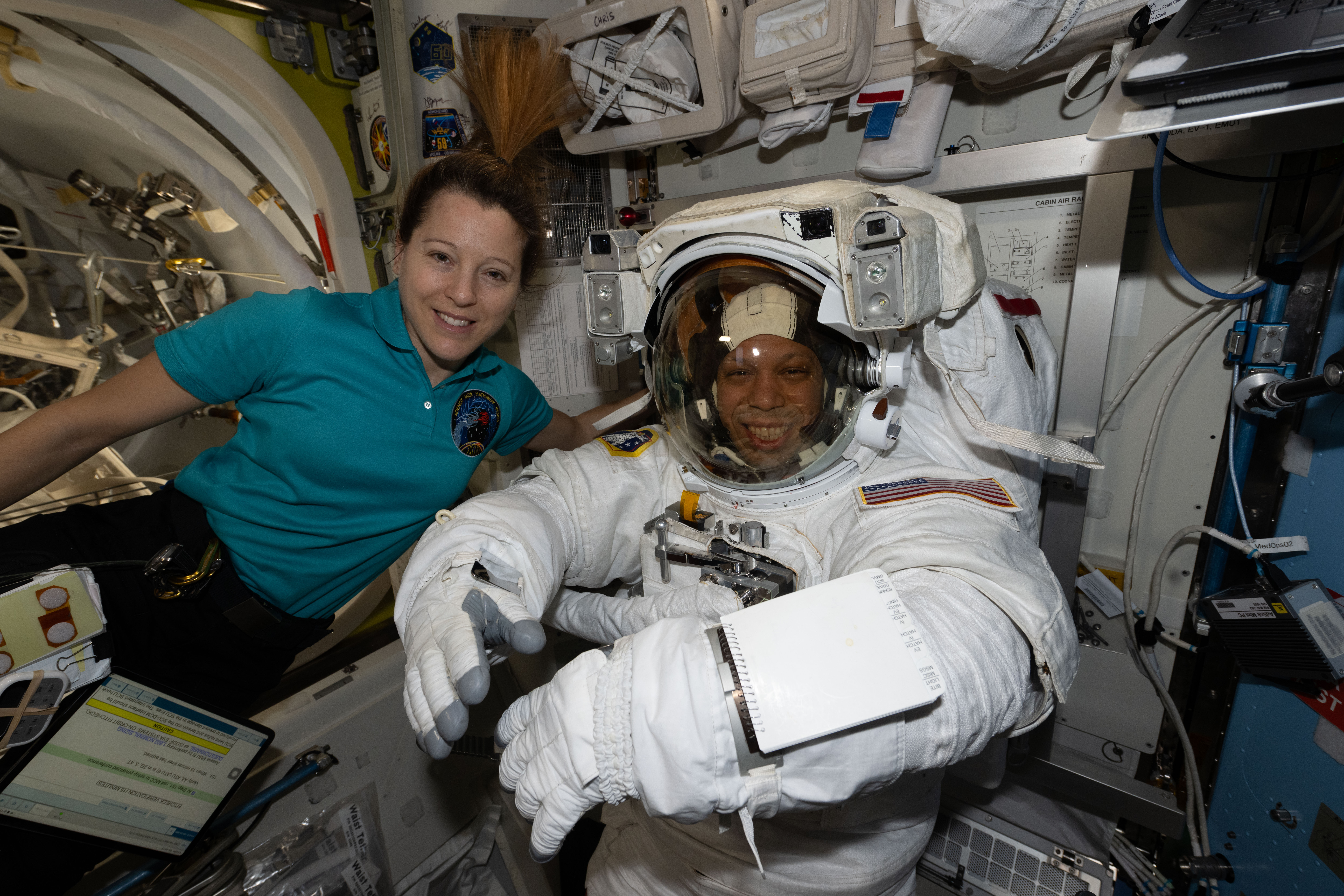
Flight engineer Sophie Adenot of ESA (European Space Agency) assists flight engineer Chris Williams of NASA as he tries on his spacesuit, testing its comfort and mobility as well as its communications and life support systems inside the International Space Station’s Quest airlock.

Read More