Day: July 8, 2026

After SSPX excommunications, Oslo bishop offers wider Latin Mass access – #Catholic – One of the first concrete diocesan responses in Europe to the fallout from the recent Society of St. Pius X (SSPX) excommunications has come from Norway.Bishop Fredrik Hansen of Oslo has moved to reassure Catholics attached to the Traditional Latin Mass while warning of the grave ecclesial consequences of the society’s latest schismatic act.In a letter issued after the illicit episcopal consecrations, Hansen said the four bishops along with their two consecrating bishops “removed themselves from ecclesial communion and from unity with the pope” by taking part in the consecrations without a papal mandate, thereby incurring “the most grave ecclesiastical penalty: ‘latae sententiae’ excommunication.”The Norwegian prelate then expressed willingness to expand access to the traditional liturgy within the Diocese of Oslo for Catholics who may now find themselves disoriented by the SSPX crisis.Keeping the old Mass within the ChurchHansen turned directly to Catholics in his diocese who have attended SSPX chapels because of their attachment to the preconciliar liturgy and spirituality. Acknowledging that “these are difficult and distressing days for you,” he urged them first of all to “hold fast to unity with our Holy Father, the bishop of Rome, and with me as bishop of Oslo.”Rather than simply warning the faithful away from the SSPX, Hansen paired his appeal with a concrete pastoral offer. He pointed out that Mass according to the 1962 Missal is already celebrated every Sunday at St. Joseph Church in Oslo and added that “if there is a need for it, and if it would be for the good of the Church and of souls, I will also expand this form of Mass celebration in our local Church.”This makes Norway one of the first places in Europe where a diocesan bishop has responded to the SSPX crisis not only by reaffirming Rome’s judgment but also by signaling greater provision for Catholics attached to the older liturgy within full communion with the Church.Hansen also urged Catholics to pray rosaries for Church unity while reminding the laity to “refrain from participating in Masses and other activities run by the Society of St. Pius X.”A wider Scandinavian responseIn neighboring Denmark, speaking to CNA Deutsch, the German-language sister service of EWTN News, Bishop Czesław Kozon of Copenhagen strongly condemned the SSPX consecrations, calling them “tragic and completely pointless.”“It also shows that this is about more than just the old Mass,” Kozon said. “People who previously praised the magisterium, emphasized obedience, and promoted the unity of the Church are suddenly doing something like this, which is a clear sign of disobedience and harms the unity of the Church.”At the same time, Kozon defended continued space for the traditional liturgy within the Church. Having recently celebrated a pontifical Mass in the traditional rite, he said the older form “should be preserved as long as there are believers who love it and feel connected to it.”Kozon also cautioned against framing the old and new rites as rivals. “There shouldn’t be any competition between the two forms of Mass,” he said, noting instead a pastoral approach that allows room for Catholics attached to the traditional liturgy while affirming the postconciliar liturgy as the Church’s ordinary form.

After SSPX excommunications, Oslo bishop offers wider Latin Mass access – #Catholic – One of the first concrete diocesan responses in Europe to the fallout from the recent Society of St. Pius X (SSPX) excommunications has come from Norway.Bishop Fredrik Hansen of Oslo has moved to reassure Catholics attached to the Traditional Latin Mass while warning of the grave ecclesial consequences of the society’s latest schismatic act.In a letter issued after the illicit episcopal consecrations, Hansen said the four bishops along with their two consecrating bishops “removed themselves from ecclesial communion and from unity with the pope” by taking part in the consecrations without a papal mandate, thereby incurring “the most grave ecclesiastical penalty: ‘latae sententiae’ excommunication.”The Norwegian prelate then expressed willingness to expand access to the traditional liturgy within the Diocese of Oslo for Catholics who may now find themselves disoriented by the SSPX crisis.Keeping the old Mass within the ChurchHansen turned directly to Catholics in his diocese who have attended SSPX chapels because of their attachment to the preconciliar liturgy and spirituality. Acknowledging that “these are difficult and distressing days for you,” he urged them first of all to “hold fast to unity with our Holy Father, the bishop of Rome, and with me as bishop of Oslo.”Rather than simply warning the faithful away from the SSPX, Hansen paired his appeal with a concrete pastoral offer. He pointed out that Mass according to the 1962 Missal is already celebrated every Sunday at St. Joseph Church in Oslo and added that “if there is a need for it, and if it would be for the good of the Church and of souls, I will also expand this form of Mass celebration in our local Church.”This makes Norway one of the first places in Europe where a diocesan bishop has responded to the SSPX crisis not only by reaffirming Rome’s judgment but also by signaling greater provision for Catholics attached to the older liturgy within full communion with the Church.Hansen also urged Catholics to pray rosaries for Church unity while reminding the laity to “refrain from participating in Masses and other activities run by the Society of St. Pius X.”A wider Scandinavian responseIn neighboring Denmark, speaking to CNA Deutsch, the German-language sister service of EWTN News, Bishop Czesław Kozon of Copenhagen strongly condemned the SSPX consecrations, calling them “tragic and completely pointless.”“It also shows that this is about more than just the old Mass,” Kozon said. “People who previously praised the magisterium, emphasized obedience, and promoted the unity of the Church are suddenly doing something like this, which is a clear sign of disobedience and harms the unity of the Church.”At the same time, Kozon defended continued space for the traditional liturgy within the Church. Having recently celebrated a pontifical Mass in the traditional rite, he said the older form “should be preserved as long as there are believers who love it and feel connected to it.”Kozon also cautioned against framing the old and new rites as rivals. “There shouldn’t be any competition between the two forms of Mass,” he said, noting instead a pastoral approach that allows room for Catholics attached to the traditional liturgy while affirming the postconciliar liturgy as the Church’s ordinary form.

The bishops of Oslo and Copenhagen have condemned the Society of St. Pius X consecrations as schism while pledging to protect the traditional liturgy within the Church.

Read More
Pope Leo XIV tells UN: Confront AI misuse to promote human dignity – #Catholic – Pope Leo XIV, drawing on his recent encyclical Magnifica Humanitas, has again called for dialogue on artificial intelligence (AI) while acknowledging the serious concerns that remain.His remarks were delivered in a July 8 message sent through Vatican Secretary of State Cardinal Pietro Parolin to the participants in the AI for Good Global Summit in Geneva, Switzerland. The annual summit is the primary platform for AI at the United Nations (U.N.), taking place this year from July 7–10.In the message, the pontiff assured participants of the Holy See’s continued openness to dialogue with secular organizations on AI.The letter, in explaining the aims of Magnifica Humanitas, stated that the pope had written this document as a result of conversations on AI with scientists, political leaders, and parents.The letter also explained that the encyclical was born out of persistent concerns over AI misuse.Magnifica Humanitas “was also impelled by troubling accounts of the potential misuses of algorithms and by the loss of human agency in critical areas,” the message stated.The AI for Good Global Summit is an annual U.N. conference on artificial intelligence gathering academics, civil leaders, and industry leaders to discuss how to safely govern AI systems while maximizing its positive impact on humanity.The Permanent Observer Mission of the Holy See to the U.N. in Geneva has also participated in the summit, publishing a statement on the need to increase human oversight over AI autonomous systems.

Pope Leo XIV tells UN: Confront AI misuse to promote human dignity – #Catholic – Pope Leo XIV, drawing on his recent encyclical Magnifica Humanitas, has again called for dialogue on artificial intelligence (AI) while acknowledging the serious concerns that remain.His remarks were delivered in a July 8 message sent through Vatican Secretary of State Cardinal Pietro Parolin to the participants in the AI for Good Global Summit in Geneva, Switzerland. The annual summit is the primary platform for AI at the United Nations (U.N.), taking place this year from July 7–10.In the message, the pontiff assured participants of the Holy See’s continued openness to dialogue with secular organizations on AI.The letter, in explaining the aims of Magnifica Humanitas, stated that the pope had written this document as a result of conversations on AI with scientists, political leaders, and parents.The letter also explained that the encyclical was born out of persistent concerns over AI misuse.Magnifica Humanitas “was also impelled by troubling accounts of the potential misuses of algorithms and by the loss of human agency in critical areas,” the message stated.The AI for Good Global Summit is an annual U.N. conference on artificial intelligence gathering academics, civil leaders, and industry leaders to discuss how to safely govern AI systems while maximizing its positive impact on humanity.The Permanent Observer Mission of the Holy See to the U.N. in Geneva has also participated in the summit, publishing a statement on the need to increase human oversight over AI autonomous systems.

The pontiff sent a letter on July 8 to be read at the AI for Good Global Summit in Geneva, Switzerland.

Read More
Picture of the day


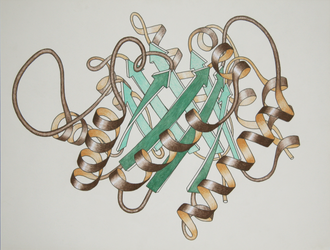
A 1981 Ribbon schematic of the 3D structure of the protein triose phosphate isomerase by Jane Richardson. Today is voice actress Tajja Isen’s birthday. She voiced Betty Barrett aka the titular hero in the 2004 Canadian animated series Atomic Betty
 #ImageOfTheDay
Picture of the day
A 1981 Ribbon schematic of the 3D structure of the protein triose phosphate isomerase by Jane Richardson. Today is voice actress Tajja Isen’s birthday. She voiced Betty Barrett aka the titular hero in the 2004 Canadian animated series Atomic Betty
Read More
Diocese of Oslo to open canonization cause for Nobel laureate Sigrid Undset – #Catholic – Bishop Fredrik Hansen of Oslo, Norway, has announced that he will open a canonization cause for Sigrid Undset, setting one of Scandinaviaʼs most celebrated literary figures on the path toward possible sainthood and giving the Catholic Church in Norway a prolific native candidate for holiness.Hansen made the announcement during Mass on the island of Selja, off the west coast of Norway, on July 8. As pilgrims gathered on Selja to celebrate the feast of St. Sunniva — 100 years after Undset herself first visited the island — Hansen presented her not simply as a Nobel laureate or one of Norwayʼs greatest writers but as a Catholic convert whose life of faith, suffering, intellectual depth, and moral seriousness still speaks powerfully to the Church in a secular age.
 
 Bishop Fredrik Hansen of Oslo processes during the annual St. Sunniva pilgrimage on the island of Selja, Norway, on July 8, 2026. | Credit: Marta Wade/katolsk.no
 
 The move is a notable one for Norwayʼs small Catholic minority. Undset, a literary giant of Scandinavian and Norwegian culture, lived a life of literary brilliance, personal turbulence reminiscent of St. Augustine, and opposition to totalitarianism — all while remaining an uncompromising witness to Catholicism.Opening of her causeHansen framed Undset first and foremost not as a literary icon but as a model of Christian holiness. “She is far more than an author and Nobel Prize laureate,” he said. “For us, she is a model of Christian faith, of a life lived in virtue, and of the pursuit of holiness.”Hansen situated the decision within the Churchʼs broader teaching that holiness is the calling of every Christian, stressing that sanctity is not reserved to a select few. In Undset, he suggested, the Catholic Church in Norway has a concrete example of that calling lived out in public life, suffering, motherhood, and conversion.He pointed to several aspects of her witness: her defense of the Catholic faith, her opposition to Nazism and her work for Norwayʼs freedom during the war, and her “constant and practical concern for the poor.” He also highlighted her care for her disabled daughter, which he described as part of her “commitment to life and to the sanctity of life.”Undsetʼs books, Hansen added, have shaped generations of believers, inspiring them to live in Christ and keeping alive the witness of Norwayʼs medieval saints.Observers have noted that Undsetʼs early life does not fit a conventional image of sanctity. Her path was marked by personal turmoil, public controversy, and choices that drew social scandal. Yet supporters of the cause point precisely to that complexity as part of her witness.She did not lead a life of moral perfection from the outset. Rather, she walked a path of gradual conversion, repentance, and a growing commitment to Catholicism. In that sense her story reflects the conviction that holiness is not the absence of weakness or mistakes but the work of Godʼs grace in a life, transforming it over time in the pursuit of holiness.Undsetʼs storyBorn in Denmark in 1882 and raised in Norway by largely atheist parents, Undset went to work as a secretary at 16 after her father died and the family fell into financial hardship. She began writing during these years.At 25 she made her literary debut with “Fru Marta Oulie,” a novel about adultery whose opening line — “I have been unfaithful to my husband” — scandalized Norway even as it thrust her into the public eye.Literary historians have noted that her life was unconventional for a woman of her time. Undset smoked, drank, swore, and was known for a sharp tongue and a strong personality.While in Rome, she began a relationship with the painter Anders Castus Svarstad while he was still married, and later married him. Together they had three children, one of whom was disabled, and Undset also helped raise Svarstadʼs children from his first marriage.In 1924, at the age of 42, Undset entered the Catholic Church, a decision that was controversial in overwhelmingly Lutheran Norway. Critics saw it as a step backward, but she embraced the faith publicly, later becoming a Lay Dominican and writing openly about her conversion in essays and fiction. Some Norwegian critics dismissed her later works as “Catholic propaganda,” reflecting unease that one of the countryʼs most prominent writers had embraced Catholicism.She also admired G.K. Chesterton; she reportedly met him and translated some of his work into Norwegian.Four years after her conversion, in 1928, she won the Nobel Prize in literature, recognized for her depictions of medieval Scandinavia and best known for “Kristin Lavransdatter,” the historical trilogy that secured her international reputation. The novels were steeped in medieval Christianity and its themes of sin, grace, suffering, and repentance — concerns that increasingly mirrored her own spiritual journey.Undset used her writing and her standing as one of Scandinaviaʼs most prominent Catholic voices to defend Christian belief and to challenge the ideological currents reshaping Europe. An early critic of Adolf Hitler and Nazism, she fled Nazi-occupied Norway during the Second World War and eventually reached the United States, where she spoke out against totalitarianism and in defense of her homeland.An inspiring figure for Norwayʼs Catholic futureHansenʼs decision also comes as the Catholic Church in Norway continues to grow through immigration and adult conversions, even as it seeks deeper roots in the countryʼs own history. If the cause advances, Undset could emerge not merely as a celebrated novelist under ecclesial study but as a singular model of holiness for the modern age: flawed, formidable, intellectually serious, and ultimately transformed by grace into a witness to Christ.The diocesan phase of Undsetʼs cause is expected to formally open this fall, a step Hansen said is driven by his conviction that her witness reaches far beyond Norwayʼs literary history. “I believe that Sigrid Undsetʼs life and work have much to offer both the Church in Norway and the universal Church,” he said — a judgment that now places Undset on the long path toward possible sainthood.

Diocese of Oslo to open canonization cause for Nobel laureate Sigrid Undset – #Catholic – Bishop Fredrik Hansen of Oslo, Norway, has announced that he will open a canonization cause for Sigrid Undset, setting one of Scandinaviaʼs most celebrated literary figures on the path toward possible sainthood and giving the Catholic Church in Norway a prolific native candidate for holiness.Hansen made the announcement during Mass on the island of Selja, off the west coast of Norway, on July 8. As pilgrims gathered on Selja to celebrate the feast of St. Sunniva — 100 years after Undset herself first visited the island — Hansen presented her not simply as a Nobel laureate or one of Norwayʼs greatest writers but as a Catholic convert whose life of faith, suffering, intellectual depth, and moral seriousness still speaks powerfully to the Church in a secular age. Bishop Fredrik Hansen of Oslo processes during the annual St. Sunniva pilgrimage on the island of Selja, Norway, on July 8, 2026. | Credit: Marta Wade/katolsk.no The move is a notable one for Norwayʼs small Catholic minority. Undset, a literary giant of Scandinavian and Norwegian culture, lived a life of literary brilliance, personal turbulence reminiscent of St. Augustine, and opposition to totalitarianism — all while remaining an uncompromising witness to Catholicism.Opening of her causeHansen framed Undset first and foremost not as a literary icon but as a model of Christian holiness. “She is far more than an author and Nobel Prize laureate,” he said. “For us, she is a model of Christian faith, of a life lived in virtue, and of the pursuit of holiness.”Hansen situated the decision within the Churchʼs broader teaching that holiness is the calling of every Christian, stressing that sanctity is not reserved to a select few. In Undset, he suggested, the Catholic Church in Norway has a concrete example of that calling lived out in public life, suffering, motherhood, and conversion.He pointed to several aspects of her witness: her defense of the Catholic faith, her opposition to Nazism and her work for Norwayʼs freedom during the war, and her “constant and practical concern for the poor.” He also highlighted her care for her disabled daughter, which he described as part of her “commitment to life and to the sanctity of life.”Undsetʼs books, Hansen added, have shaped generations of believers, inspiring them to live in Christ and keeping alive the witness of Norwayʼs medieval saints.Observers have noted that Undsetʼs early life does not fit a conventional image of sanctity. Her path was marked by personal turmoil, public controversy, and choices that drew social scandal. Yet supporters of the cause point precisely to that complexity as part of her witness.She did not lead a life of moral perfection from the outset. Rather, she walked a path of gradual conversion, repentance, and a growing commitment to Catholicism. In that sense her story reflects the conviction that holiness is not the absence of weakness or mistakes but the work of Godʼs grace in a life, transforming it over time in the pursuit of holiness.Undsetʼs storyBorn in Denmark in 1882 and raised in Norway by largely atheist parents, Undset went to work as a secretary at 16 after her father died and the family fell into financial hardship. She began writing during these years.At 25 she made her literary debut with “Fru Marta Oulie,” a novel about adultery whose opening line — “I have been unfaithful to my husband” — scandalized Norway even as it thrust her into the public eye.Literary historians have noted that her life was unconventional for a woman of her time. Undset smoked, drank, swore, and was known for a sharp tongue and a strong personality.While in Rome, she began a relationship with the painter Anders Castus Svarstad while he was still married, and later married him. Together they had three children, one of whom was disabled, and Undset also helped raise Svarstadʼs children from his first marriage.In 1924, at the age of 42, Undset entered the Catholic Church, a decision that was controversial in overwhelmingly Lutheran Norway. Critics saw it as a step backward, but she embraced the faith publicly, later becoming a Lay Dominican and writing openly about her conversion in essays and fiction. Some Norwegian critics dismissed her later works as “Catholic propaganda,” reflecting unease that one of the countryʼs most prominent writers had embraced Catholicism.She also admired G.K. Chesterton; she reportedly met him and translated some of his work into Norwegian.Four years after her conversion, in 1928, she won the Nobel Prize in literature, recognized for her depictions of medieval Scandinavia and best known for “Kristin Lavransdatter,” the historical trilogy that secured her international reputation. The novels were steeped in medieval Christianity and its themes of sin, grace, suffering, and repentance — concerns that increasingly mirrored her own spiritual journey.Undset used her writing and her standing as one of Scandinaviaʼs most prominent Catholic voices to defend Christian belief and to challenge the ideological currents reshaping Europe. An early critic of Adolf Hitler and Nazism, she fled Nazi-occupied Norway during the Second World War and eventually reached the United States, where she spoke out against totalitarianism and in defense of her homeland.An inspiring figure for Norwayʼs Catholic futureHansenʼs decision also comes as the Catholic Church in Norway continues to grow through immigration and adult conversions, even as it seeks deeper roots in the countryʼs own history. If the cause advances, Undset could emerge not merely as a celebrated novelist under ecclesial study but as a singular model of holiness for the modern age: flawed, formidable, intellectually serious, and ultimately transformed by grace into a witness to Christ.The diocesan phase of Undsetʼs cause is expected to formally open this fall, a step Hansen said is driven by his conviction that her witness reaches far beyond Norwayʼs literary history. “I believe that Sigrid Undsetʼs life and work have much to offer both the Church in Norway and the universal Church,” he said — a judgment that now places Undset on the long path toward possible sainthood.

Announced during the feast of St. Sunniva on the island of Selja, the cause for the celebrated novelist and Catholic convert is expected to open its diocesan phase this fall.

Read More

Looking for a sky event this week? Check out our full Sky This Week column.  July 7: The Moon, Saturn, and Neptune Asteroid 18 Melpomene reaches opposition at 4 P.M. EDT. Now visible all night long, the 9th-magnitude main-belt world is located in southeastern Aquila, near the Eagle’s border with Scutum.  To track the asteroid for yourself,Continue reading “The Sky Today on Wednesday, July 8: Asteroid Melpomene at opposition”

The post The Sky Today on Wednesday, July 8: Asteroid Melpomene at opposition appeared first on Astronomy Magazine.

Read More