Month: July 2026

This composite of images taken by NASA’s Psyche mission shows the crescent of Mars grow as the spacecraft approached the planet for a gravity assist from May 2 to May 15, 2026. Because Psyche approached Mars from a high phase angle, the planet appeared as a thin crescent in the days running up to the close approach, lit by sunlight reflecting off its surface.

Read More

U.S., Catholic Relief Services send first Cuba aid flight under Rubio plan – #Catholic – The United States and Catholic Relief Services (CRS) sent the first flight with humanitarian aid to Cuba under Secretary of State Marco Rubio’s 0 million assistance plan.In partnership with the Catholic Church and Caritas Cuba, the kits of prepackaged food and hygiene kits for up to 700 Cuban families will be delivered by CRS — the official international humanitarian agency of the Catholic community in the U.S.“This partnership builds upon the success of the Department’s program last year with CRS and Caritas Cuba to deliver  million in direct support to the island following Hurricane Melissa,” according to a U.S. Department of State statement.“Building on the success of the previous program, the direct delivery of humanitarian commodities by local parish representatives in the island will ensure critical U.S. assistance reaches everyday Cubans in need, without any opportunity for regime diversion or theft,” the department said.CRS sent the flight on July 21 from Miami with Jeremy Lewin, Rubio’s senior adviser and director of foreign assistance, and Viviana Bovo, senior adviser for the department’s Bureau of Western Hemisphere Affairs.The supplies sent are the first humanitarian relief sent under Rubio’s commitment of 0 million in humanitarian assistance to the Cuban people, as they “are suffering from the consequences of the Communist regime’s kleptocracy, brutality, and economic incompetence,” the statement said.The aid is part of a  million award to CRS from the department’s 0 million fund for expanding humanitarian assistance to vulnerable families across Cuba.“The award will enable CRS, in partnership with Caritas Cuba, to provide emergency food and hygiene supplies to nearly 200,000 households, or more than half a million people, across the country and essential household items — including mattresses and blankets — to another 7,000 people who need them,” CRS said in a press release.“Families in Cuba are facing growing hardship as they struggle to put food on the table, access clean water and meet other basic needs,” said Sean Callahan, CRS president and CEO, in the press release.“This support will allow CRS and our long-standing partner, Caritas Cuba, to significantly expand humanitarian assistance through the Catholic Churchʼs trusted network, reaching vulnerable families with the help they urgently need.”

U.S., Catholic Relief Services send first Cuba aid flight under Rubio plan – #Catholic – The United States and Catholic Relief Services (CRS) sent the first flight with humanitarian aid to Cuba under Secretary of State Marco Rubio’s $100 million assistance plan.In partnership with the Catholic Church and Caritas Cuba, the kits of prepackaged food and hygiene kits for up to 700 Cuban families will be delivered by CRS — the official international humanitarian agency of the Catholic community in the U.S.“This partnership builds upon the success of the Department’s program last year with CRS and Caritas Cuba to deliver $9 million in direct support to the island following Hurricane Melissa,” according to a U.S. Department of State statement.“Building on the success of the previous program, the direct delivery of humanitarian commodities by local parish representatives in the island will ensure critical U.S. assistance reaches everyday Cubans in need, without any opportunity for regime diversion or theft,” the department said.CRS sent the flight on July 21 from Miami with Jeremy Lewin, Rubio’s senior adviser and director of foreign assistance, and Viviana Bovo, senior adviser for the department’s Bureau of Western Hemisphere Affairs.The supplies sent are the first humanitarian relief sent under Rubio’s commitment of $100 million in humanitarian assistance to the Cuban people, as they “are suffering from the consequences of the Communist regime’s kleptocracy, brutality, and economic incompetence,” the statement said.The aid is part of a $60 million award to CRS from the department’s $100 million fund for expanding humanitarian assistance to vulnerable families across Cuba.“The award will enable CRS, in partnership with Caritas Cuba, to provide emergency food and hygiene supplies to nearly 200,000 households, or more than half a million people, across the country and essential household items — including mattresses and blankets — to another 7,000 people who need them,” CRS said in a press release.“Families in Cuba are facing growing hardship as they struggle to put food on the table, access clean water and meet other basic needs,” said Sean Callahan, CRS president and CEO, in the press release.“This support will allow CRS and our long-standing partner, Caritas Cuba, to significantly expand humanitarian assistance through the Catholic Churchʼs trusted network, reaching vulnerable families with the help they urgently need.”

Catholic Relief Services (CRS) will deliver kits of prepackaged food and hygiene kits for up to 700 Cuban families.

Read More
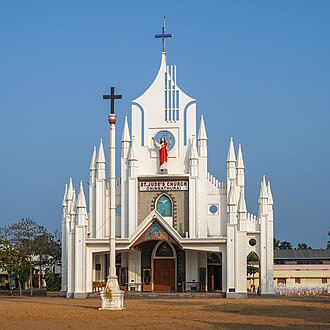
Devotion to Our Lady of Mount Carmel sees a resurgence with new shrine in Mexico City - #Catholic - As of this year, devotion to Our Lady of Mount Carmel has a new site in Mexico City. On July 15, the old non-parochial church of Our Lady of Mount Carmel was dedicated as an archdiocesan shrine, marking the beginning of a new chapter for the historic church.In recent days, the church, located in the traditional San Ángel neighborhood on the city’s south side, has begun to welcome more visitors than usual. Every year on the feast of Our Lady of Mount Carmel, celebrated on July 16, hundreds of pilgrims are drawn to the shrine.
 
 Church of Our Lady of Mount Carmel in San Ángel, Mexico City. | Credit: EWTN News
 
 However, interest has gained new momentum since Cardinal Carlos Aguiar Retes, primatial archbishop of Mexico, announced in May that the historic church would be elevated to a shrine.Among those drawn by curiosity was Mariana Ledesma. Although she acknowledged that she is only just beginning to learn about this devotion to Our Lady under this title, she wanted to be part of a moment she considers historic.“The shrine is beautiful and full of symbolism; seeing the devotion of the entire community, being able to share in that faith, is something truly beautiful. That is precisely the purpose of the shrine: to make it known to others as well,” she told ACI Prensa, the Spanish-language sister service of EWTN News.4 centuries of historyThe relationship between Mexico City and Our Lady of Mount Carmel dates back to 1585, when the first missionaries of the Discalced Carmelite order arrived in New Spain to assist in the work of evangelization.In the early 17th century, they established one of their most important convents in San Ángel, from which they fostered contemplative life, spiritual formation, and devotion to Our Lady of Mount Carmel, a devotion that took deep root among the capitalʼs inhabitants.
 
 Carmelite friars. | Credit: Discalced Carmelites of Central America
 
 For centuries, the church and convent served as an important religious and cultural center. However, following the Reform Laws of 1876, the old convent was nationalized and became state property.Today, Our Lady of Mount Carmel Church remains a place of Catholic worship while the former convent, after serving various purposes over the years, houses a museum. After more than 400 years of tending to the church, this year the Discalced Carmelites handed over its administration to the Archdiocese of Mexico due to a decline in vocations within the order.Mary, ‘strengthen my heart’During the Mass of canonical dedication as a shrine, Héctor Mario Pérez Villarreal, auxiliary bishop of Mexico, explained that the decision to elevate the church to a shrine reflects the fact that the faithful have long been making pilgrimages there to “seek solace and to come seeking the nourishment of the sacraments and the mercy of confession.”
 
 Mass of dedication of Our Lady of Mount Carmel Church as a shrine, July 15, 2026. | Credit: Primatial Archdiocese of Mexico
 
 “Let us hope that this [act] serves as an encouragement for many more people to return here to renew the consolation offered by the Virgin of Mount Carmel and their love for Jesus Christ,” he stated.He also invited the faithful to turn to Mary during times of difficulty. He noted that when faith or hope “begin to fade,” it is necessary to turn one’s gaze toward Mary and say: “Most Holy Mother, you who were able to remain faithful even [standing] before your Son’s cross, strengthen my heart.”
 
 Mass of Dedication of Our Lady of Mount Carmel Church as a shrine on July 15, 2026. | Credit: Primatial Archdiocese of Mexico
 
 Petitions to Our Lady of Mount CarmelThe aisles of the shrine were filled with people holding scapulars, flowers, or photographs of their family members. Some came to give thanks for favors received; others sought to place their concerns in Maryʼs hands.Among them was Claudio de la Paz, a devotee who traveled from the state of Campeche, over 500 miles away, to take part in the celebration. In addition to hoping the faithful will draw closer to Our Lady of Mount Carmel, he asked that young people be specially commended to her care, as he said they are currently going through “times of great vulnerability.”
 
 Mass of Dedication of Our Lady of Mount Carmel Church as a shrine on July 15, 2026. | Credit: Primatial Archdiocese of Mexico
 
 For Rafael Estrada, devotion to Our Lady of Mount Carmel “represents a quest for peace, serenity, and harmony.” Estrada urged Catholics to ask for Mary’s protection amid the tribulations Mexico is going through.Sister Nina Ramos, a religious of the Franciscan Sisters of the Immaculate Conception, invited the faithful to visit the new shrine and noted that those who fulfill the conditions established by the Church may obtain a plenary indulgence.This story was first published by ACI Prensa, the Spanish-language sister service of EWTN News. It has been translated and adapted by EWTN News English.

Devotion to Our Lady of Mount Carmel sees a resurgence with new shrine in Mexico City – #Catholic – As of this year, devotion to Our Lady of Mount Carmel has a new site in Mexico City. On July 15, the old non-parochial church of Our Lady of Mount Carmel was dedicated as an archdiocesan shrine, marking the beginning of a new chapter for the historic church.In recent days, the church, located in the traditional San Ángel neighborhood on the city’s south side, has begun to welcome more visitors than usual. Every year on the feast of Our Lady of Mount Carmel, celebrated on July 16, hundreds of pilgrims are drawn to the shrine. Church of Our Lady of Mount Carmel in San Ángel, Mexico City. | Credit: EWTN News However, interest has gained new momentum since Cardinal Carlos Aguiar Retes, primatial archbishop of Mexico, announced in May that the historic church would be elevated to a shrine.Among those drawn by curiosity was Mariana Ledesma. Although she acknowledged that she is only just beginning to learn about this devotion to Our Lady under this title, she wanted to be part of a moment she considers historic.“The shrine is beautiful and full of symbolism; seeing the devotion of the entire community, being able to share in that faith, is something truly beautiful. That is precisely the purpose of the shrine: to make it known to others as well,” she told ACI Prensa, the Spanish-language sister service of EWTN News.4 centuries of historyThe relationship between Mexico City and Our Lady of Mount Carmel dates back to 1585, when the first missionaries of the Discalced Carmelite order arrived in New Spain to assist in the work of evangelization.In the early 17th century, they established one of their most important convents in San Ángel, from which they fostered contemplative life, spiritual formation, and devotion to Our Lady of Mount Carmel, a devotion that took deep root among the capitalʼs inhabitants. Carmelite friars. | Credit: Discalced Carmelites of Central America For centuries, the church and convent served as an important religious and cultural center. However, following the Reform Laws of 1876, the old convent was nationalized and became state property.Today, Our Lady of Mount Carmel Church remains a place of Catholic worship while the former convent, after serving various purposes over the years, houses a museum. After more than 400 years of tending to the church, this year the Discalced Carmelites handed over its administration to the Archdiocese of Mexico due to a decline in vocations within the order.Mary, ‘strengthen my heart’During the Mass of canonical dedication as a shrine, Héctor Mario Pérez Villarreal, auxiliary bishop of Mexico, explained that the decision to elevate the church to a shrine reflects the fact that the faithful have long been making pilgrimages there to “seek solace and to come seeking the nourishment of the sacraments and the mercy of confession.” Mass of dedication of Our Lady of Mount Carmel Church as a shrine, July 15, 2026. | Credit: Primatial Archdiocese of Mexico “Let us hope that this [act] serves as an encouragement for many more people to return here to renew the consolation offered by the Virgin of Mount Carmel and their love for Jesus Christ,” he stated.He also invited the faithful to turn to Mary during times of difficulty. He noted that when faith or hope “begin to fade,” it is necessary to turn one’s gaze toward Mary and say: “Most Holy Mother, you who were able to remain faithful even [standing] before your Son’s cross, strengthen my heart.” Mass of Dedication of Our Lady of Mount Carmel Church as a shrine on July 15, 2026. | Credit: Primatial Archdiocese of Mexico Petitions to Our Lady of Mount CarmelThe aisles of the shrine were filled with people holding scapulars, flowers, or photographs of their family members. Some came to give thanks for favors received; others sought to place their concerns in Maryʼs hands.Among them was Claudio de la Paz, a devotee who traveled from the state of Campeche, over 500 miles away, to take part in the celebration. In addition to hoping the faithful will draw closer to Our Lady of Mount Carmel, he asked that young people be specially commended to her care, as he said they are currently going through “times of great vulnerability.” Mass of Dedication of Our Lady of Mount Carmel Church as a shrine on July 15, 2026. | Credit: Primatial Archdiocese of Mexico For Rafael Estrada, devotion to Our Lady of Mount Carmel “represents a quest for peace, serenity, and harmony.” Estrada urged Catholics to ask for Mary’s protection amid the tribulations Mexico is going through.Sister Nina Ramos, a religious of the Franciscan Sisters of the Immaculate Conception, invited the faithful to visit the new shrine and noted that those who fulfill the conditions established by the Church may obtain a plenary indulgence.This story was first published by ACI Prensa, the Spanish-language sister service of EWTN News. It has been translated and adapted by EWTN News English.

Formerly served by the Discalced Carmelites, the Church of Our Lady of Mount Carmel has been elevated to an archdiocesan shrine and has seen an increase in the number of pilgrims.

Read More
Caritas Venezuela adds recovery component to ongoing relief efforts – #Catholic – In the aftermath of the devastating earthquakes that struck the country, Caritas Venezuela, the social services arm of the Catholic Church in Venezuela, issued an updated bulletin in which it noted that, at this stage, “the immediate emergency begins to overlap with the first steps toward recovery.” The organization continues to maintain field operations, particularly in the coastal city of La Guaira, where the destruction is overwhelming.In total, Caritas Venezuela reported that it has received over 19,000 tons of aid, of which it has so far managed to distribute approximately nearly 16,000 tons, representing 84% of the total received. The remaining aid “remains in stock, ready for upcoming deliveries.”Critical needsAlong with food and water, healthcare has become an urgent need for the communities affected by the disaster. In total, Caritas has dispatched 96,156 units of medical supplies and medicines, most of which are destined for hospitals and care centers operating under immense strain.“In a healthcare system stretched by the magnitude of the disaster, every box of medicine that arrives on time sustains care for dozens of people,” Caritas explained.Likewise, the organization highlighted the work of thousands of volunteers nationwide who have tirelessly dedicated themselves to receiving, sorting, packing, and distributing aid. Caritas estimated that around 10,000 people have joined volunteer efforts across all of Venezuela’s dioceses and parishes.“They are teachers, young people, mothers, retirees, and neighbors who decided that the suffering of others is their own as well. They are, without exaggeration, the heart of this response,” the organization noted.The clergy have also been present at every collection center, at every distribution point, and in every camp across the affected cities.They have engaged in relief efforts “through prayer and action.” According to the bulletin, the greatest help provided by bishops, priests, and religious has been taking the time to listen to and be there for those grieving the loss of loved ones and to console those left homeless.What lies ahead?Caritas Venezuela noted that the 3,095 tons of humanitarian aid still available will allow them to “continue responding” but stated that “the emergency is far from over.”“Thousands of families remain in temporary camps, and many others will not be able to return to their homes. In the coming weeks, the operation will shift from immediate assistance to the recovery of those who lost everything — a long process that will require sustained solidarity over time,” the organization explained.When the camera crews depart and the news media turns to covering other events, “the need remains. That’s why we reiterate our call to continue making contributions through official channels and to keep moving forward together,” the organization emphasized.“Monetary donations are the most efficient, as they allow us to procure exactly what is needed at any given moment directly from the field,” Caritas advised.The official death toll from the earthquakes in Venezuela now stands at over 5,200. Tens of thousands of other people have been injured and have lost their homes in Caracas, La Guaira, El Junquito, and other cities across the country.This story was first published by ACI Prensa, the Spanish-language sister service of EWTN News. It has been translated and adapted by EWTN News English.

Caritas Venezuela adds recovery component to ongoing relief efforts – #Catholic – In the aftermath of the devastating earthquakes that struck the country, Caritas Venezuela, the social services arm of the Catholic Church in Venezuela, issued an updated bulletin in which it noted that, at this stage, “the immediate emergency begins to overlap with the first steps toward recovery.” The organization continues to maintain field operations, particularly in the coastal city of La Guaira, where the destruction is overwhelming.In total, Caritas Venezuela reported that it has received over 19,000 tons of aid, of which it has so far managed to distribute approximately nearly 16,000 tons, representing 84% of the total received. The remaining aid “remains in stock, ready for upcoming deliveries.”Critical needsAlong with food and water, healthcare has become an urgent need for the communities affected by the disaster. In total, Caritas has dispatched 96,156 units of medical supplies and medicines, most of which are destined for hospitals and care centers operating under immense strain.“In a healthcare system stretched by the magnitude of the disaster, every box of medicine that arrives on time sustains care for dozens of people,” Caritas explained.Likewise, the organization highlighted the work of thousands of volunteers nationwide who have tirelessly dedicated themselves to receiving, sorting, packing, and distributing aid. Caritas estimated that around 10,000 people have joined volunteer efforts across all of Venezuela’s dioceses and parishes.“They are teachers, young people, mothers, retirees, and neighbors who decided that the suffering of others is their own as well. They are, without exaggeration, the heart of this response,” the organization noted.The clergy have also been present at every collection center, at every distribution point, and in every camp across the affected cities.They have engaged in relief efforts “through prayer and action.” According to the bulletin, the greatest help provided by bishops, priests, and religious has been taking the time to listen to and be there for those grieving the loss of loved ones and to console those left homeless.What lies ahead?Caritas Venezuela noted that the 3,095 tons of humanitarian aid still available will allow them to “continue responding” but stated that “the emergency is far from over.”“Thousands of families remain in temporary camps, and many others will not be able to return to their homes. In the coming weeks, the operation will shift from immediate assistance to the recovery of those who lost everything — a long process that will require sustained solidarity over time,” the organization explained.When the camera crews depart and the news media turns to covering other events, “the need remains. That’s why we reiterate our call to continue making contributions through official channels and to keep moving forward together,” the organization emphasized.“Monetary donations are the most efficient, as they allow us to procure exactly what is needed at any given moment directly from the field,” Caritas advised.The official death toll from the earthquakes in Venezuela now stands at over 5,200. Tens of thousands of other people have been injured and have lost their homes in Caracas, La Guaira, El Junquito, and other cities across the country.This story was first published by ACI Prensa, the Spanish-language sister service of EWTN News. It has been translated and adapted by EWTN News English.

The Catholic Church’s social services arm in the country reports that its operations are in a transitional phase, as it shifts from immediate assistance to the recovery of those who lost everything.

Read More
Lebanon’s cardinal urges prayer, guidance as its president visits the White House #Catholic – (OSV News) — Lebanon’s Cardinal Bechara Rai, the patriarch of the country’s Maronite Catholic Church, has urged for prayer and guidance as Lebanese President Joseph Aoun makes a critical visit to the White House July 21 to present President Donald Trump with a plan on how to disarm the Iran-backed Hezbollah militant group and secure Israel’s withdrawal from Lebanon.
“However severe the crises facing Lebanon may become, this country is not lost as long as God accompanies it. This hope drives us to look toward the future,” Cardinal Rai urged during a Sunday Mass commemorating the feast day of Lebanon’s patron saint, St. Charbel Makhlouf, on July 19.
“We pray for Lebanon and its officials, asking God to guide them in working for national unity, preserving the dignity of the people and safeguarding sovereignty. Peace is our choice, and Lebanon must choose the paths of truth, not illusions, because truth is what builds the state and brings the Lebanese together,” Cardinal Rai said at the St. Maron Monastery in Annaya.
The Maronite Catholic Church is the largest and most powerful Christian denomination in Lebanon. Cardinal Rai is considered by many Lebanese to be the Church’s most influential leader. By convention, the country’s president is always a Maronite.

Click here to subscribe to our weekly newsletter.

Aoun, a Maronite Christian, is the first Lebanese head of state in nearly 20 years to visit the White House, where he will meet President Trump face-to-face for the first time.
Cardinal Rai called for the preservation of his beleaguered nation’s sovereignty, caught up in a destructive conflict between Iran-backed Hezbollah and Israel. The latest round of fighting between the two sides began March 2 as Iran came under U.S. and Israeli attack.
More than 4,300 people have been killed so far, according to Lebanon’s health ministry, including nearly 800 children, women and medics and hundreds of thousands more have been displaced from southern Lebanon.
The Catholic Church in Lebanon has played a key role in assisting the displaced and providing spiritual sustenance both to those who lost their homes and livelihoods and other Lebanese who refused to leave their villages despite Israeli aerial and ground bombardment.
Aoun is seeking Trump’s help to press Israel to implement a U.S.-brokered June 26 “Framework Agreement” between Lebanon and Israel that works on disarming Hezbollah, sees Israeli troops withdraw from large swathes of Lebanese territory it occupies, and sets the possibility for peaceful ties between Lebanon and Israel.
After the war began, Aoun quickly called for direct talks with Israel, a historic departure for a state repeatedly invaded by Israel since 1978. It led to the highest-level face-to-face negotiations in decades between the two countries.
Yet, Hezbollah has firmly rejected the Lebanese government’s direct talks with Israel — and efforts by the state to decommission its massive weapons arsenal held since the time of the country’s 1975-1990 civil war and supplemented by Iran.
Cardinal Rai said that “any agreement that preserves Lebanon’s sovereignty, safeguards its national rights and strengthens the authority of the state deserves support.” He renewed his call for the implementation of the “Framework Agreement,” saying it establishes a gateway to consolidating state sovereignty and safeguarding Lebanon’s national rights.
All parties must commit to implementing the “Framework Agreement,” he said, stressing that “active neutrality” remains the national choice that protects Lebanon from the conflict between rival countries or groups and strengthens its internal unity.
“Lebanon is called upon today more than ever to adhere to this historical message that has made it a homeland of coexistence, dialogue and openness,” Cardinal Rai said at another venue in Bqaa Kafra, the birthplace of St. Charbel.
He referred to the 18 different religious sects that comprise the rich cultural diversity of the tiny Mediterranean nation.
He said the Lebanese are weary of conflict and divisions and hope to enter a new period of stability and security — for peace and not war.
“Peace is the only path that preserves life, protects human dignity, and lays the foundation for future generations,” he argued.
“Nations are not built through disputes or hate speech, but through reconciliation, solidarity and cooperation among all their people,” Cardinal Rai affirmed.
Dale Gavlak writes for OSV News from Amman, Jordan.
 

Lebanon’s cardinal urges prayer, guidance as its president visits the White House #Catholic – (OSV News) — Lebanon’s Cardinal Bechara Rai, the patriarch of the country’s Maronite Catholic Church, has urged for prayer and guidance as Lebanese President Joseph Aoun makes a critical visit to the White House July 21 to present President Donald Trump with a plan on how to disarm the Iran-backed Hezbollah militant group and secure Israel’s withdrawal from Lebanon. “However severe the crises facing Lebanon may become, this country is not lost as long as God accompanies it. This hope drives us to look toward the future,” Cardinal Rai urged during a Sunday Mass commemorating the feast day of Lebanon’s patron saint, St. Charbel Makhlouf, on July 19. “We pray for Lebanon and its officials, asking God to guide them in working for national unity, preserving the dignity of the people and safeguarding sovereignty. Peace is our choice, and Lebanon must choose the paths of truth, not illusions, because truth is what builds the state and brings the Lebanese together,” Cardinal Rai said at the St. Maron Monastery in Annaya. The Maronite Catholic Church is the largest and most powerful Christian denomination in Lebanon. Cardinal Rai is considered by many Lebanese to be the Church’s most influential leader. By convention, the country’s president is always a Maronite. Click here to subscribe to our weekly newsletter. Aoun, a Maronite Christian, is the first Lebanese head of state in nearly 20 years to visit the White House, where he will meet President Trump face-to-face for the first time. Cardinal Rai called for the preservation of his beleaguered nation’s sovereignty, caught up in a destructive conflict between Iran-backed Hezbollah and Israel. The latest round of fighting between the two sides began March 2 as Iran came under U.S. and Israeli attack. More than 4,300 people have been killed so far, according to Lebanon’s health ministry, including nearly 800 children, women and medics and hundreds of thousands more have been displaced from southern Lebanon. The Catholic Church in Lebanon has played a key role in assisting the displaced and providing spiritual sustenance both to those who lost their homes and livelihoods and other Lebanese who refused to leave their villages despite Israeli aerial and ground bombardment. Aoun is seeking Trump’s help to press Israel to implement a U.S.-brokered June 26 “Framework Agreement” between Lebanon and Israel that works on disarming Hezbollah, sees Israeli troops withdraw from large swathes of Lebanese territory it occupies, and sets the possibility for peaceful ties between Lebanon and Israel. After the war began, Aoun quickly called for direct talks with Israel, a historic departure for a state repeatedly invaded by Israel since 1978. It led to the highest-level face-to-face negotiations in decades between the two countries. Yet, Hezbollah has firmly rejected the Lebanese government’s direct talks with Israel — and efforts by the state to decommission its massive weapons arsenal held since the time of the country’s 1975-1990 civil war and supplemented by Iran. Cardinal Rai said that “any agreement that preserves Lebanon’s sovereignty, safeguards its national rights and strengthens the authority of the state deserves support.” He renewed his call for the implementation of the “Framework Agreement,” saying it establishes a gateway to consolidating state sovereignty and safeguarding Lebanon’s national rights. All parties must commit to implementing the “Framework Agreement,” he said, stressing that “active neutrality” remains the national choice that protects Lebanon from the conflict between rival countries or groups and strengthens its internal unity. “Lebanon is called upon today more than ever to adhere to this historical message that has made it a homeland of coexistence, dialogue and openness,” Cardinal Rai said at another venue in Bqaa Kafra, the birthplace of St. Charbel. He referred to the 18 different religious sects that comprise the rich cultural diversity of the tiny Mediterranean nation. He said the Lebanese are weary of conflict and divisions and hope to enter a new period of stability and security — for peace and not war. “Peace is the only path that preserves life, protects human dignity, and lays the foundation for future generations,” he argued. “Nations are not built through disputes or hate speech, but through reconciliation, solidarity and cooperation among all their people,” Cardinal Rai affirmed. Dale Gavlak writes for OSV News from Amman, Jordan.  

Lebanon’s cardinal urges prayer, guidance as its president visits the White House #Catholic –

(OSV News) — Lebanon’s Cardinal Bechara Rai, the patriarch of the country’s Maronite Catholic Church, has urged for prayer and guidance as Lebanese President Joseph Aoun makes a critical visit to the White House July 21 to present President Donald Trump with a plan on how to disarm the Iran-backed Hezbollah militant group and secure Israel’s withdrawal from Lebanon.

“However severe the crises facing Lebanon may become, this country is not lost as long as God accompanies it. This hope drives us to look toward the future,” Cardinal Rai urged during a Sunday Mass commemorating the feast day of Lebanon’s patron saint, St. Charbel Makhlouf, on July 19.

“We pray for Lebanon and its officials, asking God to guide them in working for national unity, preserving the dignity of the people and safeguarding sovereignty. Peace is our choice, and Lebanon must choose the paths of truth, not illusions, because truth is what builds the state and brings the Lebanese together,” Cardinal Rai said at the St. Maron Monastery in Annaya.

The Maronite Catholic Church is the largest and most powerful Christian denomination in Lebanon. Cardinal Rai is considered by many Lebanese to be the Church’s most influential leader. By convention, the country’s president is always a Maronite.


Click here to subscribe to our weekly newsletter.

Aoun, a Maronite Christian, is the first Lebanese head of state in nearly 20 years to visit the White House, where he will meet President Trump face-to-face for the first time.

Cardinal Rai called for the preservation of his beleaguered nation’s sovereignty, caught up in a destructive conflict between Iran-backed Hezbollah and Israel. The latest round of fighting between the two sides began March 2 as Iran came under U.S. and Israeli attack.

More than 4,300 people have been killed so far, according to Lebanon’s health ministry, including nearly 800 children, women and medics and hundreds of thousands more have been displaced from southern Lebanon.

The Catholic Church in Lebanon has played a key role in assisting the displaced and providing spiritual sustenance both to those who lost their homes and livelihoods and other Lebanese who refused to leave their villages despite Israeli aerial and ground bombardment.

Aoun is seeking Trump’s help to press Israel to implement a U.S.-brokered June 26 “Framework Agreement” between Lebanon and Israel that works on disarming Hezbollah, sees Israeli troops withdraw from large swathes of Lebanese territory it occupies, and sets the possibility for peaceful ties between Lebanon and Israel.

After the war began, Aoun quickly called for direct talks with Israel, a historic departure for a state repeatedly invaded by Israel since 1978. It led to the highest-level face-to-face negotiations in decades between the two countries.

Yet, Hezbollah has firmly rejected the Lebanese government’s direct talks with Israel — and efforts by the state to decommission its massive weapons arsenal held since the time of the country’s 1975-1990 civil war and supplemented by Iran.

Cardinal Rai said that “any agreement that preserves Lebanon’s sovereignty, safeguards its national rights and strengthens the authority of the state deserves support.” He renewed his call for the implementation of the “Framework Agreement,” saying it establishes a gateway to consolidating state sovereignty and safeguarding Lebanon’s national rights.

All parties must commit to implementing the “Framework Agreement,” he said, stressing that “active neutrality” remains the national choice that protects Lebanon from the conflict between rival countries or groups and strengthens its internal unity.

“Lebanon is called upon today more than ever to adhere to this historical message that has made it a homeland of coexistence, dialogue and openness,” Cardinal Rai said at another venue in Bqaa Kafra, the birthplace of St. Charbel.

He referred to the 18 different religious sects that comprise the rich cultural diversity of the tiny Mediterranean nation.

He said the Lebanese are weary of conflict and divisions and hope to enter a new period of stability and security — for peace and not war.

“Peace is the only path that preserves life, protects human dignity, and lays the foundation for future generations,” he argued.

“Nations are not built through disputes or hate speech, but through reconciliation, solidarity and cooperation among all their people,” Cardinal Rai affirmed.

Dale Gavlak writes for OSV News from Amman, Jordan.


(OSV News) — Lebanon’s Cardinal Bechara Rai, the patriarch of the country’s Maronite Catholic Church, has urged for prayer and guidance as Lebanese President Joseph Aoun makes a critical visit to the White House July 21 to present President Donald Trump with a plan on how to disarm the Iran-backed Hezbollah militant group and secure Israel’s withdrawal from Lebanon. “However severe the crises facing Lebanon may become, this country is not lost as long as God accompanies it. This hope drives us to look toward the future,” Cardinal Rai urged during a Sunday Mass commemorating the feast day of Lebanon’s

Read More
Women religious sue New York over law they say would force them to assist in patient suicides #Catholic – WASHINGTON (OSV News) — Four orders of women religious and Catholic healthcare ministries sued the state of New York July 17 over a new law allowing physicians to aid terminally ill adults in dying by suicide.
In a lawsuit filed by Becket, a religious liberty law firm, the Carmelite Sisters for the Aged and Infirm, the Dominican Sisters of Hawthorne, the Missionary Sisters of St. Benedict and the Little Sisters of the Poor argued the law would require them to facilitate such deaths in violation of their faith.
Mother Mary Rose Heery, prioress general of the Carmelite Sisters for the Aged and Infirm, said in a July 20 statement, “At our homes, we bring Christ’s unbounded love to elderly New Yorkers of every background and walk of life.”
“We strive to bring His compassion to those entrusted to our care, ensuring that no resident ever has to die alone,” she said. “This law strikes at the heart of that vocation.”

Click here to subscribe to our weekly newsletter.

New York Attorney General Letitia James’ office did not immediately respond to a request for comment.
Supporters of physician-assisted suicide argue the practice protects the autonomy of suffering individuals in their final days, but opponents argue the practice disregards the dignity of human life and leaves those who are ill or dying vulnerable to coercion, among other concerns.
The Catechism of the Catholic Church explicitly condemns the practice of euthanasia and physician-assisted suicide as “morally unacceptable” and a violation of the Fifth Commandment, “You shall not kill.”
Gov. Kathy Hochul, D-N.Y., signed the law in February, arguing she had “secured” guardrails during the legislative process that ensured the “integrity of patient decision and preparedness of medical institutions.” The state’s Catholic bishops were among those who objected to the law.
But Mark Rienzi, president of Becket and the lead attorney for the healthcare ministries, said in a July 20 statement, “New York is forcing sick and dying people to consider suicide at their lowest moment, regardless of whether they ask for it or not.”
“Worse, it’s conscripting the nuns who care for them into its suicide cult on pain of crushing fines and professional ruin,” Rienzi said. “That is both unconscionable and unconstitutional. We’re confident the federal courts will put a stop to it.”
Becket, which is representing the religious orders and Bishop John O. Barres of Rockville Centre, New York, said the religious ministries plan to seek a preliminary injunction against the law in the coming days.
In a statement, Bishop Barres added, “We will never submit to New York’s culture of death.”
“Assisted suicide is a grave moral failure that puts the elderly, the disabled, and those suffering from mental and emotional illness at risk of abuse and manipulation,” said the bishop, whose diocese is also a plaintiff. “Christ the Divine Physician calls us to accompany the sick and dying with compassion, not abandon them to death. The court should protect that millennia-old mission.”
The lawsuit is another in a series of lawsuits from Catholic nuns against recent Empire State laws. Earlier this year, the Dominican Sisters of Hawthorne, who operate a 42-bed palliative care program for the dying poor, challenged a law implementing requirements on gender identity accommodations for nursing home residents.
New York is one of 13 states, as well as the District of Columbia, that have legalized assisted suicide.
Kate Scanlon is a national reporter for OSV News covering Washington. Follow her on X @kgscanlon.
 

Women religious sue New York over law they say would force them to assist in patient suicides #Catholic – WASHINGTON (OSV News) — Four orders of women religious and Catholic healthcare ministries sued the state of New York July 17 over a new law allowing physicians to aid terminally ill adults in dying by suicide. In a lawsuit filed by Becket, a religious liberty law firm, the Carmelite Sisters for the Aged and Infirm, the Dominican Sisters of Hawthorne, the Missionary Sisters of St. Benedict and the Little Sisters of the Poor argued the law would require them to facilitate such deaths in violation of their faith. Mother Mary Rose Heery, prioress general of the Carmelite Sisters for the Aged and Infirm, said in a July 20 statement, “At our homes, we bring Christ’s unbounded love to elderly New Yorkers of every background and walk of life.” “We strive to bring His compassion to those entrusted to our care, ensuring that no resident ever has to die alone,” she said. “This law strikes at the heart of that vocation.” Click here to subscribe to our weekly newsletter. New York Attorney General Letitia James’ office did not immediately respond to a request for comment. Supporters of physician-assisted suicide argue the practice protects the autonomy of suffering individuals in their final days, but opponents argue the practice disregards the dignity of human life and leaves those who are ill or dying vulnerable to coercion, among other concerns. The Catechism of the Catholic Church explicitly condemns the practice of euthanasia and physician-assisted suicide as “morally unacceptable” and a violation of the Fifth Commandment, “You shall not kill.” Gov. Kathy Hochul, D-N.Y., signed the law in February, arguing she had “secured” guardrails during the legislative process that ensured the “integrity of patient decision and preparedness of medical institutions.” The state’s Catholic bishops were among those who objected to the law. But Mark Rienzi, president of Becket and the lead attorney for the healthcare ministries, said in a July 20 statement, “New York is forcing sick and dying people to consider suicide at their lowest moment, regardless of whether they ask for it or not.” “Worse, it’s conscripting the nuns who care for them into its suicide cult on pain of crushing fines and professional ruin,” Rienzi said. “That is both unconscionable and unconstitutional. We’re confident the federal courts will put a stop to it.” Becket, which is representing the religious orders and Bishop John O. Barres of Rockville Centre, New York, said the religious ministries plan to seek a preliminary injunction against the law in the coming days. In a statement, Bishop Barres added, “We will never submit to New York’s culture of death.” “Assisted suicide is a grave moral failure that puts the elderly, the disabled, and those suffering from mental and emotional illness at risk of abuse and manipulation,” said the bishop, whose diocese is also a plaintiff. “Christ the Divine Physician calls us to accompany the sick and dying with compassion, not abandon them to death. The court should protect that millennia-old mission.” The lawsuit is another in a series of lawsuits from Catholic nuns against recent Empire State laws. Earlier this year, the Dominican Sisters of Hawthorne, who operate a 42-bed palliative care program for the dying poor, challenged a law implementing requirements on gender identity accommodations for nursing home residents. New York is one of 13 states, as well as the District of Columbia, that have legalized assisted suicide. Kate Scanlon is a national reporter for OSV News covering Washington. Follow her on X @kgscanlon.  

Women religious sue New York over law they say would force them to assist in patient suicides #Catholic –

WASHINGTON (OSV News) — Four orders of women religious and Catholic healthcare ministries sued the state of New York July 17 over a new law allowing physicians to aid terminally ill adults in dying by suicide.

In a lawsuit filed by Becket, a religious liberty law firm, the Carmelite Sisters for the Aged and Infirm, the Dominican Sisters of Hawthorne, the Missionary Sisters of St. Benedict and the Little Sisters of the Poor argued the law would require them to facilitate such deaths in violation of their faith.

Mother Mary Rose Heery, prioress general of the Carmelite Sisters for the Aged and Infirm, said in a July 20 statement, “At our homes, we bring Christ’s unbounded love to elderly New Yorkers of every background and walk of life.”

“We strive to bring His compassion to those entrusted to our care, ensuring that no resident ever has to die alone,” she said. “This law strikes at the heart of that vocation.”


Click here to subscribe to our weekly newsletter.

New York Attorney General Letitia James’ office did not immediately respond to a request for comment.

Supporters of physician-assisted suicide argue the practice protects the autonomy of suffering individuals in their final days, but opponents argue the practice disregards the dignity of human life and leaves those who are ill or dying vulnerable to coercion, among other concerns.

The Catechism of the Catholic Church explicitly condemns the practice of euthanasia and physician-assisted suicide as “morally unacceptable” and a violation of the Fifth Commandment, “You shall not kill.”

Gov. Kathy Hochul, D-N.Y., signed the law in February, arguing she had “secured” guardrails during the legislative process that ensured the “integrity of patient decision and preparedness of medical institutions.” The state’s Catholic bishops were among those who objected to the law.

But Mark Rienzi, president of Becket and the lead attorney for the healthcare ministries, said in a July 20 statement, “New York is forcing sick and dying people to consider suicide at their lowest moment, regardless of whether they ask for it or not.”

“Worse, it’s conscripting the nuns who care for them into its suicide cult on pain of crushing fines and professional ruin,” Rienzi said. “That is both unconscionable and unconstitutional. We’re confident the federal courts will put a stop to it.”

Becket, which is representing the religious orders and Bishop John O. Barres of Rockville Centre, New York, said the religious ministries plan to seek a preliminary injunction against the law in the coming days.

In a statement, Bishop Barres added, “We will never submit to New York’s culture of death.”

“Assisted suicide is a grave moral failure that puts the elderly, the disabled, and those suffering from mental and emotional illness at risk of abuse and manipulation,” said the bishop, whose diocese is also a plaintiff. “Christ the Divine Physician calls us to accompany the sick and dying with compassion, not abandon them to death. The court should protect that millennia-old mission.”

The lawsuit is another in a series of lawsuits from Catholic nuns against recent Empire State laws. Earlier this year, the Dominican Sisters of Hawthorne, who operate a 42-bed palliative care program for the dying poor, challenged a law implementing requirements on gender identity accommodations for nursing home residents.

New York is one of 13 states, as well as the District of Columbia, that have legalized assisted suicide.

Kate Scanlon is a national reporter for OSV News covering Washington. Follow her on X @kgscanlon.


WASHINGTON (OSV News) — Four orders of women religious and Catholic healthcare ministries sued the state of New York July 17 over a new law allowing physicians to aid terminally ill adults in dying by suicide. In a lawsuit filed by Becket, a religious liberty law firm, the Carmelite Sisters for the Aged and Infirm, the Dominican Sisters of Hawthorne, the Missionary Sisters of St. Benedict and the Little Sisters of the Poor argued the law would require them to facilitate such deaths in violation of their faith. Mother Mary Rose Heery, prioress general of the Carmelite Sisters for the

Read More

When massive stars die, they explode, leaving behind supernova remnants. Given how common binary star systems are — more than half the stars in our galaxy have a companion — it stands to reason that paired supernova remnants would also be common. But astronomers have never found one. Now, hiding in the bright shine ofContinue reading “Is this the first known binary system to produce two supernova remnants?”

The post Is this the first known binary system to produce two supernova remnants? appeared first on Astronomy Magazine.

Read More
Our First View of the Surface of Mars – On the morning of July 20, 1976, roughly 40 minutes after mission controllers received word that the Viking 1 lander had successfully touched down on the surface of Mars, this photo gave us our first view from the surface of another planet.

On the morning of July 20, 1976, roughly 40 minutes after mission controllers received word that the Viking 1 lander had successfully touched down on the surface of Mars, this photo gave us our first view from the surface of another planet.

Read More

Bishop Barres, Catholic sisters sue New York over assisted suicide mandates – #Catholic – Bishop John O. Barres of the Diocese of Rockville Centre and four communities of religious sisters have filed a lawsuit against New York’s attorney general and commissioner of health over a law they say would force them to participate in the process of physician-assisted suicide.The Diocese of Rockville Centre, New York, and the religious communities — the Carmelite Sisters for the Aged and Infirm, the Dominican Sisters of Hawthorne, the Missionary Sisters of St. Benedict, and the Little Sisters of the Poor — provide care for elderly and terminally ill people and say their Catholic faith prohibits them from participation in the process in any way.Democratic New York Gov. Kathy Hochul signed a bill legalizing physician-assisted suicide in February, and the law goes into effect in August. Although some facilities can opt out of parts of the physician‑assisted suicide process, the exemptions are limited, and the law imposes additional requirements on the diocese and religious communities.“We will never submit to New York’s culture of death,” Barres said in a statement through his attorneys at the Becket Fund.“Assisted suicide is a grave moral failure that puts the elderly, the disabled, and those suffering from mental and emotional illness at risk of abuse and manipulation,” the bishop said. “Christ the Divine Physician calls us to accompany the sick and dying with compassion, not abandon them to death. The court should protect that millennia-old mission.”The New York’s attorney general’s office and Department of Health did not immediately reply to a request for comment.Requirements in the lawMore than a dozen states have legalized physician-assisted suicide over the past two decades, but New York’s opt out policy “is among the narrowest in the nation,” according to the lawsuit, and it affects some of the religious communities differently.While most of the Catholic-run facilities qualify for the narrow “opt outs,” those that qualify must still follow existing laws to offer counseling to terminally ill patients that explains various options for end-of-life care, along with the “risks and benefits” of their options, or refer them to someone who will.According to the lawsuit, this will now apply to the “option” of physician-assisted suicide, which means nurse practitioners or physicians “must either counsel terminal patients about the availability and benefits of [physician-assisted suicide], or else help the patient find a provider who is willing do so.”Physicians covered by the opt outs must also assist in determining whether patients qualify for assisted suicide through actions such as referring them for mental health evaluations. Facilities covered by the opt outs — if they refuse to directly participate in the suicide itself — must refer the patient to a facility that will administer it, according to the lawsuit.The lawsuit further states that providers must sign a death certificate that says the patient died from his or her underlying condition, rather than the drugs that ended his or her life. It states that facilities may also not be able to take adverse employment actions against employees who act in accordance with New York’s physician-assisted suicide law, even if the facility prohibits it.At least one facility — the Missionary Sisters of St. Benedict — is not covered by the opt outs, which means it must also allow the prescription and the ingestion of the suicide drugs on its property. Those that qualify for the opt out are exempted from this requirement.Adele Keim, senior counsel at Becket, told EWTN News the law essentially requires all the facilities to “take [the patients] through the process” and “allow that very involved process to take place in their facilities.”“[They] will not do that,” she said, explaining that it violates their religious beliefs.First Amendment objectionsKeim said Catholic sisters have offered end-of-life care to New Yorkers for more than 100 years, “providing that personal accompaniment, which in Catholic teaching, is rooted in the example of Mary sitting at the foot of the cross as Jesus died.”“That’s what they believe they’re called to do,” she said. “… [They are] bearing witness to the distinctly Catholic response to the suffering people experience in their final days."Sister Justyna Owsiejko, O.S.B., of the Missionary Sisters of St. Benedict, said in a statement through Becket that “we are simple nuns whose mission is to serve God — and we do that by offering the aged a home in which to live their final days in peace, tranquility, and comfort, cared for by sisters who see the face of Christ in each person they serve.”“New York is trying to force us to abandon that vocation and help our residents commit suicide,” she said. “That is something we will never do. Our foundress overcame war and exile to serve those in need — we will overcome this law to do the same.”Mother Alice Marie Monica of the Little Sisters of the Poor said in a statement that “we have served God by welcoming the elderly poor and dying into our homes for nearly 200 years.”“Our calling is to protect and care for needy seniors, not steer them toward suicide,” she said. “We will remain true to that mission, whatever the cost.”The lawsuit argues that forcing Catholic-run facilities to participate in physician-assisted suicide violates their First Amendment right to the free exercise of religion. The Church teaches that life must be protected from conception until natural death.The suit also argues that the law violates their freedom of speech by compelling them to counsel their patients about physician-assisted suicide.“The sisters’ Catholic faith leads them to accept death as the natural end to a life well-lived: neither artificially prolonging it through burdensome technological and medical interventions that provide no reasonable benefit, nor artificially hastening it,” the lawsuit states.“Above all,” the lawsuit adds, “it means that the sisters seek to personally provide a loving human presence alongside each person — bearing witness to the ending of a uniquely beautiful and unrepeatable life.”

Bishop Barres, Catholic sisters sue New York over assisted suicide mandates – #Catholic – Bishop John O. Barres of the Diocese of Rockville Centre and four communities of religious sisters have filed a lawsuit against New York’s attorney general and commissioner of health over a law they say would force them to participate in the process of physician-assisted suicide.The Diocese of Rockville Centre, New York, and the religious communities — the Carmelite Sisters for the Aged and Infirm, the Dominican Sisters of Hawthorne, the Missionary Sisters of St. Benedict, and the Little Sisters of the Poor — provide care for elderly and terminally ill people and say their Catholic faith prohibits them from participation in the process in any way.Democratic New York Gov. Kathy Hochul signed a bill legalizing physician-assisted suicide in February, and the law goes into effect in August. Although some facilities can opt out of parts of the physician‑assisted suicide process, the exemptions are limited, and the law imposes additional requirements on the diocese and religious communities.“We will never submit to New York’s culture of death,” Barres said in a statement through his attorneys at the Becket Fund.“Assisted suicide is a grave moral failure that puts the elderly, the disabled, and those suffering from mental and emotional illness at risk of abuse and manipulation,” the bishop said. “Christ the Divine Physician calls us to accompany the sick and dying with compassion, not abandon them to death. The court should protect that millennia-old mission.”The New York’s attorney general’s office and Department of Health did not immediately reply to a request for comment.Requirements in the lawMore than a dozen states have legalized physician-assisted suicide over the past two decades, but New York’s opt out policy “is among the narrowest in the nation,” according to the lawsuit, and it affects some of the religious communities differently.While most of the Catholic-run facilities qualify for the narrow “opt outs,” those that qualify must still follow existing laws to offer counseling to terminally ill patients that explains various options for end-of-life care, along with the “risks and benefits” of their options, or refer them to someone who will.According to the lawsuit, this will now apply to the “option” of physician-assisted suicide, which means nurse practitioners or physicians “must either counsel terminal patients about the availability and benefits of [physician-assisted suicide], or else help the patient find a provider who is willing do so.”Physicians covered by the opt outs must also assist in determining whether patients qualify for assisted suicide through actions such as referring them for mental health evaluations. Facilities covered by the opt outs — if they refuse to directly participate in the suicide itself — must refer the patient to a facility that will administer it, according to the lawsuit.The lawsuit further states that providers must sign a death certificate that says the patient died from his or her underlying condition, rather than the drugs that ended his or her life. It states that facilities may also not be able to take adverse employment actions against employees who act in accordance with New York’s physician-assisted suicide law, even if the facility prohibits it.At least one facility — the Missionary Sisters of St. Benedict — is not covered by the opt outs, which means it must also allow the prescription and the ingestion of the suicide drugs on its property. Those that qualify for the opt out are exempted from this requirement.Adele Keim, senior counsel at Becket, told EWTN News the law essentially requires all the facilities to “take [the patients] through the process” and “allow that very involved process to take place in their facilities.”“[They] will not do that,” she said, explaining that it violates their religious beliefs.First Amendment objectionsKeim said Catholic sisters have offered end-of-life care to New Yorkers for more than 100 years, “providing that personal accompaniment, which in Catholic teaching, is rooted in the example of Mary sitting at the foot of the cross as Jesus died.”“That’s what they believe they’re called to do,” she said. “… [They are] bearing witness to the distinctly Catholic response to the suffering people experience in their final days."Sister Justyna Owsiejko, O.S.B., of the Missionary Sisters of St. Benedict, said in a statement through Becket that “we are simple nuns whose mission is to serve God — and we do that by offering the aged a home in which to live their final days in peace, tranquility, and comfort, cared for by sisters who see the face of Christ in each person they serve.”“New York is trying to force us to abandon that vocation and help our residents commit suicide,” she said. “That is something we will never do. Our foundress overcame war and exile to serve those in need — we will overcome this law to do the same.”Mother Alice Marie Monica of the Little Sisters of the Poor said in a statement that “we have served God by welcoming the elderly poor and dying into our homes for nearly 200 years.”“Our calling is to protect and care for needy seniors, not steer them toward suicide,” she said. “We will remain true to that mission, whatever the cost.”The lawsuit argues that forcing Catholic-run facilities to participate in physician-assisted suicide violates their First Amendment right to the free exercise of religion. The Church teaches that life must be protected from conception until natural death.The suit also argues that the law violates their freedom of speech by compelling them to counsel their patients about physician-assisted suicide.“The sisters’ Catholic faith leads them to accept death as the natural end to a life well-lived: neither artificially prolonging it through burdensome technological and medical interventions that provide no reasonable benefit, nor artificially hastening it,” the lawsuit states.“Above all,” the lawsuit adds, “it means that the sisters seek to personally provide a loving human presence alongside each person — bearing witness to the ending of a uniquely beautiful and unrepeatable life.”

The bishop said “we will never submit” to “the culture of death” as the Catholic diocese and religious sisters argue that their faith prevents them from participating in physician-assisted suicide.

Read More

Gospel and Word of the Day – 21 July 2026 – A reading from the Book of Micah 7:14-15, 18-20 Shepherd your people with your staff, the flock of your inheritance, That dwells apart in a woodland, in the midst of Carmel. Let them feed in Bashan and Gilead, as in the days of old; As in the days when you came from the land of Egypt, show us wonderful signs.Who is there like you, the God who removes guilt and pardons sin for the remnant of his inheritance; Who does not persist in anger forever, but delights rather in clemency, And will again have compassion on us, treading underfoot our guilt? You will cast into the depths of the sea all our sins; You will show faithfulness to Jacob, and grace to Abraham, As you have sworn to our fathers from days of old.From the Gospel according to Matthew 12:46-50 While Jesus was speaking to the crowds, his mother and his brothers appeared outside, wishing to speak with him. Someone told him, “Your mother and your brothers are standing outside, asking to speak with you.” But he said in reply to the one who told him, “Who is my mother? Who are my brothers?” And stretching out his hand toward his disciples, he said, “Here are my mother and my brothers. For whoever does the will of my heavenly Father is my brother, and sister, and mother.”This word of Jesus, if we think about it carefully, generates a new way of understanding the family. Do you see? At the beginning I addressed you by calling you “brothers and sisters”. It is not merely a formula, a conventional turn of phrase. No. It is a reality, a new reality generated by Jesus Christ. And as I was saying, this word of Jesus radically renewed the family, so that the strongest, most important bond for us Christians is no longer that of blood, but of the love of Christ. His love transforms the family, freeing it from the dynamics of selfishness, which derive from the human condition and from sin; he frees it and enriches it with a new bond, even stronger but free, not dominated by the interests and conventions of kinship, but animated by gratitude, recognition, and reciprocal service. (…) Roots are important! And let us give thanks to God for the gift of life and for those who have transmitted it. But above all, let us give thanks because Jesus Christ has called us to be part of his family, in which what counts is doing the will of the Father who is in Heaven. (Pope Francis, Address to the pilgrimage of the diocese of Asti, 5 May 2023)

A reading from the Book of Micah
7:14-15, 18-20

Shepherd your people with your staff,
the flock of your inheritance,
That dwells apart in a woodland,
in the midst of Carmel.
Let them feed in Bashan and Gilead,
as in the days of old;
As in the days when you came from the land of Egypt,
show us wonderful signs.Who is there like you, the God who removes guilt
and pardons sin for the remnant of his inheritance;
Who does not persist in anger forever,
but delights rather in clemency,
And will again have compassion on us,
treading underfoot our guilt?
You will cast into the depths of the sea
all our sins;
You will show faithfulness to Jacob,
and grace to Abraham,
As you have sworn to our fathers
from days of old.

From the Gospel according to Matthew
12:46-50

While Jesus was speaking to the crowds,
his mother and his brothers appeared outside,
wishing to speak with him.
Someone told him, “Your mother and your brothers
are standing outside,
asking to speak with you.”
But he said in reply to the one who told him,
“Who is my mother? Who are my brothers?”
And stretching out his hand toward his disciples, he said,
“Here are my mother and my brothers.
For whoever does the will of my heavenly Father
is my brother, and sister, and mother.”

This word of Jesus, if we think about it carefully, generates a new way of understanding the family.

Do you see? At the beginning I addressed you by calling you “brothers and sisters”. It is not merely a formula, a conventional turn of phrase. No. It is a reality, a new reality generated by Jesus Christ. And as I was saying, this word of Jesus radically renewed the family, so that the strongest, most important bond for us Christians is no longer that of blood, but of the love of Christ. His love transforms the family, freeing it from the dynamics of selfishness, which derive from the human condition and from sin; he frees it and enriches it with a new bond, even stronger but free, not dominated by the interests and conventions of kinship, but animated by gratitude, recognition, and reciprocal service. (…) Roots are important! And let us give thanks to God for the gift of life and for those who have transmitted it. But above all, let us give thanks because Jesus Christ has called us to be part of his family, in which what counts is doing the will of the Father who is in Heaven. (Pope Francis, Address to the pilgrimage of the diocese of Asti, 5 May 2023)

Read More
U.S. bishops demand justice and transparency following migrant deaths in ICE custody – #Catholic – U.S. Bishops Daniel E. García and Brendan J. Cahill lamented the deaths of migrants that occurred during recent immigration enforcement operations and called for “accountability, transparency, and justice.”García, chair of the Subcommittee on the Promotion of Racial Justice and Reconciliation of the U.S. Conference of Catholic Bishops (USCCB), and Cahill, chair of the Committee on Migration, issued a pastoral reflection following “several recent immigration enforcement encounters resulting in the loss of life.”In Houston on July 7, a U.S. Immigration and Customs Enforcement (ICE) agent shot and killed Mexican national Lorenzo Salgado Araújo during an operation. On July 13, Colombian national Johan Sebastián Durán Guerrero died after being shot by a federal agent in Maine.In both cases, the U.S. government maintains that the agents acted in self-defense.In their joint reflection, the prelates said that Catholics “grieve all situations where human life is brought to an unnatural end.” “This is a core teaching of our faith and one we can never grow weary of proclaiming as disciples of Our Lord Jesus Christ,” they noted.The bishops recalled the statement issued by the USCCB in November 2025, in which the American bishops expressed concern regarding the “climate of fear and anxiety” they observed among the population “around questions of profiling and immigration enforcement.”“Racial profiling in particular not only violates God-given dignity but also inflicts profound harm on individuals, families, and communities by fostering fear, eroding trust, and increasing the risk of unjust and even tragic outcomes. Our pastoral concerns are distinct from what the civil law itself may permit,” the two bishops stated.Likewise, they warned that “acts that diminish or disregard the dignity of any person or group of people should never be normalized in our society.” “The dehumanization of immigrants, regardless of their legal status, is one such example of this; the vilification of law enforcement officers is yet another," they noted.The bishops recalled that the authorities must “apply the law in a humane manner and with respect for fundamental human rights,” exercising state power “always within the limits of the moral law.”“To that end, we call for accountability, transparency, and justice, which require that meaningful reforms be made to our immigration system,” they stated in their pastoral reflection.“We join in praying for the souls of those killed and for their families,” they declared, “for our nation, and for all those entrusted with the duties of public service. We pray for an end to dehumanizing rhetoric, racial prejudice, and violence and for a renewed commitment to recognizing the inherent dignity of every person as a child of God.”On June 25, the Human Rights Watch organization published a 73-page report in which it charged that, so far during President Donald Trumpʼs administration, “52 people have died in Immigration and Customs Enforcement (ICE) custody in the United States.” The document lists among the causes “poor detention conditions and lack of adequate medical care.”Added to these is the death on July 13 of 45-year-old Venezuelan Jesús Manuel Arias-Silva. According to the ICE statement, the migrant was detained on Thursday, July 9 and died “while being transferred between detention facilities in Georgia.”This story was first published by ACI Prensa, the Spanish-language sister service of EWTN News. It has been translated and adapted by EWTN News English.

U.S. bishops demand justice and transparency following migrant deaths in ICE custody – #Catholic – U.S. Bishops Daniel E. García and Brendan J. Cahill lamented the deaths of migrants that occurred during recent immigration enforcement operations and called for “accountability, transparency, and justice.”García, chair of the Subcommittee on the Promotion of Racial Justice and Reconciliation of the U.S. Conference of Catholic Bishops (USCCB), and Cahill, chair of the Committee on Migration, issued a pastoral reflection following “several recent immigration enforcement encounters resulting in the loss of life.”In Houston on July 7, a U.S. Immigration and Customs Enforcement (ICE) agent shot and killed Mexican national Lorenzo Salgado Araújo during an operation. On July 13, Colombian national Johan Sebastián Durán Guerrero died after being shot by a federal agent in Maine.In both cases, the U.S. government maintains that the agents acted in self-defense.In their joint reflection, the prelates said that Catholics “grieve all situations where human life is brought to an unnatural end.” “This is a core teaching of our faith and one we can never grow weary of proclaiming as disciples of Our Lord Jesus Christ,” they noted.The bishops recalled the statement issued by the USCCB in November 2025, in which the American bishops expressed concern regarding the “climate of fear and anxiety” they observed among the population “around questions of profiling and immigration enforcement.”“Racial profiling in particular not only violates God-given dignity but also inflicts profound harm on individuals, families, and communities by fostering fear, eroding trust, and increasing the risk of unjust and even tragic outcomes. Our pastoral concerns are distinct from what the civil law itself may permit,” the two bishops stated.Likewise, they warned that “acts that diminish or disregard the dignity of any person or group of people should never be normalized in our society.” “The dehumanization of immigrants, regardless of their legal status, is one such example of this; the vilification of law enforcement officers is yet another," they noted.The bishops recalled that the authorities must “apply the law in a humane manner and with respect for fundamental human rights,” exercising state power “always within the limits of the moral law.”“To that end, we call for accountability, transparency, and justice, which require that meaningful reforms be made to our immigration system,” they stated in their pastoral reflection.“We join in praying for the souls of those killed and for their families,” they declared, “for our nation, and for all those entrusted with the duties of public service. We pray for an end to dehumanizing rhetoric, racial prejudice, and violence and for a renewed commitment to recognizing the inherent dignity of every person as a child of God.”On June 25, the Human Rights Watch organization published a 73-page report in which it charged that, so far during President Donald Trumpʼs administration, “52 people have died in Immigration and Customs Enforcement (ICE) custody in the United States.” The document lists among the causes “poor detention conditions and lack of adequate medical care.”Added to these is the death on July 13 of 45-year-old Venezuelan Jesús Manuel Arias-Silva. According to the ICE statement, the migrant was detained on Thursday, July 9 and died “while being transferred between detention facilities in Georgia.”This story was first published by ACI Prensa, the Spanish-language sister service of EWTN News. It has been translated and adapted by EWTN News English.

In a joint statement, Bishops Daniel García and Brendan Cahill called for the application of immigration law in a humane manner and with respect for fundamental human rights.

Read More
Forced disappearance of Nicaraguan bishop denounced as crime against humanity – #Catholic – Researcher Martha Patricia Molina denounced the forced disappearance of Bishop Abelardo Mata in Nicaragua, carried out by the dictatorship of President Daniel Ortega and his wife and co-president, Rosario Murillo, as a “crime against humanity.”“The forced disappearance of Bishop Juan Abelardo Mata is a serious matter; this constitutes a crime against humanity committed by agents of the Ortega-Murillo dictatorship. He has been missing for 19 days, and the co-dictators have not made any further statements on the matter,” Molina told ACI Prensa, the Spanish-language sister service of EWTN News, on July 18.“It’s the dictatorship’s practice to inflict the greatest possible harm on priests,” the researcher warned.“No one in his circle has any news of him, and concern among the laity and the Catholic Church in general is even greater due to the medical conditions he suffers from, conditions that are almost certainly not being treated properly.”Mata, bishop emeritus of Estelí, Nicaragua, was detained by police on two occasions in late June after praying for the persecuted Church in Nicaragua during a Mass he celebrated on Sunday, June 28.His whereabouts are unknown, although the dictatorship has stated that he is at home.The bishops of Central America have called on the regime to allow him to be seen by a doctor, and other notable individuals have expressed concern for the 80-year-old bishop, who suffers from diabetes and vision problems and uses a pacemaker for a heart condition.Extreme concern over Mata’s disappearance“Family members, priests, human rights organizations, and the international community including the U.S. State Department and the bishops of Central America, are demanding immediate proof that Bishop Abelardo Mata is alive and a clear response from the regime of Daniel Ortega and Rosario Murillo,” Father Edwing Román, parochial vicar of St. Agatha Parish in Miami, Florida, told ACI Prensa on July 18.“So far, there has been only official silence and contradictions in an irrelevant statement. We fear for his life; he cannot be yet another victim of a dictatorship that has wreaked havoc on the Nicaraguan people,” Román, who has been living in exile for several years.On July 4, the Nicaraguan government, through the Ministry of the Interior, issued a statement indicating that Mata had been subjected to a “necessary inquiry regarding the origin of properties and family ties inconsistent with his status as a priest” and that, following this, he “has returned to his home, where he remains in perfect condition.” The text does not specify which properties or ties are being referred to.Another exiled Nicaraguan priest, who prefers to remain anonymous to avoid reprisals from the regime, told ACI Prensa on July 18 “It is unknown why the dictatorship is so intent on targeting an 80-year-old man. What are they afraid of?”“Hopefully, the Holy Father will speak up and ask the Nicaraguan government to show signs that he is well, alive, and at peace; that his relatives can visit him without any worry; and that he is in good health and well cared for. That’s what we hope for,” he added.The Church’s ‘last courageous voice’ in Nicaragua“Bishop Mata is the last courageous voice of the Church remaining in Nicaragua and that is unafraid of the regime,” Arturo McFields, Nicaragua’s former ambassador to the Organization of American States (OAS), told ACI Prensa on July 18.“They fear him because he doesn’t fear them. He is an 80-year-old man of God who is not afraid of a cowardly regime and is prepared to face the ultimate consequences,” he added.“What’s important now is to call for his freedom and protect him in some way not only through the Catholic Church but also by engaging other governments, such as that of the United States, one of the voices the dictatorship fears,” McFields emphasized.Who is Bishop Juan Abelardo MataThe prelate is the bishop emeritus of Estelí, Nicaragua, a diocese he led for over 30 years, from 1990 to 2021, when Pope Francis accepted his resignation upon his reaching the age of 75, the retirement age for bishops.Mata, who recently turned 80, was born on June 23, 1946. He made his profession as a Salesian in 1966 and was ordained a priest in 1976. In 1988, he was appointed auxiliary bishop of Managua, a position he held until his appointment as bishop of Estelí.Various notable Nicaraguans agree that Mata is a courageous, beloved, and credible voice in Nicaragua, which is why the dictatorship has it out for him.A staunch defender of human rights“Bishop Mata has always been a staunch defender of human rights, both as a priest and a pastor. He has always been active in the country’s public life not only through his interventions and statements but also through his practice of charity and social commitment,” another exiled Nicaraguan priest, who asked to remain anonymous to avoid reprisals, told ACI Prensa on July 18.This “gives him the moral authority to shed light on the country’s political and social life through his statements. And for a long time, he was a big critic of the government” though he subsequently kept a low profile following his resignation in 2021, only to return to the public stage recently.“Offering a prayer in Nicaragua for those who have left the country is an act that offends the government and is punishable by imprisonment. Every priest in the country knows this; the bishop knew it too, and he knew it could have consequences,” the priest added.‘Nicaragua is a prison for priests’“No one is safe there. Nicaragua is a prison for priests. They have certain freedoms, but they cannot freely exercise their ministry,” the priest warned.“Any priest in the country, even those who believe they are very close to the dictatorship, could be detained at any moment. Anyone in Nicaragua,” he stated, “can be subjected to violence.”This story was first published by ACI Prensa, the Spanish-language sister service of EWTN News. It has been translated and adapted by EWTN News English.

Forced disappearance of Nicaraguan bishop denounced as crime against humanity – #Catholic – Researcher Martha Patricia Molina denounced the forced disappearance of Bishop Abelardo Mata in Nicaragua, carried out by the dictatorship of President Daniel Ortega and his wife and co-president, Rosario Murillo, as a “crime against humanity.”“The forced disappearance of Bishop Juan Abelardo Mata is a serious matter; this constitutes a crime against humanity committed by agents of the Ortega-Murillo dictatorship. He has been missing for 19 days, and the co-dictators have not made any further statements on the matter,” Molina told ACI Prensa, the Spanish-language sister service of EWTN News, on July 18.“It’s the dictatorship’s practice to inflict the greatest possible harm on priests,” the researcher warned.“No one in his circle has any news of him, and concern among the laity and the Catholic Church in general is even greater due to the medical conditions he suffers from, conditions that are almost certainly not being treated properly.”Mata, bishop emeritus of Estelí, Nicaragua, was detained by police on two occasions in late June after praying for the persecuted Church in Nicaragua during a Mass he celebrated on Sunday, June 28.His whereabouts are unknown, although the dictatorship has stated that he is at home.The bishops of Central America have called on the regime to allow him to be seen by a doctor, and other notable individuals have expressed concern for the 80-year-old bishop, who suffers from diabetes and vision problems and uses a pacemaker for a heart condition.Extreme concern over Mata’s disappearance“Family members, priests, human rights organizations, and the international community including the U.S. State Department and the bishops of Central America, are demanding immediate proof that Bishop Abelardo Mata is alive and a clear response from the regime of Daniel Ortega and Rosario Murillo,” Father Edwing Román, parochial vicar of St. Agatha Parish in Miami, Florida, told ACI Prensa on July 18.“So far, there has been only official silence and contradictions in an irrelevant statement. We fear for his life; he cannot be yet another victim of a dictatorship that has wreaked havoc on the Nicaraguan people,” Román, who has been living in exile for several years.On July 4, the Nicaraguan government, through the Ministry of the Interior, issued a statement indicating that Mata had been subjected to a “necessary inquiry regarding the origin of properties and family ties inconsistent with his status as a priest” and that, following this, he “has returned to his home, where he remains in perfect condition.” The text does not specify which properties or ties are being referred to.Another exiled Nicaraguan priest, who prefers to remain anonymous to avoid reprisals from the regime, told ACI Prensa on July 18 “It is unknown why the dictatorship is so intent on targeting an 80-year-old man. What are they afraid of?”“Hopefully, the Holy Father will speak up and ask the Nicaraguan government to show signs that he is well, alive, and at peace; that his relatives can visit him without any worry; and that he is in good health and well cared for. That’s what we hope for,” he added.The Church’s ‘last courageous voice’ in Nicaragua“Bishop Mata is the last courageous voice of the Church remaining in Nicaragua and that is unafraid of the regime,” Arturo McFields, Nicaragua’s former ambassador to the Organization of American States (OAS), told ACI Prensa on July 18.“They fear him because he doesn’t fear them. He is an 80-year-old man of God who is not afraid of a cowardly regime and is prepared to face the ultimate consequences,” he added.“What’s important now is to call for his freedom and protect him in some way not only through the Catholic Church but also by engaging other governments, such as that of the United States, one of the voices the dictatorship fears,” McFields emphasized.Who is Bishop Juan Abelardo MataThe prelate is the bishop emeritus of Estelí, Nicaragua, a diocese he led for over 30 years, from 1990 to 2021, when Pope Francis accepted his resignation upon his reaching the age of 75, the retirement age for bishops.Mata, who recently turned 80, was born on June 23, 1946. He made his profession as a Salesian in 1966 and was ordained a priest in 1976. In 1988, he was appointed auxiliary bishop of Managua, a position he held until his appointment as bishop of Estelí.Various notable Nicaraguans agree that Mata is a courageous, beloved, and credible voice in Nicaragua, which is why the dictatorship has it out for him.A staunch defender of human rights“Bishop Mata has always been a staunch defender of human rights, both as a priest and a pastor. He has always been active in the country’s public life not only through his interventions and statements but also through his practice of charity and social commitment,” another exiled Nicaraguan priest, who asked to remain anonymous to avoid reprisals, told ACI Prensa on July 18.This “gives him the moral authority to shed light on the country’s political and social life through his statements. And for a long time, he was a big critic of the government” though he subsequently kept a low profile following his resignation in 2021, only to return to the public stage recently.“Offering a prayer in Nicaragua for those who have left the country is an act that offends the government and is punishable by imprisonment. Every priest in the country knows this; the bishop knew it too, and he knew it could have consequences,” the priest added.‘Nicaragua is a prison for priests’“No one is safe there. Nicaragua is a prison for priests. They have certain freedoms, but they cannot freely exercise their ministry,” the priest warned.“Any priest in the country, even those who believe they are very close to the dictatorship, could be detained at any moment. Anyone in Nicaragua,” he stated, “can be subjected to violence.”This story was first published by ACI Prensa, the Spanish-language sister service of EWTN News. It has been translated and adapted by EWTN News English.

80-year-old Bishop Juan Abelardo Mata has been missing for 19 days.

Read More

Rocket launches this week On Tuesday, July 21, SpaceX opens the week with the Starlink Group 17-39 mission, lifting off from Vandenberg Space Force Base at 10 a.m. EDT. The Falcon 9 booster is expected to land on the droneship Of Course I Still Love You in the Pacific Ocean. Watch it here. Later thatContinue reading “A robotic satellite servicer and Starship’s return headline this week’s launches”

The post A robotic satellite servicer and Starship’s return headline this week’s launches appeared first on Astronomy Magazine.

Read More
Earthquake in Peru: statue of Mary untouched as church roof caves in #Catholic Following an earthquake the night of July 18 in Junín, Peru, that left at least five people dead, a statue of the Virgin Mary remained intact even as the roof and part of the façade of St. James the Apostle parish church collapsed.Speaking from the scene, Father Henry Díaz described the extensive damage to the church, RPP’s Rotafono reported.“A large part of the church nave has collapsed. You can see huge cracks everywhere and roof tiles that have come loose. The high altar collapsed into the rubble. The statue of the Virgin remains intact,” the priest recounted.Instagram post“The Viceroyalty-era altars have been …very damaged. It appears the church tower is leaning slightly backward and to the right,” Díaz noted.The priest called on the Ministry of Culture and the authorities who visited the earthquake-affected area to help rebuild the church.He also noted that the church’s restoration could cost more than 7 million soles (.06 M) and take about a year to complete.July 18 earthquakePeruʼs bishops offered prayers and expressed their solidarity with the victims of the earthquake that struck the night of July 18, leaving at least five people dead, more than 20 injured, and hundreds more affected.The earthquake, recorded around 9 p.m., was centered in the district of Chongos Bajo, Chupaca province, Junín region, in the central Peruvian Andes, 193 miles east of Lima, according to the National Civil Defense Institute.As a result of the quake, the historic Cani Cross erected in 1534 and located in the main square of Chongos Bajo, one of the regionʼs oldest religious monuments, also collapsed.This story was first published by ACI Prensa, the Spanish-language sister service of EWTN News. It has been translated and adapted by EWTN News English.

Earthquake in Peru: statue of Mary untouched as church roof caves in #Catholic Following an earthquake the night of July 18 in Junín, Peru, that left at least five people dead, a statue of the Virgin Mary remained intact even as the roof and part of the façade of St. James the Apostle parish church collapsed.Speaking from the scene, Father Henry Díaz described the extensive damage to the church, RPP’s Rotafono reported.“A large part of the church nave has collapsed. You can see huge cracks everywhere and roof tiles that have come loose. The high altar collapsed into the rubble. The statue of the Virgin remains intact,” the priest recounted.Instagram post“The Viceroyalty-era altars have been …very damaged. It appears the church tower is leaning slightly backward and to the right,” Díaz noted.The priest called on the Ministry of Culture and the authorities who visited the earthquake-affected area to help rebuild the church.He also noted that the church’s restoration could cost more than 7 million soles ($2.06 M) and take about a year to complete.July 18 earthquakePeruʼs bishops offered prayers and expressed their solidarity with the victims of the earthquake that struck the night of July 18, leaving at least five people dead, more than 20 injured, and hundreds more affected.The earthquake, recorded around 9 p.m., was centered in the district of Chongos Bajo, Chupaca province, Junín region, in the central Peruvian Andes, 193 miles east of Lima, according to the National Civil Defense Institute.As a result of the quake, the historic Cani Cross erected in 1534 and located in the main square of Chongos Bajo, one of the regionʼs oldest religious monuments, also collapsed.This story was first published by ACI Prensa, the Spanish-language sister service of EWTN News. It has been translated and adapted by EWTN News English.

The walls of the colonial era church are still standing, but the roof collapsed into the nave. The parish priest estimated restoring the church will cost $2 million.

Read More
U.S. Vice President JD Vance and wife Usha welcome fourth child #Catholic U.S. Vice President JD Vance and his wife, Usha, announced the birth of their fourth child, a baby boy named Alec Neel Vance, on Sunday, July 19.In a statement shared on social media, the couple wrote: “We are excited to announce that our baby boy, Alec Neel Vance, was born this morning. Usha and the baby are happy and healthy, and our kids are overjoyed to meet their little brother.”The Vances are already parents to Ewan (9), Vivek (6), and Mirabel (4). Vance was received into the Catholic Church in 2019 and recently released a book about his faith journey, titled “Communion: Finding My Way Back to Faith.”Usha Vance, who is Hindu and has said she has no plans to convert, has shared that the family attends Mass together and sends their children to Catholic schools. She said in a June 2025 interview with Megan McCain that after her husband converted, “we had to have a lot of real conversations about how” to raise their children.“When you convert to Catholicism it comes with several important obligations, like to raise your child in the faith and all that,” she said.The couple allows their children to discern whether to be baptized; their son Ewan has since chosen to become Catholic.Vice President Vance has long spoken of children as a profound blessing and vocation.In a March interview with podcaster Benny Johnson, Vance reflected: “If I have one regret, it’s that I wish we had started earlier and had more, because it’s the most rewarding thing; it’s the coolest thing.”He said his three children, who have “their own little personalities” are “so quirky and fun.”To young men thinking of becoming fathers, but waiting until “everything in your life is perfect,” Vance had this to say: “I think that’s a ridiculous attitude … You’re never ready. There’s no point at which you can sort of get all your little ducks in a row and get … your financial situation in a row. Whenever you have a baby, whatever stage of life, it will be shocking, it will be crazy, it will be the most difficult and the most rewarding thing that you’ve ever done.”“You have kids, you figure it out,” he continued. “They’re the thing that perfects life. Fatherhood is the absolute best motivator.”His words on fatherhood align with his public advocacy for a renewed culture of life. In his first public address as vice president at the National March for Life in January 2025, he declared: “I want more babies in the United States of America. I want more happy children in our country and I want beautiful young men and women who are eager to welcome them into the world and eager to raise them.”The Vance’s happy news arrives against the backdrop of America’s ongoing demographic challenges.According to the latest CDC provisional data, U.S. births fell 1% in 2025 to 3.6 million, with the general fertility rate dropping to a record low of 53.1 births per 1,000 women ages 15–44. The total fertility rate remains well below the replacement level of 2.1, continuing a decline since 2007.Catholic leaders have repeatedly called attention to this trend as a spiritual and cultural crisis.Pope Leo in May decried “the time of drastic sterility” in which we are living, emphasizing that discouraging demographic data “are not merely statistics but speak of fatherhood, motherhood, and children. And children are the future!”The Church’s teaching affirms openness to life, the gift of children and the vocation of marriage and family as a “domestic church.”U.S. President Donald Trump offered warm congratulations to the couple in a post on Truth Social: “Congratulations! A perfect baby boy for the wonderful Vance family,” accompanied by a photo of the newborn with two of his siblings.Usha and JD Vance’s baby is the first in modern U.S. history (and the first in over 150 years) for a sitting American vice president’s family. The last time a baby was born to a U.S. vice president was in 1870, when Vice President Schuyler Colfax (under President Ulysses S. Grant) and his wife Ellen welcomed a son, Schuyler Colfax III.

U.S. Vice President JD Vance and wife Usha welcome fourth child #Catholic U.S. Vice President JD Vance and his wife, Usha, announced the birth of their fourth child, a baby boy named Alec Neel Vance, on Sunday, July 19.In a statement shared on social media, the couple wrote: “We are excited to announce that our baby boy, Alec Neel Vance, was born this morning. Usha and the baby are happy and healthy, and our kids are overjoyed to meet their little brother.”The Vances are already parents to Ewan (9), Vivek (6), and Mirabel (4). Vance was received into the Catholic Church in 2019 and recently released a book about his faith journey, titled “Communion: Finding My Way Back to Faith.”Usha Vance, who is Hindu and has said she has no plans to convert, has shared that the family attends Mass together and sends their children to Catholic schools. She said in a June 2025 interview with Megan McCain that after her husband converted, “we had to have a lot of real conversations about how” to raise their children.“When you convert to Catholicism it comes with several important obligations, like to raise your child in the faith and all that,” she said.The couple allows their children to discern whether to be baptized; their son Ewan has since chosen to become Catholic.Vice President Vance has long spoken of children as a profound blessing and vocation.In a March interview with podcaster Benny Johnson, Vance reflected: “If I have one regret, it’s that I wish we had started earlier and had more, because it’s the most rewarding thing; it’s the coolest thing.”He said his three children, who have “their own little personalities” are “so quirky and fun.”To young men thinking of becoming fathers, but waiting until “everything in your life is perfect,” Vance had this to say: “I think that’s a ridiculous attitude … You’re never ready. There’s no point at which you can sort of get all your little ducks in a row and get … your financial situation in a row. Whenever you have a baby, whatever stage of life, it will be shocking, it will be crazy, it will be the most difficult and the most rewarding thing that you’ve ever done.”“You have kids, you figure it out,” he continued. “They’re the thing that perfects life. Fatherhood is the absolute best motivator.”His words on fatherhood align with his public advocacy for a renewed culture of life. In his first public address as vice president at the National March for Life in January 2025, he declared: “I want more babies in the United States of America. I want more happy children in our country and I want beautiful young men and women who are eager to welcome them into the world and eager to raise them.”The Vance’s happy news arrives against the backdrop of America’s ongoing demographic challenges.According to the latest CDC provisional data, U.S. births fell 1% in 2025 to 3.6 million, with the general fertility rate dropping to a record low of 53.1 births per 1,000 women ages 15–44. The total fertility rate remains well below the replacement level of 2.1, continuing a decline since 2007.Catholic leaders have repeatedly called attention to this trend as a spiritual and cultural crisis.Pope Leo in May decried “the time of drastic sterility” in which we are living, emphasizing that discouraging demographic data “are not merely statistics but speak of fatherhood, motherhood, and children. And children are the future!”The Church’s teaching affirms openness to life, the gift of children and the vocation of marriage and family as a “domestic church.”U.S. President Donald Trump offered warm congratulations to the couple in a post on Truth Social: “Congratulations! A perfect baby boy for the wonderful Vance family,” accompanied by a photo of the newborn with two of his siblings.Usha and JD Vance’s baby is the first in modern U.S. history (and the first in over 150 years) for a sitting American vice president’s family. The last time a baby was born to a U.S. vice president was in 1870, when Vice President Schuyler Colfax (under President Ulysses S. Grant) and his wife Ellen welcomed a son, Schuyler Colfax III.

“Children are the most rewarding thing,“ Vance said in an interview earlier this year.

Read More
Faith joins football as Spain and Argentina face off for World Cup title #Catholic – (OSV News) — As the July 19 World Cup final approaches, players from two historically Catholic nations can count not only on the prayers of their fans, but also on a rich web of Catholic threads surrounding the showdown between Spain and Argentina.
From the tournament’s origins to the faith openly lived by players and coaches on both sides, this final carries a distinctly Catholic dimension.
The match at New Jersey’s MetLife stadium brings together two football giants whose paths to the final have been marked not only by sporting excellence, but also by visible expressions of Catholic faith.
Spanish coach is a magician of footballing who loves Christ
If anyone wondered where the precision combined with clearly having fun on the pitch comes from in the Spanish team, striker Ferran Torres gave a sense of the answer when he spoke publicly about his Catholic faith.
“I have a cross and an image of the Virgin,” he said in a video shared by the Spanish national soccer team. “In the end, I think it’s something that gives me a lot of support. It gives me great strength in my faith, and for me it’s something very important.”

Click here to subscribe to our weekly newsletter.

Spain — a country deeply rooted in Catholic tradition and recently visited by Pope Leo XIV — arrives under the wings of coach Luis de la Fuente — known as much for his personal faith as for his magic tactical skill. After Spain’s record fourth European Championship title in July 2024, the country’s bishops publicly praised his witness.
Archbishop José Ángel Saiz Meneses of Seville described de la Fuente at the time as “a deeply religious man” unafraid of “publicly expressing his faith,” noting his devotion to the Holy Christ of the Expiration in Seville. An image of the coach praying before the famed crucifix went viral at the time, and certainly Spanish soccer fans are turning their eyes heavenward before the July 19 final.
“He has been able to transmit faith, humility, the value of the team above individualities, the spirit of sacrifice, effort, confidence” the archbishop of Seville said of de la Fuente after Spain’s 2024 victory.
Bishop José Ignacio Munilla Aguirre of Orihuela-Alicante also highlighted “the testimony of faith of the coach,” comparing it to that of Argentina’s Lionel Messi and citing the Gospel of Matthew: “Everyone who acknowledges me before others I will acknowledge before my heavenly Father.”
Argentina, meanwhile, has carried its own strong Catholic identity throughout the tournament — both in the locker room and on the pitch.
Our Lady of Lujan hidden in a shin guard
Before every match, kit man Mario Di Stéfano sets up a small prayer altar in the team’s locker room. (A kit man is a vital member of a sports team’s backroom staff who manages all equipment and uniforms.)
The prayer altar is centered on a statue of Our Lady of Luján, Argentina’s patroness, alongside images of Our Lady Undoer of Knots and St. Expedite — considered the patron saint of urgent causes.
The tradition dates back decades, echoing practices from the team’s 1986 World Cup run.
Players’ personal devotions have also drawn attention. Lautaro Martínez was seen with a holy card of Our Lady of Luján tucked into his shin guard, while before the tournament began, Lionel Messi’s boots were blessed at the basilica dedicated to the same Marian title.
It was sports journalist Walter Queijeiro who brought the soccer boots of Messi — Argentina’s legendary captain, and the player most credited with the team’s 2022 title, which the Albiceleste are now defending — to the Basilica of Our Lady of Luján.
The boots, a limited Adidas edition called “El Último Tango” (“The Last Tango”), a nod both to Argentina’s musical heritage and to what is expected to be Messi’s last dance in the national jersey, were blessed by the basilica’s rector, Father Lucas García, in a small ceremony before pilgrims and children. Messi wore them on June 16 in Kansas City when he scored his first World Cup hat trick, against Algeria, tying Miroslav Klose’s record for most goals in men’s World Cup history — a milestone in what is Messi’s sixth World Cup.
Messi: ‘Grateful for everything God has given me’
Messi and his teammates have also welcomed religious gifts from fans in public. After Argentina’s win over Cape Verde, content creator Julián Pérez Regio approached the six-time FIFA player of the match outside the stadium and handed him a rosary blessed at the Vatican, telling him it was meant for him, his wife, Antonela, and their their children, and for his parents, in gratitude for two decades of joy he has given Argentine fans. Messi stopped, visibly moved, and accepted it.
Messi has also spoken openly about his faith. After Argentina secured its place in the final, he said: “God is great, and he always has something else. But honestly, I cannot ask God for anything else. I am grateful for everything he has given me.”
Even the World Cup itself has Catholic roots.
Jules Rimet: French Catholic founder of World Cup
“The World Cup was founded in 1928 at the initiative of Jules Rimet, a French Catholic who was then president of the International Federation of Association Football,” Isabelle de Chatellus, program director for sports at the French bishops’ conference, told OSV News.
Chatellus emphasized that Rimet’s vision of the tournament was shaped by Catholic social teaching and a desire to promote human dignity and social cohesion through sport, particularly among the working classes.
“He was inspired by the social doctrine developed by Leo XIII in his encyclical ‘Rerum Novarum,’ and was committed to defending human dignity, social justice, and collective responsibility toward the most vulnerable,” she said.
“His parents were grocers in Paris,” she said of Rimet. “He immediately saw sports as a popular activity. For him, soccer was the quintessential popular sport and a prime vehicle for promoting attention to the most disadvantaged communities and social justice. He wanted to foster social cohesion through soccer, transcending class distinctions.”
“Rimet was therefore in favor of professionalization and the payment of soccer players, which he saw as a way to make the sport accessible to workers,” Chatellus said. “He recognized that the working classes did not have the luxury of playing sports at the expense of their livelihoods.”
Sports: a school of conflict resolution
For Chatellus, sport remains a place where competition and conflict can be lived out within rules, respect and shared values — even at the highest level.
“The soccer field remains a place of conflict. But it is a place where conflict must take place with respect, within the rules and guided by team values that are very constructive. There is a unique path to holiness that can be experienced through sports,” she told OSV News.
Chatellus is the director of the Holy Games, the Catholic association supported by the Archdiocese of Paris that provided pastoral care during the 2024 Olympic and Paralympic Games. It has since become a permanent structure within the French bishops’ conference.
A soccer fan herself, she expressed her disappointment following the French national team’s defeat in the semifinals on July 14, Bastille Day — France’s biggest national holiday. “It was truly a huge disappointment, and one that took us by surprise, because it was a great team. But the Spanish team played very well,” she said.
As Spain and Argentina prepare to meet on football’s biggest stage, it remains to be seen at the final game which Spanish-speaking team that the patron saint of urgent causes, St. Expedite, will cheer on.
Caroline de Sury writes for OSV News from Paris. Ines San Martin writes for OSV News from Rosario, Argentina. Paulina Guzik is international editor for OSV News.

Faith joins football as Spain and Argentina face off for World Cup title #Catholic – (OSV News) — As the July 19 World Cup final approaches, players from two historically Catholic nations can count not only on the prayers of their fans, but also on a rich web of Catholic threads surrounding the showdown between Spain and Argentina. From the tournament’s origins to the faith openly lived by players and coaches on both sides, this final carries a distinctly Catholic dimension. The match at New Jersey’s MetLife stadium brings together two football giants whose paths to the final have been marked not only by sporting excellence, but also by visible expressions of Catholic faith. Spanish coach is a magician of footballing who loves Christ If anyone wondered where the precision combined with clearly having fun on the pitch comes from in the Spanish team, striker Ferran Torres gave a sense of the answer when he spoke publicly about his Catholic faith. “I have a cross and an image of the Virgin,” he said in a video shared by the Spanish national soccer team. “In the end, I think it’s something that gives me a lot of support. It gives me great strength in my faith, and for me it’s something very important.” Click here to subscribe to our weekly newsletter. Spain — a country deeply rooted in Catholic tradition and recently visited by Pope Leo XIV — arrives under the wings of coach Luis de la Fuente — known as much for his personal faith as for his magic tactical skill. After Spain’s record fourth European Championship title in July 2024, the country’s bishops publicly praised his witness. Archbishop José Ángel Saiz Meneses of Seville described de la Fuente at the time as “a deeply religious man” unafraid of “publicly expressing his faith,” noting his devotion to the Holy Christ of the Expiration in Seville. An image of the coach praying before the famed crucifix went viral at the time, and certainly Spanish soccer fans are turning their eyes heavenward before the July 19 final. “He has been able to transmit faith, humility, the value of the team above individualities, the spirit of sacrifice, effort, confidence” the archbishop of Seville said of de la Fuente after Spain’s 2024 victory. Bishop José Ignacio Munilla Aguirre of Orihuela-Alicante also highlighted “the testimony of faith of the coach,” comparing it to that of Argentina’s Lionel Messi and citing the Gospel of Matthew: “Everyone who acknowledges me before others I will acknowledge before my heavenly Father.” Argentina, meanwhile, has carried its own strong Catholic identity throughout the tournament — both in the locker room and on the pitch. Our Lady of Lujan hidden in a shin guard Before every match, kit man Mario Di Stéfano sets up a small prayer altar in the team’s locker room. (A kit man is a vital member of a sports team’s backroom staff who manages all equipment and uniforms.) The prayer altar is centered on a statue of Our Lady of Luján, Argentina’s patroness, alongside images of Our Lady Undoer of Knots and St. Expedite — considered the patron saint of urgent causes. The tradition dates back decades, echoing practices from the team’s 1986 World Cup run. Players’ personal devotions have also drawn attention. Lautaro Martínez was seen with a holy card of Our Lady of Luján tucked into his shin guard, while before the tournament began, Lionel Messi’s boots were blessed at the basilica dedicated to the same Marian title. It was sports journalist Walter Queijeiro who brought the soccer boots of Messi — Argentina’s legendary captain, and the player most credited with the team’s 2022 title, which the Albiceleste are now defending — to the Basilica of Our Lady of Luján. The boots, a limited Adidas edition called “El Último Tango” (“The Last Tango”), a nod both to Argentina’s musical heritage and to what is expected to be Messi’s last dance in the national jersey, were blessed by the basilica’s rector, Father Lucas García, in a small ceremony before pilgrims and children. Messi wore them on June 16 in Kansas City when he scored his first World Cup hat trick, against Algeria, tying Miroslav Klose’s record for most goals in men’s World Cup history — a milestone in what is Messi’s sixth World Cup. Messi: ‘Grateful for everything God has given me’ Messi and his teammates have also welcomed religious gifts from fans in public. After Argentina’s win over Cape Verde, content creator Julián Pérez Regio approached the six-time FIFA player of the match outside the stadium and handed him a rosary blessed at the Vatican, telling him it was meant for him, his wife, Antonela, and their their children, and for his parents, in gratitude for two decades of joy he has given Argentine fans. Messi stopped, visibly moved, and accepted it. Messi has also spoken openly about his faith. After Argentina secured its place in the final, he said: “God is great, and he always has something else. But honestly, I cannot ask God for anything else. I am grateful for everything he has given me.” Even the World Cup itself has Catholic roots. Jules Rimet: French Catholic founder of World Cup “The World Cup was founded in 1928 at the initiative of Jules Rimet, a French Catholic who was then president of the International Federation of Association Football,” Isabelle de Chatellus, program director for sports at the French bishops’ conference, told OSV News. Chatellus emphasized that Rimet’s vision of the tournament was shaped by Catholic social teaching and a desire to promote human dignity and social cohesion through sport, particularly among the working classes. “He was inspired by the social doctrine developed by Leo XIII in his encyclical ‘Rerum Novarum,’ and was committed to defending human dignity, social justice, and collective responsibility toward the most vulnerable,” she said. “His parents were grocers in Paris,” she said of Rimet. “He immediately saw sports as a popular activity. For him, soccer was the quintessential popular sport and a prime vehicle for promoting attention to the most disadvantaged communities and social justice. He wanted to foster social cohesion through soccer, transcending class distinctions.” “Rimet was therefore in favor of professionalization and the payment of soccer players, which he saw as a way to make the sport accessible to workers,” Chatellus said. “He recognized that the working classes did not have the luxury of playing sports at the expense of their livelihoods.” Sports: a school of conflict resolution For Chatellus, sport remains a place where competition and conflict can be lived out within rules, respect and shared values — even at the highest level. “The soccer field remains a place of conflict. But it is a place where conflict must take place with respect, within the rules and guided by team values that are very constructive. There is a unique path to holiness that can be experienced through sports,” she told OSV News. Chatellus is the director of the Holy Games, the Catholic association supported by the Archdiocese of Paris that provided pastoral care during the 2024 Olympic and Paralympic Games. It has since become a permanent structure within the French bishops’ conference. A soccer fan herself, she expressed her disappointment following the French national team’s defeat in the semifinals on July 14, Bastille Day — France’s biggest national holiday. “It was truly a huge disappointment, and one that took us by surprise, because it was a great team. But the Spanish team played very well,” she said. As Spain and Argentina prepare to meet on football’s biggest stage, it remains to be seen at the final game which Spanish-speaking team that the patron saint of urgent causes, St. Expedite, will cheer on. Caroline de Sury writes for OSV News from Paris. Ines San Martin writes for OSV News from Rosario, Argentina. Paulina Guzik is international editor for OSV News.

Faith joins football as Spain and Argentina face off for World Cup title #Catholic –

(OSV News) — As the July 19 World Cup final approaches, players from two historically Catholic nations can count not only on the prayers of their fans, but also on a rich web of Catholic threads surrounding the showdown between Spain and Argentina.

From the tournament’s origins to the faith openly lived by players and coaches on both sides, this final carries a distinctly Catholic dimension.

The match at New Jersey’s MetLife stadium brings together two football giants whose paths to the final have been marked not only by sporting excellence, but also by visible expressions of Catholic faith.

Spanish coach is a magician of footballing who loves Christ

If anyone wondered where the precision combined with clearly having fun on the pitch comes from in the Spanish team, striker Ferran Torres gave a sense of the answer when he spoke publicly about his Catholic faith.

“I have a cross and an image of the Virgin,” he said in a video shared by the Spanish national soccer team. “In the end, I think it’s something that gives me a lot of support. It gives me great strength in my faith, and for me it’s something very important.”


Click here to subscribe to our weekly newsletter.

Spain — a country deeply rooted in Catholic tradition and recently visited by Pope Leo XIV — arrives under the wings of coach Luis de la Fuente — known as much for his personal faith as for his magic tactical skill. After Spain’s record fourth European Championship title in July 2024, the country’s bishops publicly praised his witness.

Archbishop José Ángel Saiz Meneses of Seville described de la Fuente at the time as “a deeply religious man” unafraid of “publicly expressing his faith,” noting his devotion to the Holy Christ of the Expiration in Seville. An image of the coach praying before the famed crucifix went viral at the time, and certainly Spanish soccer fans are turning their eyes heavenward before the July 19 final.

“He has been able to transmit faith, humility, the value of the team above individualities, the spirit of sacrifice, effort, confidence” the archbishop of Seville said of de la Fuente after Spain’s 2024 victory.

Bishop José Ignacio Munilla Aguirre of Orihuela-Alicante also highlighted “the testimony of faith of the coach,” comparing it to that of Argentina’s Lionel Messi and citing the Gospel of Matthew: “Everyone who acknowledges me before others I will acknowledge before my heavenly Father.”

Argentina, meanwhile, has carried its own strong Catholic identity throughout the tournament — both in the locker room and on the pitch.

Our Lady of Lujan hidden in a shin guard

Before every match, kit man Mario Di Stéfano sets up a small prayer altar in the team’s locker room. (A kit man is a vital member of a sports team’s backroom staff who manages all equipment and uniforms.)

The prayer altar is centered on a statue of Our Lady of Luján, Argentina’s patroness, alongside images of Our Lady Undoer of Knots and St. Expedite — considered the patron saint of urgent causes.

The tradition dates back decades, echoing practices from the team’s 1986 World Cup run.

Players’ personal devotions have also drawn attention. Lautaro Martínez was seen with a holy card of Our Lady of Luján tucked into his shin guard, while before the tournament began, Lionel Messi’s boots were blessed at the basilica dedicated to the same Marian title.

It was sports journalist Walter Queijeiro who brought the soccer boots of Messi — Argentina’s legendary captain, and the player most credited with the team’s 2022 title, which the Albiceleste are now defending — to the Basilica of Our Lady of Luján.

The boots, a limited Adidas edition called “El Último Tango” (“The Last Tango”), a nod both to Argentina’s musical heritage and to what is expected to be Messi’s last dance in the national jersey, were blessed by the basilica’s rector, Father Lucas García, in a small ceremony before pilgrims and children. Messi wore them on June 16 in Kansas City when he scored his first World Cup hat trick, against Algeria, tying Miroslav Klose’s record for most goals in men’s World Cup history — a milestone in what is Messi’s sixth World Cup.

Messi: ‘Grateful for everything God has given me’

Messi and his teammates have also welcomed religious gifts from fans in public. After Argentina’s win over Cape Verde, content creator Julián Pérez Regio approached the six-time FIFA player of the match outside the stadium and handed him a rosary blessed at the Vatican, telling him it was meant for him, his wife, Antonela, and their their children, and for his parents, in gratitude for two decades of joy he has given Argentine fans. Messi stopped, visibly moved, and accepted it.

Messi has also spoken openly about his faith. After Argentina secured its place in the final, he said: “God is great, and he always has something else. But honestly, I cannot ask God for anything else. I am grateful for everything he has given me.”

Even the World Cup itself has Catholic roots.

Jules Rimet: French Catholic founder of World Cup

“The World Cup was founded in 1928 at the initiative of Jules Rimet, a French Catholic who was then president of the International Federation of Association Football,” Isabelle de Chatellus, program director for sports at the French bishops’ conference, told OSV News.

Chatellus emphasized that Rimet’s vision of the tournament was shaped by Catholic social teaching and a desire to promote human dignity and social cohesion through sport, particularly among the working classes.

“He was inspired by the social doctrine developed by Leo XIII in his encyclical ‘Rerum Novarum,’ and was committed to defending human dignity, social justice, and collective responsibility toward the most vulnerable,” she said.

“His parents were grocers in Paris,” she said of Rimet. “He immediately saw sports as a popular activity. For him, soccer was the quintessential popular sport and a prime vehicle for promoting attention to the most disadvantaged communities and social justice. He wanted to foster social cohesion through soccer, transcending class distinctions.”

“Rimet was therefore in favor of professionalization and the payment of soccer players, which he saw as a way to make the sport accessible to workers,” Chatellus said. “He recognized that the working classes did not have the luxury of playing sports at the expense of their livelihoods.”

Sports: a school of conflict resolution

For Chatellus, sport remains a place where competition and conflict can be lived out within rules, respect and shared values — even at the highest level.

“The soccer field remains a place of conflict. But it is a place where conflict must take place with respect, within the rules and guided by team values that are very constructive. There is a unique path to holiness that can be experienced through sports,” she told OSV News.

Chatellus is the director of the Holy Games, the Catholic association supported by the Archdiocese of Paris that provided pastoral care during the 2024 Olympic and Paralympic Games. It has since become a permanent structure within the French bishops’ conference.

A soccer fan herself, she expressed her disappointment following the French national team’s defeat in the semifinals on July 14, Bastille Day — France’s biggest national holiday. “It was truly a huge disappointment, and one that took us by surprise, because it was a great team. But the Spanish team played very well,” she said.

As Spain and Argentina prepare to meet on football’s biggest stage, it remains to be seen at the final game which Spanish-speaking team that the patron saint of urgent causes, St. Expedite, will cheer on.

Caroline de Sury writes for OSV News from Paris. Ines San Martin writes for OSV News from Rosario, Argentina. Paulina Guzik is international editor for OSV News.

(OSV News) — As the July 19 World Cup final approaches, players from two historically Catholic nations can count not only on the prayers of their fans, but also on a rich web of Catholic threads surrounding the showdown between Spain and Argentina. From the tournament’s origins to the faith openly lived by players and coaches on both sides, this final carries a distinctly Catholic dimension. The match at New Jersey’s MetLife stadium brings together two football giants whose paths to the final have been marked not only by sporting excellence, but also by visible expressions of Catholic faith. Spanish

Read More
Ferrán Torres, the Catholic forward who won the World Cup for Spain #Catholic Ferrán Torres is the Catholic forward who secured a 1–0 victory for Spain over Messiʼs Argentina in the 2026 FIFA World Cup final, played on Sunday, July 19, in New Jersey.“The goal is the least important thing; right now, all I want is to grab that trophy and squeeze it as hard as I can, because I believe it represents the dream of the 47 million people we were representing on the pitch today — because I think we deserved it and we gave it our all,” said Ferrán Torres after the final.Torres, who plays for Barcelona in Spain, also said that the goal brought him a sense of relief, given the heavy criticism he had faced during the World Cup. “Thank God, He always gives me the strength to keep going, and in the end — as I always say — God grants things to those who deserve them most,” the forward emphasized.Days before the final, a video was released in which Torres spoke about the importance of God in his life. “I have a cross and an image of the Virgin Mary; ultimately, I think having such strong faith gives me great support — it is something very important to me,” remarked the Spanish forward, who was named the final’s Superior Player of the Match.TweetTorres stands out for his Catholic faith within the Spanish national team, alongside coach Luis de la Fuente — who, at the press conference prior to the semifinal match where they defeated France 2–0, stated that he prays “every day, but not because I am at a World Cup or in order to get a result.”“I give thanks every day — every day I wake up and find myself well, I look at myself and say: ‘Another day I can enjoy life.’ I give thanks for those little things. I pray—because I do pray every day — not to ask for more help,” the Spanish head coach explained at the time.This story was first published by ACI Prensa, the Spanish-language sister service of EWTN News. It has been translated and adapted by EWTN News English.

Ferrán Torres, the Catholic forward who won the World Cup for Spain #Catholic Ferrán Torres is the Catholic forward who secured a 1–0 victory for Spain over Messiʼs Argentina in the 2026 FIFA World Cup final, played on Sunday, July 19, in New Jersey.“The goal is the least important thing; right now, all I want is to grab that trophy and squeeze it as hard as I can, because I believe it represents the dream of the 47 million people we were representing on the pitch today — because I think we deserved it and we gave it our all,” said Ferrán Torres after the final.Torres, who plays for Barcelona in Spain, also said that the goal brought him a sense of relief, given the heavy criticism he had faced during the World Cup. “Thank God, He always gives me the strength to keep going, and in the end — as I always say — God grants things to those who deserve them most,” the forward emphasized.Days before the final, a video was released in which Torres spoke about the importance of God in his life. “I have a cross and an image of the Virgin Mary; ultimately, I think having such strong faith gives me great support — it is something very important to me,” remarked the Spanish forward, who was named the final’s Superior Player of the Match.TweetTorres stands out for his Catholic faith within the Spanish national team, alongside coach Luis de la Fuente — who, at the press conference prior to the semifinal match where they defeated France 2–0, stated that he prays “every day, but not because I am at a World Cup or in order to get a result.”“I give thanks every day — every day I wake up and find myself well, I look at myself and say: ‘Another day I can enjoy life.’ I give thanks for those little things. I pray—because I do pray every day — not to ask for more help,” the Spanish head coach explained at the time.This story was first published by ACI Prensa, the Spanish-language sister service of EWTN News. It has been translated and adapted by EWTN News English.

Torres stands out for his Catholic faith within the Spanish national team, alongside coach Luis de la Fuente.

Read More

Gospel and Word of the Day – 20 July 2026 – A reading from the Book of Micah 6:1-4, 6-8 Hear what the LORD says: Arise, present your plea before the mountains, and let the hills hear your voice! Hear, O mountains, the plea of the LORD, pay attention, O foundations of the earth! For the LORD has a plea against his people, and he enters into trial with Israel. O my people, what have I done to you, or how have I wearied you? Answer me! For I brought you up from the land of Egypt, from the place of slavery I released you; and I sent before you Moses, Aaron, and Miriam. With what shall I come before the LORD, and bow before God most high? Shall I come before him with burnt offerings, with calves a year old? Will the LORD be pleased with thousands of rams, with myriad streams of oil? Shall I give my first-born for my crime, the fruit of my body for the sin of my soul? You have been told, O man, what is good, and what the LORD requires of you: Only to do the right and to love goodness, and to walk humbly with your God.From the Gospel according to Matthew 12:38-42 Some of the scribes and Pharisees said to Jesus, “Teacher, we wish to see a sign from you.” He said to them in reply, “An evil and unfaithful generation seeks a sign, but no sign will be given it except the sign of Jonah the prophet. Just as Jonah was in the belly of the whale three days and three nights,  so will the Son of Man be in the heart of the earth three days and three nights. At the judgment, the men of Nineveh will arise with this generation and condemn it, because they repented at the preaching of Jonah; and there is something greater than Jonah here. At the judgment the queen of the south will arise with this generation and condemn it, because she came from the ends of the earth to hear the wisdom of Solomon; and there is something greater than Solomon here.”The doctors of the law did not understand the signs of the times and invoked an extraordinary sign. And he proposed several answers: the first was “because they were closed. They were closed within their system, they had organized the law very well”.  It was “a masterpiece. (…) It was all organized”.  They did not understand that God is always new; (…) He always surprises. And they did not understand and they closed themselves within that system created with much good will; and they asked” that Jesus give them “a sign”, failing to understand, however, “the many signs that Jesus made” and maintaining a completely “closed” attitude. Second, they had forgotten that they were a people on a journey. And when one is on a journey one always finds new things, things one does not know. And this must make us think: “Am I attached to my things, to my ideas, closed? Or am I open to the God of surprises?”. And also: “Am I a stationary person or a person on a journey?”. And finally, “do I believe in Jesus Christ and in what he has done?”, that is, “he died, rose again… do I believe that the journey goes forth toward maturity, toward the manifestation of the glory of the Lord? Am I capable of understanding the signs of the times and of being faithful to the voice of the Lord that is manifest in them?”.  We can ask ourselves these questions today and ask the Lord for, “A heart that loves the law, for the law is God’s”, but “which also loves God’s surprises”, for his “holy law is not an end in itself”. (Pope Francis, Homily, Mass at Santa Marta, 13 October 2014)

A reading from the Book of Micah
6:1-4, 6-8

Hear what the LORD says:
Arise, present your plea before the mountains,
and let the hills hear your voice!
Hear, O mountains, the plea of the LORD,
pay attention, O foundations of the earth!
For the LORD has a plea against his people,
and he enters into trial with Israel.

O my people, what have I done to you,
or how have I wearied you? Answer me!
For I brought you up from the land of Egypt,
from the place of slavery I released you;
and I sent before you Moses,
Aaron, and Miriam.

With what shall I come before the LORD,
and bow before God most high?
Shall I come before him with burnt offerings,
with calves a year old?
Will the LORD be pleased with thousands of rams,
with myriad streams of oil?
Shall I give my first-born for my crime,
the fruit of my body for the sin of my soul?
You have been told, O man, what is good,
and what the LORD requires of you:
Only to do the right and to love goodness,
and to walk humbly with your God.

From the Gospel according to Matthew
12:38-42

Some of the scribes and Pharisees said to Jesus,
“Teacher, we wish to see a sign from you.”
He said to them in reply,
“An evil and unfaithful generation seeks a sign,
but no sign will be given it
except the sign of Jonah the prophet.
Just as Jonah was in the belly of the whale three days and three nights, 
so will the Son of Man be in the heart of the earth
three days and three nights.
At the judgment, the men of Nineveh will arise with this generation
and condemn it, because they repented at the preaching of Jonah;
and there is something greater than Jonah here.
At the judgment the queen of the south will arise with this generation
and condemn it, because she came from the ends of the earth
to hear the wisdom of Solomon;
and there is something greater than Solomon here.”

The doctors of the law did not understand the signs of the times and invoked an extraordinary sign. And he proposed several answers: the first was “because they were closed. They were closed within their system, they had organized the law very well”.  It was “a masterpiece. (…) It was all organized”.  They did not understand that God is always new; (…) He always surprises. And they did not understand and they closed themselves within that system created with much good will; and they asked” that Jesus give them “a sign”, failing to understand, however, “the many signs that Jesus made” and maintaining a completely “closed” attitude. Second, they had forgotten that they were a people on a journey. And when one is on a journey one always finds new things, things one does not know. And this must make us think: “Am I attached to my things, to my ideas, closed? Or am I open to the God of surprises?”. And also: “Am I a stationary person or a person on a journey?”. And finally, “do I believe in Jesus Christ and in what he has done?”, that is, “he died, rose again… do I believe that the journey goes forth toward maturity, toward the manifestation of the glory of the Lord? Am I capable of understanding the signs of the times and of being faithful to the voice of the Lord that is manifest in them?”.  We can ask ourselves these questions today and ask the Lord for, “A heart that loves the law, for the law is God’s”, but “which also loves God’s surprises”, for his “holy law is not an end in itself”. (Pope Francis, Homily, Mass at Santa Marta, 13 October 2014)

Read More
Bishops of Peru pray for victims of earthquake that leaves at least 5 dead – #Catholic – Peruʼs bishops offered prayers and expressed their solidarity with the victims of an earthquake that struck Saturday night in the Junín region — located in the countryʼs central Andean zone — leaving at least five people dead, more than 20 injured, and hundreds affected.The earthquake, which occurred around 9 p.m., was centered in the district of Chongos Bajo, in the Chupaca province of the Junín region — situated in Peruʼs central Andes, some 193 miles east of Lima — according to the National Civil Defense Institute (INDECI, by its Spanish acronym).“We share in the grief of the families mourning their loved ones, offering our prayers for the eternal rest of the deceased, and we ask the Lord to grant everyone strength, comfort, and hope,” the bishops stated in the aftermath of the disaster.“We express our spiritual closeness to all those affected, to those who have lost their homes, and to those generously participating in rescue, care, and relief efforts,” said Bishop Carlos García Camader, president of the Peruvian Bishops’ Conference.After encouraging Peruvians to show solidarity with those affected, the bishops urged them not to lose hope and pray “that the Blessed Virgin Mary, Mother of Hope, may intercede for all those affected and accompany our beloved people of Junín.”Junín’s 5.1-magnitude earthquake Rescue operations involving the police, firefighters, and the Peruvian army are ongoing, and authorities are assessing the damage — particularly in the Pumpunya area of ​​the Chongos Bajo district, where approximately 50 homes have been affected.In an interview with Radio Programas del Perú, Hernando Tavera, president of the Geophysical Institute of Peru (IGP, by its Spanish acronym), stated that the extent of the destruction in this area is due to the fragility of the houses, most of which were built using substandard materials.“When structures are built according to standards and proper engineering, they obviously yield better results than those constructed using local materials,” which makes them prone to easy collapse, Tavera explained.So far, the IGP has recorded 12 aftershocks. The strongest measured 3.7 and 3.4 in magnitude.On Sunday, Prime Minister Luis Enrique Arroyo Sánchez headed to the Chongos Bajo district alongside Defense Minister Amadeo Flores and INDECI chief Luis Enrique Vásquez “to oversee the response to the 5.1-magnitude earthquake and coordinate assistance for the affected population,” according to the Office of the Prime Minister.Historic cross collapsesAs a result of the earthquake, the historic Cani Cruz — known as the Lord of Cani Cruz — collapsed. The cross, erected in 1534 and located in the main square of Chongos Bajo, is one of the regionʼs oldest religious monuments, according to local media reports.Carved from limestone and featuring reliefs of the crucified Christ and the Virgin Mary, in 1990 it was declared a national cultural heritage site, alongside the main church of Chongos Bajo and the El Copón Chapel.This story was first published by ACI Prensa, the Spanish-language sister service of EWTN News. It has been translated and adapted by EWTN News English.

Bishops of Peru pray for victims of earthquake that leaves at least 5 dead – #Catholic – Peruʼs bishops offered prayers and expressed their solidarity with the victims of an earthquake that struck Saturday night in the Junín region — located in the countryʼs central Andean zone — leaving at least five people dead, more than 20 injured, and hundreds affected.The earthquake, which occurred around 9 p.m., was centered in the district of Chongos Bajo, in the Chupaca province of the Junín region — situated in Peruʼs central Andes, some 193 miles east of Lima — according to the National Civil Defense Institute (INDECI, by its Spanish acronym).“We share in the grief of the families mourning their loved ones, offering our prayers for the eternal rest of the deceased, and we ask the Lord to grant everyone strength, comfort, and hope,” the bishops stated in the aftermath of the disaster.“We express our spiritual closeness to all those affected, to those who have lost their homes, and to those generously participating in rescue, care, and relief efforts,” said Bishop Carlos García Camader, president of the Peruvian Bishops’ Conference.After encouraging Peruvians to show solidarity with those affected, the bishops urged them not to lose hope and pray “that the Blessed Virgin Mary, Mother of Hope, may intercede for all those affected and accompany our beloved people of Junín.”Junín’s 5.1-magnitude earthquake Rescue operations involving the police, firefighters, and the Peruvian army are ongoing, and authorities are assessing the damage — particularly in the Pumpunya area of ​​the Chongos Bajo district, where approximately 50 homes have been affected.In an interview with Radio Programas del Perú, Hernando Tavera, president of the Geophysical Institute of Peru (IGP, by its Spanish acronym), stated that the extent of the destruction in this area is due to the fragility of the houses, most of which were built using substandard materials.“When structures are built according to standards and proper engineering, they obviously yield better results than those constructed using local materials,” which makes them prone to easy collapse, Tavera explained.So far, the IGP has recorded 12 aftershocks. The strongest measured 3.7 and 3.4 in magnitude.On Sunday, Prime Minister Luis Enrique Arroyo Sánchez headed to the Chongos Bajo district alongside Defense Minister Amadeo Flores and INDECI chief Luis Enrique Vásquez “to oversee the response to the 5.1-magnitude earthquake and coordinate assistance for the affected population,” according to the Office of the Prime Minister.Historic cross collapsesAs a result of the earthquake, the historic Cani Cruz — known as the Lord of Cani Cruz — collapsed. The cross, erected in 1534 and located in the main square of Chongos Bajo, is one of the regionʼs oldest religious monuments, according to local media reports.Carved from limestone and featuring reliefs of the crucified Christ and the Virgin Mary, in 1990 it was declared a national cultural heritage site, alongside the main church of Chongos Bajo and the El Copón Chapel.This story was first published by ACI Prensa, the Spanish-language sister service of EWTN News. It has been translated and adapted by EWTN News English.

“We express our spiritual closeness to all those affected, to those who have lost their homes, and to those generously participating in rescue, care, and relief efforts,” Bishop Carlos García said.

Read More

July 19, 418 C.E., marks the first total solar eclipse (of which we have a record) during which a comet was seen. Turkish-born Church historian Philostorgius wrote in Book XII of the Epitome Historiae Ecclesiasticae: “When Theodosius had reached adolescence, on the nineteenth of July at about the eighth hour, the sun was so completelyContinue reading “July 19, 418: A solar eclipse/comet combo”

The post July 19, 418: A solar eclipse/comet combo appeared first on Astronomy Magazine.

Read More
Where is God in the midst of tragedy? A bishop responds following Venezuela earthquakes – #Catholic – How can you find God amid tragedy? Why does God allow so much suffering? These are questions people might be asking themselves in Venezuela following the earthquakes of June 24.Carlos Márquez, auxiliary bishop of Caracas, reflected on the mystery of suffering in an interview with ACI Prensa, the Spanish-language sister service of EWTN News. In the prelateʼs view, the Catholic Church plays a fundamental role in shedding light on these existential questions.A promise to hold onto: ‘We are not alone’Márquez said it would be “an act of tremendous pridefulness” to attempt to provide answers that fully resolve this mystery. Ultimately, he noted, asking these questions is a way of “looking for someone to blame.” They are questions that “paralyze us and fill us with bitterness and pain.”“We can’t escape biological law; we can’t escape the laws of nature. What we once thought was a curse or divine punishment, we now know to be natural processes, processes that are even necessary,” he explained regarding the devastating earthquakes.To help make sense of the tragedy, Márquez pointed to two specific factors. The first is human freedom, which, when misused, “causes suffering and pain.” He referred to the collapsed buildings, many of which might have been built in unsuitable locations due to poor ground conditions or perhaps constructed without adhering to proper safety standards.“Imprudence, whether culpable or not, always ends in tragedy. This is not caused, desired, or much less ordained by God. It’s not the divine will,” he remarked.Márquez identified the second specific element in St. Paul’s Letter to the Romans, where the apostle to the Gentiles wrote that creation “groans until the present and suffers the pains of childbirth” (Rom 8:22-39).This helps us understand that nature “readjusts, evolves, and moves” as part of a process “toward the fullness promised by Jesus Christ.” The auxiliary bishop explained that creation “will be subject to pain” until it is recapitulated in Christ, and we, as creatures, undergo these vicissitudes.“Therefore, on our journey toward the fullness of living happily forever with Christ in heaven, we will encounter pain and suffering,” Márquez noted.Yet in the face of these realities, the prelate offered a reassuring promise: “Christ’s promise was not that we would not suffer, nor that there would be no earthquakes, floods, or natural tragedies. Amid the pain, he promised not to abandon us. We are not alone: ​​‘I will be with you until the end of the world.’ He promises us his companionship in the midst of pain.”The Lord “walks with us in the midst of our pain” and fulfills his promise “through his Church, among those who suffer.” The sacraments and the word, he continued, comfort and heal us, and transform our hearts “so we can move forward.”God also gives us the example and intercession of the saints “so that we do not lose heart” and might feel accompanied. “When one is in great pain, when one is suffering deeply, the tragedy becomes worse when we are alone and isolated,” he said.Christian hope in the face of death and tragedyIn recent weeks, the most heart-wrenching stories have filled social media. Yet, for the most part, they share a fundamental element highlighted by Márquez: hope.Many people are thanking God for being alive and, amid unimaginable suffering, affirming that they will live to honor their deceased loved ones and will spare no effort to discover the purpose for which God has saved them.“If we live united with Christ in suffering, we will live with him forever in heaven. Death does not have the final word. This earthquake does not have the final word. God has the final word, which is a word of life, happiness, and eternal joy,” he stated.So, what is required of those Venezuelans who remain? Márquez answered clearly: to follow the example of all their saintly compatriots, to face adversity without asking “why,” and to work so that the future may be better.
 
 Carlos Márquez, auxiliary bishop of Caracas, left, with people affected by the June 24, 2026, earthquakes in Venezuela. | Credit: Photo courtesy of Bishop Carlos Márquez
 
 “Pain is fleeting; death is not final. United in faith, hope, and charity, with our eyes fixed on the risen Christ, we walk together in communion to overcome this tragedy,” Márquez said.“Venezuela is a land of grace; Venezuela is a land of saints. We have hope, and we will rise again. We will rise from the dust of this earthquake,” he added.Finally, he recalled the words St. John Paul II spoke at the Teresa Carreño Theater in Caracas during his second visit to the country on Feb. 10, 1996: “Venezuelans, even though the difficulties are serious and the challenges immense, your resolve must be great. Faced with a present full of uncertainty and a future full of questions, put your abilities to use with imagination and, above all, with generosity, trusting in God: God loves mankind.”As of now, the official death toll following the earthquakes stands at 4,829, while the number of injured and affected people runs into the tens of thousands.This story was first published by ACI Prensa, the Spanish-language sister service of EWTN News. It has been translated and adapted by EWTN News English.

Where is God in the midst of tragedy? A bishop responds following Venezuela earthquakes – #Catholic – How can you find God amid tragedy? Why does God allow so much suffering? These are questions people might be asking themselves in Venezuela following the earthquakes of June 24.Carlos Márquez, auxiliary bishop of Caracas, reflected on the mystery of suffering in an interview with ACI Prensa, the Spanish-language sister service of EWTN News. In the prelateʼs view, the Catholic Church plays a fundamental role in shedding light on these existential questions.A promise to hold onto: ‘We are not alone’Márquez said it would be “an act of tremendous pridefulness” to attempt to provide answers that fully resolve this mystery. Ultimately, he noted, asking these questions is a way of “looking for someone to blame.” They are questions that “paralyze us and fill us with bitterness and pain.”“We can’t escape biological law; we can’t escape the laws of nature. What we once thought was a curse or divine punishment, we now know to be natural processes, processes that are even necessary,” he explained regarding the devastating earthquakes.To help make sense of the tragedy, Márquez pointed to two specific factors. The first is human freedom, which, when misused, “causes suffering and pain.” He referred to the collapsed buildings, many of which might have been built in unsuitable locations due to poor ground conditions or perhaps constructed without adhering to proper safety standards.“Imprudence, whether culpable or not, always ends in tragedy. This is not caused, desired, or much less ordained by God. It’s not the divine will,” he remarked.Márquez identified the second specific element in St. Paul’s Letter to the Romans, where the apostle to the Gentiles wrote that creation “groans until the present and suffers the pains of childbirth” (Rom 8:22-39).This helps us understand that nature “readjusts, evolves, and moves” as part of a process “toward the fullness promised by Jesus Christ.” The auxiliary bishop explained that creation “will be subject to pain” until it is recapitulated in Christ, and we, as creatures, undergo these vicissitudes.“Therefore, on our journey toward the fullness of living happily forever with Christ in heaven, we will encounter pain and suffering,” Márquez noted.Yet in the face of these realities, the prelate offered a reassuring promise: “Christ’s promise was not that we would not suffer, nor that there would be no earthquakes, floods, or natural tragedies. Amid the pain, he promised not to abandon us. We are not alone: ​​‘I will be with you until the end of the world.’ He promises us his companionship in the midst of pain.”The Lord “walks with us in the midst of our pain” and fulfills his promise “through his Church, among those who suffer.” The sacraments and the word, he continued, comfort and heal us, and transform our hearts “so we can move forward.”God also gives us the example and intercession of the saints “so that we do not lose heart” and might feel accompanied. “When one is in great pain, when one is suffering deeply, the tragedy becomes worse when we are alone and isolated,” he said.Christian hope in the face of death and tragedyIn recent weeks, the most heart-wrenching stories have filled social media. Yet, for the most part, they share a fundamental element highlighted by Márquez: hope.Many people are thanking God for being alive and, amid unimaginable suffering, affirming that they will live to honor their deceased loved ones and will spare no effort to discover the purpose for which God has saved them.“If we live united with Christ in suffering, we will live with him forever in heaven. Death does not have the final word. This earthquake does not have the final word. God has the final word, which is a word of life, happiness, and eternal joy,” he stated.So, what is required of those Venezuelans who remain? Márquez answered clearly: to follow the example of all their saintly compatriots, to face adversity without asking “why,” and to work so that the future may be better. Carlos Márquez, auxiliary bishop of Caracas, left, with people affected by the June 24, 2026, earthquakes in Venezuela. | Credit: Photo courtesy of Bishop Carlos Márquez “Pain is fleeting; death is not final. United in faith, hope, and charity, with our eyes fixed on the risen Christ, we walk together in communion to overcome this tragedy,” Márquez said.“Venezuela is a land of grace; Venezuela is a land of saints. We have hope, and we will rise again. We will rise from the dust of this earthquake,” he added.Finally, he recalled the words St. John Paul II spoke at the Teresa Carreño Theater in Caracas during his second visit to the country on Feb. 10, 1996: “Venezuelans, even though the difficulties are serious and the challenges immense, your resolve must be great. Faced with a present full of uncertainty and a future full of questions, put your abilities to use with imagination and, above all, with generosity, trusting in God: God loves mankind.”As of now, the official death toll following the earthquakes stands at 4,829, while the number of injured and affected people runs into the tens of thousands.This story was first published by ACI Prensa, the Spanish-language sister service of EWTN News. It has been translated and adapted by EWTN News English.

Carlos Márquez, auxiliary bishop of Caracas, Venezuela, explained that God’s promise is not to eliminate suffering but that amid pain, he will not abandon us.

Read More
Pope Leo XIV calls for evangelical approach without force or ‘arrogant judgments’ – #Catholic – Pope Leo XIV warned Sunday against imagining God as “a powerful figure who imposes himself by force, who takes over and dominates, or who arrives triumphantly” and urged Christians to embrace a Gospel-centered approach marked by humility and trust.Speaking before the Angelus prayer in Liberty Square at Castel Gandolfo, where he is spending several weeks of rest through Monday, July 27, the pope reflected on the day’s Gospel reading.Following the parable of the sower, Jesus addresses the crowds through the images of the good wheat and the weeds, the mustard seed, and the yeast in the dough, the pope noted.“These three short parables recall the coming of the kingdom of God in history, its action in human lives, and the way it grows, expands, and transforms the world from within,” Pope Leo said.Through these images, he continued, Jesus warns against thinking of God principally in terms of power, domination, and triumph.“Instead, God favors smallness, a sign of his discreet love, by which he leaves us free to accept or reject him,” the pope said. “His love makes its presence felt even among the weeds, acts in a hidden and invisible way like the smallest of all seeds, and leavens the dough without making a sound.”God favors smallnessPope Leo said believers sometimes expect God to act in dramatic and immediately visible ways.“We sometimes expect God to do something spectacular; we want him to intervene from on high, immediately uprooting the weeds of evil,” he said.“We imagine a strong and powerful God, and, unfortunately, we also model our way of being Christians and way of being the Church on this image.”The kingdom of God, however, continues to grow quietly even amid evil, the pope said.“However, the kingdom of God spreads even amidst the weeds, requiring us to train our vision so we can discern the good that sprouts despite the darkness of evil, and avoiding rash judgments,” he said.The image of the smallest seed, Pope Leo explained, teaches Christians to be patient as God works through ordinary events and gradual processes.“It comes like the smallest of seeds and thus calls for patience in accompanying these processes, so that we can recognize it in the little things of daily life and in the simplicity of ordinary existence,” he said.The kingdom also “grows invisibly like yeast in flour,” the pope continued, freeing believers from discouragement and inviting them to maintain faith even when God appears absent.“In fact, he is always with us, and his love is always ready to help us,” he said.Pope Leo then urged Catholics to apply this divine way of acting to both their personal lives and the life of the Church.“God’s way of acting must also become the way in which we live, both as individuals and as the Church, amidst the reality that surrounds us,” he said.“We are called to adopt a Gospel-centered approach, without hastily opposing others through arrogant judgments, without imposing ourselves through power and force, and without losing trust in God’s work.”The pope cited a reflection given by then-Cardinal Joseph Ratzinger, the future Pope Benedict XVI, during the Jubilee of Catechists and Religion Teachers in the Holy Year 2000.“As the then-Cardinal Ratzinger said, it is a matter of submitting ourselves to the logic of the seed — which is not that of success and greatness but that of making ourselves small and serving others,” Pope Leo said.By embracing this approach, he concluded, Christians can become instruments through which the Gospel quietly transforms the world.“In this way, we will become like small seeds of the Gospel that sprout and leavens of love that transform the dough of the world.”This story was first published by ACI Prensa, the Spanish-language sister service of EWTN News. It has been translated and adapted by EWTN News English.

Pope Leo XIV calls for evangelical approach without force or ‘arrogant judgments’ – #Catholic – Pope Leo XIV warned Sunday against imagining God as “a powerful figure who imposes himself by force, who takes over and dominates, or who arrives triumphantly” and urged Christians to embrace a Gospel-centered approach marked by humility and trust.Speaking before the Angelus prayer in Liberty Square at Castel Gandolfo, where he is spending several weeks of rest through Monday, July 27, the pope reflected on the day’s Gospel reading.Following the parable of the sower, Jesus addresses the crowds through the images of the good wheat and the weeds, the mustard seed, and the yeast in the dough, the pope noted.“These three short parables recall the coming of the kingdom of God in history, its action in human lives, and the way it grows, expands, and transforms the world from within,” Pope Leo said.Through these images, he continued, Jesus warns against thinking of God principally in terms of power, domination, and triumph.“Instead, God favors smallness, a sign of his discreet love, by which he leaves us free to accept or reject him,” the pope said. “His love makes its presence felt even among the weeds, acts in a hidden and invisible way like the smallest of all seeds, and leavens the dough without making a sound.”God favors smallnessPope Leo said believers sometimes expect God to act in dramatic and immediately visible ways.“We sometimes expect God to do something spectacular; we want him to intervene from on high, immediately uprooting the weeds of evil,” he said.“We imagine a strong and powerful God, and, unfortunately, we also model our way of being Christians and way of being the Church on this image.”The kingdom of God, however, continues to grow quietly even amid evil, the pope said.“However, the kingdom of God spreads even amidst the weeds, requiring us to train our vision so we can discern the good that sprouts despite the darkness of evil, and avoiding rash judgments,” he said.The image of the smallest seed, Pope Leo explained, teaches Christians to be patient as God works through ordinary events and gradual processes.“It comes like the smallest of seeds and thus calls for patience in accompanying these processes, so that we can recognize it in the little things of daily life and in the simplicity of ordinary existence,” he said.The kingdom also “grows invisibly like yeast in flour,” the pope continued, freeing believers from discouragement and inviting them to maintain faith even when God appears absent.“In fact, he is always with us, and his love is always ready to help us,” he said.Pope Leo then urged Catholics to apply this divine way of acting to both their personal lives and the life of the Church.“God’s way of acting must also become the way in which we live, both as individuals and as the Church, amidst the reality that surrounds us,” he said.“We are called to adopt a Gospel-centered approach, without hastily opposing others through arrogant judgments, without imposing ourselves through power and force, and without losing trust in God’s work.”The pope cited a reflection given by then-Cardinal Joseph Ratzinger, the future Pope Benedict XVI, during the Jubilee of Catechists and Religion Teachers in the Holy Year 2000.“As the then-Cardinal Ratzinger said, it is a matter of submitting ourselves to the logic of the seed — which is not that of success and greatness but that of making ourselves small and serving others,” Pope Leo said.By embracing this approach, he concluded, Christians can become instruments through which the Gospel quietly transforms the world.“In this way, we will become like small seeds of the Gospel that sprout and leavens of love that transform the dough of the world.”This story was first published by ACI Prensa, the Spanish-language sister service of EWTN News. It has been translated and adapted by EWTN News English.

At the Sunday Angelus in Castel Gandolfo, the pontiff said God’s kingdom grows quietly through smallness, patience, and service rather than spectacle or power.

Read More
Sicar: The retreat transforming the lives of young people in Latin America #Catholic The Sicar retreat (“Sychar” in the English Bible) has given rise to one of the most notable youth evangelization experiences in Latin America. It came about through a process of discernment by a Mexican religious in her own search for God, a dynamic movement that today reaches thousands of young people.With over 30 years of consecrated life, Mother María Elena Martínez has dedicated her life to the spiritual formation of young people and adults through “Mary, Mother of Love,” a private association of the faithful she founded in Mexico in 2015.The community is centered on retreats making a spiritual impact, such as Emmaus, which is held in parishes and correctional facilities, and Sicar, which is aimed specifically at young adults.
 
 Mother María Elena Martínez. | Credit: Photo courtesy of Mother María Elena Martínez
 
 Her life, marked from childhood by a quest for God, would ultimately become bound up in an initiative that is active today in several Latin American countries, including Mexico, Guatemala, Paraguay, Argentina, and Peru.“I remember as a little girl I had a great thirst for God,” she shared in an interview with ACI Prensa, the Spanish-language sister service of EWTN News.That initial calling deepened over time. At age 11, she recalled, a desire to please Jesus arose within her. “A desire for purity … I wanted to live a life of virginity,” she noted, explaining that she prayed insistently to the Virgin Mary, asking for that consecration.
 
 Mother María Elena Martínez in front of an oasis. | Credit: Photo courtesy of Mother María Elena Martínez
 
 However, her path was neither immediate nor direct. “Religious life wasn’t something that particularly appealed to me,” she admitted. In her youth, she went through various experiences ranging from completing a degree in translating to exploring broader spiritual concerns, which eventually led her to try out consecrated life with the Missionaries of Charity.Some time later, she tried cloistered contemplative life. “I wanted something more interior, deeper,” she confessed.A concern arises: ‘What about the young people?’The Sicar retreat did not originate as a planned initiative but rather as a pastoral response that only gradually took shape. According to Mother María Elena, for years many people approached her with the same concern: “What about the young people?” “Do something for the young people,” they would tell her.
 
 Sicar team members in Mexico. | Credit: Photo courtesy of Mother María Elena Martínez
 
 The Gospel account of the Samaritan woman began to take center stage in her prayer and discernment. Jesus’ dialogue at the well of Sychar — “If you knew the gift of God” (cf. Jn 4:1-42) — served as the starting point for helping young people discover Christ. “The passage about the Samaritan woman was so rich, so rich, that I could draw so much from it,” she explained.The decisive step came in 2016, when the first Sicar retreat was held. Mother María Elena remembered it as the beginning of something small and simple yet deeply meaningful. Young people with prior experience in movements like Emmaus were the first to participate.
 
 Sicar Mexico. | Credit: Photo courtesy of Mother María Elena Martínez
 
 Sicar began to expand. After establishing itself in cities such as Mexico City, Tehuacán, and Tecamachalco (in the state of Puebla), as well as San Luis de la Paz (Guanajuato state), Veracruz, Mérida (Yucatán state), and Cuernavaca (Morelos state), the initiative began to cross borders beyond Mexico. The first retreat in Guatemala took place in 2017; Buenos Aires in 2018; Paraguay in 2022; and in Peru in 2023.“It has been growing in many places, rescuing so many young people,” Mother María Elena said with gratitude.In Mexico, 38 Sicar retreats have been held with an average of 50 participants each, amounting to nearly 2,000 young people. In Peru, where the initiative arrived in 2023, seven retreats have already taken place with around 70 participants each, reaching approximately 490 people.
 
 Sicar Mexico. | Credit: Photo courtesy of Mother María Elena Martínez
 
 Ottmar Ricalde, a Sicar volunteer in Mexico, noted that “Sicar means and has meant so much over these past 10 years.” “I could write and speak about all the stories, all the laughter, and all the tears, but the most important thing of all is the love of God that has been a gift to me,” he stated.“My life was always focused on pleasing others, but when I met God and realized how much he loves me, I began wanting to please him,” he said.In Paraguay, Sicar coordinator Fátima Correa highlighted that the experience “was a time of growth and renewal. It allowed us to view our history with fresh eyes.”
 
 Sicar Paraguay 2026 team members. | Credit: Sicar Paraguay
 
 “It was a retreat organized by young people for young people, where every testimony reflected realities many of us could relate to,” she added.A couple from Argentina who participated in the retreat and are now married say that Sicar marked a turning point in their lives. “We arrived as boyfriend and girlfriend and returned with completely transformed hearts … today, we feel that one of the greatest fruits was our marriage.”A growing community in PeruSicar arrived in Peru in 2023 and has since established a growing community.Geraldine Spihlman, director of Sicar in Peru, explained that the initiative arose after a need was identified within youth ministry. “When young people reached the age of 24 or 25, they no longer had a place to continue their journey of faith,” she noted.Following contact with Mother María Elena, it was decided to launch the initiative in Lima, which holds two retreats a year: in May and November.Spihlman highlighted that the most visible fruit is the community: “Many young people have discovered that it’s hard to go it alone but that everything is easier in community. It is a community where you can see how they love one another.”Instagram post‘God’s mercy knows no bounds’One of the most common fruits of these retreats is a shift in how one views others.In personal encounters, transformation occurs not only for those receiving the retreat but also for those who put it on. “God’s mercy knows no bounds,” Mother María Elena stated. “You look at people with eyes of mercy. You no longer judge the person; instead, you see them as a child of God,” she explained.Eros Acevedo, another team member, said the retreat “was an encounter with God that changed everything … I arrived bearing wounds, and his presence touched them. I left renewed.”
 
 Sicar Peru team members, May 2026. | Credit: Sicar Peru
 
 Rafael Mansilla, 27, said Sicar taught him to persevere in the faith. “Faith is not a flame that goes out but a steady flame,” he said.Dina Dávila shared that the retreat was the instrument God used to call her. “The love I have experienced in the community is overwhelming,” she added.‘A living Jesus’Through the retreats, Mother María Elena explained, people are invited to encounter “a living Jesus.” “God continues to act; he continues to perform miracles every day,” she affirmed. She said she lives one day at a time. “Each day I tell the Lord, ‘For one more day, I say yes to you.’”
 
 Participants in a Sicar retreat in Mexico. | Credit: Sicar Mexico
 
 The Sicar retreat, born of a contemplative reading of the Gospel, continues to spread wherever young people seek meaning, healing, and an experience of mature faith.Today, the young “Samaritans” who have lived this experience carry with them the words that marked their encounter with God: “Whoever drinks of the water that I will give him shall never thirst” (Jn 4:14).This story was first published by ACI Prensa, the Spanish-language sister service of EWTN News. It has been translated and adapted by EWTN News English.

Sicar: The retreat transforming the lives of young people in Latin America #Catholic The Sicar retreat (“Sychar” in the English Bible) has given rise to one of the most notable youth evangelization experiences in Latin America. It came about through a process of discernment by a Mexican religious in her own search for God, a dynamic movement that today reaches thousands of young people.With over 30 years of consecrated life, Mother María Elena Martínez has dedicated her life to the spiritual formation of young people and adults through “Mary, Mother of Love,” a private association of the faithful she founded in Mexico in 2015.The community is centered on retreats making a spiritual impact, such as Emmaus, which is held in parishes and correctional facilities, and Sicar, which is aimed specifically at young adults. Mother María Elena Martínez. | Credit: Photo courtesy of Mother María Elena Martínez Her life, marked from childhood by a quest for God, would ultimately become bound up in an initiative that is active today in several Latin American countries, including Mexico, Guatemala, Paraguay, Argentina, and Peru.“I remember as a little girl I had a great thirst for God,” she shared in an interview with ACI Prensa, the Spanish-language sister service of EWTN News.That initial calling deepened over time. At age 11, she recalled, a desire to please Jesus arose within her. “A desire for purity … I wanted to live a life of virginity,” she noted, explaining that she prayed insistently to the Virgin Mary, asking for that consecration. Mother María Elena Martínez in front of an oasis. | Credit: Photo courtesy of Mother María Elena Martínez However, her path was neither immediate nor direct. “Religious life wasn’t something that particularly appealed to me,” she admitted. In her youth, she went through various experiences ranging from completing a degree in translating to exploring broader spiritual concerns, which eventually led her to try out consecrated life with the Missionaries of Charity.Some time later, she tried cloistered contemplative life. “I wanted something more interior, deeper,” she confessed.A concern arises: ‘What about the young people?’The Sicar retreat did not originate as a planned initiative but rather as a pastoral response that only gradually took shape. According to Mother María Elena, for years many people approached her with the same concern: “What about the young people?” “Do something for the young people,” they would tell her. Sicar team members in Mexico. | Credit: Photo courtesy of Mother María Elena Martínez The Gospel account of the Samaritan woman began to take center stage in her prayer and discernment. Jesus’ dialogue at the well of Sychar — “If you knew the gift of God” (cf. Jn 4:1-42) — served as the starting point for helping young people discover Christ. “The passage about the Samaritan woman was so rich, so rich, that I could draw so much from it,” she explained.The decisive step came in 2016, when the first Sicar retreat was held. Mother María Elena remembered it as the beginning of something small and simple yet deeply meaningful. Young people with prior experience in movements like Emmaus were the first to participate. Sicar Mexico. | Credit: Photo courtesy of Mother María Elena Martínez Sicar began to expand. After establishing itself in cities such as Mexico City, Tehuacán, and Tecamachalco (in the state of Puebla), as well as San Luis de la Paz (Guanajuato state), Veracruz, Mérida (Yucatán state), and Cuernavaca (Morelos state), the initiative began to cross borders beyond Mexico. The first retreat in Guatemala took place in 2017; Buenos Aires in 2018; Paraguay in 2022; and in Peru in 2023.“It has been growing in many places, rescuing so many young people,” Mother María Elena said with gratitude.In Mexico, 38 Sicar retreats have been held with an average of 50 participants each, amounting to nearly 2,000 young people. In Peru, where the initiative arrived in 2023, seven retreats have already taken place with around 70 participants each, reaching approximately 490 people. Sicar Mexico. | Credit: Photo courtesy of Mother María Elena Martínez Ottmar Ricalde, a Sicar volunteer in Mexico, noted that “Sicar means and has meant so much over these past 10 years.” “I could write and speak about all the stories, all the laughter, and all the tears, but the most important thing of all is the love of God that has been a gift to me,” he stated.“My life was always focused on pleasing others, but when I met God and realized how much he loves me, I began wanting to please him,” he said.In Paraguay, Sicar coordinator Fátima Correa highlighted that the experience “was a time of growth and renewal. It allowed us to view our history with fresh eyes.” Sicar Paraguay 2026 team members. | Credit: Sicar Paraguay “It was a retreat organized by young people for young people, where every testimony reflected realities many of us could relate to,” she added.A couple from Argentina who participated in the retreat and are now married say that Sicar marked a turning point in their lives. “We arrived as boyfriend and girlfriend and returned with completely transformed hearts … today, we feel that one of the greatest fruits was our marriage.”A growing community in PeruSicar arrived in Peru in 2023 and has since established a growing community.Geraldine Spihlman, director of Sicar in Peru, explained that the initiative arose after a need was identified within youth ministry. “When young people reached the age of 24 or 25, they no longer had a place to continue their journey of faith,” she noted.Following contact with Mother María Elena, it was decided to launch the initiative in Lima, which holds two retreats a year: in May and November.Spihlman highlighted that the most visible fruit is the community: “Many young people have discovered that it’s hard to go it alone but that everything is easier in community. It is a community where you can see how they love one another.”Instagram post‘God’s mercy knows no bounds’One of the most common fruits of these retreats is a shift in how one views others.In personal encounters, transformation occurs not only for those receiving the retreat but also for those who put it on. “God’s mercy knows no bounds,” Mother María Elena stated. “You look at people with eyes of mercy. You no longer judge the person; instead, you see them as a child of God,” she explained.Eros Acevedo, another team member, said the retreat “was an encounter with God that changed everything … I arrived bearing wounds, and his presence touched them. I left renewed.” Sicar Peru team members, May 2026. | Credit: Sicar Peru Rafael Mansilla, 27, said Sicar taught him to persevere in the faith. “Faith is not a flame that goes out but a steady flame,” he said.Dina Dávila shared that the retreat was the instrument God used to call her. “The love I have experienced in the community is overwhelming,” she added.‘A living Jesus’Through the retreats, Mother María Elena explained, people are invited to encounter “a living Jesus.” “God continues to act; he continues to perform miracles every day,” she affirmed. She said she lives one day at a time. “Each day I tell the Lord, ‘For one more day, I say yes to you.’” Participants in a Sicar retreat in Mexico. | Credit: Sicar Mexico The Sicar retreat, born of a contemplative reading of the Gospel, continues to spread wherever young people seek meaning, healing, and an experience of mature faith.Today, the young “Samaritans” who have lived this experience carry with them the words that marked their encounter with God: “Whoever drinks of the water that I will give him shall never thirst” (Jn 4:14).This story was first published by ACI Prensa, the Spanish-language sister service of EWTN News. It has been translated and adapted by EWTN News English.

Through her own spiritual journey seeking God, Mother María Elena Martínez founded a community and a retreat movement that is touching the lives of thousands of young people in Latin America.

Read More

Gospel and Word of the Day – 19 July 2026 – A reading from the Book of Wisdom 12:13, 16-19 There is no god besides you who have the care of all, that you need show you have not unjustly condemned. For your might is the source of justice; your mastery over all things makes you lenient to all. For you show your might when the perfection of your power is disbelieved; and in those who know you, you rebuke temerity. But though you are master of might, you judge with clemency, and with much lenience you govern us; for power, whenever you will, attends you. And you taught your people, by these deeds, that those who are just must be kind; and you gave your children good ground for hope that you would permit repentance for their sins.   A reading from the Letter of St. Paul to the Romans 8:26-27 Brothers and sisters: The Spirit comes to the aid of our weakness; for we do not know how to pray as we ought, but the Spirit himself intercedes with inexpressible groanings.  And the one who searches hearts knows what is the intention of the Spirit, because he intercedes for the holy ones according to God’s will.From the Gospel according to Matthew 13:24-43 Jesus proposed another parable to the crowds, saying: "The kingdom of heaven may be likened to a man who sowed good seed in his field.  While everyone was asleep his enemy came and sowed weeds all through the wheat, and then went off.  When the crop grew and bore fruit, the weeds appeared as well.  The slaves of the householder came to him and said, ‘Master, did you not sow good seed in your field?  Where have the weeds come from?’ He answered, ‘An enemy has done this.’ His slaves said to him, ‘Do you want us to go and pull them up?’ He replied, ‘No, if you pull up the weeds you might uproot the wheat along with them.  Let them grow together until harvest; then at harvest time I will say to the harvesters, "First collect the weeds and tie them in bundles for burning; but gather the wheat into my barn."’" He proposed another parable to them.  "The kingdom of heaven is like a mustard seed that a person took and sowed in a field.  It is the smallest of all the seeds, yet when full-grown it is the largest of plants.  It becomes a large bush, and the ‘birds of the sky come and dwell in its branches.’" He spoke to them another parable.  "The kingdom of heaven is like yeast that a woman took and mixed with three measures of wheat flour until the whole batch was leavened." All these things Jesus spoke to the crowds in parables.  He spoke to them only in parables, to fulfill what had been said through the prophet: I will open my mouth in parables, I will announce what has lain hidden from the foundation of the world. Then, dismissing the crowds, he went into the house.  His disciples approached him and said, "Explain to us the parable of the weeds in the field."  He said in reply, "He who sows good seed is the Son of Man, the field is the world, the good seed the children of the kingdom.  The weeds are the children of the evil one, and the enemy who sows them is the devil. The harvest is the end of the age, and the harvesters are angels.  Just as weeds are collected and burned up with fire, so will it be at the end of the age.  The Son of Man will send his angels, and they will collect out of his kingdom all who cause others to sin and all evildoers.  They will throw them into the fiery furnace, where there will be wailing and grinding of teeth.  Then the righteous will shine like the sun  in the kingdom of their Father.  Whoever has ears ought to hear."Jesus compares the Kingdom of Heaven to a field of wheat to enable us to understand that something small and hidden has been sown within us which, nevertheless, has an irrepressible vital force. In spite of all obstacles, the seed will develop and the fruit will ripen. This fruit will only be good if the terrain of life is cultivated in accordance with the divine will. For this reason in the Parable of the Weeds [tares] among the good Wheat (Mt 13:24-30). Jesus warns us that, after the owner had scattered the seed, “while men were sleeping, his enemy” intervened and sowed weeds among the wheat. This means that we must be ready to preserve the grace received from the day of our Baptism, continuing to nourish faith in the Lord that prevents evil from taking root. St Augustine commenting on the parable noted “many are at first tares but then become good grain”, and he added: “if these, when they are wicked, are not endured with patience they would not attain their praiseworthy transformation” (Quaest. septend. in Ev. sec. Matth., 12, 4: PL 35, 1371). (…) Hence if we are children of such a great and good Father, let us seek to be like him! This was the aim Jesus set himself with his preaching; indeed, he said to those who were listening to him: “You… must be perfect, as your heavenly Father is perfect” (Mt 5:48). (Pope Benedict XVI, Angelus, 17 July 2011)

A reading from the Book of Wisdom
12:13, 16-19

There is no god besides you who have the care of all,
that you need show you have not unjustly condemned.
For your might is the source of justice;
your mastery over all things makes you lenient to all.
For you show your might when the perfection of your power is disbelieved;
and in those who know you, you rebuke temerity.
But though you are master of might, you judge with clemency,
and with much lenience you govern us;
for power, whenever you will, attends you.
And you taught your people, by these deeds,
that those who are just must be kind;
and you gave your children good ground for hope
that you would permit repentance for their sins.


A reading from the Letter of St. Paul to the Romans
8:26-27

Brothers and sisters:
The Spirit comes to the aid of our weakness;
for we do not know how to pray as we ought,
but the Spirit himself intercedes with inexpressible groanings. 
And the one who searches hearts
knows what is the intention of the Spirit,
because he intercedes for the holy ones
according to God’s will.

From the Gospel according to Matthew
13:24-43

Jesus proposed another parable to the crowds, saying:
"The kingdom of heaven may be likened
to a man who sowed good seed in his field. 
While everyone was asleep his enemy came
and sowed weeds all through the wheat, and then went off. 
When the crop grew and bore fruit, the weeds appeared as well. 
The slaves of the householder came to him and said,
‘Master, did you not sow good seed in your field? 
Where have the weeds come from?’
He answered, ‘An enemy has done this.’
His slaves said to him,
‘Do you want us to go and pull them up?’
He replied, ‘No, if you pull up the weeds
you might uproot the wheat along with them. 
Let them grow together until harvest;
then at harvest time I will say to the harvesters,
"First collect the weeds and tie them in bundles for burning;
but gather the wheat into my barn."’"

He proposed another parable to them. 
"The kingdom of heaven is like a mustard seed
that a person took and sowed in a field. 
It is the smallest of all the seeds,
yet when full-grown it is the largest of plants. 
It becomes a large bush,
and the ‘birds of the sky come and dwell in its branches.’"

He spoke to them another parable. 
"The kingdom of heaven is like yeast
that a woman took and mixed with three measures of wheat flour
until the whole batch was leavened."

All these things Jesus spoke to the crowds in parables. 
He spoke to them only in parables,
to fulfill what had been said through the prophet:
I will open my mouth in parables,
I will announce what has lain hidden from the foundation
of the world.

Then, dismissing the crowds, he went into the house. 
His disciples approached him and said,
"Explain to us the parable of the weeds in the field." 
He said in reply, "He who sows good seed is the Son of Man,
the field is the world, the good seed the children of the kingdom. 
The weeds are the children of the evil one,
and the enemy who sows them is the devil.
The harvest is the end of the age, and the harvesters are angels. 
Just as weeds are collected and burned up with fire,
so will it be at the end of the age. 
The Son of Man will send his angels,
and they will collect out of his kingdom
all who cause others to sin and all evildoers. 
They will throw them into the fiery furnace,
where there will be wailing and grinding of teeth. 
Then the righteous will shine like the sun 
in the kingdom of their Father. 
Whoever has ears ought to hear."

Jesus compares the Kingdom of Heaven to a field of wheat to enable us to understand that something small and hidden has been sown within us which, nevertheless, has an irrepressible vital force. In spite of all obstacles, the seed will develop and the fruit will ripen. This fruit will only be good if the terrain of life is cultivated in accordance with the divine will. For this reason in the Parable of the Weeds [tares] among the good Wheat (Mt 13:24-30). Jesus warns us that, after the owner had scattered the seed, “while men were sleeping, his enemy” intervened and sowed weeds among the wheat. This means that we must be ready to preserve the grace received from the day of our Baptism, continuing to nourish faith in the Lord that prevents evil from taking root. St Augustine commenting on the parable noted “many are at first tares but then become good grain”, and he added: “if these, when they are wicked, are not endured with patience they would not attain their praiseworthy transformation” (Quaest. septend. in Ev. sec. Matth., 12, 4: PL 35, 1371). (…) Hence if we are children of such a great and good Father, let us seek to be like him! This was the aim Jesus set himself with his preaching; indeed, he said to those who were listening to him: “You… must be perfect, as your heavenly Father is perfect” (Mt 5:48). (Pope Benedict XVI, Angelus, 17 July 2011)

Read More
Nebraska man arrested over threat to shoot up Catholic school, kill Catholic governor’s family, nuns – #Catholic – A Nebraska man is in police custody after officials say he made threats against Catholic schools and nuns as well as the children of the state’s Catholic governor. The Nebraska State Patrol said they initially arrested 32-year-old Ean Halstead on June 29. The patrol said in a press release that police were investigating a threatening online message against Columbus Catholic Schools and the family of state Gov. Jim Pillen. The investigation led police to Halstead, who was arrested on June 29 after a standoff at his apartment in Omaha. He was charged with obstructing a police officer and failing to obey a lawful order. A search at his residence revealed “evidence linking [Halstead] to the threatening message sent to Columbus Catholic Schools,” the patrol said. He was subsequently re-arrested on July 17 and charged with “terroristic threats and destruction of evidence.” Local news reported that the message, posted to the Facebook page of Columbus Catholic Schools, had declared: “I’m going to shoot up this school and kill Jim Pillen’s children and a few nuns for (expletive) funsies.”A spokesman for Pillen said the governor’s office was “extremely grateful” for law enforcement’s “quick and thorough work to track down this individual and ensure the security of the First Family.” “We have zero tolerance for political violence here in Nebraska, including threats to carry it out. If you threaten violence against a public official or their family in this state, you will be found and held accountable,” the governor’s office said.Pillen has four children with his wife Suzanne. He has been governor of the state since 2023. Earlier in 2026 he told EWTN News that there was “no way I could possibly be governor without my faith.” His faith life includes the regular praying of the rosary; describing his average day, he said: “I get up and I pray to do God’s will.”

Nebraska man arrested over threat to shoot up Catholic school, kill Catholic governor’s family, nuns – #Catholic – A Nebraska man is in police custody after officials say he made threats against Catholic schools and nuns as well as the children of the state’s Catholic governor. The Nebraska State Patrol said they initially arrested 32-year-old Ean Halstead on June 29. The patrol said in a press release that police were investigating a threatening online message against Columbus Catholic Schools and the family of state Gov. Jim Pillen. The investigation led police to Halstead, who was arrested on June 29 after a standoff at his apartment in Omaha. He was charged with obstructing a police officer and failing to obey a lawful order. A search at his residence revealed “evidence linking [Halstead] to the threatening message sent to Columbus Catholic Schools,” the patrol said. He was subsequently re-arrested on July 17 and charged with “terroristic threats and destruction of evidence.” Local news reported that the message, posted to the Facebook page of Columbus Catholic Schools, had declared: “I’m going to shoot up this school and kill Jim Pillen’s children and a few nuns for (expletive) funsies.”A spokesman for Pillen said the governor’s office was “extremely grateful” for law enforcement’s “quick and thorough work to track down this individual and ensure the security of the First Family.” “We have zero tolerance for political violence here in Nebraska, including threats to carry it out. If you threaten violence against a public official or their family in this state, you will be found and held accountable,” the governor’s office said.Pillen has four children with his wife Suzanne. He has been governor of the state since 2023. Earlier in 2026 he told EWTN News that there was “no way I could possibly be governor without my faith.” His faith life includes the regular praying of the rosary; describing his average day, he said: “I get up and I pray to do God’s will.”

Authorities originally detained the suspect in June after he resisted arrest in connection with the investigation.

Read More
Obituary: Deacon Charles Mallory, formerly of Pompton Plains parish #Catholic – A Mass of Christian Burial was held on July 17 at St. John of the Cross Parish in Vero Beach, Fla., for retired Deacon Charles (“Charlie”) Mallory, who died on July 13. He was 91.
In 1978, Deacon Mallory was ordained a permanent deacon of the Paterson Diocese, N.J. He served Our Lady of Good Counsel Parish in the Pompton Plains neighborhood of Pequannock, N.J., for 30 years before moving to Florida in 2009 for family reasons. There, he served St. John of the Cross Parish in Vero Beach.
Born March 28, 1935, in Union City, N.J., Deacon Mallory was the son of the late Charles Benjamin Mallory and Ann Frieda Soehren Mallory. He attended St. Anastasia Catholic School in Teaneck, N.J., and Teaneck High School prior to graduating from Farleigh Dickinson University in 1957.
In 1962, Deacon Mallory married Felicia Princiotta, and together they had five sons: Charles, William, Patrick, Joseph, and Philip Mallory.
Charles worked in sales for ADP in New York City.
In 2008, Deacon Mallory and his wife moved to Vero Beach and attended St. John of the Cross, where he served as a permanent deacon. He worked in hospital ministry and belonged to the Knights of Columbus.
Deacon Mallory is survived by his wife; his five sons; his 15 grandchildren; a great-granddaughter; his sister, Ann Kryzwick; his brother and sister-in-law, George and Maria Sayre; and other loving family and friends.
Please send condolences to Deacon Mallory’s wife, Felicia, at: Mrs. Felicia Mallory, 8775 20th St, #167, Vero Beach, Fla.32966
Please keep Felicia, the Mallory family, and all who mourn Deacon Mallory’s death in your prayers.

Click here to subscribe to our weekly newsletter.

Obituary: Deacon Charles Mallory, formerly of Pompton Plains parish #Catholic – A Mass of Christian Burial was held on July 17 at St. John of the Cross Parish in Vero Beach, Fla., for retired Deacon Charles (“Charlie”) Mallory, who died on July 13. He was 91. In 1978, Deacon Mallory was ordained a permanent deacon of the Paterson Diocese, N.J. He served Our Lady of Good Counsel Parish in the Pompton Plains neighborhood of Pequannock, N.J., for 30 years before moving to Florida in 2009 for family reasons. There, he served St. John of the Cross Parish in Vero Beach. Born March 28, 1935, in Union City, N.J., Deacon Mallory was the son of the late Charles Benjamin Mallory and Ann Frieda Soehren Mallory. He attended St. Anastasia Catholic School in Teaneck, N.J., and Teaneck High School prior to graduating from Farleigh Dickinson University in 1957. In 1962, Deacon Mallory married Felicia Princiotta, and together they had five sons: Charles, William, Patrick, Joseph, and Philip Mallory. Charles worked in sales for ADP in New York City. In 2008, Deacon Mallory and his wife moved to Vero Beach and attended St. John of the Cross, where he served as a permanent deacon. He worked in hospital ministry and belonged to the Knights of Columbus. Deacon Mallory is survived by his wife; his five sons; his 15 grandchildren; a great-granddaughter; his sister, Ann Kryzwick; his brother and sister-in-law, George and Maria Sayre; and other loving family and friends. Please send condolences to Deacon Mallory’s wife, Felicia, at: Mrs. Felicia Mallory, 8775 20th St, #167, Vero Beach, Fla.32966 Please keep Felicia, the Mallory family, and all who mourn Deacon Mallory’s death in your prayers. Click here to subscribe to our weekly newsletter.

Obituary: Deacon Charles Mallory, formerly of Pompton Plains parish #Catholic –

A Mass of Christian Burial was held on July 17 at St. John of the Cross Parish in Vero Beach, Fla., for retired Deacon Charles (“Charlie”) Mallory, who died on July 13. He was 91.

In 1978, Deacon Mallory was ordained a permanent deacon of the Paterson Diocese, N.J. He served Our Lady of Good Counsel Parish in the Pompton Plains neighborhood of Pequannock, N.J., for 30 years before moving to Florida in 2009 for family reasons. There, he served St. John of the Cross Parish in Vero Beach.

Born March 28, 1935, in Union City, N.J., Deacon Mallory was the son of the late Charles Benjamin Mallory and Ann Frieda Soehren Mallory. He attended St. Anastasia Catholic School in Teaneck, N.J., and Teaneck High School prior to graduating from Farleigh Dickinson University in 1957.

In 1962, Deacon Mallory married Felicia Princiotta, and together they had five sons: Charles, William, Patrick, Joseph, and Philip Mallory.

Charles worked in sales for ADP in New York City.

In 2008, Deacon Mallory and his wife moved to Vero Beach and attended St. John of the Cross, where he served as a permanent deacon. He worked in hospital ministry and belonged to the Knights of Columbus.

Deacon Mallory is survived by his wife; his five sons; his 15 grandchildren; a great-granddaughter; his sister, Ann Kryzwick; his brother and sister-in-law, George and Maria Sayre; and other loving family and friends.

Please send condolences to Deacon Mallory’s wife, Felicia, at: Mrs. Felicia Mallory, 8775 20th St, #167, Vero Beach, Fla.32966

Please keep Felicia, the Mallory family, and all who mourn Deacon Mallory’s death in your prayers.


Click here to subscribe to our weekly newsletter.

A Mass of Christian Burial was held on July 17 at St. John of the Cross Parish in Vero Beach, Fla., for retired Deacon Charles (“Charlie”) Mallory, who died on July 13. He was 91. In 1978, Deacon Mallory was ordained a permanent deacon of the Paterson Diocese, N.J. He served Our Lady of Good Counsel Parish in the Pompton Plains neighborhood of Pequannock, N.J., for 30 years before moving to Florida in 2009 for family reasons. There, he served St. John of the Cross Parish in Vero Beach. Born March 28, 1935, in Union City, N.J., Deacon Mallory was

Read More
World Cup: Ahead of final, bishop warns against making sports an idol – #Catholic – Ahead of the 2026 World Cup final, which will see the national soccer teams of Spain and Argentina face off on Sunday, the bishop of Orihuela-Alicante in Spain, José Ignacio Munilla, reflected on the values ​​of sport and the risk of idolatry.Speaking on his program “Sixth Continent” on Radio María Spain regarding the sporting event, the Spanish prelate noted that soccer “possesses values ​​that deserve to be recognized." He said the Church “cultivates the spiritual values ​​of sport,” which unites families and friends, creates opportunities for social connection in an increasingly individualistic society, and offers a chance to share joys and disappointments, among other virtues.‘Who holds first place in our hearts?’However, Munilla pointed out that “precisely because soccer stirs the human heart so deeply, it also becomes a magnificent mirror of our contradictions. For enjoying the sport is one thing, but turning it into a religion is something else entirely.”“Our era has a curious way of manufacturing saints, but without holiness,” he added, referring to the attention lavished on sports stars, particularly soccer players.While “it’s not wrong to admire someone who has developed an extraordinary talent through effort and sacrifice,” Munilla suggested it’s worth asking, “Who holds the first place in our hearts?”The saints, he emphasized, guided generations of Christians for centuries as “models of humility, self-giving, mercy, fortitude, and faithfulness. They weren’t perfect, yet they pointed the way to human fulfillment.”At another point in his radio reflection, the prelate said: “We all need role models; we all need points of reference. We all end up resembling those we admire. That is why it’s worth asking whether our children are more familiar with the biographies of great soccer players than with those of St. Francis of Assisi, St. Teresa of Calcutta, St. John Paul II, or Blessed Carlo Acutis. It would be a tragedy, of course, not because one must choose between them but because the saints teach us the art of living.”‘Idols are always made of clay’Today, people are fascinated with certain athletes, and "when we turn someone into an idol, they will inevitably end up disappointing us. Idols are always made of clay," he added, because just as "today we raise them to the heavens, tomorrow we will tear them down on social media over a missed penalty kick, a bad season, or making some personal mistake, because idolatry always ends up being cruel." This reveals “that we are not truly loving the people themselves but rather using their successes to fuel our own emotions.”Munilla also pointed to “the enormous financial disproportion surrounding professional soccer,” reflecting that “the market tends to put a price on what we turn into something indispensable.”“The problem is not merely about money. The problem lies in the heart. For wherever we place our admiration, that is where our time, our attention, and our resources ultimately go,” Munilla observed, recalling Pope Francis' words: “You roar for a goal, yet you are unable to praise God with that same intensity?”‘Only God can fill the heart forever’On a purely human level, the bishop of Orihuela-Alicante reflected on a lesson to be drawn from sports: “Not knowing how to accept defeat is a sign of immaturity. But the person who needs to humiliate others doesn’t know how to win, either.”He argued that “true sportsmanship lies in discovering that the rival player is not an enemy but someone who made the game possible. Only those who respect the loser truly know how to win. And only those capable of acknowledging the victorʼs merit without resentment truly know how to lose.”“Let’s never confuse a ball with the meaning of life,” Munilla concluded, emphasizing that “a championship can fill a public square for a night, but only God can fill the heart forever.”This story was first published by ACI Prensa, the Spanish-language sister service of EWTN News. It has been translated and adapted by EWTN News English.

World Cup: Ahead of final, bishop warns against making sports an idol – #Catholic – Ahead of the 2026 World Cup final, which will see the national soccer teams of Spain and Argentina face off on Sunday, the bishop of Orihuela-Alicante in Spain, José Ignacio Munilla, reflected on the values ​​of sport and the risk of idolatry.Speaking on his program “Sixth Continent” on Radio María Spain regarding the sporting event, the Spanish prelate noted that soccer “possesses values ​​that deserve to be recognized." He said the Church “cultivates the spiritual values ​​of sport,” which unites families and friends, creates opportunities for social connection in an increasingly individualistic society, and offers a chance to share joys and disappointments, among other virtues.‘Who holds first place in our hearts?’However, Munilla pointed out that “precisely because soccer stirs the human heart so deeply, it also becomes a magnificent mirror of our contradictions. For enjoying the sport is one thing, but turning it into a religion is something else entirely.”“Our era has a curious way of manufacturing saints, but without holiness,” he added, referring to the attention lavished on sports stars, particularly soccer players.While “it’s not wrong to admire someone who has developed an extraordinary talent through effort and sacrifice,” Munilla suggested it’s worth asking, “Who holds the first place in our hearts?”The saints, he emphasized, guided generations of Christians for centuries as “models of humility, self-giving, mercy, fortitude, and faithfulness. They weren’t perfect, yet they pointed the way to human fulfillment.”At another point in his radio reflection, the prelate said: “We all need role models; we all need points of reference. We all end up resembling those we admire. That is why it’s worth asking whether our children are more familiar with the biographies of great soccer players than with those of St. Francis of Assisi, St. Teresa of Calcutta, St. John Paul II, or Blessed Carlo Acutis. It would be a tragedy, of course, not because one must choose between them but because the saints teach us the art of living.”‘Idols are always made of clay’Today, people are fascinated with certain athletes, and "when we turn someone into an idol, they will inevitably end up disappointing us. Idols are always made of clay," he added, because just as "today we raise them to the heavens, tomorrow we will tear them down on social media over a missed penalty kick, a bad season, or making some personal mistake, because idolatry always ends up being cruel." This reveals “that we are not truly loving the people themselves but rather using their successes to fuel our own emotions.”Munilla also pointed to “the enormous financial disproportion surrounding professional soccer,” reflecting that “the market tends to put a price on what we turn into something indispensable.”“The problem is not merely about money. The problem lies in the heart. For wherever we place our admiration, that is where our time, our attention, and our resources ultimately go,” Munilla observed, recalling Pope Francis' words: “You roar for a goal, yet you are unable to praise God with that same intensity?”‘Only God can fill the heart forever’On a purely human level, the bishop of Orihuela-Alicante reflected on a lesson to be drawn from sports: “Not knowing how to accept defeat is a sign of immaturity. But the person who needs to humiliate others doesn’t know how to win, either.”He argued that “true sportsmanship lies in discovering that the rival player is not an enemy but someone who made the game possible. Only those who respect the loser truly know how to win. And only those capable of acknowledging the victorʼs merit without resentment truly know how to lose.”“Let’s never confuse a ball with the meaning of life,” Munilla concluded, emphasizing that “a championship can fill a public square for a night, but only God can fill the heart forever.”This story was first published by ACI Prensa, the Spanish-language sister service of EWTN News. It has been translated and adapted by EWTN News English.

After noting the benefits of sports for athletes and fans, Bishop José Munilla of Spain pointed out the pitfalls of exaggerating their value and turning the game and star players into idols.

Read More
Ahead of beatification, Bishop Barron reflects on Fulton Sheen’s legacy – #Catholic – As the Church prepares to beatify Archbishop Fulton J. Sheen on Sept. 24 in St. Louis, Bishop Robert Barron said the beloved archbishop’s legacy extends far beyond his groundbreaking media ministry. In a July 17 interview on “EWTN News In Depth,” Barron said Sheen’s enduring influence was rooted in decades of prayer, intellectual formation, and faithful preaching — a model he said he believes Catholic evangelists need now more than ever.The Churchʼs recognition follows years of investigation into Sheenʼs life of heroic virtue and the Vaticanʼs approval of a miracle attributed to his intercession. During his priesthood, Sheen became known for proclaiming the Gospel through preaching, writing, radio, and television.Evangelization built on formationIn the “EWTN News In Depth” interview with anchor Catherine Hadro, Barron, of Winona-Rochester, Minnesota, said Sheen’s example offers timely lessons for Catholics seeking to evangelize in today’s digital media landscape.While technology has made it easier than ever for individuals to become online personalities, Barron said authentic evangelization requires much more than a social media platform or podcast.According to Barron, Sheenʼs extraordinary effectiveness in radio and television ministry was rooted in decades of intellectual, spiritual, and pastoral formation.Before becoming one of America’s best-known Catholic communicators, Sheen devoted years to seminary formation, graduate studies at The Catholic University of America, and doctoral studies at the Catholic University of Louvain in Belgium. His preaching reflected a lifelong engagement with sacred Scripture and the writings of St. Thomas Aquinas, St. Augustine, G.K. Chesterton, and St. John Henry Newman.“He begins his evangelical work only after a long apprenticeship as a teacher, as a writer, as a student,” Barron said. “Fulton Sheen had an extremely rich academic formation. Seminary, Catholic University, and the advanced doctorate at Louvain.”For Barron, Sheen demonstrates that lasting evangelization is built upon disciplined study and prayer before public ministry.“I want you to use the old medium of books,” Barron said. “Read and read and read before you dream of getting in front of the microphone.”A warning for Catholic communicatorsBarron said today’s media environment presents opportunities for evangelization but also significant challenges.“A lot of people just put a shingle on and say, ‘I’m a Catholic spokesman,’” he said.Without sufficient theological, philosophical, and spiritual formation, Barron warned, Catholic communicators can unintentionally misrepresent the faith.“I think Sheen would be bothered by that,” he said.Rather than seeking influence first, Barron encouraged aspiring Catholic communicators to imitate Sheen’s commitment to study, prayer, and fidelity to the Church before entering public ministry.A life to imitateThroughout the interview, Barron pointed to five enduring characteristics of Sheen’s life that remain relevant for Catholics today: daily prayer, serious intellectual formation, Christ-centered preaching, personal humility, and joyful evangelization.Those qualities, Barron said, explain why Sheen’s witness continues to resonate decades after his death and why his influence extends well beyond his pioneering work in television.Barron concluded by responding to comparisons often made between himself and Sheen. Although both men are Illinois natives, graduates of The Catholic University of America, and widely known for their use of media in evangelization, Barron humbly dismissed it.“It embarrasses me because I’m much unworthy of a comparison,” Barron said. “He is the greatest preacher in the history of our country.”Historic beatification Sheen’s beatification is expected to draw thousands of bishops, priests, religious, seminarians, and lay faithful from across the United States and around the world. Pilgrims are planning to travel to St. Louis not only to witness the historic celebration but also to give thanks for the enduring impact of Sheen’s ministry.As interest in Sheen continues to grow ahead of his beatification, Catholic leaders are organizing events examining his legacy. On Sept. 23, the Fulton Sheen Institute will host the conference “Americaʼs Saint: The Catholic Hour is Now” in St. Louis, bringing together scholars, clergy, and evangelists to discuss Sheenʼs relevance for the Church and American culture.“This conference will rally the voices of American Catholics who championed Sheen when his cause was buried,” said Peter Howard, founder and president of the Fulton Sheen Institute and Fulton Sheen Movement. "At a time marked by confusion, fragmentation, and a crisis of identity, Sheen’s message cuts through the noise with conviction and clarity.”

Ahead of beatification, Bishop Barron reflects on Fulton Sheen’s legacy – #Catholic – As the Church prepares to beatify Archbishop Fulton J. Sheen on Sept. 24 in St. Louis, Bishop Robert Barron said the beloved archbishop’s legacy extends far beyond his groundbreaking media ministry. In a July 17 interview on “EWTN News In Depth,” Barron said Sheen’s enduring influence was rooted in decades of prayer, intellectual formation, and faithful preaching — a model he said he believes Catholic evangelists need now more than ever.The Churchʼs recognition follows years of investigation into Sheenʼs life of heroic virtue and the Vaticanʼs approval of a miracle attributed to his intercession. During his priesthood, Sheen became known for proclaiming the Gospel through preaching, writing, radio, and television.Evangelization built on formationIn the “EWTN News In Depth” interview with anchor Catherine Hadro, Barron, of Winona-Rochester, Minnesota, said Sheen’s example offers timely lessons for Catholics seeking to evangelize in today’s digital media landscape.While technology has made it easier than ever for individuals to become online personalities, Barron said authentic evangelization requires much more than a social media platform or podcast.According to Barron, Sheenʼs extraordinary effectiveness in radio and television ministry was rooted in decades of intellectual, spiritual, and pastoral formation.Before becoming one of America’s best-known Catholic communicators, Sheen devoted years to seminary formation, graduate studies at The Catholic University of America, and doctoral studies at the Catholic University of Louvain in Belgium. His preaching reflected a lifelong engagement with sacred Scripture and the writings of St. Thomas Aquinas, St. Augustine, G.K. Chesterton, and St. John Henry Newman.“He begins his evangelical work only after a long apprenticeship as a teacher, as a writer, as a student,” Barron said. “Fulton Sheen had an extremely rich academic formation. Seminary, Catholic University, and the advanced doctorate at Louvain.”For Barron, Sheen demonstrates that lasting evangelization is built upon disciplined study and prayer before public ministry.“I want you to use the old medium of books,” Barron said. “Read and read and read before you dream of getting in front of the microphone.”A warning for Catholic communicatorsBarron said today’s media environment presents opportunities for evangelization but also significant challenges.“A lot of people just put a shingle on and say, ‘I’m a Catholic spokesman,’” he said.Without sufficient theological, philosophical, and spiritual formation, Barron warned, Catholic communicators can unintentionally misrepresent the faith.“I think Sheen would be bothered by that,” he said.Rather than seeking influence first, Barron encouraged aspiring Catholic communicators to imitate Sheen’s commitment to study, prayer, and fidelity to the Church before entering public ministry.A life to imitateThroughout the interview, Barron pointed to five enduring characteristics of Sheen’s life that remain relevant for Catholics today: daily prayer, serious intellectual formation, Christ-centered preaching, personal humility, and joyful evangelization.Those qualities, Barron said, explain why Sheen’s witness continues to resonate decades after his death and why his influence extends well beyond his pioneering work in television.Barron concluded by responding to comparisons often made between himself and Sheen. Although both men are Illinois natives, graduates of The Catholic University of America, and widely known for their use of media in evangelization, Barron humbly dismissed it.“It embarrasses me because I’m much unworthy of a comparison,” Barron said. “He is the greatest preacher in the history of our country.”Historic beatification Sheen’s beatification is expected to draw thousands of bishops, priests, religious, seminarians, and lay faithful from across the United States and around the world. Pilgrims are planning to travel to St. Louis not only to witness the historic celebration but also to give thanks for the enduring impact of Sheen’s ministry.As interest in Sheen continues to grow ahead of his beatification, Catholic leaders are organizing events examining his legacy. On Sept. 23, the Fulton Sheen Institute will host the conference “Americaʼs Saint: The Catholic Hour is Now” in St. Louis, bringing together scholars, clergy, and evangelists to discuss Sheenʼs relevance for the Church and American culture.“This conference will rally the voices of American Catholics who championed Sheen when his cause was buried,” said Peter Howard, founder and president of the Fulton Sheen Institute and Fulton Sheen Movement. "At a time marked by confusion, fragmentation, and a crisis of identity, Sheen’s message cuts through the noise with conviction and clarity.”

Bishop Robert Barron urged Catholics to follow Sheen’s example of faithful evangelization as thousands are expected in St. Louis for Archbishop Fulton Sheen’s beatification.

Read More

Born on July 18, 1921, John Glenn grew up in Ohio and joined the Marine Corps in 1943. He flew 59 combat missions in World War II and 63 in the Korean War before being selected by NASA for the Mercury program. In 1962, he spent five hours orbiting the Earth in the Friendship 7Continue reading “July 18, 1915: The birth of John Glenn”

The post July 18, 1915: The birth of John Glenn appeared first on Astronomy Magazine.

Read More
How papal prayer intentions are chosen, according to head of Pope’s Worldwide Prayer Network #Catholic More than 22 million Catholics across the globe make up a network dedicated to praying daily for the challenges facing humanity and the Church, uniting their prayers with Pope Leo XIV’s monthly intentions.The Popeʼs Worldwide Prayer Network is a pontifical foundation known for its Pray with the Pope campaign through which the Holy Father announces his monthʼs intention in a video message.While the pope “has an endless list” of prayer intentions, he chooses 12 to offer for each month of the year, Father Cristóbal Fones, SJ, the international director of the Pope’s Worldwide Prayer Network, explained in an interview with “EWTN News In Depth.”In order to do so, the network will “help the pope to discern the intentions a year ahead,” Fones explained. “So we ask many people — all the dicasteries and our national directors — to give us some proposals, and we offer to him lots of them … about 20 of them.”The Holy Father “takes some time to pray on these proposals” and then chooses the 12 intentions for the upcoming year in advance.“So we published, for instance, the 2027 monthly intentions last February. So you can already know what we are about to pray for next year too, so that we can have some time to make the translations, to create the materials in Indonesian, Hindi, Swahili, Guarani, and so on.”Pope Leo has continued the tradition of Pope Francis, who recorded the first video of the monthly intentions in 2016, but the current pontiff has put his own take on it.Pope Leo is “not only asking us to pray but praying himself for the monthly intention and inviting us to join him in prayer,” Fones said. “Thatʼs why we call this campaign ‘Pray with the Pope,’ because heʼs the first one interceding for the needs of humanity, and he is inviting us through this campaign to do it with him.”“Some people may watch the video and participate with him by praying. Others can do it [on] their own. But the important thing is to be united in this network of hearts — compassionate hearts for the needs of the world.”Pope Leo is also “constantly asking us to pray for contextual … prayer intentions, like a flood or an earthquake in Venezuela, for instance,” Fones said.All these prayer intentions are then updated “in what we call the popeʼs prayer profile,” Fones said. It consists of “all the requests for prayer that he normally does, whether on Sunday in the Angelus or on Wednesdays during the general audience.”In order to aid the Holy Father, the network is run by a team of an administrative council appointed by the Holy See, international coordinators, formation leaders, and communications teams. The network “is a participation in the mission of the Church by offering ourselves through prayer, service, and spiritual formation,” Fones said. Made up of Catholics in more than 90 countries, the Pope’s Worldwide Prayer Network is “a very old pontifical work with more than 180 years.” The network started in 1844 and was first called the Apostleship of Prayer. It was later renamed and established as a formal Vatican foundation in 2020 to support Christ’s mission of compassion for the world across continents and cultures.Call for prayers to respect lifePope Leo’s prayer intention for the month of July is for respect for human life in all circumstances.The Holy Father drew attention to the importance of the intention when he dined with 200 vulnerable people on July 11.“Having a lunch is just to show a sign [of] what we actually have to do with one another, to sit at the same table, to recognize our common dignity, because we are all sons and daughters of the same God. And when you understand that, you treat others as equal in dignity,” Fones said.“We may think differently. We may have different positions in life — opinions, backgrounds, stories — but we are all sons and daughters of God. So when you recognize that you can treat others as brothers and sisters, even if you disagree with them,” he said.

How papal prayer intentions are chosen, according to head of Pope’s Worldwide Prayer Network #Catholic More than 22 million Catholics across the globe make up a network dedicated to praying daily for the challenges facing humanity and the Church, uniting their prayers with Pope Leo XIV’s monthly intentions.The Popeʼs Worldwide Prayer Network is a pontifical foundation known for its Pray with the Pope campaign through which the Holy Father announces his monthʼs intention in a video message.While the pope “has an endless list” of prayer intentions, he chooses 12 to offer for each month of the year, Father Cristóbal Fones, SJ, the international director of the Pope’s Worldwide Prayer Network, explained in an interview with “EWTN News In Depth.”In order to do so, the network will “help the pope to discern the intentions a year ahead,” Fones explained. “So we ask many people — all the dicasteries and our national directors — to give us some proposals, and we offer to him lots of them … about 20 of them.”The Holy Father “takes some time to pray on these proposals” and then chooses the 12 intentions for the upcoming year in advance.“So we published, for instance, the 2027 monthly intentions last February. So you can already know what we are about to pray for next year too, so that we can have some time to make the translations, to create the materials in Indonesian, Hindi, Swahili, Guarani, and so on.”Pope Leo has continued the tradition of Pope Francis, who recorded the first video of the monthly intentions in 2016, but the current pontiff has put his own take on it.Pope Leo is “not only asking us to pray but praying himself for the monthly intention and inviting us to join him in prayer,” Fones said. “Thatʼs why we call this campaign ‘Pray with the Pope,’ because heʼs the first one interceding for the needs of humanity, and he is inviting us through this campaign to do it with him.”“Some people may watch the video and participate with him by praying. Others can do it [on] their own. But the important thing is to be united in this network of hearts — compassionate hearts for the needs of the world.”Pope Leo is also “constantly asking us to pray for contextual … prayer intentions, like a flood or an earthquake in Venezuela, for instance,” Fones said.All these prayer intentions are then updated “in what we call the popeʼs prayer profile,” Fones said. It consists of “all the requests for prayer that he normally does, whether on Sunday in the Angelus or on Wednesdays during the general audience.”In order to aid the Holy Father, the network is run by a team of an administrative council appointed by the Holy See, international coordinators, formation leaders, and communications teams. The network “is a participation in the mission of the Church by offering ourselves through prayer, service, and spiritual formation,” Fones said. Made up of Catholics in more than 90 countries, the Pope’s Worldwide Prayer Network is “a very old pontifical work with more than 180 years.” The network started in 1844 and was first called the Apostleship of Prayer. It was later renamed and established as a formal Vatican foundation in 2020 to support Christ’s mission of compassion for the world across continents and cultures.Call for prayers to respect lifePope Leo’s prayer intention for the month of July is for respect for human life in all circumstances.The Holy Father drew attention to the importance of the intention when he dined with 200 vulnerable people on July 11.“Having a lunch is just to show a sign [of] what we actually have to do with one another, to sit at the same table, to recognize our common dignity, because we are all sons and daughters of the same God. And when you understand that, you treat others as equal in dignity,” Fones said.“We may think differently. We may have different positions in life — opinions, backgrounds, stories — but we are all sons and daughters of God. So when you recognize that you can treat others as brothers and sisters, even if you disagree with them,” he said.

While Pope Leo “has an endless list” of prayer intentions, the Pope’s Worldwide Prayer Network helps him choose 12 to offer each month of the year, according to Father Cristóbal Fones, SJ.

Read More
Parishioners in western New York ask Vatican to let them save 160-year-old church #Catholic “[We] will not receive an extension or any second chances.” That’s the urgent message Catholics in western New York are telling the local faithful in their bid to preserve a Civil War-era parish in the small town of Auburn. The Diocese of Rochester is moving to permanently close and potentially sell Holy Family Church due to structural issues that officials say make it unsafe to use as a parish. 
 
 Interior details of Holy Family Catholic Church in Auburn, New York. | Credit: Photo courtesy of H.O.P.E.
 
 The diocese shut down the church in June 2024, but parishioners of the parish in Auburn — located about 40 minutes outside of Syracuse — are petitioning the Vatican to keep the church an active holy site rather than allow it to be sold off to potential developers. On its website, Holy Family Organization to Preserve and Endure says the Vatican has requested that the group “demonstrate funding for the purchase, repair, and maintenance of the church.”The organizers say they are working to raise pledges to support the parish but there is a “narrow time window” and numbers “must be provided to the Vatican by mid-late summer 2026.”“If H.O.P.E. fails to demonstrate sufficient evidence to the Vatican by mid-late summer, then Holy Family Church could be sold to a secular buyer and could be destroyed,” the group said.Parish’s roots stretch back to early 1800sThe Auburn-based Roblee Historic Preservation said in a “statement of significance” report that Auburn was the site of the first Catholic Mass in the Western New York region in the early 1800s. The Roblee report was drafted in order to assist the city’s historic review board in potentially awarding a landmark designation to the parish. The New York Historic Preservation Office had previously said the property was eligible for listing on both the state and national historic registers.
 
 Holy Family Church hosts the wedding of Joseph Paul Staehr Sr. and Jean Marie Hayes Staehr on Nov. 29, 1958. | Credit: Photo courtesy of Richard Staehr
 
 The Church of the Holy Family was initially dedicated in 1830 in a chapel previously used by local Methodists. The current building was built in 1861 by local Dutch-born master builder John Vanderbosch.The report described the parish as the “mother church” of Auburn and “an iconic part of its downtown skyline.” On its website, the Catholic preservation group says it hopes to retain the parish for “Catholic religious activity,” including rosary groups and private prayer groups, “occasional worship,” sacred music concerts, sacred art displays, and architecture tours.Karen Odrzywolski, the president of the parish preservation group, said the church is also meant to preserve the memory and legacy of Bishop Patrick Byrne, an apostolic delegate to Korea who was martyred in 1950 during a four-month-long forced march while in the captivity of communist forces in North Korea. Born in Washington, D.C., Byrne spent his formative years in Auburn, living just a few blocks from the parish. His family attended Mass there and he attended the parochial school; he was confirmed at the parish in 1900. 
 
 A record from Holy Family Church shows the Sept. 2, 1900, date of Bishop Patrick Byrne’s confirmation. | Credit: Courtesy of H.O.P.E.
 
 Odrzywolski told EWTN News the preservation group formed in July 2024, a month after the parish was officially shuttered by the diocese. “We initially put together a preservation plan, which we shared with our pastor and with the Diocese of Rochester,” she said. “We’ve also shared it with the Vatican.” “We’ve also worked on educating the community as to the significance of the church,” she said. “We’ve had events in honor of Bishop Byrne and of his family, and on the 75th anniversary of his martyrdom we had a prayer vigil.”In addition to the link with Byrne, Odrzywolski said the parish was also once host to another famous Catholic bishop, now-Venerable Archbishop Fulton Sheen. The prelate, at the time the bishop of the Diocese of Rochester, officiated the funeral Mass of Father William Davie at the parish in 1968. The Vatican has requested that the group demonstration its ability to fund the church’s upkeep, she said. “We’re very appreciative of this opportunity. We’re hopeful if we can demonstrate the funding they’ll allow us to proceed with preserving the church.”Thus far, Odrzywolski said, the group isn’t accepting cash donations; instead, it is collecting pledges “so we can demonstrate our ability to fund the maintenance, repair, and preservation of the church.” “We’ve received over 300 pledges,” she continued. “We’re extremely grateful to every single person who has pledged. Many people have pledged as much as they possibly can. Many who pledge in general may be of limited or fixed income.”Odrzywolski said the needed repairs are limited to the exterior facade. The interior, she said, has been well maintained over more than a century and a half. The Vatican, meanwhile, is expecting the group’s proof of viability by August. “We’re trying our best to aim for an Aug. 1 deadline in order to allow enough time to prepare the documents in a timely manner,” she said.“The truth is, we need the entire community to come together,” she said. “The closure of the church impacts the entire community, and we need individuals, families, and businesses to come together.” “It’s about the future of Auburn,” she continued. “but it’s also about honoring Bishop Byrne, and ultimately honoring God.”

Parishioners in western New York ask Vatican to let them save 160-year-old church #Catholic “[We] will not receive an extension or any second chances.” That’s the urgent message Catholics in western New York are telling the local faithful in their bid to preserve a Civil War-era parish in the small town of Auburn. The Diocese of Rochester is moving to permanently close and potentially sell Holy Family Church due to structural issues that officials say make it unsafe to use as a parish. Interior details of Holy Family Catholic Church in Auburn, New York. | Credit: Photo courtesy of H.O.P.E. The diocese shut down the church in June 2024, but parishioners of the parish in Auburn — located about 40 minutes outside of Syracuse — are petitioning the Vatican to keep the church an active holy site rather than allow it to be sold off to potential developers. On its website, Holy Family Organization to Preserve and Endure says the Vatican has requested that the group “demonstrate funding for the purchase, repair, and maintenance of the church.”The organizers say they are working to raise pledges to support the parish but there is a “narrow time window” and numbers “must be provided to the Vatican by mid-late summer 2026.”“If H.O.P.E. fails to demonstrate sufficient evidence to the Vatican by mid-late summer, then Holy Family Church could be sold to a secular buyer and could be destroyed,” the group said.Parish’s roots stretch back to early 1800sThe Auburn-based Roblee Historic Preservation said in a “statement of significance” report that Auburn was the site of the first Catholic Mass in the Western New York region in the early 1800s. The Roblee report was drafted in order to assist the city’s historic review board in potentially awarding a landmark designation to the parish. The New York Historic Preservation Office had previously said the property was eligible for listing on both the state and national historic registers. Holy Family Church hosts the wedding of Joseph Paul Staehr Sr. and Jean Marie Hayes Staehr on Nov. 29, 1958. | Credit: Photo courtesy of Richard Staehr The Church of the Holy Family was initially dedicated in 1830 in a chapel previously used by local Methodists. The current building was built in 1861 by local Dutch-born master builder John Vanderbosch.The report described the parish as the “mother church” of Auburn and “an iconic part of its downtown skyline.” On its website, the Catholic preservation group says it hopes to retain the parish for “Catholic religious activity,” including rosary groups and private prayer groups, “occasional worship,” sacred music concerts, sacred art displays, and architecture tours.Karen Odrzywolski, the president of the parish preservation group, said the church is also meant to preserve the memory and legacy of Bishop Patrick Byrne, an apostolic delegate to Korea who was martyred in 1950 during a four-month-long forced march while in the captivity of communist forces in North Korea. Born in Washington, D.C., Byrne spent his formative years in Auburn, living just a few blocks from the parish. His family attended Mass there and he attended the parochial school; he was confirmed at the parish in 1900. A record from Holy Family Church shows the Sept. 2, 1900, date of Bishop Patrick Byrne’s confirmation. | Credit: Courtesy of H.O.P.E. Odrzywolski told EWTN News the preservation group formed in July 2024, a month after the parish was officially shuttered by the diocese. “We initially put together a preservation plan, which we shared with our pastor and with the Diocese of Rochester,” she said. “We’ve also shared it with the Vatican.” “We’ve also worked on educating the community as to the significance of the church,” she said. “We’ve had events in honor of Bishop Byrne and of his family, and on the 75th anniversary of his martyrdom we had a prayer vigil.”In addition to the link with Byrne, Odrzywolski said the parish was also once host to another famous Catholic bishop, now-Venerable Archbishop Fulton Sheen. The prelate, at the time the bishop of the Diocese of Rochester, officiated the funeral Mass of Father William Davie at the parish in 1968. The Vatican has requested that the group demonstration its ability to fund the church’s upkeep, she said. “We’re very appreciative of this opportunity. We’re hopeful if we can demonstrate the funding they’ll allow us to proceed with preserving the church.”Thus far, Odrzywolski said, the group isn’t accepting cash donations; instead, it is collecting pledges “so we can demonstrate our ability to fund the maintenance, repair, and preservation of the church.” “We’ve received over 300 pledges,” she continued. “We’re extremely grateful to every single person who has pledged. Many people have pledged as much as they possibly can. Many who pledge in general may be of limited or fixed income.”Odrzywolski said the needed repairs are limited to the exterior facade. The interior, she said, has been well maintained over more than a century and a half. The Vatican, meanwhile, is expecting the group’s proof of viability by August. “We’re trying our best to aim for an Aug. 1 deadline in order to allow enough time to prepare the documents in a timely manner,” she said.“The truth is, we need the entire community to come together,” she said. “The closure of the church impacts the entire community, and we need individuals, families, and businesses to come together.” “It’s about the future of Auburn,” she continued. “but it’s also about honoring Bishop Byrne, and ultimately honoring God.”

Holy Family Church in Auburn, New York, is facing a possible sale to developers if local Catholics cannot provide a financial plan to the Holy See.

Read More
Attorney general nominee pledges to enforce ‘pro-life acts’ – #Catholic – U.S. attorney general nominee Todd Blanche has pledged to enforce a federal law already on the books that would allow the federal government to end the shipping of chemical abortion drugs.When pressed by Sen. Ted Cruz, R-Texas, during his confirmation hearing on July 15, Blanche agreed to enforce the Comstock Act and other federal pro-life acts to the greatest extent possible.When asked by Cruz if he would “carefully evaluate every lawful action available to ensure the faithful enforcement of the Comstock Act and other federal pro-life acts,” Blanche said: “Yes.”Under former president Joe Biden, the Department of Justice determined that mail-order mifepristone is not a violation of the Comstock Act.The Comstock Act of 1873 prohibits sending obscene materials via the post office as well as the mailing of "every article or thing designed, adapted, or intended for producing abortion.”Activists urge Congress to defund Planned ParenthoodAdvocates for unborn babies and legislators this week rallied to urge Congress to permanently end taxpayer funding for Planned Parenthood and abortion businesses.At a July 16 press conference on Capitol Hill, hosted by Live Action and Defund Coalition partners, Sen. Josh Hawley, R-Missouri, said Congress “should have acted long ago.”“There is no excuse for Planned Parenthood to be receiving taxpayer money to be carrying out the mutilation of our children, to be carrying out the murder of the innocent unborn, and yet that is what this Congress is planning to do,” Hawley said. “I’m here to say, ‘Not on my watch.’ It is absolutely unacceptable and indefensible that a Republican Congress would fund Planned Parenthood.”The rally took place just weeks after the Trump administration’s temporary defunding of Planned Parenthood expired on July 4.Lila Rose, founder and president of Live Action, said taxpayer dollars “should never be used to prop up America’s largest abortion business.”“Planned Parenthood exists to end the lives of preborn children, and every dollar it receives helps sustain an industry built on violence against the innocent,” Rose said in a statement shared with EWTN News. “The American people should not be made to subsidize abortion businesses under the guise of women’s health. Defund Planned Parenthood now.”Planned Parenthood investing  million into 2026 midtermsPlanned Parenthood is investing  million into the November midterm elections, targeting Republicans who voted to defund the abortion giant last year.The “We Decide” Campaign from Planned Parenthood Votes, an affiliate of Planned Parenthood, will target voters in Arizona, California, Colorado, Iowa, Michigan, New York, Pennsylvania, and Wisconsin as well as in Senate races in Michigan and potentially Maine.“All the freedoms weʼve fought for are on the line this year, and WE DECIDE what comes next,” reads the We Decide website.Idaho ballot initiative could repeal protections for unborn babiesAn initiative to end Idaho’s strong protection for unborn children has qualified for November’s general election ballot.Idahoans United for Women and Families, a group that advocates for abortion, announced Monday that it collected more than 110,000 signatures for the ballot initiative.The proposed initiative would legalize abortion until the unborn baby is viable outside of the womb and establish a right to reproductive health decisions about abortion.Idaho protects unborn babies throughout all stages of pregnancy, except to save the pregnant woman’s life or in cases of rape or incest, the latter two rules applying only during the first trimester.Missouri governor signs abortion survivors protection actMissouri Gov. Mike Kehoe signed an act to reinforce protections against infanticide for babies born alive after attempted abortions.The Born Alive Abortion Survivors Protection Act establishes charges of first-degree murder against a healthcare practitioner who “knowingly performs or attempts to perform an overt act that kills a child born alive.”Abortion is legal in Missouri up to the point of fetal viability, where the baby can survive without extraordinary medical intervention, according to the Missouri Constitution. Missourians will vote on several abortion-related measures in November, with proposed amendments that would protect unborn children throughout pregnancy, with some exceptions.

Attorney general nominee pledges to enforce ‘pro-life acts’ – #Catholic – U.S. attorney general nominee Todd Blanche has pledged to enforce a federal law already on the books that would allow the federal government to end the shipping of chemical abortion drugs.When pressed by Sen. Ted Cruz, R-Texas, during his confirmation hearing on July 15, Blanche agreed to enforce the Comstock Act and other federal pro-life acts to the greatest extent possible.When asked by Cruz if he would “carefully evaluate every lawful action available to ensure the faithful enforcement of the Comstock Act and other federal pro-life acts,” Blanche said: “Yes.”Under former president Joe Biden, the Department of Justice determined that mail-order mifepristone is not a violation of the Comstock Act.The Comstock Act of 1873 prohibits sending obscene materials via the post office as well as the mailing of "every article or thing designed, adapted, or intended for producing abortion.”Activists urge Congress to defund Planned ParenthoodAdvocates for unborn babies and legislators this week rallied to urge Congress to permanently end taxpayer funding for Planned Parenthood and abortion businesses.At a July 16 press conference on Capitol Hill, hosted by Live Action and Defund Coalition partners, Sen. Josh Hawley, R-Missouri, said Congress “should have acted long ago.”“There is no excuse for Planned Parenthood to be receiving taxpayer money to be carrying out the mutilation of our children, to be carrying out the murder of the innocent unborn, and yet that is what this Congress is planning to do,” Hawley said. “I’m here to say, ‘Not on my watch.’ It is absolutely unacceptable and indefensible that a Republican Congress would fund Planned Parenthood.”The rally took place just weeks after the Trump administration’s temporary defunding of Planned Parenthood expired on July 4.Lila Rose, founder and president of Live Action, said taxpayer dollars “should never be used to prop up America’s largest abortion business.”“Planned Parenthood exists to end the lives of preborn children, and every dollar it receives helps sustain an industry built on violence against the innocent,” Rose said in a statement shared with EWTN News. “The American people should not be made to subsidize abortion businesses under the guise of women’s health. Defund Planned Parenthood now.”Planned Parenthood investing $47 million into 2026 midtermsPlanned Parenthood is investing $47 million into the November midterm elections, targeting Republicans who voted to defund the abortion giant last year.The “We Decide” Campaign from Planned Parenthood Votes, an affiliate of Planned Parenthood, will target voters in Arizona, California, Colorado, Iowa, Michigan, New York, Pennsylvania, and Wisconsin as well as in Senate races in Michigan and potentially Maine.“All the freedoms weʼve fought for are on the line this year, and WE DECIDE what comes next,” reads the We Decide website.Idaho ballot initiative could repeal protections for unborn babiesAn initiative to end Idaho’s strong protection for unborn children has qualified for November’s general election ballot.Idahoans United for Women and Families, a group that advocates for abortion, announced Monday that it collected more than 110,000 signatures for the ballot initiative.The proposed initiative would legalize abortion until the unborn baby is viable outside of the womb and establish a right to reproductive health decisions about abortion.Idaho protects unborn babies throughout all stages of pregnancy, except to save the pregnant woman’s life or in cases of rape or incest, the latter two rules applying only during the first trimester.Missouri governor signs abortion survivors protection actMissouri Gov. Mike Kehoe signed an act to reinforce protections against infanticide for babies born alive after attempted abortions.The Born Alive Abortion Survivors Protection Act establishes charges of first-degree murder against a healthcare practitioner who “knowingly performs or attempts to perform an overt act that kills a child born alive.”Abortion is legal in Missouri up to the point of fetal viability, where the baby can survive without extraordinary medical intervention, according to the Missouri Constitution. Missourians will vote on several abortion-related measures in November, with proposed amendments that would protect unborn children throughout pregnancy, with some exceptions.

Here is a roundup of recent pro-life and abortion-related news.

Read More
Catholic leaders in Maine and Texas speak out after fatal ICE shootings – #Catholic – Catholic leaders are offering prayers and calls for peace and justice after federal immigration agents fatally shot two immigrants in the span of one week.The Diocese of Portland, Maine, is offering prayers and pastoral support to the family of a Colombian man, Johan Sebastián Durán Guerrero, 26, who was shot and killed on Monday, July 13, in the small town of Biddeford, Maine.Archbishop Joe Vásquez of the Archdiocese of Galveston-Houston, meanwhile, called for a “reform that brings about justice to all parties” as well as “peaceful dialogue, mutual respect, and a commitment to charity” after 52-year-old Lorenzo Salgado Araujo, a Mexican national, was fatally shot by an ICE agent during a traffic stop July 7 in Houston’s Hispanic Magnolia Park neighborhood.Conflicting storiesThe Maine shooting occurred as Durán “attempted to flee the scene” during a vehicle stop by U.S. Immigration and Customs Enforcement (ICE) officers, an ICE spokesperson told EWTN News in a statement.  The spokesperson said the agency was “conducting targeted surveillance on the last known address of an illegal alien with a final order of removal.”Identifying Durán, the ICE statement indicated that “an illegal alien departed the residence in a vehicle,” and when the “vehicle attempted to flee the scene and fearing for public safety, an officer discharged his weapon.”The Diocese of Portland said its Hispanic ministry is providing support to Durán’s wife and 3-year-old daughter as well as the community.“We pray that all those affected by his death may experience Godʼs loving comfort, strength, and peace,” the diocesan statement added in the wake of the tragedy.Mufalo Chitam, the executive director of Maine Immigrants' Rights Coalition, told the Associated Press that Durán was on his way to work when he was apprehended and shot.The Colombian native was authorized to work in the U.S. and had been issued a Social Security number, according to the immigrant advocacy group Presente!  Not the intended targetICE said Salgado, a father of three who has lived in the U.S. for more than three decades, rammed an ICE vehicle in an East Houston neighborhood and attempted to run over an officer, who then fired in self-defense. Witnesses, including his brother, who was a passenger in his van, have disputed that account.In response to the shooting, Vásquez said in a statement on July 15: “As a society, we need to see and treat each other as men and women created in the image and likeness of God, including our immigrant brothers and sisters, our elected officials, as well as our law enforcement officers. Violence and disrespect will only lead to more fear and division,” Vásquez wrote.Vásquez reiterated the U.S. bishops’ call for “meaningful immigration reform as opposed to an ‘enforcement-only approach.’” “The U.S. Catholic bishops have repeatedly called for enforcement efforts that are targeted, proportional, and humane,” Vásquez continued. No body cameras used in either shootingU.S. Sen. Angus King, I-Maine, said the ICE agents were not wearing body cameras at the time of Durán’s shooting, the AP reported of the latest incident."The question is, what did he do with his vehicle," King said. "Were officers threatened? Were the threats rising to the level that justified deadly force? Thatʼs what this investigation is all about.” Though cameras at local businesses have footage of the incident, Maine State Police have asked for the footage not to be released pending the investigation, per the AP.DHS told Houston Public Media the officers involved in Salgado’s shooting were not wearing body cameras because of recent lapses in federal funding. State and federal agencies, including local police departments, the attorney general’s offices, the Department of Homeland Security (DHS), and the FBI are investigating both shootings.The law enforcement officers who shot Durán and Salgado have been placed on leave during the investigations.It is not clear if one of the three men in the van with Salgado was the man ICE was searching for, but a spokesperson for U.S. Rep. Sylvia Garcia told Houston Public Media she spoke with David Venturella, ICE’s acting director, who told her Salgado was not “the intended target.” Aaron Reitz, U.S. attorney for the Southern District of Texas, said in a statement July 16 that on the morning Salgado was shot in Houston, federal officials were investigating two Guatemalan men “who had previously evaded arrest and were potentially subject to deportation.” They were also known to be driving a white van.Reitz said that while searching for the men, federal officers received a report of a similar vehicle in the area, leading police to pull over Salgado’s van because the men inside “fit the suspects’ description.”“The aliens then fled,” Reitz’s statement continued, “conducting a rapid U-turn and hopping a median to get away. The agents chose not to pursue.”The federal agents came across Salgado’s van again later that morning, according to Reitz, “and again, the illegal aliens attempted to flee, but this time the agents successfully surrounded the vehicle.”The officers “instructed the noncompliant aliens to put the van in park. Preliminary information indicates the driver shifted the van into reverse, then forward again, while an officer was partially inside the van or immediately next to it.”Officers then fired “a single shot” during the confrontation, hitting Salgado.  Durán and Salgado’s deaths bring the number of those who have been fatally shot by ICE agents this year to four. In January, two people — Renee Good and Alex Pretti — were killed in separate incidents during immigration enforcement operations in Minneapolis.

Catholic leaders in Maine and Texas speak out after fatal ICE shootings – #Catholic – Catholic leaders are offering prayers and calls for peace and justice after federal immigration agents fatally shot two immigrants in the span of one week.The Diocese of Portland, Maine, is offering prayers and pastoral support to the family of a Colombian man, Johan Sebastián Durán Guerrero, 26, who was shot and killed on Monday, July 13, in the small town of Biddeford, Maine.Archbishop Joe Vásquez of the Archdiocese of Galveston-Houston, meanwhile, called for a “reform that brings about justice to all parties” as well as “peaceful dialogue, mutual respect, and a commitment to charity” after 52-year-old Lorenzo Salgado Araujo, a Mexican national, was fatally shot by an ICE agent during a traffic stop July 7 in Houston’s Hispanic Magnolia Park neighborhood.Conflicting storiesThe Maine shooting occurred as Durán “attempted to flee the scene” during a vehicle stop by U.S. Immigration and Customs Enforcement (ICE) officers, an ICE spokesperson told EWTN News in a statement.  The spokesperson said the agency was “conducting targeted surveillance on the last known address of an illegal alien with a final order of removal.”Identifying Durán, the ICE statement indicated that “an illegal alien departed the residence in a vehicle,” and when the “vehicle attempted to flee the scene and fearing for public safety, an officer discharged his weapon.”The Diocese of Portland said its Hispanic ministry is providing support to Durán’s wife and 3-year-old daughter as well as the community.“We pray that all those affected by his death may experience Godʼs loving comfort, strength, and peace,” the diocesan statement added in the wake of the tragedy.Mufalo Chitam, the executive director of Maine Immigrants' Rights Coalition, told the Associated Press that Durán was on his way to work when he was apprehended and shot.The Colombian native was authorized to work in the U.S. and had been issued a Social Security number, according to the immigrant advocacy group Presente!  Not the intended targetICE said Salgado, a father of three who has lived in the U.S. for more than three decades, rammed an ICE vehicle in an East Houston neighborhood and attempted to run over an officer, who then fired in self-defense. Witnesses, including his brother, who was a passenger in his van, have disputed that account.In response to the shooting, Vásquez said in a statement on July 15: “As a society, we need to see and treat each other as men and women created in the image and likeness of God, including our immigrant brothers and sisters, our elected officials, as well as our law enforcement officers. Violence and disrespect will only lead to more fear and division,” Vásquez wrote.Vásquez reiterated the U.S. bishops’ call for “meaningful immigration reform as opposed to an ‘enforcement-only approach.’” “The U.S. Catholic bishops have repeatedly called for enforcement efforts that are targeted, proportional, and humane,” Vásquez continued. No body cameras used in either shootingU.S. Sen. Angus King, I-Maine, said the ICE agents were not wearing body cameras at the time of Durán’s shooting, the AP reported of the latest incident."The question is, what did he do with his vehicle," King said. "Were officers threatened? Were the threats rising to the level that justified deadly force? Thatʼs what this investigation is all about.” Though cameras at local businesses have footage of the incident, Maine State Police have asked for the footage not to be released pending the investigation, per the AP.DHS told Houston Public Media the officers involved in Salgado’s shooting were not wearing body cameras because of recent lapses in federal funding. State and federal agencies, including local police departments, the attorney general’s offices, the Department of Homeland Security (DHS), and the FBI are investigating both shootings.The law enforcement officers who shot Durán and Salgado have been placed on leave during the investigations.It is not clear if one of the three men in the van with Salgado was the man ICE was searching for, but a spokesperson for U.S. Rep. Sylvia Garcia told Houston Public Media she spoke with David Venturella, ICE’s acting director, who told her Salgado was not “the intended target.” Aaron Reitz, U.S. attorney for the Southern District of Texas, said in a statement July 16 that on the morning Salgado was shot in Houston, federal officials were investigating two Guatemalan men “who had previously evaded arrest and were potentially subject to deportation.” They were also known to be driving a white van.Reitz said that while searching for the men, federal officers received a report of a similar vehicle in the area, leading police to pull over Salgado’s van because the men inside “fit the suspects’ description.”“The aliens then fled,” Reitz’s statement continued, “conducting a rapid U-turn and hopping a median to get away. The agents chose not to pursue.”The federal agents came across Salgado’s van again later that morning, according to Reitz, “and again, the illegal aliens attempted to flee, but this time the agents successfully surrounded the vehicle.”The officers “instructed the noncompliant aliens to put the van in park. Preliminary information indicates the driver shifted the van into reverse, then forward again, while an officer was partially inside the van or immediately next to it.”Officers then fired “a single shot” during the confrontation, hitting Salgado.  Durán and Salgado’s deaths bring the number of those who have been fatally shot by ICE agents this year to four. In January, two people — Renee Good and Alex Pretti — were killed in separate incidents during immigration enforcement operations in Minneapolis.

“The U.S. Catholic bishops have repeatedly called for enforcement efforts that are targeted, proportional, and humane,” said Archbishop Joe Vásquez of the Archdiocese of Galveston-Houston.

Read More
Scottish teacher takes legal action after dismissal over pro-life views – #Catholic – A Catholic teacher based in Arbroath, Scotland, is filing suit after she was fired over her pro-life views.Supported by pro-life group the Society for the Protection of Unborn Children (SPUC), Sarah Morse, 66, is taking Arbroath High School, run by Angus Council, to court on grounds of discrimination. The move comes after Morse was fired after telling a student, “I am a faithful Roman Catholic and I am against it,” when asked her opinion on abortion during a history lesson in November 2025. “At no time did I attempt to persuade any student to adopt my position. To be ‘canceled’ and lose my livelihood because of my religious identity is a terrifying precedent for the teaching profession in Scotland,” Morse said.“As a faithful Roman Catholic, Sarah Morse respectfully said she opposes [abortion]. Hours later she was sacked on the spot,” SPUC said. “We must all have the right to express our pro-life views without fear of losing our jobs.”Attack on Christians in Egypt raises questions about hate speechA new attack on Christians in Egypt’s Minya Governorate has renewed scrutiny of sectarian incitement and the deeper roots of anti-Christian hostility.According to ACI MENA, the Arabic-language sister service of EWTN News, Bishop Macarius, Coptic Orthodox bishop of Minya, said extremists attacked Copts in the village of al-Tal al-Qibliya, damaged a priest’s car, prevented worshippers from leaving a church, and cut off electricity. Security forces later arrived, arrested those accused of incitement and rioting, and began documenting the damage.Egyptian senator Bassem Kamel said repeated incidents in Minya point to failures that cannot be addressed by security responses alone, calling for renewed religious discourse, educational reform, media policies that promote acceptance, and faster action on an independent antidiscrimination commission. Apostolic vicar of Northern Arabia describes pastoral visits amid warApostolic Vicar Aldo Berardi, OSST, of the Apostolic Vicariate of Northern Arabia revealed that he was able to carry out 11 pastoral visits throughout the region despite airport closures and ongoing conflicts.“Despite the difficulties caused by the attacks and the closure of airports, we were able to carry out the program as planned,” Berardi said in a Fides News article, emphasizing the need to visit his flock “especially at a time marked by tension and fear.” The Apostolic Vicariate of Northern Arabia covers Bahrain, Kuwait, Qatar, and Saudi Arabia. “We gathered to pray for peace and organized special moments of encounter and fraternity,” he said. “No priest requested to return to his home country, a source of great consolation for the entire community.”Vatican diplomat highlights HIV crisis among childrenMonsignor Marco Formica, counselor of the Holy See’s Permanent Observer Mission to the United Nations, called for increased attention to HIV cases among children.“My delegation would like to draw special attention to children, who remain particularly vulnerable to HIV. Gaps in both diagnosis and treatment mean that the 3% of HIV patients that are children account for 12% of deaths due to HIV,” Formica said in a statement following a U.N. meeting on HIV and AIDS. “Quality antenatal as well as perinatal and postpartum care protects both mothers and their children. It is vital to ensure early testing and consistent access to treatment for children with HIV in child-friendly formulations,” he said.Syriac lawmaker says Christians not sufficiently representedGabriel Moshe Kourieh, the only Syriac member of Syria’s Parliament and a leading figure in the Assyrian Democratic Organization, told ACI MENA that Christian representation in the new People’s Assembly remains below the community’s aspirations.Christians currently hold about 3% of the seats, a figure Kourieh said does not properly reflect their historic role in Syrian public life or their place in the country’s national consensus. He argued that a future fair electoral law could allow broader Christian participation from different provinces while stressing that Syria’s transition must be judged by actions: the building of institutions, separation of powers, judicial independence, and equal citizenship. Kourieh also placed constitutional recognition of the Syriac-Assyrian identity, language, and culture among his top parliamentary priorities while warning that economic hardship, poor services, and fading hope continue to push many Syrians toward emigration.Catholic Social Services in Australia urges government to address housing crisisCatholic Social Services Australia (CCSA) has asked the Australian government to conduct an audit of the country’s regulations on buying and building housing.“Regulation is not inherently negative. It is introduced to address specific problems or market failures,” CSSA chief executive Jerry Nockles said in a Catholic News report on Thursday following the proposed audit. “Without regular reassessment, well-intentioned regulations can inadvertently constrain housing supply, driving up costs and limiting access — experienced most acutely by low-income households.”Caritas South Korea named official channel for humanitarian aidThe South Korean Caritas will serve as the primary distributor of humanitarian aid from Caritas International for people north of the border, Asia News reported."On behalf of the Caritas Internationalis, we discussed the project of development and cooperation with Kim Seong-il, vice chairman of the National Economic Cooperation Committee of North Korea, who accepted our direct commitment. We also exchanged a letter of intent,” Father Lazzaro You Heung-sik, president of the bishops' aid committee, said following a five-day visit to North Korea in May, according to the report. Under the agreement, Caritas will serve as the “only channel of aid from Catholics from all over the world,” Paul Jeremiah Hwang Yong-yeon, secretary of the South Korean Caritas, also said.Filipino bishop calls for end to stigma around mental healthThe Catholic Bishops’ Conference of the Philippines pledged to walk with members of the faithful struggling with mental illness and work toward breaking societal stigmas around mental health.“Mental illness is not a sign of weak faith. It is not a punishment from God. Like any illness, it deserves understanding, appropriate care, and compassionate accompaniment. Every person, whatever his or her condition, is created in the image and likeness of God and possesses an inalienable dignity that no illness can ever take away,” the bishops said in a pastoral statement released on Monday. “As a Church, we commit to building communities of encounter, breaking the stigma, strengthening collaboration, and walking together in hope so that every person is welcomed, accompanied, and freed from stigma,” the bishops added.

Scottish teacher takes legal action after dismissal over pro-life views – #Catholic – A Catholic teacher based in Arbroath, Scotland, is filing suit after she was fired over her pro-life views.Supported by pro-life group the Society for the Protection of Unborn Children (SPUC), Sarah Morse, 66, is taking Arbroath High School, run by Angus Council, to court on grounds of discrimination. The move comes after Morse was fired after telling a student, “I am a faithful Roman Catholic and I am against it,” when asked her opinion on abortion during a history lesson in November 2025. “At no time did I attempt to persuade any student to adopt my position. To be ‘canceled’ and lose my livelihood because of my religious identity is a terrifying precedent for the teaching profession in Scotland,” Morse said.“As a faithful Roman Catholic, Sarah Morse respectfully said she opposes [abortion]. Hours later she was sacked on the spot,” SPUC said. “We must all have the right to express our pro-life views without fear of losing our jobs.”Attack on Christians in Egypt raises questions about hate speechA new attack on Christians in Egypt’s Minya Governorate has renewed scrutiny of sectarian incitement and the deeper roots of anti-Christian hostility.According to ACI MENA, the Arabic-language sister service of EWTN News, Bishop Macarius, Coptic Orthodox bishop of Minya, said extremists attacked Copts in the village of al-Tal al-Qibliya, damaged a priest’s car, prevented worshippers from leaving a church, and cut off electricity. Security forces later arrived, arrested those accused of incitement and rioting, and began documenting the damage.Egyptian senator Bassem Kamel said repeated incidents in Minya point to failures that cannot be addressed by security responses alone, calling for renewed religious discourse, educational reform, media policies that promote acceptance, and faster action on an independent antidiscrimination commission. Apostolic vicar of Northern Arabia describes pastoral visits amid warApostolic Vicar Aldo Berardi, OSST, of the Apostolic Vicariate of Northern Arabia revealed that he was able to carry out 11 pastoral visits throughout the region despite airport closures and ongoing conflicts.“Despite the difficulties caused by the attacks and the closure of airports, we were able to carry out the program as planned,” Berardi said in a Fides News article, emphasizing the need to visit his flock “especially at a time marked by tension and fear.” The Apostolic Vicariate of Northern Arabia covers Bahrain, Kuwait, Qatar, and Saudi Arabia. “We gathered to pray for peace and organized special moments of encounter and fraternity,” he said. “No priest requested to return to his home country, a source of great consolation for the entire community.”Vatican diplomat highlights HIV crisis among childrenMonsignor Marco Formica, counselor of the Holy See’s Permanent Observer Mission to the United Nations, called for increased attention to HIV cases among children.“My delegation would like to draw special attention to children, who remain particularly vulnerable to HIV. Gaps in both diagnosis and treatment mean that the 3% of HIV patients that are children account for 12% of deaths due to HIV,” Formica said in a statement following a U.N. meeting on HIV and AIDS. “Quality antenatal as well as perinatal and postpartum care protects both mothers and their children. It is vital to ensure early testing and consistent access to treatment for children with HIV in child-friendly formulations,” he said.Syriac lawmaker says Christians not sufficiently representedGabriel Moshe Kourieh, the only Syriac member of Syria’s Parliament and a leading figure in the Assyrian Democratic Organization, told ACI MENA that Christian representation in the new People’s Assembly remains below the community’s aspirations.Christians currently hold about 3% of the seats, a figure Kourieh said does not properly reflect their historic role in Syrian public life or their place in the country’s national consensus. He argued that a future fair electoral law could allow broader Christian participation from different provinces while stressing that Syria’s transition must be judged by actions: the building of institutions, separation of powers, judicial independence, and equal citizenship. Kourieh also placed constitutional recognition of the Syriac-Assyrian identity, language, and culture among his top parliamentary priorities while warning that economic hardship, poor services, and fading hope continue to push many Syrians toward emigration.Catholic Social Services in Australia urges government to address housing crisisCatholic Social Services Australia (CCSA) has asked the Australian government to conduct an audit of the country’s regulations on buying and building housing.“Regulation is not inherently negative. It is introduced to address specific problems or market failures,” CSSA chief executive Jerry Nockles said in a Catholic News report on Thursday following the proposed audit. “Without regular reassessment, well-intentioned regulations can inadvertently constrain housing supply, driving up costs and limiting access — experienced most acutely by low-income households.”Caritas South Korea named official channel for humanitarian aidThe South Korean Caritas will serve as the primary distributor of humanitarian aid from Caritas International for people north of the border, Asia News reported."On behalf of the Caritas Internationalis, we discussed the project of development and cooperation with Kim Seong-il, vice chairman of the National Economic Cooperation Committee of North Korea, who accepted our direct commitment. We also exchanged a letter of intent,” Father Lazzaro You Heung-sik, president of the bishops' aid committee, said following a five-day visit to North Korea in May, according to the report. Under the agreement, Caritas will serve as the “only channel of aid from Catholics from all over the world,” Paul Jeremiah Hwang Yong-yeon, secretary of the South Korean Caritas, also said.Filipino bishop calls for end to stigma around mental healthThe Catholic Bishops’ Conference of the Philippines pledged to walk with members of the faithful struggling with mental illness and work toward breaking societal stigmas around mental health.“Mental illness is not a sign of weak faith. It is not a punishment from God. Like any illness, it deserves understanding, appropriate care, and compassionate accompaniment. Every person, whatever his or her condition, is created in the image and likeness of God and possesses an inalienable dignity that no illness can ever take away,” the bishops said in a pastoral statement released on Monday. “As a Church, we commit to building communities of encounter, breaking the stigma, strengthening collaboration, and walking together in hope so that every person is welcomed, accompanied, and freed from stigma,” the bishops added.

A Scottish teacher fights discrimination, Christians face heightened attacks in Egypt, Filipino bishops pledge to end mental health stigma, and more in this week’s Catholic world news roundup.

Read More
Priest arrested for alleged child sexual abuse in Mexico City #Catholic The Mexico City attorney generalʼs office announced the arrest of a priest from the Archdiocese of Mexico accused of aggravated child sexual abuse against a 17-year-old girl and stated that a judge has already initiated criminal proceedings against him.TweetIn a statement issued July 15, the attorney general’s office noted that the complaint was filed June 4 by the teenagerʼs mother, who had discovered “conversations with sexual content with a contact identified as ‘Winnie Poo’” on her daughterʼs mobile phone earlier this year.According to the attorney general’s office, the teenager reportedly stated that the contact in question was a priest identified as Enrique “N,” who allegedly “forced her to engage in sexual acts on four occasions.”Following the initial inquiries, a supervisory judge ordered the priest to be held in pretrial detention and set a two-month deadline for the conclusion of the supplementary investigation.Archdiocese initiates canonical investigationThe Archdiocese of Mexico announced in a statement dated July 15 that archbishop Cardinal Carlos Aguiar Retes had ordered the initiation of an investigation “in accordance with canon law and the procedures established by the Dicastery for the Doctrine of the Faith.”The statement expressed its “support for the minor victim, her family, and anyone who may have been a victim of any form of abuse” and reiterated its commitment to the protection of minors and vulnerable persons, “as well as to providing respectful support to those who have suffered any form of violence.”The archdiocese also noted that while the investigation is ongoing, it “will avoid making premature judgments” and “will refrain from revealing the priest’s identity while the competent authorities carry out the necessary proceedings.”Finally, the archdiocese urged anyone aware of a possible case of sexual abuse committed by an ordained minister to report it either by phone or email and provided the contact information.This story was first published by ACI Prensa, the Spanish-language service of EWTN News. It has been translated and adapted by EWTN News English.

Priest arrested for alleged child sexual abuse in Mexico City #Catholic The Mexico City attorney generalʼs office announced the arrest of a priest from the Archdiocese of Mexico accused of aggravated child sexual abuse against a 17-year-old girl and stated that a judge has already initiated criminal proceedings against him.TweetIn a statement issued July 15, the attorney general’s office noted that the complaint was filed June 4 by the teenagerʼs mother, who had discovered “conversations with sexual content with a contact identified as ‘Winnie Poo’” on her daughterʼs mobile phone earlier this year.According to the attorney general’s office, the teenager reportedly stated that the contact in question was a priest identified as Enrique “N,” who allegedly “forced her to engage in sexual acts on four occasions.”Following the initial inquiries, a supervisory judge ordered the priest to be held in pretrial detention and set a two-month deadline for the conclusion of the supplementary investigation.Archdiocese initiates canonical investigationThe Archdiocese of Mexico announced in a statement dated July 15 that archbishop Cardinal Carlos Aguiar Retes had ordered the initiation of an investigation “in accordance with canon law and the procedures established by the Dicastery for the Doctrine of the Faith.”The statement expressed its “support for the minor victim, her family, and anyone who may have been a victim of any form of abuse” and reiterated its commitment to the protection of minors and vulnerable persons, “as well as to providing respectful support to those who have suffered any form of violence.”The archdiocese also noted that while the investigation is ongoing, it “will avoid making premature judgments” and “will refrain from revealing the priest’s identity while the competent authorities carry out the necessary proceedings.”Finally, the archdiocese urged anyone aware of a possible case of sexual abuse committed by an ordained minister to report it either by phone or email and provided the contact information.This story was first published by ACI Prensa, the Spanish-language service of EWTN News. It has been translated and adapted by EWTN News English.

A priest identified as Enrique “N” has been arrested for alleged sexual abuse of a minor girl based on a preliminary investigation. The Archdiocese of Mexico has initiated a canonical investigation.

Read More