Day: July 25, 2026

Gospel and Word of the Day – 26 July 2026 – A reading from the First Book of Kings 3:5,7-12 The LORD appeared to Solomon in a dream at night.  God said, "Ask something of me and I will give it to you."  Solomon answered: "O LORD, my God, you have made me, your servant, king to succeed my father David; but I am a mere youth, not knowing at all how to act.  I serve you in the midst of the people whom you have chosen, a people so vast that it cannot be numbered or counted.  Give your servant, therefore, an understanding heart to judge your people and to distinguish right from wrong.  For who is able to govern this vast people of yours?" The LORD was pleased that Solomon made this request.  So God said to him: "Because you have asked for this— not for a long life for yourself, nor for riches,  nor for the life of your enemies, but for understanding so that you may know what is right— I do as you requested.  I give you a heart so wise and understanding that there has never been anyone like you up to now,  and after you there will come no one to equal you."   A reading from the Letter of St. Paul to the Romans 8:28-30 Brothers and sisters: We know that all things work for good for those who love God, who are called according to his purpose.  For those he foreknew he also predestined to be conformed to the image of his Son, so that he might be the firstborn among many brothers and sisters. And those he predestined he also called; and those he called he also justified; and those he justified he also glorified.From the Gospel according to Matthew 13:44-52 Jesus said to his disciples: "The kingdom of heaven is like a treasure buried in a field, which a person finds and hides again, and out of joy goes and sells all that he has and buys that field.  Again, the kingdom of heaven is like a merchant searching for fine pearls.  When he finds a pearl of great price, he goes and sells all that he has and buys it.  Again, the kingdom of heaven is like a net thrown into the sea, which collects fish of every kind.  When it is full they haul it ashore and sit down to put what is good into buckets.  What is bad they throw away.  Thus it will be at the end of the age.  The angels will go out and separate the wicked from the righteous and throw them into the fiery furnace, where there will be wailing and grinding of teeth. "Do you understand all these things?"  They answered, "Yes."  And he replied, "Then every scribe who has been instructed in the kingdom of heaven is like the head of a household who brings from his storeroom both the new and the old." Faced with the unexpected discovery, both the farmer and the merchant realize that they are facing a unique opportunity which should not be missed; hence, they sell all that they own. Assessing the inestimable value of the treasure leads to a decision that also implies sacrifice, detachment and renunciation. When the treasure and the pearl are discovered, that is, when we have found the Lord, we must not let this discovery become barren, but rather sacrifice everything else in order to acquire it. It is not a question of disdaining the rest but of subordinating them to Jesus, putting him in first place; grace in first place. The disciple of Christ is not one who has deprived himself of something essential; he is one who has found much more: he has found the complete joy that only the Lord can give. It is the evangelical joy of the sick who have been healed; of the pardoned sinners, of the thief for whom the doors of heaven open. (…) Today we are called to contemplate the joy of the farmer and the merchant in the parables. It is the joy of each of us when we discover the closeness and the comforting presence of Jesus in our lives. A presence which transforms the heart and opens us to the needs and the welcoming of our brothers, especially the weakest. (Pope Francis, Angelus, 30 July 2017)

A reading from the First Book of Kings
3:5,7-12

The LORD appeared to Solomon in a dream at night. 
God said, "Ask something of me and I will give it to you." 
Solomon answered:
"O LORD, my God, you have made me, your servant, king
to succeed my father David;
but I am a mere youth, not knowing at all how to act. 
I serve you in the midst of the people whom you have chosen,
a people so vast that it cannot be numbered or counted. 
Give your servant, therefore, an understanding heart
to judge your people and to distinguish right from wrong. 
For who is able to govern this vast people of yours?"

The LORD was pleased that Solomon made this request. 
So God said to him:
"Because you have asked for this—
not for a long life for yourself,
nor for riches, 
nor for the life of your enemies,
but for understanding so that you may know what is right—
I do as you requested. 
I give you a heart so wise and understanding
that there has never been anyone like you up to now, 
and after you there will come no one to equal you."


A reading from the Letter of St. Paul to the Romans
8:28-30

Brothers and sisters:
We know that all things work for good for those who love God,
who are called according to his purpose. 
For those he foreknew he also predestined
to be conformed to the image of his Son,
so that he might be the firstborn
among many brothers and sisters.
And those he predestined he also called;
and those he called he also justified;
and those he justified he also glorified.

From the Gospel according to Matthew
13:44-52

Jesus said to his disciples:
"The kingdom of heaven is like a treasure buried in a field,
which a person finds and hides again,
and out of joy goes and sells all that he has and buys that field. 
Again, the kingdom of heaven is like a merchant
searching for fine pearls. 
When he finds a pearl of great price,
he goes and sells all that he has and buys it. 
Again, the kingdom of heaven is like a net thrown into the sea,
which collects fish of every kind. 
When it is full they haul it ashore
and sit down to put what is good into buckets. 
What is bad they throw away. 
Thus it will be at the end of the age. 
The angels will go out and separate the wicked from the righteous
and throw them into the fiery furnace,
where there will be wailing and grinding of teeth.

"Do you understand all these things?" 
They answered, "Yes." 
And he replied,
"Then every scribe who has been instructed in the kingdom of heaven
is like the head of a household
who brings from his storeroom both the new and the old." 

Faced with the unexpected discovery, both the farmer and the merchant realize that they are facing a unique opportunity which should not be missed; hence, they sell all that they own. Assessing the inestimable value of the treasure leads to a decision that also implies sacrifice, detachment and renunciation. When the treasure and the pearl are discovered, that is, when we have found the Lord, we must not let this discovery become barren, but rather sacrifice everything else in order to acquire it. It is not a question of disdaining the rest but of subordinating them to Jesus, putting him in first place; grace in first place. The disciple of Christ is not one who has deprived himself of something essential; he is one who has found much more: he has found the complete joy that only the Lord can give. It is the evangelical joy of the sick who have been healed; of the pardoned sinners, of the thief for whom the doors of heaven open. (…) Today we are called to contemplate the joy of the farmer and the merchant in the parables. It is the joy of each of us when we discover the closeness and the comforting presence of Jesus in our lives. A presence which transforms the heart and opens us to the needs and the welcoming of our brothers, especially the weakest. (Pope Francis, Angelus, 30 July 2017)

Read More
Sedevacantist Scottish monks perform illicit consecration of bishop in spite of warnings of schism – #Catholic – A sedevacantist group of monks in Scotland hosted an illicit consecration of a “bishop” on July 25 in spite of repeated warnings that doing so would constitute a schismatic act and a break from the Catholic Church. The Transalpine Redemptorists, or the Sons of the Most Holy Redeemer, livestreamed the counterfeit ceremony from their monastery on Papa Stronsay, an island that forms part of the Orkney archipelago in Scotland. Aberdeen Bishop Hugh Gilbert had warned in a pastoral letter on July 18 that the consecration would constitute an “act of schism” that would “place those engaged in it outside the Catholic Church.” The ceremony was performed by Bishops Rodrigo Ribeiro da Silva, Fernando Altamira and Pierre Roy. Gilbert referred to the three as “unauthorized bishops from the Americas.” The ersatz consecration was done on Father Michael Mary, a priest of the order and its rector. The Transalpine Redemptorists earlier in 2026 publicly denied the legitimacy of the modern papacy. In May they released a sedevacantist statement declaring that they would give “no juridical recognition” to Pope Leo XIV and other popes who have “departed” from the faith in the decades since the Second Vatican Council. The three bishops that performed the nominal consecration are reportedly sedevacantist as well. Bishop Gilbert had previously warned of the consecration ceremony in June, noting that the event “would be celebrated without a papal mandate” and would be “unlawful and a grave act of disobedience.”  Even before the several controversies in 2026, the Transalpine Redemptorists had been involved in disputes regarding canonical violations. In August 2025 the Vatican allowed the Diocese of Christchurch to ban the order from public ministry in that diocese amid allegations of unauthorized exorcisms.Christchurch Bishop Michael Gielen had said in July 2024 that the community had been subject to an apostolic visitation by Australian Bishop Robert McGuckin. The bishop had removed the ministry faculties of the members after the Vatican’s recommendation and also asked the group “to leave the Christchurch Diocese.”

Sedevacantist Scottish monks perform illicit consecration of bishop in spite of warnings of schism – #Catholic – A sedevacantist group of monks in Scotland hosted an illicit consecration of a “bishop” on July 25 in spite of repeated warnings that doing so would constitute a schismatic act and a break from the Catholic Church. The Transalpine Redemptorists, or the Sons of the Most Holy Redeemer, livestreamed the counterfeit ceremony from their monastery on Papa Stronsay, an island that forms part of the Orkney archipelago in Scotland. Aberdeen Bishop Hugh Gilbert had warned in a pastoral letter on July 18 that the consecration would constitute an “act of schism” that would “place those engaged in it outside the Catholic Church.” The ceremony was performed by Bishops Rodrigo Ribeiro da Silva, Fernando Altamira and Pierre Roy. Gilbert referred to the three as “unauthorized bishops from the Americas.” The ersatz consecration was done on Father Michael Mary, a priest of the order and its rector. The Transalpine Redemptorists earlier in 2026 publicly denied the legitimacy of the modern papacy. In May they released a sedevacantist statement declaring that they would give “no juridical recognition” to Pope Leo XIV and other popes who have “departed” from the faith in the decades since the Second Vatican Council. The three bishops that performed the nominal consecration are reportedly sedevacantist as well. Bishop Gilbert had previously warned of the consecration ceremony in June, noting that the event “would be celebrated without a papal mandate” and would be “unlawful and a grave act of disobedience.”  Even before the several controversies in 2026, the Transalpine Redemptorists had been involved in disputes regarding canonical violations. In August 2025 the Vatican allowed the Diocese of Christchurch to ban the order from public ministry in that diocese amid allegations of unauthorized exorcisms.Christchurch Bishop Michael Gielen had said in July 2024 that the community had been subject to an apostolic visitation by Australian Bishop Robert McGuckin. The bishop had removed the ministry faculties of the members after the Vatican’s recommendation and also asked the group “to leave the Christchurch Diocese.”

The Sons of the Most Holy Redeemer in May announced their rejection of the Second Vatican Council and the popes that have come since.

Read More
New bill would protect mothers with surrogacy contracts from forced abortions – #Catholic – New bill would protect mothers with surrogacy contracts from forced abortionsRep. Andy Ogles, R-Tennessee, introduced on July 21 a bill designed to protect pregnant mothers who are surrogates from being forced to have abortions.The ‘‘Preventing Forced Abortions Act of 2026” would prevent federal courts from forcing a woman to have abortion because of a surrogate contract; the act also requires that surrogate mothers still be compensated.“No woman should ever be forced to murder a child because of a provision buried in a contract,” Ogles said in announcing the measure. “The Preventing Forced Abortions Act ensures that federal courts cannot enforce these coercive clauses or allow intended parents to withhold promised compensation when a surrogate mother chooses life.”The pro-life advocacy group Susan B. Anthony Pro-Life America expressed support for the bill. Spokeswoman Marilyn Musgrave voiced support for the bill, saying: “Women should never be forced or coerced into having an abortion.”Hawley calls for investigation of abortion group ‘Plan C’U.S. Senator Josh Hawley, R-Missouri, is calling on Acting Attorney General Todd Blanche and the Department of Justice to investigate Plan C, a group that has shipped abortion pills in the mail allegedly in violation of state and federal law.In the July 17 letter, Hawley alleged that Plan C is “a left-wing dark-money operation that styles itself a ‘public health information campaign’ but functions, in practice, as the referral and logistics hub for shipping abortion drugs into states whose laws prohibit it.”Hawley maintained that Plan C operates with abortion pill manufacturers Danco Laboratories and GenBioPro.“Plan C coaches its users on how to evade the law. Its website instructs users to protect their ‘digital footprint’ against investigations, recommending privacy-enabled browsers, virtual private networks, and encrypted email,” Hawley wrote.Advocacy groups go to court over sidewalk chalk free speech violationGroups that advocate for unborn babies are going to court because their free speech rights were allegedly violated in 2020 in the nation’s capital.The Frederick Douglass Foundation and Students for Life of America brought forward an opening brief July 16 with the U.S. Court of Appeals for the D.C. Circuit.The federal free speech lawsuit was brought in a dispute over the right to chalk messages on the city sidewalk, as police in Washington, D.C. prevented advocates from writing messages in chalk in 2020.Other protesters associated with the Black Lives Matter movement spray-painted messages outside the city’s Chamber of Commerce but were not apprehended, according to the Alliance Defending Freedom, the nonprofit free speech law firm that is taking on the case.“Washington officials can’t censor messages they disagree with. The right to free speech is for everyone,” said attorney John Bursch.Advocacy group offers legal resources for abortion pill reversalsAmid an ongoing lawsuit over abortion pill reversals, the Thomas More Society is launching an online hub on abortion pill reversal litigation.The Catholic legal group is currently litigating the case People of the State of California v. Heartbeat International & RealOptions, in which California is demanding  million from the two pro-life groups because they offered abortion pill reversals.The organization said its online hub “brings together everything supporters, pregnancy centers, movement partners, and the press need to follow this fight in one place.”Judge blocks South Dakota abortion advertising banA U.S. district judge is temporarily blocking a South Dakota law prohibiting abortion groups from advertising abortion pills, which are largely illegal in the state.U.S. District Judge Camela Theeler granted a preliminary injunction temporarily blocking its enforcement, saying it is likely unconstitutional after New York-based abortion group Mayday Health filed a lawsuit.

New bill would protect mothers with surrogacy contracts from forced abortions – #Catholic – New bill would protect mothers with surrogacy contracts from forced abortionsRep. Andy Ogles, R-Tennessee, introduced on July 21 a bill designed to protect pregnant mothers who are surrogates from being forced to have abortions.The ‘‘Preventing Forced Abortions Act of 2026” would prevent federal courts from forcing a woman to have abortion because of a surrogate contract; the act also requires that surrogate mothers still be compensated.“No woman should ever be forced to murder a child because of a provision buried in a contract,” Ogles said in announcing the measure. “The Preventing Forced Abortions Act ensures that federal courts cannot enforce these coercive clauses or allow intended parents to withhold promised compensation when a surrogate mother chooses life.”The pro-life advocacy group Susan B. Anthony Pro-Life America expressed support for the bill. Spokeswoman Marilyn Musgrave voiced support for the bill, saying: “Women should never be forced or coerced into having an abortion.”Hawley calls for investigation of abortion group ‘Plan C’U.S. Senator Josh Hawley, R-Missouri, is calling on Acting Attorney General Todd Blanche and the Department of Justice to investigate Plan C, a group that has shipped abortion pills in the mail allegedly in violation of state and federal law.In the July 17 letter, Hawley alleged that Plan C is “a left-wing dark-money operation that styles itself a ‘public health information campaign’ but functions, in practice, as the referral and logistics hub for shipping abortion drugs into states whose laws prohibit it.”Hawley maintained that Plan C operates with abortion pill manufacturers Danco Laboratories and GenBioPro.“Plan C coaches its users on how to evade the law. Its website instructs users to protect their ‘digital footprint’ against investigations, recommending privacy-enabled browsers, virtual private networks, and encrypted email,” Hawley wrote.Advocacy groups go to court over sidewalk chalk free speech violationGroups that advocate for unborn babies are going to court because their free speech rights were allegedly violated in 2020 in the nation’s capital.The Frederick Douglass Foundation and Students for Life of America brought forward an opening brief July 16 with the U.S. Court of Appeals for the D.C. Circuit.The federal free speech lawsuit was brought in a dispute over the right to chalk messages on the city sidewalk, as police in Washington, D.C. prevented advocates from writing messages in chalk in 2020.Other protesters associated with the Black Lives Matter movement spray-painted messages outside the city’s Chamber of Commerce but were not apprehended, according to the Alliance Defending Freedom, the nonprofit free speech law firm that is taking on the case.“Washington officials can’t censor messages they disagree with. The right to free speech is for everyone,” said attorney John Bursch.Advocacy group offers legal resources for abortion pill reversalsAmid an ongoing lawsuit over abortion pill reversals, the Thomas More Society is launching an online hub on abortion pill reversal litigation.The Catholic legal group is currently litigating the case People of the State of California v. Heartbeat International & RealOptions, in which California is demanding $20 million from the two pro-life groups because they offered abortion pill reversals.The organization said its online hub “brings together everything supporters, pregnancy centers, movement partners, and the press need to follow this fight in one place.”Judge blocks South Dakota abortion advertising banA U.S. district judge is temporarily blocking a South Dakota law prohibiting abortion groups from advertising abortion pills, which are largely illegal in the state.U.S. District Judge Camela Theeler granted a preliminary injunction temporarily blocking its enforcement, saying it is likely unconstitutional after New York-based abortion group Mayday Health filed a lawsuit.

Here is a roundup of recent pro-life and abortion-related news.

Read More
Reliquary containing relics of six priests visits Chester parish #Catholic – Blessed Mother Seton Council 5410, a Knights of Columbus chapter in the Flanders neighborhood of Mount Olive Township, N.J., recently arranged for a reliquary containing relics of six priests to visit St. Lawrence the Martyr Parish in Chester, N.J. The priests, who were also Knights of Columbus, were martyred for their Catholic faith in Mexico during the Cristero War in the 1920s. The relics were venerated at six Masses on July 19 and 20, during which the faithful were able to have their religious items turned into third-degree relics by touching them to the first-degree relics in the reliquary.
 [See image gallery at beaconnj.org]

Click here to subscribe to our weekly newsletter.

Reliquary containing relics of six priests visits Chester parish #Catholic –

Blessed Mother Seton Council 5410, a Knights of Columbus chapter in the Flanders neighborhood of Mount Olive Township, N.J., recently arranged for a reliquary containing relics of six priests to visit St. Lawrence the Martyr Parish in Chester, N.J. The priests, who were also Knights of Columbus, were martyred for their Catholic faith in Mexico during the Cristero War in the 1920s. The relics were venerated at six Masses on July 19 and 20, during which the faithful were able to have their religious items turned into third-degree relics by touching them to the first-degree relics in the reliquary.

[See image gallery at beaconnj.org]


Click here to subscribe to our weekly newsletter.

Blessed Mother Seton Council 5410, a Knights of Columbus chapter in the Flanders neighborhood of Mount Olive Township, N.J., recently arranged for a reliquary containing relics of six priests to visit St. Lawrence the Martyr Parish in Chester, N.J. The priests, who were also Knights of Columbus, were martyred for their Catholic faith in Mexico during the Cristero War in the 1920s. The relics were venerated at six Masses on July 19 and 20, during which the faithful were able to have their religious items turned into third-degree relics by touching them to the first-degree relics in the reliquary. Click

Read More
Catholic professor discusses Pope Leo’s peace efforts after Vatican’s nuclear weapon, AI conference #Catholic A Vatican-hosted summit on nuclear weapons and artificial intelligence (AI) highlighted Pope Leo XIV’s continued focus on peace-building efforts, according to a Catholic professor who participated in the event.Maryann Cusimano Love, chair of the politics department at The Catholic University of America and scholar of international relations and peace-building, discussed the Holy Father’s focus on the subject in an interview with “EWTN News In Depth” anchor Catherine Hadro.She also discussed a new book published by the Vatican on July 21, which compiles Leo’s writings and speeches on peace. The pontiff authored his own forward for the book, calling for the elimination of nuclear weapons globally.Peace-building is “a theme that Pope Leo has been consistent with since the beginning of his papacy, and it really fits with the times that weʼre in right now,” Love said.“Weʼre seeing expansion of war, weʼre seeing the expansion in the number of conflicts, the deadliness of these conflicts, and weʼre also seeing new ways in which new technologies are being used — AI drones, lethal autonomous weapons systems — that are very concerning,” she said.“So heʼs being a voice of really the practical, and a voice of the people, saying: Look, peace is possible. Peace is practical and peace is our calling, as Catholics and people of goodwill. This is something we can do. Weʼve done it before and we can do it again,” she said.Love was one of more than 200 academics who participated in the Vatican-hosted Global Nobel Laureates Assembly on Artificial Intelligence and Nuclear War from July 14–16. The assembly adopted the "Rome Declaration for an Unarmed and Disarming Peace,” which laid out concerns about how technological advancement affects warfare.“The Church has been advocating for the complete elimination of nuclear weapons as long as there have been nuclear weapons, and whatʼs added to this in this last weekʼs activities and the Rome Declaration is the layer of artificial intelligence that increases the urgency with which we need to proceed to disarm nuclear weapons,” Love said.“And it increases the ways in which we need to look at this interaction between AI and our and our military ecosystems,” she said. “So the call is specifically for the responsible use of AI, for there to be a slowing down in the integration of these systems, particularly into military systems, until we can be sure that theyʼre safe for the sharing of information between tech companies and the public about the vulnerabilities of these systems and the problem areas — the blind spots — these systems have.”The summit was inspired by Leo’s encyclical Magnifica Humanitas, which offers guidance on how society should approach AI. The encyclical specifically raises concerns about AI making decisions about life and death in warfare.

Catholic professor discusses Pope Leo’s peace efforts after Vatican’s nuclear weapon, AI conference #Catholic A Vatican-hosted summit on nuclear weapons and artificial intelligence (AI) highlighted Pope Leo XIV’s continued focus on peace-building efforts, according to a Catholic professor who participated in the event.Maryann Cusimano Love, chair of the politics department at The Catholic University of America and scholar of international relations and peace-building, discussed the Holy Father’s focus on the subject in an interview with “EWTN News In Depth” anchor Catherine Hadro.She also discussed a new book published by the Vatican on July 21, which compiles Leo’s writings and speeches on peace. The pontiff authored his own forward for the book, calling for the elimination of nuclear weapons globally.Peace-building is “a theme that Pope Leo has been consistent with since the beginning of his papacy, and it really fits with the times that weʼre in right now,” Love said.“Weʼre seeing expansion of war, weʼre seeing the expansion in the number of conflicts, the deadliness of these conflicts, and weʼre also seeing new ways in which new technologies are being used — AI drones, lethal autonomous weapons systems — that are very concerning,” she said.“So heʼs being a voice of really the practical, and a voice of the people, saying: Look, peace is possible. Peace is practical and peace is our calling, as Catholics and people of goodwill. This is something we can do. Weʼve done it before and we can do it again,” she said.Love was one of more than 200 academics who participated in the Vatican-hosted Global Nobel Laureates Assembly on Artificial Intelligence and Nuclear War from July 14–16. The assembly adopted the "Rome Declaration for an Unarmed and Disarming Peace,” which laid out concerns about how technological advancement affects warfare.“The Church has been advocating for the complete elimination of nuclear weapons as long as there have been nuclear weapons, and whatʼs added to this in this last weekʼs activities and the Rome Declaration is the layer of artificial intelligence that increases the urgency with which we need to proceed to disarm nuclear weapons,” Love said.“And it increases the ways in which we need to look at this interaction between AI and our and our military ecosystems,” she said. “So the call is specifically for the responsible use of AI, for there to be a slowing down in the integration of these systems, particularly into military systems, until we can be sure that theyʼre safe for the sharing of information between tech companies and the public about the vulnerabilities of these systems and the problem areas — the blind spots — these systems have.”The summit was inspired by Leo’s encyclical Magnifica Humanitas, which offers guidance on how society should approach AI. The encyclical specifically raises concerns about AI making decisions about life and death in warfare.

The pope has continued to advocate for peace-building and has warned against nuclear weapons and AI being integrated into the military.

Read More
Catholic parents of Texas flood victims share witness to faith amid grief #Catholic The parents of Blair and Brooke Harber, the Catholic sisters who died in the 2025 Texas Hill Country flash floods, shared how their faith has sustained them through the tremendous grief and how they are honoring their daughters' legacy.Blair Harber, 13, and Brooke Harber, 11, who attended St. Rita Catholic School in Dallas, were among the victims of the Texas Hill Country flash floods that devastated parts of the state on July 4, 2025.“I would say after a year, itʼs almost more difficult than it has been," RJ Harber said in an interview with host Catherine Hadro on “EWTN News In Depth” alongside his wife, Annie Harber.“The depth of the grief does not go away. It actually enhances, because this is your reality now, and you understand your children are actually gone,” he said.“Now there is comfort knowing that they are in heaven, and we did our job as parents to prepare them to get them there. But our love for them was so deep that the grief that we have is just tremendous,” he said.The family was vacationing with RJ Harber’s parents, Mike and Charlene Harber, on the Guadalupe River near Hunt, Texas, when the floods occurred.The flash flood raised the river more than 22 feet in half an hour in the early morning hours of July 4, dislodging and carrying away the sisters’ cabin, in which they were staying with their grandparents.Harbers have ‘leaned heavily’ on Catholic faithAnnie and RJ Harber detailed the challenges of navigating such a profound loss. They shared how it tested their faith, while also relying on that same faith to carry them through the past year.It was “really important to us to instill the Catholic faith and values in our girls,” Annie Harber said. “But … after all of this, I definitely questioned God and was angry at God” and “didnʼt understand why, or how, this could happen to us.”“We have leaned on each other and our faith to get us up every morning,” she said. “I think for me, truly, when I wake up, I tell myself Iʼm one day closer to seeing the girls, because we know theyʼre in heaven and our goal is to ultimately get there. So we have to continue to live by the Catholic faith and our values that we taught the girls.”“I think weʼre still alive because of our faith,” RJ Harber said. “God can accept anger, but he can also help us carry this cross. And the Church has rallied around us.”“We found the girls on Saturday, July 5, and we went to Mass Sunday, July 6. It was probably the most difficult thing Iʼve ever done. But thatʼs because we want to follow the commandments,” he said, citing the Third Commandment to keep holy the Sabbath. “So weʼve leaned heavily … on our Catholic faith,” he said.RJ Harber, who also lost his parents in the disaster, said his “daughters were their greatest joy.” His parents attended “every single sporting event” of their granddaughters.The girls “were their only grandchildren, so they just doted on them,” he said. “My father was suffering from Parkinsonʼs disease, but he would just want me to drive him to Brooke’s softball game and watch her pitch, or ask to watch Blair play soccer.”“We find solace in the fact that theyʼre watching over our girls in heaven and are just thankful that theyʼre there with them now,” he said.‘The faith was very important to our girls’As Annie and RJ Harber have relied on their faith through their grief, they detailed the importance the Catholic faith played in their daughters’ lives as well.“Not only did they go to Catholic school, but we would go to Mass every Sunday,” RJ Harber said. “It was instrumental in our lives.”RJ reflected on his daughter Blair’s faith, sharing that she prayed the rosary “every single night.” Two weeks before the tragedy, “her rosary beads broke and she asked to borrow mine, which I received when I converted to the Catholic faith, and took those down to the river with her.”“So we know that she died with those beads in her hands, and with Mary and God protecting her, in those last moments,” he said.
 
 So we know that she died with those beads in her hands, and with Mary and God protecting her, in those last moments.”
 
 RJ Harber
 
 
 “We prayed every single night. And we still pray with them every single night,” RJ said.“Prayer has been instrumental. We get messages from all over the world about people praying for us. And I think thatʼs helping us share the girls with the world. And honestly I think God, through the Holy Spirit, is using our daughters to bring people closer to the faith,” he said.The couple said they have heard from several people who have returned to Mass and confession since hearing the sisters’ story.“Weʼve received … messages about people converting to the Catholic faith because of Brooke and Blair. So their work is not done in this world — itʼs only beginning.”The Blair & Brooke Harber Beloved Sisters FundSince losing their daughters, Annie and RJ have started a fund to continue to honor their daughters through The Blair & Brooke Harber Beloved Sisters Fund.The fund, set up through The Catholic Foundation of Texas, supports flood and disaster relief efforts and aids Catholic after-school activities, including after-school education and Catholic sports.Blair and Brooke “played lacrosse and there is a large barrier to entry into lacrosse,” RJ Harber said. “So weʼve been able to get hundreds of sticks donated, hundreds of goggles donated, and have allowed girls to come and try lacrosse for the first time who would otherwise never try it.”“This February, we hosted an event. Over 200 girls came out and tried the sport for the first time. So these kindergartners, first graders, second graders are looking up to our girls and carrying their life forward. And I just think thatʼs a beautiful thing to see,” he said.

Catholic parents of Texas flood victims share witness to faith amid grief #Catholic The parents of Blair and Brooke Harber, the Catholic sisters who died in the 2025 Texas Hill Country flash floods, shared how their faith has sustained them through the tremendous grief and how they are honoring their daughters' legacy.Blair Harber, 13, and Brooke Harber, 11, who attended St. Rita Catholic School in Dallas, were among the victims of the Texas Hill Country flash floods that devastated parts of the state on July 4, 2025.“I would say after a year, itʼs almost more difficult than it has been," RJ Harber said in an interview with host Catherine Hadro on “EWTN News In Depth” alongside his wife, Annie Harber.“The depth of the grief does not go away. It actually enhances, because this is your reality now, and you understand your children are actually gone,” he said.“Now there is comfort knowing that they are in heaven, and we did our job as parents to prepare them to get them there. But our love for them was so deep that the grief that we have is just tremendous,” he said.The family was vacationing with RJ Harber’s parents, Mike and Charlene Harber, on the Guadalupe River near Hunt, Texas, when the floods occurred.The flash flood raised the river more than 22 feet in half an hour in the early morning hours of July 4, dislodging and carrying away the sisters’ cabin, in which they were staying with their grandparents.Harbers have ‘leaned heavily’ on Catholic faithAnnie and RJ Harber detailed the challenges of navigating such a profound loss. They shared how it tested their faith, while also relying on that same faith to carry them through the past year.It was “really important to us to instill the Catholic faith and values in our girls,” Annie Harber said. “But … after all of this, I definitely questioned God and was angry at God” and “didnʼt understand why, or how, this could happen to us.”“We have leaned on each other and our faith to get us up every morning,” she said. “I think for me, truly, when I wake up, I tell myself Iʼm one day closer to seeing the girls, because we know theyʼre in heaven and our goal is to ultimately get there. So we have to continue to live by the Catholic faith and our values that we taught the girls.”“I think weʼre still alive because of our faith,” RJ Harber said. “God can accept anger, but he can also help us carry this cross. And the Church has rallied around us.”“We found the girls on Saturday, July 5, and we went to Mass Sunday, July 6. It was probably the most difficult thing Iʼve ever done. But thatʼs because we want to follow the commandments,” he said, citing the Third Commandment to keep holy the Sabbath. “So weʼve leaned heavily … on our Catholic faith,” he said.RJ Harber, who also lost his parents in the disaster, said his “daughters were their greatest joy.” His parents attended “every single sporting event” of their granddaughters.The girls “were their only grandchildren, so they just doted on them,” he said. “My father was suffering from Parkinsonʼs disease, but he would just want me to drive him to Brooke’s softball game and watch her pitch, or ask to watch Blair play soccer.”“We find solace in the fact that theyʼre watching over our girls in heaven and are just thankful that theyʼre there with them now,” he said.‘The faith was very important to our girls’As Annie and RJ Harber have relied on their faith through their grief, they detailed the importance the Catholic faith played in their daughters’ lives as well.“Not only did they go to Catholic school, but we would go to Mass every Sunday,” RJ Harber said. “It was instrumental in our lives.”RJ reflected on his daughter Blair’s faith, sharing that she prayed the rosary “every single night.” Two weeks before the tragedy, “her rosary beads broke and she asked to borrow mine, which I received when I converted to the Catholic faith, and took those down to the river with her.”“So we know that she died with those beads in her hands, and with Mary and God protecting her, in those last moments,” he said. So we know that she died with those beads in her hands, and with Mary and God protecting her, in those last moments.” RJ Harber “We prayed every single night. And we still pray with them every single night,” RJ said.“Prayer has been instrumental. We get messages from all over the world about people praying for us. And I think thatʼs helping us share the girls with the world. And honestly I think God, through the Holy Spirit, is using our daughters to bring people closer to the faith,” he said.The couple said they have heard from several people who have returned to Mass and confession since hearing the sisters’ story.“Weʼve received … messages about people converting to the Catholic faith because of Brooke and Blair. So their work is not done in this world — itʼs only beginning.”The Blair & Brooke Harber Beloved Sisters FundSince losing their daughters, Annie and RJ have started a fund to continue to honor their daughters through The Blair & Brooke Harber Beloved Sisters Fund.The fund, set up through The Catholic Foundation of Texas, supports flood and disaster relief efforts and aids Catholic after-school activities, including after-school education and Catholic sports.Blair and Brooke “played lacrosse and there is a large barrier to entry into lacrosse,” RJ Harber said. “So weʼve been able to get hundreds of sticks donated, hundreds of goggles donated, and have allowed girls to come and try lacrosse for the first time who would otherwise never try it.”“This February, we hosted an event. Over 200 girls came out and tried the sport for the first time. So these kindergartners, first graders, second graders are looking up to our girls and carrying their life forward. And I just think thatʼs a beautiful thing to see,” he said.

Blair Harber, 13, and Brooke Harber, 11, were among the victims of the Texas Hill Country flash floods that devastated parts of the state last year.

Read More

Born on July 25, 1920, Chushiro Hayashi graduated from the University of Tokyo with a degree in physics in 1942. After World War II service in the navy, he returned to school, finishing his doctorate in 1954 and becoming a professor at Kyoto University in 1957. An innovator, he applied fundamental physics to astronomy andContinue reading “July 25, 1920: The birth of Chushiro Hayashi”

The post July 25, 1920: The birth of Chushiro Hayashi appeared first on Astronomy Magazine.

Read More
Why monks outlive other men: Inside a 30-year study of European monasteries – #Catholic – The lifespan gap between monks and nuns almost disappears inside the cloister, and community life with a rule of life, scheduled prayer, and purpose contributes to successful aging.These are some of the findings of "The German-Austrian Cloister Study" conducted by Marc Luy of the Vienna Institute of Demography at the Austrian Academy of Sciences. The research project to study health, aging, and life expectancy investigated the factors of health and longevity that revealed the so-called "successful aging" — that is, a long and healthy life.The research has drawn fresh attention in Europe this month after Benedictine Brother David Steindl-Rast marked his 100th birthday on July 12, as CNA Deutsch, the German-language sister service of EWTN News, reported.It started in 1997 with a focus on the members of menʼs and womenʼs religious orders, as they have a very similar life and are easy to study. They resemble one another in daily regime, nutrition, living conditions, faith, and many other aspects that influence health and longevity, the study explains.Around 16,600 order members participated (more than 9,000 nuns, with the rest monks) in Germany and Austria — with a few members living in Switzerland and Italy. The investigation included anonymous self-conducted questionnaires sent to more than 1,100 of the religious but went back as far as 1890 to consult the archives of numerous religious communities, which are helpful in providing data. Somewhat surprising results emerged.About one year of difference in life expectancy between the two sexes is attributed to biological factors, according to the study. The bigger sex differences in life expectancy in the population are caused by non-biologically caused mortality of men and not by the low mortality of women, as is often believed.
 
 Casamari Abbey: Cistercian art, ancient remedies, and praying monks
 
 The research also questioned the well-known saying that “women are sicker, but men die quicker.”Luy set out two hypotheses at the start of the project. The first is that “the overall reversal in sex morbidity and sex mortality differentials occurs because conditions that figure importantly in morbidity are not very important in mortality, and vice versa.” The second is that it is “very likely that longevity is directly related to the absolute number of life years in ill health,” which means that “women show higher morbidity rates not because they are female but because they are the sex with higher life expectancy.”Men in religious orders live on average about five years longer than men outside the cloister, and monastic life seems to reduce some of the risks that shorten life. Such communities provide an ordered daily routine and a structured schedule for work, eating, and prayer, long-term relationships, shared purpose, and the like. Therefore, one has ideal conditions for well-being both mentally and physically.What is more, in a monastic community, people take care of one another, and physical or mental decline is usually recognized sooner. Likewise, chronic stress is reduced and prayer helps with emotional stability.The main person behind the project, German social scientist Luy, who has been working in Austria since 2008, told EWTN News that it would be “interesting” to include religious orders from other countries. However, “this is a matter of resources,” he said.“Nonetheless, I would not expect different results than those we have obtained from several orders in Germany and Austria,” he added.Yet “being a monk or a nun does not necessarily mean living an easy and peaceful life,” Slovak religious Sister Cecília Kasanová told EWTN News.The Dominican sister has been living for six years in the Monastery of St. Dominic and Sixtus of Our Lady of the Rosary in Rome, which safeguards the ancient Marian icon known as the "Advocata," carried across Rome by St. Dominic.Although she admitted that a balanced lifestyle can influence longevity, “famous long-lived monks or nuns went through suffering, war, persecution because of their religious beliefs, or imprisonment.” Sister Cecília said she thinks it is “amazing” that those monks and nuns “had the strength to persevere and not give up.”She acknowledged the good of a day proportionally divided into moments of silence: personal prayer, study, work, daily Mass, regular confession, and common meals. There are moments, too, when they talk, such as community meetings and celebrations, as well as time to relax and to receive visitors at the entrance.
 
 Czech court to weigh clearing cardinal jailed by communists 
 
 Furthermore, consecrated life in a community of nuns may improve the life of visitors, Sister Cecília observed. It is “a great gift for me personally, for the Church and for the world,” as “we live exclusively for the Lord” and pray for those who come. Those faithful “often feel better because they are listened to, accepted, knowing that they are not alone in what they are experiencing, because we accompany them with prayer,” she stressed.A monastic life thus shows that we should “put God first,” as he “gives meaning to everything we do and to who we are. He is our God and at the same time a faithful friend,” the Slovak nun said.In a letter dated July 16 and published by the Vatican on July 22, Pope Leo XIV wrote to mark the 70th anniversary of the Conference of Major Superiors of Men in the United States. He encouraged them to consider community life “as a place of sanctification and a source of inspiration, witness, and strength in your apostolate.”According to the pontiff, who is a member of the Augustinian order himself, “it is precisely through sharing everything in common, including material goods, spiritual experiences, apostolic ideals, and charitable service that the hidden presence of the risen Lord is made manifest among you.”

Why monks outlive other men: Inside a 30-year study of European monasteries – #Catholic – The lifespan gap between monks and nuns almost disappears inside the cloister, and community life with a rule of life, scheduled prayer, and purpose contributes to successful aging.These are some of the findings of "The German-Austrian Cloister Study" conducted by Marc Luy of the Vienna Institute of Demography at the Austrian Academy of Sciences. The research project to study health, aging, and life expectancy investigated the factors of health and longevity that revealed the so-called "successful aging" — that is, a long and healthy life.The research has drawn fresh attention in Europe this month after Benedictine Brother David Steindl-Rast marked his 100th birthday on July 12, as CNA Deutsch, the German-language sister service of EWTN News, reported.It started in 1997 with a focus on the members of menʼs and womenʼs religious orders, as they have a very similar life and are easy to study. They resemble one another in daily regime, nutrition, living conditions, faith, and many other aspects that influence health and longevity, the study explains.Around 16,600 order members participated (more than 9,000 nuns, with the rest monks) in Germany and Austria — with a few members living in Switzerland and Italy. The investigation included anonymous self-conducted questionnaires sent to more than 1,100 of the religious but went back as far as 1890 to consult the archives of numerous religious communities, which are helpful in providing data. Somewhat surprising results emerged.About one year of difference in life expectancy between the two sexes is attributed to biological factors, according to the study. The bigger sex differences in life expectancy in the population are caused by non-biologically caused mortality of men and not by the low mortality of women, as is often believed. Casamari Abbey: Cistercian art, ancient remedies, and praying monks The research also questioned the well-known saying that “women are sicker, but men die quicker.”Luy set out two hypotheses at the start of the project. The first is that “the overall reversal in sex morbidity and sex mortality differentials occurs because conditions that figure importantly in morbidity are not very important in mortality, and vice versa.” The second is that it is “very likely that longevity is directly related to the absolute number of life years in ill health,” which means that “women show higher morbidity rates not because they are female but because they are the sex with higher life expectancy.”Men in religious orders live on average about five years longer than men outside the cloister, and monastic life seems to reduce some of the risks that shorten life. Such communities provide an ordered daily routine and a structured schedule for work, eating, and prayer, long-term relationships, shared purpose, and the like. Therefore, one has ideal conditions for well-being both mentally and physically.What is more, in a monastic community, people take care of one another, and physical or mental decline is usually recognized sooner. Likewise, chronic stress is reduced and prayer helps with emotional stability.The main person behind the project, German social scientist Luy, who has been working in Austria since 2008, told EWTN News that it would be “interesting” to include religious orders from other countries. However, “this is a matter of resources,” he said.“Nonetheless, I would not expect different results than those we have obtained from several orders in Germany and Austria,” he added.Yet “being a monk or a nun does not necessarily mean living an easy and peaceful life,” Slovak religious Sister Cecília Kasanová told EWTN News.The Dominican sister has been living for six years in the Monastery of St. Dominic and Sixtus of Our Lady of the Rosary in Rome, which safeguards the ancient Marian icon known as the "Advocata," carried across Rome by St. Dominic.Although she admitted that a balanced lifestyle can influence longevity, “famous long-lived monks or nuns went through suffering, war, persecution because of their religious beliefs, or imprisonment.” Sister Cecília said she thinks it is “amazing” that those monks and nuns “had the strength to persevere and not give up.”She acknowledged the good of a day proportionally divided into moments of silence: personal prayer, study, work, daily Mass, regular confession, and common meals. There are moments, too, when they talk, such as community meetings and celebrations, as well as time to relax and to receive visitors at the entrance. Czech court to weigh clearing cardinal jailed by communists Furthermore, consecrated life in a community of nuns may improve the life of visitors, Sister Cecília observed. It is “a great gift for me personally, for the Church and for the world,” as “we live exclusively for the Lord” and pray for those who come. Those faithful “often feel better because they are listened to, accepted, knowing that they are not alone in what they are experiencing, because we accompany them with prayer,” she stressed.A monastic life thus shows that we should “put God first,” as he “gives meaning to everything we do and to who we are. He is our God and at the same time a faithful friend,” the Slovak nun said.In a letter dated July 16 and published by the Vatican on July 22, Pope Leo XIV wrote to mark the 70th anniversary of the Conference of Major Superiors of Men in the United States. He encouraged them to consider community life “as a place of sanctification and a source of inspiration, witness, and strength in your apostolate.”According to the pontiff, who is a member of the Augustinian order himself, “it is precisely through sharing everything in common, including material goods, spiritual experiences, apostolic ideals, and charitable service that the hidden presence of the risen Lord is made manifest among you.”

A long-running study of German and Austrian monasteries suggests that much of the gap between how long men and women live comes down to how men live, not to biology.

Read More
‘Historic moment’: Maronite Church prepares for Patriarch Hoyek’s beatification – #Catholic – The Maronite Church is entering a week of prayer, celebration, and preparation ahead of the beatification of Patriarch Elias Hoyek, a defining figure in both Maronite and Lebanese history.Celebrations will include the screening of the film “Patriarch Elias, God Provides,” a solemn beatification Mass on Saturday in Diman, the transfer of the new blessed’s relics to his tomb in Ibrine, a concert by the Lebanese National Philharmonic Orchestra, and a Mass of thanksgiving on Aug. 1, ACI MENA, the Arabic-language sister service of EWTN News, reported on Sunday.The Maronite Patriarchate called on the faithful in Lebanon and the diaspora to prepare spiritually for what it described as “a historic moment for the Church” ahead of the beatification. The patriarchate invited Catholics to unite in prayer and light candles Friday evening as a sign of faith, hope, and ecclesial communion, and asked churches across Lebanon to ring their bells as the beatification Mass begins.Egypt moves against alleged discrimination toward young Christian athleteEgypt’s Ministry of Youth and Sports has intervened in what has been described as an unprecedented case involving alleged discrimination against a young Christian soccer player, ACI MENA reported Thursday.The case began after the mother of 13-year-old Makary Younan said her son was excluded from the youth team at Alexandria’s Al Ittihad Club after a coach learned his name and allegedly said, “This name does not work here.” The club later said Makary had passed the tryouts and would be signed, but the ministry opened an investigation. After hearing witnesses and reviewing the incident, officials said the violation had been established, ordered the club to investigate the coach within 48 hours, and referred the file to the public prosecutor. The ministry said it would not tolerate discrimination inside sports institutions and promised transparency in announcing the final penalty.Finish parliamentarian appeals ‘hate speech’ conviction to European Court of Human RightsPäivi Räsänen is appealing to the European Court of Human Rights to overturn the Finnish Supreme Court’s ruling in March that found her guilty of hate speech over a pamphlet she wrote more than 20 years ago.“Appealing my conviction is about much more than a fine or a decades-old church booklet,” Räsänen said after filing an appeal this week, according to an Alliance Defending Freedom (ADF) International press release Friday. “My case stands to determine whether the fundamental rights of religious freedom and free speech are still protected in Finland and across Europe, and whether these societies are still willing to stand up for the rights of all — even those they disagree with.”Irish priests press Dublin for stronger action on GazaIrish Catholic priests have called on their government to take a firmer position on Gaza, urging a permanent ceasefire, unrestricted humanitarian access, and stronger accountability under international law, ACI MENA recently reported.Priests Against Genocide, a network of more than 2,400 priests — including 26 bishops and cardinals across 62 countries — called on members of Parliament in Ireland to advocate for accountability through the International Criminal Court and the International Court of Justice regarding Gaza. The group also urged the government to advocate for humanitarian aid and increased diplomatic efforts to bring lasting peace to the region. The letter further underscored a growing moral concern within parts of the Irish Church over the humanitarian toll of the war and the need for political action that goes beyond statements of concern.Improved security enables pastoral growth in South SudanBishop Matthew Remijio Adam Gbitiku of the Diocese of Wau in South Sudan praised improved security in the country, which he said has allowed the Catholic Church to expand its pastoral ministry.“I thank the government because you can move day and night freely. There is no insecurity. So in the diocese, there is security that allows the bishop to do his pastoral work freely,” Adam told ACI Africa, the sister service of EWTN News in Africa, at the 21st plenary assembly of the Association of Member Episcopal Conferences in Eastern Africa at the Catholic University of Eastern Africa in Nairobi, Kenya. “There is a good understanding between the Church and the state, and we are collaborating very well.”Lebanese woman claims healing through St. Rafqa’s intercessionSamar al-Maarrawi, a Lebanese widow, mother, grandmother, theology student, catechist, and longtime member of the Focolare Movement, shared with ACI MENA that she has been healed from cancer through the intercession of St. Rafqa, a Lebanese Maronite nun who was known for her mysticism, holiness, and devotion to the Eucharist. First diagnosed in 2017, al-Maarrawi said the illness returned in 2022 in her glands and bones. Doctors said her time was limited. Al-Maarrawi said she turned to St. Rafqa, took soil from the saint’s tomb, and later received medical results showing no trace of the disease. She also recounted a dream in which St. Rafqa told her she had been healed not from one cancer but from seven. According to al-Maarrawi, her doctor later confirmed that there had been seven affected areas, though she had only been told of three. She said she continues to live in gratitude, entrusting her life to God and asking the Virgin Mary to accompany her.Japanese cardinal urges Church to stand up against violenceCardinal Tarcisio Isao Kikuchi of Tokyo called on the Catholic Church not to be passive while fighting against violent threats to human life.“We must not merely stand by and watch helplessly in the face of a raging storm of violence but strive to continue sowing good wheat even more widely,” Kikuchi said in a reflection on July 19, according to Licas News. “The dominance of violence and the tragic reality of life, a precious gift, being in peril, are so glaringly obvious that one cannot help but wonder if God condones the existence of evil,” he continued. “It is the Church’s duty to look at events in the realities of society that are hindering the realization of the world God desires, to read the signs revealed therein from an evangelical perspective rather than being swayed by what is happening, and to speak with the common good in mind.”Catholic school group in Australia says it will participate in abuse payoutsThe Catholic school group Edmund Rice Education Australia has agreed to allow the large property holdings it received from Christian Brothers to be liquidated for abuse payouts.The Trustees of the Christian Brothers announced the news in a Friday press release, noting that funds from the sale of the properties will go to a scheme fund that will in turn be used to pay creditors and abuse survivors.The Christian Brothers transferred millions of dollars’ worth of property to the school group over the course of a decade in a series of  exchanges. Abuse victims had argued that the properties should be subject to the overall settlement scheme.The Christian Brothers announced in June that its organization would come to an end in Australia amid the pending abuse settlement.Patriarch Rai urges Lebanon to fully implement framework agreementSpeaking from the Monastery of Saint Maron in Annaya on the feast of St. Charbel, Maronite Patriarch Cardinal Bechara Boutros Rai said holiness does not need noise to be known but rather fidelity in order to bear fruit.Reflecting on St. Charbel’s hidden life and worldwide spiritual influence, Rai connected Lebanon’s survival to truth, peace, and the intercession of its saints, ACI MENA reported Sunday. He also renewed his call for the full and precise implementation of Lebanon’s framework agreement, saying it is essential for strengthening state sovereignty, extending legitimate authority across the country, preserving stability, and protecting Lebanon’s national rights.

‘Historic moment’: Maronite Church prepares for Patriarch Hoyek’s beatification – #Catholic – The Maronite Church is entering a week of prayer, celebration, and preparation ahead of the beatification of Patriarch Elias Hoyek, a defining figure in both Maronite and Lebanese history.Celebrations will include the screening of the film “Patriarch Elias, God Provides,” a solemn beatification Mass on Saturday in Diman, the transfer of the new blessed’s relics to his tomb in Ibrine, a concert by the Lebanese National Philharmonic Orchestra, and a Mass of thanksgiving on Aug. 1, ACI MENA, the Arabic-language sister service of EWTN News, reported on Sunday.The Maronite Patriarchate called on the faithful in Lebanon and the diaspora to prepare spiritually for what it described as “a historic moment for the Church” ahead of the beatification. The patriarchate invited Catholics to unite in prayer and light candles Friday evening as a sign of faith, hope, and ecclesial communion, and asked churches across Lebanon to ring their bells as the beatification Mass begins.Egypt moves against alleged discrimination toward young Christian athleteEgypt’s Ministry of Youth and Sports has intervened in what has been described as an unprecedented case involving alleged discrimination against a young Christian soccer player, ACI MENA reported Thursday.The case began after the mother of 13-year-old Makary Younan said her son was excluded from the youth team at Alexandria’s Al Ittihad Club after a coach learned his name and allegedly said, “This name does not work here.” The club later said Makary had passed the tryouts and would be signed, but the ministry opened an investigation. After hearing witnesses and reviewing the incident, officials said the violation had been established, ordered the club to investigate the coach within 48 hours, and referred the file to the public prosecutor. The ministry said it would not tolerate discrimination inside sports institutions and promised transparency in announcing the final penalty.Finish parliamentarian appeals ‘hate speech’ conviction to European Court of Human RightsPäivi Räsänen is appealing to the European Court of Human Rights to overturn the Finnish Supreme Court’s ruling in March that found her guilty of hate speech over a pamphlet she wrote more than 20 years ago.“Appealing my conviction is about much more than a fine or a decades-old church booklet,” Räsänen said after filing an appeal this week, according to an Alliance Defending Freedom (ADF) International press release Friday. “My case stands to determine whether the fundamental rights of religious freedom and free speech are still protected in Finland and across Europe, and whether these societies are still willing to stand up for the rights of all — even those they disagree with.”Irish priests press Dublin for stronger action on GazaIrish Catholic priests have called on their government to take a firmer position on Gaza, urging a permanent ceasefire, unrestricted humanitarian access, and stronger accountability under international law, ACI MENA recently reported.Priests Against Genocide, a network of more than 2,400 priests — including 26 bishops and cardinals across 62 countries — called on members of Parliament in Ireland to advocate for accountability through the International Criminal Court and the International Court of Justice regarding Gaza. The group also urged the government to advocate for humanitarian aid and increased diplomatic efforts to bring lasting peace to the region. The letter further underscored a growing moral concern within parts of the Irish Church over the humanitarian toll of the war and the need for political action that goes beyond statements of concern.Improved security enables pastoral growth in South SudanBishop Matthew Remijio Adam Gbitiku of the Diocese of Wau in South Sudan praised improved security in the country, which he said has allowed the Catholic Church to expand its pastoral ministry.“I thank the government because you can move day and night freely. There is no insecurity. So in the diocese, there is security that allows the bishop to do his pastoral work freely,” Adam told ACI Africa, the sister service of EWTN News in Africa, at the 21st plenary assembly of the Association of Member Episcopal Conferences in Eastern Africa at the Catholic University of Eastern Africa in Nairobi, Kenya. “There is a good understanding between the Church and the state, and we are collaborating very well.”Lebanese woman claims healing through St. Rafqa’s intercessionSamar al-Maarrawi, a Lebanese widow, mother, grandmother, theology student, catechist, and longtime member of the Focolare Movement, shared with ACI MENA that she has been healed from cancer through the intercession of St. Rafqa, a Lebanese Maronite nun who was known for her mysticism, holiness, and devotion to the Eucharist. First diagnosed in 2017, al-Maarrawi said the illness returned in 2022 in her glands and bones. Doctors said her time was limited. Al-Maarrawi said she turned to St. Rafqa, took soil from the saint’s tomb, and later received medical results showing no trace of the disease. She also recounted a dream in which St. Rafqa told her she had been healed not from one cancer but from seven. According to al-Maarrawi, her doctor later confirmed that there had been seven affected areas, though she had only been told of three. She said she continues to live in gratitude, entrusting her life to God and asking the Virgin Mary to accompany her.Japanese cardinal urges Church to stand up against violenceCardinal Tarcisio Isao Kikuchi of Tokyo called on the Catholic Church not to be passive while fighting against violent threats to human life.“We must not merely stand by and watch helplessly in the face of a raging storm of violence but strive to continue sowing good wheat even more widely,” Kikuchi said in a reflection on July 19, according to Licas News. “The dominance of violence and the tragic reality of life, a precious gift, being in peril, are so glaringly obvious that one cannot help but wonder if God condones the existence of evil,” he continued. “It is the Church’s duty to look at events in the realities of society that are hindering the realization of the world God desires, to read the signs revealed therein from an evangelical perspective rather than being swayed by what is happening, and to speak with the common good in mind.”Catholic school group in Australia says it will participate in abuse payoutsThe Catholic school group Edmund Rice Education Australia has agreed to allow the large property holdings it received from Christian Brothers to be liquidated for abuse payouts.The Trustees of the Christian Brothers announced the news in a Friday press release, noting that funds from the sale of the properties will go to a scheme fund that will in turn be used to pay creditors and abuse survivors.The Christian Brothers transferred millions of dollars’ worth of property to the school group over the course of a decade in a series of $1 exchanges. Abuse victims had argued that the properties should be subject to the overall settlement scheme.The Christian Brothers announced in June that its organization would come to an end in Australia amid the pending abuse settlement.Patriarch Rai urges Lebanon to fully implement framework agreementSpeaking from the Monastery of Saint Maron in Annaya on the feast of St. Charbel, Maronite Patriarch Cardinal Bechara Boutros Rai said holiness does not need noise to be known but rather fidelity in order to bear fruit.Reflecting on St. Charbel’s hidden life and worldwide spiritual influence, Rai connected Lebanon’s survival to truth, peace, and the intercession of its saints, ACI MENA reported Sunday. He also renewed his call for the full and precise implementation of Lebanon’s framework agreement, saying it is essential for strengthening state sovereignty, extending legitimate authority across the country, preserving stability, and protecting Lebanon’s national rights.

The Maronites begin celebrations ahead of beatification, Egypt moves against Christian discrimination, Irish priests press for action on Gaza, and more in this week’s Catholic world news roundup.

Read More

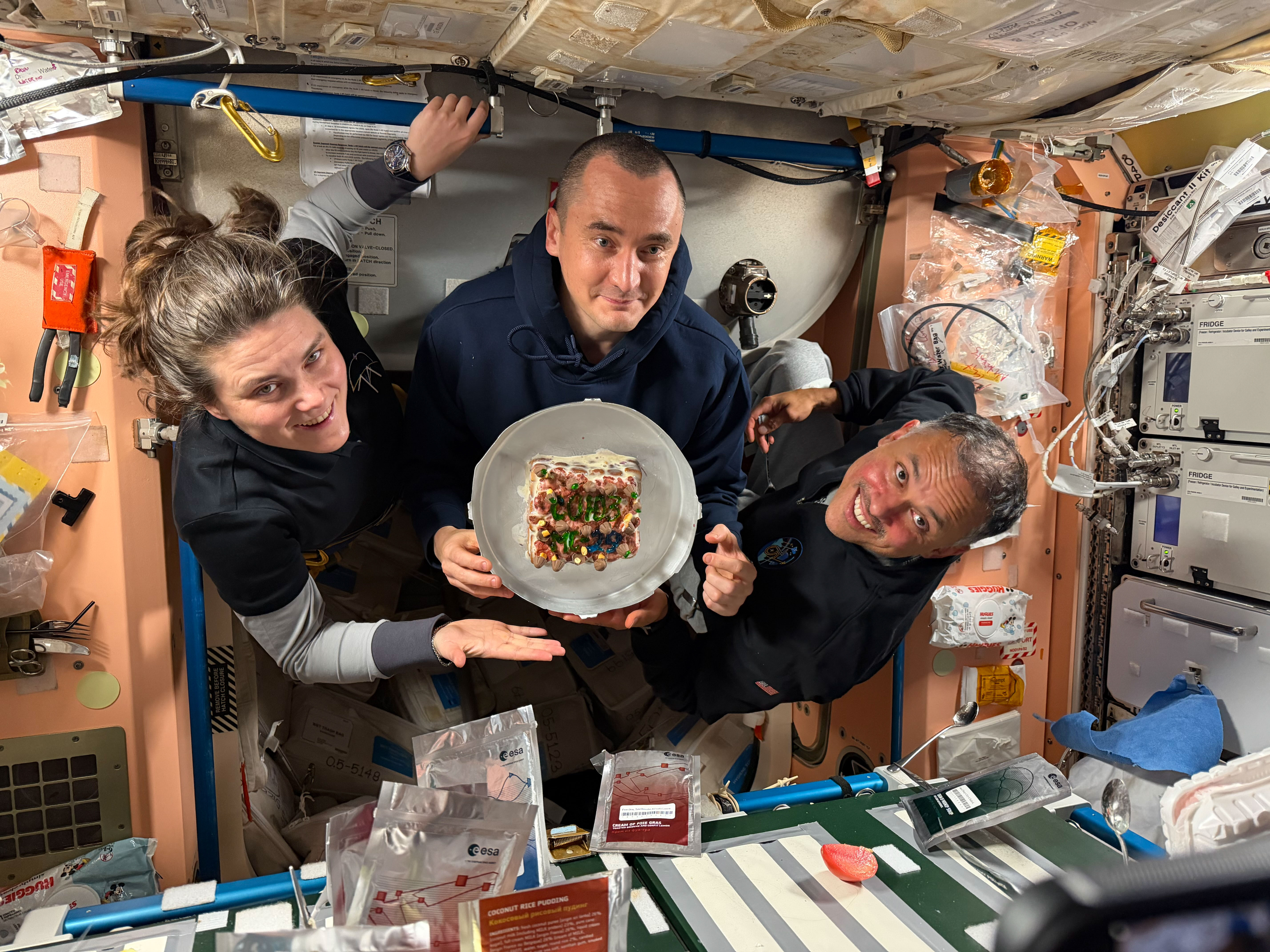
From left, Expedition 74 flight engineers Anna Kikina and Pyotr Dubrov of Roscosmos, and Anil Menon of NASA pose for a portrait while holding a cake celebrating their recent arrival aboard the International Space Station.

Read More