A reading from the First Letter of St. Paul to Corinthians
3:18-23
Brothers and sisters:
Let no one deceive himself.
If anyone among you considers himself wise in this age,
let him become a fool, so as to become wise.
For the wisdom of this world is foolishness in the eyes of God,
for it is written:
God catches the wise in their own ruses,
and again:
The Lord knows the thoughts of the wise, that they are vain.
So let no one boast about human beings, for everything belongs to you,
Paul or Apollos or Cephas,
or the world or life or death,
or the present or the future:
all belong to you, and you to Christ, and Christ to God.
From the Gospel according to Luke
5:1-11
While the crowd was pressing in on Jesus and listening to the word of God,
he was standing by the Lake of Gennesaret.
He saw two boats there alongside the lake;
the fishermen had disembarked and were washing their nets.
Getting into one of the boats, the one belonging to Simon,
he asked him to put out a short distance from the shore.
Then he sat down and taught the crowds from the boat.
After he had finished speaking, he said to Simon,
"Put out into deep water and lower your nets for a catch."
Simon said in reply,
"Master, we have worked hard all night and have caught nothing,
but at your command I will lower the nets."
When they had done this, they caught a great number of fish
and their nets were tearing.
They signaled to their partners in the other boat
to come to help them.
They came and filled both boats
so that the boats were in danger of sinking.
When Simon Peter saw this, he fell at the knees of Jesus and said,
"Depart from me, Lord, for I am a sinful man."
For astonishment at the catch of fish they had made seized him
and all those with him,
and likewise James and John, the sons of Zebedee,
who were partners of Simon.
Jesus said to Simon, "Do not be afraid;
from now on you will be catching men."
When they brought their boats to the shore,
they left everything and followed him.
The evangelist shows how the first disciples followed Jesus, trusting him, relying on his Word, all the while accompanied by miraculous signs. We note that, before this sign, Simon addresses Jesus, calling him ?Master? (v. 5), while afterwards he addresses him as ?Lord? (v. 7). This is the pedagogy of God?s call, which does not consider the quality of those who are chosen so much as their faith, like that of Simon that says: ?At your word, I will let down the nets? (?). The experience of Peter, certainly unique, is nonetheless representative of the call of every apostle of the Gospel, who must never be discouraged in proclaiming Christ to all men, even to the ends of the world. However, today?s text is a reflection on the vocation to the priesthood and the consecrated life. It is the work of God. The human person is not the author of his own vocation but responds to the divine call. Human weakness should not be afraid if God calls. It is necessary to have confidence in his strength, which acts in our poverty; we must rely more and more on the power of his mercy, which transforms and renews. Dear brothers and sisters, may this Word of God revive in us and in our Christian communities courage, confidence and enthusiasm in proclaiming and witnessing to the Gospel. Do not let failures and difficulties lead to discouragement: it is our task to cast our nets in faith ? the Lord will do the rest. (Pope Benedict XVI, Angelus, 10 February 2013)
Read More
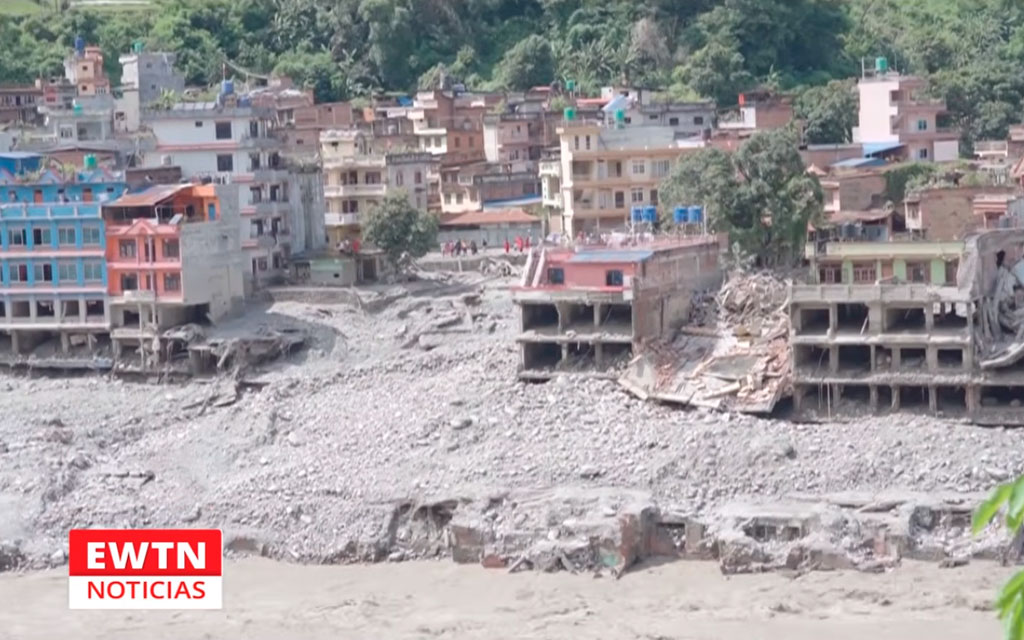
![Church in Nepal helping flood victims find hope, apostolic administrator says #Catholic Father Silas Bogati, apostolic administrator of the apostolic vicariate of Nepal, said the Catholic Church, a small minority of about 10,000 faithful in the Asian nation, is committed to aiding those affected by the recent major flooding.According to authorities, the number of dead from last week’s flood exceeds 1,000, while more than 4,000 people remain missing across both countries, CNN reported.“By being there, providing relief now and, later, contributing to reconstruction, we give hope. Our presence among those who are suffering will give them hope,” the priest said in an interview with the pontifical foundation Aid to the Church in Need (ACN).Bogati explained that in Nepal, “the Catholic Church has 13 parishes and 10,000 Catholics, but it has always worked for the Nepali population irrespective of their religion, and we will continue to do so as they suffer in this hour of need.”Caritas Nepal has set up community kitchens and dispatched food supplies for 300 affected families to last for 15 days. Given the forecast of additional rainfall and the fact that many people are still sleeping outdoors, the organization said there is a need for tarpaulins, blankets, and sleeping mats.After noting that “no Catholic churches or chapels have been destroyed,” the Nepalese priest recalled that “the Holy Father, Pope Leo, was the first to pray and to show his sympathy and closeness to the victims of these flash floods. In the same way, we are receiving prayers and support from the Catholic Church around the world.”Leo XIV has encouraged prayers for those affected and for rescue teams, and has urged the international community to provide aid in a spirit of solidarity.Bogati described the affected area of Rasuwa, located on Nepalʼs border with Tibet. He said an important trade route with Tibet runs through the region, as well as the city of Syabrubesi, “one of the main departure points for tourists traveling toward the Langtang Valley.”One of this concerns is that “members of one of the Catholic communities [who] go down to Syabrubesi to work … may have been swept away by the waters. We do not have any figures yet.”“All these hotels and settlements were swept away. There has been a high death toll in this area, and the river continued downstream, wreaking havoc across five districts. The flood has caused enormous devastation, as a huge mass of water surged downstream, destroying everything in its path. Some communities are still cut off, and search and rescue operations are proving difficult,” he recounted.The apostolic administrator asked for prayers for all the victims and those affected by the tragedy, and expressed gratitude for ACN’s closeness and solidarity.This story was first published by ACI Prensa, the Spanish-language sister service of EWTN News. It has been translated and adapted by EWTN News English.](https://unitedyam.com/wp-content/uploads/2026/09/church-in-nepal-helping-flood-victims-find-hope-apostolic-administrator-says-catholic-father-silas-bogati-apostolic-administrator-of-the-apostolic-vicariate-of-nepal-said-the-catholic-church-a-sm.jpg "Church in Nepal helping flood victims find hope, apostolic administrator says #Catholic Father Silas Bogati, apostolic administrator of the apostolic vicariate of Nepal, said the Catholic Church, a small minority of about 10,000 faithful in the Asian nation, is committed to aiding those affected by the recent major flooding.According to authorities, the number of dead from last week’s flood exceeds 1,000, while more than 4,000 people remain missing across both countries, CNN reported.“By being there, providing relief now and, later, contributing to reconstruction, we give hope. Our presence among those who are suffering will give them hope,” the priest said in an interview with the pontifical foundation Aid to the Church in Need (ACN).Bogati explained that in Nepal, “the Catholic Church has 13 parishes and 10,000 Catholics, but it has always worked for the Nepali population irrespective of their religion, and we will continue to do so as they suffer in this hour of need.”Caritas Nepal has set up community kitchens and dispatched food supplies for 300 affected families to last for 15 days. Given the forecast of additional rainfall and the fact that many people are still sleeping outdoors, the organization said there is a need for tarpaulins, blankets, and sleeping mats.After noting that “no Catholic churches or chapels have been destroyed,” the Nepalese priest recalled that “the Holy Father, Pope Leo, was the first to pray and to show his sympathy and closeness to the victims of these flash floods. In the same way, we are receiving prayers and support from the Catholic Church around the world.”Leo XIV has encouraged prayers for those affected and for rescue teams, and has urged the international community to provide aid in a spirit of solidarity.Bogati described the affected area of Rasuwa, located on Nepalʼs border with Tibet. He said an important trade route with Tibet runs through the region, as well as the city of Syabrubesi, “one of the main departure points for tourists traveling toward the Langtang Valley.”One of this concerns is that “members of one of the Catholic communities [who] go down to Syabrubesi to work … may have been swept away by the waters. We do not have any figures yet.”“All these hotels and settlements were swept away. There has been a high death toll in this area, and the river continued downstream, wreaking havoc across five districts. The flood has caused enormous devastation, as a huge mass of water surged downstream, destroying everything in its path. Some communities are still cut off, and search and rescue operations are proving difficult,” he recounted.The apostolic administrator asked for prayers for all the victims and those affected by the tragedy, and expressed gratitude for ACN’s closeness and solidarity.This story was first published by ACI Prensa, the Spanish-language sister service of EWTN News. It has been translated and adapted by EWTN News English.")
![Paterson parish remembers ministry of beloved late pastor #Catholic – On the evening of Aug. 27, faithful from St. Stephen Parish in Paterson, N.J., and beyond remembered the life and ministry of Father Rafael A. Ciro, beloved former pastor of St. Stephen’s, on the first anniversary of his death, during a Memorial Mass celebrated by Bishop Kevin J. Sweeney.
On Aug. 27, 2025, Father Ciro died by suicide, leaving his family, friends, and faithful around the Paterson Diocese, N.J., and beyond shocked and heartbroken, especially in the Hispanic community he served. He was 45.
Father Diego F. Monsalve, administrator of St. Stephen’s, joined many priests, including some of Father Ciro’s friends, in concelebrating the Mass with Bishop Sweeney.
Click here to subscribe to our weekly newsletter.
The Colombian-born Father Ciro was ordained to the diocesan priesthood on May 25, 2013, at St. Philip the Apostle Parish in Clifton, N.J., by Bishop Emeritus Arthur J. Serratelli.
Following his ordination, Father Ciro served the parish communities of the Cathedral of St. John the Baptist in Paterson, N.J., St. Mary’s Assumption Parish in Passaic, N.J., St. Nicholas Parish, also in Passaic, and Sacred Heart and Holy Rosary Parish in Dover, N.J., before being appointed pastor of St. Stephen in Paterson, where he served at the time of his passing.
Father Ciro was born on Oct. 29, 1979, in Colombia to the late Rafael Angel Ciro-Rios and Aura Elena Guarín. He completed philosophy studies for the priesthood in Colombia. He continued his theological studies at Universidad Intercontinental in Mexico City (2007–2009), the former Holy Apostles College and Seminary in Cromwell, Conn. (2011–2012), and Mount St. Mary’s Seminary in Emmitsburg, Md. (2012–2013).
Before joining the Paterson Diocese as a seminarian in January 2011, Father Ciro dedicated nearly three years to missionary work in Medellín and another three years in Mexico City, serving in some of the most impoverished communities. He also ministered to Hispanic migrants in Alabama and New Jersey.
BEACON PHOTOS | JOE GIGLI
[See image gallery at beaconnj.org]](https://unitedyam.com/wp-content/uploads/2026/09/paterson-parish-remembers-ministry-of-beloved-late-pastor-catholic-on-the-evening-of-aug-27-faithful-from-st-stephen-parish-in-paterson-n-j-and-beyond-remembered-the-life-and-ministry-of-fath.jpg "Paterson parish remembers ministry of beloved late pastor #Catholic – On the evening of Aug. 27, faithful from St. Stephen Parish in Paterson, N.J., and beyond remembered the life and ministry of Father Rafael A. Ciro, beloved former pastor of St. Stephen’s, on the first anniversary of his death, during a Memorial Mass celebrated by Bishop Kevin J. Sweeney.
On Aug. 27, 2025, Father Ciro died by suicide, leaving his family, friends, and faithful around the Paterson Diocese, N.J., and beyond shocked and heartbroken, especially in the Hispanic community he served. He was 45.
Father Diego F. Monsalve, administrator of St. Stephen’s, joined many priests, including some of Father Ciro’s friends, in concelebrating the Mass with Bishop Sweeney.
Click here to subscribe to our weekly newsletter.
The Colombian-born Father Ciro was ordained to the diocesan priesthood on May 25, 2013, at St. Philip the Apostle Parish in Clifton, N.J., by Bishop Emeritus Arthur J. Serratelli.
Following his ordination, Father Ciro served the parish communities of the Cathedral of St. John the Baptist in Paterson, N.J., St. Mary’s Assumption Parish in Passaic, N.J., St. Nicholas Parish, also in Passaic, and Sacred Heart and Holy Rosary Parish in Dover, N.J., before being appointed pastor of St. Stephen in Paterson, where he served at the time of his passing.
Father Ciro was born on Oct. 29, 1979, in Colombia to the late Rafael Angel Ciro-Rios and Aura Elena Guarín. He completed philosophy studies for the priesthood in Colombia. He continued his theological studies at Universidad Intercontinental in Mexico City (2007–2009), the former Holy Apostles College and Seminary in Cromwell, Conn. (2011–2012), and Mount St. Mary’s Seminary in Emmitsburg, Md. (2012–2013).
Before joining the Paterson Diocese as a seminarian in January 2011, Father Ciro dedicated nearly three years to missionary work in Medellín and another three years in Mexico City, serving in some of the most impoverished communities. He also ministered to Hispanic migrants in Alabama and New Jersey.
BEACON PHOTOS | JOE GIGLI
[See image gallery at beaconnj.org]")
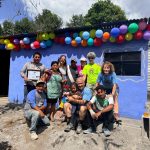
![Hanover priests rejoice bringing Christ to others on mission #Catholic – This summer, the missionary heart of Notre Dame Mount Carmel Parish, located in the Cedar Knolls neighborhood of Hanover Township, N.J., came alive in two very different places.
On July 26, a team of nearly 50 Notre Dame parishioners and friends traveled to Preston County, W.V., for Operation Appalachia, serving families in need by repairing and restoring their homes. Father Emerson Francisco, the parish’s parochial vicar, accompanied them, experiencing the mission trip for the first time.
A few weeks later, on Aug. 7, Notre Dame’s Guatemala Outreach Ministry traveled to Guatemala, where 15 parishioners and friends divided into three teams to build three homes for three families in need. Father Vidal Gonzales, Jr., Notre Dame’s pastor, accompanied the group, sharing in the hard work, fellowship, and encounters that made the journey meaningful.
Though the missions were thousands of miles apart and the work was different, both journeys shared the same heart: to go where the Lord was calling, to serve his people, and to discover that in giving ourselves, we often receive far more than we could ever give.
For Father Francisco, the Operation Appalachia mission began each morning before the work even started. He would walk to the cemetery beside the camp, pray the rosary, reflect on the Gospel, and meditate in silence.
Click here to subscribe to our weekly newsletter.
Then, at 7 a.m., team members gathered for Mass. Their altar was a simple tree stump with the morning sun rising through the trees behind it. As he celebrated the Eucharist, Father Francisco thought: “Before we repaired a single porch, painted a single wall, or drove a single nail, Christ was already repairing us.”
The work that followed was demanding. Teams rebuilt porches, replaced floors, built ramps, reinforced roofs, and made repairs that homeowners had been unable to undertake themselves.
But something else happened along the way. When some teams completed their projects early, they didn’t stop. They loaded their tools and went to help the teams that still had work to do. They asked, “Where can we help next?” For Father Francisco, that was the Gospel in action.
“We weren’t just several work crews. We were one family,” Father Francisco said.
That same spirit was evident in Guatemala. Over five days, three teams worked alongside From Houses to Homes workers to construct simple but sturdy homes of cinderblock, concrete flooring, metal roofing, a window, and a door. The work was physically demanding, but Father Gonzalez witnessed how the families themselves became a source of renewed energy and purpose.
“Seeing the families whose houses we were building gave us renewed energy and a deeper sense of purpose,” Father Gonzalez said.
While the physical work was important, both priests recognized that the deeper mission was about people.
Father Francisco said the homeowners in Appalachia reminded the team that they were never repairing wood or concrete.
“We were entering people’s lives,” Father Francisco said.
Father Gonzalez expressed that same truth from Guatemala.
“Outreach is not measured only by what we accomplish, but by the relationships we build along the way,” Father Francisco said.
In both places, homes became a doorway to encounter — to listen to people’s stories, share meals, laugh together, and recognize the dignity and worth of every person.
During Operation Appalachia, Father Francisco didn’t just talk about what the Church is, but experienced the Church.
“As a priest, I often tell people that the Church is not simply a building. During Operation Appalachia, I didn’t just preach those words — I lived them,” Father Francisco said.
In Guatemala, the Church crossed borders and cultures, bringing together people who might otherwise never have met.
“When people from different communities, cultures, and backgrounds come together with open hearts and willing hands, borders become smaller, and humanity becomes bigger,” Father Gonzalez said.
The most profound commonality between these two missions is that the blessings didn’t flow in only one direction. The families received homes. They received repairs. They received help and the reassurance that they were seen and valued.
But those who served received something as well. Father Gonzalez and the team returned to Notre Dame with “tired bodies but grateful hearts,” carrying memories of the families they encountered. They also gained a deeper understanding that “service is not only about what we give but also about what we receive.” The priest also saw in the families lessons in “courage, resilience, generosity, hope, and faith.”
Father Francisco experienced the same transformation. What he expected to be a week of service became, unexpectedly, a week that “renewed my own priesthood.”
Perhaps that is one of the great revelations of missionary work: we go believing that we are bringing Christ to others, only to discover Christ waiting for us there.
This summer reminded the Notre Dame participants that mission takes many forms. It may mean rebuilding a porch in West Virginia, laying a cinderblock in Guatemala, preparing a meal, offering a skill, giving financially, or simply saying yes when the Lord places an opportunity before us.
“There is always a way to contribute.” Some give financially. Others offer their time, skills, supplies, prayers, encouragement, or presence,” Father Gonzalez said. “Each of these seemingly individual acts becomes part of something much greater. Together, these individual acts of generosity become a powerful witness to what can happen when people come together with a common purpose and willing hearts,” he said.
[See image gallery at beaconnj.org]](https://unitedyam.com/wp-content/uploads/2026/09/hanover-priests-rejoice-bringing-christ-to-others-on-mission-catholic-this-summer-the-missionary-heart-of-notre-dame-mount-carmel-parish-located-in-the-cedar-knolls-neighborhood-of-hanover-townsh.jpg "Hanover priests rejoice bringing Christ to others on mission #Catholic – This summer, the missionary heart of Notre Dame Mount Carmel Parish, located in the Cedar Knolls neighborhood of Hanover Township, N.J., came alive in two very different places.
On July 26, a team of nearly 50 Notre Dame parishioners and friends traveled to Preston County, W.V., for Operation Appalachia, serving families in need by repairing and restoring their homes. Father Emerson Francisco, the parish’s parochial vicar, accompanied them, experiencing the mission trip for the first time.
A few weeks later, on Aug. 7, Notre Dame’s Guatemala Outreach Ministry traveled to Guatemala, where 15 parishioners and friends divided into three teams to build three homes for three families in need. Father Vidal Gonzales, Jr., Notre Dame’s pastor, accompanied the group, sharing in the hard work, fellowship, and encounters that made the journey meaningful.
Though the missions were thousands of miles apart and the work was different, both journeys shared the same heart: to go where the Lord was calling, to serve his people, and to discover that in giving ourselves, we often receive far more than we could ever give.
For Father Francisco, the Operation Appalachia mission began each morning before the work even started. He would walk to the cemetery beside the camp, pray the rosary, reflect on the Gospel, and meditate in silence.
Click here to subscribe to our weekly newsletter.
Then, at 7 a.m., team members gathered for Mass. Their altar was a simple tree stump with the morning sun rising through the trees behind it. As he celebrated the Eucharist, Father Francisco thought: “Before we repaired a single porch, painted a single wall, or drove a single nail, Christ was already repairing us.”
The work that followed was demanding. Teams rebuilt porches, replaced floors, built ramps, reinforced roofs, and made repairs that homeowners had been unable to undertake themselves.
But something else happened along the way. When some teams completed their projects early, they didn’t stop. They loaded their tools and went to help the teams that still had work to do. They asked, “Where can we help next?” For Father Francisco, that was the Gospel in action.
“We weren’t just several work crews. We were one family,” Father Francisco said.
That same spirit was evident in Guatemala. Over five days, three teams worked alongside From Houses to Homes workers to construct simple but sturdy homes of cinderblock, concrete flooring, metal roofing, a window, and a door. The work was physically demanding, but Father Gonzalez witnessed how the families themselves became a source of renewed energy and purpose.
“Seeing the families whose houses we were building gave us renewed energy and a deeper sense of purpose,” Father Gonzalez said.
While the physical work was important, both priests recognized that the deeper mission was about people.
Father Francisco said the homeowners in Appalachia reminded the team that they were never repairing wood or concrete.
“We were entering people’s lives,” Father Francisco said.
Father Gonzalez expressed that same truth from Guatemala.
“Outreach is not measured only by what we accomplish, but by the relationships we build along the way,” Father Francisco said.
In both places, homes became a doorway to encounter — to listen to people’s stories, share meals, laugh together, and recognize the dignity and worth of every person.
During Operation Appalachia, Father Francisco didn’t just talk about what the Church is, but experienced the Church.
“As a priest, I often tell people that the Church is not simply a building. During Operation Appalachia, I didn’t just preach those words — I lived them,” Father Francisco said.
In Guatemala, the Church crossed borders and cultures, bringing together people who might otherwise never have met.
“When people from different communities, cultures, and backgrounds come together with open hearts and willing hands, borders become smaller, and humanity becomes bigger,” Father Gonzalez said.
The most profound commonality between these two missions is that the blessings didn’t flow in only one direction. The families received homes. They received repairs. They received help and the reassurance that they were seen and valued.
But those who served received something as well. Father Gonzalez and the team returned to Notre Dame with “tired bodies but grateful hearts,” carrying memories of the families they encountered. They also gained a deeper understanding that “service is not only about what we give but also about what we receive.” The priest also saw in the families lessons in “courage, resilience, generosity, hope, and faith.”
Father Francisco experienced the same transformation. What he expected to be a week of service became, unexpectedly, a week that “renewed my own priesthood.”
Perhaps that is one of the great revelations of missionary work: we go believing that we are bringing Christ to others, only to discover Christ waiting for us there.
This summer reminded the Notre Dame participants that mission takes many forms. It may mean rebuilding a porch in West Virginia, laying a cinderblock in Guatemala, preparing a meal, offering a skill, giving financially, or simply saying yes when the Lord places an opportunity before us.
“There is always a way to contribute.” Some give financially. Others offer their time, skills, supplies, prayers, encouragement, or presence,” Father Gonzalez said. “Each of these seemingly individual acts becomes part of something much greater. Together, these individual acts of generosity become a powerful witness to what can happen when people come together with a common purpose and willing hearts,” he said.
[See image gallery at beaconnj.org]")

:max_bytes(150000):strip_icc():format(jpeg)/TAL-petaluma-town-PETALUMACAGUIDE0426-fdca76db46344c8bb69d6918f3371a34.jpg)
:max_bytes(150000):strip_icc():format(jpeg)/TAL-garden-of-the-gods-shawnee-national-forest-SHAWNEEFOREST0326-373216ee231b4bd8bd8b04ff19be6e70.jpg)